

A reaction norm model for genomic selection using high-dimensional genomic and environmental data
Open accessThe DOI matches its Crossref record; 52 of the 53 references it cites were found in a registry or an index.
Abstract
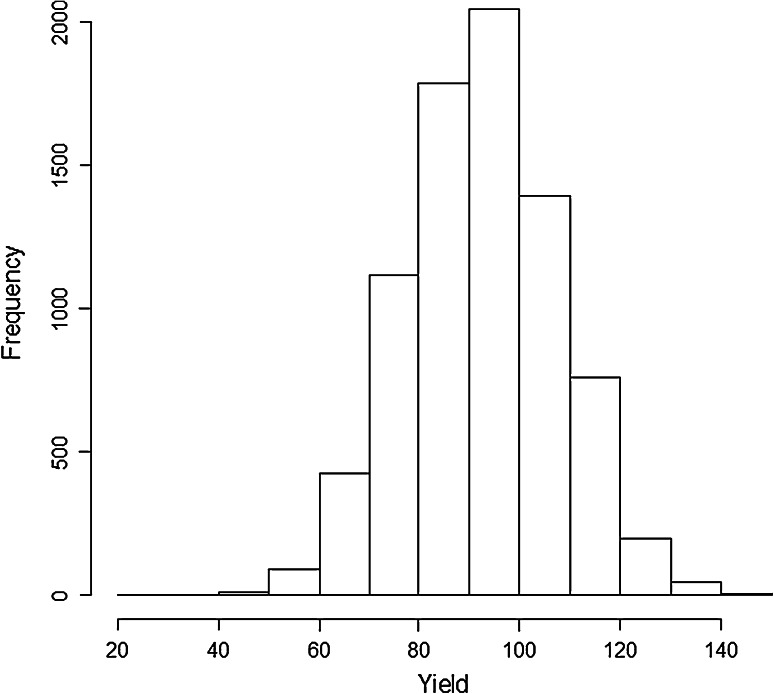
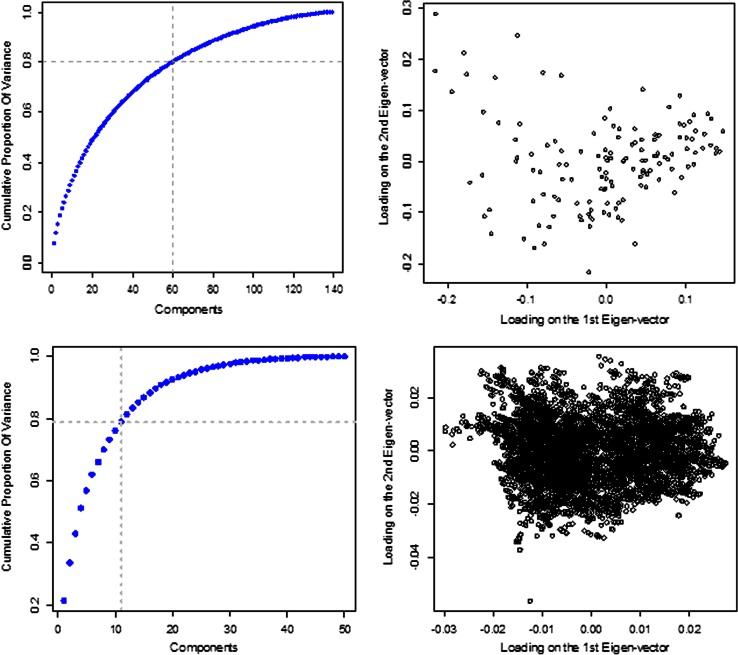
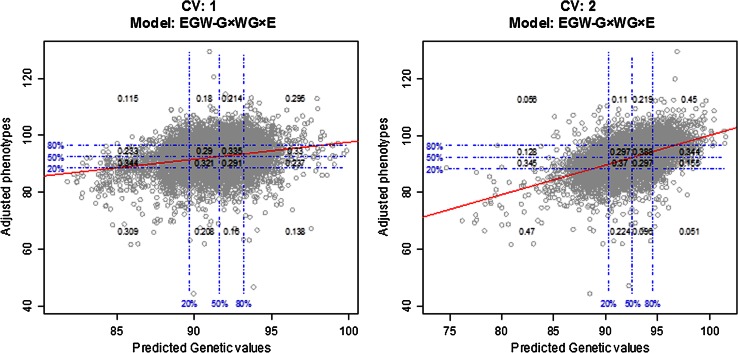
New methods that incorporate the main and interaction effects of high-dimensional markers and of high-dimensional environmental covariates gave increased prediction accuracy of grain yield in wheat across and within environments. In most agricultural crops the effects of genes on traits are modulated by environmental conditions, leading to genetic by environmental interaction (G × E). Modern genotyping technologies allow characterizing genomes in great detail and modern information systems can generate large volumes of environmental data. In principle, G × E can be accounted for using interactions between markers and environmental covariates (ECs). However, when genotypic and environmental information is high dimensional, modeling all possible interactions explicitly becomes infeasible. In this article we show how to model interactions between high-dimensional sets of markers and ECs using covariance functions. The model presented here consists of (random) reaction norm where the genetic and environmental gradients are described as linear functions of markers and of ECs, respectively. We assessed the proposed method using data from Arvalis, consisting of 139 wheat lines genotyped with 2,395 SNPs and evaluated for grain yield over 8 years and various locations within northern France. A total of 68 ECs, defined based on five phases of the phenology of the crop, were used in the analysis. Interaction terms accounted for a sizable proportion (16 %) of the within-environment yield variance, and the prediction accuracy of models including interaction terms was substantially higher (17-34 %) than that of models based on main effects only. Breeding for target environmental conditions has become a central priority of most breeding programs. Methods, like the one presented here, that can capitalize upon the wealth of genomic and environmental information available, will become increasingly important.
Overview
The claims and statistics of this paper haven’t been checked yet.
Free: it reads the open-access text and checks the first 5 claims that cite a source we can check. Create a free account to check every claim.
Integrity signals
Registry
Cites
Statistics
Figures
Verification
Claims the paper makes
The claims and statistics of this paper haven’t been checked yet.
Free: it reads the open-access text and checks the first 5 claims that cite a source we can check. Create a free account to check every claim.
Claims other papers make about this one
Each is checked against this paper’s own text: does it say what the citing paper says it does?
The source backs part of the claim, not all of it — or backs it for a different population, condition or comparison.
In the citing paper
“A further limitation of the approach proposed in Jarquín et al. (2014) is that it does not allow for the modelling of complex variance structures including heterogeneous residual variation, spatial field trend and blocking terms, unless a two-stage approach is implemented.”
From Incorporating environmental covariates to explore genotype × environment × management (G × E × M) interactions: A one-stage predictive model (2023) · cites this paper as Jarquín et al., 2014
Experimental — accuracy not yet measuredThe source backs part of the claim, not all of it — or backs it for a different population, condition or comparison.
In the citing paper
“This study on hybrid wheat showed that hybrid prediction accuracy increases when environmental covariables are incorporated, and when additive × environmental covariables and dominance × environmental covariables are included in the GBLUP reaction-norm model (Jarquin et al. 2014).”
From Nonlinear kernels, dominance, and envirotyping data increase the accuracy of genome-based prediction in multi-environment trials (2021) · cites this paper as Jarquin et al. 2014
Experimental — accuracy not yet measuredThe source backs part of the claim, not all of it — or backs it for a different population, condition or comparison.
In the citing paper
“Since the first report of a genomic-enabled prediction considering the reaction norm, as proposed by Jarquín et al. (2014), the environmental relationship kernel (KW) was modeled by the benchmark GBLUP approach.”
From Nonlinear kernels, dominance, and envirotyping data increase the accuracy of genome-based prediction in multi-environment trials (2021) · cites this paper as Jarquín et al. (2014)
Experimental — accuracy not yet measuredThe cited source says what the claim attributes to it.
In the citing paper
“The most recently developed methods that incorporate ECs to explain G × E interactions (see for example Boer et al., 2007;Jarquín et al., 2014;Hadasch et al., 2020) all assume a linear or quadratic trait response to an EC.”
From Incorporating environmental covariates to explore genotype × environment × management (G × E × M) interactions: A one-stage predictive model (2023) · cites this paper as Jarquín et al., 2014
The cited source says what the claim attributes to it.
In the citing paper
“Cuevas et al. (2016, 2018) and Souza et al. (2017) showed that using the GK within the multi-environment genomic GE model of Jarquín et al. (2014) led to higher prediction accuracy than the same method with the linear kernel GB.”
From Nonlinear kernels, dominance, and envirotyping data increase the accuracy of genome-based prediction in multi-environment trials (2021) · cites this paper as Jarquín et al. 2014
3 more claims about this paper
Create a free account to see every claim other papers make about this one.
Self-check
Percentages, sums and reported differences re-computed from the paper’s own numbers.
The self-check needs the paper’s full text.
Citations
Cites
R: A Language and Environment for Statistical Computing
R Core Team (2025) · doi:10.32614/r.manuals · Cited by 352,181
Introduction to Quantitative Genetics.
Edwards, A. W. F., & Falconer, D. S. (1982) · Biometrics · doi:10.2307/2529912 · Cited by 21,447
Prediction of Total Genetic Value Using Genome-Wide Dense Marker Maps
Meuwissen, T. H. E., Hayes, B. J., & Goddard, M. E. (2001) · Genetics · doi:10.1093/genetics/157.4.1819 · Cited by 7,917
Efficient Methods to Compute Genomic Predictions
VanRaden, P. M. (2008) · Journal of Dairy Science · doi:10.3168/jds.2007-0980 · Cited by 6,050 · cited 1×
“Following the standard assumptions of the Ridge-Regression-BLUP model (Habier et al. 2007; VanRaden 2008), we regarded marker effects as IID draws from normal distributions of the form bm IID∼ N ( 0, σ 2b ), m = 1,…,p.”
MethodIntroduction to quantitative genetics. 1. ed.
Falconer, D. (1984) · Cited by 1,454
Introduction to quantitative genetics (4th edn)
Frankham, R. (1996) · Trends in Genetics · doi:10.1016/0168-9525(96)81458-2 · Cited by 1,449
The Impact of Genetic Relationship Information on Genome-Assisted Breeding Values
Habier, D., Fernando, R. L., & Dekkers, J. C. M. (2007) · Genetics · doi:10.1534/genetics.107.081190 · Cited by 1,320 · cited 1×
“Following the standard assumptions of the Ridge-Regression-BLUP model (Habier et al. 2007; VanRaden 2008), we regarded marker effects as IID draws from normal distributions of the form bm IID∼ N ( 0, σ 2b ), m = 1,…,p.”
MethodThe analysis of groups of experiments
Yates, F., & Cochran, W. G. (1938) · The Journal of Agricultural Science · doi:10.1017/s0021859600050978 · Cited by 900 · cited 1×
“Yates and Cochran (1938) proposed using a multiplicative operator consisting of a simple regression of a line’s performance on the environmental mean (jointregression analysis).”
BackgroundBreeding for Quantitative Traits in Plants
Udall, J. A. (2003) · Crop Science · doi:10.2135/cropsci2003.1578 · Cited by 884 · cited 1×
“However, with variable selection procedures important volumes of information can be lost in the process of selecting markers (Bernardo 2010; Crossa 2012) or ECs, with the undesirable result that large proportions of genetic or environmental signals may be unaccounted for.”
BackgroundModel Selection and Validation for Yield Trials with Interaction
Gauch, H. G. (1988) · Biometrics · doi:10.2307/2531585 · Cited by 882 · cited 1×
“Years later, other multiplicative operators based on singular value decomposition were proposed and used by Gollob (1968), Mandel (1969), Gauch (1988), Cornelius et al. (1996) and Crossa and Cornelius (1997).”
Method
Cited by
Items 201–300 of 772
Genome‐enabled prediction for sparse testing in multi‐environmental wheat trials
Crespo‐Herrera, L., Howard, R., Piepho, H., Pérez‐Rodríguez, P., Montesinos-López, O. A., Burgueño, J. A., Singh, R. P., Mondal, S., Jarquín, D., & Crossa, J. L. (2021) · The Plant Genome · doi:10.1002/tpg2.20151 · Cited by 40
Self-citationAraújo, M. D. S., Chaves, S. F. D. S., Dias, L. A. D. S., Ferreira, F. M., Pereira, G. R., Bezerra, A. R. G., Alves, R. S., Heinemann, A. B., Breseghello, F., Carneiro, P. C. S., et al. (2024) · Theoretical and Applied Genetics · doi:10.1007/s00122-024-04579-z · Cited by 40
Gene Pyramiding and Multiple Character Breeding
Rana, M., Sood, A., Hussain, W., Kaldate, R. C., Sharma, T. R., Gill, R. K., Kumar, S. N., & Singh, S. (2018) · Elsevier eBooks · doi:10.1016/b978-0-12-813522-8.00006-6 · Cited by 42
Buntaran, H., Forkman, J., & Piepho, H. (2021) · Theoretical and Applied Genetics · doi:10.1007/s00122-021-03786-2 · Cited by 38
Jarquín, D., Howard, R., Xavier, A., & Choudhury, S. D. (2018) · Agronomy · doi:10.3390/agronomy8040051 · Cited by 39
Self-citationAdak, A., DeSalvio, A. J., Arik, M. A., & Murray, S. C. (2024) · G3 Genes Genomes Genetics · doi:10.1093/g3journal/jkae092 · Cited by 39
“Interactions between E and g and P were defined according to Jarquín et al .”
MethodSyeda, A. (2025) · Plant Molecular Biology · doi:10.1007/s11103-025-01650-1 · Cited by 40
“…to new locations or years; in contrast, environment-by-environment or season-by-season validation (e.g., leave-one-environment-out or leave-one-season-out) gives a better estimate of out-of-domain performance in realistic terms (Jarquín et al. 2014 ; Crossa et al. 2017) than random folds.”
Ly, D., Chenu, K., Gauffreteau, A., Rincent, R., Huet, S., Gouache, D., Martre, P., Bordes, J., & Charmet, G. (2017) · Field Crops Research · doi:10.1016/j.fcr.2017.09.024 · Cited by 40
Gowda, M., Makumbi, D., Das, B., Nyaga, C., Kosgei, T., Crossa, J. L., Beyene, Y., Montesinos-López, O. A., Olsen, M. S., & Prasanna, B. M. (2021) · Theoretical and Applied Genetics · doi:10.1007/s00122-020-03744-4 · Cited by 39
“1 3 shown in CV1 corroborate the results from previous studies (Burgueño et al. 2012; Jarquín et al. 2014).”
MethodResultSelf-citationPiepho, H., & Williams, E. R. (2024) · Biometrical Journal · doi:10.1002/bimj.202400008 · Cited by 38
“…also hold when varietal effects in (1) are modeled as random, including when genomic kinship is used to model the variance of 𝛼 𝑖 and when both genotypic and environmental kinship are used to model the variance of (𝛼𝐸) 𝑖𝑗 (Jarquín et al. 2014; Costa-Neto, Crespo-Herrera, and Fradgley 2023).”
Dreisigacker, S., Sukumaran, S., Guzmán, C., He, X., Lan, C., Bonnett, D. G., & Crossa, J. L. (2016) · Sustainable development and biodiversity · doi:10.1007/978-3-319-27090-6_16 · Cited by 38
Self-citationToda, Y., Wakatsuki, H., Aoike, T., Kajiya‐Kanegae, H., Yamasaki, M., Yoshioka, T., Ebana, K., Hayashi, T., Nakagawa, H., Hasegawa, T., et al. (2020) · PLoS ONE · doi:10.1371/journal.pone.0233951 · Cited by 40
“This would be important in breeding programs [30, 62], although it has not been evaluated in recent studies of the prediction of G×E by GP [8,9,14,16].”
BackgroundGIS‐based G × E modeling of maize hybrids through enviromic markers engineering
Resende, R. T., Xavier, A., Silva, P. I. T., Resende, M. P. M., Jarquín, D., & Marcatti, G. E. (2024) · New Phytologist · doi:10.1111/nph.19951 · Cited by 37
“Classical breeders have long told us that the phenotype results from the joint and additive action of the genotype with the environment, in addition to specific patterns generated from the interaction between them (Des Marais et al ., 2013; Jarquin et al ., 2014).”
Self-citationWashburn, J. D., Varela, J. I., Xavier, A., Chen, Q., Ertl, D., Gage, J. L., Holland, J. B., Lima, D. C., Romay, M. C., Lopez-Cruz, M. A., et al. (2024) · Genetics · doi:10.1093/genetics/iyae195 · Cited by 40
Independent Validation of Genomic Prediction in Strawberry Over Multiple Cycles
Osorio, L. F., Gezan, S. A., Verma, S., & Whitaker, V. M. (2021) · Frontiers in Genetics · doi:10.3389/fgene.2020.596258 · Cited by 35
Diversifying maize genomic selection models
Rice, B. R., & Lipka, A. E. (2021) · Molecular Breeding · doi:10.1007/s11032-021-01221-4 · Cited by 38
“When weather and other environmental data are available, it is common to use this information to model both the covariance between environments and the GxE effects (Jarquín et al. 2014).”
BackgroundMethodCalibration of a crop growth model in APSIM for 15 publicly available corn hybrids in North America
Winn, C. A., Archontoulis, S. V., & Edwards, J. W. (2023) · Crop Science · doi:10.1002/csc2.20857 · Cited by 36
AMMI Bayesian Models to Study Stability and Adaptability in Maize
Júnior, L. A. Y. B., da Silva, C. P., de Oliveira, L. A., Nuvunga, J. J., Pires, L. P. M., Pinho, R. G. V., & Balestre, M. (2018) · Agronomy Journal · doi:10.2134/agronj2017.11.0668 · Cited by 34
Genomic prediction powered by multi-omics data
Montesinos-López, O. A., Montesinos‐López, A., Mosqueda-González, B. A., Delgado‐Enciso, I., Chavira-Flores, M., Crossa, J. L., Dreisigacker, S., Sun, J., & Ortiz, R. O. (2025) · Frontiers in Genetics · doi:10.3389/fgene.2025.1636438 · Cited by 38
Self-citationA novel GIS-based tool to reveal spatial trends in reaction norm: upland rice case study
Costa‐Neto, G., Júnior, O. P. M., Heinemann, A. B., de Castro, A. P., & Duarte, J. B. (2020) · Euphytica · doi:10.1007/s10681-020-2573-4 · Cited by 38
“…contribute to the prediction of phenotypes under new environmental conditions (Ly et al. 2018; Millet et al. 2019), especially integrated with whole-genome regressions in genomics-assisted prediction-based breeding platforms (Heslot et al. 2014; Jarquı́n et al. 2014; Morais Júnior et al. 2018).”
BackgroundFradgley, N. S., Bacon, J., Bentley, A. R., Costa‐Neto, G., Cottrell, A., Crossa, J. L., Cuevas, J., Kerton, M., Pope, E., Swarbreck, S. M., et al. (2022) · Global Change Biology · doi:10.1111/gcb.16552 · Cited by 37
“…prediction models incorporate environmental co- variables to characterise their effects on crop phenotypes and further increase the prediction accuracy of breeding lines in particular environments by predicting G × E (Costa- Neto & Fritsche- Neto, 2021; Granato et al., 2018; Jarquín et al., 2014).”
BackgroundResultSelf-citationA mixed model to multiple harvest-location trials applied to genomic prediction in Coffea canephora
Ferrão, L. F. V., Ferrão, R. G., Ferrão, M. A. G., Francisco, A., & Garcia, A. A. F. (2017) · Tree Genetics & Genomes · doi:10.1007/s11295-017-1171-7 · Cited by 36
“More recent studies have been advanced to incorporate modern information about environmental covariates (Jarquı́n et al. 2014a; Heslot et al. 2014).”
BackgroundMethodGenomic selection in algae with biphasic lifecycles: A Saccharina latissima (sugar kelp) case study
Huang, M. F., Robbins, K. R., Li, Y., Umanzor, S., Marty-Rivera, M., Bailey, D. L., Aydlett, M., Schmutz, J., Grimwood, J., Yarish, C., et al. (2023) · Frontiers in Marine Science · doi:10.3389/fmars.2023.1040979 · Cited by 32
Bajgain, P., Zhang, X., & Anderson, J. A. (2020) · The Plant Genome · doi:10.1002/tpg2.20012 · Cited by 37
Impact of early genomic prediction for recurrent selection in an upland rice synthetic population
Bärtschi, C., Cao, T., Bartholomé, J., Ospina, Y., Quintero, C., Frouin, J., Bouvet, J., & Grenier, C. (2021) · G3 Genes Genomes Genetics · doi:10.1093/g3journal/jkab320 · Cited by 32
“Generally, sparse testing is in most cases more precise than the prediction of unobserved genotypes in known environments, regardless of the calibration method used (Burgue~no et al. 2012; Jarquı́n et al. 2014; Lopez-Cruz et al. 2015; Ben Hassen et al. 2018a; Millet et al. 2019).”
MethodRebollo, I., Aguilar, I., de Vida, F. P., Molina, F., Gutiérrez, L., & Rosas, J. E. (2023) · Crop Science · doi:10.1002/csc2.21029 · Cited by 35
Performance prediction of crosses in plant breeding through genotype by environment interactions
Ansarifar, J., Akhavizadegan, F., & Wang, L. (2020) · Scientific Reports · doi:10.1038/s41598-020-68343-1 · Cited by 35
Paudel, P., Pandey, M. K., Subedi, M., Paudel, P., & Kumar, R. (2024) · PLANT ARCHIVES · doi:10.51470/plantarchives.2024.v24.no.1.180 · Cited by 38
Fikere, M., Barbulescu, D. M., Malmberg, M. M., Maharjan, P., Salisbury, P. A., Kant, S., Panozzo, J., Norton, S., SPANGENBERG, G. C., Cogan, N. O. I., et al. (2020) · Plants · doi:10.3390/plants9060719 · Cited by 33
“Environmental covariates have also been included in several previous studies [27,29,53].”
Leveraging probability concepts for cultivar recommendation in multi-environment trials
Dias, K. O. D. G., dos Santos, J. P. R., Krause, M. D., Piepho, H., Guimarães, L. J. M., Pastina, M. M., & Garcia, A. A. F. (2022) · Theoretical and Applied Genetics · doi:10.1007/s00122-022-04041-y · Cited by 30
Environmental context of phenotypic plasticity in flowering time in sorghum and rice
Guo, T., Wei, J., Li, X., & Yu, J. (2023) · Journal of Experimental Botany · doi:10.1093/jxb/erad398 · Cited by 30
Messina, C. D., Cooper, M., Hammer, G., Berning, D., Ciampitti, I. A., Clark, R., Diepenbrock, C., Gho, C., Jines, M., Lee, T., et al. (2020) · bioRxiv (Cold Spring Harbor Laboratory) · doi:10.1101/2020.10.29.361337 · Cited by 30
Partial Least Squares Enhances Genomic Prediction of New Environments
Montesinos-López, O. A., Montesinos‐López, A., KISMIANTINI, K., Roman-Gallardo, A., Gardner, K. A., Lillemo, M., Fritsche‐Neto, R., & Crossa, J. L. (2022) · Frontiers in Genetics · doi:10.3389/fgene.2022.920689 · Cited by 29
“For full details of the experimental design and how the Best Linear Unbiased Estimates (BLUEs) were computed, see Juliana et al. (2018).”
MethodSelf-citationKrause, M. D., Dias, K. O. D. G., dos Santos, J. P. R., de Oliveira, A. A., Guimarães, L. J. M., Pastina, M. M., Margarido, G. R. A., & Garcia, A. A. F. (2020) · Crop Science · doi:10.1002/csc2.20253 · Cited by 36
Enhancing genomic prediction with Stacking Ensemble Learning in Arabica Coffee
Nascimento, M., Nascimento, A. C. C., Azevedo, C. F., de Oliveira, A. C. B., Caixeta, E. T., & Jarquín, D. (2024) · Frontiers in Plant Science · doi:10.3389/fpls.2024.1373318 · Cited by 30
Self-citationMulti-trait genomic-enabled prediction enhances accuracy in multi-year wheat breeding trials
Montesinos‐López, A., Runcie, D. E., Ibba, M. I., Pérez‐Rodríguez, P., Montesinos-López, O. A., Crespo‐Herrera, L., Bentley, A. R., & Crossa, J. L. (2021) · G3 Genes Genomes Genetics · doi:10.1093/g3journal/jkab270 · Cited by 29
Self-citationLi, Y., Ruperao, P., Batley, J., Edwards, D., Martin, W. F., Hobson, K. B., & Sutton, T. (2021) · The Plant Genome · doi:10.1002/tpg2.20166 · Cited by 30
“Plant physiologists tend to view G × E interaction from the angle of phenotypic plasticity, where plant genotypes perform differently in response to environmental gradients and often use a reaction-norm model to handle G × E interaction (Jarquin et al., 2014; Sadras et al., 2016).”
Backgroundvan Voorn, G. A. K., Boer, M. P., Truong, S. K., Friedenberg, N. A., Gugushvili, S., McCormick, R. F., Bustos‐Korts, D., Messina, C. D., & van Eeuwijk, F. A. (2023) · Frontiers in Plant Science · doi:10.3389/fpls.2023.1172359 · Cited by 30
Time‐series multispectral imaging in soybean for improving biomass and genomic prediction accuracy
Sakurai, K., Toda, Y., Kajiya‐Kanegae, H., Ohmori, Y., Yamasaki, Y., Takahashi, H., Takanashi, H., Tsuda, M., Tsujimoto, H., Kaga, A., et al. (2022) · The Plant Genome · doi:10.1002/tpg2.20244 · Cited by 27
Machine learning for multi-omics data integration in crop improvement: a systematic review
Tsega, A., & Mullualem, D. (2026) · BMC Bioinformatics · doi:10.1186/s12859-026-06438-8 · Cited by 29
“ML-driven genomic prediction models enable early selection of superior genotypes, shortening breeding timelines and improving resource allocation [10].”
Semagn, K., Iqbal, M., Jarquín, D., Crossa, J. L., Howard, R., Ciechanowska, I., Henriquez, M., Randhawa, H. S., Aboukhaddour, R., McCALLUM, B. D., et al. (2022) · Genes · doi:10.3390/genes13040565 · Cited by 29
“We evaluated the predictive ability of pairwise combinations of the baseline model and two reaction norm models and three CV schemes [45,68], as described in our previous study [51].”
MethodResultSelf-citationPartial least squares enhance multi-trait genomic prediction of potato cultivars in new environments
Ortiz, R. O., Reslow, F., Montesinos‐López, A., Huicho, J., Pérez‐Rodríguez, P., Montesinos-López, O. A., & Crossa, J. L. (2023) · Scientific Reports · doi:10.1038/s41598-023-37169-y · Cited by 26
Self-citationGenomic selection for salinity tolerance in japonica rice
Bartholomé, J., Frouin, J., Brottier, L., Cao, T., Boisnard, A., Ahmadi, N., & Courtois, B. (2023) · PLoS ONE · doi:10.1371/journal.pone.0291833 · Cited by 26
Callister, A. N., Costa‐Neto, G., Bradshaw, B. P., Elms, S. R., Crossa, J. L., & Brawner, J. T. (2024) · Tree Genetics & Genomes · doi:10.1007/s11295-023-01636-4 · Cited by 30
“Both outcomes can enhance a predictive breeding pipeline, such as one based on genomic selection, providing an additional source of variance to complement the genetic relationship matrices in the multiple-environment decision making context (e.g., Costa-Neto et al. 2022, 2021; Jarquín et al. 2014).”
Self-citationPlant breeding simulations with AlphaSimR
Bančič, J., Greenspoon, P. B., Gaynor, R. C., & Gorjanc, G. (2024) · Crop Science · doi:10.1002/csc2.21312 · Cited by 26
Improving plant breeding through AI-supported data integration
Sangjan, W., Kick, D. R., & Washburn, J. D. (2025) · Theoretical and Applied Genetics · doi:10.1007/s00122-025-04910-2 · Cited by 26
“This is not to suggest that interactions between diverse and high-dimensional covariates cannot be effectively included in linear models (for example, see Jarquín et al. 2014) but that AI methods increase the variety of approaches to include these interactions.”
Toward a general framework for AI-enabled prediction in crop improvement
Messina, C. D., García‐Abadillo, J., Powell, O. M., Tomura, S., Zare, A., Ganapathysubramanian, B., & Cooper, M. (2025) · Theoretical and Applied Genetics · doi:10.1007/s00122-025-04928-6 · Cited by 26
“…et al. 2000; Löffler et al. 2005; Chenu et al. 2011; Gaffney et al. 2015; Bustos-Korts et al. 2022; Carcedo et al. 2022), or by shifting the performance planes based on environmental gradients (Boer et al. 2007; Heslot et al. 2014; Jarquin et al. 2014; Millet et al. 2019; Rogers and Holland 2022).”
Performance thresholds of hatchery produced European eel larvae reared at different salinity regimes
Politis, S. N., Syropoulou, E., Benini, E., Bertolini, F., Sørensen, S. R., Miest, J. J., Butts, I. A. E., & Tomkiewicz, J. (2021) · Aquaculture · doi:10.1016/j.aquaculture.2021.736651 · Cited by 26
Ortiz, R. O., Crossa, J. L., Reslow, F., Pérez‐Rodríguez, P., & Cuevas, J. (2022) · Frontiers in Plant Science · doi:10.3389/fpls.2022.785196 · Cited by 29
Self-citationWesthues, C. C., Simianer, H., & Beissinger, T. M. (2022) · G3 Genes Genomes Genetics · doi:10.1093/g3journal/jkac226 · Cited by 26
Genomic Selection for Small Grain Improvement
Rutkoski, J. E., Crain, J., Poland, J., & Sorrells, M. E. (2017) · Genomic Selection for Crop Improvement · doi:10.1007/978-3-319-63170-7_5 · Cited by 24
Plant metabolomics and breeding
Fernández, O., Millet, E. J., Rincent, R., Prigent, S., Pétriacq, P., & Gibon, Y. (2020) · Advances in botanical research · doi:10.1016/bs.abr.2020.09.020 · Cited by 27
Persa, R., Grondona, M. O., & Jarquín, D. (2021) · Agriculture · doi:10.3390/agriculture11100932 · Cited by 24
“The resulting matrix is needed for including the interaction between molecular markers and environments [25].”
BackgroundMethodSelf-citationWaters, D. L., van der Werf, J. H. J., Robinson, H., Hickey, L. T., & Clark, S. (2023) · Theoretical and Applied Genetics · doi:10.1007/s00122-023-04319-9 · Cited by 24
“Therefore, genotypes could be ranked based on their stability to the important ECs in the model.”
BackgroundInfluentialNannuru, V. K. R., Dieseth, J. A., Lillemo, M., & Meuwissen, T. H. E. (2025) · Molecular Breeding · doi:10.1007/s11032-024-01527-z · Cited by 25
Prediction‐based breeding: Modern tools to optimize and reshape programs
Fritsche‐Neto, R., Resende, R. T., Olivoto, T., García‐Abadillo, J., Nascimento, M., Bahia, M. A. M., Jarquín, D., & Vieira, R. A. (2025) · Crop Science · doi:10.1002/csc2.70175 · Cited by 26
Self-citationStatistical Methods for Plant Breeding
Mackay, I., Piepho, H., & Garcia, A. A. F. (2019) · Wiley eBooks · doi:10.1002/9781119487845.ch17 · Cited by 26
Jighly, A., Hayden, M., & Daetwyler, H. D. (2021) · Plant Cell & Environment · doi:10.1111/pce.14145 · Cited by 27
The use of high-throughput phenotyping in genomic selection context
Persa, R., Ribeiro, P. C. D. O., & Jarquín, D. (2021) · Crop Breeding and Applied Biotechnology · doi:10.1590/1984-70332021v21sa19 · Cited by 23
Self-citationKick, D. R., & Washburn, J. D. (2023) · in silico Plants · doi:10.1093/insilicoplants/diad015 · Cited by 25
He, S., Thistlethwaite, R. J., Forrest, K., Shi, F., Hayden, M., Trethowan, R. M., & Daetwyler, H. D. (2019) · Theoretical and Applied Genetics · doi:10.1007/s00122-019-03413-1 · Cited by 25
Multi-task Gaussian process for imputing missing data in multi-trait and multi-environment trials
Hori, T., Montcho, D., Agbangla, C., Ebana, K., Futakuchi, K., & Iwata, H. (2016) · Theoretical and Applied Genetics · doi:10.1007/s00122-016-2760-9 · Cited by 26
“Approaches for analyzing MET data (Burgueño et al. 2012; Jarquín et al. 2014; Zhang et al. 2015) similar to the approach used in this study have been proposed before.”
BackgroundMethodInfluentialMumford, M. H., Forknall, C. R., Rodriguez, D., Eyre, J. X., & Kelly, A. M. (2023) · Field Crops Research · doi:10.1016/j.fcr.2023.109133 · Cited by 22
Tolley, S. A., Brito, L. F., Wang, D., & Tuinstra, M. R. (2023) · Frontiers in Genetics · doi:10.3389/fgene.2023.1221751 · Cited by 23
“Reaction norm models have been used to model GEI across a continuum of weather and soil variables used to characterize environments (Jarquín et al., 2014; Westheus et al., 2021).”
BackgroundMethodInfluentialPlant Phenotypic Plasticity: From Molecular Mechanisms to Breeding and Climate Change Adaptation
Schneider, R., Bäurle, I., Nikoloski, Z., & Lenhard, M. (2026) · Annual Review of Plant Biology · doi:10.1146/annurev-arplant-063025-111942 · Cited by 26
Widener, S., Graef, G. L., Lipka, A. E., & Jarquín, D. (2021) · Frontiers in Genetics · doi:10.3389/fgene.2021.689319 · Cited by 27
Self-citationVieira, C. C., Persa, R., Chen, P., & Jarquín, D. (2022) · Frontiers in Genetics · doi:10.3389/fgene.2022.905824 · Cited by 25
Self-citationFilho, C. C. F., Andrade, M. H. M. L., Nunes, J. A. R., Jarquín, D., & Rios, E. F. (2023) · The Plant Genome · doi:10.1002/tpg2.20306 · Cited by 22
“2.8.4 RN-BLUP-KH (M4) and RN-BLUP-KHg (M5) The models M2 and M3 can be expanded by modeling the G×H interactions as RNs (Jarquín et al., 2014) based on the Kronecker product between the harvest and genomic kernels (Martini et al., 2020) in which, 𝑢𝐴𝐻 ∼ 𝑁(0, 𝐾𝐻 ⊗ 𝐾𝐺σ2𝐴𝐻 ), where σ2 𝐴𝐻 is the variance component associat…”
BackgroundMethodResultInfluentialSelf-citationStatistical Methods for the Quantitative Genetic Analysis of High-Throughput Phenotyping Data
Morota, G., Jarquín, D., Campbell, M. T., & Iwata, H. (2022) · Methods in molecular biology · doi:10.1007/978-1-0716-2537-8_21 · Cited by 27
“, 2010; Christensen and Lund, 2010), environmental covariates, and genotype by environment interactions (Burgueño et al., 2012; Heslot et al., 2014; Jarqúın et al., 2014; Pérez-Rodŕıguez et al., 2017).”
BackgroundSelf-citationlme4GS: An R-Package for Genomic Selection
Caamal-Pat, D., Pérez‐Rodríguez, P., Crossa, J. L., Velasco‐Cruz, C., Pérez‐Elizalde, S., & Peña, M. A. V. (2021) · Frontiers in Genetics · doi:10.3389/fgene.2021.680569 · Cited by 25
Self-citationCallister, A. N., Bradshaw, B. P., Elms, S. R., Gillies, R. A. W., Sasse, J. M., & Brawner, J. T. (2021) · G3 Genes Genomes Genetics · doi:10.1093/g3journal/jkab253 · Cited by 22
DeSalvio, A. J., Adak, A., Murray, S. C., Jarquín, D., Winans, N. D., Crozier, D., & Rooney, W. L. (2024) · The Plant Genome · doi:10.1002/tpg2.20454 · Cited by 21
“The interaction between the genotypes and the environments was modeled based on Jarquín et al. (2014) as the Hadamard product ( ⊙ ) between their corresponding covariance structures such that 𝑍 𝐸 represents the incidence matrix that connects phenotypic records with environments.”
MethodSelf-citationAdvancing Bromegrass Breeding Through Imaging Phenotyping and Genomic Selection: A Review
Biswas, D. K., Coulman, B. E., Biligetu, B., & Fu, Y. (2020) · Frontiers in Plant Science · doi:10.3389/fpls.2019.01673 · Cited by 21
Raffo, M. A., Sarup, P. M., Andersen, J. R., Orabi, J., Jahoor, A., & Jensen, J. (2022) · Frontiers in Plant Science · doi:10.3389/fpls.2022.939448 · Cited by 24
“The inclusion of an additional term defining the main effect of ECs has been used in previous studies (Jarquin et al., 2014; Pérez-Rodríguez et al., 2015; De Los Campos et al., 2020); nevertheless, such an effect was not possible to estimate in our case as the main environmental effect is already defined at the level…”
MethodResultInfluentialEvaluating dimensionality reduction for genomic prediction
Manthena, V., Jarquín, D., Varshney, R. K., Roorkiwal, M., DIXIT, G. P., Bharadwaj, C., & Howard, R. (2022) · Frontiers in Genetics · doi:10.3389/fgene.2022.958780 · Cited by 23
“In this work, we used the models proposed by Jarquín et al. (2014) to evaluate the predictive ability of reduced datasets.”
MethodSelf-citationGevartosky, R., Carvalho, H. F., Costa‐Neto, G., Montesinos-López, O. A., Crossa, J. L., & Fritsche‐Neto, R. (2023) · BMC Plant Biology · doi:10.1186/s12870-022-03975-1 · Cited by 23
Self-citationGene × gene and genotype × environment interactions in wheat
Raffo, M. A., & Jensen, J. (2023) · Crop Science · doi:10.1002/csc2.20986 · Cited by 29
The role of artificial intelligence in crop improvement
Negus, K. L., Li, X., Welch, S. M., & Yu, J. (2024) · Advances in agronomy · doi:10.1016/bs.agron.2023.11.001 · Cited by 26
Adaptability and stability analyses of plants using random regression models
de Souza, M. H., Júnior, J. D. P., Steckling, S. D. M., Mencalha, J., Dias, F. D. S., Rocha, J. R. D. A. S. D. C., Carneiro, P. C. S., & Carneiro, J. E. D. S. (2020) · PLoS ONE · doi:10.1371/journal.pone.0233200 · Cited by 21
“Other previous investigations have also highlight the importance of prediction accuracies, using the reaction norm models in plant breeding experiments [59, 70, 71].”
BackgroundResultGenotype by Environment Interaction and Adaptation
Bustos‐Korts, D., Romagosa, I., Borràs-Gelonch, G., Casas, A. M., Slafer, G. A., & van Eeuwijk, F. A. (2018) · Springer eBooks · doi:10.1007/978-1-4939-2493-6_199-3 · Cited by 29
On Hadamard and Kronecker products in covariance structures for genotype × environment interaction
Martini, J. W. R., Crossa, J., Toledo, F. H., & Cuevas, J. (2020) · The Plant Genome · doi:10.1002/tpg2.20033 · Cited by 20
“In some approaches, the covariance structure used as input for the G × E interaction has been modeled using Kronecker products (Cuevas, Crossa, Montesinos-López, Burgueño, Pérez-Rodríguez, & de los Campos, 2017), others usedHadamard products (Acosta-Pech et al., 2017; Basnet et al., 2019; Jarquin et al., 2014; Perez-R…”
MethodSelf-citationTadese, D., Piepho, H., & Hartung, J. (2024) · Theoretical and Applied Genetics · doi:10.1007/s00122-024-04684-z · Cited by 21
“Hence, closely related genotypes tend to contribute more to an estimated breeding value than less related lines (Jarquín et al. 2014).”
BackgroundMethodMcGee, R. J., Zaleski-Cox, M., Jayawardana, M. A., Tillman, B. L., Wally, O. S. D., Esquivel-Garcia, L., Fernando, W. G. D., Raman, H., Bariana, H. S., Copley, T. R., et al. (2025) · Crop Science · doi:10.1002/csc2.70202 · Cited by 21
Approximate Genome-Based Kernel Models for Large Data Sets Including Main Effects and Interactions
Cuevas, J., Montesinos-López, O. A., Martini, J. W. R., Pérez‐Rodríguez, P., Lillemo, M., & Crossa, J. L. (2020) · Frontiers in Genetics · doi:10.3389/fgene.2020.567757 · Cited by 23
“…advantage of mitigating the high dimension problem and is flexible enough to be extended to more complex situations like incorporating genotype × environment interactions (GE) or studying multi-traits and multi-environments with multi-kernel methods (Jarquín et al., 2014; Lopez-Cruz et al., 2015).”
BackgroundMethodInfluentialSelf-citationRio, S., Akdemir, D., Carvalho, T., & y Sánchez, J. I. (2021) · Theoretical and Applied Genetics · doi:10.1007/s00122-021-03972-2 · Cited by 23
“Several approaches have been proposed to account for G × E in genomic prediction including adaptations of the GBLUP model based on linear (Burgueño et al. 2012; Jarquín et al. 2013; LopezCruz et al. 2015; Crossa et al. 2016a) or non-linear kernels (Cuevas et al.”
MethodIntegration of Crop Growth Models and Genomic Prediction
Onogi, A. (2022) · Methods in molecular biology · doi:10.1007/978-1-0716-2205-6_13 · Cited by 20
Improving predictive ability in sparse testing designs in soybean populations
Persa, R., Vieira, C. C., Rios, E. F., Hoyos‐Villegas, V., Messina, C. D., Runcie, D. E., & Jarquín, D. (2023) · Frontiers in Genetics · doi:10.3389/fgene.2023.1269255 · Cited by 21
Self-citationEnhancing Global Food Security: Opportunities for the American Meteorological Society
Stuart, L., Hobbins, M., Niebuhr, E., Ruane, A. C., Pulwarty, R. S., Hoell, A., Thiaw, W. M., Rosenzweig, C. E., Muñoz‐Arriola, F., Jahn, M., et al. (2024) · Bulletin of the American Meteorological Society · doi:10.1175/bams-d-22-0106.1 · Cited by 22
Megavariate methods capture complex genotype-by-environment interactions
Xavier, A., Runcie, D. E., & Habier, D. (2024) · Genetics · doi:10.1093/genetics/iyae179 · Cited by 21
“Another solution is fitting GxE interaction kernels that compute the Hadamard product of genetic and environment covariance matrices and scale it by a single variance ( Jarquín et al. 2014).”
McBreen, J. C., Babar, M. A., Jarquín, D., Ampatzidis, Y. G., Khan, N., Kunwar, S., Acharya, J. P., Adewale, S. A., & Brown‐Guedira, G. (2025) · The Plant Genome · doi:10.1002/tpg2.20554 · Cited by 21
“From results from the multivariate normal distribution the vector of interactions is modeled as in Jarquin et al. (2014) where 𝐙 g and 𝐙 𝐸 represent incidence matrices that connect the phenotypes with the genotypes and environments, respectively, and 𝜎 2 𝑔𝐸 is the corresponding variance…”
Self-citationSukumaran, S., Crossa, J. L., Jarquín, D., & Reynolds, M. P. (2017) · Crop Science · doi:10.2135/cropsci2016.06.0558 · Cited by 20
“Therefore, Model 4 ( Jarquín et al., 2014) becomes: yij = m + Ei + Lj + aj + eij [4] As previously mentioned, the term aj approximates the true genetic values of the Lj line.”
BackgroundMethodInfluentialSelf-citationBustos‐Korts, D., Boer, M. P., Chenu, K., Zheng, B., Chapman, S. C., & van Eeuwijk, F. A. (2021) · in silico Plants · doi:10.1093/insilicoplants/diab018 · Cited by 21
“These covariables can correspond to weather and soil characteristics, or to environmental indices (Bustos-Korts et al., 2019; Heslot et al., 2013; Jarquín et al., 2013; Millet et al., 2019).”
BackgroundArchambeau, J., Garzón, M. B., Barraquand, F., de Miguel, M., Plomion, C., & González‐Martínez, S. C. (2022) · The American Naturalist · doi:10.1086/720619 · Cited by 21
“In addition, the integration in the models of the provenance climate-of-origin and the PEAs with site-specic slopes probably helped to beer capture the G×E, one common diculty to predict the genetic component of unknown provenances (Jarquı́n et al. 2014).”
BackgroundKhatkar, M. S., Randhawa, I. A. S., & Raadsma, H. W. (2014) · Livestock Science · doi:10.1016/j.livsci.2014.05.015 · Cited by 20
“Considering G E in GWAS might result in an increase in statistical power to map QTL and can increase the accuracy of genomic selection (Jarquin et al., 2014).”
BackgroundWinans, N. D., Fonseca, J. M. O., Perumal, R., Klein, P. G., Klein, R. R., & Rooney, W. L. (2024) · Crop Science · doi:10.1002/csc2.21213 · Cited by 20
MegaLMM improves genomic predictions in new environments using environmental covariates
Hu, H., Rincent, R., & Runcie, D. E. (2024) · Genetics · doi:10.1093/genetics/iyae171 · Cited by 22
Improving wheat grain yield genomic prediction accuracy using historical data
Vitale, P., Montesinos-López, O. A., Gerard, G., Govindan, V., Tadesse, Z., Montesinos‐López, A., Dreisigacker, S., Pacheco, Á., Toledo, F. H. R. B., Pierre, C. S., et al. (2025) · G3 Genes Genomes Genetics · doi:10.1093/g3journal/jkaf038 · Cited by 19
“Indeed, the incorporation of interactions between genetic markers and environmental conditions has been shown to improve the proportion of variance explained by the model and, more importantly, enhance PA (Jarquín et al .”
Self-citationLell, M., Gogna, A., Kloesgen, V., Avenhaus, U., Dörnte, J., Eckhoff, W. M., Eschholz, T., Gils, M., Kirchhoff, M., Koch, M., et al. (2025) · Plant Biotechnology Journal · doi:10.1111/pbi.70095 · Cited by 19
Puglisi, D., Delbono, S., Visioni, A., Özkan, H., İbrahim, K. A. R. A., Casas, A. M., Igartua, E., Valè, G., Piero, A. R. L., Cattivelli, L., et al. (2021) · Frontiers in Plant Science · doi:10.3389/fpls.2021.664148 · Cited by 19
Cuevas, J., Reslow, F., Crossa, J. L., & Ortiz, R. O. (2022) · G3 Genes Genomes Genetics · doi:10.1093/g3journal/jkac322 · Cited by 22
Self-citation
Metadata
- Authors
- Jarquín, D., Crossa, J., Lacaze, X., Du Cheyron, P., Daucourt, J., Lorgeou, J., Piraux, F., Guerreiro, L., Pérez, P., Calus, M., Burgueño, J., & de los Campos, G.
- Affiliations
- University of Nebraska–Lincoln (US)
- Centro Internacional de Mejoramiento de Maíz Y Trigo (MX)
- Arvalis - Institut du Végétal (FR)
- Université Paris-Sud (FR)
- Wageningen University & Research (NL)
- Venue
- Theoretical and Applied Genetics
- Published
- 2013-12-12
- Volume
- 127
- Issue
- 3
- Pages
- 595-607
- ISSN
- 0040-5752 (ISSN-L)
- 1432-2242
- PMC
- PMC3931944
- OpenAlex
- W2030126026
- Cited by
- 687
- References
- 53
- Citations by year
- 2026: 114 · 2025: 67 · 2024: 77 · 2023: 68 · 2022: 79 · 2021: 83 · 2020: 54 · 2019: 34 · 2018: 31 · 2017: 31 · 2016: 24 · 2015: 16 · 2014: 8
- FWCI
- 10.62
- Type
- journal article
- Language
- en
- Open access
- hybrid
- doi.org
- Locations
- Theoretical and Applied Genetics (publishedVersion, cc-by)
- Europe PMC (PubMed Central) (publishedVersion)
- PubMed Central (publishedVersion, cc-by)
- PubMed (publishedVersion)
- Socio-Environmental Systems Modeling (acceptedVersion, cc-by)
- Data Archiving and Networked Services (DANS) (submittedVersion, cc-by)
- Funders
- National Institutes of Health
- National Institute of General Medical Sciences (R01GM099992, R01GM101219)
- Topics
- Life Sciences › Biochemistry, Genetics and Molecular Biology › Genetics › Genetic and phenotypic traits in livestock
- Life Sciences › Agricultural and Biological Sciences › Plant Science › Genetics and Plant Breeding
- Life Sciences › Biochemistry, Genetics and Molecular Biology › Genetics › Genetic Mapping and Diversity in Plants and Animals
- Keywords
- reaction norm models, genomic selection, environmental variables, covariance function, grain yield prediction, wheat, SNP genotyping, phenology
- MeSH terms
- Breeding, France, Genotype, Models, Genetic, Phenotype, Selection, Genetic, Triticum, Genome, Plant, Genomics, Quantitative Trait Loci, Gene-Environment Interaction
About these checks
Registry, retraction, Cites and statistics results are computed, not judged, with one exception: a printed reference that no index lists is read once by a model before it counts as a citation error. Claims are extracted by a model and kept only when their quote appears verbatim in the text; each cited source is then checked, with a model’s help, for whether it says what the claim relies on. Those verdicts can be wrong — read the claim’s quote and the cited source before relying on one.
Statistics and arithmetic are recomputed, not judged.
Confidence bands are shown only for fields calibrated on our annotated test set. None is calibrated yet, so no band is shown.
What counts as a claim ›How we measure confidence ›How we check this ›
Are you an author, or do you see a problem with this page? Request a review
Data sources
Bibliographic data: Semantic Scholar, OpenAlex, Crossref.
Contains information from the Semantic Scholar Academic Graph Datasets, made available under the ODC Attribution License (ODC-BY 1.0).
Semantic Scholar’s data is described in: Kinney, R., et al. (2023). The Semantic Scholar Open Data Platform. arXiv:2301.10140.
