

Glucagon-like peptide-1 (GLP-1) and the regulation of human invariant natural killer T cells: lessons from obesity, diabetes and psoriasis
Open accessThe DOI matches its Crossref record; 50 of the 50 references it cites were found in a registry or an index.
Abstract
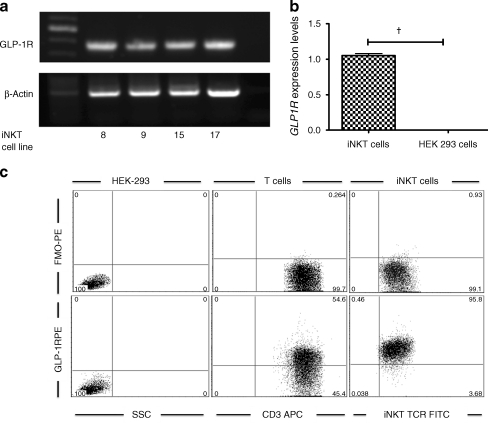
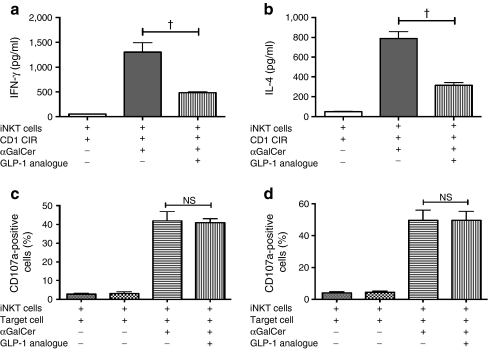
AIMS/HYPOTHESIS: The innate immune cells, invariant natural killer T cells (iNKT cells), are implicated in the pathogenesis of psoriasis, an inflammatory condition associated with obesity and other metabolic diseases, such as diabetes and dyslipidaemia. We observed an improvement in psoriasis severity in a patient within days of starting treatment with an incretin-mimetic, glucagon-like peptide-1 (GLP-1) receptor agonist. This was independent of change in glycaemic control. We proposed that this unexpected clinical outcome resulted from a direct effect of GLP-1 on iNKT cells. METHODS: We measured circulating and psoriatic plaque iNKT cell numbers in two patients with type 2 diabetes and psoriasis before and after commencing GLP-1 analogue therapy. In addition, we investigated the in vitro effects of GLP-1 on iNKT cells and looked for a functional GLP-1 receptor on these cells. RESULTS: The Psoriasis Area and Severity Index improved in both patients following 6 weeks of GLP-1 analogue therapy. This was associated with an alteration in iNKT cell number, with an increased number in the circulation and a decreased number in psoriatic plaques. The GLP-1 receptor was expressed on iNKT cells, and GLP-1 induced a dose-dependent inhibition of iNKT cell cytokine secretion, but not cytolytic degranulation in vitro. CONCLUSIONS/INTERPRETATION: The clinical effect observed and the direct interaction between GLP-1 and the immune system raise the possibility of therapeutic applications for GLP-1 in inflammatory conditions such as psoriasis.
Overview
The claims and statistics of this paper haven’t been checked yet.
Free: it reads the open-access text and checks the first 5 claims that cite a source we can check. Create a free account to check every claim.
Integrity signals
Registry
Cites
Statistics
Figures
Verification
Claims the paper makes
The claims and statistics of this paper haven’t been checked yet.
Free: it reads the open-access text and checks the first 5 claims that cite a source we can check. Create a free account to check every claim.
Claims other papers make about this one
Each is checked against this paper’s own text: does it say what the citing paper says it does?
The source backs part of the claim, not all of it — or backs it for a different population, condition or comparison.
In the citing paper
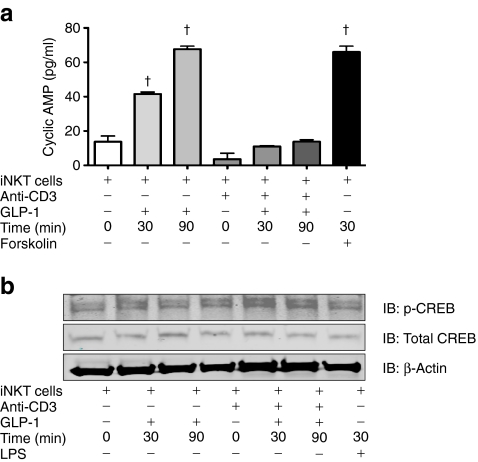
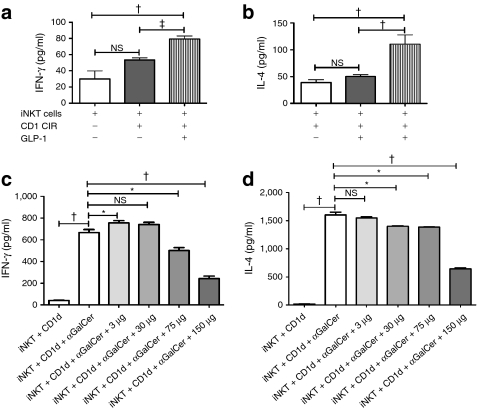
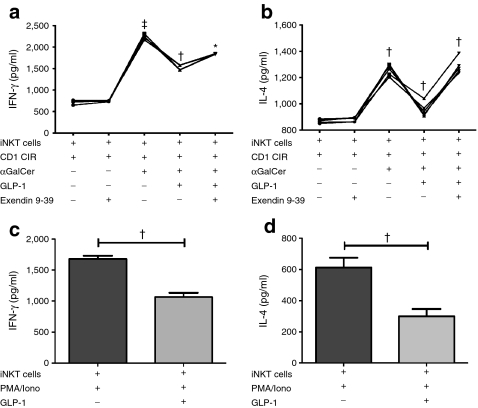
“Human iNKT cells treated with 3.5 nM liraglutide show increased cAMP within 30 minutes, and 18 nM liraglutide inhibits IFN-γ and IL-4 secretion upon α-galactosylceramide stimulation presented by CD1d-expressing cells (43).”
From Antiinflammatory actions of glucagon-like peptide-1–based therapies beyond metabolic benefits (2025) · cites this paper as [43]
Experimental — accuracy not yet measuredThe source backs part of the claim, not all of it — or backs it for a different population, condition or comparison.
In the citing paper
“Thus, GLP-1 therapy may be beneficial for the treatment of chronic inflammatory diseases including nonalcoholic steatohepatitis, atherosclerosis, neurodegenerative disorders, diabetic nephropathy, asthma, and psoriasis [14, 26–32].”
From Anti-Inflammatory Effects of GLP-1-Based Therapies beyond Glucose Control (2016) · cites this paper as [31]
Experimental — accuracy not yet measuredThe source backs part of the claim, not all of it — or backs it for a different population, condition or comparison.
In the citing paper
“In type 2 diabetes patients, GLP-1 and liraglutide also improve clinical symptoms of psoriasis, a skin inflammatory disease, by downregulation of invariant natural killer T cells [31, 113, 114].”
From Anti-Inflammatory Effects of GLP-1-Based Therapies beyond Glucose Control (2016) · cites this paper as [31]
Experimental — accuracy not yet measuredThe cited source says what the claim attributes to it.
In the citing paper
“In humans, GLP-1R immunoreactivity has been detected in T cells by flow cytometry, including in invariant natural killer T (iNKT) cells (43), PBMC T cells (36), and chimeric antigen receptor (CAR) T cells (44).”
From Antiinflammatory actions of glucagon-like peptide-1–based therapies beyond metabolic benefits (2025) · cites this paper as [43]
Experimental — accuracy not yet measuredIn the citing paper
“From the observations of this study, it seems that whatever role glucolipotoxicity may have in impairing GSIS in T2D is disconnected from mitochondrial dysfunction, which is surprising given the role of the mitochondria in ATP and reactive oxygen species (ROS) generation needed for both phases of insulin secretion.174,175”
From A review of current trends with type 2 diabetes epidemiology, aetiology, pathogenesis, treatments and future perspectives (2021) · cites this paper as [174]
Self-check
Percentages, sums and reported differences re-computed from the paper’s own numbers.
The self-check needs the paper’s full text.
Citations
Cites
1 retracted
Hattori, Y., Jojima, T., Tomizawa, A., Satoh, H., Hattori, S., Kasai, K., & Hayashi, T. (2010) · Diabetologia · doi:10.1007/s00125-010-1831-8 · Cited by 183
RetractedInflammation, stress, and diabetes
Wellen, K. E., & Hotamisligil, G. S. (2005) · Journal of Clinical Investigation · doi:10.1172/jci25102 · Cited by 4,143
The Physiology of Glucagon-like Peptide 1
Holst, J. J. (2007) · Physiological Reviews · doi:10.1152/physrev.00034.2006 · Cited by 3,371
Risk of myocardial infarction in patients with psoriasis
Gelfand, J. M., Neimann, A. L., Shin, D. B., Wang, X., Margolis, D. J., & Troxel, A. B. (2006) · JAMA · doi:10.1001/jama.296.14.1735 · Cited by 1,899 · cited 1×
“Both conditions are associated with chronic systemic inflammatory activation [5, 6] and an increased risk of cardiovascular morbidity and mortality [7–9].”
BackgroundBan, K., Noyan-Ashraf, M. H., Hoefer, J., Bolz, S.-S., Drucker, D. J., & Husain, M. (2008) · Circulation · doi:10.1161/circulationaha.107.739938 · Cited by 1,057 · cited 1×
“Cardiovascular [31–33], neuroprotective [34–36] and anti-inflammatory [37, 38] effects have been described, along with potential therapeutic implications for multiple disease states.”
BackgroundPrevalence of cardiovascular risk factors in patients with psoriasis
Neimann, A. L., Shin, D. B., Wang, X., Margolis, D. J., Troxel, A. B., & Gelfand, J. M. (2006) · Journal of the American Academy of Dermatology · doi:10.1016/j.jaad.2006.08.040 · Cited by 1,010
Nikolaidis, L. A., Mankad, S., Sokos, G. G., Miske, G., Shah, A., Elahi, D., & Shannon, R. P. (2004) · Circulation · doi:10.1161/01.cir.0000120505.91348.58 · Cited by 901 · cited 1×
“Cardiovascular [31–33], neuroprotective [34–36] and anti-inflammatory [37, 38] effects have been described, along with potential therapeutic implications for multiple disease states.”
BackgroundDeacon, C. F., Nauck, M. A., Toft-Nielsen, M., Pridal, L., Willms, B., & Holst, J. J. (1995) · Diabetes · doi:10.2337/diab.44.9.1126 · Cited by 878
Prevalence of metabolic syndrome in patients with psoriasis: a hospital-based case?control study
Gisondi, P., Tessari, G., Conti, A., Piaserico, S., Schianchi, S., Peserico, A., Giannetti, A., & Girolomoni, G. (2007) · British Journal of Dermatology · doi:10.1111/j.1365-2133.2007.07986.x · Cited by 675
Increased prevalence of the metabolic syndrome in patients with moderate to severe psoriasis
Sommer, D. M., Jenisch, S., Suchan, M., Christophers, E., & Weichenthal, M. (2006) · Archives of Dermatological Research · doi:10.1007/s00403-006-0703-z · Cited by 667
CD1d-restricted iNKT cells, the ‘Swiss-Army knife’ of the immune system
Matsuda, J. L., Mallevaey, T., Scott-Browne, J., & Gapin, L. (2008) · Current Opinion in Immunology · doi:10.1016/j.coi.2008.03.018 · Cited by 407
Kodera, R., Shikata, K., Kataoka, H. U., Takatsuka, T., Miyamoto, S., Sasaki, M., Kajitani, N., Nishishita, S., Sarai, K., Hirota, D., et al. (2011) · Diabetologia · doi:10.1007/s00125-010-2028-x · Cited by 394 · cited 1×
“Cardiovascular [31–33], neuroprotective [34–36] and anti-inflammatory [37, 38] effects have been described, along with potential therapeutic implications for multiple disease states.”
BackgroundIncreased risk for cardiovascular mortality in psoriasis inpatients but not in outpatients
Mallbris, L., Akre, O., Granath, F., Yin, L., Lindelöf, B., Ekbom, A., & Ståhle-Bäckdahl, M. (2004) · European Journal of Epidemiology · doi:10.1023/b:ejep.0000020447.59150.f9 · Cited by 390
Therapeutic Strategies Based on Glucagon-Like Peptide 1
Deacon, C. F. (2004) · Diabetes · doi:10.2337/diabetes.53.9.2181 · Cited by 296
Lynch, L., O'Shea, D., Winter, D. C., Geoghegan, J., Doherty, D. G., & O'Farrelly, C. (2009) · European Journal of Immunology · doi:10.1002/eji.200939349 · Cited by 257
Self-citationPsoriasis and the Risk of Diabetes and Hypertension: A Prospective Study of US Female Nurses
Qureshi, A. A., Choi, H. K., Setty, A. R., & Curhan, G. C. (2009) · Archives of Dermatology · doi:10.1001/archdermatol.2009.48 · Cited by 250
Shirakawa, J., Fujii, H., Ohnuma, K., Sato, K., Ito, Y., Kaji, M., Sakamoto, E., Koganei, M., Sasaki, H., Nagashima, Y., et al. (2011) · Diabetes · doi:10.2337/db10-1338 · Cited by 246
Testing the NKT cell hypothesis of human IDDM pathogenesis
Lee, P. T., Putnam, A. L., Benlagha, K., Teyton, L., Gottlieb, P. A., & Bendelac, A. S. (2002) · Journal of Clinical Investigation · doi:10.1172/jci15832 · Cited by 233
Are Natural Killer Cells Protecting the Metabolically Healthy Obese Patient?
Lynch, L. A., O'Connell, J. M., Kwasnik, A. K., Cawood, T. J., O'Farrelly, C., & O'Shea, D. B. (2009) · Obesity · doi:10.1038/oby.2008.565 · Cited by 228
Self-citationSpäh, F. (2008) · British Journal of Dermatology · doi:10.1111/j.1365-2133.2008.08780.x · Cited by 223
Bonish, B., Jullien, D., Dutronc, Y., Huang, B. B., Modlin, R., Spada, F. M., Porcelli, S. A., & Nickoloff, B. J. (2000) · The Journal of Immunology · doi:10.4049/jimmunol.165.7.4076 · Cited by 220
Testing the NKT cell hypothesis of human IDDM pathogenesis
Lee, P. T., Putnam, A., Benlagha, K., Teyton, L., Gottlieb, P. A., & Bendelac, A. (2002) · Journal of Clinical Investigation · doi:10.1172/jci0215832 · Cited by 213
Impaired immunity in obesity: suppressed but reversible lymphocyte responsiveness.
Tanaka, S., Inoue, S., Isoda, F., Waseda, M., Ishihara, M., Yamakawa, T., Sugiyama, A., Takamura, Y., & Okuda, K. (1993) · PubMed · Cited by 205
Molling, J. W., Langius, J. A. E., Langendijk, J. A., Leemans, C. R., Bontkes, H. J., van der Vliet, H. J. J., von Blomberg, B. M. E., Scheper, R. J., & van den Eertwegh, A. J. M. (2007) · Journal of Clinical Oncology · doi:10.1200/jco.2006.08.5787 · Cited by 205
McClean, P. L., Gault, V. A., Harriott, P., & Hölscher, C. (2010) · European Journal of Pharmacology · doi:10.1016/j.ejphar.2009.12.023 · Cited by 193
Suarez-Pinzon, W. L., Power, R. F., Yan, Y., Wasserfall, C., Atkinson, M., & Rabinovitch, A. (2008) · Diabetes · doi:10.2337/db08-0688 · Cited by 187
Hadjiyanni, I., Siminovitch, K. A., Danska, J. S., & Drucker, D. J. (2010) · Diabetologia · doi:10.1007/s00125-009-1643-x · Cited by 166 · cited 5×
“GLP-1R has also been demonstrated in murine immune tissues [20], and on T and B lymphocytes from mice [20, 21] and humans [22].”
BackgroundInfluentialNatural killer and natural killer-T cells in psoriasis
Cameron, A., Kirby, B., Fei, W., & Griffiths, C. E. M. (2002) · Archives of Dermatological Research · doi:10.1007/s00403-002-0349-4 · Cited by 154
Self-citationNeuroprotective properties of GLP-1: theoretical and practical applications
Holst, J. J., Burcelin, R., & Nathanson, E. (2011) · Current Medical Research and Opinion · doi:10.1185/03007995.2010.549466 · Cited by 150
Nickoloff, B. J., Bonish, B. K., Huang, B. B., & Porcelli, S. A. (2000) · Journal of Dermatological Science · doi:10.1016/s0923-1811(00)00120-1 · Cited by 143
Exendin-4 modulates diabetes onset in nonobese diabetic mice
Hadjiyanni, I., Baggio, L. L., Poussier, P., & Drucker, D. J. (2008) · Endocrinology · doi:10.1210/en.2007-1137 · Cited by 110
Kim, S.-J., Nian, C., Doudet, D. J., & McIntosh, C. H. S. (2009) · Diabetes · doi:10.2337/db08-1101 · Cited by 106
Circulating natural killer cells in psoriasis
Cameron, A. L., Kirby, B., & Griffiths, C. E. M. (2003) · British Journal of Dermatology · doi:10.1046/j.1365-2133.2003.05319.x · Cited by 102
Self-citationEnergy restriction restores the impaired immune response in overweight (cafeteria) rats
Lamas, Ó., Martínez, J. A., & Martí, A. (2004) · The Journal of Nutritional Biochemistry · doi:10.1016/j.jnutbio.2004.02.003 · Cited by 95
Girard, J. R. (2008) · Diabetes & Metabolism · doi:10.1016/j.diabet.2008.09.001 · Cited by 87
Mal Mediates TLR-Induced Activation of CREB and Expression of IL-10
Mellett, M., Atzei, P., Jackson, R. P., O'Neill, L. A. J., & Moynagh, P. N. (2011) · The Journal of Immunology · doi:10.4049/jimmunol.1002739 · Cited by 87
Self-citationZhang, J., Tokui, Y., Yamagata, K., Kozawa, J., Sayama, K., Iwahashi, H., Okita, K., Miuchi, M., Konya, H., Hamaguchi, T., et al. (2007) · Diabetologia · doi:10.1007/s00125-007-0737-6 · Cited by 84
Moulin, C. M., Marguti, I., Peron, J. P. S., Halpern, A., & Rizzo, L. V. (2010) · Obesity Surgery · doi:10.1007/s11695-010-0250-8 · Cited by 76
CHILTON, R. J., Wyatt, J., Nandish, S., OLIVEROS, R. A., & Lujan, M. (2010) · The American Journal of Medicine · doi:10.1016/j.amjmed.2010.11.004 · Cited by 75
Liu, T., Uemura, Y., Suzuki, M., Narita, Y., Hirata, S., Ohyama, H., Ishihara, O., & Matsushita, S. (2008) · European Journal of Immunology · doi:10.1002/eji.200737838 · Cited by 71
Gastric bypass surgery improves psoriasis
Hossler, E. W., Maroon, M. S., & Mowad, C. (2010) · Journal of the American Academy of Dermatology · doi:10.1016/j.jaad.2010.01.001 · Cited by 70
Taniguchi, M., Tashiro, T., Dashtsoodol, N., Hongo, N., & Watarai, H. (2010) · International Immunology · doi:10.1093/intimm/dxp104 · Cited by 70
Glucagon-like peptide-1(1-37) inhibits chemokine-induced migration of human CD4-positive lymphocytes
Marx, N., Burgmaier, M., Heinz, P., Ostertag, M., Hausauer, A., Bach, H., Durst, R., Hombach, V., & Walcher, D. (2010) · Cellular and Molecular Life Sciences · doi:10.1007/s00018-010-0396-5 · Cited by 62
Role of the incretin system in the remission of type 2 diabetes following bariatric surgery
Mingrone, G. (2008) · Nutrition Metabolism and Cardiovascular Diseases · doi:10.1016/j.numecd.2008.07.004 · Cited by 56
Glucagon-Like Peptide-1 Inhibits Blood-Brain Glucose Transfer in Humans
Lerche, S., Brock, B., Rungby, J., Bøtker, H. E., Møller, N., Rodell, A., Bibby, B. M., Holst, J. J., Schmitz, O., & Gjedde, A. (2008) · Diabetes · doi:10.2337/db07-1162 · Cited by 52
Exendin‐4 Therapy in NOD Mice with New‐Onset Diabetes Increases Regulatory T Cell Frequency
Xue, S., Wasserfall, C. H., Parker, M., Brusko, T. M., McGrail, S., McGrail, K., Moore, M., Campbell‐Thompson, M., Schatz, D. A., Atkinson, M. A., et al. (2008) · Annals of the New York Academy of Sciences · doi:10.1196/annals.1447.049 · Cited by 51
Immunopathogenesis of psoriasis: focus on natural killer T cells
Peternel, S., & Kaštelan, M. (2009) · Journal of the European Academy of Dermatology and Venereology · doi:10.1111/j.1468-3083.2009.03292.x · Cited by 46
Profound invariant natural killer T-cell deficiency in inflammatory arthritis
Tudhope, S. J., von Delwig, A. A., Falconer, J., Pratt, A. G., Woolridge, T., Wilson, G., Isaacs, J. D., & Ng, W. (2010) · Annals of the Rheumatic Diseases · doi:10.1136/ard.2009.125849 · Cited by 36
Kaieda, S., Tomi, C., Oki, S., Yamamura, T., & Miyake, S. (2007) · Arthritis & Rheumatism · doi:10.1002/art.22714 · Cited by 32
Overweight and Obesity as Determinants of Cardiovascular Risk: The Framingham Experience
Wilson, P. W. F., D'Agostino, R. B., Sullivan, L., Parise, H., & Kannel, W. B. (2002) · Archives of Internal Medicine · doi:10.1001/archinte.162.16.1867 · Cited by 22
Cited by
GLP-1 receptor agonists in the treatment of type 2 diabetes - state-of-the-art
Nauck, M. A., Quast, D. R., Wefers, J., & Meier, J. J. (2021) · Molecular Metabolism · doi:10.1016/j.molmet.2020.101102 · Cited by 1,647
“Two case reports generated interest in using GLP-1 RAs as a potentially novel treatment option for psoriasis [235,236].”
BackgroundPharmacology, physiology, and mechanisms of incretin hormone action.
Campbell, J. E., & Drucker, D. J. (2013) · Cell Metabolism · doi:10.1016/j.cmet.2013.04.008 · Cited by 1,500
The Cardiovascular Biology of Glucagon-like Peptide-1
Drucker, D. J. (2016) · Cell Metabolism · doi:10.1016/j.cmet.2016.06.009 · Cited by 665
Anxiety, depression, and the microbiome: A role for gut peptides
Lach, G., Schellekens, H., Dinan, T. G., & Cryan, J. F. (2018) · Neurotherapeutics · doi:10.1007/s13311-017-0585-0 · Cited by 573
Anti-Inflammatory Effects of GLP-1-Based Therapies beyond Glucose Control
Lee, Y.-S., & Jun, H.-S. (2016) · Mediators of Inflammation · doi:10.1155/2016/3094642 · Cited by 530
“In type 2 diabetes patients, GLP-1 and liraglutide also improve clinical symptoms of psoriasis, a skin inflammatory disease, by downregulation of invariant natural killer T cells [31, 113, 114].”
Background
Metadata
- Authors
- Hogan, A. E., Tobin, A. M., Ahern, T., Corrigan, M. A., Gaoatswe, G., Jackson, R., O’Reilly, V., Lynch, L., Doherty, D. G., Moynagh, P. N., Kirby, B., O’Connell, J., & O’Shea, D.
- Affiliations
- University College Dublin (IE)
- National University of Ireland, Maynooth (IE)
- Trinity College Dublin (IE)
- ORCID
- Venue
- Diabetologia
- Published
- 2011-07-09
- Volume
- 54
- Issue
- 11
- Pages
- 2745-2754
- ISSN
- 0012-186X (ISSN-L)
- 1432-0428
- PMC
- PMC3188710
- OpenAlex
- W2131873059
- Cited by
- 191
- References
- 50
- Citations by year
- 2026: 22 · 2025: 31 · 2024: 12 · 2023: 11 · 2022: 14 · 2021: 9 · 2020: 10 · 2019: 13 · 2018: 7 · 2017: 10 · 2016: 12 · 2015: 6 · 2014: 15 · 2013: 11 · 2012: 6
- FWCI
- 4.82
- Type
- journal article
- Language
- en
- Open access
- hybrid
- doi.org
- Licence
- cc-by-nc
- Locations
- Diabetologia (publishedVersion, cc-by-nc)
- PubMed Central (publishedVersion, cc-by-nc)
- PubMed (publishedVersion)
- Maynooth University ePrints and eTheses Archive (Maynooth University) (acceptedVersion)
- Lenus, The Irish Health Repository (Dr Steevens Hospital Library) (submittedVersion)
- Topics
- Life Sciences › Immunology and Microbiology › Immunology › Psoriasis: Treatment and Pathogenesis
- Health Sciences › Medicine › Dermatology › Skin Diseases and Diabetes
- Health Sciences › Medicine › Endocrinology, Diabetes and Metabolism › Diabetes Treatment and Management
- Keywords
- glucagon-like peptide-1, GLP-1 receptor agonists, invariant natural killer T cells, psoriasis, type 2 diabetes, obesity, incretin-based therapy, innate immunity, cytokine production, psoriatic plaques, metabolic inflammation
- MeSH terms
- Glucagon-Like Peptide-1 Receptor, Liraglutide, Cell Count, Cell Line, Diabetes Mellitus, Type 2, Female, Gene Expression Regulation, Humans, Hypoglycemic Agents, Immunologic Factors, Male, Middle Aged, Obesity, Psoriasis, RNA, Messenger, Severity of Illness Index, Skin, Signal Transduction, Cytokines, Receptors, Glucagon, Glucagon-Like Peptide 1, Natural Killer T-Cells, Molecular Targeted Therapy
About these checks
Registry, retraction, Cites and statistics results are computed, not judged, with one exception: a printed reference that no index lists is read once by a model before it counts as a citation error. Claims are extracted by a model and kept only when their quote appears verbatim in the text; each cited source is then checked, with a model’s help, for whether it says what the claim relies on. Those verdicts can be wrong — read the claim’s quote and the cited source before relying on one.
Statistics and arithmetic are recomputed, not judged.
Confidence bands are shown only for fields calibrated on our annotated test set. None is calibrated yet, so no band is shown.
What counts as a claim ›How we measure confidence ›How we check this ›
Are you an author, or do you see a problem with this page? Request a review
Data sources
Bibliographic data: Semantic Scholar, OpenAlex, Crossref.
Contains information from the Semantic Scholar Academic Graph Datasets, made available under the ODC Attribution License (ODC-BY 1.0).
Semantic Scholar’s data is described in: Kinney, R., et al. (2023). The Semantic Scholar Open Data Platform. arXiv:2301.10140.
