

Reduced risk of heart failure with intensified multifactorial intervention in individuals with type 2 diabetes and microalbuminuria: 21 years of follow-up in the randomised Steno-2 study
Open accessThe DOI matches its Crossref record; 40 of the 41 references it cites were found in a registry or an index.
Abstract
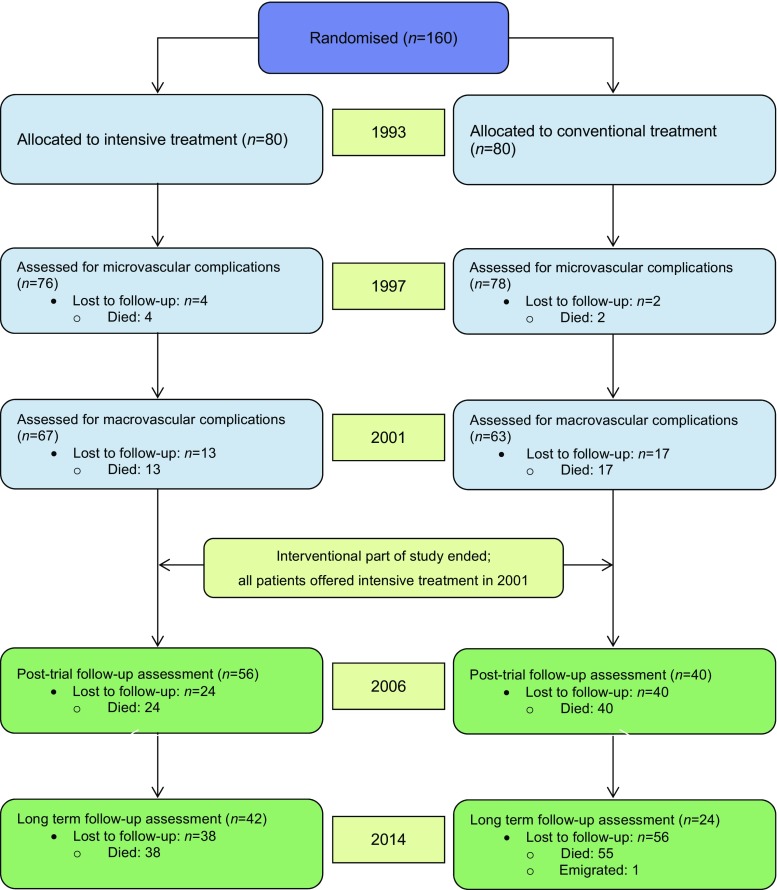
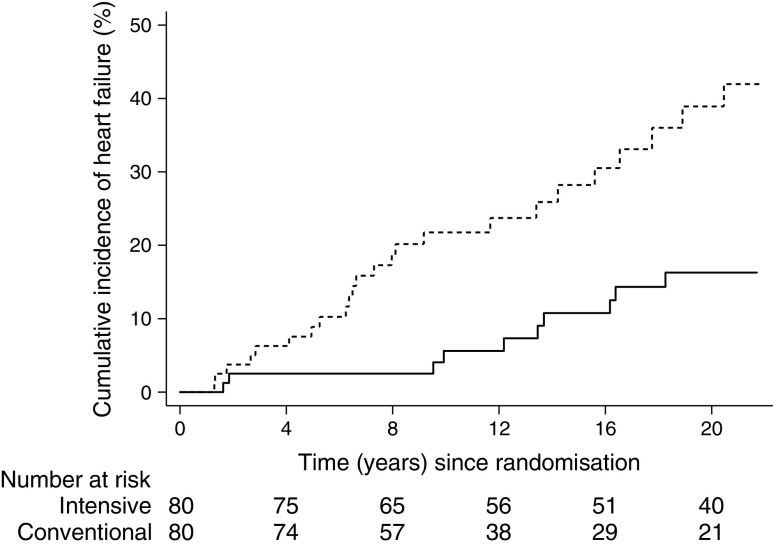
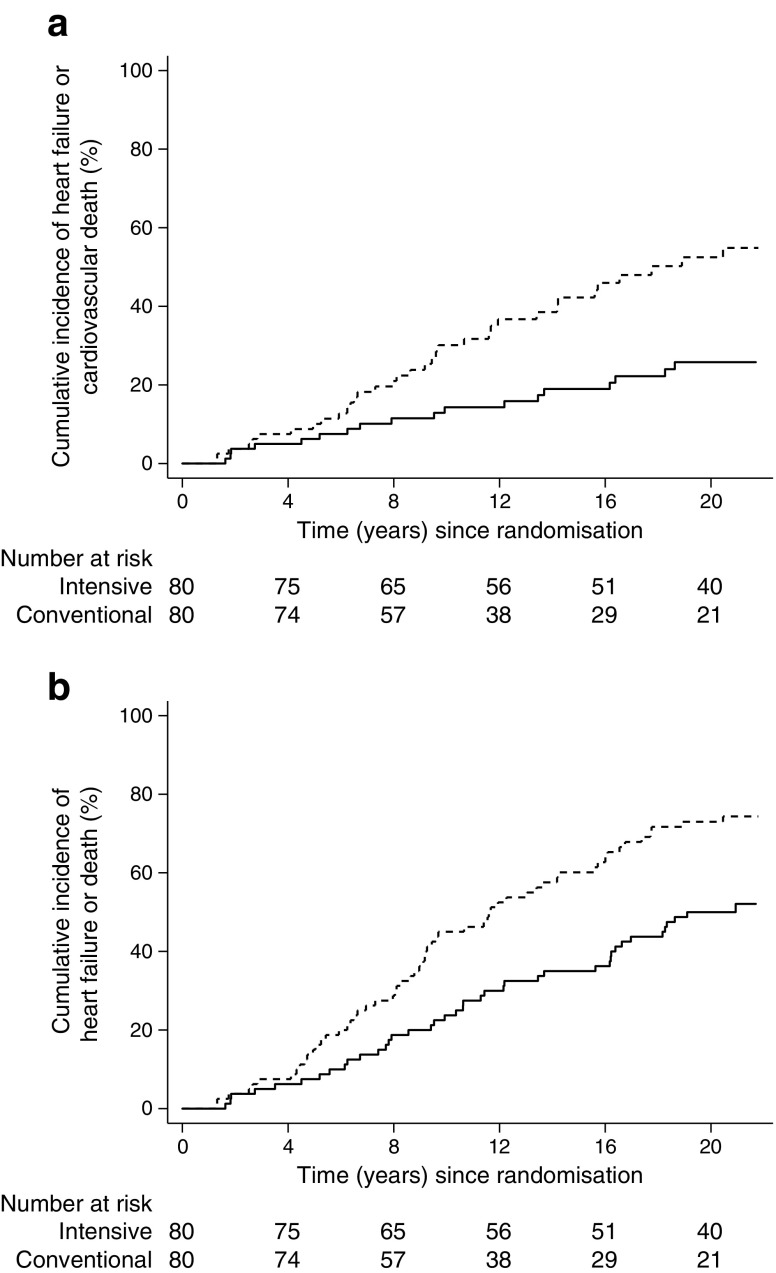
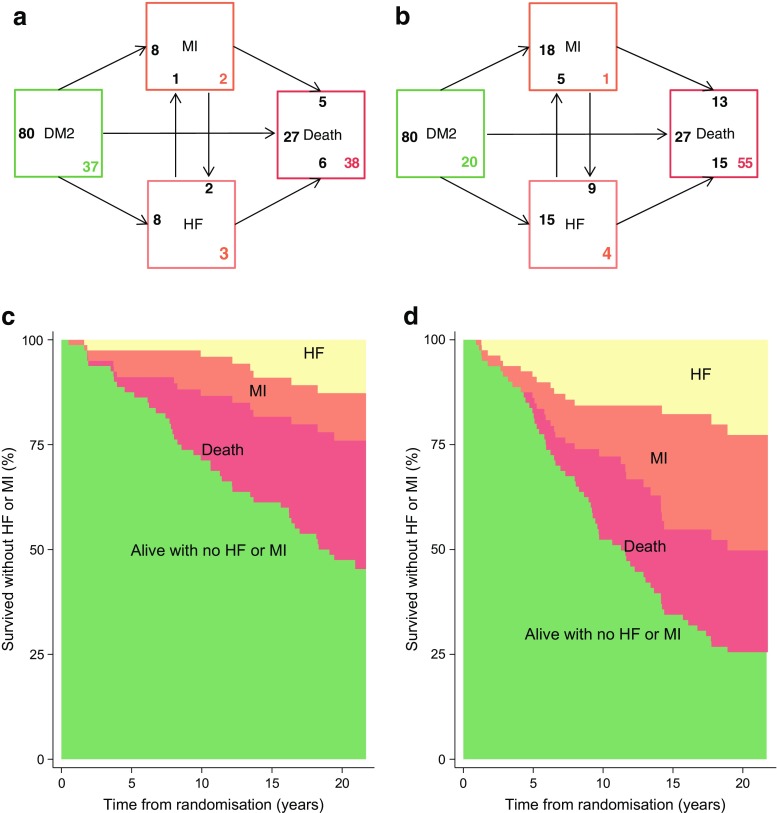
AIMS/HYPOTHESIS: In type 2 diabetes mellitus, heart failure is a frequent, potentially fatal and often forgotten complication. Glucose-lowering agents and adjuvant therapies modify the risk of heart failure. We recently reported that 7.8 years of intensified compared with conventional multifactorial intervention in individuals with type 2 diabetes and microalbuminuria in the Steno-2 study reduced the risk of cardiovascular disease and prolonged life over 21.2 years of follow-up. In this post hoc analysis, we examine the impact of intensified multifactorial intervention on the risk of hospitalisation for heart failure. METHODS: One hundred and sixty individuals were randomised to conventional or intensified multifactorial intervention, using sealed envelopes. The trial was conducted using the Prospective, Randomised, Open, Blinded Endpoints (PROBE) design. After 7.8 years, all individuals were offered intensified therapy and the study continued as an observational follow-up study for an additional 13.4 years. Heart-failure hospitalisations were adjudicated from patient records by an external expert committee blinded for treatment allocation. Event rates were compared using a Cox regression model adjusted for age and sex. RESULTS: Eighty patients were assigned to each treatment group. Ten patients undergoing intensive therapy vs 24 undergoing conventional therapy were hospitalised for heart failure during follow-up. The HR (95% CI) was 0.30 (0.14, 0.64), p = 0.002 in the intensive-therapy group compared with the conventional-therapy group. Including death in the endpoint did not lead to an alternate overall outcome; HR 0.51 (0.34, 0.76), p = 0.001. In a pooled cohort analysis, an increase in plasma N-terminal pro-B-type natriuretic peptide (NT-proBNP) during the first two years of the trial was associated with incident heart failure. CONCLUSIONS/INTERPRETATION: Intensified, multifactorial intervention for 7.8 years in type 2 diabetic individuals with microalbuminuria reduced the risk of hospitalisation for heart failure by 70% during a total of 21.2 years of observation. TRIAL REGISTRATION: ClinicalTrials.gov NCT00320008.
Overview
The claims and statistics of this paper haven’t been checked yet.
Free: it reads the open-access text and checks the first 5 claims that cite a source we can check. Create a free account to check every claim.
Integrity signals
Registry
Cites
Statistics
Figures
Verification
Claims the paper makes
The claims and statistics of this paper haven’t been checked yet.
Free: it reads the open-access text and checks the first 5 claims that cite a source we can check. Create a free account to check every claim.
Claims other papers make about this one
Each is checked against this paper’s own text: does it say what the citing paper says it does?
The cited source says what the claim attributes to it.
In the citing paper
“Overall, this resulted in a 7.9 year gain of life expectancy.363”
From 2023 ESC guidelines for the management of cardiovascular disease in patients with diabetes. (2023) · cites this paper as [363]
Self-check
Percentages, sums and reported differences re-computed from the paper’s own numbers.
The self-check needs the paper’s full text.
Citations
Cites
A Proportional Hazards Model for the Subdistribution of a Competing Risk
Fine, J. P., & Gray, R. J. (1999) · Journal of the American Statistical Association · doi:10.1080/01621459.1999.10474144 · Cited by 14,290 · cited 2×
“A number of exploratory analyses were carried out to confirm the validity of the results: in order to investigate the difference in distribution of primary and secondary heartfailure events between groups, and to evaluate the impact of interventions on each type, we used a competing-risks regressionmodel (Fine and Gra…”
Ahmed, A., Jorna, T., & Bhandari, S. (2016) · Nephron · doi:10.1159/000447068 · Cited by 11,717
(2000) · New England Journal of Medicine · doi:10.1056/nejm200001203420301 · Cited by 8,663
Canagliflozin and Cardiovascular and Renal Events in Type 2 Diabetes
Neal, B., Perkovic, V., Mahaffey, K. W., de Zeeuw, D., Fulcher, G., Erondu, N., Shaw, W., Law, G., Desai, M., & Matthews, D. R. (2017) · New England Journal of Medicine · doi:10.1056/nejmoa1611925 · Cited by 7,830
Liraglutide and Cardiovascular Outcomes in Type 2 Diabetes
Marso, S. P., Daniels, G. H., Brown-Frandsen, K., Kristensen, P., Mann, J. F. E., Nauck, M. A., Nissen, S. E., Pocock, S., Poulter, N. R., Ravn, L. S., et al. (2016) · New England Journal of Medicine · doi:10.1056/nejmoa1603827 · Cited by 7,629
Brenner, B. M., Cooper, M. E., de Zeeuw, D., Keane, W. F., Mitch, W. E., Parving, H.-H., Remuzzi, G., Snapinn, S. M., Zhang, Z., & Shahinfar, S. (2001) · New England Journal of Medicine · doi:10.1056/nejmoa011161 · Cited by 7,493 · cited 1×
“In the following studies (all including patients with type 2 diabetes and micro- or macroalbuminuria), heart failure was more common than other cardiovascular complications: reduction of Endpoints in NIDDM with the Angiotensin II Antagonist Losartan (RENAAL) [21], the Irbesartan Diabetic Nephropathy Trial (IDNT) [22],…”
Self-citationSemaglutide and Cardiovascular Outcomes in Patients with Type 2 Diabetes
Marso, S. P., Bain, S. C., Consoli, A., Eliaschewitz, F. G., Jódar, E., Leiter, L. A., Lingvay, I., Rosenstock, J., Seufert, J., Warren, M. L., et al. (2016) · New England Journal of Medicine · doi:10.1056/nejmoa1607141 · Cited by 6,900
Multifactorial intervention and cardiovascular disease in patients with type 2 diabetes
Gæde, P., Vedel, P., Larsen, N., Jensen, G. V. H., Parving, H.-H., & Pedersen, O. (2003) · New England Journal of Medicine · doi:10.1056/nejmoa021778 · Cited by 4,378
Self-citationEffect of a multifactorial intervention on mortality in type 2 diabetes
Gæde, P., Lund-Andersen, H., Parving, H.-H., & Pedersen, O. (2008) · New England Journal of Medicine · doi:10.1056/nejmoa0706245 · Cited by 3,465 · cited 1×
“3 years of follow-up), we reported a 46% reduction in total mortality of patients in the arm originally allocated the intensive intervention [15].”
Self-citationTargeting the KEAP1-NRF2 system to prevent kidney disease progression
Nezu, M., Suzuki, N., & Yamamoto, M. (2017) · American Journal of Nephrology · doi:10.1159/000475890 · Cited by 3,447
Cited by
Heart Disease and Stroke Statistics—2020 Update: A Report From the American Heart Association
Virani, S. S., Alonso, A., Benjamin, E. J., Bittencourt, M. S., Callaway, C. W., Carson, A. P., Chamberlain, A. M., Chang, A. R., Cheng, S., Delling, F. N., et al. (2020) · Circulation · doi:10.1161/cir.0000000000000757 · Cited by 9,175
Collet, J.-P., Thiele, H., Barbato, E., Barthélémy, O., Bauersachs, J., Bhatt, D. L., Dendale, P., Dorobantu, M., Edvardsen, T., Folliguet, T., et al. (2021) · European Heart Journal · doi:10.1093/eurheartj/ehaa575 · Cited by 5,037
Cosentino, F., Grant, P. J., Aboyans, V., Bailey, C. J., Ceriello, A., Delgado, V., Federici, M., Filippatos, G., Grobbee, D. E., Hansen, T. B., et al. (2020) · European Heart Journal · doi:10.1093/eurheartj/ehz486 · Cited by 4,763
Self-citation2023 ESC guidelines for the management of cardiovascular disease in patients with diabetes.
Marx, N., Federici, M., Schütt, K., Müller-Wieland, D., Ajjan, R. A., Antunes, M. J., Christodorescu, R. M., Crawford, C., Di Angelantonio, E., Eliasson, B., et al. (2023) · European Heart Journal · doi:10.1093/eurheartj/ehad192 · Cited by 1,642
Self-citationDiabetic vascular diseases: molecular mechanisms and therapeutic strategies
Li, Y., Liu, Y., Liu, S., Gao, M., Wang, W., Chen, K., Huang, L., & Liu, Y. (2023) · Signal Transduction and Targeted Therapy · doi:10.1038/s41392-023-01400-z · Cited by 704
Picard, M., Tauveron, I., Magdasy, S., Benichou, T., Bagheri, R., Ugbolue, U. C., Navel, V., & Dutheil, F. (2021) · PLoS ONE · doi:10.1371/journal.pone.0251863 · Cited by 130
Andreozzi, F., Candido, R., Corrao, S., Fornengo, R., Giancaterini, A., Ponzani, P., Ponziani, M. C., Tuccinardi, F., & Mannino, D. (2020) · Diabetology & Metabolic Syndrome · doi:10.1186/s13098-020-00559-7 · Cited by 128
Wright, A. K., Suarez-Ortegon, M. F., Read, S. H., Kontopantelis, E., Buchan, I., Emsley, R., Sattar, N., Ashcroft, D. M., Wild, S. H., & Rutter, M. K. (2020) · Circulation · doi:10.1161/circulationaha.120.046783 · Cited by 117
“Current smoking, n (%) 67 680 (20) 19 270 (19) 61 344 (17)”
Ndumele, C. E., Rodríguez, F., Dixon, D. L., Khan, S. S., Mukherjee, D., Bajaj, M. S., Bangalore, S., Bozkurt, B., Breathett, K. K., Clarke, S. L., et al. (2026) · Circulation · doi:10.1161/cir.0000000000001453 · Cited by 161
Ndumele, C. E., Rodriguez, F., Dixon, D. L., Khan, S. S., Mukherjee, D., Bajaj, M., Bangalore, S., Bozkurt, B., Breathett, K., Clarke, S. L., et al. (2026) · JACC · doi:10.1016/j.jacc.2026.03.056 · Cited by 90
Coronary Artery Disease and Type 2 Diabetes: A Proteomic Study
Ferrannini, G., Manca, M. L., Magnoni, M., Andreotti, F., Andreini, D., Latini, R., Maseri, A., Maggioni, A. P., Ostroff, R. M., Williams, S. A., et al. (2020) · Diabetes Care · doi:10.2337/dc19-1902 · Cited by 90
Mathiesen, A. S., Egerod, I., Jensen, T., Kaldan, G., Langberg, H., & Thomsen, T. (2018) · Diabetes, Metabolic Syndrome and Obesity: Targets and Therapy · doi:10.2147/dmso.s179301 · Cited by 79
“The most distressed persons are also more likely to have high blood pressure(60) and high LDL cholesterol,(5) both factors equally important as HbA1c for prevention of microand macrovascular complications.(61) There is evidence for an association between DD and adherence to medication.”
Ferrannini, G., De Bacquer, D., De Backer, G., Kotseva, K., Mellbin, L., Wood, D., Rydén, L., collaborators, E. V., Gale, C. P., Beleslin, B., et al. (2020) · Diabetes Care · doi:10.2337/dc19-2165 · Cited by 75
Khan, S. S., Breathett, K., Braun, L. T., Chow, S. L., Gupta, D. K., Lekavich, C., Lloyd-Jones, D. M., Ndumele, C. E., Rodriguez, C. J., Allen, L. A., et al. (2025) · Circulation · doi:10.1161/cir.0000000000001307 · Cited by 75
“121”
The Potential of Albuminuria as a Biomarker of Diabetic Complications
Raja, P., Maxwell, A. P., & Brazil, D. P. (2020) · Cardiovascular Drugs and Therapy · doi:10.1007/s10557-020-07035-4 · Cited by 78
Şahin, İ., Bakıner, O., Demir, T., Sari, R., & Atmaca, A. A. (2024) · Diabetes Therapy · doi:10.1007/s13300-024-01612-8 · Cited by 79
“…(7.8 years of intensified treatment), median time before first cardio-vascular event after randomization was found to be 8.1 years longer along with a median of 7.9 years of gain of life in the intensive treat-ment group, as matched by time free from incident cardiovascular events [32, 98].”
BackgroundInfluentialKodama*, S., Fujihara, K., Horikawa, C., Sato, T., Iwanaga, M., Yamada, T., Kato, K., Watanabe, K., Shimano, H., Izumi, T., et al. (2020) · ESC Heart Failure · doi:10.1002/ehf2.12782 · Cited by 63
Nelson, A. J., Peterson, E. D., & Pagidipati, N. J. (2019) · Progress in Cardiovascular Diseases · doi:10.1016/j.pcad.2019.07.001 · Cited by 52
Inzucchi, S. E., Khunti, K., FITCHETT, D. H., Wanner, C., Mattheus, M., George, J. T., Ofstad, A. P., & Zinman, B. (2020) · The Journal of Clinical Endocrinology & Metabolism · doi:10.1210/clinem/dgaa321 · Cited by 50
The AHA/ACC/HFSA 2022 Heart Failure Guidelines: Changing the Focus to Heart Failure Prevention
Abovich, A., Matasic, D. S., Cardoso, R. N., Ndumele, C. E., Blumenthal, R. S., Blankstein, R., & Gulati, M. (2023) · American Journal of Preventive Cardiology · doi:10.1016/j.ajpc.2023.100527 · Cited by 53
“factor control was associated with a 70% reduction in incident HF in adults with type 2 diabetes and albuminuria [32].”
BackgroundMolecular Genetics of Abnormal Redox Homeostasis in Type 2 Diabetes Mellitus
Azarova, I. E., Polonikov, A., & Klyosova, E. Y. (2023) · International Journal of Molecular Sciences · doi:10.3390/ijms24054738 · Cited by 41
“The genetic contribution to dia‐ betes is demonstrated by familial aggregation [124] and a high concordance rate for T2D in monozygotic twins.”
BackgroundCollet, J., Thiele, H., Barbato, E., Barthélémy, O., Bauersachs, J. K., Bhatt, D. L., Dendale, P., Dorobanţu, M., Edvardsen, T., Folliguet, T. A., et al. (2021) · Revista Española de Cardiología · doi:10.1016/j.recesp.2020.12.024 · Cited by 47
Tye, S. C., Jongs, N., Coca, S. G., Sundström, J., Arnott, C. G., Neal, B. C., Perkovic, V., Mahaffey, K. W., Vart, P., & Heerspink, H. J. L. (2022) · Cardiovascular Diabetology · doi:10.1186/s12933-022-01619-0 · Cited by 35
“, HbA1c or albuminuria) are consistent with previous studies showing the micro- and macrovascular complications in patients with type 2 diabetes are determined by multiple risk markers, and support the measurement of biomarker panels to adequately capture individual risk and guide individualized treatment decisions [3…”
ResultGourdy, P., Schiele, F., Halimi, J., Kownator, S., Hadjadj, S., & Valensi, P. E. (2023) · Frontiers in Cardiovascular Medicine · doi:10.3389/fcvm.2023.1227769 · Cited by 37
Cardiovascular, kidney, and metabolic health: an actionable vision for heart failure prevention
Ostrominski, J. W., CHENG, A. Y. Y., Nelson, A. J., Neuen, B. L., Sattar, N. A., Tuttle, K. R., & Vaduganathan, M. (2025) · The Lancet · doi:10.1016/s0140-6736(25)01384-4 · Cited by 35
Intensified Multifactorial Intervention in Patients with Type 2 Diabetes Mellitus
Sasako, T., Yamauchi, T., & Ueki, K. (2023) · Diabetes & Metabolism Journal · doi:10.4093/dmj.2022.0325 · Cited by 35
“In sub-analyses, intensive therapy was associated with a significant reduction in stroke [24] and heart failure [25], as well as a significant reduction in the combined renal events including mortality, with the annual eGFR decline shown to be less rapid with intensive therapy (3.”
BackgroundGæde, P., Oellgaard, J., Kruuse, C., Rossing, P., Parving, H.-H., & Pedersen, O. (2019) · Diabetologia · doi:10.1007/s00125-019-4920-3 · Cited by 29
“Reproduced from [8] under the terms of the Creative Commons Attribution 4.”
Self-citationEducation programmes for people with chronic kidney disease and diabetes
Cashmore, B. A., Cooper, T. E., Evangelidis, N., Green, S. C., Lopez‐Vargas, P. A., & Tunnicliffe, D. J. (2024) · Cochrane Database of Systematic Reviews · doi:10.1002/14651858.cd007374.pub3 · Cited by 33
Araki, E., Tanaka, A., Inagaki, N., Ito, H., Ueki, K., Murohara, T., Imai, K., Sata, M., Sugiyama, T., Ishii, H., et al. (2020) · Circulation Journal · doi:10.1253/circj.cj-20-0865 · Cited by 26
Sun, P., Wan, Z., & Liu, Y. (2026) · Medicine Bulletin · doi:10.1002/mdb2.70020 · Cited by 30
Risk of Incident Heart Failure in Individuals With Early-Onset Type 2 Diabetes
Liu, J., Liu, S., Wang, J., Lee, J., Tang, J. I.-S., Gurung, R. L., Ang, K., Shao, Y. M., Subramaniam, T., Tang, W. E., et al. (2021) · The Journal of Clinical Endocrinology & Metabolism · doi:10.1210/clinem/dgab620 · Cited by 24
Diagnosing and managing diabetic somatic and autonomic neuropathy
Azmi, S., Ferdousi, M., Kalteniece, A., Almuhannadi, H., Al‐Mohamedi, A., Hadid, N. H., Mahmoud, S., Bhat, H., Gad, H., Khan, A., et al. (2019) · Therapeutic Advances in Endocrinology and Metabolism · doi:10.1177/2042018819826890 · Cited by 23
Ferrannini, G., Norhammar, A., Gyberg, V., Mellbin, L., & Rydén, L. (2020) · Diabetes Care · doi:10.2337/dci20-0002 · Cited by 29
de Carvalho, L. S. F., Gioppato, S., Fernandez, M. D., Trindade, B. C., Silva, J. C. Q. E., Miranda, R. G. S., Matos‐Souza, J. R., Nadruz, W., Avila, S., & Sposito, A. C. (2020) · Value in Health · doi:10.1016/j.jval.2020.08.2091 · Cited by 24
Gæde, J., Oellgaard, J., Ibsen, R., Gæde, P., Nørtoft, E., Parving, H., Kjellberg, J., & Pedersen, O. B. (2018) · Diabetologia · doi:10.1007/s00125-018-4739-3 · Cited by 21
Self-citationAge at diagnosis of type 2 diabetes and cardiovascular risk factor profile: A pooled analysis
Barker, M. M., Zaccardi, F., Brady, E. M., Gulsin, G. S., Hall, A. P., Henson, J., Htike, Z. Z., Khunti, K., McCann, G. P., Redman, E. L., et al. (2022) · World Journal of Diabetes · doi:10.4239/wjd.v13.i3.260 · Cited by 19
Risk factor control and cardiovascular events in patients with type 2 diabetes mellitus
Song, D. K., Hong, Y. S., Sung, Y., & Lee, H. (2024) · PLoS ONE · doi:10.1371/journal.pone.0299035 · Cited by 22
“Intensified multiple risk factor control reduced the risk of stroke and hospitalization for heart failure in 160 Danish patients of European descent with T2DM and albuminuria during 21 years of follow-up in the Steno-2 Study [15,16].”
BackgroundFadini, G. P., Prato, S. D., Avogaro, A., & Solini, A. (2021) · Diabetes Obesity and Metabolism · doi:10.1111/dom.14599 · Cited by 21
“Landmark studies have illustrated the importance of glucose-lowering therapy, statin use, blood pressure control, and multifactorial intervention in reducing the risk of cardiovascular outcomes among people with type 2 diabetes (T2D).(1,2) The clinical implementation of these findings along with lifestyle intervention…”
BackgroundTherapeutic Inertia: Still a Long Way to Go That Cannot Be Postponed
Mata‐Cases, M., Franch‐Nadal, J., Gratacòs, M., & Mauricio, D. (2020) · Diabetes Spectrum · doi:10.2337/ds19-0018 · Cited by 22
The impact of diabetes on heart failure development: The cardio-renal-metabolic connection
Valensi, P. E., Prévost, G., Pinto, S., Halimi, J., & Donal, E. (2021) · Diabetes Research and Clinical Practice · doi:10.1016/j.diabres.2021.108831 · Cited by 21
Insulin Receptors and Insulin Action in the Heart: The Effects of Left Ventricular Assist Devices
Pantazi, K., Karlafti, E., Bekiaridou, Α., Didagelos, M., Ziakas, A., & Didangelos, T. (2022) · Biomolecules · doi:10.3390/biom12040578 · Cited by 18
“8 years exhibited a markedly (about 70%) lower risk of hospitalization for heart failure [56] and a substantial increase in lifespan (by a median of 7.”
BackgroundRisk factor reduction in type 2 diabetes demands a multifactorial approach
Rydén, L., Ferrannini, G., & Mellbin, L. (2019) · European Journal of Preventive Cardiology · doi:10.1177/2047487319872015 · Cited by 21
the directors of the JCS, J., Araki, E., Tanaka, A., Inagaki, N., Ito, H., Ueki, K., Murohara, T., Imai, K., Sata, M., Sugiyama, T., et al. (2020) · Diabetology International · doi:10.1007/s13340-020-00471-5 · Cited by 17
Didangelos, T., & Veves, A. (2019) · Current Vascular Pharmacology · doi:10.2174/1570161117666190521101342 · Cited by 17
Барбараш, О. Л., Komarov, A. L., Панченко, Е. П., Староверов, И. И., Shakhnovich, R. M., & Yavelov, I. S. (2021) · Eurasian heart journal · doi:10.38109/2225-1685-2021-4-6-59 · Cited by 16
Svane, J. K., Chiou, S.-T., Groene, O., Kalvachová, M., Brkić, M. Z., Fukuba, I., Härm, T., Farkaš, J., Ang, Y., Andersen, M. Ø., et al. (2018) · Implementation Science · doi:10.1186/s13012-018-0848-0 · Cited by 17
Hovhannisyan, K., Rasmussen, M., Adami, J., Wikström, M., & Tønnesen, H. (2020) · Alcoholism Clinical and Experimental Research · doi:10.1111/acer.14364 · Cited by 17
“Similarly, the Danish Steno-2 Study (Gæde et al., 2008, 2019; Oellgaard et al., 2018), investigating the effect of a multimodal intensive intervention on very long term, that focused on diet including alcohol, physical activity, and smoking for the prevention of diabetic complications in 160…”
BackgroundResultInfluentialKnudsen, S. T., Bodegård, J., Birkeland, K. I., Furuseth, K., Thuresson, M., Lindh, A., Nilsson, P. M., Alvarsson, M., Jørgensen, M. E., Søndergaard, J., et al. (2020) · Primary care diabetes · doi:10.1016/j.pcd.2020.09.006 · Cited by 17
Berger, M., Marx, N., & Marx-Schütt, K. (2025) · European Cardiology Review · doi:10.15420/ecr.2024.29 · Cited by 16
“30 Therefore, treatment of ASCVD in patients with diabetes needs to be multidisciplinary and address all CV risk factors present (e.g. target systolic blood pressure 130 mmHg and <130 mmHg if tolerated, but not <120 mmHg; LDL cholesterol levels ≤55 mg/dl; aspirin in patients with previous MI or…”
Diabetes and Heart Failure: Is it Hyperglycemia or Hyperinsulinemia?
Didangelos, T., & Kantartzis, K. (2019) · Current Vascular Pharmacology · doi:10.2174/1570161117666190408164326 · Cited by 11
(Summary of the recommendations for long-term secondary prevention after myocardial infarction)
Ošťádal, P., Táborský, M., Linhart, A., Vrablík, M., Češka, R., Cífková, R., Králíková, E., Adámková, V., Kvapil, M., & Jojko, Z. (2019) · Cor et Vasa · doi:10.33678/cor.2019.064 · Cited by 11
The Evolving Role of the Cardiologist in the Management of Type 2 Diabetes
CHILTON, R. J., Gallegos, K. M., Silva‐Cardoso, J., OLIVEROS, R. A., & Pham, S. V. (2018) · Current Diabetes Reports · doi:10.1007/s11892-018-1114-1 · Cited by 10
Serdarova, M. S., Dimova, R. B., Chakarova, N. Y., Grozeva, G. G., Todorova, A., & Tankova, T. I. (2021) · Diabetes Research and Clinical Practice · doi:10.1016/j.diabres.2021.108721 · Cited by 10
Kalra, S., Unnikrishnan, A., Bantwal, G., Das, S., Polavarapu, N. K., & Gaurav, K. (2021) · Diabetes Therapy · doi:10.1007/s13300-021-01002-4 · Cited by 10
Zobel, E. H., von Scholten, B. J., Hansen, T. W., Persson, F., Rasmussen, S., Wolthers, B. O., & Rossing, P. R. (2021) · Diabetes Obesity and Metabolism · doi:10.1111/dom.14578 · Cited by 9
Self-citationPrevention of Heart Failure in Patients with Diabetes: Role of Diabetes Medications
Bassi, N. S., & Fonarow, G. C. (2018) · Current Cardiology Reports · doi:10.1007/s11886-018-1050-3 · Cited by 9
Saving time by replacing the standardised two-hour oral glucose tolerance test with a one-hour test
Ferrannini, G., Bacquer, D. D., Gyberg, V., Backer, G. D., Kotseva, K., Mellbin, L., Risebrink, R., Tuomilehto, J. O., Wood, D., & Rydén, L. (2021) · Diabetes Research and Clinical Practice · doi:10.1016/j.diabres.2021.109156 · Cited by 7
Gil, P., Rives, J., Sánchez‐Quesada, J. L., & Pérez, A. (2025) · Journal of Clinical Medicine · doi:10.3390/jcm14238413 · Cited by 6
“In addition, albuminuria and end-stage kidney disease not only reflect microvascular burden but also independently heighten HF and cardiovascular mortality risk [11,12].”
Glucose-lowering therapy in patients undergoing percutaneous coronary intervention
Johansson, I., Dicembrini, I., Mannucci, E., & Cosentino, F. (2021) · EuroIntervention · doi:10.4244/eij-d-20-01250 · Cited by 8
de Carvalho, L. S. F., Alexim, G. D. A., Nogueira, A. C. C., Fernandez, M. D., Rezende, T. B., Avila, S., Reis, R. T. B., Soares, A. A. M., & Sposito, A. C. (2023) · Scientific Reports · doi:10.1038/s41598-023-27776-0 · Cited by 6
Linee guida ESC 2023 per il trattamento delle malattie cardiovascolari nei pazienti diabetici
Marx, N., Federici, M., Schütt, K. S., Müller‐Wieland, D., Ajjan, R., Antunes, M. J., Christodorescu, R., Crawford, C. A., Angelantonio, E. D., Eliasson, B., et al. (2024) · Giornale Ialiano di Cardiologia · doi:10.1714/4162.41558 · Cited by 6
Clinical implications of cardiovascular outcome trials in type 2 diabetes
Mellbin, L., Wang, A., & Rydén, L. (2019) · Herz · doi:10.1007/s00059-019-4789-4 · Cited by 6
Implications of CVD-REAL 2 study for Indian diabetic population
Chawla, R., & Jaggi, S. (2019) · Journal of Diabetology · doi:10.4103/jod.jod_48_18 · Cited by 5
Dutta, P., Nayak, V. K. R., & Punja, D. (2021) · Journal of Taibah University Medical Sciences · doi:10.1016/j.jtumed.2021.10.002 · Cited by 6
Editorial: Heart Failure in Type 2 Diabetes – The “Forgotten” Complication
Guja, C., & Miulescu, R. D. (2018) · Romanian Journal of Diabetes Nutrition and Metabolic Diseases · doi:10.2478/rjdnmd-2018-0014 · Cited by 6
Harding, J. L., Benoit, S. R., HORA, I. A., Sridharan, L., Ali, M. K., Jagannathan, R., Patzer, R. E., & Narayan, K. M. V. (2021) · BMJ Open Diabetes Research & Care · doi:10.1136/bmjdrc-2021-002377 · Cited by 4
Kanumilli, N., Butler, J., Makrilakis, K., Rydén, L., Vallis, M., Wanner, C., Zieroth, S. R., Alhussein, A., & CHENG, A. Y. Y. (2023) · Diabetes Therapy · doi:10.1007/s13300-023-01418-0 · Cited by 5
Rossing, P. R., & Flyvbjerg, A. (2024) · Wiley eBooks · doi:10.1002/9781119697473.ch44 · Cited by 3
Self-citationTye, S. C., Oshima, M., Arnott, C. G., Neuen, B. L., Fletcher, R. A., Neal, B. C., & Heerspink, H. J. L. (2023) · Diabetes Obesity and Metabolism · doi:10.1111/dom.15018 · Cited by 3
Bui, L., Le, T. T., Dao, N. H., Nguyen, H. T., Nguyen, T. T., Pham, V. T. T., Cao, T. T. B., Nguyen, P. T., & Dong, P. T. X. (2026) · PLoS ONE · doi:10.1371/journal.pone.0343313 · Cited by 2
Quijandría-Cárdenas, G., Bustamante, M. D. F., Sánchez, L. R. P., Sáenz-Bustamante, S., & Yovera-Aldana, M. (2022) · ACTA MEDICA PERUANA · doi:10.35663/amp.2022.394.2448 · Cited by 3
Nandave, M. (2024) · Springer eBooks · doi:10.1007/978-981-97-7568-2_1 · Cited by 2
A Review of Contributing Factors to Heart Failure: Genetic, Lifestyle, and Environmental Influences
Balaji, T., Vidya, S., Sheena, K. S., Roy, D. D., Prabhu, K., & Jones, S. (2024) · Journal of Pharmacy And Bioallied Sciences · doi:10.4103/jpbs.jpbs_1328_24 · Cited by 2
Cardiovascular Effects of Hypoglycemic Agents in Diabetes Mellitus
Pietraszek, A. (2020) · Current Drug Safety · doi:10.2174/1574886315666200902154736 · Cited by 2
The bark giving diabetes therapy some bite: the SGLT inhibitors
Marshall, S. M. (2018) · Diabetologia · doi:10.1007/s00125-018-4673-4 · Cited by 4
Chehab, O., Abdollahi, A., Zeitoun, R., Varadarajan, V., Wu, C. O., Ambale‐Venkatesh, B., Allen, N., Bluemke, D. A., Post, W. S., Badr, K. F., et al. (2026) · European Journal of Preventive Cardiology · doi:10.1093/eurjpc/zwag137 · Cited by 2
Nguyen, N. D., Chau, H. N., Le, N. H., Nguyen, H. H., & Nguyen, H.-A. (2021) · International Journal of Endocrinology · doi:10.1155/2021/9977840 · Cited by 1
Diabetic Kidney Disease: Identification, Prevention, and Treatment
Caramori, M. L., & Rossing, P. R. (2022) · Springer eBooks · doi:10.1007/978-3-030-98927-9_7 · Cited by 1
Self-citationSinghmura, S., Ghosh, A., Panda, P., Basak, S., & Ghosh, N. (2025) · The Natural Products Journal · doi:10.2174/0122103155332259250327084743 · Cited by 1
Re-imagining Oral Semaglutide in Routine Clinical Practice: Indian Expert Panel Recommendations
Jagadeesha, A., Saboo, B., WANGNOO, S. K., Gangopadhyay, K. K., Kesavadev, J., Bantwal, G., Kalra, P., Thacker, H. P., & PATANGE, S. A. (2025) · International Journal of Diabetes and Technology · doi:10.4103/ijdt.ijdt_18_25 · Cited by 1
Screening strategies for dysglycaemia in relation to cardiovascular risk
Shahim, B. (2019) · Figshare · Cited by 1
Evolución de dos cohortes: Diabéticos y no diabéticos (seguimiento a diez y quince años)
Plo, B. C., Redín, G. M., Lanau, L. P., & Plo, T. C. (2021) · Atalaya Médica Turolense
Gnudi, L., & Marshall, S. M. (2022) · doi:10.1093/med/9780198870197.003.0277
2022 Summary of recommendations for long-term secondary prevention after myocardial infarction
Ošťádal, P., Táborský, M., Linhart, A., Vrablík, M., Češka, R., Cífková, R., Králíková, E., Adámková, V., Prázný, M., & Jojko, Z. (2022) · Cor et Vasa · doi:10.33678/cor.2021.140
Designing Trials in an Era of Shifting Heart Failure Phenotypes
Ostrominski, J. W., & Givertz, M. M. (2025) · Journal of the American College of Cardiology · doi:10.1016/j.jacc.2025.10.028
Tye, S. C., Jongs, N., Coca, S. G., Sundström, J., Arnott, C., Neal, B. C., Perkovic, V., Mahaffey, K. W., Vart, P., & Heerspink, H. J. L. (2022) · Figshare · doi:10.6084/m9.figshare.21200741
Misytė, G. (2024) · Lithuanian University of Health Sciences
The prevalence and treatment of chronic kidney disease in a cardiology outpatient clinic
Panadevo, E., Thye‐Rønn, P., Overgaard, K. S., Egstrup, K., Lambrechtsen, J., & Auscher, S. (2026) · Danish Medical Journal · doi:10.61409/a08250635
Cardiovascular health and metabolic memory
Gupta, J. (2026) · Elsevier eBooks · doi:10.1016/b978-0-443-44591-0.00007-2
Tripathi, A. P., Verma, M., Tripathi, M., & Singh, B. K. (2025) · IntechOpen eBooks · doi:10.5772/intechopen.1012945
Inciardi, R. M., Abdin, A., Abdelhamid, M., Ambrosio, G., Böhm, M., Cannata, A. N., Chioncel, O. D., Cosentino, F., Esteban‐Fernández, A., Elsanhoury, A., et al. (2026) · European Journal of Heart Failure · doi:10.1093/ejhf/xuag301
Metadata
- Authors
- Oellgaard, J., Gæde, P., Rossing, P., Rørth, R., Køber, L., Parving, H.-H., & Pedersen, O.
- Affiliations
- University of Southern Denmark (DK)
- University of Copenhagen (DK)
- Rigshospitalet (DK)
- Corresponding author
- Pedersen, Oluf
- Venue
- Diabetologia
- Published
- 2018-05-30
- Volume
- 61
- Issue
- 8
- Pages
- 1724-1733
- ISSN
- 0012-186X (ISSN-L)
- 1432-0428
- PMC
- PMC6061176
- OpenAlex
- W2806147248
- Cited by
- 86
- References
- 41
- Citations by year
- 2026: 5 · 2025: 7 · 2024: 6 · 2023: 9 · 2022: 8 · 2021: 15 · 2020: 18 · 2019: 11 · 2018: 7
- FWCI
- 10.15
- Type
- journal article
- Language
- en
- Open access
- hybrid
- doi.org
- Licence
- cc-by
- creativecommons.org/licenses/by/4.0 (tdm)
- Locations
- Diabetologia (publishedVersion, cc-by)
- Europe PMC (PubMed Central) (publishedVersion, cc-by)
- PubMed Central (publishedVersion, cc-by)
- PubMed (publishedVersion)
- Research at the University of Copenhagen (University of Copenhagen) (publishedVersion, other-oa)
- University of Southern Denmark Research Portal (University of Southern Denmark) (publishedVersion, cc-by)
- Funders
- Novo Nordisk A/S
- Topics
- Health Sciences › Medicine › Endocrinology, Diabetes and Metabolism › Diabetes Treatment and Management
- Health Sciences › Medicine › Cardiology and Cardiovascular Medicine › Heart Failure Treatment and Management
- Health Sciences › Medicine › Endocrinology, Diabetes and Metabolism › Diabetes, Cardiovascular Risks, and Lipoproteins
- Keywords
- type 2 diabetes, heart failure, microalbuminuria, heart failure hospitalization, Steno-2 trial, N-terminal pro-brain natriuretic peptide, long-term follow-up, cardiovascular risk reduction
- MeSH terms
- Aged, Albuminuria, Denmark, Diabetes Mellitus, Type 2, Female, Follow-Up Studies, Heart Failure, Hospitalization, Humans, Hypoglycemic Agents, Male, Middle Aged, Prospective Studies, Risk, Time Factors, Proportional Hazards Models, Treatment Outcome
About these checks
Registry, retraction, Cites and statistics results are computed, not judged, with one exception: a printed reference that no index lists is read once by a model before it counts as a citation error. Claims are extracted by a model and kept only when their quote appears verbatim in the text; each cited source is then checked, with a model’s help, for whether it says what the claim relies on. Those verdicts can be wrong — read the claim’s quote and the cited source before relying on one.
Statistics and arithmetic are recomputed, not judged.
Confidence bands are shown only for fields calibrated on our annotated test set. None is calibrated yet, so no band is shown.
What counts as a claim ›How we measure confidence ›How we check this ›
Are you an author, or do you see a problem with this page? Request a review
Data sources
Bibliographic data: Semantic Scholar, OpenAlex, Crossref.
Contains information from the Semantic Scholar Academic Graph Datasets, made available under the ODC Attribution License (ODC-BY 1.0).
Semantic Scholar’s data is described in: Kinney, R., et al. (2023). The Semantic Scholar Open Data Platform. arXiv:2301.10140.
