

Impact of remission from type 2 diabetes on long-term health outcomes: findings from the Look AHEAD study
Open accessThe DOI matches its Crossref record; 34 of the 34 references it cites were found in a registry or an index.
Abstract
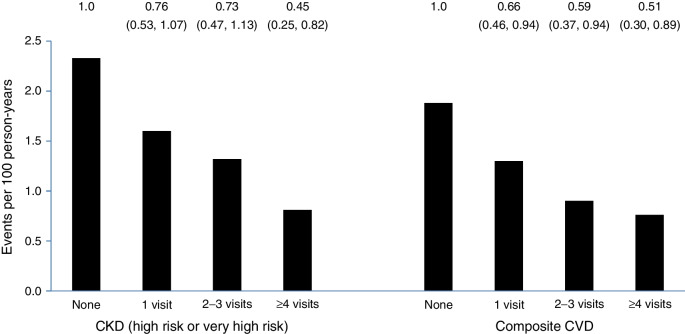
Aims/hypothesis: We examined the association of attainment of diabetes remission in the context of a 12 year intensive lifestyle intervention with subsequent incidence of chronic kidney disease (CKD) and CVD. Methods: The Look AHEAD study was a multi-centre RCT comparing the effect of a 12 year intensive lifestyle intervention with that of diabetes support and education on CVD and other long-term health conditions. We compared the incidence of CVD and CKD among 4402 and 4132 participants, respectively, based on achievement and duration of diabetes remission. Participants were 58% female, and had a mean age of 59 years, a duration of diabetes of 6 year and BMI of 35.8 kg/m 2. We applied an epidemiological definition of remission: taking no diabetes medications and having HbA 1c <48 mmol/mol (6.5%) at a single point in time. We defined high-risk or very high-risk CKD based on the Kidney Disease Improving Global Outcomes (KDIGO) criteria, and CVD incidence as any occurrence of non-fatal acute myocardial infarction, stroke, admission for angina or CVD death. Results: Participants with evidence of any remission during follow-up had a 33% lower rate of CKD (HR 0.67; 95% CI 0.52, 0.87) and a 40% lower rate of the composite CVD measure (HR 0.60; 95% CI 0.47, 0.79) in multivariate analyses adjusting for HbA 1c, BP, lipid levels, CVD history, diabetes duration and intervention arm, compared with participants without remission. The magnitude of risk reduction was greatest for participants with evidence of longer-term remission. Conclusions/interpretation: Participants with type 2 diabetes with evidence of remission had a substantially lower incidence of CKD and CVD, respectively, compared with participants who did not achieve remission. This association may be affected by post-baseline improvements in weight, fitness, HbA 1c and LDL-cholesterol. Trial registration: ClinicalTrials.gov NCT00017953 Data availability: https://repository.niddk.nih.gov/studies/look-ahead/ Graphical Abstract:
Overview
The claims and statistics of this paper haven’t been checked yet.
Free: it reads the open-access text and checks the first 5 claims that cite a source we can check. Create a free account to check every claim.
Integrity signals
Registry
Cites
Statistics
Figures
Verification
Claims the paper makes
The claims and statistics of this paper haven’t been checked yet.
Free: it reads the open-access text and checks the first 5 claims that cite a source we can check. Create a free account to check every claim.
Claims other papers make about this one
Each is checked against this paper’s own text: does it say what the citing paper says it does?
The source backs part of the claim, not all of it — or backs it for a different population, condition or comparison.
In the citing paper
“However our results underscore the difficulty people have maintaining intentional weight loss in an obesogenic environment. 47”
From 5-year follow-up of the randomised Diabetes Remission Clinical Trial (DiRECT) of continued support for weight loss maintenance in the UK: an extension study (2024) · cites this paper as [47]
Experimental — accuracy not yet measuredThe cited source says what the claim attributes to it.
In the citing paper
“Remission of T2D has been associated with positive cardiovascular effects.”
The cited source says what the claim attributes to it.
In the citing paper
“The risk reduction was greatest among those with evidence of remission during at least four years of the trial, where 49 % and 55 % lower rates of cardiovascular and chronic kidney disease, respectively, were observed [30].”
Self-check
Percentages, sums and reported differences re-computed from the paper’s own numbers.
The self-check needs the paper’s full text.
Citations
Cites
Cardiovascular effects of intensive lifestyle intervention in type 2 diabetes
The Look AHEAD Research Group (2013) · New England Journal of Medicine · doi:10.1056/nejmoa1212914 · Cited by 2,908
Lean, M. E., Leslie, W. S., Barnes, A. C., Brosnahan, N., Thom, G., McCombie, L., Peters, C., Zhyzhneuskaya, S., Al-Mrabeh, A., Hollingsworth, K. G., et al. (2018) · The Lancet · doi:10.1016/s0140-6736(17)33102-1 · Cited by 2,095 · cited 3×
“…Remission Clinical Trial) trial in the UK implemented an even more intensive weight loss programme with low-carbohydrate meal replacements, and observed remission incidences of 46% and 36% over 1 and 2 years, respectively, among participants with diabetes of up to 6 years of duration [5, 8].”
BackgroundDavies, M. J., D’Alessio, D. A., Fradkin, J., Kernan, W. N., Mathieu, C., Mingrone, G., Rossing, P., Tsapas, A., Wexler, D. J., & Buse, J. B. (2018) · Diabetologia · doi:10.1007/s00125-018-4729-5 · Cited by 1,455
(2010) · Archives of Internal Medicine · doi:10.1001/archinternmed.2010.334 · Cited by 1,162 · cited 1×
“CKD incidence was based on data from the clinic visits, and data regarding CVD were determined through an adjudication process, as previously described [17, 20].”
MethodSjöström, L., Peltonen, M., Jacobson, P., Ahlin, S., Andersson-Assarsson, J., Anveden, Å., Bouchard, C., Carlsson, B., Karason, K., Lönroth, H., et al. (2014) · JAMA · doi:10.1001/jama.2014.5988 · Cited by 1,054
Lean, M. E. J., Leslie, W. S., Barnes, A. C., Brosnahan, N., Thom, G., McCombie, L., Peters, C., Zhyzhneuskaya, S., Al-Mrabeh, A., Hollingsworth, K. G., et al. (2019) · The Lancet Diabetes & Endocrinology · doi:10.1016/s2213-8587(19)30068-3 · Cited by 1,017 · cited 5×
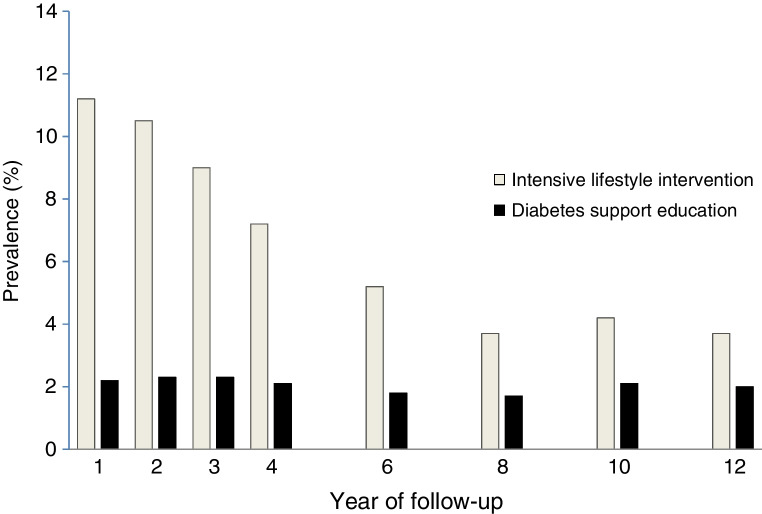
“The HR and 95% CI values are shown at the top of 46% and 36% among intervention participants at 1 and 2 years, respectively (compared with 4% and 3% of con-trol participants), accompanying 9.5% and 5.3% net weight losses, respectively, after 1 and 2 years [5, 25].”
BackgroundMethodResultInfluentialThe Look AHEAD Study: A Description of the Lifestyle Intervention and the Evidence Supporting It
The Look AHEAD Research Group (2006) · Obesity · doi:10.1038/oby.2006.84 · Cited by 873 · cited 2×
“Intervention Details of the ILI have been provided previously [18, 19].”
MethodEight-year weight losses with an intensive lifestyle intervention: The look AHEAD study
The Look AHEAD Research Group (2014) · Obesity · doi:10.1002/oby.20662 · Cited by 842 · cited 1×
“The HR and 95% CI values are shown at the top of 46% and 36% among intervention participants at 1 and 2 years, respectively (compared with 4% and 3% of con-trol participants), accompanying 9.5% and 5.3% net weight losses, respectively, after 1 and 2 years [5, 25].”
ResultInfluentialThe Look AHEAD Research Group (2003) · Controlled Clinical Trials · doi:10.1016/s0197-2456(03)00064-3 · Cited by 767 · cited 2×
“Intervention Details of the ILI have been provided previously [18, 19].”
MethodAssociation of an intensive lifestyle intervention with remission of type 2 diabetes
Gregg, E. W., Chen, H., Wagenknecht, L. E., Clark, J. M., Delahanty, L. M., Bantle, J., Pownall, H. J., Johnson, K. C., Safford, M. M., Kitabchi, A. E., et al. (2012) · JAMA · doi:10.1001/jama.2012.67929 · Cited by 752 · cited 4×
“Compared with our study, the DiRECT study and the DIADEM-I study (Diabetes Intervention Accentuating Diet and Enhancing Metabolism) found considerably greater remission and generally similar weight loss over the first 2 years [4, 5, 24].”
BackgroundResultInfluentialSelf-citation
Cited by
Lean, M. E., Leslie, W. S., Barnes, A. C., Brosnahan, N., Thom, G., McCombie, L., Kelly, T., Irvine, K., Peters, C., Zhyzhneuskaya, S., et al. (2024) · The Lancet Diabetes & Endocrinology · doi:10.1016/s2213-8587(23)00385-6 · Cited by 186
Understanding the cause of type 2 diabetes
Taylor, R. (2024) · The Lancet Diabetes & Endocrinology · doi:10.1016/s2213-8587(24)00157-8 · Cited by 98
Valabhji, J., Gorton, T., Barron, E., Safazadeh, S., Earnshaw, F., Helm, C., Virr, M., Kernan, J., Crowe, S., Aveyard, P., et al. (2024) · The Lancet Diabetes & Endocrinology · doi:10.1016/s2213-8587(24)00194-3 · Cited by 72
Arreola, E. V., Gong, Q., Hanson, R. L., Wang, J., Sandforth, L., He, S., Sandforth, A., Qian, X., Giacca, M., Bornstein, S. R., et al. (2025) · The Lancet Diabetes & Endocrinology · doi:10.1016/s2213-8587(25)00295-5 · Cited by 59
Self-citationAnyiam, O., Ardavani, A., Rashid, R. S. A., Panesar, A., & IDRIS, I. R. (2025) · Obesity Reviews · doi:10.1111/obr.13916 · Cited by 49
“5,6 Consequently, interventions that improve glycaemic control, whilst also inducing significant weight loss, are highly sought after.”
Battelino, T., Lalic, N. M., Hussain, S., Ceriello, A., Majanović, S. K., Davies, S., Topsever, P., Heverly, J., Ulivi, F., Brady, K., et al. (2025) · Diabetes Research and Clinical Practice · doi:10.1016/j.diabres.2025.112111 · Cited by 36
McKenzie, A. L., Athinarayanan, S. J., Van Tieghem, M. R., Volk, B. M., Roberts, C. G. P., Adams, R. N., Volek, J. S., Phinney, S. D., & Hallberg, S. J. (2024) · Diabetes Research and Clinical Practice · doi:10.1016/j.diabres.2024.111898 · Cited by 25
Dean, E., Jia, X., JONES, A. Y. M., Vongsirinavarat, M., Lomi, C., Kumar, P. L., Ngeh, E. N., & Storz, M. A. (2024) · Nutrition Journal · doi:10.1186/s12937-024-01018-z · Cited by 27
Re-evaluating the concept of remission in type 2 diabetes: a call for patient-centric approaches
Khunti, K., Papamargaritis, D., Aroda, V. R., Anjana, R. M., & Kashyap, S. R. (2025) · The Lancet Diabetes & Endocrinology · doi:10.1016/s2213-8587(25)00134-2 · Cited by 22
Morieri, M. L., Rigato, M., Frison, V., D’Ambrosio, M., Sartore, G., Avogaro, A., & Fadini, G. P. (2025) · Diabetologia · doi:10.1007/s00125-025-06402-w · Cited by 21
Adipocentric Strategy for the Treatment of Type 2 Diabetes Mellitus
Martínez, J. J. G. (2025) · Journal of Clinical Medicine · doi:10.3390/jcm14030678 · Cited by 16
Fadini, G. P., Giaccari, A., Broglio, F., Nollino, L., Fattor, B., Anichini, R., Meregalli, G., Avogaro, A., Consoli, A., Aimaretti, G., et al. (2025) · The Lancet Regional Health - Europe · doi:10.1016/j.lanepe.2025.101499 · Cited by 18
Causes and consequences of discontinuation of GLP1RAs or tirzepatide
Ceriello, A., Prattichizzo, F., Abdullah, A. R. M. S., Grotta, R. L., Berra, C., McGowan, B. M., Jenkins, A., Cohen, N. D., Nauck, M. A., & Russo, G. T. (2026) · Nature Reviews Endocrinology · doi:10.1038/s41574-026-01258-5 · Cited by 23
“T2DM remission has long-term cardiovascular benefits (which have been observed mostly in people who achieved remission through bariatric surgery or lifestyle intervention 101,102 ), and an early attainment of stringent glycaemic targets also provides such benefits 103 .”
Tey, S. L., Chee, W. S. S., Deerochanawong, C., Berde, Y., Lim, L., Boonyavarakul, A., Wakefield, B., Baggs, G. E., & Huynh, D. T. T. (2024) · Frontiers in Nutrition · doi:10.3389/fnut.2024.1400580 · Cited by 9
Remission of type 2 diabetes: position statement of the Italian society of diabetes (SID)
Capoccia, D., Leonetti, F., Natali, A., Tricò, D., Perrini, S., Sbraccia, P., Guglielmi, V., & On behalf of the Italian Society of Diabetes (SID) (2024) · Acta Diabetologica · doi:10.1007/s00592-024-02317-x · Cited by 11
“Twelve years later, participants in Look AHEAD who had achieved diabetes remission, albeit temporary, showed a 40% reduction in cardiovascular disease risk and a 33% reduction in chronic kidney disease risk, which increased to 49% and 55% in case of sustained remission for at least 4 years [63].”
BackgroundRemission of type 2 diabetes mellitus
Nakhleh, A., Halfin, E., & Shehadeh, N. (2024) · World Journal of Diabetes · doi:10.4239/wjd.v15.i7.1384 · Cited by 10
Aetiology of type 2 diabetes: an experimental medicine odyssey
Taylor, R. (2025) · Diabetologia · doi:10.1007/s00125-025-06428-0 · Cited by 10
Corrao, S., Falcone, F., Mirarchi, L., Amodeo, S., & Calvo, L. (2025) · Diabetes Therapy · doi:10.1007/s13300-025-01761-4 · Cited by 13
“R C T s o n b e h a v i o u r a l a n d d i e t a r y s t r a t e g i e s f o r t y p e 2 d i a b e t e s r e m i ss i o n : a c o m p a r a t i v e s u mm a r y o f k e y s t u d i e s D i R E C T , e x t e n s i o n s t u d y ( 2024 ) [ 38 ] L oo k A H E A D ( 2024 ) [ 81 ] Y a n g e t a l .”
InfluentialDu, Y. N., Wang, J., Li, S., Meireles, C. L., Saliba, A., Castillo, A., Goros, M. W., Gelfond, J., Choi, B. Y., Qi, L., et al. (2025) · Diabetes Obesity and Metabolism · doi:10.1111/dom.70000 · Cited by 7
“This included 20 individuals without T2D (following Look AHEAD protocol and American Diabetes Association criteria) 15 – 17 or CKD, 20 individuals with T2D but without CKD, and 20 individuals with early stage 1 or stage 2 CKD. Data collection occurred at baseline, 3 months, and 6 months.”
Shimayama, C., Fujihara, K., KHIN, L. M., TAKIZAWA, H., Horikawa, C., Sato, T., Kitazawa, M., Matsubayashi, Y., Yamada, T., & Sone, H. (2025) · Cardiovascular Diabetology · doi:10.1186/s12933-025-02578-y · Cited by 9
“These �ndings support the possibility that remission can reduce CVD risk even without weight loss through intensive intervention and underscore the importance of achieving remission in clinical practice.”
Striving for early effective glycaemic and weight management in type 2 diabetes: A narrative review
CHENG, A. Y. Y., Heine, R. J., Prato, S. D., Green, J. B., Thieu, V. T., & Zeytinoglu, M. (2025) · Diabetes Obesity and Metabolism · doi:10.1111/dom.16206 · Cited by 7
“8,63,66,68 Traditional T2D medications have also failed to address excess weight, further increasing the risk of associated comorbidities.”
Das, R., Mohammad, N., Islam, M. S., Das, S., Abdullah, F., Kader, M. A., Mamun, M. A. A., Dutta, S., Unwin, D., & Mazák, I. (2025) · Cureus · doi:10.7759/cureus.93340 · Cited by 9
“Besides improvement in glycemic management and type 2 diabetes remission, such dietary approaches have been linked to a decreased risk of cardiovascular and chronic kidney diseases [32,33].”
Dissanayake, H. A., Fernando, D., Nilaweera, A. I., Munasinghe, T. D., Kaushalya, C. M. A. U., Pulukkody, M. M., & Katulanda, P. (2024) · Diabetic Medicine · doi:10.1111/dme.15422 · Cited by 7
Type 2 diabetes remission: weight maintenance in the spotlight
Taheri, S. (2024) · The Lancet Diabetes & Endocrinology · doi:10.1016/s2213-8587(24)00036-6 · Cited by 7
Interventions for the prevention and management of cardiometabolic multiple long-term conditions
Valabhji, J., Hope, D. C. D., SAYED, N. A. E., Godia, P., Lawson, C. A., Seidu, S., & Khunti, K. (2026) · The Lancet · doi:10.1016/s0140-6736(26)00608-2 · Cited by 6
Mai, Y., Yi, Y., Wen, Y., Huang, P., Wang, Y., & Wang, Z. (2024) · International Urology and Nephrology · doi:10.1007/s11255-024-04083-9 · Cited by 6
Karmacharya, B. M., Sapkota, S., Rai, P., Nikolaou, C. K., Kasti, R., Bhattarai, J., Maharjan, R., Shrestha, A., Shrestha, A., Bhattarai, B., et al. (2024) · The Lancet Regional Health - Southeast Asia · doi:10.1016/j.lansea.2024.100465 · Cited by 9
Thapa, B., Schmittdiel, J. A., Arterburn, D. E., Neugebauer, R. S., Dyer, W., O’Connor, P. J., An, J., Cassidy‐Bushrow, A. E., Gilliam, L. K., Hooker, S. A., et al. (2025) · Diabetes Care · doi:10.2337/dc25-0530 · Cited by 11
Umphonsathien, M., Prutanopajai, P., Cheibchalard, T., & Somboonna, N. (2025) · Computational and Structural Biotechnology Journal · doi:10.1016/j.csbj.2025.11.043 · Cited by 4
“Importantly, even partial or temporary remission in Look AHEAD was associated with significant reductions in cardiovascular and kidney disease risk [37].”
Trenell, M. I., Robles, M. C., Taylor, L., Northway, N., Kerr, K. W., Lumsden, C., Avery, L., Faluyi, D., Rueda, R., & SULO, S. S. (2025) · Clinical Diabetes · doi:10.2337/cd25-0054 · Cited by 4
“The Look AHEAD (Action for Health in Diabetes) study showed the possibility of attaining and maintaining long-term weight reduction, and diabetes remission, in adults with type 2 diabetes and overweight or obesity through intensive lifestyle intervention (23–25).”
Sheffer‐Hilel, G., Elqader, O. A., Suliman, L., & Srulovici, E. (2024) · Nutrients · doi:10.3390/nu16244283 · Cited by 6
Ortega, E., Redondo‐Antón, J., Díaz‐Cerezo, S., Santos, M. R., & Romera, I. (2025) · Advances in Therapy · doi:10.1007/s12325-025-03230-7 · Cited by 7
“…Diabetes Association, DPP4is dipeptidyl peptidase 4 inhibitors, EASD European Association for the Study of Diabetes, GLP-1 RAs glucagon-like peptide-1 receptor agonists, SGLT2is sodium glucose cotransporter 2 inhibitors modifications alone is not achievable for many people with T2D [23–26].”
Schuppelius, B., Lalama, E., Zhang, J., Rüther, K. J. A., Csanalosi, M., Kabisch, S., Christ, A., Latz, E., Kraenkel, N., Pivovarova‐Ramich, O., et al. (2026) · Diabetes Research and Clinical Practice · doi:10.1016/j.diabres.2026.113159 · Cited by 6
Evaluation of the NHS England Low-Calorie Diet implementation pilot: a coproduced mixed-method study
Ells, L. J., Brown, T. J., Matu, J., Clare, K., Rowlands, S., Maynard, M. J., Kinsella, K., Drew, K. J., Marwood, J., Dhir, P., et al. (2025) · Health and Social Care Delivery Research · doi:10.3310/mprt2139 · Cited by 8
Socioeconomic disparities in diabetes prevalence among the population in Ireland
Valentelyte, G., Holman, N., James, S., Clarke, N., Bhatia, D., Bennett, K., Sørensen, J. R., & Gregg, E. W. (2025) · BMC Public Health · doi:10.1186/s12889-025-23022-6 · Cited by 3
Self-citationIshiguro, M., & Nishimura, R. (2025) · Frontiers in Endocrinology · doi:10.3389/fendo.2025.1615516 · Cited by 3
Shehata, F., Dwyer, K. M., Axtens, M. J., McGee, S. L., & Rivera, L. R. (2025) · Metabolites · doi:10.3390/metabo15110692 · Cited by 3
“They showed that participants who attained remission from T2D had a 33% lower rate of CKD and 40% lower rate of CVD compared with those who did not, and the magnitude of risk reduction was greatest in those with longer remission [40].”
Bianchi, C., Prato, S. D., Rothberg, A. E., & Nauck, M. A. (2026) · Diabetes Obesity and Metabolism · doi:10.1111/dom.70674 · Cited by 4
Johansen, M. Y., Durrer, C. G., Pilmark, N. S., Legaard, G. E., Karstoft, K., Hansen, K. B., MacDonald, C., Almdal, T., Bjørner, J. B., Albrechtsen, N. J. W., et al. (2025) · Journal of sport and health science/Journal of Sport and Health Science · doi:10.1016/j.jshs.2025.101059 · Cited by 3
“Contrary to the observations in the DiRECT and Action for Health in Diabetes (LOOK AHEAD) randomized trials, 12,36 we did not observe a signal towards a reduced risk of SAEs during the long-term follow-up.”
Gong, J. Y., Salim, A., Magliano, D. J., & Shaw, J. E. (2025) · Diabetes Obesity and Metabolism · doi:10.1111/dom.16650 · Cited by 4
Claro, A. E., Palanza, C., Mazza, M., Rizzi, A., Corsello, A., Tartaglione, L., Marano, G., Schuenemann, G. E. U. M., Rigoni, M., Pontecorvi, A., et al. (2024) · World Journal of Diabetes · doi:10.4239/wjd.v15.i6.1374 · Cited by 2
Obesity in Spain: an open book that must be read
de Victoria, E. O. M., Vila, A. P., & Pineda, A. J. (2024) · Revista Española de Cardiología (English Edition) · doi:10.1016/j.rec.2024.03.015 · Cited by 2
Precision medicine in diabetes care
Tan, S. H. C., Loh, W. J., & Lim, S. C. (2024) · Current Opinion in Endocrinology Diabetes and Obesity · doi:10.1097/med.0000000000000894 · Cited by 5
Zheng, B., Hu, T., Yao, J., Zhang, Z., Xu, Y., Shen, H., Wang, X., & Tan, Q. (2025) · Diabetes Metabolic Syndrome and Obesity · doi:10.2147/dmso.s544669 · Cited by 1
The Cardiovascular and Macrovascular Benefits of Achieving Early Type 2 Diabetes Remission
Khachikyan, L., & Shubrook, J. H. (2025) · Diabetology · doi:10.3390/diabetology6100120 · Cited by 2
“The longer the remission, the greater the benefit [59].”
Sapkota, S., Rai, P., Karmacharya, B. M., Bhattarai, J., Shrestha, A., Maharjan, R., Kasti, R., Leeds, A., Lean, M. E. J., & Nikolaou, C. K. (2025) · Diabetic Medicine · doi:10.1111/dme.70184 · Cited by 3
Dyslipidemia in Diabetes: Navigating a Complex Landscape for Improved Cardiovascular Outcomes
Wahab, R. A., & Mahmood, W. A. W. (2026) · Clinical Medicine Insights Endocrinology and Diabetes · doi:10.1177/11795514261422310 · Cited by 2
“102 Although lifestyle interventions did not produce a significant decrease in all-cause mortality, their neutral effect on death rates, combined with improvements in healthy life years, physical and psychological outcomes, and overall quality of life, support continued recommendations for…”
Davies, A., Grieve, E., McCombie, L., McIntosh, A., McConnachie, A., Leslie, W. S., Sattar, N. A., Taylor, R., & Lean, M. E. J. (2026) · Diabetic Medicine · doi:10.1111/dme.70306 · Cited by 1
“The Look AHEAD study 22,23 reported a 51% decrease in cardiovascular disease events for those who maintained remission (4 years), along with reduced chronic kidney disease.”
Shen, R., Zhang, Z., Sun, H., Li, D., Cheng, Q., Zhou, J., 朱登岳, Xu, S., Chen, G. F., & Chao, L. (2026) · Frontiers in Endocrinology · doi:10.3389/fendo.2026.1781655 · Cited by 2
“Remission is associated with a lower mortality and fewer microvascular complications, including diabetic retinopathy, nephropathy and neuropathy (3 – 6).”
Davies, M. J., Aroda, V. R., Bajaj, M. S., ElSayed, N. A., Giorgino, F., Green, J., Kalyani, R. R., Maruthur, N. M., Mathieu, C., Rosas, S. E., et al. (2026) · Diabetologia · doi:10.1007/s00125-026-06855-7 · Cited by 1
Self-citationRemission of type 2 diabetes is achievable in primary care with intensive lifestyle intervention
Zoungas, S., & Sumithran, P. (2024) · Evidence-Based Nursing · doi:10.1136/ebnurs-2023-103923 · Cited by 2
Diabetes and obesity: A debate on bariatric interventions and its implications
Tatmatsu-Rocha, J. C., & da Silva, M. R. L. (2024) · World Journal of Diabetes · doi:10.4239/wjd.v15.i11.2157 · Cited by 1
Schuppelius, B., Lalama, E., Zhang, J., Rüther, K. J. A., Csanalosi, M., Kabisch, S., Christ, A., Latz, E., Pivovarova‐Ramich, O., Mai, K., et al. (2025) · medRxiv · doi:10.1101/2025.06.10.25329355 · Cited by 1
(2024) · Journal of Kidney Care · doi:10.12968/jokc.2024.9.2.99
Obesidad en España: un libro abierto que debemos leer
de Victoria, E. O. M., Vila, A. P., & Pineda, A. J. (2024) · Revista Española de Cardiología · doi:10.1016/j.recesp.2024.03.010
Medikamentöse Adipositastherapie bei Typ-2-Diabetes
Kantowski, T., Wiesch, C. S. Z., Aberle, J., & Lautenbach, A. (2024) · CME · doi:10.1007/s11298-024-3862-3
Taylor, R. (2024) · British Journal of Diabetes · doi:10.15277/bjd.2024.450
Implementing type 2 diabetes remission interventions in the real world: what have we learnt?
Bellary, S. (2024) · The Lancet Diabetes & Endocrinology · doi:10.1016/s2213-8587(24)00232-8 · Cited by 1
Response of Glycated Hemoglobin to Diabetes Remission Outcome Program in Type 2 Diabetes Mellitus
Kenawy, A. A. A.-S., Ismail, A. M. A., Aglan, M. F. M., & Obaya, H. E. (2024) · International Journal of Medical Arts · doi:10.21608/ijma.2024.301777.1994
“The literature on DM remission by lifestyle changes has been sparse, although there is evidence of remission following bariatric surgery and a recent movement toward the objective of diabetes remission through lifestyle modification [10] .”
BackgroundXiao, Z., Yin, X., Lai, X., Zhou, X., Zhang, Y., Yang, D., Wu, R., Wang, H., Zhou, J., Yang, X., et al. (2024) · SSRN Electronic Journal · doi:10.2139/ssrn.5038364
5. Weight control in type 2 diabetes management
Colagiuri, S., & Ceriello, A. (2025) · Diabetes Research and Clinical Practice · doi:10.1016/j.diabres.2025.112149
Diabetes Remission: Where are We Now?
Jain, A. K. (2025) · Canadian Diabetes & Endocrinology Today · doi:10.58931/cdet.2025.3136
Achieving Type 2 Diabetes Remission in Real-World Settings with Intermittent Fasting: A Case Study
Marcotte‐Chénard, A., Pinsonneault-Grenier, A., Islam, H., & Little, J. P. (2025) · Advances in Geriatric Medicine and Research · doi:10.20900/agmr20250009
“T2D remission can be achieved using bariatric/metabolic surgery [5], hypocaloric meal-replacement diets [6,7], low-carbohydrate diets [8,9], and lifestyle interventions combining physical activity and nutrition [10,11].”
Diabetes Update 2025 – viel Neues
Scherbaum, W. A. (2025) · Die Diabetologie · doi:10.1007/s11428-025-01353-7
Understanding Remission of Long-Term Conditions Through Electronic Health Records: Scoping Review
Hounkpatin, H. O., Barton, B., Ogden, M., Mathur, R., Stuart, B. L., & Dambha‐Miller, H. (2026) · Journal of Medical Internet Research · doi:10.2196/80796 · Cited by 1
“Evidence suggests that remission in various LTCs is associated with improved health outcomes [12-16].”
Data Lakehouse for Type 2 Diabetes Remission: Scoping Review and Architectural Proposal
Rosales, C. A. M., Rodríguez-Mazahua, L., Rodríguez-Mazahua, N., Alor‐Hernández, G., & Sánchez-Cervantes, J. L. (2026) · Springer eBooks · doi:10.1007/978-3-032-08894-9_7
Wu, R., Yang, X., Zhou, X., Xiao, Z., Chen, X., Zhou, J., Li, J., Yin, Z., Lai, X., Wang, T., et al. (2026) · Frontiers in Endocrinology · doi:10.3389/fendo.2025.1733840
“Following the demonstration of the feasibility of diabetes remission, the focus has now shifted to the achievement of long-term remission and the exploration of its in fl uencing factors (5, 6).”
InfluentialXiao, Z., Zhou, X., Yang, D., Lai, X., Zhang, Y., Wu, R., Wang, H., Zhou, J., Yang, X., Xu, F., et al. (2026) · Frontiers in Nutrition · doi:10.3389/fnut.2026.1744017
Vercalsteren, E., Mazya, M. V., Nyström, T., Darsalia, V., & Patrone, C. (2026) · BMC Medicine · doi:10.1186/s12916-026-04809-9
“Meanwhile, in the same study, patients with T2D remission experienced a 40% reduction in CVD risk [34].”
Ayoub, J. C., Haidar, S. A., Blaak, E. E., & de Ruijter, D. (2026) · Frontiers in Public Health · doi:10.3389/fpubh.2026.1787980
“…that remission rates are known to be lower among individuals receiving glucose-lowering therapy, as demonstrated in large observational cohorts (50, 51), this supports a conservative estimate for the present study population, which includes participants treated initially with oral antidiabetic…”
Sustained Approaches to Prevent Recurrence and Support Ongoing Diabetes Health
Ambawatiya, A., Goyal, K., Dahiya, R., Hyderi, Z., Singh, L. K., Srivastava, J., Kumar, N., & Abubakar, M. (2026) · Springer eBooks · doi:10.1007/978-981-95-8946-3_15
Khoo, C. M., Tan, M. Z.-W., Eng, S. K., Leong, C. K., Bee, Y. M., Tham, K. W., Bhaskaran, K., Lee, Y. V., Wong, G., Chan, S. L., et al. (2026) · Frontiers in Nutrition · doi:10.3389/fnut.2026.1810277
“While not a ‘cure’ for diabetes, diabetes remission indicates near-normalisation of glucose homeostasis and represents a clinically desirable outcome in newly diagnosed T2DM (62).”
Gao, S., & Geng, Y. (2026) · Diabetic Medicine · doi:10.1111/dme.70379
McGill, J. B., Green, J., Heerspink, H. J. L., Mann, J. F. E., Mottl, A. K., Rosenstock, J., Rossing, P. R., Vaduganathan, M., Nangaku, M., BRINKER, M. D., et al. (2026) · Diabetes Obesity and Metabolism · doi:10.1111/dom.70949
Villalobos-Daniel, V. E., Espinosa‐Montero, J., Mendoza-Martínez, R., López‐Ridaura, R., Monterrubio‐Flores, E., Agüero-Perez, N., Ramírez-Villalobos, D., & Campos‐Nonato, I. (2026) · Diabetology · doi:10.3390/diabetology7070121
“Since it has been documented that achieving RT2D, even transiently, reduces the risk of secondary complications such as cardiovascular events, chronic kidney disease and angiopathies [16,25], the benefits of such implementation could be substantial, both for society and for the patients themselves.”
Wiencke, K., Zimmermann, R., Gentz, A., Clever, S., Oddsson, S. J., Hasenberg, T., Arnar, D. O., & Grannell, A. (2026) · Obesities · doi:10.3390/obesities6040051
“Furthermore, post hoc analysis of patients with T2D in the Look AHEAD trial showed an association between the magnitude of weight loss and the incidence of CVD progression [12,13].”
Modelling Type 2 Diabetes: Investigating Relapse Post Remission
Sweatman, C. Z. W. H. (2026) · Springer proceedings in mathematics & statistics · doi:10.1007/978-3-032-17956-2_1
Prato, S. D., Genovese, S., Galeone, C., Mariani, P., Acquaviva, T., Antonutti, M., Anzaldi, M., Bucciarelli, L., Carleo, D., Cesaro, A., et al. (2026) · Acta Diabetologica · doi:10.1007/s00592-026-02770-w
Moh, M. C., Lim, B. K., Pandian, B., Kosnan, D. B., Seow, V. V., Pang, K. R., Phoon, S. M., Luah, Y. M., Han, J., Lee, T. Y., et al. (2026) · Endocrine · doi:10.1007/s12020-026-04749-7
“Nonetheless, encour - aging results from the Look AHEAD trial demonstrated that diabetes remission, despite being short-lived, is associated with significantly lower rates of chronic kidney disease and cardiovascular disease in T2D [ 27].”
Beyond glycemia: clinical nutrition in type 2 diabetes and cardiometabolic risk
Labate, A. M., & Villari, P. (2026) · Academia Nutrition and Dietetics · doi:10.20935/acadnutr8484
Eighty Years After Vague: Advances in Understanding Ectopic Fat and Metabolic Dysfunction
Conte, C., Sumithran, P., le Roux, C. W., Miras, A. D., & Gaal, L. V. (2026) · Obesity Reviews · doi:10.1111/obr.70229
Joyce, J. B., Newbert, C., Guess, N. D., Fryer, K., Mitchell, C. A., Morris, E., Aveyard, P. N., Jebb, S. A., & Albury, C. (2026) · PEC Innovation · doi:10.1016/j.pecinn.2026.100506
“Whilst previously considered a lifelong condition, research has shown that achieving remission from T2D is possible 1 [2,3].”
Dasgupta, K., Boulé, N. G., Henson, J. J., Redman, E., Chan, D., McCarthy, M., Rosa, D., Arsenyadis, F., Chevalier, S., Rees, J., et al. (2026) · The Lancet Regional Health - Americas · doi:10.1016/j.lana.2026.101664 · Cited by 1
Self-citationKale, M. C., Purandare, V. B., Tiwari, S., Aherkar, J., Kulkarni, G., Manekar, S., & Unnikrishnan, A. (2026) · Diabetes & Metabolic Syndrome Clinical Research & Reviews · doi:10.1016/j.dsx.2026.103487
Ruan, C., Zheng, X., & Wang, L. (2026) · Diabetes Research and Clinical Practice · doi:10.1016/j.diabres.2026.113600
Lobelo, F., Durieux, J., Kim, D. S., & Colovos, C. (2026) · medRxiv · doi:10.64898/2026.10.14.26365480
Zaghloul, H. B., Elhadad, S. M., Chagoury, O. L., & Taheri, S. (2026) · Diabetic Medicine · doi:10.1111/dme.70514
Metadata
- Authors
- Gregg, E. W., Chen, H., Bancks, M. P., Manalac, R., Maruthur, N., Munshi, M., Wing, R., & for the Look AHEAD Research Group
- Affiliations
- Royal College of Surgeons in Ireland (IE)
- Wake Forest University Health Sciences (US)
- Pennington Biomedical Research Center (US)
- Johns Hopkins University (US)
- Joslin Diabetes Center (US)
- Brown University (US)
- Corresponding author
- Gregg, Edward W.
- Venue
- Diabetologia
- Published
- 2024-01-18
- Volume
- 67
- Issue
- 3
- Pages
- 459-469
- ISSN
- 0012-186X (ISSN-L)
- 1432-0428
- PMC
- PMC10844408
- OpenAlex
- W4390988943
- Cited by
- 87
- References
- 34
- Citations by year
- 2026: 31 · 2025: 31 · 2024: 25
- FWCI
- 28.50
- Type
- journal article
- Language
- en
- Open access
- hybrid
- doi.org
- Licence
- cc-by
- creativecommons.org/licenses/by/4.0 (tdm)
- creativecommons.org/licenses/by/4.0 (vor)
- Locations
- Diabetologia (publishedVersion, cc-by)
- PubMed Central (publishedVersion, cc-by)
- PubMed (publishedVersion)
- Figshare (submittedVersion, cc-by)
- Funders
- National Institute of Diabetes and Digestive and Kidney Diseases (DK57136, DK57149, DK56990, DK57177, DK57171, DK571)
- Topics
- Health Sciences › Medicine › Endocrinology, Diabetes and Metabolism › Diabetes, Cardiovascular Risks, and Lipoproteins
- Health Sciences › Medicine › Endocrinology, Diabetes and Metabolism › Diabetes Treatment and Management
- Health Sciences › Medicine › Nephrology › Chronic Kidney Disease and Diabetes
- Keywords
- type 2 diabetes remission, intensive lifestyle intervention, chronic kidney disease, cardiovascular disease incidence, Look AHEAD trial, diabetes support and education, HbA1c, long-term health effects, obesity
- MeSH terms
- Cardiovascular Diseases, Diabetes Mellitus, Type 2, Female, Humans, Male, Middle Aged, Exercise, Renal Insufficiency, Chronic
About these checks
Registry, retraction, Cites and statistics results are computed, not judged, with one exception: a printed reference that no index lists is read once by a model before it counts as a citation error. Claims are extracted by a model and kept only when their quote appears verbatim in the text; each cited source is then checked, with a model’s help, for whether it says what the claim relies on. Those verdicts can be wrong — read the claim’s quote and the cited source before relying on one.
Statistics and arithmetic are recomputed, not judged.
Confidence bands are shown only for fields calibrated on our annotated test set. None is calibrated yet, so no band is shown.
What counts as a claim ›How we measure confidence ›How we check this ›
Are you an author, or do you see a problem with this page? Request a review
Data sources
Bibliographic data: Semantic Scholar, OpenAlex, Crossref.
Contains information from the Semantic Scholar Academic Graph Datasets, made available under the ODC Attribution License (ODC-BY 1.0).
Semantic Scholar’s data is described in: Kinney, R., et al. (2023). The Semantic Scholar Open Data Platform. arXiv:2301.10140.
