

The DOI matches its Crossref record; 39 of the 39 references it cites were found in a registry or an index.
Prediction of liver toxicity and mode of action using metabolomics in vitro in HepG2 cells
Open accessAbstract
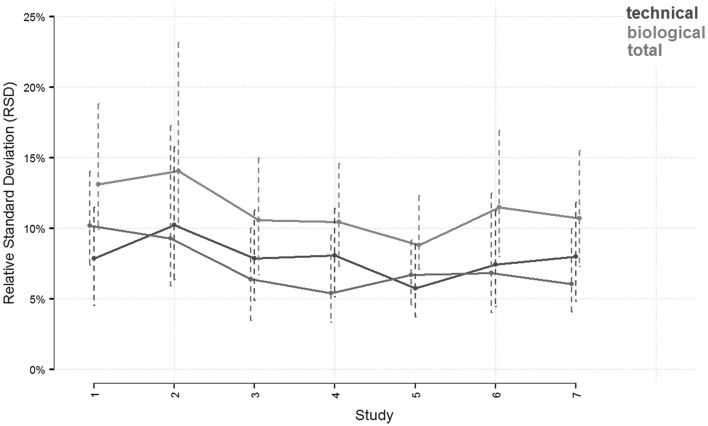
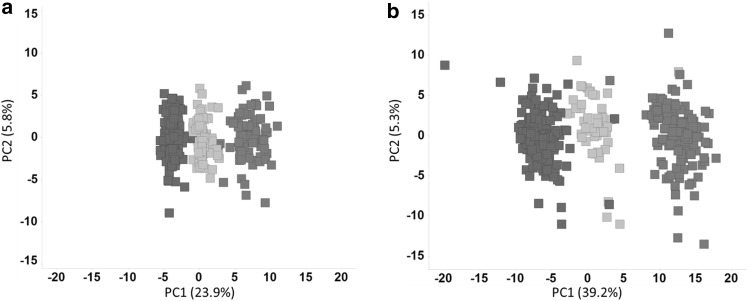
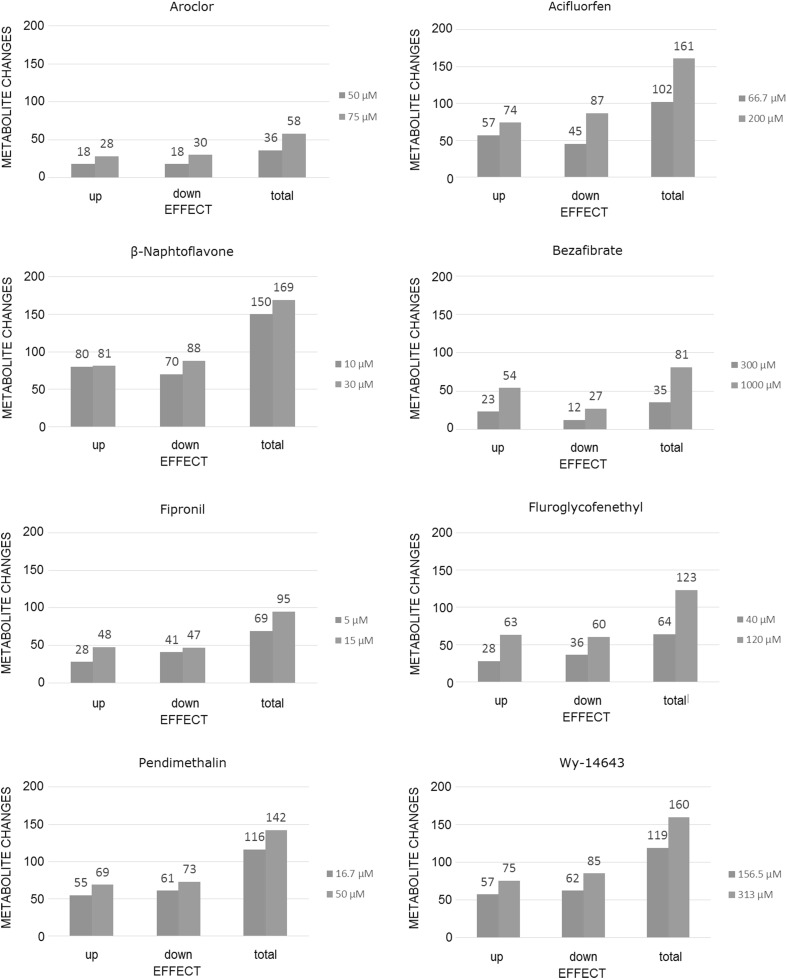
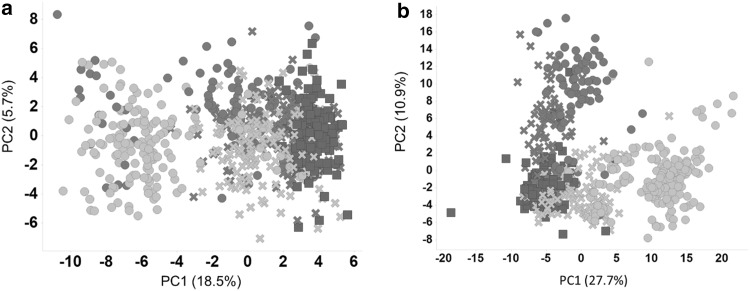
Liver toxicity is a leading systemic toxicity of drugs and chemicals demanding more human-relevant, high throughput, cost effective in vitro solutions. In addition to contributing to animal welfare, in vitro techniques facilitate exploring and understanding the molecular mechanisms underlying toxicity. New 'omics technologies can provide comprehensive information on the toxicological mode of action of compounds, as well as quantitative information about the multi-parametric metabolic response of cellular systems in normal and patho-physiological conditions. Here, we combined mass-spectroscopy metabolomics with an in vitro liver toxicity model. Metabolite profiles of HepG2 cells treated with 35 test substances resulted in 1114 cell supernatants and 3556 intracellular samples analyzed by metabolomics. Control samples showed relative standard deviations of about 10-15%, while the technical replicates were at 5-10%. Importantly, this procedure revealed concentration-response effects and patterns of metabolome changes that are consistent for different liver toxicity mechanisms (liver enzyme induction/inhibition, liver toxicity and peroxisome proliferation). Our findings provide evidence that identifying organ toxicity can be achieved in a robust, reliable, human-relevant system, representing a non-animal alternative for systemic toxicology.
Overview
The claims and statistics of this paper haven’t been checked yet.
Run the check — free, no account needed. It reads the open-access text and checks the sources it cites.
Integrity signals
Registry
Cites
Statistics
Figures

Verification
Claims the paper makes
The claims and statistics of this paper haven’t been checked yet.
Run the check — free, no account needed. It reads the open-access text and checks the sources it cites.
Claims other papers make about this one
Each is checked against this paper’s own text: does it say what the citing paper says it does?
The source backs part of the claim, not all of it — or backs it for a different population, condition or comparison.
In the citing paper
“Recent reviews and experimental studies directly interpret HepG2 as a model suitable for solving certain toxicological problems, in particular for studying general mechanisms of cytotoxicity and cellular stress response (e.g., activation of transcription factors activator protein-1 (AP1), p53, nuclear factor-erythroid 2 related factor 2 (Nrf2), and nuclear factor kappa B (NF-κB)) [109,110,111],”
From The HepG2 Cell Line as a Model for Studying Metabolic Dysfunction-Associated Steatotic Liver Disease (2026) · cites this paper as [110]
Experimental — accuracy not yet measured
Self-check
Percentages, sums and reported differences re-computed from the paper’s own numbers.
The self-check needs the paper’s full text.
Citations
Cites
Concordance of the toxicity of pharmaceuticals in humans and in animals
Olson, H., Betton, G., Robinson, D., Thomas, K., Monro, A., Kolaja, G., Lilly, P., Sanders, J., Sipes, G., Bracken, W., et al. (2000) · Regulatory Toxicology and Pharmacology · doi:10.1006/rtph.2000.1399 · Cited by 2,050
Wilkening, S., Stahl, F., & Bader, A. (2003) · Drug Metabolism and Disposition · doi:10.1124/dmd.31.8.1035 · Cited by 794
Gerets, H. H. J., Tilmant, K., Gerin, B., Chanteux, H., Depelchin, B. O., Dhalluin, S., & Atienzar, F. A. (2012) · Cell Biology and Toxicology · doi:10.1007/s10565-011-9208-4 · Cited by 698
Toxicology for the twenty-first century
Härtung, T. (2009) · Nature · doi:10.1038/460208a · Cited by 686
PPARα Agonist-Induced Rodent Tumors: Modes of Action and Human Relevance
Klaunig, J. E., Babich, M. A., Baetcke, K. P., Cook, J. C., Corton, J. C., David, R. M., DeLuca, J. G., Lai, D. Y., McKee, R. H., Peters, J. M., et al. (2003) · Critical Reviews in Toxicology · doi:10.1080/713608372 · Cited by 614
Acetaminophen activation by human liver cytochromes P450IIE1 and P450IA2
Raucy, J. L., Lasker, J. M., Lieber, C. S., & Black, M. (1989) · Archives of Biochemistry and Biophysics · doi:10.1016/0003-9861(89)90278-6 · Cited by 478
Regulation of bile acid synthesis
Chiang, J. Y. L. (1998) · Frontiers in bioscience · doi:10.2741/a273 · Cited by 400
Metabolomics in toxicology and preclinical research
Ramı́rez, T. (2013) · ALTEX · doi:10.14573/altex.2013.2.209 · Cited by 221
Self-citationThe use of metabolomics for the discovery of new biomarkers of effect
van Ravenzwaay, B., Cunha, G. C.-P., Leibold, E., Looser, R., Mellert, W., Prokoudine, A., Walk, T. B., & Wiemer, J. C. (2007) · Toxicology Letters · doi:10.1016/j.toxlet.2007.05.021 · Cited by 207
Self-citationBouhifd, M., Härtung, T., Högberg, H. T., Kleensang, A., & Zhao, L. (2013) · Journal of Applied Toxicology · doi:10.1002/jat.2874 · Cited by 200
Research works printed but not linked: 1
- HSE (1992) Evaluation on: fluoroglycofen-ethyl. May 1992. Issue No. 50. Department for Environment, Food and Rural Affairs. Pesticides Safety Directorate, UK
Cited by
Sorted by citations
Investigating landfill leachate toxicity in vitro: A review of cell models and endpoints
Baderna, D., Caloni, F., & Benfenati, E. (2018) · Environment International · doi:10.1016/j.envint.2018.11.024 · Cited by 148
The exposome – a new approach for risk assessment
Sillé, F. C. M. (2020) · ALTEX · doi:10.14573/altex.2001051 · Cited by 102
Alotaibi, A. M., Alsaleh, N. B., Aljasham, A. T., Tawfik, E. A., Almutairi, M. M., Almutairi, M. M., Alkholief, M. A., & Almutairi, M. M. (2022) · Antibiotics · doi:10.3390/antibiotics11091219 · Cited by 67
In vitro assessment of hepatotoxicity by metabolomics: a review
Cuykx, M., Rodrigues, R. M., Laukens, K., Vanhaecke, T., & Covaci, A. (2018) · Archives of Toxicology · doi:10.1007/s00204-018-2286-9 · Cited by 67
Moné, M. J., Pallocca, G., Escher, S. E., Exner, T. E., Herzler, M., Bennekou, S. H., Kamp, H., Kroese, E. D., Leist, M., Steger‐Hartmann, T., et al. (2020) · Archives of Toxicology · doi:10.1007/s00204-020-02866-4 · Cited by 62
Self-citation
Metadata
- Authors
- Ramirez, T., Strigun, A., Verlohner, A., Huener, H.-A., Peter, E., Herold, M., Bordag, N., Mellert, W., Walk, T., Spitzer, M., Jiang, X., Sperber, S., Hofmann, T., Hartung, T., Kamp, H., & van Ravenzwaay, B.
- Affiliations
- BASF (Germany) (DE)
- Corresponding author
- Hofmann, Thomas
- ORCID
- Venue
- Archives of Toxicology
- Published
- 2017-09-30
- Volume
- 92
- Issue
- 2
- Pages
- 893-906
- ISSN
- 0340-5761 (ISSN-L)
- 1432-0738
- PMC
- PMC5818600
- OpenAlex
- W2759884959
- Cited by
- 164
- References
- 39
- Citations by year
- 2026: 14 · 2025: 13 · 2024: 14 · 2023: 26 · 2022: 25 · 2021: 25 · 2020: 23 · 2019: 13 · 2018: 10 · 2017: 1
- FWCI
- 13.67
- Type
- journal article
- Language
- en
- Open access
- hybrid
- doi.org
- Locations
- Archives of Toxicology (publishedVersion, cc-by)
- Europe PMC (PubMed Central) (publishedVersion, cc-by)
- PubMed Central (publishedVersion, cc-by)
- PubMed (publishedVersion)
- KOPS (University of Konstanz) (submittedVersion, cc-by)
- Topics
- Life Sciences › Pharmacology, Toxicology and Pharmaceutics › Pharmacology › Drug-Induced Hepatotoxicity and Protection
- Life Sciences › Biochemistry, Genetics and Molecular Biology › Molecular Biology › Metabolomics and Mass Spectrometry Studies
- Health Sciences › Veterinary › Small Animals › Animal testing and alternatives
- Keywords
- hepatotoxicity, metabolomics, HepG2 cells, in vitro toxicity models, mechanism of action, non-animal alternatives, liver enzyme induction, liver enzyme inhibition, peroxisome proliferation, concentration-dependent effects, intracellular metabolites, mass spectrometry metabolomics
- MeSH terms
- Animal Testing Alternatives, Enzyme Induction, Humans, Liver, Toxicity Tests, Metabolomics, Metabolome, Hep G2 Cells
About these checks
Registry, retraction, Cites and statistics results are computed, not judged, with one exception: a printed reference that no index lists is read once by a model before it counts as a citation error. Claims are extracted by a model and kept only when their quote appears verbatim in the text; each cited source is then checked, with a model’s help, for whether it says what the claim relies on. Those verdicts can be wrong — read the claim’s quote and the cited source before relying on one.
Statistics and arithmetic are recomputed, not judged.
Confidence bands are shown only for fields calibrated on our annotated test set. None is calibrated yet, so no band is shown.
What counts as a claim ›How we measure confidence ›How we check this ›
Are you an author, or do you see a problem with this page? Request a review
