

Chronic psychosocial stress and citalopram modulate the expression of the glial proteins GFAP and NDRG2 in the hippocampus
Open accessThe DOI matches its Crossref record; 89 of the 89 references it cites were found in a registry or an index.
Abstract
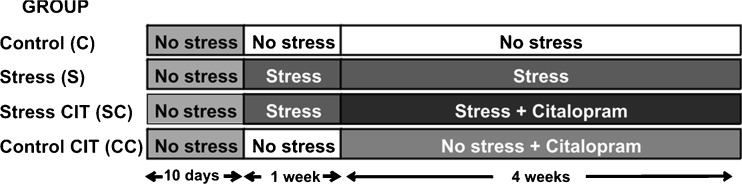
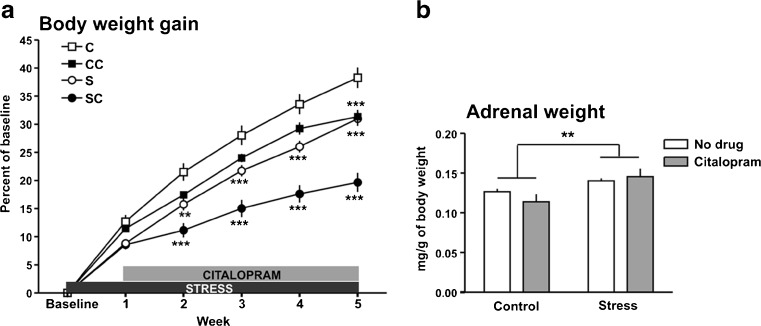
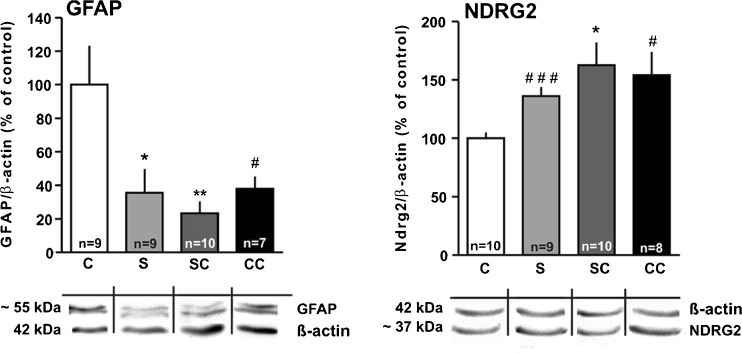
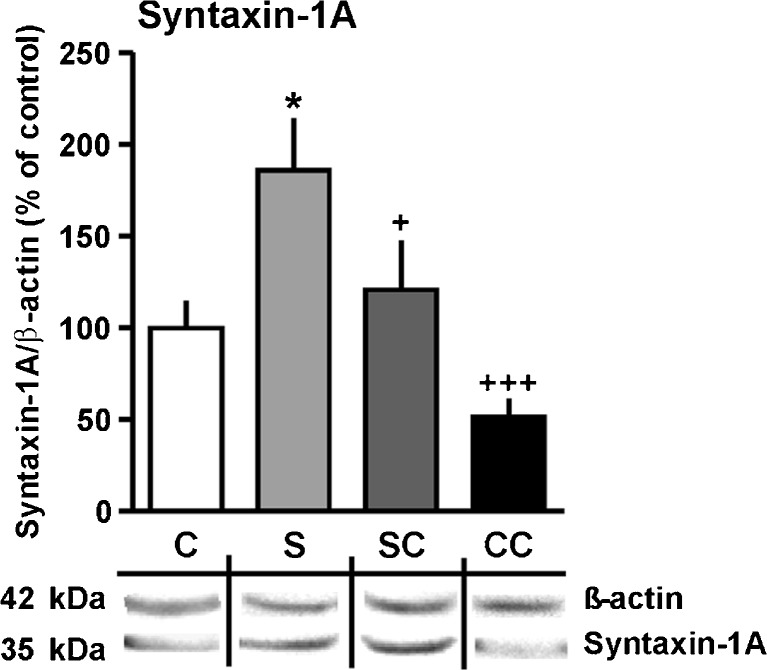
RATIONALE: It has been suggested that there are causal relationships between alterations in brain glia and major depression. OBJECTIVES: To investigate whether a depressive-like state induces changes in brain astrocytes, we used chronic social stress in male rats, an established preclinical model of depression. Expression of two astrocytic proteins, the intermediate filament component glial fibrillary acidic protein (GFAP) and the cytoplasmic protein N-myc downregulated gene 2 (NDRG2), was analyzed in the hippocampus. For comparison, expression of the neuronal protein syntaxin-1A was also determined. METHODS: Adult male rats were subjected to daily social defeat for 5 weeks and were concomitantly treated with citalopram (30 mg/kg/day, via the drinking water) for 4 weeks. RESULTS: Western blot analysis showed that the chronic stress downregulated GFAP but upregulated NDRG2 protein. Citalopram did not prevent these stress effects, but the antidepressant per se downregulated GFAP and upregulated NDRG2 in nonstressed rats. In contrast, citalopram prevented the stress-induced upregulation of the neuronal protein syntaxin-1A. CONCLUSIONS: These data suggest that chronic stress and citalopram differentially affect expression of astrocytic genes while the antidepressant drug does not prevent the stress effects. The inverse regulation of the cytoskeletal protein GFAP and the cytoplasmic protein NDRG2 indicates that the cells undergo profound metabolic changes during stress and citalopram treatment. Furthermore, the present findings indicate that a 4-week treatment with citalopram does not restore normal glial function in the hippocampus, although the behavior of the animals was normalized within this treatment period, as reported previously.
Overview
The claims and statistics of this paper haven’t been checked yet.
Free: it reads the open-access text and checks the first 5 claims that cite a source we can check. Create a free account to check every claim.
Integrity signals
Registry
Cites
Statistics
Figures
Verification
Claims the paper makes
The claims and statistics of this paper haven’t been checked yet.
Free: it reads the open-access text and checks the first 5 claims that cite a source we can check. Create a free account to check every claim.
Claims other papers make about this one
Each is checked against this paper’s own text: does it say what the citing paper says it does?
The source backs part of the claim, not all of it — or backs it for a different population, condition or comparison.
In the citing paper
“Mice exposed to chronic daily social defeat expressed reduced GFAP in stress-related brain regions associated with depressive-like behaviors (95).”
From Chronic stress, neuroinflammation, and depression: an overview of pathophysiological mechanisms and emerging anti-inflammatories (2023) · cites this paper as [95]
Experimental — accuracy not yet measured
Self-check
Percentages, sums and reported differences re-computed from the paper’s own numbers.
The self-check needs the paper’s full text.
Citations
Cites
The Rat Brain in Stereotaxic Coordinates
(1982) · Elsevier eBooks · doi:10.1016/c2009-0-63235-9 · Cited by 51,963
The rat brain in stereotaxic coordinates
Palkovits, M. (1983) · Neuropeptides · doi:10.1016/0143-4179(83)90049-5 · Cited by 28,831
Molecular Mechanisms of Depression: Perspectives on New Treatment Strategies
Lang, U. E., & Borgwardt, S. (2013) · Cellular Physiology and Biochemistry · doi:10.1159/000350094 · Cited by 8,475
AChE-stained horizontal sections of the rat brain in stereotaxic coordinates
Paxinos, G., Watson, C. R. R., & Emson, P. C. (1980) · Journal of Neuroscience Methods · doi:10.1016/0165-0270(80)90021-7 · Cited by 4,497
Tripartite synapses: glia, the unacknowledged partner
Araque, A., Parpura, V., Sanzgiri, R. P., & Haydon, P. G. (1999) · Trends in Neurosciences · doi:10.1016/s0166-2236(98)01349-6 · Cited by 2,529 · cited 2×
“As astrocytes are dynamic regulators of synaptogenesis and synaptic strength, and control neurogenesis in the adult dentate gyrus, the stress effects observed here may negatively influence neuronal functioning, possibly because of alterations in the capacity of supplying neurotrophic factors to the neuropil (Araque et…”
A molecular and cellular theory of depression
Duman, R. S. (1997) · Archives of General Psychiatry · doi:10.1001/archpsyc.1997.01830190015002 · Cited by 2,129 · cited 4×
“Some studies have analyzed SSRI effects on the expression of neuronal genes that are directly involved either in serotonergic transmission or in cell survival and neuroplasticity (Duman et al. 1997; Manji et al. 2003; Alfonso et al. 2004; Abumaria et al. 2007; Sairanen et al. 2007; Boer et al. 2010; Bethea et al. 2011…”
InfluentialThe rat brain in stereotaxic coordinates (2nd edn)
Herman, J. P., & Watson, S. J. (1987) · Trends in Neurosciences · doi:10.1016/0166-2236(87)90017-8 · Cited by 1,753
Stress revisited: a critical evaluation of the stress concept
Koolhaas, J. M., Bartolomucci, A., Buwalda, B., de Boer, S. F., Flügge, G., Korte, S. M., Meerlo, P., Murison, R., Olivier, B., Palanza, P., et al. (2011) · Neuroscience & Biobehavioral Reviews · doi:10.1016/j.neubiorev.2011.02.003 · Cited by 1,626
Protoplasmic Astrocytes in CA1 Stratum Radiatum Occupy Separate Anatomical Domains
Bushong, E. A., Martone, M. E., Jones, Y. Z., & Ellisman, M. H. (2002) · The Journal of Neuroscience · doi:10.1523/jneurosci.22-01-00183.2002 · Cited by 1,578 · cited 1×
“In addition, since GFAP-immunoreactive structures constitute only ~15 % of the total astrocytic volume, the reduction in the protein should not be taken as a measure of cell numbers (Bushong et al. 2002; Lavialle et al. 2011).”
Glial reduction in the subgenual prefrontal cortex in mood disorders
Öngür, D., Drevets, W. C., & Price, J. L. (1998) · Proceedings of the National Academy of Sciences · doi:10.1073/pnas.95.22.13290 · Cited by 1,525 · cited 2×
“was reduced in the orbitofrontal cortex of patients with major depression (Ongur et al. 1998; Miguel-Hidalgo et al. 2010).”
Cited by
Astrocyte Pathology in Major Depressive Disorder: Insights from Human Postmortem Brain Tissue
Rajkowska, G., & Stockmeier, C. (2013) · Current Drug Targets · doi:10.2174/13894501113149990156 · Cited by 603
“The stress of chronic social defeat reduced the number and soma volume of GFAP-IR astrocytes in the hippocampus of tree shrews [55] and decreased the level of GFAP protein in rat hippocampus [56].”
BackgroundPathogenesis of depression: Insights from human and rodent studies
Ménard, C., Hodes, G. E., & Russo, S. J. (2016) · Neuroscience · doi:10.1016/j.neuroscience.2015.05.053 · Cited by 593
“…M anuscript A uthor M anuscript A uthor M anuscript A uthor M anuscript deprivation (Leventopoulos et al., 2007) or a 5-week social defeat paradigm (Araya-Callis et al., 2012), while S100β mRNA, a marker of astrocytes and oligodendrocytes, is decreased in a genetic model of depression (Strenn et…”
BackgroundHassamal, S. (2023) · Frontiers in Psychiatry · doi:10.3389/fpsyt.2023.1130989 · Cited by 578
Lucassen, P. J., Pruessner, J., Sousa, N., Almeida, O. F. X., Van Dam, A. M., Rajkowska, G., Swaab, D. F., & Czéh, B. (2014) · Acta Neuropathologica · doi:10.1007/s00401-013-1223-5 · Cited by 441
“Typically, astrocytes are identified by their GFAP (glial fibrillary acidic protein) expression and stress modulates GFAP expression in rodents: while acute physical stress increase GFAP immunoreactivity in several brain regions [106], chronic stress reduced GFAP mRNA and protein expression levels in the prefrontal co…”
Stress, social behavior, and resilience: Insights from rodents
Beery, A. K., & Kaufer, D. (2015) · Neurobiology of Stress · doi:10.1016/j.ynstr.2014.10.004 · Cited by 367
“astrocytes, oligodendrocytes and microglial cells, it has become clear that glial cells are likely to play a role in this process, and deserve more attention in future studies (Braun et al., 2009; Wohleb et al., 2011; Araya-Callís et al., 2012; Chetty et al., 2014).”
BackgroundDu Preez, A., Onorato, D., Eiben, I., Musaelyan, K., Egeland, M., Zunszain, P. A., Fernandes, C., Thuret, S., & Pariante, C. M. (2021) · Brain, Behavior, and Immunity · doi:10.1016/j.bbi.2020.07.015 · Cited by 285
Cobb, J. A., O’Neill, K., Milner, J., Mahajan, G. J., Lawrence, T. J., May, W. L., Miguel-Hidalgo, J., Rajkowska, G., & Stockmeier, C. A. (2016) · Neuroscience · doi:10.1016/j.neuroscience.2015.12.044 · Cited by 254
“…in depression is less well studied in the human hippocampus, but the clinical and preclinical literature suggests involvement of hippocampal astrocytes in depression and its treatment (Müller et al., 2001; Gosselin et al., 2009; Araya-Callı́s et al., 2012; Gos et al., 2013; Zhang et al., 2015).”
BackgroundNajjar, S., Pearlman, D. M., Devinsky, O., Najjar, A., & Zagzag, D. (2013) · Journal of Neuroinflammation · doi:10.1186/1742-2094-10-142 · Cited by 248
“Astroglial loss ● [20,21,126-133] ● [134-138] ● [139-141]”
Sanacora, G., & Banasr, M. (2013) · Biological Psychiatry · doi:10.1016/j.biopsych.2013.03.032 · Cited by 239
An astroglial basis of major depressive disorder? An overview
Wang, Q., Jie, W., Liu, J., Yang, J., & Gao, T. (2017) · Glia · doi:10.1002/glia.23143 · Cited by 222
“However, other studies did not show significant effects of antidepressants on astrocyte numbers or GFAP expression (Araya-Callis et al., 2012; Iwata, Shirayama, Ishida, Hazama, & Nakagome, 2011).”
Yao, D., Li, R., Hao, J., Huang, H., Wang, X., Ran, L., Fang, Y., He, Y., Wang, W., Liu, X., et al. (2023) · Translational Psychiatry · doi:10.1038/s41398-023-02614-z · Cited by 160
“Histological research in depression patients also indicated that the number of astrocytes was decreased and morphological atrophy occurred in the prefrontal cortex, amygdala, and hippocampus [35, 36].”
BackgroundPetraglia, A., Plog, B., Dayawansa, S., Dashnaw, M., Czerniecka, K., Walker, C., Chen, M., Hyrien, O., Iliff, J., Deane, R., et al. (2014) · Surgical Neurology International · doi:10.4103/2152-7806.147566 · Cited by 151
Steinman, M. Q., Gao, V., & Alberini, C. M. (2016) · Frontiers in Integrative Neuroscience · doi:10.3389/fnint.2016.00010 · Cited by 122
“Additionally, prolonged social defeat stress in tree shrews ( Tupaia belangeri , Czeh et al., 2006) and rats (Araya-Callís et al., 2012) is associated with significantly reduced counts of astrocytes that stain for glial fibrillary acidic protein (GFAP), a glial cytoskeletal element.”
Preez, A. D., Law, T., Onorato, D., Lim, Y. M., Eiben, P., Musaelyan, K., Egeland, M. T., Hye, A., Zunszain, P. A., Thuret, S., et al. (2020) · Translational Psychiatry · doi:10.1038/s41398-020-01000-3 · Cited by 131
Jiao, H., Yang, H., Yan, Z., Chen, J., Xu, M., Jiang, Y.-M., Liu, Y., Xue, Z., Ma, Q., Li, X., et al. (2021) · Neuropsychiatric Disease and Treatment · doi:10.2147/ndt.s302443 · Cited by 103
Two Populations of Glucocorticoid Receptor-Binding Sites in the Male Rat Hippocampal Genome
Polman, J. A. E., de Kloet, E. R., & Datson, N. A. (2013) · Endocrinology · doi:10.1210/en.2012-2187 · Cited by 108
NDRG2 as a marker protein for brain astrocytes
Flügge, G., Araya-Callis, C., Garea-Rodriguez, E., Stadelmann-Nessler, C., & Fuchs, E. (2014) · Cell and Tissue Research · doi:10.1007/s00441-014-1837-5 · Cited by 81
“Our previous article showed that NDRG2 protein expression is enhanced in the hippocampus of chronically stressed rats (Araya-Callís et al. 2012).”
Self-citationQuesseveur, G., Portal, B., Basile, J.-A., Ezan, P., Mathou, A., Halley, H., Leloup, C., Fioramonti, X., Déglon, N., Giaume, C., et al. (2015) · Frontiers in Cellular Neuroscience · doi:10.3389/fncel.2015.00490 · Cited by 77
“…findings, subjecting animals to unpredictable chronic mild stress (UCMS) or prolonged social defeat, two animal models of depression, also elicits an attenuation of GFAP (mRNA or protein) in the cortex (Banasr et al., 2010) or the hippocampus of rats (Czeh et al., 2006; Araya-Callis et al., 2012).”
BackgroundLuoni, A., Macchi, F., Papp, M., Molteni, R., & Riva, M. A. (2015) · International Journal of Neuropsychopharmacology · doi:10.1093/ijnp/pyu061 · Cited by 70
“Previous studies have shown that some antidepressants may normalize the changes of hippocampal GFAP expression in rats exposed to CMS (Liu et al., 2009; Araya-Callis et al., 2012).”
ResultAstrocyte plasticity induced by emotional stress: A new partner in psychiatric physiopathology?
Bender, C. L., Calfa, G. D., & Molina, V. A. (2015) · Progress in Neuro-Psychopharmacology and Biological Psychiatry · doi:10.1016/j.pnpbp.2015.08.005 · Cited by 73
Emerging role of N-myc downstream-regulated gene 2 (NDRG2) in cancer
Hu, W., Fan, C., Jiang, P., Ma, Z., Yan, X., Di, S., Jiang, S., Li, T. X., Cheng, Y., & Yang, Y. (2015) · Oncotarget · doi:10.18632/oncotarget.6228 · Cited by 73
“NDRG2 has been shown to participate in ischemia-reperfusion injury [45], Alzheimer’s disease [46, 47], depression [48, 49] and hypoxia [25, 50].”
BackgroundA New Outlook on Mental Illnesses: Glial Involvement Beyond the Glue
Elsayed, M., & Magistretti, P. J. (2015) · Frontiers in Cellular Neuroscience · doi:10.3389/fncel.2015.00468 · Cited by 59
“In addition, rodent chronic stress and maternal deprivation models of depression also resulted in reduced astrocyte numbers and density in the hippocampus (Leventopoulos et al., 2007; Araya-Callis et al., 2012) and PFC (Banasr et al., 2010).”
BackgroundRappeneau, V., Blaker, A. L., Petro, J., Yamamoto, B. K., & Shimamoto, A. (2016) · Frontiers in Behavioral Neuroscience · doi:10.3389/fnbeh.2016.00231 · Cited by 66
“Studies in postmortem human depressed subjects and animal models of depression demonstrate reduced immunoreactivity of GFAP (GFAP-IR) and GLT-1 protein expression (Czeh et al., 2006; Banasr and Duman, 2008; Ye et al., 2011; Araya-Callis et al., 2012).”
BackgroundHennebelle, M., Champeil‐Potokar, G., Lavialle, M., Vancassel, S., & Denis, I. (2014) · Nutrition Reviews · doi:10.1111/nure.12088 · Cited by 60
Astroglia in the Vulnerability to and Maintenance of Stress-Mediated Neuropathology and Depression
Miguel-Hidalgo, J. J. (2022) · Frontiers in Cellular Neuroscience · doi:10.3389/fncel.2022.869779 · Cited by 56
Pazini, F. L., Cunha, M. P., Azevedo, D., Rosa, J. M., Colla, A. R. D. S., de Oliveira, J., Ramos-Hryb, A. B., Brocardo, P. S., Gil‐Mohapel, J., & Rodrigues, A. L. S. (2016) · Molecular Neurobiology · doi:10.1007/s12035-016-0148-0 · Cited by 51
Sild, M., Ruthazer, E. S., & Booij, L. (2017) · Neuroscience & Biobehavioral Reviews · doi:10.1016/j.neubiorev.2017.09.014 · Cited by 52
“trocyte marker GFAP in hippocampus (Araya-Callis et al., 2012; Czeh et al., 2006; Liu et al., 2011) and PFC (Banasr and Duman, 2008) where it was also correlated with diminished glial cell metabolism (Banasr et al.”
BackgroundMa, Y., Zhang, L., Liu, G., Yanhong, F., Ye, P., & Hou, W. (2016) · Molecular Neurobiology · doi:10.1007/s12035-016-9814-5 · Cited by 48
Distinctive stress sensitivity and anxiety-like behavior in female mice: Strain differences matter
Marchette, R. C. N., Bicca, M. A., Santos, E. C. D. S., & de Lima, T. C. M. (2018) · Neurobiology of Stress · doi:10.1016/j.ynstr.2018.08.002 · Cited by 46
Assessment of astrocytes as a mediator of memory and learning in rodents
Akther, S., & Hirase, H. (2021) · Glia · doi:10.1002/glia.24099 · Cited by 46
“Later different groups reported decreases in GFAP expression at the hippocampal protein (Liu et al., 2009; Araya-Callís et al., 2012) and RNA levels (Liu et al., 2009; Li et al., 2013) as well as in the prefrontal cortex (Banasr et al., 2010; Li et al., 2013) following chronic stress.”
BackgroundBenedetto, B. D., Radecke, J., Schmidt, M. V., & Rupprecht, R. (2012) · Neuroscience · doi:10.1016/j.neuroscience.2012.11.061 · Cited by 45
Mode of action of astrocytes in pain: From the spinal cord to the brain
Chen, Y.-L., Feng, X., Cheung, C., & Liu, J. A. (2022) · Progress in Neurobiology · doi:10.1016/j.pneurobio.2022.102365 · Cited by 46
Rodríguez‐Arias, M., Montagud‐Romero, S., Carrión, A. M. G., Perez, C. F., Pérez‐Villalba, A., Marco, E. M., López‐Gallardo, M., Viveros, M., & Miñarro, J. (2018) · PLoS ONE · doi:10.1371/journal.pone.0206421 · Cited by 43
Gap junction channels as potential targets for the treatment of major depressive disorder
Ren, Q., Wang, Z., Chu, S., Xia, C., & Chen, N. (2017) · Psychopharmacology · doi:10.1007/s00213-017-4782-7 · Cited by 41
Fiore, N. T., & Austin, P. J. (2018) · Neuroscience · doi:10.1016/j.neuroscience.2018.08.010 · Cited by 41
Characterization of spinal cord glial cells in a model of hindlimb unloading in mice
Chelyshev, Y. A., Mukhamedshina, Y. O., Povysheva, T. V., Shaymardanova, G. F., Rizvanov, A. A., Nigmetzyanova, M. V., Tyapkina, O. V., Bondarenko, N. I., Nikolskiy, E. E., & Islamov, R. R. (2014) · Neuroscience · doi:10.1016/j.neuroscience.2014.09.004 · Cited by 41
Niciu, M. J., Henter, I. D., Sanacora, G., & Zarate, C. A. (2013) · The World Journal of Biological Psychiatry · doi:10.3109/15622975.2013.829585 · Cited by 40
“Social defeat stress reduces GFAP expression (Araya-Callis et al. 2012); this effect is not reversed by citalopram, but is partially rescued by brain-derived neurotrophic factor (Ye et al. 2011).”
BackgroundAstroglial Connexin43 as a Potential Target for a Mood Stabiliser
Okada, M., Oka, T., Nakamoto, M., Fukuyama, K., & Shiroyama, T. (2020) · International Journal of Molecular Sciences · doi:10.3390/ijms22010339 · Cited by 38
Glucocorticoid receptor activation induces decrease of hippocampal astrocyte number in rats
Lou, Y.-X., Li, J., Wang, Z., Xia, C., & Chen, N. (2018) · Psychopharmacology · doi:10.1007/s00213-018-4936-2 · Cited by 37
Astrocyte-specific NDRG2 gene: functions in the brain and neurological diseases
Li, X., Wu, X., Luo, P., & Xiong, L. (2019) · Cellular and Molecular Life Sciences · doi:10.1007/s00018-019-03406-9 · Cited by 34
Li, X., Luo, P., Wang, F., Yang, Q., Li, Y., Zhao, M., Wang, S., Wang, Q., & Xiong, L. (2014) · Anesthesiology · doi:10.1097/aln.0000000000000314 · Cited by 34
Ding, X., Liu, Y., Yan, Z., Li, X., Ma, Q., Jin, Z.-Y., Liu, Y., Li, Y., Liu, Y., Xue, Z., et al. (2017) · Evidence-based Complementary and Alternative Medicine · doi:10.1155/2017/1960584 · Cited by 33
“Thus, the changes in neurons or astrocytes in the hippocampus are involved in the pathogenesis of MDD.”
InfluentialAstrocytic NDRG2 is critical in the maintenance of neuropathic pain
Cheng, H., Zhang, L., Xia, F., Jin, L., Liu, S., Ren, H., Zhu, C., Ji, Q., & Tang, J. (2020) · Brain Behavior and Immunity · doi:10.1016/j.bbi.2020.07.009 · Cited by 32
Repeated ketamine administration redeems the time lag for citalopram's antidepressant-like effects
Zhang, G.-F., Liu, W.-X., Qiu, L.-L., Guo, J., Wang, X.-M., Sun, H., Yang, J., & Zhou, Z. (2015) · European Psychiatry · doi:10.1016/j.eurpsy.2014.11.007 · Cited by 32
“Citalopram at a dose of 20 mg/kg/day was orally administered on the basis of previous studies showing that citalopram administered intraperitoneally or oral at a dose of 10 or 20 mg/kg/day during two or three weeks exerts antidepressant-like effects in rodents [3,43].”
MethodDeng, Y., Ma, Y., Zhang, Z., Zhang, L., Guo, H., Qin, P., Hou, Y., Gao, Z., & Hou, W. (2017) · Anesthesiology · doi:10.1097/aln.0000000000002044 · Cited by 32
Thongrong, S., Surapinit, S., Promsrisuk, T., Jittiwat, J., & Kongsui, R. (2023) · Biomedical Reports · doi:10.3892/br.2023.1602 · Cited by 31
Wen, G., Zhan, X., Xu, X., Xia, X., Jiang, S., Ren, X., Ren, W., Lou, H., Lu, L., Hermenean, A. O., et al. (2023) · Molecular Neurobiology · doi:10.1007/s12035-023-03669-1 · Cited by 31
de Souza, A. G., Lopes, I. S., Filho, A. J. M. C., Cavalcante, T. M. B., Oliveira, J. V. S., de Carvalho, M. A. J., de Lima, K. A., Jucá, P. M., Mendonça, S. S., Mottin, M., et al. (2022) · Naunyn-Schmiedeberg s Archives of Pharmacology · doi:10.1007/s00210-022-02247-x · Cited by 30
Biesmans, S., Acton, P. D., Cotto, C., Langlois, X., Donck, L. V., Bouwknecht, J. A., Aelvoet, S., Hellings, N., Meert, T. F., & Nuydens, R. (2015) · Glia · doi:10.1002/glia.22804 · Cited by 30
“Most of these studies have focused on microglia, while other models showed that astrocytes also display metabolic (raya-Callis et al., 2012) and structural changes (Tynan et al.”
BackgroundBansal, Y., Codeluppi-Arrowsmith, S. A., & Banasr, M. (2024) · International Journal of Molecular Sciences · doi:10.3390/ijms25126357 · Cited by 30
“However, this may need to be systematically tested for a few antide-pressants of each class, as it was shown that fluoxetine treatment can reverse the chronic stress-induced GFAP reductions [124], but not citalopram [126].”
BackgroundN-myc downstream-regulated gene 2 in the nervous system: from expression pattern to function
Lin, K. L., Yin, A., Yao, L., & Li, Y. (2015) · Acta Biochimica et Biophysica Sinica · doi:10.1093/abbs/gmv082 · Cited by 28
“Studies of rat brain tissue revealed reduced GFAP and up-regulated NDRG2 protein levels under chronic psychosocial stress [40].”
BackgroundWang, X., Zhang, F., Niu, L., Yan, J., Liu, H., Wang, D., Hui, J., Dai, H., Song, J., & Zhang, Z. (2023) · Journal of Affective Disorders · doi:10.1016/j.jad.2023.12.068 · Cited by 27
Singhal, G., Singhal, S., & Baune, B. T. (2025) · Neuroprotection/Neuroprotection (Chichester, England. Print) · doi:10.1002/nep3.70009 · Cited by 27
“For example, targeting astrocyte ‐ derived cytokines (e.g., IL ‐ 6, TNF ‐ α ) or metabolic [186, 188 – 190, 193, 195] Epigenetic and metabolic shifts Lactate ‐ driven histone lactylation, LDHA deletion effects, Orai1 calcium channel signaling Promote pro ‐ in fl ammatory phenotypes and behavioral…”
Estrogen regulates the expression of Ndrg2 in astrocytes
Ma, Y., Qin, P., Feng, D., Li, Y., Zhang, L., Liu, Z., Yin, A., Tang, W.-H., Dong, H., Meng, L., et al. (2014) · Brain Research · doi:10.1016/j.brainres.2014.04.036 · Cited by 26
Animal models of major depressive disorder and the implications for drug discovery and development
Demin, K. A., Sysoev, M., Chernysh, M. V., Savva, A. K., Koshiba, M., Wappler-Guzzetta, E. A., Song, C., de Abreu, M. S., Leonard, B. E., Parker, M. O., et al. (2019) · Expert Opinion on Drug Discovery · doi:10.1080/17460441.2019.1575360 · Cited by 27
“brain regions and the astrocyte marker GFAP [181], whereas selective lesion of glial astrocytes by infusing L-α aminoadipic 370 K.”
BackgroundFilipović, D., Perić, I., Costina, V., Stanisavljević, A., Gass, P., & Findeisen, P. (2020) · Life Sciences · doi:10.1016/j.lfs.2020.117790 · Cited by 26
Chen, L., Wang, X., Lin, Z., Dai, J., Huang, Y., & Zhao, Y. (2017) · Phytotherapy Research · doi:10.1002/ptr.5859 · Cited by 25
“(2017) hippocampal GFAP level was also detected in the chronic psychosocial stress model by western blot (Araya-Callis et al., 2012), and at the RNA level in the chronic mild stress model (Li et al., 2013).”
BackgroundInfluentialPower System Reliability: Mathematical Models and Applications
Medjoudj, R., Bediaf, H., & Aïssani, D. (2017) · InTech eBooks · doi:10.5772/intechopen.71926 · Cited by 25
Machado, D. G., de Lara, M. V. S., Dobler, P. B., Almeida, R. F., & Porciúncula, L. O. (2019) · Progress in Neuro-Psychopharmacology and Biological Psychiatry · doi:10.1016/j.pnpbp.2019.109776 · Cited by 25
Altered Glial Plasticity in Animal Models for Mood Disorders
Czéh, B., Fuchs, E., & Flügge, G. (2013) · Current Drug Targets · doi:10.2174/1389450111314110005 · Cited by 22
“duction in pooled hippocampal GFA protein and also not the stress-mediated elevation in NDRG2 although depressivelike behavior of the rats was normalized by the therapy as shown earlier [94, 170].”
BackgroundMethodResultInfluentialN‐myc downstream‐regulated gene 2 controls astrocyte morphology via Rho‐GTPase signaling
Zhang, Z., Ma, Z., Zou, W., Zhang, L., Li, Y., Zhang, J., Liu, M., Hou, W., & Ma, Y. (2019) · Journal of Cellular Physiology · doi:10.1002/jcp.28689 · Cited by 24
Tyrtyshnaia, A. A., Manzhulo, I., Konovalova, S. P., & Заглядкина, А. А. (2019) · Cells Tissues Organs · doi:10.1159/000506812 · Cited by 24
“Decreases in the astrocyte number and body size are also observed in conditions accompanied by chronic stress [Czéh et al., 2006; Araya-Callís et al., 2012].”
BackgroundLian, S., Xu, B., Wang, D., Wang, L., Li, W., Yao, R., Ji, H. L., Wang, J., Guo, J., Li, S., et al. (2018) · Behavioural Brain Research · doi:10.1016/j.bbr.2018.11.008 · Cited by 22
“Studies have shown that chronic stress reduced GFAP mRNA and protein expression in the prefrontal cortex and hippocampus [36], whereas CORT reduced GFAP levels globally in the brain [37].”
Possible antidepressant mechanism of acupuncture: targeting neuroplasticity
Xu, N., He, Y., Wei, Y.-N., Bai, L., & Wang, L. (2025) · Frontiers in Neuroscience · doi:10.3389/fnins.2025.1512073 · Cited by 20
Avalos, M. P., Guzman, A. S., Rigoni, D., Gorostiza, E. A., Sanchez, M. A., Mongi‐Bragato, B., García‐Keller, C., Perassi, E. M., Virgolini, M. B., Ramos, J. M. P., et al. (2022) · Brain Behavior and Immunity · doi:10.1016/j.bbi.2022.01.014 · Cited by 20
Alam-ElDein, K. M., Faraag, A. H. I., El-Yamany, N. A., Moneim, A. E. A., Abdelfattah, M. S., El‐Khadragy, M. F., & Elmasry, H. A. (2026) · Frontiers in Pharmacology · doi:10.3389/fphar.2025.1691567 · Cited by 19
Liu, X., Tang, S., Liu, S.-M., Zeng, J., Chen, Z., Liu, C.-H., Mu, R.-H., Yuan, D.-H., Zhao, J., Hong, H., et al. (2022) · Neurobiology of Disease · doi:10.1016/j.nbd.2022.105922 · Cited by 19
Liu, C., Yang, T., Zhou, Y., & Shen, Y. (2022) · Neuroscience Letters · doi:10.1016/j.neulet.2022.136766 · Cited by 18
“For examples, decreased GFAP protein level in gray matter from the dorsolateral prefrontal and orbitofrontal has been observed in MDD patients [20] and in the rodent medial prefrontal cortex [21] and hippocampus [22] as well.”
BackgroundWillard, S. L., Hemby, S. E., Register, T. C., McIntosh, S., & Shively, C. A. (2014) · Neuroscience Letters · doi:10.1016/j.neulet.2014.01.012 · Cited by 18
“Chronic psychosocial stress reduced the number of GFAPimmunoreactive astrocytes in male tree shrews [7], and GFAP protein expression in male rats [3].”
BackgroundPsychosocial Stress Delays Recovery of Postoperative Pain Following Incisional Surgery in the Rat
Arora, V. K., Martin, T. J., Aschenbrenner, C. A., Hayashida, K., Kim, S. A., Parker, R., Eisenach, J. C., & Peters, C. M. (2018) · Neuroscience · doi:10.1016/j.neuroscience.2018.04.014 · Cited by 17
N-myc downstream-regulated gene 2 deficiency aggravates memory impairment in Alzheimer's disease
Tao, L., Zhu, Y., Wang, R., Han, J., Ma, Y., Guo, H., Tang, W., Zhuo, L., Fan, Z., Yin, A., et al. (2019) · Behavioural Brain Research · doi:10.1016/j.bbr.2019.112384 · Cited by 17
“NDRG2 has protective effects in both acute and chronic brain disorders such as ischemia and depression [43-45].”
Synaptic Stress and Pathogenesis of Neuropsychiatric Disorders
Popoli, M., Diamond, D., & Sanacora, G. (2014) · Springer eBooks · doi:10.1007/978-1-4939-1056-4 · Cited by 18
Eldomiaty, M. A., Makarenko, O., Hassan, Z. A., Almasry, S. M., Petrov, P., & Elnaggar, A. M. (2020) · Folia Morphologica · doi:10.5603/fm.a2020.0007 · Cited by 16
Miguel-Hidalgo, J. J. (2023) · PubMed · doi:10.14670/hh-18-476 · Cited by 15
“Different modalities of chronic stress based on restraint, unpredictable stressors or social defeat in rodents have shown that astrocyte numbers labeled with specific markers such as GFAP, and the extent of the GFAP-positive processes stemming from astrocyte cell bodies, are reduced in various brain regions including…”
BackgroundSu, Z., Liao, H. H., Lu, K. E., Chi, Z., Qiu, Z. Q., Jiang, J.-M., & Wu, Z. (2020) · Neoplasma · doi:10.4149/neo_2020_190917n915 · Cited by 14
Indersmitten, T., Schachter, M. J., Young, S., Welty, N., Otte, S. L., Nassi, J. J., Lovenberg, T. W., Bonaventure, P., & Wyatt, R. M. (2019) · Frontiers in Neuroscience · doi:10.3389/fnins.2019.00176 · Cited by 12
“Additionally, we co-administered the antidepressant citalopram with cortisol to test the hypothesis that citalopram could rescue the effect of chronic cortisol treatment, since citalopram has been shown to alleviate behavioral symptoms of chronic stress related to motivation and reward sensitivity (Rygula et al., 2006…”
BackgroundMethodFeng, T., Han, B.-H., Yang, G., Shi, C.-J., Gao, Z.-W., Cao, M.-Z., & Zhu, X.-L. (2019) · Journal of Molecular Neuroscience · doi:10.1007/s12031-019-01293-0 · Cited by 12
Gökdemir, G. Ş., Şeker, U., Baksi, N., Baylan, M., Demirtaş, B., & Gökdemir, M. T. (2025) · Psychopharmacology · doi:10.1007/s00213-025-06844-5 · Cited by 11
“Preclinical studies show that stress models reduce GFAP levels and that this effect can be reversed with antidepressant treatment (Araya-Callis et al. 2012; Banasr et al. 2010 ).”
Niu, Y., Zhou, B., Wan, C., wu, R., Sun, H., & Lu, D. (2020) · Aging Pathobiology and Therapeutics · doi:10.31491/apt.2020.03.013 · Cited by 11
Beltrame, F. L., Moysés, T. H. P., Coelho, M. P., Steinvascher, M. C. R., de Oliveira, S. A., da Silva, A. A. S., Cerri, P. S., & Sasso‐Cerri, E. (2023) · Andrology · doi:10.1111/andr.13513 · Cited by 10
Santos¹, L. F. D. S., Behrens, L. M. P., Barbosa, C. P., Ribeiro, C. T., da Rosa, H. T., Somensi, N., Brum, P. O., Silveira, A. K., Rodrigues, M. S., de Oliveira, J., et al. (2024) · Molecular Neurobiology · doi:10.1007/s12035-024-03912-3 · Cited by 10
“Another work showed that chronic restriction stress reduced astrocytes density in the hippocampus (CA1, CA3 and dentate gyrus regions) and the prefrontal cortex [94, 95].”
Montagud‐Romero, S., Miñarro, J., & Rodríguez‐Arias, M. (2021) · Current topics in behavioral neurosciences · doi:10.1007/7854_2021_260 · Cited by 9
Wegener, A. J., & Neigh, G. N. (2021) · Frontiers in Behavioral Neuroscience · doi:10.3389/fnbeh.2021.780190 · Cited by 9
“Created with Biorender.com. stress-induced reductions of GFAP in astrocytes of male rats (Araya-Callís et al., 2012).”
BackgroundBengoetxea, H., Ortuzar, N., Rico‐Barrio, I., Lafuente, J. V., & Argandoña, E. (2013) · Frontiers in Cellular Neuroscience · doi:10.3389/fncel.2013.00170 · Cited by 9
“On other hand, Araya-Callís et al. (2012), have also described that chronic psychosocial stress downregulates GFAP expression in the hippocampus.”
BackgroundA terrified-sound stress induced proteomic changes in adult male rat hippocampus
Yang, J., Hu, L., Wu, Q., Liu, L., Zhao, L., Zhao, X., Song, T., & Huang, C. (2014) · Physiology & Behavior · doi:10.1016/j.physbeh.2014.01.038 · Cited by 9
Lopes, I. S., Souza, A. G., Filho, A. J. M. C., Sampaio, T. L., da Silva, D. M. A., Valentim, J. T., Chaves, R. D. C., Soares, M. V. R., Júnior, D. C. C., Barbosa‐Filho, J. M., et al. (2024) · Behavioural Pharmacology · doi:10.1097/fbp.0000000000000788 · Cited by 8
Koga, Y., Kajitani, N., Miyako, K., Takizawa, H., Boku, S., & Takebayashi, M. (2023) · Journal of Psychiatric Research · doi:10.1016/j.jpsychires.2024.01.007 · Cited by 7
The Importance of Glia in Dealing with Stress
Woodbury-Fariña, M. A. (2014) · Psychiatric Clinics of North America · doi:10.1016/j.psc.2014.08.003 · Cited by 7
Blaschke, S. J., Rautenberg, N., Endepols, H., Jendro, A., Konrad, J., Vlachakis, S., Wiedermann, D., Schroeter, M., Hoffmann, B., Merkel, R., et al. (2024) · International Journal of Molecular Sciences · doi:10.3390/ijms25094837 · Cited by 6
“Otherwise, glial dysfunction with reduced hippocampal GFAP expression levels was previously reported in preclinical depression models of chronic psychosocial stress [38].”
BackgroundTakarada‐Iemata, M. (2020) · Anatomical Science International · doi:10.1007/s12565-020-00587-3 · Cited by 6
Zhang, Y., Gao, H., Li, N., Chang, H., Cheng, B., Li, Y., Miao, J., Li, S., & Wang, Q. (2020) · Journal of Molecular Histology · doi:10.1007/s10735-020-09927-z · Cited by 6
Rajkowska, G. (2014) · Springer eBooks · doi:10.1007/978-1-4939-1056-4_14 · Cited by 6
What do we know about astrocytes and the antidepressant effects of DBS?
Campos, A. C. P., Pagano, R. L., Lipsman, N., & Hamani, C. (2023) · Experimental Neurology · doi:10.1016/j.expneurol.2023.114501 · Cited by 4
Wang, Z., Yang, J., Zhang, H., Ke, D., Zhang, L., Liu, Y., Lai, Y., Zhang, Y., Qin, X., Yang, J., et al. (2025) · Communications Biology · doi:10.1038/s42003-025-08968-y · Cited by 4
“Previous studies revealed that NDRG2 expression was increasedin the hippocampus of chronic psychosocial stress model rats 30 .”
Astroglia and depression: A Gliocentric perspective from rodent models to therapeutic insights
Subba, R., Ellappan, S., Banerjee, S., & Mondal, A. C. (2026) · Progress in Neuro-Psychopharmacology and Biological Psychiatry · doi:10.1016/j.pnpbp.2026.111627 · Cited by 2
A Pilot Study in Modeling Mood Disorders in Mice by Chronic Tail-Suspension Stress
Ruan, C., Guo, Y., Bobrovskaya, L., Zhou, X., & Zeng, Y.-Q. (2018) · Neuropsychiatry · doi:10.4172/neuropsychiatry.1000495 · Cited by 2
“On completion of all experimental groups, the levels of NeuN and GFAP were detected in the hippocampal tissues by Western blot.”
ResultInfluentialMORPHOLOGICAL CHANGES OF ASTROGLIAL CELLS IN THE HIPPOCAMPUS AND AMYGDALA DURING ANXIOGENESIS
Chirkova, M. A., Artemova, K. Y., Александровна, Б. Е., Sidorova, M. V., Tuchina, O. P., & Vakoliuk, I. A. (2019) · Современные проблемы науки и образования · doi:10.17513/spno.28923 · Cited by 2
Ahmed, S., Aftab, M. F., Ahmed, N., Yusuf, I. M., & Qureshi, M. S. (2024) · Journal of Neurorestoratology · doi:10.1016/j.jnrt.2024.100133 · Cited by 1
Tantipongpiradet, A., Davis, R., Altieri, E. A., O'Connor, K. E., & Murphy, K. J. (2026) · Neurobiology of Stress · doi:10.1016/j.ynstr.2026.100824 · Cited by 1
Effects of Emotional Stress on Astrocytes and Their Implications in Stress-Related Disorders
Bender, C. L., Calfa, G. D., & Molina, V. A. (2017) · Springer eBooks · doi:10.1007/978-3-319-53126-7_10 · Cited by 1
Metadata
- Authors
- Araya-Callís, C., Hiemke, C., Abumaria, N., & Flugge, G.
- Affiliations
- German Primate Center (DE)
- University Medical Center of the Johannes Gutenberg University Mainz (DE)
- Center for Life Sciences (CN)
- Venue
- Psychopharmacology
- Published
- 2012-05-18
- Volume
- 224
- Issue
- 1
- Pages
- 209-222
- ISSN
- 0033-3158 (ISSN-L)
- 1432-2072
- PMC
- PMC3465647
- OpenAlex
- W1981874044
- Cited by
- 109
- References
- 89
- Citations by year
- 2026: 6 · 2025: 5 · 2024: 6 · 2023: 9 · 2022: 6 · 2021: 5 · 2020: 10 · 2019: 11 · 2018: 8 · 2017: 7 · 2016: 4 · 2015: 10 · 2014: 13 · 2013: 8 · 2012: 1
- FWCI
- 7.51
- Type
- journal article
- Language
- en
- Open access
- hybrid
- doi.org
- Licence
- cc-by
- Locations
- Psychopharmacology (publishedVersion, cc-by)
- Europe PMC (PubMed Central) (publishedVersion, cc-by)
- PubMed Central (publishedVersion, cc-by)
- PubMed (publishedVersion)
- Funders
- Deutsche Forschungsgemeinschaft
- H. Lundbeck A/S
- Topics
- Health Sciences › Medicine › Pharmacology (medical) › Treatment of Major Depression
- Life Sciences › Neuroscience › Behavioral Neuroscience › Stress Responses and Cortisol
- Life Sciences › Neuroscience › Biological Psychiatry › Tryptophan and brain disorders
- Keywords
- chronic psychosocial stress, social defeat, citalopram, glial fibrillary acidic protein, NDRG2, astrocytes, hippocampus, syntaxin 1A, major depressive disorder, antidepressant effects, glial function
- MeSH terms
- Animals, Astrocytes, Behavior, Animal, Chronic Disease, Depression, Disease Models, Animal, Dominance-Subordination, Glial Fibrillary Acidic Protein, Hippocampus, Male, Nerve Tissue Proteins, Stress, Psychological, Citalopram, Down-Regulation, Up-Regulation, Rats, Wistar, Antidepressive Agents, Second-Generation, Syntaxin 1, Rats
About these checks
Registry, retraction, Cites and statistics results are computed, not judged, with one exception: a printed reference that no index lists is read once by a model before it counts as a citation error. Claims are extracted by a model and kept only when their quote appears verbatim in the text; each cited source is then checked, with a model’s help, for whether it says what the claim relies on. Those verdicts can be wrong — read the claim’s quote and the cited source before relying on one.
Statistics and arithmetic are recomputed, not judged.
Confidence bands are shown only for fields calibrated on our annotated test set. None is calibrated yet, so no band is shown.
What counts as a claim ›How we measure confidence ›How we check this ›
Are you an author, or do you see a problem with this page? Request a review
Data sources
Bibliographic data: Semantic Scholar, OpenAlex, Crossref.
Contains information from the Semantic Scholar Academic Graph Datasets, made available under the ODC Attribution License (ODC-BY 1.0).
Semantic Scholar’s data is described in: Kinney, R., et al. (2023). The Semantic Scholar Open Data Platform. arXiv:2301.10140.
