

Green tea extract enhances parieto-frontal connectivity during working memory processing
Open accessThe DOI matches its Crossref record; 60 of the 60 references it cites were found in a registry or an index.
Abstract
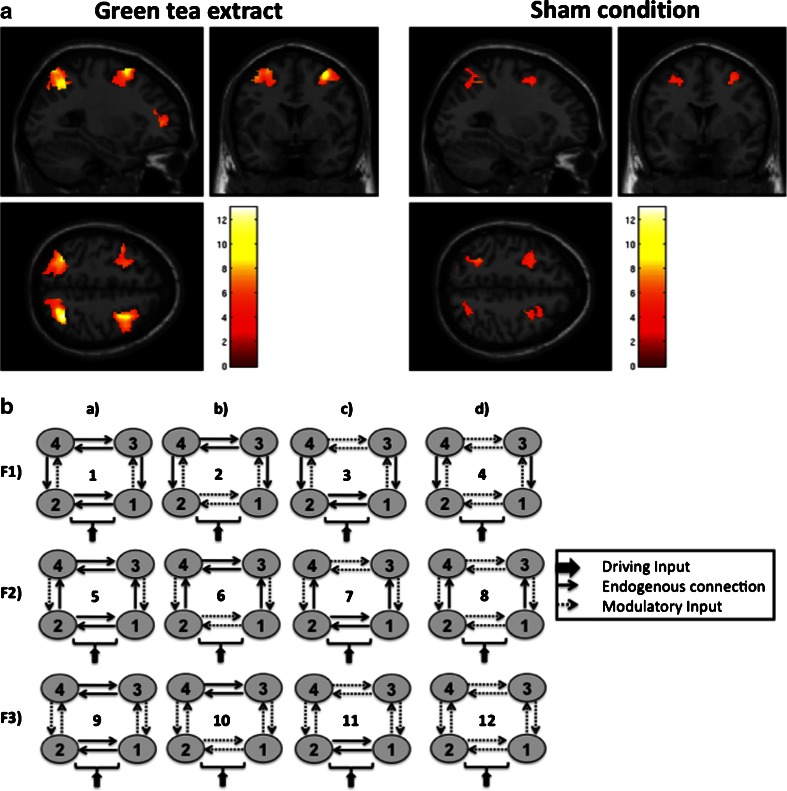
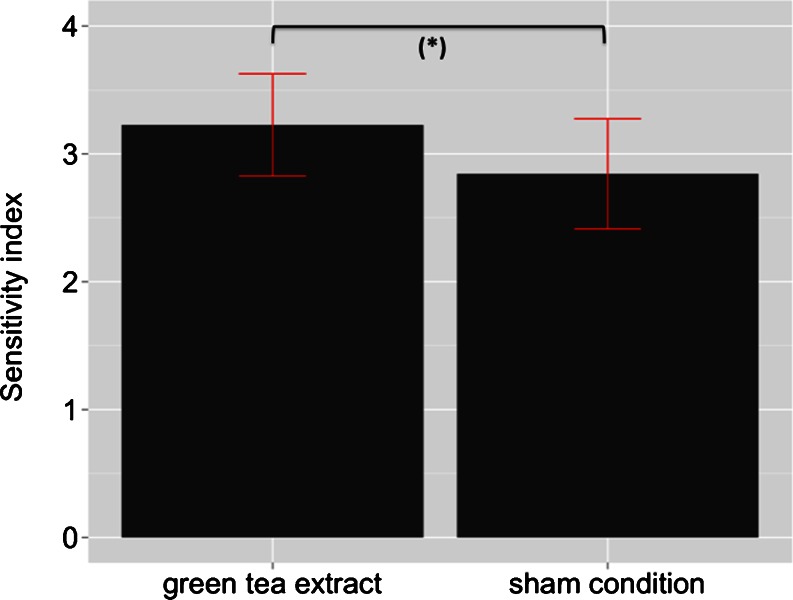
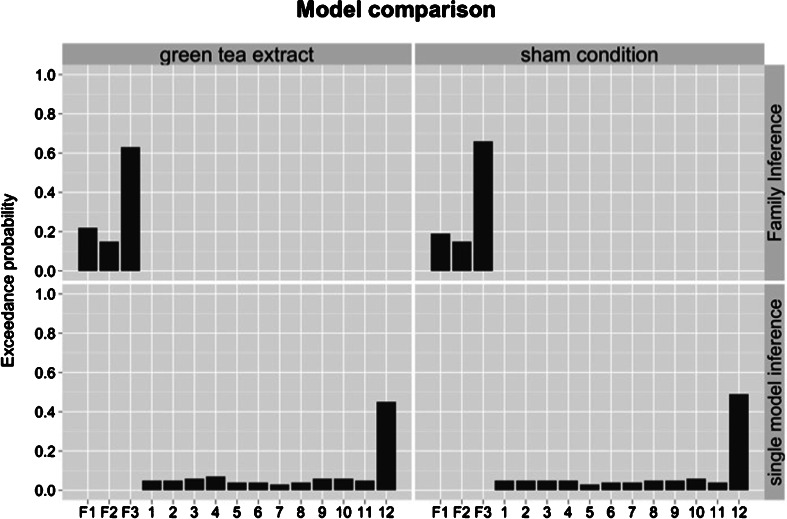
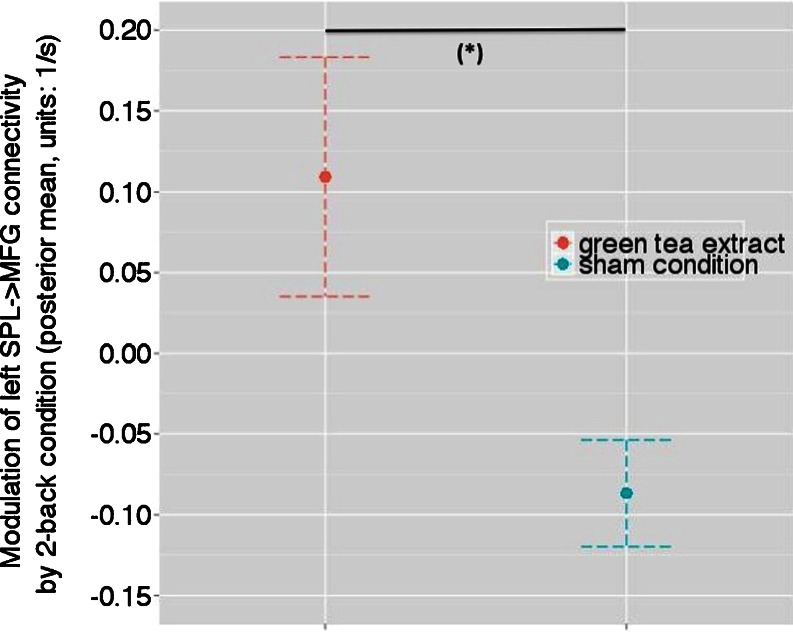
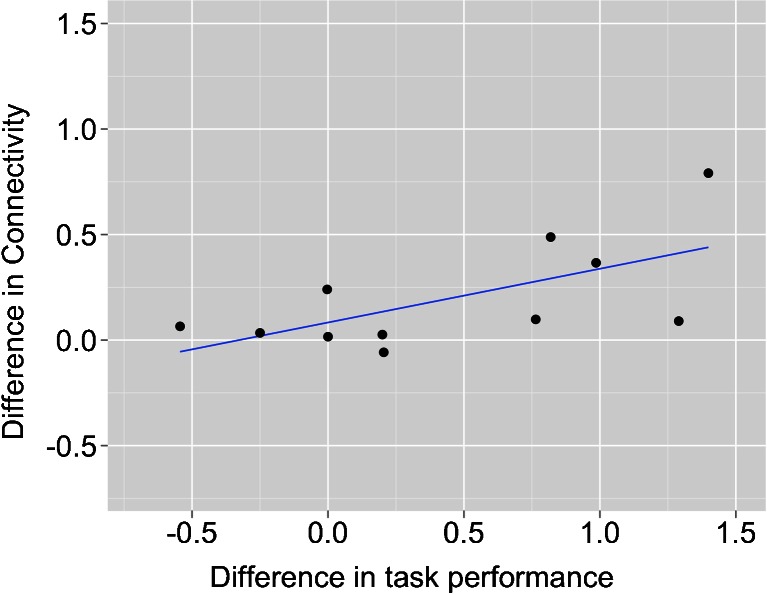
RATIONALE: It has been proposed that green tea extract may have a beneficial impact on cognitive functioning, suggesting promising clinical implications. However, the neural mechanisms underlying this putative cognitive enhancing effect of green tea extract still remain unknown. OBJECTIVES: This study investigates whether the intake of green tea extract modulates effective brain connectivity during working memory processing and whether connectivity parameters are related to task performance. MATERIAL AND METHODS: Using a double-blind, counterbalanced, within-subject design, 12 healthy volunteers received a milk whey-based soft drink containing 27.5 g of green tea extract or a milk whey-based soft drink without green tea as control substance while undergoing functional magnetic resonance imaging. Working memory effect on effective connectivity between frontal and parietal brain regions was evaluated using dynamic causal modeling. RESULTS: Green tea extract increased the working memory induced modulation of connectivity from the right superior parietal lobule to the middle frontal gyrus. Notably, the magnitude of green tea induced increase in parieto-frontal connectivity positively correlated with improvement in task performance. CONCLUSIONS: Our findings provide first evidence for the putative beneficial effect of green tea on cognitive functioning, in particular, on working memory processing at the neural system level by suggesting changes in short-term plasticity of parieto-frontal brain connections. Modeling effective connectivity among frontal and parietal brain regions during working memory processing might help to assess the efficacy of green tea for the treatment of cognitive impairments in psychiatric disorders such as dementia.
Overview
The claims and statistics of this paper haven’t been checked yet.
Free: it reads the open-access text and checks the first 5 claims that cite a source we can check. Create a free account to check every claim.
Integrity signals
Registry
Cites
Statistics
Figures
Verification
Claims the paper makes
The claims and statistics of this paper haven’t been checked yet.
Free: it reads the open-access text and checks the first 5 claims that cite a source we can check. Create a free account to check every claim.
Claims other papers make about this one
Each is checked against this paper’s own text: does it say what the citing paper says it does?
The source backs part of the claim, not all of it — or backs it for a different population, condition or comparison.
In the citing paper
“In another study from the same University and employing comparable design, Schmidt et al showed that 250 or 500 mL of milk whey-based drink containing 2.75 g/L of green tea extract increased working memory by modulating the connectivity between the right superior parietal lobe and the middle frontal gyrus [79].”
From Psychotropic effects of L-theanine and its clinical properties: from the management of anxiety and stress to a potential use in schizophrenia (2019) · cites this paper as [79]
Experimental — accuracy not yet measured
Self-check
Percentages, sums and reported differences re-computed from the paper’s own numbers.
The self-check needs the paper’s full text.
Citations
Cites
Tzourio-Mazoyer, N., Landeau, B., Papathanassiou, D., Crivello, F., Etard, O., Delcroix, N., Mazoyer, B., & Joliot, M. (2002) · NeuroImage · doi:10.1006/nimg.2001.0978 · Cited by 16,319
A synaptic model of memory: long-term potentiation in the hippocampus
Bliss, T. V. P., & Collingridge, G. L. (1993) · Nature · doi:10.1038/361031a0 · Cited by 11,566 · cited 3×
“In addition to tea catechins, theanine, which is an amino acid uniquely found in tea leaf, may also possess neuroprotective effect (Nathan et al. 2006), probably by its antagonistic effect on ionotropic glutamate receptor subtypes, such as NMDARs (Kakuda 2011).”
InfluentialDetection Theory: A User's Guide
Macmillan, N. A., & Creelman, C. D. (1991) · Cited by 5,415
Friston, K. J., Harrison, L., & Penny, W. (2003) · NeuroImage · doi:10.1016/s1053-8119(03)00202-7 · Cited by 4,583
Shankar, G. M., Li, S., Mehta, T. H., Garcia-Munoz, A., Shepardson, N. E., Smith, I., Brett, F. M., Farrell, M. A., Rowan, M. J., Lemere, C. A., et al. (2008) · Nature Medicine · doi:10.1038/nm1782 · Cited by 3,685
N-back working memory paradigm: a meta-analysis of normative functional neuroimaging studies.
Owen, A. M., McMillan, K. M., Laird, A. R., & Bullmore, E. (2005) · Human Brain Mapping · doi:10.1002/hbm.20131 · Cited by 3,560 · cited 5×
“This result supports previous functional connectivity studies emphasizing the importance of fronto-parietal connections for WM (Owen et al. 2005; Rottschy et al. 2012).”
InfluentialNMDA receptor subunit diversity: impact on receptor properties, synaptic plasticity and disease
Paoletti, P., Bellone, C., & Zhou, Q. (2013) · Nature Reviews Neuroscience · doi:10.1038/nrn3504 · Cited by 2,523 · cited 2×
“…Left fronto-parietal connectivity −0.05 0.37 0.11 −0.45 p=0.665 Left to right frontal connectivity −0.22 0.56 0.17 −1.31 p=0.219 Right fronto-parietal connectivity −0.08 0.51 0.15 −0.54 p=0.598 Right to left frontal connectivity 0.08 0.15 0.05 1.78 p=0.106 Nicoll 1993; Paoletti et al. 2013).”
InfluentialShankar, G. M., Bloodgood, B. L., Townsend, M., Walsh, D. M., Selkoe, D. J., & Sabatini, B. L. (2007) · The Journal of Neuroscience · doi:10.1523/jneurosci.4970-06.2007 · Cited by 1,592 · cited 1×
“Furthermore, amyloid protein impairs synaptic plasticity by modulating an NMDA-type glutamate receptor-dependent signaling pathway (Shankar et al. 2007; Snyder et al. 2005).”
Regulation of NMDA receptor trafficking by amyloid-β
Snyder, E. M., Nong, Y., Almeida, C. G., Paul, S., Moran, T., Choi, E. Y., Nairn, A. C., Salter, M. W., Lombroso, P. J., Gouras, G. K., et al. (2005) · Nature Neuroscience · doi:10.1038/nn1503 · Cited by 1,561 · cited 1×
“Furthermore, amyloid protein impairs synaptic plasticity by modulating an NMDA-type glutamate receptor-dependent signaling pathway (Shankar et al. 2007; Snyder et al. 2005).”
Calcium Dependence of Toxic Cell Death: A Final Common Pathway
Schanne, F. A. X., Kane, A. B., Young, E. E., & Farber, J. L. (1979) · Science · doi:10.1126/science.386513 · Cited by 1,479
Cited by
The impact of gut hormones on the neural circuit of appetite and satiety: A systematic review
Zanchi, D., Depoorter, A., Egloff, L., Haller, S., Mählmann, L., Lang, U. E., Drewe, J., Beglinger, C., Schmidt, A., & Borgwardt, S. (2017) · Neuroscience & Biobehavioral Reviews · doi:10.1016/j.neubiorev.2017.06.013 · Cited by 242
“It would also be interesting to investigate cognitive changes (such as working memory performance) after nutrient administration, as shown by pioneering studies (Borgwardt et al., 2012; Schmidt et al., 2014).”
Self-citationNutritional Aspects of Depression
Lang, U. E., Beglinger, C., Schweinfurth, N., Walter, M., & Borgwardt, S. (2015) · Cellular Physiology and Biochemistry · doi:10.1159/000430229 · Cited by 239
Self-citationCui, L., Yao, S., Dai, X., Yin, Q., Liu, Y., Jiang, X., Wu, Y., Qian, Y., Pang, Y., Gao, L., et al. (2016) · Journal of Experimental Botany · doi:10.1093/jxb/erw053 · Cited by 239
“These compounds are closely related to the typical flavour of tea infusions and to the pharmaceutical benefits of tea on human health (Thanaraj and Seshadri, 1990; Mukhtar and Ahmad, 2000; Noble, 2002; Schmidt et al., 2014; Zhu et al., 2014).”
BackgroundGreen tea effects on cognition, mood and human brain function: A systematic review
Mancini, E., Beglinger, C., Drewe, J., Zanchi, D., Lang, U. E., & Borgwardt, S. (2017) · Phytomedicine · doi:10.1016/j.phymed.2017.07.008 · Cited by 215
“Six experimental cross-over studies (Borgwardt et al., 2012; Schmidt et al., 2014, Scholey et al., 2012; Wightman et al., 2012; Ota et al., 2014; Kelly et al., 2008 ) on healthy participants produced results on brain function: two with GTE (Borgwardt et al., 2012; Schmidt et al., 2014 ) two with EGCG (Scholey et al.,…”
BackgroundSelf-citationTea consumption and disease correlations
Şanlıer, N., Gökcen, B. B., & Altuğ, M. (2018) · Trends in Food Science & Technology · doi:10.1016/j.tifs.2018.05.026 · Cited by 166
Peng, Y., Gao, P., Shi, L., Chen, L., Liu, J., & Long, J. (2020) · Antioxidants & Redox Signaling · doi:10.1089/ars.2019.7763 · Cited by 110
“EGCG intervention effectively reduces the decrease in mitochondrial membrane potential and cell apoptosis induced by Ab (12, 464).”
BackgroundGreen Tea Consumption Affects Cognitive Dysfunction in the Elderly: A Pilot Study
Ide, K., Yamada, H., Takuma, N., Park, M., Wakamiya, N., Nakase, J., Ukawa, Y., & Sagesaka, Y. (2014) · Nutrients · doi:10.3390/nu6104032 · Cited by 96
“However, recently, an enhancement of parieto-frontal connectivity by green tea consumption was reported [33].”
BackgroundTomata, Y., Sugiyama, K., Kaiho, Y., Honkura, K., Watanabe, T., Zhang, S., Sugawara, Y., & Tsuji, I. (2016) · The American Journal of Geriatric Psychiatry · doi:10.1016/j.jagp.2016.07.009 · Cited by 95
Herbal Medicine for the Treatment of Vascular Dementia: An Overview of Scientific Evidence
Chang, D., Liu, J., Bilinski, K. L., Xu, L., Steiner, G. Z., Seto, S. W., & Bensoussan, A. (2016) · Evidence-based Complementary and Alternative Medicine · doi:10.1155/2016/7293626 · Cited by 90
Wei, Z., Chen, X.-C., Song, Y., Pan, X.-D., Dai, X.-M., Zhang, J., Cui, X.-L., Wu, X.-L., & Zhu, Y.-G. (2016) · Chinese Medical Journal · doi:10.4103/0366-6999.186646 · Cited by 89
“[44] Thus, from this perspective, anti‐aging molecules with antioxidant properties, such as sirtuins,[45,46] coenzyme Q10,[47] glutathione,[48] ginsenoside Rg1,[49] resveratrol,[50] and lifestyle impact, for instance, exercise[51] and drinking green tea, will present as potential and promising neuronal protectants for…”
BackgroundFarzaei, M. H., Bahramsoltani, R., Abbasabadi, Z., Braidy, N., & Nabavi, S. M. (2018) · Journal of Cellular Physiology · doi:10.1002/jcp.27289 · Cited by 75
Plant-derived nootropics and human cognition: A systematic review
Lorca, C., Mulet, M., Arévalo‐Caro, C., Sanchez, M. Á., Perez, A., Perrino, M., Bach-Faig, A., Aguilar, A., Vilella, E., Gallart‐Palau, X., et al. (2022) · Critical Reviews in Food Science and Nutrition · doi:10.1080/10408398.2021.2021137 · Cited by 74
Diabetes and Alzheimer’s Disease: Can Tea Phytochemicals Play a Role in Prevention?
Fernando, W. M. A. D. B., Somaratne, G., Goozee, K. G., Williams, S., Singh, H., & Martins, R. N. (2017) · Journal of Alzheimer s Disease · doi:10.3233/jad-161200 · Cited by 61
Polyphenols: Food Sources and Health Benefits
Mrduljaš, N., Krešić, G., & Bilušić, T. (2017) · InTech eBooks · doi:10.5772/intechopen.68862 · Cited by 52
Mental Performance and Sport: Caffeine and Co-Consumed Bioactive Ingredients
Kennedy, D. O., & Wightman, E. L. (2022) · Sports Medicine · doi:10.1007/s40279-022-01796-8 · Cited by 50
Lopes Sakamoto, F., Metzker Pereira Ribeiro, R., Amador Bueno, A., & Oliveira Santos, H. (2019) · Pharmacological Research · doi:10.1016/j.phrs.2019.104395 · Cited by 49
“75 g/L of green tea extract increased working memory by modulating the connectivity between the right superior parietal lobe and the middle frontal gyrus [79].”
BackgroundWölnerhanssen, B. K., Meyer‐Gerspach, A. C., Schmidt, A., Zimak, N., Peterli, R., Beglinger, C., & Borgwardt, S. (2015) · PLoS ONE · doi:10.1371/journal.pone.0130280 · Cited by 48
Self-citationEffects of Matcha Green Tea Powder on Cognitive Functions of Community-Dwelling Elderly Individuals
Sakurai, K., Shen, C., Ezaki, Y., Inamura, N., Fukushima, Y., Masuoka, N., & Hisatsune, T. (2020) · Nutrients · doi:10.3390/nu12123639 · Cited by 46
Feng, L., Chong, M. S., Lim, W. S., Gao, Q., Nyunt, M. S. Z., Lee, T. S., Collinson, S. L., Tsoi, T., Kua, E. H., & Ng, T. P. (2016) · The journal of nutrition health & aging · doi:10.1007/s12603-016-0687-0 · Cited by 41
Guo, Z., Jiang, Z., Jiang, B., McClure, M. A., & Mu, Q. (2019) · Neural Plasticity · doi:10.1155/2019/7030286 · Cited by 38
Green tea, epigallocatechin gallate and the prevention of Alzheimer’s disease: Clinical evidence
Lange, K. W., Lange, K. M., & Nakamura, Y. (2022) · Food Science and Human Wellness · doi:10.1016/j.fshw.2022.03.002 · Cited by 38
Cao, W., Liao, H., Cai, S., Peng, W., Liu, Z., Zheng, K., Liu, J., Zhong, M., Tan, C., & Yi, J. (2021) · Human Brain Mapping · doi:10.1002/hbm.25611 · Cited by 37
Zhang, R., Zhang, L., Zeng, L., Zhang, P., Song, H., Yao, D.-A., Cao, J., & Zhang, J. (2022) · Frontiers in Aging Neuroscience · doi:10.3389/fnagi.2022.919766 · Cited by 36
Carmichael, O. T., Pillai, S. R., Shankapal, P., McLellan, A., Kay, D. G., Gold, B. T., & Keller, J. N. (2018) · The journal of nutrition health & aging · doi:10.1007/s12603-018-1028-2 · Cited by 35
Pike, N. A., Woo, M. A., Poulsen, M. K., Evangelista, W., Faire, D., Halnon, N. J., Lewis, A. B., & Kumar, R. (2016) · Frontiers in Pediatrics · doi:10.3389/fped.2016.00117 · Cited by 31
Forouzanfar, F., Gholami, J., Foroughnia, M., Payvar, B., Nemati, S., Khodadadegan, M. A., Saheb, M., & Hajali, V. (2021) · Heliyon · doi:10.1016/j.heliyon.2021.e08336 · Cited by 27
Miskowiak, K. W., Yalın, N., Seeberg, I., Burdick, K. E., Balanzá‐Martínez, V., Bonnín, C. D. M., Bowie, C. R., Carvalho, A. F., Dols, A., Douglas, K. M., et al. (2022) · Bipolar Disorders · doi:10.1111/bdi.13247 · Cited by 24
Chiu, S., Woodbury-Fariña, M. A., Shad, M. U., Husni, M., Copen, J., Bureau, Y., Cernovsky, Z. Z., Hou, J. J., Raheb, H., Terpstra, K. J., et al. (2014) · Psychiatric Clinics of North America · doi:10.1016/j.psc.2014.09.001 · Cited by 23
Clinical benefits of green tea consumption for cognitive dysfunction
Ide, K., & Yamada, H. (2015) · PharmaNutrition · doi:10.1016/j.phanu.2015.07.001 · Cited by 22
Batabyal, A., & Lukowiak, K. (2021) · Physiology & Behavior · doi:10.1016/j.physbeh.2021.113509 · Cited by 21
Payne, E. R., Aceves-Martins, M., Dubost, J., Greyling, A., & de Roos, B. (2025) · Nutrition Reviews · doi:10.1093/nutrit/nuaf054 · Cited by 19
Kim, J., Funayama, S., Izuo, N., & Shimizu, T. (2019) · Bioscience, Biotechnology, and Biochemistry · doi:10.1080/09168451.2019.1659721 · Cited by 19
Clark, D. O., Xu, H., Moser, L. R., Adeoye, P., Lin, A., Tangney, C., Risacher, S. L., Saykin, A. J., Considine, R. V., & Unverzagt, F. W. (2019) · Contemporary Clinical Trials · doi:10.1016/j.cct.2019.105814 · Cited by 19
Habitual tea drinking modulates brain efficiency: evidence from brain connectivity evaluation
Li, J., Romero-García, R., Suckling, J., & Feng, L. (2019) · Aging · doi:10.18632/aging.102023 · Cited by 18
The Effects of Green Tea Extract on Working Memory in Healthy Women
Liu, Y., Fly, A. D., Wang, Z., & Klaunig, J. E. (2017) · The journal of nutrition health & aging · doi:10.1007/s12603-017-0962-8 · Cited by 18
Shinozaki, F., Kamei, A., Shimada, K., Matsuura, H., Shibata, T., Ikeuchi, M., Yasuda, K., Oroguchi, T., Kishimoto, N., Takashimizu, S., et al. (2023) · Food & Function · doi:10.1039/d2fo03151e · Cited by 17
Feng, L., Chong, M.-S., Lim, W. S., Lee, T., Kua, E. H., & Ng, T.-P. (2015) · The Journal of Prevention of Alzheimer s Disease · doi:10.14283/jpad.2015.57 · Cited by 16
Lindbergh, C. A., Lv, J., Zhao, Y., Mewborn, C. M., Puente, A. N., Terry, D. P., Renzi‐Hammond, L. M., Hammond, B. R., Liu, T., & Miller, L. S. (2019) · Brain Imaging and Behavior · doi:10.1007/s11682-018-00034-y · Cited by 14
Gut Taste Stimulants Alter Brain Activity in Areas Related to Working Memory: a Pilot Study
Meyer‐Gerspach, A. C., Suenderhauf, C., Bereiter, L., Zanchi, D., Beglinger, C., Borgwardt, S., & Wölnerhanssen, B. K. (2016) · Neurosignals · doi:10.1159/000442612 · Cited by 14
Self-citationSmFLS negatively regulates peel coloring of eggplant (Solanum melongena) under high temperature
Lv, L. L., Li, L. Y., Li, W., & Li, K. (2021) · Genome · doi:10.1139/gen-2020-0141 · Cited by 12
The Power of Antioxidant: Tea Catechin and Body Oxidative Stress
Tartillah, B. A. (2024) · Biochemistry · doi:10.5772/intechopen.1004270 · Cited by 8
Zhu, J., Shi, R., Su, C., Dai, L., Tian, S., Feng, Y., Gu, P., Shariff, M., Nguyen, T., Ye, Y., et al. (2016) · Evidence-based Complementary and Alternative Medicine · doi:10.1155/2016/7898093 · Cited by 8
The Role of Dietary Ingredients in Mental Energy – A Scoping Review of Randomized Controlled Trials
Nieman, K. M., Zhu, Y., Tucker, M., & Koecher, K. J. (2023) · Journal of the American Nutrition Association · doi:10.1080/27697061.2023.2244031 · Cited by 7
Kimura, K., Saito, N., Nakamura, H., & Takeda, Y. (2022) · Experimental Gerontology · doi:10.1016/j.exger.2022.111853 · Cited by 7
Mátyus, R. O., Szikora, Z., Bodó, D., Vargáné Szabó, B., Csupor, É., Csupor, D., & Tóth, B. (2025) · Journal of Clinical Medicine · doi:10.3390/jcm14217710 · Cited by 6
Effects of Bioactive Components of Green Tea on Alzheimer's Disease
Ide, K., Kawasaki, Y., Kawakami, K., & Yamada, H. (2018) · Studies in natural products chemistry · doi:10.1016/b978-0-444-64058-1.00005-4 · Cited by 4
Dubey, P. (2022) · Elsevier eBooks · doi:10.1016/b978-0-323-90581-7.00017-7 · Cited by 4
Mazzoleni, E., Malavolti, M., Rossetti, A. O., Mazzoli, R., Vinceti, M., & Filippini, T. (2026) · Journal of Epidemiology and Population Health · doi:10.1016/j.jeph.2026.203168 · Cited by 3
Polyphenols as neuromodulators of learning and memory processes
García‐Burgos, D. (2025) · Elsevier eBooks · doi:10.1016/b978-0-443-13821-8.00007-x · Cited by 3
Camfield, D., & Scholey, A. B. (2015) · CRC Press eBooks · doi:10.1201/b18563-17 · Cited by 2
Hasani, P., Tehrani, H. S., Yaghmaei, P., & Roudbari, N. H. (2017) · Neurophysiology · doi:10.1007/s11062-017-9642-x · Cited by 1
Zahar, S., Ville, D. V. D., & Hudry, J. (2024) · Frontiers in Human Neuroscience · doi:10.3389/fnhum.2024.1493880 · Cited by 1
Moderate tea consumption and dementia-related neuroimaging markers
Jin, T., Lu, D., Chen, J., Zhao, W., Zhang, Y., Zhang, Q., Ye, X., & Qin, J. (2025) · Frontiers in Neurology · doi:10.3389/fneur.2025.1634621 · Cited by 1
Nutrition –A State Of Mind: The Impact of Nutrition on Cognitive Function
Ellis, L. R. (2025) · Food Science and Nutrition Cases · doi:10.1079/fsncases.2025.0006 · Cited by 1
Yuk, V. (2015) · TSpace (University of Toronto)
Doğal Beyin Dopingleri: Bitkisel Nootropikler ve Bilişsel Etkileri
İmre, K. E., & Işık, F. (2024) · İzmir Katip Çelebi Üniversitesi Sağlık Bilimleri Fakültesi Dergisi · doi:10.61399/ikcusbfd.1292881
Elias, M., & Cupo, J. (2021) · Journal of Emerging Investigators · doi:10.59720/20-081
Çayın Nöropazarlama Perspektifinden Tat, Koku ve Görsel Uyaranlar Bağlamında Değerlendirilmesi
Er, E. H. (2025) · Recep Tayyip Erdoğan Üniversitesi Fen ve Mühendislik Bilimleri Dergisi · doi:10.53501/rteufemud.1497749
Barros, A., & Abraão, A. C. (2025) · Directory of Open access Books (OAPEN Foundation)
Sayers, B. (2024) · CentAUR (University of Reading) · doi:10.48683/1926.00119847
The brain – gut interaction: defining the role of the nutrient-induced human brain activation matrix
Zanchi, D. (2018) · edoc (University of Basel) · doi:10.5451/unibas-006798095
Sakurai, K. (2020) · Institutional Repositories DataBase (IRDB) · doi:10.15083/0002006415
강글리오사이드 경구 투여의 효능과 안전성: 중년 성인의 작업기억력 및 디폴트 모드 네트워크에의 영향
전유진 (2016) · Seoul National University Open Repository (Seoul National University)
Zhang, R., Zhang, L., Li, Z., Ping Zhang, Song, H., Dong-ai Yao, and, J. C., & Zhang, J.-J. (2022) · doi:10.3389/fnagi.2022.919766.s001
Nunes, J. C. (2018) · LA Referencia (Red Federada de Repositorios Institucionales de Publicaciones Científicas)
Effects of green tea catechins on spatial learning abilities of wistar rats
Nair, A. G., Shilpa, A., Bahuleyan, B., & Rajankutty, K. (2020) · Journal of Pharmaceutical and Biological Sciences · doi:10.18231/2320-1924.2018.0009
Comprehensive study on the impact of tea (Camellia sinensis) on human mental health
Quan, Q.-D., Le, T. T.-H., Nguyen, T. M. L., TU Bergakademie Freiberg, A. 6., Nguyen, T. C., Bui, M. N., & Tran, H.-D. (2025) · Ministry of Science and Technology Vietnam · doi:10.31276/vjste.2024.0021
Metadata
- Authors
- Schmidt, A., Hammann, F., Wölnerhanssen, B., Meyer-Gerspach, A. C., Drewe, J., Beglinger, C., & Borgwardt, S.
- Affiliations
- University of Basel (CH)
- University Hospital of Basel (CH)
- King's College London (GB)
- Corresponding author
- Borgwardt, Stefan
- ORCID
- Venue
- Psychopharmacology
- Published
- 2014-03-19
- Volume
- 231
- Issue
- 19
- Pages
- 3879-3888
- ISSN
- 0033-3158 (ISSN-L)
- 1432-2072
- PMC
- PMC4159594
- OpenAlex
- W1971352988
- Cited by
- 57
- References
- 60
- Citations by year
- 2026: 1 · 2025: 6 · 2024: 3 · 2023: 2 · 2022: 7 · 2021: 5 · 2020: 2 · 2019: 6 · 2018: 4 · 2017: 6 · 2016: 8 · 2015: 5 · 2014: 2
- FWCI
- 5.20
- Type
- journal article
- Language
- en
- Update notices
- correction (2014-07-04)
- Open access
- hybrid
- doi.org
- Locations
- Psychopharmacology (publishedVersion, cc-by)
- PubMed Central (publishedVersion, cc-by)
- PubMed (publishedVersion)
- reroDoc Digital Library (submittedVersion)
- Topics
- Life Sciences › Agricultural and Biological Sciences › Food Science › Tea Polyphenols and Effects
- Life Sciences › Neuroscience › Cognitive Neuroscience › Functional Brain Connectivity Studies
- Health Sciences › Medicine › Complementary and alternative medicine › Medicinal Plants and Neuroprotection
- Keywords
- green tea extract, working memory, effective connectivity, superior parietal lobule, middle frontal gyrus, dynamic causal modeling, cognitive enhancement, short-term plasticity, task performance, dementia
- MeSH terms
- Adult, Brain Mapping, Double-Blind Method, Frontal Lobe, Humans, Magnetic Resonance Imaging, Male, Memory, Short-Term, Neural Pathways, Parietal Lobe, Plant Extracts, Tea, Young Adult
About these checks
Registry, retraction, Cites and statistics results are computed, not judged, with one exception: a printed reference that no index lists is read once by a model before it counts as a citation error. Claims are extracted by a model and kept only when their quote appears verbatim in the text; each cited source is then checked, with a model’s help, for whether it says what the claim relies on. Those verdicts can be wrong — read the claim’s quote and the cited source before relying on one.
Statistics and arithmetic are recomputed, not judged.
Confidence bands are shown only for fields calibrated on our annotated test set. None is calibrated yet, so no band is shown.
What counts as a claim ›How we measure confidence ›How we check this ›
Are you an author, or do you see a problem with this page? Request a review
Data sources
Bibliographic data: Semantic Scholar, OpenAlex, Crossref.
Contains information from the Semantic Scholar Academic Graph Datasets, made available under the ODC Attribution License (ODC-BY 1.0).
Semantic Scholar’s data is described in: Kinney, R., et al. (2023). The Semantic Scholar Open Data Platform. arXiv:2301.10140.
