

Effects of NMDA receptor antagonists and antipsychotics on high frequency oscillations recorded in the nucleus accumbens of freely moving mice
Open accessThe DOI matches its Crossref record; 61 of the 61 references it cites were found in a registry or an index.
Abstract
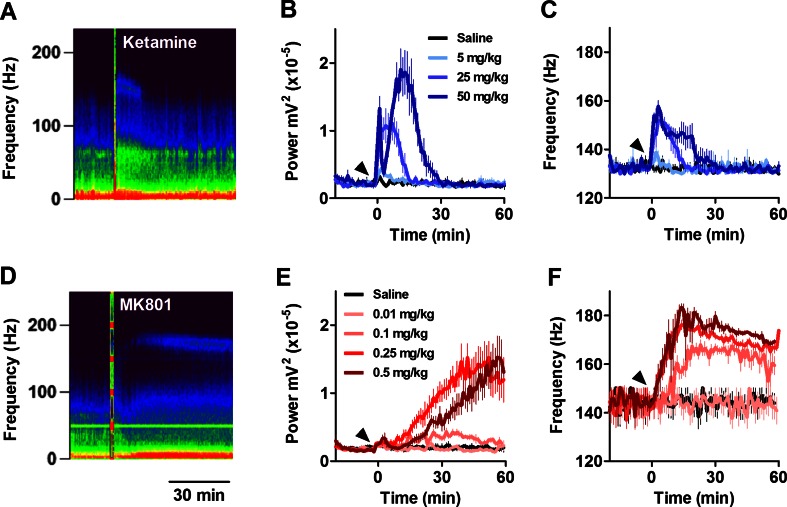
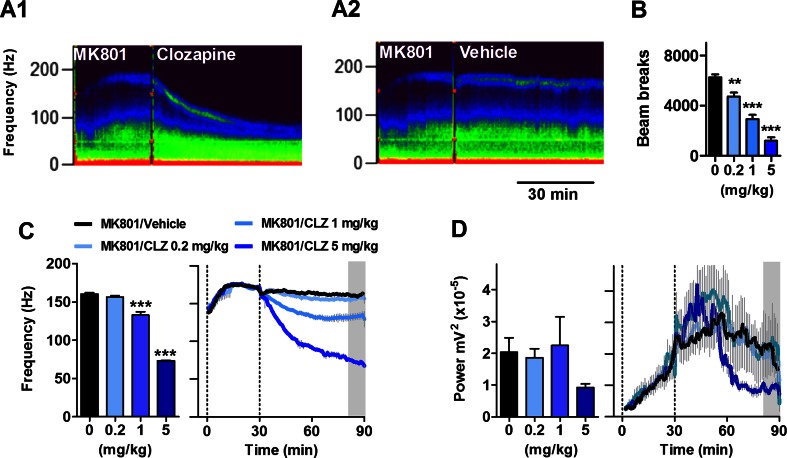
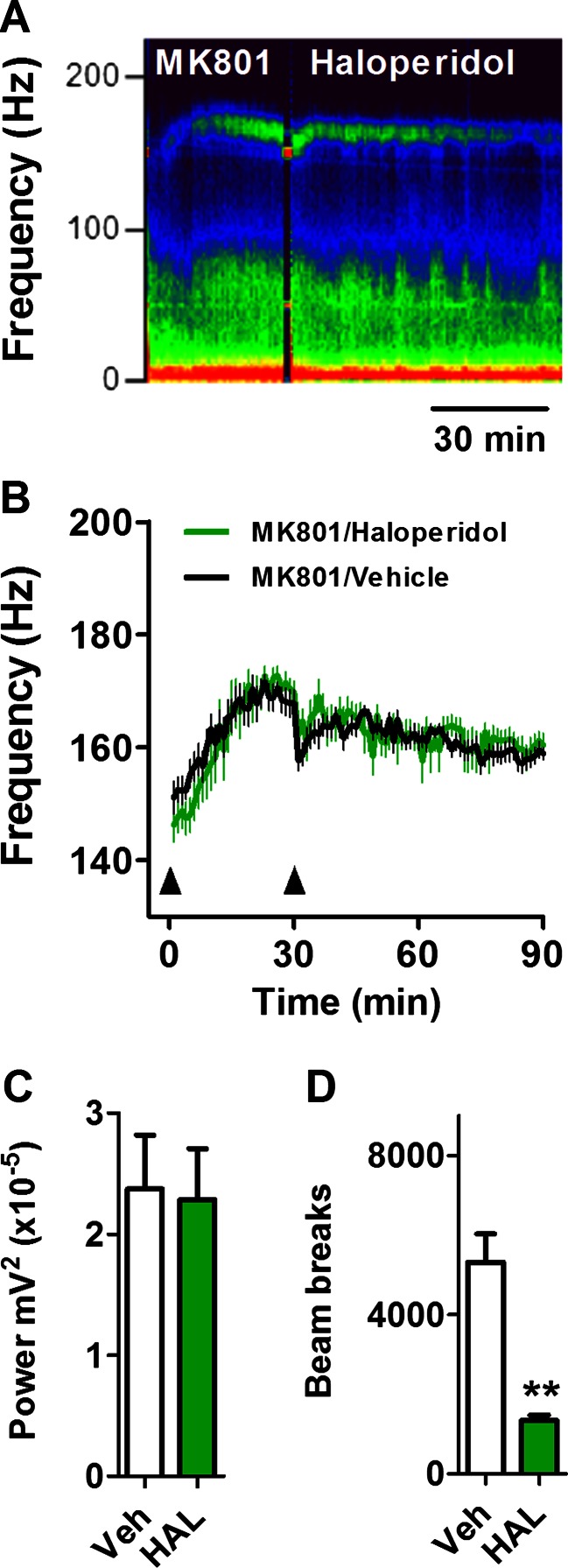
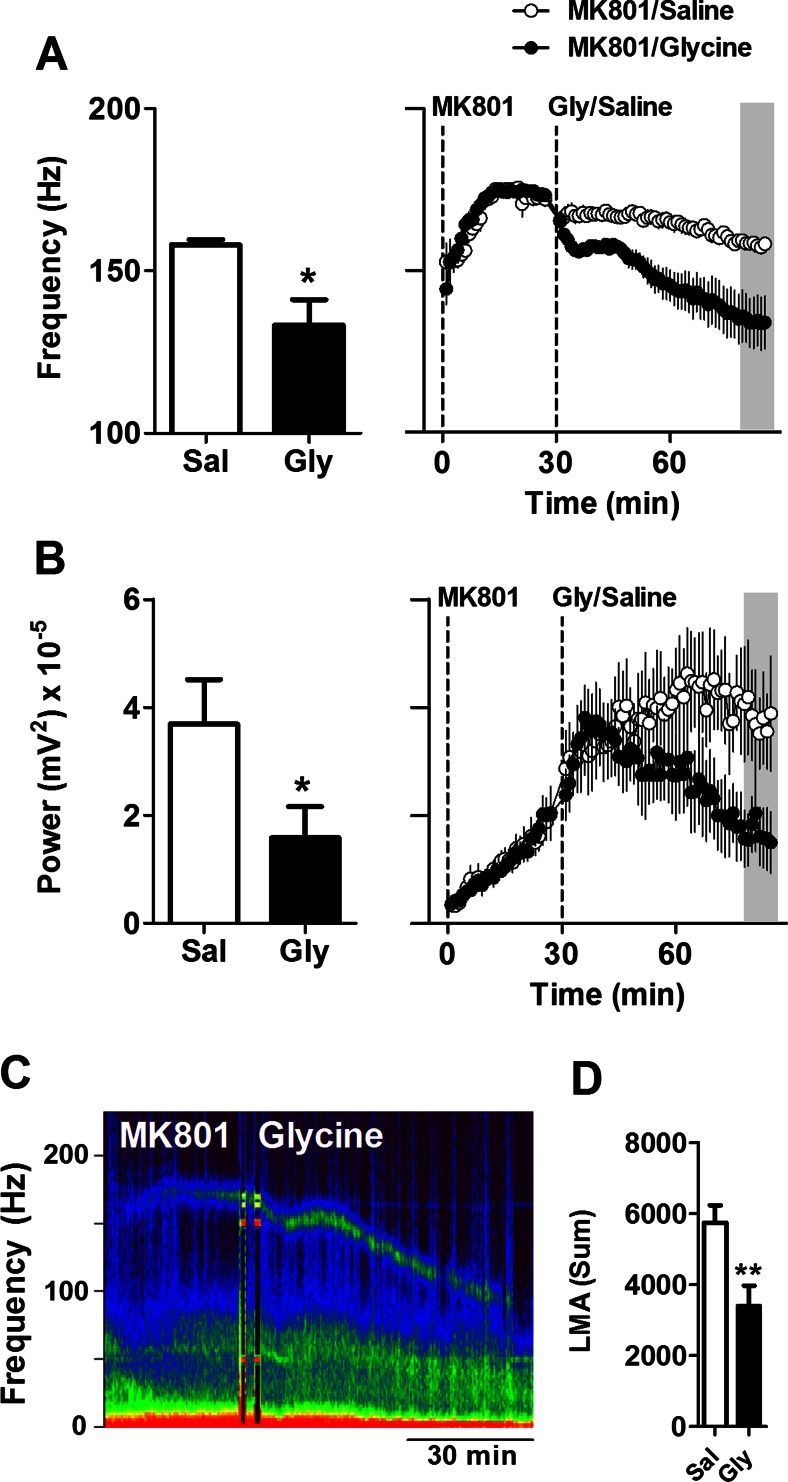
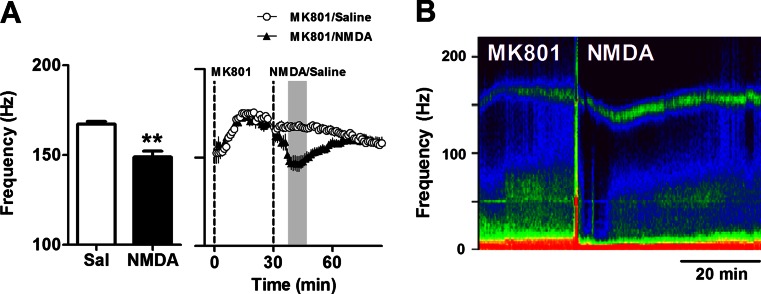
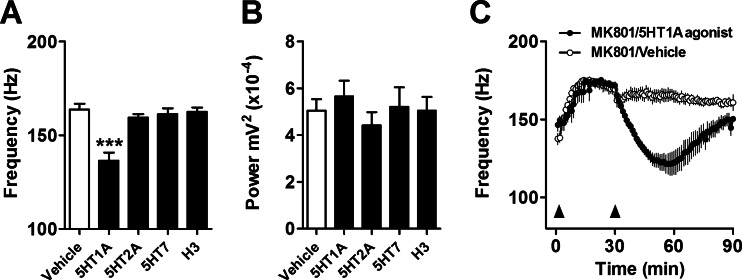
RATIONALE: Abnormal oscillatory activity associated with N-methyl-D-aspartate (NMDA) receptor hypofunction is widely considered to contribute to the symptoms of schizophrenia. OBJECTIVE: This study aims to characterise the changes produced by NMDA receptor antagonists and antipsychotics on accumbal high-frequency oscillations (HFO; 130-180 Hz) in mice. METHODS: Local field potentials were recorded from the nucleus accumbens of freely moving mice. RESULTS: Systemic injection of ketamine and MK801 both dose-dependently increased the power of HFO and produced small increases in HFO frequency. The atypical antipsychotic drug, clozapine, produced a robust dose-dependent reduction in the frequency of MK801-enhanced HFO, whilst haloperidol, a typical antipsychotic drug, had little effect. Stimulation of NMDA receptors (directly or through the glycine site) as well as activation of 5-HT1A receptors, reduced the frequency of MK801-enhanced HFO, but other receptors known to be targets for clozapine, namely 5-HT2A, 5-HT7 and histamine H3 receptors had no effect. CONCLUSIONS: NMDA receptor antagonists and antipsychotics produce broadly similar fundamental effects on HFO, as reported previously for rats, but we did observe several notable differences. In mice, HFO at baseline were weak or not detectable unlike rats. Post-injection of NMDA receptor antagonists HFO was also weaker but significantly faster. Additionally, we found that atypical antipsychotic drugs may reduce the frequency of HFO by interacting with NMDA and/or 5-HT1A receptors.
Overview
The claims and statistics of this paper haven’t been checked yet.
Free: it reads the open-access text and checks the first 5 claims that cite a source we can check. Create a free account to check every claim.
Integrity signals
Registry
Cites
Statistics
Figures
Verification
Claims the paper makes
The claims and statistics of this paper haven’t been checked yet.
Free: it reads the open-access text and checks the first 5 claims that cite a source we can check. Create a free account to check every claim.
Claims other papers make about this one
Each is checked against this paper’s own text: does it say what the citing paper says it does?
The cited source says what the claim attributes to it.
In the citing paper
“Like the effects of ketamine in the cortex, ketamine increases the power of high-frequency oscillations of local field potentials in the NAc in unanesthetized mice [242], suggesting a potential role for activity-dependent synapse strengthening mechanisms.”
From Plasticity of synapses and reward circuit function in the genesis and treatment of depression (2023) · cites this paper as [242]
Self-check
Percentages, sums and reported differences re-computed from the paper’s own numbers.
The self-check needs the paper’s full text.
Citations
Cites
Krystal, J. H. (1994) · Archives of General Psychiatry · doi:10.1001/archpsyc.1994.03950030035004 · Cited by 3,330 · cited 1×
“Acute administration of NMDA receptor antagonists produces transient psychosis-like activity in healthy humans and exacerbates the pre-existing symptoms in stabilised schizophrenic individuals (Krystal et al. 1994; Lahti et al. 1995).”
Abnormal neural oscillations and synchrony in schizophrenia
Uhlhaas, P. J., & Singer, W. (2010) · Nature Reviews Neuroscience · doi:10.1038/nrn2774 · Cited by 2,120 · cited 1×
“Abnormal oscillatory activity recorded in EEG has been associated with schizophrenia (Uhlhaas and Singer 2010; Spencer 2011).”
The brain reward circuitry in mood disorders
Russo, S. J., & Nestler, E. J. (2013) · Nature Reviews Neuroscience · doi:10.1038/nrn3381 · Cited by 1,870
Homayoun, H., & Moghaddam, B. (2007) · The Journal of Neuroscience · doi:10.1523/jneurosci.2213-07.2007 · Cited by 1,231 · cited 4×
“NMDA receptor antagonists appear to preferentially block NMDA receptors in cortical interneurons (Homayoun and Moghaddam 2007) and GABAergic neurons of the reticular nucleus of the thalamus (Troyano-Rodriguez et al. 2014).”
InfluentialSubanesthetic Doses of Ketamine Stimulate Psychosis in Schizophrenia
Lahti, A. (1995) · Neuropsychopharmacology · doi:10.1016/0893-133x(94)00131-i · Cited by 921 · cited 1×
“Acute administration of NMDA receptor antagonists produces transient psychosis-like activity in healthy humans and exacerbates the pre-existing symptoms in stabilised schizophrenic individuals (Krystal et al. 1994; Lahti et al. 1995).”
Convergence and segregation of ventral striatal inputs and outputs
GROENEWEGEN, H. J., WRIGHT, C. I., BEIJER, A. V. J., & VOORN, P. (1999) · Annals of the New York Academy of Sciences · doi:10.1111/j.1749-6632.1999.tb09260.x · Cited by 684 · cited 2×
“cortex, amygdala, hippocampus and thalamus (Groenewegen et al. 1999), and a dense dopaminergic projection from the ventral tegmental area.”
The Role of Serotonin in Antipsychotic Drug Action
Meltzer, H. (1999) · Neuropsychopharmacology · doi:10.1016/s0893-133x(99)00046-9 · Cited by 662 · cited 1×
“Schizophrenia”
Choudhary, M. S., Craigo, S., Sibley, D. R., Roth, B. L., Monsma, F. J., Shen, Y., Uluer, A., & Meltzer, H. Y. (2019) · Carolina Digital Repository (University of North Carolina at Chapel Hill) · doi:10.17615/74zp-ze10 · Cited by 592
Gating of information flow within the limbic system and the pathophysiology of schizophrenia
Grace, A. (2000) · Brain Research Reviews · doi:10.1016/s0165-0173(99)00049-1 · Cited by 519 · cited 1×
“The nucleus accumbens (NAc) is a brain region that has been implicated widely in the pathophysiology of schizophrenia (Grace 2000).”
Celada, P., Bortolozzi, A., & Artigas, F. (2013) · CNS Drugs · doi:10.1007/s40263-013-0071-0 · Cited by 323 · cited 2×
“Clozapine and several other atypical antipsychotic drugs possess partial agonistic activity at 5-HT1A receptors (for review, see Celada et al. 2013).”
Influential
Cited by
Sapkota, K., Mao, Z., Synowicki, P., Lieber, D., Liu, M., Ikezu, T., Gautam, V., & Monaghan, D. T. (2015) · Journal of Pharmacology and Experimental Therapeutics · doi:10.1124/jpet.115.230391 · Cited by 70
“, 2013) and glycine (Hunt et al., 2015) were found to reduce the peak frequency of NMDAR antagonist-induced HFOs.”
Montani, C., Canella, C., Schwarz, A. J., Li, J., Gilmour, G., Galbusera, A., Wafford, K. A., Gutierrez‐Barragan, D., McCarthy, A. P., Shaw, D. B., et al. (2020) · Neuropsychopharmacology · doi:10.1038/s41386-020-00916-0 · Cited by 59
“NMDAR antagonist evoked increases in HFO activity in nucleus accumbens have previously be shown to be reduced by clozapine [68].”
BackgroundIn vivo electrophysiological recordings of the effects of antidepressant drugs
Fitzgerald, P. J., & Watson, B. O. (2019) · Experimental Brain Research · doi:10.1007/s00221-019-05556-5 · Cited by 54
Plasticity of synapses and reward circuit function in the genesis and treatment of depression
Thompson, S. M. (2023) · Neuropsychopharmacology · doi:10.1038/s41386-022-01422-1 · Cited by 40
“Like the effects of ketamine in the cortex, ketamine increases the power of high-frequency oscillations of local field potentials in the NAc in unanesthetized mice [242], suggesting a potential role for activity-dependent synapse strengthening mechanisms.”
BackgroundPetersson, P., Halje, P., & Cenci, M. A. (2018) · Journal of Parkinson s Disease · doi:10.3233/jpd-181480 · Cited by 34
“that psychotomimetic drugs known to act on differ580 ent receptor systems—for example on either 5-HT2A 581 or NMDA receptors have been found to induce very 582 similar HFO activity in animals [26, 84].”
BackgroundMethodHansen, I. H., Agerskov, C., Arvastson, L., Bastlund, J. F., Sørensen, H. B. D., & Herrik, K. F. (2019) · European Journal of Neuroscience · doi:10.1111/ejn.14373 · Cited by 37
Mahdavi, A., Qin, Y., Aubry, A.-S., Cornec, D., Kulikova, S. P., & Pinault, D. (2019) · Schizophrenia Research · doi:10.1016/j.schres.2020.04.029 · Cited by 31
“Its clinical effects are thought to be related to interactions with a variety of receptors, including the glutamatergic receptors and more specifically NMDA receptors via the glycine site (Hunt et al., 2015; Lipina et al., 2005; Schwieler et al., 2008).”
BackgroundYe, T., Bartlett, M. J., Sherman, S. J., Falk, T., & Cowen, S. L. (2021) · Experimental Neurology · doi:10.1016/j.expneurol.2021.113670 · Cited by 30
Delgado-Sallent, C., Nebot, P., Gener, T., Fath, A. B., Timplalexi, M., & Puig, M. V. (2021) · Cerebral Cortex · doi:10.1093/cercor/bhab427 · Cited by 22
“…show that the NMDAR antagonists, PCP and ketamine, produce substantial increases in the power of HFOs and HFO coupling with delta waves in several brain regions including cortical areas, the HPC, and the nucleus accumbens (Flores et al. 2015; Hunt et al. 2015, 2017; Pittman-Polletta et al. 2018).”
Bowman, C., Richter, U., Jones, C. R., Agerskov, C., & Herrik, K. F. (2022) · Frontiers in Psychiatry · doi:10.3389/fpsyt.2022.737295 · Cited by 12
“Drug effects in the gamma band largely resemble those in HFO albeit with a lower magnitude, therefore as in other NMDAR antagonist LFP studies (35, 36, 38, 39, 49) we focus the discussion on effects in the HFO band.”
BackgroundResultBaturina, M., Beyer, E., Батурин, В. А., & Popov, A. (2020) · Medical news of the North Caucasus · doi:10.14300/mnnc.2020.15073 · Cited by 3
Valentino, K., Shen, B., Waisman, B., Le, G. H., Ballum, H., Cheung, W., & McIntyre, R. S. (2025) · European Neuropsychopharmacology · doi:10.1016/j.euroneuro.2025.11.012 · Cited by 3
Frontoparietal anodal tDCS reduces ketamine-induced oscillopathies
Lahogue, C., & Pinault, D. (2021) · Translational Neuroscience · doi:10.1515/tnsci-2020-0157 · Cited by 3
Delgado-Sallent, C., Nebot, P., Gener, T., Timplalexi, M., Fath, A. B., & Puig, M. V. (2021) · bioRxiv (Cold Spring Harbor Laboratory) · doi:10.1101/2021.02.03.429582 · Cited by 2
“In rodents, the NMDAR antagonists PCP and ketamine produce rapid and substantial increases in the power of HFOs in several brain regions including cortical areas, the HPC, and the nucleus accumbens (Hunt et al., 2017, 2015).”
BackgroundHunt, M. J., & Wróbel, J. (2025) · Journal of Psychopharmacology · doi:10.1177/02698811251352454 · Cited by 1
“Certain antipsychotic compounds, in particular, second-generation drugs, interact with HFO by producing a gradual slowing of HFO frequency (Bowman et al., 2022; Delgado-Sallent et al., 2021; Hunt et al., 2015; Olszewski et al., 2013b; Stan et al., 2024).”
Self-citationOsanai, H., & Tateno, T. (2016) · Lecture notes in computer science · doi:10.1007/978-3-319-46672-9_41 · Cited by 2
Physiology of the extended amygdala
Haufler, D. (2017) · doi:10.7282/t34t6nfk
Pinault, D. (2020) · arXiv (Cornell University) · doi:10.48550/arxiv.2005.01356
“Its clinical effects are thought to be related to interactions with a variety of receptors, including the glutamatergic receptors and more specifically NMDA receptors via the glycine site (Hunt et al., 2015; Lipina et al., 2005; Schwieler et al., 2008).”
BackgroundYe, T. (2018) · UA Campus Repository (The University of Arizona) · Cited by 1
Lahogue, C., & Pinault, D. (2020) · bioRxiv (Cold Spring Harbor Laboratory) · doi:10.1101/2020.10.08.329912
“The atypical antipsychotic clozapine is efficient in reducing, at least in the rodent, the ketamine- or MK-801-induced oscillopathies[24, 69-71].”
Background
Metadata
- Authors
- Hunt, M. J., Olszewski, M., Piasecka, J., Whittington, M. A., & Kasicki, S.
- Affiliations
- Instytut Biologii Doświadczalnej im. Marcelego Nenckiego (PL)
- University of York (GB)
- Corresponding author
- Hunt, Mark J.
- Venue
- Psychopharmacology
- Published
- 2015-10-08
- Volume
- 232
- Issue
- 24
- Pages
- 4525-4535
- ISSN
- 0033-3158 (ISSN-L)
- 1432-2072
- PMC
- PMC4646921
- OpenAlex
- W1956040624
- Cited by
- 20
- References
- 61
- Citations by year
- 2025: 2 · 2022: 2 · 2021: 4 · 2020: 4 · 2019: 3 · 2018: 2 · 2017: 1 · 2016: 1 · 2015: 1
- FWCI
- 1.35
- Type
- journal article
- Language
- en
- Open access
- hybrid
- doi.org
- Locations
- Psychopharmacology (publishedVersion, cc-by)
- PubMed Central (publishedVersion, cc-by)
- PubMed (publishedVersion)
- Funders
- Wellcome Trust (098352/Z/12/Z, 098352)
- Topics
- Health Sciences › Medicine › Psychiatry and Mental health › Schizophrenia research and treatment
- Life Sciences › Neuroscience › Cellular and Molecular Neuroscience › Neuroscience and Neuropharmacology Research
- Life Sciences › Neuroscience › Cellular and Molecular Neuroscience › Neurotransmitter Receptor Influence on Behavior
- Keywords
- NMDA receptor antagonists, antipsychotic drugs, high-frequency oscillations, nucleus accumbens, ketamine, MK-801, clozapine, haloperidol, 5-HT1A receptor, NMDA receptor glycine site, schizophrenia, local field potentials, freely moving mice
- MeSH terms
- Animals, Clozapine, Dose-Response Relationship, Drug, Haloperidol, Ketamine, Male, Nucleus Accumbens, Antipsychotic Agents, Receptors, N-Methyl-D-Aspartate, Dizocilpine Maleate, Rats, Wistar, Excitatory Amino Acid Antagonists, Mice
About these checks
Registry, retraction, Cites and statistics results are computed, not judged, with one exception: a printed reference that no index lists is read once by a model before it counts as a citation error. Claims are extracted by a model and kept only when their quote appears verbatim in the text; each cited source is then checked, with a model’s help, for whether it says what the claim relies on. Those verdicts can be wrong — read the claim’s quote and the cited source before relying on one.
Statistics and arithmetic are recomputed, not judged.
Confidence bands are shown only for fields calibrated on our annotated test set. None is calibrated yet, so no band is shown.
What counts as a claim ›How we measure confidence ›How we check this ›
Are you an author, or do you see a problem with this page? Request a review
Data sources
Bibliographic data: Semantic Scholar, OpenAlex, Crossref.
Contains information from the Semantic Scholar Academic Graph Datasets, made available under the ODC Attribution License (ODC-BY 1.0).
Semantic Scholar’s data is described in: Kinney, R., et al. (2023). The Semantic Scholar Open Data Platform. arXiv:2301.10140.
