

Reduction in social anxiety after MDMA-assisted psychotherapy with autistic adults: a randomized, double-blind, placebo-controlled pilot study
Open accessThe DOI matches its Crossref record; 49 of the 50 references it cites were found in a registry or an index.
Abstract
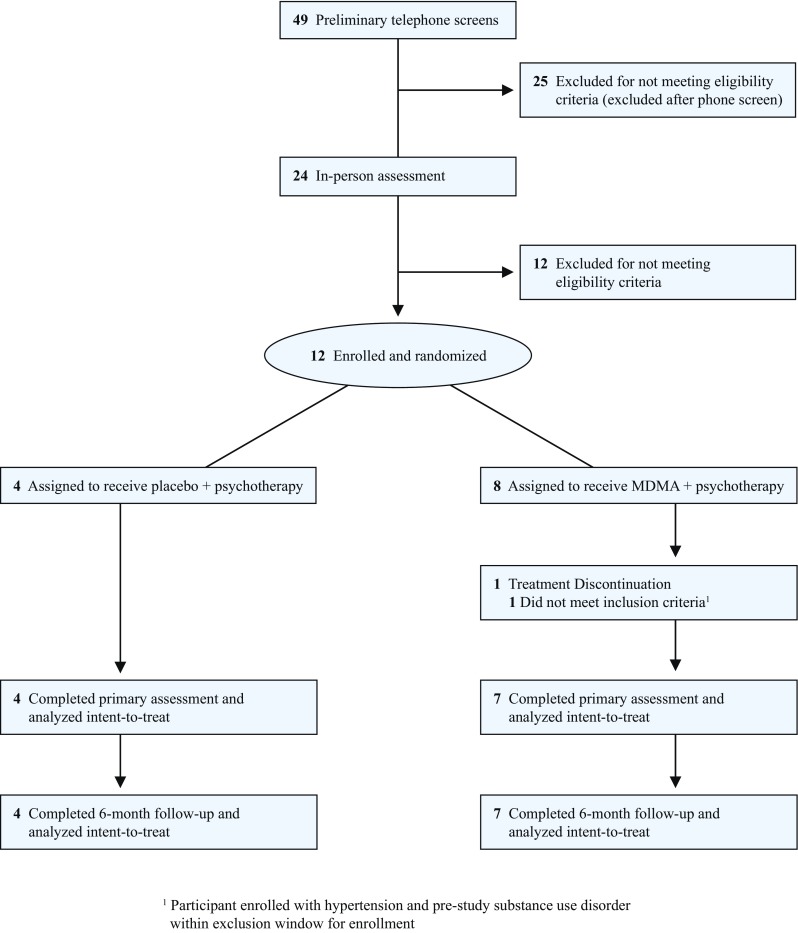
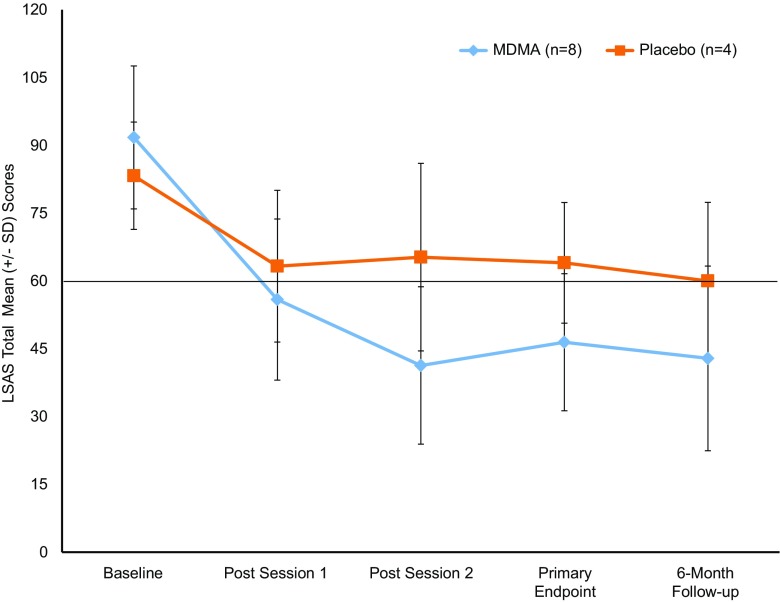
RATIONALE: Standard therapeutic approaches to reduce social anxiety in autistic adults have limited effectiveness. Since 3,4-methylenedioxymethamphetamine (MDMA)-assisted psychotherapy shows promise as a treatment for other anxiety disorders, a blinded, placebo-controlled pilot study was conducted. OBJECTIVES: To explore feasibility and safety of MDMA-assisted psychotherapy for reduction of social fear and avoidance that are common in the autistic population. METHODS: Autistic adults with marked to very severe social anxiety were randomized to receive MDMA (75 to 125 mg, n = 8) or inactive placebo (0 mg, n = 4) during two 8-h psychotherapy sessions (experimental sessions) in a controlled clinical setting. Double-blinded experimental sessions were spaced approximately 1 month apart with 3 non-drug psychotherapy sessions following each. The primary outcome was change in Leibowitz Social Anxiety Scale (LSAS) Total scores from Baseline to one month after the second experimental session. Outcomes were measured again six months after the last experimental session. RESULTS: Improvement in LSAS scores from baseline to the primary endpoint was significantly greater for MDMA group compared to the placebo group (P = 0.037), and placebo-subtracted Cohen's d effect size was very large (d = 1.4, CI - 0.074, 2.874). Change in LSAS scores from baseline to 6-month follow-up showed similar positive results (P = 0.036), with a Cohen's d effect size of 1.1 (CI - 0.307, 2.527). Social anxiety remained the same or continued to improve slightly for most participants in the MDMA group after completing the active treatment phase. CONCLUSIONS: This pilot trial demonstrated rapid and durable improvement in social anxiety symptoms in autistic adults following MDMA-assisted psychotherapy. Initial safety and efficacy outcomes support expansion of research into larger samples to further investigate this novel treatment for social anxiety. TRIAL REGISTRATION: clinicaltrials.gov identifier, NCT02008396.
Overview
The claims and statistics of this paper haven’t been checked yet.
Free: it reads the open-access text and checks the first 5 claims that cite a source we can check. Create a free account to check every claim.
Integrity signals
Registry
Cites
Statistics
Figures
Verification
Claims the paper makes
The claims and statistics of this paper haven’t been checked yet.
Free: it reads the open-access text and checks the first 5 claims that cite a source we can check. Create a free account to check every claim.
Claims other papers make about this one
Each is checked against this paper’s own text: does it say what the citing paper says it does?
The cited source says what the claim attributes to it.
In the citing paper
“MDMA has well documented prosocial effects in human subjects and a pilot study found that MDMA-assisted psychotherapy reduced social anxiety in ASD adults [178].”
From Neural circuits regulating prosocial behaviors (2023) · cites this paper as [178]
The cited source says what the claim attributes to it.
In the citing paper
“Entactogens and hallucinogens have shown promising results in preliminary clinical trials in disorders also characterized by social impairments such as depression, anxiety, post-traumatic stress disorder (PTSD), and autism spectrum disorders (ASD) (15–19).”
From Modulation of Social Cognition via Hallucinogens and “Entactogens” (2019) · cites this paper as [18]
In the citing paper
“it has been found to reduce social anxiety in adults with autism spectrum disorder (Danforth et al., 2018;Danforth, Struble, Yazar-Klosinski, & Grob, 2016).”
From Novel pharmacological targets in drug development for the treatment of anxiety and anxiety-related disorders (2019) · cites this paper as Danforth et al., 2018
In the citing paper
“MDMA-assisted psychotherapy has been shown to reduce social anxiety in autistic adults for up to 6 months after treatment (18).”
From Modulation of Social Cognition via Hallucinogens and “Entactogens” (2019) · cites this paper as [18]
Self-check
Percentages, sums and reported differences re-computed from the paper’s own numbers.
The self-check needs the paper’s full text.
Citations
Cites
Diagnostic and Statistical Manual of Mental Disorders
American Psychiatric Association (2013) · doi:10.1176/appi.books.9780890425596 · Cited by 116,369
A Global Measure of Perceived Stress
Cohen, S., Kamarck, T., & Mermelstein, R. (1983) · Journal of Health and Social Behavior · doi:10.2307/2136404 · Cited by 32,807
Society and the Adolescent Self-Image
Rosenberg, M. (1965) · doi:10.1515/9781400876136 · Cited by 30,126
(1970) · Cited by 24,983
Gross, J. J., & John, O. P. (2003) · Journal of Personality and Social Psychology · doi:10.1037/0022-3514.85.2.348 · Cited by 11,929
Measuring individual differences in empathy: Evidence for a multidimensional approach.
Davis, M. H. (1983) · Journal of Personality and Social Psychology · doi:10.1037/0022-3514.44.1.113 · Cited by 10,272 · cited 1×
“In addition, change from baseline was assessed with secondary measures, including BDI-II, PSS, Interpersonal Reactivity Index (IRI) (Davis 1980; Davis 1983), Rosenberg Self-Esteem Scale (RSES) (Rosenberg 1965), STAI, Toronto Alexithymia Scale (TAS-20) (Bagby et al. 1994), The Awareness of Social…”
MethodComparison of Beck Depression Inventories -IA and -II in psychiatric outpatients
Beck, A. T., Steer, R. A., Ball, R., & Ranieri, W. F. (1996) · Journal of Personality Assessment · doi:10.1207/s15327752jpa6703_13 · Cited by 5,965
Posner, K., Brown, G. K., Stanley, B., Brent, D. A., Yershova, K. V., Oquendo, M. A., Currier, G. W., Melvin, G. A., Greenhill, L., Shen, S., et al. (2011) · American Journal of Psychiatry · doi:10.1176/appi.ajp.2011.10111704 · Cited by 5,157
(1980) · Medical Entomology and Zoology · Cited by 4,712
The twenty-item Toronto Alexithymia scale—II. Convergent, discriminant, and concurrent validity
Bagby, R. M., Taylor, G. J., & Parker, J. D. A. (1994) · Journal of Psychosomatic Research · doi:10.1016/0022-3999(94)90006-x · Cited by 2,427
Research works printed but not linked: 3
- Danforth A (2013) Courage, connection, clarity: a mixed-model, collective-case study of MDMA (ecstasy) experiences of autistic adults (doctoral dissertation). Retrieved from ProQuest Dissertations & Theses (PQDT) database. (UMI No. 3596826)
- First MB Spitzer RL Gibbon M Williams JB Structured clinical interview for DSM-IV-TR axis I disorders, research version, Patient edition 2002 New York New York Psychiatric Institute
- Kadel R, Kip KA (2012) SAS macro to compute effect size (Cohen’s d) and its confidence interval from raw survey data. In: Proceedings of the Annual Southeast SAS Users Group Conference
Cited by
De Gregorio, D., Aguilar-Valles, A., Preller, K. H., Heifets, B. D., Hibicke, M., Mitchell, J., & Gobbi, G. (2021) · The Journal of Neuroscience · doi:10.1523/jneurosci.1659-20.2020 · Cited by 259
“Recent data suggest that MDMA may also be efficacious in other clinical populations, including people with autism spectrum disorder (Danforth et al., 2018) and with alcohol use disorder (Sessa, 2018).”
Reviewing the Potential of Psychedelics for the Treatment of PTSD
Krediet, E., Bostoen, T., Breeksema, J., van Schagen, A., Passie, T., & Vermetten, E. (2020) · International Journal of Neuropsychopharmacology · doi:10.1093/ijnp/pyaa018 · Cited by 260
“, 2019), and social anxiety in autistic adults (Danforth et al., 2018).”
BackgroundSartori, S. B., & Singewald, N. (2019) · Pharmacology & Therapeutics · doi:10.1016/j.pharmthera.2019.107402 · Cited by 236
Psychedelics in Psychiatry: Neuroplastic, Immunomodulatory, and Neurotransmitter Mechanisms
Inserra, A., De Gregorio, D., & Gobbi, G. (2021) · Pharmacological Reviews · doi:10.1124/pharmrev.120.000056 · Cited by 232
George, J. R., Michaels, T. I., Sevelius, J., & Williams, M. T. (2019) · Journal of Psychedelic Studies · doi:10.1556/2054.2019.015 · Cited by 230
“…when used as an adjunct to therapy (Mithoefer et al., 2011, 2013) and is currently being investigated to treat social anxiety in adults with autism (Danforth et al., 2018; Danforth, Struble, Yazar-Klosinski, & Grob, 2016) as well as anxiety associated with terminal illness (Emerson et al.,…”
MethodBreeksema, J. J., Niemeijer, A. R., Krediet, E., Vermetten, E., & Schoevers, R. A. (2020) · CNS Drugs · doi:10.1007/s40263-020-00748-y · Cited by 224
A Meta-Analysis of Placebo-Controlled Trials of Psychedelic-Assisted Therapy
Luoma, J. B., Chwyl, C., Bathje, G. J., Davis, A. K., & Lancelotta, R. (2020) · Journal of Psychoactive Drugs · doi:10.1080/02791072.2020.1769878 · Cited by 212
“The placebo-controlled long-term follow-up data available suggested that treatment effects were maintained after the primary endpoint assessment, with effect sizes decreasing an average of 7.5% during the follow-up period (Danforth et al. 2018; Mithoefer et al. 2011; Ross et al. 2016).”
BackgroundInfluentialBreeksema, J. J., Kuin, B. W., Kamphuis, J., van den Brink, W., Vermetten, E., & Schoevers, R. A. (2022) · Journal of Psychopharmacology · doi:10.1177/02698811221116926 · Cited by 178
“, 2021b); prior exposure to MDMA in the other nine quantitative studies varied from none (Danforth et al., 2018) to 56% (Wolfson et al.”
BackgroundInfluentialFeduccia, A. A., Jerome, L., Yazar-Klosinski, B., Emerson, A., Mithoefer, M. C., & Doblin, R. (2019) · Frontiers in Psychiatry · doi:10.3389/fpsyt.2019.00650 · Cited by 172
“Studies with a long term follow up demonstrate durable improvement in PTSD (41, 43–45), social anxiety in autistic adults (46), and anxiety associated with facing a life threatening illness (22, 38).”
BackgroundSelf-citationPsychedelic-Assisted Psychotherapy—A Systematic Review of Associated Psychological Interventions
Cavarra, M., Falzone, A., Ramaekers, J. G., Kuypers, K. P. C., & Mento, C. (2022) · Frontiers in Psychology · doi:10.3389/fpsyg.2022.887255 · Cited by 171
“Our search identified 1 RCT investigating the potential of MDMA-ATM in the treatment of social anxiety in adult autistic individuals (Danforth et al., 2018).”
BackgroundInfluentialWolfson, P. E., Andries, J., Feduccia, A. A., Jerome, L., Wang, J. B., Williams, E., Carlin, S. C., Sola, E., Hamilton, S., Yazar-Klosinski, B., et al. (2020) · Scientific Reports · doi:10.1038/s41598-020-75706-1 · Cited by 169
Self-citationEthics and ego dissolution: the case of psilocybin
Smith, W. R., & Sisti, D. (2021) · Journal of Medical Ethics · doi:10.1136/medethics-2020-106070 · Cited by 146
Yao, Y., Guo, D., Lu, T., Liu, F.-L., Huang, S., Diao, M.-Q., Li, S., Zhang, X.-J., Kosten, T. R., Shi, J., et al. (2024) · Psychiatry Research · doi:10.1016/j.psychres.2024.115886 · Cited by 175
“…2020; Barone et al., 2019; Bogenschutz et al., 2015, 2022; Bowen et al., 1970; Car-hart-Harris et al., 2021, 2018, 2016a; D ’ Souza et al., 2022; Danforth et al., 2018; Davis et al., 2021; Daws et al., 2022; Dos Santos et al., 2021; Feduccia et al., 2021; Gasser et al., 2014, ; 2015;…”
Toward a Neuroqueer Future: An Interview with Nick Walker
Walker, N., & Raymaker, D. M. (2021) · Autism in Adulthood · doi:10.1089/aut.2020.29014.njw · Cited by 143
“27 From beginning to end, I insisted that the research team keep the study free of any taint of the pathology paradigm.”
Self-citationA review of 3,4-methylenedioxymethamphetamine (MDMA)-assisted psychotherapy
Sessa, B., Higbed, L., & Nutt, D. (2019) · Frontiers in Psychiatry · doi:10.3389/fpsyt.2019.00138 · Cited by 141
Ethical and legal issues in psychedelic harm reduction and integration therapy
Pilecki, B., Luoma, J. B., Bathje, G. J., Rhea, J., & Narloch, V. F. (2021) · Harm Reduction Journal · doi:10.1186/s12954-021-00489-1 · Cited by 141
“While previous decades of psychedelic research have focused on a wide array of psychological problems using many different psychedelic substances, modern research has demonstrated the strongest evidence for psychedelic-assisted therapy in the treatment of post-traumatic stress disorder (PTSD) [18], depression [19], en…”
BackgroundDistinct neural mechanisms for the prosocial and rewarding properties of MDMA
Heifets, B. D., Salgado, J. S., Taylor, M. D., Hoerbelt, P., Cardozo Pinto, D. F., Steinberg, E. E., Walsh, J. J., Sze, J. Y., & Malenka, R. C. (2019) · Science Translational Medicine · doi:10.1126/scitranslmed.aaw6435 · Cited by 120
“Despite the potential negative consequences of MDMA ingestion, because of its profound prosocial effects, MDMA is being evaluated to determine its efficacy in the treatment of posttraumatic stress disorder and autism spectrum disorders (4, 5).”
BackgroundGreenway, K. T., Garel, N., Jerome, L., & Feduccia, A. A. (2020) · Expert Review of Clinical Pharmacology · doi:10.1080/17512433.2020.1772054 · Cited by 94
“In addition, MDMAassisted psychotherapy has been explored for use in other indications, including social anxiety in autistic adults and anxiety related to life-threatening illness [227], and current or planned trials will evaluate its use for alcohol use disorders and eating disorders.”
BackgroundSelf-citationLivne, O., Shmulewitz, D., Walsh, C. A., & Hasin, D. S. (2022) · Addiction · doi:10.1111/add.15987 · Cited by 107
Drug-drug interactions between psychiatric medications and MDMA or psilocybin: a systematic review
Sarparast, A., Thomas, K., Malcolm, B., & Stauffer, C. S. (2022) · Psychopharmacology · doi:10.1007/s00213-022-06083-y · Cited by 88
Psilocybin and MDMA for the treatment of trauma-related psychopathology
Bird, C. I. V., Modlin, N. L., & Rucker, J. J. H. (2021) · International Review of Psychiatry · doi:10.1080/09540261.2021.1919062 · Cited by 80
The Psychedelic Future of Post-Traumatic Stress Disorder Treatment
Zaretsky, T. G., Jagodnik, K. M., Barsic, R., Antonio, J. H., Bonanno, P. A., MacLeod, C., Pierce, C., Carney, H., Morrison, M. T., Saylor, C. F., et al. (2024) · Current Neuropharmacology · doi:10.2174/1570159x22666231027111147 · Cited by 104
Linden, A., Best, L., Elise, F., Roberts, D., Branagan, A., Tay, Y. B. E., Crane, L., Cusack, J., Davidson, B., Davidson, I., et al. (2023) · Autism · doi:10.1177/13623613221117931 · Cited by 78
“Among the trials that reported serious adverse events, in seven trials (227 participants), there were no serious adverse events in both arms (Danforth et al., 2018; National Library of Medicine, 2011, 2013a, 2013b; A. Russell et al., 2019; Storch et al., 2013, 2015), and in one trial (46…”
BackgroundInfluentialOna, G., Kohek, M., Massaguer, T., Gomariz, A., Jiménez, D. F., Dos Santos, R. G., Hallak, J. E. C., Alcázar-Córcoles, M. Á., & Bouso, J. C. (2019) · Journal of Psychoactive Drugs · doi:10.1080/02791072.2019.1567961 · Cited by 76
“…disorder, posttraumatic stress disorder (PTSD), anxiety and depression associated with life-threatening diseases, and social anxiety among individuals with autism (Danforth et al. 2018; dos Santos et al. 2018; dos Santos, Bouso, and Hallak 2016; Mithoefer, Grob, and Brewerton 2016).”
BackgroundAllosteric Modulation of Neurotransmitter Transporters as a Therapeutic Strategy
Niello, M., Gradisch, R., Loland, C. J., Stockner, T., & Sitte, H. H. (2020) · Trends in Pharmacological Sciences · doi:10.1016/j.tips.2020.04.006 · Cited by 83
“In the case of SERT, this pharmacologically induced efflux has been recently suggested as a required mechanism for the prosocial effect of 3,4-methylenedioxy-N-methylamphetamine (MDMA), also known as ‘ecstasy’ [35], which is currently under clinical evaluation for the treatment of social anxiety symptoms in post-traum…”
BackgroundModulation of Social Cognition via Hallucinogens and “Entactogens”
Preller, K. H., & Vollenweider, F. X. (2019) · Frontiers in Psychiatry · doi:10.3389/fpsyt.2019.00881 · Cited by 71
Effects of MDMA on attention to positive social cues and pleasantness of affective touch
Bershad, A. K., Mayo, L. M., Hedger, K. V., McGlone, F. P., Walker, S. C., & de Wit, H. (2019) · Neuropsychopharmacology · doi:10.1038/s41386-019-0402-z · Cited by 80
Oehen, P., & Gasser, P. (2022) · Frontiers in Psychiatry · doi:10.3389/fpsyt.2022.863552 · Cited by 73
“Trauma-related disorders: PTSD/c-PTSD/Dissociative Disorder - with comorbid depression - with comorbid borderline personality traits - with comorbid personality disorder 6 (23%) - (5) - (1) - (1) 15 (63%) - (7) - (3) - (0) 21 (46%) - (12) - (4) - (1)”
BackgroundNeural circuits regulating prosocial behaviors
Walsh, J. J., Christoffel, D. J., & Malenka, R. C. (2023) · Neuropsychopharmacology · doi:10.1038/s41386-022-01348-8 · Cited by 72
“Indeed, MDMA ameliorated sociability deficits in four different mouse models for ASD [124].”
BackgroundInfluentialTherapeutic mechanisms of psychedelics and entactogens
Heifets, B. D., & Olson, D. E. (2023) · Neuropsychopharmacology · doi:10.1038/s41386-023-01666-5 · Cited by 80
“The disorder-speci fi c (or nonspeci fi c) effects of MDMA are easier to discern for another emerging clinical indication for MDMA, social anxiety associated with autism [148].”
BackgroundZeifman, R. J., & Wagner, A. C. (2020) · Journal of Contextual Behavioral Science · doi:10.1016/j.jcbs.2019.11.001 · Cited by 67
MDMA and MDMA-assisted therapy
Wolfgang, A. S., Fonzo, G. A., Gray, J. C., Krystal, J. H., Grzenda, A., Widge, A. S., Kraguljac, N. V., McDonald, W. M., Rodriguez, C. I., & Nemeroff, C. B. (2025) · American Journal of Psychiatry · doi:10.1176/appi.ajp.20230681 · Cited by 62
Jones, G. M., & Nock, M. K. (2022) · Journal of Psychopharmacology · doi:10.1177/02698811211058923 · Cited by 68
“MDMA also has demonstrated efficacy at treating social anxiety (Danforth et al., 2018) and may successfully treat anxiety associated with life-threatening illnesses (Multidisciplinary Association for Psychedelic Studies, 2020), suggesting yet more pathways through which MDMA may reduce the risk for…”
BackgroundNoorani, T. N., Bedi, G., & Muthukumaraswamy, S. D. (2023) · Psychological Medicine · doi:10.1017/s0033291723001289 · Cited by 69
dos Santos, R. G., Bouso, J. C., Rocha, J. M., Rossi, G. N., & Hallak, J. E. (2021) · Risk Management and Healthcare Policy · doi:10.2147/rmhp.s300656 · Cited by 60
Prediction of MDMA response in healthy humans: a pooled analysis of placebo-controlled studies
Studerus, E., Vizeli, P., Harder, S., Ley, L., & Liechti, M. E. (2021) · Journal of Psychopharmacology · doi:10.1177/0269881121998322 · Cited by 53
“3,4-methylenedioxymethamphetamine (MDMA) is known as the recreational drug “ecstasy”, but has recently gained interest as an adjunct in psychotherapy for post-traumatic stress disorder or other anxiety disorders (Danforth et al., 2018; Mithoefer et al., 2010, 2019; Oehen et al., 2013).”
BackgroundSabé, M., Sulstarova, A., Glangetas, A., Pieri, M. D., Mallet, L., Curtis, L., Richard-Lepouriel, H., Penzenstadler, L. E., Seragnoli, F., Thorens, G., et al. (2024) · Molecular Psychiatry · doi:10.1038/s41380-024-02800-5 · Cited by 72
Psychedelic therapies reconsidered: compounds, clinical indications, and cautious optimism
Mitchell, J., & Anderson, B. T. (2023) · Neuropsychopharmacology · doi:10.1038/s41386-023-01656-7 · Cited by 57
“…combination of MDMA plus therapy is has recently been investigated for use in indications including PTSD [83, 84], social anxiety in adults with [85] and without autism (NCT05138068), AUDs (NCT05709353), illness-related anxiety (NCT02427568), adjustment disorder (NCT05584826), fear extinction…”
BackgroundEthnoracial inclusion in clinical trials of psychedelics: a systematic review
Hughes, M. E., & Garcia‐Romeu, A. (2024) · EClinicalMedicine · doi:10.1016/j.eclinm.2024.102711 · Cited by 52
Jones, G. M., & Nock, M. K. (2022) · Scientific Reports · doi:10.1038/s41598-022-18645-3 · Cited by 52
Iffland, M., Livingstone, N., Jorgensen, M. L., Hazell, P., & Gillies, D. M. (2023) · Cochrane Database of Systematic Reviews · doi:10.1002/14651858.cd011769.pub2 · Cited by 72
Brennan, B., Kelman, A. R., & Belser, A. (2023) · Psychedelic Medicine · doi:10.1089/psymed.2023.0007 · Cited by 52
Evaluating the Potential Use of Serotonergic Psychedelics in Autism Spectrum Disorder
Markopoulos, A., Inserra, A., De Gregorio, D., & Gobbi, G. (2022) · Frontiers in Pharmacology · doi:10.3389/fphar.2021.749068 · Cited by 46
“, 2014; Heifets and Malenka, 2016), and to reduce social anxiety in individuals with ASD (Danforth et al., 2018).”
BackgroundHaasbroek, H., & Morojele, N. K. (2021) · Review Journal of Autism and Developmental Disorders · doi:10.1007/s40489-021-00242-1 · Cited by 44
Oeri, H. E. (2020) · Journal of Psychopharmacology · doi:10.1177/0269881120920420 · Cited by 45
“Considerable research concerning its pharmacological effects and efficacy as a tool in psychotherapy, including several clinical studies in human volunteers, has been conducted recently (Danforth et al., 2018; de la Torre et al., 2004; Jerome et al., 2013; Parrott, 2007; Patel and Titheradge, 2015; Sessa et al., 2019).”
BackgroundMethodFeduccia, A. A., Jerome, L., Mithoefer, M. C., & Holland, J. (2021) · Psychopharmacology · doi:10.1007/s00213-020-05710-w · Cited by 40
Self-citationRetractedSide-effects of mdma-assisted psychotherapy: a systematic review and meta-analysis
Colcott, J., Guerin, A. A., Carter, O. L., Meikle, S. E., & Bedi, G. (2024) · Neuropsychopharmacology · doi:10.1038/s41386-024-01865-8 · Cited by 48
“Other secondary outcomes are presented in Table S3.”
BackgroundKisely, S., Connor, M., Somogyi, A. A., & Siskind, D. (2023) · Australian & New Zealand Journal of Psychiatry · doi:10.1177/00048674221083868 · Cited by 38
“MDMA also resulted in statistically significant improvements in social anxiety in the one study of adults with autism when compared to placebo (k = 1; SMD = −1.42; 95% CI: [−2.81, 0.04]; p = 0.04) (Danforth et al., 2018).”
BackgroundInfluentialCastelhano, J., Lima, G., Teixeira, M., Soares, C., Pais, M. L., & Castelo-Branco, M. S. (2021) · Frontiers in Pharmacology · doi:10.3389/fphar.2021.739053 · Cited by 48
“, 2016) and social anxiety in autistic adults (Danforth et al., 2018).”
BackgroundMDMA and memory, addiction, and depression: dose-effect analysis
Pantoni, M. M., Kim, J. L., Alstyne, K. R. V., & Anagnostaras, S. (2022) · Psychopharmacology · doi:10.1007/s00213-022-06086-9 · Cited by 47
Quality of reporting on psychological interventions in psychedelic treatments: a systematic review
Seybert, C., Schimmers, N., Silva, L., Breeksema, J. J., Veraart, J. K. E., Bessa, B. S., d’Orsi, D., Schoevers, R. A., & Oliveira-Maia, A. J. (2024) · The Lancet Psychiatry · doi:10.1016/s2215-0366(24)00333-x · Cited by 39
A Systematic Review of Participant Diversity in Psychedelic-Assisted Psychotherapy Trials
Haft, S. L., Downey, A. E., Raymond‐Flesch, M., Fernandes‐Osterhold, G., Bradley, E., O’Donovan, A., & Woolley, J. D. (2024) · Psychiatry Research · doi:10.1016/j.psychres.2025.116359 · Cited by 39
In the face of stress: Interpreting individual differences in stress-induced facial expressions
Mayo, L. M., & Heilig, M. A. (2019) · Neurobiology of Stress · doi:10.1016/j.ynstr.2019.100166 · Cited by 41
Giving Consent to the Ineffable
Villiger, D. (2024) · Neuroethics · doi:10.1007/s12152-024-09545-6 · Cited by 32
MDMA for the Treatment of Negative Symptoms in Schizophrenia
Arnovitz, M. D., Spitzberg, A. J., Davani, A. J., Vadhan, N. P., Holland, J. A., Kane, J. M., & Michaels, T. I. (2022) · Journal of Clinical Medicine · doi:10.3390/jcm11123255 · Cited by 33
Jones, G. M., & Nock, M. K. (2022) · Journal of Psychopharmacology · doi:10.1177/02698811211058933 · Cited by 38
“…et al., 2016), alcohol and substance use disorders (Bogenschutz and Johnson, 2016; Johnson et al., 2014; Pisano et al., 2017), anxiety disorders (Danforth et al., 2018; Dos Santos et al., 2016; Gasser et al., 2014; Griffiths et al., 2016), and trauma-related disorders (Mithoefer et al., 2016,…”
BackgroundThe Role of Psychedelics and Counseling in Mental Health Treatment
Curtis, R., Roberts, L. C., Graves, E. G., Rainey, H. T., Wynn, D. D., Krantz, D., & Wieloch, V. (2020) · Journal of Mental Health Counseling · doi:10.17744/mehc.42.4.03 · Cited by 37
Lyubomirsky, S. (2022) · Perspectives on Psychological Science · doi:10.1177/17456916211055369 · Cited by 35
MDMA Use by Paris Medical Students: Prevalence and Characteristics
Bazin, B., Duroy, D., & Lejoyeux, M. (2020) · Substance Use & Misuse · doi:10.1080/10826084.2020.1837167 · Cited by 29
Salloum‐Asfar, S., Zawia, N., & Abdulla, S. A. (2023) · Pharmacology & Therapeutics · doi:10.1016/j.pharmthera.2023.108564 · Cited by 37
Thal, S. B., Baker, P., Marinis, J., Wieberneit, M., Sharbanee, J. M., Bruno, R., Skeffington, P., & Bright, S. J. (2023) · Clinical Psychology & Psychotherapy · doi:10.1002/cpp.2945 · Cited by 38
Drăgan, A.-M., Parrilla, M., Cambré, S., Domínguez‐Robles, J., Detamornrat, U., Donnelly, R. F., Oprean, R., Cristea, C., & Wael, K. D. (2023) · Microchemical Journal · doi:10.1016/j.microc.2023.109257 · Cited by 29
Treatment of anxiety in autistic adults: A systematic review
Menezes, M., Harkins, C., Robinson, M. F., Pappagianopoulos, J., Cross, R., Vasa, R. A., & Mazurek, M. O. (2022) · Research in Autism Spectrum Disorders · doi:10.1016/j.rasd.2022.102068 · Cited by 26
Urrutia, J., Anderson, B. T., Belouin, S. J., Berger, A. M., Griffiths, R. R., Grob, C. S., Henningfield, J. E., Labate, B. C., Maier, L. J., Maternowska, M. C., et al. (2023) · Journal of Psychoactive Drugs · doi:10.1080/02791072.2023.2258367 · Cited by 31
“…dos; Santos et al. 2016; Rodrigues et al. 2022; Palhano-Fontes et al. 2020; De Araújo et al. 2021; Muttoni, Ardissino, and John 2019; Siegel et al. 2021; Winkelman 2014; Danforth et al. 2018; G.; Agin-Liebes et al. 2021, 2020; Santos, Henrique, and Marques 2021; Zia et al. 2023; Schindler 2022).”
BackgroundSelf-citation(2024) · doi:10.1177/02698811231215420 · Cited by 25
“One study investigated the use of LSD in treating anxiety disorders (Holze et al., 2022) and one study investigated MDMA for social anxiety disorder (SAD) in patients with autism (Danforth et al., 2018).”
BackgroundMethodInfluentialLuoma, J. B., Shahar, B., Lear, M. K., Pilecki, B. C., & Wagner, A. (2021) · Human Psychopharmacology Clinical and Experimental · doi:10.1002/hup.2824 · Cited by 29
“In addition, MDMA (3,4‐methylenedioxymethamphetamine) has been tested as a means to augment psychotherapy for social anxiety in adults with autism (Danforth et al., 2018).”
BackgroundVilliger, D. (2024) · International Review of Psychiatry · doi:10.1080/09540261.2024.2357669 · Cited by 31
“…classified as a psychedelic substance, have shown treatment benefits for post-traumatic stress disorder (Mithoefer et al., 2018; Ot’alora G et al., 2018), including phase 3 trials (Mitchell et al., 2021, 2023), and for social anxiety among patients on the autism spectrum (Danforth et al., 2018).”
Feduccia, A. A., Jerome, L., Yazar‐Klosinski, B., Emerson, A., Mithoefer, M. C., & Doblin, R. (2023) · FOCUS The Journal of Lifelong Learning in Psychiatry · doi:10.1176/appi.focus.23021013 · Cited by 28
Self-citationPsychedelic drugs for psychiatric disorders
da Costa, S. C., Oesterle, T., Rummans, T. A., Richelson, E., & Gold, M. S. (2022) · Journal of the Neurological Sciences · doi:10.1016/j.jns.2022.120332 · Cited by 38
Soliman, P., Curley, D. E., Capone, C., Eaton, E. M., & Haass‐Koffler, C. L. (2024) · Psychopharmacology · doi:10.1007/s00213-024-06598-6 · Cited by 31
“Similarly, one patient in the MDMA condition was incorrectly guessed to be in the control group due to a lack of increases in heart rate or blood pressure (Danforth et al. 2018).”
InfluentialCrespi, B. J. (2019) · Evolution Medicine and Public Health · doi:10.1093/emph/eoz022 · Cited by 25
“These properties of MDMA have been applied successfully in reduction of social anxiety among autistic adults [225], and should also be effective in increasing levels of empathy and sociality among individuals with autism [226].”
BackgroundThe illusion of knowledge in the emerging field of psychedelic research
Oña, G., Kohek, M., & Bouso, J. C. (2022) · New Ideas in Psychology · doi:10.1016/j.newideapsych.2022.100967 · Cited by 28
Bedside to bench: the outlook for psychedelic research
Acero, V. P., Cribas, E. S., Browne, K. D., Rivellini, O. M., Burrell, J. C., O’Donnell, J. C., Das, S., & Cullen, D. K. (2023) · Frontiers in Pharmacology · doi:10.3389/fphar.2023.1240295 · Cited by 28
Glavonic, E., Mitić, M., & Adžić, M. (2022) · Journal of Neuroscience Research · doi:10.1002/jnr.25017 · Cited by 24
“It also decreased the severity of social anxiety disorder in autistic adults (Danforth et al., 2018), emphasizing MDMA's potential to ameliorate anxiety and apprehension in social settings.”
BackgroundPsychedelic renaissance: Revitalized potential therapies for psychiatric disorders
Rhee, T. G., Davoudian, P. A., Sanacora, G., & Wilkinson, S. T. (2023) · Drug Discovery Today · doi:10.1016/j.drudis.2023.103818 · Cited by 24
Højlund, M., Kafalı, H. Y., Kırmızı, B., Fusar‐Poli, P., Correll, C. U., Cortese, S., Sabé, M., Fiedorowicz, J. G., Saraf, G., Zein, J., et al. (2025) · European Neuropsychopharmacology · doi:10.1016/j.euroneuro.2025.09.011 · Cited by 25
Pharmacologic Similarities and Differences Among Hallucinogens
Waters, K. (2021) · The Journal of Clinical Pharmacology · doi:10.1002/jcph.1917 · Cited by 21
Psychedelics and Evidence-based Psychotherapy
Leone, L., McSpadden, B., DeMarco, A., Enten, L., Kline, R., & Fonzo, G. A. (2024) · Psychiatric Clinics of North America · doi:10.1016/j.psc.2024.02.006 · Cited by 19
Regan, A., Margolis, S., de Wit, H., & Lyubomirsky, S. (2021) · PLoS ONE · doi:10.1371/journal.pone.0258849 · Cited by 22
“MDMA-assisted psychotherapy has already been demonstrated to alleviate symptoms of PTSD, and other work suggests it may be useful for treating alcohol use disorders, as well as social anxiety among autistic adults [3, 60, 61].”
BackgroundEsaki, H., Sasaki, Y., Nishitani, N., Kamada, H., Mukai, S., Ohshima, Y., Nakada, S., Ni, X., Deyama, S., & Kaneda, K. (2023) · European Journal of Pharmacology · doi:10.1016/j.ejphar.2023.175653 · Cited by 19
Psychedelics and disorders of consciousness: the current landscape and the path forward
Cardone, P., Alnagger, N., Annen, J., Bicego, A., Gosseries, O., & Martial, C. (2024) · Neuroscience of Consciousness · doi:10.1093/nc/niae025 · Cited by 20
“…utilising psychedelic drugs to treat a number of affective psychiatric disorders have yielded promising results (Gasser et al. 2014, Griffiths et al. 2016, Danforth et al. 2018, Carhart-Harris et al. 2021, Mitchell et al. 2021, 2023, Spriggs et al. 2021, Bogenschutz et al. 2022, Daws et al. 2022).”
BackgroundAugmentation of Psychotherapy with Neurobiological Methods: Current State and Future Directions
Hertenstein, E., Trinca, E., Schneider, C. L., Wunderlin, M., Fehér, K. D., Riemann, D. W., & Nissen, C. (2021) · Neuropsychobiology · doi:10.1159/000514564 · Cited by 18
Luoma, J. B., Allen, L. R., Gold, V., & Stauffer, C. S. (2024) · Psychedelic Medicine · doi:10.1089/psymed.2023.0033 · Cited by 18
MDMA-assisted psychotherapy for borderline personality disorder
Traynor, J. M., Roberts, D. E., Ross, S., Zeifman, R., & Choi-Kain, L. (2022) · Focus · doi:10.1176/appi.focus.20220056 · Cited by 15
Barone, W. P., Mitsunaga-Whitten, M., Blaustein, L. O., Perl, P., Swank, M., & Swift, T. C. (2022) · Frontiers in Psychiatry · doi:10.3389/fpsyt.2022.944849 · Cited by 22
Danforth, A. L. (2019) · Journal of Psychoactive Drugs · doi:10.1080/02791072.2019.1587116 · Cited by 19
“This report summarizes doctoral dissertation research conducted from 2011–2013 (Danforth 2013) that later provided foundational content in support of a Phase 2 pilot study of MDMA-assisted therapy for social anxiety in autistic adults (Danforth et al. 2016, 2018).”
BackgroundSelf-citationMDMA enhances pleasantness of affective touch
de Wit, H., & Bershad, A. K. (2019) · Neuropsychopharmacology · doi:10.1038/s41386-019-0473-x · Cited by 18
Couple Therapy With MDMA—Proposed Pathways of Action
Wagner, A. C. (2021) · Frontiers in Psychology · doi:10.3389/fpsyg.2021.733456 · Cited by 17
“In the recent resurgence of MDMA-assisted therapy research, the majority has been to treat psychiatric disorders, such as PTSD, social anxiety and anxiety related to life-threatening illness (Danforth et al., 2018; Mithoefer et al., 2019; Wolfson et al., 2020).”
BackgroundFully Validated, Multi-Kilogram cGMP Synthesis of MDMA
Nair, J. B., Hakes, L. B., Yazar‐Klosinski, B., & Paisner, K. (2021) · ACS Omega · doi:10.1021/acsomega.1c05520 · Cited by 17
Self-citationSocial anxiety and MDMA-assisted therapy investigation: a novel clinical trial protocol
Lear, M. K., Smith, S. M., Pilecki, B. C., Stauffer, C. S., & Luoma, J. B. (2023) · Frontiers in Psychiatry · doi:10.3389/fpsyt.2023.1083354 · Cited by 16
“’s (43) study among some of the autistic adults who received MDMA, such as the initiation of dating and authentic exploration of gender identity, suggest notable shifts in social behavior as a consequence of MDMA-AT.”
BackgroundMethodInfluentialAutism, youth suicide, and psychedelics: A review of the 21st century evidence
Chen, M., Su, T., Hsu, J.-W., & Tsai, S. (2024) · Journal of the Chinese Medical Association · doi:10.1097/jcma.0000000000001150 · Cited by 16
“84 They further indicated that autistic adult participants reported lasting transformation and healing from conditions (ie, psychological trauma and social anxiety) following the MDMA-assisted therapy.”
Sensitization to the Prosocial Effects of 3,4-Methylenedioxymethamphetamine (MDMA)
Curry, D. W., Berro, L. F., Belkoff, A. R., Sulima, A., Rice, K. C., & Howell, L. L. (2019) · Neuropharmacology · doi:10.1016/j.neuropharm.2019.03.017 · Cited by 13
Armstrong, S. B., Levin, A. W., Xin, Y., Horan, J., Luoma, J. B., Nagib, P. B., Pilecki, B. C., & Davis, A. K. (2023) · Journal of Psychedelic Studies · doi:10.1556/2054.2023.00245 · Cited by 20
Mohamed, A., Touheed, S., Ahmed, M., Hor, M., & Fatima, S. (2022) · Cureus · doi:10.7759/cureus.30919 · Cited by 20
“After this, it has been studied as a potential treatment for PTSD [9], alcohol use disorder [10], and social anxiety in autistic adults [11].”
BackgroundA transdiagnostic meta-analysis of acute augmentations to psychological therapy
Nord, C. L., Longley, B. F., Dercon, Q., Phillips, V., Funk, J., Gormley, S., Knight, R., Smith, A., & Dalgleish, T. (2023) · Nature Mental Health · doi:10.1038/s44220-023-00048-6 · Cited by 16
Psychedelic medicines for mood disorders: current evidence and clinical considerations.
Sarris, J. J., Rubiano, D. P., Day, K., Coelho, N. L. G., & Perkins, D. (2022) · PubMed · doi:10.1097/yco.0000000000000759 · Cited by 12
“MDMA-assisted psychotherapy has also been shown to induce rapid and durable improvements in social anxiety symptoms in adults with autism [57], and has proven a safe and beneficial intervention for alcohol use disorder in a small open label study [58].”
BackgroundSchmid, Y., & Bershad, A. K. (2024) · Biological Psychiatry Cognitive Neuroscience and Neuroimaging · doi:10.1016/j.bpsc.2024.02.001 · Cited by 23
“Similarly, it reduced social anxiety in healthy volunteers and adult patients with autism (7,15).”
BackgroundKing, F., & Hammond, R. (2021) · FOCUS The Journal of Lifelong Learning in Psychiatry · doi:10.1176/appi.focus.20200047 · Cited by 14
Latimer, D. R., Stocker, M. D., Sayers, K., Green, J., Kaye, A. M., Abd-Elsayed, A. A., Cornett, E. M., Kaye, A. D., Varrassi, G., Viswanath, O., et al. (2025) · Psychopharmacology Bulletin · doi:10.64719/pb.4414 · Cited by 28
Petersen, M. A., Smith, A., Kristensen, D. B., & Hoeyer, K. (2022) · Medical Anthropology · doi:10.1080/01459740.2022.2054716 · Cited by 16
“…are currently involved in researching the effects of psychedelics on psychiatric and psychological conditions, suggesting preliminary positive results (Carhart-Harris and Goodwin 2017; Danforth et al. 2018; Lattin 2019; Sessa 2017), micro-dosing has yet to be accepted by the wider medical world.”
Result
Metadata
- Authors
- Danforth, A. L., Grob, C. S., Struble, C., Feduccia, A. A., Walker, N., Jerome, L., Yazar-Klosinski, B., & Emerson, A.
- Affiliations
- The Lundquist Institute (US)
- Harbor–UCLA Medical Center (US)
- California Institute of Integral Studies (US)
- Corresponding author
- Grob, Charles S.
- Venue
- Psychopharmacology
- Published
- 2018-09-08
- Volume
- 235
- Issue
- 11
- Pages
- 3137-3148
- ISSN
- 0033-3158 (ISSN-L)
- 1432-2072
- PMC
- PMC6208958
- OpenAlex
- W2892030583
- Semantic Scholar
- ecb0103428dfa0edeaf5e0169712661dab7eeca8
- Cited by
- 280
- References
- 50
- Citations by year
- 2026: 20 · 2025: 36 · 2024: 61 · 2023: 59 · 2022: 35 · 2021: 31 · 2020: 20 · 2019: 16
- FWCI
- 19.64
- Type
- journal article
- Language
- en
- Open access
- hybrid
- doi.org
- Licence
- cc-by
- creativecommons.org/licenses/by/4.0 (tdm)
- Locations
- Psychopharmacology (publishedVersion, cc-by)
- Europe PMC (PubMed Central) (publishedVersion, cc-by)
- PubMed Central (publishedVersion, cc-by)
- PubMed (publishedVersion)
- Funders
- Multidisciplinary Association for Psychedelic Studies (NA)
- Topics
- Social Sciences › Psychology › Clinical Psychology › Psychedelics and Drug Studies
- Social Sciences › Psychology › Clinical Psychology › Psychotherapy Techniques and Applications
- Social Sciences › Psychology › Social Psychology › Music Therapy and Health
- Keywords
- MDMA-assisted psychotherapy, social anxiety, autism spectrum disorder, autistic adults, treatment efficacy, treatment safety
- MeSH terms
- Adult, Anxiety, Autistic Disorder, Combined Modality Therapy, Double-Blind Method, Fear, Female, Humans, Male, Middle Aged, Pilot Projects, Psychotherapy, Treatment Outcome, Serotonin Agents, N-Methyl-3,4-methylenedioxyamphetamine
About these checks
Registry, retraction, Cites and statistics results are computed, not judged, with one exception: a printed reference that no index lists is read once by a model before it counts as a citation error. Claims are extracted by a model and kept only when their quote appears verbatim in the text; each cited source is then checked, with a model’s help, for whether it says what the claim relies on. Those verdicts can be wrong — read the claim’s quote and the cited source before relying on one.
Statistics and arithmetic are recomputed, not judged.
Confidence bands are shown only for fields calibrated on our annotated test set. None is calibrated yet, so no band is shown.
What counts as a claim ›How we measure confidence ›How we check this ›
Are you an author, or do you see a problem with this page? Request a review
Data sources
Bibliographic data: Semantic Scholar, OpenAlex, Crossref.
Contains information from the Semantic Scholar Academic Graph Datasets, made available under the ODC Attribution License (ODC-BY 1.0).
Semantic Scholar’s data is described in: Kinney, R., et al. (2023). The Semantic Scholar Open Data Platform. arXiv:2301.10140.
