

The DOI matches its Crossref record; 29 of the 29 references it cites were found in a registry or an index.
The Future Prevalence of Sarcopenia in Europe: A Claim for Public Health Action
Open accessAbstract
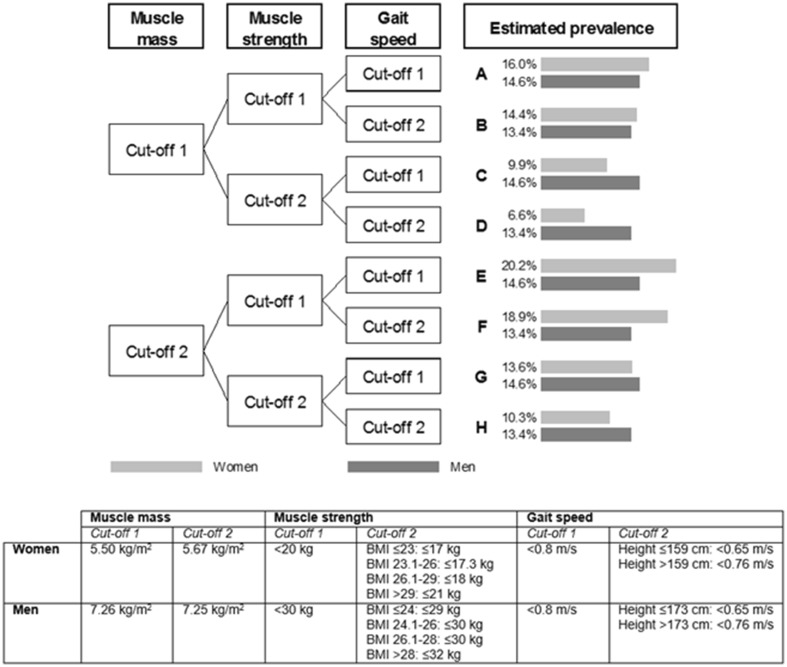
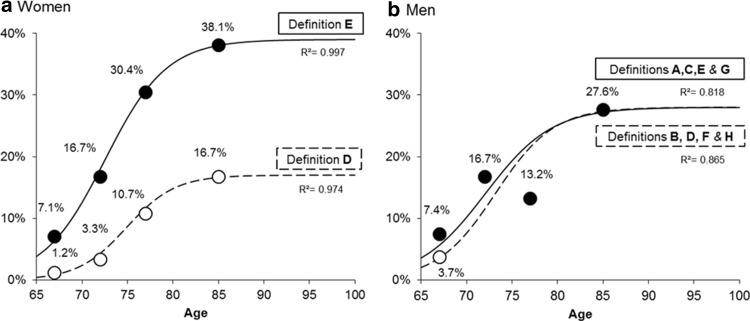
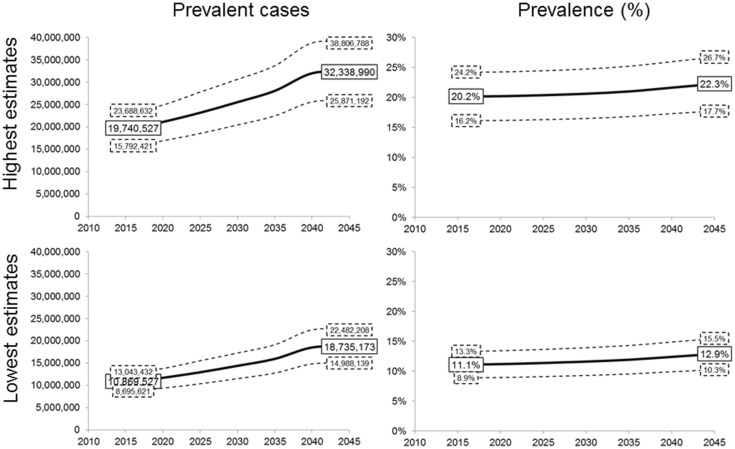
Sarcopenia is a major public health issue. To convince health policy makers of the emergency to invest in the sarcopenia field, it is of critical importance to produce reliable figures of the expected burden of sarcopenia in the coming years. Age- and gender-specific population projections were retrieved until 2045 from the Eurostat online database (28 European countries). Age- and gender-specific prevalences of sarcopenia were interpolated from a study that compared prevalence estimates according to the different diagnostic cutoffs of the EWGSOP proposed definition. The reported prevalence estimates were interpolated between 65 and 100 years. Interpolated age- and gender-specific estimates of sarcopenia prevalence were then applied to population projections until 2045. Using the definition providing the lowest prevalence estimates, the number of individuals with sarcopenia would rise in Europe from 10,869,527 in 2016 to 18,735,173 in 2045 (a 72.4% increase). This corresponds to an overall prevalence of sarcopenia in the elderly rising from 11.1% in 2016 to 12.9% in 2045. With the definition providing the highest prevalence estimates, the number of individuals with sarcopenia would rise from 19,740,527 in 2016 to 32,338,990 in 2045 (a 63.8% increase), corresponding to overall prevalence rates in the elderly of 20.2% and 22.3% for 2016 and 2045, respectively. We showed that the number of sarcopenic patients will dramatically increase in the next 30 years, making consequences of muscle wasting a major public health issue.
Overview
The claims and statistics of this paper haven’t been checked yet.
Run the check — free, no account needed. It reads the open-access text and checks the sources it cites.
Integrity signals
Registry
Cites
Statistics
Figures
Verification
Claims the paper makes
The claims and statistics of this paper haven’t been checked yet.
Run the check — free, no account needed. It reads the open-access text and checks the sources it cites.
Claims other papers make about this one
Each is checked against this paper’s own text: does it say what the citing paper says it does?
The source backs part of the claim, not all of it — or backs it for a different population, condition or comparison.
In the citing paper
“However, as public health services, food production, and living standards have improved, the definition of malnutrition has become less clear as conditions such as obesity, cachexia, sarcopenia, and micronutrient imbalances have become more prevalent (3–5).”
From Evolution of the diagnosis of malnutrition in adults: a primer for clinicians (2024) · cites this paper as [4]
Experimental — accuracy not yet measured
Self-check
Percentages, sums and reported differences re-computed from the paper’s own numbers.
The self-check needs the paper’s full text.
Citations
Cites
Sarcopenia: European consensus on definition and diagnosis
Cruz-Jentoft, A. J., Baeyens, J. P., Bauer, J. M., Boirie, Y., Cederholm, T., Landi, F., Martin, F. C., Michel, J.-P., Rolland, Y., Schneider, S. M., et al. (2010) · Age and Ageing · doi:10.1093/ageing/afq034 · Cited by 11,601
The healthcare costs of sarcopenia in the United States
Janssen, I., Shepard, D. S., Katzmarzyk, P. T., & Roubenoff, R. (2004) · Journal of the American Geriatrics Society · doi:10.1111/j.1532-5415.2004.52014.x · Cited by 1,546
Sarcopenia: alternative definitions and associations with lower extremity function
Newman, A. B., Kupelian, V., Visser, M., Simonsick, E., Goodpaster, B., Nevitt, M., Kritchevsky, S. B., Tylavsky, F. A., Rubin, S. M., Harris, T. B., et al. (2003) · Journal of the American Geriatrics Society · doi:10.1046/j.1532-5415.2003.51534.x · Cited by 981
Sarcopenia as a risk factor for falls in elderly individuals: results from the ilSIRENTE study
Landi, F., Liperoti, R., Russo, A., Giovannini, S., Tosato, M., Capoluongo, E., Bernabei, R., & Onder, G. (2012) · Clinical Nutrition · doi:10.1016/j.clnu.2012.02.007 · Cited by 938
The Global Burden of Obesity and the Challenges of Prevention
Seidell, J. C., & Halberstadt, J. (2015) · Annals of Nutrition and Metabolism · doi:10.1159/000375143 · Cited by 789
Morley, J. E., Anker, S. D., & von Haehling, S. (2014) · Journal of Cachexia Sarcopenia and Muscle · doi:10.1007/s13539-014-0161-y · Cited by 633
Landi, F., Cruz-Jentoft, A. J., Liperoti, R., Russo, A., Giovannini, S., Tosato, M., Capoluongo, E., Bernabei, R., & Onder, G. (2013) · Age and Ageing · doi:10.1093/ageing/afs194 · Cited by 619
Sarcopenia: burden and challenges for public health
Beaudart, C., Rizzoli, R., Bruyère, O., Reginster, J., & Biver, E. (2014) · Archives of Public Health · doi:10.1186/2049-3258-72-45 · Cited by 523
Self-citationCao, L., & Morley, J. E. (2016) · Journal of the American Medical Directors Association · doi:10.1016/j.jamda.2016.06.001 · Cited by 424
Dual-energy X-ray absorptiometry and body composition
Laskey, M. A. (1996) · Nutrition · doi:10.1016/0899-9007(95)00017-8 · Cited by 411
Myostatin antibody (LY2495655) in older weak fallers: a proof-of-concept, randomised, phase 2 trial
Becker, C., Lord, S. R., Studenski, S. A., Warden, S. J., Fielding, R. A., Recknor, C. P., Hochberg, M., Ferrari, S., Blain, H., Binder, E. F., et al. (2015) · The Lancet Diabetes & Endocrinology · doi:10.1016/s2213-8587(15)00298-3 · Cited by 390
Batsis, J. A., Barre, L. K., Mackenzie, T. A., Pratt, S. I., Lopez‐Jimenez, F., & Bartels, S. J. (2013) · Journal of the American Geriatrics Society · doi:10.1111/jgs.12260 · Cited by 330
Frailty and sarcopenia: definitions and outcome parameters
Cooper, C. C., Dere, W. H., Evans, W. J., Kanis, J. A., Rizzoli, R., Sayer, A. A., Sieber, C. C., Kaufman, J., van Kan, G. A., Boonen, S., et al. (2012) · Osteoporosis International · doi:10.1007/s00198-012-1913-1 · Cited by 310
Self-citationRizzoli, R., Stevenson, J. C., Bauer, J. M., van Loon, L. J. C., Walrand, S., Kanis, J. A., Cooper, C., Brandi, M.-L., Diez-Perez, A., & Reginster, J.-Y. (2014) · Maturitas · doi:10.1016/j.maturitas.2014.07.005 · Cited by 291
Self-citationTools in the Assessment of Sarcopenia
Cooper, C. C., Fielding, R. A., Visser, M., van Loon, L. J. C., Rolland, Y., ORWOLL, E. S., Reid, K. F., Boonen, S., Dere, W. H., Epstein, S., et al. (2013) · Calcified Tissue International · doi:10.1007/s00223-013-9757-z · Cited by 267
Self-citationAlexandre, T. D. S., Duarte, Y. A. D. O., Santos, J. L. F., Wong, R., & Lebrão, M. L. (2014) · The journal of nutrition health & aging · doi:10.1007/s12603-014-0540-2 · Cited by 234
Pharmacologic Options for the Treatment of Sarcopenia
Morley, J. E. (2016) · Calcified Tissue International · doi:10.1007/s00223-015-0022-5 · Cited by 225
Protein Intake and Muscle Health in Old Age: From Biological Plausibility to Clinical Evidence
Landi, F., Calvani, R., Tosato, M., Martone, A., Ortolani, E., Savera, G., D’Angelo, E., Sisto, A., & Marzetti, E. (2016) · Nutrients · doi:10.3390/nu8050295 · Cited by 218
Bayesian Probabilistic Projections of Life Expectancy for All Countries
Raftery, A. E., Chunn, J., Gerland, P., & Ševčíková, H. (2013) · Demography · doi:10.1007/s13524-012-0193-x · Cited by 213
Chalé, A., Cloutier, G. J., Hau, C., Phillips, E. M., Dallal, G. E., & Fielding, R. A. (2013) · The Journals of Gerontology: Series A · doi:10.1093/gerona/gls221 · Cited by 208
Reginster, J., Beaudart, C., Buckinx, F., & Bruyère, O. (2015) · Current Opinion in Clinical Nutrition & Metabolic Care · doi:10.1097/mco.0000000000000230 · Cited by 207
Self-citationEstimation of sarcopenia prevalence using various assessment tools
Beaudart, C., Reginster, J., Slomian, J., Buckinx, F., Dardenne, N., Quabron, A., Slangen, C., Gillain, S., Pétermans, J., & Bruyère, O. (2014) · Experimental Gerontology · doi:10.1016/j.exger.2014.11.014 · Cited by 156
Self-citationAlexandre, T. D. S., Duarte, Y. A. D. O., Santos, J. L. F., Wong, R., & Lebrão, M. L. (2014) · The journal of nutrition health & aging · doi:10.1007/s12603-014-0465-9 · Cited by 120
Recommendations for the conduct of clinical trials for drugs to treat or prevent sarcopenia
Reginster, J.-Y., Cooper, C., Rizzoli, R., Kanis, J. A., Appelboom, G., Bautmans, I., Bischoff-Ferrari, H. A., Boers, M., Brandi, M. L., Bruyère, O., et al. (2016) · Aging Clinical and Experimental Research · doi:10.1007/s40520-015-0517-y · Cited by 112
Self-citationSystematic Literature Review and Meta‐Analysis of the Association of Sarcopenia With Mortality
Chang, S., & Lin, P. (2016) · Worldviews on Evidence-Based Nursing · doi:10.1111/wvn.12147 · Cited by 110
Prevalence of sarcopenia: the impact of different diagnostic cut-off limits.
Beaudart, C., Reginster, J.-Y., Slomian, J., Buckinx, F., Locquet, M., & Bruyère, O. (2014) · PubMed · Cited by 87
Self-citationCruz-Jentoft, A. J., & Landi, F. (2014) · Clinical Medicine · doi:10.7861/clinmedicine.14-2-183 · Cited by 84
INNOVATIVE MEDICINES INITIATIVE: THE SPRINTT PROJECT
Marzetti, E., Calvani, R., Landi, F., Hoogendijk, E. O., Fougère, B., Vellas, B. J., Pahor, M., Bernabei, R., & Cesari, M. (2015) · The Journal of Frailty & Aging · doi:10.14283/jfa.2015.69 · Cited by 64
Interventions Against Sarcopenia in Older Persons
Zanandrea, V., Renato, G., Luisa, C., Vellas, B. J., Mauro, Z., & Cesari, M. (2014) · Current Pharmaceutical Design · doi:10.2174/1381612820666140316132246 · Cited by 17
Cited by
Sorted by citations
Dent, E., Morley, J. E., Cruz-Jentoft, A. J., Arai, H., Kritchevsky, S. B., Guralnik, J., Bauer, J. M., Pahor, M., Clark, B. C., Cesari, M., et al. (2018) · The Journal of nutrition, health and aging · doi:10.1007/s12603-018-1139-9 · Cited by 1,130
Skeletal Muscle as Potential Central Link between Sarcopenia and Immune Senescence
Nelke, C., Dziewas, R., Minnerup, J., Meuth, S. G., & Ruck, T. (2019) · eBioMedicine · doi:10.1016/j.ebiom.2019.10.034 · Cited by 437
A Narrative Review on Sarcopenia in Type 2 Diabetes Mellitus: Prevalence and Associated Factors
Izzo, A. C., Massimino, E., Riccardi, G., & Pepa, G. D. (2021) · Nutrients · doi:10.3390/nu13010183 · Cited by 438
Body composition with dual energy X-ray absorptiometry: from basics to new tools
Messina, C., Albano, D., Gitto, S., Tofanelli, L., Bazzocchi, A., Ulivieri, F. M., Guglielmi, G., & Sconfienza, L. M. (2020) · Quantitative Imaging in Medicine and Surgery · doi:10.21037/qims.2020.03.02 · Cited by 274
Hanach, N., McCullough, F. S. W., & Avery, A. (2018) · Advances in Nutrition · doi:10.1093/advances/nmy065 · Cited by 202
Metadata
- Authors
- Ethgen, O., Beaudart, C., Buckinx, F., Bruyère, O., & Reginster, J. Y.
- Affiliations
- University of Liège (BE)
- Corresponding author
- Reginster, J. Y.
- Venue
- Calcified Tissue International
- Published
- 2016-12-24
- Volume
- 100
- Issue
- 3
- Pages
- 229-234
- ISSN
- 0171-967X (ISSN-L)
- 1432-0827
- PMC
- PMC5313588
- OpenAlex
- W2566070385
- Cited by
- 280
- References
- 29
- Citations by year
- 2026: 26 · 2025: 46 · 2024: 26 · 2023: 40 · 2022: 25 · 2021: 38 · 2020: 28 · 2019: 21 · 2018: 20 · 2017: 9
- FWCI
- 13.42
- Type
- journal article
- Language
- en
- Open access
- hybrid
- doi.org
- Locations
- Calcified Tissue International (publishedVersion, cc-by)
- PubMed Central (publishedVersion, cc-by)
- PubMed (publishedVersion)
- ORBi (University of Liège) (submittedVersion)
- Funders
- Fonds De La Recherche Scientifique - FNRS
- Topics
- Health Sciences › Medicine › Physiology (medical) › Nutrition and Health in Aging
- Health Sciences › Medicine › Geriatrics and Gerontology › Frailty in Older Adults
- Life Sciences › Biochemistry, Genetics and Molecular Biology › Molecular Biology › Muscle Physiology and Disorders
- Keywords
- sarcopenia, prevalence projections, population projections, diagnostic thresholds, older adults, muscle atrophy, public health burden, Europe
- MeSH terms
- Aged, Aged, 80 and over, Aging, Europe, Female, Humans, Male, Obesity, Public Health, Risk Factors, Prevalence, Muscle, Skeletal, Hand Strength, Sarcopenia
About these checks
Registry, retraction, Cites and statistics results are computed, not judged, with one exception: a printed reference that no index lists is read once by a model before it counts as a citation error. Claims are extracted by a model and kept only when their quote appears verbatim in the text; each cited source is then checked, with a model’s help, for whether it says what the claim relies on. Those verdicts can be wrong — read the claim’s quote and the cited source before relying on one.
Statistics and arithmetic are recomputed, not judged.
Confidence bands are shown only for fields calibrated on our annotated test set. None is calibrated yet, so no band is shown.
What counts as a claim ›How we measure confidence ›How we check this ›
Are you an author, or do you see a problem with this page? Request a review
