

The DOI matches its Crossref record; 29 of the 29 references it cites were found in a registry or an index.
The Future Prevalence of Sarcopenia in Europe: A Claim for Public Health Action
Open accessAbstract
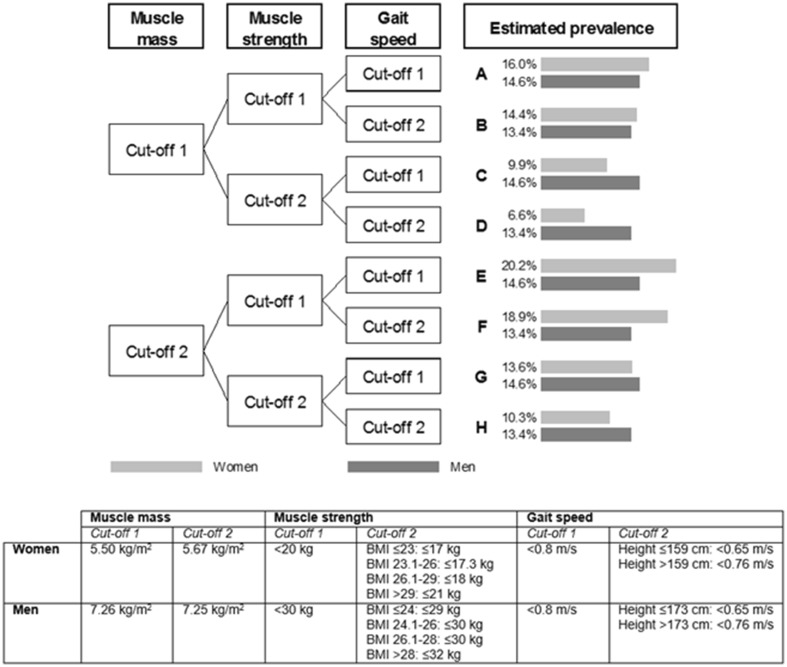
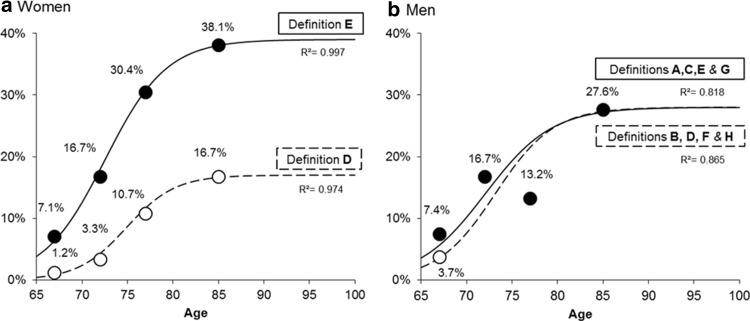
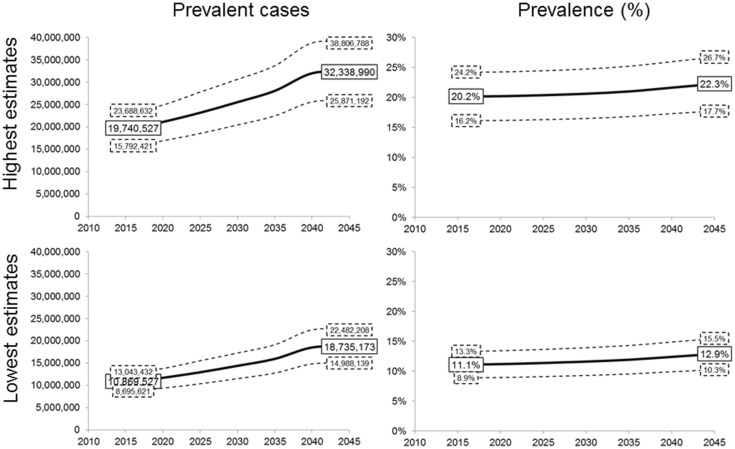
Sarcopenia is a major public health issue. To convince health policy makers of the emergency to invest in the sarcopenia field, it is of critical importance to produce reliable figures of the expected burden of sarcopenia in the coming years. Age- and gender-specific population projections were retrieved until 2045 from the Eurostat online database (28 European countries). Age- and gender-specific prevalences of sarcopenia were interpolated from a study that compared prevalence estimates according to the different diagnostic cutoffs of the EWGSOP proposed definition. The reported prevalence estimates were interpolated between 65 and 100 years. Interpolated age- and gender-specific estimates of sarcopenia prevalence were then applied to population projections until 2045. Using the definition providing the lowest prevalence estimates, the number of individuals with sarcopenia would rise in Europe from 10,869,527 in 2016 to 18,735,173 in 2045 (a 72.4% increase). This corresponds to an overall prevalence of sarcopenia in the elderly rising from 11.1% in 2016 to 12.9% in 2045. With the definition providing the highest prevalence estimates, the number of individuals with sarcopenia would rise from 19,740,527 in 2016 to 32,338,990 in 2045 (a 63.8% increase), corresponding to overall prevalence rates in the elderly of 20.2% and 22.3% for 2016 and 2045, respectively. We showed that the number of sarcopenic patients will dramatically increase in the next 30 years, making consequences of muscle wasting a major public health issue.
Overview
The claims and statistics of this paper haven’t been checked yet.
Run the check — free, no account needed. It reads the open-access text and checks the sources it cites.
Integrity signals
Registry
Cites
Statistics
Figures
Verification
Claims the paper makes
The claims and statistics of this paper haven’t been checked yet.
Run the check — free, no account needed. It reads the open-access text and checks the sources it cites.
Claims other papers make about this one
Each is checked against this paper’s own text: does it say what the citing paper says it does?
The source backs part of the claim, not all of it — or backs it for a different population, condition or comparison.
In the citing paper
“However, as public health services, food production, and living standards have improved, the definition of malnutrition has become less clear as conditions such as obesity, cachexia, sarcopenia, and micronutrient imbalances have become more prevalent (3–5).”
From Evolution of the diagnosis of malnutrition in adults: a primer for clinicians (2024) · cites this paper as [4]
Experimental — accuracy not yet measured
Self-check
Percentages, sums and reported differences re-computed from the paper’s own numbers.
The self-check needs the paper’s full text.
Citations
Cites
Sarcopenia: European consensus on definition and diagnosis
Cruz-Jentoft, A. J., Baeyens, J. P., Bauer, J. M., Boirie, Y., Cederholm, T., Landi, F., Martin, F. C., Michel, J.-P., Rolland, Y., Schneider, S. M., et al. (2010) · Age and Ageing · doi:10.1093/ageing/afq034 · Cited by 11,601
The healthcare costs of sarcopenia in the United States
Janssen, I., Shepard, D. S., Katzmarzyk, P. T., & Roubenoff, R. (2004) · Journal of the American Geriatrics Society · doi:10.1111/j.1532-5415.2004.52014.x · Cited by 1,546
Sarcopenia: alternative definitions and associations with lower extremity function
Newman, A. B., Kupelian, V., Visser, M., Simonsick, E., Goodpaster, B., Nevitt, M., Kritchevsky, S. B., Tylavsky, F. A., Rubin, S. M., Harris, T. B., et al. (2003) · Journal of the American Geriatrics Society · doi:10.1046/j.1532-5415.2003.51534.x · Cited by 981
Sarcopenia as a risk factor for falls in elderly individuals: results from the ilSIRENTE study
Landi, F., Liperoti, R., Russo, A., Giovannini, S., Tosato, M., Capoluongo, E., Bernabei, R., & Onder, G. (2012) · Clinical Nutrition · doi:10.1016/j.clnu.2012.02.007 · Cited by 938
The Global Burden of Obesity and the Challenges of Prevention
Seidell, J. C., & Halberstadt, J. (2015) · Annals of Nutrition and Metabolism · doi:10.1159/000375143 · Cited by 789
Morley, J. E., Anker, S. D., & von Haehling, S. (2014) · Journal of Cachexia Sarcopenia and Muscle · doi:10.1007/s13539-014-0161-y · Cited by 633
Landi, F., Cruz-Jentoft, A. J., Liperoti, R., Russo, A., Giovannini, S., Tosato, M., Capoluongo, E., Bernabei, R., & Onder, G. (2013) · Age and Ageing · doi:10.1093/ageing/afs194 · Cited by 619
Sarcopenia: burden and challenges for public health
Beaudart, C., Rizzoli, R., Bruyère, O., Reginster, J., & Biver, E. (2014) · Archives of Public Health · doi:10.1186/2049-3258-72-45 · Cited by 523
Self-citationCao, L., & Morley, J. E. (2016) · Journal of the American Medical Directors Association · doi:10.1016/j.jamda.2016.06.001 · Cited by 424
Dual-energy X-ray absorptiometry and body composition
Laskey, M. A. (1996) · Nutrition · doi:10.1016/0899-9007(95)00017-8 · Cited by 411
Cited by
Sorted by citations
Dent, E., Morley, J. E., Cruz-Jentoft, A. J., Arai, H., Kritchevsky, S. B., Guralnik, J., Bauer, J. M., Pahor, M., Clark, B. C., Cesari, M., et al. (2018) · The Journal of nutrition, health and aging · doi:10.1007/s12603-018-1139-9 · Cited by 1,130
Skeletal Muscle as Potential Central Link between Sarcopenia and Immune Senescence
Nelke, C., Dziewas, R., Minnerup, J., Meuth, S. G., & Ruck, T. (2019) · eBioMedicine · doi:10.1016/j.ebiom.2019.10.034 · Cited by 437
A Narrative Review on Sarcopenia in Type 2 Diabetes Mellitus: Prevalence and Associated Factors
Izzo, A. C., Massimino, E., Riccardi, G., & Pepa, G. D. (2021) · Nutrients · doi:10.3390/nu13010183 · Cited by 438
Body composition with dual energy X-ray absorptiometry: from basics to new tools
Messina, C., Albano, D., Gitto, S., Tofanelli, L., Bazzocchi, A., Ulivieri, F. M., Guglielmi, G., & Sconfienza, L. M. (2020) · Quantitative Imaging in Medicine and Surgery · doi:10.21037/qims.2020.03.02 · Cited by 274
Hanach, N., McCullough, F. S. W., & Avery, A. (2018) · Advances in Nutrition · doi:10.1093/advances/nmy065 · Cited by 202
Talar, K., Hernández‐Belmonte, A., Větrovský, T., Šteffl, M., Kałamacka, E., & Courel‐Ibáñez, J. (2021) · Journal of Clinical Medicine · doi:10.3390/jcm10081630 · Cited by 205
Piasecki, M., Ireland, A., Piasecki, J., Stashuk, D. W., Święcicka, A., Rutter, M. K., Jones, D. A., & McPhee, J. S. (2018) · The Journal of Physiology · doi:10.1113/jp275520 · Cited by 183
Chen, H., Huang, X., Dong, M., Wen, S., Zhou, L., & Yuan, X. (2023) · Diabetes Metabolic Syndrome and Obesity · doi:10.2147/dmso.s410834 · Cited by 185
Kamiya, K., Hamazaki, N., Matsue, Y., Mezzani, A., Corrà, U., Matsuzawa, R., Nozaki, K., Tanaka, S., Maekawa, E., Noda, C., et al. (2017) · European Journal of Preventive Cardiology · doi:10.1177/2047487317735715 · Cited by 148
Chatzipetrou, V., Bégin, M., Hars, M., & Trombetti, A. (2021) · Calcified Tissue International · doi:10.1007/s00223-021-00898-1 · Cited by 140
Protein Intake and Frailty: A Matter of Quantity, Quality, and Timing
Coelho‐Júnior, H. J., Marzetti, E., Picca, A., Cesari, M., Uchida, M. C., & Calvani, R. (2020) · Nutrients · doi:10.3390/nu12102915 · Cited by 153
Rondanelli, M., Cereda, E., Klersy, C., Faliva, M. A., Peroni, G., Nichetti, M., Gasparri, C., Iannello, G., Spadaccini, D., Infantino, V., et al. (2020) · Journal of Cachexia Sarcopenia and Muscle · doi:10.1002/jcsm.12532 · Cited by 135
Beaudart, C., Alcázar, J., Aprahamian, I., Batsis, J. A., Yamada, Y., Prado, C. M. M., Reginster, J., Sánchez‐Rodríguez, D., Lim, W. S., Sim, M., et al. (2025) · Aging Clinical and Experimental Research · doi:10.1007/s40520-025-02995-9 · Cited by 160
Self-citationSmeuninx, B., Mckendry, J., Wilson, D., Martin, U., & Breen, L. (2017) · The Journal of Clinical Endocrinology & Metabolism · doi:10.1210/jc.2017-00869 · Cited by 118
Comparison of the performance of five screening methods for sarcopenia
Locquet, M., Beaudart, C., Reginster, J., Pétermans, J., & Bruyère, O. (2017) · Clinical Epidemiology · doi:10.2147/clep.s148638 · Cited by 109
Self-citationDavies, B., García‐García, F. J., Ara, I., Rodríguez‐Artalejo, F., Rodríguez‐Mañas, L., & Walter, S. (2017) · Journal of the American Medical Directors Association · doi:10.1016/j.jamda.2017.09.014 · Cited by 110
The role of nutrition in the prevention of sarcopenia
Robinson, S. M., Granic, A., Cruz-Jentoft, A. J., & Sayer, A. A. (2023) · American Journal of Clinical Nutrition · doi:10.1016/j.ajcnut.2023.08.015 · Cited by 113
Lenchik, L., & Boutin, R. D. (2018) · Seminars in Musculoskeletal Radiology · doi:10.1055/s-0038-1641573 · Cited by 99
Welch, A. A., Skinner, J. S., & Hickson, M. (2017) · Nutrients · doi:10.3390/nu9111189 · Cited by 94
Alfaris, N., Alqahtani, A. M., Alamuddin, N., & Rigas, G. (2023) · Gastroenterology Clinics of North America · doi:10.1016/j.gtc.2023.03.002 · Cited by 100
Physical activity and sarcopenia in older adults
Meier, N. F., & Lee, D.-C. (2019) · Aging Clinical and Experimental Research · doi:10.1007/s40520-019-01371-8 · Cited by 86
Sarcopenic obesity: Myokines as potential diagnostic biomarkers and therapeutic targets?
Guo, A., Li, K., & Xiao, Q. (2020) · Experimental Gerontology · doi:10.1016/j.exger.2020.111022 · Cited by 83
Kuchay, M. S., Martínez‐Montoro, J. I., Kaur, P., Fernández‐García, J. C., & Ramos‐Molina, B. (2022) · Ageing Research Reviews · doi:10.1016/j.arr.2022.101696 · Cited by 86
Su, Y., Hirayama, K., Han, T., Izutsu, M., & Yuki, M. (2019) · Journal of Clinical Medicine · doi:10.3390/jcm8030291 · Cited by 82
Genetic Associations with Aging Muscle: A Systematic Review
Pratt, J., Boreham, C. A., Ennis, S., Ryan, A. W., & VITO, G. D. (2019) · Cells · doi:10.3390/cells9010012 · Cited by 87
Geerinck, A., Alekna, V., Beaudart, C., Bautmans, I., Cooper, C. C., Orlandi, F. D. S., Konstantynowicz, J., Montero‐Errasquín, B., Topinková, E., Τσεκούρα, Μ., et al. (2019) · PLoS ONE · doi:10.1371/journal.pone.0216065 · Cited by 75
Self-citationSex differences in skeletal muscle-aging trajectory: same processes, but with a different ranking
de Jong, J. C. B. C., Attema, B. J., van der Hoek, M. D., Verschuren, L., Caspers, M. P. M., Kleemann, R., van der Leij, F. R., van den Hoek, A. M., Nieuwenhuizen, A. G., & Keijer, J. (2023) · GeroScience · doi:10.1007/s11357-023-00750-4 · Cited by 81
Screening Accuracy of SARC-F for Sarcopenia in the Elderly: A Diagnostic Meta-Analysis
Lü, J., Ding, L.-Y., Xu, Q., Zhu, S., Xu, X., Hua, H., Chen, L., & Xu, H. (2020) · The journal of nutrition health & aging · doi:10.1007/s12603-020-1471-8 · Cited by 76
Lenchik, L., Lenoir, K. M., Tan, J., Boutin, R. D., Callahan, K. E., Kritchevsky, S. B., & Wells, B. J. (2018) · The Journals of Gerontology Series A · doi:10.1093/gerona/gly183 · Cited by 70
the PUFAH Group, Abdelhamid, A. S., Hooper, L., Sivakaran, R., Hayhoe, R. P. G., & Welch, A. A. (2019) · Calcified Tissue International · doi:10.1007/s00223-019-00584-3 · Cited by 71
If my muscle could talk: Myokines as a biomarker of frailty
Coelho‐Júnior, H. J., Picca, A., Calvani, R., Uchida, M. C., & Marzetti, E. (2019) · Experimental Gerontology · doi:10.1016/j.exger.2019.110715 · Cited by 71
Emerging Targets and Treatments for Sarcopenia: A Narrative Review
Cacciatore, S., Calvani, R., Esposito, I., Massaro, C., Gava, G., Picca, A., Tosato, M., Marzetti, E., & Landi, F. (2024) · Nutrients · doi:10.3390/nu16193271 · Cited by 75
Bone health assessment in older people with or without muscle health impairment
Locquet, M., Beaudart, C., Bruyère, O., Kanis, J. A., Delandsheere, L., & Reginster, J.-Y. (2018) · Osteoporosis International · doi:10.1007/s00198-018-4384-1 · Cited by 65
Self-citationRelationship between smoking and the incidence of sarcopenia: The SarcoPhAge cohort
Locquet, M., Bruyère, O., Lengelé, L., Reginster, J., & Beaudart, C. (2021) · Public Health · doi:10.1016/j.puhe.2021.01.017 · Cited by 72
Self-citationMarshall, R. N., Smeuninx, B., Morgan, P. T., & Breen, L. (2020) · Nutrients · doi:10.3390/nu12051533 · Cited by 64
Lorenzo, P. M., Izquierdo, A. G., Rodríguez-Carnero, G., Fernández‐Pombo, A., Iglesias, A., Carreira, M. C., Pérez, C. T., Bellido, D., Olmos, M. Á. M., Leis, R., et al. (2022) · Advances in Nutrition · doi:10.1093/advances/nmac038 · Cited by 72
Low muscle mass in older adults and mortality: A systematic review and meta-analysis
de Santana, F. M., Premaor, M. O., Tanigava, N. Y., & Pereira, R. M. R. (2021) · Experimental Gerontology · doi:10.1016/j.exger.2021.111461 · Cited by 66
Bahat, G., Yılmaz, Ö., Ören, M. M., Karan, M. A., Reginster, J., Bruyère, O., & Beaudart, C. (2017) · European Geriatric Medicine · doi:10.1007/s41999-017-0003-5 · Cited by 59
Self-citationFish Consumption: A Review of Its Effects on Metabolic and Hormonal Health
Mendivil, C. O. (2021) · Nutrition and Metabolic Insights · doi:10.1177/11786388211022378 · Cited by 55
Age-Related DNA Methylation Changes: Potential Impact on Skeletal Muscle Aging in Humans
Gensous, N., Bacalini, M. G., Franceschi, C., Meskers, C. G. M., Maier, A. B., & Garagnani, P. (2019) · Frontiers in Physiology · doi:10.3389/fphys.2019.00996 · Cited by 55
Daily lifestyle behaviors and risks of sarcopenia among older adults
Tzeng, P.-L., Lin, C., Lai, T., Huang, W.-C., Pien, E., Hsueh, M., Lin, K., Park, J., & Liao, Y. (2020) · Archives of Public Health · doi:10.1186/s13690-020-00498-9 · Cited by 60
Merchant, R. A., Chan, Y. H., Hui, R. J. Y., Lim, J. Y., Kwek, S. C., Seetharaman, S. K., Au, L. S. Y., & Morley, J. E. (2021) · Frontiers in Medicine · doi:10.3389/fmed.2021.660463 · Cited by 55
Sarcopenia: Prevalence and Prognostic Implications in Elderly Patients with Cardiovascular Disease
Kamiya, K., Hamazaki, N., Matsuzawa, R., Nozaki, K., Tanaka, S., Ichinosawa, Y., Maekawa, E., Noda, C., Yamaoka‐Tojo, M., Matsunaga, A., et al. (2017) · JCSM Clinical Reports · doi:10.17987/jcsm-cr.v2i2.41 · Cited by 53
Prevalence of probable sarcopenia in community-dwelling older Swiss people – a cross-sectional study
Wearing, J., Könings, P., de Bie, R. A., Stokes, M. J., & de Bruin, E. D. (2020) · BMC Geriatrics · doi:10.1186/s12877-020-01718-1 · Cited by 53
Smeuninx, B., Elhassan, Y., Manolopoulos, K. N., Sapey, E., Rushton, A., Edwards, S. J., Morgan, P. T., Philp, A., Brook, M. S., Gharahdaghi, N., et al. (2020) · Journal of Cachexia Sarcopenia and Muscle · doi:10.1002/jcsm.12661 · Cited by 56
Sarcopenia: early prevention or overdiagnosis?
Haase, C. B., Brodersen, J., & Bülow, J. (2022) · BMJ · doi:10.1136/bmj-2019-052592 · Cited by 52
Possible sarcopenia: early screening and intervention-narrative review
Xie, W., Xiao, G., Hu, P., He, Y., Lv, S., & Xiao, W. (2020) · Annals of Palliative Medicine · doi:10.21037/apm-20-967 · Cited by 55
Iranzo, M. À. C. I., Balasch-Bernat, M., Chuliá, M. Á. T., & Parisi, S. B. I. (2018) · Journal of Aging and Physical Activity · doi:10.1123/japa.2017-0268 · Cited by 52
Welch, A. A., Hayhoe, R. P. G., & Cameron, D. (2019) · Proceedings of The Nutrition Society · doi:10.1017/s0029665119001150 · Cited by 54
Whey for Sarcopenia; Can Whey Peptides, Hydrolysates or Proteins Play a Beneficial Role?
Gilmartin, S., O’Brien, N. M., & Giblin, L. (2020) · Foods · doi:10.3390/foods9060750 · Cited by 53
Hämäläinen, O., Tirkkonen, A., Savikangas, T., Alén, M., Sipilä, S., & Hautala, A. J. (2024) · BMC Geriatrics · doi:10.1186/s12877-024-04764-1 · Cited by 47
Locquet, M., Beaudart, C., Reginster, J., & Bruyère, O. (2018) · Calcified Tissue International · doi:10.1007/s00223-018-0503-4 · Cited by 47
Self-citationLack of Knowledge Contrasts the Willingness to Counteract Sarcopenia Among Community-Dwelling Adults
Ancum, J. M. V., Meskers, C. G. M., Reijnierse, E. M., Yeung, S. S. Y., Jonkman, N. H., Trappenburg, M. C., Pijnappels, M. A. G. M., & Maier, A. B. (2019) · Journal of Aging and Health · doi:10.1177/0898264319852840 · Cited by 49
Sarcopenia: ultrasound today, smartphones tomorrow?
Sconfienza, L. M. (2018) · European Radiology · doi:10.1007/s00330-018-5833-0 · Cited by 42
Gojanovic, M., Holloway‐Kew, K. L., Hyde, N. K., Mohebbi, M., Shivappa, N., Hébert, J. R., O'Neil, A. E., & Pasco, J. A. (2021) · Nutrients · doi:10.3390/nu13041166 · Cited by 43
Waqas, K., Chen, J., Trajanoska, K., Ikram, M. A., Uitterlinden, A. G., Rivadeneira, F., & Zillikens, M. C. (2021) · The Journal of Clinical Endocrinology & Metabolism · doi:10.1210/clinem/dgab632 · Cited by 41
Vitamin D 3 supplementation does not enhance the effects of resistance training in older adults
Mølmen, K. S., Hammarström, D., Pedersen, K. K., Lie, A. C. L., Steile, R. B., Nygaard, H., Khan, Y., Hamarsland, H., Koll, L., Hanestadhaugen, M., et al. (2021) · Journal of Cachexia Sarcopenia and Muscle · doi:10.1002/jcsm.12688 · Cited by 40
Bruyère, O., Cavalier, E., & Reginster, J. (2017) · Current Opinion in Clinical Nutrition & Metabolic Care · doi:10.1097/mco.0000000000000411 · Cited by 39
Self-citationShah, S. R. M., Asan, N. B., Velander, J., Ebrahimizadeh, J., Perez, M. D., Mattsson, V., Blokhuis, T. J., & Augustine, R. (2019) · IEEE Access · doi:10.1109/access.2019.2949179 · Cited by 39
MRI‐Derived Biomarkers Related to Sarcopenia: A Systematic Review
Codari, M., Zanardo, M., di Sabato, M. E., Nocerino, E. A., Messina, C., Sconfienza, L. M., & Sardanelli, F. (2019) · Journal of Magnetic Resonance Imaging · doi:10.1002/jmri.26931 · Cited by 37
Marika, M., Krzymińska-Siemaszko, R., Kaluźniak-Szymanowska, A., Lewandowicz, M., Tobis, S., Wieczorowska–Tobis, K., & Deskur-Śmielecka, E. (2022) · Nutrients · doi:10.3390/nu14142889 · Cited by 40
Locquet, M., Beaudart, C., Hajaoui, M., Pétermans, J., Reginster, J., & Bruyère, O. (2018) · Journal of the American Medical Directors Association · doi:10.1016/j.jamda.2018.06.004 · Cited by 37
Self-citationKim, J., Shin, S., & Kwon, E. (2023) · Molecular Nutrition & Food Research · doi:10.1002/mnfr.202200729 · Cited by 36
Allen, S., Marshall, R. N., Edwards, S. J., Lord, J. M., Lavery, G. G., & Breen, L. (2021) · American Journal of Physiology-Cell Physiology · doi:10.1152/ajpcell.00093.2021 · Cited by 39
Besora‐Moreno, M., Llauradó, E., Valls, R. M., Tarro, L., Pedret, A., & Solà, R. (2022) · Clinical Nutrition · doi:10.1016/j.clnu.2022.07.035 · Cited by 33
Selçuk, K. T., Atan, R. M., Arslan, S., & Sahın, N. (2022) · Experimental Gerontology · doi:10.1016/j.exger.2022.112054 · Cited by 33
Mu, Z., Fu, J., Sun, L., Chan, P., & Xiu, S. (2021) · BMC Geriatrics · doi:10.1186/s12877-021-02622-y · Cited by 32
Escribà-Salvans, A., Jerez‐Roig, J., Molas-Tuneu, M., Farrés-Godayol, P., Moreno‐Martin, P., Goutan‐Roura, E., Güell-Masramon, H., Amblàs-Novellas, J., de Souza, D. L. B., Skelton, D. A., et al. (2022) · BMC Geriatrics · doi:10.1186/s12877-022-02827-9 · Cited by 32
Sánchez‐Rodríguez, D., Locquet, M., Bruyère, O., Lengelé, L., Cavalier, E., Reginster, J., & Beaudart, C. (2020) · Clinical Nutrition · doi:10.1016/j.clnu.2020.09.047 · Cited by 31
Self-citationWu, D., Gao, X., Shi, Y., Wang, H., Wang, W., Li, Y., & Zheng, Z. (2022) · International Journal of Environmental Research and Public Health · doi:10.3390/ijerph192013616 · Cited by 32
Smeuninx, B., Elhassan, Y., Sapey, E., Rushton, A. B., Morgan, P. T., Korzepa, M., Belfield, A. E., Philp, A., Brook, M. S., Gharahdaghi, N., et al. (2023) · The Journal of Physiology · doi:10.1113/jp285130 · Cited by 31
Prevalence of sarcopenia and 9-year mortality in nursing home residents
Perkisas, S., Cock, A. D., Vandewoude, M. F. J., & Verhoeven, V. (2018) · Aging Clinical and Experimental Research · doi:10.1007/s40520-018-1038-2 · Cited by 31
Multidisciplinary approach to sarcopenia: a narrative review
Park, W.-T., Shon, O., & Kim, G. B. (2023) · Journal of Yeungnam Medical Science · doi:10.12701/jyms.2023.00724 · Cited by 32
Prokopidis, K., Testa, G. D., Giannaki, C. D., Stavrinou, P. S., Kelaiditi, E., Hoogendijk, E. O., & Veronese, N. (2025) · Advances in Nutrition · doi:10.1016/j.advnut.2025.100428 · Cited by 30
Cespiati, A., Meroni, M., Lombardi, R., Oberti, G., Dongiovanni, P., & Fracanzani, A. L. (2022) · Biomedicines · doi:10.3390/biomedicines10010182 · Cited by 30
Tack, W., Cock, A. D., Dirinck, E. L., Bastijns, S., Ariën, F., & Perkisas, S. (2023) · Diabetes Obesity and Metabolism · doi:10.1111/dom.15321 · Cited by 34
Rodríguez‐Rejón, A. I., Artacho, R., Puerta, A., Zuñiga, A., & Ruiz‐López, M. D. (2018) · The journal of nutrition health & aging · doi:10.1007/s12603-018-1004-x · Cited by 29
Kolimechkov, S., Seijo, M., Swaine, I., Thirkell, J. E., Colado, J. C., & Naclerio, F. (2022) · European Journal of Applied Physiology · doi:10.1007/s00421-022-05097-w · Cited by 28
Sarcopenic obesity: epidemiology, pathogenesis and diagnostic criteria
Berns, S. A., Sheptulina, A. F., Mamutova, E. M., Kiselev, A. R., & Drapkina, O. M. (2023) · CARDIOVASCULAR THERAPY AND PREVENTION · doi:10.15829/1728-8800-2023-3576 · Cited by 30
The Awareness and Knowledge Regarding Sarcopenia among Healthcare Professionals: A Scoping Review
Yao, X. M., Liu, B. B., Deng, W., & Wang, X. H. (2022) · The Journal of Frailty & Aging · doi:10.14283/jfa.2022.7 · Cited by 32
Evolution of the diagnosis of malnutrition in adults: a primer for clinicians
Hegazi, R., Miller, A., & Sauer, A. (2024) · Frontiers in Nutrition · doi:10.3389/fnut.2024.1169538 · Cited by 31
Aparicio, P., Navarrete‐Villanueva, D., Gómez‐Cabello, A., López‐Royo, T., Santamaría, E., Fernández‐Irigoyen, J., Ausín, K., Arruebo, M., Sebastián, V., Vicente‐Rodríguez, G., et al. (2024) · Journal of Cachexia Sarcopenia and Muscle · doi:10.1002/jcsm.13539 · Cited by 27
Vints, W. A. J., Kušleikienė, S., Sheoran, S., Valatkevičienė, K., Gleiznienė, R., Himmelreich, U., Pääsuke, M., Česnaitienė, V. J., Levin, O., Verbunt, J., et al. (2023) · Neurobiology of Aging · doi:10.1016/j.neurobiolaging.2023.02.011 · Cited by 30
Is YouTube a quality source of information on sarcopenia?
Akyol, A., & Karahan, İ. (2020) · European Geriatric Medicine · doi:10.1007/s41999-020-00327-w · Cited by 26
Welch, A. A., Skinner, J., & Hickson, M. (2017) · doi:10.20944/preprints201710.0149.v1 · Cited by 95
Shi, Y., Tang, Y., Stanmore, E., McGarrigle, L., & Todd, C. J. (2023) · Archives of Gerontology and Geriatrics · doi:10.1016/j.archger.2023.105022 · Cited by 26
Marshall, R. N., Morgan, P. T., Martinez‐Valdes, E., & Breen, L. (2020) · Experimental Gerontology · doi:10.1016/j.exger.2020.110965 · Cited by 26
Some clarifications of terminology may facilitate sarcopenia assessment
Lewandowicz, A., Slawinski, P. R., Kądalska, E., & Targowski, T. (2020) · Archives of Medical Science · doi:10.5114/aoms.2020.91293 · Cited by 22
Sarcopenia screening in elderly in primary health care: nurse knowledge and practices
Silva, R. F., Figueiredo, M. D. L. F., Darder, J. J. T., dos Santos, A. M. R., & Tyrrell, M. A. R. (2020) · Revista Brasileira de Enfermagem · doi:10.1590/0034-7167-2020-0421 · Cited by 22
Sarcopenia parameters in active older adults – an eight-year longitudinal study
Teraž, K., Marušič, U., Kalc, M., Šimunič, B., Pori, P., Grassi, B., Lazzer, S., Narici, M. V., Blenkuš, M. G., di Prampero, P. E., et al. (2023) · BMC Public Health · doi:10.1186/s12889-023-15734-4 · Cited by 24
Montalcini, T., Pujia, A., Donini, L., Frittitta, L., Galvano, F., Natali, A., Pironi, L., Porrini, M., Riso, P., Rivellese, A., et al. (2020) · Nutrients · doi:10.3390/nu12092662 · Cited by 18
Urrunaga‐Pastor, D., Runzer-Colmenares, F. M., Arones, T. M., Meza-Cordero, R., Taipe-Guizado, S., Guralnik, J. M., & Parodi, J. F. (2019) · F1000Research · doi:10.12688/f1000research.17513.1 · Cited by 23
Besora‐Moreno, M., Llauradó, E., Valls, R. M., Pedret, A., & Solà, R. (2024) · Nutrition Reviews · doi:10.1093/nutrit/nuae145 · Cited by 25
Buendía‐Romero, Á., Hernández‐Belmonte, A., Martínez-Cava, A., García-Conesa, S., Franco‐López, F., Conesa‐Ros, E., & Courel‐Ibáñez, J. (2021) · Experimental Gerontology · doi:10.1016/j.exger.2021.111575 · Cited by 22
Mulligan, A. A., Hayhoe, R. P. G., Luben, R., & Welch, A. A. (2021) · Antioxidants · doi:10.3390/antiox10020159 · Cited by 21
Rao, A. R., Bhagwasia, M., Singh, V., Bajpai, S., Singhal, S., Chatterjee, P., Chakrawarty, A., Dey, S., & Dey, A. B. (2025) · Journal of the American Geriatrics Society · doi:10.1111/jgs.19373 · Cited by 21
A roadmap for delivering a human musculoskeletal cell atlas
Baldwin, M. J., Buckley, C. D., Guilak, F., Hulley, P. A., Cribbs, A. P., & Snelling, S. J. B. (2023) · Nature Reviews Rheumatology · doi:10.1038/s41584-023-01031-2 · Cited by 17
Latella, C., van den Hoek, D., Wolf, M., Androulakis‐Korakakis, P., Fisher, J. P., & Steele, J. (2023) · Sports Medicine · doi:10.1007/s40279-023-01962-6 · Cited by 20
Valášková, S., Gažová, A., Vrbová, P., Koller, T., Šalingová, B., Adamičková, A., Chomaničová, N., Hulajová, N., Payer, J., & Kyselovič, J. (2021) · Physiological Research · doi:10.33549//physiolres.934778 · Cited by 17
Murphy, C. H., McCarthy, S. N., & Roche, H. M. (2023) · Proceedings of The Nutrition Society · doi:10.1017/s0029665123003555 · Cited by 19
Metadata
- Authors
- Ethgen, O., Beaudart, C., Buckinx, F., Bruyère, O., & Reginster, J. Y.
- Affiliations
- University of Liège (BE)
- Corresponding author
- Reginster, J. Y.
- Venue
- Calcified Tissue International
- Published
- 2016-12-24
- Volume
- 100
- Issue
- 3
- Pages
- 229-234
- ISSN
- 0171-967X (ISSN-L)
- 1432-0827
- PMC
- PMC5313588
- OpenAlex
- W2566070385
- Cited by
- 280
- References
- 29
- Citations by year
- 2026: 26 · 2025: 46 · 2024: 26 · 2023: 40 · 2022: 25 · 2021: 38 · 2020: 28 · 2019: 21 · 2018: 20 · 2017: 9
- FWCI
- 13.42
- Type
- journal article
- Language
- en
- Open access
- hybrid
- doi.org
- Locations
- Calcified Tissue International (publishedVersion, cc-by)
- PubMed Central (publishedVersion, cc-by)
- PubMed (publishedVersion)
- ORBi (University of Liège) (submittedVersion)
- Funders
- Fonds De La Recherche Scientifique - FNRS
- Topics
- Health Sciences › Medicine › Physiology (medical) › Nutrition and Health in Aging
- Health Sciences › Medicine › Geriatrics and Gerontology › Frailty in Older Adults
- Life Sciences › Biochemistry, Genetics and Molecular Biology › Molecular Biology › Muscle Physiology and Disorders
- Keywords
- sarcopenia, prevalence projections, population projections, diagnostic thresholds, older adults, muscle atrophy, public health burden, Europe
- MeSH terms
- Aged, Aged, 80 and over, Aging, Europe, Female, Humans, Male, Obesity, Public Health, Risk Factors, Prevalence, Muscle, Skeletal, Hand Strength, Sarcopenia
About these checks
Registry, retraction, Cites and statistics results are computed, not judged, with one exception: a printed reference that no index lists is read once by a model before it counts as a citation error. Claims are extracted by a model and kept only when their quote appears verbatim in the text; each cited source is then checked, with a model’s help, for whether it says what the claim relies on. Those verdicts can be wrong — read the claim’s quote and the cited source before relying on one.
Statistics and arithmetic are recomputed, not judged.
Confidence bands are shown only for fields calibrated on our annotated test set. None is calibrated yet, so no band is shown.
What counts as a claim ›How we measure confidence ›How we check this ›
Are you an author, or do you see a problem with this page? Request a review
