

Bacillus subtilis High Cell Density Fermentation Using a Sporulation-Deficient Strain for the Production of Surfactin
Open accessThe DOI matches its Crossref record; 42 of the 42 references it cites were found in a registry or an index.
Abstract
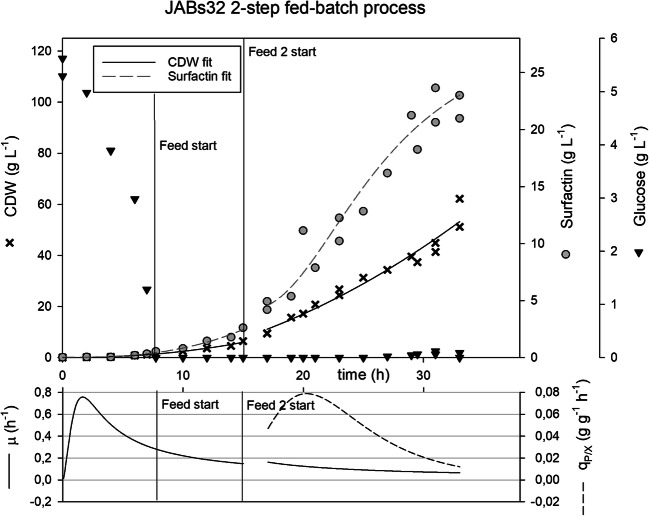
Bacillus subtilis 3NA is a strain capable of reaching high cell densities. A surfactin producing sfp+ variant of this strain, named JABs32, was utilized in fed-batch cultivation processes. Both a glucose and an ammonia solution were fed to set a steady growth rate μ of 0.1 h-1. In this process, a cell dry weight of up to 88 g L-1 was reached after 38 h of cultivation, and surfactin titers of up to 26.5 g L-1 were detected in this high cell density fermentation process, achieving a Y P/X value of 0.23 g g-1 as well as a q P/X of 0.007 g g-1 h-1. In sum, a 21-fold increase in surfactin titer was obtained compared with cultivations in shake flasks. In contrast to fed-batch operations using Bacillus subtilis JABs24, an sfp+ variant derived from B. subtilis 168, JABs32, reached an up to fourfold increase in surfactin titers using the same fed-batch protocol. Additionally, a two-stage feed process was established utilizing strain JABs32. Using an optimized mineral salt medium in this high cell density fermentation approach, after 31 h of cultivation, surfactin titers of 23.7 g L-1 were reached with a biomass concentration of 41.3 g L-1, thus achieving an enhanced Y P/X value of 0.57 g g-1 as well as a q P/X of 0.018 g g-1 h-1. The mutation of spo0A locus and an elongation of AbrB in the strain utilized in combination with a high cell density fed-batch process represents a promising new route for future enhancements on surfactin production. Key points: • Utilization of a sporulation deficient strain for fed-batch operations • High cell density process with Bacillus subtilis for lipopeptide production was established • High titer surfactin production capabilities confirm highly promising future platform strain
Overview
The claims and statistics of this paper haven’t been checked yet.
Free: it reads the open-access text and checks the first 5 claims that cite a source we can check. Create a free account to check every claim.
Integrity signals
Registry
Cites
Statistics
Figures


Verification
Claims the paper makes
The claims and statistics of this paper haven’t been checked yet.
Free: it reads the open-access text and checks the first 5 claims that cite a source we can check. Create a free account to check every claim.
Claims other papers make about this one
Each is checked against this paper’s own text: does it say what the citing paper says it does?
The source backs part of the claim, not all of it — or backs it for a different population, condition or comparison.
In the citing paper
“As a result of the lack of sporulation, a surfactin-producing 3NA strain achieved a 1.6-fold higher growth rate in shake flasks, which makes this strain attractive for fermentation processes with high cell density [5, 11, 12].”
From The influence of growth rate-controlling feeding strategy on the surfactin production in Bacillus subtilis bioreactor processes (2024) · cites this paper as [5]
Experimental — accuracy not yet measuredThe source backs part of the claim, not all of it — or backs it for a different population, condition or comparison.
In the citing paper
“NRPS gene expression is controlled by cell differentiation processes and in particular by the ComX-mediated quorum sensing mechanism, which enables biomass-related surfactin production [4–6].”
From The influence of growth rate-controlling feeding strategy on the surfactin production in Bacillus subtilis bioreactor processes (2024) · cites this paper as [5]
Experimental — accuracy not yet measuredThe cited source says what the claim attributes to it.
In the citing paper
“In previous studies on surfactin production, B. subtilis strains with established sporulation deficiency have proven to be favourable production organisms [5, 11].”
From The influence of growth rate-controlling feeding strategy on the surfactin production in Bacillus subtilis bioreactor processes (2024) · cites this paper as [5]
The cited source says what the claim attributes to it.
In the citing paper
“In bioreactor cultures with optimized mineral salt medium, biomass concentrations of 41.3 g/L and surfactin titers of 23.7 g/L were achieved after 31 h of cultivation [5].”
From The influence of growth rate-controlling feeding strategy on the surfactin production in Bacillus subtilis bioreactor processes (2024) · cites this paper as [5]
Self-check
Percentages, sums and reported differences re-computed from the paper’s own numbers.
The self-check needs the paper’s full text.
Citations
Cites
Modeling of the Bacterial Growth Curve
Zwietering, M. H., Jongenburger, I., Rombouts, F. M., & van 't Riet, K. (1990) · Applied and Environmental Microbiology · doi:10.1128/aem.56.6.1875-1881.1990 · Cited by 4,233 · cited 1×
“A logistic equation with four parameters was used to fit the data for the bacterial growth under limiting conditions (Zwietering et al. 1990).”
MethodCooper, D. G., Macdonald, C. R., Duff, S. J. B., & Kosaric, N. (1981) · Applied and Environmental Microbiology · doi:10.1128/aem.42.3.408-412.1981 · Cited by 591 · cited 4×
“lipopeptide produced by a wide range of Bacillus species (Cooper et al. 1981).”
BackgroundInfluentialThe SpoOA protein of Bacillus subtilis is a repressor of the abrB gene.
Strauch, M., Webb, V, Spiegelman, G., & Hoch, J. A. (1990) · Proceedings of the National Academy of Sciences · doi:10.1073/pnas.87.5.1801 · Cited by 350
GENETICS OF ENDOSPORE FORMATION IN BACILLUS SUBTILIS
Losick, R., Youngman, P., & Piggot, P. J. (1986) · Annual Review of Genetics · doi:10.1146/annurev.ge.20.120186.003205 · Cited by 346 · cited 4×
“…that when cell density reaches a threshold range, cell differentiation facilitated by a functional abrB-gene such as spore formation resulting in growth reduction and entering of stationary phase is the preferred strategy (Losick et al. 1986; Grossman and Losick 1988; Shank and Kolter 2011).”
BackgroundInfluentialThe transition state transcription regulator abrB of Bacillus subtilis is a DNA binding protein.
Strauch, M. A., Spiegelman, G. B., Perego, M., Johnson, W. C., Burbulys, D., & Hoch, J. A. (1989) · The EMBO Journal · doi:10.1002/j.1460-2075.1989.tb03546.x · Cited by 271 · cited 2×
“AbrB is a transcriptional regulator for several genes, which are important during transition state between exponential and stationary phase (Strauch et al. 1989).”
BackgroundWu, Q., Zhi, Y., & Xu, Y. (2019) · Metabolic Engineering · doi:10.1016/j.ymben.2018.11.004 · Cited by 215 · cited 6×
“production from these regulatory circuits by promoter exchanges (Sun et al. 2009; Willenbacher et al. 2016; Wu et al. 2019).”
BackgroundMethodInfluentialExtracellular control of spore formation in Bacillus subtilis.
Grossman, A. D., & Losick, R. (1988) · Proceedings of the National Academy of Sciences · doi:10.1073/pnas.85.12.4369 · Cited by 193 · cited 3×
“…that when cell density reaches a threshold range, cell differentiation facilitated by a functional abrB-gene such as spore formation resulting in growth reduction and entering of stationary phase is the preferred strategy (Losick et al. 1986; Grossman and Losick 1988; Shank and Kolter 2011).”
BackgroundLi, Y., Héloir, M., Zhang, X., Geissler, M., Trouvelot, S., Jacquens, L., Henkel, M., Su, X., Fang, X., Wang, Q., et al. (2019) · Molecular Plant Pathology · doi:10.1111/mpp.12809 · Cited by 188
Self-citationThe application of foaming for the recovery of Surfactin from B. subtilis ATCC 21332 cultures
Davis, D. A., Lynch, H. C., & Varley, J. (2001) · Enzyme and Microbial Technology · doi:10.1016/s0141-0229(00)00327-6 · Cited by 161 · cited 1×
“Many processes use the foaming capabilities of surfactin producing cultures for product enrichment (Davis et al. 2001; Willenbacher et al. 2014; Jiao et al. 2017).”
BackgroundTrach, K. A., & Hoch, J. A. (1993) · Molecular Microbiology · doi:10.1111/j.1365-2958.1993.tb01204.x · Cited by 145 · cited 2×
“Spores are unproductive hibernation-like cells and are usually the result of adverse conditions or nutrient limitation, as well as a product of cell density dependent differentiation control (Grossman and Losick 1988; Trach and Hoch 1993).”
Background
Cited by
Qiao, J., Borriss, R., Sun, K., Zhang, R., Chen, X., Liu, Y., & Liu, Y. (2024) · Microbial Cell Factories · doi:10.1186/s12934-024-02372-7 · Cited by 94
“Knock out of the spo0A gene enhances surfactin synthesis [49].”
BackgroundMethodMolecular genetics of surfactin and its effects on different sub-populations of Bacillus subtilis
Rahman, F. B., Sarkar, B., Moni, R., & Rahman, M. S. (2021) · Biotechnology Reports · doi:10.1016/j.btre.2021.e00686 · Cited by 88
“Different studies reported that deletion of spo0A gene results in absolutely no surfactin production [45, 46] Spo0A protein negatively regulates the gene abrB and thus the synthesis of AbrB protein.”
BackgroundGudiña, E. J., & Teixeira, J. A. (2022) · Biotechnology Advances · doi:10.1016/j.biotechadv.2022.108013 · Cited by 82
Put, H., Gerstmans, H., Capelle, H. V., Fauvart, M., Michiels, J. J., & Masschelein, J. (2024) · Natural Product Reports · doi:10.1039/d3np00065f · Cited by 85
Vahidinasab, M., Adiek, I., Hosseini, B., Akintayo, S. O., Abrishamchi, B., Pfannstiel, J., Henkel, M., Lilge, L., Voegele, R. T., & Hausmann, R. (2022) · Microorganisms · doi:10.3390/microorganisms10112225 · Cited by 72
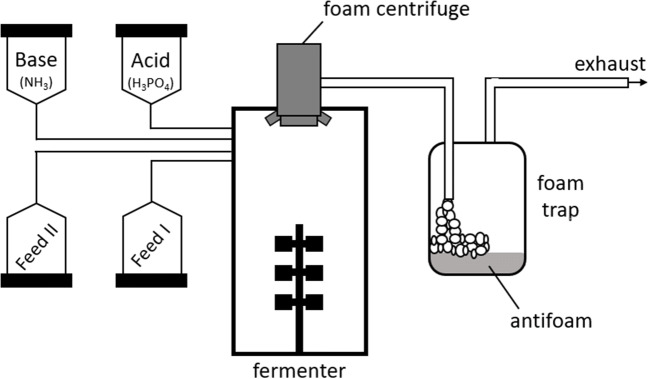
“[47] including the use of a foam centrifuge as well as the antifoam agent Contraspum A4050 (Zschimmer and Schwarz GmbH, Lahnstein, Germany).”
Self-citationFunctional Peptides for Plant Disease Control
Montesinos, E. (2023) · Annual Review of Phytopathology · doi:10.1146/annurev-phyto-021722-034312 · Cited by 61
Lilge, L., Ersig, N., Hubel, P., Aschern, M., Pillai, E., Klausmann, P., Pfannstiel, J., Henkel, M., Heravi, K. M., & Hausmann, R. (2022) · Microorganisms · doi:10.3390/microorganisms10040779 · Cited by 42
“subtilis 3NA, an amount of about 26 g/L surfactin was produced [6].”
BackgroundMethodSelf-citationA review on surfactin: molecular regulation of biosynthesis
Qi, X., Liu, W., He, X., & Du, C. (2023) · Archives of Microbiology · doi:10.1007/s00203-023-03652-3 · Cited by 38
Improving Surfactin Production in Bacillus subtilis 168 by Metabolic Engineering
Guo, Z., Sun, J., Ma, Q., Li, M., Dou, Y., Yang, S., & Gao, X. (2024) · Microorganisms · doi:10.3390/microorganisms12050998 · Cited by 34
Influence of B. subtilis 3NA mutations in spo0A and abrB on surfactin production in B. subtilis 168
Klausmann, P., Lilge, L., Aschern, M., Hennemann, K., Henkel, M., Hausmann, R., & Morabbi Heravi, K. (2021) · Microbial Cell Factories · doi:10.1186/s12934-021-01679-z · Cited by 31
“Strains KM1016 (168 sfp+) and KM1053 (3NA sfp+) both revealed similar growth behavior and surfactin production comparable to their progenitors JABs24 [12] and JABs32, respectively [15].”
BackgroundMethodResultSelf-citationMitra, S., Dhar, R., & Sen, R. (2022) · Biotechnology Advances · doi:10.1016/j.biotechadv.2022.108023 · Cited by 26
Poveda-Giraldo, J. A., Solarte‐Toro, J. C., Treinen, C., Noll, P., Henkel, M., Hausmann, R., & Álzate, C. A. C. (2024) · Environmental Science and Pollution Research · doi:10.1007/s11356-024-32217-0 · Cited by 28
“Thereby, an initial batch volume of 12 L was considered, followed by a feeding stage with an additional volume of 8 L (Klausmann et al. 2021).”
InfluentialSelf-citationTolibia, S. E. M., Pacheco, A. D., Balbuena, S. Y. G., Rocha, J., & y López, V. E. L. (2022) · World Journal of Microbiology and Biotechnology · doi:10.1007/s11274-022-03460-9 · Cited by 27
Araújo, J. M. M., Monteiro, J. D. M., Silva, D. H. D. S., Alencar, A., Silva, K., Coelho, L., Pachêco, W. B., da Silva, D. F., Silva, M. J., da Silva, L. C. N., et al. (2022) · Antibiotics · doi:10.3390/antibiotics11081106 · Cited by 31
“Surfactin exhibited strong antibacterial effects against Listeria monocytogenes and Bacillus cereus, while fengycin and iturin inhibited the growth of pathogenic fungi Aspergillus flavus, Aspergillus parasiticus, Aspergillus sulphureus, Fusarium graminearum, and Fusarium oxysporum [94].”
BackgroundInfluentialArmenova, N., Tsigoriyna, L., Arsov, A., Stefanov, S., Petrov, K. K., Mu, W., Zhang, W., & Petrova, P. M. (2025) · Journal of Fungi · doi:10.3390/jof12010022 · Cited by 29
“For example, B. subtilis JABs32, a sporulation-deficient strain with inactivated spo0A , produced an impressive 26 g/L of surfactin after 36 h of fed-batch cultivation, nearly four times more than the sporulating strain JABs24 [205].”
Akintayo, S. O., Hosseini, B., Vahidinasab, M., Messmer, M., Pfannstiel, J., Bertsche, U., Hubel, P., Henkel, M., Hausmann, R., Voegele, R. T., et al. (2023) · Frontiers in Bioengineering and Biotechnology · doi:10.3389/fbioe.2023.1228386 · Cited by 23
“The following analyses were done with equations reported by (Klausmann et al., 2021).”
MethodSelf-citationGugel, I., Vahidinasab, M., Perino, E. H. B., Hiller, E., Marchetti, F., Costa, S., Pfannstiel, J., Konnerth, P., Vertuani, S., Manfredini, S., et al. (2024) · Fermentation · doi:10.3390/fermentation10060323 · Cited by 23
Self-citationHiller, E., Off, M., Hermann, A., Vahidinasab, M., Benatto Perino, E. H., Lilge, L., & Hausmann, R. (2024) · Microbial Cell Factories · doi:10.1186/s12934-024-02531-w · Cited by 21
“In bioreactor cultures with optimized mineral salt medium, biomass concentrations of 41.3 g/L and surfactin titers of 23.7 g/L were achieved after 31 h of cultivation [5].”
BackgroundMethodResultInfluentialSelf-citationQin, W., Liu, Y., Gang, H., Liu, J., Zhou, L., Yang, S., & Mu, B. (2025) · Advances in Colloid and Interface Science · doi:10.1016/j.cis.2025.103581 · Cited by 23
Microbial Biofertilizers for Salinity Stress Mitigation in Hydroponic Systems
Renganathan, P., Gaysina, L. A., & Puente, E. O. R. (2025) · Current Issues in Molecular Biology · doi:10.3390/cimb47121029 · Cited by 17
“Bench-and pilot-scale fermentations on glucose–yeast extract or mineral-salt media yield 15–20 g DCW L − 1 , whereas high-cell-density strategies using two-stage feeding, oxygen enrichment, and foam control achieve titers exceeding 40 g L − 1 [137–139].”
Optimized Recombinant Expression and Characterization of Collagenase in Bacillus subtilis WB600
Zhu, Y., Wang, L., Zheng, K., Liu, P., Li, W., Lin, J., Liu, W., Shan, S., Sun, L., & Zhang, H. (2022) · Fermentation · doi:10.3390/fermentation8090449 · Cited by 16
“subtilis grew better with the addition of glucose [32], showing that it could absorb glucose better and consume nutrients quickly, but with less enzyme production.”
BackgroundWahab, Z. H. A., & Al‐Sahlany, S. T. G. (2025) · Bacteria · doi:10.3390/bacteria4040049 · Cited by 17
“It is a secondary metabolite produced through non-ribosomal peptide synthetase (NRPS) pathways, particularly under conditions of nutrient limitation [33,34].”
Treinen, C., Magosch, O., Hoffmann, M., Klausmann, P., Würtz, B., Pfannstiel, J., Morabbi Heravi, K., Lilge, L., Hausmann, R., & Henkel, M. (2021) · AMB Express · doi:10.1186/s13568-021-01306-5 · Cited by 14
Self-citationWita, A., Białas, W., Czaczyk, K., Drożdżyńska, A., Sobiech, Ł., Grzanka, M., Danielewicz, J., Jajor, E., Horoszkiewicz-Janka, J., & Marecik, R. (2025) · PLoS ONE · doi:10.1371/journal.pone.0323889 · Cited by 13
“Among the detected compounds, surfactin was consistently produced at the highest levels, although the concentrations (18.8 mg/L) were modest compared to literature reports of several grams per liter [63].”
InfluentialGao, L., Du, K., Zhou, Y., Li, C., Su, Y., & Xia, X. (2025) · Chemical Engineering Journal · doi:10.1016/j.cej.2025.171675 · Cited by 12
Recombinant Production of Bovine αS1-Casein in Genome-Reduced Bacillus subtilis Strain IIG-Bs-20-5-1
Biermann, L., Tadele, L. R., Perino, E. H. B., Nicholson, R. A., Lilge, L., & Hausmann, R. (2025) · Microorganisms · doi:10.3390/microorganisms13010060 · Cited by 12
“The induction was carried out for 20 h. Bioreactor cultivations were carried with the genome-reduced B. subtilis strain IIG-Bs-20-5-1 according to descriptions from Klausmann et al. [27].”
InfluentialSelf-citationMiceli, R. T., Totsingan, F., Naina, T., Islam, S., Dordick, J. S., Corr, D. T., & Gross, R. A. (2023) · ACS Omega · doi:10.1021/acsomega.3c00454 · Cited by 11
Treinen, C., Biermann, L., Vahidinasab, M., Heravi, K. M., Lilge, L., Hausmann, R., & Henkel, M. (2023) · AMB Express · doi:10.1186/s13568-023-01555-6 · Cited by 12
“The previously postulated hypothesis that the balance is at a disadvantage of surfactin production (Klausmann et al. 2021; Treinen et al. 2021) is supported by the concomitant decline in PsrfA activity.”
BackgroundSelf-citationEvangelista, A. G., Nazareth, T. D. M., Luz, C., Dopazo, V., Moreno, A., Riolo, M., Meca, G., & Luciano, F. B. (2024) · Animals · doi:10.3390/ani14030388 · Cited by 12
“Research has shown that surfactins are degraded throughout the production process, but when the bacteria enter the stationary phase, degradation becomes faster than production, leading to a decrease in the concentration of these compounds in the culture medium [47].”
BackgroundLuo, K., Chen, Y., Qian, X., Zhong, H., Onchari, M. M., Liu, X., Tian, B., Zang, S., Yin, X., Chen, X., et al. (2023) · Applied Microbiology and Biotechnology · doi:10.1007/s00253-023-12590-5 · Cited by 10
Hashemi, S. Z., Fooladi, J., Vahidinasab, M., Hubel, P., Pfannstiel, J., Pillai, E., Hrenn, H., Hausmann, R., & Lilge, L. (2024) · Applied Microbiology · doi:10.3390/applmicrobiol4010015 · Cited by 11
Self-citationLilge, L., & Kuipers, O. P. (2024) · International Journal of Antimicrobial Agents · doi:10.1016/j.ijantimicag.2024.107155 · Cited by 10
Self-citationLi, X., Hou, Z.-J., Zhu, F., Yu, Y., Wang, Y., Xiao, F., Cui, H., & Wen, J. (2025) · Chemical Engineering Journal · doi:10.1016/j.cej.2025.163954 · Cited by 9
Scaling Up Postbiotics Production: A Prospective Review of Processes and Health Benefits
R, S. K. G., & Vaithilingam, M. (2025) · Probiotics and Antimicrobial Proteins · doi:10.1007/s12602-025-10643-x · Cited by 11
Li, J., Tao, W., Yue, S., Yuan, Z., & Li, S. (2023) · Fermentation · doi:10.3390/fermentation9060525 · Cited by 13
Stapled NRPS enhances the production of valinomycin in Escherichia coli
Huang, S., Ba, F., Liu, W., & Li, J. (2022) · Biotechnology and Bioengineering · doi:10.1002/bit.28303 · Cited by 9
“In fermentation, fed‐batch cultivations have been used to prolong cell growth, achieve high cell density, and obtain high‐level product formation (Jin et al., 2021; Klausmann et al., 2021; Shiloach & Fass, 2005).”
MethodLee, Y.-S., Ku, K., Chu, C., & Chen, K.-L. (2024) · Animals · doi:10.3390/ani14142079 · Cited by 8
“The surfactin yield of the FP is positively related to the density of the production strain [26].”
BackgroundHermann, A., Hiller, E., Hubel, P., Biermann, L., Perino, E. H. B., Kuipers, O. P., Hausmann, R., & Lilge, L. (2025) · Microorganisms · doi:10.3390/microorganisms13020353 · Cited by 8
“The feed used in this study was a 50% ( w / w ) glucose solution with a total volume of 6 L containing trace elements solution and magnesium sulfate [27].”
InfluentialSelf-citationJia, R., Wang, Y., Wang, H., Ji, X., Sadiq, F. A., Wang, X., & Zhang, G. (2025) · Food Bioscience · doi:10.1016/j.fbio.2025.106842 · Cited by 7
Berzina, I., Kalniņš, M., Geiba, Z., Raita, S., Palcevska, J., Mika, T., & Spalviņš, K. (2024) · Scientifica · doi:10.1155/sci5/8968295 · Cited by 7
Liu, S., Liu, H., Li, Z., Cheng, Z., Wan, J., Pan, Y. B., Xu, G., Huang, F., Wang, M., Xiong, Y., et al. (2022) · Journal of Applied Microbiology · doi:10.1111/jam.15750 · Cited by 6
“Enhanced production of fermentation spores and metabolites at the same time generally depends on the feeding process (Klausmann et al., 2021).”
BackgroundTreinen, C., Claassen, L., Hoffmann, M., Lilge, L., Henkel, M., & Hausmann, R. (2023) · Frontiers in Bioengineering and Biotechnology · doi:10.3389/fbioe.2023.1264787 · Cited by 6
Self-citationInstrumental Approaches to the Detection and Quantification of Surfactin
Трефилов, В. С., Lindin, E. Y., Monakhova, M. V., Валерьевна, К. О., Viryasov, M. B., Oretskaya, T. S., & Kubareva, Е. А. (2025) · Russian Journal of Bioorganic Chemistry · doi:10.1134/s1068162024606517 · Cited by 5
Model-based process design for surfactin production with Bacillus subtilis
Hiller, E., Off, M., Dittmann, H., Perino, E. H. B., Lilge, L., & Hausmann, R. (2025) · AMB Express · doi:10.1186/s13568-025-01978-3 · Cited by 5
“Similarly, the B. subtilis strain JABs32, from which BMV9 is derived, also showed minimal growth and surfactin production during the first 6 h of cultivation (Klausmann et al. 2021a).”
InfluentialSelf-citationIn Vivo Quantification of Surfactin Nonribosomal Peptide Synthetase Complexes in Bacillus subtilis
Vahidinasab, M., Thewes, L., Abrishamchi, B., Lilge, L., Reiße, S., Perino, E. H. B., & Hausmann, R. (2024) · Microorganisms · doi:10.3390/microorganisms12112381 · Cited by 4
Self-citationTikhomirova, T. S., Milovidov, G. D., But, S. Y., & Nemashkalov, V. A. (2026) · Journal of Applied Microbiology · doi:10.1093/jambio/lxag014 · Cited by 6
Biosurfactants: introduction and classification
Ali, I., Jamal, A., Saqib, Z., Ali, M., & Masood, A. B. (2024) · Elsevier eBooks · doi:10.1016/b978-0-443-13288-9.00021-8 · Cited by 9
The Effects of Antibiotic Residues in The Environment: A Comprehensive Bibliometric Review
Wu, S., Fan, Z., Sun, G., Shou, B., Fang, H., Zhang, Y., Dong, Z., & Wan, Y. (2025) · Water Air & Soil Pollution · doi:10.1007/s11270-025-08366-4 · Cited by 3
“The production stages of antibiotic pharmaceuticals include fermentation (Klausmann et al., 2021), chemical synthesis (Raethong et al., 2023), extraction (Klausmann et al., 2021), and patent medicine.”
Chavarria-Quicaño, E., Hernández‐Oñate, M. Á., Rodríguez, J. A., la Torre-González, F. J. D., & Asaff‐Torres, A. (2025) · Applied Microbiology and Biotechnology · doi:10.1007/s00253-025-13571-6 · Cited by 3
“Pretorius et al. (2015) and Klausmann et al. (2021) reported that surfactin production can increase with high agitation speeds if appropriate strategies such as using reactors with foam traps and/or defoamers, are implemented, since foam accumulation reduces LPs titers (Yeh et al. 2005).”
Yu, S. U. N., Yanli, B. I., Xiaojing, X. I. A., Zhao, X., Lu, G. U. O., Fu, Q., Chundi, W. A. N. G., Wang, W., Na, T. A. N. G., Jishan, L. I. U., et al. (2024) · Kafkas Universitesi Veteriner Fakultesi Dergisi · doi:10.9775/kvfd.2024.31586 · Cited by 3
Soto‐Ramírez, R., Vlatten, N., Ruz, F., Tavernini, L., & Lobos, M. (2024) · Journal of Biotechnology · doi:10.1016/j.jbiotec.2024.08.015 · Cited by 3
Corrêa, G. G., Perino, E. H. B., de Andrade, C. A., Vahidinasab, M., Degang, L., Hosseini, B., Lilge, L., Zocca, V. F. B., Pfannstiel, J., Pedrolli, D. B., et al. (2026) · Biology · doi:10.3390/biology15020146 · Cited by 2
Self-citationPerino, E. H. B., Hiller, E., Vahidinasab, M., Moneta, S., Abrishamchi, B., Nagendran, K., Hubel, P., Pfannstiel, J., & Hausmann, R. (2026) · Microbial Cell Factories · doi:10.1186/s12934-026-03047-1 · Cited by 2
“All strains used in this study are derived from the surfactin production strain JABs32 (3NA-derived) and therefore carry the characteristic spo0A mutation and elongated AbrB regulator, resulting in a strongly reduced capacity for sporulation and cellular differentiation [11, 22].”
Self-citationy López, V. E. L., Tolibia, S. E. M., Pacheco, A. D., Goné, A. M. L., Martínez, P. S., & Girón, J. D. T. (2023) · Mexican Journal of Biotechnology · doi:10.29267/mxjb.2023.8.4.46 · Cited by 4
Chromosome-segment scanning for gain- or loss-of-function screening (CHASING)
Xia, Y., Sun, L., Liang, Z., Han, Z., Li, J., Guo, Y., Dong, P., Guo, S., & Guo, S. (2025) · iScience · doi:10.1016/j.isci.2025.112484 · Cited by 2
“29 Inspired by a previous study showing that a Δ sigE Δ sigF mutant increased acetoin production, 30 we tested chemical production in spore-deficient strains Δ 5, Δ 15, Δ 24, and Δ 34 (Figure S3).”
Bochynek, M., Hodurek, P., Łukaszewicz, M., & Lewińska, A. (2023) · Biomass Conversion and Biorefinery · doi:10.1007/s13399-023-03821-w · Cited by 3
“The best known and widely used method of surfactin production is submerged fermentation (SmF) which has numerous described isolation methods [7, 8].”
Li, L., Liu, K., Lan, F., Xiao, W., Wang, B., Zhou, J., Zhang, J., Wen, Y., Wang, X., & Shi, X. (2025) · Agronomy · doi:10.3390/agronomy15020350 · Cited by 1
Bacillus Penicillin Acelase, A Key Catalyst in the Modern Antibiotic Era: A Literature Review
Purnamasari, L. (2025) · RADINKA JOURNAL OF HEALTH SCIENCE · doi:10.56778/rjhs.v2i4.506 · Cited by 1
Zhang, L., Ahmad, T., & Liu*, Z. R. A. Y. (2025) · Agrobiological Records · doi:10.47278/journal.abr/2025.051 · Cited by 1
Barreto, Ó. S. C., Almeida, E. D. S., & Medeiros, D. L. (2026) · Journal of Cleaner Production · doi:10.1016/j.jclepro.2026.148034 · Cited by 1
Exploiting the ability of Bacillus subtilis to synthetize surfactin under oxygen limitation
Hiller, E., Tadele, L. R., Miceta, N., Notz, D., Perino, E. H. B., & Hausmann, R. (2026) · Applied Microbiology and Biotechnology · doi:10.1007/s00253-026-13868-0 · Cited by 1
“Fully aerobic fed-batch processes have reached surfac-tin titers of 26.5 g/L (Klausmann et al. 2021), 36 g/L (Hiller et al. 2024), and 46.33 g/L (Hiller et al. 2025b), enabled by sustained high oxygen transfer and growth rate controlled feeding.”
InfluentialSelf-citationMicrobial Hydrolysates as Amino Acid Source in Cell Culture Media for Cellular Agriculture
Hoek, J. C., Daran, J.-M. G., Klijn, M. E., & Vieira‐Lara, M. A. (2026) · Biotechnology and Bioengineering · doi:10.1002/bit.70290 · Cited by 2
Surfactin and surfactin-like production, purification, and application at marine environmentsPreprint
Dobler, L., Brêda, G. C., Rocha, P. M., de Paiva, W. K. V., dos Santos, E. S., & de Oliveira, R. R. (2022) · ChemRxiv · doi:10.26434/chemrxiv-2022-0x7vd-v2 · Cited by 2
Chen, T., Brul, S., & Hugenholtz, J. (2023) · Research Square · doi:10.21203/rs.3.rs-2927244/v1 · Cited by 1
Biotechnologische Herstellung des Biotensids Surfactin
Lilge, L. (2021) · BIOspektrum · doi:10.1007/s12268-021-1588-2
Self-citationSurfactin and surfactin-like production, purification, and application at marine environmentsPreprint
Dobler, L., Brêda, G. C., da Rocha, P. C., de Paiva, W. K. V., dos Santos, E. S., & de Oliveira, R. R. (2022) · ChemRxiv · doi:10.26434/chemrxiv-2022-0x7vd
de Oliveira, T. F. (2022) · Digital Library of Theses and Dissertations (Universidade de São Paulo) · doi:10.11606/d.87.2022.tde-21122023-140051
Treinen, C., Magosch, O., Hoffmann, M., Klausmann, P., Würtz, B., Pfannstiel, J., Heravi, K. M., Lilge, L., Hausmann, R., & Henkel, M. (2021) · Figshare · doi:10.6084/m9.figshare.16907558
Self-citationTreinen, C., Biermann, L., Vahidinasab, M., Heravi, K. M., Lilge, L., Hausmann, R., & Henkel, M. (2024) · Figshare · doi:10.6084/m9.figshare.26592410
Self-citationWeber, N., Götz, S., Senger, J., Lutz-Wahl, S., & Fischer, L. (2025) · Microbial Cell Factories · doi:10.1186/s12934-025-02900-z
“Furthermore, the ability of B . subtilis to reach high cell densities has been demonstrated by Klausmann et al. [18].”
Miercke, S., Knepper, J.-P., Dreisewerd, K., & Mascher, T. (2026) · Frontiers in Microbiology · doi:10.3389/fmicb.2026.1753310
Sim, K. L., Mohamed, M. S., Sabri, S., & Phang, L.-Y. (2026) · Preparative Biochemistry & Biotechnology · doi:10.1080/10826068.2026.2640059
Penha, R. D. O., Fachini, B. R., Karp, S. G., Thomaz‐Soccol, V., & Soccol, C. R. (2026) · Systems Microbiology and Biomanufacturing · doi:10.1007/s43393-026-00439-7
“1 3 stationary phase and can be associated with processes such as microbial competition, biofilm formation and coloniza - tion, the progression to complete sporulation may involve redirecting cellular metabolism, potentially reducing secondary metabolite synthesis (Klausmann et al. 2021).”
Prospects for the Use of Antimicrobial Peptides as Next-Generation Biopesticides
Slezina, M. P., Shiyan, A. N., & Odintsova, T. I. (2026) · Biology Bulletin Reviews · doi:10.1134/s207908642560167x
High-Cell-Density Cultivation of Microorganisms
Biener, R. (2026) · Cell engineering · doi:10.1007/978-3-032-17514-4_5
Sansotera, A. C., Ceresa, C., Trejo, C. F., Ferrandi, A., Allegrone, G., Aprile, S., Rinaldi, M., Morel, S., & Fracchia, L. (2026) · Microorganisms · doi:10.3390/microorganisms14061288
Wang, X., Lyu, Q., Zhang, S., Ji, G., Tian, X., Huan, C., Lishan, X., Liu, T. T., & Yan, Z. (2026) · Chemical Engineering Journal · doi:10.1016/j.cej.2026.179097
Coated Bacterial Enzymes: A one-step approach for enzymatic purification and immobilizationPreprint
Gutiérrez, A. C. R., Harguindeguy, I., Homse, S. M., Sabetta, A. E., Cavalitto, S., & Ortiz, G. E. (2026) · bioRxiv (Cold Spring Harbor Laboratory) · doi:10.64898/2026.07.08.735634
Model microorganisms: From cornerstones of modern discovery to big data-driven platforms
Li, M., Song, Z., Du, J., Wu, Y., Chen, M., Ma, L., & Wu, Q. (2026) · Model Organisms Research · doi:10.1016/j.mores.2026.100009
de Almeida, M. V. S., Owatari, M. S., Jesus, G. F. A., & Jatobá, A. (2026) · Aquaculture Journal · doi:10.3390/aquacj6030033
“Klausmann et al. [51] reported high cell densities of B. subtilis (strain JABs32) in pre-cultures grown in flasks at 37 ◦ C and 120 rpm prior to bioreactor cultivation.”
Purwasena, I. A., Mutiara, F., & Astuti, D. I. (2026) · Process Biochemistry · doi:10.1016/j.procbio.2026.08.003
Ji, M., & Sun, J. (2026) · Advances in biochemical engineering, biotechnology · doi:10.1007/10_2026_353
Chen, A., Xie, Y., Liu, M., Cui, Y., Liu, Y., Sun, J., & Ji, M. (2026) · Journal of Biotechnology · doi:10.1016/j.jbiotec.2026.09.008
The Emerging Application and Biotechnology Progress of Bacillus Subtilis in Planting Industry
Shi, Y., Niu, X., Yang, H., Chu, M., Sheng, Y., Ablimit, N., Bao, H., Wang, N., Zhan, F., Yang, R., et al. (2026) · IntechOpen eBooks · doi:10.5772/intechopen.1016853
Coated bacterial enzymes: a one-step approach for enzymatic purification and immobilization
Harguindeguy, I., Homse, S. M., Ramirez, A. C., Sabetta, A. E., Cavalitto, S., & Ezequiel-Ortiz, G. (2026) · Preparative Biochemistry & Biotechnology · doi:10.1080/10826068.2026.2736623
Paul, S., & Nayak, J. (2026) · Frontiers in Industrial Microbiology · doi:10.3389/finmi.2026.1995609
Metadata
- Authors
- Klausmann, P., Hennemann, K., Hoffmann, M., Treinen, C., Aschern, M., Lilge, L., Morabbi Heravi, K., Henkel, M., & Hausmann, R.
- Affiliations
- University of Hohenheim (DE)
- Corresponding author
- Henkel, Marius
- Venue
- Applied Microbiology and Biotechnology
- Published
- 2021-05
- Volume
- 105
- Issue
- 10
- Pages
- 4141-4151
- ISSN
- 0175-7598 (ISSN-L)
- 1432-0614
- PMC
- PMC8140969
- OpenAlex
- W3161958610
- Cited by
- 83
- References
- 42
- Citations by year
- 2026: 20 · 2025: 18 · 2024: 16 · 2023: 11 · 2022: 13 · 2021: 5
- FWCI
- 2.79
- Type
- journal article
- Language
- en
- Open access
- hybrid
- doi.org
- Licence
- cc-by
- creativecommons.org/licenses/by/4.0 (tdm)
- creativecommons.org/licenses/by/4.0 (vor, 14 d)
- Locations
- Applied Microbiology and Biotechnology (publishedVersion, cc-by)
- PubMed Central (publishedVersion, cc-by)
- PubMed (publishedVersion)
- Funders
- Bundesministerium für Bildung und Forschung (031B0469F)
- Topics
- Physical Sciences › Environmental Science › Pollution › Microbial bioremediation and biosurfactants
- Life Sciences › Biochemistry, Genetics and Molecular Biology › Molecular Biology › Microbial Metabolic Engineering and Bioproduction
- Life Sciences › Biochemistry, Genetics and Molecular Biology › Biotechnology › Enzyme Production and Characterization
- Keywords
- Bacillus subtilis, surfactin, high cell density fermentation, fed-batch fermentation, lipopeptide production, yield improvement
- MeSH terms
- Bacillus subtilis, Cell Count, Culture Media, Fermentation, Peptides, Cyclic, Lipopeptides
About these checks
Registry, retraction, Cites and statistics results are computed, not judged, with one exception: a printed reference that no index lists is read once by a model before it counts as a citation error. Claims are extracted by a model and kept only when their quote appears verbatim in the text; each cited source is then checked, with a model’s help, for whether it says what the claim relies on. Those verdicts can be wrong — read the claim’s quote and the cited source before relying on one.
Statistics and arithmetic are recomputed, not judged.
Confidence bands are shown only for fields calibrated on our annotated test set. None is calibrated yet, so no band is shown.
What counts as a claim ›How we measure confidence ›How we check this ›
Are you an author, or do you see a problem with this page? Request a review
Data sources
Bibliographic data: Semantic Scholar, OpenAlex, Crossref.
Contains information from the Semantic Scholar Academic Graph Datasets, made available under the ODC Attribution License (ODC-BY 1.0).
Semantic Scholar’s data is described in: Kinney, R., et al. (2023). The Semantic Scholar Open Data Platform. arXiv:2301.10140.
