

Aloin remodels the cell wall of Candida albicans to reduce its hyphal virulence against oral candidiasis
Open accessThe DOI matches its Crossref record; 71 of the 71 references it cites were found in a registry or an index.
Abstract
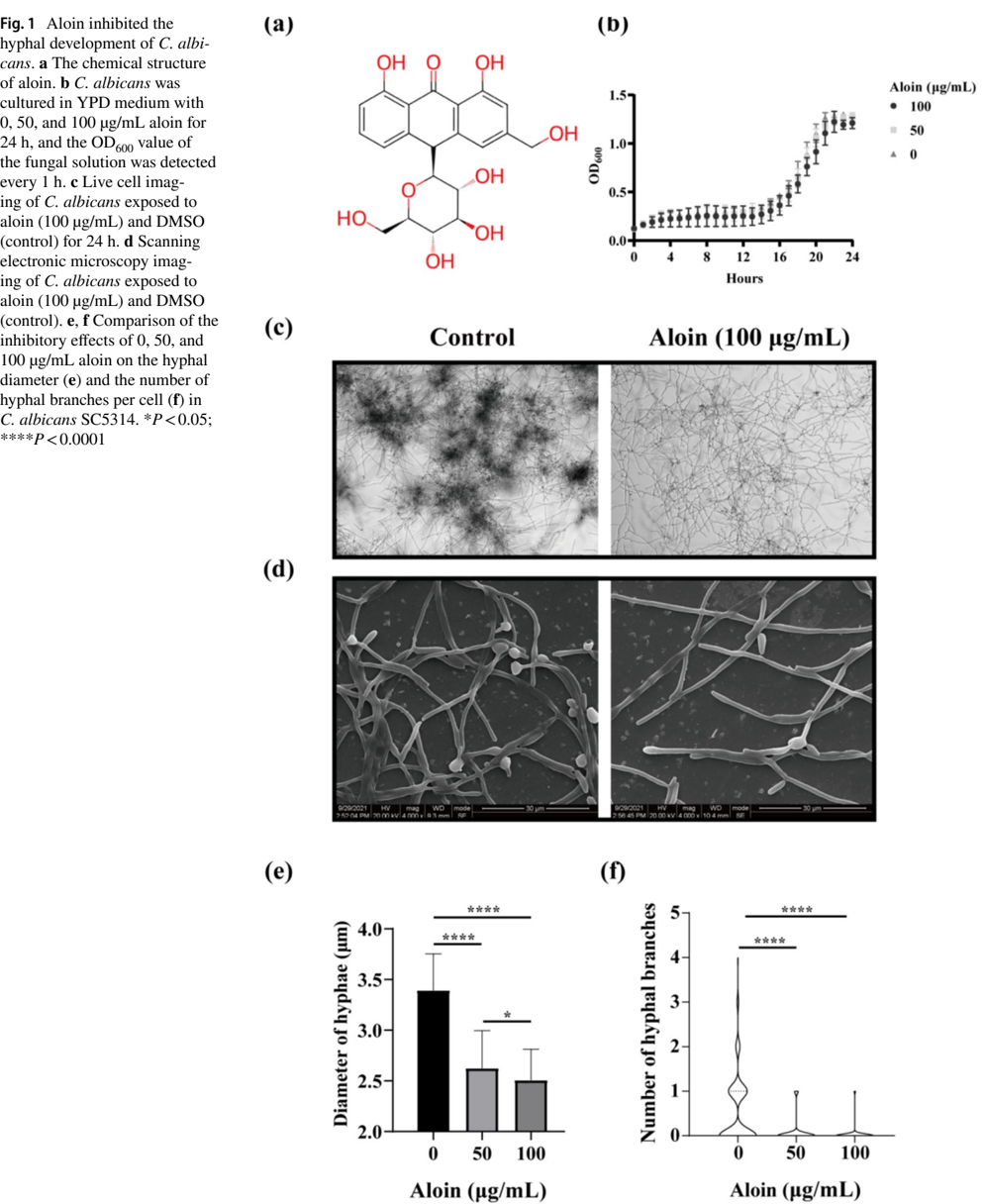
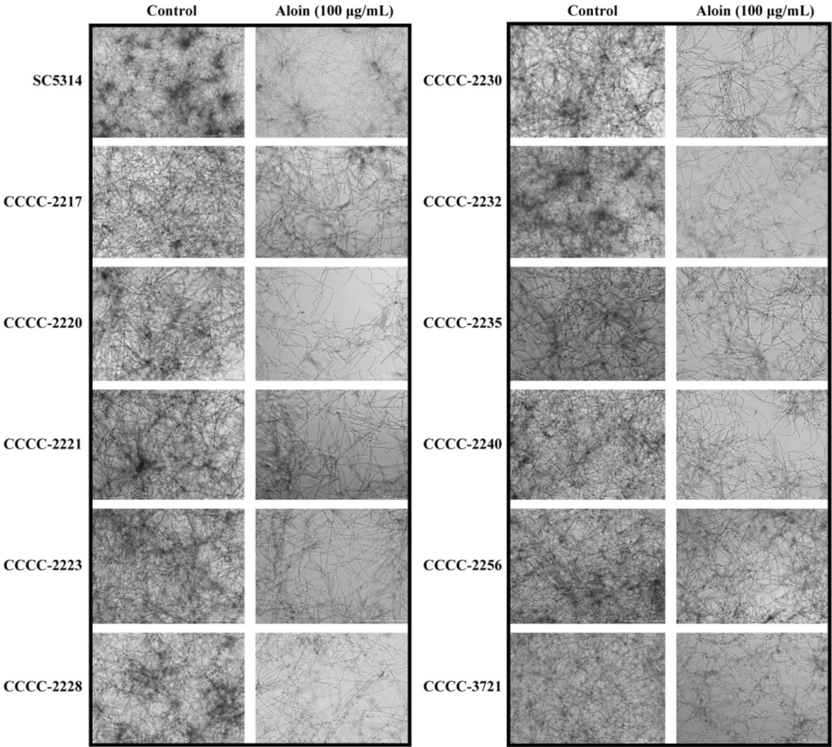
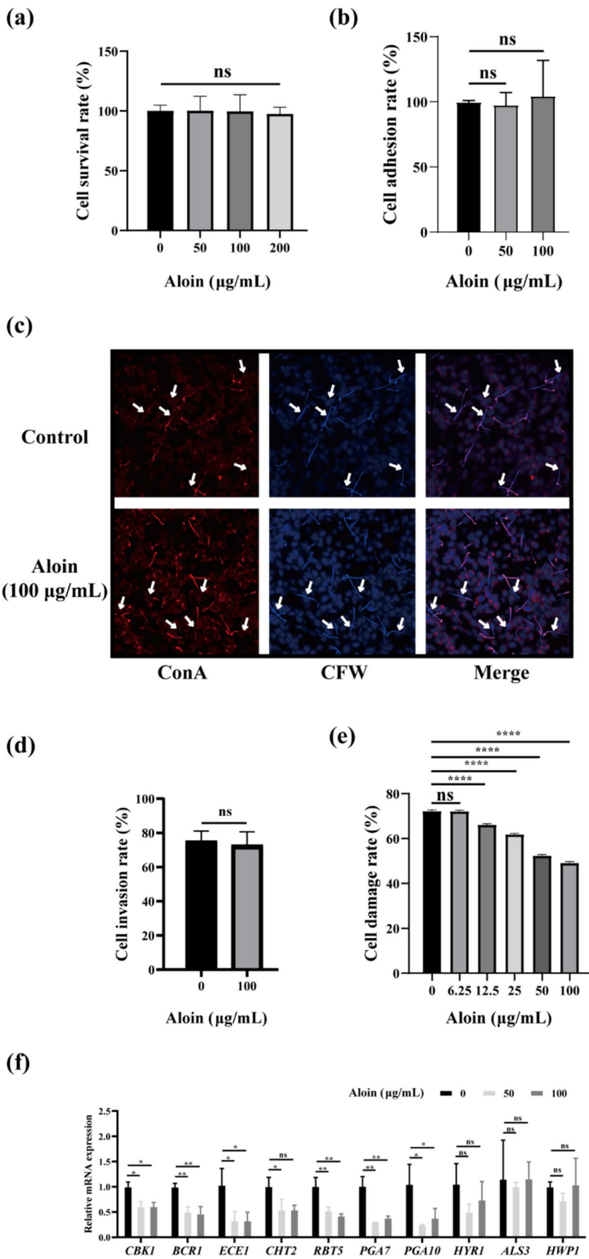
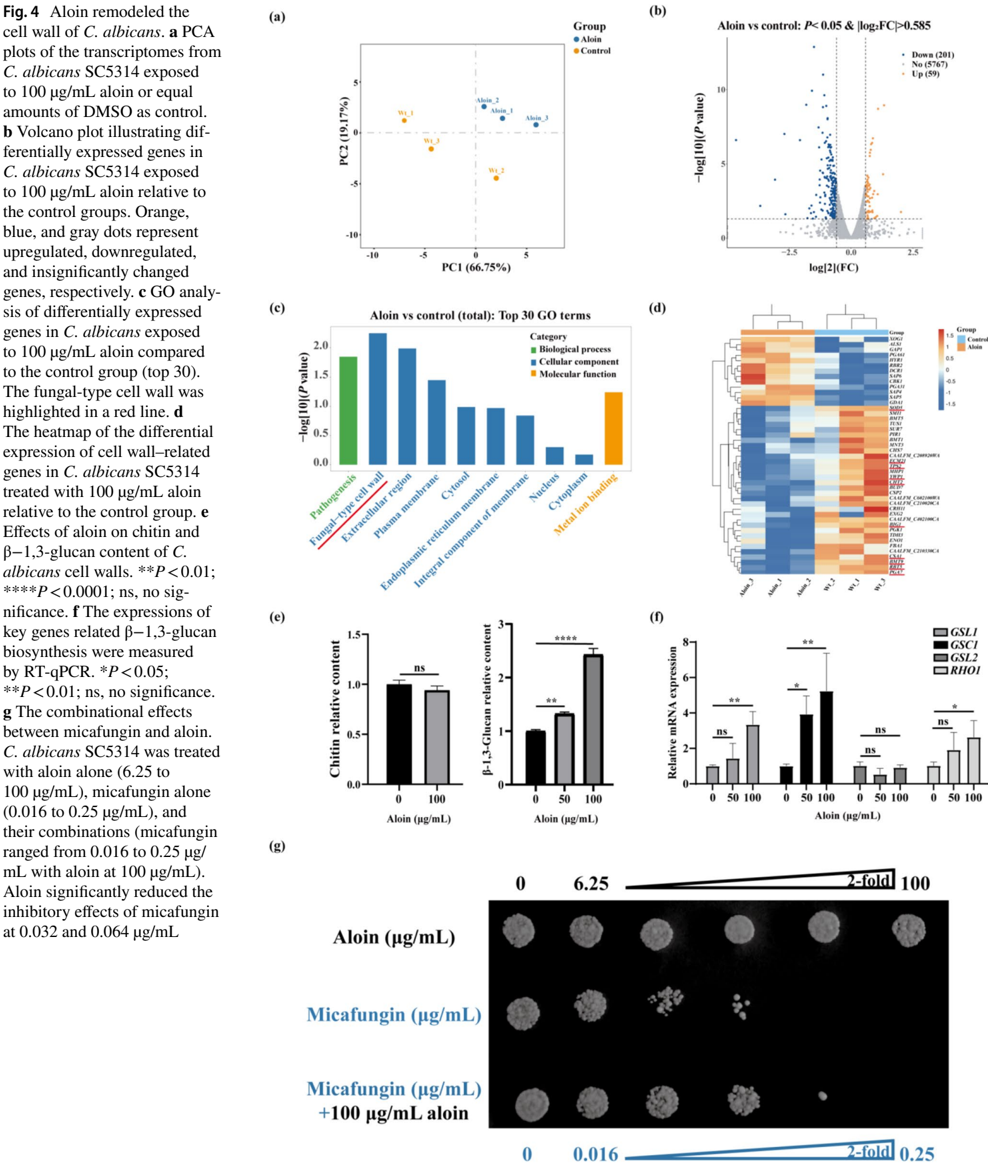
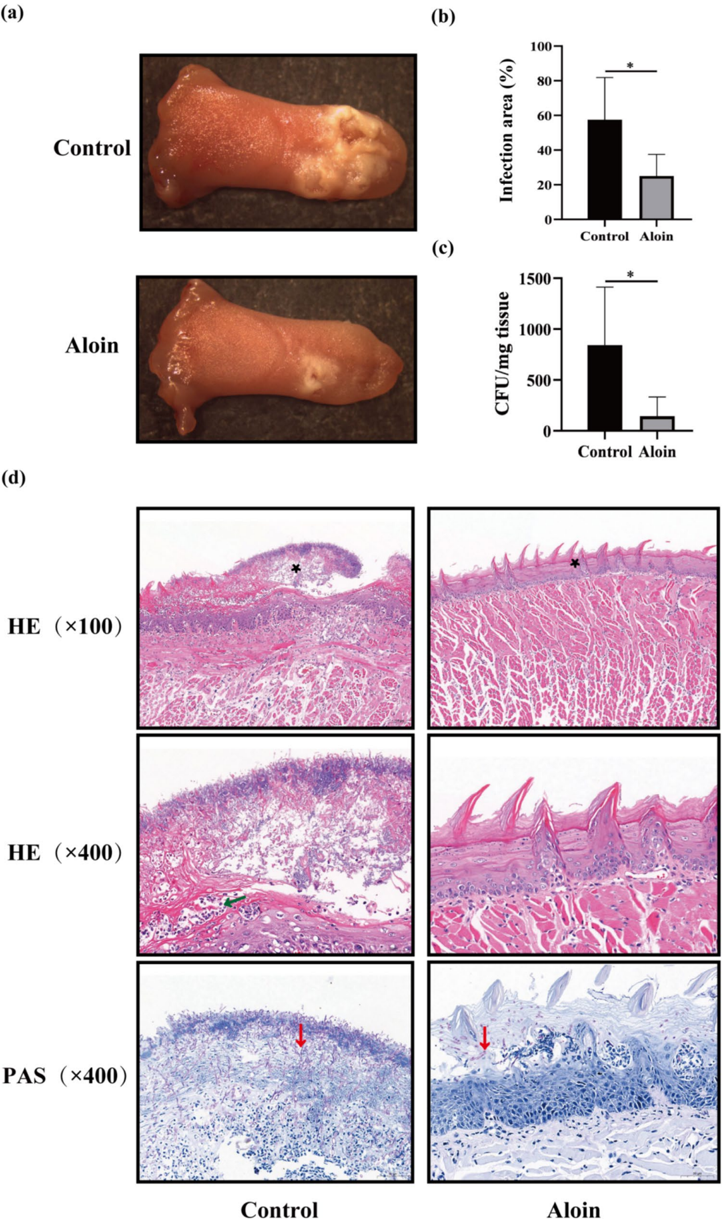
Aloe vera (L.) Burm.f. is a traditional Chinese medicine known for treating various ailments, including fungal infections. Aloin is one of the major components from A. vera, but its antifungal mechanism and therapeutic potential against oral candidiasis are not clear. This study aimed to examine the mechanism of aloin against Candida albicans and its inhibitory activity against oral candidiasis. In this study, we for the first time found that aloin could induce the formation of abnormal hyphae with smaller hyphal diameters and fewer branching points in C. albicans including 11 clinical isolates without growth inhibition. The transcriptome and further cell wall contents analysis indicated that aloin remodeled the cell wall to increase the contents of β-1,3-glucan and furtherly showed an antagonistic effect with micafungin. Aloin also significantly inhibited the cell damage of oral epithelial cells and oral candidiasis in mice infected by C. albicans due to its inhibitory actions on the hyphal development and expressions of virulence factors, including candidalysin (coded by ECE1). Our results suggest that aloin is a promising antifungal agent for controlling candidiasis and targeting hyphal development and pathogenesis represents a practical strategy for developing new antifungal drugs. KEY POINTS: • Aloin remodels the C. albicans cell wall to form avirulent hyphae. • Aloin inhibits C. albicans infections in oral epithelial cells and mouse mucosa without toxicity. • Aloin is a promising antifungal agent with therapeutic potential against C. albicans infections.
Overview
The claims and statistics of this paper haven’t been checked yet.
Free: it reads the open-access text and checks the first 5 claims that cite a source we can check. Create a free account to check every claim.
Integrity signals
Registry
Cites
Statistics
Figures
Verification
Claims the paper makes
The claims and statistics of this paper haven’t been checked yet.
Free: it reads the open-access text and checks the first 5 claims that cite a source we can check. Create a free account to check every claim.
Claims other papers make about this one
Each is checked against this paper’s own text: does it say what the citing paper says it does?
The source backs part of the claim, not all of it — or backs it for a different population, condition or comparison.
In the citing paper
“Aloe extracts have been reported to inhibit the growth, hyphal development, and biofilm formation of C. albicans (Gao et al. 2019; Liao et al. 2025).”
From Aloe emodin disrupts Candida albicans mitochondrial iron homeostasis against its hyphal development and oral candidiasis (2026) · cites this paper as Liao et al. 2025
Experimental — accuracy not yet measured
Self-check
Percentages, sums and reported differences re-computed from the paper’s own numbers.
The self-check needs the paper’s full text.
Citations
Cites
Quintin, J., Saeed, S., Martens, J. H. A., Giamarellos-Bourboulis, E. J., Ifrim, D. C., Logie, C., Jacobs, L., Jansen, T., Kullberg, B.-J., Wijmenga, C., et al. (2012) · Cell Host & Microbe · doi:10.1016/j.chom.2012.06.006 · Cited by 1,289 · cited 1×
“Since dectin-1 from macrophage could recognize β-glucan from the C. albicans cell wall to regulate antifungal immunity (Quintin et al. 2012), we next evaluated the effects of aloin on macrophage phagocytosis.”
Denning, D. W. (2003) · The Lancet · doi:10.1016/s0140-6736(03)14472-8 · Cited by 1,131 · cited 2×
“…only a small fraction of the cell wall, is essential for maintaining the overall wall integrity of C. albicans (Ren et al. 2022). β-Glucan, accounting for a substantial portion of the yeast cell wall, is the main structural polysaccharide (Denning 2003). β−1,3-Glucan, specifically, represents a…”
Growth of Candida albicans hyphae
Sudbery, P. E. (2011) · Nature Reviews Microbiology · doi:10.1038/nrmicro2636 · Cited by 1,110 · cited 2×
“The cell wall is equally essential in hyphal branching, as its synthesis and remodeling at branching points provide the structural foundation for branch formation (Harris 2008; Sudbery 2011).”
Candidalysin is a fungal peptide toxin critical for mucosal infection
Moyes, D. L., Wilson, D., Richardson, J. P., Mogavero, S., Tang, S. X., Wernecke, J., Höfs, S., Gratacap, R. L., Robbins, J., Runglall, M., et al. (2016) · Nature · doi:10.1038/nature17625 · Cited by 942 · cited 3×
“C . albicans presents a round or ovoid yeast form commensally; however, it can transform to hyphal forms to invade and damage host mucosal tissues, evade immune cell phagocytosis, and express hyphal-specific virulence factors (Liang et al. 2024; Moyes et al. 2016; Witchley et al. 2019).”
SymMap: an integrative database of traditional Chinese medicine enhanced by symptom mapping
Wu, Y., Zhang, F., Yang, K., Fang, S., Bu, D., Li, H., Sun, L., Hu, H., Gao, K., Wang, W., et al. (2019) · Nucleic Acids Research · doi:10.1093/nar/gky1021 · Cited by 561 · cited 1×
“TCM emerges as a promising candidate for anti-virulence therapy, owing to its diverse chemical composition, safety profile, low toxicity, and limited propensity for resistance (Wu et al. 2019; Ye et al. 2020).”
Self-citationA pan-cancer mycobiome analysis reveals fungal involvement in gastrointestinal and lung tumors
Dohlman, A. B., Klug, J., Mesko, M., Gao, I. H., Lipkin, S. M., Shen, X., & Iliev, I. D. (2022) · Cell · doi:10.1016/j.cell.2022.09.015 · Cited by 413 · cited 1×
“Candida albicans is the primary pathogen of oral candidiasis (d’Enfert et al. 2021) and one of the most abundance fungal species of intratumoral fungi in head and neck squamous cell carcinoma (HNSC) (Dohlman et al. 2022).”
d'Enfert, C., Kaune, A.-K., Alaban, L.-R., Chakraborty, S., Cole, N., Delavy, M., Kosmala, D., Marsaux, B., Fróis-Martins, R., Morelli, M., et al. (2021) · FEMS Microbiology Reviews · doi:10.1093/femsre/fuaa060 · Cited by 347
The rapid emergence of antifungal-resistant human-pathogenic fungi
Lockhart, S. R., Chowdhary, A., & Gold, J. A. W. (2023) · Nature Reviews Microbiology · doi:10.1038/s41579-023-00960-9 · Cited by 308 · cited 1×
“However, the available antifungal agents are limited, raising concerns about their toxic side effects and the growing prevalence of antifungal resistance (Howard et al. 2020; Kriegl et al. 2024; Lockhart et al. 2023).”
Martchenko, M., Alarco, A.-M., Harcus, D., & Whiteway, M. (2004) · Molecular Biology of the Cell · doi:10.1091/mbc.e03-03-0179 · Cited by 290 · cited 1×
“SOD5 protects C. albicans from reactive oxygen species (ROS) produced by the host’s immune response, regulates the transition from yeast to hyphal form, and maintains its virulence (Martchenko et al. 2004).”
The regulation of hyphae growth in Candida albicans
Chen, H., Zhou, X., Ren, B., & Cheng, L. (2020) · Virulence · doi:10.1080/21505594.2020.1748930 · Cited by 277 · cited 1×
“The hyphae of C. albicans are proven to be the most important virulence factor for its pathogenesis (Chen et al. 2020; Liao et al. 2021), while targeting its hyphal development is a practical strategy to inhibit its virulence and pathogenesis (Liang et al. 2023; Wang et al. 2024; Zhou et al. 2018).”
Self-citation
Cited by
Li, R., Yang, X., Dan, W., & Dai, J. (2025) · Bioorganic & Medicinal Chemistry · doi:10.1016/j.bmc.2025.118435 · Cited by 9
Flondor, A.-E., Șufaru, I.-G., Mârțu, M.-A., Toma, V., Burlea, L. Ş., & Mârţu, I. (2025) · Children · doi:10.3390/children12111426 · Cited by 2
“Studies report fungal growth inhibition, reduced inflammation, and improved mucosal healing [22].”
Shen, J., Zhang, C., Lin, Y., Zhang, C., Zhou, J., Zhou, Y., Gou, L., Liao, G., Zhu, Z., Cheng, L., et al. (2026) · Applied Microbiology and Biotechnology · doi:10.1007/s00253-026-13740-1
“Our previous studies demonstrated that aloin significantly reduces the pathogenicity of C. albicans by remodeling the fungal cell wall and inducing the formation of abnormal hyphae (Liao et al. 2025).”
InfluentialSelf-citationPhytochemical Analysis and Antifungal Activity of Aloe vera Extract Against Candida albicans
Sawalha, H., Yousef, H., Shalabi, R., Hamamreh, R., Kmail, A. Y., & Qoraan, I. (2025) · Scientifica · doi:10.1155/sci5/4496097 · Cited by 1
“Aloin, a glycoside of aloe-emodin in the matrix part of A. vera, demonstrates antifungal properties by altering the β -1,3-glucan component of hyphae in C. albicans, specifcally resistant strains, thereby diminishing its virulence [60].”
Naquvi, K. J., Salma, A., Anjum, V., Pandey, S., Khan, A., Simrah, M., & Joshi, S. (2026) · Food Research International · doi:10.1016/j.foodres.2026.120041
Metadata
- Authors
- Liao, B., Zhang, C., Shen, J., Chen, D., Wang, J., Chen, X., Zhou, Y., Wei, Y., Shi, Y., Gou, L., Guo, Q., Zhou, X., Xie, H., Zhao, L., Liao, G., Zhu, Z., Cheng, L., Zhou, X., Li, Y., & Ren, B.
- Affiliations
- Sichuan University (CN)
- Corresponding author
- Li, Yan
- Ren, Biao
- ORCID
- Venue
- Applied Microbiology and Biotechnology
- Published
- 2025-01-24
- Volume
- 109
- Issue
- 1
- Pages
- 21-21
- ISSN
- 0175-7598 (ISSN-L)
- 1432-0614
- OpenAlex
- W4406781883
- Cited by
- 7
- References
- 71
- Citations by year
- 2026: 4 · 2025: 3
- FWCI
- 5.35
- Type
- journal article
- Language
- en
- Open access
- gold
- doi.org
- Licence
- cc-by-nc-nd
- creativecommons.org/licenses/by-nc-nd/4.0 (tdm)
- creativecommons.org/licenses/by-nc-nd/4.0 (vor)
- Locations
- Applied Microbiology and Biotechnology (publishedVersion, cc-by-nc-nd)
- PubMed Central (publishedVersion, cc-by-nc-nd)
- PubMed (publishedVersion)
- DOAJ (DOAJ: Directory of Open Access Journals) (submittedVersion, cc-by-sa)
- Funders
- National Natural Science Foundation of China (81991500, 81991501, 81991502, 82201046, 32071462, 32470205)
- Natural Science Foundation of Sichuan Province (2024NSFSC0546)
- Sichuan Provincial Health Committee Research Grant (150115)
- Health Commission of Sichuan Province (chuanganyan 2024-901)
- Topics
- Health Sciences › Medicine › Infectious Diseases › Antifungal resistance and susceptibility
- Life Sciences › Agricultural and Biological Sciences › Plant Science › Phytochemistry and biological activity of medicinal plants
- Life Sciences › Biochemistry, Genetics and Molecular Biology › Molecular Biology › Fungal and yeast genetics research
- Keywords
- aloin, Aloe vera, Candida albicans, oral candidiasis, hyphal development, β-1,3-glucan, candidalysin, endothelin-converting enzyme-1, antifungal agents, virulence factors, mouse infection model
- MeSH terms
- Micafungin, Animals, Antifungal Agents, Candida albicans, Candidiasis, Oral, Cell Wall, Disease Models, Animal, Emodin, Epithelial Cells, Female, Fungal Proteins, Humans, Mice, Inbred BALB C, Virulence, Hyphae, Virulence Factors, beta-Glucans, Mice
About these checks
Registry, retraction, Cites and statistics results are computed, not judged, with one exception: a printed reference that no index lists is read once by a model before it counts as a citation error. Claims are extracted by a model and kept only when their quote appears verbatim in the text; each cited source is then checked, with a model’s help, for whether it says what the claim relies on. Those verdicts can be wrong — read the claim’s quote and the cited source before relying on one.
Statistics and arithmetic are recomputed, not judged.
Confidence bands are shown only for fields calibrated on our annotated test set. None is calibrated yet, so no band is shown.
What counts as a claim ›How we measure confidence ›How we check this ›
Are you an author, or do you see a problem with this page? Request a review
How to cite
Cite CoChat for the checks on this page, and the paper for its own findings.
- This page
- CoChat. (2026). Citation check: Aloin remodels the cell wall of Candida albicans to reduce its hyphal virulence against oral candidiasis. https://app.cochat.ai/papers/10.1007/s00253-025-13411-7
- The paper
- Liao, B., Zhang, C., Shen, J., Chen, D., Wang, J., Chen, X., Zhou, Y., Wei, Y., Shi, Y., Gou, L., Guo, Q., Zhou, X., Xie, H., Zhao, L., Liao, G., Zhu, Z., Cheng, L., Zhou, X., Li, Y., & Ren, B. (2025). Aloin remodels the cell wall of Candida albicans to reduce its hyphal virulence against oral candidiasis. Applied Microbiology and Biotechnology. https://doi.org/10.1007/s00253-025-13411-7
Data sources
Bibliographic data: Semantic Scholar, OpenAlex, Crossref.
Contains information from the Semantic Scholar Academic Graph Datasets, made available under the ODC Attribution License (ODC-BY 1.0).
Semantic Scholar’s data is described in: Kinney, R., et al. (2023). The Semantic Scholar Open Data Platform. arXiv:2301.10140.
