

Serum levels of the IL-6 family of cytokines predict prognosis in renal cell carcinoma (RCC)
Open accessThe DOI matches its Crossref record; 46 of the 46 references it cites were found in a registry or an index.
Abstract
Purpose: An improved understanding of RCC immunology should shed further light on RCC tumor biology. Our objective was to study to what extent serum levels of the IL-6 family of cytokines at diagnosis were relevant to survival. Methods: A total of 118 consecutively patients with RCC, in which the tumor was surgically removed at Haukeland University Hospital during the period from 2007 to 2010, were included. The patients were followed-up for 10 years. The morning before surgery blood was sampled and serum frozen, with levels of IL-6, IL-27, IL-31, OSM, CNTF, IL-6Rα and gp130 determined. Results: Among patients with the highest quartile of IL-6 (> 8 pg/ml) (n = 29), six of nine who had metastasis at diagnosis had such high IL-6 values. Among presumed radically treated patients, a high IL-6 and IL-27 strongly predicted recurrence. In particular, the predictions among patients with large (diameter > 7 cm) tumors were excellent regarding both IL-6 and IL-27 values. High gp130 serum levels predicted an overall survival (OS) among RCC patients with large tumors. Patients with a high IL-6 exhibited a strong expression of IL-6 in endothelial- and vascular smooth muscle cells. Moreover, the level of intra-tumoral CD3-positive cells predicted survival. Conclusions: IL-6 and IL-27 seem to play a role in RCC biology. IL-6 enables the pinpointing of metastatic condition at diagnosis, as well as together with IL-27, the predicting of survival and recurrence. Endothelial cells and vascular smooth muscle cells are both suggested as important sources of IL-6.
Overview
The claims and statistics of this paper haven’t been checked yet.
Free: it reads the open-access text and checks the first 5 claims that cite a source we can check. Create a free account to check every claim.
Integrity signals
Registry
Cites
Statistics
Figures
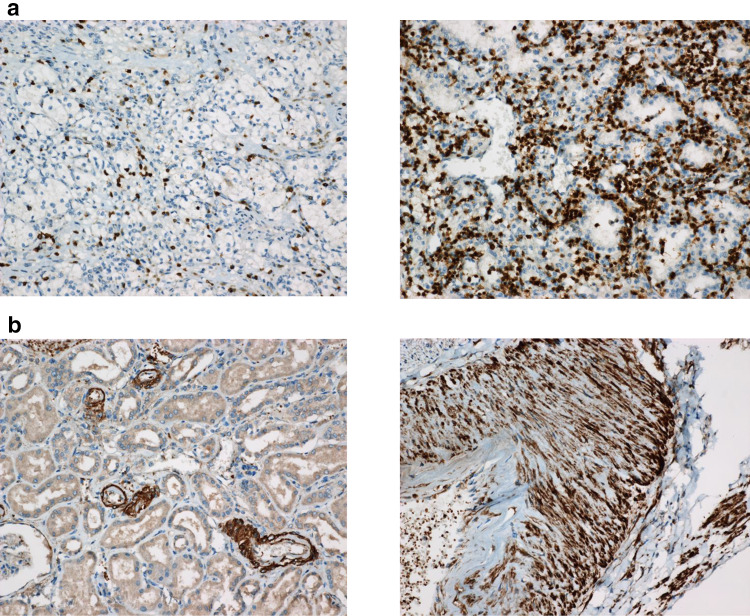
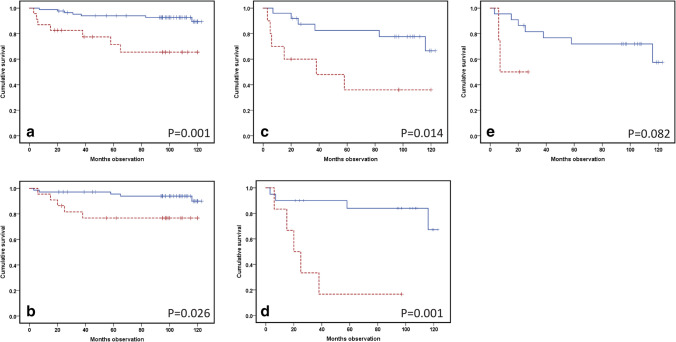
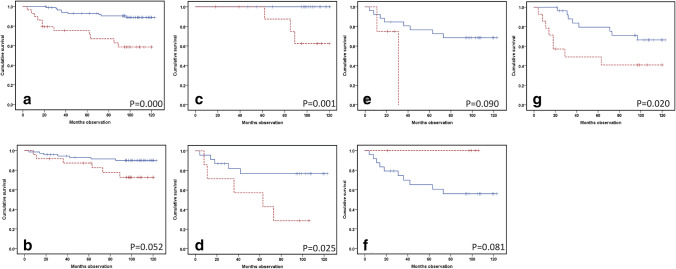
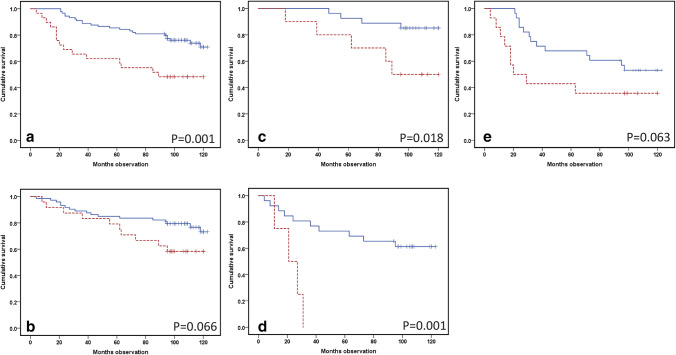
Verification
Claims the paper makes
The claims and statistics of this paper haven’t been checked yet.
Free: it reads the open-access text and checks the first 5 claims that cite a source we can check. Create a free account to check every claim.
Self-check
Percentages, sums and reported differences re-computed from the paper’s own numbers.
The self-check needs the paper’s full text.
Citations
Cites
Bray, F., Ferlay, J., Soerjomataram, I., Siegel, R. L., Torre, L. A., & Jemal, A. (2018) · CA: A Cancer Journal for Clinicians · doi:10.3322/caac.21492 · Cited by 84,109 · cited 1×
“In 2018, 175,098 deaths by RCC were estimated, making it the 14th most common cause of global cancer deaths [2].”
BackgroundAllemani, C., Matsuda, T., Di Carlo, V., Harewood, R., Matz, M., Nikšić, M., Bonaventure, A., Valkov, M., Johnson, C. J., Estève, J., et al. (2018) · The Lancet · doi:10.1016/s0140-6736(17)33326-3 · Cited by 6,145 · cited 1×
“Cancer diseases are major global killers of humans [1]; thus, there is an urgent need to better understand these diseases.”
BackgroundPrognostic significance of morphologic parameters in renal cell carcinoma
Fuhrman, S. A., Lasky, L. C., & Limas, C. (1982) · The American Journal of Surgical Pathology · doi:10.1097/00000478-198210000-00007 · Cited by 2,724 · cited 1×
“Patients were staged according to the 2009 TNM classification system, and the tumor histology was graded according to the Fuhrman nuclear criteria [23].”
MethodYang, J. C., Haworth, L., Sherry, R. M., Hwu, P., Schwartzentruber, D. J., Topalian, S. L., Steinberg, S. M., Chen, H. X., & Rosenberg, S. A. (2003) · New England Journal of Medicine · doi:10.1056/nejmoa021491 · Cited by 2,697 · cited 1×
“, VEGF inhibitors [37], as well as with anti-IL-6 therapy such as Siltuximab [38].”
BackgroundVascular Endothelial Growth Factor
Ferrara, N. (2009) · Arteriosclerosis, Thrombosis, and Vascular Biology · doi:10.1161/atvbaha.108.179663 · Cited by 1,283 · cited 1×
“Endothelial cells are presumably stimulated by VEGF from the tumor [31], with this representing a possible loop where the tumor may become autocrine stimulated.”
BackgroundRecent insights into targeting the IL-6 cytokine family in inflammatory diseases and cancer
Jones, S. A., & Jenkins, B. J. (2018) · Nature Reviews Immunology · doi:10.1038/s41577-018-0066-7 · Cited by 1,102 · cited 2×
“The receptor signaling complexes for IL-6 and IL-11 contain a gp130 homodimer, whereas other family members signal via a heterodimeric receptor complex containing gp130 [13].”
BackgroundIL-6/IL-6 receptor system and its role in physiological and pathological conditions
Mihara, M., Hashizume, M., Yoshida, H., Suzuki, M., & Shiina, M. (2012) · Clinical Science · doi:10.1042/cs20110340 · Cited by 895 · cited 2×
“, macrophages, Th2 cells, B cells, astrocytes, endothelial cells, adipocytes and some tumor cells [6].”
BackgroundInterleukin-6 Family Cytokines
Rose-John, S. (2018) · Cold Spring Harbor Perspectives in Biology · doi:10.1101/cshperspect.a028415 · Cited by 799 · cited 1×
“These cytokines are collectively named the IL-6 family of cytokines [8, 12], which has several members, including IL-11, IL-27, IL-31, ciliary neurotrophic factor (CNTF), leukemia inhibitory factor (LIF), oncostatin M (OSM) and cardiotrophin-like cytokine factor 1 (CLC) [13].”
BackgroundIL-6 and related cytokines as the critical lynchpins between inflammation and cancer
Taniguchi, K., & Karin, M. (2014) · Seminars in Immunology · doi:10.1016/j.smim.2014.01.001 · Cited by 716 · cited 2×
“These findings support that a high cytokine value points to a biologically aggressive tumor, more than a low differentiated tumor [8, 10, 24].”
BackgroundPleiotropy and specificity: insights from the interleukin 6 family of cytokines
Murakami, M., Kamimura, D., & Hirano, T. (2019) · Immunity · doi:10.1016/j.immuni.2019.03.027 · Cited by 533 · cited 1×
“Soluble gp130 binds the soluble IL-6/IL-6Rα complex [29], and presumably acts as an IL-6/IL-6Rα decoy receptor [28].”
Background
Cited by
Kartikasari, A. E. R., Huertas, C. S., Mitchell, A., & Plebanski, M. (2021) · Frontiers in Oncology · doi:10.3389/fonc.2021.692142 · Cited by 343
“For example in renal cell carcinoma, a high IL-6 correlates to cancer metastasis, while high IL-6 and IL-17 measurements predict cancer recurrence following radical treatment (98).”
BackgroundLi, M., Li, L., Zheng, J., Li, Z., Li, S., Wang, K., & Chen, X. (2023) · Molecular Cancer · doi:10.1186/s12943-023-01745-7 · Cited by 93
“Meanwhile, IL-8 binds to IL-8R to recruit immune cells to influence the tumor microenvironment (TME), thereby inhibiting anti-tumor immune function [121].”
BackgroundInfluentialInflammatory Networks in Renal Cell Carcinoma
Kruk, L., Mamtimin, M., Braun, A., Anders, H., Andrassy, J., Gudermann, T. W., & Mammadova‐Bach, E. (2023) · Cancers · doi:10.3390/cancers15082212 · Cited by 64
SERS-based self-calibrating aptamer sensor for selective detection of IL-6
Huang, Q., Chen, X., Fan, M., Ruan, S., Peng, S., You, R., Chen, J., & Lu, Y. (2022) · Sensors and Actuators B Chemical · doi:10.1016/j.snb.2022.132828 · Cited by 43
Rappold, P. M., Vuong, L. H., Leibold, J., Chakiryan, N. H., Curry, M., Kuo, F., Sabio, E. Y., Jiang, H., Nixon, B. G., Liu, M., et al. (2022) · Cancer Discovery · doi:10.1158/2159-8290.cd-21-0925 · Cited by 38
Single‐cell analysis reveals metastatic cell heterogeneity in clear cell renal cell carcinoma
Liu, K., Gao, R., Wu, H., Wang, Z., & Han, G. (2021) · Journal of Cellular and Molecular Medicine · doi:10.1111/jcmm.16479 · Cited by 33
Wang, X., Li, J., Liu, W., Zhang, X., & Xue, L. (2021) · Medicine · doi:10.1097/md.0000000000027945 · Cited by 25
Sang, Y. B., Yang, H., Lee, W. S., Lee, S. J., Kim, S., Cheon, J., Kang, B., Kim, C. W., Chon, H. J., & Kim, C. (2022) · Cancers · doi:10.3390/cancers14235985 · Cited by 29
Esteban, E., Expósito, F., Crespo, G., Lambea, J., Pinto, Á., Puente, J., Arranz, J. Á., Redrado, M., Rodríguez‐Antona, C., de Andrea, C., et al. (2021) · Cancers · doi:10.3390/cancers13112849 · Cited by 20
“Several other studies have shown that blood levels of IL-8 and IL-6 are increased and are associated with poor prognosis in RCC patients, as well as their role in promoting angiogenesis and suppressing the cytotoxic effect of immune cells [18,19].”
BackgroundBouaouiche, S., Ghione, S., Sghaier, R., Burgy, O., Racoeur, C., Dérangère, V., Bettaïeb, A., & Plenchette, S. (2021) · International Journal of Molecular Sciences · doi:10.3390/ijms22168449 · Cited by 22
“Various clinical studies have correlated high circulating IL-6 levels in patients with malignant tumors, as for breast cancer [12,13], prostate cancer [14], head and neck squamous cell carcinoma [15] or renal cancer [16].”
BackgroundRozenberg, J. M., Buzdin, A. A., Mohammad, T., Rakitina, O. A., Didych, D. A., Pleshkan, V. V., & Алексеенко, И. В. (2023) · Frontiers in Immunology · doi:10.3389/fimmu.2023.1099921 · Cited by 17
“Likewise, pre-clinical investigations revealed that targeting of the IL6 signaling might be beneficial for other cancers as well, where bad prognosis is associated with high IL6 level such as renal cell carcinoma (131, 132), non-small cell lung cancer (133), and breast cancer (134).”
BackgroundHarnessing IL-27: challenges and potential in cancer immunotherapy
Maleki, A. H., Rajabivahid, M., Khosh, E., Khanali, Z., Tahmasebi, S., & Ghorbi, M. D. (2025) · Clinical and Experimental Medicine · doi:10.1007/s10238-025-01562-w · Cited by 15
“Their reports show that high serum levels of IL-27 are a predictive marker for recurrence and survival [155].”
Advances in research on malignant tumors and targeted agents for TOP2A (Review)
Zhou, T., Niu, Y., & Li, Y. (2024) · Molecular Medicine Reports · doi:10.3892/mmr.2024.13415 · Cited by 29
“Renal cell carcinoma (RCC). rcc originates from the renal cortex, and is identified as the 9th most prevalent cancer among men, and the 14th among women (105,106).”
Babl, N., Voll, F., Martowicz, A., Bruß, C., Maddaloni, M., Schmidl, C., Rehli, M., Loipfinger, S., Strieder, N., Gebhard, C., et al. (2025) · Cancer Letters · doi:10.1016/j.canlet.2025.218209 · Cited by 12
“High concentrations of IL-6 in the TME and blood of RCC patients were correlated with worse survival [30 – 33] and it has also been shown that macrophages isolated from RCC tumors produce considerable amounts of IL-6 [28].”
Lindgaard, S. C., Maag, E., Sztupinszki, Z. M., Chen, I. M., Johansen, A. Z., Jensen, B. V., Bojesen, S. E., Nielsen, D. L., Szállási, Z., & Johansen, J. S. (2022) · Cancers · doi:10.3390/cancers14133250 · Cited by 11
Liquid biopsy for renal cell carcinoma
Rajandram, R., Raj, T. L. S., Gobe, G. C., & Kuppusamy, S. (2024) · Clinica Chimica Acta · doi:10.1016/j.cca.2024.119964 · Cited by 8
Li, J., Cao, J., Li, P., Deng, R., Yao, Z., Ying, L., & Tian, J. (2022) · International Journal of General Medicine · doi:10.2147/ijgm.s341801 · Cited by 8
“IL6 is a cytokine produced by the immune and some tumor cells and is related to tumor proliferation and metastasis.(59,60) These results were consistent with our findings as IL6 was highly expressed in grade 4 and stage 4.”
ResultImmune analysis of urine and plasma samples from patients with clear cell renal cell carcinoma
Vargová, D., Dargaj, J., Dohál, M., Fraňová, S., Ľupták, J., Škorňová, I., Švihra, J., Briš, L., Slávik, P., & Šútovská, M. (2024) · Oncology Letters · doi:10.3892/ol.2024.14414 · Cited by 7
“High levels of IL‑6 in serum and its prognostic value have also been reported in patients with RCC (16,57‑60).”
BackgroundMathematical and Machine Learning Models of Renal Cell Carcinoma: A Review
Sofia, D., Zhou, Q., & Shahriyari, L. (2023) · Bioengineering · doi:10.3390/bioengineering10111320 · Cited by 7
“Moreover, researchers have attempted to predict patient outcomes and improve treatment options for patients using various models and findings [21,36,40,45,47,62–73].”
BackgroundKamli, H. M., Owens, E. P., Vesey, D. A., Rajagopalan, P., Li, L., Gobe, G. C., & Morais, C. (2021) · Biochemical and Biophysical Research Communications · doi:10.1016/j.bbrc.2021.11.069 · Cited by 7
Pu, N., Chen, Q., Zhang, J., Yin, H., Wang, D., Ji, Y., Rao, S., Kuang, T., Xu, X., Wu, W., et al. (2022) · Cancer Medicine · doi:10.1002/cam4.5051 · Cited by 7
Aarstad, H. H., Moe, S. E., Lybak, S., Bruserud, Ø., Tvedt, T. H. A., & Aarstad, H. J. (2024) · Cancers · doi:10.3390/cancers16081484 · Cited by 6
“Additionally, in a more individualized analysis that excludes patients with other explanatory causes for high IL-6 values, one could even potentially improve this prognostic factor [64].”
BackgroundSelf-citationPersonalized treatment using predictive biomarkers in solid organ malignancies: A review
Tang, H., Li, Y. X., Lian, J. J., Ng, H.-Y., & Wang, S. S. Y. (2024) · Tumori Journal · doi:10.1177/03008916241261484 · Cited by 5
Identification of novel biomarkers in renal cell carcinoma
Fernandes‐Pontes, F., Lobo, J., Jerónimo, C., & Henrique, R. (2025) · Expert Review of Molecular Diagnostics · doi:10.1080/14737159.2025.2518134 · Cited by 5
“Interestingly, IL-6 and IL-8 play a prognostic and predictive role since their increased levels have been associated with angiogenesis and, consequently, with poorer prognosis [38,39].”
Patient-Specific Mathematical Model of the Clear Cell Renal Cell Carcinoma Microenvironment
Sofia, D., Mirzaei, N. M., & Shahriyari, L. (2022) · Journal of Personalized Medicine · doi:10.3390/jpm12101681 · Cited by 7
Influence of Body Composition on the Perioperative and Survival Outcomes of Renal Cell Carcinoma
Nicaise, E., Schmeusser, B. N., Shah, Y., Bilen, M. A., Ogan, K., & Master, V. A. (2023) · Journal of Urologic Oncology · doi:10.22465/juo.234600500025 · Cited by 5
Paul, I., Roy, A., & Ray, S. (2023) · Chemistry & Biodiversity · doi:10.1002/cbdv.202300806 · Cited by 4
Guðbrandsdottir, G., Aarstad, H. H., Hjelle, K. M., Førde, K., Reisæter, L. A. R., Bostad, L. H., Aarstad, H. J., & Beisland, C. (2021) · Cytokine · doi:10.1016/j.cyto.2021.155586 · Cited by 3
Self-citationKobatake, K., Ikeda, K., Teishima, J., Sekino, Y., Babasaki, T., Kohada, Y., Tasaka, R., Takemoto, K., Fukushima, T., Miyamoto, S., et al. (2022) · Frontiers in Oncology · doi:10.3389/fonc.2022.1039383 · Cited by 3
Cechim, G., Ellwanger, J. H., Kaminski, V. D. L., Berger, M., & Chies, J. A. B. (2021) · Clinical & Biomedical Research · doi:10.22491/2357-9730.108350 · Cited by 1
Mukai, Y., Taira, N., Kitaguchi, Y., Nakagiri, R., Saiga, M., Kochi, M., Iwamoto, T., Shien, T., Doihara, H., & Kimata, Y. (2023) · Surgery Today · doi:10.1007/s00595-023-02700-1 · Cited by 1
“In renal cell carcinoma patients, a high postoperative IL-6 level is a strong predictor of recurrence, and IL-6 also predicts disease-specific survival and overall survival (OS) [7].”
BackgroundThe role of G-proteins and G-protein-coupledreceptors in human disease
Xian, Y. (2023) · MedScien · doi:10.61173/d7dc6a45
Tsimafeyeu, I. V., Мусаева, Г. А., Utyashev, I. A., Александровна, З. К., Gerk, I., Olshanskaya, A. S., Mahmudova, S., Otkhozoria, N., Волкова, М. И., & Митин, Т. (2023) · Kidney Cancer · doi:10.3233/kca-230007 · Cited by 1
“More than a half of patients with mRCC have increased levels of circulating IL-6, which also correlates with increased C-reactive protein levels [23].”
Tan, H.-T., Ma, C., Sun, C.-H., Sun, S., Zhang, M.-X., & Wang, J.-F. (2025) · APOPTOSIS · doi:10.1007/s10495-025-02126-9 · Cited by 1
Nanofiber-based diagnostics for cancer inflammation
Kaur, J., Konar, A., Ghosh, P., Barwant, M. M., & Kadyan, P. (2025) · Elsevier eBooks · doi:10.1016/b978-0-443-27745-0.00009-0 · Cited by 1
Metadata
- Authors
- Gudbrandsdottir, G., Aarstad, H. H., Bostad, L., Hjelle, K. M., Aarstad, H. J., Bruserud, Ø., Tvedt, T. H. A., & Beisland, C.
- Affiliations
- University of Bergen (NO)
- Haukeland University Hospital (NO)
- ORCID
- Venue
- Cancer Immunology, Immunotherapy
- Published
- 2020-07-03
- Volume
- 70
- Issue
- 1
- Pages
- 19-30
- ISSN
- 0340-7004 (ISSN-L)
- 1432-0851
- PMC
- PMC7838134
- OpenAlex
- W3038844630
- Cited by
- 35
- References
- 46
- Citations by year
- 2025: 5 · 2024: 5 · 2023: 9 · 2022: 8 · 2021: 8
- FWCI
- 3.52
- Type
- journal article
- Language
- en
- Open access
- hybrid
- doi.org
- Licence
- cc-by
- creativecommons.org/licenses/by/4.0 (tdm)
- creativecommons.org/licenses/by/4.0 (vor)
- Locations
- Cancer Immunology Immunotherapy (publishedVersion, cc-by)
- PubMed Central (publishedVersion, cc-by)
- PubMed (publishedVersion)
- NORA - Norwegian Open Research Archives (submittedVersion, cc-by)
- Funders
- Universitetet i Bergen
- Topics
- Health Sciences › Medicine › Oncology › Renal cell carcinoma treatment
- Life Sciences › Immunology and Microbiology › Immunology › Cytokine Signaling Pathways and Interactions
- Health Sciences › Medicine › Surgery › Bladder and Urothelial Cancer Treatments
- Keywords
- renal cell carcinoma, interleukin-6, IL-27, IL-6 family cytokines, serum cytokine levels, prognostic factors, overall survival, tumor recurrence, metastasis, tumor size, endothelial cells, vascular smooth muscle cells, IL-6 receptor alpha, gp130, ciliary neurotrophic factor, OSM, IL-31
- MeSH terms
- Aged, Carcinoma, Renal Cell, Female, Humans, Kidney Neoplasms, Male, Middle Aged, Muscle, Smooth, Vascular, Prognosis, Interleukin-6, CD3 Complex, Myocytes, Smooth Muscle, Endothelial Cells, Interleukin-27
About these checks
Registry, retraction, Cites and statistics results are computed, not judged, with one exception: a printed reference that no index lists is read once by a model before it counts as a citation error. Claims are extracted by a model and kept only when their quote appears verbatim in the text; each cited source is then checked, with a model’s help, for whether it says what the claim relies on. Those verdicts can be wrong — read the claim’s quote and the cited source before relying on one.
Statistics and arithmetic are recomputed, not judged.
Confidence bands are shown only for fields calibrated on our annotated test set. None is calibrated yet, so no band is shown.
What counts as a claim ›How we measure confidence ›How we check this ›
Are you an author, or do you see a problem with this page? Request a review
Data sources
Bibliographic data: Semantic Scholar, OpenAlex, Crossref.
Contains information from the Semantic Scholar Academic Graph Datasets, made available under the ODC Attribution License (ODC-BY 1.0).
Semantic Scholar’s data is described in: Kinney, R., et al. (2023). The Semantic Scholar Open Data Platform. arXiv:2301.10140.
