

Serum levels of the IL-6 family of cytokines predict prognosis in renal cell carcinoma (RCC)
Open accessThe DOI matches its Crossref record; 46 of the 46 references it cites were found in a registry or an index.
Abstract
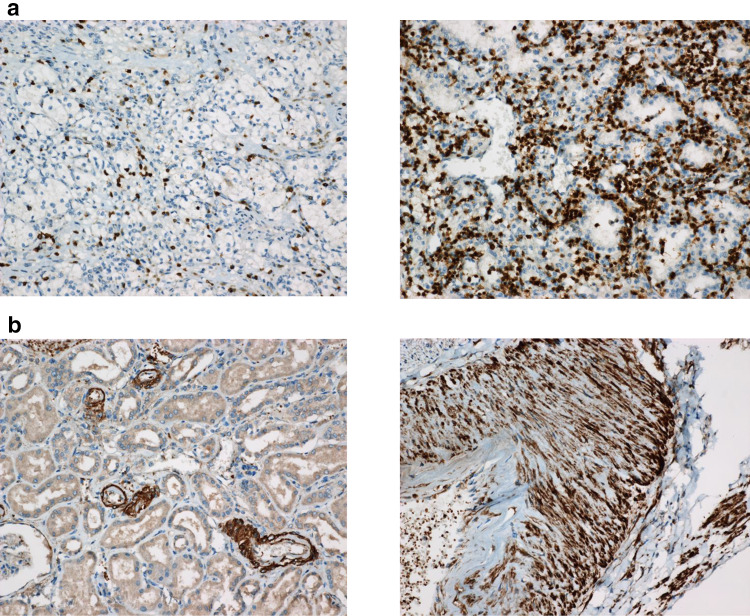
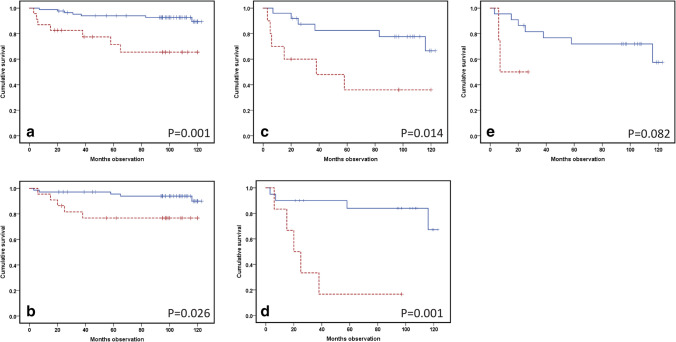
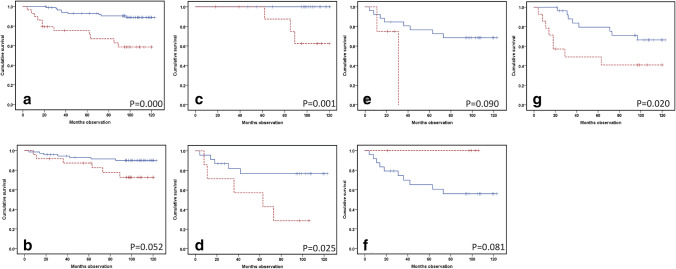
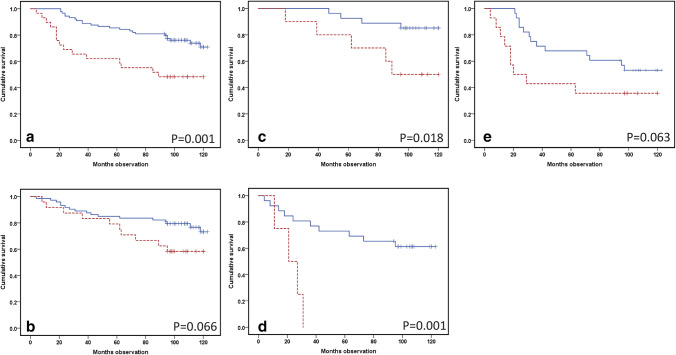
Purpose: An improved understanding of RCC immunology should shed further light on RCC tumor biology. Our objective was to study to what extent serum levels of the IL-6 family of cytokines at diagnosis were relevant to survival. Methods: A total of 118 consecutively patients with RCC, in which the tumor was surgically removed at Haukeland University Hospital during the period from 2007 to 2010, were included. The patients were followed-up for 10 years. The morning before surgery blood was sampled and serum frozen, with levels of IL-6, IL-27, IL-31, OSM, CNTF, IL-6Rα and gp130 determined. Results: Among patients with the highest quartile of IL-6 (> 8 pg/ml) (n = 29), six of nine who had metastasis at diagnosis had such high IL-6 values. Among presumed radically treated patients, a high IL-6 and IL-27 strongly predicted recurrence. In particular, the predictions among patients with large (diameter > 7 cm) tumors were excellent regarding both IL-6 and IL-27 values. High gp130 serum levels predicted an overall survival (OS) among RCC patients with large tumors. Patients with a high IL-6 exhibited a strong expression of IL-6 in endothelial- and vascular smooth muscle cells. Moreover, the level of intra-tumoral CD3-positive cells predicted survival. Conclusions: IL-6 and IL-27 seem to play a role in RCC biology. IL-6 enables the pinpointing of metastatic condition at diagnosis, as well as together with IL-27, the predicting of survival and recurrence. Endothelial cells and vascular smooth muscle cells are both suggested as important sources of IL-6.
Overview
The claims and statistics of this paper haven’t been checked yet.
Free: it reads the open-access text and checks the first 5 claims that cite a source we can check. Create a free account to check every claim.
Integrity signals
Registry
Cites
Statistics
Figures
Verification
Claims the paper makes
The claims and statistics of this paper haven’t been checked yet.
Free: it reads the open-access text and checks the first 5 claims that cite a source we can check. Create a free account to check every claim.
Self-check
Percentages, sums and reported differences re-computed from the paper’s own numbers.
The self-check needs the paper’s full text.
Citations
Cites
Bray, F., Ferlay, J., Soerjomataram, I., Siegel, R. L., Torre, L. A., & Jemal, A. (2018) · CA: A Cancer Journal for Clinicians · doi:10.3322/caac.21492 · Cited by 84,109 · cited 1×
“In 2018, 175,098 deaths by RCC were estimated, making it the 14th most common cause of global cancer deaths [2].”
BackgroundAllemani, C., Matsuda, T., Di Carlo, V., Harewood, R., Matz, M., Nikšić, M., Bonaventure, A., Valkov, M., Johnson, C. J., Estève, J., et al. (2018) · The Lancet · doi:10.1016/s0140-6736(17)33326-3 · Cited by 6,145 · cited 1×
“Cancer diseases are major global killers of humans [1]; thus, there is an urgent need to better understand these diseases.”
BackgroundPrognostic significance of morphologic parameters in renal cell carcinoma
Fuhrman, S. A., Lasky, L. C., & Limas, C. (1982) · The American Journal of Surgical Pathology · doi:10.1097/00000478-198210000-00007 · Cited by 2,724 · cited 1×
“Patients were staged according to the 2009 TNM classification system, and the tumor histology was graded according to the Fuhrman nuclear criteria [23].”
MethodYang, J. C., Haworth, L., Sherry, R. M., Hwu, P., Schwartzentruber, D. J., Topalian, S. L., Steinberg, S. M., Chen, H. X., & Rosenberg, S. A. (2003) · New England Journal of Medicine · doi:10.1056/nejmoa021491 · Cited by 2,697 · cited 1×
“, VEGF inhibitors [37], as well as with anti-IL-6 therapy such as Siltuximab [38].”
BackgroundVascular Endothelial Growth Factor
Ferrara, N. (2009) · Arteriosclerosis, Thrombosis, and Vascular Biology · doi:10.1161/atvbaha.108.179663 · Cited by 1,283 · cited 1×
“Endothelial cells are presumably stimulated by VEGF from the tumor [31], with this representing a possible loop where the tumor may become autocrine stimulated.”
BackgroundRecent insights into targeting the IL-6 cytokine family in inflammatory diseases and cancer
Jones, S. A., & Jenkins, B. J. (2018) · Nature Reviews Immunology · doi:10.1038/s41577-018-0066-7 · Cited by 1,102 · cited 2×
“The receptor signaling complexes for IL-6 and IL-11 contain a gp130 homodimer, whereas other family members signal via a heterodimeric receptor complex containing gp130 [13].”
BackgroundIL-6/IL-6 receptor system and its role in physiological and pathological conditions
Mihara, M., Hashizume, M., Yoshida, H., Suzuki, M., & Shiina, M. (2012) · Clinical Science · doi:10.1042/cs20110340 · Cited by 895 · cited 2×
“, macrophages, Th2 cells, B cells, astrocytes, endothelial cells, adipocytes and some tumor cells [6].”
BackgroundInterleukin-6 Family Cytokines
Rose-John, S. (2018) · Cold Spring Harbor Perspectives in Biology · doi:10.1101/cshperspect.a028415 · Cited by 799 · cited 1×
“These cytokines are collectively named the IL-6 family of cytokines [8, 12], which has several members, including IL-11, IL-27, IL-31, ciliary neurotrophic factor (CNTF), leukemia inhibitory factor (LIF), oncostatin M (OSM) and cardiotrophin-like cytokine factor 1 (CLC) [13].”
BackgroundIL-6 and related cytokines as the critical lynchpins between inflammation and cancer
Taniguchi, K., & Karin, M. (2014) · Seminars in Immunology · doi:10.1016/j.smim.2014.01.001 · Cited by 716 · cited 2×
“These findings support that a high cytokine value points to a biologically aggressive tumor, more than a low differentiated tumor [8, 10, 24].”
BackgroundPleiotropy and specificity: insights from the interleukin 6 family of cytokines
Murakami, M., Kamimura, D., & Hirano, T. (2019) · Immunity · doi:10.1016/j.immuni.2019.03.027 · Cited by 533 · cited 1×
“Soluble gp130 binds the soluble IL-6/IL-6Rα complex [29], and presumably acts as an IL-6/IL-6Rα decoy receptor [28].”
BackgroundSerum level of interleukin 6 as a prognosis factor in metastatic renal cell carcinoma.
Blay, J., Négrier, S., Combaret, V., Attali, S., Goillot, E., Merrouche, Y., Mercatello, A., Ravault, A., Tourani, J. M., & Jf, M. (1992) · PubMed · Cited by 420
Interleukin-6: from basic biology to selective blockade of pro-inflammatory activities
Scheller, J., Garbers, C., & Rose-John, S. (2014) · Seminars in Immunology · doi:10.1016/j.smim.2013.11.002 · Cited by 308 · cited 3×
“These cytokines are collectively named the IL-6 family of cytokines [8, 12], which has several members, including IL-11, IL-27, IL-31, ciliary neurotrophic factor (CNTF), leukemia inhibitory factor (LIF), oncostatin M (OSM) and cardiotrophin-like cytokine factor 1 (CLC) [13].”
Backgroundgp130 at the nexus of inflammation, autoimmunity, and cancer
Silver, J. S., & Hunter, C. A. (2010) · Journal of Leukocyte Biology · doi:10.1189/jlb.0410217 · Cited by 254 · cited 3×
“However, gp130 is present on most cells [28], and the increased serum soluble gp130 may be caused by generally increased tumor cellular turnover, which then basically drives the worse prognosis.”
BackgroundLippitz, B. E., & Harris, R. A. (2016) · OncoImmunology · doi:10.1080/2162402x.2015.1093722 · Cited by 248 · cited 1×
“In a review paper, the IL-6 serum level at diagnosis was significantly correlated to survival in 82/101 series, comprising 9917 out of 11,583 patients with 23 different cancer types [7].”
BackgroundPredicting Oncologic Outcomes in Renal Cell Carcinoma After Surgery
Leibovich, B. C., Lohse, C. M., Cheville, J. C., Zaid, H. B., Boorjian, S. A., Frank, I., Thompson, R. H., & Parker, W. P. (2018) · European Urology · doi:10.1016/j.eururo.2018.01.005 · Cited by 236 · cited 1×
“Leibovich is a composite score, including tumor size, pathological T and N stage, Fuhrman nuclear grading and histological necrosis [36].”
BackgroundCellular and Oxidative Mechanisms Associated with Interleukin-6 Signaling in the Vasculature
Didion, S. (2017) · International Journal of Molecular Sciences · doi:10.3390/ijms18122563 · Cited by 228 · cited 1×
“IL-6 is elevated in hypertension, as well as being associated with a higher incidence of future cardiovascular events and mortality [33].”
BackgroundInterleukin-6, tumour necrosis factor α and interleukin-1β in patients with renal cell carcinoma
Yoshida, N., Ikemoto, S., Narita, K., Sugimura, K., Wada, S., Yasumoto, R., Kishimoto, T., & Nakatani, T. (2002) · British Journal of Cancer · doi:10.1038/sj.bjc.6600257 · Cited by 182 · cited 1×
“These findings support that a high cytokine value points to a biologically aggressive tumor, more than a low differentiated tumor [8, 10, 24].”
BackgroundRossi, J.-F., Négrier, S., James, N. D., Kocak, I., Hawkins, R., Davis, H., Prabhakar, U., Qin, X., Mulders, P., & Berns, B. (2010) · British Journal of Cancer · doi:10.1038/sj.bjc.6605872 · Cited by 166 · cited 2×
“The agent Siltuximab (αIL-6) has shown promising results in phase I/II studies for metastatic RCC [38].”
BackgroundDosquet, C., Coudert, M., Lepage, É., Cabané, J., & Richard, F. (1997) · PubMed · Cited by 139
Dual Roles of IL-27 in Cancer Biology and Immunotherapy
Fabbi, M., Carbotti, G., & Ferrini, S. (2017) · Mediators of Inflammation · doi:10.1155/2017/3958069 · Cited by 135 · cited 3×
“In contrast, high serum levels of IL-27 in breast and gastroesophageal cancer are correlated with advanced stage [18].”
BackgroundInfluentialTargeting the tumor microenvironment in renal cell cancer biology and therapy
Heidegger, I., Pircher, A., & Pichler, R. (2019) · Frontiers in Oncology · doi:10.3389/fonc.2019.00490 · Cited by 133 · cited 1×
“RCC represents one of the major immunogenic carcinomas [3].”
BackgroundJiang, Y., Jiang, F., Kong, F., An, M.-M., Jin, B.-B., Cao, D., & Gong, P. (2019) · Annals of Intensive Care · doi:10.1186/s13613-019-0542-7 · Cited by 130 · cited 1×
“High IL-6 values in serum also signal a worse OS, and as such, IL-6 values are coupled with many serious diseases [32].”
BackgroundParker, W. P., Cheville, J. C., Frank, I., Zaid, H. B., Lohse, C. M., Boorjian, S. A., Leibovich, B. C., & Thompson, R. H. (2016) · European Urology · doi:10.1016/j.eururo.2016.05.034 · Cited by 125 · cited 1×
“Tumor diameter, measured by CT prior to surgery, is a strong indicator for survival [19].”
BackgroundAziz, N., Detels, R., Quint, J. J., Li, Q., Gjertson, D. W., & Butch, A. W. (2016) · Cytokine · doi:10.1016/j.cyto.2016.05.010 · Cited by 116 · cited 1×
“In particular, cytokines in the blood may have a short half-life [44], as a broader picture could have been painted with additional measuring points.”
BackgroundLjungberg, B., Grankvist, K., & Rasmuson, T. (1997) · European Journal of Cancer · doi:10.1016/s0959-8049(97)00179-2 · Cited by 97
Stenzel, P., Schindeldecker, M., Tagscherer, K. E., Foersch, S., Herpel, E., Hohenfellner, M., Hatiboglu, G., Alt, J., Thomas, C., Haferkamp, A., et al. (2019) · Translational Oncology · doi:10.1016/j.tranon.2019.11.002 · Cited by 86
Second-Line Treatment Landscape for Renal Cell Carcinoma: A Comprehensive Review
Tannir, N. M., Pal, S. K., & Atkins, M. B. (2018) · The Oncologist · doi:10.1634/theoncologist.2017-0534 · Cited by 79 · cited 1×
“Over the last few years, biological therapy has gained importance as a treatment for metastatic RCC, mostly by VEGF blockage [4].”
BackgroundNivolumab in renal cell carcinoma: latest evidence and clinical potential
Mazza, C., Escudier, B. J., & Albiges, L. K. (2016) · Therapeutic Advances in Medical Oncology · doi:10.1177/1758834016679942 · Cited by 70 · cited 1×
“Recently, modern immune therapy has also been introduced [5].”
BackgroundLamertz, L., Rummel, F., Polz, R., Baran, P., Hansen, S., Waetzig, G. H., Moll, J. M., Floss, D. M., & Scheller, J. (2018) · Science Signaling · doi:10.1126/scisignal.aar7388 · Cited by 70 · cited 1×
“On the other hand, soluble gp130 receptor serves as a decoy receptor that inhibits the function of IL-6/IL-6Rα complex [11].”
BackgroundInterleukin-6 induces drug resistance in renal cell carcinoma
Ishibashi, K., Koguchi, T., Matsuoka, K., Onagi, A., Tanji, R., Takinami-Honda, R., Hoshi, S., Onoda, M., Kurimura, Y., Hata, J., et al. (2018) · FUKUSHIMA JOURNAL OF MEDICAL SCIENCE · doi:10.5387/fms.2018-15 · Cited by 69 · cited 1×
“, bazedoxifene, which blocks p-STAT3 inhibitor [39], and also combined with other blockers like VEGF-TKIs [40] to prolong survival in patients with RCC [41].”
BackgroundBazedoxifene as a novel GP130 inhibitor for Colon Cancer therapy
Wei, J., Ma, L., Lai, Y.-H., Zhang, R., Li, H., Li, C., & Lin, J. (2019) · Journal of Experimental & Clinical Cancer Research · doi:10.1186/s13046-019-1072-8 · Cited by 69 · cited 1×
“, bazedoxifene, which blocks p-STAT3 inhibitor [39], and also combined with other blockers like VEGF-TKIs [40] to prolong survival in patients with RCC [41].”
BackgroundTvedt, T. H. A., Ersvær, E., Tveita, A. A., & Bruserud, Ø. (2017) · Frontiers in Immunology · doi:10.3389/fimmu.2017.00667 · Cited by 68 · cited 13×
“When IL-6/IL-6Rα binds to gp130, three signaling pathways may be activated: JAK-STAT, RasERK cascade or P13K-Akt signaling.”
BackgroundSelf-citationRenal Cell Carcinoma: Molecular Aspects
Kumar, A., Kumari, N., Gupta, V., & Prasad, R. (2017) · Indian Journal of Clinical Biochemistry · doi:10.1007/s12291-017-0713-y · Cited by 67 · cited 1×
“1 3 worse RCC prognosis, both in an autocrine and paracrine manner [30].”
BackgroundPolimeno, M., Napolitano, M., Costantini, S., Portella, L., Esposito, A., Capone, F., Guerriero, E., Trotta, A., Zanotta, S., Pucci, L., et al. (2013) · BJU International · doi:10.1111/bju.12068 · Cited by 65
Absence of GP130 cytokine receptor signaling causes extended Stüve-Wiedemann syndrome
Chen, Y.-H., Grigelioniene, G., Newton, P. T., Gullander, J., Elfving, M., Hammarsjö, A., Batkovskyte, D., Alsaif, H. S., Kurdi, W. I. Y., Abdulwahab, F., et al. (2020) · Journal of Experimental Medicine · doi:10.1084/jem.20191306 · Cited by 60 · cited 1×
“However, it should be borne in mind that babies born with a defect gp130 receptor may suffer from extended Stüve-Wiedemann syndrome, which is a serious, often lethal syndrome [42].”
BackgroundJohnson, T., Abbasi, A., Owen‐Smith, A. A., Young, A. N., Kucuk, O., Harris, W. B., Osunkoya, A. O., Ogan, K., Pattaras, J. G., Nieh, P. T., et al. (2010) · Urology · doi:10.1016/j.urology.2010.01.052 · Cited by 54
Gill, D. M., Hahn, A. W., Hale, P., & Maughan, B. L. (2018) · Current Treatment Options in Oncology · doi:10.1007/s11864-018-0517-1 · Cited by 54 · cited 2×
“The results of our study also demonstrate the need for future clinical studies of therapies investigating blockage of gp130 pathways, i.e., bazedoxifene, which blocks p-STAT3 inhibitor [39], and also combined with other blockers like VEGF-TKIs [40] to prolong survival in patients with RCC [41].”
BackgroundBeisland, C., Guðbrandsdottir, G., Reisæter, L. A. R., Bostad, L. H., & Hjelle, K. M. (2016) · World Journal of Urology · doi:10.1007/s00345-016-1796-4 · Cited by 53
Self-citationAdjuvant Therapy for High Risk Localized Kidney Cancer: Emerging Evidence and Future Clinical Trials
Lenis, A. T., Donin, N. M., Johnson, D. C., Faiena, I., Salmasi, A., Drakaki, A., Belldegrun, A. S., Pantuck, A. J., & Chamie, K. (2017) · The Journal of Urology · doi:10.1016/j.juro.2017.04.092 · Cited by 43 · cited 1×
“In any case, the role of IL-27 biology in RCC should be studied judged against the background that new templates for biological therapy in RCC therapy are urgently needed [43].”
BackgroundMajor Depression Drives Severity of American Urological Association Symptom Index
Johnson, T. V., Abbasi, A. A., Ehrlich, S. S., Kleris, R. S., Chirumamilla, S. L., Schoenberg, E. D., Owen‐Smith, A. A., Raison, C. L., & Master, V. A. (2010) · Urology · doi:10.1016/j.urology.2010.01.069 · Cited by 40
Fu, Q., Chang, Y., An, H., Fu, H., Zhu, Y., Xu, L., Zhang, W., & Xu, J. (2015) · British Journal of Cancer · doi:10.1038/bjc.2015.379 · Cited by 33 · cited 3×
“IL-6 and the IL6R may also be determined in tumor tissue [20].”
BackgroundInfluentialBeisland, C., Guðbrandsdottir, G., Reisæter, L. A. R., Bostad, L. H., Wentzel‐Larsen, T., & Hjelle, K. M. (2014) · Scandinavian Journal of Urology · doi:10.3109/21681805.2014.980844 · Cited by 27 · cited 1×
“The follow-up flow chart at Haukeland University Hospital, which is based on Leibovich score (stage, lymph nodes, tumor size, nuclear grade and tumor necrosis) has been previously reported [21].”
MethodSelf-citationThe Pathology of the Spleen in Yellow Fever.
KLOTZ, O., & Belt, T. H. (1930) · PubMed · Cited by 24
Hrab, M., Olek‐Hrab, K., Antczak, A., Kwias, Z., & Milecki, T. (2013) · Reports of Practical Oncology & Radiotherapy · doi:10.1016/j.rpor.2013.06.002 · Cited by 22
Association between polymorphisms inIL27gene and renal cell carcinoma
Pu, Y., Chen, P., Zhou, B., Zhang, P., Wang, Y., Song, Y., & Zhang, L. (2015) · Biomarkers · doi:10.3109/1354750x.2015.1062555 · Cited by 11 · cited 2×
“[17] showed that two polymorphisms in the IL-27 gene were associated with an increased risk for RCC.”
BackgroundAarstad, H. J., Aarstad, H. H., Vintermyr, O. K., Kross, K. W., Lybak, S., & Heimdal, J. H. (2016) · Scandinavian Journal of Immunology · doi:10.1111/sji.12518 · Cited by 5 · cited 1×
“This is in line with what has previously been shown in head and neck squamous cell carcinomas [34], namely that survival prediction in solid tumors is likely dependent on several immune-related dimensions, like presently one associated with general inflammation through IL-6, and another associated with specific immuni…”
ResultSelf-citation
Cited by
Kartikasari, A. E. R., Huertas, C. S., Mitchell, A., & Plebanski, M. (2021) · Frontiers in Oncology · doi:10.3389/fonc.2021.692142 · Cited by 343
“For example in renal cell carcinoma, a high IL-6 correlates to cancer metastasis, while high IL-6 and IL-17 measurements predict cancer recurrence following radical treatment (98).”
BackgroundLi, M., Li, L., Zheng, J., Li, Z., Li, S., Wang, K., & Chen, X. (2023) · Molecular Cancer · doi:10.1186/s12943-023-01745-7 · Cited by 93
“Meanwhile, IL-8 binds to IL-8R to recruit immune cells to influence the tumor microenvironment (TME), thereby inhibiting anti-tumor immune function [121].”
BackgroundInfluentialInflammatory Networks in Renal Cell Carcinoma
Kruk, L., Mamtimin, M., Braun, A., Anders, H., Andrassy, J., Gudermann, T. W., & Mammadova‐Bach, E. (2023) · Cancers · doi:10.3390/cancers15082212 · Cited by 64
SERS-based self-calibrating aptamer sensor for selective detection of IL-6
Huang, Q., Chen, X., Fan, M., Ruan, S., Peng, S., You, R., Chen, J., & Lu, Y. (2022) · Sensors and Actuators B Chemical · doi:10.1016/j.snb.2022.132828 · Cited by 43
Rappold, P. M., Vuong, L. H., Leibold, J., Chakiryan, N. H., Curry, M., Kuo, F., Sabio, E. Y., Jiang, H., Nixon, B. G., Liu, M., et al. (2022) · Cancer Discovery · doi:10.1158/2159-8290.cd-21-0925 · Cited by 38
Metadata
- Authors
- Gudbrandsdottir, G., Aarstad, H. H., Bostad, L., Hjelle, K. M., Aarstad, H. J., Bruserud, Ø., Tvedt, T. H. A., & Beisland, C.
- Affiliations
- University of Bergen (NO)
- Haukeland University Hospital (NO)
- ORCID
- Venue
- Cancer Immunology, Immunotherapy
- Published
- 2020-07-03
- Volume
- 70
- Issue
- 1
- Pages
- 19-30
- ISSN
- 0340-7004 (ISSN-L)
- 1432-0851
- PMC
- PMC7838134
- OpenAlex
- W3038844630
- Cited by
- 35
- References
- 46
- Citations by year
- 2025: 5 · 2024: 5 · 2023: 9 · 2022: 8 · 2021: 8
- FWCI
- 3.52
- Type
- journal article
- Language
- en
- Open access
- hybrid
- doi.org
- Licence
- cc-by
- creativecommons.org/licenses/by/4.0 (tdm)
- creativecommons.org/licenses/by/4.0 (vor)
- Locations
- Cancer Immunology Immunotherapy (publishedVersion, cc-by)
- PubMed Central (publishedVersion, cc-by)
- PubMed (publishedVersion)
- NORA - Norwegian Open Research Archives (submittedVersion, cc-by)
- Funders
- Universitetet i Bergen
- Topics
- Health Sciences › Medicine › Oncology › Renal cell carcinoma treatment
- Life Sciences › Immunology and Microbiology › Immunology › Cytokine Signaling Pathways and Interactions
- Health Sciences › Medicine › Surgery › Bladder and Urothelial Cancer Treatments
- Keywords
- renal cell carcinoma, interleukin-6, IL-27, IL-6 family cytokines, serum cytokine levels, prognostic factors, overall survival, tumor recurrence, metastasis, tumor size, endothelial cells, vascular smooth muscle cells, IL-6 receptor alpha, gp130, ciliary neurotrophic factor, OSM, IL-31
- MeSH terms
- Aged, Carcinoma, Renal Cell, Female, Humans, Kidney Neoplasms, Male, Middle Aged, Muscle, Smooth, Vascular, Prognosis, Interleukin-6, CD3 Complex, Myocytes, Smooth Muscle, Endothelial Cells, Interleukin-27
About these checks
Registry, retraction, Cites and statistics results are computed, not judged, with one exception: a printed reference that no index lists is read once by a model before it counts as a citation error. Claims are extracted by a model and kept only when their quote appears verbatim in the text; each cited source is then checked, with a model’s help, for whether it says what the claim relies on. Those verdicts can be wrong — read the claim’s quote and the cited source before relying on one.
Statistics and arithmetic are recomputed, not judged.
Confidence bands are shown only for fields calibrated on our annotated test set. None is calibrated yet, so no band is shown.
What counts as a claim ›How we measure confidence ›How we check this ›
Are you an author, or do you see a problem with this page? Request a review
Data sources
Bibliographic data: Semantic Scholar, OpenAlex, Crossref.
Contains information from the Semantic Scholar Academic Graph Datasets, made available under the ODC Attribution License (ODC-BY 1.0).
Semantic Scholar’s data is described in: Kinney, R., et al. (2023). The Semantic Scholar Open Data Platform. arXiv:2301.10140.
