

Antibacterial Potential of Bacterial Cellulose Impregnated with Green Synthesized Silver Nanoparticle Against S. aureus and P. aeruginosa
Open accessThe DOI matches its Crossref record; 29 of the 30 references it cites were found in a registry or an index, and 1 are not checked yet; 5 of the 31 sources its claims cite were checked for support.
Abstract
In this study, bacterial cellulose (BC) impregnated with green synthesized silver nanoparticles (AgNPs) is evaluated as an antimicrobial membrane for wound-healing treatment. Green synthesized silver nanoparticles using Moringa oleifera leaf extract were characterized using UV‒visible spectroscopy, FTIR, X-ray diffraction, and transmission electron microscopy. The results confirmed that the resulted particles were Ag 2 O and metallic Ag in nanoscale with an average size ranged from 24 to 40 nm. The green synthesized nanoparticles incorporated within both bacterial cellulose and filter paper discs showed excellent antibacterial activities against Staphylococcus aureus ATCC 6538 and Pseudomonas aeruginosa ATCC 9027. There was no significant difference noticed between bacterial cellulose and filter paper holding capacity to nanoparticles and there was lack of interaction between bacterial cellulose and impregnated nanoparticles as elaborated by Fourier transform infrared spectral analyses. Scanning electron microscopy investigation showed major distortions effects of green synthesized silver nanoparticles on bacterial cell morphology.
Verified 2026-11-25 · 1 reference not checked yet
Overview
CoChat Summary
TL;DR
Green-synthesized silver nanoparticles from Moringa oleifera leaf extract were characterized and impregnated into bacterial cellulose and filter paper; both composites showed antibacterial activity against S. aureus and P. aeruginosa. FTIR indicated no chemical interaction between AgNPs and BC, and SEM showed bacterial morphological distortion, supporting BC-AgNPs as a potential wound-dressing material pending further studies.
Key findings
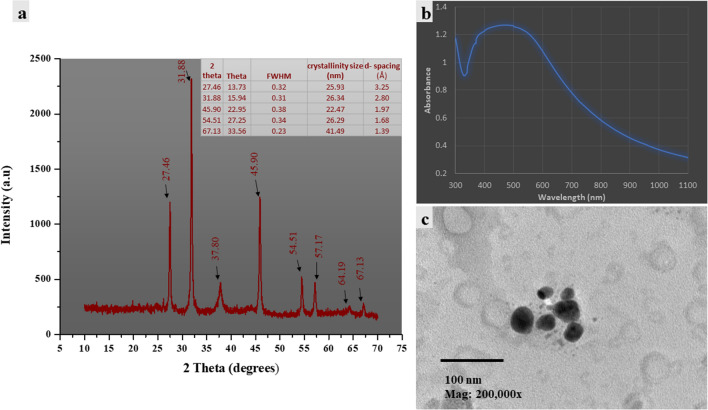
- Green synthesis produced 25±0.305 mg AgNPs; UV–Vis maximum was at 466 nm; XRD peaks at 27.46°, 31.88°, 45.90°, 54.51°, 57.17°, 64.19°, and 67.13° indicated Ag2O and face-centered cubic silver; TEM showed semispherical particles 24–40 nm (Debye–Scherrer average 28.5 nm; conclusion states 32 nm).
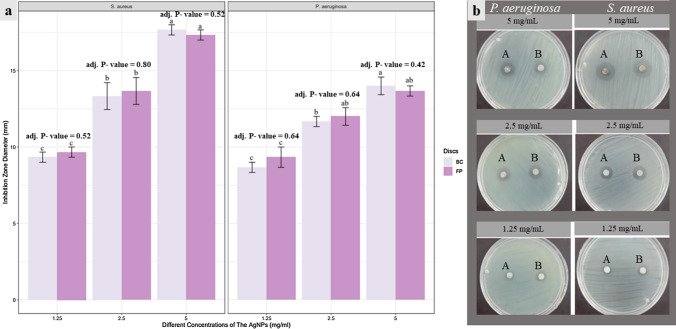
- AgNPs (5 mg/mL) inhibited S. aureus with IZD 17.6±0.58 mm and P. aeruginosa with IZD 12.6±0.58 mm; MIC and MBC were both 1.25 mg/mL for both strains.
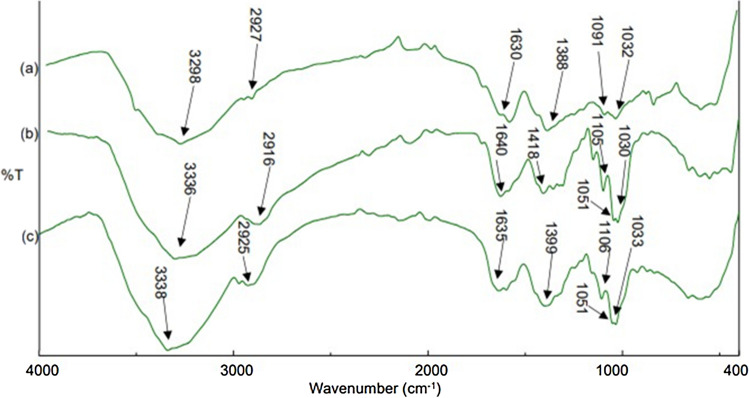
- BC and filter paper discs impregnated with AgNPs both showed excellent antibacterial activity against S. aureus and P. aeruginosa, with no significant difference between the two carriers; holding capacities also did not differ significantly (adjusted p>0.05), and FTIR indicated no interaction between AgNPs and BC.
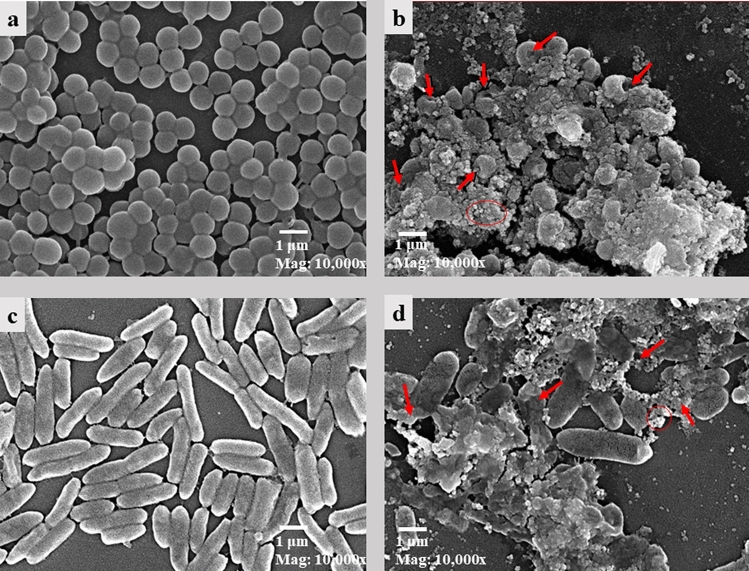
- SEM showed AgNP accumulation on S. aureus causing pores/invaginations, while P. aeruginosa cells showed destruction and distortion at cell poles after treatment at MIC.
Methods
- AgNPs were green-synthesized by mixing Moringa oleifera leaf extract with 1 mM AgNO3 at 60 °C for 20 min, purified by centrifugation/washing, and characterized by UV–Vis (300–1100 nm), XRD (2θ 10–60°), TEM, and FTIR (400–4000 cm−1).
- Antibacterial activity was tested against S. aureus ATCC 6538 and P. aeruginosa ATCC 9027 using disc diffusion (20 µL AgNPs; filter paper and BC/FP discs), broth microdilution MIC/MBC with resazurin (2.5–0.0012 mg/mL), and SEM after treatment at MIC.
- BC was produced using Novacetimonas hansenii HS1 in modified GAM for 7 days at 30 °C, purified, cut into 6 mm discs, and impregnated with AgNPs at 5, 2.5, and 1.25 µL/mL; holding capacity was measured by centrifugation; all experiments were in triplicate with R/Tukey’s test (p≤0.05).
Limitations
- Stated: the authors conclude that further studies are needed to estimate the efficiency of progressed applications of the BC-AgNPs composite.
- Evident: only in vitro antibacterial assays and SEM morphology were performed; no in vivo wound-healing, cytotoxicity, or biocompatibility testing is reported despite the proposed wound-dressing use.
- Evident: reporting inconsistencies include abstract size range 24–40 nm versus conclusion average 32 nm; abstract says Ag2O and metallic Ag while conclusion says Ag2O; Fig. 2 caption lists concentrations as 5, 2.5, and 5 mg/mL while methods state 5, 2.5, and 1.25 µL/mL.
Model-written summary. Check it against the paper before relying on it.
Integrity signals
Registry
Cites
Statistics
Figures
Verification
Claims the paper makes
2 Valid · 0 Not valid · 15 Not checked · 31 Own results and interpretations
The cited sources support only part of this claim — read each source’s verdict below.
In the paper
“The presence of ether linkages C–O–C confirming the presence of flavones, terpenoids and polysaccharides present in Moringa oleifera leaf extract which have good reduction potential involving in bio-reduction of AgNO3 as reported by Jadhav et al.(2022) and (Moodley et al. (2018)[11, 31].”
§ Antibacterial Potential of Bacterial Cellulose Impregnated with Green Synthesized Silver Nanoparticle Against S. aureus and P. aeruginosa > Discussion
What the sources say
- Partly supportedcites Jadhav et al.(2022) matched to “Role of Moringa oleifera on Green Synthesis of Metal/Metal Oxide Nanomaterials” (2022) sourceExperimental — accuracy not yet measured
Split into 2 atoms — 1 confirmed, 1 partially supported, 0 disputed, 0 misattributed, 0 unverifiable. Expand the claim to see per-atom verdicts.
- Partly supportedcites Moodley et al. (2018)[11, 31] matched to “Green synthesis of silver nanoparticles from Moringa oleifera leaf extracts and its antimicrobial potential” (2018) sourceExperimental — accuracy not yet measured
Split into 2 atoms — 1 confirmed, 1 partially supported, 0 disputed, 0 misattributed, 0 unverifiable. Expand the claim to see per-atom verdicts.
plainstates a cause- Asserted: passes — The authors put it forward as true.
- Checkable: passes — It can be checked against evidence.
- Load-bearing: unclear — It is unclear whether the paper’s conclusions depend on it.
- Based: passes — The paper gives a reason why it holds.
- Partly supported
The sources with a verdict support this claim; the rest weren’t checked yet, have no full text we could read, or their verdicts aren’t rated yet.
In the paper
“The appearance of all functional groups in FTIR analyses in our manuscript as reported by [7, 20, 25, 34] confirming the structure of bacterial cellulose.”
§ Antibacterial Potential of Bacterial Cellulose Impregnated with Green Synthesized Silver Nanoparticle Against S. aureus and P. aeruginosa > Discussion
What the sources say
- Could not verifycites [7] Moodley JS Krishna SBN Pillay K Green synthesis of silver nanoparticles from Moringa oleifera leaf extracts and its antimicrobial potential Adv Nat Sci Nanosci Nanotechnol 2018 9 015011 10.1088/2043-6254/aaabb2 sourceExperimental — accuracy not yet measured
Our copy of Moodley et al. (2018) concerns AgNPs green-synthesised from Moringa oleifera leaf extract; its FTIR section (3.5, pp. n/a) reports functional groups (hydroxyls, CH2/CH3, C=C/C=O, amide I/II, ether and C-O/C-O-C linkages) attributed to capping of silver nanoparticles by phenolics, flavones, terpenoids and polysaccharides of the leaf biomass, and the Discussion repeats this in the same context. No passage mentions bacterial cellulose or its structural confirmation, so the paper does not address the claim (searched: 'bacterial cellulose structure FTIR', 'cellulose polysaccharide functional groups confirmed'). The FTIR material here is plant leaf extract and silver nanoparticles, not bacterial cellulose, but nothing in our copy states a contrary point either. (LLM, conf=0.70)
- Not checked yetcites [20] Jinga SI Isopencu G Stoica-Guzun A Silver green synthesis on bacterial cellouse membranes using tannic acid Dig J Nanomater Bios 2013 8 4 1711 1717
- Supportedcites [25] Audtarat S Hongsachart P Dasri T Green synthesis of silver nanoparticles loaded into bacterial cellulose for antimicrobial application Nanocomposites 2022 1 13 10.1080/20550324.2022.2055375 source
The Results and discussion section of Audtarat et al. (2022) states that 'The FTIR spectrum of freeze-dried BC ... shows characteristic BC peaks', assigning the observed bands to O-H stretching, asymmetric and symmetric C-H angular deformation, asymmetrical C-O-C glycoside stretching and C-OH / C-C-OH stretching of secondary and primary alcohols — i.e. the full set of cellulose functional groups. The Materials and methods confirm FTIR was run on BC and BC-AgNPs 'to determine the organic functional groups present in the samples' (4000-500 cm-1, Shimadzu ATR), and the Conclusions list FTIR among the characterizations of the BC matrix. Thus our copy supports that FTIR analysis of the bacterial cellulose showed its characteristic functional groups consistent with the BC structure; the band assignments themselves are credited in-text to the papers cited as [Citation28, Citation29], but the FTIR measurement and its interpretation are this paper's own result. (LLM, conf=0.85)
- Could not verifycites [34] Agatonovic-Kustrin S Ristivojevic P Gegechkori V Essential oil quality and purity evaluation via FT-IR spectroscopy and pattern recognition techniques Appl Sci 2020 10 1 12 10.3390/app10207294 sourceExperimental — accuracy not yet measured
Our copy of Agatonovic-Kustrin et al. (2020) is entirely about ATR-FTIR profiling of plant essential oils (Lamiaceae, Asteraceae clusters; terpenes such as linalool, carvacrol, β-pinene, myrcene) combined with PCA/cluster analysis; the Introduction (p.1) frames IR use as structural characterization of functional groups in pure substances, plant extracts and distillates, not polymers. No passage mentions bacterial cellulose, cellulose, or pellicle — searches for 'bacterial cellulose structure confirmation FTIR' and 'cellulose polysaccharide hydrogen bonding broad OH band' returned only essential-oil band assignments (Sections 3.2, 'Species ATR-IR Peaks Compound Assignment', '850-920 cm-1', 'Mixed cluster'). The paper therefore neither supports nor contradicts the attributed point; it may simply be an inappropriate citation for bacterial cellulose. (LLM, conf=0.72)
plainstates a cause- Asserted: passes — The authors put it forward as true.
- Checkable: passes — It can be checked against evidence.
- Load-bearing: passes — The paper’s conclusions depend on it.
- Based: passes — The paper gives a reason why it holds.
- Could not verify
A result the paper reports from its own data — it cites no other source for it, so there is none to check. The quote shows it is in the paper.
In the paper
“there was accumulation of AgNPs on S. aureus cells, which results in pores or invaginations on cells that affect bacterial viability”
§ Antibacterial Potential of Bacterial Cellulose Impregnated with Green Synthesized Silver Nanoparticle Against S. aureus and P. aeruginosa > Results
plainstates a cause- Asserted: passes — The authors put it forward as true.
- Checkable: passes — It can be checked against evidence.
- Load-bearing: passes — The paper’s conclusions depend on it.
- Based: passes — The paper gives a reason why it holds.
A result the paper reports from its own data — it cites no other source for it, so there is none to check. The quote shows it is in the paper.
In the paper
“The green synthesized AgNPs concentration estimation after biosynthesis showed that the mixture (10 mL leaf extract+90 mL of 1 mM AgNO3) produced 25±0.305 mg silver nanoparticles.”
§ Antibacterial Potential of Bacterial Cellulose Impregnated with Green Synthesized Silver Nanoparticle Against S. aureus and P. aeruginosa > Results
plainstates a cause- Asserted: passes — The authors put it forward as true.
- Checkable: passes — It can be checked against evidence.
- Load-bearing: unclear — It is unclear whether the paper’s conclusions depend on it.
- Based: passes — The paper gives a reason why it holds.
A result the paper reports from its own data — it cites no other source for it, so there is none to check. The quote shows it is in the paper.
In the paper
“The values of holding capacity of bacterial cellulose and filter paper indicated that there was no significant difference between bacterial cellulose and filter paper holding capacity to green synthesized AgNPs as the adjusted p values estimated were more than 0.05.”
§ Antibacterial Potential of Bacterial Cellulose Impregnated with Green Synthesized Silver Nanoparticle Against S. aureus and P. aeruginosa > Results
hedged- Asserted: passes — The authors put it forward as true.
- Checkable: passes — It can be checked against evidence.
- Load-bearing: unclear — It is unclear whether the paper’s conclusions depend on it.
- Based: passes — The paper gives a reason why it holds.
17 more claims
Create a free account to see all 48 claims and to verify the 25 references still open.
- It may state two separate claims as one. 16
- Probably not a substantial claim. 12
Self-check
Percentages, sums and reported differences re-computed from the paper’s own numbers.
Each contradiction between two passages listed here was confirmed by an independent check.
Rated major: it would touch a result — a value a result rests on, reported and recomputed p-values on opposite sides of the significance level, two passages that conflict with no sign which is right, or a cited work retracted before this paper was published.
In the paper
§ Antibacterial Potential of Bacterial Cellulose Impregnated with Green Synthesized Silver Nanoparticle Against S. aureus and P. aeruginosa > Materials and Methods > Characterization of Green Synthesized AgNPs
“XRD spectra were recorded over 2θ angles ranging from 10° to 60°.”
§ Antibacterial Potential of Bacterial Cellulose Impregnated with Green Synthesized Silver Nanoparticle Against S. aureus and P. aeruginosa > Results
“there are other diffraction peaks appeared at 54.51°, 57.17°,64.19°, and 67.13°.”
Rated minor: it would not touch a result — a value no result rests on, a p-value that stays on the same side of the significance level, or a conflict that is clerical, resolved elsewhere in the paper, or outside its own findings.
In the paper
§ Antibacterial Potential of Bacterial Cellulose Impregnated with Green Synthesized Silver Nanoparticle Against S. aureus and P. aeruginosa > Materials and Methods > Incorporation of AgNPs Within Bacterial Cellulose and Filter Paper
“different concentrations (5, 2.5, and 1.25 µL/mL)”
§ Antibacterial Potential of Bacterial Cellulose Impregnated with Green Synthesized Silver Nanoparticle Against S. aureus and P. aeruginosa > Results
“different concentrations of green synthesized silver nanoparticles (5, 2.5, and 5 mg/mL)”
Rated minor: it would not touch a result — a value no result rests on, a p-value that stays on the same side of the significance level, or a conflict that is clerical, resolved elsewhere in the paper, or outside its own findings.
In the paper
§ Antibacterial Potential of Bacterial Cellulose Impregnated with Green Synthesized Silver Nanoparticle Against S. aureus and P. aeruginosa > Results
“c- P. aeruginosa (control) and d- P. aeruginosa (treated by the minimum inhibitory concentration of AgNPs)”
§ Antibacterial Potential of Bacterial Cellulose Impregnated with Green Synthesized Silver Nanoparticle Against S. aureus and P. aeruginosa > Results
“Red arrows in figure (b) and (c) pointed to distortions in bacterial cells”
Citations
Cites
R: A Language and Environment for Statistical Computing
R Core Team (2025) · doi:10.32614/r.manuals · Cited by 352,181
ggplot2: Elegant Graphics for Data Analysis
Wickham, H. (2009) · doi:10.1007/978-0-387-98141-3 · Cited by 14,447
Silver nanoparticles as a new generation of antimicrobials
Rai, M., Yadav, A., & Gade, A. (2009) · Biotechnology Advances · doi:10.1016/j.biotechadv.2008.09.002 · Cited by 6,173
Dhivya, S., Padma, V. V., & Santhini, E. (2015) · BioMedicine · doi:10.7603/s40681-015-0022-9 · Cited by 1,526
Nanoparticles: structure, properties, preparation and behaviour in environmental media
Christian, P., Von der Kammer, F., Baalousha, M., & Hofmann, T. (2008) · Ecotoxicology · doi:10.1007/s10646-008-0213-1 · Cited by 713
Bacterial cellulose: a versatile biopolymer for wound dressing applications
Portela, R., Leal, C. R., Almeida, P. L., & Sobral, R. G. (2019) · Microbial Biotechnology · doi:10.1111/1751-7915.13392 · Cited by 604
Jyoti, K., Baunthiyal, M., & Singh, A. (2016) · Journal of Radiation Research and Applied Sciences · doi:10.1016/j.jrras.2015.10.002 · Cited by 539
Green synthesis of silver nanoparticles and their characterization by XRD
Mehta, B. K., Chhajlani, M., & Shrivastava, B. D. (2017) · Journal of Physics Conference Series · doi:10.1088/1742-6596/836/1/012050 · Cited by 291
Prasad, T., & Elumalai, E. (2011) · Asian Pacific Journal of Tropical Biomedicine · doi:10.1016/s2221-1691(11)60096-8 · Cited by 290
Shaaban, M. T., Ghaly, M. F., & Fahmi, S. M. (2021) · Journal of Basic Microbiology · doi:10.1002/jobm.202100061 · Cited by 287
Self-citation
Research works printed but not linked: 4
- CLSI Methods for dilution antimicrobial susceptibility tests for bacteria that grows aerobically 2012 9 Wayne Clinical and Laboratory Standards Institute
- Jinga SI Isopencu G Stoica-Guzun A Silver green synthesis on bacterial cellouse membranes using tannic acid Dig J Nanomater Bios 2013 8 4 1711 1717
- Moodley JS Krishna SBN Pillay K Green synthesis of silver nanoparticles from Moringa oleifera leaf extracts and its antimicrobial potential Adv Nat Sci Nanosci Nanotechnol 2018 10.1088/2043-6254/aaabb2 · DOI · Paper page
- Barud HS Regiani T Marques RFC Antimicrobial bacterial cellulose-silver nanoparticles composite membranes J Nanomater 2011 10.1155/2011/721631 · DOI · Paper page
Cited by
Patel, J., Kumar, G. S., Roy, H., Maddiboyina, B., Leporatti, S., & Bohara, R. A. (2024) · Discover Nano · doi:10.1186/s11671-024-04021-9 · Cited by 96
“In order to cure wounds, bacterial cellulose (BC) impregnated with green synthesised silver nano-particles (AgNPs) is being tested as an antibacterial membrane [17].”
BackgroundShaaban, M. T., Mohamed, B. S., Zayed, M., & El-Sabbagh, S. M. (2024) · BMC Biotechnology · doi:10.1186/s12896-024-00833-w · Cited by 84
“Both chemical and physical ways have drawbacks, such as the utilization of harmful chemicals, high energy requirements, low output, and toxic byproducts [15, 16].”
BackgroundSelf-citationAyub, A., Wani, A. K., Malik, S. M., Ayub, M., Singh, R., Chopra, C., & Malik, T. (2025) · Biotechnology Reports · doi:10.1016/j.btre.2025.e00913 · Cited by 104
“Algae , such as Chlorella vulgaris , have been employed to synthesize various metal nanoparticles due to their rapid growth and high biomass production [69].”
Farouk, S. M., Abu-Hussien, S. H., Abd-Elhalim, B. T., Mohamed, R. M., Arabe, N. M., Hussain, A. A. T., Mostafa, M. E., Hemdan, B. A., El-Sayed, S. M., Bakry, A., et al. (2023) · Scientific Reports · doi:10.1038/s41598-023-46355-x · Cited by 55
“In the same line, it was found that AgNPs, there was accumulation on S. aureus and P. aeruginosa cell surface, which results in pores or invaginations on cells that affect bacterial viability 27,42 .”
BackgroundAli, S., Bahadur, A., Hassan, A., Ahmad, S., Shah, W., & Iqbal, S. (2025) · Chemical Engineering Journal · doi:10.1016/j.cej.2025.160470 · Cited by 54
Çiftçi, F. (2023) · Process Biochemistry · doi:10.1016/j.procbio.2023.12.021 · Cited by 49
Madhusudanan, M., Zhang, J., Pandit, S., Singh, P., Jeong, G., Khan, F., & Mijakovic̀, I. (2025) · Advanced NanoBiomed Research · doi:10.1002/anbr.202400194 · Cited by 49
Shehawy, A. S. E., Elsayed, A. A., El-Shehaby, O. A., & Ali, E. M. (2023) · The Egyptian Journal of Aquatic Research · doi:10.1016/j.ejar.2023.10.001 · Cited by 40
Nasim, I., Ragavendran, C., Kamaraj, C., Almutairi, H. H., Alam, M. W., Manimaran, K., & Nakouti, I. (2024) · Inorganic Chemistry Communications · doi:10.1016/j.inoche.2024.113049 · Cited by 38
A durable phosphorous-based flame retardant containing double reactive groups for cotton fabrics
Jing, Q., Lu, Y., Yang, Y., Zhou, H., Li, J., Cheng, Y., & Zhang, G. (2023) · Polymer Degradation and Stability · doi:10.1016/j.polymdegradstab.2023.110616 · Cited by 35
Bacterial cellulose: A versatile biomaterial for biomedical application
Joseph, A., Umamaheswari, S., & Vassou, M. C. (2024) · Carbohydrate Research · doi:10.1016/j.carres.2024.109350 · Cited by 39
Recent Trends in the Application of Cellulose-Based Hemostatic and Wound Healing Dressings
Clemence, B. F., Mbituyimana, B., Xiao, L. J., Ahmed, A. A. Q., Qi, F., Adhikari, M., Shi, Z., & Yang, G. (2025) · Journal of Functional Biomaterials · doi:10.3390/jfb16050151 · Cited by 36
Ge, J., Hu, J., Cui, S., Wang, Y., Xu, C., & Liu, W. (2024) · Applied Microbiology and Biotechnology · doi:10.1007/s00253-023-12859-9 · Cited by 29
“…cells, diagnostic biological probes, optical storage media, food packaging, etc., due to their strong photocatalytic activity, broad-spectrum bacterio-static activity, ability to absorb light, and oxidation activity (Danish et al. 2022; Patel and Joshi 2023; Shaaban et al. 2023; Wang and Gu 2009).”
Jing, Q., Lu, Y., Liu, K., Yang, Y., & Zhang, G. (2024) · International Journal of Biological Macromolecules · doi:10.1016/j.ijbiomac.2024.130144 · Cited by 28
Balogun, S. A., Abolarinwa, T. O., Adesanya, F. A., Ateba, C. N., & Fayemi, O. E. (2024) · Journal of Analytical Science & Technology · doi:10.1186/s40543-024-00446-0 · Cited by 22
“The investigation of the antibacterial efficacy of nanoparticles was extensively researched using human pathogenic microorganisms such as E. coli (Al-Nabulsi et al. 2020; Xiao et al. 2021) and S. aureus (Attallah et al. 2022; Shaaban et al. 2023).”
BackgroundDu, Y., Lu, J., Guo, X., Xia, Z., & Ji, S. (2026) · Journal of Functional Biomaterials · doi:10.3390/jfb17010027 · Cited by 22
“Biomass materials, such as bacterial cellulose, also demonstrate dual functional advantages, acting as both reducing and capping agents to efficiently synthesize AgNPs under solar radiation induction [63].”
Rezaei, M., Azin, M., & Zare, D. (2025) · International Journal of Biological Macromolecules · doi:10.1016/j.ijbiomac.2025.139934 · Cited by 20
Kumar, M., Dhiman, S. K., Bhat, R., & Saran, S. (2023) · Polymer Bulletin · doi:10.1007/s00289-023-05046-3 · Cited by 19
“Similar findings of particle size and distribution have been reported by [73, 74].”
Sevinc, C., Erci, F., Torlak, E., & Yöntem, M. (2025) · Microscopy Research and Technique · doi:10.1002/jemt.24862 · Cited by 17
Shaaban, M. T., Abdel‐Hamid, M. S., Orabi, S. H., Korany, R. M. S., & Elbawab, R. H. (2024) · Journal of Analytical Science & Technology · doi:10.1186/s40543-024-00436-2 · Cited by 18
“It initially manifests as a skin infection but can lead to serious conditions such as endocarditis, pneumonia, and septicemia (Shaaban et al. 2023).”
BackgroundSelf-citationSoliman, A. M., Shaaban, M. T., Dawood, A. S., Shaheen, M. N., & Salama, H. S. (2024) · Microbial Pathogenesis · doi:10.1016/j.micpath.2024.107000 · Cited by 15
Self-citationEl‐Gendi, H., Albrahim, J. S., Alenezi, H., El‐Fakharany, E. M., El‐Maradny, Y. A., & Saleh, A. K. (2025) · International Journal of Biological Macromolecules · doi:10.1016/j.ijbiomac.2025.141958 · Cited by 14
Zhang, B., Huang, Z., Guo, T., Jing, J., & Dang, Y. (2025) · Scientific Reports · doi:10.1038/s41598-025-09261-y · Cited by 14
Antibacterial and Antimycotic Activity of Epilobium angustifolium L. Extracts: A Review
Dreger, M., Adamczak, A., & Foksowicz‐Flaczyk, J. (2023) · Pharmaceuticals · doi:10.3390/ph16101419 · Cited by 16
“Nano silver hybridized onto bacterial cellulose films showed significant activity against E. coli and S. aureus [101], or S. aureus and P. aeruginosa [102].”
BackgroundMolecular Characterization of Bacterial Cellulose Producing Bacillus Strains Isolated From Soil
Bektaş, İ., & Yildirim, N. B. (2025) · Journal of Basic Microbiology · doi:10.1002/jobm.70026 · Cited by 14
Yüce, M., Albayrak, E., Yontar, A. K., Çevik, S., & Gümüşkaptan, Ç. (2025) · Scientific Reports · doi:10.1038/s41598-025-16692-0 · Cited by 15
“H bending of carboxylic acid; and peaks between 1045 and 1086 cm −1 represent the CO–O-CO stretch 56–58 .”
Aguiar, A. P., Ottoni, C. A., Aquaroli, C. D. L. R., Mendes, E. C. V., Araújo, A. L. D. S., Simões, M. F., & Barbieri, E. (2024) · Environmental Science Nano · doi:10.1039/d4en00002a · Cited by 12
Saleh, A. K., Alessa, A. H., & Omran, A. M. E. (2024) · Biomass Conversion and Biorefinery · doi:10.1007/s13399-023-05175-9 · Cited by 11
Michael, A., Singh, A., Mishra, R., Roy, A., Roy, A. K., Kaur, K., Rustagi, S., Malik, S., Verma, R., & Sharma, K. (2024) · Nano-Structures & Nano-Objects · doi:10.1016/j.nanoso.2024.101190 · Cited by 11
Balážová, Ľ., Wolaschka, T., Rohaľová, S., Daneu, N., Stahorský, M., Salayová, A., Tkáčiková, Ľ., & Eftimová, J. (2023) · Life · doi:10.3390/life13020573 · Cited by 10
“Nanoparticles prepared via green synthesis using Moringa oleifera leaf at a concentration of 1 mM and incorporated into bacterial cellulose and filter paper discs exhibited antimicrobial activity against Staphylococcus aureus ATCC 6538 and Pseudomonas aeruginosa ATCC 9027 [65].”
MethodZulkarnain, N. N., Rahman, N. A., Othman, A. R., Saleh, N. M., Ali, J. M., Shukor, H., Said, M. M., & Zaki, W. R. W. (2024) · Cellulose · doi:10.1007/s10570-024-05922-9 · Cited by 12
“Contradict from the study conducted by Shaaban et al. (2023), in this study, BC impregnated with cold-extracted Moringa oleifera leaf extract and silver nanoparticles mixture will be characterized and tested against gram-positive and gram-negative bacteria.”
InfluentialSynthesis, Characterization, and Applications of ZnO, Ag2O, and ZnO/Ag2O Nanocomposites: A Review
Saka, A., Jule, L. T., & Krishnaraj, R. (2024) · Advances in Condensed Matter Physics · doi:10.1155/2024/5755167 · Cited by 10
Ibrahim, A. A., Dellinger, A. L., Coscarelly, J., Pathiraja, G., Obare, S. O., & LaJeunesse, D. (2025) · Materials Advances · doi:10.1039/d4ma01130a · Cited by 9
Kenawy, E., Hemdan, B. A., Abdel‐Sattar, R., KHAIRALLAH, M. S. H. M. S. M. E., Shendy, S., Morsy, O. M., & El‐Naggar, M. E. (2024) · Polymers for Advanced Technologies · doi:10.1002/pat.6594 · Cited by 8
Yu, S., Pan, J., Xu, M., Chen, Y., Li, P., & Hu, H. (2024) · International Journal of Biological Macromolecules · doi:10.1016/j.ijbiomac.2024.136757 · Cited by 9
Green Synthesis of Nanoparticle-Loaded Bacterial Cellulose Membranes with Antibacterial Properties
Khikani, M., Isopencu, G. O., Deleanu, I. M., Jinga, S., & Busuioc, C. (2024) · Journal of Composites Science · doi:10.3390/jcs8110475 · Cited by 7
Ge, J., Wen, J., Jiang, M., Huang, K., Qi, S., Huang, W. J., & Tan, L. (2024) · Molecular and Cellular Probes · doi:10.1016/j.mcp.2024.102001 · Cited by 7
Teimouri, M., & Lalehzar, S. S. (2023) · BMC Surgery · doi:10.1186/s12893-023-02012-8 · Cited by 7
“The results suggest BC impregnated with green synthesized silver nanoparticles is highly effective in wound healing treatments [11].”
BackgroundAboul-Nasr, M. B., Yasien, A. A., Mohamed, S. S., & Obiedallah, M. (2025) · Applied Microbiology and Biotechnology · doi:10.1007/s00253-025-13585-0 · Cited by 6
“The TEM results align with those of previous studies on AgNPs@BC nanocomposite properties (Shaaban et al. 2023; Yang et al. 2013).”
Selim, S., Harun‐Ur‐Rashid, M., Hamoud, Y. A., Shaghaleh, H., Almuhayawi, M. S., Almehayawi, M. S., & Jaouni, S. K. A. (2025) · BioResources · doi:10.15376/biores.20.4.selim · Cited by 6
Azizoğlu, U., Argentel‐Martínez, L., Peñuelas‐Rubio, O., Sansinenea, E., & Shin, J. (2025) · Results in Engineering · doi:10.1016/j.rineng.2025.107156 · Cited by 7
Santos, S. S. D., Cerqueira, M. Â., Azevedo, G., Pastrana, L. M., Aouada, F. A., Tanaka, F. C., Perotti, G. F., & de Moura, M. R. (2025) · Pharmaceuticals · doi:10.3390/ph18060799 · Cited by 5
Ashraf, A., Hussain, S., Rubab, U. E., Saeed, M., Raja, N. I., & Mashwani, Z. (2025) · BioNanoScience · doi:10.1007/s12668-025-02108-w · Cited by 5
Revolutionizing Wound Care: The Role of Nanotechnology and Biopolymer-Based Materials
Mane, P. A., Sonavale, R. M., Phatak, R. S., Shukla, N., Li, Z., Polozhentsev, O. E., Cárdenas, C., & Belbekhouche, S. (2025) · ACS Applied Bio Materials · doi:10.1021/acsabm.5c01412 · Cited by 5
Luong, A. D., Maruthapandi, M., & Luong, J. H. T. (2026) · Macromol—A Journal of Macromolecular Research · doi:10.3390/macromol6020023 · Cited by 5
“While AgNP-BC composites exhibit strong antibacterial performance and favorable wound-healing outcomes [162,163], silver can induce cytotoxicity, oxidative stress, and, in extreme cases, argyria due to tissue accumulation [164].”
Wang, X., Zhang, J., Shan, J., Yang, D. G., Tian, G., Dang, Y., & Ma, J. (2025) · International Journal of Biological Macromolecules · doi:10.1016/j.ijbiomac.2025.146707 · Cited by 5
Ibraheem, I. K., & Shaker, A. W. (2025) · Haya The Saudi Journal of Life Sciences · doi:10.36348/sjls.2025.v10i09.009 · Cited by 4
Rathi, V. H., & Jeice, A. R. (2023) · Chemical Papers · doi:10.1007/s11696-023-03202-7 · Cited by 4
“The release of Ag + ions and the presence of biomolecules on the nanoparticle surface are both responsible for the antibacterial effect (Shaaban et al. 2023; Devasvaran et al. 2023).”
Indrianingsih, A. W., Styaningrum, P., Suryani, R., Windarsih, A., Andriani, A., Noviana, E., & Suwanda, N. U. (2025) · 3 Biotech · doi:10.1007/s13205-025-04284-8 · Cited by 4
“2b, which correspond to the (110) and (111) planes of Ag ₂ O (Shaaban et al 2023).”
MIN, T. S. (2023) · Journal of Oil Palm Research · doi:10.21894/jopr.2023.0055 · Cited by 3
Quynh, P. H., Ninh, T. T. T., Tinh, N. Q., Thu, N. V., Thành, Đ. V., Dung, N. D., Hải, C. T., & Tâm, K. T. (2024) · Materials Research Express · doi:10.1088/2053-1591/ad5c2f · Cited by 3
Huang, Q., Zhu, L., Huang, F., Zhao, Y., Wang, H., Luan, S., & Xiao, C. (2024) · International Journal of Biological Macromolecules · doi:10.1016/j.ijbiomac.2024.135650 · Cited by 3
Yodrach, R., Rattanabundan, P., & Chaijak, P. (2025) · Journal of Degraded and Mining Lands Management · doi:10.15243/jdmlm.2025.124.8015 · Cited by 2
Denİz, Ş., Kar, F., Karataş, M., Erzen, B., Aydoğmuş, E., & Orhan, R. (2025) · Cellulose · doi:10.1007/s10570-025-06770-x · Cited by 2
“In a similar context, Shaaban et al. (2023) demonstrated the antibacterial potential of bacterial cellulose impregnated with green-synthesized silver nanoparticles (AgNPs), proposing their use in eco-friendly food packaging systems.”
Anzuman, M., Mashud, M. A. A., Moni, R. J. R., Sultana, S., Hasib, R. A., Jahan, I., Shrabony, M. R., Aditi, L., Islam, M. R., Alauddin, J., et al. (2025) · Biochemistry and Biophysics Reports · doi:10.1016/j.bbrep.2025.102353 · Cited by 2
Irham, W. H., Yusra, S., Gunawan, H., Isra, M., & Dur, S. (2025) · Jurnal Penelitian Pendidikan IPA · doi:10.29303/jppipa.v11i12.13390 · Cited by 2
“Thermal analysis indicates decomposition temperatures above 300°C, reflecting high thermal stability (Fernandes et al., 2021; Shaaban et al., 2023; Sou Min, 2023).”
Plant-mediated synthesis of silver nanoparticles from Moringa oleifera against ESKAPE pathogens
Vargas-Caicedo, J. D., Roa-Cordero, M. V., Romero, M. F., Ortíz, J. G. L., & Pinto, S. M. L. (2026) · Microbial Pathogenesis · doi:10.1016/j.micpath.2026.108626 · Cited by 2
Shaaban, M. T., Fahmy, G. M., Saad, E., & Salama, H. S. (2024) · Bioactivities · doi:10.47352/bioactivities.2963-654x.213 · Cited by 2
“Multidrug-resistant bacteria complications increased rapidly in recent years [2], especially in patients with decompensated cirrhosis and with acute-on-chronic liver failure in Europe causing dangerous problem for these patients [1,3].”
BackgroundSelf-citationBlanco, F. G., Campano, C., Rivero‐Buceta, V., Hernández‐Arriaga, A. M., & Prieto, M. A. (2024) · Cellulose · doi:10.1007/s10570-024-06123-0 · Cited by 3
“In contrast, studies incorporating broad-spectrum antimicrobials into BC, typically report limited antimicrobial activity against S. aureus (Shaaban et al. 2023; Pat et al., 2017).”
Hernández-Rodríguez, J. P., Márquez‐Reyes, J. M., Aguirre–Loredo, R. Y., Rodríguez-Romero, B. A., & Treviño‐Garza, M. Z. (2024) · Food and Bioprocess Technology · doi:10.1007/s11947-024-03597-5 · Cited by 2
“Bacterial cellulose generated by strains does not exhibit antimicrobial activity but can gain such activity by adding antimicrobial compounds (Ashrafi et al., 2018; Shaaban et al., 2023).”
InfluentialShaaban, M. T., Orabi, S. H., Abdel‐Hamid, M. S., Korany, R. M. S., Alshehrei, F. M., & Elbawab, R. H. (2024) · Veterinary World · doi:10.14202/vetworld.2024.2211-2224 · Cited by 4
Self-citationKoçoğlu, S., Bağdat, E. Ş., & Ilıkkan, Ö. K. (2024) · International Journal of Polymeric Materials · doi:10.1080/00914037.2024.2417695 · Cited by 1
“Understanding these thermal behaviors is crucial for applications where thermal stability is a critical factor, such as in composite materials [24,25] .”
Alrudainy, A. M., & Shareef, A. A. (2025) · Siberian Journal of Life Sciences and Agriculture · doi:10.12731/2658-6649-2025-17-2-1294 · Cited by 1
Alzahrani, F. M., Abbas, M., Iqbal, M., Zafar, M. G., Aslam, F., Bukhari, A., Mnif, W., Latif, S., Ahmad, N., Bibi, I., et al. (2025) · Journal of Optoelectronic and Biomedical Materials · doi:10.15251/jobm.2025.174.263 · Cited by 1
Hussain, I., Tahir, K., Khan, M. S., Khan, A. U., Al‐Saeedi, S. I., Alabbad, E. A., Alabbosh, K. F., Zaki, M. E. A., Almarhoon, Z. M., & Al-Aoh, H. A. N. (2026) · Materials Chemistry and Physics · doi:10.1016/j.matchemphys.2026.132075 · Cited by 1
Głodo, W., & Śliżewska, K. (2026) · Foods · doi:10.3390/foods15132334 · Cited by 2
“Modern technologies allow for precise control of fermentation conditions, such as oxygen availability and temperature, which influence the microbiota composition and metabolite profile [41,53].”
InfluentialSrivastava, S., & Mathur, G. (2024) · Asian Journal of Chemistry · doi:10.14233/ajchem.2024.31470 · Cited by 1
Aboelnaga, M., Mohamed, B. S., Azab, M., Hegazy, M., Saad, S., Selim, D. A.-F. H., El-Nahas, S., El-Sabbagh, S. M., & Zayed, M. (2024) · BIOtecnia · doi:10.18633/biotecnia.v26i1.2058
Self-citationAlam, M. W., Usman, S. M., Naeem, S., Zaidi, N., Sadaf, S., & Naseem, K. (2025) · ChemistrySelect · doi:10.1002/slct.202404485
Singh, R., Susan Verghese, P., & Bansal, A. (2025) · International Journal of Scientific Research in Science Engineering and Technology · doi:10.32628/ijsrst25126333
Shaaban, M. T., Mohamed, B. S., Zayed, M., & El-Sabbagh, S. M. (2024) · Figshare · doi:10.6084/m9.figshare.25157826
Self-citationShaaban, M. T., Mohamed, B. S., Zayed, M., & El-Sabbagh, S. M. (2024) · Figshare · doi:10.6084/m9.figshare.25157368
Self-citationShaaban, M. T., Abdel‐Hamid, M. S., Orabi, S. H., Korany, R. M. S., & Elbawab, R. H. (2024) · Figshare · doi:10.6084/m9.figshare.26711876
Self-citationZulkarnain, N. N., Vincent, I., Rahman, N. A., Ali, J. M., Said, M. M., Yaacob, M., & Lim, K. K. (2026) · Polymer Bulletin · doi:10.1007/s00289-026-06301-z
Guan, S., Si, H., Song, D., & Meng, Y. (2026) · Journal of Drug Delivery Science and Technology · doi:10.1016/j.jddst.2026.108322
Biocompatible biopolymer coatings for medical devices
Nabil-Adam, A., Shreadah, M. A., & Shabaka, S. H. (2026) · Elsevier eBooks · doi:10.1016/b978-0-443-33391-0.00018-2
Tabaika, P. M., Tang, N. F. R., Astuty, S. D., Ola, A. T. T., Hakiki, F. T. T., & Tahir, D. (2026) · Phytochemistry Reviews · doi:10.1007/s11101-026-10255-5
“…properties and biological activities, including nanometer-scale size, a large (Balamurugan et al. 2022; Bindhu et al. 2020; Mehwish et al. 2021a, b; Shaaban et al. 2023; Shobana et al. 2025; Susanto et al. 2024) surface area, and the presence of phytochemicals that function as natural reducing…”
InfluentialShehab, S. M., Nageeb, H. M., Abou-El-Souod, G. W., Morsi, H. H., Shaaban, M. T., Ashmawy, A. R., Kharoub, M. K., Zayed, A. M., Mansour, E. A., Abdelaal, M. H., et al. (2026) · Research Square · doi:10.21203/rs.3.rs-9587815/v1
Self-citationMondal, P. S., Guha, B., Natarajan, V., Ganesan, R., & Dutta, J. R. (2026) · Current Microbiology · doi:10.1007/s00284-026-05090-y
Potential of Silver Nanoparticles Produced Using Green Synthesis Technology as Antibacterial Drugs
Guliy, O. I., Karavaeva, O. A., & Dykman, L. A. (2026) · Applied Biochemistry and Microbiology · doi:10.1134/s0003683826600582
Azadani, R. N., & Wachsmann‐Hogiu, S. (2026) · Carbohydrate Polymers · doi:10.1016/j.carbpol.2026.125791
Introduction to green microbial nanotechnology for biomedical applications
Alabi, T. D., Ogundolie, F. A., Abdullahi, L. K., Chike-Ekwughe, A., Ologunagba, T. I., Felicia, O. A., & Adebayo-Gege, G. I. (2026) · Elsevier eBooks · doi:10.1016/b978-0-443-36765-6.00012-0
Study on Polylactic Acid/AgNPs@Chitosan Composites with Anti-Creep and Antibacterial FunctionsPreprint
Chen, J., 范望喜, Yang, R., Li, G., & Zhou, C. (2026) · SSRN Electronic Journal · doi:10.2139/ssrn.7466328
Alfiani, R. N., Indrianingsih, A. W., Krismastuti, F. S. H., Windarsih, A., Noviana, E., Rahayu, E., & Wiyono, T. (2026) · Molecules · doi:10.3390/molecules31193373
“For example, Ag-BC composites have been combined with Clitoria ternatea , Moringa oleifera , and Astrocaryum aculeatum to create functional food packaging with antimicrobial activity against bacteria such as Escherichia coli , Staphylococcus aureus , and Pseudomonas aeruginosa [12,13].”
Metadata
- Authors
- Shaaban, M. T., Zayed, M., & Salama, H. S.
- Affiliations
- Menoufia University (EG)
- Corresponding author
- Salama, Hussein S.
- Venue
- Current Microbiology
- Published
- 2023-01-17
- Volume
- 80
- Issue
- 2
- Pages
- 75-75
- ISSN
- 0343-8651 (ISSN-L)
- 1432-0991
- PMC
- PMC9845145
- OpenAlex
- W4316813409
- Semantic Scholar
- 7dca5fded0995dd064507140f22cc36cc78ce15c
- Cited by
- 85
- References
- 29
- Citations by year
- 2026: 16 · 2025: 28 · 2024: 30 · 2023: 11
- FWCI
- 5.73
- Type
- journal article
- Language
- en
- Open access
- hybrid
- doi.org
- Licence
- cc-by
- creativecommons.org/licenses/by/4.0 (tdm)
- creativecommons.org/licenses/by/4.0 (vor)
- Locations
- Current Microbiology (publishedVersion, cc-by)
- PubMed Central (publishedVersion, cc-by)
- PubMed (publishedVersion)
- Greater South Information System
- Funders
- Minufiya University
- Topics
- Physical Sciences › Materials Science › Materials Chemistry › Nanoparticles: synthesis and applications
- Physical Sciences › Materials Science › Biomaterials › Advanced Cellulose Research Studies
- Physical Sciences › Materials Science › Polymers and Plastics › Dyeing and Modifying Textile Fibers
- Keywords
- bacterial cellulose, silver nanoparticles, green synthesis, moringa leaf extract, antibacterial activity, Staphylococcus aureus, Pseudomonas aeruginosa, antimicrobial membranes, wound healing, filter paper impregnation
- MeSH terms
- Anti-Bacterial Agents, Cellulose, Microbial Sensitivity Tests, Plant Extracts, Pseudomonas aeruginosa, Silver, Staphylococcus aureus, X-Ray Diffraction, Spectroscopy, Fourier Transform Infrared, Metal Nanoparticles, Methicillin-Resistant Staphylococcus aureus
About these checks
Registry, retraction, Cites and statistics results are computed, not judged, with one exception: a printed reference that no index lists is read once by a model before it counts as a citation error. Claims are extracted by a model and kept only when their quote appears verbatim in the text; each cited source is then checked, with a model’s help, for whether it says what the claim relies on. Those verdicts can be wrong — read the claim’s quote and the cited source before relying on one.
The claim verdicts this report counts are experimental: their accuracy is not yet measured.
A language model drew the claims from the paper on 2026-11-15, under version 3 of the claim definition (model deepseek-v4.1-flash, prompt extract-v3).
A second model labelled each claim on 2026-11-15 (model jev-1.13-20260917, definition revision gold-guideline-v0.2).
Cited sources are checked with a language model’s help (qwen3.8-omni-flash).
Statistics and arithmetic are recomputed, not judged.
Confidence bands are shown only for fields calibrated on our annotated test set. None is calibrated yet, so no band is shown.
What counts as a claim ›How we measure confidence ›How we check this ›
Are you an author, or do you see a problem with this page? Request a review
Data sources
Bibliographic data: Semantic Scholar, OpenAlex, Crossref.
Contains information from the Semantic Scholar Academic Graph Datasets, made available under the ODC Attribution License (ODC-BY 1.0).
Semantic Scholar’s data is described in: Kinney, R., et al. (2023). The Semantic Scholar Open Data Platform. arXiv:2301.10140.
