

Antibacterial Potential of Bacterial Cellulose Impregnated with Green Synthesized Silver Nanoparticle Against S. aureus and P. aeruginosa
Open accessThe DOI matches its Crossref record; 29 of the 30 references it cites were found in a registry or an index, and 1 are not checked yet; 5 of the 31 sources its claims cite were checked for support.
Abstract
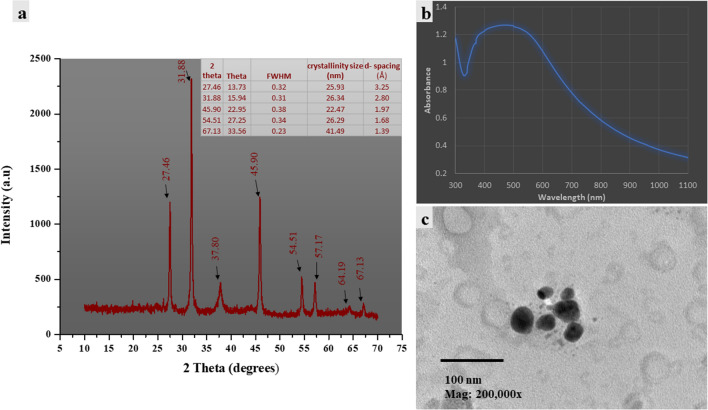
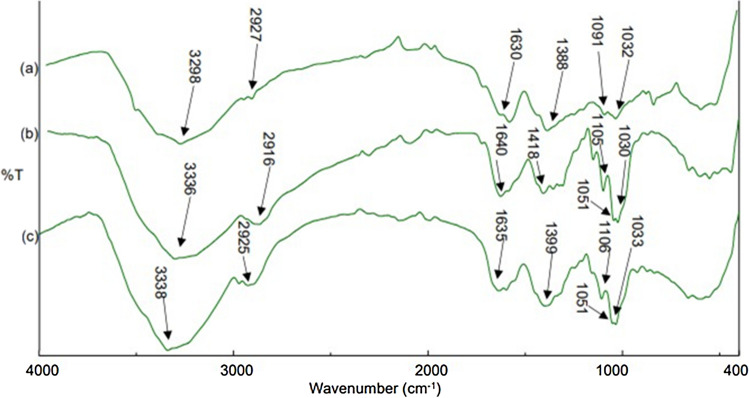
In this study, bacterial cellulose (BC) impregnated with green synthesized silver nanoparticles (AgNPs) is evaluated as an antimicrobial membrane for wound-healing treatment. Green synthesized silver nanoparticles using Moringa oleifera leaf extract were characterized using UV‒visible spectroscopy, FTIR, X-ray diffraction, and transmission electron microscopy. The results confirmed that the resulted particles were Ag 2 O and metallic Ag in nanoscale with an average size ranged from 24 to 40 nm. The green synthesized nanoparticles incorporated within both bacterial cellulose and filter paper discs showed excellent antibacterial activities against Staphylococcus aureus ATCC 6538 and Pseudomonas aeruginosa ATCC 9027. There was no significant difference noticed between bacterial cellulose and filter paper holding capacity to nanoparticles and there was lack of interaction between bacterial cellulose and impregnated nanoparticles as elaborated by Fourier transform infrared spectral analyses. Scanning electron microscopy investigation showed major distortions effects of green synthesized silver nanoparticles on bacterial cell morphology.
Verified 2026-11-22 · 1 reference not checked yet
Overview
CoChat Summary
TL;DR
Green-synthesized silver nanoparticles from Moringa oleifera leaf extract were characterized and impregnated into bacterial cellulose and filter paper; both composites showed antibacterial activity against S. aureus and P. aeruginosa. FTIR indicated no chemical interaction between AgNPs and BC, and SEM showed bacterial morphological distortion, supporting BC-AgNPs as a potential wound-dressing material pending further studies.
Key findings
- Green synthesis produced 25±0.305 mg AgNPs; UV–Vis maximum was at 466 nm; XRD peaks at 27.46°, 31.88°, 45.90°, 54.51°, 57.17°, 64.19°, and 67.13° indicated Ag2O and face-centered cubic silver; TEM showed semispherical particles 24–40 nm (Debye–Scherrer average 28.5 nm; conclusion states 32 nm).
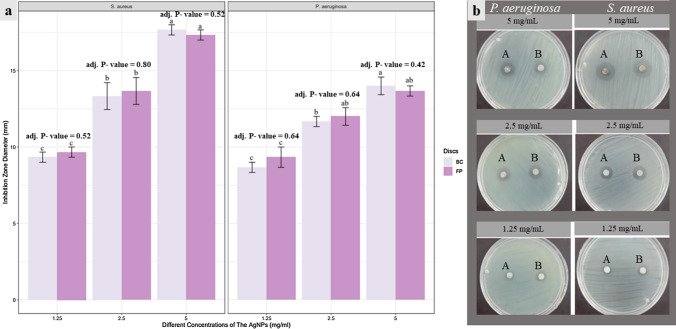
- AgNPs (5 mg/mL) inhibited S. aureus with IZD 17.6±0.58 mm and P. aeruginosa with IZD 12.6±0.58 mm; MIC and MBC were both 1.25 mg/mL for both strains.
- BC and filter paper discs impregnated with AgNPs both showed excellent antibacterial activity against S. aureus and P. aeruginosa, with no significant difference between the two carriers; holding capacities also did not differ significantly (adjusted p>0.05), and FTIR indicated no interaction between AgNPs and BC.
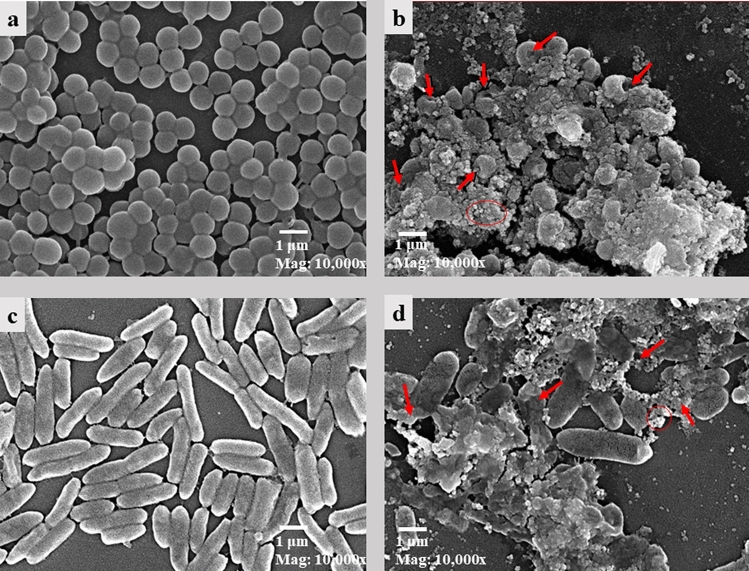
- SEM showed AgNP accumulation on S. aureus causing pores/invaginations, while P. aeruginosa cells showed destruction and distortion at cell poles after treatment at MIC.
Methods
- AgNPs were green-synthesized by mixing Moringa oleifera leaf extract with 1 mM AgNO3 at 60 °C for 20 min, purified by centrifugation/washing, and characterized by UV–Vis (300–1100 nm), XRD (2θ 10–60°), TEM, and FTIR (400–4000 cm−1).
- Antibacterial activity was tested against S. aureus ATCC 6538 and P. aeruginosa ATCC 9027 using disc diffusion (20 µL AgNPs; filter paper and BC/FP discs), broth microdilution MIC/MBC with resazurin (2.5–0.0012 mg/mL), and SEM after treatment at MIC.
- BC was produced using Novacetimonas hansenii HS1 in modified GAM for 7 days at 30 °C, purified, cut into 6 mm discs, and impregnated with AgNPs at 5, 2.5, and 1.25 µL/mL; holding capacity was measured by centrifugation; all experiments were in triplicate with R/Tukey’s test (p≤0.05).
Limitations
- Stated: the authors conclude that further studies are needed to estimate the efficiency of progressed applications of the BC-AgNPs composite.
- Evident: only in vitro antibacterial assays and SEM morphology were performed; no in vivo wound-healing, cytotoxicity, or biocompatibility testing is reported despite the proposed wound-dressing use.
- Evident: reporting inconsistencies include abstract size range 24–40 nm versus conclusion average 32 nm; abstract says Ag2O and metallic Ag while conclusion says Ag2O; Fig. 2 caption lists concentrations as 5, 2.5, and 5 mg/mL while methods state 5, 2.5, and 1.25 µL/mL.
Model-written summary. Check it against the paper before relying on it.
Integrity signals
Registry
Cites
Statistics
Figures
Verification
Claims the paper makes
2 Valid · 0 Not valid · 15 Not checked · 31 Own results and interpretations
The cited sources support only part of this claim — read each source’s verdict below.
In the paper
“The presence of ether linkages C–O–C confirming the presence of flavones, terpenoids and polysaccharides present in Moringa oleifera leaf extract which have good reduction potential involving in bio-reduction of AgNO3 as reported by Jadhav et al.(2022) and (Moodley et al. (2018)[11, 31].”
§ Antibacterial Potential of Bacterial Cellulose Impregnated with Green Synthesized Silver Nanoparticle Against S. aureus and P. aeruginosa > Discussion
What the sources say
- Partly supportedcites Jadhav et al.(2022) matched to “Role of Moringa oleifera on Green Synthesis of Metal/Metal Oxide Nanomaterials” (2022) sourceExperimental — accuracy not yet measured
Split into 2 atoms — 1 confirmed, 1 partially supported, 0 disputed, 0 misattributed, 0 unverifiable. Expand the claim to see per-atom verdicts.
- Partly supportedcites Moodley et al. (2018)[11, 31] matched to “Green synthesis of silver nanoparticles from Moringa oleifera leaf extracts and its antimicrobial potential” (2018) sourceExperimental — accuracy not yet measured
Split into 2 atoms — 1 confirmed, 1 partially supported, 0 disputed, 0 misattributed, 0 unverifiable. Expand the claim to see per-atom verdicts.
plainstates a cause- Asserted: passes — The authors put it forward as true.
- Checkable: passes — It can be checked against evidence.
- Load-bearing: unclear — It is unclear whether the paper’s conclusions depend on it.
- Based: passes — The paper gives a reason why it holds.
- Partly supported
The sources with a verdict support this claim; the rest weren’t checked yet, have no full text we could read, or their verdicts aren’t rated yet.
In the paper
“The appearance of all functional groups in FTIR analyses in our manuscript as reported by [7, 20, 25, 34] confirming the structure of bacterial cellulose.”
§ Antibacterial Potential of Bacterial Cellulose Impregnated with Green Synthesized Silver Nanoparticle Against S. aureus and P. aeruginosa > Discussion
What the sources say
- Could not verifycites [7] Moodley JS Krishna SBN Pillay K Green synthesis of silver nanoparticles from Moringa oleifera leaf extracts and its antimicrobial potential Adv Nat Sci Nanosci Nanotechnol 2018 9 015011 10.1088/2043-6254/aaabb2 sourceExperimental — accuracy not yet measured
Our copy of Moodley et al. (2018) concerns AgNPs green-synthesised from Moringa oleifera leaf extract; its FTIR section (3.5, pp. n/a) reports functional groups (hydroxyls, CH2/CH3, C=C/C=O, amide I/II, ether and C-O/C-O-C linkages) attributed to capping of silver nanoparticles by phenolics, flavones, terpenoids and polysaccharides of the leaf biomass, and the Discussion repeats this in the same context. No passage mentions bacterial cellulose or its structural confirmation, so the paper does not address the claim (searched: 'bacterial cellulose structure FTIR', 'cellulose polysaccharide functional groups confirmed'). The FTIR material here is plant leaf extract and silver nanoparticles, not bacterial cellulose, but nothing in our copy states a contrary point either. (LLM, conf=0.70)
- Not checked yetcites [20] Jinga SI Isopencu G Stoica-Guzun A Silver green synthesis on bacterial cellouse membranes using tannic acid Dig J Nanomater Bios 2013 8 4 1711 1717
- Supportedcites [25] Audtarat S Hongsachart P Dasri T Green synthesis of silver nanoparticles loaded into bacterial cellulose for antimicrobial application Nanocomposites 2022 1 13 10.1080/20550324.2022.2055375 source
The Results and discussion section of Audtarat et al. (2022) states that 'The FTIR spectrum of freeze-dried BC ... shows characteristic BC peaks', assigning the observed bands to O-H stretching, asymmetric and symmetric C-H angular deformation, asymmetrical C-O-C glycoside stretching and C-OH / C-C-OH stretching of secondary and primary alcohols — i.e. the full set of cellulose functional groups. The Materials and methods confirm FTIR was run on BC and BC-AgNPs 'to determine the organic functional groups present in the samples' (4000-500 cm-1, Shimadzu ATR), and the Conclusions list FTIR among the characterizations of the BC matrix. Thus our copy supports that FTIR analysis of the bacterial cellulose showed its characteristic functional groups consistent with the BC structure; the band assignments themselves are credited in-text to the papers cited as [Citation28, Citation29], but the FTIR measurement and its interpretation are this paper's own result. (LLM, conf=0.85)
- Could not verifycites [34] Agatonovic-Kustrin S Ristivojevic P Gegechkori V Essential oil quality and purity evaluation via FT-IR spectroscopy and pattern recognition techniques Appl Sci 2020 10 1 12 10.3390/app10207294 sourceExperimental — accuracy not yet measured
Our copy of Agatonovic-Kustrin et al. (2020) is entirely about ATR-FTIR profiling of plant essential oils (Lamiaceae, Asteraceae clusters; terpenes such as linalool, carvacrol, β-pinene, myrcene) combined with PCA/cluster analysis; the Introduction (p.1) frames IR use as structural characterization of functional groups in pure substances, plant extracts and distillates, not polymers. No passage mentions bacterial cellulose, cellulose, or pellicle — searches for 'bacterial cellulose structure confirmation FTIR' and 'cellulose polysaccharide hydrogen bonding broad OH band' returned only essential-oil band assignments (Sections 3.2, 'Species ATR-IR Peaks Compound Assignment', '850-920 cm-1', 'Mixed cluster'). The paper therefore neither supports nor contradicts the attributed point; it may simply be an inappropriate citation for bacterial cellulose. (LLM, conf=0.72)
plainstates a cause- Asserted: passes — The authors put it forward as true.
- Checkable: passes — It can be checked against evidence.
- Load-bearing: passes — The paper’s conclusions depend on it.
- Based: passes — The paper gives a reason why it holds.
- Could not verify
A result the paper reports from its own data — it cites no other source for it, so there is none to check. The quote shows it is in the paper.
In the paper
“there was accumulation of AgNPs on S. aureus cells, which results in pores or invaginations on cells that affect bacterial viability”
§ Antibacterial Potential of Bacterial Cellulose Impregnated with Green Synthesized Silver Nanoparticle Against S. aureus and P. aeruginosa > Results
plainstates a cause- Asserted: passes — The authors put it forward as true.
- Checkable: passes — It can be checked against evidence.
- Load-bearing: passes — The paper’s conclusions depend on it.
- Based: passes — The paper gives a reason why it holds.
A result the paper reports from its own data — it cites no other source for it, so there is none to check. The quote shows it is in the paper.
In the paper
“The green synthesized AgNPs concentration estimation after biosynthesis showed that the mixture (10 mL leaf extract+90 mL of 1 mM AgNO3) produced 25±0.305 mg silver nanoparticles.”
§ Antibacterial Potential of Bacterial Cellulose Impregnated with Green Synthesized Silver Nanoparticle Against S. aureus and P. aeruginosa > Results
plainstates a cause- Asserted: passes — The authors put it forward as true.
- Checkable: passes — It can be checked against evidence.
- Load-bearing: unclear — It is unclear whether the paper’s conclusions depend on it.
- Based: passes — The paper gives a reason why it holds.
A result the paper reports from its own data — it cites no other source for it, so there is none to check. The quote shows it is in the paper.
In the paper
“The values of holding capacity of bacterial cellulose and filter paper indicated that there was no significant difference between bacterial cellulose and filter paper holding capacity to green synthesized AgNPs as the adjusted p values estimated were more than 0.05.”
§ Antibacterial Potential of Bacterial Cellulose Impregnated with Green Synthesized Silver Nanoparticle Against S. aureus and P. aeruginosa > Results
hedged- Asserted: passes — The authors put it forward as true.
- Checkable: passes — It can be checked against evidence.
- Load-bearing: unclear — It is unclear whether the paper’s conclusions depend on it.
- Based: passes — The paper gives a reason why it holds.
17 more claims
Create a free account to see all 48 claims and to verify the 25 references still open.
- It may state two separate claims as one. 16
- Probably not a substantial claim. 12
Self-check
Percentages, sums and reported differences re-computed from the paper’s own numbers.
Each contradiction between two passages listed here was confirmed by an independent check.
Rated major: it would touch a result — a value a result rests on, reported and recomputed p-values on opposite sides of the significance level, two passages that conflict with no sign which is right, or a cited work retracted before this paper was published.
In the paper
§ Antibacterial Potential of Bacterial Cellulose Impregnated with Green Synthesized Silver Nanoparticle Against S. aureus and P. aeruginosa > Materials and Methods > Characterization of Green Synthesized AgNPs
“XRD spectra were recorded over 2θ angles ranging from 10° to 60°.”
§ Antibacterial Potential of Bacterial Cellulose Impregnated with Green Synthesized Silver Nanoparticle Against S. aureus and P. aeruginosa > Results
“there are other diffraction peaks appeared at 54.51°, 57.17°,64.19°, and 67.13°.”
Rated minor: it would not touch a result — a value no result rests on, a p-value that stays on the same side of the significance level, or a conflict that is clerical, resolved elsewhere in the paper, or outside its own findings.
In the paper
§ Antibacterial Potential of Bacterial Cellulose Impregnated with Green Synthesized Silver Nanoparticle Against S. aureus and P. aeruginosa > Materials and Methods > Incorporation of AgNPs Within Bacterial Cellulose and Filter Paper
“different concentrations (5, 2.5, and 1.25 µL/mL)”
§ Antibacterial Potential of Bacterial Cellulose Impregnated with Green Synthesized Silver Nanoparticle Against S. aureus and P. aeruginosa > Results
“different concentrations of green synthesized silver nanoparticles (5, 2.5, and 5 mg/mL)”
Rated minor: it would not touch a result — a value no result rests on, a p-value that stays on the same side of the significance level, or a conflict that is clerical, resolved elsewhere in the paper, or outside its own findings.
In the paper
§ Antibacterial Potential of Bacterial Cellulose Impregnated with Green Synthesized Silver Nanoparticle Against S. aureus and P. aeruginosa > Results
“c- P. aeruginosa (control) and d- P. aeruginosa (treated by the minimum inhibitory concentration of AgNPs)”
§ Antibacterial Potential of Bacterial Cellulose Impregnated with Green Synthesized Silver Nanoparticle Against S. aureus and P. aeruginosa > Results
“Red arrows in figure (b) and (c) pointed to distortions in bacterial cells”
Citations
Cites
R: A Language and Environment for Statistical Computing
R Core Team (2025) · doi:10.32614/r.manuals · Cited by 352,181
ggplot2: Elegant Graphics for Data Analysis
Wickham, H. (2009) · doi:10.1007/978-0-387-98141-3 · Cited by 14,447
Silver nanoparticles as a new generation of antimicrobials
Rai, M., Yadav, A., & Gade, A. (2009) · Biotechnology Advances · doi:10.1016/j.biotechadv.2008.09.002 · Cited by 6,173
Dhivya, S., Padma, V. V., & Santhini, E. (2015) · BioMedicine · doi:10.7603/s40681-015-0022-9 · Cited by 1,526
Nanoparticles: structure, properties, preparation and behaviour in environmental media
Christian, P., Von der Kammer, F., Baalousha, M., & Hofmann, T. (2008) · Ecotoxicology · doi:10.1007/s10646-008-0213-1 · Cited by 713
Bacterial cellulose: a versatile biopolymer for wound dressing applications
Portela, R., Leal, C. R., Almeida, P. L., & Sobral, R. G. (2019) · Microbial Biotechnology · doi:10.1111/1751-7915.13392 · Cited by 604
Jyoti, K., Baunthiyal, M., & Singh, A. (2016) · Journal of Radiation Research and Applied Sciences · doi:10.1016/j.jrras.2015.10.002 · Cited by 539
Green synthesis of silver nanoparticles and their characterization by XRD
Mehta, B. K., Chhajlani, M., & Shrivastava, B. D. (2017) · Journal of Physics Conference Series · doi:10.1088/1742-6596/836/1/012050 · Cited by 291
Prasad, T., & Elumalai, E. (2011) · Asian Pacific Journal of Tropical Biomedicine · doi:10.1016/s2221-1691(11)60096-8 · Cited by 290
Shaaban, M. T., Ghaly, M. F., & Fahmi, S. M. (2021) · Journal of Basic Microbiology · doi:10.1002/jobm.202100061 · Cited by 287
Self-citationMoodley, J. S., Krishna, S. B. N., Pillay, K., Sershen, & Govender, P. (2018) · Advances in Natural Sciences: Nanoscience and Nanotechnology · doi:10.1088/2043-6254/aaabb2 · Cited by 282
Silver-Functionalized Bacterial Cellulose as Antibacterial Membrane for Wound-Healing Applications
Pal, S., Nisi, R., Stoppa, M., & Licciulli, A. (2017) · ACS Omega · doi:10.1021/acsomega.7b00442 · Cited by 255
Mulyaningsih, S., Sporer, F., Reichling, J., & Wink, M. (2011) · Pharmaceutical Biology · doi:10.3109/13880209.2011.553625 · Cited by 217
Urbina, L., Corcuera, M. Á., Gabilondo, N., Eceiza, A., & Retegi, A. (2021) · Cellulose · doi:10.1007/s10570-021-04020-4 · Cited by 201 · cited 1×
“Bacterial cellulose (BC) is considered the most abundant hydrocolloid polymer suitable for use as a wound dressing [1] because it has a high water-holding capacity to absorb wound exudates, high mechanical strength to provide mechanical protection and a good physical barrier for wounds, high flexibility for wound heal…”
BackgroundAntimicrobial Bacterial Cellulose-Silver Nanoparticles Composite Membranes
Barud, H. S., Regiani, T., Marques, R. F. C., Lustri, W. R., Messaddeq, Y., & Ribeiro, S. J. L. (2011) · Journal of Nanomaterials · doi:10.1155/2011/721631 · Cited by 194
Agatonovic-Kustrin, S., Ristivojevic, P., Gegechkori, V., Litvinova, T. M., & W. Morton, D. (2020) · Applied Sciences · doi:10.3390/app10207294 · Cited by 170 · cited 1×
“The appearance of all functional groups in FTIR analyses in our manuscript as reported by [7, 20, 25, 34] confirming the structure of bacterial cellulose.”
BackgroundLactobacillus Mediated Synthesis of Silver Oxide Nanoparticles
Dhoondia, Z. H., & Chakraborty, H. (2012) · Nanomaterials and Nanotechnology · doi:10.5772/55741 · Cited by 157
Bacterial Cellulose: Functional Modification and Wound Healing Applications
He, W., Wu, J., Xu, J., Mosselhy, D. A., Zheng, Y., & Yang, S. (2021) · Advances in Wound Care · doi:10.1089/wound.2020.1219 · Cited by 125
Arya, S. S., Sharma, M. M., Das, R. K., Rookes, J. E., Cahill, D. M., & Lenka, S. K. (2019) · Heliyon · doi:10.1016/j.heliyon.2019.e02021 · Cited by 118
Sobha, K., Dumpala, P., Anantha, R., Verma, M. K., & Kandepu, S. (2017) · Scientific Reports · doi:10.1038/s41598-017-11853-2 · Cited by 94
Ibrahim, H. M., Zaghloul, S., Hashem, M., & El-Shafei, A. (2021) · Cellulose · doi:10.1007/s10570-020-03518-7 · Cited by 73
Role of Moringa oleifera on Green Synthesis of Metal/Metal Oxide Nanomaterials
Jadhav, V., Bhagare, A., Ali, I. H., Dhayagude, A., Lokhande, D., Aher, J., Jameel, M., & Dutta, M. (2022) · Journal of Nanomaterials · doi:10.1155/2022/2147393 · Cited by 57
Audtarat, S., Hongsachart, P., Dasri, T., Chio-Srichan, S., Soontaranon, S., Wongsinlatam, W., & Sompech, S. (2022) · Nanocomposites · doi:10.1080/20550324.2022.2055375 · Cited by 48
Concentration induced properties of silver nanoparticles and their antibacterial study
Ugwoke, E., Aisida, S. O., Mirbahar, A. A., Arshad, M., Ahmad, I., Zhao, T.-K., & Ezema, F. I. (2020) · Surfaces and Interfaces · doi:10.1016/j.surfin.2019.100419 · Cited by 31
Antibacterial Activity of Biocellulose with Oregano Essential Oil against Cronobacter Strains
Nagmetova, G., Berthold‐Pluta, A., Garbowska, M., Kurmanbayev, A. A., & Stasiak-Różańska, L. (2020) · Polymers · doi:10.3390/polym12081647 · Cited by 31
Carvalho, M., Albano, H., & Teixeira, P. (2018) · Journal of Food Quality and Hazards Control · doi:10.29252/jfqhc.5.2.3 · Cited by 29
Antibacterial potential of synthesized silver nanoparticles from leaf extract of Moringa oleifera
Islam, A., Mandal, C., & Habib, A. (2021) · Journal of Advanced Biotechnology and Experimental Therapeutics · doi:10.5455/jabet.2021.d108 · Cited by 21
Mutiara, T., Sulistyo, H., Fahrurrozi, M., & Hidayat, M. (2022) · Green Processing and Synthesis · doi:10.1515/gps-2022-0038 · Cited by 10
Inhibition of bacteria isolated from human specimens by selected marine-origin extracts
ibrahim, H., Shaaban, M., Hanafi, A., & Abdelsalam, K. (2020) · THE EGYPTIAN JOURNAL OF EXPERIMENTAL BIOLOGY (Botany) · doi:10.5455/egyjebb.20200509032540 · Cited by 7
Self-citationOptimum conditions for cellulose production by bacteria isolated from local apple in Egypt
Shaaban, M. T., & Salama, H. S. (2019) · THE EGYPTIAN JOURNAL OF EXPERIMENTAL BIOLOGY (Botany) · doi:10.5455/egyjebb.20191218083859 · Cited by 2
Self-citation
Research works printed but not linked: 4
- CLSI Methods for dilution antimicrobial susceptibility tests for bacteria that grows aerobically 2012 9 Wayne Clinical and Laboratory Standards Institute
- Jinga SI Isopencu G Stoica-Guzun A Silver green synthesis on bacterial cellouse membranes using tannic acid Dig J Nanomater Bios 2013 8 4 1711 1717
- Moodley JS Krishna SBN Pillay K Green synthesis of silver nanoparticles from Moringa oleifera leaf extracts and its antimicrobial potential Adv Nat Sci Nanosci Nanotechnol 2018 10.1088/2043-6254/aaabb2 · DOI · Paper page
- Barud HS Regiani T Marques RFC Antimicrobial bacterial cellulose-silver nanoparticles composite membranes J Nanomater 2011 10.1155/2011/721631 · DOI · Paper page
Cited by
Patel, J., Kumar, G. S., Roy, H., Maddiboyina, B., Leporatti, S., & Bohara, R. A. (2024) · Discover Nano · doi:10.1186/s11671-024-04021-9 · Cited by 96
Shaaban, M. T., Mohamed, B. S., Zayed, M., & El-Sabbagh, S. M. (2024) · BMC Biotechnology · doi:10.1186/s12896-024-00833-w · Cited by 84
Self-citationAyub, A., Wani, A. K., Malik, S. M., Ayub, M., Singh, R., Chopra, C., & Malik, T. (2025) · Biotechnology Reports · doi:10.1016/j.btre.2025.e00913 · Cited by 101
Farouk, S. M., Abu-Hussien, S. H., Abd-Elhalim, B. T., Mohamed, R. M., Arabe, N. M., Hussain, A. A. T., Mostafa, M. E., Hemdan, B. A., El-Sayed, S. M., Bakry, A., et al. (2023) · Scientific Reports · doi:10.1038/s41598-023-46355-x · Cited by 55
Ali, S., Bahadur, A., Hassan, A., Ahmad, S., Shah, W., & Iqbal, S. (2025) · Chemical Engineering Journal · doi:10.1016/j.cej.2025.160470 · Cited by 52
Metadata
- Authors
- Shaaban, M. T., Zayed, M., & Salama, H. S.
- Affiliations
- Menoufia University (EG)
- Corresponding author
- Salama, Hussein S.
- Venue
- Current Microbiology
- Published
- 2023-01-17
- Volume
- 80
- Issue
- 2
- Pages
- 75-75
- ISSN
- 0343-8651 (ISSN-L)
- 1432-0991
- PMC
- PMC9845145
- OpenAlex
- W4316813409
- Semantic Scholar
- 7dca5fded0995dd064507140f22cc36cc78ce15c
- Cited by
- 85
- References
- 29
- Citations by year
- 2026: 16 · 2025: 28 · 2024: 30 · 2023: 11
- FWCI
- 5.73
- Type
- journal article
- Language
- en
- Open access
- hybrid
- doi.org
- Licence
- cc-by
- creativecommons.org/licenses/by/4.0 (tdm)
- creativecommons.org/licenses/by/4.0 (vor)
- Locations
- Current Microbiology (publishedVersion, cc-by)
- PubMed Central (publishedVersion, cc-by)
- PubMed (publishedVersion)
- Greater South Information System
- Funders
- Minufiya University
- Topics
- Physical Sciences › Materials Science › Materials Chemistry › Nanoparticles: synthesis and applications
- Physical Sciences › Materials Science › Biomaterials › Advanced Cellulose Research Studies
- Physical Sciences › Materials Science › Polymers and Plastics › Dyeing and Modifying Textile Fibers
- Keywords
- bacterial cellulose, silver nanoparticles, green synthesis, moringa leaf extract, antibacterial activity, Staphylococcus aureus, Pseudomonas aeruginosa, antimicrobial membranes, wound healing, filter paper impregnation
- MeSH terms
- Anti-Bacterial Agents, Cellulose, Microbial Sensitivity Tests, Plant Extracts, Pseudomonas aeruginosa, Silver, Staphylococcus aureus, X-Ray Diffraction, Spectroscopy, Fourier Transform Infrared, Metal Nanoparticles, Methicillin-Resistant Staphylococcus aureus
About these checks
Registry, retraction, Cites and statistics results are computed, not judged, with one exception: a printed reference that no index lists is read once by a model before it counts as a citation error. Claims are extracted by a model and kept only when their quote appears verbatim in the text; each cited source is then checked, with a model’s help, for whether it says what the claim relies on. Those verdicts can be wrong — read the claim’s quote and the cited source before relying on one.
The claim verdicts this report counts are experimental: their accuracy is not yet measured.
A language model drew the claims from the paper on 2026-11-15, under version 3 of the claim definition (model deepseek-v4.1-flash, prompt extract-v3).
A second model labelled each claim on 2026-11-15 (model jev-1.13-20260917, definition revision gold-guideline-v0.2).
Cited sources are checked with a language model’s help (qwen3.8-omni-flash).
Statistics and arithmetic are recomputed, not judged.
Confidence bands are shown only for fields calibrated on our annotated test set. None is calibrated yet, so no band is shown.
What counts as a claim ›How we measure confidence ›How we check this ›
Are you an author, or do you see a problem with this page? Request a review
Data sources
Bibliographic data: Semantic Scholar, OpenAlex, Crossref.
Contains information from the Semantic Scholar Academic Graph Datasets, made available under the ODC Attribution License (ODC-BY 1.0).
Semantic Scholar’s data is described in: Kinney, R., et al. (2023). The Semantic Scholar Open Data Platform. arXiv:2301.10140.
