

LMDZ5B: the atmospheric component of the IPSL climate model with revisited parameterizations for clouds and convection
Open accessThe DOI matches its Crossref record; 83 of the 84 references it cites were found in a registry or an index.
Abstract
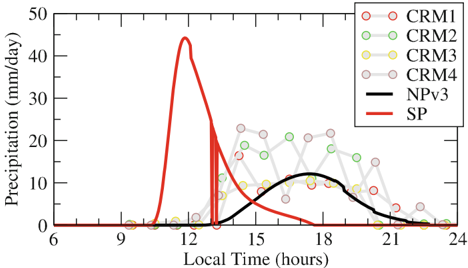
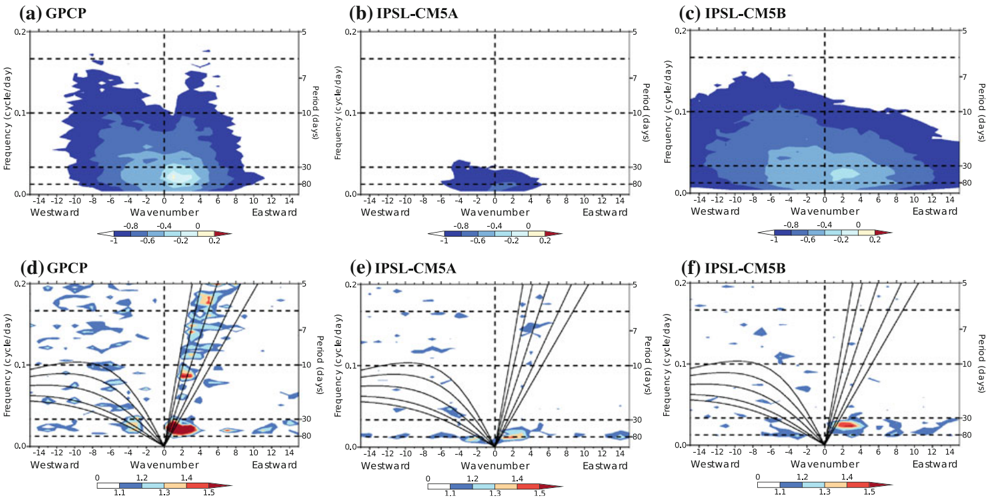
Based on a decade of research on cloud processes, a new version of the LMDZ atmospheric general circulation model has been developed that corresponds to a complete recasting of the parameterization of turbulence, convection and clouds. This LMDZ5B version includes a mass-flux representation of the thermal plumes or rolls of the convective boundary layer, coupled to a bi-Gaussian statistical cloud scheme, as well as a parameterization of the cold pools generated below cumulonimbus by re-evaporation of convective precipitation. The triggering and closure of deep convection are now controlled by lifting processes in the sub-cloud layer. An available lifting energy and lifting power are provided both by the thermal plumes and by the spread of cold pools. The individual parameterizations were carefully validated against the results of explicit high resolution simulations. Here we present the work done to go from those new concepts and developments to a full 3D atmospheric model, used in particular for climate change projections with the IPSL-CM5B coupled model. Based on a series of sensitivity experiments, we document the differences with the previous LMDZ5A version distinguishing the role of parameterization changes from that of model tuning. Improvements found previously in single-column simulations of case studies are confirmed in the 3D model: (1) the convective boundary layer and cumulus clouds are better represented and (2) the diurnal cycle of convective rainfall over continents is delayed by several hours, solving a longstanding problem in climate modeling. The variability of tropical rainfall is also larger in LMDZ5B at intraseasonal time-scales. Significant biases of the LMDZ5A model however remain, or are even sometimes amplified. The paper emphasizes the importance of parameterization improvements and model tuning in the frame of climate change studies as well as the new paradigm that represents the improvement of 3D climate models under the control of single-column case studies simulations.
Overview
The claims and statistics of this paper haven’t been checked yet.
Free: it reads the open-access text and checks the first 5 claims that cite a source we can check. Create a free account to check every claim.
Integrity signals
Registry
Cites
Statistics
Figures



Verification
Claims the paper makes
The claims and statistics of this paper haven’t been checked yet.
Free: it reads the open-access text and checks the first 5 claims that cite a source we can check. Create a free account to check every claim.
Claims other papers make about this one
Each is checked against this paper’s own text: does it say what the citing paper says it does?
The source backs part of the claim, not all of it — or backs it for a different population, condition or comparison.
In the citing paper
“This success of the automated procedure benefited from the expertise gained in the team from decades of practice of by-hand tuning of the IPSL model (14, 17, 18, 37).”
From Toward machine-assisted tuning avoiding the underestimation of uncertainty in climate change projections (2023) · cites this paper as [18]
Experimental — accuracy not yet measured
Self-check
Percentages, sums and reported differences re-computed from the paper’s own numbers.
The self-check needs the paper’s full text.
Citations
Cites
The ERA‐Interim reanalysis: configuration and performance of the data assimilation system
Dee, D. P., Uppala, S. M., Simmons, A. J., Berrisford, P., Poli, P., Kobayashi, S., Andrae, U., Balmaseda, M. A., Balsamo, G., Bauer, P., et al. (2011) · Quarterly Journal of the Royal Meteorological Society · doi:10.1002/qj.828 · Cited by 24,480
Robust Responses of the Hydrological Cycle to Global Warming
Held, I. M., & Soden, B. J. (2006) · Journal of Climate · doi:10.1175/jcli3990.1 · Cited by 4,959 · cited 1×
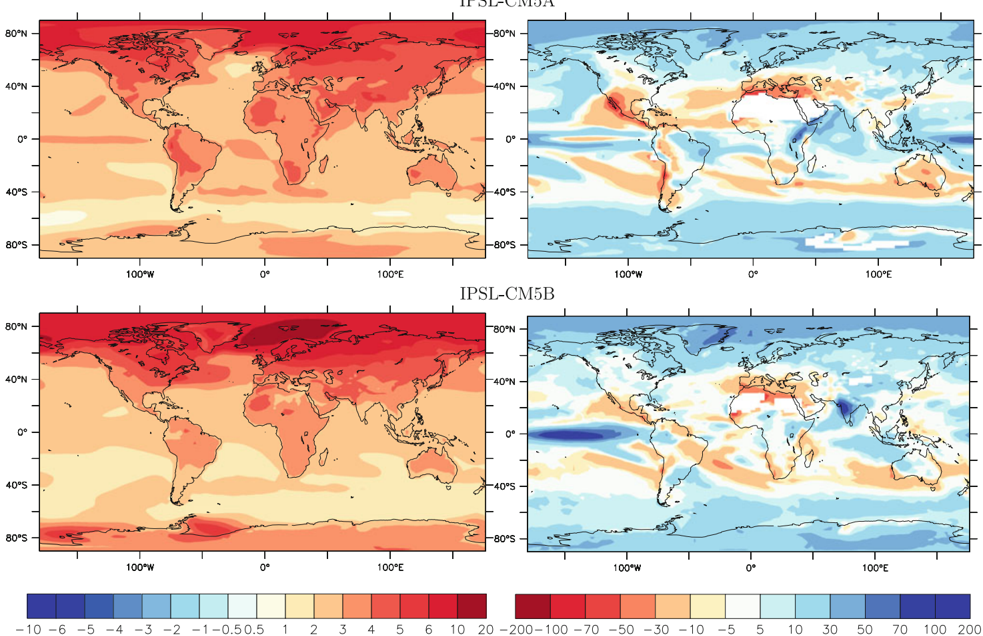
“Regarding rainfall, some aspects appear to be robust as well, such as the global increase of rainfall in the ITCZ/ SPCZ region, and a relative drying at around 30–40 degrees latitude in both hemispheres, also a rather robust feature of CMIP3 projections (Held and Soden 2006).”
BackgroundMeehl, G. A., Stocker, T. F., Collins, W. D., Friedlingstein, P., Gaye, A. T., Gregory, J. M., Kitoh, A., Knutti, R., Murphy, J. M., Noda, A., et al. (n.d.) · Bern Open Repository and Information System (University of Bern) · doi:10.48350/25539 · Cited by 3,726
A dynamic global vegetation model for studies of the coupled atmosphere‐biosphere system
Krinner, G., Viovy, N., de Noblet‐Ducoudré, N., Ogée, J., Polcher, J., Friedlingstein, P., Ciais, P., Sitch, S., & Prentice, I. C. (2005) · Global Biogeochemical Cycles · doi:10.1029/2003gb002199 · Cited by 2,496 · cited 2×
“In IPSL-CM5, LMDZ is coupled to Orchidee over continental surfaces (Krinner et al, 2005) and Nemo3.”
BackgroundZhang, C. (2005) · Reviews of Geophysics · doi:10.1029/2004rg000158 · Cited by 2,178 · cited 1×
“Their representation is key for the simulation of prominent climate features such as the Inter Tropical Convergence Zone (ITCZ) organization (Lindzen and Hou, 1988; Hou and Lindzen, 1992) or Madden-Julian Oscillation (Zhang, 2005).”
BackgroundWheeler, M., & Kiladis, G. N. (1999) · Journal of the Atmospheric Sciences · doi:10.1175/1520-0469(1999)056<0374:ccewao>2.0.co;2 · Cited by 1,809 · cited 2×
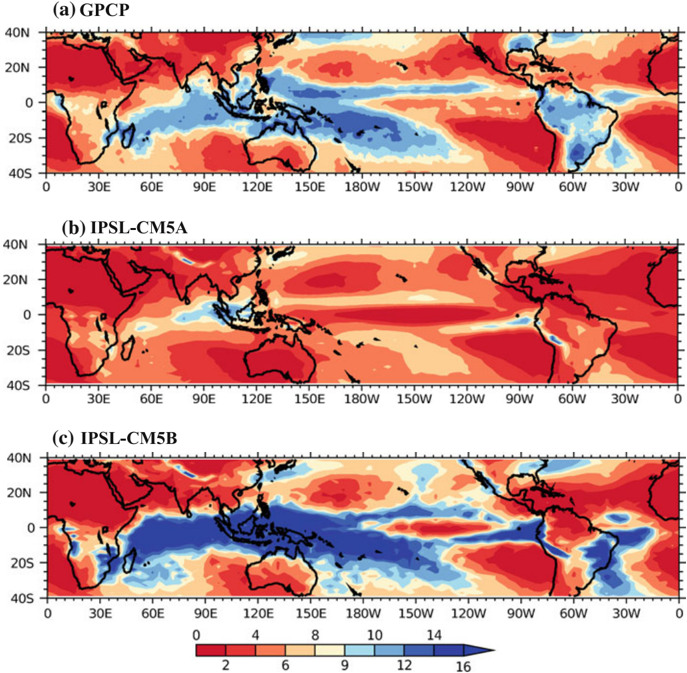
“A space-time analysis of tropical rainfall anomalies, similar to that of Wheeler and Kiladis (1999) was then performed (Fig.”
MethodInitial performance assessment of CALIOP
Winker, D. M., Hunt, W. H., & McGill, M. J. (2007) · Geophysical Research Letters · doi:10.1029/2007gl030135 · Cited by 1,395 · cited 1×
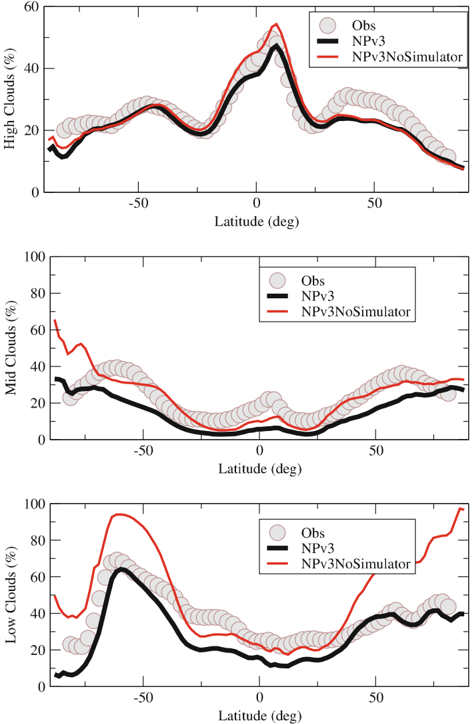
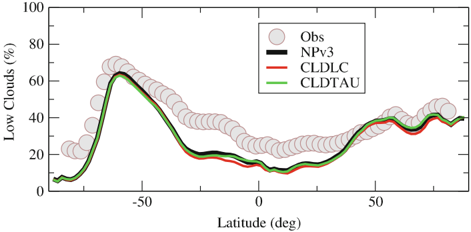
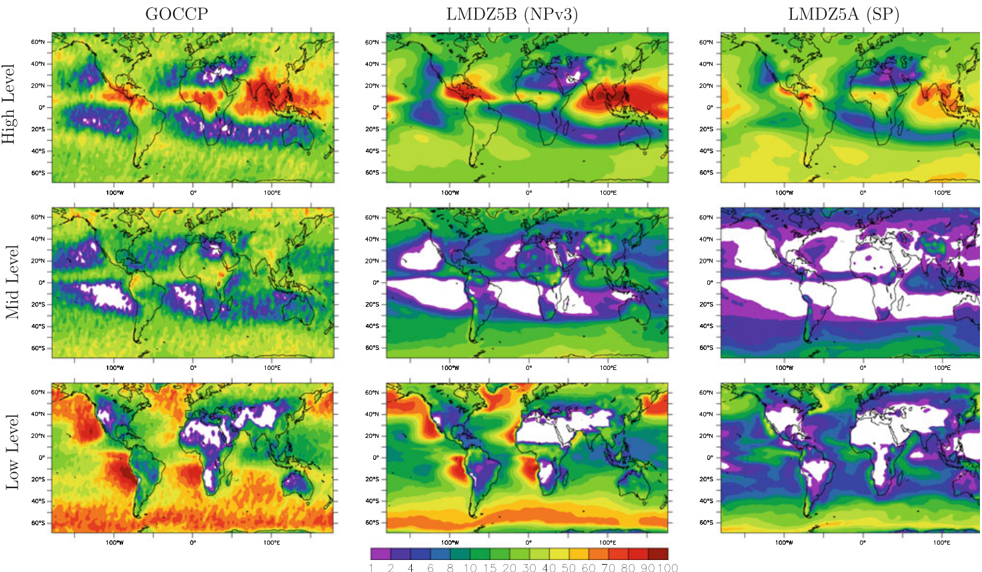
“6 shows the zonal and annual mean of the cloud fraction as simulated with the NPv3 version of the model and as observed by the Caliop Lidar onboard the Calipso satellite (Winker et al, 2007).”
MethodMarine boundary layer clouds at the heart of tropical cloud feedback uncertainties in climate models
Bony, S., & Dufresne, J. (2005) · Geophysical Research Letters · doi:10.1029/2005gl023851 · Cited by 1,302 · cited 1×
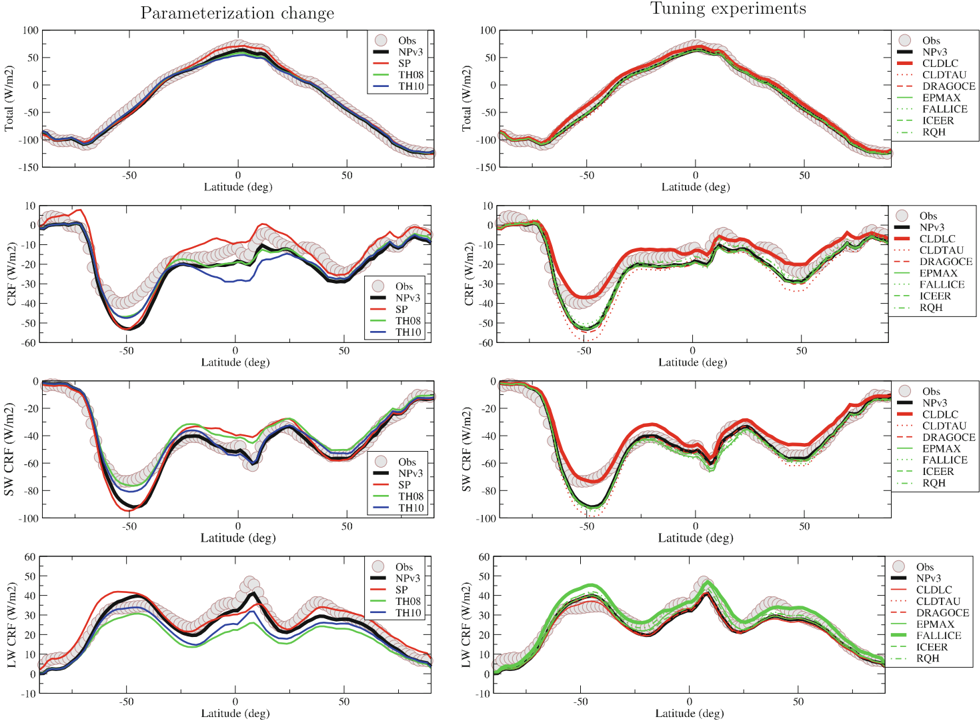
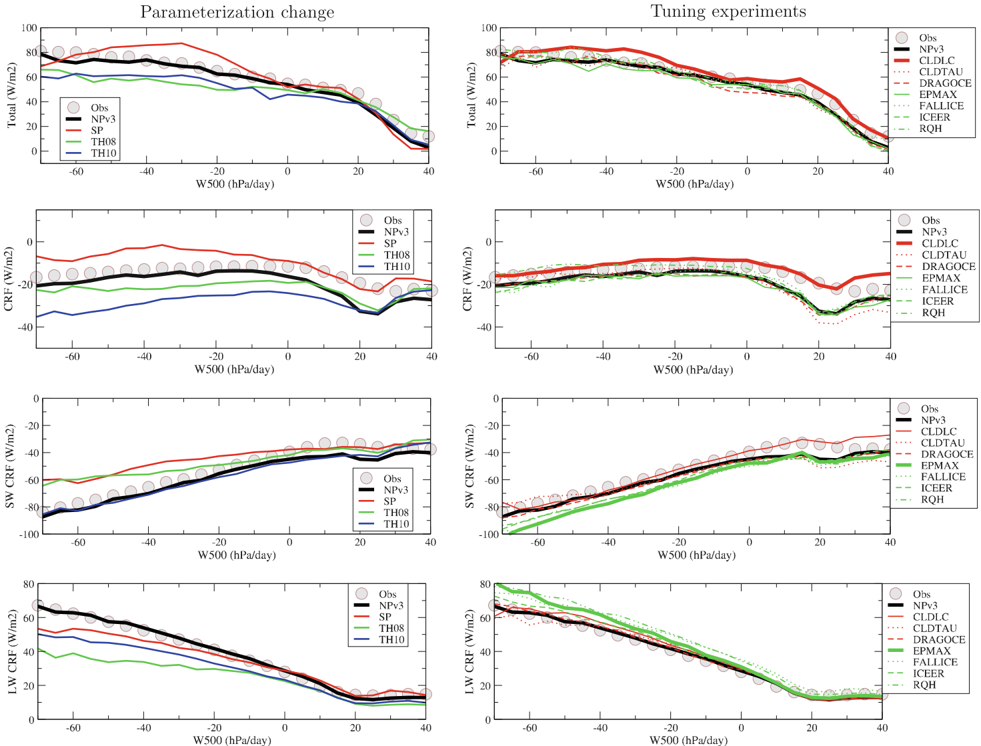
“…; 3. the decomposition between clear sky fluxes and cloud radiative forcing (CRF) ; 4. the dependency of the radiative flux on the large scale dynamics, using the ω500 regime sorting of Bony et al (1997) ; 5. ocean/continent contrasts, in the tropics, which is a key for monsoon circulation.”
MethodSelf-citationA Global Climatic Model Based on the Energy Balance of the Earth-Atmosphere System
Sellers, W. D. (1969) · Journal of Applied Meteorology · doi:10.1175/1520-0450(1969)008<0392:agcmbo>2.0.co;2 · Cited by 1,124
A new method for diagnosing radiative forcing and climate sensitivity
Gregory, J. M., Ingram, W. J., Palmer, M. A., Jones, G. S., Stott, P. A., Thorpe, R. B., Lowe, J. A., Johns, T. C., & Williams, K. D. (2004) · Geophysical Research Letters · doi:10.1029/2003gl018747 · Cited by 1,075 · cited 1×
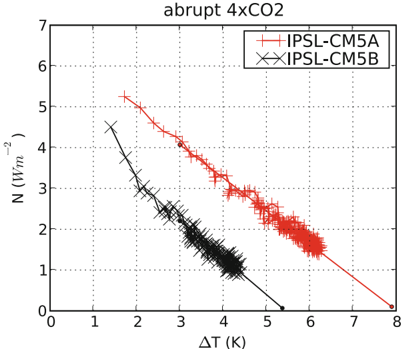
“For such experiments, Gregory et al. (2004) suggest to use a regression of the perturbation of the net flux at TOA (N) as a function of the perturbation DT of the global mean surface temperature in order to estimate the radiative forcing, the total climate feedback and the temperature change at Fig.”
Method
Research works printed but not linked: 4
- Heymsfield AJ, Donner LJ (1990) A scheme for parameterizing ice- cloud water content in general circulation models. J Atmos Sci 47:1865-1877. doi:10.1175/1520-0469(1990)047\1865:ASF PIC[2.0.CO;2 · doi:10.1175/1520-0469(1990)047\1865:asf
- Lindzen RS, Hou A (1988) Hadley circulation for zonally averaged heating centered off the equator. J Atmos Sci 45:2416-2427 · doi:10.1175/1520-0469(1988)045
- Moeng C, Wyngaard JC (1988) Spectral analysis of large-eddy simulations of the convective boundary layer. J Atmos Sci 45(23):3573-3587 · doi:10.1175/1520-0469(1988)045
- Zipser EJ (1969) The role of organized unsaturated convective downdrafts in the structure and rapid decay of an equatorial disturbance. J Appl Meteorol 8:799-814 · doi:10.1175/1520-0450(1969)008
Cited by
Climate change projections using the IPSL-CM5 Earth System Model: from CMIP3 to CMIP5
Dufresne, J.-L., Foujols, M.-A., Denvil, S., Caubel, A., Marti, O., Aumont, O., Balkanski, Y., Bekki, S., Bellenger, H., Benshila, R., et al. (2013) · Climate Dynamics · doi:10.1007/s00382-012-1636-1 · Cited by 1,755
“The reasons for this difference may be related to the reduction of the southern westerlies biases in IPSL- CM5A-MR compared to IPSL-CM5A-LR (see Hourdin et al. 2013a) and its impact on oceanic carbon uptake as demonstrated in Swart and Fyfe (2012).”
BackgroundMethodResultInfluentialSelf-citationPresentation and Evaluation of the IPSL‐CM6A‐LR Climate Model
Boucher, O., Servonnat, J., Albright, A. L., Aumont, O., Balkanski, Y., Bastrikov, V., Bekki, S., Bonnet, R., Bony, S., Bopp, L., et al. (2020) · Journal of Advances in Modeling Earth Systems · doi:10.1029/2019ms002010 · Cited by 1,694
“The jets, which are located too close to the equator in most CMIP models, are known to generally move poleward when the horizontal resolution is increased (Hourdin et al., 2013a).”
BackgroundMethodSelf-citationWestra, S., Fowler, H. J., Evans, J. P., Alexander, L. V., Berg, P., Johnson, F., Kendon, E. J., Lenderink, G., & Roberts, N. M. (2014) · Reviews of Geophysics · doi:10.1002/2014rg000464 · Cited by 1,533
“…including entrainment in the parameterization of deep convection [Stirling and Stratton, 2012; Stratton and Stirling, 2012], coupling between shallow and deep convection, and including density currents, have been found to improve the diurnal precipitation cycle over land [Hourdin et al., 2013].”
BackgroundEvaluation of CMIP6 DECK Experiments With CNRM‐CM6‐1
Voldoire, A., Saint‐Martin, D., Sénési, S., Decharme, B., Alias, A., Chevallier, M., Colin, J., Guérémy, J. ‐., Michou, M., Moine, M. ‐., et al. (2019) · Journal of Advances in Modeling Earth Systems · doi:10.1029/2019ms001683 · Cited by 1,136
“…that atmospheric processes are better represented by this drastic change in atmospheric parameterizations; however, this may not result in a general improvement of the model as experienced by other models, as shown, for example, by the version 5B of the IPSL‐CM model (Hourdin et al., 2013).”
MethodSelf-citationThe Art and Science of Climate Model Tuning
Hourdin, F., Mauritsen, T., Gettelman, A., Golaz, J.-C., Balaji, V., Duan, Q., Folini, D., Ji, D., Klocke, D., Qian, Y., et al. (2017) · Bulletin of the American Meteorological Society · doi:10.1175/bams-d-15-00135.1 · Cited by 611
Self-citation
Metadata
- Authors
- Hourdin, F., Grandpeix, J.-Y., Rio, C., Bony, S., Jam, A., Cheruy, F., Rochetin, N., Fairhead, L., Idelkadi, A., Musat, I., Dufresne, J.-L., Lahellec, A., Lefebvre, M.-P., & Roehrig, R.
- Affiliations
- Laboratoire de Météorologie Dynamique (FR)
- Centre National de la Recherche Scientifique (FR)
- Centre National de Recherches Météorologiques (FR)
- Corresponding author
- Hourdin, Frédéric
- ORCID
- Venue
- Climate Dynamics
- Published
- 2012-04-28
- Volume
- 40
- Issue
- 9-10
- Pages
- 2193-2222
- ISSN
- 0930-7575 (ISSN-L)
- 1432-0894
- OpenAlex
- W2084308561
- Cited by
- 299
- References
- 84
- Citations by year
- 2026: 6 · 2025: 6 · 2024: 14 · 2023: 13 · 2022: 17 · 2021: 17 · 2020: 25 · 2019: 35 · 2018: 29 · 2017: 34 · 2016: 15 · 2015: 45 · 2014: 10 · 2013: 20 · 2012: 10
- FWCI
- 18.57
- Type
- journal article
- Language
- en
- Open access
- hybrid
- doi.org
- Licence
- cc-by
- Locations
- Climate Dynamics (publishedVersion, cc-by)
- HAL (submittedVersion, other-oa)
- Funders
- Centre National de la Recherche Scientifique
- Grand Équipement National De Calcul Intensif
- Center for Neuroscience and Regenerative Medicine
- Topics
- Physical Sciences › Earth and Planetary Sciences › Atmospheric Science › Meteorological Phenomena and Simulations
- Physical Sciences › Environmental Science › Global and Planetary Change › Climate variability and models
- Physical Sciences › Environmental Science › Global and Planetary Change › Atmospheric aerosols and clouds
- Keywords
- cloud parameterization, convection parameterization, convective boundary layer, thermal plume, cold pools, cumulus clouds, tropical rainfall variability, intraseasonal variability, model calibration, climate change projections
About these checks
Registry, retraction, Cites and statistics results are computed, not judged, with one exception: a printed reference that no index lists is read once by a model before it counts as a citation error. Claims are extracted by a model and kept only when their quote appears verbatim in the text; each cited source is then checked, with a model’s help, for whether it says what the claim relies on. Those verdicts can be wrong — read the claim’s quote and the cited source before relying on one.
Statistics and arithmetic are recomputed, not judged.
Confidence bands are shown only for fields calibrated on our annotated test set. None is calibrated yet, so no band is shown.
What counts as a claim ›How we measure confidence ›How we check this ›
Are you an author, or do you see a problem with this page? Request a review
How to cite
Cite CoChat for the checks on this page, and the paper for its own findings.
- This page
- CoChat. (2026). Citation check: LMDZ5B: the atmospheric component of the IPSL climate model with revisited parameterizations for clouds and convection. https://app.cochat.ai/papers/10.1007/s00382-012-1343-y
- The paper
- Hourdin, F., Grandpeix, J.-Y., Rio, C., Bony, S., Jam, A., Cheruy, F., Rochetin, N., Fairhead, L., Idelkadi, A., Musat, I., Dufresne, J.-L., Lahellec, A., Lefebvre, M.-P., & Roehrig, R. (2013). LMDZ5B: the atmospheric component of the IPSL climate model with revisited parameterizations for clouds and convection. Climate Dynamics. https://doi.org/10.1007/s00382-012-1343-y
Data sources
Bibliographic data: Semantic Scholar, OpenAlex, Crossref.
Contains information from the Semantic Scholar Academic Graph Datasets, made available under the ODC Attribution License (ODC-BY 1.0).
Semantic Scholar’s data is described in: Kinney, R., et al. (2023). The Semantic Scholar Open Data Platform. arXiv:2301.10140.
