

Climate model benchmarking with glacial and mid-Holocene climates
Open accessThe DOI matches its Crossref record; 54 of the 54 references it cites were found in a registry or an index.
Abstract
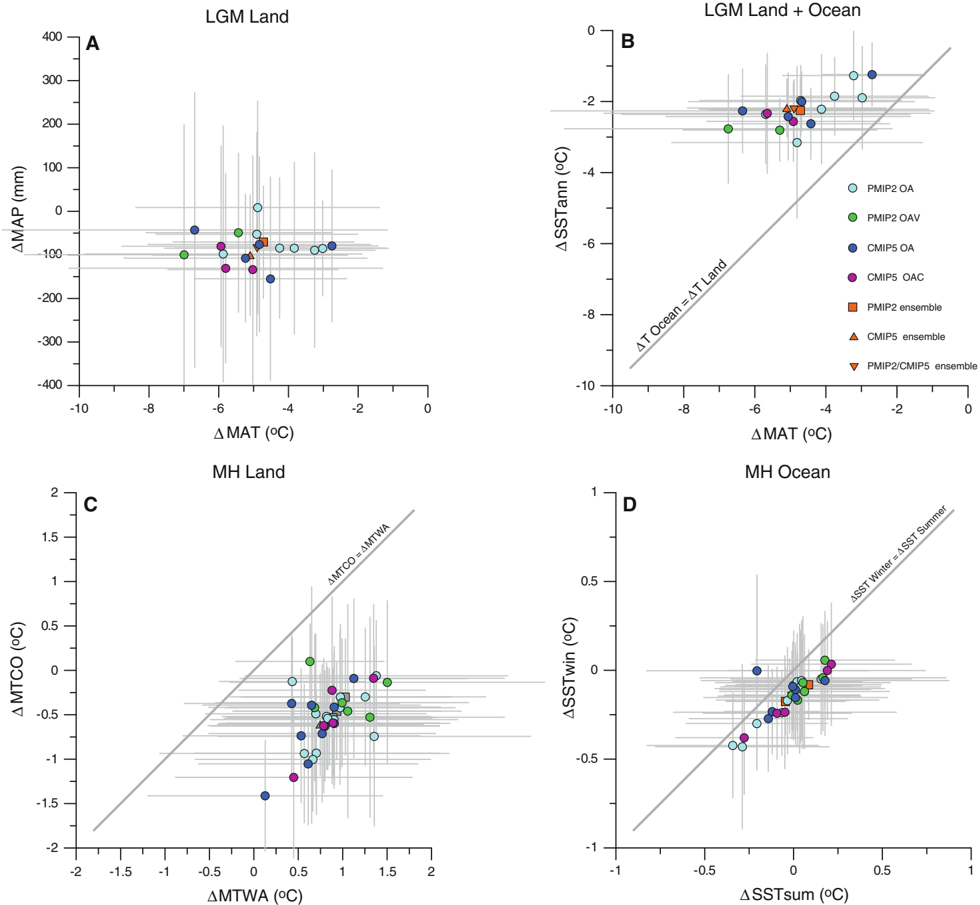
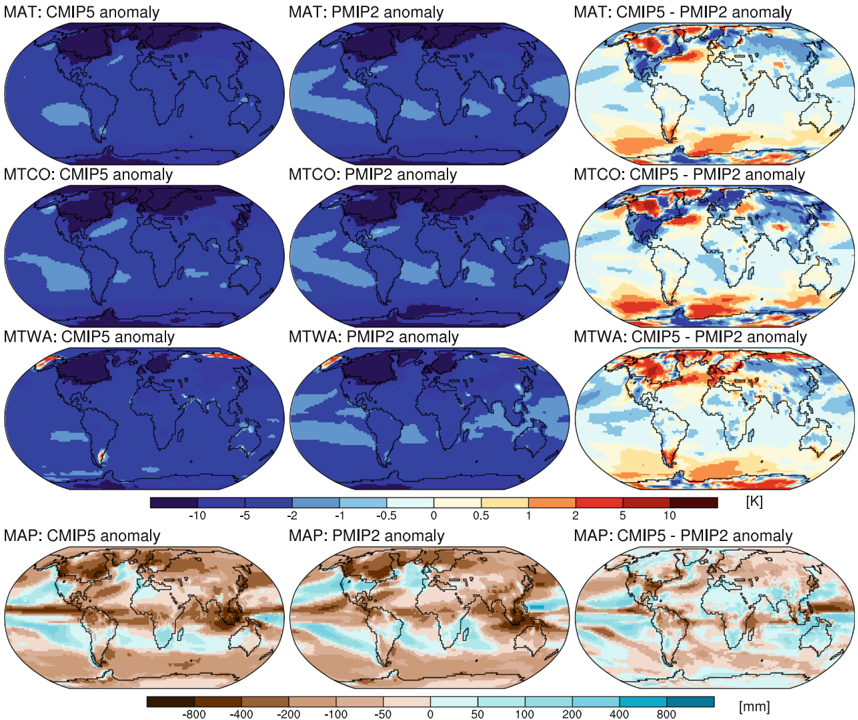
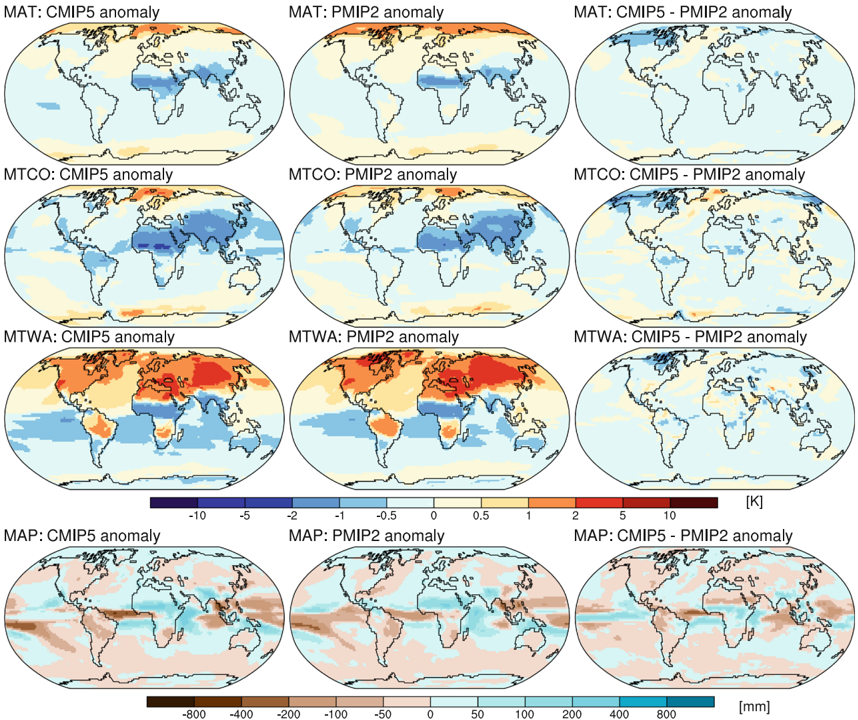
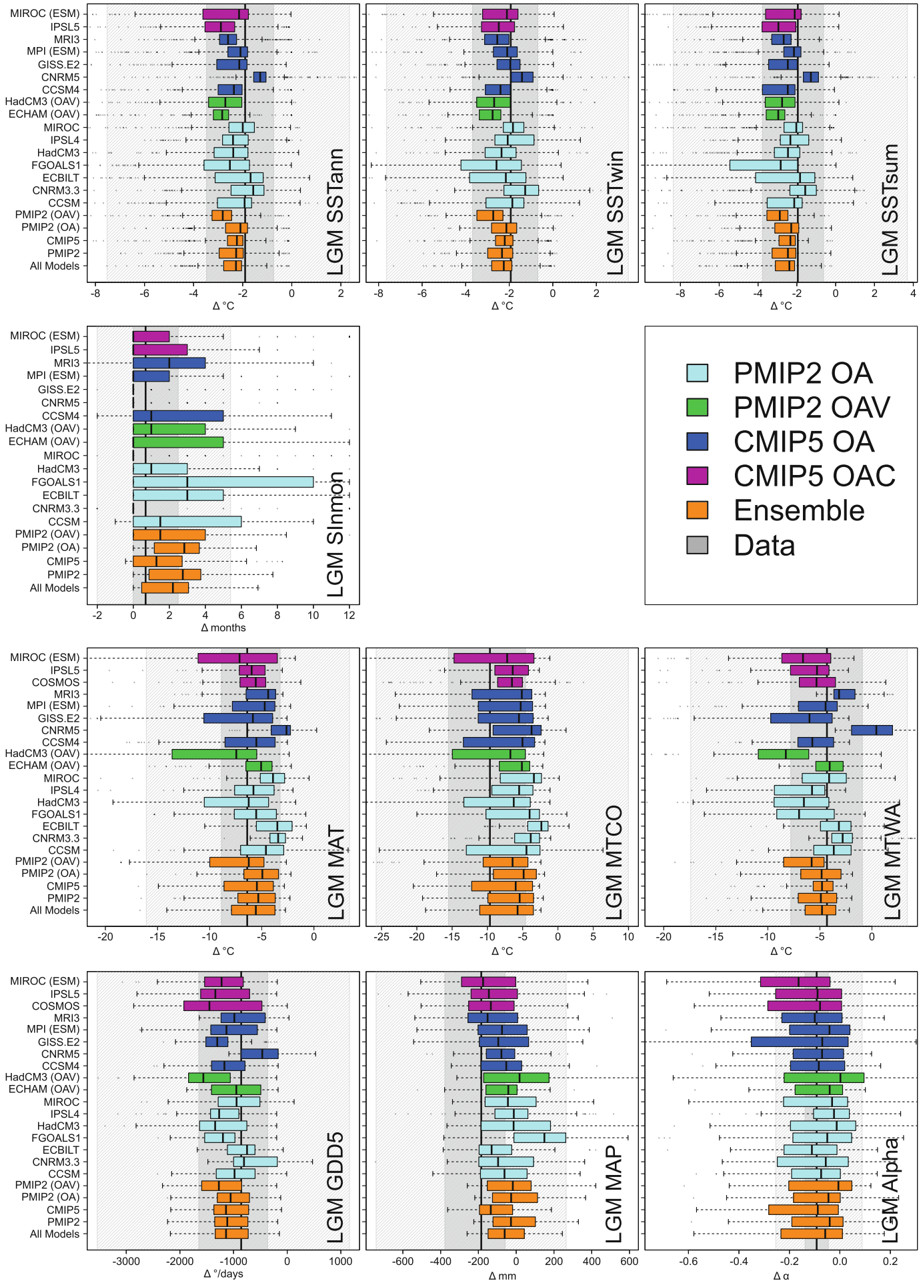
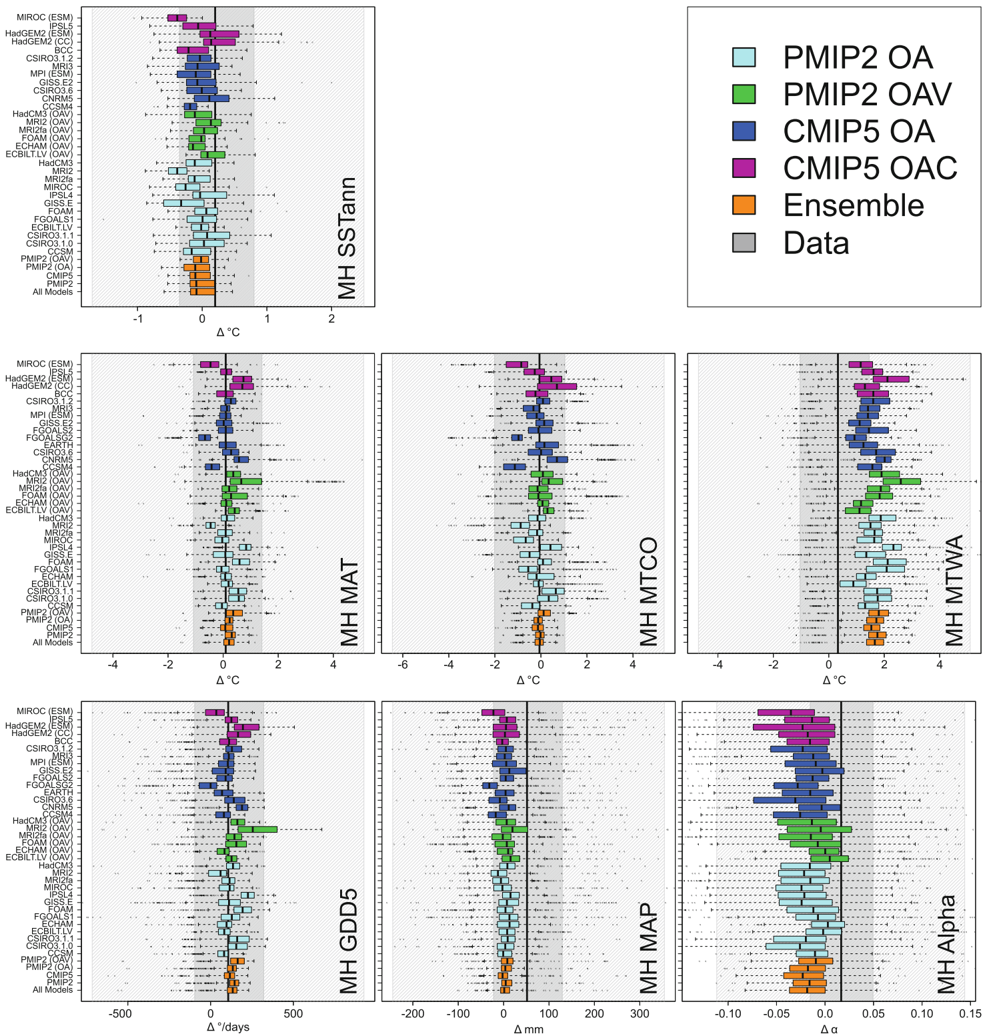
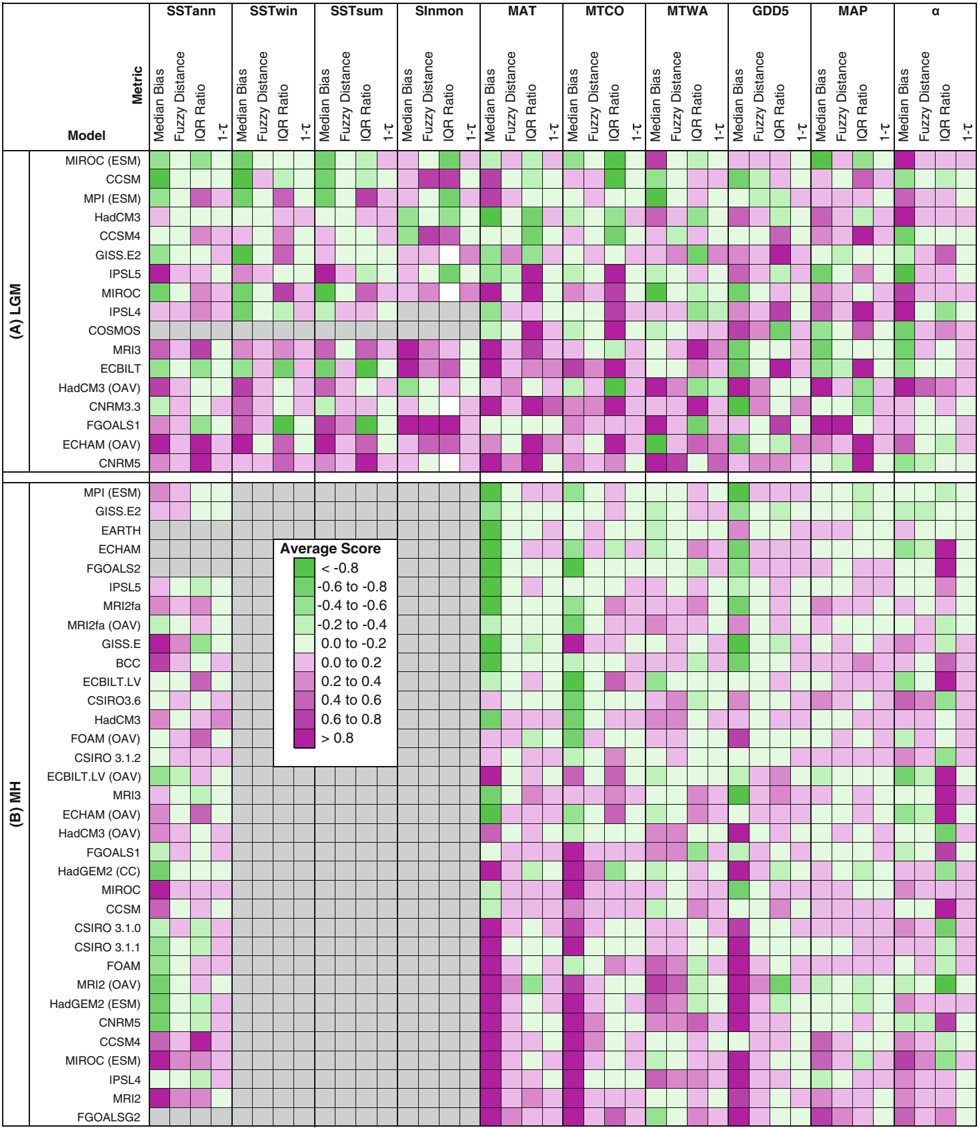
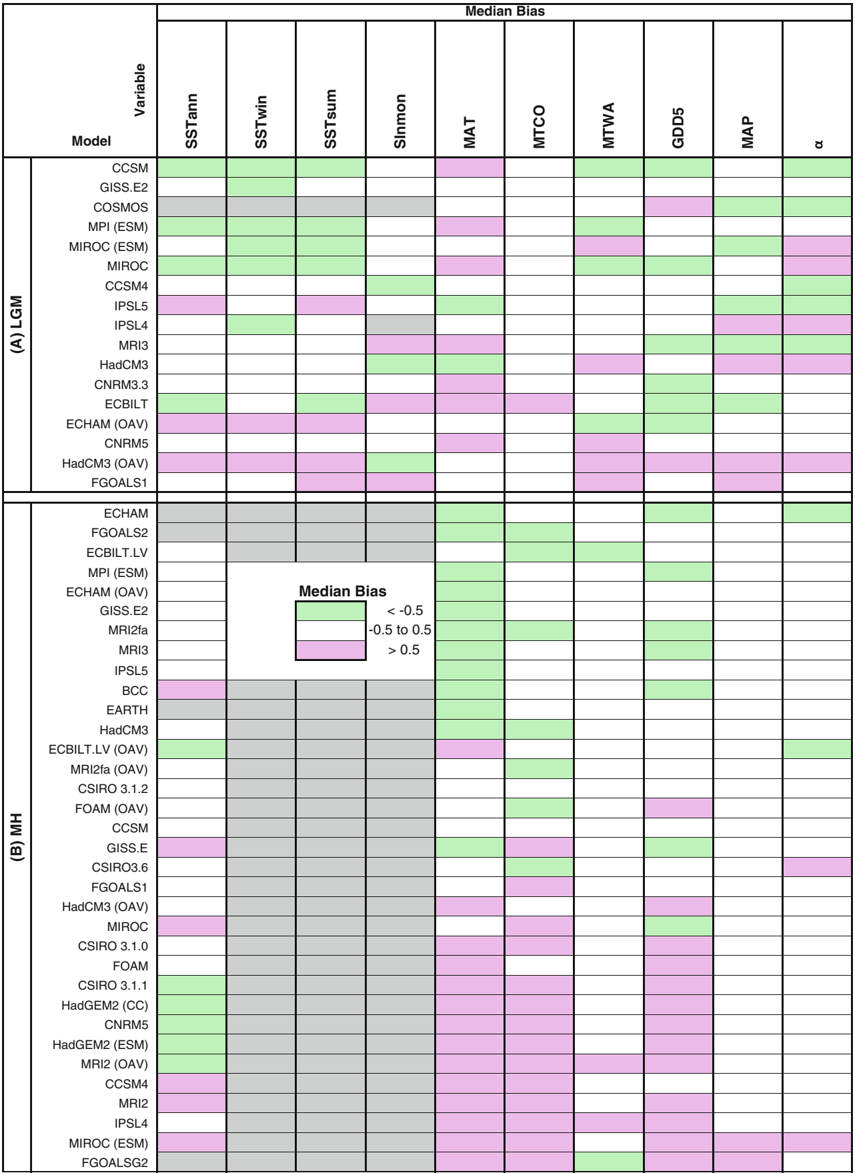
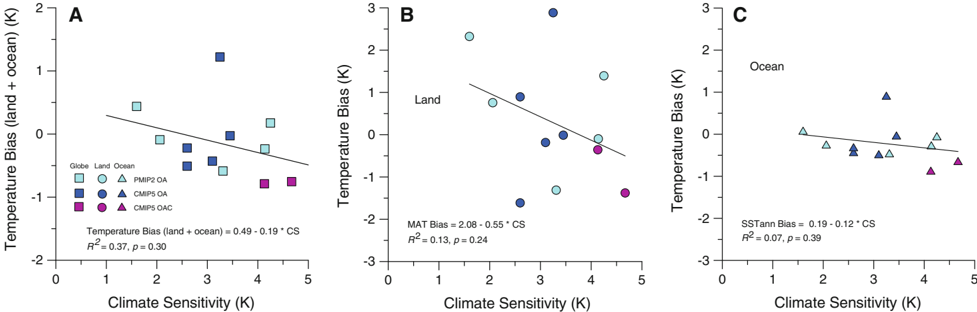
Past climates provide a test of models’ ability to predict climate change. We present a comprehensive evaluation of state-of-the-art models against Last Glacial Maximum and mid-Holocene climates, using reconstructions of land and ocean climates and simulations from the Palaeoclimate Modelling and Coupled Modelling Intercomparison Projects. Newer models do not perform better than earlier versions despite higher resolution and complexity. Differences in climate sensitivity only weakly account for differences in model performance. In the glacial, models consistently underestimate land cooling (especially in winter) and overestimate ocean surface cooling (especially in the tropics). In the mid-Holocene, models generally underestimate the precipitation increase in the northern monsoon regions, and overestimate summer warming in central Eurasia. Models generally capture large-scale gradients of climate change but have more limited ability to reproduce spatial patterns. Despite these common biases, some models perform better than others.
Overview
The claims and statistics of this paper haven’t been checked yet.
Free: it reads the open-access text and checks the first 5 claims that cite a source we can check. Create a free account to check every claim.
Integrity signals
Registry
Cites
Statistics
Figures
Verification
Claims the paper makes
The claims and statistics of this paper haven’t been checked yet.
Free: it reads the open-access text and checks the first 5 claims that cite a source we can check. Create a free account to check every claim.
Claims other papers make about this one
Each is checked against this paper’s own text: does it say what the citing paper says it does?
The cited source says what the claim attributes to it.
In the citing paper
“The last 6000 years has seen significant climatic and precipitation changes, which have been well documented from both proxy records and modelling studies (Braconnot et al. 2004;Harrison et al. 2014).”
From Climate Change and the Rise of the Central Asian Silk Roads (2019) · cites this paper as Harrison et al. 2014
Self-check
Percentages, sums and reported differences re-computed from the paper’s own numbers.
The self-check needs the paper’s full text.
Citations
Cites
Climate change 2007: the physical science basis
Solomon, S., Qin, D., Manning, M., Marquis, M. C., Averyt, K. B., Tignor, M., Miller, H. L., & Chen, Z. (2007) · Cited by 24,695
An Overview of CMIP5 and the Experiment Design
Taylor, K. E., Stouffer, R. J., & Meehl, G. A. (2012) · Bulletin of the American Meteorological Society · doi:10.1175/bams-d-11-00094.1 · Cited by 14,052 · cited 1×
“Simulations of the Last Glacial Maximum (LGM, ca 21,000 years ago) and mid-Holocene (MH, ca 6,000 years ago) are included for the first time in the set of climatemodel simulations performed by the Coupled Model Intercomparison Project (CMIP5: Taylor et al. 2012).”
MethodA NEW MEASURE OF RANK CORRELATION
KENDALL, M. G. (1938) · Biometrika · doi:10.1093/biomet/30.1-2.81 · Cited by 7,269 · cited 2×
“Finally, we present an overall assessment of model performance to address the question of whether some models consistently perform better than others.”
BackgroundMethodMeehl, G. A., Stocker, T. F., Collins, W. D., Friedlingstein, P., Gaye, A. T., Gregory, J. M., Kitoh, A., Knutti, R., Murphy, J. M., Noda, A., et al. (n.d.) · Bern Open Repository and Information System (University of Bern) · doi:10.48350/25539 · Cited by 3,726
GLOBAL GLACIAL ISOSTASY AND THE SURFACE OF THE ICE-AGE EARTH: The ICE-5G (VM2) Model and GRACE
Peltier, W. R. (2004) · Annual Review of Earth and Planetary Sciences · doi:10.1146/annurev.earth.32.082503.144359 · Cited by 2,743 · cited 1×
“Although other forcings are the same between the PMIP2 and CMIP5 experiments, the LGM ice-sheet forcing is different: in PMIP2 the ice sheets were specified from Peltier (2004) while in CMIP5 a blended product made from three more recent ice-sheet reconstructions was used (Braconnot et al. 2012).”
MethodMethods of multivariate analysis
(1995) · Choice Reviews Online · doi:10.5860/choice.33-1586 · Cited by 2,281
Prentice, I. C., Cramer, W., Harrison, S. P., Leemans, R., Monserud, R. A., & Solomon, A. M. (1992) · Journal of Biogeography · doi:10.2307/2845499 · Cited by 2,106 · cited 2×
“Bioclimatic variables were calculated using the anomalies on the 0.5 grid using the approach of Prentice et al. (1992).”
BackgroundMethodInfluentialSelf-citationMethods of Multivariate Analysis
Rencher, A. C. (2002) · Wiley Series in Probability and Statistics · doi:10.1002/0471271357 · Cited by 2,040
Atmospheric Warming and the Amplification of Precipitation Extremes
Allan, R. P., & Soden, B. J. (2008) · Science · doi:10.1126/science.1160787 · Cited by 1,562 · cited 1×
“Model realism in respect to these first-order signals is important because these signals are features of future projections (Meehl et al. 2007; Sutton et al. 2007; Allan and Soden 2008; Izumi et al. 2013; Li et al. in press).”
Background
Research works printed but not linked: 3
- Braconnot P, Harrison SP, Otto-Bliesner B, Abe-Ouchi A, Jungclaus J, Peterschmitt J-Y (2011) The palaeoclimate modelling inter- comparison project contribution to CMIP5. CLIVAR Exch Newsl 56:15-19
- Taylor KE, Stouffer RJ, Meehl GA (2012) An overview of CMIP5 and the experiment design. Bull Am Meteorol Soc 93:485-498. doi:10.1175/BAMS-D-11-00094 · doi:10.1175/bams-d-11-00094
- Wilks DS (2011) Statistical methods in the atmospheric sciences, volume 100, third edition (international geophysics), vol 100. Elsevier Science Publishing Co Inc, Imprint: Academic Press, San Diego, p 676
Cited by
Items 101–200 of 237
A Review of Speleothems as Archives for Paleofire Proxies, With Australian Case Studies
Campbell, M., McDonough, L. K., Treble, P. C., Baker, A., Kosarac, N., Coleborn, K., Wynn, P., & Schmitt, A. K. (2023) · Reviews of Geophysics · doi:10.1029/2022rg000790 · Cited by 28
“be used to validate climate simulations under vastly different conditions to the present (Hantson et al., 2016; Harrison et al., 2014; Schmidt et al., 2014).”
MethodGlobal biome patterns of the Middle and Late Pleistocene
Huntley, B., Allen, J. R. M., Forrest, M., Hickler, T., Ohlemüller, R., Singarayer, J. S., & Valdes, P. J. (2023) · Journal of Biogeography · doi:10.1111/jbi.14619 · Cited by 29
“…and comparing the simulated vegeta - tion with that recorded by pollen data (see e.g. Bigelow et al., 2003; Kaplan et al., 2003 ), or by quantitatively reconstructing palaeocli - mate from palaeovegetation data and comparing the results with the GCM-simulated climate (e.g. Harrison et al., 2014 ).”
ResultHopcroft, P. O., & Valdes, P. J. (2015) · Geophysical Research Letters · doi:10.1002/2015gl064903 · Cited by 25
Stansell, N. D., Klein, E. S., Finkenbinder, M. S., Fortney, C., Dodd, J. P., Terasmaa, J., & Nelson, D. B. (2017) · Quaternary Science Reviews · doi:10.1016/j.quascirev.2017.09.013 · Cited by 27
Closing the gap between plant ecology and Quaternary palaeoecology
Reitalu, T., Kuneš, P., & Giesecke, T. (2014) · Journal of Vegetation Science · doi:10.1111/jvs.12187 · Cited by 28
“Although these provide interesting and thought-provoking academic exercises, without palaeoecological evidence the simulated past species distributions remain hypothetical, particularly because SDMs depend on climate simulations, which generally fail to reproduce the spatial patterns in reconstructed climate variables…”
The SISAL database: a global resource to document oxygen and carbon isotope records from speleothemsPreprint
Atsawawaranunt, K., Comas‐Bru, L., Amirnezhad-Mozhdehi, S., Deininger, M., Harrison, S. P., Baker, A., Boyd, M., Kaushal, N., Ahmad, S. M., Brahim, Y. A., et al. (2018) · doi:10.5194/essd-2018-17 · Cited by 24
Self-citationGaüzère, P., Iversen, L., Seddon, A. W. R., Violle, C., & Blonder, B. W. (2020) · Global Ecology and Biogeography · doi:10.1111/geb.13176 · Cited by 24
“These simulations are reasonably congruent with site-based climate reconstructions (Harrison et al., 2014).”
Resolution of the atmospheric model matters for the Northern Hemisphere Mid-Holocene climate
Lohmann, G., Wagner, A., & Prange, M. (2021) · Dynamics of Atmospheres and Oceans · doi:10.1016/j.dynatmoce.2021.101206 · Cited by 23
Implication of methodological uncertainties for mid-Holocene sea surface temperature reconstructions
Heßler, I., Harrison, S. P., Kučera, M., Waelbroeck, C., Chen, M., Anderson, C., de Vernal, A., Fréchette, B., Cloke-Hayes, A., Leduc, G., et al. (2014) · Climate of the past · doi:10.5194/cp-10-2237-2014 · Cited by 25
Self-citationThe relevance of mid-Holocene Arctic warming to the future
Yoshimori, M., & Suzuki, M. (2019) · Climate of the past · doi:10.5194/cp-15-1375-2019 · Cited by 23
Ren, X., Sha, Y., Shi, Z., & Liu, X. (2020) · Global and Planetary Change · doi:10.1016/j.gloplacha.2020.103398 · Cited by 22
The effect of a dynamic soil scheme on the climate of the mid-Holocene and the Last Glacial Maximum
Stärz, M., Lohmann, G., & Knorr, G. (2016) · Climate of the past · doi:10.5194/cp-12-151-2016 · Cited by 22
A multi-model analysis of moisture changes during the last glacial maximum
Liu, S., Jiang, D., & Lang, X. (2018) · Quaternary Science Reviews · doi:10.1016/j.quascirev.2018.05.029 · Cited by 21
Alder, J. R., & Hostetler, S. W. (2019) · Climate Dynamics · doi:10.1007/s00382-019-04663-x · Cited by 23
African Hydroclimate During the Early Eocene From the DeepMIP Simulations
Williams, C. J. R., Lunt, D. J., Salzmann, U., Reichgelt, T., Inglis, G. N., Greenwood, D. R., Chan, W., Abe‐Ouchi, A., Donnadieu, Y., Hutchinson, D. K., et al. (2022) · Paleoceanography and Paleoclimatology · doi:10.1029/2022pa004419 · Cited by 21
“…al., 2021), but if a robust comparison with available proxy data can be produced, this allows confidence in future climate change projections that are often based on models tuned to a modern climate state (Harrison et al., 2014; Taylor et al., 2011; Williams et al., 2020, 2021; Zhu et al., 2020).”
BackgroundYan, M., Wang, B., Liu, J., Zhu, A., Ning, L., & Cao, J. F. (2018) · Climate of the past · doi:10.5194/cp-14-2037-2018 · Cited by 23
Impacts of the PMIP4 ice sheets on Northern Hemisphere climate during the last glacial period
Izumi, K., Valdes, P. J., Ivanovic, R., & Gregoire, L. (2022) · Climate Dynamics · doi:10.1007/s00382-022-06456-1 · Cited by 27
Self-citationHigh-resolution LGM climate of Europe and the Alpine region using the regional climate model WRF
Russo, E., Buzan, J., Lienert, S., Jouvet, G., Velasquez, P., Davis, B., Ludwig, P., Joos, F., & Raible, C. C. (2024) · Climate of the past · doi:10.5194/cp-20-449-2024 · Cited by 20
Izumi, K., Bartlein, P. J., & Harrison, S. P. (2014) · Climate Dynamics · doi:10.1007/s00382-014-2189-2 · Cited by 21
“These responses are shown by palaeoclimate data (e.g. Kageyama et al. 2013; Dowsett et al. 2012; Harrison et al. 2013; Izumi et al. 2013) and thus are features of the real climate rather than simply”
BackgroundSelf-citationSigl, M., Toohey, M., McConnell, J. R., Cole‐Dai, J., & Severi, M. (2022) · doi:10.5194/essd-2021-422 · Cited by 20
“…variability during the past 1000 years (Owens et al., 2017; Schurer et al., 2014), volcanic forcing estimates have rarely (to date) been included in comprehensive climate model experiments aiming at simulating the climate evolution over the Holocene (Braconnot et al., 2012; Harrison et al., 2014).”
BackgroundHopcroft, P. O., Valdes, P. J., & Ingram, W. (2021) · Geophysical Research Letters · doi:10.1029/2020gl092043 · Cited by 21
Stansell, N. D., Steinman, B. A., Lachniet, M. S., Feller, J., Harvey, W. J., Fernandez, A., Shea, C., Price, B., Coenen, J. J., Boes, M., et al. (2020) · Earth and Planetary Science Letters · doi:10.1016/j.epsl.2020.116327 · Cited by 21
Boyer, I., Cayuela, H., Bertrand, R., & Isselin‐Nondedeu, F. (2020) · Journal of Biogeography · doi:10.1111/jbi.14019 · Cited by 19
Tracking regional and global teleconnections recorded by western North American speleothem records
Oster, J. L., & Kelley, N. P. (2016) · Quaternary Science Reviews · doi:10.1016/j.quascirev.2016.07.009 · Cited by 17
Technical note: Characterising and comparing different palaeoclimates with dynamical systems theory
Messori, G., & Faranda, D. (2021) · Climate of the past · doi:10.5194/cp-17-545-2021 · Cited by 20
Adam, O., Schneider, T., Enzel, Y., & Quade, J. (2019) · Earth and Planetary Science Letters · doi:10.1016/j.epsl.2019.06.019 · Cited by 17
“This approach has its limitations, since PMIP models both underestimate the range of climate variations (Harrison et al., 2014) and, as mentioned above, misrepresent key physical processes.”
BackgroundMiddle East Climate Response to the Saharan Vegetation Collapse during the Mid-Holocene
Sun, W., Wang, B., Zhang, Q., Chen, D., Lü, G., & Liu, J. (2020) · Journal of Climate · doi:10.1175/jcli-d-20-0317.1 · Cited by 17
Cort, G. D., Chevalier, M., Burrough, S. L., Chen, C. Y., & Harrison, S. P. (2021) · Quaternary Science Reviews · doi:10.1016/j.quascirev.2021.106870 · Cited by 18
“Data-model comparisons have become an integral part of evaluating model performance (Kohfeld and Harrison, 2000; Harrison et al., 2014) but their effectiveness requires standardised quantification of data uncertainty (Harrison et al.”
BackgroundSelf-citationConstraining Clouds and Convective Parameterizations in a Climate Model Using Paleoclimate Data
Ramos, R. D., LeGrande, A. N., Griffiths, M. L., Elsaesser, G. S., Litchmore, D. T., Tierney, J. E., Pausata, F. S. R., & Nusbaumer, J. (2022) · Journal of Advances in Modeling Earth Systems · doi:10.1029/2021ms002893 · Cited by 16
The epistemological status of general circulation models
Loehle, C. (2017) · Climate Dynamics · doi:10.1007/s00382-017-3717-7 · Cited by 15
Larsson, D. J., Pan, D., & Schneeweiss, G. M. (2021) · Alpine Botany · doi:10.1007/s00035-021-00263-w · Cited by 14
Analysing the PMIP4-CMIP6 collection: a workflow and tool (pmip_p2fvar_analyzer v1)
Zhao, A., Brierley, C., Jiang, Z., Eyles, R., Oyarzún, D., & Gomez-Dans, J. L. (2022) · Geoscientific model development · doi:10.5194/gmd-15-2475-2022 · Cited by 14
Ali, S. N., Dubey, J., Shekhar, M., & Morthekai, P. (2019) · Grana · doi:10.1080/00173134.2019.1629695 · Cited by 14
“…palaeoclimatic reconstructions are extensively used to analyse climate model performance because meteorological records only extend back for about 100 to 150 years and encompass a relatively modest range of climate variability (Braconnot et al. 2012; Harrison et al. 2013; Schmidt et al. 2014).”
BackgroundClimate Change and the Rise of the Central Asian Silk Roads
Hill, D. J. (2019) · Socio-Environmental Dynamics along the Historical Silk Road · doi:10.1007/978-3-030-00728-7_12 · Cited by 12
Foley, A., Dalmonech, D., Friend, A. D., Aires, F., Archibald, A. T., Bartlein, P. J., Bopp, L., Chappellaz, J., Cox, P. M., Edwards, N. R., et al. (2013) · Biogeosciences · doi:10.5194/bg-10-8305-2013 · Cited by 13
“For example, Harrison et al. (2013) evaluated mid-Holocene and LGM simulations from the CMIP5 archive, and from the second phase of the Palaeoclimate Modelling Intercomparison Project (PMIP2), against observational benchmarks, using goodness-of-fit and bias metrics.”
Self-citationTharammal, T., Bala, G., Paul, A., Noone, D., Contreras-Rosales, A., & Thirumalai, K. (2020) · Quaternary Science Reviews · doi:10.1016/j.quascirev.2020.106743 · Cited by 13
Noda, S., Kodera, K., Adachi, Y., Deushi, M., Kitoh, A., Mizuta, R., Murakami, S., Yoshida, K., & Yoden, S. (2016) · Journal of Geophysical Research Atmospheres · doi:10.1002/2016jd025508 · Cited by 11
“In CMIP5, more than 15 climate models were used to perform paleoclimate simulations of the MH [Berger et al., 2013; Harrison et al., 2014], with the same model framework as the preindustrial (PI) control experiment, which was fixed to the conditions of 1850 C.E. [Braconnot et al., 2012].”
Sheta, B. (2019) · Catrina The International Journal of Environmental Sciences · doi:10.21608/cat.2019.49179 · Cited by 11
Tropical Cyclones Downscaled from Simulations of the Last Glacial Maximum
Lawton, Q. A., Korty, R. L., & Zamora, R. A. (2020) · Journal of Climate · doi:10.1175/jcli-d-20-0409.1 · Cited by 11
Noda, S., Kodera, K., Adachi, Y., Deushi, M., Kitoh, A., Mizuta, R., Murakami, S., Yoshida, K., & Yoden, S. (2018) · Journal of Geophysical Research Atmospheres · doi:10.1029/2017jd028017 · Cited by 11
“Note that the synthesis of proxy data and the results of other climate models from PMIP2 and CMIP5 were taken from Figure S6 of Harrison et al. (2014). SST = sea surface temperature; PMIP2 = Paleoclimate Modelling Intercomparison Project in the second phase; CMIP5 = fifth Coupled Model Intercomparison Project.”
ResultMid-Holocene climate at mid-latitudes: assessing the impact of Saharan greening
Gaetani, M., Messori, G., Pausata, F. S. R., Tiwari, S., Álvarez-Castro, M. C., & Zhang, Q. (2024) · Climate of the past · doi:10.5194/cp-20-1735-2024 · Cited by 11
Rocha‐Méndez, A., Sánchez‐González, L. A., Arbeláez‐Cortés, E., & Navarro-Sigüenza, A. G. (2018) · ZooKeys · doi:10.3897/zookeys.809.28743 · Cited by 10
Mid-holocene changes in the global ITCZ: meridional structure and land–sea rainfall differences
Bian, J., & Räisänen, J. (2024) · Climate Dynamics · doi:10.1007/s00382-024-07470-1 · Cited by 12
“8b reveals that the eddy moisture flux transport is much weaker compared to the time mean term’s contribution, being only evident in the West African (16) 16).”
InfluentialWeitzel, N., Andres, H. J., Baudouin, J., Kapsch, M., Mikolajewicz, U., Jonkers, L., Bothe, O., Ziegler, E., Kleinen, T., Paul, A., et al. (2024) · Climate of the past · doi:10.5194/cp-20-865-2024 · Cited by 16
“…(cid:58)(cid:58)(cid:58)(cid:58)(cid:58)(cid:58)(cid:58)(cid:58)(cid:58)(cid:58)(cid:58)(cid:58)(cid:58)(cid:58)(cid:58)(cid:58)(cid:58)(cid:58)(cid:58)(cid:58)(cid:58)(cid:58)(cid:58)(cid:58)(cid:58)(cid:58)(cid:58)(cid:58)(cid:58)(cid:58)(cid:58)(cid:58)(cid:58)(cid:58)(cid:58)(cid:58)(cid:58)(cid:58)(cid:58)(cid:5…”
Boateng, D., Aryee, J. N. A., Baidu, M., Arthur, F., & Mutz, S. G. (2024) · Journal of Geophysical Research Atmospheres · doi:10.1029/2024jd040748 · Cited by 10
“In addition to the pollen‐based reconstructions, other diverse archives over West Africa estimate precipitation differences in the range of 300–500 mm/month, which are within the range of our model estimates (Harrison et al., 2014; Kröpelin et al., 2008; Tierney et al., 2017).”
BackgroundInfluentialPaeth, H., Steger, C., Li, J., Pollinger, F., Mutz, S. G., & Ehlers, T. A. (2019) · Global and Planetary Change · doi:10.1016/j.gloplacha.2019.03.005 · Cited by 10
“In contrast, other authors have stated that the LGM cooling rate is underestimated by their global (Harrison et al., 2014) and regional (Zheng et al.”
BackgroundResultInfluentialSheta, B. (2023) · Egyptian Journal of Aquatic Biology and Fisheries · doi:10.21608/ejabf.2023.285432 · Cited by 9
Vadsaria, T., Li, L., Ramstein, G., & Dutay, J. (2020) · Geoscientific model development · doi:10.5194/gmd-13-2337-2020 · Cited by 9
Causes of Past African Temperature Change in PMIP Simulations of the Mid‐Holocene
Marshall, C., Morrill, C., Dee, S. G., Pausata, F. S. R., & Russell, J. M. (2024) · Paleoceanography and Paleoclimatology · doi:10.1029/2023pa004706 · Cited by 8
The dynamics of the diversity–energy relationship during the last 21,000 years
Šímová, I., Ordóñez, A., & Štorch, D. (2023) · Global Ecology and Biogeography · doi:10.1111/geb.13649 · Cited by 10
“Second, the model behind the climate data may perform poorly in certain periods and regions compared to proxy palaeoenviron-mental data and may capture temporal patterns better than spatial ones (Harrison et al., 2014).”
Pausata, F. S. R., Messori, G., Yun, J.-Y., Jalihal, C., Bollasina, M. A., & Marchitto, T. M. (2021) · Climate of the past · doi:10.5194/cp-17-1243-2021 · Cited by 8
Sümegi, P., & Gulyás, S. (2021) · Earth-Science Reviews · doi:10.1016/j.earscirev.2021.103675 · Cited by 8
Breil, M., Christner, E., Cauquoin, A., Werner, M., Karremann, M. K., & Schädler, G. (2021) · Climate of the past · doi:10.5194/cp-17-1685-2021 · Cited by 8
“…able to reproduce the direction and large-scale patterns of past climate changes (e.g., Timm and Timmermann, 2007; Smith and Gregory, 2012), they often fail to reproduce the magnitude of regional changes (Braconnot et al., 2012; Harrison et al., 2014) documented in various local climate archives.”
BackgroundBian, J., Räisänen, J., & Seppä, H. (2025) · Climate of the past · doi:10.5194/cp-21-1209-2025 · Cited by 7
Bolliet, T., Brockmann, P., Masson‐Delmotte, V., Bassinot, F., Daux, V., Genty, D., Landais, A., Lavrieux, M., Michel, É., Ortega, P., et al. (2016) · Climate of the past · doi:10.5194/cp-12-1693-2016 · Cited by 7
Ackerley, D., Reeves, J. M., Barr, C., Bostock, H., Fitzsimmons, K. E., Fletcher, M., Gouramanis, C., McGregor, H. V., Mooney, S., Phipps, S. J., et al. (2017) · Climate of the past · doi:10.5194/cp-13-1661-2017 · Cited by 6
“Full details of the experiments run, and evaluations of the simulated responses can be found in Braconnot et al. (2007, 2012), Harrison et al. (2014) and Taylor et al. (2012).”
MethodMid‐Holocene Sahara‐Sahel Precipitation From the Vantage of Present‐Day Climate
Molnár, P., & Rajagopalan, B. (2020) · Geophysical Research Letters · doi:10.1029/2020gl088171 · Cited by 7
Interpreting the lake-status record of the East Asian monsoon using a hydrological model
Yu, G., Ye, L., Liu, Z., & Xue, B. (2020) · Quaternary Research · doi:10.1017/qua.2020.63 · Cited by 6
“In addition, simulations of paleoclimate changes were performed that describe changes in the extent of the EAM in the midHolocene (Braconnot et al., 2007; Harrison et al., 2014, 2015; Goldsmith et al., 2017).”
BackgroundMethodEvolution of global vegetation patterns since the last glacial maximum
Geng, J., Wu, H., Zhang, W., Li, Q., & Yu, Y. (2025) · Quaternary International · doi:10.1016/j.quaint.2025.109780 · Cited by 6
Li, Y., Peng, S., Li, Y., Ye, W., & Zhang, X. (2021) · Quaternary Science Reviews · doi:10.1016/j.quascirev.2021.106935 · Cited by 5
Mechanisms for African easterly wave changes in simulations of the mid-Holocene
Bian, J., Räisänen, J., & Zhang, Q. (2023) · Climate Dynamics · doi:10.1007/s00382-023-06736-4 · Cited by 6
“t ∝ Δv�q� some in which a significant reduction of dust concentrations and a vegetated Sahara background have been prescribed (Claussen and Gayler 1997; Claussen et al. 1999; Harrison et al. 2014; Pausata et al. 2016).”
BackgroundUhen, M. D., Buckland, P. I., Goring, S. J., Jenkins, J. P., & Williams, J. W. (2021) · Frontiers of Biogeography · doi:10.21425/f5fbg50711 · Cited by 5
“…from the Late Neogene to present and temporal grains of 101 to 103 years and has multiple origins, often linked to efforts to reconstruct past climates, test climate models, and map species responses to environmental change (e.g., COHMAP 1988, FAUNMAP 1996, Harrison et al. 2013, Grimm et al. 2018).”
BackgroundLast Glacial Maximum and Mid‐Holocene Thermal Growing Season Simulations
Jiang, D., Sui, Y., Lang, X., & Tian, Z. (2018) · Journal of Geophysical Research Atmospheres · doi:10.1029/2018jd028605 · Cited by 5
Cleator, S. F., Harrison, S. P., Nichols, N. K., Prentice, I. C., & Roulstone, I. (2019) · Journal of Advances in Modeling Earth Systems · doi:10.1029/2019ms001630 · Cited by 5
“Reconstructions of past climate states are now routinely used to evaluate the performance of the climate models that are used to project the trajectory of future climate changes (Harrison et al., 2014, 2015; Kageyama et al., 2018; Schmidt et al., 2014).”
Self-citationOtto‐Bliesner, B. L., Braconnot, P., Harrison, S. P., Lunt, D. J., Abe‐Ouchi, A., Albani, S., Bartlein, P. J., Capron, É., Carlson, A. E., Dutton, A. L., et al. (2016) · doi:10.5194/cp-2016-106 · Cited by 6
“The modeling of paleoclimate, using physically based tools, has long been used to understand and explain past environmental and climate changes (Kutzbach and Street-Perrott, 1985), and is increasingly seen as a strong out-ofsample test of the models that are used for the projection of future climate changes (Braconnot…”
Self-citationA model-data comparison of the Last Glacial Maximum surface temperature changesPreprint
Hossain, A., Zhang, X., & Lohmann, G. (2018) · doi:10.5194/cp-2018-9 · Cited by 5
Ke, S., Sabatier, P., Contreras, S., Lemarié, J., Cosyn-Wexsteen, L., Cerda‐Peña, C., Giguet‐Covex, C., Messager, E., Julien, A., Bégorre, C., et al. (2026) · Organic Geochemistry · doi:10.1016/j.orggeochem.2026.105138 · Cited by 4
Hancock, C. L., Erb, M. P., McKay, N. P., Dee, S. G., & Ivanovic, R. (2024) · Climate of the past · doi:10.5194/cp-20-2663-2024 · Cited by 4
“The reconstruction differs from the prior, most notably in east Africa where drier LGM anomalies for the reconstruction extend throughout both northern and eastern Africa .”
InfluentialBuraschi, F. B., Mollard, F. P. O., Cordon, G. B., Grimoldi, A. A., & Striker, G. G. (2024) · Functional Plant Biology · doi:10.1071/fp24206 · Cited by 4
Simulating the mid-Holocene in PMIP
Brierley, C., & Zhang, Q. (2021) · Past Global Change Magazine · doi:10.22498/pages.29.2.74 · Cited by 4
Validating CCSM3 paleoclimate data using pollen-based reconstruction in the intermountain west
Nicholson, C., Minckley, T. A., & Shinker, J. J. (2019) · Quaternary Science Reviews · doi:10.1016/j.quascirev.2019.105911 · Cited by 4
Rentier, E. S., Mottl, O., Riaño, L. C. P., Schultz, L., Seguinot, J., Wiersma, A. T., Grytnes, J., & Flantua, S. G. A. (2025) · Frontiers of Biogeography · doi:10.21425/fob.18.135871 · Cited by 5
Livestock grazing boosts plant diversity in the Greater Serengeti–Mara Ecosystem
Kiwango, Y., Venderbos, R., Li, Y., Olff, H., & Veldhuis, M. P. (2026) · Ecological Applications · doi:10.1002/eap.70214 · Cited by 3
“…use — including agricultural intensification — forms a global threat to biodiversity and associated ecosystem services vital to human society (Allan et al., 2015; Barnosky et al., 2011; Chaudhary & Kastner, 2016; De Baan et al., 2013; Harrison et al., 2014; Oehri et al., 2017; van der Plas, 2019).”
Braconnot, P., Viovy, N., & Marti, O. (2025) · Earth System Dynamics · doi:10.5194/esd-16-2113-2025 · Cited by 3
Sengupta, S., Bhattacharya, S. K., Nimya, S. S., & Sonar, S. (2023) · Atmosphere · doi:10.3390/atmos14071147 · Cited by 3
“However, they cannot accurately simulate the magnitude of regional changes archived in the local climate proxies [20,21].”
BackgroundFremme, A., Hezel, P. J., Seland, Ø., & Sodemann, H. (2023) · Weather and Climate Dynamics · doi:10.5194/wcd-4-449-2023 · Cited by 3
“Future climatological studies should aim to perform the moisture source diagnostics over the conventional duration of 30 years.”
BackgroundWang, S., Gong, X., Qiao, F., Gowan, E. J., Streffing, J., & Lohmann, G. (2021) · Environmental Research Letters · doi:10.1088/1748-9326/abe14e · Cited by 3
Paleoclimate Modelling Intercomparison Project (PMIP): 30th anniversary
Valdes, P. J., Braconnot, P., Meißner, K. J., & Eggleston, S. (2021) · Past Global Change Magazine · doi:10.22498/pages.29.2 · Cited by 3
Song, S., Zhang, X., & Yan, X. (2022) · Research Square · doi:10.21203/rs.3.rs-1271963/v1 · Cited by 3
“…accurate assessments of CMIP6 models for multi-meteorological elements of the Asian-Pacific region are essential, which is conducive for understanding the potential shortcomings of models and enhances confidence in future climate change projections (Harrison et al. 2014, 2015; Notz 2015).”
BackgroundProgress and prospects in paleoclimate modeling
Zhang, Z., Hu, Y. M., Jiang, D., Tian, J., Zhou, T., Liu, J., & Liu, X. H. (2026) · Science China Earth Sciences · doi:10.1007/s11430-025-1919-6 · Cited by 2
Schoenemann, S. W., Bryant, M. M., Larson, W. B., Corbett, L. B., & Bierman, P. R. (2023) · Quaternary Science Reviews · doi:10.1016/j.quascirev.2023.108283 · Cited by 3
Diatom Record of Holocene Moisture Variability in the San Bernardino Mountains, California, USA
Starratt, S. W., Kirby, M. E., & Glover, K. (2021) · Syntheses in limnogeology · doi:10.1007/978-3-030-66576-0_11 · Cited by 3
Paeth, H., Steger, C., Li, J., Mutz, S. G., & Ehlers, T. A. (2017) · doi:10.5194/cp-2017-111 · Cited by 2
Fénisse, G., Chevalier, M., Peyron, O., Bekaert, D. V., & Blard, P. (2026) · Climate of the past · doi:10.5194/cp-22-1507-2026 · Cited by 1
Barathieu, H., Caley, T., Kageyama, M., Swingedouw, D., & Braconnot, P. (2026) · Climate of the past · doi:10.5194/cp-22-1803-2026 · Cited by 1
Interpreting the lake-status record of the East Asian monsoon using a hydrological model – Addendum
Yu, G., Ye, L., Liu, Z., & Xue, B. (2021) · Quaternary Research · doi:10.1017/qua.2021.13 · Cited by 1
Paleoclimatic data syntheses from the terrestrial realm: History and prospects
Bartlein, P. J., & Webb, T., III (2021) · Past Global Change Magazine · doi:10.22498/pages.29.2.70 · Cited by 1
Self-citationFarooqui, A., & Khan, S. (2025) · Quaternary · doi:10.3390/quat8020017 · Cited by 1
Geochemical evidence for the origin of late Quaternary loess, Seward Peninsula, Alaska
Muhs, D. R., & Pigati, J. S. (2025) · Arctic Antarctic and Alpine Research · doi:10.1080/15230430.2025.2564571 · Cited by 1
“We chose this model for comparison to Alaska because the results are in good agreement with the Paleoclimate Modeling Intercomparison Project (PMIP) simulations, including PMIP2 and PMIP3 (for reviews of PMIP, see Braconnot et al. 2012; Harrison et al. 2013).”
Lorenz, D. J., Nieto‐Lugilde, D., Blois, J. L., Fitzpatrick, M. C., & Williams, J. W. (2016) · Data Archiving and Networked Services (DANS) · doi:10.5061/dryad.1597g.1 · Cited by 1
Impact of model resolution on Holocene climate simulations of the Northern HemispherePreprint
Wagner, A., Lohmann, G., & Prange, M. (2018) · doi:10.5194/gmd-2018-172 · Cited by 1
“For instance, set of CMIP5 model simulations under paleoclimate conditions demonstrate the general underestimation of summer precipitation where the bias can be addressed to cloud physical processes (Harrison et al., 2014).”
BackgroundMethodInfluentialTechnical Note: Are large error bars desirable? A note on quantitative model-proxy comparisonPreprint
Liakka, J., Eronen, J. T., Tang, H., & Portmann, F. T. (2014) · doi:10.5194/cpd-10-4535-2014
Lithologic, Climatic, and Biotic vs. Abiotic Controls on Erosion and Landscape Evolution
Marshall, J. A. (2015) · Scholars' Bank (University of Oregon)
Weber, T. Y. (2017) · edoc (University of Basel) · doi:10.5451/unibas-006811046
Zamaria, S. A. (2019) · TSpace (University of Toronto) · doi:10.13140/rg.2.2.23784.83209
Zhao, A. (2021) · Geoscientific model development · doi:10.5194/gmd-2021-290-ac1
Zhao, A. (2021) · Geoscientific model development · doi:10.5194/gmd-2021-290-ac2
(2021) · Geoscientific model development · doi:10.5194/gmd-2021-290-cc1
(2022) · Earth system science data · doi:10.5194/essd-2021-422-rc1
(2021) · Geoscientific model development · doi:10.5194/gmd-2021-290-rc1
Metadata
- Authors
- Harrison, S. P., Bartlein, P. J., Brewer, S., Prentice, I. C., Boyd, M., Hessler, I., Holmgren, K., Izumi, K., & Willis, K.
- Affiliations
- University of Reading (GB)
- University of Oregon (US)
- University of Utah (US)
- Imperial College London (GB)
- Stockholm University (SE)
- University of Bremen (DE)
- Macquarie University (AU)
- Corresponding author
- Harrison, S. P.
- Venue
- Climate Dynamics
- Published
- 2013-08-30
- Volume
- 43
- Issue
- 3-4
- Pages
- 671-688
- ISSN
- 0930-7575 (ISSN-L)
- 1432-0894
- OpenAlex
- W1991011332
- Cited by
- 231
- References
- 54
- Citations by year
- 2026: 14 · 2025: 8 · 2024: 9 · 2023: 18 · 2022: 17 · 2021: 31 · 2020: 26 · 2019: 24 · 2018: 25 · 2017: 15 · 2016: 18 · 2015: 12 · 2014: 12 · 2013: 1
- FWCI
- 9.34
- Type
- journal article
- Language
- en
- Open access
- hybrid
- doi.org
- Locations
- Climate Dynamics (publishedVersion, cc-by)
- Spiral (Imperial College London) (submittedVersion, other-oa)
- Funders
- Natural Environment Research Council (NE/D001536/1, NE/D001544/1, quest010001, NE/D001587/1)
- Topics
- Physical Sciences › Earth and Planetary Sciences › Atmospheric Science › Geology and Paleoclimatology Research
- Physical Sciences › Environmental Science › Global and Planetary Change › Climate variability and models
- Physical Sciences › Earth and Planetary Sciences › Atmospheric Science › Cryospheric studies and observations
- Keywords
- Last Glacial Maximum, mid-Holocene, paleoclimate reconstruction, model evaluation, climate sensitivity, monsoon rainfall, model resolution
About these checks
Registry, retraction, Cites and statistics results are computed, not judged, with one exception: a printed reference that no index lists is read once by a model before it counts as a citation error. Claims are extracted by a model and kept only when their quote appears verbatim in the text; each cited source is then checked, with a model’s help, for whether it says what the claim relies on. Those verdicts can be wrong — read the claim’s quote and the cited source before relying on one.
Statistics and arithmetic are recomputed, not judged.
Confidence bands are shown only for fields calibrated on our annotated test set. None is calibrated yet, so no band is shown.
What counts as a claim ›How we measure confidence ›How we check this ›
Are you an author, or do you see a problem with this page? Request a review
Data sources
Bibliographic data: Semantic Scholar, OpenAlex, Crossref.
Contains information from the Semantic Scholar Academic Graph Datasets, made available under the ODC Attribution License (ODC-BY 1.0).
Semantic Scholar’s data is described in: Kinney, R., et al. (2023). The Semantic Scholar Open Data Platform. arXiv:2301.10140.
