

Climate model benchmarking with glacial and mid-Holocene climates
Open accessThe DOI matches its Crossref record; 54 of the 54 references it cites were found in a registry or an index.
Abstract
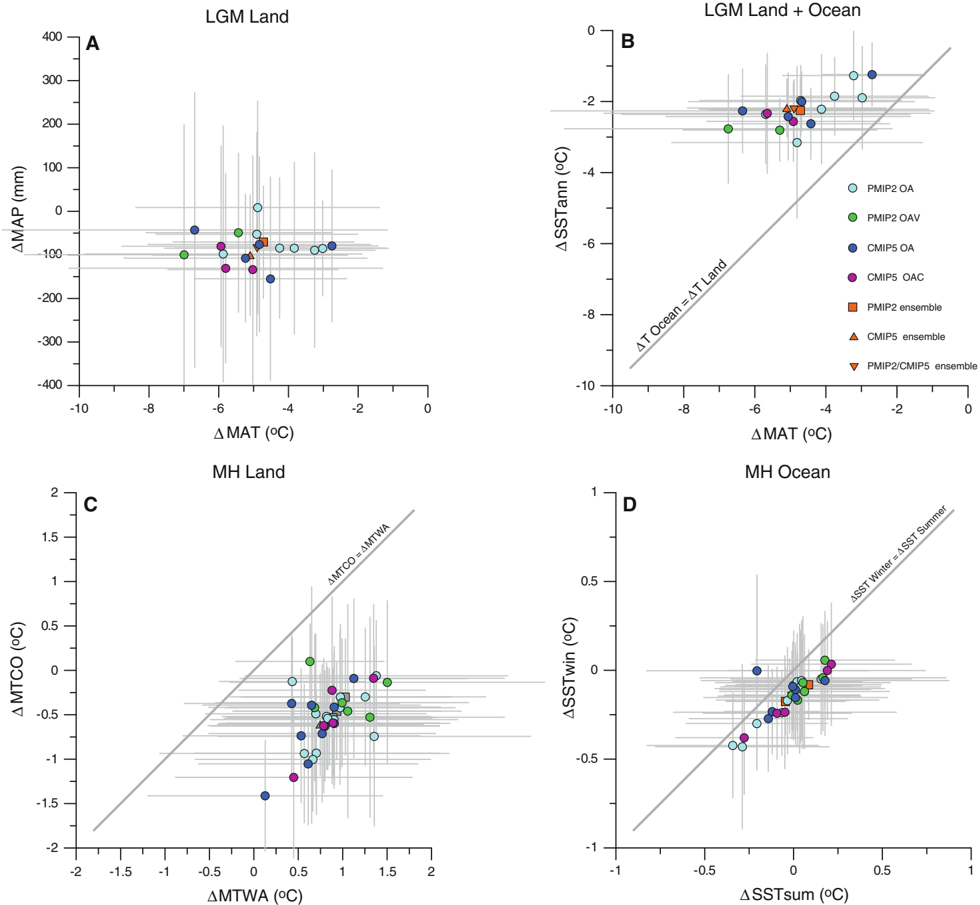
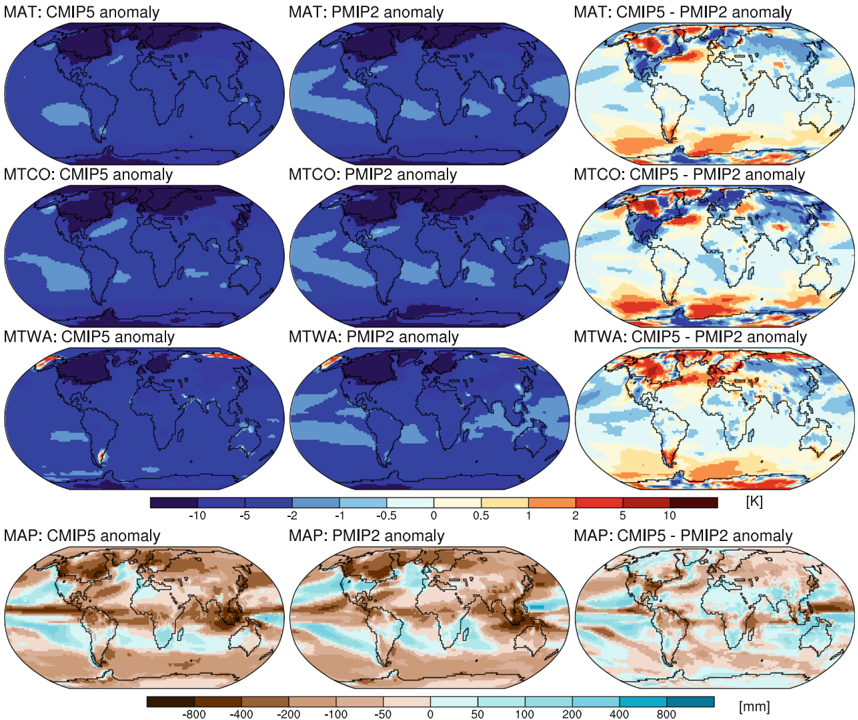
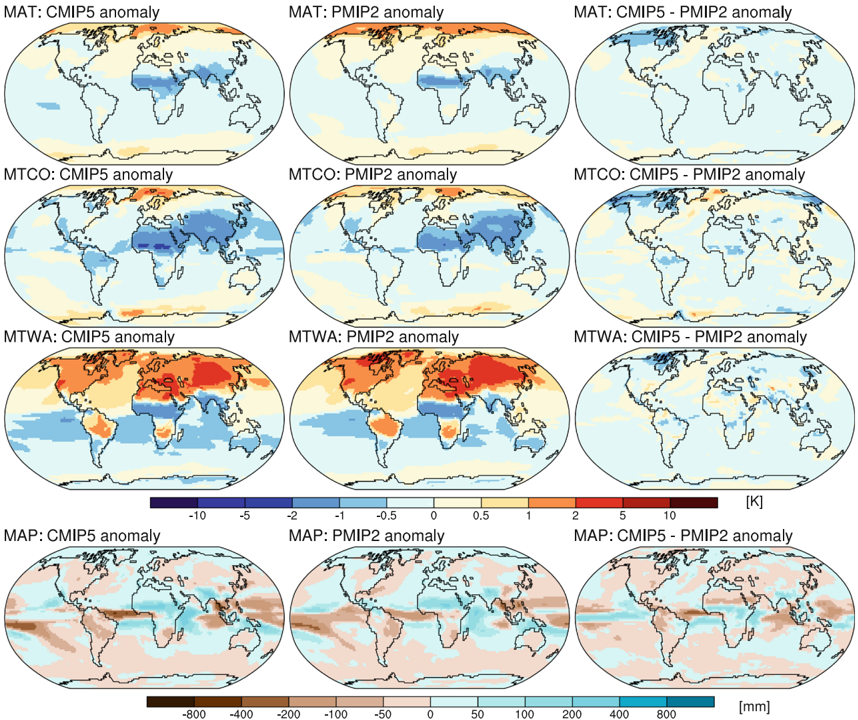
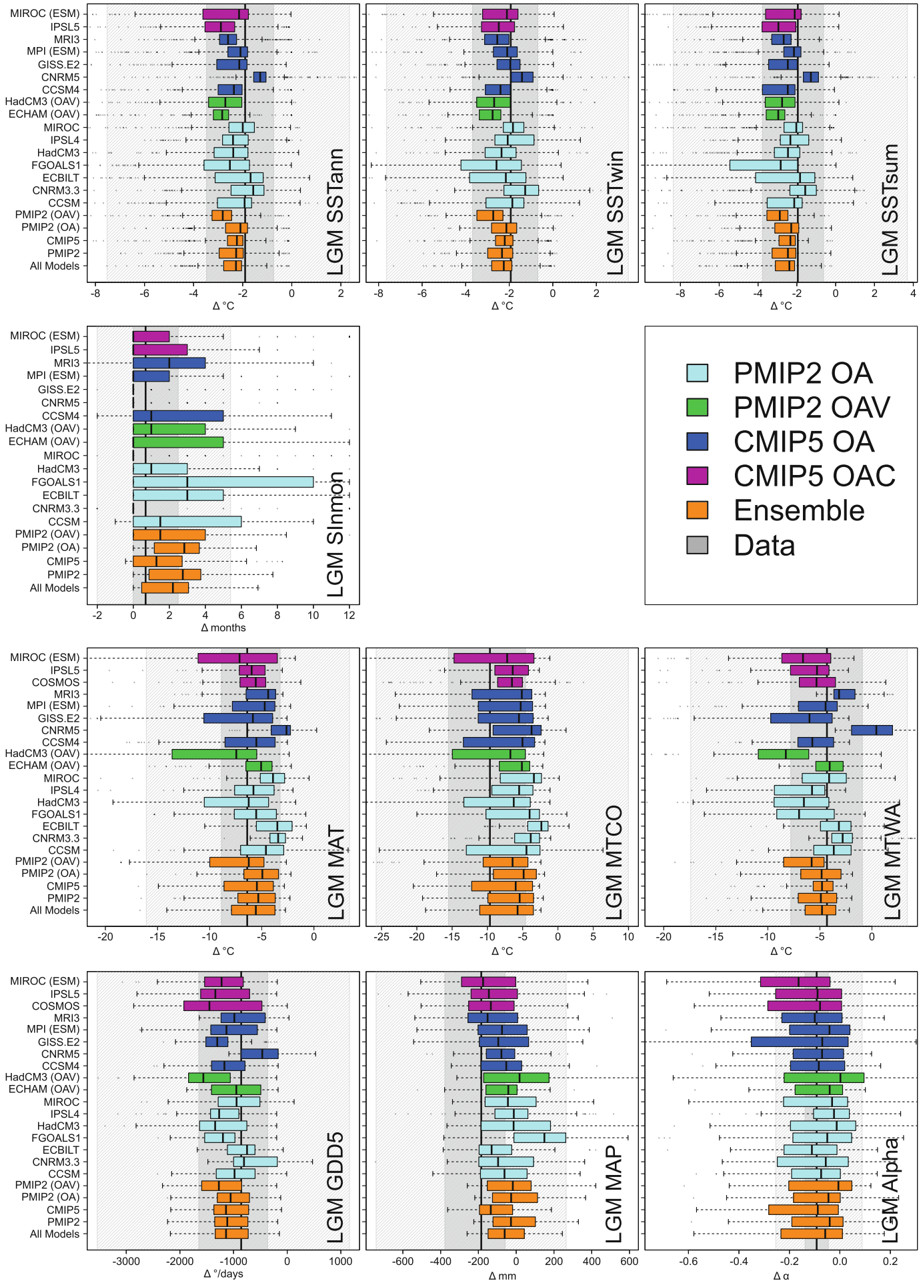
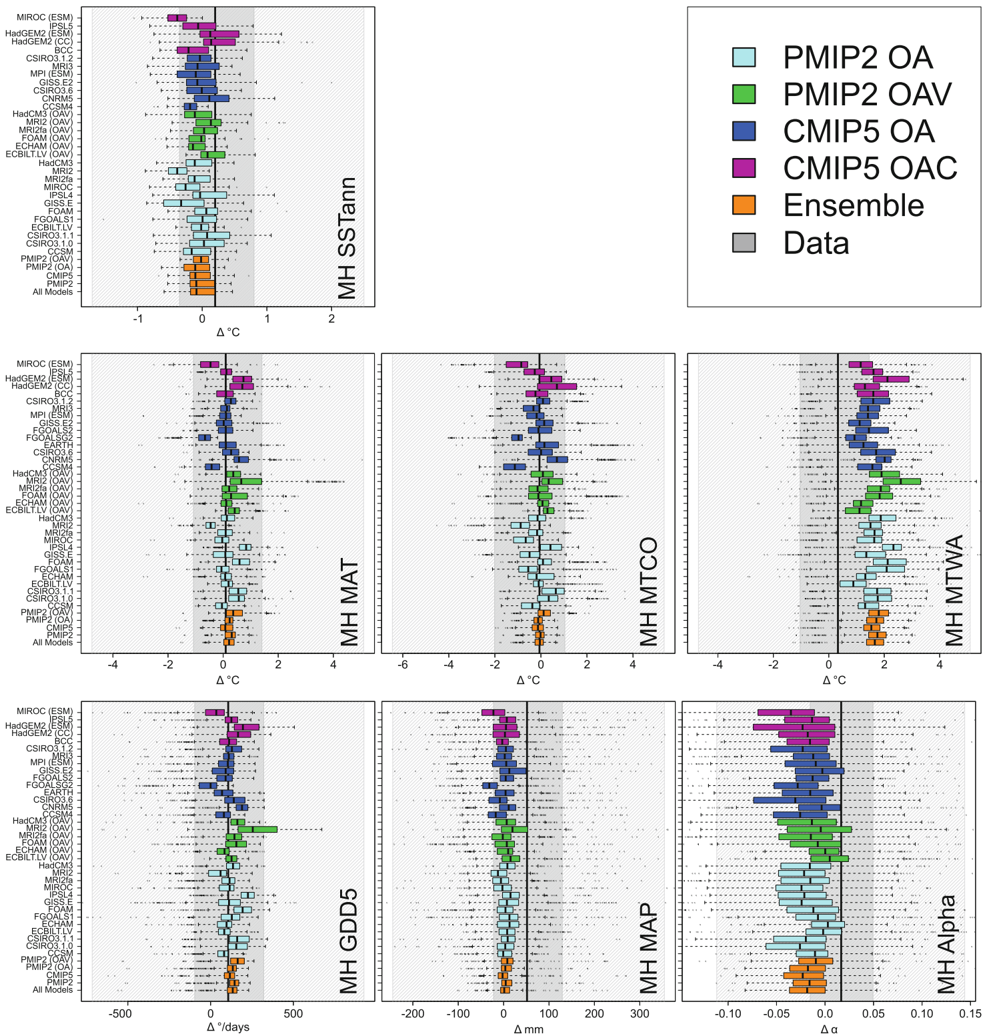
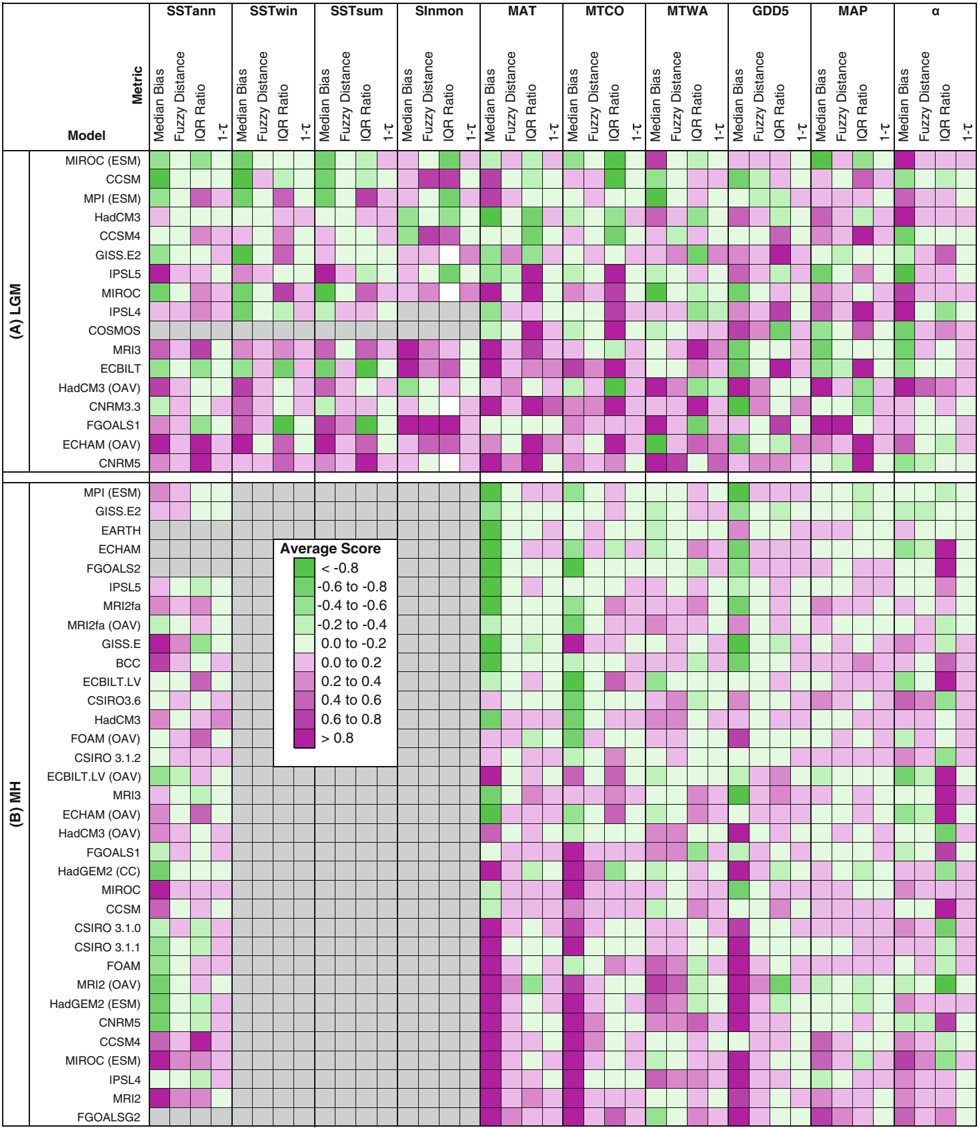
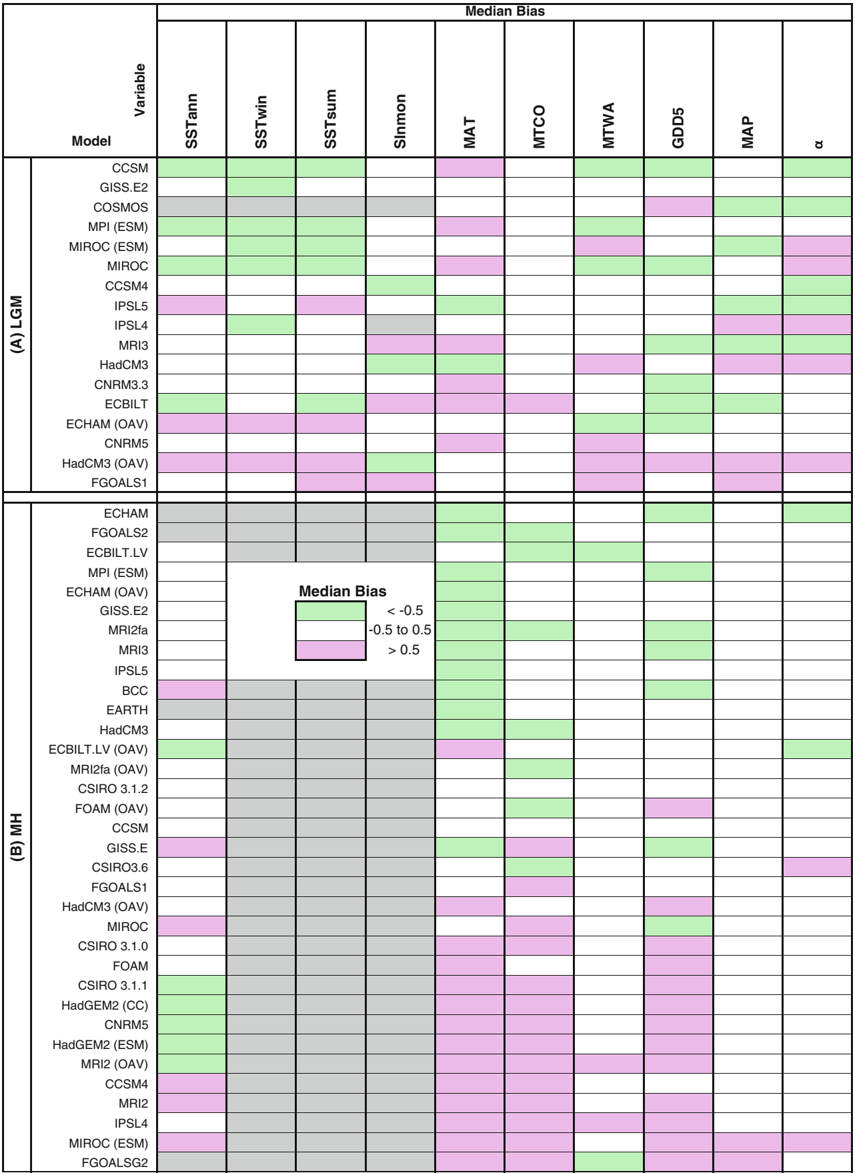
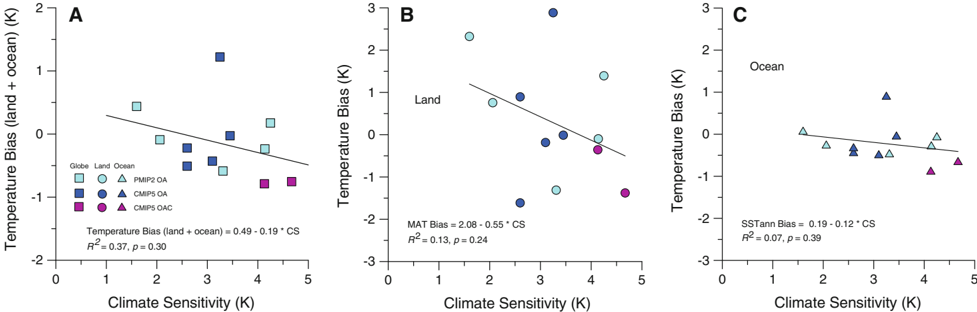
Past climates provide a test of models’ ability to predict climate change. We present a comprehensive evaluation of state-of-the-art models against Last Glacial Maximum and mid-Holocene climates, using reconstructions of land and ocean climates and simulations from the Palaeoclimate Modelling and Coupled Modelling Intercomparison Projects. Newer models do not perform better than earlier versions despite higher resolution and complexity. Differences in climate sensitivity only weakly account for differences in model performance. In the glacial, models consistently underestimate land cooling (especially in winter) and overestimate ocean surface cooling (especially in the tropics). In the mid-Holocene, models generally underestimate the precipitation increase in the northern monsoon regions, and overestimate summer warming in central Eurasia. Models generally capture large-scale gradients of climate change but have more limited ability to reproduce spatial patterns. Despite these common biases, some models perform better than others.
Overview
The claims and statistics of this paper haven’t been checked yet.
Free: it reads the open-access text and checks the first 5 claims that cite a source we can check. Create a free account to check every claim.
Integrity signals
Registry
Cites
Statistics
Figures
Verification
Claims the paper makes
The claims and statistics of this paper haven’t been checked yet.
Free: it reads the open-access text and checks the first 5 claims that cite a source we can check. Create a free account to check every claim.
Claims other papers make about this one
Each is checked against this paper’s own text: does it say what the citing paper says it does?
The cited source says what the claim attributes to it.
In the citing paper
“The last 6000 years has seen significant climatic and precipitation changes, which have been well documented from both proxy records and modelling studies (Braconnot et al. 2004;Harrison et al. 2014).”
From Climate Change and the Rise of the Central Asian Silk Roads (2019) · cites this paper as Harrison et al. 2014
Self-check
Percentages, sums and reported differences re-computed from the paper’s own numbers.
The self-check needs the paper’s full text.
Citations
Cites
Climate change 2007: the physical science basis
Solomon, S., Qin, D., Manning, M., Marquis, M. C., Averyt, K. B., Tignor, M., Miller, H. L., & Chen, Z. (2007) · Cited by 24,695
An Overview of CMIP5 and the Experiment Design
Taylor, K. E., Stouffer, R. J., & Meehl, G. A. (2012) · Bulletin of the American Meteorological Society · doi:10.1175/bams-d-11-00094.1 · Cited by 14,052 · cited 1×
“Simulations of the Last Glacial Maximum (LGM, ca 21,000 years ago) and mid-Holocene (MH, ca 6,000 years ago) are included for the first time in the set of climatemodel simulations performed by the Coupled Model Intercomparison Project (CMIP5: Taylor et al. 2012).”
MethodA NEW MEASURE OF RANK CORRELATION
KENDALL, M. G. (1938) · Biometrika · doi:10.1093/biomet/30.1-2.81 · Cited by 7,269 · cited 2×
“Finally, we present an overall assessment of model performance to address the question of whether some models consistently perform better than others.”
BackgroundMethodMeehl, G. A., Stocker, T. F., Collins, W. D., Friedlingstein, P., Gaye, A. T., Gregory, J. M., Kitoh, A., Knutti, R., Murphy, J. M., Noda, A., et al. (n.d.) · Bern Open Repository and Information System (University of Bern) · doi:10.48350/25539 · Cited by 3,726
GLOBAL GLACIAL ISOSTASY AND THE SURFACE OF THE ICE-AGE EARTH: The ICE-5G (VM2) Model and GRACE
Peltier, W. R. (2004) · Annual Review of Earth and Planetary Sciences · doi:10.1146/annurev.earth.32.082503.144359 · Cited by 2,743 · cited 1×
“Although other forcings are the same between the PMIP2 and CMIP5 experiments, the LGM ice-sheet forcing is different: in PMIP2 the ice sheets were specified from Peltier (2004) while in CMIP5 a blended product made from three more recent ice-sheet reconstructions was used (Braconnot et al. 2012).”
MethodMethods of multivariate analysis
(1995) · Choice Reviews Online · doi:10.5860/choice.33-1586 · Cited by 2,281
Prentice, I. C., Cramer, W., Harrison, S. P., Leemans, R., Monserud, R. A., & Solomon, A. M. (1992) · Journal of Biogeography · doi:10.2307/2845499 · Cited by 2,106 · cited 2×
“Bioclimatic variables were calculated using the anomalies on the 0.5 grid using the approach of Prentice et al. (1992).”
BackgroundMethodInfluentialSelf-citationMethods of Multivariate Analysis
Rencher, A. C. (2002) · Wiley Series in Probability and Statistics · doi:10.1002/0471271357 · Cited by 2,040
Atmospheric Warming and the Amplification of Precipitation Extremes
Allan, R. P., & Soden, B. J. (2008) · Science · doi:10.1126/science.1160787 · Cited by 1,562 · cited 1×
“Model realism in respect to these first-order signals is important because these signals are features of future projections (Meehl et al. 2007; Sutton et al. 2007; Allan and Soden 2008; Izumi et al. 2013; Li et al. in press).”
Background
Research works printed but not linked: 3
- Braconnot P, Harrison SP, Otto-Bliesner B, Abe-Ouchi A, Jungclaus J, Peterschmitt J-Y (2011) The palaeoclimate modelling inter- comparison project contribution to CMIP5. CLIVAR Exch Newsl 56:15-19
- Taylor KE, Stouffer RJ, Meehl GA (2012) An overview of CMIP5 and the experiment design. Bull Am Meteorol Soc 93:485-498. doi:10.1175/BAMS-D-11-00094 · doi:10.1175/bams-d-11-00094
- Wilks DS (2011) Statistical methods in the atmospheric sciences, volume 100, third edition (international geophysics), vol 100. Elsevier Science Publishing Co Inc, Imprint: Academic Press, San Diego, p 676
Cited by
Changing State of the Climate System
(2023) · Climate Change 2021 – The Physical Science Basis · doi:10.1017/9781009157896.004 · Cited by 548
Climate refugia: joint inference from fossil records, species distribution models and phylogeography
Gavin, D. G., Fitzpatrick, M. C., Gugger, P. F., Heath, K. D., Rodríguez‐Sánchez, F., Dobrowski, S. Z., Hampe, A., Hu, F. S., Ashcroft, M. B., Bartlein, P. J., et al. (2014) · New Phytologist · doi:10.1111/nph.12929 · Cited by 456
Self-citationThe status and challenge of global fire modelling
Hantson, S., Arneth, A., Harrison, S. P., Kelley, D. I., Prentice, I. C., Rabin, S. S., Archibald, S., Mouillot, F., Arnold, S. R., Artaxo, P., et al. (2016) · Biogeosciences · doi:10.5194/bg-13-3359-2016 · Cited by 460
Self-citationOtto-Bliesner, B. L., Braconnot, P., Harrison, S. P., Lunt, D. J., Abe-Ouchi, A., Albani, S., Bartlein, P. J., Capron, E., Carlson, A. E., Dutton, A., et al. (2017) · Geoscientific Model Development · doi:10.5194/gmd-10-3979-2017 · Cited by 361
Self-citationThe PMIP4 contribution to CMIP6 – Part 1: Overview and over-arching analysis plan
Kageyama, M., Braconnot, P., Harrison, S. P., Haywood, A. M., Jungclaus, J. H., Otto-Bliesner, B. L., Peterschmitt, J.-Y., Abe-Ouchi, A., Albani, S., Bartlein, P. J., et al. (2018) · Geoscientific Model Development · doi:10.5194/gmd-11-1033-2018 · Cited by 361
“Harrison et al., 2014, 2015) More than 20 modelling groups took part in PMIP3 and many of the PMIP3 results are prominent in the fifth IPCC assessment report (Masson-Delmotte et al., 2013; Flato et al., 2013).”
Self-citation
Metadata
- Authors
- Harrison, S. P., Bartlein, P. J., Brewer, S., Prentice, I. C., Boyd, M., Hessler, I., Holmgren, K., Izumi, K., & Willis, K.
- Affiliations
- University of Reading (GB)
- University of Oregon (US)
- University of Utah (US)
- Imperial College London (GB)
- Stockholm University (SE)
- University of Bremen (DE)
- Macquarie University (AU)
- Corresponding author
- Harrison, S. P.
- Venue
- Climate Dynamics
- Published
- 2013-08-30
- Volume
- 43
- Issue
- 3-4
- Pages
- 671-688
- ISSN
- 0930-7575 (ISSN-L)
- 1432-0894
- OpenAlex
- W1991011332
- Cited by
- 231
- References
- 54
- Citations by year
- 2026: 14 · 2025: 8 · 2024: 9 · 2023: 18 · 2022: 17 · 2021: 31 · 2020: 26 · 2019: 24 · 2018: 25 · 2017: 15 · 2016: 18 · 2015: 12 · 2014: 12 · 2013: 1
- FWCI
- 9.34
- Type
- journal article
- Language
- en
- Open access
- hybrid
- doi.org
- Locations
- Climate Dynamics (publishedVersion, cc-by)
- Spiral (Imperial College London) (submittedVersion, other-oa)
- Funders
- Natural Environment Research Council (NE/D001536/1, NE/D001544/1, quest010001, NE/D001587/1)
- Topics
- Physical Sciences › Earth and Planetary Sciences › Atmospheric Science › Geology and Paleoclimatology Research
- Physical Sciences › Environmental Science › Global and Planetary Change › Climate variability and models
- Physical Sciences › Earth and Planetary Sciences › Atmospheric Science › Cryospheric studies and observations
- Keywords
- Last Glacial Maximum, mid-Holocene, paleoclimate reconstruction, model evaluation, climate sensitivity, monsoon rainfall, model resolution
About these checks
Registry, retraction, Cites and statistics results are computed, not judged, with one exception: a printed reference that no index lists is read once by a model before it counts as a citation error. Claims are extracted by a model and kept only when their quote appears verbatim in the text; each cited source is then checked, with a model’s help, for whether it says what the claim relies on. Those verdicts can be wrong — read the claim’s quote and the cited source before relying on one.
Statistics and arithmetic are recomputed, not judged.
Confidence bands are shown only for fields calibrated on our annotated test set. None is calibrated yet, so no band is shown.
What counts as a claim ›How we measure confidence ›How we check this ›
Are you an author, or do you see a problem with this page? Request a review
Data sources
Bibliographic data: Semantic Scholar, OpenAlex, Crossref.
Contains information from the Semantic Scholar Academic Graph Datasets, made available under the ODC Attribution License (ODC-BY 1.0).
Semantic Scholar’s data is described in: Kinney, R., et al. (2023). The Semantic Scholar Open Data Platform. arXiv:2301.10140.
