

Overweight and diabetes prevention: Is a low-carbohydrate-high-fat diet recommendable?
Open accessThe DOI matches its Crossref record; 70 of the 70 references it cites were found in a registry or an index.
Abstract
In the past, different types of diet with a generally low-carbohydrate content (< 50–< 20 g/day) have been promoted, for weight loss and diabetes, and the effectiveness of a very low dietary carbohydrate content has always been a matter of debate. A significant reduction in the amount of carbohydrates in the diet is usually accompanied by an increase in the amount of fat and to a lesser extent, also protein. Accordingly, using the term “low carb–high fat” (LCHF) diet is most appropriate. Low/very low intakes of carbohydrate food sources may impact on overall diet quality and long-term effects of such drastic diet changes remain at present unknown. This narrative review highlights recent metabolic and clinical outcomes of studies as well as practical feasibility of low LCHF diets. A few relevant observations are as follows: (1) any diet type resulting in reduced energy intake will result in weight loss and related favorable metabolic and functional changes; (2) short-term LCHF studies show both favorable and less desirable effects; (3) sustained adherence to a ketogenic LCHF diet appears to be difficult. A non-ketogenic diet supplying 100–150 g carbohydrate/day, under good control, may be more practical. (4) There is lack of data supporting long-term efficacy, safety and health benefits of LCHF diets. Any recommendation should be judged in this light. (5) Lifestyle intervention in people at high risk of developing type 2 diabetes, while maintaining a relative carbohydrate-rich diet, results in long-term prevention of progression to type 2 diabetes and is generally seen as safe.
Overview
The claims and statistics of this paper haven’t been checked yet.
Free: it reads the open-access text and checks the first 5 claims that cite a source we can check. Create a free account to check every claim.
Integrity signals
Registry
Cites
Statistics
Figures
Verification
Claims the paper makes
The claims and statistics of this paper haven’t been checked yet.
Free: it reads the open-access text and checks the first 5 claims that cite a source we can check. Create a free account to check every claim.
Claims other papers make about this one
Each is checked against this paper’s own text: does it say what the citing paper says it does?
In the citing paper
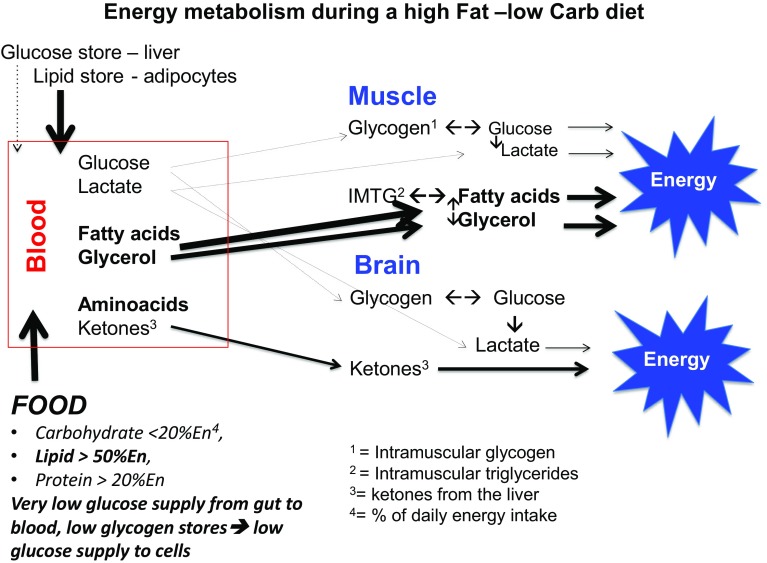
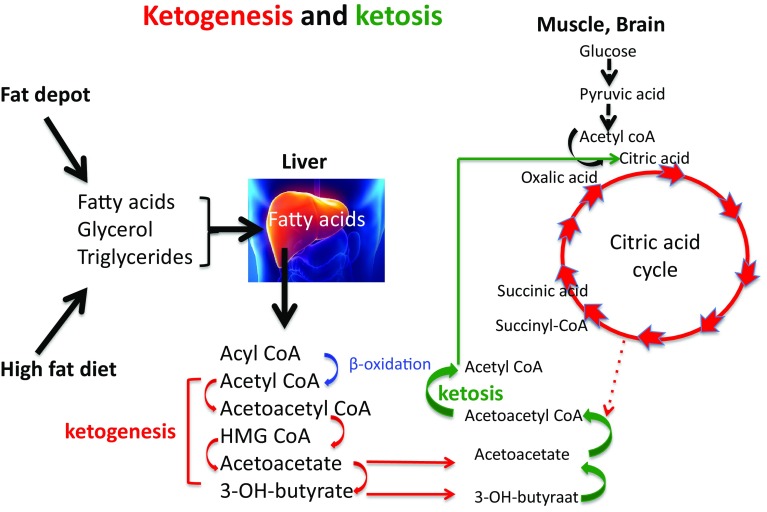
“Ketogenesis usually takes place once endogenous glucose production is depleted and lowers insulin levels in the blood, which further limits the storage of fat and glucose in the body [44].”
In the citing paper
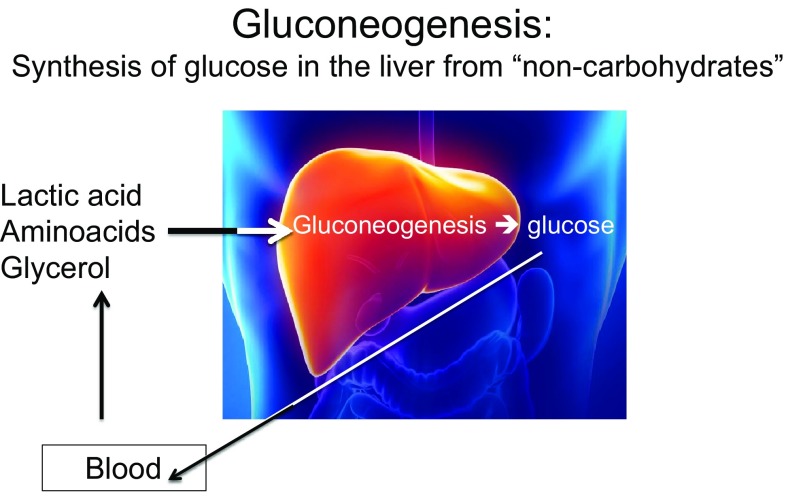
“Carbohydrate restriction to less than 50 g per day triggers gluconeogenesis and ketogenesis in the liver, production of ketone bodies such as acetoacetic acid and beta-hydroxybutyric acid from fatty acids in replacement of glucose [44].”
Self-check
Percentages, sums and reported differences re-computed from the paper’s own numbers.
The self-check needs the paper’s full text.
Citations
Cites
Cani, P. D., Bibiloni, R., Knauf, C., Waget, A., Neyrinck, A. M., Delzenne, N. M., & Burcelin, R. (2008) · Diabetes · doi:10.2337/db07-1403 · Cited by 4,819
Energy Metabolism in the Liver
Rui, L. (2014) · Comprehensive Physiology · doi:10.1002/cphy.c130024 · Cited by 1,953
A Randomized Trial of a Low-Carbohydrate Diet for Obesity
Foster, G. D., Wyatt, H. R., Hill, J. O., McGuckin, B. G., Brill, C., Mohammed, B. S., Szapary, P. O., Rader, D. J., Edman, J. S., & Klein, S. (2003) · New England Journal of Medicine · doi:10.1056/nejmoa022207 · Cited by 1,794 · cited 1×
“Seen in the recommendations, discussed above, the question is what the long-term health implications of LCHF diets would be, given the relatively short duration of virtually all available studies [53, 54].”
BackgroundSatija, A., Bhupathiraju, S. N., Rimm, E. B., Spiegelman, D., Chiuve, S. E., Borgi, L., Willett, W. C., Manson, J. E., Sun, Q., & Hu, F. B. (2016) · PLOS Medicine · doi:10.1371/journal.pmed.1002039 · Cited by 1,069
Dietary Guidelines for Americans
DeSalvo, K. B., Olson, R., & Casavale, K. O. (2016) · JAMA · doi:10.1001/jama.2015.18396 · Cited by 1,059
Aune, D., Keum, N., Giovannucci, E., Fadnes, L. T., Boffetta, P., Greenwood, D. C., Tonstad, S., Vatten, L. J., Riboli, E., & Norat, T. (2016) · BMJ · doi:10.1136/bmj.i2716 · Cited by 1,013
Nordmann, A. J., Nordmann, A., Briel, M., Keller, U., Yancy, W. S., Brehm, B. J., & Bucher, H. C. (2006) · Archives of Internal Medicine · doi:10.1001/archinte.166.3.285 · Cited by 973 · cited 1×
“However, an increase in LDL cholesterol was also observed, which is in line with the earlier observations of [50].”
ResultFeinman, R. D., Pogozelski, W. K., Astrup, A., Bernstein, R. K., Fine, E. J., Westman, E. C., Accurso, A., Frassetto, L., Gower, B. A., McFarlane, S. I., et al. (2015) · Nutrition · doi:10.1016/j.nut.2014.06.011 · Cited by 912
Stern, L., Iqbal, N., Seshadri, P., Chicano, K. L., Daily, D. A., McGrory, J., Williams, M., Gracely, E. J., & Samaha, F. F. (2004) · Annals of Internal Medicine · doi:10.7326/0003-4819-140-10-200405180-00007 · Cited by 831
Stem, L., Iqbal, N., Seshadri, P., & Chicano, K. (2004) · ACC Current Journal Review · doi:10.1016/j.accreview.2004.07.103 · Cited by 627
Research works printed but not linked: 1
- World Health Organization (2015) Guideline: sugars intake for adults and children. World Health Organization. http://apps.who.int/iris/bitstream/10665/149782/1/9789241549028_eng.pdf. Accessed May 2017 25905159
Cited by
Items 201–233 of 233
Cortaza, J. D. R. G., Verdesoto, S. D. P., Laínez, G. K. S., Viteri-Gómez, G. R., Rutti, Y. Y. G., Ibarra, F. V. F., Rodriguez, N. A. V., Gonzalez-Garcia, W. A., & Poveda-Navarrete, S. (2021) · Revista Universidad de Guayaquil · doi:10.53591/rug.v132i1.1352 · Cited by 1
Vékony, B., Urbán, V. S., Mikolás, R. A., Pásztor, Z., & Mák, E. (2022) · Developments in Health Sciences · doi:10.1556/2066.2022.00058
Carbohydrates: Requirements and dietary importance
Stylianopoulou, C. (2022) · Elsevier eBooks · doi:10.1016/b978-0-12-821848-8.00174-8 · Cited by 1
Jang, T., Kim, H., & Kim, T. (2023) · Iranian Journal of Public Health · doi:10.18502/ijph.v52i4.12439 · Cited by 1
Cywes, R., Kajee, H., Wellington, N., Cucuzzella, M. T., Riley, K., Isaacs, D. M., Pataguana, N., Lake, I., Rauch, L., McKelvey, S., et al. (2023) · Elsevier eBooks · doi:10.1016/b978-0-12-821617-0.00010-3
Evaluation of Different Dietary Strategies on Body Composition in Individuals with Obesity
(2023) · Journal of Nutrition Food Science and Technology · doi:10.47485/2834-7854.1029
Ningsih, O. S., Pandin, M. G. R., & Efendy, F. (2023) · medRxiv · doi:10.1101/2023.10.12.23296982 · Cited by 1
de Souza, J. G. (2023) · Digital Library of Theses and Dissertations (Universidade de São Paulo) · doi:10.11606/d.6.2023.tde-30102023-162135 · Cited by 1
Zhang, Y. (2023) · International Journal of Biology and Life Sciences · doi:10.54097/ijbls.v4i1.07
“[8] Studies have shown that a very low-calorie ketogenic diet can also improve blood sugar, glycated hemoglobin, insulin resistance index, and triglyceride levels in overweight or obese people with diabetes.”
BackgroundPOTENTIAL EFFECTS OF KETOGENIC DIETS, A NARRATIVE REVIEW
Stoizik, J. A. M., Avena, M. V., Elías, M. L., HEREDIA, R., & Boarelli, P. V. (2023) · SOUTHERN JOURNAL OF SCIENCES · doi:10.48141/sjs.v31.n36.2023_mussi_stoizik_pgs_20_32.pdf
“However, the benefits of KD appear to decrease over time (Brouns, 2018).”
BackgroundKazbekova, A., Аканов, Ж. А., Бурибаева, Ж. К., & Утегенова, А. Н. (2024) · Farmaciâ Kazahstana · doi:10.53511/pharmkaz.2024.64.93.033
Bilicich, S., Comes, A. F., de la Plaza, M., Gaete, L., Miari, F., Molina, B., Palenque, P., Presner, N., Sosa, E., & Menéndez, E. (2024) · Revista de la Sociedad Argentina de Diabetes · doi:10.47196/diab.v58i2.802 · Cited by 2
Balapadang, R. N., & Sudarjat, H. (2024) · Journal of Pharmaceutical And Sciences · doi:10.36490/journal-jps.com.v7i4.520
Adesão e conhecimento de dietas restritivas em professores de uma universidade privada
de Oliveira, P. V., Mendes, N. E., de Sousa, E. L. C., Paiva, K. A., Sá, W. D. S. F., Mendes, Y. C., Araújo, D. C. S., da Silva, L. C. N., & Zagmignan, A. (2024) · Evidência · doi:10.18593/evid.34479
Диетические методы коррекции при заболеваниях пищеварительного тракта у людей с ожирением
Ярина, С. Н. (2024) · International journal of medicine and psychology. · doi:10.58224/2658-3313-2024-7-8-44-49
Yoon, S. W., Lee, H., Choi, H., & Kang, Y. (2025) · Nutrients · doi:10.3390/nu17142282
“Such diets are known to stimulate insulin secretion, promote fat storage, and significantly inhibit adipose tissue lipolysis and fatty acid oxidation [7,8,15].”
Trenddiäten Low Carb und Intervallfasten
Knop, U. (2025) · Springer eBooks · doi:10.1007/978-3-662-71179-8_2
Intestinal flora in aging: a scientific perspective on food intervention
Ye, X., Guan, Y., Chen, P., Zhu, J., Liu, Y., Chen, J., Zhu, K., Jin, Z., Luo, S., Cai, J., et al. (2025) · Food Science and Human Wellness · doi:10.26599/fshw.2025.9250713 · Cited by 1
The roles of sugar metabolism mechanisms and metabolites in viral infections
He, J., Ju, X., El‐Aty, A. M. A., Liu, X., & Li, X. (2025) · Virology · doi:10.1016/j.virol.2025.110764
Cai, L., Xia, X., Gu, Y., Hu, L., Li, C., Ma, X., & Yin, J. (2023) · Figshare · doi:10.6084/m9.figshare.24546929
Trend Diets: Low Carb and Intermittent Fasting
Knop, U. (2026) · Springer eBooks · doi:10.1007/978-3-662-72477-4_2
Gao, W., Ma, R., Gu, H. C., Zhang, X., Liu, H., Xiao, M., Li, Z., Wang, Y., Sun, Y., & Xiao, X. (2026) · Food Science & Nutrition · doi:10.1002/fsn3.71462
“Dietary carbohydrates serve as the primary source of circulating glucose and key stimulants for insulin secretion, exhibiting greater glycemic effects than equivalent amounts of fat or protein (Brouns 2018).”
Skurk, T., Raab, H., & Riedl, M. (2026) · Springer eBooks · doi:10.1007/978-3-662-69828-0_9
Abdulghani, M. F., AL‐Fayyadh, S., Ibrahim, R. H., & Al-Mashhadany, O. I. (2026) · Health Science Reports · doi:10.1002/hsr2.71934
Khodarahmi, M., Mehrabani, S., & Askari, G. (2026) · International Journal of Environmental Health Research · doi:10.1080/09603123.2026.2650506
“Furthermore, LCDs can lead to improved insulin sensitivity by decreasing postprandial hyperinsulinemia and shifting metabolic processes in favor of fat oxidation over lipid storage (Brouns 2018; Barber et al. 2021).”
DOLHA, Y., Pastukhova, V. A., & Goncharenko, I. (2026) · Bulletin of Taras Shevchenko National University of Kyiv Series “Psychology” · doi:10.17721/1728.2748.2026.104.5-10 · Cited by 2
Ernährungsempfehlungen für Menschen mit Diabetes (Update 2026)
Klammer, C., Schindler, K., Bugl, R., Plazek, D., Vötter, M., Kirchner, T., Martino, C., Klammer-Martin, J., Huber, J., Krzizek, E.-C., et al. (2026) · Wiener klinische Wochenschrift · doi:10.1007/s00508-025-02676-7
“Pauschal gesehen dürfte also immer noch die Ge-samtkalorienaufnahme der beste Prädiktor für Ge-wichtsverlust und Verbesserung der glykämischen Stoffwechsellage sein und nicht eine alleinige Reduktion der Kohlenhydrate [146].”
Grasshopper Utility in the Snack Food Industry: Potential, Challenges, and Solutions
Winarni, S., Adithia, R. P., & Asna, A. F. (2026) · IGI Global eBooks · doi:10.4018/979-8-2600-1423-3.ch006
Nutrition and Diabetes: A Comprehensive Review
Cucinotta, D. (2026) · Endocrinology · doi:10.1007/978-3-030-71067-5_18-1
Low carbohydrate high fat diet: history and its impact on health
PATCHVA, L. D., & Kurli, S. (2026) · International Journal of Basic & Clinical Pharmacology · doi:10.18203/2319-2003.ijbcp20262887
Long-term weight maintenance after a low-carbohydrate diet: a real-world retrospective cohort study
Ruan, Y., Hu, H., Cheng, Q., Deng, F., Lin, P., Zhu, T., Zhang, Q., & Chen, H. (2026) · European Journal of Clinical Nutrition · doi:10.1038/s41430-026-01815-1
Metadata
- Authors
- Brouns, F.
- Affiliations
- Maastricht University (NL)
- Corresponding author
- Brouns, Fred
- ORCID
- Brouns, Fred
- Venue
- European Journal of Nutrition
- Published
- 2018-03-14
- Volume
- 57
- Issue
- 4
- Pages
- 1301-1312
- ISSN
- 1436-6207 (ISSN-L)
- 1436-6215
- PMC
- PMC5959976
- OpenAlex
- W2790087708
- Cited by
- 235
- References
- 70
- Citations by year
- 2026: 14 · 2025: 19 · 2024: 23 · 2023: 40 · 2022: 35 · 2021: 38 · 2020: 33 · 2019: 23 · 2018: 10
- FWCI
- 3.41
- Type
- journal article
- Language
- en
- Update notices
- correction (2019-04-16)
- Open access
- hybrid
- doi.org
- Licence
- cc-by
- creativecommons.org/licenses/by/4.0 (tdm)
- creativecommons.org/licenses/by/4.0 (vor)
- Locations
- European Journal of Nutrition (publishedVersion, cc-by)
- Europe PMC (PubMed Central) (publishedVersion, other-oa)
- PubMed Central (publishedVersion, cc-by)
- PubMed (publishedVersion)
- Research Publications (Maastricht University) (submittedVersion, cc-by)
- Research Publications (Maastricht University) (submittedVersion, other-oa)
- Funders
- Universiteit Maastricht
- Topics
- Health Sciences › Medicine › Physiology (medical) › Diet and metabolism studies
- Health Sciences › Medicine › Physiology (medical) › Dietary Effects on Health
- Health Sciences › Medicine › Endocrinology, Diabetes and Metabolism › Diabetes Management and Research
- Keywords
- low-carbohydrate high-fat diet, ketogenic diet, type 2 diabetes prevention, overweight, weight loss, dietary adherence, caloric restriction, lifestyle intervention, diet quality
- MeSH terms
- Diabetes Mellitus, Type 2, Dietary Carbohydrates, Dietary Fats, Humans, Obesity, Weight Loss, Overweight, Diet, Carbohydrate-Restricted, Diet, High-Fat
About these checks
Registry, retraction, Cites and statistics results are computed, not judged, with one exception: a printed reference that no index lists is read once by a model before it counts as a citation error. Claims are extracted by a model and kept only when their quote appears verbatim in the text; each cited source is then checked, with a model’s help, for whether it says what the claim relies on. Those verdicts can be wrong — read the claim’s quote and the cited source before relying on one.
Statistics and arithmetic are recomputed, not judged.
Confidence bands are shown only for fields calibrated on our annotated test set. None is calibrated yet, so no band is shown.
What counts as a claim ›How we measure confidence ›How we check this ›
Are you an author, or do you see a problem with this page? Request a review
Data sources
Bibliographic data: Semantic Scholar, OpenAlex, Crossref.
Contains information from the Semantic Scholar Academic Graph Datasets, made available under the ODC Attribution License (ODC-BY 1.0).
Semantic Scholar’s data is described in: Kinney, R., et al. (2023). The Semantic Scholar Open Data Platform. arXiv:2301.10140.
