

Molecular subgroups of medulloblastoma: the current consensus
Open accessThe DOI matches its Crossref record; 52 of the 53 references it cites were found in a registry or an index.
Abstract
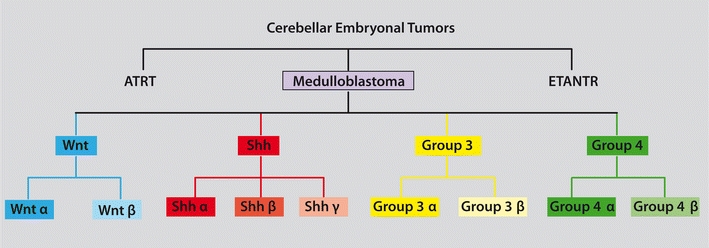
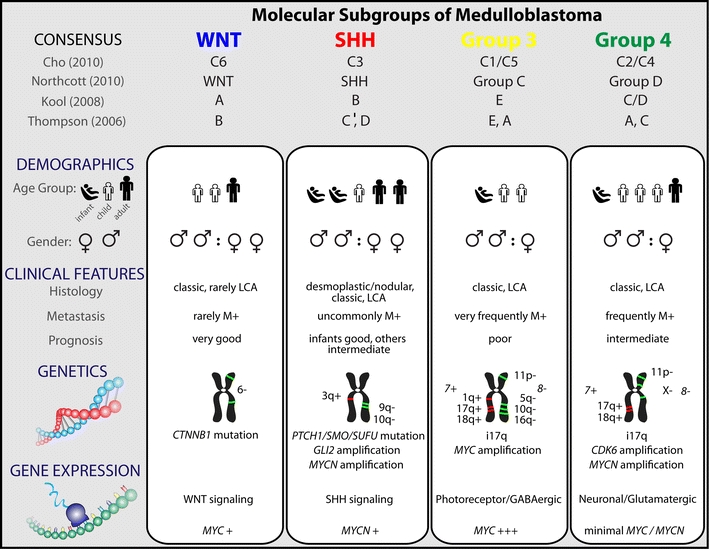
Medulloblastoma, a small blue cell malignancy of the cerebellum, is a major cause of morbidity and mortality in pediatric oncology. Current mechanisms for clinical prognostication and stratification include clinical factors (age, presence of metastases, and extent of resection) as well as histological subgrouping (classic, desmoplastic, and large cell/anaplastic histology). Transcriptional profiling studies of medulloblastoma cohorts from several research groups around the globe have suggested the existence of multiple distinct molecular subgroups that differ in their demographics, transcriptomes, somatic genetic events, and clinical outcomes. Variations in the number, composition, and nature of the subgroups between studies brought about a consensus conference in Boston in the fall of 2010. Discussants at the conference came to a consensus that the evidence supported the existence of four main subgroups of medulloblastoma (Wnt, Shh, Group 3, and Group 4). Participants outlined the demographic, transcriptional, genetic, and clinical differences between the four subgroups. While it is anticipated that the molecular classification of medulloblastoma will continue to evolve and diversify in the future as larger cohorts are studied at greater depth, herein we outline the current consensus nomenclature, and the differences between the medulloblastoma subgroups.
Overview
The claims and statistics of this paper haven’t been checked yet.
Free: it reads the open-access text and checks the first 5 claims that cite a source we can check. Create a free account to check every claim.
Integrity signals
Registry
Cites
Statistics
Figures
Verification
Claims the paper makes
The claims and statistics of this paper haven’t been checked yet.
Free: it reads the open-access text and checks the first 5 claims that cite a source we can check. Create a free account to check every claim.
Self-check
Percentages, sums and reported differences re-computed from the paper’s own numbers.
The self-check needs the paper’s full text.
Citations
Cites
The 2007 WHO Classification of Tumours of the Central Nervous System
Louis, D. N., Ohgaki, H., Wiestler, O. D., Cavenee, W. K., Burger, P. C., Jouvet, A., Scheithauer, B. W., & Kleihues, P. (2007) · Acta Neuropathologica · doi:10.1007/s00401-007-0243-4 · Cited by 15,397
Golub, T. R., Slonim, D. K., Tamayo, P., Huard, C., Gaasenbeek, M., Mesirov, J. P., Coller, H., Loh, M. L., Downing, J. R., Caligiuri, M. A., et al. (1999) · Science · doi:10.1126/science.286.5439.531 · Cited by 11,516 · cited 1×
“This transcriptional approach to tumor sub-classification has also been applied to a number of different non-medullo-blastoma histologies [4, 16, 18, 31, 35, 43], with the underlying assumption that tumors with similar transcriptomes will behave in a biologically similar manner, allowing a…”
BackgroundErratum to: The 2007 WHO classification of tumours of the central nervous system
Louis, D. N., Ohgaki, H., Wiestler, O. D., Cavenee, W. K., Burger, P. C., Jouvet, A., Scheithauer, B. W., & Kleihues, P. (2007) · Zurich Open Repository and Archive (University of Zurich) · doi:10.5167/uzh-156115 · Cited by 4,442
Phillips, H. S., Kharbanda, S., Chen, R., Forrest, W. F., Soriano, R. H., Wu, T. D., Misra, A., Nigro, J. M., Colman, H., Soroceanu, L., et al. (2006) · Cancer Cell · doi:10.1016/j.ccr.2006.02.019 · Cited by 3,143 · cited 1×
“…transcriptional approach to tumor sub-classification has also been applied to a number of different non-medullo-blastoma histologies [4, 16, 18, 31, 35, 43], with the underlying assumption that tumors with similar transcriptomes will behave in a biologically similar manner, allowing a…”
BackgroundBhattacharjee, A., Richards, W. G., Staunton, J., Li, C., Monti, S., Vasa, P., Ladd, C., Beheshti, J., Bueno, R., Gillette, M., et al. (2001) · Proceedings of the National Academy of Sciences · doi:10.1073/pnas.191502998 · Cited by 2,576 · cited 1×
“This transcriptional approach to tumor sub-classification has also been applied to a number of different non-medullo-blastoma histologies [4, 16, 18, 31, 35, 43], with the underlying assumption that tumors with similar transcriptomes will behave in a biologically similar manner, allowing a…”
BackgroundPrediction of central nervous system embryonal tumour outcome based on gene expression
Pomeroy, S. L., Tamayo, P., Gaasenbeek, M., Sturla, L. M., Angelo, M., McLaughlin, M. E., Kim, J. Y. H., Goumnerova, L. C., Black, P. M., Lau, C., et al. (2002) · Nature · doi:10.1038/415436a · Cited by 2,371 · cited 2×
“With recent developments in the ability to monitor transcription across the genome in the setting of a single experiment, various groups have started to sub-classify medulloblastoma on the basis of differences in the transcriptome [36].”
BackgroundSelf-citationIdentification of a CpG Island Methylator Phenotype that Defines a Distinct Subgroup of Glioma
Noushmehr, H., Weisenberger, D. J., Diefes, K., Phillips, H. S., Pujara, K., Berman, B. P., Pan, F., Pelloski, C. E., Sulman, E. P., Bhat, K. P., et al. (2010) · Cancer Cell · doi:10.1016/j.ccr.2010.03.017 · Cited by 2,337 · cited 1×
“This transcriptional approach to tumor sub-classification has also been applied to a number of different non-medullo-blastoma histologies [4, 16, 18, 31, 35, 43], with the underlying assumption that tumors with similar transcriptomes will behave in a biologically similar manner, allowing a…”
BackgroundMedulloblastoma Comprises Four Distinct Molecular Variants
Northcott, P. A., Korshunov, A., Witt, H., Hielscher, T., Eberhart, C. G., Mack, S., Bouffet, E., Clifford, S. C., Hawkins, C. E., French, P., et al. (2011) · Journal of Clinical Oncology · doi:10.1200/jco.2009.27.4324 · Cited by 1,339 · cited 12×
“Others approaches to identify Shh medulloblastomas have included immunohistochemical staining for SFRP1 [2, 28, 48], or GAB1 [11].”
BackgroundMethodInfluentialSelf-citationThe Molecular Basis of Turcot's Syndrome
Hamilton, S. R., Liu, B., Parsons, R. E., Papadopoulos, N., Jen, J., Powell, S. M., Krush, A. J., Berk, T., Cohen, Z., Tetu, B., et al. (1995) · New England Journal of Medicine · doi:10.1056/nejm199503303321302 · Cited by 1,133 · cited 1×
“Germline mutations of the Wnt pathway inhibitor APC predispose to Turcot syndrome, which includes a proclivity to medulloblastoma, in addition, somatic mutations of CTNNB1 encoding b-catenin have been found in sporadic medulloblastomas [19, 50].”
BackgroundKool, M., Korshunov, A., Remke, M., Jones, D. T. W., Schlanstein, M., Northcott, P. A., Cho, Y.-J., Koster, J., Schouten-van Meeteren, A., van Vuurden, D., et al. (2012) · Acta Neuropathologica · doi:10.1007/s00401-012-0958-8 · Cited by 1,056 · cited 3×
“…to identify target cohorts for certain drugs (e.g., SHH inhibitors), but also add significantly to outcome prediction by the time of diagnosis [21], much more than any of the established clinical markers such as patient age, metastatic stage at diagnosis, level of resection, and histological…”
BackgroundMethodInfluentialSelf-citationTreatment of Medulloblastoma with Hedgehog Pathway Inhibitor GDC-0449
Rudin, C. M., Hann, C. L., Laterra, J., Yauch, R. L., Callahan, C. A., Fu, L., Holcomb, T., Stinson, J., Gould, S. E., Coleman, B., et al. (2009) · New England Journal of Medicine · doi:10.1056/nejmoa0902903 · Cited by 1,019 · cited 1×
“The recent demonstration that small molecules targeting smoothened (SMO) are highly effective, albeit temporarily, against Shh medulloblastoma underlines the urgent need to develop effective and practical markers for Shh medulloblastoma [6, 40, 49].”
BackgroundGajjar, A., Chintagumpala, M., Ashley, D., Kellie, S., Kun, L. E., Merchant, T. E., Woo, S., Wheeler, G., Ahern, V., Krasin, M. J., et al. (2006) · The Lancet Oncology · doi:10.1016/s1470-2045(06)70867-1 · Cited by 951 · cited 2×
“N/A Cell Signaling Technologies 1:500 [15, 39]”
BackgroundSelf-citationSmoothened Mutation Confers Resistance to a Hedgehog Pathway Inhibitor in Medulloblastoma
Yauch, R. L., Dijkgraaf, G. J. P., Alicke, B., Januario, T., Ahn, C. P., Holcomb, T., Pujara, K., Stinson, J., Callahan, C. A., Tang, T., et al. (2009) · Science · doi:10.1126/science.1179386 · Cited by 839 · cited 1×
“The recent demonstration that small molecules targeting smoothened (SMO) are highly effective, albeit temporarily, against Shh medulloblastoma underlines the urgent need to develop effective and practical markers for Shh medulloblastoma [6, 40, 49].”
BackgroundSubtypes of medulloblastoma have distinct developmental origins
Gibson, P., Tong, Y., Robinson, G., Thompson, M. C., Currle, D. S., Eden, C., Kranenburg, T. A., Hogg, T., Poppleton, H., Martin, J., et al. (2010) · Nature · doi:10.1038/nature09587 · Cited by 831
Self-citationMutations in SUFU predispose to medulloblastoma
Taylor, M. D., Liu, L., Raffel, C., Hui, C.-C., Mainprize, T. G., Zhang, X., Agatep, R., Chiappa, S., Gao, L., Lowrance, A., et al. (2002) · Nature Genetics · doi:10.1038/ng916 · Cited by 806 · cited 2×
“Similarly, somatic mutations of PTCH, SMO, and SUFU, as well as amplifications of GLI1 and GLI2 have been found in sporadic medulloblastoma [27, 30, 46].”
BackgroundSelf-citationKool, M., Koster, J., Bunt, J., Hasselt, N. E., Lakeman, A., van Sluis, P., Troost, D., Meeteren, N. S.-V., Caron, H. N., Cloos, J., et al. (2008) · PLoS ONE · doi:10.1371/journal.pone.0003088 · Cited by 722
Self-citationThe Genetic Landscape of the Childhood Cancer Medulloblastoma
Parsons, D. W., Li, M., Zhang, X., Jones, S., Leary, R. J., Lin, J. C.-H., Boca, S. M., Carter, H., Samayoa, J., Bettegowda, C., et al. (2011) · Science · doi:10.1126/science.1198056 · Cited by 717 · cited 2×
“While it is clear that distinct molecular subgroups of medulloblastoma exist and are clinically important, we should not lose sight of the fact that there are also commonalities seen across the subgroups, such as mutations in TP53 and MLL2 which are seen in several subgroups [32, 34].”
BackgroundSelf-citationCho, Y.-J., Tsherniak, A., Tamayo, P., Santagata, S., Ligon, A., Greulich, H., Berhoukim, R., Amani, V., Goumnerova, L., Eberhart, C. G., et al. (2011) · Journal of Clinical Oncology · doi:10.1200/jco.2010.28.5148 · Cited by 717 · cited 10×
“Some recent series [28], but not others [7] have found a preponderance of females among Shh medulloblastoma.”
BackgroundResultInfluentialSelf-citationGenomics Identifies Medulloblastoma Subgroups That Are Enriched for Specific Genetic Alterations
Thompson, M. C., Fuller, C., Hogg, T. L., Dalton, J., Finkelstein, D., Lau, C. C., Chintagumpala, M., Adesina, A., Ashley, D. M., Kellie, S. J., et al. (2006) · Journal of Clinical Oncology · doi:10.1200/jco.2005.04.4974 · Cited by 668 · cited 8×
“Others approaches to identify Shh medulloblastomas have included immunohistochemical staining for SFRP1 [2, 28, 48], or GAB1 [11].”
BackgroundMethodInfluentialSelf-citationMedulloblastoma: clinicopathological correlates of SHH, WNT, and non-SHH/WNT molecular subgroups
Ellison, D. W., Dalton, J., Kocak, M., Nicholson, S. L., Fraga, C., Neale, G., Kenney, A. M., Brat, D. J., Perry, A., Yong, W. H., et al. (2011) · Acta Neuropathologica · doi:10.1007/s00401-011-0800-8 · Cited by 563 · cited 3×
“True nodular/desmoplastic tumors, and likely all of the MBENs belong to the Shh subgroup of tumors [11, 26].”
BackgroundSelf-citationBuonamici, S., Williams, J., Morrissey, M., Wang, A., Guo, R., Vattay, A., Hsiao, K., Yuan, J., Green, J., Ospina, B., et al. (2010) · Science Translational Medicine · doi:10.1126/scitranslmed.3001599 · Cited by 562 · cited 1×
“The recent demonstration that small molecules targeting smoothened (SMO) are highly effective, albeit temporarily, against Shh medulloblastoma underlines the urgent need to develop effective and practical markers for Shh medulloblastoma [6, 40, 49].”
BackgroundEllison, D. W., Onilude, O. E., Lindsey, J. C., Lusher, M. E., Weston, C. L., Taylor, R. E., Pearson, A. D., & Clifford, S. C. (2005) · Journal of Clinical Oncology · doi:10.1200/jco.2005.01.5479 · Cited by 435 · cited 1×
“The best known of the medulloblastoma subgroups is the Wnt subgroup due to its very good long-term prognosis in comparison to other subgroups [8, 11, 13, 15, 22, 28, 39, 48].”
BackgroundSelf-citationNorthcott, P. A., Nakahara, Y., Wu, X., Feuk, L., Ellison, D. W., Croul, S., Mack, S., Kongkham, P. N., Peacock, J., Dubuc, A., et al. (2009) · Nature Genetics · doi:10.1038/ng.336 · Cited by 412 · cited 3×
“Several laboratories across the globe have published on this topic in the recent past, with largely convergent conclusions [2, 7, 14, 22, 28, 30, 48].”
BackgroundSelf-citationSporadic medulloblastomas contain oncogenic beta-catenin mutations.
Zurawel, R. H., CHIAPPA, S. A., Allen, C., & Raffel, C. (1998) · PubMed · Cited by 387
A pathway-based classification of human breast cancer
Gatza, M. L., Lucas, J. E., Barry, W. T., Kim, J. W., Wang, Q., D. Crawford, M., B. Datto, M., Kelley, M., Mathey-Prevot, B., Potti, A., et al. (2010) · Proceedings of the National Academy of Sciences · doi:10.1073/pnas.0912708107 · Cited by 347 · cited 1×
“This transcriptional approach to tumor sub-classification has also been applied to a number of different non-medulloblastoma histologies [4, 16, 18, 31, 35, 43], with the underlying assumption that tumors with similar transcriptomes will behave in a biologically similar manner, allowing a transcriptionally driven clas…”
BackgroundEllison, D. W., Kocak, M., Dalton, J., Megahed, H., Lusher, M. E., Ryan, S. L., Zhao, W., Nicholson, S. L., Taylor, R. E., Bailey, S., et al. (2011) · Journal of Clinical Oncology · doi:10.1200/jco.2010.30.2810 · Cited by 302 · cited 2×
“Indeed, long-term survival rates for patients with Wnt medulloblastoma likely exceed 90%, with those patients who die succumbing more often to complications of therapy or secondary neoplasms rather than to recurrent Wnt medulloblastoma [12].”
BackgroundSelf-citationNorthcott, P. A., Fernandez-L, A., Hagan, J. P., Ellison, D. W., Grajkowska, W., Gillespie, Y., Grundy, R., Van Meter, T., Rutka, J. T., Croce, C. M., et al. (2009) · Cancer Research · doi:10.1158/0008-5472.can-08-4710 · Cited by 289
Self-citationClifford, S. C., Lusher, M. E., Lindsey, J. C., Langdon, J. A., Gilbertson, R. J., Straughton, D., & Ellison, D. W. (2006) · Cell Cycle · doi:10.4161/cc.5.22.3446 · Cited by 270 · cited 1×
“The best known of the medulloblastoma subgroups is the Wnt subgroup due to its very good long-term prognosis in comparison to other subgroups [8, 11, 13, 15, 22, 28, 39, 48].”
BackgroundSelf-citationGene expression–based high-throughput screening(GE-HTS) and application to leukemia differentiation
Stegmaier, K., Ross, K. N., Colavito, S. A., O'Malley, S., Stockwell, B. R., & Golub, T. R. (2004) · Nature Genetics · doi:10.1038/ng1305 · Cited by 268 · cited 1×
“This transcriptional approach to tumor sub-classification has also been applied to a number of different non-medulloblastoma histologies [4, 16, 18, 31, 35, 43], with the underlying assumption that tumors with similar transcriptomes will behave in a biologically similar manner, allowing a transcriptionally driven clas…”
BackgroundAdult Medulloblastoma Comprises Three Major Molecular Variants
Remke, M., Hielscher, T., Northcott, P. A., Witt, H., Ryzhova, M., Wittmann, A., Benner, A., von Deimling, A., Scheurlen, W., Perry, A., et al. (2011) · Journal of Clinical Oncology · doi:10.1200/jco.2011.34.9373 · Cited by 258
Self-citationPediatric and adult sonic hedgehog medulloblastomas are clinically and molecularly distinct
Northcott, P. A., Hielscher, T., Dubuc, A., Mack, S., Shih, D., Remke, M., Al-Halabi, H., Albrecht, S., Jabado, N., Eberhart, C. G., et al. (2011) · Acta Neuropathologica · doi:10.1007/s00401-011-0846-7 · Cited by 226 · cited 1×
“Similarly, somatic mutations of PTCH, SMO, and SUFU, as well as amplifications of GLI1 and GLI2 have been found in sporadic medulloblastoma [27, 30, 46].”
BackgroundSelf-citationFattet, S., Haberler, C., Legoix, P., Varlet, P., Lellouch‐Tubiana, A., Lair, S., Manie, E., Raquin, M., Bours, D., Carpentier, S., et al. (2009) · The Journal of Pathology · doi:10.1002/path.2514 · Cited by 193 · cited 1×
“Several laboratories across the globe have published on this topic in the recent past, with largely convergent conclusions [2, 7, 14, 22, 28, 30, 48].”
BackgroundIdentification of a SUFU germline mutation in a family with Gorlin syndrome
Pastorino, L., Ghiorzo, P., Nasti, S., Battistuzzi, L., Cusano, R., Marzocchi, C., Garrè, M. L., Clementi, M., & Scarrà, G. B. (2009) · American Journal of Medical Genetics Part A · doi:10.1002/ajmg.a.32944 · Cited by 187 · cited 1×
“Similarly, individuals with germ-line mutations of the Shh inhibitor SUFU are predisposed to medulloblastoma, particularly infantile medulloblastoma [5, 33, 42, 46].”
BackgroundDevelopment and cancer of the cerebellum
Hatten, M. E., & Roussel, M. F. (2011) · Trends in Neurosciences · doi:10.1016/j.tins.2011.01.002 · Cited by 184 · cited 3×
“While Shh subgroup tumors have high levels of expression of MYCN, and Wnt subgroup and Group 3 tumors have high levels of expression of MYC, whereas Group 4 tumors have relatively low expression of both MYC and MYCN, apart from the few cases that have MYCN amplification [20, 22, 28].”
BackgroundInfluentialCentral and Extrapontine Myelinolysis: Then…and Now
Kleinschmidt-DeMasters, B. K., Rojiani, A. M., & Filley, C. M. (2006) · Journal of Neuropathology and Experimental Neurology · doi:10.1097/01.jnen.0000196131.72302.68 · Cited by 169
Korshunov, A., Remke, M., Werft, W., Benner, A., Ryzhova, M., Witt, H., Sturm, D., Wittmann, A., Schöttler, A., Felsberg, J., et al. (2010) · Journal of Clinical Oncology · doi:10.1200/jco.2009.25.7121 · Cited by 161
Self-citationFSTL5 Is a Marker of Poor Prognosis in Non-WNT/Non-SHH Medulloblastoma
Remke, M., Hielscher, T., Korshunov, A., Northcott, P. A., Bender, S., Kool, M., Westermann, F., Benner, A., Cin, H., Ryzhova, M., et al. (2011) · Journal of Clinical Oncology · doi:10.1200/jco.2011.36.2798 · Cited by 155 · cited 5×
“However, the distribution of cases across the subgroups is very different in adults as compared to children [2, 28, 37, 38].”
BackgroundInfluentialSelf-citationMcManamy, C. S., Pears, J., Weston, C. L., Hanzely, Z., Ironside, J. W., Taylor, R. E., Grundy, R. G., Clifford, S. C., Ellison, D. W., & on behalf of the Clinical Brain Tumour Group, C. C. A. L. G. (. T. U. C. C. S. G. (2007) · Brain Pathology · doi:10.1111/j.1750-3639.2007.00058.x · Cited by 146 · cited 1×
“True nodular/desmoplastic tumors, and likely all of the MBENs belong to the Shh subgroup of tumors [11, 26].”
BackgroundSelf-citationDi, C., Liao, S., Adamson, D. C., Parrett, T. J., Broderick, D. K., Shi, Q., Lengauer, C., Cummins, J. M., Velculescu, V. E., Fults, D. W., et al. (2005) · Cancer Research · doi:10.1158/0008-5472.919.65.3 · Cited by 143 · cited 1×
“Amplification and over-expression of the medulloblastoma oncogene OTX2 appears to be restricted to Group 3 and Group 4 tumors [1, 9, 10, 28].”
BackgroundOTX2 Is Critical for the Maintenance and Progression of Shh-Independent Medulloblastomas
Adamson, D. C., Shi, Q., Wortham, M., Northcott, P. A., Di, C., Duncan, C. G., Li, J., McLendon, R. E., Bigner, D. D., Taylor, M. D., et al. (2010) · Cancer Research · doi:10.1158/0008-5472.can-09-2331 · Cited by 126 · cited 1×
“Amplification and over-expression of the medulloblastoma oncogene OTX2 appears to be restricted to Group 3 and Group 4 tumors [1, 9, 10, 28].”
BackgroundSelf-citationTaylor, M. D., Mainprize, T. G., & Rutka, J. T. (2000) · Neurosurgery · doi:10.1097/00006123-200010000-00020 · Cited by 115 · cited 1×
“Individuals with germline mutations in the Shh receptor PTCH have Gorlin syndrome, which includes a predisposition to medulloblastoma [3, 47].”
BackgroundSelf-citationPfaff, E., Remke, M., Sturm, D., Benner, A., Witt, H., Milde, T., von Bueren, A. O., Wittmann, A., Schöttler, A., Jorch, N., et al. (2010) · Journal of Clinical Oncology · doi:10.1200/jco.2010.31.1670 · Cited by 108 · cited 1×
“While it is clear that distinct molecular subgroups of medulloblastoma exist and are clinically important, we should not lose sight of the fact that there are also commonalities seen across the subgroups, such as mutations in TP53 and MLL2 which are seen in several subgroups [32, 34].”
BackgroundSelf-citationOTX1 and OTX2 Expression Correlates With the Clinicopathologic Classification of Medulloblastomas
de Haas, T. G., Oussoren, E., Grajkowska, W., Perek‐Polnik, M., Popović, M., Zaletel, L. Z., Perera, M., Corte, G., Wirths, O., Sluis, P. V., et al. (2006) · Journal of Neuropathology & Experimental Neurology · doi:10.1097/01.jnen.0000199576.70923.8a · Cited by 101
Self-citationBiological and clinical heterogeneity of MYCN-amplified medulloblastoma
Korshunov, A., Remke, M., Kool, M., Hielscher, T., Northcott, P. A., Williamson, D., Pfaff, E., Witt, H., Jones, D., Ryzhova, M. V., et al. (2011) · Acta Neuropathologica · doi:10.1007/s00401-011-0918-8 · Cited by 86 · cited 1×
“Although it is evident that few tumors will either be positive for more than one marker or negative for all markers [28], it is encouraging that using two markers that are supposed to select the same subgroup (such as SFRP1 and GAB1 for SHH tumors) resulted in a very high overlap in a study published in the same issue…”
BackgroundSelf-citationRapid Diagnosis of Medulloblastoma Molecular Subgroups
Schwalbe, E. C., Lindsey, J. C., Straughton, D., Hogg, T. L., Cole, M. F., Megahed, H., Ryan, S. L., Lusher, M. E., Taylor, M. D., Gilbertson, R. J., et al. (2011) · Clinical Cancer Research · doi:10.1158/1078-0432.ccr-10-2210 · Cited by 81 · cited 1×
“Sonic hedgehog subgroup medulloblastomas have largely been identified on the basis of transcriptional profiling [7, 22, 28, 29, 41, 48].”
BackgroundSelf-citationTabori, U. Y., Sung, L., Hukin, J., Laperrière, N., Crooks, B., Carret, A., Silva, M. R., Odame, I., Mpofu, C., Strother, D. R., et al. (2005) · Cancer · doi:10.1002/cncr.21003 · Cited by 73 · cited 1×
“Some authors have certainly reported distinct molecular profiles [24] and clinical behavior [44, 45] when comparing adults and children/infants.”
BackgroundBrugières, L., Pierron, G., Chompret, A., Paillerets, B. B., Rocco, F. D., Varlet, P., Pierre‐Kahn, A., Caron, O., Grill, J., & Delattre, O. (2009) · Journal of Medical Genetics · doi:10.1136/jmg.2009.067751 · Cited by 64 · cited 1×
“Similarly, individuals with germline mutations of the Shh inhibitor SUFU are predisposed to medulloblastoma, particularly infantile medulloblastoma [5, 33, 42, 46].”
BackgroundSlade, I., Murray, A., Hanks, S., Kumar, A., Walker, L., Hargrave, D. R., Douglas, J. B., Stiller, C. A., Izatt, L., & Rahman, N. (2010) · Familial Cancer · doi:10.1007/s10689-010-9411-0 · Cited by 61 · cited 1×
“Similarly, individuals with germline mutations of the Shh inhibitor SUFU are predisposed to medulloblastoma, particularly infantile medulloblastoma [5, 33, 42, 46].”
BackgroundRogers, H. A., Miller, S., Lowe, J. S., Bründler, M.-A., Coyle, B., & Grundy, R. G. (2009) · British Journal of Cancer · doi:10.1038/sj.bjc.6604979 · Cited by 57 · cited 2×
“N/A Cell Signaling Technologies 1:500 [15, 39]”
BackgroundPreponderance of sonic hedgehog pathway activation characterizes adult medulloblastoma
Al-Halabi, H., Nantel, A., Klekner, Á., Guiot, M. C., Albrecht, S., Hauser, P., Garami, M., Bognár, L., Kavan, P., Gerges, N., et al. (2010) · Acta Neuropathologica · doi:10.1007/s00401-010-0780-0 · Cited by 48 · cited 7×
“Others approaches to identify Shh medulloblastomas have included immunohistochemical staining for SFRP1 [2, 28, 48], or GAB1 [11].”
BackgroundInfluentialDistinctive clinical course and pattern of relapse in adolescents with medulloblastoma
Tabori, U. Y., Sung, L., Hukin, J., Laperrière, N., Crooks, B., Carret, A., Silva, M. R., Odame, I., Mpofu, C., Strother, D. R., et al. (2005) · International Journal of Radiation Oncology*Biology*Physics · doi:10.1016/j.ijrobp.2005.07.962 · Cited by 45 · cited 1×
“Some authors have certainly reported distinct molecular profiles [24] and clinical behavior [44, 45] when comparing adults and children/infants.”
BackgroundPatching Together the Genetics of Gorlin Syndrome
Bale, S. J., Falk, R. T., & Rogers, G. R. (1998) · Journal of Cutaneous Medicine and Surgery · doi:10.1177/120347549800300109 · Cited by 32 · cited 1×
“Individuals with germline mutations in the Shh receptor PTCH have Gorlin syndrome, which includes a predisposition to medulloblastoma [3, 47].”
Background
Cited by
The 2016 World Health Organization Classification of Tumors of the Central Nervous System: a summary
Louis, D. N., Perry, A., Reifenberger, G., von Deimling, A., Figarella-Branger, D., Cavenee, W. K., Ohgaki, H., Wiestler, O. D., Kleihues, P., & Ellison, D. W. (2016) · Acta Neuropathologica · doi:10.1007/s00401-016-1545-1 · Cited by 15,657
“, desmoplastic/nodular, medulloblastoma with extensive nodularity, large cell, and anaplastic) and it is now widely accepted that there are four genetic (molecular) groups of medulloblastoma: WNTactivated, SHH-activated, and the numerically designated “group 3” and “group 4” [46].”
BackgroundSelf-citationThe 2021 WHO classification of tumors of the central nervous system: a summary
Louis, D. N., Perry, A., Wesseling, P., Brat, D. J., Cree, I. A., Figarella-Branger, D., Hawkins, C., Ng, H. K., Pfister, S. M., Reifenberger, G., et al. (2021) · Neuro-Oncology · doi:10.1093/neuonc/noab106 · Cited by 12,273
Self-citationPajtler, K. W., Witt, H., Sill, M., Jones, D. T. W., Hovestadt, V., Kratochwil, F., Wani, K., Tatevossian, R., Punchihewa, C., Johann, P., et al. (2015) · Cancer Cell · doi:10.1016/j.ccell.2015.04.002 · Cited by 1,225
“A robust and uniform (epi)genetic classification of ependymal tumors as presented herein may guide researchers, neuropathologists, and clinicians to a better understanding of the heterogeneity of this disease, analogous to (epi)genetic subgroups of medulloblastoma (Kool et al., 2012; Northcott et al., 2012; Taylor et…”
BackgroundSelf-citationIntertumoral Heterogeneity within Medulloblastoma Subgroups
Cavalli, F. M. G., Remke, M., Rampasek, L., Peacock, J., Shih, D. J. H., Luu, B., Garzia, L., Torchia, J., Nor, C., Morrissy, A. S., et al. (2017) · Cancer Cell · doi:10.1016/j.ccell.2017.05.005 · Cited by 1,219
“…5C), a trend to enrichment of i17q (group 3a 17/67, 3b 5/37, 3g 10/40; p = 0.32 Pearson’s chi-square test, Figure 5E) and frequently harbor increasedMYC copy number (group 3a 0/ 35, 3b 2/28, 3g 5/24; p = 0.012, Figures 5F and S7A; Table S4), without other focal aberrations (Taylor et al., 2012).”
InfluentialSelf-citationThe whole-genome landscape of medulloblastoma subtypes
Northcott, P. A., Buchhalter, I., Morrissy, A. S., Hovestadt, V., Weischenfeldt, J., Ehrenberger, T., Gröbner, S., Segura-Wang, M., Zichner, T., Rudneva, V. A., et al. (2017) · Nature · doi:10.1038/nature22973 · Cited by 1,112
“epigenetic signatures that define clinically relevant patient subsets 12,13 .”
Self-citation
Metadata
- Authors
- Taylor, M. D., Northcott, P. A., Korshunov, A., Remke, M., Cho, Y.-J., Clifford, S. C., Eberhart, C. G., Parsons, D. W., Rutkowski, S., Gajjar, A., Ellison, D. W., Lichter, P., Gilbertson, R. J., Pomeroy, S. L., Kool, M., & Pfister, S. M.
- Affiliations
- University of Toronto (CA)
- German Cancer Research Center (DE)
- Stanford Medicine (US)
- Newcastle University (GB)
- Johns Hopkins University (US)
- Baylor College of Medicine (US)
- University Medical Center Hamburg-Eppendorf (DE)
- St. Jude Children's Research Hospital (US)
- Boston Children's Hospital (US)
- Corresponding author
- Taylor, Michael D.
- Pfister, Stefan M.
- ORCID
- Venue
- Acta Neuropathologica
- Published
- 2011-12-02
- Volume
- 123
- Issue
- 4
- Pages
- 465-472
- ISSN
- 0001-6322 (ISSN-L)
- 1432-0533
- PMC
- PMC3306779
- OpenAlex
- W2127643721
- Cited by
- 1,936
- References
- 53
- Citations by year
- 2026: 68 · 2025: 117 · 2024: 127 · 2023: 157 · 2022: 145 · 2021: 153 · 2020: 154 · 2019: 159 · 2018: 163 · 2017: 148 · 2016: 127 · 2015: 134 · 2014: 120 · 2013: 96 · 2012: 58
- FWCI
- 44.64
- Type
- journal article
- Language
- en
- Open access
- hybrid
- doi.org
- Licence
- cc-by-nc
- Locations
- Acta Neuropathologica (publishedVersion, cc-by-nc)
- PubMed Central (publishedVersion, cc-by-nc)
- PubMed (publishedVersion)
- Digital Access to Scholarship at Harvard (DASH) (Harvard University) (submittedVersion, cc-by)
- Newcastle University ePrints (Newcastle Univesity)
- Funders
- Cancer Research UK (13457)
- National Cancer Institute (R01CA129541, R01CA109467)
- National Institute of Neurological Disorders and Stroke (R01NS055089)
- Topics
- Health Sciences › Medicine › Oncology › Glioma Diagnosis and Treatment
- Health Sciences › Medicine › Oncology › Neuroblastoma Research and Treatments
- Health Sciences › Medicine › Hematology › Acute Lymphoblastic Leukemia research
- Keywords
- medulloblastoma, molecular subtypes, WNT subgroup, sonic hedgehog subgroup, Group 3 medulloblastoma, Group 4 medulloblastoma, pediatric brain tumors, gene expression profiling, somatic alterations, histological subtypes, prognostic stratification, consensus classification
- MeSH terms
- Cerebellar Neoplasms, Humans, Medulloblastoma, Gene Expression Profiling, Consensus, Wnt Proteins, Hedgehog Proteins, Transcriptome
About these checks
Registry, retraction, Cites and statistics results are computed, not judged, with one exception: a printed reference that no index lists is read once by a model before it counts as a citation error. Claims are extracted by a model and kept only when their quote appears verbatim in the text; each cited source is then checked, with a model’s help, for whether it says what the claim relies on. Those verdicts can be wrong — read the claim’s quote and the cited source before relying on one.
Statistics and arithmetic are recomputed, not judged.
Confidence bands are shown only for fields calibrated on our annotated test set. None is calibrated yet, so no band is shown.
What counts as a claim ›How we measure confidence ›How we check this ›
Are you an author, or do you see a problem with this page? Request a review
Data sources
Bibliographic data: Semantic Scholar, OpenAlex, Crossref.
Contains information from the Semantic Scholar Academic Graph Datasets, made available under the ODC Attribution License (ODC-BY 1.0).
Semantic Scholar’s data is described in: Kinney, R., et al. (2023). The Semantic Scholar Open Data Platform. arXiv:2301.10140.
