

Molecular subgroups of medulloblastoma: the current consensus
Open accessThe DOI matches its Crossref record; 52 of the 53 references it cites were found in a registry or an index.
Abstract
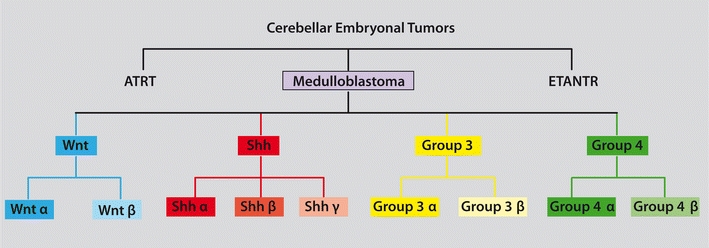
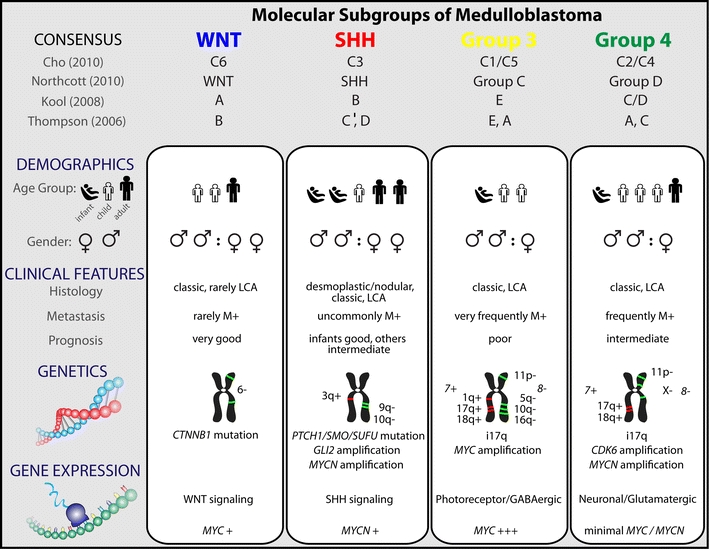
Medulloblastoma, a small blue cell malignancy of the cerebellum, is a major cause of morbidity and mortality in pediatric oncology. Current mechanisms for clinical prognostication and stratification include clinical factors (age, presence of metastases, and extent of resection) as well as histological subgrouping (classic, desmoplastic, and large cell/anaplastic histology). Transcriptional profiling studies of medulloblastoma cohorts from several research groups around the globe have suggested the existence of multiple distinct molecular subgroups that differ in their demographics, transcriptomes, somatic genetic events, and clinical outcomes. Variations in the number, composition, and nature of the subgroups between studies brought about a consensus conference in Boston in the fall of 2010. Discussants at the conference came to a consensus that the evidence supported the existence of four main subgroups of medulloblastoma (Wnt, Shh, Group 3, and Group 4). Participants outlined the demographic, transcriptional, genetic, and clinical differences between the four subgroups. While it is anticipated that the molecular classification of medulloblastoma will continue to evolve and diversify in the future as larger cohorts are studied at greater depth, herein we outline the current consensus nomenclature, and the differences between the medulloblastoma subgroups.
Overview
The claims and statistics of this paper haven’t been checked yet.
Free: it reads the open-access text and checks the first 5 claims that cite a source we can check. Create a free account to check every claim.
Integrity signals
Registry
Cites
Statistics
Figures
Verification
Claims the paper makes
The claims and statistics of this paper haven’t been checked yet.
Free: it reads the open-access text and checks the first 5 claims that cite a source we can check. Create a free account to check every claim.
Self-check
Percentages, sums and reported differences re-computed from the paper’s own numbers.
The self-check needs the paper’s full text.
Citations
Cites
The 2007 WHO Classification of Tumours of the Central Nervous System
Louis, D. N., Ohgaki, H., Wiestler, O. D., Cavenee, W. K., Burger, P. C., Jouvet, A., Scheithauer, B. W., & Kleihues, P. (2007) · Acta Neuropathologica · doi:10.1007/s00401-007-0243-4 · Cited by 15,397
Golub, T. R., Slonim, D. K., Tamayo, P., Huard, C., Gaasenbeek, M., Mesirov, J. P., Coller, H., Loh, M. L., Downing, J. R., Caligiuri, M. A., et al. (1999) · Science · doi:10.1126/science.286.5439.531 · Cited by 11,516 · cited 1×
“This transcriptional approach to tumor sub-classification has also been applied to a number of different non-medullo-blastoma histologies [4, 16, 18, 31, 35, 43], with the underlying assumption that tumors with similar transcriptomes will behave in a biologically similar manner, allowing a…”
BackgroundErratum to: The 2007 WHO classification of tumours of the central nervous system
Louis, D. N., Ohgaki, H., Wiestler, O. D., Cavenee, W. K., Burger, P. C., Jouvet, A., Scheithauer, B. W., & Kleihues, P. (2007) · Zurich Open Repository and Archive (University of Zurich) · doi:10.5167/uzh-156115 · Cited by 4,442
Phillips, H. S., Kharbanda, S., Chen, R., Forrest, W. F., Soriano, R. H., Wu, T. D., Misra, A., Nigro, J. M., Colman, H., Soroceanu, L., et al. (2006) · Cancer Cell · doi:10.1016/j.ccr.2006.02.019 · Cited by 3,143 · cited 1×
“…transcriptional approach to tumor sub-classification has also been applied to a number of different non-medullo-blastoma histologies [4, 16, 18, 31, 35, 43], with the underlying assumption that tumors with similar transcriptomes will behave in a biologically similar manner, allowing a…”
BackgroundBhattacharjee, A., Richards, W. G., Staunton, J., Li, C., Monti, S., Vasa, P., Ladd, C., Beheshti, J., Bueno, R., Gillette, M., et al. (2001) · Proceedings of the National Academy of Sciences · doi:10.1073/pnas.191502998 · Cited by 2,576 · cited 1×
“This transcriptional approach to tumor sub-classification has also been applied to a number of different non-medullo-blastoma histologies [4, 16, 18, 31, 35, 43], with the underlying assumption that tumors with similar transcriptomes will behave in a biologically similar manner, allowing a…”
BackgroundPrediction of central nervous system embryonal tumour outcome based on gene expression
Pomeroy, S. L., Tamayo, P., Gaasenbeek, M., Sturla, L. M., Angelo, M., McLaughlin, M. E., Kim, J. Y. H., Goumnerova, L. C., Black, P. M., Lau, C., et al. (2002) · Nature · doi:10.1038/415436a · Cited by 2,371 · cited 2×
“With recent developments in the ability to monitor transcription across the genome in the setting of a single experiment, various groups have started to sub-classify medulloblastoma on the basis of differences in the transcriptome [36].”
BackgroundSelf-citationIdentification of a CpG Island Methylator Phenotype that Defines a Distinct Subgroup of Glioma
Noushmehr, H., Weisenberger, D. J., Diefes, K., Phillips, H. S., Pujara, K., Berman, B. P., Pan, F., Pelloski, C. E., Sulman, E. P., Bhat, K. P., et al. (2010) · Cancer Cell · doi:10.1016/j.ccr.2010.03.017 · Cited by 2,337 · cited 1×
“This transcriptional approach to tumor sub-classification has also been applied to a number of different non-medullo-blastoma histologies [4, 16, 18, 31, 35, 43], with the underlying assumption that tumors with similar transcriptomes will behave in a biologically similar manner, allowing a…”
BackgroundMedulloblastoma Comprises Four Distinct Molecular Variants
Northcott, P. A., Korshunov, A., Witt, H., Hielscher, T., Eberhart, C. G., Mack, S., Bouffet, E., Clifford, S. C., Hawkins, C. E., French, P., et al. (2011) · Journal of Clinical Oncology · doi:10.1200/jco.2009.27.4324 · Cited by 1,339 · cited 12×
“Others approaches to identify Shh medulloblastomas have included immunohistochemical staining for SFRP1 [2, 28, 48], or GAB1 [11].”
BackgroundMethodInfluentialSelf-citationThe Molecular Basis of Turcot's Syndrome
Hamilton, S. R., Liu, B., Parsons, R. E., Papadopoulos, N., Jen, J., Powell, S. M., Krush, A. J., Berk, T., Cohen, Z., Tetu, B., et al. (1995) · New England Journal of Medicine · doi:10.1056/nejm199503303321302 · Cited by 1,133 · cited 1×
“Germline mutations of the Wnt pathway inhibitor APC predispose to Turcot syndrome, which includes a proclivity to medulloblastoma, in addition, somatic mutations of CTNNB1 encoding b-catenin have been found in sporadic medulloblastomas [19, 50].”
BackgroundKool, M., Korshunov, A., Remke, M., Jones, D. T. W., Schlanstein, M., Northcott, P. A., Cho, Y.-J., Koster, J., Schouten-van Meeteren, A., van Vuurden, D., et al. (2012) · Acta Neuropathologica · doi:10.1007/s00401-012-0958-8 · Cited by 1,056 · cited 3×
“…to identify target cohorts for certain drugs (e.g., SHH inhibitors), but also add significantly to outcome prediction by the time of diagnosis [21], much more than any of the established clinical markers such as patient age, metastatic stage at diagnosis, level of resection, and histological…”
BackgroundMethodInfluentialSelf-citation
Cited by
The 2016 World Health Organization Classification of Tumors of the Central Nervous System: a summary
Louis, D. N., Perry, A., Reifenberger, G., von Deimling, A., Figarella-Branger, D., Cavenee, W. K., Ohgaki, H., Wiestler, O. D., Kleihues, P., & Ellison, D. W. (2016) · Acta Neuropathologica · doi:10.1007/s00401-016-1545-1 · Cited by 15,657
“, desmoplastic/nodular, medulloblastoma with extensive nodularity, large cell, and anaplastic) and it is now widely accepted that there are four genetic (molecular) groups of medulloblastoma: WNTactivated, SHH-activated, and the numerically designated “group 3” and “group 4” [46].”
BackgroundSelf-citationThe 2021 WHO classification of tumors of the central nervous system: a summary
Louis, D. N., Perry, A., Wesseling, P., Brat, D. J., Cree, I. A., Figarella-Branger, D., Hawkins, C., Ng, H. K., Pfister, S. M., Reifenberger, G., et al. (2021) · Neuro-Oncology · doi:10.1093/neuonc/noab106 · Cited by 12,273
Self-citationPajtler, K. W., Witt, H., Sill, M., Jones, D. T. W., Hovestadt, V., Kratochwil, F., Wani, K., Tatevossian, R., Punchihewa, C., Johann, P., et al. (2015) · Cancer Cell · doi:10.1016/j.ccell.2015.04.002 · Cited by 1,225
“A robust and uniform (epi)genetic classification of ependymal tumors as presented herein may guide researchers, neuropathologists, and clinicians to a better understanding of the heterogeneity of this disease, analogous to (epi)genetic subgroups of medulloblastoma (Kool et al., 2012; Northcott et al., 2012; Taylor et…”
BackgroundSelf-citationIntertumoral Heterogeneity within Medulloblastoma Subgroups
Cavalli, F. M. G., Remke, M., Rampasek, L., Peacock, J., Shih, D. J. H., Luu, B., Garzia, L., Torchia, J., Nor, C., Morrissy, A. S., et al. (2017) · Cancer Cell · doi:10.1016/j.ccell.2017.05.005 · Cited by 1,219
“…5C), a trend to enrichment of i17q (group 3a 17/67, 3b 5/37, 3g 10/40; p = 0.32 Pearson’s chi-square test, Figure 5E) and frequently harbor increasedMYC copy number (group 3a 0/ 35, 3b 2/28, 3g 5/24; p = 0.012, Figures 5F and S7A; Table S4), without other focal aberrations (Taylor et al., 2012).”
InfluentialSelf-citationThe whole-genome landscape of medulloblastoma subtypes
Northcott, P. A., Buchhalter, I., Morrissy, A. S., Hovestadt, V., Weischenfeldt, J., Ehrenberger, T., Gröbner, S., Segura-Wang, M., Zichner, T., Rudneva, V. A., et al. (2017) · Nature · doi:10.1038/nature22973 · Cited by 1,112
“epigenetic signatures that define clinically relevant patient subsets 12,13 .”
Self-citationKool, M., Korshunov, A., Remke, M., Jones, D. T. W., Schlanstein, M., Northcott, P. A., Cho, Y.-J., Koster, J., Schouten-van Meeteren, A., van Vuurden, D., et al. (2012) · Acta Neuropathologica · doi:10.1007/s00401-012-0958-8 · Cited by 1,056
“However, the current consensus in the medulloblastoma field is that there are only four core molecular subgroups in medulloblastoma, as recently agreed upon at a consensus meeting in Boston (see also the manuscript by Taylor et al. [24] in this issue).”
BackgroundSelf-citationSubgroup-specific structural variation across 1,000 medulloblastoma genomes
Northcott, P. A., Shih, D. J. H., Peacock, J., Garzia, L., Sorana Morrissy, A., Zichner, T., Stütz, A. M., Korshunov, A., Reimand, J., Schumacher, S. E., et al. (2012) · Nature · doi:10.1038/nature11327 · Cited by 899
Self-citationNovel mutations target distinct subgroups of medulloblastoma
Robinson, G., Parker, M., Kranenburg, T. A., Lu, C., Chen, X., Ding, L., Phoenix, T. N., Hedlund, E., Wei, L., Zhu, X., et al. (2012) · Nature · doi:10.1038/nature11213 · Cited by 846
Self-citationDissecting the genomic complexity underlying medulloblastoma
Jones, D. T. W., Jäger, N., Kool, M., Zichner, T., Hutter, B., Sultan, M., Cho, Y.-J., Pugh, T. J., Hovestadt, V., Stütz, A. M., et al. (2012) · Nature · doi:10.1038/nature11284 · Cited by 839
Self-citationGenome Sequencing of SHH Medulloblastoma Predicts Genotype-Related Response to Smoothened Inhibition
Kool, M., Jones, D. T. W., Jäger, N., Northcott, P. A., Pugh, T. J., Hovestadt, V., Piro, R. M., Esparza, L. A., Markant, S. L., Remke, M., et al. (2014) · Cancer Cell · doi:10.1016/j.ccr.2014.02.004 · Cited by 762
“They are highly distinct in tumor cell histology and biology, and in addition show divergent clinical phenotypes such as patient demographics, tumor dissemination, and patient outcome (Kool et al., 2012; Northcott et al., 2012a; Taylor et al., 2012).”
BackgroundSelf-citationMedulloblastoma exome sequencing uncovers subtype-specific somatic mutations
Pugh, T. J., Weeraratne, S. D., Archer, T. C., Pomeranz Krummel, D. A., Auclair, D., Bochicchio, J., Carneiro, M. O., Carter, S. L., Cibulskis, K., Erlich, R. L., et al. (2012) · Nature · doi:10.1038/nature11329 · Cited by 750
Self-citationMedulloblastomics: the end of the beginning
Northcott, P. A., Jones, D. T. W., Kool, M., Robinson, G. W., Gilbertson, R. J., Cho, Y.-J., Pomeroy, S. L., Korshunov, A., Lichter, P., Taylor, M. D., et al. (2012) · Nature Reviews Cancer · doi:10.1038/nrc3410 · Cited by 663
Self-citationRisk stratification of childhood medulloblastoma in the molecular era: the current consensus
Ramaswamy, V., Remke, M., Bouffet, E., Bailey, S., Clifford, S. C., Doz, F., Kool, M., Dufour, C., Vassal, G., Milde, T., et al. (2016) · Acta Neuropathologica · doi:10.1007/s00401-016-1569-6 · Cited by 654
“Over the past 10 years, our understanding of medulloblastoma biology has dramatically increased, primarily through advances in integrated genomics [4, 23, 32, 44, 53, 57].”
BackgroundInfluentialSelf-citationNorthcott, P. A., Robinson, G. W., Kratz, C. P., Mabbott, D. J., Pomeroy, S. L., Clifford, S. C., Rutkowski, S., Ellison, D. W., Malkin, D., Taylor, M. D., et al. (2019) · Nature Reviews Disease Primers · doi:10.1038/s41572-019-0063-6 · Cited by 649
Self-citationThe Regulation and Function of Lactate Dehydrogenase A: Therapeutic Potential in Brain Tumor
Valvona, C. J., Fillmore, H. L., Nunn, P. B., & Pilkington, G. J. (2016) · Brain Pathology · doi:10.1111/bpa.12299 · Cited by 567
“However, c-Myc expression is often deregulated in brain tumor cells, including the most metastatic subgroup of medulloblastoma (MB) (group 3) (124) and has been shown to transform rat fibroblasts by up-regulating LDHA (74, 116).”
BackgroundCapper, D., Stichel, D., Sahm, F., Jones, D. T. W., Schrimpf, D., Sill, M., Schmid, S., Hovestadt, V., Reuss, D. E., Koelsche, C., et al. (2018) · Acta Neuropathologica · doi:10.1007/s00401-018-1879-y · Cited by 567
Self-citationSchwalbe, E. C., Lindsey, J. C., Nakjang, S., Crosier, S., Smith, A. J., Hicks, D., Rafiee, G., Hill, R. M., Iliasova, A., Stone, T., et al. (2017) · The Lancet Oncology · doi:10.1016/s1470-2045(17)30243-7 · Cited by 516
Self-citationSubgroup-Specific Prognostic Implications of TP53 Mutation in Medulloblastoma
Zhukova, N., Ramaswamy, V., Remke, M., Pfaff, E., Shih, D. J. H., Martin, D. C., Castelo-Branco, P., Baskin, B., Ray, P. N., Bouffet, E., et al. (2013) · Journal of Clinical Oncology · doi:10.1200/jco.2012.48.5052 · Cited by 485
“A consensus meeting resulted in the current molecular subclassification of medulloblastoma into four subgroups: wingless (WNT), sonic hedgehog (SHH), group 3, and group 4.(14) It is hoped that, in the near future, this subclassification will be used to select targeted therapies and improve understanding of the behavio…”
BackgroundSelf-citationConsensus Paper: Cerebellar Development
Leto, K., Arancillo, M., Becker, E. B. E., Buffo, A., Chiang, C., Ding, B., Dobyns, W. B., Dusart, I., Haldipur, P., Hatten, M. E., et al. (2016) · The Cerebellum · doi:10.1007/s12311-015-0724-2 · Cited by 484
“A further model using Myc + Tp53 mutant mice developed MBs from cerebellar neural stem cells and from GCPs, although the tumors that formed from GCPs lost their lineage specific markers first [455].”
InfluentialDecoding the regulatory landscape of medulloblastoma using DNA methylation sequencing
Hovestadt, V., Jones, D. T. W., Picelli, S., Wang, W., Kool, M., Northcott, P. A., Sultan, M., Stachurski, K., Ryzhova, M., Warnatz, H.-J., et al. (2014) · Nature · doi:10.1038/nature13268 · Cited by 450
Self-citationRobinson, G. W., Orr, B. A., Wu, G., Gururangan, S., Lin, T., Qaddoumi, I., Packer, R. J., Goldman, S., Prados, M. D., Desjardins, A., et al. (2015) · Journal of Clinical Oncology · doi:10.1200/jco.2014.60.1591 · Cited by 448
Self-citationResolving medulloblastoma cellular architecture by single-cell genomics
Hovestadt, V., Smith, K. S., Bihannic, L., Filbin, M. G., Shaw, M. L., Baumgartner, A., DeWitt, J. C., Groves, A., Mayr, L., Weisman, H. R., et al. (2019) · Nature · doi:10.1038/s41586-019-1434-6 · Cited by 402
Self-citationWaszak, S. M., Northcott, P. A., Buchhalter, I., Robinson, G. W., Sutter, C., Groebner, S., Grund, K. B., Brugières, L., Jones, D. T. W., Pajtler, K. W., et al. (2018) · The Lancet Oncology · doi:10.1016/s1470-2045(18)30242-0 · Cited by 395
“Molecular classification of medulloblastomas into consensus subgroups 9 (MB WNT , MB SHH , MB Group3 , and MB Group4 ) was determined by DNA methylation profiling.”
MethodSelf-citationRecurrence patterns across medulloblastoma subgroups: an integrated clinical and molecular analysis
Ramaswamy, V., Remke, M., Bouffet, E., Faria, C. C., Perreault, S., Cho, Y.-J., Shih, D. J., Luu, B., Dubuc, A. M., Northcott, P. A., et al. (2013) · The Lancet Oncology · doi:10.1016/s1470-2045(13)70449-2 · Cited by 394
Self-citationClinical and molecular characterization of early‐onset colorectal cancer
Willauer, A. N., Liu, Y., Pereira, A. A. L., Lam, M., Morris, J. S., Raghav, K. P. S., Morris, V. K., Menter, D., Broaddus, R., Meric‐Bernstam, F., et al. (2019) · Cancer · doi:10.1002/cncr.31994 · Cited by 375
“(%) 46 (2) 177 (9) 411 (22) 605 (32) 454 (24) 184 (10)”
Thompson, E. M., Hielscher, T., Bouffet, E., Remke, M., Luu, B., Gururangan, S., McLendon, R. E., Bigner, D. D., Lipp, E. S., Perreault, S., et al. (2016) · The Lancet Oncology · doi:10.1016/s1470-2045(15)00581-1 · Cited by 365
Self-citationYock, T. I., Yeap, B. Y., Ebb, D. H., Weyman, E., Eaton, B. R., Sherry, N. A., Jones, R. M., MacDonald, S. M., Pulsifer, M. B., Lavally, B., et al. (2016) · The Lancet Oncology · doi:10.1016/s1470-2045(15)00167-9 · Cited by 350
Pediatric high-grade glioma: biologically and clinically in need of new thinking
Jones, C., Karajannis, M. A., Jones, D. T. W., Kieran, M. W., Monje, M., Baker, S. J., Becher, O. J., Cho, Y.-J., Gupta, N., Hawkins, C., et al. (2016) · Neuro-Oncology · doi:10.1093/neuonc/now101 · Cited by 360
Self-citationBET Bromodomain Inhibition of MYC -Amplified Medulloblastoma
Bandopadhayay, P., Bergthold, G., Nguyen, B., Schubert, S., Gholamin, S., Tang, Y., Bolin, S., Schumacher, S. E., Zeid, R., Masoud, S., et al. (2014) · Clinical Cancer Research · doi:10.1158/1078-0432.ccr-13-2281 · Cited by 352
“Group 3 medulloblastomas have the worst prognosis, and are commonly metastatic and refractory to standard therapy, with 10-year overall survival rates of 39% (5, 6, 10).”
Self-citationTargeting potassium channels in cancer
Huang, X., & Jan, L. Y. (2014) · Journal of Cell Biology · doi:10.1083/jcb.201404136 · Cited by 330
“1 marks a subgroup of medulloblastoma (Taylor et al., 2012); elevated Kv1.”
BackgroundThe clinical implications of medulloblastoma subgroups
Northcott, P. A., Korshunov, A., Pfister, S. M., & Taylor, M. D. (2012) · Nature Reviews Neurology · doi:10.1038/nrneurol.2012.78 · Cited by 328
Self-citationMRI Surrogates for Molecular Subgroups of Medulloblastoma
Perreault, S., Ramaswamy, V., Achrol, A. S., Chao, K., Liu, T. T., Shih, D., Remke, M., Schubert, S., Bouffet, E., Fisher, P. G., et al. (2014) · American Journal of Neuroradiology · doi:10.3174/ajnr.a3990 · Cited by 328
Self-citationCytogenetic Prognostication Within Medulloblastoma Subgroups
Shih, D. J. H., Northcott, P. A., Remke, M., Korshunov, A., Ramaswamy, V., Kool, M., Luu, B., Yao, Y., Wang, X., Dubuc, A. M., et al. (2014) · Journal of Clinical Oncology · doi:10.1200/jco.2013.50.9539 · Cited by 313
“DISCUSSION Current consensus identifies the existence of four major subgroups of medulloblastoma, with excellent prognosis for those with WNT tumors, intermediate prognosis for those with SHH and Group 4 tumors, and poor prognosis for those with Group 3 tumors.(32,52) However, early evidence suggests clinical heteroge…”
BackgroundSelf-citationUdaka, Y. T., & Packer, R. J. (2018) · Neurologic Clinics · doi:10.1016/j.ncl.2018.04.009 · Cited by 280
Sharma, T., Schwalbe, E. C., Williamson, D., Sill, M., Hovestadt, V., Mynarek, M., Rutkowski, S., Robinson, G. W., Gajjar, A., Cavalli, F., et al. (2019) · Acta Neuropathologica · doi:10.1007/s00401-019-02020-0 · Cited by 310
Self-citationA comprehensive assessment of somatic mutation detection in cancer using whole-genome sequencing
Alioto, T. S., Buchhalter, I., Derdak, S., Hutter, B., Eldridge, M. D., Hovig, E., Heisler, L. E., Beck, T. A., Simpson, J. T., Tonon, L., et al. (2015) · Nature Communications · doi:10.1038/ncomms10001 · Cited by 306
“In a second benchmark, we evaluated both sequencing methods and somatic mutation calling pipelines using matched samples from a case of medulloblastoma (MB, a malignant pediatric brain tumour arising in the cerebellum 20,21 ) from the ICGC PedBrain Tumor project.”
Self-citationHedgehog Signal Transduction: Key Players, Oncogenic Drivers, and Cancer Therapy
Pak, E., & Segal, R. A. (2016) · Developmental Cell · doi:10.1016/j.devcel.2016.07.026 · Cited by 301
“Approximately 30% of all MB cases are characterized by a SHH molecular signature (Taylor et al., 2012).”
BackgroundHovestadt, V., Remke, M., Kool, M., Pietsch, T., Northcott, P. A., Fischer, R., Cavalli, F. M. G., Ramaswamy, V., Zapatka, M., Reifenberger, G., et al. (2013) · Acta Neuropathologica · doi:10.1007/s00401-013-1126-5 · Cited by 292
“Rather, it comprises four distinct molecular subgroups (Wnt pathway activated (WNT), Sonic hedgehog pathway activated (SHH), and the less well-characterised Group 3 and Group 4) [7, 15], which are highly divergent in terms of their patient demographics, underlying biology, and survival outcomes [4, 6].”
BackgroundSelf-citationDNA Methylation Profiling: An Emerging Paradigm for Cancer Diagnosis
Papanicolau-Sengos, A., & Aldape, K. (2022) · Annual Review of Pathology: Mechanisms of Disease · doi:10.1146/annurev-pathol-042220-022304 · Cited by 279
Millard, N. E., & De Braganca, K. C. (2016) · Journal of Child Neurology · doi:10.1177/0883073815600866 · Cited by 247
“Each subgroup was characterized by a unique set of demographic and clinical features, genetics, and gene expression.(14) Identification of molecular subgroup more accurately predicts outcome and clinical behavior than does histopathology or clinical staging.”
Somatic CRISPR/Cas9-mediated tumour suppressor disruption enables versatile brain tumour modelling
Zuckermann, M., Hovestadt, V., Knobbe-Thomsen, C. B., Zapatka, M., Northcott, P. A., Schramm, K., Belic, J., Jones, D. T. W., Tschida, B., Moriarity, B., et al. (2015) · Nature Communications · doi:10.1038/ncomms8391 · Cited by 283
Self-citationThe prenatal origins of cancer
Marshall, G. M., Carter, D. R., Cheung, B. B., Liu, T., Mateos, M. K., Meyerowitz, J. G., & Weiss, W. A. (2014) · Nature Reviews Cancer · doi:10.1038/nrc3679 · Cited by 281
Targeting Placental Growth Factor/Neuropilin 1 Pathway Inhibits Growth and Spread of Medulloblastoma
Snuderl, M., Batista, A., Kirkpatrick, N. D., Ruiz de Almodovar, C., Riedemann, L., Walsh, E. C., Anolik, R., Huang, Y., Martin, J. D., Kamoun, W., et al. (2013) · Cell · doi:10.1016/j.cell.2013.01.036 · Cited by 251
“The asterisk indicates that molecular classification was applied based on criteria using the IHC panel proposed by the medulloblastoma consensus group (Taylor et al., 2012), array comparative genomic hybridization for copy number changes, and deep gene sequencing for mutations.”
MethodInfluentialTracing the cellular origin of cancer
Blanpain, C. (2013) · Nature Cell Biology · doi:10.1038/ncb2657 · Cited by 276
Juraschka, K., & Taylor, M. D. (2019) · Journal of Neurosurgery: Pediatrics · doi:10.3171/2019.5.peds18381 · Cited by 275
Self-citationWNT signaling in glioblastoma and therapeutic opportunities
Lee, Y., Lee, J.-K., Ahn, S. H., Lee, J., & Nam, D.-H. (2016) · Laboratory Investigation · doi:10.1038/labinvest.2015.140 · Cited by 273
Medulloblastomics revisited: biological and clinical insights from thousands of patients
Hovestadt, V., Ayrault, O., Swartling, F. J., Robinson, G. W., Pfister, S. M., & Northcott, P. A. (2020) · Nature Reviews Cancer · doi:10.1038/s41568-019-0223-8 · Cited by 271
Self-citationThe 2016 WHO Classification of Tumours of the Central Nervous System: The Major Points of Revision
KOMORI, T. (2017) · Neurologia medico-chirurgica · doi:10.2176/nmc.ra.2017-0010 · Cited by 247
St. Jude Cloud: A Pediatric Cancer Genomic Data-Sharing Ecosystem
McLeod, C., Gout, A. M., Zhou, X., Thrasher, A., Rahbarinia, D., Brady, S. W., Macias, M., Birch, K., Finkelstein, D., Sunny, J., et al. (2021) · Cancer Discovery · doi:10.1158/2159-8290.cd-20-1230 · Cited by 259
Self-citationDonovan, L. K., Delaidelli, A., Joseph, S. K., Bielamowicz, K., Fousek, K., Holgado, B. L., Manno, A., Srikanthan, D., Gad, A. Z., Van Ommeren, R., et al. (2020) · Nature Medicine · doi:10.1038/s41591-020-0827-2 · Cited by 246
Self-citationMolecular subgrouping of atypical teratoid/rhabdoid tumors—a reinvestigation and current consensus
Ho, B., Johann, P. D., Grabovska, Y., De Dieu Andrianteranagna, M. J., Yao, F., Frühwald, M., Hasselblatt, M., Bourdeaut, F., Williamson, D., Huang, A., et al. (2020) · Neuro-Oncology · doi:10.1093/neuonc/noz235 · Cited by 235
Self-citationRobinson, G. W., Rudneva, V. A., Buchhalter, I., Billups, C. A., Waszak, S. M., Smith, K. S., Bowers, D. C., Bendel, A., Fisher, P. G., Partap, S., et al. (2018) · The Lancet Oncology · doi:10.1016/s1470-2045(18)30204-3 · Cited by 234
Self-citationWe're Not “DON” Yet: Optimal Dosing and Prodrug Delivery of 6-Diazo-5-oxo-L-norleucine
Lemberg, K. M., Vornov, J. J., Rais, R., & Slusher, B. S. (2018) · Molecular Cancer Therapeutics · doi:10.1158/1535-7163.mct-17-1148 · Cited by 237
“, gliomas,medulloblastoma) have amplification of the MYC or MYCN oncogenes, potentially rendering them glutamine dependent (57).”
BackgroundGajjar, A., Robinson, G. W., Smith, K. S., Lin, T., Merchant, T. E., Chintagumpala, M., Mahajan, A., Su, J., Bouffet, E., Bartels, U., et al. (2021) · Journal of Clinical Oncology · doi:10.1200/jco.20.01372 · Cited by 241
Self-citationThe genomic landscape of pediatric cancers: Implications for diagnosis and treatment
Sweet-Cordero, E. A., & Biegel, J. A. (2019) · Science · doi:10.1126/science.aaw3535 · Cited by 225
Moxon-Emre, I., Bouffet, E., Taylor, M. D., Laperriere, N., Scantlebury, N., Law, N., Spiegler, B. J., Malkin, D., Janzen, L., & Mabbott, D. (2014) · Journal of Clinical Oncology · doi:10.1200/jco.2013.52.3290 · Cited by 225
“For instance, patients with WNT medulloblastoma have excellent disease prognosis and are ideal candidates for therapy de-escalation.(32) We have demonstrated that lower CSR dose and smaller boost volume lead to stable intellectual trajectories without seeming to worsen survival.”
BackgroundSelf-citationAn integrative view on sex differences in brain tumors
Sun, T., Plutynski, A., Ward, S., & Rubin, J. B. (2015) · Cellular and Molecular Life Sciences · doi:10.1007/s00018-015-1930-2 · Cited by 212
“Medulloblastoma, the most common malignant brain tumor of childhood, comprises four distinct subtypes based on gene expression, mutation, and copy number variations [17–20].”
BackgroundIn vitro models of medulloblastoma: Choosing the right tool for the job
Ivanov, D. P., Coyle, B., Walker, D. A., & Grabowska, A. M. (2016) · Journal of Biotechnology · doi:10.1016/j.jbiotec.2016.07.028 · Cited by 227
“That is why the current gold standard for subgroup profiling remains a choice between whole genome transcriptional array profiling (Taylor et al., 2012), employing a Nanostring panel of 22 genes (Northcott et al.”
BackgroundInfluentialGajjar, A., Bowers, D. C., Karajannis, M. A., Leary, S., Witt, H., & Gottardo, N. G. (2015) · Journal of Clinical Oncology · doi:10.1200/jco.2014.59.9217 · Cited by 221
“tional profiling: wingless (WNT), sonic hedgehog (SHH), group 3, and group 4.(5) These subgroups were defined by their unique clinical”
BackgroundSelf-citationDistinct Neural Stem Cell Populations Give Rise to Disparate Brain Tumors in Response to N-MYC
Swartling, F. J., Savov, V., Persson, A. I., Chen, J., Hackett, C. S., Northcott, P. A., Grimmer, M. R., Lau, J., Chesler, L., Perry, A., et al. (2012) · Cancer Cell · doi:10.1016/j.ccr.2012.04.012 · Cited by 215
“To further clarify the expression of SOX9 in MB, we analyzed array data from 103 human MBs segregated into WNT, SHH, Group 3, or Group 4 tumors (Northcott et al., 2011; Taylor et al., 2011).”
InfluentialSelf-citationMolecular pathology of tumors of the central nervous system
Kristensen, B. W., Priesterbach-Ackley, L. P., Petersen, J. K., & Wesseling, P. (2019) · Annals of Oncology · doi:10.1093/annonc/mdz164 · Cited by 213
“More recent studies, however, revealed particular molecular medulloblastoma subgroups and have showed that molecular and histological data provide complementary diagnostic information [4, 58, 59].”
BackgroundMichalski, J. M., Janss, A. J., Vezina, L. G., Smith, K. S., Billups, C. A., Burger, P. C., Embry, L. M., Cullen, P. L., Hardy, K. K., Pomeroy, S. L., et al. (2021) · Journal of Clinical Oncology · doi:10.1200/jco.20.02730 · Cited by 215
Self-citationSonic Hedgehog Signaling in Organogenesis, Tumors, and Tumor Microenvironments
Jeng, K.-S., Chang, C.-F., & Lin, S.-S. (2020) · International Journal of Molecular Sciences · doi:10.3390/ijms21030758 · Cited by 207
Grabovska, Y., Mackay, A., O’Hare, P., Crosier, S., Finetti, M., Schwalbe, E. C., Pickles, J. C., Fairchild, A. R., Avery, A., Cockle, J., et al. (2020) · Nature Communications · doi:10.1038/s41467-020-18070-y · Cited by 213
Self-citationHill, R. M., Kuijper, S., Lindsey, J. C., Petrie, K., Schwalbe, E. C., Barker, K., Boult, J. K. R., Williamson, D., Ahmad, Z., Hallsworth, A., et al. (2015) · Cancer Cell · doi:10.1016/j.ccell.2014.11.002 · Cited by 210
“These comprised (1) the four consensus medulloblastoma molecular subgroups associated with distinct molecular events, clinicopathological features, and prognosis (Taylor et al., 2012); (2)MYC andMYCN amplification (predominant in MBGroup3 and MBSHH/Group4, respectively), and associated with poor outcome (Ellison et al.”
InfluentialSelf-citationArcher, T. C., Ehrenberger, T., Mundt, F., Gold, M. P., Krug, K., Mah, C. K., Mahoney, E. L., Daniel, C. J., LeNail, A., Ramamoorthy, D., et al. (2018) · Cancer Cell · doi:10.1016/j.ccell.2018.08.004 · Cited by 202
“Gains of chromosome 3q are characteristic of SHH medulloblastoma (Cho et al., 2011; Kool et al., 2012; Taylor et al., 2012), and in our cohort they occur in several SHHa samples, and do not occur in SHHb samples (Figure 3C).”
Self-citationMedulloblastoma—translating discoveries from the bench to the bedside
Gajjar, A. J., & Robinson, G. W. (2014) · Nature Reviews Clinical Oncology · doi:10.1038/nrclinonc.2014.181 · Cited by 194
Self-citationMolecular neuro-oncology in clinical practice: a new horizon
Weller, M., Pfister, S. M., Wick, W., Hegi, M. E., Reifenberger, G., & Stupp, R. (2013) · The Lancet Oncology · doi:10.1016/s1470-2045(13)70168-2 · Cited by 189
“Most importantly, the pediatric neurooncology community came up with a consensus paper supported by leading groups across the world agreeing to this classification approach.(70) An immediate clinical consequence of this ground-breaking work has been that most new studies in North America and Europe account for the fac…”
BackgroundSelf-citationDubuc, A. M., Remke, M., Korshunov, A., Northcott, P. A., Zhan, S. H., Mendez-Lago, M., Kool, M., Jones, D. T. W., Unterberger, A., Morrissy, A. S., et al. (2013) · Acta Neuropathologica · doi:10.1007/s00401-012-1070-9 · Cited by 191
Self-citationvon Bueren, A. O., Kortmann, R.-D., von Hoff, K., Friedrich, C., Mynarek, M., Müller, K., Goschzik, T., zur Mühlen, A., Gerber, N., Warmuth-Metz, M., et al. (2016) · Journal of Clinical Oncology · doi:10.1200/jco.2016.67.2428 · Cited by 188
Self-citationMolecular subgroups of medulloblastoma
Northcott, P. A., Dubuc, A. M., Pfister, S., & Taylor, M. D. (2012) · Expert Review of Neurotherapeutics · doi:10.1586/ern.12.66 · Cited by 187
Self-citationPediatric High Grade Glioma: a Review and Update on Tumor Clinical Characteristics and Biology
Fangusaro, J. (2012) · Frontiers in Oncology · doi:10.3389/fonc.2012.00105 · Cited by 183
Medulloblastoma: From Myth to Molecular
Ramaswamy, V., & Taylor, M. D. (2017) · Journal of Clinical Oncology · doi:10.1200/jco.2017.72.7842 · Cited by 180
“common being isochromosome 17q (i17q) in 40% of group 3 tumors.(58) Transgenic preclinical models faithfully recapitulating group 3 tumors are lacking, although allograft models of MYC overexpression and p53 loss resemble group 3 tumors.”
BackgroundInfluentialSelf-citationMethylation array profiling of adult brain tumours: diagnostic outcomes in a large, single centre
Jaunmuktane, Z., Capper, D., Jones, D. T. W., Schrimpf, D., Sill, M., Dutt, M., Suraweera, N., Pfister, S. M., von Deimling, A., & Brandner, S. (2019) · Acta Neuropathologica Communications · doi:10.1186/s40478-019-0668-8 · Cited by 182
“The cases submitted for the methylation arrays were categorised into six groups with the following characteristics: (i) unusual combination of morphology, location and demographics, (ii) contradictory, ambiguous or non-informative molecular tests, (iii) confirmation of unusual histological and molecular results, (iv)…”
Self-citationSchwalbe, E. C., Williamson, D., Lindsey, J. C., Hamilton, D., Ryan, S. L., Megahed, H., Garami, M., Hauser, P., Dembowska-Baginska, B., Perek, D., et al. (2013) · Acta Neuropathologica · doi:10.1007/s00401-012-1077-2 · Cited by 178
“Independent assessments of subgroup status using a range of alternative assays (expression signatures, IHC, mutational and genomic markers) demonstrate a close relationship to previously described gene expression subgroups [7, 22, 32, 48, 51].”
BackgroundMethodResultInfluentialSelf-citationBlumcke, I., Aronica, E., Urbach, H., Alexopoulos, A., & Gonzalez-Martinez, J. A. (2014) · Acta Neuropathologica · doi:10.1007/s00401-014-1288-9 · Cited by 179
“As a result, the neuropathology community has now attained major achievements in specifying useful molecular diagnostic approaches and targeted therapies in these brain tumors [33, 34, 38, 81, 83, 87].”
Background2016 Updates to the WHO Brain Tumor Classification System: What the Radiologist Needs to Know
Johnson, D. R., Guerin, J. B., Giannini, C., Morris, J. M., Eckel, L. J., & Kaufmann, T. J. (2017) · RadioGraphics · doi:10.1148/rg.2017170037 · Cited by 179
Serial assessment of measurable residual disease in medulloblastoma liquid biopsies
Liu, A. P. Y., Smith, K. S., Kumar, R., Paul, L., Bihannic, L., Lin, T., Maass, K. K., Pajtler, K. W., Chintagumpala, M., Su, J. M., et al. (2021) · Cancer Cell · doi:10.1016/j.ccell.2021.09.012 · Cited by 177
Self-citationRole of MYC in medulloblastoma
Roussel, M. F., & Robinson, G. W. (2013) · Cold Spring Harbor Perspectives in Medicine · doi:10.1101/cshperspect.a014308 · Cited by 180
“Group 3 medulloblastomas have the worst overall survival at ,50% survival on many protocols (Cho et al. 2011; Northcott et al. 2011; Taylor et al. 2012).”
BackgroundKieran, M. W., Chisholm, J., Casanova, M., Brandes, A. A., Aerts, I., Bouffet, E., Bailey, S., Leary, S., MacDonald, T. J., Mechinaud, F., et al. (2017) · Neuro-Oncology · doi:10.1093/neuonc/nox109 · Cited by 175
A biobank of patient-derived pediatric brain tumor models
Brabetz, S., Leary, S. E. S., Gröbner, S. N., Nakamoto, M. W., Şeker-Cin, H., Girard, E. J., Cole, B., Strand, A. D., Bloom, K. L., Hovestadt, V., et al. (2018) · Nature Medicine · doi:10.1038/s41591-018-0207-3 · Cited by 176
Self-citationCell of origin of glioma: biological and clinical implications
Alcantara Llaguno, S. R., & Parada, L. F. (2016) · British Journal of Cancer · doi:10.1038/bjc.2016.354 · Cited by 163
“Molecular diagnosis and subtype-specific treatments in CNS tumours is well under way in medulloblastomas (Taylor et al, 2012) and the glioblastoma field should not be far behind.”
BackgroundRecurrent noncoding U1 snRNA mutations drive cryptic splicing in SHH medulloblastoma
Suzuki, H., Kumar, S. A., Shuai, S., Diaz-Navarro, A., Gutierrez-Fernandez, A., De Antonellis, P., Cavalli, F. M. G., Juraschka, K., Farooq, H., Shibahara, I., et al. (2019) · Nature · doi:10.1038/s41586-019-1650-0 · Cited by 172
Self-citationPathology, diagnostics, and classification of medulloblastoma
Orr, B. A. (2020) · Brain Pathology · doi:10.1111/bpa.12837 · Cited by 202
“Classic variant MBs are by far the most frequent encountered in clinical practice, accounting for 72% of MB (45).”
InfluentialTargeting CDK6 in cancer: State of the art and new insights
Tadesse, S., Yu, M., Kumarasiri, M., Le, B. T., & Wang, S. (2015) · Cell Cycle · doi:10.1080/15384101.2015.1084445 · Cited by 163
Leary, S. E. S., Packer, R. J., Li, Y., Billups, C. A., Smith, K. S., Jaju, A., Heier, L., Burger, P., Walsh, K., Han, Y., et al. (2021) · JAMA Oncology · doi:10.1001/jamaoncol.2021.2224 · Cited by 164
Self-citationTERT promoter mutations are highly recurrent in SHH subgroup medulloblastoma
Remke, M., Ramaswamy, V., Peacock, J., Shih, D. J. H., Koelsche, C., Northcott, P. A., Hill, N., Cavalli, F. M. G., Kool, M., Wang, X., et al. (2013) · Acta Neuropathologica · doi:10.1007/s00401-013-1198-2 · Cited by 164
“Specifically, group 3 tumors are largely confined to non-adults, SHH tumors are most frequent in infants and adults, while WNT and group 4 medulloblastomas are mostly observed in pediatric cohorts [15, 24, 27, 38, 41].”
BackgroundSelf-citationSexually dimorphic RB inactivation underlies mesenchymal glioblastoma prevalence in males
Sun, T., Warrington, N. M., Luo, J., Brooks, M. D., Dahiya, S., Snyder, S. C., Sengupta, R., & Rubin, J. B. (2014) · Journal of Clinical Investigation · doi:10.1172/jci71048 · Cited by 161
Haumann, R., Videira, J. C., Kaspers, G. J. L., van Vuurden, D. G., & Hulleman, E. (2020) · CNS Drugs · doi:10.1007/s40263-020-00766-w · Cited by 170
“These tumors can be classified based on histology (distinguishing classic, desmoplastic, and large-cell medulloblastoma), or molecular signature (WNT, Sonic hedgehog [SHH], Group 3 and Group 4) [60, 61].”
BackgroundMassimino, M., Biassoni, V., Gandola, L., Garrè, M. L., Gatta, G., Giangaspero, F., Poggi, G., & Rutkowski, S. (2016) · Critical Reviews in Oncology/Hematology · doi:10.1016/j.critrevonc.2016.05.012 · Cited by 181
“If ACTH deficiency is suspected on clinical grounds, a test of the whole axis, such as the Insulin Tolerance Test or the metyrapone test, should be performed (Toogood, 2004).”
Self-citationZhao, X., Ponomaryov, T., Ornell, K. J., Zhou, P., Dabral, S. K., Pak, E., Li, W., Atwood, S. X., Whitson, R. J., Chang, A. L. S., et al. (2015) · Cancer Research · doi:10.1158/0008-5472.can-14-2999-t · Cited by 160
“In addition to Shh pathway–specific components, we tested molecules that are key drivers of WNT and group 3 (MYC) medulloblastoma subtypes (25).”
Molecular characteristics and therapeutic vulnerabilities across paediatric solid tumours
Jones, D. T. W., Banito, A., Grünewald, T. G. P., Haber, M., Jäger, N., Kool, M., Milde, T., Molenaar, J. J., Nabbi, A., Pugh, T. J., et al. (2019) · Nature Reviews Cancer · doi:10.1038/s41568-019-0169-x · Cited by 161
Self-citationThe evolution of the TOR pathway and its role in cancer
Beauchamp, E. M., & Platanias, L. C. (2012) · Oncogene · doi:10.1038/onc.2012.567 · Cited by 173
Hasselblatt, M., Isken, S., Linge, A., Eikmeier, K., Jeibmann, A., Oyen, F., Nagel, I., Richter, J., Bartelheim, K., Kordes, U., et al. (2012) · Genes Chromosomes and Cancer · doi:10.1002/gcc.22018 · Cited by 158
“These findings thus further highlight the unique genetic homogeneity of AT/RT as compared to other brain tumors such as medulloblastoma (Pfister et al., 2010; Taylor et al., 2012) and”
ResultForget, A., Martignetti, L., Puget, S., Calzone, L., Brabetz, S., Picard, D., Montagud, A., Liva, S., Sta, A., Dingli, F., et al. (2018) · Cancer Cell · doi:10.1016/j.ccell.2018.08.002 · Cited by 142
“Similarly, hallmark features of the SHH subgroup include highly recurrent mutations affecting key signaling components of SHH signaling, leading to a clearly recognizable transcriptional and epigenetic landscape (Kool et al., 2014; Northcott et al., 2017; Taylor et al., 2012).”
BackgroundSelf-citationPemetrexed and Gemcitabine as Combination Therapy for the Treatment of Group3 Medulloblastoma
Morfouace, M., Shelat, A. A., Jacus, M. O., Freeman, B. B., Turner, D. C., Robinson, S., Zindy, F., Wang, Y., Finkelstein, D., Ayrault, O., et al. (2014) · Cancer Cell · doi:10.1016/j.ccr.2014.02.009 · Cited by 172
“MB is classified into four major subgroups based on clinical and molecular profiles (Taylor et al., 2012).”
BackgroundSelf-citationMcCubrey, J. A., Rakus, D., Gizak, A., Steelman, L. S., Abrams, S. L., Lertpiriyapong, K., Fitzgerald, T. L., Yang, L. V., Montalto, G., Cervello, M., et al. (2016) · Biochimica et Biophysica Acta (BBA) - Molecular Cell Research · doi:10.1016/j.bbamcr.2016.09.004 · Cited by 161
BET bromodomain protein inhibition is a therapeutic option for medulloblastoma
Henssen, A. G., Thor, T., Odersky, A., Heukamp, L. C., Hindy, N. E., Beckers, A., Speleman, F., Althoff, K., Schäfers, S., Schramm, A. R., et al. (2013) · Oncotarget · doi:10.18632/oncotarget.1534 · Cited by 165
“WNT as well as Group 3 tumors express high MYC levels [3].”
Retroviral oncogenes: a historical primer
Vogt, P. K. (2012) · Nature Reviews Cancer · doi:10.1038/nrc3320 · Cited by 137
The genetic landscape of anaplastic pleomorphic xanthoastrocytoma
Phillips, J. J., Gong, H. Z., Chen, K. Y., Joseph, N. M., Ziffle, J. V., Bastian, B. C., Grenert, J. P., Kline, C., Mueller, S., Banerjee, A., et al. (2018) · Brain Pathology · doi:10.1111/bpa.12639 · Cited by 157
“Advances in molecular characterization of central nervous system neoplasms seek to improve tumor classification and therapeutic outcome (11,16,36,37,39,43).”
Background
Metadata
- Authors
- Taylor, M. D., Northcott, P. A., Korshunov, A., Remke, M., Cho, Y.-J., Clifford, S. C., Eberhart, C. G., Parsons, D. W., Rutkowski, S., Gajjar, A., Ellison, D. W., Lichter, P., Gilbertson, R. J., Pomeroy, S. L., Kool, M., & Pfister, S. M.
- Affiliations
- University of Toronto (CA)
- German Cancer Research Center (DE)
- Stanford Medicine (US)
- Newcastle University (GB)
- Johns Hopkins University (US)
- Baylor College of Medicine (US)
- University Medical Center Hamburg-Eppendorf (DE)
- St. Jude Children's Research Hospital (US)
- Boston Children's Hospital (US)
- Corresponding author
- Taylor, Michael D.
- Pfister, Stefan M.
- ORCID
- Venue
- Acta Neuropathologica
- Published
- 2011-12-02
- Volume
- 123
- Issue
- 4
- Pages
- 465-472
- ISSN
- 0001-6322 (ISSN-L)
- 1432-0533
- PMC
- PMC3306779
- OpenAlex
- W2127643721
- Cited by
- 1,936
- References
- 53
- Citations by year
- 2026: 68 · 2025: 117 · 2024: 127 · 2023: 157 · 2022: 145 · 2021: 153 · 2020: 154 · 2019: 159 · 2018: 163 · 2017: 148 · 2016: 127 · 2015: 134 · 2014: 120 · 2013: 96 · 2012: 58
- FWCI
- 44.64
- Type
- journal article
- Language
- en
- Open access
- hybrid
- doi.org
- Licence
- cc-by-nc
- Locations
- Acta Neuropathologica (publishedVersion, cc-by-nc)
- PubMed Central (publishedVersion, cc-by-nc)
- PubMed (publishedVersion)
- Digital Access to Scholarship at Harvard (DASH) (Harvard University) (submittedVersion, cc-by)
- Newcastle University ePrints (Newcastle Univesity)
- Funders
- Cancer Research UK (13457)
- National Cancer Institute (R01CA129541, R01CA109467)
- National Institute of Neurological Disorders and Stroke (R01NS055089)
- Topics
- Health Sciences › Medicine › Oncology › Glioma Diagnosis and Treatment
- Health Sciences › Medicine › Oncology › Neuroblastoma Research and Treatments
- Health Sciences › Medicine › Hematology › Acute Lymphoblastic Leukemia research
- Keywords
- medulloblastoma, molecular subtypes, WNT subgroup, sonic hedgehog subgroup, Group 3 medulloblastoma, Group 4 medulloblastoma, pediatric brain tumors, gene expression profiling, somatic alterations, histological subtypes, prognostic stratification, consensus classification
- MeSH terms
- Cerebellar Neoplasms, Humans, Medulloblastoma, Gene Expression Profiling, Consensus, Wnt Proteins, Hedgehog Proteins, Transcriptome
About these checks
Registry, retraction, Cites and statistics results are computed, not judged, with one exception: a printed reference that no index lists is read once by a model before it counts as a citation error. Claims are extracted by a model and kept only when their quote appears verbatim in the text; each cited source is then checked, with a model’s help, for whether it says what the claim relies on. Those verdicts can be wrong — read the claim’s quote and the cited source before relying on one.
Statistics and arithmetic are recomputed, not judged.
Confidence bands are shown only for fields calibrated on our annotated test set. None is calibrated yet, so no band is shown.
What counts as a claim ›How we measure confidence ›How we check this ›
Are you an author, or do you see a problem with this page? Request a review
Data sources
Bibliographic data: Semantic Scholar, OpenAlex, Crossref.
Contains information from the Semantic Scholar Academic Graph Datasets, made available under the ODC Attribution License (ODC-BY 1.0).
Semantic Scholar’s data is described in: Kinney, R., et al. (2023). The Semantic Scholar Open Data Platform. arXiv:2301.10140.
