

The DOI matches its Crossref record; 88 of the 88 references it cites were found in a registry or an index.
Deficiency of TYROBP, an adapter protein for TREM2 and CR3 receptors, is neuroprotective in a mouse model of early Alzheimer’s pathology
Open accessAbstract
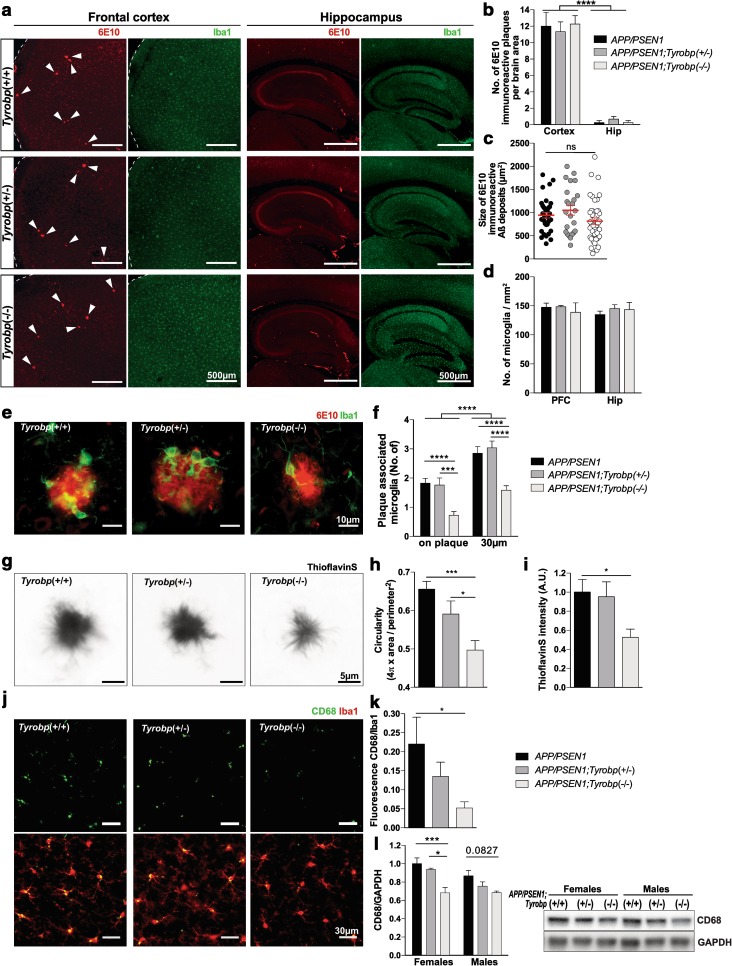
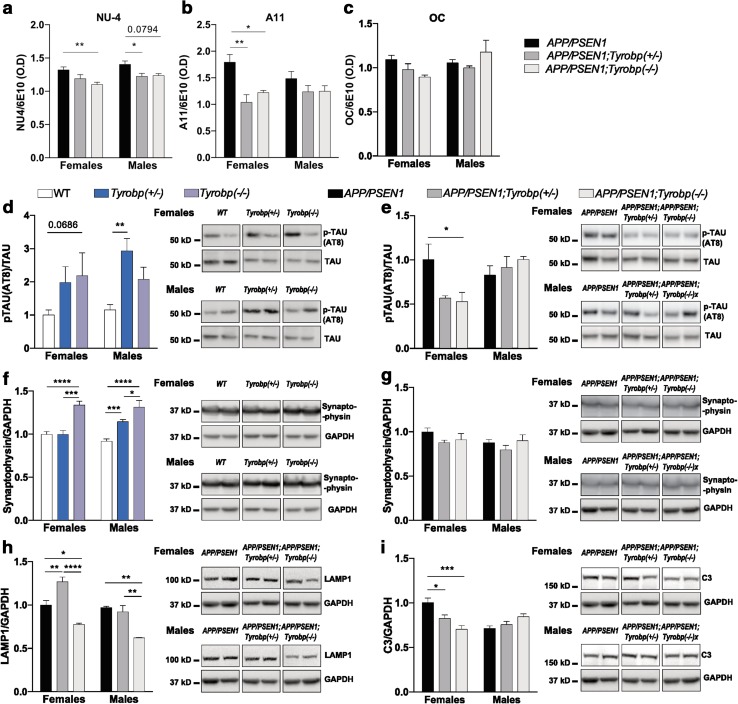
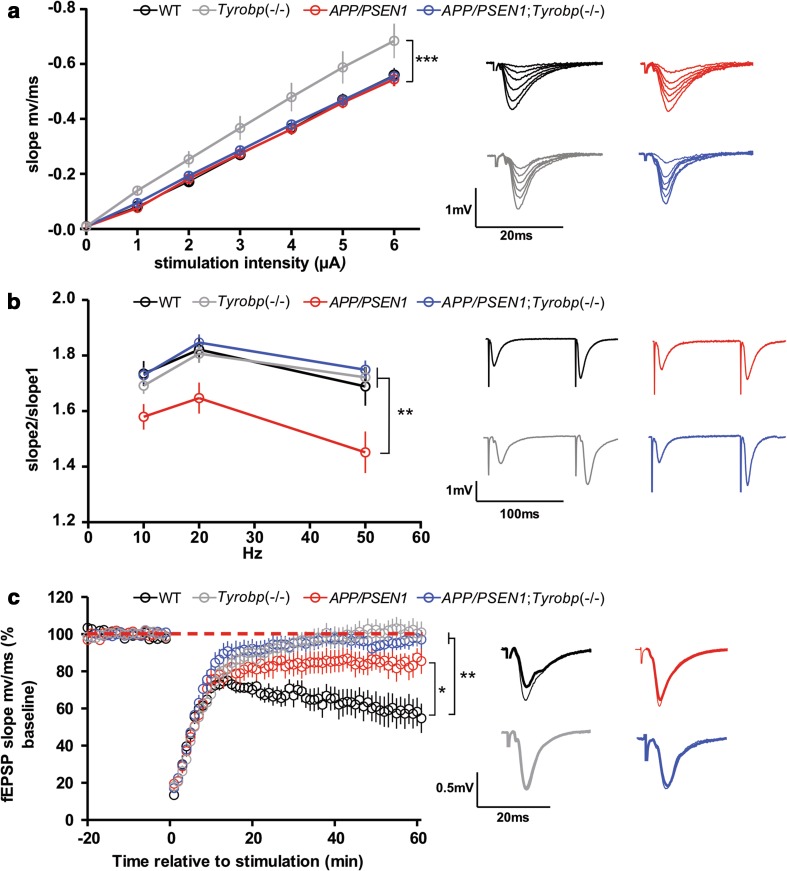
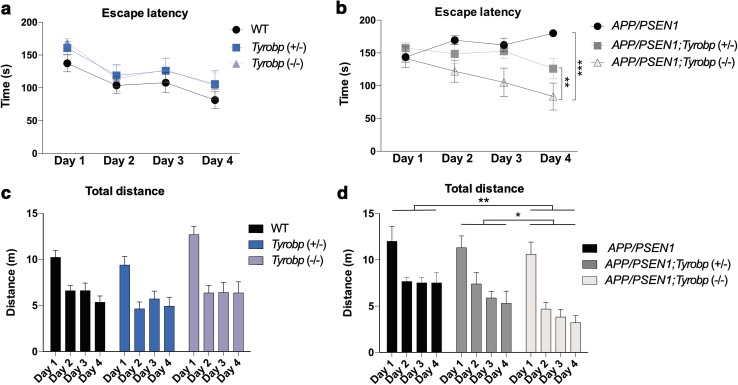
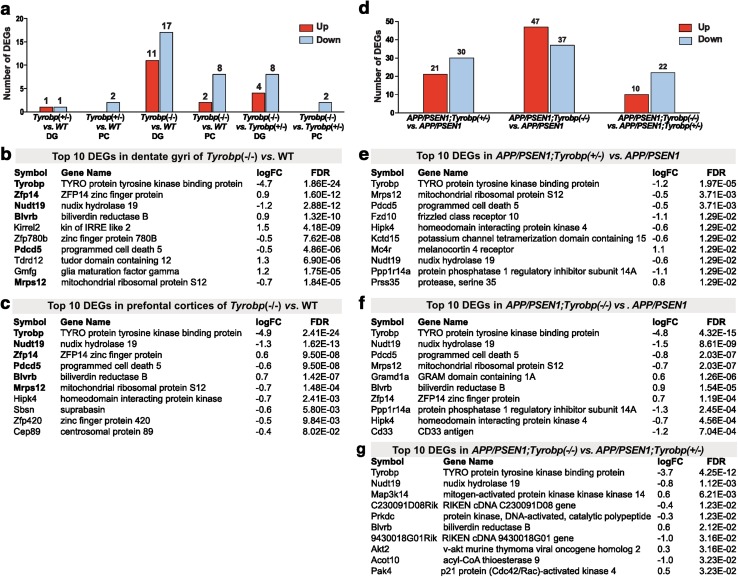
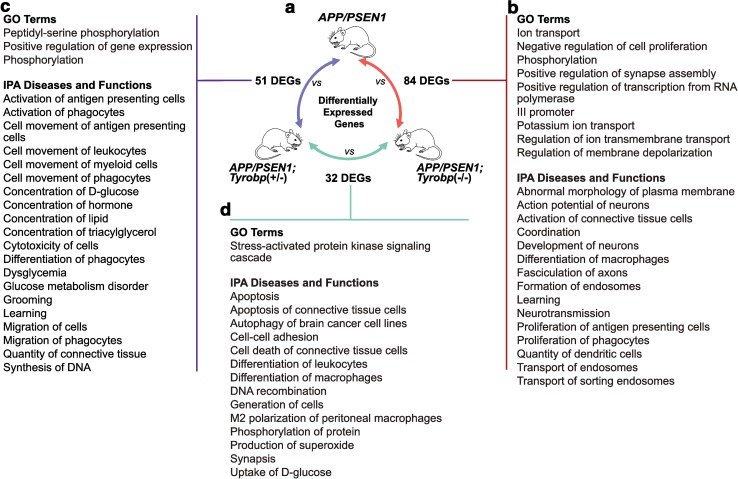
Conventional genetic approaches and computational strategies have converged on immune-inflammatory pathways as key events in the pathogenesis of late onset sporadic Alzheimer’s disease (LOAD). Mutations and/or differential expression of microglial specific receptors such as TREM2, CD33, and CR3 have been associated with strong increased risk for developing Alzheimer’s disease (AD). DAP12 (DNAX-activating protein 12)/TYROBP, a molecule localized to microglia, is a direct partner/adapter for TREM2, CD33, and CR3. We and others have previously shown that TYROBP expression is increased in AD patients and in mouse models. Moreover, missense mutations in the coding region of TYROBP have recently been identified in some AD patients. These lines of evidence, along with computational analysis of LOAD brain gene expression, point to DAP12/TYROBP as a potential hub or driver protein in the pathogenesis of AD. Using a comprehensive panel of biochemical, physiological, behavioral, and transcriptomic assays, we evaluated in a mouse model the role of TYROBP in early stage AD. We crossed an Alzheimer’s model mutant APP KM670/671NL /PSEN1 Δexon9 (APP/PSEN1) mouse model with Tyrobp −/− mice to generate AD model mice deficient or null for TYROBP (APP/PSEN1; Tyrobp +/− or APP/PSEN1; Tyrobp −/−). While we observed relatively minor effects of TYROBP deficiency on steady-state levels of amyloid-β peptides, there was an effect of Tyrobp deficiency on the morphology of amyloid deposits resembling that reported by others for Trem2 −/− mice. We identified modulatory effects of TYROBP deficiency on the level of phosphorylation of TAU that was accompanied by a reduction in the severity of neuritic dystrophy. TYROBP deficiency also altered the expression of several AD related genes, including Cd33. Electrophysiological abnormalities and learning behavior deficits associated with APP/PSEN1 transgenes were greatly attenuated on a Tyrobp-null background. Some modulatory effects of TYROBP on Alzheimer’s-related genes were only apparent on a background of mice with cerebral amyloidosis due to overexpression of mutant APP/PSEN1. These results suggest that reduction of TYROBP gene expression and/or protein levels could represent an immune-inflammatory therapeutic opportunity for modulating early stage LOAD, potentially leading to slowing or arresting the progression to full-blown clinical and pathological LOAD.
Overview
The claims and statistics of this paper haven’t been checked yet.
Run the check — free, no account needed. It reads the open-access text and checks the sources it cites.
Integrity signals
Registry
Cites
Statistics
Figures
Verification
Claims the paper makes
The claims and statistics of this paper haven’t been checked yet.
Run the check — free, no account needed. It reads the open-access text and checks the sources it cites.
Claims other papers make about this one
Each is checked against this paper’s own text: does it say what the citing paper says it does?
The source backs part of the claim, not all of it — or backs it for a different population, condition or comparison.
In the citing paper
“Support for beneficial outcomes associated with maintenance and/or restoration of homeostatic functions of microglia comes from the numerous studies targeting the members of this pathway, including Trem2,48,50–52 Tyrobp,53,54 and miR155.41,55”
From Microglial INPP5D limits plaque formation and glial reactivity in the PSAPP mouse model of Alzheimer's disease (2023) · cites this paper as [53]
Experimental — accuracy not yet measuredThe source backs part of the claim, not all of it — or backs it for a different population, condition or comparison.
In the citing paper
“However, as we have previously seen in our studies modulating Tyrobp expression, manipulation of molecules involved in immune/microglial function in either direction may result in detrimental or exacerbated pathological outcomes.49,53,54,56”
From Microglial INPP5D limits plaque formation and glial reactivity in the PSAPP mouse model of Alzheimer's disease (2023) · cites this paper as [53]
Experimental — accuracy not yet measuredThe cited source says what the claim attributes to it.
In the citing paper
“Previous studies have shown that a reduction of Tyrobp has neuroprotective effects on AD pathology38,39.”
From Effects of SPI1-mediated transcriptome remodeling on Alzheimer's disease-related phenotypes in mouse models of Aβ amyloidosis (2024) · cites this paper as [38]
Self-check
Percentages, sums and reported differences re-computed from the paper’s own numbers.
The self-check needs the paper’s full text.
Citations
Cites
R: A Language and Environment for Statistical Computing
R Core Team (2000) · doi:10.32614/r.manuals · Cited by 355,893
Controlling the False Discovery Rate: A Practical and Powerful Approach to Multiple Testing
Benjamini, Y., & Hochberg, Y. (1995) · Journal of the Royal Statistical Society Series B: Statistical Methodology · doi:10.1111/j.2517-6161.1995.tb02031.x · Cited by 109,482
Robinson, M. D., McCarthy, D. J., & Smyth, G. K. (2010) · Bioinformatics · doi:10.1093/bioinformatics/btp616 · Cited by 41,364
limma powers differential expression analyses for RNA-sequencing and microarray studies
Ritchie, M. E., Phipson, B., Wu, D., Hu, Y., Law, C. W., Shi, W., & Smyth, G. K. (2015) · Nucleic Acids Research · doi:10.1093/nar/gkv007 · Cited by 40,458
Systematic and integrative analysis of large gene lists using DAVID bioinformatics resources
Huang, D. W., Sherman, B. T., & Lempicki, R. A. (2009) · Nature Protocols · doi:10.1038/nprot.2008.211 · Cited by 35,890
Huang, D. W., Sherman, B. T., & Lempicki, R. A. (2009) · Nucleic Acids Research · doi:10.1093/nar/gkn923 · Cited by 14,108
Lamb, J., Crawford, E. D., Peck, D., Modell, J. W., Blat, I. C., Wrobel, M. J., Lerner, J., Brunet, J.-P., Subramanian, A., Ross, K. N., et al. (2006) · Science · doi:10.1126/science.1132939 · Cited by 5,257
Meta-Analysis of 74,046 Individuals Identifies 11 New Susceptibility Loci for Alzheimer’s Disease
(EADI), E. A. D. I., Lambert, J.-C., (GERAD), G. A. E. R. I. A. D., Alzheimer's Disease Genetic Consortium (ADGC), (CHARGE), C. F. H. A. A. R. I. G. E., Ibrahim-Verbaas, C. A., Harold, D., Naj, A. C., Sims, R., Bellenguez, C., et al. (2013) · Nature Genetics · doi:10.1038/ng.2802 · Cited by 4,336
DrugBank: a comprehensive resource for in silico drug discovery and exploration
Wishart, D. S. (2006) · Nucleic Acids Research · doi:10.1093/nar/gkj067 · Cited by 3,892
Oakley, H., Cole, S. L., Logan, S., Maus, E., Shao, P., Craft, J., Guillozet-Bongaarts, A., Ohno, M., Disterhoft, J., Van Eldik, L., et al. (2006) · The Journal of Neuroscience · doi:10.1523/jneurosci.1202-06.2006 · Cited by 3,530 · cited 1×
“When 5XFAD mice, which develop rapid and aggressive amyloid pathology and neuronal loss [56], were rendered deficient or null for TYROBP or TREM2, microglial clustering around plaques and plaque compaction were reduced at 4 months of age [85].”
Background
Cited by
Sorted by citations
Items 101–127 of 127
Turning microglia neuroprotective: Towards connexin43-specific therapy of Alzheimer’s diseasePreprint
Su, Y., Li, H., Zhang, W., Tao, S., Wang, Q., Zhou, M., Tang, Y., Chen, H., Verkhratsky, A., Zha, Z., et al. (2024) · bioRxiv (Cold Spring Harbor Laboratory) · doi:10.1101/2024.08.06.606883 · Cited by 3
Glial cell crosstalk in the local microenvironment following spinal cord injury
Li, E., Gao, Y., Zhang, J., Zou, P., Qiao, H., Zhang, R., & Huang, Y. (2025) · Brain Research Bulletin · doi:10.1016/j.brainresbull.2025.111436 · Cited by 2
de Souza, M. R. M., Lindner, M. R., Mladinich, M. C., Gorbunova, E. E., Kirillov, V., Byrne, A. G., Laird, A. Y., Finnerty, C. E., Ikeda, P., Vorkas, C. K., et al. (2026) · mBio · doi:10.1128/mbio.01294-26 · Cited by 2
Wang, H., & Wang, G. (2021) · Advances in transdisciplinary engineering · doi:10.3233/atde210248 · Cited by 2
Brain Immunoinformatics: A Symmetrical Link between Informatics, Wet Lab and the Clinic
Papageorgiou, I. E., Bittner, D., Psychogios, M., & Hadjidemetriou, S. (2021) · Symmetry · doi:10.3390/sym13112168 · Cited by 2
Yarani, R., Palasca, O., Doncheva, N. T., Anthon, C., Pilecki, B., Svane, C. A. B., Mirza, A. H., Litman, T., Holmskov, U., Bang‐Berthelsen, C. H., et al. (2020) · bioRxiv (Cold Spring Harbor Laboratory) · doi:10.1101/2020.08.12.225458 · Cited by 2
Tang, H.-L., Min, Y., & Long, Y. (2026) · PLoS ONE · doi:10.1371/journal.pone.0344387 · Cited by 1
Hirota, Y., Yamamoto, J., Takatori, S., Sakakibara, Y., Takei, K., 佐治多美子, Sekiya, M., Tomita, T., & Iijima, K. (2026) · Molecular Neurodegeneration Advances · doi:10.1186/s44477-026-00032-1 · Cited by 1
Microglial ITAM & ITIM Signaling in Neurodegenerative Disease and Brain Aging
Mangalmurti, A., Bonheur, A., & Lukens, J. R. (2026) · Journal of Molecular Biology · doi:10.1016/j.jmb.2026.169910 · Cited by 1
Litke, R. R., Vicari, J. M., Huang, B. T., Shapiro, L. R., Roh, K.-H., Silver, A. E., Talreja, P., Palacios, N., Yoon, Y., Kellner, C. P., et al. (2023) · bioRxiv (Cold Spring Harbor Laboratory) · doi:10.1101/2023.06.12.544352 · Cited by 1
The Role of Pyroptosis and Associated Inflammasomes during Experimental Cytomegalovirus Retinitis
Carter, J. (2022) · Digital Archive @ GSU · doi:10.57709/20370936
Genetic Aspects of Early-Onset Alzheimer’s Disease
Boggula, V. R. (2021) · Elsevier eBooks · doi:10.1016/b978-0-12-821974-4.00013-3
Identifying Precision Medicine for Dystrophic Epidermolysis Bullosa
Thompson, E. L. (2020) · University of Minnesota Digital Conservancy (University of Minnesota)
Ai, R., Jin, X., Tang, B., Yang, G., Niu, Z., & Fang, E. F. (2022) · Springer eBooks · doi:10.1007/978-3-030-64573-1_74
Xiang, S., Johnson, T. S., Dong, T., Huang, Z., Cheng, M., Wang, T., Yang, K., Ni, D., Huang, K., & Zhang, J. (2020) · Research Square · doi:10.21203/rs.3.rs-26385/v1
Johnson, T. S., Xiang, S., Dong, T., Huang, Z., Cheng, M., Wang, T., Yang, K., Ni, D., Huang, K., & Zhang, J. (2020) · Research Square · doi:10.21203/rs.3.rs-26385/v2
Johnson, T. S., Xiang, S., Dong, T., Huang, Z., Cheng, M., Wang, T., Yang, K., Ni, D., Huang, K., & Zhang, J. (2020) · doi:10.21203/rs.3.rs-92026/v1
Yan, R. (2020) · Faculty Opinions – Post-Publication Peer Review of the Biomedical Literature · doi:10.3410/f.738448428.793577747
Mining and exploration of appendicitis nursing targets: An observational study
Mi, X., Kang, C., Hou, S., Gao, Y., Hao, L., & Gao, X. (2024) · Medicine · doi:10.1097/md.0000000000038667
Ashford, B., Simpson, J. E., Dawson, C., Boche, D., Cooper‐Knock, J., Heath, P. R., Fillingham, D. J., Appleby‐Mallinder, C., Wei, W., Dunning, M., et al. (2025) · medRxiv · doi:10.1101/2025.02.07.25321850
Ji, C., Cheng, D., Yang, S., & Wang, Z. (2025) · PubMed Central · doi:10.30498/ijb.2025.487125.4019
Additional file 1 of Neuronal hibernation following hippocampal demyelination
Baltan, S., Jawaid, S., Chomyk, A. M., Kidd, G. J., Chen, J., Battapady, H. D., Chan, R., Dutta, R., & Trapp, B. D. (2021) · Figshare · doi:10.6084/m9.figshare.14140179
Additional file 1 of Modulation of C5a–C5aR1 signaling alters the dynamics of AD progression
Carvalho, K., Schartz, N. D., Balderrama-Gutierrez, G., Liang, H. Y., Chu, S.-H., Selvan, P., Gómez-Arboledas, Á., Petrisko, T. J., Fonseca, M. I., Mortazavi, A., et al. (2022) · Figshare · doi:10.6084/m9.figshare.20296174
Souchet, B. (2018) · theses.fr (ABES) · doi:10.70675/5510ef76zecf1z41f2z9496z015aa6a093be
Hu, D., Zhang, Q., He, Y.-Z., Cheng, Y.-Y., Li, Z.-C., Wang, L.-R., Lin, C., Wei, C.-L., Yu, F.-L., & Huang, X. (2026) · Neuroreport · doi:10.1097/wnr.0000000000002295
Wong, H. T., Gleason, C., Boylan, A., Adler, M. J., Kosoy, R., Fullard, J. F., Levendosky, E., Hoffman, G. E., Molina, H., Roussos, P., et al. (2026) · bioRxiv (Cold Spring Harbor Laboratory) · doi:10.64898/2026.09.25.754430
Leon, J., Yoshinaga, S., Koya, I., Palafox, G., Ando, Y., Kubo, K., Moody, J., Takao, M., Carninci, P., Shin, J. W., et al. (2026) · bioRxiv (Cold Spring Harbor Laboratory) · doi:10.64898/2026.10.07.757387
Metadata
- Authors
- Haure-Mirande, J.-V., Audrain, M., Fanutza, T., Kim, S. H., Klein, W. L., Glabe, C., Readhead, B., Dudley, J. T., Blitzer, R. D., Wang, M., Zhang, B., Schadt, E. E., Gandy, S., & Ehrlich, M. E.
- Affiliations
- Icahn School of Medicine at Mount Sinai (US)
- Northwestern University (US)
- University of California, Irvine (US)
- Corresponding author
- Gandy, Sam
- Ehrlich, Michelle E.
- ORCID
- Venue
- Acta Neuropathologica
- Published
- 2017-06-13
- Volume
- 134
- Issue
- 5
- Pages
- 769-788
- ISSN
- 0001-6322 (ISSN-L)
- 1432-0533
- PMC
- PMC5645450
- OpenAlex
- W2625865615
- Cited by
- 127
- References
- 88
- Citations by year
- 2026: 7 · 2025: 10 · 2024: 22 · 2023: 11 · 2022: 12 · 2021: 15 · 2020: 22 · 2019: 11 · 2018: 14 · 2017: 3
- FWCI
- 6.81
- Type
- journal article
- Language
- en
- Open access
- hybrid
- doi.org
- Locations
- Acta Neuropathologica (publishedVersion, cc-by)
- Europe PMC (PubMed Central) (publishedVersion, cc-by)
- PubMed Central (publishedVersion, cc-by)
- PubMed (publishedVersion)
- eScholarship (California Digital Library) (submittedVersion, cc-by)
- Funders
- National Institute on Aging (AG046170)
- Louis B. Mayer foundation
- Cure Alzheimer's Fund
- BrightFocus Foundation (A2016482F)
- Sarah and Gideon Gartner Foundation
- Georgianne and Dr Reza Khatib Foundation
- Werber Family Foundation
- Jennifer and Scott Moskowitz Foundation
- Jane Martin and Stuart Katz Foundation
- Topics
- Life Sciences › Neuroscience › Neurology › Neuroinflammation and Neurodegeneration Mechanisms
- Life Sciences › Neuroscience › Cellular and Molecular Neuroscience › Alzheimer's disease research and treatments
- Life Sciences › Neuroscience › Neurology › Neurological Disease Mechanisms and Treatments
- Keywords
- TYROBP, DAP12, TREM2, CD33, CR3, Alzheimer's disease, microglia, neuroinflammation, amyloid-beta, tau phosphorylation, neuritic dystrophy, learning deficits, neuroprotection, gene knockout, early Alzheimer's disease, cerebral amyloidosis
- MeSH terms
- Alzheimer Disease, Animals, Brain, Disease Models, Animal, Mutation, Phosphorylation, tau Proteins, Microglia, Mice, Knockout, Maze Learning, Adaptor Proteins, Signal Transducing, Mice
About these checks
Registry, retraction, Cites and statistics results are computed, not judged, with one exception: a printed reference that no index lists is read once by a model before it counts as a citation error. Claims are extracted by a model and kept only when their quote appears verbatim in the text; each cited source is then checked, with a model’s help, for whether it says what the claim relies on. Those verdicts can be wrong — read the claim’s quote and the cited source before relying on one.
Statistics and arithmetic are recomputed, not judged.
Confidence bands are shown only for fields calibrated on our annotated test set. None is calibrated yet, so no band is shown.
What counts as a claim ›How we measure confidence ›How we check this ›
Are you an author, or do you see a problem with this page? Request a review
