

Beta endorphin in serum and follicular fluid of PCOS- and non-PCOS women
Open accessThe DOI matches its Crossref record; 30 of the 30 references it cites were found in a registry or an index.
Abstract
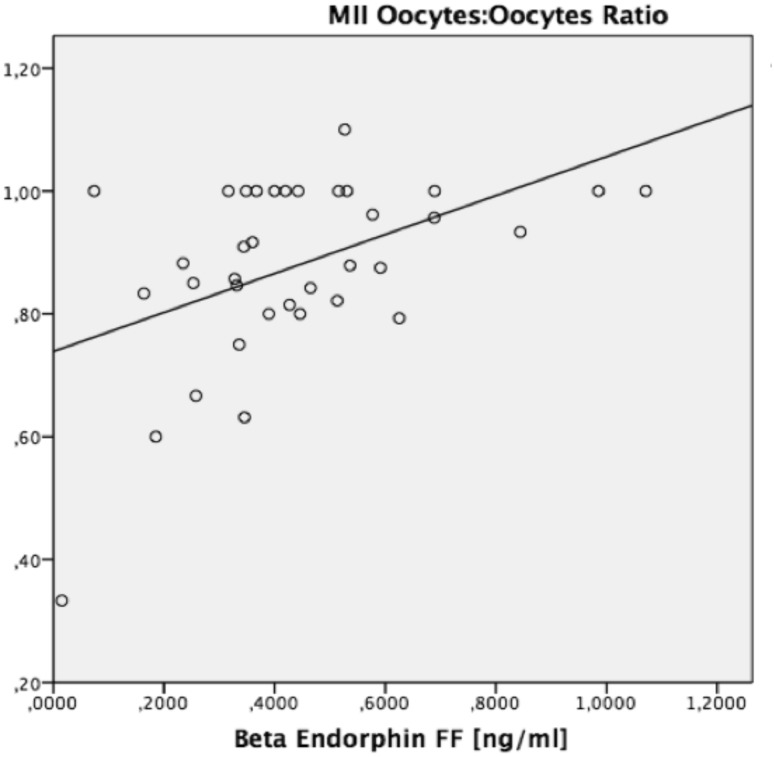
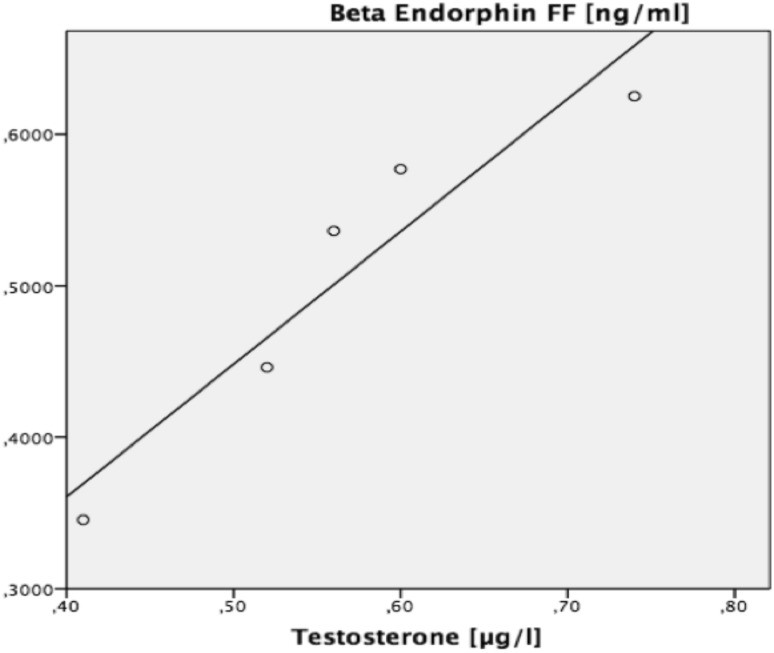
PURPOSE: To compare the concentrations of beta endorphin in serum and follicular fluid (FF) of PCOS- and non-PCOS women. Secondarily, to investigate associations between beta endorphin and other parameters. METHODS: Fifty-nine women undergoing in vitro fertilization (IVF) were included in the study. Sixteen were stratified to the PCOS group using the Rotterdam criteria. The remaining 43 women served as controls. Follicular fluid was collected during oocyte retrieval and peripheral blood sampling was performed on the same day. Beta endorphin concentrations in serum and follicular fluid, serum levels of insulin, glucose, LH, estradiol and progesterone were measured. Additionally, testosterone was measured before starting the stimulation protocol. RESULTS: There was no difference in beta endorphin levels between PCOS- and non-PCOS women. The concentration of the peptide was higher in serum than in FF, likely due to collection of FF after ovulation induction and corresponding to the early luteal phase. We found a significant correlation between the number of mature Metaphase II (MII) oocytes retrieved and beta endorphin concentration in FF. In women with biochemical hyperandrogenemia, beta endorphin levels in FF correlated with testosterone levels. CONCLUSION: Beta Endorphin concentrations in serum and FF do not differ between PCOS- and non PCOS-women undergoing IVF. However, together with sex hormones, beta endorphin might play a key role in oocyte maturation.
Overview
The claims and statistics of this paper haven’t been checked yet.
Free: it reads the open-access text and checks the first 5 claims that cite a source we can check. Create a free account to check every claim.
Integrity signals
Registry
Cites
Statistics
Figures
Verification
Claims the paper makes
The claims and statistics of this paper haven’t been checked yet.
Free: it reads the open-access text and checks the first 5 claims that cite a source we can check. Create a free account to check every claim.
Claims other papers make about this one
Each is checked against this paper’s own text: does it say what the citing paper says it does?
The source backs part of the claim, not all of it — or backs it for a different population, condition or comparison.
In the citing paper
“Another study found no group differences in β‐endorphin levels, but follicular β‐endorphin positively predicted serum testosterone (Jaschke et al., 2018).”
From Endometriosis and polycystic ovary syndrome are diametric disorders (2021) · cites this paper as Jaschke et al., 2018
Experimental — accuracy not yet measured
Self-check
Percentages, sums and reported differences re-computed from the paper’s own numbers.
The self-check needs the paper’s full text.
Citations
Cites
Nucleotide sequence of cloned cDNA for bovine corticotropin-β-lipotropin precursor
Nakanishi, S., Inoue, A., Kita, T., Inoue, A., Nakamura, M., Chang, A. C. Y., Cohen, S. N., & Numa, S. (1979) · Nature · doi:10.1038/278423a0 · Cited by 1,762
Cloning and sequence analysis of cDNA for bovine adrenal preproenkephalin
Noda, M., Furutani, Y., Takahashi, H., Toyosato, M., Hirose, T., Inayama, S., Nakanishi, S., & Numa, S. (1982) · Nature · doi:10.1038/295202a0 · Cited by 934
Cloning and sequence analysis of cDNA for porcine β-neo-endorphin/dynorphin precursor
Kakidani, H., Furutani, Y., Takahashi, H., Noda, M., Morimoto, Y., Hirose, T., Asai, M., Inayama, S., Nakanishi, S., & Numa, S. (1982) · Nature · doi:10.1038/298245a0 · Cited by 783
Morgentaler, A., & Traish, A. M. (2009) · European Urology · doi:10.1016/j.eururo.2008.09.024 · Cited by 462 · cited 1×
“This may be analogous to the known physiology of androgens in both animal models as well as in the human prostate, where a critical androgen threshold needs to be reached before androgens can exert their regular actions in vitro [29].”
BackgroundYEN, S. S. C., VELA, P., & RANKIN, J. (1970) · The Journal of Clinical Endocrinology & Metabolism · doi:10.1210/jcem-30-4-435 · Cited by 389 · cited 1×
“Decades ago, neuroendocrine abnormalities were thought to play a causative role [1].”
BackgroundConsensus on women's health aspects of polycystic ovary syndrome (PCOS)
The Amsterdam ESHRE/ASRM-Sponsored 3rd PCOS Consensus Workshop Group, Fauser, B. C. J. M., Tarlatzis, B. C., Rebar, R. W., Legro, R. S., Balen, A. H., Lobo, R., Carmina, H., Chang, R. J., Yildiz, B. O., et al. (2012) · Human Reproduction · doi:10.1093/humrep/der396 · Cited by 366
Evidence for a primary abnormality of thecal cell steroidogenesis in the polycystic ovary syndrome
Gilling‐Smith, C., Story, H., Rogers, V., & Franks, S. (1997) · Clinical Endocrinology · doi:10.1046/j.1365-2265.1997.2321049.x · Cited by 301 · cited 1×
“reported about a primary dysfunction of ovarian steroidhormone synthesis in PCOS women [2].”
BackgroundEffect of Sex Steroids on β-Endorphin in Hypophyseal Portal Blood*
WARDLAW, S. L., WEHRENBERG, W. B., FERIN, M., ANTUNES, J. L., & FRANTZ, A. G. (1982) · The Journal of Clinical Endocrinology & Metabolism · doi:10.1210/jcem-55-5-877 · Cited by 216
Cahill, C. M., Holdridge, S. V., & Morinville, A. (2007) · Trends in Pharmacological Sciences · doi:10.1016/j.tips.2006.11.003 · Cited by 184
β-Endorphin in Hypophyseal Portal Blood: Variations throughout the Menstrual Cycle*
WEHRENBERG, W. B., WARDLAW, S. L., FRANTZ, A. G., & FERIN, M. (1982) · Endocrinology · doi:10.1210/endo-111-3-879 · Cited by 181
Cited by
Endometriosis and polycystic ovary syndrome are diametric disorders
Dinsdale, N. L., & Crespi, B. J. (2021) · Evolutionary Applications · doi:10.1111/eva.13244 · Cited by 90
“Another study found no group differences in β- endorphin levels, but follicular β- endorphin positively predicted serum testosterone (Jaschke et al., 2018).”
BackgroundPeng, M., Tian, S., Song, Y.-G., Li, C., Miao, M., Ren, Z., & Li, M. (2021) · Journal of Ethnopharmacology · doi:10.1016/j.jep.2021.113947 · Cited by 91
Yu, L., Liu, M., Wang, Z., Liu, T., Liu, S., Wang, B., Pan, B., Dong, X., & Guo, W. (2021) · Reproductive Biology and Endocrinology · doi:10.1186/s12958-021-00749-6 · Cited by 79
Moreira, M. V., Vale-Fernandes, E., Albergaria, I. C., Alves, M. G., & Monteiro, M. P. (2023) · Reviews in Endocrine and Metabolic Disorders · doi:10.1007/s11154-023-09819-z · Cited by 64
“A study conducted by Zhang et al. found higher levels of β-endorphins in the FF of women with PCOS [52], while other authors reported no differences in β-endorphin levels between in FF of women with or without PCOS [67].”
ResultSeeber, B., Böttcher, B., D’Costa, E., & Wildt, L. (2019) · Vitamins and hormones · doi:10.1016/bs.vh.2019.07.001 · Cited by 26
Self-citationEndogenous Opiates and Behavior: 2018
Bodnar, R. J. (2020) · Peptides · doi:10.1016/j.peptides.2020.170348 · Cited by 24
From Pharmacology to Physiology: Endocrine Functions of μ-Opioid Receptor Networks
Jaschke, N., Pählig, S., Pan, Y., Hofbauer, L. C., Göbel, A., & Rachner, T. D. (2021) · Trends in Endocrinology and Metabolism · doi:10.1016/j.tem.2021.02.004 · Cited by 24
Self-citationCrespi, B. J., & Evans, S. F. (2023) · Journal of Pain Research · doi:10.2147/jpr.s389166 · Cited by 17
Neuropeptide Network of Polycystic Ovary Syndrome – A Review
Jayamurali, D., Ravishankar, N., Manoharan, N., Parasuraman, R., Jayashankar, S. K., & Govindarajulu, S. N. (2024) · Protein and Peptide Letters · doi:10.2174/0109298665309949240822105900 · Cited by 13
Xu, H., Zhao, S., Gao, X., Wu, X. G., Xia, L., Zhang, D., Li, J., Zhang, A., & Xu, B. (2021) · Frontiers in Endocrinology · doi:10.3389/fendo.2021.758896 · Cited by 10
β-Edorphin predict pregnancy outcome of PCOS and DOR women after IVF-ET
Zhang, C., Liu, S., Liu, G., He, Y., Wang, Y., & Wang, F. (2020) · Archives of Gynecology and Obstetrics · doi:10.1007/s00404-020-05899-3 · Cited by 6
Olabarrieta, E., Totorikaguena, L., Agirregoitia, N., & Agirregoitia, E. (2019) · Molecular Reproduction and Development · doi:10.1002/mrd.23248 · Cited by 4
Investigating the effects of neuropeptides on human sperm function and fertility
Tomova, A.-M. (2026) · e-space (Manchester Metropolitan University) · doi:10.83056/mmu.32477769 · Cited by 1
Yu, L., Liu, M., Wang, Z., Liu, T., Liu, S., Wang, B., Pan, B., Dong, X., & Guo, W. (2021) · Figshare · doi:10.6084/m9.figshare.14608972
Olabarrieta, E., Totorikaguena, L., Alonso-Fernández, S., Agirregoitia, E., & Agirregoitia, N. (2026) · Frontiers in Endocrinology · doi:10.3389/fendo.2026.1857083
“Modulates oocyte maturation and ovulation in women (45).”
Metadata
- Authors
- Jaschke, N., Lunger, F., Wildt, L., & Seeber, B.
- Affiliations
- Innsbruck Medical University (AT)
- Corresponding author
- Seeber, Beata
- Venue
- Archives of Gynecology and Obstetrics
- Published
- 2018-05-28
- Volume
- 298
- Issue
- 1
- Pages
- 217-222
- ISSN
- 0003-9128 (ISSN-L)
- 0932-0067
- 1432-0711
- PMC
- PMC5995977
- OpenAlex
- W2805037316
- Cited by
- 15
- References
- 30
- Citations by year
- 2026: 2 · 2024: 1 · 2023: 2 · 2021: 6 · 2020: 2 · 2019: 2
- FWCI
- 2.68
- Type
- journal article
- Language
- en
- Open access
- hybrid
- doi.org
- Licence
- cc-by
- creativecommons.org/licenses/by/4.0 (tdm)
- Locations
- Archives of Gynecology and Obstetrics (publishedVersion, cc-by)
- Europe PMC (PubMed Central) (publishedVersion, other-oa)
- PubMed Central (publishedVersion, cc-by)
- PubMed (publishedVersion)
- Funders
- Medizinische Universität Innsbruck
- Universität Innsbruck
- Topics
- Health Sciences › Medicine › Reproductive Medicine › Ovarian function and disorders
- Health Sciences › Medicine › Reproductive Medicine › Reproductive Biology and Fertility
- Health Sciences › Medicine › Reproductive Medicine › Hypothalamic control of reproductive hormones
- Keywords
- beta-endorphin, polycystic ovary syndrome, follicular fluid, in vitro fertilization, oocyte retrieval, oocyte maturation, hyperandrogenemia, testosterone, luteal phase, ovulation induction
- MeSH terms
- Adult, beta-Endorphin, Female, Humans, Polycystic Ovary Syndrome, Follicular Fluid, Young Adult
About these checks
Registry, retraction, Cites and statistics results are computed, not judged, with one exception: a printed reference that no index lists is read once by a model before it counts as a citation error. Claims are extracted by a model and kept only when their quote appears verbatim in the text; each cited source is then checked, with a model’s help, for whether it says what the claim relies on. Those verdicts can be wrong — read the claim’s quote and the cited source before relying on one.
Statistics and arithmetic are recomputed, not judged.
Confidence bands are shown only for fields calibrated on our annotated test set. None is calibrated yet, so no band is shown.
What counts as a claim ›How we measure confidence ›How we check this ›
Are you an author, or do you see a problem with this page? Request a review
Data sources
Bibliographic data: Semantic Scholar, OpenAlex, Crossref.
Contains information from the Semantic Scholar Academic Graph Datasets, made available under the ODC Attribution License (ODC-BY 1.0).
Semantic Scholar’s data is described in: Kinney, R., et al. (2023). The Semantic Scholar Open Data Platform. arXiv:2301.10140.
