

Beta endorphin in serum and follicular fluid of PCOS- and non-PCOS women
Open accessThe DOI matches its Crossref record; 30 of the 30 references it cites were found in a registry or an index.
Abstract
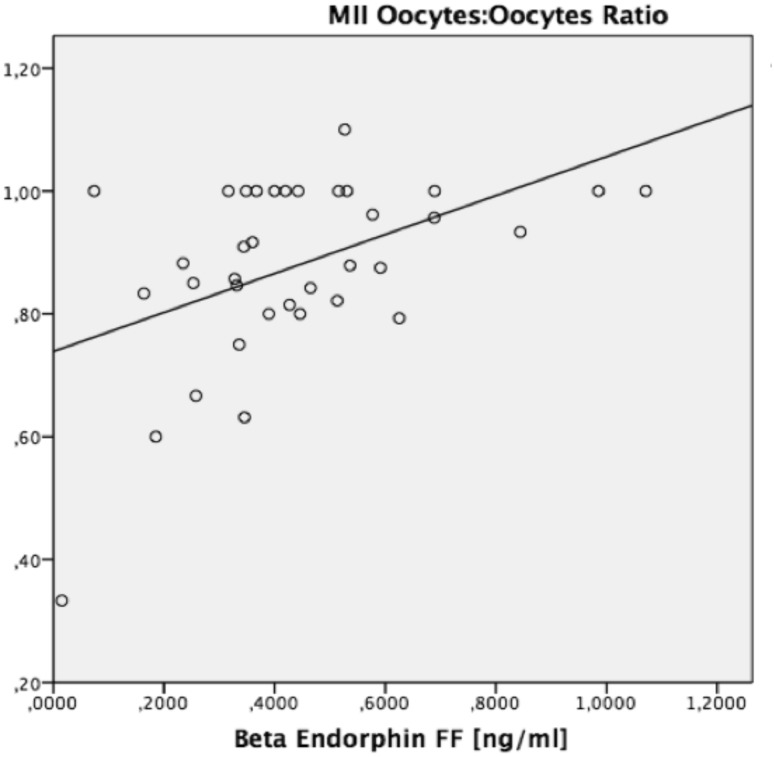
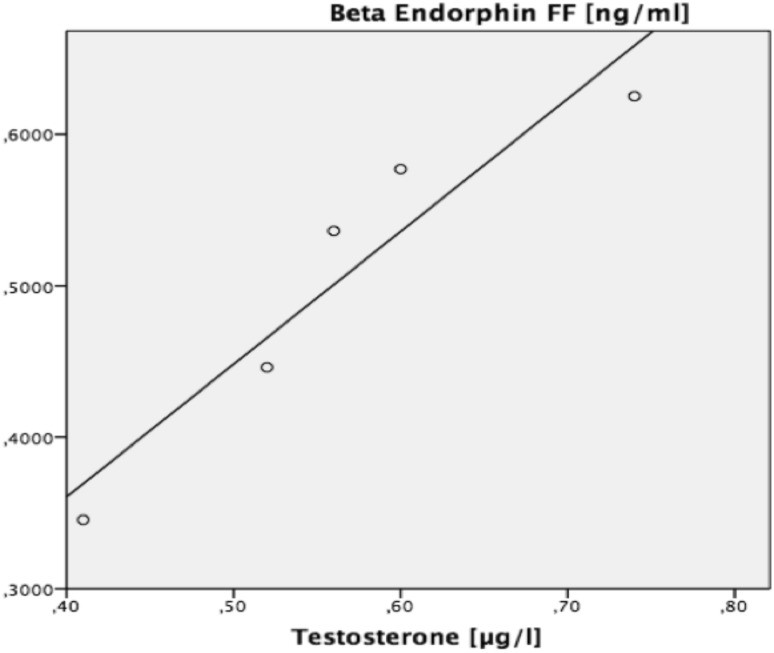
PURPOSE: To compare the concentrations of beta endorphin in serum and follicular fluid (FF) of PCOS- and non-PCOS women. Secondarily, to investigate associations between beta endorphin and other parameters. METHODS: Fifty-nine women undergoing in vitro fertilization (IVF) were included in the study. Sixteen were stratified to the PCOS group using the Rotterdam criteria. The remaining 43 women served as controls. Follicular fluid was collected during oocyte retrieval and peripheral blood sampling was performed on the same day. Beta endorphin concentrations in serum and follicular fluid, serum levels of insulin, glucose, LH, estradiol and progesterone were measured. Additionally, testosterone was measured before starting the stimulation protocol. RESULTS: There was no difference in beta endorphin levels between PCOS- and non-PCOS women. The concentration of the peptide was higher in serum than in FF, likely due to collection of FF after ovulation induction and corresponding to the early luteal phase. We found a significant correlation between the number of mature Metaphase II (MII) oocytes retrieved and beta endorphin concentration in FF. In women with biochemical hyperandrogenemia, beta endorphin levels in FF correlated with testosterone levels. CONCLUSION: Beta Endorphin concentrations in serum and FF do not differ between PCOS- and non PCOS-women undergoing IVF. However, together with sex hormones, beta endorphin might play a key role in oocyte maturation.
Overview
The claims and statistics of this paper haven’t been checked yet.
Free: it reads the open-access text and checks the first 5 claims that cite a source we can check. Create a free account to check every claim.
Integrity signals
Registry
Cites
Statistics
Figures
Verification
Claims the paper makes
The claims and statistics of this paper haven’t been checked yet.
Free: it reads the open-access text and checks the first 5 claims that cite a source we can check. Create a free account to check every claim.
Claims other papers make about this one
Each is checked against this paper’s own text: does it say what the citing paper says it does?
The source backs part of the claim, not all of it — or backs it for a different population, condition or comparison.
In the citing paper
“Another study found no group differences in β‐endorphin levels, but follicular β‐endorphin positively predicted serum testosterone (Jaschke et al., 2018).”
From Endometriosis and polycystic ovary syndrome are diametric disorders (2021) · cites this paper as Jaschke et al., 2018
Experimental — accuracy not yet measured
Self-check
Percentages, sums and reported differences re-computed from the paper’s own numbers.
The self-check needs the paper’s full text.
Citations
Cites
Nucleotide sequence of cloned cDNA for bovine corticotropin-β-lipotropin precursor
Nakanishi, S., Inoue, A., Kita, T., Inoue, A., Nakamura, M., Chang, A. C. Y., Cohen, S. N., & Numa, S. (1979) · Nature · doi:10.1038/278423a0 · Cited by 1,762
Cloning and sequence analysis of cDNA for bovine adrenal preproenkephalin
Noda, M., Furutani, Y., Takahashi, H., Toyosato, M., Hirose, T., Inayama, S., Nakanishi, S., & Numa, S. (1982) · Nature · doi:10.1038/295202a0 · Cited by 934
Cloning and sequence analysis of cDNA for porcine β-neo-endorphin/dynorphin precursor
Kakidani, H., Furutani, Y., Takahashi, H., Noda, M., Morimoto, Y., Hirose, T., Asai, M., Inayama, S., Nakanishi, S., & Numa, S. (1982) · Nature · doi:10.1038/298245a0 · Cited by 783
Morgentaler, A., & Traish, A. M. (2009) · European Urology · doi:10.1016/j.eururo.2008.09.024 · Cited by 462 · cited 1×
“This may be analogous to the known physiology of androgens in both animal models as well as in the human prostate, where a critical androgen threshold needs to be reached before androgens can exert their regular actions in vitro [29].”
BackgroundYEN, S. S. C., VELA, P., & RANKIN, J. (1970) · The Journal of Clinical Endocrinology & Metabolism · doi:10.1210/jcem-30-4-435 · Cited by 389 · cited 1×
“Decades ago, neuroendocrine abnormalities were thought to play a causative role [1].”
BackgroundConsensus on women's health aspects of polycystic ovary syndrome (PCOS)
The Amsterdam ESHRE/ASRM-Sponsored 3rd PCOS Consensus Workshop Group, Fauser, B. C. J. M., Tarlatzis, B. C., Rebar, R. W., Legro, R. S., Balen, A. H., Lobo, R., Carmina, H., Chang, R. J., Yildiz, B. O., et al. (2012) · Human Reproduction · doi:10.1093/humrep/der396 · Cited by 366
Evidence for a primary abnormality of thecal cell steroidogenesis in the polycystic ovary syndrome
Gilling‐Smith, C., Story, H., Rogers, V., & Franks, S. (1997) · Clinical Endocrinology · doi:10.1046/j.1365-2265.1997.2321049.x · Cited by 301 · cited 1×
“reported about a primary dysfunction of ovarian steroidhormone synthesis in PCOS women [2].”
BackgroundEffect of Sex Steroids on β-Endorphin in Hypophyseal Portal Blood*
WARDLAW, S. L., WEHRENBERG, W. B., FERIN, M., ANTUNES, J. L., & FRANTZ, A. G. (1982) · The Journal of Clinical Endocrinology & Metabolism · doi:10.1210/jcem-55-5-877 · Cited by 216
Cahill, C. M., Holdridge, S. V., & Morinville, A. (2007) · Trends in Pharmacological Sciences · doi:10.1016/j.tips.2006.11.003 · Cited by 184
β-Endorphin in Hypophyseal Portal Blood: Variations throughout the Menstrual Cycle*
WEHRENBERG, W. B., WARDLAW, S. L., FRANTZ, A. G., & FERIN, M. (1982) · Endocrinology · doi:10.1210/endo-111-3-879 · Cited by 181
Endogenous opioids: overview and current issues
Akil, H., Owens, C., Gutstein, H., Taylor, L., Curran, E., & Watson, S. (1998) · Drug and Alcohol Dependence · doi:10.1016/s0376-8716(98)00071-4 · Cited by 180 · cited 1×
“All endogenous opioids share the same n-terminal aminoacid pentasequence, the so-called “opioid motif” [6].”
BackgroundBui, H. N., Sluss, P. M., Blincko, S., Knol, D. L., Blankenstein, M. A., & Heijboer, A. C. (2012) · Steroids · doi:10.1016/j.steroids.2012.10.010 · Cited by 139 · cited 1×
“One study [30] has found a small increase of serum testosterone mid-cycle which may serve as an explanation for the high pre-ovulatory beta endorphin concentrations in FF as described by Petraglia et al.”
BackgroundKey Residues Defining the μ‐Opioid Receptor Binding Pocket: A Site‐Directed Mutagenesis Study
Mansour, A., Taylor, L. P., Fine, J. L., Thompson, R. C., Hoversten, M. T., Mosberg, H. I., Watson, S. J., & Akil, H. (1997) · Journal of Neurochemistry · doi:10.1046/j.1471-4159.1997.68010344.x · Cited by 139 · cited 1×
“Although all opioid peptides can bind to each receptor subclass, their affinity for the different receptors vary [11].”
Backgroundβ-ENDORPHIN STIMULATES THE SECRETION OF INSULIN AND GLUCAGON IN HUMANS
REID, R. L., & YEN, S. S. C. (1981) · The Journal of Clinical Endocrinology & Metabolism · doi:10.1210/jcem-52-3-592 · Cited by 137 · cited 1×
“Beta endorphin has been shown to modulate pancreatic insulin and glucagon release [14].”
BackgroundImpact of the opioid system on the reproductive axis
Böttcher, B., Seeber, B., Leyendecker, G., & Wildt, L. (2017) · Fertility and Sterility · doi:10.1016/j.fertnstert.2017.06.009 · Cited by 115
Self-citationCUMMING, D. C., REID, R. L., QUIGLEY, M. E., REBAR, R. W., & YEN, S. S. C. (1984) · Clinical Endocrinology · doi:10.1111/j.1365-2265.1984.tb00114.x · Cited by 106
Petraglia, F., Segre, A., Facchinetti, F., Campanini, D., Ruspa, M., & Genazzani, A. R. (1985) · Fertility and Sterility · doi:10.1016/s0015-0282(16)48976-4 · Cited by 72
OPIOIDERGIC REGULATION OF LH PULSATILITY IN WOMEN WITH POLYCYSTIC OVARY SYNDROME
BERGA, S. L., & YEN, A. S. S. C. (1989) · Clinical Endocrinology · doi:10.1111/j.1365-2265.1989.tb03739.x · Cited by 62 · cited 1×
“This is consistent with the known effects of beta endorphin in the human pancreas and hypothalamus, where the presence of sex hormones is pivotal for stimulating insulin/ glucagon release and inhibition of GnRH pulsatility, respectively [5, 26].”
Fruzzetti, F., Bersi, C., Parrini, D., Ricci, C., & Genazzani, A. R. (2002) · Fertility and Sterility · doi:10.1016/s0015-0282(02)02955-2 · Cited by 62
Melner, M. H., Young, S. L., Czerwiec, F. S., Lyn, D., Puett, D., Roberts, J. L., & Koos, R. D. (1986) · Endocrinology · doi:10.1210/endo-119-5-2082 · Cited by 46 · cited 1×
“Based on previously published data that androgens regulate granulosa cell POMC expression [20], we evaluated women with PCOS and biochemical hyperandrogenemia (n = 5) and repeated the above described regression analysis, showing that T was the only highly predictive variable for beta endorphin levels in FF (r2 = 0.”
MethodExpression and localization of opioid receptors during the maturation of human oocytes
Agirregoitia, E., Peralta, L., Mendoza, R., Expósito, A., Ereño, E. D., Matorras, R., & Agirregoitia, N. (2012) · Reproductive BioMedicine Online · doi:10.1016/j.rbmo.2012.02.007 · Cited by 45 · cited 2×
“1 3 More recently, the expression of opioid receptors on human oocytes, as well as follicular granulosa cells has been confirmed [16, 17].”
BackgroundRole of dehydroepiandrosterone in improving oocyte and embryo quality in IVF cycles
Zangmo, R., Singh, N., Kumar, S., Vanamail, P., & Tiwari, A. (2014) · Reproductive BioMedicine Online · doi:10.1016/j.rbmo.2014.01.019 · Cited by 42 · cited 1×
“Our finding that testosterone levels positively correlated with the number of MII oocytes is consistent with the studies that have reported beneficial effects of androgens on follicular maturation and oocyte yield [27, 28].”
ResultEffects of β‐endorphin and Naloxone on in vitro maturation of bovine oocytes
Dell’Aquila, M. E., Casavola, V., Reshkin, S. J., Albrizio, M., Guerra, L., Maritato, F., & Minoia, P. (2002) · Molecular Reproduction and Development · doi:10.1002/mrd.10163 · Cited by 41
Radioligands for Probing Opioid Receptors
Paterson, S. J., Corbett, A. D., Gillan, M. G., Kosterlitz, H. W., McKnight, A. T., & Robson, L. E. (1984) · Journal of Receptor Research · doi:10.3109/10799898409042545 · Cited by 26 · cited 1×
“Three main opioid receptor classes have been described: μ, κ and δ [10].”
BackgroundStaszkiewicz, J., Skowroński, M. T., Kamiński, T., Siawrys, G., Kraziński, B. E., Kuśmider, M., Przała, J., & Okrasa, S. (2006) · Animal Reproduction Science · doi:10.1016/j.anireprosci.2006.09.003 · Cited by 22 · cited 1×
“1 3 been described in porcine granulosa cells [21].”
BackgroundInteraction among beta-endorphin, nitric oxide and prostaglandins during ovulation in rats
Faletti, A. G., Mohn, C. E., Farina, M., Lomniczi, A., & Rettori, V. (2003) · Reproduction · doi:10.1530/rep.0.1250469 · Cited by 21 · cited 1×
“In mouse models, beta endorphin concentration in FF significantly falls 10 h after hCG administration [22].”
BackgroundAndrogens promote the acquisition of maturation competence in bovine oocytes
Makita, M., & Miyano, T. (2015) · Journal of Reproduction and Development · doi:10.1262/jrd.2014-161 · Cited by 17 · cited 1×
“Our finding that testosterone levels positively correlated with the number of MII oocytes is consistent with the studies that have reported beneficial effects of androgens on follicular maturation and oocyte yield [27, 28].”
ResultGuido, M., Pavone, V., Ciampelli, M., Murgia, F., Fulghesu, A. M., Apa, R., Caruso, A., Mancuso, S., & Lanzone, A. (1998) · The Journal of Clinical Endocrinology & Metabolism · doi:10.1210/jcem.83.5.4775 · Cited by 17 · cited 2×
“This is consistent with the known effects of beta endorphin in the human pancreas and hypothalamus, where the presence of sex hormones is pivotal for stimulating insulin/ glucagon release and inhibition of GnRH pulsatility, respectively [5, 26].”
Backgroundβ-endorphins Plasma Level is Higher in Lean Polycystic Ovary Syndrome (PCOS) Women
Кялка, М., Milewicz, T., Spałkowska, M., Krzyczkowska-Sendrakowska, M., Wasyl, B., Pełka, A., & Krzysiek, J. (2016) · Experimental and Clinical Endocrinology & Diabetes · doi:10.1055/s-0035-1564094 · Cited by 14 · cited 3×
“, who reported higher beta endorphin concentrations in the serum of PCOS women compared to controls, independent of the BMI [23].”
BackgroundInfluentialOpiate receptor blockade on human granulosa cells inhibits VEGF release
Lunger, F., Vehmas, A. P., Fürnrohr, B. G., Sopper, S., Wildt, L., & Seeber, B. (2016) · Reproductive BioMedicine Online · doi:10.1016/j.rbmo.2015.12.006 · Cited by 11 · cited 1×
“1 3 More recently, the expression of opioid receptors on human oocytes, as well as follicular granulosa cells has been confirmed [16, 17].”
BackgroundSelf-citation
Cited by
Endometriosis and polycystic ovary syndrome are diametric disorders
Dinsdale, N. L., & Crespi, B. J. (2021) · Evolutionary Applications · doi:10.1111/eva.13244 · Cited by 90
“Another study found no group differences in β- endorphin levels, but follicular β- endorphin positively predicted serum testosterone (Jaschke et al., 2018).”
BackgroundPeng, M., Tian, S., Song, Y.-G., Li, C., Miao, M., Ren, Z., & Li, M. (2021) · Journal of Ethnopharmacology · doi:10.1016/j.jep.2021.113947 · Cited by 91
Yu, L., Liu, M., Wang, Z., Liu, T., Liu, S., Wang, B., Pan, B., Dong, X., & Guo, W. (2021) · Reproductive Biology and Endocrinology · doi:10.1186/s12958-021-00749-6 · Cited by 79
Moreira, M. V., Vale-Fernandes, E., Albergaria, I. C., Alves, M. G., & Monteiro, M. P. (2023) · Reviews in Endocrine and Metabolic Disorders · doi:10.1007/s11154-023-09819-z · Cited by 64
“A study conducted by Zhang et al. found higher levels of β-endorphins in the FF of women with PCOS [52], while other authors reported no differences in β-endorphin levels between in FF of women with or without PCOS [67].”
ResultSeeber, B., Böttcher, B., D’Costa, E., & Wildt, L. (2019) · Vitamins and hormones · doi:10.1016/bs.vh.2019.07.001 · Cited by 26
Self-citation
Metadata
- Authors
- Jaschke, N., Lunger, F., Wildt, L., & Seeber, B.
- Affiliations
- Innsbruck Medical University (AT)
- Corresponding author
- Seeber, Beata
- Venue
- Archives of Gynecology and Obstetrics
- Published
- 2018-05-28
- Volume
- 298
- Issue
- 1
- Pages
- 217-222
- ISSN
- 0003-9128 (ISSN-L)
- 0932-0067
- 1432-0711
- PMC
- PMC5995977
- OpenAlex
- W2805037316
- Cited by
- 15
- References
- 30
- Citations by year
- 2026: 2 · 2024: 1 · 2023: 2 · 2021: 6 · 2020: 2 · 2019: 2
- FWCI
- 2.68
- Type
- journal article
- Language
- en
- Open access
- hybrid
- doi.org
- Licence
- cc-by
- creativecommons.org/licenses/by/4.0 (tdm)
- Locations
- Archives of Gynecology and Obstetrics (publishedVersion, cc-by)
- Europe PMC (PubMed Central) (publishedVersion, other-oa)
- PubMed Central (publishedVersion, cc-by)
- PubMed (publishedVersion)
- Funders
- Medizinische Universität Innsbruck
- Universität Innsbruck
- Topics
- Health Sciences › Medicine › Reproductive Medicine › Ovarian function and disorders
- Health Sciences › Medicine › Reproductive Medicine › Reproductive Biology and Fertility
- Health Sciences › Medicine › Reproductive Medicine › Hypothalamic control of reproductive hormones
- Keywords
- beta-endorphin, polycystic ovary syndrome, follicular fluid, in vitro fertilization, oocyte retrieval, oocyte maturation, hyperandrogenemia, testosterone, luteal phase, ovulation induction
- MeSH terms
- Adult, beta-Endorphin, Female, Humans, Polycystic Ovary Syndrome, Follicular Fluid, Young Adult
About these checks
Registry, retraction, Cites and statistics results are computed, not judged, with one exception: a printed reference that no index lists is read once by a model before it counts as a citation error. Claims are extracted by a model and kept only when their quote appears verbatim in the text; each cited source is then checked, with a model’s help, for whether it says what the claim relies on. Those verdicts can be wrong — read the claim’s quote and the cited source before relying on one.
Statistics and arithmetic are recomputed, not judged.
Confidence bands are shown only for fields calibrated on our annotated test set. None is calibrated yet, so no band is shown.
What counts as a claim ›How we measure confidence ›How we check this ›
Are you an author, or do you see a problem with this page? Request a review
Data sources
Bibliographic data: Semantic Scholar, OpenAlex, Crossref.
Contains information from the Semantic Scholar Academic Graph Datasets, made available under the ODC Attribution License (ODC-BY 1.0).
Semantic Scholar’s data is described in: Kinney, R., et al. (2023). The Semantic Scholar Open Data Platform. arXiv:2301.10140.
