

The DOI matches its Crossref record; 25 of the 25 references it cites were found in a registry or an index.
Evaluating ChatGPT as an Adjunct for the Multidisciplinary Tumor Board Decision–Making in Primary Breast Cancer Cases
Open accessPublished version of a preprint
Abstract
BACKGROUND: As the available information about breast cancer is growing every day, the decision-making process for the therapy is getting more complex. ChatGPT as a transformer-based language model possesses the ability to write scientific articles and pass medical exams. But is it able to support the multidisciplinary tumor board (MDT) in the planning of the therapy of patients with breast cancer? MATERIAL AND METHODS: We performed a pilot study on 10 consecutive cases of breast cancer patients discussed in MDT at our department in January 2023. Included were patients with a primary diagnosis of early breast cancer. The recommendation of MDT was compared with the recommendation of the ChatGPT for particular patients and the clinical score of the agreement was calculated. RESULTS: Results showed that ChatGPT provided mostly general answers regarding chemotherapy, breast surgery, radiation therapy, chemotherapy, and antibody therapy. It was able to identify risk factors for hereditary breast cancer and point out the elderly patient indicated for chemotherapy to evaluate the cost/benefit effect. ChatGPT wrongly identified the patient with Her2 1 + and 2 + (FISH negative) as in need of therapy with an antibody and called endocrine therapy "hormonal treatment". CONCLUSIONS: Support of artificial intelligence by finding individualized and personalized therapy for our patients in the time of rapidly expanding amount of information is looking for the ways in the clinical routine. ChatGPT has the potential to find its spot in clinical medicine, but the current version is not able to provide specific recommendations for the therapy of patients with primary breast cancer.
Overview
The claims and statistics of this paper haven’t been checked yet.
Run the check — free, no account needed. It reads the open-access text and checks the sources it cites.
Integrity signals
Registry
Cites
Statistics
Figures
Verification
Claims the paper makes
The claims and statistics of this paper haven’t been checked yet.
Run the check — free, no account needed. It reads the open-access text and checks the sources it cites.
Claims other papers make about this one
Each is checked against this paper’s own text: does it say what the citing paper says it does?
In the citing paper
“In the realm of pharmaceutical research, ChatGPT can contribute by sifting through vast volumes of scientific literature, identifying potential drug candidates, and suggesting innovative research directions.”
In the citing paper
“It can assist in drug discovery, research proposal writing, and summarising complex medical research, expediting the research process [11,24,34,35,36,37,38].”
Self-check
Percentages, sums and reported differences re-computed from the paper’s own numbers.
The self-check needs the paper’s full text.
Citations
Cites
Kung, T. H., Cheatham, M., ChatGPT, Medenilla, A., Sillos, C., De Leon, L., Elepaño, C., Madriaga, M., Aggabao, R., Diaz-Candido, G., et al. (2022) · doi:10.1101/2022.12.19.22283643 · Cited by 4,115
Kung, T. H., Cheatham, M., Medenilla, A., Sillos, C., De Leon, L., Elepaño, C., Madriaga, M., Aggabao, R., Diaz-Candido, G., Maningo, J., et al. (2023) · PLOS Digital Health · doi:10.1371/journal.pdig.0000198 · Cited by 4,115 · cited 2×
“Additionally, the ChatGPT can pass the United States Medical Licensing Exam [10].”
BackgroundInfluentialInternational evaluation of an AI system for breast cancer screening
McKinney, S. M., Sieniek, M., Godbole, V., Godwin, J., Antropova, N., Ashrafian, H., Back, T., Chesus, M., Corrado, G. S., Darzi, A., et al. (2020) · Nature · doi:10.1038/s41586-019-1799-6 · Cited by 3,287 · cited 1×
“McKinney could prove that participation of AI in the double-reading process of mammography screening can reduce the workload of the second reader [13].”
BackgroundTrastuzumab Deruxtecan in Previously Treated HER2-Low Advanced Breast Cancer
Modi, S., Jacot, W., Yamashita, T., Sohn, J., Vidal, M. J., Tokunaga, E., Tsurutani, J., Ueno, N. T., Prat, A., Chae, Y. S., et al. (2022) · New England Journal of Medicine · doi:10.1056/nejmoa2203690 · Cited by 2,871 · cited 1×
“Various studies like the Destiny Breast 04 Study published beneficial data on Her2low BC treatment [24].”
Backgroundvon Minckwitz, G., Untch, M., Blohmer, J.-U., Costa, S. D., Eidtmann, H., Fasching, P. A., Gerber, B., Eiermann, W., Hilfrich, J., Huober, J., et al. (2012) · Journal of Clinical Oncology · doi:10.1200/jco.2011.38.8595 · Cited by 2,659 · cited 1×
“The German Breast Group could describe the differences in survival parameters in subtypes of breast cancer after neoadjuvant chemotherapy, whereby the pathological complete remission was a strong predictor of disease-free survival [21].”
BackgroundBreast Cancer Risk Genes — Association Analysis in More than 113,000 Women
Breast Cancer Association Consortium (2021) · New England Journal of Medicine · doi:10.1056/nejmoa1913948 · Cited by 1,181 · cited 1×
“Carriers of PALB2, BARD1, RAD51C, RAD51D, ATM, and CHEK2 are at higher risk of breast cancer as well [20].”
BackgroundGao, C. A., Howard, F. M., Markov, N. S., Dyer, E. C., Ramesh, S., Luo, Y., & Pearson, A. T. (2022) · doi:10.1101/2022.12.23.521610 · Cited by 1,099 · cited 2×
“It possesses the ability to write high-quality scientific papers [8].”
BackgroundGao, C. A., Howard, F. M., Markov, N. S., Dyer, E. C., Ramesh, S., Luo, Y., & Pearson, A. T. (2023) · npj Digital Medicine · doi:10.1038/s41746-023-00819-6 · Cited by 1,099
Rao, A. S., Kim, J., Kamineni, M., Pang, M., Lie, W., Dreyer, K. J., & Succi, M. D. (2023) · Journal of the American College of Radiology · doi:10.1016/j.jacr.2023.05.003 · Cited by 509
Artificial intelligence-based multi-omics analysis fuels cancer precision medicine
He, X., Liu, X., Zuo, F., Shi, H., & Jing, J. (2022) · Seminars in Cancer Biology · doi:10.1016/j.semcancer.2022.12.009 · Cited by 494 · cited 1×
“1 3 support establishing a more precise medicine, particularly in the days when a huge amount of data is available[17, 18].”
BackgroundArtificial intelligence in radiation oncology
Huynh, E., Hosny, A., Guthier, C. V., Bitterman, D. S., Petit, S., Haas-Kogan, D. A., Kann, B. H., Aerts, H. J. W. L., & Mak, R. H. (2020) · Nature Reviews Clinical Oncology · doi:10.1038/s41571-020-0417-8 · Cited by 454 · cited 1×
“AI already accompanies the area of breast cancer, especially in radiology in so-called computer-assisted diagnosis in mammography screening [5] or in radiation oncology [6].”
BackgroundSchaffter, T., Buist, D. S. M., Lee, C. I., Nikulin, Y., Ribli, D., Guan, Y., Lotter, W., Jie, Z., Du, H., Wang, S., et al. (2020) · JAMA Network Open · doi:10.1001/jamanetworkopen.2020.0265 · Cited by 409 · cited 1×
“AI already accompanies the area of breast cancer, especially in radiology in so-called computer-assisted diagnosis in mammography screening [5] or in radiation oncology [6].”
BackgroundSomashekhar, S. P., Sepúlveda, M.-J., Puglielli, S. M., Norden, A. D., Shortliffe, E. H., Rohit Kumar, C., Rauthan, A., Kumar, N., Patil, P., Rhee, K. B. L., et al. (2017) · Annals of Oncology · doi:10.1093/annonc/mdx781 · Cited by 366
Evaluating ChatGPT as an Adjunct for Radiologic Decision-Making
Rao, A., Kim, J., Kamineni, M., Pang, M., Lie, W., & Succi, M. D. (2023) · doi:10.1101/2023.02.02.23285399 · Cited by 257
Zhou, N., Zhang, C., Lv, H., Hao, C.-X., Li, T., Zhu, J., Zhu, H., Jiang, M., Liu, K.-W., Hou, H., et al. (2018) · The Oncologist · doi:10.1634/theoncologist.2018-0255 · Cited by 212
Personalized Breast Cancer Treatments Using Artificial Intelligence in Radiomics and Pathomics
Tran, W. T., Jerzak, K. J., Lu, F.-I., Klein, J., Tabbarah, S., Lagree, A., Wu, T., Rosado-Méndez, I. M., Law, E., Saednia, K., et al. (2019) · Journal of medical imaging and radiation sciences · doi:10.1016/j.jmir.2019.07.010 · Cited by 98 · cited 2×
“In the future an AI could be a supportive tool in the drafting of a MDT meetings as it processes a huge amount of data and propose suitable therapies [14].”
Kim, M., Park, H.-Y., Kho, B., Park, C., Oh, I., Kim, Y., Kim, S. C., Yun, J. S., Song, S., Na, K.-J., et al. (2020) · Translational Lung Cancer Research · doi:10.21037/tlcr.2020.04.11 · Cited by 66 · cited 1×
“The previous studies analyzing AI in lung cancer treatment decisions showed that the agreement of MDT and AI was strong in a metastatic situation, but not in the early stages where the shared decision process plays an important role [19].”
The Systematic Review of Artificial Intelligence Applications in Breast Cancer Diagnosis
Ozsahin, D. U., Emegano, D. I., Uzun, B., & Özşahin, İ. (2022) · Diagnostics · doi:10.3390/diagnostics13010045 · Cited by 63
Artificial Intelligence for Precision Oncology
Bhalla, S., & Laganà, A. (2022) · Advances in experimental medicine and biology · doi:10.1007/978-3-030-91836-1_14 · Cited by 52 · cited 1×
“But its abilities, especially to work with huge amount of information, could provide in the future a supportive tool in the management of the therapy in the near future [15].”
BackgroundHamamoto, R., Koyama, T., Kouno, N., Yasuda, T., Yui, S., Sudo, K., Hirata, M., Sunami, K., Kubo, T., Takasawa, K., et al. (2022) · Experimental Hematology and Oncology · doi:10.1186/s40164-022-00333-7 · Cited by 52 · cited 1×
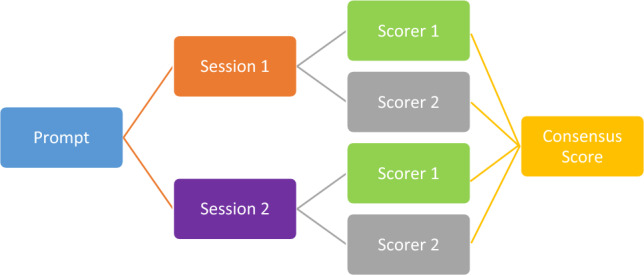
“The available reviews discussing AI in oncology premising a high burden of knowledge and information needed of persons in molecular tumor boards [16] and so the AI could improve this human’s limitations in order to Prompt Session 1 Scorer 1”
BackgroundApplications of artificial intelligence multiomics in precision oncology
Srivastava, R. (2022) · Journal of Cancer Research and Clinical Oncology · doi:10.1007/s00432-022-04161-4 · Cited by 45 · cited 1×
“1 3 support establishing a more precise medicine, particularly in the days when a huge amount of data is available[17, 18].”
BackgroundBrandão, M., Guisseve, A., Bata, G., Machado, J. F., Alberto, M., Ferro, J., García, C., Zaqueu, C., Jamisse, A., Lorenzoni, C. F., et al. (2020) · The Oncologist · doi:10.1002/onco.13643 · Cited by 37 · cited 1×
“It is a cost-effective tool and improves patients ́ survival [1].”
BackgroundLeinert, E., Singer, S., Janni, W., Harbeck, N., Weissenbacher, T. M., Rack, B. K., Augustin, D., Wischnik, A., Kiechle, M. B., Ettl, J., et al. (2016) · Clinical Breast Cancer · doi:10.1016/j.clbc.2016.10.008 · Cited by 30 · cited 1×
“As it is known, elderly patients with BC are at risk for a higher incidence of side effects of chemotherapy and even after chemotherapy, the survival benefit is limited in comparison to the younger groups [22, 23].”
Backgroundon behalf of Korean Hereditary Breast Cancer Study Group, Kang, E., Park, H., Lee, J. W., Kim, Z., Noh, W.-C., Jung, Y. S., Yang, J., Jung, S. H., & Kim, S. (2016) · Journal of Human Genetics · doi:10.1038/jhg.2015.164 · Cited by 25 · cited 1×
“There are already tools calculating the probability of the BRCA Mutation in a particular patient as KOHBRA, BRCAPRO, or Myriad [2].”
MethodMacchia, G., Ferrandina, G., Patarnello, S., Autorino, R., Masciocchi, C., Pisapia, V., Calvani, C., Iacomini, C., Cesario, A., Boldrini, L., et al. (2022) · Frontiers in Oncology · doi:10.3389/fonc.2021.797454 · Cited by 17
Research works printed but not linked: 1
- Lukac S, Friedl TWP, Leinert E (2023) Age of the patient as a prognosis and therapy-relevant factor in early breast cancer. University of Ulm, Ulm
Cited by
Sorted by citations
Leveraging large language models for decision support in personalized oncology
Benary, M., Wang, X. D., Schmidt, M., Soll, D., Hilfenhaus, G., Nassir, M., Sigler, C., Knödler, M., Keller, U., Beule, D., et al. (2023) · JAMA Network Open · doi:10.1001/jamanetworkopen.2023.43689 · Cited by 306
Younis, H. A., Eisa, T. A. E., Nasser, M., Sahib, T. M., Noor, A. A., Alyasiri, O. M., Salisu, S., Hayder, I. M., & Younis, H. A. (2024) · Diagnostics · doi:10.3390/diagnostics14010109 · Cited by 242
“Misidentification: Incorrectly identifying treatment needs, such as Her2 1+ and 2+ patients.”
BackgroundÖnder, Ç. E., Koç, G., Gökbulut, P., Taşkaldıran, I., & Kuşkonmaz, Ş. M. (2024) · Scientific Reports · doi:10.1038/s41598-023-50884-w · Cited by 134
Large language model use in clinical oncology
Carl, N., Schramm, F., Haggenmüller, S., Kather, J. N., Hetz, M. J., Wies, C., Michel, M. S., Wessels, F., & Brinker, T. J. (2024) · npj Precision Oncology · doi:10.1038/s41698-024-00733-4 · Cited by 85
“Questioning procedure continued “ Prompt Engineering ” PromptEngineering(PE)wasreportedin9outof34studies 15,17,20,21,23,27,33,34,41 .”
BackgroundMethodGriewing, S., Gremke, N., Wagner, U. A. G., Lingenfelder, M., Kühn, S., & Boekhoff, J. (2023) · Journal of Personalized Medicine · doi:10.3390/jpm13101502 · Cited by 78
“[22,23].”
BackgroundMethodResultInfluential
Metadata
- Authors
- Lukac, S., Dayan, D., Fink, V., Leinert, E., Hartkopf, A., Veselinovic, K., Janni, W., Rack, B., Pfister, K., Heitmeir, B., & Ebner, F.
- Affiliations
- University Hospital Ulm (DE)
- Corresponding author
- Lukac, Stefan
- ORCID
- Venue
- Archives of Gynecology and Obstetrics
- Published
- 2023-07-17
- Volume
- 308
- Issue
- 6
- Pages
- 1831-1844
- ISSN
- 0003-9128 (ISSN-L)
- 1432-0711
- PMC
- PMC10579162
- OpenAlex
- W4384558920
- Cited by
- 130
- References
- 23
- Citations by year
- 2026: 32 · 2025: 44 · 2024: 45 · 2023: 9
- FWCI
- 5.17
- Type
- journal article
- Language
- en
- Open access
- hybrid
- doi.org
- Locations
- Archives of Gynecology and Obstetrics (publishedVersion, cc-by)
- Research Square (acceptedVersion, cc-by)
- PubMed Central (publishedVersion, cc-by)
- PubMed (publishedVersion)
- Funders
- Universitätsklinikum Ulm
- Topics
- Health Sciences › Medicine › Health Informatics › Artificial Intelligence in Healthcare and Education
- Physical Sciences › Computer Science › Artificial Intelligence › AI in cancer detection
- Life Sciences › Biochemistry, Genetics and Molecular Biology › Cancer Research › Breast Cancer Treatment Studies
- Keywords
- ChatGPT, large language models, multidisciplinary tumor board, primary breast cancer, early breast cancer, treatment decision-making, clinical implementation of AI, HER2-positive breast cancer, endocrine therapy, personalized treatment
- MeSH terms
- Aged, Antibodies, Artificial Intelligence, Breast Neoplasms, Female, Humans, Oncogenes, Pilot Projects
About these checks
Registry, retraction, Cites and statistics results are computed, not judged, with one exception: a printed reference that no index lists is read once by a model before it counts as a citation error. Claims are extracted by a model and kept only when their quote appears verbatim in the text; each cited source is then checked, with a model’s help, for whether it says what the claim relies on. Those verdicts can be wrong — read the claim’s quote and the cited source before relying on one.
Statistics and arithmetic are recomputed, not judged.
Confidence bands are shown only for fields calibrated on our annotated test set. None is calibrated yet, so no band is shown.
What counts as a claim ›How we measure confidence ›How we check this ›
Are you an author, or do you see a problem with this page? Request a review
