

Splenic NKG2D confers resilience versus susceptibility in mice after chronic social defeat stress: beneficial effects of (R)-ketamine
Open accessThe DOI matches its Crossref record; 54 of the 54 references it cites were found in a registry or an index.
Abstract
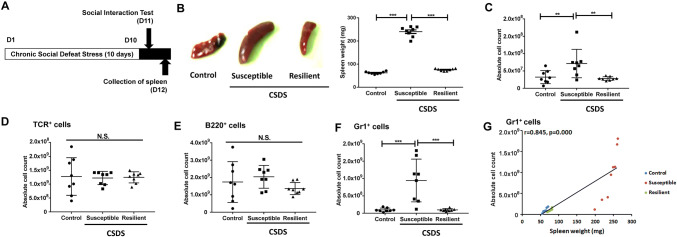
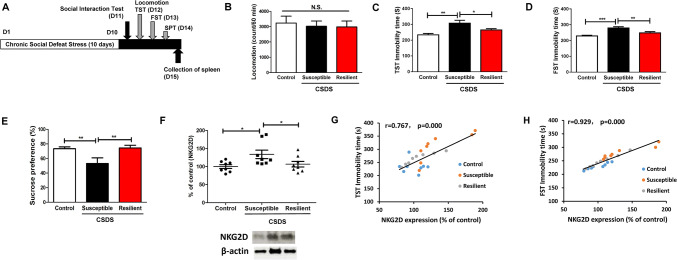
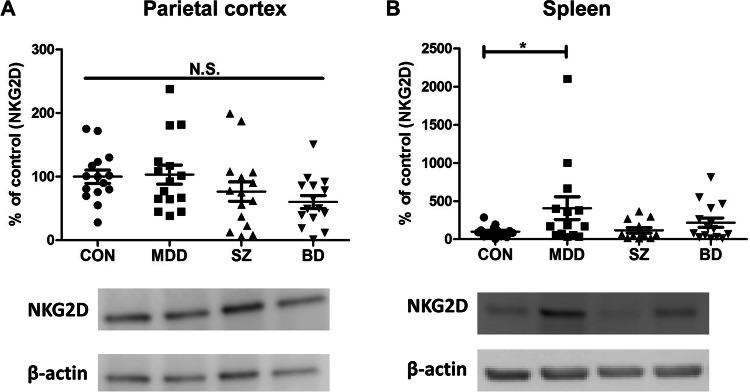
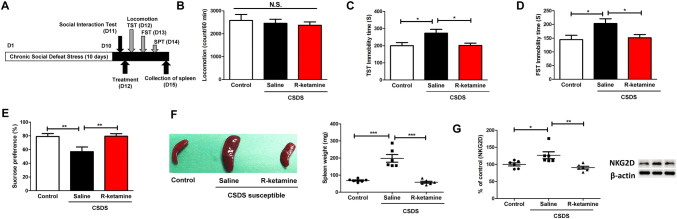
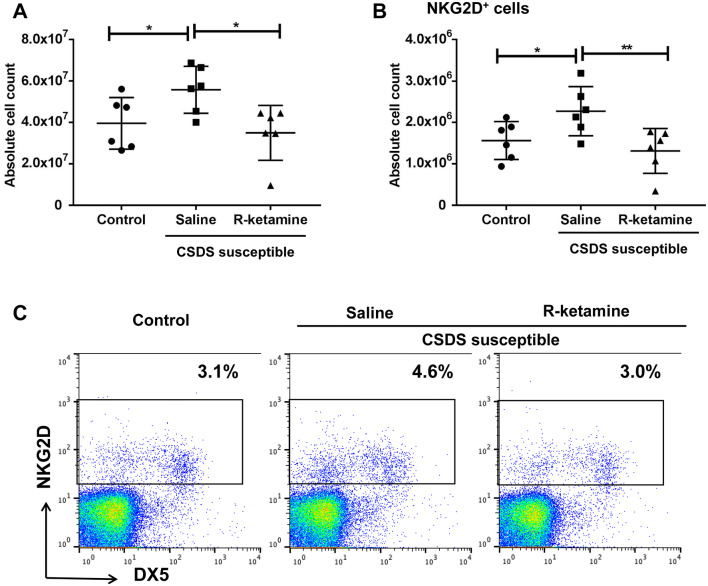
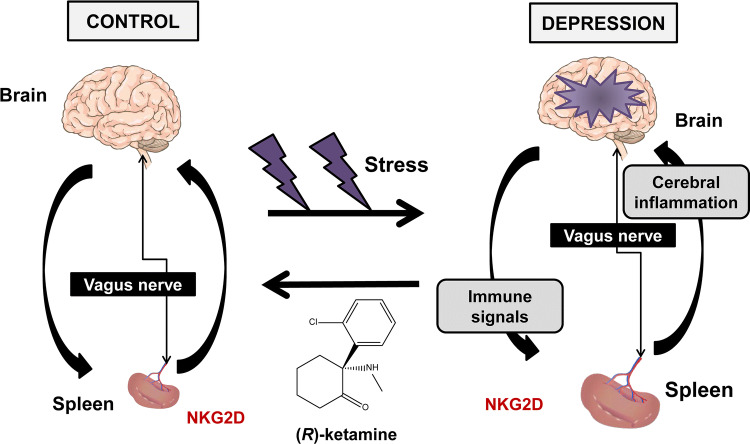
The spleen is a large immune organ that plays a key role in the immune system. The precise molecular mechanisms underlying the relationship between the spleen and stress-related psychiatric disorders are unknown. Here we investigated the role of spleen in stress-related psychiatric disorders. FACS analysis was applied to determine the contribution of the spleen to susceptibility and resilience in mice that were subjected to chronic social defeat stress (CSDS). We found a notable increase in splenic volume and weight in CSDS-susceptible mice compared to control (no CSDS) mice and CSDS-resilient mice. The number of granulocytes, but not of T cells and B cells, in the spleen of susceptible mice was higher than in the spleen of both control and resilient mice. Interestingly, NKG2D (natural killer group 2, member D) expression in the spleen of CSDS-susceptible mice was higher than that in control mice and CSDS-resilient mice. In addition, NKG2D expression in the spleen of patients with depression was higher than that in controls. Both increased splenic weight and increased splenic NKG2D expression in CSDS-susceptible mice were ameliorated after a subsequent administration of (R)-ketamine. The present findings indicate a novel role of splenic NKG2D in stress susceptibility versus resilience in mice subjected to CSDS. Furthermore, abnormalities in splenic functions in CSDS-susceptible mice were ameliorated after subsequent injection of (R)-ketamine. Thus, the brain–spleen axis might, at least in part, contribute to the pathogenesis of stress-related psychiatric disorders such as depression.
Overview
The claims and statistics of this paper haven’t been checked yet.
Free: it reads the open-access text and checks the first 5 claims that cite a source we can check. Create a free account to check every claim.
Integrity signals
Registry
Cites
Statistics
Figures
Verification
Claims the paper makes
The claims and statistics of this paper haven’t been checked yet.
Free: it reads the open-access text and checks the first 5 claims that cite a source we can check. Create a free account to check every claim.
Claims other papers make about this one
Each is checked against this paper’s own text: does it say what the citing paper says it does?
The source backs part of the claim, not all of it — or backs it for a different population, condition or comparison.
In the citing paper
“Chronic social stress in mice leads to splenomegaly, attributed to granulocyte accumulation and ectopic (or ‘extramedullary’) myelopoiesis, which consequently elevates circulating monocyte levels59,77.”
From Central regulation of stress-evoked peripheral immune responses (2023) · cites this paper as [77]
Experimental — accuracy not yet measured
Self-check
Percentages, sums and reported differences re-computed from the paper’s own numbers.
The self-check needs the paper’s full text.
Citations
Cites
Stress, adaptation, and disease. Allostasis and allostatic load
McEWEN, B. S. (1998) · Annals of the New York Academy of Sciences · doi:10.1111/j.1749-6632.1998.tb09546.x · Cited by 5,092
Psychological stress and the human immune system: a meta-analytic study of 30 Years of inquiry
Segerstrom, S. C., & Miller, G. E. (2004) · Psychological Bulletin · doi:10.1037/0033-2909.130.4.601 · Cited by 3,334
Stress and disorders of the stress system
Chrousos, G. P. (2009) · Nature Reviews Endocrinology · doi:10.1038/nrendo.2009.106 · Cited by 3,215
Structure and function of the spleen
Mebius, R. E., & Kraal, G. (2005) · Nature Reviews Immunology · doi:10.1038/nri1669 · Cited by 2,238
A standardized protocol for repeated social defeat stress in mice
Golden, S. A., Covington, H. E., Berton, O., & Russo, S. J. (2011) · Nature Protocols · doi:10.1038/nprot.2011.361 · Cited by 1,581
Structure and function of the immune system in the spleen
Lewis, S. M., Williams, A., & Eisenbarth, S. C. (2019) · Science Immunology · doi:10.1126/sciimmunol.aau6085 · Cited by 1,301
Psychobiology and molecular genetics of resilience
Feder, A., Nestler, E. J., & Charney, D. S. (2009) · Nature Reviews Neuroscience · doi:10.1038/nrn2649 · Cited by 1,272
Ketamine and Ketamine Metabolite Pharmacology: Insights into Therapeutic Mechanisms
Zanos, P., Moaddel, R., Morris, P. J., Riggs, L. M., Highland, J. N., Georgiou, P., Pereira, E. F. R., Albuquerque, E. X., Thomas, C. J., Zarate, C. A., et al. (2018) · Pharmacological Reviews · doi:10.1124/pr.117.015198 · Cited by 1,260
Russo, S. J., Murrough, J. W., Han, M.-H., Charney, D. S., & Nestler, E. J. (2012) · Nature Neuroscience · doi:10.1038/nn.3234 · Cited by 1,206
The Psychobiology of Depression and Resilience to Stress: Implications for Prevention and Treatment
Southwick, S. M., Vythilingam, M., & Charney, D. S. (2005) · Annual Review of Clinical Psychology · doi:10.1146/annurev.clinpsy.1.102803.143948 · Cited by 1,160
Cited by
Brain–gut–microbiota axis in depression: A historical overview and future directions
Chang, L., Wei, Y., & Hashimoto, K. (2022) · Brain Research Bulletin · doi:10.1016/j.brainresbull.2022.02.004 · Cited by 377
“…in the pathophysiology of depression and that resilience is mediated by adaptive changes in several circuits, including BDNF, pro- inflammatory cytokines, and spleen (Hashimoto, 2019; Hashimoto, 2020; Qu et al., 2017; Yang et al., 2015a; Yang et al., 2015b; Yang et al., 2016a; Zhang et al., 2021).”
Self-citationMolecular mechanisms underlying the antidepressant actions of arketamine: beyond the NMDA receptor
Wei, Y., Chang, L., & Hashimoto, K. (2022) · Molecular Psychiatry · doi:10.1038/s41380-021-01121-1 · Cited by 248
Self-citationMolecular mechanisms of the rapid-acting and long-lasting antidepressant actions of (R)-ketamine
Hashimoto, K. (2020) · Biochemical Pharmacology · doi:10.1016/j.bcp.2020.113935 · Cited by 236
Self-citationZhang, J., Ma, L., Chang, L., Pu, Y., Qu, Y., & Hashimoto, K. (2020) · Translational Psychiatry · doi:10.1038/s41398-020-00878-3 · Cited by 208
Self-citationMicroglial ERK-NRBP1-CREB-BDNF Signaling in Sustained Antidepressant Actions of (R)-Ketamine
Yao, W., Cao, Q., Luo, S., He, L., Yang, C., Chen, J., Qi, Q., Hashimoto, K., & Zhang, J.-C. (2022) · Molecular Psychiatry · doi:10.1038/s41380-021-01377-7 · Cited by 216
“The results suggest that (R)-ketamine shows longlasting antidepressant-like effects in CSDS model, consistent with our previous reports [27, 30, 64, 65].”
ResultSelf-citationCentral regulation of stress-evoked peripheral immune responses
Chan, K. L., Poller, W. C., Swirski, F. K., & Russo, S. J. (2023) · Nature Reviews Neuroscience · doi:10.1038/s41583-023-00729-2 · Cited by 207
Gut Microbiota in Anxiety and Depression: Unveiling the Relationships and Management Options
Kumar, A., Pramanik, J., Goyal, N., Chauhan, D., Sivamaruthi, B. S., Prajapati, B. G., & Chaiyasut, C. (2023) · Pharmaceuticals · doi:10.3390/ph16040565 · Cited by 154
Brain-spleen axis in health and diseases: A review and future perspective
Wei, Y., Wang, T., Liao, L., Fan, X., Chang, L., & Hashimoto, K. (2022) · Brain Research Bulletin · doi:10.1016/j.brainresbull.2022.02.008 · Cited by 134
Self-citationArketamine, a new rapid-acting antidepressant: A historical review and future directions
Zhang, J.-C., Yao, W., & Hashimoto, K. (2022) · Neuropharmacology · doi:10.1016/j.neuropharm.2022.109219 · Cited by 99
Self-citationKosuge, A., Kunisawa, K., Arai, S., Sugawara, Y., Shinohara, K., Iida, T., Wulaer, B., Kawai, T., Fujigaki, H., Yamamoto, Y., et al. (2021) · Brain Behavior and Immunity · doi:10.1016/j.bbi.2021.05.028 · Cited by 78
Ketamine and its metabolites: Potential as novel treatments for depression
Zhang, K., Yao, Y., & Hashimoto, K. (2022) · Neuropharmacology · doi:10.1016/j.neuropharm.2022.109305 · Cited by 72
Self-citationWang, X., Chang, L., Wan, X., Tan, Y., Qu, Y., Shan, J., Yang, Y., Ma, L., & Hashimoto, K. (2022) · Neurobiology of Disease · doi:10.1016/j.nbd.2022.105635 · Cited by 64
Self-citationKawczak, P., Feszak, I. J., & Bączek, T. (2024) · Biomedicines · doi:10.3390/biomedicines12102283 · Cited by 73
“Studies indicate that (R)-ketamine may reduce systemic inflammation, splenomegaly, and behavioral problems in mice treated with LPS [36], as well as in models of depression, colitis, and sepsis [37,38].”
Background(R)-ketamine as prophylactic and therapeutic drug for neurological disorders: Beyond depression
Wang, X., Yang, J., & Hashimoto, K. (2022) · Neuroscience & Biobehavioral Reviews · doi:10.1016/j.neubiorev.2022.104762 · Cited by 63
Self-citationEffects of splenectomy on skin inflammation and psoriasis-like phenotype of imiquimod-treated mice
Shinno-Hashimoto, H., Eguchi, A., Sakamoto, A., Wan, X., Hashimoto, Y., Fujita, Y., Mori, C., Hatano, M., Matsue, H., & Hashimoto, K. (2022) · Scientific Reports · doi:10.1038/s41598-022-18900-7 · Cited by 59
Self-citationPu, Y., Zhang, Q., Tang, Z., Lu, C., Wu, L. L., Zhong, Y., Chen, Y., Hashimoto, K., Luo, Y., & Liu, Y. (2022) · Translational Psychiatry · doi:10.1038/s41398-022-01993-z · Cited by 59
Self-citationMa, L., Zhang, J., Fujita, Y., Qu, Y., Shan, J., Wan, X., Wang, X., Ishima, T., Kobayashi, K., Wang, L., et al. (2022) · Translational Psychiatry · doi:10.1038/s41398-022-01803-6 · Cited by 57
“Recently, we reported that splenomegaly in CSDS susceptible mice could be normalized after single injection of (R)-ketamine [68].”
BackgroundSelf-citationQu, Y., Zhang, K., Pu, Y., Chang, L., Wang, S., Tan, Y., Wang, X., Zhang, J., Ohnishi, T., Yoshikawa, T., et al. (2020) · Journal of Affective Disorders · doi:10.1016/j.jad.2020.03.095 · Cited by 50
Self-citationMa, L., Zhang, J., Fujita, Y., Shinno-Hashimoto, H., Shan, J., Wan, X., Qu, Y., Chang, L., Wang, X., & Hashimoto, K. (2022) · Journal of Affective Disorders · doi:10.1016/j.jad.2022.08.087 · Cited by 52
Self-citationMurra, D., Hilde, K. L., Fitzpatrick, A., Maras, P. M., Watson, S. J., & Akil, H. (2022) · Neurobiology of Stress · doi:10.1016/j.ynstr.2022.100437 · Cited by 52
“There have been contradictory findings related to the existence of group differences in the forced swim test (Krishnan et al., 2007; Lee et al., 2021; Zhang et al., 2021).”
BackgroundQu, Y., Chang, L., Ma, L., Wan, X., & Hashimoto, K. (2022) · Pharmacology Biochemistry and Behavior · doi:10.1016/j.pbb.2022.173500 · Cited by 48
Self-citationScotton, E., Antqueviezc, B., Vasconcelos, M., Dalpiaz, G., Géa, L. P., Goularte, J. F., Colombo, R., & Rosa, A. R. (2022) · Biochemical Pharmacology · doi:10.1016/j.bcp.2022.114963 · Cited by 40
Zhang, J., Chang, L., Pu, Y., & Hashimoto, K. (2020) · Journal of Affective Disorders · doi:10.1016/j.jad.2020.03.128 · Cited by 36
Self-citationWei, Y., Chang, L., Ishima, T., Wan, X., Ma, L., Wuyun, G., Pu, Y., & Hashimoto, K. (2021) · Brain Behavior & Immunity - Health · doi:10.1016/j.bbih.2021.100198 · Cited by 42
Self-citationImmunoregulation and antidepressant effect of ketamine
Zhang, N., Yao, L., Wang, P., & Liu, Z. (2021) · Translational Neuroscience · doi:10.1515/tnsci-2020-0167 · Cited by 36
“Administration of (R)-ketamine could ameliorate the increased splenic weight and increased splenic NKG2D expression in CSDS-susceptible mice [91].”
BackgroundImpact of broad-spectrum antibiotics on the gut–microbiota–spleen–brain axis
Wan, X., Eguchi, A., Sakamoto, A., Fujita, Y., Yang, Y. H., Qu, Y., Hatano, M., Mori, C., & Hashimoto, K. (2022) · Brain Behavior & Immunity - Health · doi:10.1016/j.bbih.2022.100573 · Cited by 40
Self-citationAcupuncture may play a key role in anti-depression through various mechanisms in depression
Li, P., Zhao, J., Wei, X., Luo, L., Chu, Y., Zhang, T., Zhu, A., & Yan, J. (2024) · Chinese Medicine · doi:10.1186/s13020-024-00990-2 · Cited by 39
“Known studies have found that the pathogenesis of depression is closely related to the microbial-intestinal-brain axis [187–189], brain-spleen axis [190], brain-lung axis [191, 192], and brain-liver axis [193–195].”
BackgroundWei, Y., Chang, L., & Hashimoto, K. (2021) · European Neuropsychopharmacology · doi:10.1016/j.euroneuro.2021.04.010 · Cited by 30
Self-citationEngler-Chiurazzi, E. B. (2024) · Frontiers in Cellular Neuroscience · doi:10.3389/fncel.2024.1360242 · Cited by 32
Qu, Y., Eguchi, A., Wan, X., Ma, L., Chang, L., Shan, J., Yang, Y. H., Mori, C., & Hashimoto, K. (2022) · Psychiatry Research · doi:10.1016/j.psychres.2022.115020 · Cited by 28
Self-citationMa, L., Wang, L., Qu, Y., Wan, X., & Hashimoto, K. (2023) · Translational Psychiatry · doi:10.1038/s41398-023-02564-6 · Cited by 28
“Considering the crucial role of the spleen as an immune organ, it is likely that the brain–spleen axis might play a role in the beneficial effects of arketamine on splenomegaly in mice with depression-like behaviors [23, 26, 41, 43], although further study is needed.”
BackgroundSelf-citationGinseng in delaying brain aging: Progress and Perspectives
Niu, J., Zhu, G., & Zhang, J. (2025) · Phytomedicine · doi:10.1016/j.phymed.2025.156587 · Cited by 25
(R)-ketamine ameliorates the progression of experimental autoimmune encephalomyelitis in mice
Wang, X., Chang, L., Tan, Y., Qu, Y., Shan, J., & Hashimoto, K. (2021) · Brain Research Bulletin · doi:10.1016/j.brainresbull.2021.10.013 · Cited by 26
Self-citationChang, L., Wei, Y., Qu, Y., Zhao, M., Zhou, X., Long, Y., & Hashimoto, K. (2024) · Neurobiology of Disease · doi:10.1016/j.nbd.2024.106573 · Cited by 27
“Arketamine has been found to reduce both splenomegaly and depression-like behaviors in CSDS-susceptible mice [Zhang et al., 2021b].”
BackgroundResultInfluentialSelf-citationReive, B. S., Johnston, J. N., Sánchez-Lafuente, C. L., Zhang, L., Chang, A., Zhang, J., Allen, J., Romay-Tallón, R., Kalynchuk, L. E., & Caruncho, H. J. (2023) · Chronic Stress · doi:10.1177/24705470231164920 · Cited by 19
Liu, G., Ma, L., Qu, Y., Wan, X., Xu, D., Zhao, M., Murayama, R., & Hashimoto, K. (2023) · Pharmacology Biochemistry and Behavior · doi:10.1016/j.pbb.2023.173659 · Cited by 19
Self-citationCao, K., Zhong, J., Wang, S., Shi, Y., Bai, S., Zhao, J., Yang, L., Liang, Q., Deng, D., & Zhang, R. (2024) · Journal of Ethnopharmacology · doi:10.1016/j.jep.2024.118040 · Cited by 15
Self-citationExploring the multifaceted potential of (R)-ketamine beyond antidepressant applications
Zhang, S., Pu, Y., Liu, J., Li, L., An, C., Wu, Y., Zhang, W., Zhang, W., Qu, S., & Yan, W. (2024) · Frontiers in Pharmacology · doi:10.3389/fphar.2024.1337749 · Cited by 18
Self-citationAli, Q., Ma, S., Liu, B., Niu, J., Liu, M., Mustafa, A., Li, D., Wang, Z., Sun, H., Cui, Y., et al. (2024) · Nutrients · doi:10.3390/nu16050747 · Cited by 12
“Animals with damaged spleens from oxidative stress [11], chronic stress [12], and LPS-induced stress [13] show compromised immune functions because the spleen is responsible for removing aged and damaged erythrocytes and bacteria, recycling iron, and producing antibodies [14,15].”
BackgroundYang, Y. H., Eguchi, A., Mori, C., & Hashimoto, K. (2024) · Journal of Affective Disorders · doi:10.1016/j.jad.2024.06.091 · Cited by 14
Self-citationRed light exaggerated sepsis-induced learning impairments and anxiety-like behaviors
Xie, B., Zhang, Y., Qi, H., Yao, H., Shang, Y., Yuan, S., & Zhang, J. (2020) · Aging · doi:10.18632/aging.103940 · Cited by 11
“In a mouse model of chronic social defeat stress, susceptible mice had heavier spleens than control mice and chronic-social-defeat-stress-resilient mice, in agreement with our present results [42].”
ResultYang, Y. H., Eguchi, A., Mori, C., & Hashimoto, K. (2024) · Journal of Psychiatric Research · doi:10.1016/j.jpsychires.2024.06.005 · Cited by 8
Self-citationSpecial issue on “Brain–body communication in health and diseases”
Hashimoto, K., & Yang, C. (2022) · Brain Research Bulletin · doi:10.1016/j.brainresbull.2022.05.014 · Cited by 8
Self-citationMa, L., Zeng, W., Song, K., Xie, T., Han, S., Li, Y., Wang, H., Huang, Z., Zheng, X., He, W., et al. (2025) · Biochemical Pharmacology · doi:10.1016/j.bcp.2025.117094 · Cited by 6
Self-citationGupta, J. K., Singh, K., Bhatt, A., Porwal, P., Rani, R., Dubey, A., Jain, D., & Nand, S. (2024) · 3 Biotech · doi:10.1007/s13205-024-04104-5 · Cited by 5
Personalized Nutrition for Depression: Impact on the Unholy Trinity
Duarte-Silva, E. P., Clarke, G. A., Dinan, T. G., & Peixoto, C. A. (2021) · NeuroImmunoModulation · doi:10.1159/000514094 · Cited by 6
Brain-organ axis: How does stress regulate peripheral immunity through neural signaling?
Yu, X., Zhu, H., Su, Y., Zhou, L., Chen, Z., Li, P., & Wang, Y. (2026) · Physics of Life Reviews · doi:10.1016/j.plrev.2026.04.001 · Cited by 5
Yao, R., Cui, W., Wang, W., Feng, C., Chen, Y., & Zhao, X. (2025) · Journal of Pharmaceutical and Biomedical Analysis · doi:10.1016/j.jpba.2025.116744 · Cited by 4
Ozer, E. A., Keskin, A., Berrak, Y. H., Cankara, F., Can, F., Özdemir, Y., Keskin, Ö., Gürsoy, A., & Eser, H. Y. (2025) · Discover Mental Health · doi:10.1007/s44192-025-00128-2 · Cited by 4
“This supports the broader implication of NKG2D in neuroinflammatory processes across various conditions [378].”
Effect of rapamycin on repeated immobilization stress-induced immune alterations in the rat spleen
Rokytová, I., Mravec, B., Lauková, M., & Vargovič, P. (2020) · Journal of Neuroimmunology · doi:10.1016/j.jneuroim.2020.577309 · Cited by 5
Liu, G., Ma, L., Sakamoto, A., Fujimura, L., Xu, D., Zhao, M., Wan, X., Murayama, R., Anzai, N., & Hashimoto, K. (2024) · Pharmacology Biochemistry and Behavior · doi:10.1016/j.pbb.2024.173906 · Cited by 4
Self-citationZhang, Y., Chen, H., Cao, J., Zhou, S., Ma, Y., & Jing, Y. (2025) · Advanced Science · doi:10.1002/advs.202500849 · Cited by 8
Correlations between major depressive disorder, splenic morphology, and immune function
Lin, Z., Xu, X., Zhang, K., Wang, T., Cao, L., Wang, Z., & Wang, G. (2025) · BMC Psychiatry · doi:10.1186/s12888-025-06853-w · Cited by 5
“As demonstrated by Zhang et al., ketamine can reverse CSCD-induced increases in NKG2D protein levels, granulocyte count and spleen weight in mice [15].”
InfluentialSelf-citationCai, Y., Zhu, T., Zhao, M., Xu, D., Murayama, R., Liu, G., Yue, Y., Yang, J.-J., Nakamura, H., & Hashimoto, K. (2026) · European Journal of Pharmacology · doi:10.1016/j.ejphar.2026.178915 · Cited by 2
Self-citationEl mito de Edipo en la tradición culta occidental y sus interpretaciones
Ferrer, J. J. P. (2006) · Revista de folklore · Cited by 6
Shan, J., Qu, Y., & Hashimoto, K. (2025) · Journal of Affective Disorders · doi:10.1016/j.jad.2025.04.027 · Cited by 1
Self-citationMechanism of antidepressant action of ketamine and differences between its two enantiomers
Zhan, J., Zhang, Y., Tian, H., Zhu, X., Guo, M., Qiu, Z., & Xia, Z. (2025) · Journal of Anesthesia and Translational Medicine · doi:10.1016/j.jatmed.2025.06.001 · Cited by 1
Pollard-Wright, H. (2023) · IntechOpen eBooks · doi:10.5772/intechopen.1002799 · Cited by 2
Liu, M., Gao, C., Cao, Y., Sun, J., & Zhang, Z. (2026) · Genes & Diseases · doi:10.1016/j.gendis.2026.102106
Bouchard, K., Patoine, D., Roy, J., Fournier, S., Marsolais, D., Kinkead, R., & Lauzon‐Joset, J. (2026) · Brain Behavior & Immunity - Health · doi:10.1016/j.bbih.2026.101204
“Change in spleen morphology has also been observed during stress response, especially after severe chronic stress, such as chronic social defeat stress in mice, where it can cause splenomegaly (Zhang et al., 2021; Wei et al., 2022).”
Decoding the molecular network communication mechanism of ketamine’s antidepressant effects
Li, Y., Cheng, Q., Lin, G., Duan, K., & Wang, S. (2026) · Psychopharmacology · doi:10.1007/s00213-026-07028-5
Self-citationNeng, T. P., Antoine, K. S., Ngenteh, M. L., Fubi, B. B. L., Nchang, N. R., Nsah, K. B., & Mahamat, O. (2026) · International Journal of Inflammation · doi:10.1155/ijin/7890368
Role of gut and skin microbiota and spleen in mice model of psoriasis
Shinno-Hashimoto, H. (2023) · Institutional Repositories DataBase (IRDB) · doi:10.20776/900122217
Shared Immunogenetic Basis Between Spleen Volume and Psychiatric Disorders
Liang, F., Zhao, W., Ning, F., Yun, Y., Song, J., Ma, T., & Zhang, Q. (2026) · Journal of Molecular Neuroscience · doi:10.1007/s12031-026-02550-9
“Zhang et al. reported that stress-susceptible mice in a chronic social defeat stress model showed increased spleen weight and splenic dysfunction, while NKG2D expression was elevated in patients with depression and was normalized after (R)-ketamine treatment in mice (Zhang et al. 2019).”
Metadata
- Authors
- Zhang, K., Sakamoto, A., Chang, L., Qu, Y., Wang, S., Pu, Y., Tan, Y., Wang, X., Fujita, Y., Ishima, T., Hatano, M., & Hashimoto, K.
- Affiliations
- Chiba University (JP)
- Corresponding author
- Hashimoto, Kenji
- ORCID
- Venue
- European Archives of Psychiatry and Clinical Neuroscience
- Published
- 2019-12-24
- Volume
- 271
- Issue
- 3
- Pages
- 447-456
- ISSN
- 0003-9373 (ISSN-L)
- 0940-1334
- 1433-8491
- PMC
- PMC7981328
- OpenAlex
- W2997792045
- Cited by
- 63
- References
- 54
- Citations by year
- 2026: 7 · 2025: 8 · 2024: 11 · 2023: 6 · 2022: 16 · 2021: 8 · 2020: 6
- FWCI
- 4.90
- Type
- journal article
- Language
- en
- Open access
- hybrid
- doi.org
- Licence
- cc-by
- creativecommons.org/licenses/by/4.0 (tdm)
- creativecommons.org/licenses/by/4.0 (vor)
- Locations
- European Archives of Psychiatry and Clinical Neuroscience (publishedVersion, cc-by)
- PubMed Central (publishedVersion, cc-by)
- PubMed (publishedVersion)
- Funders
- Japan Agency for Medical Research and Development (JP19dm0107119)
- Japan Society for the Promotion of Science (19K17054)
- Topics
- Life Sciences › Neuroscience › Behavioral Neuroscience › Stress Responses and Cortisol
- Life Sciences › Neuroscience › Biological Psychiatry › Tryptophan and brain disorders
- Health Sciences › Medicine › Pharmacology (medical) › Treatment of Major Depression
- Keywords
- NKG2D, spleen, chronic social defeat stress, stress vulnerability, resilience, (R)-ketamine, depression, spleen weight, stress-related psychiatric disorders
- MeSH terms
- Social Defeat, Animals, Antidepressive Agents, Autopsy, Behavior, Animal, Major Depressive Disorder, Disease Models, Animal, Disease Susceptibility, Humans, Ketamine, Mice, Inbred C57BL, Parietal Lobe, Spleen, Stress, Psychological, Mice, Resilience, Psychological, NK Cell Lectin-Like Receptor Subfamily K
About these checks
Registry, retraction, Cites and statistics results are computed, not judged, with one exception: a printed reference that no index lists is read once by a model before it counts as a citation error. Claims are extracted by a model and kept only when their quote appears verbatim in the text; each cited source is then checked, with a model’s help, for whether it says what the claim relies on. Those verdicts can be wrong — read the claim’s quote and the cited source before relying on one.
Statistics and arithmetic are recomputed, not judged.
Confidence bands are shown only for fields calibrated on our annotated test set. None is calibrated yet, so no band is shown.
What counts as a claim ›How we measure confidence ›How we check this ›
Are you an author, or do you see a problem with this page? Request a review
Data sources
Bibliographic data: Semantic Scholar, OpenAlex, Crossref.
Contains information from the Semantic Scholar Academic Graph Datasets, made available under the ODC Attribution License (ODC-BY 1.0).
Semantic Scholar’s data is described in: Kinney, R., et al. (2023). The Semantic Scholar Open Data Platform. arXiv:2301.10140.
