

A novel approach of homozygous haplotype sharing identifies candidate genes in autism spectrum disorder
Open accessThe DOI matches its Crossref record; 56 of the 57 references it cites were found in a registry or an index, and 1 are not checked yet.
Abstract
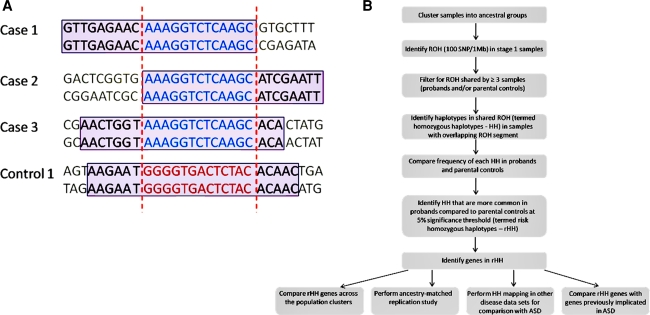
Autism spectrum disorder (ASD) is a highly heritable disorder of complex and heterogeneous aetiology. It is primarily characterized by altered cognitive ability including impaired language and communication skills and fundamental deficits in social reciprocity. Despite some notable successes in neuropsychiatric genetics, overall, the high heritability of ASD (~90%) remains poorly explained by common genetic risk variants. However, recent studies suggest that rare genomic variation, in particular copy number variation, may account for a significant proportion of the genetic basis of ASD. We present a large scale analysis to identify candidate genes which may contain low-frequency recessive variation contributing to ASD while taking into account the potential contribution of population differences to the genetic heterogeneity of ASD. Our strategy, homozygous haplotype (HH) mapping, aims to detect homozygous segments of identical haplotype structure that are shared at a higher frequency amongst ASD patients compared to parental controls. The analysis was performed on 1,402 Autism Genome Project trios genotyped for 1 million single nucleotide polymorphisms (SNPs). We identified 25 known and 1,218 novel ASD candidate genes in the discovery analysis including CADM2, ABHD14A, CHRFAM7A, GRIK2, GRM3, EPHA3, FGF10, KCND2, PDZK1, IMMP2L and FOXP2. Furthermore, 10 of the previously reported ASD genes and 300 of the novel candidates identified in the discovery analysis were replicated in an independent sample of 1,182 trios. Our results demonstrate that regions of HH are significantly enriched for previously reported ASD candidate genes and the observed association is independent of gene size (odds ratio 2.10). Our findings highlight the applicability of HH mapping in complex disorders such as ASD and offer an alternative approach to the analysis of genome-wide association data.
Overview
The claims and statistics of this paper haven’t been checked yet.
Free: it reads the open-access text and checks the first 5 claims that cite a source we can check. Create a free account to check every claim.
Integrity signals
Registry
Cites
Statistics
Figures
Verification
Claims the paper makes
The claims and statistics of this paper haven’t been checked yet.
Free: it reads the open-access text and checks the first 5 claims that cite a source we can check. Create a free account to check every claim.
Claims other papers make about this one
Each is checked against this paper’s own text: does it say what the citing paper says it does?
In the citing paper
“Additional evidence supporting a role of biallelic mutations comes from studies that have implicated homozygous CNVs (Levy et al., 2011; Morrow et al., 2008) and long homozygous intervals as significantly associated with ASDs (Casey et al., 2012).”
From Using Whole-Exome Sequencing to Identify Inherited Causes of Autism (2013) · cites this paper as Casey et al., 2012
Self-check
Percentages, sums and reported differences re-computed from the paper’s own numbers.
The self-check needs the paper’s full text.
Citations
Cites
PLINK: a tool set for whole-genome association and population-based linkage analyses.
Purcell, S., Neale, B., Todd-Brown, K., Thomas, L., Ferreira, M. A. R., Bender, D., Maller, J., Sklar, P., de Bakker, P. I. W., Daly, M. J., et al. (2007) · The American Journal of Human Genetics · doi:10.1086/519795 · Cited by 34,089
Haploview: analysis and visualization of LD and haplotype maps
Barrett, J. C., Fry, B., Maller, J., & Daly, M. J. (2005) · Bioinformatics · doi:10.1093/bioinformatics/bth457 · Cited by 14,525
Principal components analysis corrects for stratification in genome-wide association studies
Price, A. L., Patterson, N. J., Plenge, R. M., Weinblatt, M. E., Shadick, N. A., & Reich, D. (2006) · Nature Genetics · doi:10.1038/ng1847 · Cited by 10,248 · cited 1×
“0) (Price et al. 2006) using 70,175 independent autosomal SNPs with a minor allele frequency[5% and a call rate of 100%.”
MethodThe International HapMap Project
†The International HapMap Consortium, Genotyping centres: Baylor College of Medicine and ParAllele BioScience, Gibbs, R. A., Belmont, J. W., Hardenbol, P., Willis, T. D., Yu, F., Chinese HapMap Consortium, Yang, H., Ch'ang, L.-Y., et al. (2003) · Nature · doi:10.1038/nature02168 · Cited by 6,057
The Structure of Haplotype Blocks in the Human Genome
Gabriel, S. B., Schaffner, S. F., Nguyen, H., Moore, J. M., Roy, J., Blumenstiel, B., Higgins, J., DeFelice, M., Lochner, A., Faggart, M., et al. (2002) · Science · doi:10.1126/science.1069424 · Cited by 5,863
hierfstat, a package for r to compute and test hierarchical F‐statistics
GOUDET, J. (2005) · Molecular Ecology Notes · doi:10.1111/j.1471-8286.2004.00828.x · Cited by 2,713
Functional impact of global rare copy number variation in autism spectrum disorders
Pinto, D., Pagnamenta, A. T., Klei, L., Anney, R., Merico, D., Regan, R., Conroy, J., Magalhaes, T. R., Correia, C., Abrahams, B. S., et al. (2010) · Nature · doi:10.1038/nature09146 · Cited by 2,013
Self-citationNeuroligins and neurexins link synaptic function to cognitive disease
Südhof, T. C. (2008) · Nature · doi:10.1038/nature07456 · Cited by 1,849 · cited 1×
“The encoded protein localises to both excitatory and inhibitory neurons which is intriguing given that there is compelling evidence for dysfunction in neuronal communication and excitatory/inhibitory imbalance in autism (Persico and Bourgeron 2006; Sudhof 2008).”
BackgroundGlutamate as a neurotransmitter in the brain: review of physiology and pathology
Meldrum, B. S. (2000) · The Journal of Nutrition · doi:10.1093/jn/130.4.1007s · Cited by 1,667
Durand, C. M., Betancur, C., Boeckers, T. M., Bockmann, J., Chaste, P., Fauchereau, F., Nygren, G., Rastam, M., Gillberg, I. C., Anckarsäter, H., et al. (2007) · Nature Genetics · doi:10.1038/ng1933 · Cited by 1,602
Self-citation
Cited by
Items 101–200 of 202
Jiang, M., Wang, Z., Lu, T., Li, X., Yang, K., Zhao, L., Zhang, D., Li, J., & Wang, L. (2023) · Translational Psychiatry · doi:10.1038/s41398-023-02662-5 · Cited by 19
Excess of homozygosity in the major histocompatibility complex in schizophrenia
Mukherjee, S., Guha, S., Ikeda, M., Iwata, N., Malhotra, A. K., Pe’er, I., Darvasi, A., & Lencz, T. (2014) · Human Molecular Genetics · doi:10.1093/hmg/ddu308 · Cited by 20
Rare copy number variations affecting the synaptic gene DMXL2 in neurodevelopmental disorders
Costain, G., Walker, S., Argiropoulos, B., Baribeau, D. A., Bassett, A. S., Boot, E., Devriendt, K., Kellam, B., Marshall, C. R., Prasad, A., et al. (2019) · Journal of Neurodevelopmental Disorders · doi:10.1186/s11689-019-9263-3 · Cited by 20
Self-citationRedundant Postsynaptic Functions of SynCAMs 1–3 during Synapse Formation
Fowler, D. K., Peters, J. H., Williams, C., & Washbourne, P. (2017) · Frontiers in Molecular Neuroscience · doi:10.3389/fnmol.2017.00024 · Cited by 19
“They have been linked to autism spectrum disorder (Zhiling et al., 2008; Casey et al., 2012), and have four members (SynCAM1–4) that form homo- or heterophilic interactions in the trans configuration across the synaptic cleft (Fogel et al.”
BackgroundInference of Causative Genes for Alzheimer’s Disease Due to Dosage Imbalance
Sekine, M., & Makino, T. (2017) · Molecular Biology and Evolution · doi:10.1093/molbev/msx183 · Cited by 18
Runs of homozygosity and a cluster of vulvar cancer in young Australian Aboriginal women
McWhirter, R., Thomson, R. J., Marthick, J. R., Rumbold, A. R., Brown, M. A., Taylor‐Thomson, D., Maypilama, E. Ḻ., Condon, J. R., & Dickinson, J. L. (2014) · Gynecologic Oncology · doi:10.1016/j.ygyno.2014.03.566 · Cited by 18
“This homozygositymapping approachhas been successful in identifying candidate loci for rheumatoid arthritis [26], human adult height [27], schizophrenia [28], autism spectrum disease [29] and Alzheimer Disease [30,31].”
BackgroundThe impact of transcription-mediated replication stress on genome instability and human disease
Gnan, S., Liu, Y., Spagnuolo, M., & Chen, C.-L. (2020) · Genome Instability & Disease · doi:10.1007/s42764-020-00021-y · Cited by 16
“2014) and autism spectrum disorder (ASD) (Turner et al.”
Flood, Z. C., Engel, D. L. J., Simon, C. C., Negherbon, K. R., Murphy, L. J., Tamavimok, W., Anderson, G. M., & Janušonis, S. (2012) · Neuroscience · doi:10.1016/j.neuroscience.2012.03.010 · Cited by 16
Structured Genome-Wide Association Studies with Bayesian Hierarchical Variable Selection
Zhao, Y., Zhu, H., Lu, Z., Knickmeyer, R. C., & Zou, F. (2019) · Genetics · doi:10.1534/genetics.119.301906 · Cited by 18
Greenbaum, L., Ravona‐Springer, R., Livny, A., Shelly, S., Sharvit‐Ginon, I., Ganmore, I., Alkelai, A., Heymann, A. D., & Beeri, M. S. (2017) · The World Journal of Biological Psychiatry · doi:10.1080/15622975.2017.1366055 · Cited by 18
“CADM2 was suggested as a candidate gene to autism spectrum disorder (Casey et al. 2012).”
BackgroundCalderoni, S., Ricca, I., Balboni, G., Cagiano, R., Cassandrini, D., Doccini, S., Cosenza, A., Tolomeo, D., Tancredi, R., Santorelli, F. M., et al. (2020) · Journal of Personalized Medicine · doi:10.3390/jpm10040160 · Cited by 17
Self-citationLybæk, H., Robson, M. I., de Leeuw, N., Hehir‐Kwa, J. Y., Jeffries, A. R., Haukanes, B. I., Berland, S., de Bruijn, D. R. H., Mundlos, S., Spielmann, M., et al. (2022) · Autism Research · doi:10.1002/aur.2677 · Cited by 15
“Even more relevant is a homozygous-haplotype-sharing-in-autism-study that identified both LRFN5 and the flanking gene FBXO33 as ASD candidate genes in at least two population clusters (Casey et al., 2012).”
BackgroundGenomic Deletion Involving the IMMP2L Gene in Two Cases of Autism Spectrum Disorder
Baldan, F., Gnan, C., Franzoni, A., Ferino, L., Allegri, L., Passon, N., & Damante, G. (2018) · Cytogenetic and Genome Research · doi:10.1159/000489001 · Cited by 15
“Several data indicate that alterations of the IMMP2L gene are linked with autism spectrum disorders (ASD) [Petek et al., 2001; Muhle et al., 2004; Maestrini et al., 2010; Casey et al., 2012].”
BackgroundAutism spectrum disorder genomics: The progress and potential of genomic technologies
Ghrálaigh, F. N., Gallagher, L., & Lopez, L. M. (2020) · Genomics · doi:10.1016/j.ygeno.2020.09.022 · Cited by 15
“As shown in an early haplotype mapping study, identification of haplotypes can succeed in identifying loci involved in ASD susceptibility [51].”
BackgroundSelf-citationHomozygosity analysis in amyotrophic lateral sclerosis
Mok, K. Y., Laaksovirta, H., Tienari, P. J., Peuralinna, T., Myllykangas, L., Chiò, A., Traynor, B. J., Nalls, M. A., Gurunlian, N., Shatunov, A., et al. (2013) · European Journal of Human Genetics · doi:10.1038/ejhg.2013.59 · Cited by 13
“We considered the approach of Casey et al, using homozygosity of 1Mb length followed by haplotype analysis 36 .”
Hu, T., Wu, C., Hsu, S.-H., Tsai, H.-Y., Cheng, F.-Y., & Cheng, M.-C. (2022) · Journal of Personalized Medicine · doi:10.3390/jpm12050783 · Cited by 13
Yang, Y. A., Wang, C., Liu, L., Buxbaum, J. D., He, Z., & Ionita‐Laza, I. (2022) · The American Journal of Human Genetics · doi:10.1016/j.ajhg.2022.08.013 · Cited by 12
Self-citationThe Genetics of Gilles de la Tourette Syndrome: a Common Aetiological Basis with Comorbid Disorders?
Karagiannidis, I., Tsetsos, F., Padmanabhuni, S. S., Alexander, J., Georgitsi, M., & Paschou, P. (2016) · Current Behavioral Neuroscience Reports · doi:10.1007/s40473-016-0088-z · Cited by 13
Structure of the heterophilic interaction between the nectin-like 4 and nectin-like 1 molecules
Liu, X., An, T., Li, D., Fan, Z., Xiang, P., Li, C., Ju, W., Li, J., Hu, G., Qin, B., et al. (2019) · Proceedings of the National Academy of Sciences · doi:10.1073/pnas.1810969116 · Cited by 12
A pharmacological profile of the high-affinity GluK5 kainate receptor
Møllerud, S., Kastrup, J. S., & Pickering, D. S. (2016) · European Journal of Pharmacology · doi:10.1016/j.ejphar.2016.06.049 · Cited by 11
Leung, B. K., Merlin, S., Walker, A. K., Lawther, A. J., Paxinos, G., Eapen, V., Clarke, R. A., Balleine, B. W., & Furlong, T. M. (2023) · Behavioural Brain Research · doi:10.1016/j.bbr.2023.114610 · Cited by 11
“In particular, Immp2l has often been linked to ASD [21,70,80] and Gilles de la Tourette syndrome (GTS) [10,90,94], and to a lesser extent to schizophrenia [47] and attention-deficit hyperactivity disorder (ADHD)[35].”
Fang, Z., Eapen, V., & Clarke, R. A. (2016) · Meta Gene · doi:10.1016/j.mgene.2016.11.003 · Cited by 11
Antioxidant Behavioural Phenotype in the Immp2l Gene Knock-Out Mouse
Lawther, A. J., Zieba, J., Fang, Z., Furlong, T. M., Conn, I., Govindaraju, H., Choong, L. L. Y., Turner, N. A., Siddiqui, K. S., Bridge, W. J., et al. (2023) · Genes · doi:10.3390/genes14091717 · Cited by 10
“The 7q31 chromosome locus has been repeatedly linked to ASD inheritance and fine mapping identified IMMP2L as the gene linked to ASD at 7q31 (Table 1) [9–13 , 23].”
BackgroundZhang, Y., Jiang, Q., Ren, H., Meng, F., Ma, R., & Xu, B. (2017) · PubMed · Cited by 11
LRRTM4 Terminal Exon Duplicated in Family with Tourette Syndrome, Autism and ADHD
Clarke, R. A., & Eapen, V. (2021) · Genes · doi:10.3390/genes13010066 · Cited by 12
“NRXN1 has also been implicated in ASD through haplotype sharing [8], as have other ASD and TS risk genes, including the IMMP2L gene, which has also shown repeat linkage to and haplotype sharing with ASD in multiple populations [8–13].”
ResultGulisano, M., Domini, C., Ferro, M. C., Curatolo, P., & Rizzo, R. (2017) · Journal of Pediatric Neurology · doi:10.1055/s-0037-1602821 · Cited by 13
Tourette Syndrome Risk Genes Regulate Mitochondrial Dynamics, Structure, and Function
Clarke, R. A., Furlong, T. M., & Eapen, V. (2021) · Frontiers in Psychiatry · doi:10.3389/fpsyt.2020.556803 · Cited by 10
Xie, M., Wang, J., & Chen, X. (2015) · IEEE Transactions on Computational Biology and Bioinformatics · doi:10.1109/tcbb.2015.2430352 · Cited by 9
Galimberti, M., Levey, D. F., Deak, J. D., Adhikari, K., Overstreet, C. M., Gupta, P. D., Nitin, R., Zhou, H., Lake, N. J., Harrington, K. M., et al. (2025) · Nature Genetics · doi:10.1038/s41588-025-02260-9 · Cited by 9
“CADM2 was also previously found to be associated with obesity and metabolic traits 28 , cannabis use 29 , smoking and alcohol related traits 30 , risk-taking behavior 31 , educational attainment 32 and autism spectrum disorder 33 .”
Stolz, J. R., Foote, K. M., Veenstra‐Knol, H. E., Pfundt, R., ten Broeke, S. W., de Leeuw, N., Roht, L., Pajusalu, S., Part, R., Rebane, I., et al. (2021) · The American Journal of Human Genetics · doi:10.1016/j.ajhg.2021.09.018 · Cited by 9
Identification of sequence determinants for the ABHD14 enzymes
Vaidya, K., Rodrigues, G., Gupta, S., Devarajan, A., Yeolekar, M., Madhusudhan, M. S., & Kamat, S. S. (2025) · Proteins: Structure, Function, and Bioinformatics · doi:10.1002/prot.26632 · Cited by 9
Génin, E., Sahbatou, M., Gazal, S., Babron, M., Perdry, H., & Leutenegger, A. (2012) · Human Heredity · doi:10.1159/000346790 · Cited by 9
Modeling prior information of common genetic variants improves gene discovery for neuroticism
Lo, M., Wang, Y., Kauppi, K., Sanyal, N., Fan, C.-C., Smeland, O. B., Schork, A. J., Holland, D., Hinds, D. A., Tung, J. Y., et al. (2017) · Human Molecular Genetics · doi:10.1093/hmg/ddx340 · Cited by 9
“Two significant SNPs on chromosome 3 are located in intronic region of CADM2 associated with persistence of temperament traits (67) and cognitive functions (68) in GWAS and proposed as a candidate gene for autism (69).”
BackgroundNing, Z., Williams, J. M., Kumari, R., Baranov, P. V., & Moore, T. (2019) · Frontiers in Psychiatry · doi:10.3389/fpsyt.2019.00416 · Cited by 11
Identification of Sequence Determinants for the ABHD14 Enzymes
(2023) · doi:10.1101/2023.07.30.551196 · Cited by 9
In situ proteomics unveils specialized domains for extrasynaptic signaling on neuronal cilia
Chang, C.-H., Trinh, V. N., Novak, S. W., Lokesh, N. R., Kretschmar, C., Boassa, D., Pownall, M. E., Kalocsay, M., & Nachury, M. V. (2026) · Science Advances · doi:10.1126/sciadv.aed5548 · Cited by 9
Connecting Signaling Pathways Underlying Communication to ASD Vulnerability
Lepp, S., Anderson, A. G., & Konopka, G. (2013) · International review of neurobiology · doi:10.1016/b978-0-12-418700-9.00004-6 · Cited by 8
Downregulating SynCAM and MPP6 expression is associated with ovarian cancer progression
Xu, F., Si, X., Du, J., Xu, F., Yang, A., Zhang, C., Zhang, X., & Yang, Y. (2019) · Oncology Letters · doi:10.3892/ol.2019.10542 · Cited by 10
“Furthermore, it was suggested that SynCAMs may contribute to autism spectrum disorder (16), glioma generation, non-small cell lung cancer and hepatocarcinogenesis (17,18).”
BackgroundMa, Y., Liang, R.-M., Ma, N., Mi, X.-J., Cheng, Z.-Y., Zhang, Z., Lu, B., & Li, P. A. (2023) · Current Medical Science · doi:10.1007/s11596-023-2726-5 · Cited by 7
Clinical and Genetic Heterogeneity of Autism
Wang, Y., & Zhong, N. A. (2012) · InTech eBooks · doi:10.5772/48700 · Cited by 8
Gao, H., Wang, D., Bai, Y., Zhang, J., Wu, M., Mi, J., Jia, H., & Wang, W. (2016) · Molecular Medicine Reports · doi:10.3892/mmr.2016.5139 · Cited by 9
“A previous study suggested that certain single nucleotide polymorphisms (SNPs) in the HH gene may be responsible for an underlying genetic predisposition to particular diseases (22).”
Antipurinergic Therapy with Suramin as a Treatment for Autism Spectrum Disorder
Hamidpour, R., & Hamidpour, S. (2016) · Journal of Biomedical Sciencies · doi:10.4172/2254-609x.100028 · Cited by 7
“This finding supports the idea that homozygous haplotype regions have genes that linked to ASD and the significance of homozygous haplotype mapping to achieve comprehensive genome-wide data [10].”
MethodResultAltered Visual Function in a Larval Zebrafish Knockout of Neurodevelopmental Risk Gene pdzk1
Xie, J., Jusuf, P. R., Bui, B. V., Dudczig, S., Sztal, T. E., & Goodbourn, P. T. (2021) · Investigative Ophthalmology & Visual Science · doi:10.1167/iovs.62.3.29 · Cited by 7
NCAM Regulates Inhibition and Excitability in Layer 2/3 Pyramidal Cells of Anterior Cingulate Cortex
Zhang, X., Sullivan, C. S., Kratz, M. B., Kasten, M. R., Maness, P. F., & Manis, P. B. (2017) · Frontiers in Neural Circuits · doi:10.3389/fncir.2017.00019 · Cited by 7
“, 2012) and ephrinA/EphA (Wilson et al., 2006; Ikeda et al., 2010; Ayalew et al., 2012; Casey et al., 2012) have been linked to schizophrenia, autism and bipolar disorder.”
BackgroundScholefield, C. L., Atlason, P. T., Jane, D. E., & Molnár, E. (2018) · Neurochemical Research · doi:10.1007/s11064-018-2654-0 · Cited by 7
Roles of synaptic cell adhesion molecules in the neuromodulatory systems
Li, J., Kawasawa, Y. I., Uchigashima, M., & Futai, K. (2026) · Molecules and Cells · doi:10.1016/j.mocell.2026.100340 · Cited by 6
Receptor Tyrosine Kinases and Phosphatases in Neuronal Wiring
Oliva, C., & Hassan, B. A. (2016) · Current topics in developmental biology/Current Topics in Developmental Biology · doi:10.1016/bs.ctdb.2016.10.003 · Cited by 6
Gong, T., Sun, R., Bai, J., Liu, X., He, C., Jiang, Q., Wang, Q., Qi, Y., Ding, W., Shen, J., et al. (2025) · CNS Neuroscience & Therapeutics · doi:10.1111/cns.70429 · Cited by 6
“Recently, research on neurodevelopmental guidance molecules has elucidated additional pathways that may be implicated in ASD [15].”
Global Developmental Delay and Intellectual Disability
Srour, M., & Shevell, M. I. (2014) · Elsevier eBooks · doi:10.1016/b978-0-12-410529-4.00014-0 · Cited by 6
Zhang, L., & Wei, X. (2023) · Molecular Neurobiology · doi:10.1007/s12035-023-03579-2 · Cited by 6
“…with cognitive processing speed differences [76], the rs2875907, rs1448602, and rs7651996 Syn-CAM2 variants are associated with cannabis use and risk-taking [77], the rs9841829 SynCAM2 variant is associated with alcoholism [78], and SynCAM2 was also associated with ASD [79] and ADHD [80].”
Foxp2 Is Required for Nucleus Accumbens-mediated Multifaceted Limbic Function
He, B.-H., Yang, Y., Hsiao, B.-W., Lin, W.-T., Chuang, Y., Chen, S., & Liu, F.-C. (2024) · Neuroscience · doi:10.1016/j.neuroscience.2024.02.004 · Cited by 7
Wang, Z., Grosvenor, L. P., Ray, D., Cheng, T., Ruczinski, I., Beaty, T. H., Volk, H. E., Ladd‐Acosta, C., & Chatterjee, N. (2026) · Nature Genetics · doi:10.1038/s41588-026-02601-2 · Cited by 5
“However, the magnitude of asymmetry in the UKB was substantially lower than observed among SPARK parents and, for some traits, the direction of asymmetry was even reversed between the two studies (Supplementary Table 20).”
Interaction among GRIK2 gene on epilepsy susceptibility in Chinese children
Xiong, S., Wang, Y., Li, H., & Zhang, X. (2019) · Acta Neurologica Scandinavica · doi:10.1111/ane.13089 · Cited by 5
Strunk, D., Weber, P., Röthlisberger, B., & Filges, I. (2016) · Molecular Cytogenetics · doi:10.1186/s13039-016-0299-8 · Cited by 5
“Of further interest, each of the two deletions in our patient span genes which have been described to play a significant role in the pathogenesis of autism [5, 6, 18, 21] and intellectual disability [22] due to their common roles in ASD associated pathways (Table 2).”
BackgroundAssociation of the FGA and SLC6A4 Genes with Autistic Spectrum Disorder in a Korean Population
Ro, M., Won, S., Kang, H., Kim, S., Lee, S. K., Nam, M., Bang, H. J., Yang, J. W., Choi, K.-S., Kim, S. K., et al. (2013) · Neuropsychobiology · doi:10.1159/000355299 · Cited by 6
Gaitanos, T. N., Dudanova, I., Σάκκου, Μ., Klein, R., & Paixão, S. (2015) · Springer eBooks · doi:10.1007/978-3-319-11888-8_5 · Cited by 6
Synaptic protein mutations in autism
Sauer, A. K., Walsh, J. A., Curran, D., Zohourian, N., Stanton, J. E., Zabetakis, I., Brown, J. A. L., & Grabrucker, A. M. (2026) · Neurobiology of Disease · doi:10.1016/j.nbd.2026.107365 · Cited by 5
Peng, Q., & Ehlers, C. L. (2021) · Molecular Psychiatry · doi:10.1038/s41380-020-00989-9 · Cited by 4
Fallah, H., Ganji, M., Arsang‐Jang, S., Sayad, A., & Taheri, M. N. (2018) · Meta Gene · doi:10.1016/j.mgene.2018.12.003 · Cited by 4
Bouzid, A., Belcadhi, M., Souissi, A., Chelly, M., Frikha, F., Gargouri, H., Bonnet, C., Jebali, F., Loukil, S., Petit, C., et al. (2025) · Scientific Reports · doi:10.1038/s41598-024-83115-x · Cited by 3
“Other researchers provide additional support for compound heterozygous variants’ contribution to the heritability of other communication disorders such as Autism Spectrum Disorder 40,41 .”
InfluentialPharmacogenomics: A Promising Approach Towards Treatment of Autism
Wang, H. (2012) · Journal of Pharmacogenomics & Pharmacoproteomics · doi:10.4172/2153-0645.1000e110 · Cited by 3
“The genome-wide study of ASDs will link more genotypes to their biological phenotypes, thus provides a foundation for the development of diagnostic screens as well as pharmacogenomic studies [29-33].”
BackgroundA family study implicates GBE1 in the etiology of autism spectrum disorder
Fanjul‐Fernández, M., Brown, N. J., Hickey, P. F., Diakumis, P., Rafehi, H., Bozaoglu, K., Green, C. C., Rattray, A., Young, S., Alhuzaimi, D. E., et al. (2021) · Human Mutation · doi:10.1002/humu.24289 · Cited by 3
“GBE1 was identified within a risk haplotype at a higher frequency among individuals with ASD compared to parental controls (Casey et al., 2012) and expression of the gene was reported to be upregulated in two lymphoblast cell lines derived from sporadic children affected by ASD (Baron et al., 2006).”
BackgroundPaschou, P., Hoekstra, P. J., & Heiman, G. A. (2014) · Elsevier eBooks · doi:10.1016/b978-0-12-405195-9.00045-7 · Cited by 2
Islam, A. B. M. M. K. (2017) · Journal of Applied Biotechnology & Bioengineering · doi:10.15406/jabb.2017.02.00022 · Cited by 2
“FOXP2 has also been reported to be associated with schizophrenia [49,50,51,52] and autism [53,54,55,56].”
BackgroundAgarwala, S., & Ramachandra, N. B. (2021) · The Egyptian Journal of Neurology Psychiatry and Neurosurgery · doi:10.1186/s41983-021-00323-2 · Cited by 2
“Homozygosity mapping analysis adds the missing pieces of the puzzle for complex disorders in terms of heritability and recessive gene burden [6].”
BackgroundMethodInfluentialGlobal developmental delay and intellectual disability
Srour, M., AlHakeem, A., & Shevell, M. I. (2020) · Elsevier eBooks · doi:10.1016/b978-0-12-813955-4.00019-2 · Cited by 3
Wei, Z., Zhang, S., Bai, K., Liu, Y., Luan, Y., Hu, Z., Li, Y., Qu, Z., Hu, X., Ding, X., et al. (2025) · Development · doi:10.1242/dev.204532 · Cited by 2
[Association between glutamate receptor 2 polymorphisms and epilepsy in children].
Wang, X., Zhu, T.-J., Wan, Z.-T., & Zhu, X. (2016) · PubMed · doi:10.7499/j.issn.1008-8830.2016.06.005 · Cited by 2
Physiological and Pathological Functions of Mitochondrial Proteases
Bárcena, C., Mayoral, P., Quirós, P. M., & López-Otín, C. (2017) · Springer eBooks · doi:10.1007/978-981-10-2513-6_1 · Cited by 4
Múltiplas abordagens para determinar os fatores genéticos que contribuem para o ASD
Moreira, D. D. P. (2017) · Digital Library of Theses and Dissertations (Universidade de São Paulo) · doi:10.11606/t.41.2017.tde-18102017-151418 · Cited by 3
Yang, Y., Shen, Y., & Wu, B.-L. (2012) · Medical Hypotheses · doi:10.1016/j.mehy.2012.08.015 · Cited by 1
Shen, Y., & Gong, X. (2016) · Elsevier eBooks · doi:10.1016/b978-0-12-800109-7.00001-7 · Cited by 4
Genetic Risk Factors Link Autism to Many Other Disorders
Waterhouse, L. H. (2012) · Elsevier eBooks · doi:10.1016/b978-0-12-415961-7.00004-6 · Cited by 1
Myths of the Baltic Sea eutrophication
Savchuk, O. (2018) · Journal of Aquaculture & Marine Biology · doi:10.15406/jamb.2018.07.00190 · Cited by 1
Factors in the neurodevelopment of negative urgency: Findings from a community-dwelling sample
Evans, C. L., Sawyer, K. S., Levy, S. A., Conklin, J. P., McDonough, E., & Gansler, D. A. (2022) · Brain and Neuroscience Advances · doi:10.1177/23982128221079548 · Cited by 1
Bolivar, V. J. (2014) · Cambridge University Press eBooks · doi:10.1017/cbo9781107360556.012 · Cited by 1
Next-Generation Sequencing for Cancer Genomics
Desai, A. N., & Jere, A. (2013) · Springer eBooks · doi:10.1007/978-1-4614-7645-0_3 · Cited by 1
Estudos de comorbidades e dos aspectos genéticos de pacientes com transtorno do espectro autista
Moreira, D. D. P. (2012) · Digital Library of Theses and Dissertations (Universidade de São Paulo) · doi:10.11606/d.41.2012.tde-15102012-101307 · Cited by 4
da Silva, J. M. (2015) · doi:10.47749/t/unicamp.2015.960141 · Cited by 1
Social dysfunction and mental retardation
Pietropaolo, S., Sluyter, F., & Crusio, W. E. (2014) · Cambridge University Press eBooks · doi:10.1017/cbo9781107360556.010 · Cited by 1
Effects on the fetal cholinergic basal forebrain followingmaternal immune activation
Pratt, L. (2013) · Rutgers University Community Repository (Rutgers University) · doi:10.7282/t34q7sq5
Diagnóstico en educación de los trastornos de espectro autista
Chulvi, A. C., Martínez‐Sanchis, S., Mollà, R. M. I., & Suárez-Rodríguez, J. M. (2015) · INFORMACIO PSICOLOGICA · doi:10.14635/ipsic.2015.110.8
“Y, a falta de más avances, aún siendo un trastorno del neurodesarrollo (Balasubramanian, Bhatt, y Goyel, 2009; Blatt, 2010; Casey et al., 2012; Leblond et al., 2012; Zimmerman, 2008) los marcadores diagnósticos son conductuales, no biológicos.”
BackgroundFerhat, A.-T. L. S. (2018) · theses.fr (ABES) · doi:10.70675/55407f0fz70a6z40f9z915bz6cc3e54a33dd
An update on the genetic causes of hyperuricemia and gout
Merriman, T. R., & McKinney, C. (2013) · doi:10.2217/ebo.12.256
Pain, O. (2018) · Birkbeck Institutional Research Online (BiRO) - Theses · doi:10.18743/pub.00040326
Yu, T. W., Coulter, M. E., Chahrour, M. H., & Walsh, C. A. (2012) · Elsevier eBooks · doi:10.1016/b978-0-12-382227-7.00090-2 · Cited by 1
Castagnola, M., Messana, I., Cabras, T., Iavarone, F., Fanali, C., Pecoraro, A. M., Morelli, A., Neri, G., Torrioli, M. G., & Gurrieri, F. (2013) · Springer eBooks · doi:10.1007/978-1-4614-4788-7_87
إدراك الأوجه وعلاقته بالعوامل النفسية والفسيولوجية لدى أطفال التوحد دراسة تشخيصية
القوني, م. م. ع., الفخراني, خ. إ., & الشيخ, إ. ع. ا. (2023) · المجلة العلمية بکلية الآداب · doi:10.21608/jartf.2023.303172
Global developmental delay and intellectual disability
AlMutiri, R., AlHakeem, A., Shevell, M. I., & Srour, M. (2024) · Elsevier eBooks · doi:10.1016/b978-0-443-19041-4.00004-2
Biochemical Characterization of ABHD14A, an Outlying Member of the Metabolic Serine Hydrolase Family
Gupta, S. A., Dhaware, M., & Kamat, S. S. (2026) · Biochemistry · doi:10.1021/acs.biochem.6c00515
Genetic studies of children with mental retardation
Rajaei, S. (2013) · Gothenburg University Publications Electronic Archive (Gothenburg University) · Cited by 1
Cervera Chulvi, M. A. (2015) · Repository of Digital Objects for Teaching Research and Culture (University of Valencia)
PANDORA: Population Archive of Neuroimaging Data Organized for Rapid AnalysisPreprint
Abivardi, A., Webster, M., McCarthy, P., Alfaro‐Almagro, F., Radosavljević, L., Miller, K. L., Jbabdi, S., Woolrich, M. W., Gong, W., Beckmann, C. F., et al. (2026) · medRxiv · doi:10.64898/2026.01.05.26343425
The Eph-ephrin system in neuropsychiatric and neurodevelopmental disorders
Bordignon, A., Manduca, J. D., & Perreault, M. L. (2026) · Journal of Psychiatry and Neuroscience · doi:10.1139/jpn-2025-0168 · Cited by 2
Ponomareva, O. Y., Seabrook, L. T., Maya-Martínez, M., Klengel, C., Balakundi, V., Kini, S., Catt, E., Zion, J., Shah, R., Gonzalez, P. M., et al. (2026) · bioRxiv (Cold Spring Harbor Laboratory) · doi:10.64898/2026.06.22.733764
de Hoyos, L., Schlag, F., Jahagirdar, S., Corfield, E. C., Allegrini, A. G., Admiraal, D., de Zeeuw, E. L., Nolte, I. M., Llonga, N., Neumann, A., et al. (2026) · Nature Human Behaviour · doi:10.1038/s41562-026-02551-z · Cited by 1
Self-citationEarly-childhood temperament trajectories map onto transdiagnostic psychiatric risk
Kopál, J., Bakken, N. R., Parekh, P., Shadrin, A. A., Jaholkowski, P. P., Ystaas, L., Parker, N., Smeland, O. B., Tissink, E., Sønderby, I. E., et al. (2026) · Molecular Psychiatry · doi:10.1038/s41380-026-03881-0
Metadata
- Authors
- Casey, J. P., Magalhaes, T., Conroy, J. M., Regan, R., Shah, N., Anney, R., Shields, D. C., Abrahams, B. S., Almeida, J., Bacchelli, E., Bailey, A. J., Baird, G., Battaglia, A., Berney, T., Bolshakova, N., Bolton, P. F., Bourgeron, T., Brennan, S., Cali, P., Correia, C., Corsello, C., Coutanche, M., Dawson, G., de Jonge, M., Delorme, R., Duketis, E., Duque, F., Estes, A., Farrar, P., Fernandez, B. A., Folstein, S. E., Foley, S., Fombonne, E., Freitag, C. M., Gilbert, J., Gillberg, C., Glessner, J. T., Green, J., Guter, S. J., Hakonarson, H., Holt, R., Hughes, G., Hus, V., Igliozzi, R., Kim, C., Klauck, S. M., Kolevzon, A., Lamb, J. A., Leboyer, M., Le Couteur, A., Leventhal, B. L., Lord, C., Lund, S. C., Maestrini, E., Mantoulan, C., Marshall, C. R., McConachie, H., McDougle, C. J., McGrath, J., McMahon, W. M., Merikangas, A., Miller, J., Minopoli, F., Mirza, G. K., Munson, J., Nelson, S. F., Nygren, G., Oliveira, G., Pagnamenta, A. T., Papanikolaou, K., Parr, J. R., Parrini, B., Pickles, A., Pinto, D., Piven, J., Posey, D. J., Poustka, A., Poustka, F., Ragoussis, J., Roge, B., Rutter, M. L., Sequeira, A. F., Soorya, L., Sousa, I., Sykes, N., Stoppioni, V., Tancredi, R., Tauber, M., Thompson, A. P., Thomson, S., Tsiantis, J., Van Engeland, H., Vincent, J. B., Volkmar, F., Vorstman, J. A. S., Wallace, S., Wang, K., Wassink, T. H., White, K., Wing, K., Wittemeyer, K., Yaspan, B. L., Zwaigenbaum, L., Betancur, C., Buxbaum, J. D., Cantor, R. M., Cook, E. H., Coon, H., Cuccaro, M. L., Geschwind, D. H., Haines, J. L., Hallmayer, J., Monaco, A. P., Nurnberger, J. I., Pericak-Vance, M. A., Schellenberg, G. D., Scherer, S. W., Sutcliffe, J. S., Szatmari, P., Vieland, V. J., Wijsman, E. M., Green, A., Gill, M., Gallagher, L., Vicente, A., & Ennis, S.
- Affiliations
- University College Dublin (IE)
- Trinity College Dublin (IE)
- University of California, Los Angeles (US)
- Unidade Local de Saúde de Coimbra (PT)
- University of Bologna (IT)
- University of British Columbia (CA)
- Guy's Hospital (GB)
- Newcastle University (GB)
- Centre National de la Recherche Scientifique (FR)
- University of Illinois Chicago (US)
- University of Lisbon (PT)
- University of Michigan (US)
- Warneford Hospital (GB)
- Inserm (FR)
- Goethe University Frankfurt (DE)
- University of Washington (US)
- Centre for Human Genetics (GB)
- Memorial University of Newfoundland (CA)
- University of Miami (US)
- McGill University (CA)
- University of Gothenburg (SE)
- Children's Hospital of Philadelphia (US)
- University of Manchester (GB)
- German Cancer Research Center (DE)
- Icahn School of Medicine at Mount Sinai (US)
- Nathan Kline Institute for Psychiatric Research (US)
- Vanderbilt University (US)
- Université Toulouse - Jean Jaurès (FR)
- Hospital for Sick Children (CA)
- Indiana University School of Medicine (US)
- University of Utah (US)
- University of North Carolina at Chapel Hill (US)
- McMaster University (CA)
- National and Kapodistrian University of Athens (GR)
- Centre for Addiction and Mental Health (CA)
- Yale University (US)
- University Medical Center Utrecht (NL)
- University of Iowa (US)
- University of Birmingham (GB)
- University of Alberta (CA)
- Stanford Medicine (US)
- University of Pennsylvania (US)
- University of Toronto (CA)
- Battelle (US)
- Corresponding author
- Ennis, Sean
- ORCID
- Casey, Jillian P.
- Shah, Naisha
- Anney, Richard
- Almeida, Joana
- Bacchelli, Elena
- Baird, Gillian
- Battaglia, Agatino
- Bolshakova, Nadia
- Bolton, Patrick F.
- Bourgeron, Thomas
- Correia, Catarina
- Corsello, Christina
- Coutanche, Marc
- Delorme, Richard
- Duque, Frederico
- Estes, Annette
- Fernandez, Bridget A.
- Fombonne, Eric
- Freitag, Christine M.
- Gilbert, John
- Gillberg, Christopher
- Glessner, Joseph T.
- Green, Jonathan
- Guter, Stephen J.
- Hakonarson, Hakon
- Igliozzi, Roberta
- Kolevzon, Alexander
- Lamb, Janine A.
- Leboyer, Marion
- Leventhal, Bennett L.
- Lord, Catherine
- Lund, Sabata C.
- Maestrini, Elena
- Marshall, Christian R.
- McDougle, Christopher J.
- McGrath, Jane
- Merikangas, Alison
- Nelson, Stanley F.
- Nygren, Gudrun
- Oliveira, Guiomar
- Pagnamenta, Alistair T.
- Parr, Jeremy R.
- Pickles, Andrew
- Pinto, Dalila
- Piven, Joseph
- Ragoussis, Jiannis
- Rutter, Michael L.
- Sequeira, Ana F.
- Soorya, Latha
- Sousa, Inês
- Tancredi, Raffaella
- Vincent, John B.
- Volkmar, Fred
- Vorstman, Jacob A. S.
- Wallace, Simon
- Wassink, Thomas H.
- Yaspan, Brian L.
- Zwaigenbaum, Lonnie
- Betancur, Catalina
- Buxbaum, Joseph D.
- Cantor, Rita M.
- Cook, Edwin H.
- Coon, Hilary
- Cuccaro, Michael L.
- Geschwind, Daniel H.
- Haines, Jonathan L.
- Hallmayer, Joachim
- Monaco, Anthony P.
- Schellenberg, Gerard D.
- Scherer, Stephen W.
- Sutcliffe, James S.
- Vieland, Veronica J.
- Wijsman, Ellen M.
- Green, Andrew
- Gill, Michael
- Gallagher, Louise
- Vicente, Astrid
- Ennis, Sean
- Venue
- Human Genetics
- Published
- 2011-10-14
- Volume
- 131
- Issue
- 4
- Pages
- 565-579
- ISSN
- 0018-7348 (ISSN-L)
- 0340-6717
- 1432-1203
- PMC
- PMC3303079
- OpenAlex
- W2067513312
- Semantic Scholar
- 631d4af7057423cf06eab87f0e4f7a05b2946971
- Cited by
- 200
- References
- 55
- Citations by year
- 2026: 11 · 2025: 6 · 2024: 2 · 2023: 11 · 2022: 8 · 2021: 13 · 2020: 10 · 2019: 9 · 2018: 14 · 2017: 14 · 2016: 19 · 2015: 19 · 2014: 20 · 2013: 25 · 2012: 18
- FWCI
- 10.24
- Type
- journal article
- Language
- en
- Open access
- hybrid
- doi.org
- Licence
- cc-by-nc
- creativecommons.org/licenses/by-nc/2.0 (tdm)
- Locations
- Human Genetics (publishedVersion, cc-by-nc)
- PubMed Central (publishedVersion, cc-by-nc)
- PubMed (publishedVersion)
- Research Explorer (The University of Manchester) (publishedVersion)
- IUScholarWorks (Indiana University) (submittedVersion, cc-by-nc)
- HAL (submittedVersion, cc-by)
- Research Repository UCD (University College Dublin) (submittedVersion, cc-by-nc-nd)
- Rutgers University Community Repository (Rutgers University) (submittedVersion)
- Archivio istituzionale della ricerca (Alma Mater Studiorum Università di Bologna) (submittedVersion)
- eScholarship (California Digital Library) (submittedVersion, cc-by-nc)
- ORCA Online Research @Cardiff (Cardiff University) (submittedVersion)
- Research Portal (King's College London) (submittedVersion)
- Publication Server of Goethe University Frankfurt am Main (Goethe University Frankfurt) (submittedVersion, cc-by-nc)
- Research Explorer (The University of Manchester) (submittedVersion)
- Funders
- Autism Speaks (AS2482)
- Canadian Institute for Advanced Research
- Ontario Innovation Trust
- Genome Canada
- Wellcome Trust (075491, 075491/Z/04,, 090532)
- Health Research Board
- Ontario Genomics
- National Children's Research Centre
- Hussman Foundation
- Fondation FondaMental
- Fondation Orange
- Ontario Genomics Institute
- Sick Kids Foundation
- National Institute for Health and Care Research (NF-SI-0510-10268)
- Irish Research Council for Science, Engineering and Technology
- Deutsche Forschungsgemeinschaft
- Institut National de la Santé et de la Recherche Médicale
- Irish Research Council
- Ministero della Salute
- University of Toronto
- Fondation de France
- Hospital for Sick Children
- National Institutes of Health (075491/Z/04, HD055751)
- Canadian Institutes of Health Research
- Medical Research Council
- Ontario Ministry of Research and Innovation
- National Institute of Mental Health (MH-066673, MH 57881, R01MH061009, MH66766, U24MH081810, R01MH052708, U54MH066673, MH06359, R01MH080647, R37MH057881, U10MH066766, MH 55284, MH081754, R01MH057881, R01MH081754, MH52708, MH080647, MH061009, R01MH055284, HD055784, T32MH065215)
- National Institute of Neurological Disorders and Stroke (NS026630, NS049261, P01NS026630, R01NS049261, R01NS042165, NS-042165)
- Eunice Kennedy Shriver National Institute of Child Health and Human Development (P50HD055751, P50HD055782, HD055784, HD055751, P01HD035465, P50HD055784, HD055782, HD35465)
- Topics
- Life Sciences › Neuroscience › Cognitive Neuroscience › Autism Spectrum Disorder Research
- Life Sciences › Biochemistry, Genetics and Molecular Biology › Genetics › Genetics and Neurodevelopmental Disorders
- Life Sciences › Biochemistry, Genetics and Molecular Biology › Genetics › Genetic Associations and Epidemiology
- Keywords
- autism spectrum disorder, candidate genes, copy number variation, genetic heterogeneity, trios, single nucleotide polymorphisms, FOXP2, KCND2, CHRFAM7A, GRIK2, GRM3, EphA3, FGF10, PDZK1, IMMP2L, CADM2
- MeSH terms
- Adult, Child, Child Development Disorders, Pervasive, Female, Genotype, Haplotypes, Homozygote, Humans, Male, Middle Aged, Nuclear Family, Cohort Studies, Linkage Disequilibrium, Cluster Analysis, Genetic Predisposition to Disease, Polymorphism, Single Nucleotide, Genome-Wide Association Study, DNA Copy Number Variations
About these checks
Registry, retraction, Cites and statistics results are computed, not judged, with one exception: a printed reference that no index lists is read once by a model before it counts as a citation error. Claims are extracted by a model and kept only when their quote appears verbatim in the text; each cited source is then checked, with a model’s help, for whether it says what the claim relies on. Those verdicts can be wrong — read the claim’s quote and the cited source before relying on one.
Statistics and arithmetic are recomputed, not judged.
Confidence bands are shown only for fields calibrated on our annotated test set. None is calibrated yet, so no band is shown.
What counts as a claim ›How we measure confidence ›How we check this ›
Are you an author, or do you see a problem with this page? Request a review
Data sources
Bibliographic data: Semantic Scholar, OpenAlex, Crossref.
Contains information from the Semantic Scholar Academic Graph Datasets, made available under the ODC Attribution License (ODC-BY 1.0).
Semantic Scholar’s data is described in: Kinney, R., et al. (2023). The Semantic Scholar Open Data Platform. arXiv:2301.10140.
