

A novel approach of homozygous haplotype sharing identifies candidate genes in autism spectrum disorder
Open accessThe DOI matches its Crossref record; 56 of the 57 references it cites were found in a registry or an index, and 1 are not checked yet.
Abstract
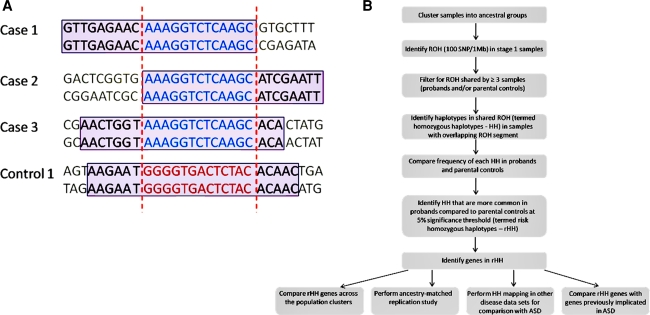
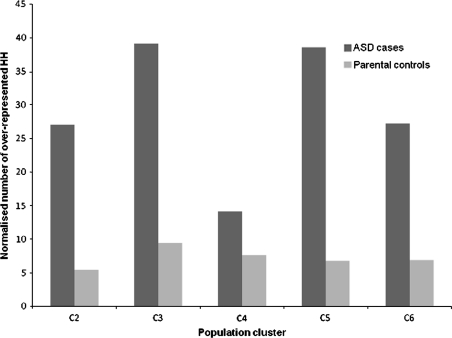
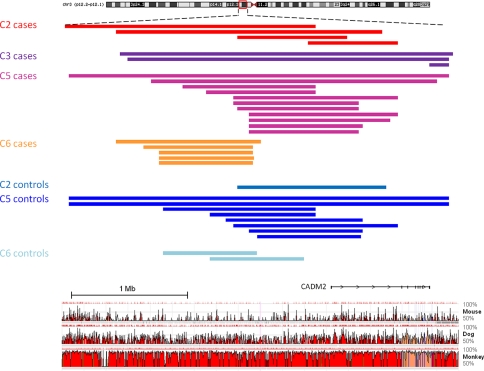
Autism spectrum disorder (ASD) is a highly heritable disorder of complex and heterogeneous aetiology. It is primarily characterized by altered cognitive ability including impaired language and communication skills and fundamental deficits in social reciprocity. Despite some notable successes in neuropsychiatric genetics, overall, the high heritability of ASD (~90%) remains poorly explained by common genetic risk variants. However, recent studies suggest that rare genomic variation, in particular copy number variation, may account for a significant proportion of the genetic basis of ASD. We present a large scale analysis to identify candidate genes which may contain low-frequency recessive variation contributing to ASD while taking into account the potential contribution of population differences to the genetic heterogeneity of ASD. Our strategy, homozygous haplotype (HH) mapping, aims to detect homozygous segments of identical haplotype structure that are shared at a higher frequency amongst ASD patients compared to parental controls. The analysis was performed on 1,402 Autism Genome Project trios genotyped for 1 million single nucleotide polymorphisms (SNPs). We identified 25 known and 1,218 novel ASD candidate genes in the discovery analysis including CADM2, ABHD14A, CHRFAM7A, GRIK2, GRM3, EPHA3, FGF10, KCND2, PDZK1, IMMP2L and FOXP2. Furthermore, 10 of the previously reported ASD genes and 300 of the novel candidates identified in the discovery analysis were replicated in an independent sample of 1,182 trios. Our results demonstrate that regions of HH are significantly enriched for previously reported ASD candidate genes and the observed association is independent of gene size (odds ratio 2.10). Our findings highlight the applicability of HH mapping in complex disorders such as ASD and offer an alternative approach to the analysis of genome-wide association data.
Overview
The claims and statistics of this paper haven’t been checked yet.
Free: it reads the open-access text and checks the first 5 claims that cite a source we can check. Create a free account to check every claim.
Integrity signals
Registry
Cites
Statistics
Figures
Verification
Claims the paper makes
The claims and statistics of this paper haven’t been checked yet.
Free: it reads the open-access text and checks the first 5 claims that cite a source we can check. Create a free account to check every claim.
Claims other papers make about this one
Each is checked against this paper’s own text: does it say what the citing paper says it does?
In the citing paper
“Additional evidence supporting a role of biallelic mutations comes from studies that have implicated homozygous CNVs (Levy et al., 2011; Morrow et al., 2008) and long homozygous intervals as significantly associated with ASDs (Casey et al., 2012).”
From Using Whole-Exome Sequencing to Identify Inherited Causes of Autism (2013) · cites this paper as Casey et al., 2012
Self-check
Percentages, sums and reported differences re-computed from the paper’s own numbers.
The self-check needs the paper’s full text.
Citations
Cites
PLINK: a tool set for whole-genome association and population-based linkage analyses.
Purcell, S., Neale, B., Todd-Brown, K., Thomas, L., Ferreira, M. A. R., Bender, D., Maller, J., Sklar, P., de Bakker, P. I. W., Daly, M. J., et al. (2007) · The American Journal of Human Genetics · doi:10.1086/519795 · Cited by 34,089
Haploview: analysis and visualization of LD and haplotype maps
Barrett, J. C., Fry, B., Maller, J., & Daly, M. J. (2005) · Bioinformatics · doi:10.1093/bioinformatics/bth457 · Cited by 14,525
Principal components analysis corrects for stratification in genome-wide association studies
Price, A. L., Patterson, N. J., Plenge, R. M., Weinblatt, M. E., Shadick, N. A., & Reich, D. (2006) · Nature Genetics · doi:10.1038/ng1847 · Cited by 10,248 · cited 1×
“0) (Price et al. 2006) using 70,175 independent autosomal SNPs with a minor allele frequency[5% and a call rate of 100%.”
MethodThe International HapMap Project
†The International HapMap Consortium, Genotyping centres: Baylor College of Medicine and ParAllele BioScience, Gibbs, R. A., Belmont, J. W., Hardenbol, P., Willis, T. D., Yu, F., Chinese HapMap Consortium, Yang, H., Ch'ang, L.-Y., et al. (2003) · Nature · doi:10.1038/nature02168 · Cited by 6,057
The Structure of Haplotype Blocks in the Human Genome
Gabriel, S. B., Schaffner, S. F., Nguyen, H., Moore, J. M., Roy, J., Blumenstiel, B., Higgins, J., DeFelice, M., Lochner, A., Faggart, M., et al. (2002) · Science · doi:10.1126/science.1069424 · Cited by 5,863
hierfstat, a package for r to compute and test hierarchical F‐statistics
GOUDET, J. (2005) · Molecular Ecology Notes · doi:10.1111/j.1471-8286.2004.00828.x · Cited by 2,713
Functional impact of global rare copy number variation in autism spectrum disorders
Pinto, D., Pagnamenta, A. T., Klei, L., Anney, R., Merico, D., Regan, R., Conroy, J., Magalhaes, T. R., Correia, C., Abrahams, B. S., et al. (2010) · Nature · doi:10.1038/nature09146 · Cited by 2,013
Self-citationNeuroligins and neurexins link synaptic function to cognitive disease
Südhof, T. C. (2008) · Nature · doi:10.1038/nature07456 · Cited by 1,849 · cited 1×
“The encoded protein localises to both excitatory and inhibitory neurons which is intriguing given that there is compelling evidence for dysfunction in neuronal communication and excitatory/inhibitory imbalance in autism (Persico and Bourgeron 2006; Sudhof 2008).”
BackgroundGlutamate as a neurotransmitter in the brain: review of physiology and pathology
Meldrum, B. S. (2000) · The Journal of Nutrition · doi:10.1093/jn/130.4.1007s · Cited by 1,667
Durand, C. M., Betancur, C., Boeckers, T. M., Bockmann, J., Chaste, P., Fauchereau, F., Nygren, G., Rastam, M., Gillberg, I. C., Anckarsäter, H., et al. (2007) · Nature Genetics · doi:10.1038/ng1933 · Cited by 1,602
Self-citation
Cited by
Runs of homozygosity: windows into population history and trait architecture
Ceballos, F. C., Joshi, P. K., Clark, D. W., Ramsay, M., & Wilson, J. F. (2018) · Nature Reviews Genetics · doi:10.1038/nrg.2017.109 · Cited by 1,006
Structure, Function, and Pharmacology of Glutamate Receptor Ion Channels
Hansen, K. B., Wollmuth, L. P., Bowie, D., Furukawa, H., Menniti, F. S., Sobolevsky, A. I., Swanson, G. T., Swanger, S. A., Greger, I. H., Nakagawa, T., et al. (2021) · Pharmacological Reviews · doi:10.1124/pharmrev.120.000131 · Cited by 686
New roles for mitochondrial proteases in health, ageing and disease
Quirós, P. M., Langer, T., & López-Otín, C. (2015) · Nature Reviews Molecular Cell Biology · doi:10.1038/nrm3984 · Cited by 546
The Genetic Landscapes of Autism Spectrum Disorders
Huguet, G., Ey, E., & Bourgeron, T. (2013) · Annual Review of Genomics and Human Genetics · doi:10.1146/annurev-genom-091212-153431 · Cited by 450
Self-citationUsing Whole-Exome Sequencing to Identify Inherited Causes of Autism
Yu, T. W., Chahrour, M. H., Coulter, M. E., Jiralerspong, S., Okamura-Ikeda, K., Ataman, B., Schmitz-Abe, K., Harmin, D. A., Adli, M., Malik, A. N., et al. (2013) · Neuron · doi:10.1016/j.neuron.2012.11.002 · Cited by 442
“, 2008) and long homozygous intervals as significantly associated with ASDs (Casey et al., 2012).”
BackgroundIndividual common variants exert weak effects on the risk for autism spectrum disorders
Anney, R., Klei, L., Pinto, D., Almeida, J., Bacchelli, E., Baird, G., Bolshakova, N., Bölte, S., Bolton, P. F., Bourgeron, T., et al. (2012) · Human Molecular Genetics · doi:10.1093/hmg/dds301 · Cited by 375
“The AGP and others have applied diverse analytic approaches to determine whether there is evidence of enriched association in specific genes and groups of genes (54–57), whether there are regions of extended homozygosity within affected individuals that may implicate regions harbouring putatively recessive alleles (58…”
BackgroundSelf-citationCukier, H. N., Dueker, N. D., Slifer, S. H., Lee, J. M., Whitehead, P. L., Lalanne, E., Leyva, N., Konidari, I., Gentry, R. C., Hulme, W. F., et al. (2014) · Molecular Autism · doi:10.1186/2040-2392-5-1 · Cited by 316
Self-citationNaviaux, J. C., Wang, L., Li, K., Bright, A., Alaynick, W. A., Williams, K. R., Powell, S. B., & Naviaux, R. K. (2015) · Molecular Autism · doi:10.1186/2040-2392-6-1 · Cited by 285
“Genetic [2-4], environmental [5,6], and metabolic [7] factors can contribute to the risk of ASD to different extents in each affected child.”
BackgroundLim, E. T., Raychaudhuri, S., Sanders, S. J., Stevens, C., Sabo, A., MacArthur, D. G., Neale, B. M., Kirby, A., Ruderfer, D. M., Fromer, M., et al. (2013) · Neuron · doi:10.1016/j.neuron.2012.12.029 · Cited by 266
“, 2008), as well as recent studies showing that ASD probands had a significant excess of homozygous haplotype sharing, suggesting that there are recessive loci in these risk-conferring haplotypes (Casey et al., 2012; Chahrour et al., 2012).”
Persico, A. M., & Napolioni, V. (2013) · Behavioural Brain Research · doi:10.1016/j.bbr.2013.06.012 · Cited by 238
Translational animal models of autism and neurodevelopmental disorders
Crawley, J. N. (2012) · Dialogues in Clinical Neuroscience · doi:10.31887/dcns.2012.14.3/jcrawley · Cited by 230
Ionotropic GABA and Glutamate Receptor Mutations and Human Neurologic Diseases
Yuan, H., Low, C.-M., Moody, O. A., Jenkins, A., & Traynelis, S. F. (2015) · Molecular Pharmacology · doi:10.1124/mol.115.097998 · Cited by 205
“Additional SNP association studies on various populations support a role of GRIK2 in autism (Shuang et al., 2004; Dutta et al., 2007; Kim et al., 2007; Holt et al., 2010; Casey et al., 2012; Griswold et al., 2012).”
BackgroundKim, I. H., Racz, B., Wang, H., Burianek, L., Weinberg, R., Yasuda, R., Wetsel, W. C., & Soderling, S. H. (2013) · The Journal of Neuroscience · doi:10.1523/jneurosci.0035-13.2013 · Cited by 172
“Genomic studies of risk factors has led to a developing consensus that these disorders may reflect a signaling network or “pathway” dysfunction (Walsh et al., 2008; International Schizophrenia Consortium et al., 2009; Gilman et al., 2011; Sakai et al., 2011; Voineagu et al., 2011; Casey et al., 2012; Durand et al., 20…”
BackgroundYang, L., Neale, B. M., Liu, L., Lee, S. H., Wray, N. R., Ji, N., Li, H., Qian, Q., Wang, D., Li, J., et al. (2013) · American Journal of Medical Genetics Part B: Neuropsychiatric Genetics · doi:10.1002/ajmg.b.32169 · Cited by 171
Lord, C. C., Thomas, G., & Brown, J. M. (2013) · Biochimica et Biophysica Acta (BBA) - Molecular and Cell Biology of Lipids · doi:10.1016/j.bbalip.2013.01.002 · Cited by 160
Self-citationStringer, S., Minică, C. C., Verweij, K. J. H., Mbarek, H., Bernard, M., Derringer, J., van Eijk, K. R., Isen, J. D., Loukola, A., Maciejewski, D. F., et al. (2016) · Translational Psychiatry · doi:10.1038/tp.2016.36 · Cited by 160
GWAS for executive function and processing speed suggests involvement of the CADM2 gene
Ibrahim-Verbaas, C. A., Bressler, J., Debette, S., Schuur, M., Smith, A. V., Bis, J. C., Davies, G., Trompet, S., Smith, J. A., Wolf, C., et al. (2016) · Molecular Psychiatry · doi:10.1038/mp.2015.37 · Cited by 147
The distinct and overlapping phenotypic spectra of FOXP1 and FOXP2 in cognitive disorders
Bacon, C., & Rappold, G. A. (2012) · Human Genetics · doi:10.1007/s00439-012-1193-z · Cited by 142
Therapeutic Potential of α7 Nicotinic Acetylcholine Receptors
Bertrand, D., Lee, C., Flood, D. G., Marger, F., & Donnelly‐Roberts, D. L. (2015) · Pharmacological Reviews · doi:10.1124/pr.113.008581 · Cited by 154
“With a prevalence of up to 2/1000 individuals, autism is about four timesmore frequent inmen thanwomen and shows up to 90% genetic inheritability (Casey et al., 2012).”
BackgroundNectins and Nectin-Like Molecules in Development and Disease
Mandai, K., Rikitake, Y., Mori, M., & Takai, Y. (2015) · Current topics in developmental biology/Current Topics in Developmental Biology · doi:10.1016/bs.ctdb.2014.11.019 · Cited by 145
“In addition to Necl-2, Necl-3/Cadm2 is also identified as an ASD candidate gene through genomewide analysis (Casey et al., 2012).”
BackgroundNaviaux, J. C., Schuchbauer, M. A., Li, K., Wang, L., Risbrough, V. B., Powell, S. B., & Naviaux, R. K. (2014) · Translational Psychiatry · doi:10.1038/tp.2014.33 · Cited by 134
The human clinical phenotypes of altered CHRNA7 copy number
Gillentine, M. A., & Schaaf, C. P. (2015) · Biochemical Pharmacology · doi:10.1016/j.bcp.2015.06.012 · Cited by 124
Lee, H., Lin, M.-C. A., Kornblum, H. I., Papazian, D. M., & Nelson, S. F. (2014) · Human Molecular Genetics · doi:10.1093/hmg/ddu056 · Cited by 119
“KCND2 is located within a recently identified interval of enriched homozygous haplotype shared within a large ASD cohort (43).”
BackgroundSelf-citationThe genetic basis of Gilles de la Tourette Syndrome
Paschou, P. (2013) · Neuroscience & Biobehavioral Reviews · doi:10.1016/j.neubiorev.2013.01.016 · Cited by 132
Egger, G., Roetzer, K. M., Noor, A., Lionel, A. C., Mahmood, H., Schwarzbraun, T., Boright, O., Mikhailov, A., Marshall, C. R., Windpassinger, C., et al. (2014) · Neurogenetics · doi:10.1007/s10048-014-0394-0 · Cited by 124
Self-citationFOXP transcription factors in vertebrate brain development, function, and disorders
Co, M., Anderson, A. G., & Konopka, G. (2020) · Wiley Interdisciplinary Reviews Developmental Biology · doi:10.1002/wdev.375 · Cited by 120
Demographically-based evaluation of genomic regions under selection in domestic dogs
Freedman, A. H., Schweizer, R. M., Ortega-Del Vecchyo, D., Han, E., Davis, B. W., Gronau, I., Silva, P. M., Galaverni, M., Fan, Z., Marx, P., et al. (2016) · PLoS Genetics · doi:10.1371/journal.pgen.1005851 · Cited by 104
“CADM2 is located within the 4th most extreme outlier region (Fig 3D) and is a synaptic cell adhesion molecule whose flanking regions show reduced homozygosity in autism patients [47].”
BackgroundSelf-citationLal, D., Ruppert, A.-K., Trucks, H., Schulz, H., de Kovel, C. G., Kasteleijn-Nolst Trenité, D., Sonsma, A. C. M., Koeleman, B. P., Lindhout, D., Weber, Y. G., et al. (2015) · PLOS Genetics · doi:10.1371/journal.pgen.1005226 · Cited by 99
FOXP1 mutations cause intellectual disability and a recognizable phenotype
Le Fevre, A. K., Taylor, S., Malek, N. H., Horn, D., Carr, C. W., Abdul‐Rahman, O. A., O'Donnell, S., Burgess, T., Shaw, M., Gecz, J., et al. (2013) · American Journal of Medical Genetics Part A · doi:10.1002/ajmg.a.36174 · Cited by 98
“We report a 6-year-oldboywith adeletion inFOXP1 andreview the literature for deletions or inactivating mutations of FOXP1.”
BackgroundNeural Mechanisms Underlying Repetitive Behaviors in Rodent Models of Autism Spectrum Disorders
Gandhi, T., & Lee, C. C. (2021) · Frontiers in Cellular Neuroscience · doi:10.3389/fncel.2020.592710 · Cited by 88
Szczurkowska, J., Pischedda, F., Pinto, B., Managò, F., Haas, C. A., Summa, M., Bertorelli, R., Papaleo, F., Schäfer, M. K., Piccoli, G., et al. (2018) · Brain · doi:10.1093/brain/awy190 · Cited by 70
Eph-ephrin signaling in nervous system development
Cramer, K. S., & Miko, I. J. (2016) · F1000Research · doi:10.12688/f1000research.7417.1 · Cited by 88
Thorpe, H. (2023) · The Atrium (University of Guelph) · doi:10.1038/s41398-023-02453-y
“We and others have implicated this gene in traits that may underlie disinhibition in humans, supporting the observed genetic correlations between impulsivity and personality [8], educational attainment [9], cognition [10], risk-taking [11], substance use [4, 10, 12–15], externalizing psychopathology [16], neurodevelop…”
BackgroundIntellectual disability is associated with increased runs of homozygosity in simplex autism
Gamsiz, E. D., Viscidi, E. W., Frederick, A. M., Nagpal, S., Sanders, S. J., Murtha, M. T., Schmidt, M., Triche, E. W., Geschwind, D. H., State, M. W., et al. (2013) · The American Journal of Human Genetics · doi:10.1016/j.ajhg.2013.06.004 · Cited by 79
“Interestingly, both CADM2 and FGF10 have been previously implicated as candidate genes by a homozygosity approach in autism.(4) Also of note, one region on chromosome 8 contains TRAPPC9 (MIM 611966), a gene known to be mutated in autosomal-recessive ID.”
BackgroundMacedoni-Lukšič, M., Gosar, D., Bjørklund, G., Oražem, J., Kodrič, J., Musek, P. L., Zupančič, M., Štiglic, A. F., Sešek‐Briški, A., Neubauer, D., et al. (2014) · Biological Trace Element Research · doi:10.1007/s12011-014-0121-6 · Cited by 81
“With new strategies in the field of genetic research (analysis of genetic linkage and association studies), more and more genes are being discovered that are associated with an increased risk of autism, but despite this, in the majority of autism in clinical practice, no genetic disorder is detected that would clarify…”
Recent Advances in the Genetics of Autism Spectrum Disorder
Rubeis, S. D., & Buxbaum, J. D. (2015) · Current Neurology and Neuroscience Reports · doi:10.1007/s11910-015-0553-1 · Cited by 89
Self-citationAKAPs integrate genetic findings for autism spectrum disorders
Poelmans, G., Franke, B., Pauls, D. L., Glennon, J. C., & Buitelaar, J. K. (2013) · Translational Psychiatry · doi:10.1038/tp.2013.48 · Cited by 71
“First, six AKAP genes (AKAP7, AKAP10, AKAP11, MAP2, MSN and NBEA) are implicated to have a role in these disorders through SNP associations that have been detected in the published GWASs(11,16) and/or a recent candidate gene association study.(62) In this respect, rs5918959, a SNP located 66 kb downstream of the moesi…”
BackgroundJanes, P. W., Slape, C. I., Farnsworth, R. H., Atapattu, L., Scott, A. M., & Vail, M. E. (2014) · Growth Factors · doi:10.3109/08977194.2014.982276 · Cited by 84
“Mapping of single nucleotide polymorphisms (SNPs) associated with autism identified EphA3 amongst a large group of novel candidate genes (Casey et al., 2012), and similarly EphA3 was identified in genome-wide association studies for SNPs in brains of human subjects with major depressive disorder…”
BackgroundCross-Talk between Fibroblast Growth Factor Receptors and Other Cell Surface Proteins
Latko, M., Czyrek, A., Porębska, N., Kucińska, M. K., Otlewski, J., Zakrzewska, M., & Opaliński, Ł. (2019) · Cells · doi:10.3390/cells8050455 · Cited by 69
Repetitive behavior profile and supersensitivity to amphetamine in the C58/J mouse model of autism
Moy, S. S., Riddick, N. V., Nikolova, V. D., Teng, B. L., Agster, K. L., Nonneman, R. J., Young, N. B., Baker, L. K., Nadler, J. J., & Bodfish, J. W. (2014) · Behavioural Brain Research · doi:10.1016/j.bbr.2013.10.052 · Cited by 68
“These regions were further tested for overlap with the mouse homologs of 667 ASD candidate genes, taken from a large-scale analysis of haplotype homozygosity between ASD subjects [40], and from a broad review of heritable factors linked to the ASDs [41].”
BackgroundMethodAstrocyte–synapse interactions and cell adhesion molecules
Saint‐Martin, M., & Goda, Y. (2022) · FEBS Journal · doi:10.1111/febs.16540 · Cited by 76
The IgLON Family Member Negr1 Promotes Neuronal Arborization Acting as Soluble Factor via FGFR2
Pischedda, F., & Piccoli, G. (2016) · Frontiers in Molecular Neuroscience · doi:10.3389/fnmol.2015.00089 · Cited by 63
“Although the mechanisms that lead to autism are at best poorly understood, recent findings on neurological functioning point to altered brain connectivity as a key feature in this disorder (Vissers et al., 2012; Coskun et al., 2013; Schaer et al., 2013).”
BackgroundRegulation of FGF10 Signaling in Development and Disease
Watson, J., & Francavilla, C. (2018) · Frontiers in Genetics · doi:10.3389/fgene.2018.00500 · Cited by 69
Wurzman, R., Forcelli, P. A., Griffey, C. J., & Kromer, L. F. (2015) · Behavioural Brain Research · doi:10.1016/j.bbr.2014.09.012 · Cited by 62
“A uthor M anuscript A uthor M anuscript A uthor M anuscript A uthor M anuscript Despite being highly heritable, there is a relative paucity of single nucleotide polymorphisms and/or coding mutations associated with ASDs.”
BackgroundInfluentialGriswold, A. J., Dueker, N., Booven, D. V., Rantus, J. A., Jaworski, J. M., Slifer, S. H., Schmidt, M. A., Hulme, W. F., Konidari, I., Whitehead, P. L., et al. (2015) · Molecular Autism · doi:10.1186/s13229-015-0034-z · Cited by 74
“The glutamate receptor GRIK2 has been associated with ASD and neurodevelopment several studies [11, 66, 77, 78], and we identify a premature stop and two splice change SNVs.”
BackgroundSelf-citationTranscriptional fates of human-specific segmental duplications in brain
Dougherty, M. L., Underwood, J. G., Nelson, B. J., Tseng, E., Munson, K. M., Penn, O., Nowakowski, T. J., Pollen, A. A., & Eichler, E. E. (2018) · Genome Research · doi:10.1101/gr.237610.118 · Cited by 62
“CHRFAM7A is a human-specific fusion gene that has been associated with neuropsychiatric disease (Flomen et al. 2006; Casey et al. 2012; Rozycka et al. 2013) and is thought to interact in a dom-”
BackgroundGenetic Control of Collective Behavior in Zebrafish
Tang, W., Davidson, J. D., Zhang, G., Conen, K. E., Fang, J., Serluca, F. C., Li, J., Xiong, X., Coble, M., Tsai, T., et al. (2020) · iScience · doi:10.1016/j.isci.2020.100942 · Cited by 62
Toma, C., Hervas, A., Torrico, B., Balmaña, N., Salgado, M., Maristany, M., Vilella, E., Martínez‐Leal, R., Planelles, M. I., Cuscó, I., et al. (2012) · Psychiatric Genetics · doi:10.1097/ypg.0b013e32835d6fc6 · Cited by 65
“Despite this, recent findings highlight instead that low-frequency variants of FOXP2 may be involved in a few cases of autism spectrum disorders (Schaaf et al., 2011; Casey et al., 2012).”
ResultBacchelli, E., Ceroni, F., Pinto, D., Lomartire, S., Giannandrea, M., D'Adamo, P., Bonora, E., Parchi, P., Tancredi, R., Battaglia, A., et al. (2014) · Journal of Neurodevelopmental Disorders · doi:10.1186/1866-1955-6-17 · Cited by 55
“tegy for filtering whole-exome sequence data [11] and the identification that ASD probands display a much higher degree of haplotype sharing within overlapping homozygous regions compared to parental controls [12].”
BackgroundSelf-citationBartnik, M., Szczepanik, E., Derwińska, K., Wiśniowiecka‐Kowalnik, B., Gambin, T., Sykulski, M., Ziemkiewicz, K., Kędzior, M., Gos, M., Hoffman‐Zacharska, D., et al. (2012) · American Journal of Medical Genetics Part B: Neuropsychiatric Genetics · doi:10.1002/ajmg.b.32081 · Cited by 58
“…inner mitochondrial membrane peptidase-like subunit 2; OMIM 605977) deleted in patient 15 with West syndrome has been suggested as a candidate gene for autistic spectrum disorders (ASDs) and Tourette syndrome [Petek et al., 2001; Maestrini et al., 2010; Casey et al., 2012; Patel et al., 2011].”
BackgroundAgha, E. E., & Bellusci, S. (2014) · Scientifica · doi:10.1155/2014/538379 · Cited by 65
“ASD patients suffer from social and communicative difficulties.”
BackgroundCostantini, T. W., Dang, X., Coimbra, R. S. M., Eliceiri, B. P., & Baird, A. (2014) · Journal of Leukocyte Biology · doi:10.1189/jlb.4ru0814-381r · Cited by 60
“Its chromosomal location (chromosome 15 q13,14) is within 1 MB of a significant genotypic disequilibrium in schizophrenia [53–58] and associated with bipolar disorders [59–61], episodic memory performance [62], dementia [63–66], hyperactivity [67], autism [68], Tourette syndrome [69], juvenile myoclonic epilepsy [70],…”
Backgroundda Silva, J. M., Giachetto, P. F., da Silva, L. O., Cintra, L. C., Paiva, S. R., Yamagishi, M. E. B., & Caetano, A. R. (2016) · BMC Genomics · doi:10.1186/s12864-016-2752-9 · Cited by 61
“Approximately half of observed human CNVs span regions containing protein-coding genes [1] known to be involved in essential cellular functions, general metabolism and the onset of different diseases [3–9], and which may influence disease susceptibility [10–12].”
BackgroundMutant Mouse Models of Autism Spectrum Disorders
Provenzano, G., Zunino, G., Genovesi, S., Sgadó, P., & Bozzi, Y. (2012) · Disease Markers · doi:10.1155/2012/916082 · Cited by 60
Stolz, J. R., Foote, K. M., Veenstra‐Knol, H. E., Pfundt, R., ten Broeke, S. W., de Leeuw, N., Roht, L., Pajusalu, S., Part, R., Rebane, I., et al. (2021) · The American Journal of Human Genetics · doi:10.1016/j.ajhg.2021.07.007 · Cited by 56
SynCAMs – From axon guidance to neurodevelopmental disorders
Frei, J. A., & Stoeckli, E. T. (2016) · Molecular and Cellular Neuroscience · doi:10.1016/j.mcn.2016.08.012 · Cited by 54
“In line with its collaboration with SynCAM1 at the synapse, also SynCAM2 was identified as a candidate gene for autism spectrum disorders (Casey et al., 2012).”
BackgroundChen, X., Feng, L., Cai, B., Chen, X., & Chen, G. (2017) · The Journal of Comparative Neurology · doi:10.1002/cne.24311 · Cited by 53
Chen, J., Lin, M., Foxe, J. J., Pedrosa, E., Hrabovsky, A., Carroll, R., Zheng, D., & Lachman, H. M. (2013) · PLoS ONE · doi:10.1371/journal.pone.0075682 · Cited by 46
“In addition to their utility for disease modeling in terms of identifying patient vs control differences in gene expression, morphology, synaptic architecture, and neuronal function, iPSCs can also be used to study human neurogenesis in vitro, which is particularly relevant to SZ and ASD considering that both have a n…”
BackgroundInfluentialHoang, N., Cytrynbaum, C. S., & Scherer, S. W. (2017) · Patient Education and Counseling · doi:10.1016/j.pec.2017.07.029 · Cited by 51
Self-citationDiscovery of Rare Mutations in Autism: Elucidating Neurodevelopmental Mechanisms
Uzun, E. D. G., Sciarra, L. N., Maguire, A. M., Pescosolido, M. F., van Dyck, L. I., & Morrow, E. M. (2015) · Neurotherapeutics · doi:10.1007/s13311-015-0363-9 · Cited by 50
“Recessive loci in ASD have also been studied, reflecting the role of inherited variation [6–10].”
BackgroundTargeted treatments in autism and fragile X syndrome
Gürkan, C. K., & Hagerman, R. J. (2012) · Research in Autism Spectrum Disorders · doi:10.1016/j.rasd.2012.05.007 · Cited by 44
“Using this strategy authors are able to identify many new ASD candidate genes and replicate some older ones (Casey et al., 2012), and they suggested this approach as a promising development to evaluate genome wide association data.”
BackgroundGhani, M., Sato, C., Lee, J. H., Reitz, C., Moreno, D., Mayeux, R., St George-Hyslop, P., & Rogaeva, E. (2013) · JAMA Neurology · doi:10.1001/jamaneurol.2013.3545 · Cited by 41
Micheau, J., Vimeney, A., Normand, E., Mulle, C., & Riedel, G. (2014) · Hippocampus · doi:10.1002/hipo.22290 · Cited by 43
Brennaman, L. H., Zhang, X., Guan, H., Triplett, J. W., Brown, A., Demyanenko, G. P., Manis, P. B., Landmesser, L., & Maness, P. F. (2013) · Cerebral Cortex · doi:10.1093/cercor/bhr392 · Cited by 39
“Keywords: interneuron, perisomatic innervation, prefrontal cortex, synaptic development”
Xu, J. C., Gu, W., Ji, K., Xu, Z. L., Zhu, H., & Zheng, W. (2018) · Open Biology · doi:10.1098/rsob.180017 · Cited by 47
Expanding the phenotype of reciprocal 1q21.1 deletions and duplications: a case series
Busè, M., Cuttaia, H. C., Palazzo, D., Mazara, M., Lauricella, S., Malacarne, M., Pierluigi, M., Cavani, S., & Piccione, M. (2017) · The Italian Journal of Pediatrics/Italian journal of pediatrics · doi:10.1186/s13052-017-0380-x · Cited by 42
“Over-expression of this gene has been described in association with an increased risk of ASD and psychiatric diseases [15, 16].”
BackgroundTuncay, İ. O., Parmalee, N. L., Khalil, R., Kaur, K. J., Kumar, A., Jimale, M., Howe, J., Goodspeed, K., Evans, P., Alzghoul, L., et al. (2022) · npj Genomic Medicine · doi:10.1038/s41525-022-00284-2 · Cited by 50
Self-citationMaldifassi, M. C., Martín-Sánchez, C., Atienza, G., Cedillo, J. L., Arnalich, F., Bordas, A., Zafra, F., Giménez, C., Rueda-Extremera, M., Renart, J., et al. (2018) · Journal of Biological Chemistry · doi:10.1074/jbc.ra118.003443 · Cited by 40
Stick around: Cell–Cell Adhesion Molecules during Neocortical Development
de Agustín-Durán, D., Mateos-White, I., Fabra-Beser, J., & Gil-Sanz, C. (2021) · Cells · doi:10.3390/cells10010118 · Cited by 43
Costantini, T. W., Dang, X., Yurchyshyna, M. V., Coimbra, R. S. M., Eliceiri, B. P., & Baird, A. (2015) · Molecular Medicine · doi:10.2119/molmed.2015.00018 · Cited by 45
Autism Spectrum Disorder: Genetic Mechanisms and Inheritance Patterns
Monica, I. L., Iorio, M. R. D., Sica, A., Rufino, F., Sotira, C., Pastore, L., & Lombardo, B. (2025) · Genes · doi:10.3390/genes16050478 · Cited by 43
“The high heritability of ASD and the fact that most parents of individuals with ASD appear unaffected are consistent with the proposed role of recessive mutations in the disorder [27,118].”
Goodbourn, P. T., Bosten, J. M., Bargary, G., Hogg, R. E., Lawrance-Owen, A. J., & Mollon, J. D. (2013) · Genes Brain & Behavior · doi:10.1111/gbb.12096 · Cited by 38
“Furthermore, using a novel homozygous haplotype mapping approach, Casey et al. (2012) identified ASD-specific risk haplotypes at 1q21.”
Mitochondrial Quality Control Proteases in Neuronal Welfare
Levytskyy, R. M., Germany, E. M., & Khalimonchuk, O. (2016) · Journal of Neuroimmune Pharmacology · doi:10.1007/s11481-016-9683-8 · Cited by 39
“In addition, several polymorphisms in IMMP2L are associated with the incidences of autism spectrum disorder (Casey et al. 2012).”
D, A. O. M., Blakeley‐Smith, A., Johnson, L. L., Kem, W. R., & Freedman, R. (2016) · Journal of Autism and Developmental Disorders · doi:10.1007/s10803-016-2890-6 · Cited by 37
“…haplotype sharing at the same locus in autism spectrum disorder, consistent with the recessive model used in the Allen-Brady et al. analysis (Casey et al. 2012), as well as the finding of the significant prevalence of chromosome 15q copy number variants that encompass CHRNA7 in autism…”
The genetic architecture of language functional connectivity
Mekki, Y., Guillemot, V., Lemaître, H., Carrión-Castillo, A., Forkel, S. J., Frouin, V., & Philippe, C. (2021) · NeuroImage · doi:10.1016/j.neuroimage.2021.118795 · Cited by 37
The CADM2 Gene and Behavior: A Phenome-Wide Scan in UK-Biobank
Pasman, J. A., Chen, Z., Smit, D. J. A., Vink, J. M., van den Oever, M. C., Pattij, T., Vries, T. J. D., Abdellaoui, A., & Verweij, K. J. H. (2022) · Behavior Genetics · doi:10.1007/s10519-022-10109-8 · Cited by 35
“2016), autism spectrum disorders (Casey et al. 2012), physical activity (Klimentidis et al.”
BackgroundDang, X., Eliceiri, B. P., Baird, A., & Costantini, T. W. (2015) · The FASEB Journal · doi:10.1096/fj.14-268037 · Cited by 34
Glutamatergic candidate genes in autism spectrum disorder: an overview
Chiocchetti, A. G., Bour, H. S., & Freitag, C. M. (2014) · Journal of Neural Transmission · doi:10.1007/s00702-014-1161-y · Cited by 34
Self-citationNuclear receptor corepressors in intellectual disability and autism
Kong, Y., Zhou, W., & Sun, Z. (2020) · Molecular Psychiatry · doi:10.1038/s41380-020-0667-y · Cited by 31
Koevoet, D., Deschamps, P. K. H., & Kenemans, J. L. (2023) · Frontiers in Neuroscience · doi:10.3389/fnins.2022.1078586 · Cited by 33
“Specifically, CHRNA7 [coding the α7-nAChR (Jensen et al., 2005)] has been associated with ASD, as has been CHRFAM7A (Bacchelli et al., 2015) – an exclusively human and highly polymorphic hybrid gene consisting of a duplicated portion of CHRNA7 fused to exons A-E of FAM7A (Gault et al., 1998; Wall et al., 2009; Pinto e…”
BackgroundDecoding the non‐coding genome: elucidating genetic risk outside the coding genome
Barr, C. L., & Misener, V. L. (2016) · Genes Brain & Behavior · doi:10.1111/gbb.12269 · Cited by 30
“…Association Study (GWAS) Consortium 2011; Schizophrenia Working Group of the Psychiatric Genomics Consortium 2014), autism (Anney et al. 2012; Casey et al. 2012), major depression (Major Depressive Disorder Working Group of the Psychiatric GWAS Consortium1 2013; The Psychiatric GWAS…”
BackgroundViñas‐Jornet, M., Esteba‐Castillo, S., Baena, N., Ribas‐Vidal, N., Ruiz, A., Torrents‐Rodas, D., Gabau, E., Vilella, E., Martorell, L., Armengol, L., et al. (2018) · Behavior Genetics · doi:10.1007/s10519-018-9902-6 · Cited by 28
Immunoglobulin-Like Receptors and Their Impact on Wiring of Brain Synapses
Cameron, S., & McAllister, A. K. (2018) · Annual Review of Genetics · doi:10.1146/annurev-genet-120417-031513 · Cited by 28
Lin, P., Kuo, P., Chen, C., Wu, J., Gau, S. S., Wu, Y., & Liu, S.-K. (2013) · PLoS ONE · doi:10.1371/journal.pone.0072056 · Cited by 27
“A recent study also identified several novel candidate genes characterized by ROHs associated with the risk of autism [15].”
BackgroundAssociation of IMMP2L deletions with autism spectrum disorder: A trio family study and meta‐analysis
Zhang, Y., Liu, Y., Zarrei, M., Tong, W. W. L., Dong, R., Wang, Y., Zhang, H., Yang, X., MacDonald, J. R., Uddin, M. J., et al. (2017) · American Journal of Medical Genetics Part B Neuropsychiatric Genetics · doi:10.1002/ajmg.b.32608 · Cited by 27
“A number of loci and genes have been exhibited to be associated with ASD, ranging from chromosome abnormalities and copy-number variations (CNVs) to single-nucleotide variations (SNVs) (Casey et al., 2012; Liu et al., 2015; Pinto et al., 2014; Uddin et al., 2014; Yuen et al., 2015).”
BackgroundSelf-citationPeter, B., Dinu, V., Liu, L., Huentelman, M. J., Naymik, M., Lancaster, H. S., Vose, C., & Schrauwen, I. (2019) · Behavior Genetics · doi:10.1007/s10519-019-09957-8 · Cited by 28
Synaptic recognition molecules in development and disease
Chowdhury, D., Watters, K. E., & Biederer, T. (2021) · Current topics in developmental biology/Current Topics in Developmental Biology · doi:10.1016/bs.ctdb.2020.12.009 · Cited by 29
Sullivan, C. S., Kümper, M., Temple, B., & Maness, P. F. (2016) · Journal of Biological Chemistry · doi:10.1074/jbc.m116.760017 · Cited by 26
The Expanding Genomic Landscape of Autism: Discovering the ‘Forest‘ Beyond the ‘Trees‘
Hu, V. W. (2012) · Future Neurology · doi:10.2217/fnl.12.83 · Cited by 28
“Although there was no follow-up study on this region, it is interesting that this lncRNA is on the opposite strand just upstream of the gene KCND2, which has recently been identified as a candidate gene for ASDs [108].”
BackgroundA fast and accurate algorithm for single individual haplotyping
Xie, M., Wang, J., & Jiang, T. (2012) · BMC Systems Biology · doi:10.1186/1752-0509-6-s2-s8 · Cited by 25
“Identification of the combination of alleles at the SNP loci on the same chromosome copy, i.e ., haplotyping, is needed to fully understand the human genetic variation patterns and enhance the power of genome-wide association studies for complex diseases [2,3].”
BackgroundTiwari, D., Schaefer, T. L., Schroeder, L. M., Krzeski, J. C., Bunk, A. T., Parkins, E. V., Snider, A., Danzer, R., Williams, M. T., Vorhees, C. V., et al. (2020) · Experimental Neurology · doi:10.1016/j.expneurol.2020.113437 · Cited by 25
Diagnostic yield of array comparative genomic hybridization in adults with autism spectrum disorders
Stobbe, G. A., Liu, Y., Wu, R. L., Hudgings, L. H., Thompson, O. A., & Hisama, F. M. (2013) · Genetics in Medicine · doi:10.1038/gim.2013.78 · Cited by 25
Chen, L., Fu, Q., Du, Y., Jiang, Z., & Cheng, Y. (2023) · Molecular Neurobiology · doi:10.1007/s12035-023-03560-z · Cited by 24
“As the Grm3 were already identified as ASD candidate genes [26].”
Kreilaus, F., Chesworth, R., Eapen, V., Clarke, R. A., & Karl, T. (2019) · Behavioural Brain Research · doi:10.1016/j.bbr.2019.112057 · Cited by 25
FOXP2 Expression in Frontotemporal Lobar Degeneration-Tau
López‐González, I., Palmeira, A. L. R., Aso, E., Carmona, M., Fernandez, L. L., & Ferrer, I. (2016) · Journal of Alzheimer s Disease · doi:10.3233/jad-160274 · Cited by 25
Methods for Collapsing Multiple Rare Variants in Whole‐Genome Sequence Data
Sung, Y. J., Korthauer, K. D., Swartz, M. D., & Engelman, C. D. (2014) · Genetic Epidemiology · doi:10.1002/gepi.21820 · Cited by 25
“Moreover, runs of homozygosity were found in European populations [McQuillan et al., 2008] and were used to identify genes for schizophrenia [Lencz et al., 2007] and autism spectrum disorder [Casey et al., 2012].”
BackgroundMethodInfluentialThe Evolutionary Biology of Human Neurodevelopment
Crespi, B. J., & Leach, E. (2015) · Wiley eBooks · doi:10.1002/9781118524756.ch9 · Cited by 22
Boks, M. P., He, Y., Schubart, C. D., van Gastel, W. A., Elkrief, L., Huguet, G., van Eijk, K. R., Vinkers, C. H., Kahn, R. S., Paus, T., et al. (2020) · Brain Behavior and Immunity · doi:10.1016/j.bbi.2020.04.051 · Cited by 22
Uruga, H., Morokawa, N., Enomoto, T., Takaya, H., Miyamoto, A., Kishi, K., Kurosaki, A., Fujii, T., & Yoshimura, K. (2008) · PubMed · Cited by 22
Jia, X., Yang, Y., Chen, Y., Cheng, Z., Du, Y., Xia, Z., Zhang, W., Xu, C., Zhang, Q., Xia, X., et al. (2018) · Journal of Affective Disorders · doi:10.1016/j.jad.2018.07.046 · Cited by 20
Metadata
- Authors
- Casey, J. P., Magalhaes, T., Conroy, J. M., Regan, R., Shah, N., Anney, R., Shields, D. C., Abrahams, B. S., Almeida, J., Bacchelli, E., Bailey, A. J., Baird, G., Battaglia, A., Berney, T., Bolshakova, N., Bolton, P. F., Bourgeron, T., Brennan, S., Cali, P., Correia, C., Corsello, C., Coutanche, M., Dawson, G., de Jonge, M., Delorme, R., Duketis, E., Duque, F., Estes, A., Farrar, P., Fernandez, B. A., Folstein, S. E., Foley, S., Fombonne, E., Freitag, C. M., Gilbert, J., Gillberg, C., Glessner, J. T., Green, J., Guter, S. J., Hakonarson, H., Holt, R., Hughes, G., Hus, V., Igliozzi, R., Kim, C., Klauck, S. M., Kolevzon, A., Lamb, J. A., Leboyer, M., Le Couteur, A., Leventhal, B. L., Lord, C., Lund, S. C., Maestrini, E., Mantoulan, C., Marshall, C. R., McConachie, H., McDougle, C. J., McGrath, J., McMahon, W. M., Merikangas, A., Miller, J., Minopoli, F., Mirza, G. K., Munson, J., Nelson, S. F., Nygren, G., Oliveira, G., Pagnamenta, A. T., Papanikolaou, K., Parr, J. R., Parrini, B., Pickles, A., Pinto, D., Piven, J., Posey, D. J., Poustka, A., Poustka, F., Ragoussis, J., Roge, B., Rutter, M. L., Sequeira, A. F., Soorya, L., Sousa, I., Sykes, N., Stoppioni, V., Tancredi, R., Tauber, M., Thompson, A. P., Thomson, S., Tsiantis, J., Van Engeland, H., Vincent, J. B., Volkmar, F., Vorstman, J. A. S., Wallace, S., Wang, K., Wassink, T. H., White, K., Wing, K., Wittemeyer, K., Yaspan, B. L., Zwaigenbaum, L., Betancur, C., Buxbaum, J. D., Cantor, R. M., Cook, E. H., Coon, H., Cuccaro, M. L., Geschwind, D. H., Haines, J. L., Hallmayer, J., Monaco, A. P., Nurnberger, J. I., Pericak-Vance, M. A., Schellenberg, G. D., Scherer, S. W., Sutcliffe, J. S., Szatmari, P., Vieland, V. J., Wijsman, E. M., Green, A., Gill, M., Gallagher, L., Vicente, A., & Ennis, S.
- Affiliations
- University College Dublin (IE)
- Trinity College Dublin (IE)
- University of California, Los Angeles (US)
- Unidade Local de Saúde de Coimbra (PT)
- University of Bologna (IT)
- University of British Columbia (CA)
- Guy's Hospital (GB)
- Newcastle University (GB)
- Centre National de la Recherche Scientifique (FR)
- University of Illinois Chicago (US)
- University of Lisbon (PT)
- University of Michigan (US)
- Warneford Hospital (GB)
- Inserm (FR)
- Goethe University Frankfurt (DE)
- University of Washington (US)
- Centre for Human Genetics (GB)
- Memorial University of Newfoundland (CA)
- University of Miami (US)
- McGill University (CA)
- University of Gothenburg (SE)
- Children's Hospital of Philadelphia (US)
- University of Manchester (GB)
- German Cancer Research Center (DE)
- Icahn School of Medicine at Mount Sinai (US)
- Nathan Kline Institute for Psychiatric Research (US)
- Vanderbilt University (US)
- Université Toulouse - Jean Jaurès (FR)
- Hospital for Sick Children (CA)
- Indiana University School of Medicine (US)
- University of Utah (US)
- University of North Carolina at Chapel Hill (US)
- McMaster University (CA)
- National and Kapodistrian University of Athens (GR)
- Centre for Addiction and Mental Health (CA)
- Yale University (US)
- University Medical Center Utrecht (NL)
- University of Iowa (US)
- University of Birmingham (GB)
- University of Alberta (CA)
- Stanford Medicine (US)
- University of Pennsylvania (US)
- University of Toronto (CA)
- Battelle (US)
- Corresponding author
- Ennis, Sean
- ORCID
- Casey, Jillian P.
- Shah, Naisha
- Anney, Richard
- Almeida, Joana
- Bacchelli, Elena
- Baird, Gillian
- Battaglia, Agatino
- Bolshakova, Nadia
- Bolton, Patrick F.
- Bourgeron, Thomas
- Correia, Catarina
- Corsello, Christina
- Coutanche, Marc
- Delorme, Richard
- Duque, Frederico
- Estes, Annette
- Fernandez, Bridget A.
- Fombonne, Eric
- Freitag, Christine M.
- Gilbert, John
- Gillberg, Christopher
- Glessner, Joseph T.
- Green, Jonathan
- Guter, Stephen J.
- Hakonarson, Hakon
- Igliozzi, Roberta
- Kolevzon, Alexander
- Lamb, Janine A.
- Leboyer, Marion
- Leventhal, Bennett L.
- Lord, Catherine
- Lund, Sabata C.
- Maestrini, Elena
- Marshall, Christian R.
- McDougle, Christopher J.
- McGrath, Jane
- Merikangas, Alison
- Nelson, Stanley F.
- Nygren, Gudrun
- Oliveira, Guiomar
- Pagnamenta, Alistair T.
- Parr, Jeremy R.
- Pickles, Andrew
- Pinto, Dalila
- Piven, Joseph
- Ragoussis, Jiannis
- Rutter, Michael L.
- Sequeira, Ana F.
- Soorya, Latha
- Sousa, Inês
- Tancredi, Raffaella
- Vincent, John B.
- Volkmar, Fred
- Vorstman, Jacob A. S.
- Wallace, Simon
- Wassink, Thomas H.
- Yaspan, Brian L.
- Zwaigenbaum, Lonnie
- Betancur, Catalina
- Buxbaum, Joseph D.
- Cantor, Rita M.
- Cook, Edwin H.
- Coon, Hilary
- Cuccaro, Michael L.
- Geschwind, Daniel H.
- Haines, Jonathan L.
- Hallmayer, Joachim
- Monaco, Anthony P.
- Schellenberg, Gerard D.
- Scherer, Stephen W.
- Sutcliffe, James S.
- Vieland, Veronica J.
- Wijsman, Ellen M.
- Green, Andrew
- Gill, Michael
- Gallagher, Louise
- Vicente, Astrid
- Ennis, Sean
- Venue
- Human Genetics
- Published
- 2011-10-14
- Volume
- 131
- Issue
- 4
- Pages
- 565-579
- ISSN
- 0018-7348 (ISSN-L)
- 0340-6717
- 1432-1203
- PMC
- PMC3303079
- OpenAlex
- W2067513312
- Semantic Scholar
- 631d4af7057423cf06eab87f0e4f7a05b2946971
- Cited by
- 200
- References
- 55
- Citations by year
- 2026: 11 · 2025: 6 · 2024: 2 · 2023: 11 · 2022: 8 · 2021: 13 · 2020: 10 · 2019: 9 · 2018: 14 · 2017: 14 · 2016: 19 · 2015: 19 · 2014: 20 · 2013: 25 · 2012: 18
- FWCI
- 10.24
- Type
- journal article
- Language
- en
- Open access
- hybrid
- doi.org
- Licence
- cc-by-nc
- creativecommons.org/licenses/by-nc/2.0 (tdm)
- Locations
- Human Genetics (publishedVersion, cc-by-nc)
- PubMed Central (publishedVersion, cc-by-nc)
- PubMed (publishedVersion)
- Research Explorer (The University of Manchester) (publishedVersion)
- IUScholarWorks (Indiana University) (submittedVersion, cc-by-nc)
- HAL (submittedVersion, cc-by)
- Research Repository UCD (University College Dublin) (submittedVersion, cc-by-nc-nd)
- Rutgers University Community Repository (Rutgers University) (submittedVersion)
- Archivio istituzionale della ricerca (Alma Mater Studiorum Università di Bologna) (submittedVersion)
- eScholarship (California Digital Library) (submittedVersion, cc-by-nc)
- ORCA Online Research @Cardiff (Cardiff University) (submittedVersion)
- Research Portal (King's College London) (submittedVersion)
- Publication Server of Goethe University Frankfurt am Main (Goethe University Frankfurt) (submittedVersion, cc-by-nc)
- Research Explorer (The University of Manchester) (submittedVersion)
- Funders
- Autism Speaks (AS2482)
- Canadian Institute for Advanced Research
- Ontario Innovation Trust
- Genome Canada
- Wellcome Trust (075491, 075491/Z/04,, 090532)
- Health Research Board
- Ontario Genomics
- National Children's Research Centre
- Hussman Foundation
- Fondation FondaMental
- Fondation Orange
- Ontario Genomics Institute
- Sick Kids Foundation
- National Institute for Health and Care Research (NF-SI-0510-10268)
- Irish Research Council for Science, Engineering and Technology
- Deutsche Forschungsgemeinschaft
- Institut National de la Santé et de la Recherche Médicale
- Irish Research Council
- Ministero della Salute
- University of Toronto
- Fondation de France
- Hospital for Sick Children
- National Institutes of Health (075491/Z/04, HD055751)
- Canadian Institutes of Health Research
- Medical Research Council
- Ontario Ministry of Research and Innovation
- National Institute of Mental Health (MH-066673, MH 57881, R01MH061009, MH66766, U24MH081810, R01MH052708, U54MH066673, MH06359, R01MH080647, R37MH057881, U10MH066766, MH 55284, MH081754, R01MH057881, R01MH081754, MH52708, MH080647, MH061009, R01MH055284, HD055784, T32MH065215)
- National Institute of Neurological Disorders and Stroke (NS026630, NS049261, P01NS026630, R01NS049261, R01NS042165, NS-042165)
- Eunice Kennedy Shriver National Institute of Child Health and Human Development (P50HD055751, P50HD055782, HD055784, HD055751, P01HD035465, P50HD055784, HD055782, HD35465)
- Topics
- Life Sciences › Neuroscience › Cognitive Neuroscience › Autism Spectrum Disorder Research
- Life Sciences › Biochemistry, Genetics and Molecular Biology › Genetics › Genetics and Neurodevelopmental Disorders
- Life Sciences › Biochemistry, Genetics and Molecular Biology › Genetics › Genetic Associations and Epidemiology
- Keywords
- autism spectrum disorder, candidate genes, copy number variation, genetic heterogeneity, trios, single nucleotide polymorphisms, FOXP2, KCND2, CHRFAM7A, GRIK2, GRM3, EphA3, FGF10, PDZK1, IMMP2L, CADM2
- MeSH terms
- Adult, Child, Child Development Disorders, Pervasive, Female, Genotype, Haplotypes, Homozygote, Humans, Male, Middle Aged, Nuclear Family, Cohort Studies, Linkage Disequilibrium, Cluster Analysis, Genetic Predisposition to Disease, Polymorphism, Single Nucleotide, Genome-Wide Association Study, DNA Copy Number Variations
About these checks
Registry, retraction, Cites and statistics results are computed, not judged, with one exception: a printed reference that no index lists is read once by a model before it counts as a citation error. Claims are extracted by a model and kept only when their quote appears verbatim in the text; each cited source is then checked, with a model’s help, for whether it says what the claim relies on. Those verdicts can be wrong — read the claim’s quote and the cited source before relying on one.
Statistics and arithmetic are recomputed, not judged.
Confidence bands are shown only for fields calibrated on our annotated test set. None is calibrated yet, so no band is shown.
What counts as a claim ›How we measure confidence ›How we check this ›
Are you an author, or do you see a problem with this page? Request a review
Data sources
Bibliographic data: Semantic Scholar, OpenAlex, Crossref.
Contains information from the Semantic Scholar Academic Graph Datasets, made available under the ODC Attribution License (ODC-BY 1.0).
Semantic Scholar’s data is described in: Kinney, R., et al. (2023). The Semantic Scholar Open Data Platform. arXiv:2301.10140.
