

UTCI—Why another thermal index?
Open accessThe DOI matches its Crossref record; 50 of the 50 references it cites were found in a registry or an index.
Abstract
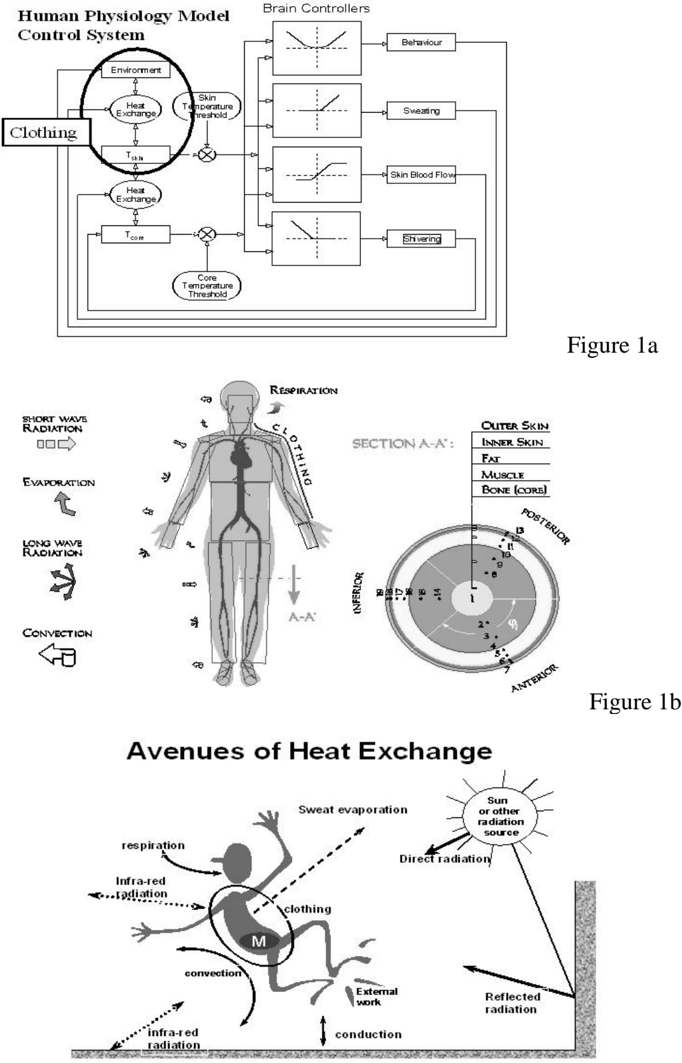
Existing procedures for the assessment of the thermal environment in the fields of public weather services, public health systems, precautionary planning, urban design, tourism and recreation and climate impact research exhibit significant shortcomings. This is most evident for simple (mostly two-parameter) indices, when comparing them to complete heat budget models developed since the 1960s. ISB Commission 6 took up the idea of developing a Universal Thermal Climate Index (UTCI) based on the most advanced multi-node model of thermoregulation representing progress in science within the last three to four decades, both in thermo-physiological and heat exchange theory. Creating the essential research synergies for the development of UTCI required pooling the resources of multidisciplinary experts in the fields of thermal physiology, mathematical modelling, occupational medicine, meteorological data handling (in particular radiation modelling) and application development in a network. It was possible to extend the expertise of ISB Commission 6 substantially by COST (a European programme promoting Cooperation in Science and Technology) Action 730 so that finally over 45 scientists from 23 countries (Australia, Canada, Israel, several Europe countries, New Zealand, and the United States) worked together. The work was performed under the umbrella of the WMO Commission on Climatology (CCl). After extensive evaluations, Fiala's multi-node human physiology and thermal comfort model (FPC) was adopted for this study. The model was validated extensively, applying as yet unused data from other research groups, and extended for the purposes of the project. This model was coupled with a state-of-the-art clothing model taking into consideration behavioural adaptation of clothing insulation by the general urban population in response to actual environmental temperature. UTCI was then derived conceptually as an equivalent temperature (ET). Thus, for any combination of air temperature, wind, radiation, and humidity (stress), UTCI is defined as the isothermal air temperature of the reference condition that would elicit the same dynamic response (strain) of the physiological model. As UTCI is based on contemporary science its use will standardise applications in the major fields of human biometeorology, thus making research results comparable and physiologically relevant.
Overview
The claims and statistics of this paper haven’t been checked yet.
Free: it reads the open-access text and checks the first 5 claims that cite a source we can check. Create a free account to check every claim.
Integrity signals
Registry
Cites
Statistics
Figures

Verification
Claims the paper makes
The claims and statistics of this paper haven’t been checked yet.
Free: it reads the open-access text and checks the first 5 claims that cite a source we can check. Create a free account to check every claim.
Claims other papers make about this one
Each is checked against this paper’s own text: does it say what the citing paper says it does?
The source backs part of the claim, not all of it — or backs it for a different population, condition or comparison.
In the citing paper
“A recently proposed Universal Thermal Climate Index (UTCI) (2009), based on an advanced human thermoregulation model, directly uses meteorological data to predict the impact of outdoor climate on thermal physiological and perceptual responses (Jendritzky et al. 2012; Bröde et al. 2012a, b; Fiala et al. 2012; Havenith et al. 2012; Kampmann et al. 2012; Parsons 2013; Havenith and Fiala 2016).”
From Occupational heat stress assessment and protective strategies in the context of climate change (2018) · cites this paper as Jendritzky et al. 2012
Experimental — accuracy not yet measured
Self-check
Percentages, sums and reported differences re-computed from the paper’s own numbers.
The self-check needs the paper’s full text.
Citations
Cites
Höppe, P. (1999) · International Journal of Biometeorology · doi:10.1007/s004840050118 · Cited by 2,429
Modelling radiation fluxes in simple and complex environments: basics of the RayMan model
Matzarakis, A., Rutz, F., & Mayer, H. (2010) · International Journal of Biometeorology · doi:10.1007/s00484-009-0261-0 · Cited by 1,633
Modelling radiation fluxes in simple and complex environments—application of the RayMan model
Matzarakis, A., Rutz, F., & Mayer, H. (2007) · International Journal of Biometeorology · doi:10.1007/s00484-006-0061-8 · Cited by 1,365
Deriving the operational procedure for the Universal Thermal Climate Index (UTCI)
Bröde, P., Fiala, D., Błażejczyk, K., Holmér, I., Jendritzky, G., Kampmann, B., Tinz, B., & Havenith, G. (2012) · International Journal of Biometeorology · doi:10.1007/s00484-011-0454-1 · Cited by 1,243
Self-citationComparison of UTCI to selected thermal indices
Blazejczyk, K., Epstein, Y., Jendritzky, G., Staiger, H., & Tinz, B. (2012) · International Journal of Biometeorology · doi:10.1007/s00484-011-0453-2 · Cited by 1,129
Self-citationA standard predictive index of human response to the thermal environment
Gagge, A. P., Fobelets, A. P. R., & Berglund, L. G. (1986) · ASHRAE winter conference papers · Cited by 1,053
UTCI-Fiala multi-node model of human heat transfer and temperature regulation
Fiala, D., Havenith, G., Bröde, P., Kampmann, B., & Jendritzky, G. (2012) · International Journal of Biometeorology · doi:10.1007/s00484-011-0424-7 · Cited by 994
Self-citationFiala, D., Lomas, K. J., & Stohrer, M. (1999) · Journal of Applied Physiology · doi:10.1152/jappl.1999.87.5.1957 · Cited by 849
Fiala, D., Lomas, K. J., & Stohrer, M. (2001) · International Journal of Biometeorology · doi:10.1007/s004840100099 · Cited by 754
A model of human physiology and comfort for assessing complex thermal environments
Huizenga, C., Hui, Z., & Arens, E. (2001) · Building and Environment · doi:10.1016/s0360-1323(00)00061-5 · Cited by 585
Tanabe, S.-I., Kobayashi, K., Nakano, J., Ozeki, Y., & Konishi, M. (2002) · Energy and Buildings · doi:10.1016/s0378-7788(02)00014-2 · Cited by 537
Heat Transfer in Medicine and Biology: Analysis and Applications. Volume 2
Shitzer, A., & Eberhart, R. C. (1985) · Springer eBooks · doi:10.1007/978-1-4684-8285-0 · Cited by 436
A mathematical model of physiological temperature regulation in man
Stolwijk, J. A. J. (1971) · NASA Technical Reports Server (NASA) · Cited by 418
Havenith, G., Fiala, D., Błazejczyk, K., Richards, M., Bröde, P., Holmér, I., Rintamaki, H., Benshabat, Y., & Jendritzky, G. (2012) · International Journal of Biometeorology · doi:10.1007/s00484-011-0451-4 · Cited by 350
Self-citationTHE NEW WIND CHILL EQUIVALENT TEMPERATURE CHART
Osczevski, R., & Bluestein, M. (2005) · Bulletin of the American Meteorological Society · doi:10.1175/bams-86-10-1453 · Cited by 323
Masson, V., Grimmond, S., & Oke, T. R. (2002) · Journal of applied meteorology · doi:10.1175/1520-0450(2002)041<0046:eiocvi>2.0.co;2 · Cited by 306
Individualized model of human thermoregulation for the simulation of heat stress response
Havenith, G. (2001) · Journal of Applied Physiology · doi:10.1152/jappl.2001.90.5.1943 · Cited by 299
Self-citationAn Outdoor Thermal Comfort Index (OUT_SET*) - Part I - the model and its assumptions
Pickup, J., & de Dear, R. (1999) · Cited by 267
Heat-waves: risks and responses
educhenin (2010) · OpenEdition (OpenEdition) · doi:10.58079/alq7 · Cited by 250
Dynamic simulation of human heat transfer and thermal comfort.
Fiala, D. (1998) · DMU Open Research Archive (De Montfort University) · Cited by 216
First principles modeling of thermal sensation responses in steady-state and transient conditions
Fiala, D., Lomas, K. J., & Stohrer, M. (2003) · Loughborough University Institutional Repository (Loughborough University) · Cited by 205
A model analysing the urban thermal environment in physiologically significant terms
Jendritzky, G., & Nübler, W. (1981) · Archives for Meteorology, Geophysics, and Bioclimatology Series B · doi:10.1007/bf02263308 · Cited by 175
Self-citationValidation of the Fiala multi-node thermophysiological model for UTCI application
Psikuta, A., Fiala, D., Laschewski, G., Jendritzky, G., Richards, M., Błażejczyk, K., Mekjavič, I., Rintamäki, H., de Dear, R., & Havenith, G. (2012) · International Journal of Biometeorology · doi:10.1007/s00484-011-0450-5 · Cited by 169
Self-citationHeat transfer in medicine and biology : analysis and applications
Shitzer, A., & Eberhart, R. C. (1985) · Plenum Press eBooks · Cited by 134
Physikalische Bioklimatologie : Probleme und Methoden
Büttner, K. (1938) · Akademische Verlagsgesellschaft eBooks · Cited by 119
Weihs, P., Staiger, H., Tinz, B., Batchvarova, E., Rieder, H. E., Vuilleumier, L., Maturilli, M., & Jendritzky, G. (2011) · International Journal of Biometeorology · doi:10.1007/s00484-011-0416-7 · Cited by 108
Self-citationTemperature Regulation, Heat Balance and Climatic Stress
Havenith, G. (2006) · Extreme Weather Events and Public Health Responses · doi:10.1007/3-540-28862-7_7 · Cited by 103
Self-citationPhysiological modeling for technical clinical and research applications
Fiala, D. (2010) · Frontiers in Bioscience · doi:10.2741/s112 · Cited by 103
(1994) · BSI Standards · doi:10.3403/00321450 · Cited by 100
Biometeorology for Adaptation to Climate Variability and Change
Burton, I., Ebi, K. L., & McGregor, G. R. (2008) · Springer eBooks · doi:10.1007/978-1-4020-8921-3_1 · Cited by 93
Physiological responses to temperature and humidity compared to the assessment by UTCI, WGBT and PHS
Kampmann, B., Bröde, P., & Fiala, D. (2012) · International Journal of Biometeorology · doi:10.1007/s00484-011-0410-0 · Cited by 89
Holmér, I., Kuklane, K., & Gao, C. (2005) · Lund University Publications (Lund University) · Cited by 87
Biometeorology and Urban Climatology at the Turn of the Millennium
de Dear, R., KALMA, J. D., Oke, T., & Auliciems, A. (2000) · Cited by 73
Shitzer, A. (2006) · International Journal of Biometeorology · doi:10.1007/s00484-005-0011-x · Cited by 72
The assessment of human bioclimate : a limited review of physical parameters
Landsberg, H. E. (1972) · Secretariat of the World Meteorological Organization eBooks · Cited by 70
Adaptation and Thermal Environment
Jendritzky, G., & de Dear, R. (2008) · Springer eBooks · doi:10.1007/978-1-4020-8921-3_2 · Cited by 56
Self-citationAn experimental validation of mathematical simulation of human thermoregulation
Konz, S. A., Hwang, C. L., Dhiman, B., Duncan, J., & Masud, A. S. M. (1977) · Computers in Biology and Medicine · doi:10.1016/0010-4825(77)90007-5 · Cited by 52
Facial Cooling During Cold Air Exposure
Tikuisis, P., & Osczevski, R. J. (2003) · Bulletin of the American Meteorological Society · doi:10.1175/bams-84-7-927 · Cited by 46
Dynamic Model of Facial Cooling
Tikuisis, P., & Osczevski, R. J. (2002) · Journal of applied meteorology · doi:10.1175/1520-0450(2002)041<1241:dmofc>2.0.co;2 · Cited by 43
Wackermann, G. (1991) · Périodiques Scientifiques en Édition Électronique · Cited by 42
Development of an 'artificial human' for clothing research
Psikuta, A. (2009) · DMU Open Research Archive (De Montfort University) · Cited by 34
Advances, shortcomings, and recommendations for wind chill estimation
Shitzer, A., & Tikuisis, P. (2010) · International Journal of Biometeorology · doi:10.1007/s00484-010-0362-9 · Cited by 33
Jendritzky, G., Sönning, W., & Swantes, H. J. (1979) · Schroedel eBooks · Cited by 33
Self-citationInconsistencies in the “New” Windchill Chart at Low Wind Speeds
Shitzer, A., & de Dear, R. (2006) · Journal of Applied Meteorology and Climatology · doi:10.1175/jam2373.1 · Cited by 23
Horikoshi, T., Einishi, M., Tuchikawa, T., & Imai, H. (1997) · Journal of the Human-Environment System · doi:10.1618/jhes.1.87 · Cited by 8
(1984) · doi:10.1175/1520-0450(1984)023<1674:ausoat>2.0.co;2
Research works printed but not linked: 12
- 3. Blazejczyk K, Epstein Y, Jendritzky G, Staiger H, Tinz B (2011) Comparison of UTCI to selected thermal indices. Int J Biometeorol XX; YY-YZ Bröde P, Kampmann B, Havenith G, Jendritzky G (2008) Effiziente Berechnung des klimatischen Belastungs-Index UTCI. In: Gesellschaft für Arbeitswissenschaft (ed.): Produkt-und Produktions-Ergonomie -Aufgabe für Entwickler und Planer, GfA-Press, Dortmund: 271-274.
- 4. Bröde P, Fiala D, Blazejczyk K, Epstein Y, Holmér I, Jendritzky G, Kampmann B, Richards M, Rintamäki H, Shitzer A, Havenith G (2009a) Calculating UTCI Equivalent Temperature. In: Castellani, JW; Endrusick, TL (eds.): Environmental Ergonomics XIII, University of Wollongong, Wollongong: 49-53
- 5. Bröde P, Fiala D, Kampmann B, Havenith G, Jendritzky G (2009b) Der Klimaindex UTCI - Multivariate Analyse der Reaktion eines thermophysiologischen Simulationsmodells. In: Gesellschaft für Arbeitswissenschaft (ed.): Arbeit, Beschäftigungsfähigkeit und Produktivität im 21. Jahrhundert, GfA-Press, Dortmund: 705-708
- 9. Driscoll DM (1992) Thermal Comfort Indexes. Current Uses and Abuses. Nat. Weather Digest, 17, (4): 33-38
- 11. Fanger PO (1970) Thermal Comfort. Analysis and Application in Environmental Engineering. Danish Technical Press, Copenhagen
- 22. Horikoshi T, Tsuchikawa T, Kurazumi Y, Matsubara N (1995): Mathematical expression of combined and separate effect of air temperature, humidity, air velocity and thermal radiation on thermal comfort. Archives of Complex Environmental Studies, 7 (3-4): 9- 12
- 30. Jendritzky G (1990) Bioklimatische Bewertungsgrundlage der Räume am Beispiel von mesoskaligen Bioklimakarten. In: Jendritzky G, Schirmer H, Menz G, Schmidt- Kessen W: Methode zur raumbezogenen Bewertung der thermischen Komponente im Bioklima des Menschen (Fortgeschriebenes Klima-Michel-Modell). Akad Raumforschung Landesplanung, Hannover, Beiträge 114: 7-69
- 31. Jendritzky G, Maarouf A, Fiala D, Staiger H (2002) An Update on the Development of a Universal Thermal Climate Index. 15 th Conf. Biomet. Aerobiol. and 16 th ICB02, 27 Oct -1 Nov 2002, Kansas City, AMS: 129-133
- 33. Kampmann B, Bröde P (2009) Physiological Responses to Temperature and Humidity Compared With Predictions of PHS and WBGT. In: Castellani, JW; Endrusick, TL (eds.): Environmental Ergonomics XIII, University of Wollongong, Wollongong: 54- 58.
- 43. Psikuta A, Fiala D, Richards M (2007) Validation of the Fiala Model of Human Physiology and Comfort for COST 730. In: Mekjavic IB, Kounalakis SN, Taylor NAS (eds.) Proceedings of the 12th International Conference on Environmental Ergonomics XII, Biomed, Ljubljana: 516
- 45. Richards M and Havenith G (2007) Progress towards the final UTCI model. In: Mekjavic IB, Kounalakis SN, Taylor NAS (eds.) Proceedings of the 12th International Conference on Environmental Ergonomics. August 19-24, 2007, Piran Slovenia. Biomed, Ljubljana: 521-524
- 50. Steadman RG (1994): Norms of apparent temperature in Australia. Aust. Met. Mag. 43: 1-16
Cited by
Magnitude of urban heat islands largely explained by climate and population
Manoli, G., Fatichi, S., Schläpfer, M., Yu, K., Crowther, T. W., Meili, N., Burlando, P., Katul, G. G., & Bou-Zeid, E. (2019) · Nature · doi:10.1038/s41586-019-1512-9 · Cited by 1,221
“air humidity, and wind speed rather than surface temperature alone 39 .”
BackgroundA review of human thermal comfort in the built environment
Rupp, R. F., Vásquez, N. G., & Lamberts, R. (2015) · Energy and Buildings · doi:10.1016/j.enbuild.2015.07.047 · Cited by 907
A review on the CFD analysis of urban microclimate
Toparlar, Y., Blocken, B., Maiheu, B., & van Heijst, G. J. F. (2017) · Renewable and Sustainable Energy Reviews · doi:10.1016/j.rser.2017.05.248 · Cited by 759
“– Validation/target parameters: a) Temperature related: Air temperature (°C) (AT); Dry-bulb temperature (°C) (DBT); Indoor air temperature (°C) (IAT); Mean radiant temperature (°C) (MRT); Surface temperature (°C) (ST); Wet bulb globe temperature (°C) (WBGT); b) Thermal comfort related: Physiological equivalent tempera…”
Potchter, O., Cohen, P., Lin, T.-P., & Matzarakis, A. (2018) · Science of The Total Environment · doi:10.1016/j.scitotenv.2018.02.276 · Cited by 645
Heatwaves and health : guidance on warning-system development.
McGregor, G. R., Bessmoulin, P., Ebi, K. L., & Menne, B. (2015) · Durham Research Online (Durham University) · Cited by 576
Metadata
- Authors
- Jendritzky, G., de Dear, R., & Havenith, G.
- Affiliations
- University of Freiburg (DE)
- Loughborough University (GB)
- Corresponding author
- Jendritzky, Gerd
- ORCID
- Havenith, George
- Venue
- International Journal of Biometeorology
- Published
- 2011-12-21
- Volume
- 56
- Issue
- 3
- Pages
- 421-428
- ISSN
- 0020-7128 (ISSN-L)
- 1432-1254
- OpenAlex
- W1975324114
- Cited by
- 1,162
- References
- 50
- Citations by year
- 2026: 170 · 2025: 161 · 2024: 131 · 2023: 119 · 2022: 112 · 2021: 105 · 2020: 77 · 2019: 60 · 2018: 37 · 2017: 46 · 2016: 49 · 2015: 36 · 2014: 30 · 2013: 25 · 2012: 3
- FWCI
- 16.44
- Type
- journal article
- Language
- en
- Open access
- green
- figshare.com
- Licence
- cc-by-nc-nd
- www.springer.com/tdm (tdm)
- Locations
- International Journal of Biometeorology (publishedVersion)
- PubMed (publishedVersion)
- Loughborough University Research Repository (Loughborough University) (submittedVersion, cc-by-nc-nd)
- Loughborough University Institutional Repository (Loughborough University) (submittedVersion, cc-by-nc-nd)
- Topics
- Physical Sciences › Environmental Science › Environmental Engineering › Urban Heat Island Mitigation
- Health Sciences › Medicine › Physiology (medical) › Thermoregulation and physiological responses
- Physical Sciences › Environmental Science › Health, Toxicology and Mutagenesis › Climate Change and Health Impacts
- Keywords
- Universal Thermal Climate Index, thermal comfort, human thermoregulation, clothing insulation, equivalent temperature, heat stress, thermal environment evaluation, biometeorology
- MeSH terms
- Body Temperature Regulation, Climate, Humans, Meteorological Concepts, Models, Biological, Thermosensing
About these checks
Registry, retraction, Cites and statistics results are computed, not judged, with one exception: a printed reference that no index lists is read once by a model before it counts as a citation error. Claims are extracted by a model and kept only when their quote appears verbatim in the text; each cited source is then checked, with a model’s help, for whether it says what the claim relies on. Those verdicts can be wrong — read the claim’s quote and the cited source before relying on one.
Statistics and arithmetic are recomputed, not judged.
Confidence bands are shown only for fields calibrated on our annotated test set. None is calibrated yet, so no band is shown.
What counts as a claim ›How we measure confidence ›How we check this ›
Are you an author, or do you see a problem with this page? Request a review
Data sources
Bibliographic data: Semantic Scholar, OpenAlex, Crossref.
Contains information from the Semantic Scholar Academic Graph Datasets, made available under the ODC Attribution License (ODC-BY 1.0).
Semantic Scholar’s data is described in: Kinney, R., et al. (2023). The Semantic Scholar Open Data Platform. arXiv:2301.10140.
