

UTCI—Why another thermal index?
Open accessThe DOI matches its Crossref record; 50 of the 50 references it cites were found in a registry or an index.
Abstract
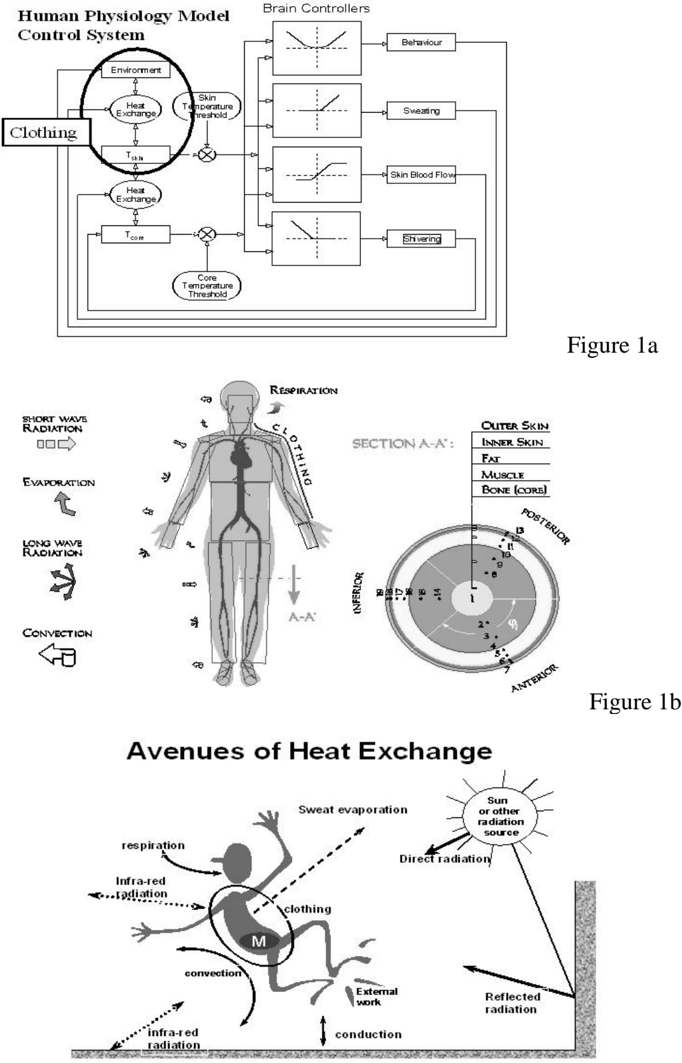
Existing procedures for the assessment of the thermal environment in the fields of public weather services, public health systems, precautionary planning, urban design, tourism and recreation and climate impact research exhibit significant shortcomings. This is most evident for simple (mostly two-parameter) indices, when comparing them to complete heat budget models developed since the 1960s. ISB Commission 6 took up the idea of developing a Universal Thermal Climate Index (UTCI) based on the most advanced multi-node model of thermoregulation representing progress in science within the last three to four decades, both in thermo-physiological and heat exchange theory. Creating the essential research synergies for the development of UTCI required pooling the resources of multidisciplinary experts in the fields of thermal physiology, mathematical modelling, occupational medicine, meteorological data handling (in particular radiation modelling) and application development in a network. It was possible to extend the expertise of ISB Commission 6 substantially by COST (a European programme promoting Cooperation in Science and Technology) Action 730 so that finally over 45 scientists from 23 countries (Australia, Canada, Israel, several Europe countries, New Zealand, and the United States) worked together. The work was performed under the umbrella of the WMO Commission on Climatology (CCl). After extensive evaluations, Fiala's multi-node human physiology and thermal comfort model (FPC) was adopted for this study. The model was validated extensively, applying as yet unused data from other research groups, and extended for the purposes of the project. This model was coupled with a state-of-the-art clothing model taking into consideration behavioural adaptation of clothing insulation by the general urban population in response to actual environmental temperature. UTCI was then derived conceptually as an equivalent temperature (ET). Thus, for any combination of air temperature, wind, radiation, and humidity (stress), UTCI is defined as the isothermal air temperature of the reference condition that would elicit the same dynamic response (strain) of the physiological model. As UTCI is based on contemporary science its use will standardise applications in the major fields of human biometeorology, thus making research results comparable and physiologically relevant.
Overview
The claims and statistics of this paper haven’t been checked yet.
Free: it reads the open-access text and checks the first 5 claims that cite a source we can check. Create a free account to check every claim.
Integrity signals
Registry
Cites
Statistics
Figures

Verification
Claims the paper makes
The claims and statistics of this paper haven’t been checked yet.
Free: it reads the open-access text and checks the first 5 claims that cite a source we can check. Create a free account to check every claim.
Claims other papers make about this one
Each is checked against this paper’s own text: does it say what the citing paper says it does?
The source backs part of the claim, not all of it — or backs it for a different population, condition or comparison.
In the citing paper
“A recently proposed Universal Thermal Climate Index (UTCI) (2009), based on an advanced human thermoregulation model, directly uses meteorological data to predict the impact of outdoor climate on thermal physiological and perceptual responses (Jendritzky et al. 2012; Bröde et al. 2012a, b; Fiala et al. 2012; Havenith et al. 2012; Kampmann et al. 2012; Parsons 2013; Havenith and Fiala 2016).”
From Occupational heat stress assessment and protective strategies in the context of climate change (2018) · cites this paper as Jendritzky et al. 2012
Experimental — accuracy not yet measured
Self-check
Percentages, sums and reported differences re-computed from the paper’s own numbers.
The self-check needs the paper’s full text.
Citations
Cites
Höppe, P. (1999) · International Journal of Biometeorology · doi:10.1007/s004840050118 · Cited by 2,429
Modelling radiation fluxes in simple and complex environments: basics of the RayMan model
Matzarakis, A., Rutz, F., & Mayer, H. (2010) · International Journal of Biometeorology · doi:10.1007/s00484-009-0261-0 · Cited by 1,633
Modelling radiation fluxes in simple and complex environments—application of the RayMan model
Matzarakis, A., Rutz, F., & Mayer, H. (2007) · International Journal of Biometeorology · doi:10.1007/s00484-006-0061-8 · Cited by 1,365
Deriving the operational procedure for the Universal Thermal Climate Index (UTCI)
Bröde, P., Fiala, D., Błażejczyk, K., Holmér, I., Jendritzky, G., Kampmann, B., Tinz, B., & Havenith, G. (2012) · International Journal of Biometeorology · doi:10.1007/s00484-011-0454-1 · Cited by 1,243
Self-citationComparison of UTCI to selected thermal indices
Blazejczyk, K., Epstein, Y., Jendritzky, G., Staiger, H., & Tinz, B. (2012) · International Journal of Biometeorology · doi:10.1007/s00484-011-0453-2 · Cited by 1,129
Self-citationA standard predictive index of human response to the thermal environment
Gagge, A. P., Fobelets, A. P. R., & Berglund, L. G. (1986) · ASHRAE winter conference papers · Cited by 1,053
UTCI-Fiala multi-node model of human heat transfer and temperature regulation
Fiala, D., Havenith, G., Bröde, P., Kampmann, B., & Jendritzky, G. (2012) · International Journal of Biometeorology · doi:10.1007/s00484-011-0424-7 · Cited by 994
Self-citationFiala, D., Lomas, K. J., & Stohrer, M. (1999) · Journal of Applied Physiology · doi:10.1152/jappl.1999.87.5.1957 · Cited by 849
Fiala, D., Lomas, K. J., & Stohrer, M. (2001) · International Journal of Biometeorology · doi:10.1007/s004840100099 · Cited by 754
A model of human physiology and comfort for assessing complex thermal environments
Huizenga, C., Hui, Z., & Arens, E. (2001) · Building and Environment · doi:10.1016/s0360-1323(00)00061-5 · Cited by 585
Research works printed but not linked: 12
- 3. Blazejczyk K, Epstein Y, Jendritzky G, Staiger H, Tinz B (2011) Comparison of UTCI to selected thermal indices. Int J Biometeorol XX; YY-YZ Bröde P, Kampmann B, Havenith G, Jendritzky G (2008) Effiziente Berechnung des klimatischen Belastungs-Index UTCI. In: Gesellschaft für Arbeitswissenschaft (ed.): Produkt-und Produktions-Ergonomie -Aufgabe für Entwickler und Planer, GfA-Press, Dortmund: 271-274.
- 4. Bröde P, Fiala D, Blazejczyk K, Epstein Y, Holmér I, Jendritzky G, Kampmann B, Richards M, Rintamäki H, Shitzer A, Havenith G (2009a) Calculating UTCI Equivalent Temperature. In: Castellani, JW; Endrusick, TL (eds.): Environmental Ergonomics XIII, University of Wollongong, Wollongong: 49-53
- 5. Bröde P, Fiala D, Kampmann B, Havenith G, Jendritzky G (2009b) Der Klimaindex UTCI - Multivariate Analyse der Reaktion eines thermophysiologischen Simulationsmodells. In: Gesellschaft für Arbeitswissenschaft (ed.): Arbeit, Beschäftigungsfähigkeit und Produktivität im 21. Jahrhundert, GfA-Press, Dortmund: 705-708
- 9. Driscoll DM (1992) Thermal Comfort Indexes. Current Uses and Abuses. Nat. Weather Digest, 17, (4): 33-38
- 11. Fanger PO (1970) Thermal Comfort. Analysis and Application in Environmental Engineering. Danish Technical Press, Copenhagen
- 22. Horikoshi T, Tsuchikawa T, Kurazumi Y, Matsubara N (1995): Mathematical expression of combined and separate effect of air temperature, humidity, air velocity and thermal radiation on thermal comfort. Archives of Complex Environmental Studies, 7 (3-4): 9- 12
- 30. Jendritzky G (1990) Bioklimatische Bewertungsgrundlage der Räume am Beispiel von mesoskaligen Bioklimakarten. In: Jendritzky G, Schirmer H, Menz G, Schmidt- Kessen W: Methode zur raumbezogenen Bewertung der thermischen Komponente im Bioklima des Menschen (Fortgeschriebenes Klima-Michel-Modell). Akad Raumforschung Landesplanung, Hannover, Beiträge 114: 7-69
- 31. Jendritzky G, Maarouf A, Fiala D, Staiger H (2002) An Update on the Development of a Universal Thermal Climate Index. 15 th Conf. Biomet. Aerobiol. and 16 th ICB02, 27 Oct -1 Nov 2002, Kansas City, AMS: 129-133
- 33. Kampmann B, Bröde P (2009) Physiological Responses to Temperature and Humidity Compared With Predictions of PHS and WBGT. In: Castellani, JW; Endrusick, TL (eds.): Environmental Ergonomics XIII, University of Wollongong, Wollongong: 54- 58.
- 43. Psikuta A, Fiala D, Richards M (2007) Validation of the Fiala Model of Human Physiology and Comfort for COST 730. In: Mekjavic IB, Kounalakis SN, Taylor NAS (eds.) Proceedings of the 12th International Conference on Environmental Ergonomics XII, Biomed, Ljubljana: 516
- 45. Richards M and Havenith G (2007) Progress towards the final UTCI model. In: Mekjavic IB, Kounalakis SN, Taylor NAS (eds.) Proceedings of the 12th International Conference on Environmental Ergonomics. August 19-24, 2007, Piran Slovenia. Biomed, Ljubljana: 521-524
- 50. Steadman RG (1994): Norms of apparent temperature in Australia. Aust. Met. Mag. 43: 1-16
Cited by
Magnitude of urban heat islands largely explained by climate and population
Manoli, G., Fatichi, S., Schläpfer, M., Yu, K., Crowther, T. W., Meili, N., Burlando, P., Katul, G. G., & Bou-Zeid, E. (2019) · Nature · doi:10.1038/s41586-019-1512-9 · Cited by 1,221
“air humidity, and wind speed rather than surface temperature alone 39 .”
BackgroundA review of human thermal comfort in the built environment
Rupp, R. F., Vásquez, N. G., & Lamberts, R. (2015) · Energy and Buildings · doi:10.1016/j.enbuild.2015.07.047 · Cited by 907
A review on the CFD analysis of urban microclimate
Toparlar, Y., Blocken, B., Maiheu, B., & van Heijst, G. J. F. (2017) · Renewable and Sustainable Energy Reviews · doi:10.1016/j.rser.2017.05.248 · Cited by 759
“– Validation/target parameters: a) Temperature related: Air temperature (°C) (AT); Dry-bulb temperature (°C) (DBT); Indoor air temperature (°C) (IAT); Mean radiant temperature (°C) (MRT); Surface temperature (°C) (ST); Wet bulb globe temperature (°C) (WBGT); b) Thermal comfort related: Physiological equivalent tempera…”
Potchter, O., Cohen, P., Lin, T.-P., & Matzarakis, A. (2018) · Science of The Total Environment · doi:10.1016/j.scitotenv.2018.02.276 · Cited by 645
Heatwaves and health : guidance on warning-system development.
McGregor, G. R., Bessmoulin, P., Ebi, K. L., & Menne, B. (2015) · Durham Research Online (Durham University) · Cited by 576
Studies of outdoor thermal comfort in northern China
Lai, D., Guo, D., Hou, Y., Lin, C., & Chen, Q. (2014) · Building and Environment · doi:10.1016/j.buildenv.2014.03.026 · Cited by 506
“Meanwhile, the Universal Thermal Climate Index (UTCI) was developed by 45 scientists with multidisciplinary backgrounds from 23 countries in order to standardize applications across major fields of human biometeorology [21].”
Humidity: a review and primer on atmospheric moisture and human health
Davis, R. E., McGregor, G. R., & Enfield, K. B. (2016) · Environmental Research · doi:10.1016/j.envres.2015.10.014 · Cited by 472
Overview of the PALM model system 6.0
Maronga, B., Banzhaf, S., Burmeister, C., Esch, T., Forkel, R., Fröhlich, D., Fuka, V., Gehrke, K. F., Geletič, J., Giersch, S., et al. (2020) · Geoscientific Model Development · doi:10.5194/gmd-13-1335-2020 · Cited by 451
A comprehensive review of thermal comfort studies in urban open spaces
Lai, D., Lian, Z., Liu, W., Guo, C., Liu, W., Liu, K., & Chen, Q. (2020) · The Science of The Total Environment · doi:10.1016/j.scitotenv.2020.140092 · Cited by 440
“For PET and UTCI, the influence of clothing on outdoor thermal comfort should be determined with greater accuracy.”
MethodInfluentialOutdoor human comfort and thermal stress: A comprehensive review on models and standards
Coccolo, S., Kämpf, J., Scartezzini, J.-L., & Pearlmutter, D. (2016) · Urban Climate · doi:10.1016/j.uclim.2016.08.004 · Cited by 417
Diurnal interaction between urban expansion, climate change and adaptation in US cities
Krayenhoff, E. S., Moustaoui, M., Broadbent, A. M., Gupta, V., & Georgescu, M. (2018) · Nature Climate Change · doi:10.1038/s41558-018-0320-9 · Cited by 348
The 2021 western North America heat wave among the most extreme events ever recorded globally
Thompson, V., Kennedy-Asser, A. T., Vosper, E., Lo, Y. T. E., Huntingford, C., Andrews, O., Collins, M., Hegerl, G. C., & Mitchell, D. (2022) · Science Advances · doi:10.1126/sciadv.abm6860 · Cited by 318
Climate change experiences raise environmental concerns and promote Green voting
Hoffmann, R., Muttarak, R., Peisker, J., & Stanig, P. (2022) · Nature Climate Change · doi:10.1038/s41558-021-01263-8 · Cited by 313
A comprehensive catalogue and classification of human thermal climate indices
de Freitas, C. R., & Grigorieva, E. A. (2015) · International Journal of Biometeorology · doi:10.1007/s00484-014-0819-3 · Cited by 297
Di Napoli, C., Barnard, C., Prudhomme, C., Cloke, H. L., & Pappenberger, F. (2021) · Geoscience Data Journal · doi:10.1002/gdj3.102 · Cited by 295
“For any combination of air temperature, wind, radiation and humidity, the UTCI is defined as the air temperature of a reference condition that would cause in the human body the same UTCI-Fiala model response as the real condition (Jendritzky et al., 2012).”
BackgroundMethodHuman thermal perception of Coastal Mediterranean outdoor urban environments
Cohen, P., Potchter, O., & Matzarakis, A. (2013) · Applied Geography · doi:10.1016/j.apgeog.2012.11.001 · Cited by 278
Li, K., Zhang, Y., & Zhao, L. (2016) · Energy and Buildings · doi:10.1016/j.enbuild.2016.10.013 · Cited by 277
A comparison and appraisal of a comprehensive range of human thermal climate indices
de Freitas, C. R., & Grigorieva, E. A. (2017) · International Journal of Biometeorology · doi:10.1007/s00484-016-1228-6 · Cited by 275
Counteracting urban climate change: adaptation measures and their effect on thermal comfort
Müller, N., Kuttler, W., & Barlag, A.-B. (2014) · Theoretical and Applied Climatology · doi:10.1007/s00704-013-0890-4 · Cited by 273
Wang, X., Li, H., & Sodoudi, S. (2022) · Building and Environment · doi:10.1016/j.buildenv.2022.109082 · Cited by 270
Theeuwes, N. E., Solcerová, A., & Steeneveld, G. J. (2013) · Journal of Geophysical Research: Atmospheres · doi:10.1002/jgrd.50704 · Cited by 269
“…elaborated assessment of human thermal comfort, it would be necessary to use more advanced index, such as Physiological Equivalent Temperature (PET) [ Mayer and Höppe , 1987], Predicted Mean Votes (PMV) [ Fanger , 1972], or the universal thermal comfort index (UTCI) [ Jendritzky et al ., 2012].”
MethodChatzidimitriou, A., & Yannas, S. (2017) · Sustainable Cities and Society · doi:10.1016/j.scs.2017.05.019 · Cited by 267
Urban building energy modeling: State of the art and future prospects
Johari, F., Peronato, G., Sadeghian, P., Zhao, X., & Widén, J. (2020) · Renewable and Sustainable Energy Reviews · doi:10.1016/j.rser.2020.109902 · Cited by 263
Thermal Indices and Thermophysiological Modeling for Heat Stress
Havenith, G., & Fiala, D. (2015) · Comprehensive Physiology · doi:10.1002/cphy.c140051 · Cited by 262
“Through an initiative of Commission 6 of the International Society of Biometeorology (126) and the European Union COST-action 730 (125), a new climatic index, the “UTCI” or Universal Thermal Climate Index, was developed.”
Self-citationLi, H., Zhao, Y., Wang, C., Ürge-Vorsatz, D., Carmeliet, J., & Bardhan, R. (2024) · Communications Earth & Environment · doi:10.1038/s43247-024-01908-4 · Cited by 257
Humidity’s Role in Heat-Related Health Outcomes: A Heated Debate
Baldwin, J. W., Benmarhnia, T., Ebi, K. L., Jay, O., Lutsko, N. J., & Vanos, J. K. (2023) · Environmental Health Perspectives · doi:10.1289/ehp11807 · Cited by 250
Integrated Assessment of Urban Overheating Impacts on Human Life
Nazarian, N., Krayenhoff, E. S., Bechtel, B., Hondula, D. M., Paolini, R., Vanos, J., Cheung, T., Chow, W. T. L., de Dear, R., Jay, O., et al. (2022) · Earth's Future · doi:10.1029/2022ef002682 · Cited by 248
“, 1986), Universal Thermal Climate Index 258 (Jendritzky et al., 2012; Jendritzky & Tinz, 2009), Standard Effective Temperature (Gagge et al.”
BackgroundThermophysiological models and their applications: A review
Katić, K., Li, R., & Zeiler, W. (2016) · Building and Environment · doi:10.1016/j.buildenv.2016.06.031 · Cited by 243
Middel, A., & Krayenhoff, E. S. (2019) · Science of The Total Environment · doi:10.1016/j.scitotenv.2019.06.085 · Cited by 243
“TMRT is also a key component of thermophysiological stress indices, such as Physiologically Equivalent Temperature (PET) (Höppe, 1999) and the Universal Thermal Climate Index (UTCI) (Jendritzky et al., 2012; Bröde et al., 2012).”
BackgroundMethodHuang, J., Zhou, C., Zhuo, Y., Xu, L., & Jiang, Y. (2016) · Building and Environment · doi:10.1016/j.buildenv.2016.03.029 · Cited by 237
“8°C, which covers the entire “UTCI thermal comfort zone” of 18-26°C (Jendritzky et al. 2012) and extending by 2.”
InfluentialFang, Z., Feng, X., Liu, J., Lin, Z., Mak, C. M., Niu, J., Tse, K.-T., & Xu, X. (2019) · Sustainable Cities and Society · doi:10.1016/j.scs.2018.10.022 · Cited by 224
Walikewitz, N., Jänicke, B., Langner, M., Meier, F., & Endlicher, W. (2015) · Building and Environment · doi:10.1016/j.buildenv.2014.11.004 · Cited by 219
“Tmrt is required to calculate thermal indices such as the UTCI (Universal Thermal Climate Index) [24], the PT (Perceived Temperature) [25], the PMV (Predicted Mean Vote) [26] and the PET (Physiologically Equivalent Temperature) [27,28].”
MethodPark, S., Tuller, S. E., & Jo, M. (2014) · Landscape and Urban Planning · doi:10.1016/j.landurbplan.2014.02.014 · Cited by 214
Outdoor thermal comfort in an urban park during winter in cold regions of China
Xu, M., Hong, B., Mi, J., & Yan, S. (2018) · Sustainable Cities and Society · doi:10.1016/j.scs.2018.08.034 · Cited by 208
Niu, J., Liu, J., Lee, T.-C., Lin, Z. (., Mak, C., Tse, K.-T., Tang, B.-S., & Kwok, K. C. S. (2015) · Building and Environment · doi:10.1016/j.buildenv.2015.02.017 · Cited by 205
“In addition, UTCI (Universal thermal climate index), which was propos ed more recently, was a more complex heat budget based approach and was increasingly used by bio-meteorological researchers [32, 33].”
BackgroundVegetation cover and plant-trait effects on outdoor thermal comfort in a tropical city
Meili, N., Acero, J. A., Peleg, N., Manoli, G., Burlando, P., & Fatichi, S. (2021) · Building and Environment · doi:10.1016/j.buildenv.2021.107733 · Cited by 199
Outdoor thermal comfort of shaded spaces in an urban park in the cold region of China
Xu, M., Hong, B., Jiang, R., An, L., & Zhang, T. (2019) · Building and Environment · doi:10.1016/j.buildenv.2019.03.049 · Cited by 199
Occupational heat stress assessment and protective strategies in the context of climate change
Gao, C., Kuklane, K., Östergren, P.-O., & Kjellstrom, T. (2018) · International Journal of Biometeorology · doi:10.1007/s00484-017-1352-y · Cited by 198
“…thermoregulation model, directly uses meteorological data to predict the impact of outdoor climate on thermal physiological and perceptual responses (Jendritzky et al. 2012; Bröde et al. 2012a, b; Fiala et al. 2012; Havenith et al. 2012; Kampmann et al. 2012; Parsons 2013; Havenith and Fiala 2016).”
BackgroundMethodInfluentialMistry, M., Schneider, R., Masselot, P., Royé, D., Armstrong, B., Kyselý, J., Orru, H., Sera, F., Tong, S., Lavigne, É., et al. (2022) · Scientific Reports · doi:10.1038/s41598-022-09049-4 · Cited by 199
Manickathan, L., Defraeye, T., Allegrini, J., Derome, D., & Carmeliet, J. (2018) · Agricultural and Forest Meteorology · doi:10.1016/j.agrformet.2017.10.014 · Cited by 190
“It is designed as an outdoor comfort index and is seen to outperform similar other comfort indices such as Perceived Temperature (PT), Physiological Equivalent Temperature (PET) and OUT_SET* (Jendritzky et al., 2012).”
BackgroundSelection of Appropriate Thermal Indices for Applications in Human Biometeorological Studies
Staiger, H., Laschewski, G., & Matzarakis, A. (2019) · Atmosphere · doi:10.3390/atmos10010018 · Cited by 190
“UTCI, the Universal Thermal Climate Index [40,41]: UTCI refers to an isothermal environment, calm air (v ~ 0.3 m/s at 1.1 m above ground) and rh = 50% up to ta = 29 ◦C and at temperatures above 29 ◦C a fixed water vapor pressure of 20 hPa, that is equivalent to 50% at 29 ◦C.”
BackgroundInfluentialChildren's health and vulnerability in outdoor microclimates: a comprehensive review
Vanos, J. K. (2015) · Environment International · doi:10.1016/j.envint.2014.11.016 · Cited by 184
Investigation into sensitivities of factors in outdoor thermal comfort indices
Fang, Z., Lin, Z., Mak, C. M., Niu, J., & Tse, K.-T. (2018) · Building and Environment · doi:10.1016/j.buildenv.2017.11.028 · Cited by 184
Lee, H., Holst, J., & Mayer, H. (2013) · Advances in Meteorology · doi:10.1155/2013/312572 · Cited by 183
Ketterer, C., & Matzarakis, A. (2014) · Landscape and Urban Planning · doi:10.1016/j.landurbplan.2013.11.003 · Cited by 183
Bioclimatic comfort and the thermal perceptions and preferences of beach tourists
Rutty, M., & Scott, D. (2015) · International Journal of Biometeorology · doi:10.1007/s00484-014-0820-x · Cited by 181
Advancing the framework for considering the effects of climate change on worker safety and health
Schulte, P. A., Bhattacharya, A., Butler, C. R., Chun, H. K., Jacklitsch, B., Jacobs, T., Kiefer, M., Lincoln, J., Pendergrass, S., Shire, J., et al. (2016) · Journal of Occupational and Environmental Hygiene · doi:10.1080/15459624.2016.1179388 · Cited by 180
“…assessment strategy that considers the link between meteorological conditions and International Organization for Standardization heat stress standards; the development of a Thermal Climate Index based on a model of human thermoregulation; (34,35) and an updated NIOSH heat stress criteria document.”
Kotharkar, R., & Ghosh, A. (2022) · Sustainable Cities and Society · doi:10.1016/j.scs.2021.103487 · Cited by 176
Modified physiologically equivalent temperature—basics and applications for western European climate
Chen, Y., & Matzarakis, A. (2017) · Theoretical and Applied Climatology · doi:10.1007/s00704-017-2158-x · Cited by 172
“…Höppe 1987; Matzarakis et al., 1999), standard effective temperature* (SET*) (Gagge et al. 1971, 1986), and Universal Thermal Climate Index (UTCI) (Jendritzky et al. 2012; Havenith et al. 2012), which are both based on a steady energy balance model, have been developed for severe evaluation of…”
BackgroundBR^|^Ouml;DE, P., BLAZEJCZYK, K., FIALA, D., HAVENITH, G., HOLM^|^Eacute;R, I., JENDRITZKY, G., KUKLANE, K., & KAMPMANN, B. (2013) · Industrial Health · doi:10.2486/indhealth.2012-0098 · Cited by 171
Self-citationOutdoor space quality: A field study in an urban residential community in central China
Lai, D., Zhou, C., Huang, J., Jiang, Y., Long, Z., & Chen, Q. (2014) · Energy and Buildings · doi:10.1016/j.enbuild.2013.02.051 · Cited by 169
“Keywords: Outdoor space quality, Outdoor thermal comfort, Residential community, Usage rate, Thermal Sensation Vote”
BackgroundOutdoor thermal comfort under subarctic climate of north Sweden – A pilot study in Umeå
Yang, B., Olofsson, T., Nair, G., & Kabanshi, A. (2017) · Sustainable Cities and Society · doi:10.1016/j.scs.2016.10.011 · Cited by 166
Watanabe, S., Nagano, K., Ishii, J., & Horikoshi, T. (2014) · Building and Environment · doi:10.1016/j.buildenv.2014.10.002 · Cited by 166
Zhou, D., Xiao, J., Frolking, S., Zhang, L., & Zhou, G. (2022) · Earth s Future · doi:10.1029/2021ef002401 · Cited by 165
Climate change research and action must look beyond 2100
Lyon, C., Saupe, E. E., Smith, C. J., Hill, D. J., Beckerman, A. P., Stringer, L. C., Marchant, R., McKay, J., Burke, A., O’Higgins, P., et al. (2022) · Global Change Biology · doi:10.1111/gcb.15871 · Cited by 161
Outdoor mean radiant temperature estimation in the tropical urban environment
Tan, C. L., Wong, N. H., & Jusuf, S. K. (2013) · Building and Environment · doi:10.1016/j.buildenv.2013.03.012 · Cited by 160
Guo, R., Yang, B., Guo, Y., He, L., Li, Z., Zhou, B., Hong, B., & Wang, F. (2024) · Building and Environment · doi:10.1016/j.buildenv.2024.111301 · Cited by 159
Approaches to Outdoor Thermal Comfort Thresholds through Public Space Design: A Review
Nouri, A. S., Costa, J. P., Santamouris, M., & Matzarakis, A. (2018) · Atmosphere · doi:10.3390/atmos9030108 · Cited by 159
“SVF Sky View Factor (-) SW Surface Wetting (-) Tamb Ambient temperature (◦C) Tcold Tamb of coldest month (◦C) Thot Tamb of hottest month (◦C) Tmon10 # of months where Tamb is above 10 ◦C (-) Tsurf Surface Temperature (◦C) UHI Urban Heat Island (-) UTCI Universal Thermal Climate Index (◦C) UV Ultra Violet (nm) V Wind S…”
BackgroundInfluentialBerardi, U., Jandaghian, Z., & Graham, J. (2020) · The Science of The Total Environment · doi:10.1016/j.scitotenv.2020.141300 · Cited by 154
Huang, T., Li, J., Xie, Y., Niu, J., & Mak, C. M. (2017) · Building and Environment · doi:10.1016/j.buildenv.2017.09.015 · Cited by 153
Fröhlich, D., Gangwisch, M., & Matzarakis, A. (2018) · Urban Climate · doi:10.1016/j.uclim.2018.10.006 · Cited by 153
Evaluation of the ERA5 reanalysis-based Universal Thermal Climate Index on mortality data in Europe
Urban, A., Napoli, C. D., Cloke, H., Kyselý, J., Pappenberger, F., Sera, F., Schneider, R., Vicedo-Cabrera, A. M., Acquaotta, F., Ragettli, M. S., et al. (2021) · Environmental Research · doi:10.1016/j.envres.2021.111227 · Cited by 153
“The UTCI, in particular, has been designed as a universal thermal indicator, possible to use in all climates and all biometeorological applications, including epidemiological studies (Jendritzky et al., 2012).”
BackgroundUrban, A., & Kyselý, J. (2014) · International Journal of Environmental Research and Public Health · doi:10.3390/ijerph110100952 · Cited by 150
“UTCI is an equivalent temperature defined for a walking person (4 km/h) with adaptive clothing [19] in referent outdoor conditions with 50% relative humidity, still air, and Tmrt equalling air temperature [4].”
BackgroundMethodInfluentialHeat: a primer for public health researchers
McGregor, G. R., & Vanos, J. (2017) · Public Health · doi:10.1016/j.puhe.2017.11.005 · Cited by 151
“Ta, Tmrt, RH, V, Mact, Icl C Physiologically-based thermal comfort.(26,72,73) Apparent temperature Rational.”
Thermal comfort models for indoor spaces and vehicles—Current capabilities and future perspectives
Croitoru, C. V., Năstase, I., Bode, F. I., Meslem, A., & Dogeanu, A. (2015) · Renewable and Sustainable Energy Reviews · doi:10.1016/j.rser.2014.10.105 · Cited by 149
Nasrollahi, N., Hatami, M., Khastar, S., & Taleghani, M. (2017) · Sustainable Cities and Society · doi:10.1016/j.scs.2017.08.017 · Cited by 149
“UTCI uses mean radiant temperature, air temperature, air velocity and relative humidity in order to calculate the thermal comfort index in outdoor environments (Jendritzky, de Dear, & Havenith, 2012).”
Chen, Y., Lin, T., & Matzarakis, A. (2014) · Theoretical and Applied Climatology · doi:10.1007/s00704-013-1081-z · Cited by 147
Gosling, S. N., Bryce, E., Dixon, P., Gabriel, K. M. A., Gosling, E. Y., Hanes, J. M., Hondula, D. M., Liang, L., Mac-Lean, P. A. B., Muthers, S., et al. (2014) · International Journal of Biometeorology · doi:10.1007/s00484-013-0729-9 · Cited by 147
“For any combination of air temperature, wind, radiation, and humidity (stress), UTCI is defined as the isothermal air temperature of the reference condition that would elicit the same dynamic response (strain) of the physiological model (Jendritzky et al. 2012).”
BackgroundCounteracting Urban Heat Island Effects in a Global Climate Change Scenario
Musco, F., Appiotti, F., Bianchi, I., Fontana, M. D., Gissi, E., Lucertini, G., Magni, F., & Maragno, D. (2016) · Springer eBooks · doi:10.1007/978-3-319-10425-6 · Cited by 146
Verification of Heat Stress Thresholds for a Health-Based Heat-Wave Definition
Napoli, C. D., Pappenberger, F., & Cloke, H. (2019) · Journal of Applied Meteorology and Climatology · doi:10.1175/jamc-d-18-0246.1 · Cited by 146
“…in Europe (Bła _zejczyk et al. 2010b; Nemeth 2011; Nastos and Matzarakis 2012; Bła _zejczyk and Bła _zejczyk 2014; Bleta et al. 2014; Matzarakis et al. 2014; Urban and Kyselý 2014; Burkart et al. 2016; Mąkosza and Nidzgorska-Lencewicz 2017; Kolendowicz et al. 2018; Di Napoli et al. 2018).”
BackgroundYang, Y., Gatto, E., Gao, Z. J., Buccolieri, R., Morakinyo, T. E., & Lan, H. (2019) · Building and Environment · doi:10.1016/j.buildenv.2019.05.029 · Cited by 145
Effects of City Expansion on Heat Stress under Climate Change Conditions
Argüeso, D., Evans, J. P., Pitman, A. J., & Luca, A. D. (2015) · PLoS ONE · doi:10.1371/journal.pone.0117066 · Cited by 146
“They are generally based on heat-balance models applied to the human body and range from advanced indices such as the Physiological Equivalent Temperature [27] and the Universal Thermal Comfort Index [28] to more simple metrics based on standard meteorological variables [29].”
BackgroundEnvironmental Monitoring for Smart Cities
Bacco, M., Delmastro, F., Ferro, E., & Gotta, A. (2017) · IEEE Sensors Journal · doi:10.1109/jsen.2017.2722819 · Cited by 144
“Several applications and services are based on the use of such an index, for instance Public Weather Services and Public Health Systems, as well as precautionary planning and climate impact research in the health sector [15].”
BackgroundMethodWBGT Index Revisited After 60 Years of Use
(2014) · The Annals of Occupational Hygiene · doi:10.1093/annhyg/meu050 · Cited by 141
Pappenberger, F., Jendritzky, G., Staiger, H., Dutra, E., Giuseppe, F. D., Richardson, D. S., & Cloke, H. (2014) · International Journal of Biometeorology · doi:10.1007/s00484-014-0843-3 · Cited by 141
Self-citationCFD analysis of the impact of physical parameters on evaporative cooling by a mist spray system
Montazeri, H., Blocken, B. J. E., & Hensen, J. J. (2014) · Applied Thermal Engineering · doi:10.1016/j.applthermaleng.2014.09.078 · Cited by 137
“To gain insight into the capability of the spray system to enhance thermal comfort, the Universal Thermal Climate Index (UTCI) [61,62] is also calculated along the domain.”
BackgroundLam, C. K. C., Lee, H., Yang, S.-R., & Park, S. (2021) · Sustainable Cities and Society · doi:10.1016/j.scs.2021.102971 · Cited by 137
Lai, A. K. L., Maing, M., & Ng, E. (2016) · Building and Environment · doi:10.1016/j.buildenv.2016.12.034 · Cited by 135
Behavioural Perspectives of Outdoor Thermal Comfort in Urban Areas: A Critical Review
Mahgoub, M. E., & Hamza, N. (2019) · Atmosphere · doi:10.3390/atmos11010051 · Cited by 138
“Examples are the effective temperature index (ET) [49], predicted mean vote (PMV) [50], physiological equivalent temperature (PET) [51–53], the universal thermal climate index (UTCI) [54], and the COMFA (outdoor thermal comfort model) [55], inter alia.”
BackgroundLau, K. K., & Choi, C. Y. (2021) · Building and Environment · doi:10.1016/j.buildenv.2021.108333 · Cited by 137
Geng, Y., Hong, B., Du, M., Yuan, T., & Wang, Y. (2021) · Building and Environment · doi:10.1016/j.buildenv.2021.108658 · Cited by 132
McLellan, T. M., Daanen, H. A. M., & Cheung, S. S. (2013) · Comprehensive Physiology · doi:10.1002/cphy.c130002 · Cited by 104
Asghari, M., Nassiri, P., Monazzam, M. R., Golbabaei, F., Arabalibeik, H., Shamsipour, A., & Allahverdy, A. (2017) · Journal of Environmental Health Science and Engineering · doi:10.1186/s40201-016-0264-9 · Cited by 122
“It was extended by COST (a European Union program promoting Cooperation in Science and Technology) Action 730 [34].”
MethodGolasi, I., Salata, F., Vollaro, E. D. L., & Coppi, M. (2017) · Building and Environment · doi:10.1016/j.buildenv.2017.12.021 · Cited by 122
Heng, S. L., & Chow, W. (2019) · International Journal of Biometeorology · doi:10.1007/s00484-019-01694-1 · Cited by 122
He, X., An, L., Hong, B., Huang, B., & Cui, X. (2020) · Building and Environment · doi:10.1016/j.buildenv.2020.106739 · Cited by 120
Physiological modeling for technical clinical and research applications
Fiala, D. (2010) · Frontiers in Bioscience · doi:10.2741/s112 · Cited by 103
Self-citationLong‐term analysis of heat waves in Ukraine
Shevchenko, О., Lee, H., Snizhko, S., & Mayer, H. (2013) · International Journal of Climatology · doi:10.1002/joc.3792 · Cited by 119
“PET (Mayer and Höppe, 1987) or UTCI (Jendritzky et al., 2012), were developed on the basis of the human heat budget.”
BackgroundOutdoor thermal benchmarks and thermal safety for children: A study in China's cold region
Huang, B., Hong, B., Tian, Y. X., Yuan, T., & Su, M. (2021) · The Science of The Total Environment · doi:10.1016/j.scitotenv.2021.147603 · Cited by 118
Montazeri, H., Toparlar, Y., Blocken, B. J. E., & Hensen, J. J. (2016) · Landscape and Urban Planning · doi:10.1016/j.landurbplan.2016.10.001 · Cited by 117
Krüger, E. L., Minella, F. C. O., & Matzarakis, A. (2013) · International Journal of Biometeorology · doi:10.1007/s00484-013-0777-1 · Cited by 117
“In recent years, a few indices have been developed such as physiologically equivalent temperature (PET) and Universal Thermal Climate Index (UTCI), which are aimed at the estimation of the human thermal response in outdoor spaces (Mayer and Höppe 1987; Höppe 1999; Matzarakis et al. 1999; Kántor and Unger 2011; Jendrit…”
BackgroundSpangler, K. R., Liang, S., & Wellenius, G. A. (2022) · Scientific Data · doi:10.1038/s41597-022-01405-3 · Cited by 117
Messeri, A., Morabito, M., Bonafede, M., Bugani, M., Levi, M., Baldasseroni, A., Binazzi, A., Gozzini, B., Orlandini, S., Nybo, L., et al. (2019) · International Journal of Environmental Research and Public Health · doi:10.3390/ijerph16071090 · Cited by 115
“The bands of different shades of gray indicate instead the heat stress thresholds according to the Universal Thermal Climate Index (UTCI).”
MethodInfluentialEmerging Environmental and Weather Challenges in Outdoor Sports
Brocherie, F., Girard, O., & Millet, G. P. (2015) · Climate · doi:10.3390/cli3030492 · Cited by 113
“Although heat budget models are not considered as “Gold-standards”, neither by researchers nor by end-users [7], it is worth mentioning that only thermal climate models that incorporate all parameters of the human heat budget can be used universally across all climate zones, regions and seasons [212].”
BackgroundInfluentialMapping urban temperature using crowd-sensing data and machine learning
Zumwald, M., Knüsel, B., Bresch, D. N., & Knutti, R. (2020) · Urban Climate · doi:10.1016/j.uclim.2020.100739 · Cited by 115
Narimani, N., Karimi, A., & Brown, R. D. (2022) · Ecological Informatics · doi:10.1016/j.ecoinf.2022.101671 · Cited by 113
Wet Bulb Globe Temperature: Indicating Extreme Heat Risk on a Global Grid
Brimicombe, C., Lo, C. H. B., Pappenberger, F., Napoli, C. D., Maciel, P., Quintino, T., Cornforth, R., & Cloke, H. (2023) · GeoHealth · doi:10.1029/2022gh000701 · Cited by 115
“11 of 14 disadvantage to the health sector where thresholds are often used to identify life-threatening conditions or to recommend heat-suitable workloads (Budd, 2008; Chen et al., 2019; Jendritzky et al., 2012; Zare et al., 2019).”
BackgroundValidation of the mean radiant temperature simulated by the RayMan software in urban environments
Lee, H., & Mayer, H. (2016) · International Journal of Biometeorology · doi:10.1007/s00484-016-1166-3 · Cited by 113
“…evaluation of the current thermal environment in terms of a thermo-physiologically significant assessment index such as the physiologically equivalent temperature (PET; Mayer and Höppe 1987; Höppe 1999) or the Universal Thermal Climate Index (UTCI; Blazejczyk et al. 2012; Jendritzky et al. 2012).”
BackgroundChanges in the Frequency and Intensity of Extreme Temperature Events and Human Health Concerns
Sheridan, S. C., & Allen, M. J. (2015) · Current Climate Change Reports · doi:10.1007/s40641-015-0017-3 · Cited by 112
Lyu, K., Brambilla, A., Globa, A., & de Dear, R. (2023) · Automation in Construction · doi:10.1016/j.autcon.2023.104836 · Cited by 114
Metadata
- Authors
- Jendritzky, G., de Dear, R., & Havenith, G.
- Affiliations
- University of Freiburg (DE)
- Loughborough University (GB)
- Corresponding author
- Jendritzky, Gerd
- ORCID
- Havenith, George
- Venue
- International Journal of Biometeorology
- Published
- 2011-12-21
- Volume
- 56
- Issue
- 3
- Pages
- 421-428
- ISSN
- 0020-7128 (ISSN-L)
- 1432-1254
- OpenAlex
- W1975324114
- Cited by
- 1,162
- References
- 50
- Citations by year
- 2026: 170 · 2025: 161 · 2024: 131 · 2023: 119 · 2022: 112 · 2021: 105 · 2020: 77 · 2019: 60 · 2018: 37 · 2017: 46 · 2016: 49 · 2015: 36 · 2014: 30 · 2013: 25 · 2012: 3
- FWCI
- 16.44
- Type
- journal article
- Language
- en
- Open access
- green
- figshare.com
- Licence
- cc-by-nc-nd
- www.springer.com/tdm (tdm)
- Locations
- International Journal of Biometeorology (publishedVersion)
- PubMed (publishedVersion)
- Loughborough University Research Repository (Loughborough University) (submittedVersion, cc-by-nc-nd)
- Loughborough University Institutional Repository (Loughborough University) (submittedVersion, cc-by-nc-nd)
- Topics
- Physical Sciences › Environmental Science › Environmental Engineering › Urban Heat Island Mitigation
- Health Sciences › Medicine › Physiology (medical) › Thermoregulation and physiological responses
- Physical Sciences › Environmental Science › Health, Toxicology and Mutagenesis › Climate Change and Health Impacts
- Keywords
- Universal Thermal Climate Index, thermal comfort, human thermoregulation, clothing insulation, equivalent temperature, heat stress, thermal environment evaluation, biometeorology
- MeSH terms
- Body Temperature Regulation, Climate, Humans, Meteorological Concepts, Models, Biological, Thermosensing
About these checks
Registry, retraction, Cites and statistics results are computed, not judged, with one exception: a printed reference that no index lists is read once by a model before it counts as a citation error. Claims are extracted by a model and kept only when their quote appears verbatim in the text; each cited source is then checked, with a model’s help, for whether it says what the claim relies on. Those verdicts can be wrong — read the claim’s quote and the cited source before relying on one.
Statistics and arithmetic are recomputed, not judged.
Confidence bands are shown only for fields calibrated on our annotated test set. None is calibrated yet, so no band is shown.
What counts as a claim ›How we measure confidence ›How we check this ›
Are you an author, or do you see a problem with this page? Request a review
Data sources
Bibliographic data: Semantic Scholar, OpenAlex, Crossref.
Contains information from the Semantic Scholar Academic Graph Datasets, made available under the ODC Attribution License (ODC-BY 1.0).
Semantic Scholar’s data is described in: Kinney, R., et al. (2023). The Semantic Scholar Open Data Platform. arXiv:2301.10140.
