

Data Augmentation techniques in time series domain: a survey and taxonomy
Open accessThe DOI matches its Crossref record; 104 of the 105 references it cites were found in a registry or an index.
Abstract
With the latest advances in deep learning-based generative models, it has not taken long to take advantage of their remarkable performance in the area of time series. Deep neural networks used to work with time series heavily depend on the size and consistency of the datasets used in training. These features are not usually abundant in the real world, where they are usually limited and often have constraints that must be guaranteed. Therefore, an effective way to increase the amount of data is by using data augmentation techniques, either by adding noise or permutations and by generating new synthetic data. This work systematically reviews the current state of the art in the area to provide an overview of all available algorithms and proposes a taxonomy of the most relevant research. The efficiency of the different variants will be evaluated as a central part of the process, as well as the different metrics to evaluate the performance and the main problems concerning each model will be analysed. The ultimate aim of this study is to provide a summary of the evolution and performance of areas that produce better results to guide future researchers in this field.
Overview
The claims and statistics of this paper haven’t been checked yet.
Free: it reads the open-access text and checks the first 5 claims that cite a source we can check. Create a free account to check every claim.
Integrity signals
Registry
Cites
Statistics
Figures


Verification
Claims the paper makes
The claims and statistics of this paper haven’t been checked yet.
Free: it reads the open-access text and checks the first 5 claims that cite a source we can check. Create a free account to check every claim.
Claims other papers make about this one
Each is checked against this paper’s own text: does it say what the citing paper says it does?
The source backs part of the claim, not all of it — or backs it for a different population, condition or comparison.
In the citing paper
“Data augmentation is one of the effective methods to generate augmented views in SSCL [47], [193].”
From Self-Supervised Learning for Time Series Analysis: Taxonomy, Progress, and Prospects (2024) · cites this paper as [47]
Experimental — accuracy not yet measured
Self-check
Percentages, sums and reported differences re-computed from the paper’s own numbers.
The self-check needs the paper’s full text.
Citations
Cites
Deep Residual Learning for Image Recognition
He, K., Zhang, X., Ren, S., & Sun, J. (2016) · 2016 IEEE Conference on Computer Vision and Pattern Recognition (CVPR) · doi:10.1109/cvpr.2016.90 · Cited by 235,474 · cited 2×
“In particular, they evaluated VGG[91], Residual Network[39], Multilayer Perceptron[100], Long Short-Term”
MethodVery Deep Convolutional Networks for Large-Scale Image Recognition
Simonyan, K., & Zisserman, A. (2014) · arXiv · doi:10.48550/arxiv.1409.1556 · Cited by 114,148 · cited 3×
“In particular, they evaluated VGG[91], Residual Network[39], Multilayer Perceptron[100], Long Short-Term”
MethodHochreiter, S., & Schmidhuber, J. (1997) · Neural Computation · doi:10.1162/neco.1997.9.8.1735 · Cited by 102,318 · cited 2×
“This conditional VAE (CVAE) architecture is composed of LSTM layers [92] which process the temporal data of the electrocardiogram (ECG) signals.”
BackgroundMethodGradient-based learning applied to document recognition
Lecun, Y., Bottou, L., Bengio, Y., & Haffner, P. (1998) · Proceedings of the IEEE · doi:10.1109/5.726791 · Cited by 58,805 · cited 1×
“Temporal Convolutional Neural Networks (CNNs) are CNNs[105] where the convolutional operation is calculated in 1D instead of traditional 2D convolution.”
MethodDensely Connected Convolutional Networks
Huang, G., Liu, Z., Van Der Maaten, L., & Weinberger, K. Q. (2017) · 2017 IEEE Conference on Computer Vision and Pattern Recognition (CVPR) · doi:10.1109/cvpr.2017.243 · Cited by 48,566
Going deeper with convolutions
Szegedy, C., Liu, W., Jia, Y., Sermanet, P., Reed, S., Anguelov, D., Erhan, D., Vanhoucke, V., & Rabinovich, A. (2015) · 2015 IEEE Conference on Computer Vision and Pattern Recognition (CVPR) · doi:10.1109/cvpr.2015.7298594 · Cited by 48,562
Unpaired image-to-image translation using cycle-consistent adversarial networks
Zhu, J.-Y., Park, T., Isola, P., & Efros, A. A. (2017) · 2017 IEEE International Conference on Computer Vision (ICCV) · doi:10.1109/iccv.2017.244 · Cited by 23,602
Image-to-Image Translation with Conditional Adversarial Networks
Isola, P., Zhu, J.-Y., Zhou, T., & Efros, A. A. (2017) · 2017 IEEE Conference on Computer Vision and Pattern Recognition (CVPR) · doi:10.1109/cvpr.2017.632 · Cited by 22,930 · cited 1×
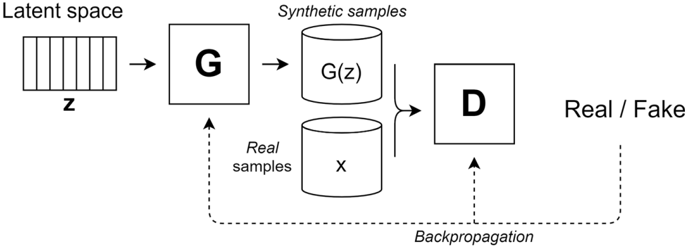
“This approximation was followed in GANs architectures such as [34, 48, 97, 103, 106], where a comparison between networks is possible using the same loss function to evaluate their training.”
MethodAdvances in neural information processing systems 7
Cios, K., & Shields, M. (1997) · Neurocomputing · doi:10.1016/s0925-2312(97)90018-7 · Cited by 22,059
On Information and Sufficiency
Kullback, S., & Leibler, R. A. (1951) · The Annals of Mathematical Statistics · doi:10.1214/aoms/1177729694 · Cited by 20,193 · cited 4×
“Recall that Kullback– Leibler divergence (KL divergence) [31] is defined as”
BackgroundMethodInfluential
Research works printed but not linked: 23
- Goodfellow IJ, Pouget-Abadie J, Mirza M, Xu B, Warde-Farley D, Ozair S, Courville A, Bengio Y (2014) Generative adver- sarial networks 4. Lecun Y (1987) PhD Thesis: Modeles connexionnistes de L'apprentissage (connectionist Learning Models). Universite P. et M. Curie (Paris 6)
- Lecun Y (1987) PhD Thesis: Modeles connexionnistes de L’apprentissage (connectionist Learning Models). Universite P. et M. Curie (Paris 6)
- Bhowmik AK, Cabral P (2015) Spatially shifting temporal points: estimating pooled within-time series variograms for scarce hydrological data. Hydrol Earth Syst Sci Discuss 12(2):2243-2265
- Yang C-HH, Tsai Y-Y, Chen P-Y (2021) Voice2series: Repro- gramming acoustic models for time series classification. In: International conference on machine learning, pp. 11808-11819. PMLR
- Wang Z, Yan W, Oates T (2017) Time series classification from scratch with deep neural networks: a strong baseline. In: 2017 International joint conference on neural networks (IJCNN), pp. 1578-1585. IEEE · DOI · Paper page
- Karras T, Aittala M, Laine S, Ha ¨rko ¨nen E, Hellsten J, Lehtinen J, Aila T (2021) Alias-free generative adversarial networks. Adv Neural Inf Process Syst 34:852-863
- Gao L, Chen D, Zhao Z, Shao J, Shen HT (2021) Lightweight dynamic conditional gan with pyramid attention for text-to-im- age synthesis. Pattern Recognit 110:107384
- Heusel M, Ramsauer H, Unterthiner T, Nessler B, Hochreiter S (2017) Gans trained by a two time-scale update rule converge to a local nash equilibrium. Advances in neural information pro- cessing systems. In: Neural information processing systems (NIPS). 30
- Yoon J, Jarrett D, Van der Schaar M (2019) Time-series gen- erative adversarial networks. In: Advances in neural information processing systems 32
- Sutskever I, Martens J, Hinton GE (2011) Generating text with recurrent neural networks. In: ICML
- Van Den Oord A, Dieleman S, Zen H, Simonyan K, Vinyals O, Graves A, Kalchbrenner N, Senior AW, Kavukcuoglu K (2016) Wavenet: a generative model for raw audio. SSW 125:2
- Fu B, Kirchbuchner F, Kuijper A (2020) Data augmentation for time series: traditional vs generative models on capacitive proximity time series. In: Proceedings of the 13th ACM inter- national conference on pervasive technologies related to assis- tive environments, pp. 1-10 · DOI
- Debnath A, Waghmare G, Wadhwa H, Asthana S, Arora A (2021) Exploring generative data augmentation in multivariate time series forecasting: opportunities and challenges. Solar- Energy 137:52-560
- Cao P, Li X, Mao K, Lu F, Ning G, Fang L, Pan Q (2020) A novel data augmentation method to enhance deep neural net- works for detection of atrial fibrillation. Biomed Signal Process Control 56:101675
- Jaitly N, Hinton GE (2013) Vocal tract length perturbation (vtlp) improves speech recognition. In: Proceedings of ICML work- shop on deep learning for audio, speech and language, vol. 117
- Le Guennec A, Malinowski S, Tavenard R (2016) Data augmentation for time series classification using convolutional neural networks. In: ECML/PKDD workshop on advanced analytics and learning on temporal data
- Lee H, Hwang S, Shin J (2019) Rethinking data augmentation: self-supervision and self-distillation. arxiv 2019. arXiv preprint arXiv:1910.05872 · arXiv
- Moreno-Barea FJ, Jerez JM, Franco L (2020) Improving clas- sification accuracy using data augmentation on small data sets. Expert Syst Appl 161:113696
- Li J, Ren W, Han M (2021) Variational auto-encoders based on the shift correction for imputation of specific missing in multi- variate time series. Measurement 186:110055
- Arjovsky M, Chintala S, Bottou L (2017) Wasserstein genera- tive adversarial networks. In: International conference on machine learning, pp. 214-223. PMLR
- Higgins I, Matthey L, Pal A, Burgess C, Glorot X, Botvinick M, Mohamed S, Lerchner A (2016) beta-vae: learning basic visual concepts with a constrained variational framework. In Interna- tional conference on learning representations.
- Olszewski RT (2001) Generalized feature extraction for struc- tural pattern recognition in time -series data. PhD thesis 103.
- Shao J, Hu K, Wang C, Xue X, Raj B (2020) Is normalization indispensable for training deep neural network? Adv Neural Inf Process Syst 33:13434-13444 116.
Cited by
Items 101–200 of 414
He, X., Jiang, Z., Wu, X., Liu, H., & Luo, H. (2025) · Biomedical Signal Processing and Control · doi:10.1016/j.bspc.2025.107842 · Cited by 6
Consistency regularization for few shot multivariate time series forecasting
She, Y., Hong, Y., Shen, S., Yang, B., Zhang, L., & Wang, J. (2025) · Scientific Reports · doi:10.1038/s41598-025-99339-4 · Cited by 7
“For complex MTS forecasting tasks, increasing data diversity reduces overfitting and enhances the model’s ability to model nonlinear and multiscale time features 29,30 .”
U-Net Inspired Transformer Architecture for Multivariate Time Series Synthesis
Jeng, S.-L. (2025) · Sensors · doi:10.3390/s25134073 · Cited by 6
“This technique is vital for augmenting limited datasets, enhancing model generalization while maintaining intrinsic trends and variability [1].”
A data attribution approach for unsupervised anomaly detection on multivariate time series
Verdone, A., Scardapane, S., & Panella, M. (2025) · Expert Systems with Applications · doi:10.1016/j.eswa.2025.129285 · Cited by 7
The application of machine learning on brain imaging features of different narcolepsy subtypes
Chin, W., Huang, S., Liu, F., Wang, C.-H., Tang, I., Hsiao, I., & Huang, Y. (2024) · SLEEP · doi:10.1093/sleep/zsad328 · Cited by 6
The Use of Data Mining in Public Budgeting: A Systematic Literature Mapping
Neves, J. C. G. D., & de Carvalho, V. O. (2025) · IEEE Access · doi:10.1109/access.2025.3531834 · Cited by 6
“In this work, techniques for tabular data, such as SMOTE [20], and for temporal data, such as interpolation via upsampling [21] or scaling and jittering [22], are categorized as data augmentation techniques.”
Foloni-Neto, H., & Ciotti, Á. M. (2024) · Ocean Science Journal · doi:10.1007/s12601-024-00163-0 · Cited by 5
“Data augmentation by jittering is a well-known method to increase the diversity of training samples by applying a realistic and random transformation that helps prevent overfitting and improve model performance (Iglesias et al. 2023).”
Han, F., Liang, Y., Ling, Q.-H., & Han, H. (2025) · IEEE Transactions on Computational Biology and Bioinformatics · doi:10.1109/tcbbio.2025.3560097 · Cited by 5
“Tosolvethisproblem,numerousmethodsofdataaugmenta-tionhavebeenproposed[3],[4].”
Li, X., van Vugt, M. K., & Maurits, N. M. (2025) · Biomedical Signal Processing and Control · doi:10.1016/j.bspc.2025.108547 · Cited by 5
Yao, X., Huang, M., Shi, F., & Yu, L. (2025) · Tunnelling and Underground Space Technology · doi:10.1016/j.tust.2025.106997 · Cited by 5
Ditta, A., Wu, P., Zhang, R., Nawaz, H., Majeed, M. I., Rezvantalab, S., Mihandoost, S., Buhl, E. M., Rütten, S., Kiessling, F. M., et al. (2025) · Nanoscale Advances · doi:10.1039/d5na00905g · Cited by 5
Zhang, X.-Y., Cheng, D.-J., Sun, Z.-Y., & Liu, H. (2025) · Mechanical Systems and Signal Processing · doi:10.1016/j.ymssp.2025.113676 · Cited by 6
TSPredIT: Integrated Tuning of Data Preprocessing and Time Series Prediction Models
Salles, R. P., Pacitti, E., Bezerra, E. A. D., Marques, C., Pacheco, C. C., Oliveira, C. S., Porto, F. A. M., & Ogasawara, E. (2023) · Lecture notes in computer science · doi:10.1007/978-3-662-68014-8_2 · Cited by 6
“They also su ff er from the presence of concept drift [21] or lack of data [33].”
Improving ED admissions forecasting by using generative AI: An approach based on DGAN
Álvarez-Chaves, H., Spruit, M. R., & R-Moreno, M. D. (2024) · Computer Methods and Programs in Biomedicine · doi:10.1016/j.cmpb.2024.108363 · Cited by 6
Zhang, C., Qin, H., Zhang, Y., Jiang, C., Zhang, D., & Deng, W. (2024) · International Journal of Electrical Power & Energy Systems · doi:10.1016/j.ijepes.2024.110190 · Cited by 8
Makomere, R. S., Rutto, H. L., Alugongo, A. A., Koech, L. K., Suter, E. K., & Kohitlhetse, I. C. (2025) · Unconventional Resources · doi:10.1016/j.uncres.2025.100145 · Cited by 9
Traquete, F., Silva, M. S., & Ferreira, A. E. N. (2024) · Computers in Biology and Medicine · doi:10.1016/j.compbiomed.2024.109414 · Cited by 5
Synthetic ECG Generation for Data Augmentation and Transfer Learning in Arrhythmia ClassificationPreprint
Núñez, J. F., Arjona, J., & Béjar, J. (2024) · arXiv (Cornell University) · doi:10.48550/arxiv.2411.18456 · Cited by 7
Zhang, C., Wang, H., Mao, W., Xie, Y., & Yu, B. (2025) · Measurement Science and Technology · doi:10.1088/1361-6501/adcadc · Cited by 4
Dunphy, K., Agarwal, H., & Sadhu, A. (2025) · Journal of Pipeline Systems Engineering and Practice · doi:10.1061/jpsea2.pseng-1861 · Cited by 6
Moutonnet, N., Scott, G., & Mandic, D. P. (2025) · International Joint Conference on Neural Networks (IJCNN) · doi:10.1109/ijcnn64981.2025.11228362 · Cited by 4
“More advanced techniques include dynamic time warping [7], the iterative amplitude-adjusted Fourier transform (iAAFT) [5], injecting complex patterns to a signal such as spikes and trends [8], [9], and generative AI models such as time-GAN and variational auto-encoders [10], [11].”
Review on Fault Diagnosis of Electric Submersible Pump using Machine Learning
Zhang, J., Dong, S., Zhang, S., Zhang, H., Li, H., Dong, Q., Wu, P., & Feng, C. (2025) · Journal of Physics Conference Series · doi:10.1088/1742-6596/3129/1/012056 · Cited by 4
Ouali, H. A. L., Abida, O., Essalhi, M., & Moukhtar, I. (2025) · International Journal of Hydrogen Energy · doi:10.1016/j.ijhydene.2025.152970 · Cited by 4
Ljubić, H., Martinović, G., Volarić, T., & Vasić, D. (2025) · Advanced Engineering Informatics · doi:10.1016/j.aei.2025.104212 · Cited by 4
Analysis of Models to Estimate Morbidity Rates of Respiratory Diseases Through Deep Learning
Nery, L. M., Nicomedes, N. D. P., Camargo, P. C. M. D. G., de Outeiro, S. A., Filho, L. L., de Farias, C. M., & Silva, D. C. D. C. E. (2026) · Tropical Medicine & International Health · doi:10.1111/tmi.70126 · Cited by 4
Automated bird sound recognition in ecology: A methodological review and application framework
Shen, X., Xu, J., Zhang, Q., Luo, P., Liu, Z., Chen, J., Zhou, G., Yi, J., Xiao, Z., & Chen, A. (2026) · Avian Research · doi:10.1016/j.avrs.2026.100368 · Cited by 5
Dodig, A., Stanković, V., Stanković, L., & Stojković, M. (2026) · Environmental Modelling & Software · doi:10.1016/j.envsoft.2026.107037 · Cited by 4
Yu, B., Yan, J., Li, Y.-A., & Xing, H. (2025) · Georisk Assessment and Management of Risk for Engineered Systems and Geohazards · doi:10.1080/17499518.2025.2453930 · Cited by 6
“Using continuous time-series data could allow the model to capture more accurate data characteristics (Iglesias et al. 2023).”
Pioneering AI in Chemical Data: New Frontline With GC- MS Generation
Yoon, N., & Kim, H. (2024) · International Conference on Artificial Intelligence in Information and Communication (ICAIIC) · doi:10.1109/icaiic60209.2024.10463452 · Cited by 6
“We apply a preprocessing technique to address the inherent scaler deviation of GC-MS data identified through EDA before models suitable for time series data augmentation based on previous studies [5].”
MethodInfluentialMachine Learning Approach for Early Detection of Diabetes Using Raman Spectroscopy
Quang, T. N., Nguyen, T. T., & Viet, H. P. T. (2024) · Mobile Networks and Applications · doi:10.1007/s11036-024-02340-w · Cited by 4
Woillard, J., Benoist, C., Destère, A., Labriffe, M., Marchello, G., Josse, J., & Marquet, P. (2024) · CPT Pharmacometrics & Systems Pharmacology · doi:10.1002/psp4.13240 · Cited by 4
DeSmet, C., Greeley, C., & Cook, D. J. (2024) · IEEE Sensors Journal · doi:10.1109/jsen.2024.3483108 · Cited by 4
“Augmenting time-series data is trickier [22].”
Polo-Mendoza, R., Maš́ın, D., & Duque, J. (2025) · Results in Engineering · doi:10.1016/j.rineng.2025.106063 · Cited by 4
D3A-TS: denoising-driven data augmentation in time series
Solis‐Martín, D., Galán‐Paez, J., & Borrego‐Díaz, J. (2026) · International Journal of Data Science and Analytics · doi:10.1007/s41060-025-00990-x · Cited by 4
“…decoder networks of a DAE q ( · ) Posterior distribution of a denoising process p φ ( · ) Model to approximate q ( · ) μ, σ Mean and variance M ( x , r ) Mapping process that introduces noise with ratio r in sample x A ψ ( x ) Model to estimate the meta-attributes of time series x β t Noise rate”
TSMix: time series data augmentation by mixing sources
Darlow, L. N., Joosen, A., Asenov, M., Deng, Q., Wang, J., & Barker, A. (2023) · Workshop on Machine Learning and Systems (EuroMLSys) · doi:10.1145/3578356.3592584 · Cited by 9
Data augmentation in economic time series: Behavior and improvements in predictions
Lazcano, A. (2023) · AIMS Mathematics · doi:10.3934/math.20231251 · Cited by 4
“[4] tries to compile various data augmentation techniques oriented to time series, allowing an exhaustive comparison of the methodologies in the domain of time series.”
BackgroundMehri, M., Calmon, G., Odille, F., Oster, J., & Lalande, A. (2023) · Sensors · doi:10.3390/s23218691 · Cited by 4
“Time-series data synthesis techniques have been categorized as follows [20,21]:”
MethodD3A-TS: Denoising-Driven Data Augmentation in Time SeriesPreprint
Solis‐Martín, D., Galán‐Paez, J., & Borrego‐Díaz, J. (2023) · arXiv (Cornell University) · doi:10.48550/arxiv.2312.05550 · Cited by 6
“…decoder networks of a DAE q ( · ) Posterior distribution of a denoising process p φ ( · ) Model to approximate q ( · ) μ, σ Mean and variance M ( x , r ) Mapping process that introduces noise with ratio r in sample x A ψ ( x ) Model to estimate the meta-attributes of time series x β t Noise rate”
Vanacore, A., & Ciardiello, A. (2025) · Socio-Economic Planning Sciences · doi:10.1016/j.seps.2025.102240 · Cited by 3
Plausible Vehicle Trajectory Augmentation With Hybrid Machine Learning
Park, J., Jang, H., Kang, B., & Hwang, Y. (2025) · IEEE Access · doi:10.1109/access.2025.3573191 · Cited by 3
“Data enhancement [8], [9], [10] involves the transformation, mixing, and recombining of existing datasets to generate new data points, thereby improving model performance and reducing data acquisition costs.”
TransConv-DDPM: Enhanced Diffusion Model for Generating Time-Series Data in Healthcare
Kabir, M. S., Alamgeer, S., Debnath, M., & Ngu, A. H. H. (2025) · IEEE Annual International Computer Software and Applications Conference (COMPSAC) · doi:10.1109/compsac65507.2025.00114 · Cited by 4
“These methods are effective in maintaining structural consistency but fail to capture the unpredictability and interdependencies in highly dynamic data [26], [27].”
Real-Time Drug Classification Using YOLOv11 for Reducing Medication Errors
Lungido, J., & Rachmawanto, E. H. (2025) · Journal of Applied Informatics and Computing · doi:10.30871/jaic.v9i4.10117 · Cited by 3
“To enhance model robustness and prevent overfitting [18], [19], data augmentation was applied, generating three augmented versions per training image from the 3,500-image training subset, resulting in a total of 10,500 augmented images (a 200% increase).”
Ameur, S., Mahjoub, M. A., & Khalifa, A. B. (2025) · Engineering Applications of Artificial Intelligence · doi:10.1016/j.engappai.2025.112289 · Cited by 3
Teo, D. K. X., Maul, T., & Tan, M. T. T. (2025) · Electrochimica Acta · doi:10.1016/j.electacta.2025.148022 · Cited by 3
Dahl, J. M., Grilli, A. R., Steele, S. C., & Grilli, S. T. (2026) · Journal of Marine Science and Engineering · doi:10.3390/jmse14020179 · Cited by 3
Rengifo, J., A., R. A. G., & Aller, J. M. (2026) · IEEE Access · doi:10.1109/access.2026.3655166 · Cited by 4
“Two data augmentation strategies addressed this: time series slicing and adding white noise [79].”
Alexandrino, F. Q. D. L., Pacheco, C. C., Mello, A. C. S., Vaz, A. L., Coutinho, R. D. C., Carvalho, D., & Ogasawara, E. (2026) · Computational Economics · doi:10.1007/s10614-025-11281-9 · Cited by 5
Chi, Y., Yao, S.-L., Zhu, X.-H., Wang, Z., Qi, J., Wang, N., & Zhang, X.-C. (2026) · Journal of Manufacturing Processes · doi:10.1016/j.jmapro.2026.01.103 · Cited by 3
Yusof, Y., & Fajila, F. (2026) · Journal of Information and Communication Technology · doi:10.32890/jict2026.25.1.1 · Cited by 3
Liu, T., Liu, C., Huang, J., Zhang, C., Jin, F., Zhang, K., Du, Z., Guo, X., & Zhang, X. (2026) · Measurement Science and Technology · doi:10.1088/1361-6501/ae4ac3 · Cited by 3
Xie, J., Zheng, J., Fu, J., Huang, S., Zhou, Y., Luo, X., Dai, D., Mao, Y., & Han, Q. (2026) · Spectrochimica Acta Part A Molecular and Biomolecular Spectroscopy · doi:10.1016/j.saa.2026.127828 · Cited by 3
A review of data augmentation and evaluation for lithium-ion batteries from a temporal perspective
Yao, L., Guo, M., Fang, Z., Chen, H., Wang, P., & Xiao, Y. (2026) · Journal of Energy Storage · doi:10.1016/j.est.2026.122337 · Cited by 3
Data Augmentation Techniques for Accurate Action Classification in Stroke Patients with Hemiparesis
Oh, Y. (2024) · Sensors · doi:10.3390/s24051618 · Cited by 5
Time series classification of multi-channel nerve cuff recordings using deep learning
Gill, A. P. S., & Zariffa, J. (2024) · PLoS ONE · doi:10.1371/journal.pone.0299271 · Cited by 3
“Three types of data augmentation were applied: zeroing out parts of the signals, mixing and matching signals, and shifting signals as shown in Fig 2 [26].”
BackgroundMethodMisgar, M. M., & Bhatia, M. P. S. (2024) · Multimedia Tools and Applications · doi:10.1007/s11042-024-19631-9 · Cited by 3
Sun, T., Tan, T., Li, D., Markert, B. A., Shull, P. B., & Bamer, F. (2025) · IEEE Sensors Journal · doi:10.1109/jsen.2024.3521896 · Cited by 4
“For example, adversarial neural networks [36], generative models [37], [38], and transfer learning techniques, such as domain adaptation [39] and fine-tuning pretrained models [40], have demonstrated effectiveness when applied to wearable data [41].”
Jia, Y., & Sasani, M. (2025) · Neural Computing and Applications · doi:10.1007/s00521-025-11085-w · Cited by 3
A simple data augmentation method for automatic modulation recognition via mixing signals
Shen, W., Xu, D., Xu, X., Chen, Z., Xuan, Q., Wang, W., Lin, Y., & Yang, X. (2024) · International Conference on Robotics, Intelligent Control and Artificial Intelligence (RICAI) · doi:10.1109/ricai64321.2024.10910984 · Cited by 4
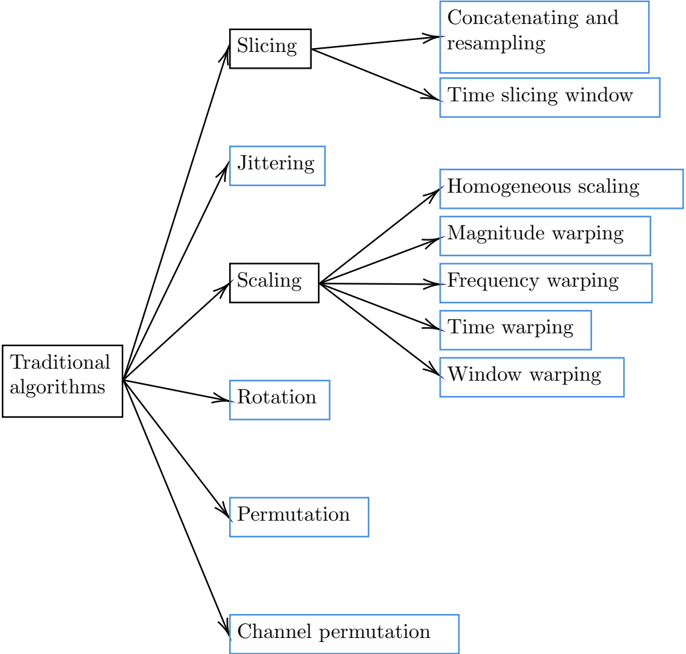
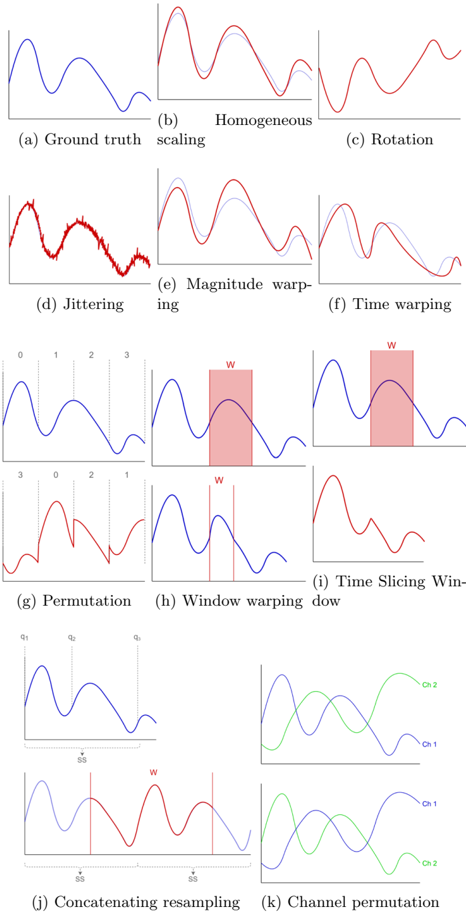
“Time-domain transformations, such as window slicing, window warping, magnitude warping, and jittering [31], are commonly used for augmenting time series data.”
Collinear datasets augmentation using Procrustes validation sets
Kucheryavskiy, S., & Zhilin, S. (2025) · Analytica Chimica Acta · doi:10.1016/j.aca.2025.343913 · Cited by 3
Improving Infant Cry Recognition Using MFCC And CNN-Based Audio Augmentation
Setyoningrum, N. G., Utami, E., Kusrini, K., & Wibowo, F. W. (2025) · Jurnal Teknik Informatika (Jutif) · doi:10.52436/1.jutif.2025.6.2.4373 · Cited by 3
Generative AI visual creativity system combined with knowledge retrieval
Zhou, X., Kim, S., & Chen, Y. (2025) · Journal of Computational Methods in Sciences and Engineering · doi:10.1177/14727978251346065 · Cited by 6
Linear scaling reveals low-dimensional structure in observable microbial dynamics
Zhou, Z., Chen, X., Baig, Y., Wang, W. K., Şimşek, E., Hamrick, G. S., Holmes, Z. A., Du, Z., Karig, D., & You, L. (2026) · Proceedings of the National Academy of Sciences · doi:10.1101/2025.06.13.659614 · Cited by 3
Oszust, M., & Warchoł, D. (2022) · IEEE International Conference on Tools with Artificial Intelligence (ICTAI) · doi:10.1109/ictai56018.2022.00108 · Cited by 3
“Note that several examples per class make it difficult to even run more complex approaches [18].”
BackgroundShi, Y. K., Wang, C., Ge, G., Liu, F., & Zhang, L. (2023) · IEEE Access · doi:10.1109/access.2023.3322375 · Cited by 3
“For instance, data augmentation [43], [44] is a commonly used and effective technique.”
BackgroundMethodYoo, D., Choi, M., Oh, H., & Han, B. (2024) · IEEE Access · doi:10.1109/access.2024.3516525 · Cited by 3
“We specifically examined conventional 1D signal augmentation methods including flipping, jittering, time reversal, and scaling [54], along with our time-shift domain augmentation (TSDA) approach.”
Kang, T. Y., & Hong, S. (2025) · IEEE Access · doi:10.1109/access.2025.3536287 · Cited by 3
“Data augmentation is crucial for AI models as it generates more diverse training data from existing datasets, aiding in generalization and preventing overfitting [36].”
AutoMA: Automated Generation of Multi-level Annotations for Time Series Visualization
Jiang, Q., Sun, G., Li, T., Tang, J., Wang, X., Wang, Y., Jiang, L., & Liang, R. (2025) · IEEE Pacific Visualization Conference (PacificVis) · doi:10.1109/pacificvis64226.2025.00014 · Cited by 3
“To enhance the model’s robustness, we introduce various randomized parameters to simulate real-world scenarios, ensuring good generalization capabilities when applied to real data [26].”
Towards Uncertainty Quantification for Time Series Segmentation
Draayer, E., & Cao, H. (2024) · ACM International Conference on Information and Knowledge Management (CIKM) · doi:10.1145/3627673.3679652 · Cited by 3
Cross-Dataset Data Augmentation Using UMAP for Deep Learning-Based Wind Speed Prediction
Leon-Gomez, E. A., Álvarez-Meza, A. M., & Castellanos-Dominguez, G. (2025) · Computers · doi:10.3390/computers14040123 · Cited by 2
End-to-End Horse Gait Classification in Uncontrolled Environments Using Inertial Sensors
Gérard, M., Hanne‐Poujade, S., Dubois, G., Château, H., & Mezghani, N. (2025) · IEEE Access · doi:10.1109/access.2025.3564324 · Cited by 2
“Data augmentation is achieved by transformation of the existing data or by new samples generation [38], [39].”
Time-Series Clustering With Dynamic Feature Mining in the Framework of Belief Function Theory
Shi, Y., Gong, C., & Su, Z. (2025) · IEEE Transactions on Systems Man and Cybernetics Systems · doi:10.1109/tsmc.2025.3577606 · Cited by 2
“…and derivative dynamic time warping; two algorithms combining DBSCAN and uniform manifold approximation projection (UMAP fr and UMAP sp ) [21], [47], which embed the time-series data into higher-dimensional spaces to obtain geometric representations; the kshape algo-rithm [41], which relies on…”
Lorbetskie, B., Manouchehri, N., Girard, M., Sauvé, S., & Lu, H. (2025) · Vaccines · doi:10.3390/vaccines13080820 · Cited by 2
“To tackle the challenge of data imbalance, we implemented a data augmentation strategy that involved generating synthetic variations of the existing chromatograms [30].”
Hung, K., Man, G. M.-T., Chui, K. T., Chow, D. H. K., Ling, B. W., Pun, S. H., Liu, T.-W., & Wang, S. (2025) · IEEE Transactions on Consumer Electronics · doi:10.1109/tce.2025.3603229 · Cited by 5
“Restrictions apply. transformations of real data [12], [13].”
Yang, S., Shi, H., Yin, J., Xu, X., Yao, J., & Liu, S. (2025) · IEEE Sensors Journal · doi:10.1109/jsen.2025.3602431 · Cited by 5
“The variational autoencoder (VAE) [50] is a generative model that combines the ideas of autoencoder and variational inference to learn the latent representation of the data and generate new data samples.”
Lin, L., Chen, Y., He, W., Fu, S., & Suo, S. (2025) · Computers in Industry · doi:10.1016/j.compind.2025.104378 · Cited by 2
Data augmentation-aided fatigue delamination shape prognostics in composites
Yuan, J., Wang, X. V., Wang, L., Chiachío, M., Chiachío, J., Gao, J., & Li, T. (2025) · Composite Structures · doi:10.1016/j.compstruct.2025.119748 · Cited by 2
Hassine, M. B., & Mili, L. (2025) · PeerJ Computer Science · doi:10.7717/peerj-cs.3228 · Cited by 2
Rimpôt, J., Hibert, C., Malet, J., Forestier, G., & Weber, J. (2025) · Journal of Geophysical Research Machine Learning and Computation · doi:10.1029/2025jh000958 · Cited by 2
Kermanshahi, M. A., Akbari, A., Nasersharif, B., & Kabudian, S. J. (2025) · Computers & Electrical Engineering · doi:10.1016/j.compeleceng.2025.110851 · Cited by 5
Evaluation of Data Augmentation Under Label Scarcity for ECG-Based Detection of Sleep Apnea
Ryu, S., Koh, J., & Jeong, I. C. (2025) · Applied Sciences · doi:10.3390/app152413231 · Cited by 2
“Although these methods are widely used and interpretable [38], more advanced approaches, such as mixup, contrastive pre-training, and adversarial synthesis, may yield additional gains, especially in ultra-low-label regimes ( r 5”
Li, H., Ji, Q., & Liu, W. (2026) · Nondestructive Testing And Evaluation · doi:10.1080/10589759.2026.2615854 · Cited by 2
AceNet: Attention-Guided Context Enhancement for Imbalanced Action Recognition via RF Signals
Sheng, B., Liu, H., Cai, H., Zuo, Y., Zhou, J., & Xiao, F. (2026) · IEEE Transactions on Mobile Computing · doi:10.1109/tmc.2026.3666114 · Cited by 2
“However, for temporal sensor data, naively interpolating in the high-dimensional input space can easily produce unrealistic or temporally incoherent signals that may harm training [36], [37].”
Gonzalez, C., Nguyen‐Louie, T. T., Sullivan, E. V., Pfefferbaum, A., Klo, J., Dehoney, J., Zhao, Q., Adeli, E., Tapert, S. F., & Pohl, K. M. (2026) · Biological Psychiatry Cognitive Neuroscience and Neuroimaging · doi:10.1016/j.bpsc.2026.04.004 · Cited by 2
“…per layer (i.e., 8, 16, 32, or 64), starting learning rate (i.e., 1e-3 and 1e-4), augmentation scheme (masking input measurements, oversampling underrepresented classes(45), adding Gaussian noise to the inputs or outputs), and number of epochs (from 20 to 200 epochs, tested in 20 epoch intervals).”
Multi‐view synergistic enhanced fault recording data for transmission line fault classification
Jia, M., Huang, X., Han, F., Yan, D., Wang, W., Zhu, G., Zhang, L., Pan, C., Ma, H., & Wei, J. (2024) · IET Communications · doi:10.1049/cmu2.12784 · Cited by 2
Kim, D., Cho, S., Chae, H., Park, J., & Huh, J. (2025) · Intelligent Data Analysis · doi:10.3233/ida-240002 · Cited by 4
“Despite the introduction of various augmentation methods, there has not been a one-size-fits-all solution, especially given the unique and diverse nature of time series data [2, 53].”
Enhancing Indoor Temperature Forecasting through Synthetic Data in Low-Data Regime
Ruocco, M., Thiry, Z., Nocente, A., & Spitieris, M. (2024) · Linköping electronic conference proceedings · doi:10.3384/ecp208004 · Cited by 2
Analysis of Digital Twin Implementation Technologies for Power Distribution Systems
Yan, A. (2024) · International Conference on Power System Technology (POWERCON) · doi:10.1109/powercon60995.2024.10870562 · Cited by 2
Advancing Neonatal Care: A Deep Learning Approach for Non-Contact Heart Rate Monitoring
Grafton, A., Castelblanco, A., Warnecke, J. M., Thomson, L., Schubert, B., Hilgendorff, A., Schnabel, J. A., Lasenby, J., & Beardsall, K. (2024) · IEEE International Conference on e-Health Networking, Applications and Services (Healthcom) · doi:10.1109/healthcom60970.2024.10880770 · Cited by 3
Liu, W., & Shi, X. (2025) · Atmosphere · doi:10.3390/atmos16030272 · Cited by 2
A Review on Time Series Data Augmentation Techniques for Deep Learning
Leh, N. A. M., Ibrahim, M. N., Osman, M. K., Mohamad, A., & Hussain, M. N. M. (2024) · Journal of Advanced Research in Applied Sciences and Engineering Technology · doi:10.37934/araset.62.3.139150 · Cited by 3
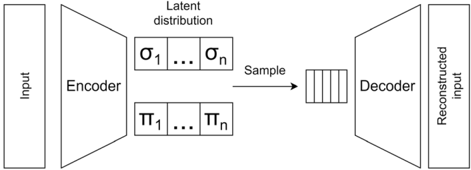
“It also offers flexibility in data augmentation by allowing control over the generated samples whereas VAE allows a greater control of the variability in the generated sample by directly adjusting the standard deviation of the latent distribution of original data [37,40].”
Prediction Analysis of Greeting Gestures based on Data Augmentation and LSTM
Wibowo, A. W., Sato-Shimokawara, E., & Kurnianingsih, K. (2024) · International Conference on Machine Learning and Cybernetics · doi:10.1109/icmlc63072.2024.10935279 · Cited by 2
“Therefore, the ability to create larger synthetic data with labels using small data properly is still a problem [16].”
Augmentation-Free Longitudinal Modeling Through Structuring Whitened Embeddings
Fonteyn, K., Bontinck, L., Dhaene, T., & Deschrijver, D. (2025) · IEEE Access · doi:10.1109/access.2025.3608901 · Cited by 2
“For transformation-sensitive data, such as medical time series, inadequate augmentation can distort critical patterns, leading to degraded model performance and poor generalization [1].”
Zhu, X., Wu, Y., Wang, C., Hu, Y., Rosafalco, L., & Mariani, S. (2025) · Computer-Aided Civil and Infrastructure Engineering · doi:10.1111/mice.70066 · Cited by 2
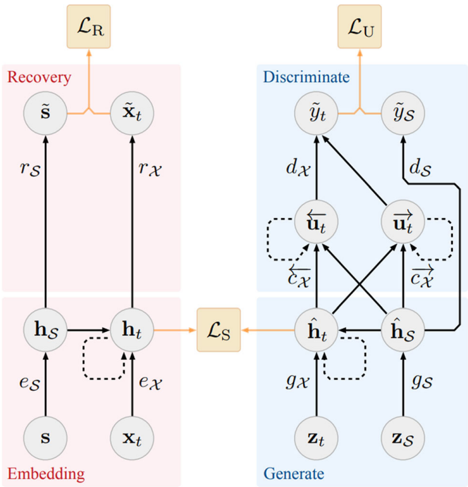
“This process generates a reconstruction loss LR, which is used in the reversible mapping part of the network, composed of the encoder and recovery networks (Iglesias et al., 2023).”
Kulevome, D. K. B., Khokar, S.-U.-D., Yang, C.-C., Cao, F., & Wang, X. (2025) · Nondestructive Testing And Evaluation · doi:10.1080/10589759.2025.2560024 · Cited by 2
“Slicing or window slicing (SW) [9] is a typical time series DA synonymous with cropping in image DA.”
De, B., Sakevych, M., & Metsis, V. (2024) · Lecture notes in computer science · doi:10.1007/978-3-031-66538-7_20 · Cited by 5
“Previous studies, such as those by Wen et al. [12] and Iglesias et al. [2], have provided comprehensive overviews of augmentation methods, discussing their applications, the metrics for evaluation, and the challenges encountered with each technique.”
Explanations of Augmentation Methods for Deep Learning ECG Classification
Balasubramanian, N. S. P., & Dakshit, S. (2024) · Lecture notes in computer science · doi:10.1007/978-3-031-66535-6_30 · Cited by 3
Alexandrino, F. Q. D. L., Pacheco, C. C., Carvalho, D., & Ogasawara, E. (2024) · Anais do Brazilian e-Science Workshop (BreSci) · doi:10.5753/bresci.2024.244100 · Cited by 1
A Novel Integration of Federated Learning and LSTM for Synthetic Time Series Generation
Singh, G., Sharma, P., & Bedi, J. (2024) · Lecture notes in computer science · doi:10.1007/978-3-031-73503-5_2 · Cited by 1
DMGAN: Bridging AI and Chemistry with Enhanced GC-MS Data Generation
Yoon, N., & Kim, H. (2024) · Proceedings of IEEE Sensors/Proceedings of IEEE Sensors ... · doi:10.1109/sensors60989.2024.10784884 · Cited by 2
“Therefore, we aim for an improved GAN for effective access to GC-MS data [16].”
Mialland, A., Fukunaga, S., Katsuki, R., Dong, Y., Yamaguchi, H., & Saitō, Y. (2026) · Bioinformatics · doi:10.1093/bioinformatics/btag415 · Cited by 2
“In fields such as computer vision and natural language processing, approaches like image transformations or sentence paraphrasing are widely used to enhance model performance (Shorten and Khoshgoftaar 2019, Iglesias et al. 2023).”
Metadata
- Authors
- Iglesias, G., Talavera, E., González-Prieto, Á., Mozo, A., & Gómez-Canaval, S.
- Affiliations
- Universidad Politécnica de Madrid (ES)
- Universidad Complutense de Madrid (ES)
- Corresponding author
- Talavera, Edgar
- Venue
- Neural Computing and Applications
- Published
- 2023-03-24
- Volume
- 35
- Issue
- 14
- Pages
- 10123-10145
- ISSN
- 0941-0643 (ISSN-L)
- 1433-3058
- OpenAlex
- W4360860566
- Cited by
- 347
- References
- 92
- Citations by year
- 2026: 86 · 2025: 143 · 2024: 94 · 2023: 21
- FWCI
- 41.69
- Type
- journal article
- Language
- en
- Open access
- hybrid
- doi.org
- Licence
- cc-by
- creativecommons.org/licenses/by/4.0 (tdm)
- creativecommons.org/licenses/by/4.0 (vor)
- Locations
- Neural Computing and Applications (publishedVersion, cc-by)
- Hispana (acceptedVersion, cc-by-nc-nd)
- arXiv (Cornell University) (submittedVersion)
- UPM Digital Archive (Technical University of Madrid) (submittedVersion, cc-by-nc-nd)
- arXiv (Cornell University)
- Funders
- Universidad Politécnica de Madrid
- Topics
- Physical Sciences › Computer Science › Signal Processing › Time Series Analysis and Forecasting
- Social Sciences › Decision Sciences › Management Science and Operations Research › Stock Market Forecasting Methods
- Physical Sciences › Computer Science › Artificial Intelligence › Neural Networks and Applications
- Keywords
- data augmentation, time series, synthetic data generation, deep generative models, noise injection, small datasets
About these checks
Registry, retraction, Cites and statistics results are computed, not judged, with one exception: a printed reference that no index lists is read once by a model before it counts as a citation error. Claims are extracted by a model and kept only when their quote appears verbatim in the text; each cited source is then checked, with a model’s help, for whether it says what the claim relies on. Those verdicts can be wrong — read the claim’s quote and the cited source before relying on one.
Statistics and arithmetic are recomputed, not judged.
Confidence bands are shown only for fields calibrated on our annotated test set. None is calibrated yet, so no band is shown.
What counts as a claim ›How we measure confidence ›How we check this ›
Are you an author, or do you see a problem with this page? Request a review
Data sources
Bibliographic data: Semantic Scholar, OpenAlex, Crossref.
Contains information from the Semantic Scholar Academic Graph Datasets, made available under the ODC Attribution License (ODC-BY 1.0).
Semantic Scholar’s data is described in: Kinney, R., et al. (2023). The Semantic Scholar Open Data Platform. arXiv:2301.10140.
