

Data Augmentation techniques in time series domain: a survey and taxonomy
Open accessThe DOI matches its Crossref record; 104 of the 105 references it cites were found in a registry or an index.
Abstract
With the latest advances in deep learning-based generative models, it has not taken long to take advantage of their remarkable performance in the area of time series. Deep neural networks used to work with time series heavily depend on the size and consistency of the datasets used in training. These features are not usually abundant in the real world, where they are usually limited and often have constraints that must be guaranteed. Therefore, an effective way to increase the amount of data is by using data augmentation techniques, either by adding noise or permutations and by generating new synthetic data. This work systematically reviews the current state of the art in the area to provide an overview of all available algorithms and proposes a taxonomy of the most relevant research. The efficiency of the different variants will be evaluated as a central part of the process, as well as the different metrics to evaluate the performance and the main problems concerning each model will be analysed. The ultimate aim of this study is to provide a summary of the evolution and performance of areas that produce better results to guide future researchers in this field.
Overview
The claims and statistics of this paper haven’t been checked yet.
Free: it reads the open-access text and checks the first 5 claims that cite a source we can check. Create a free account to check every claim.
Integrity signals
Registry
Cites
Statistics
Figures


Verification
Claims the paper makes
The claims and statistics of this paper haven’t been checked yet.
Free: it reads the open-access text and checks the first 5 claims that cite a source we can check. Create a free account to check every claim.
Claims other papers make about this one
Each is checked against this paper’s own text: does it say what the citing paper says it does?
The source backs part of the claim, not all of it — or backs it for a different population, condition or comparison.
In the citing paper
“Data augmentation is one of the effective methods to generate augmented views in SSCL [47], [193].”
From Self-Supervised Learning for Time Series Analysis: Taxonomy, Progress, and Prospects (2024) · cites this paper as [47]
Experimental — accuracy not yet measured
Self-check
Percentages, sums and reported differences re-computed from the paper’s own numbers.
The self-check needs the paper’s full text.
Citations
Cites
Deep Residual Learning for Image Recognition
He, K., Zhang, X., Ren, S., & Sun, J. (2016) · 2016 IEEE Conference on Computer Vision and Pattern Recognition (CVPR) · doi:10.1109/cvpr.2016.90 · Cited by 235,474 · cited 2×
“In particular, they evaluated VGG[91], Residual Network[39], Multilayer Perceptron[100], Long Short-Term”
MethodVery Deep Convolutional Networks for Large-Scale Image Recognition
Simonyan, K., & Zisserman, A. (2014) · arXiv · doi:10.48550/arxiv.1409.1556 · Cited by 114,148 · cited 3×
“In particular, they evaluated VGG[91], Residual Network[39], Multilayer Perceptron[100], Long Short-Term”
MethodHochreiter, S., & Schmidhuber, J. (1997) · Neural Computation · doi:10.1162/neco.1997.9.8.1735 · Cited by 102,318 · cited 2×
“This conditional VAE (CVAE) architecture is composed of LSTM layers [92] which process the temporal data of the electrocardiogram (ECG) signals.”
BackgroundMethodGradient-based learning applied to document recognition
Lecun, Y., Bottou, L., Bengio, Y., & Haffner, P. (1998) · Proceedings of the IEEE · doi:10.1109/5.726791 · Cited by 58,805 · cited 1×
“Temporal Convolutional Neural Networks (CNNs) are CNNs[105] where the convolutional operation is calculated in 1D instead of traditional 2D convolution.”
MethodDensely Connected Convolutional Networks
Huang, G., Liu, Z., Van Der Maaten, L., & Weinberger, K. Q. (2017) · 2017 IEEE Conference on Computer Vision and Pattern Recognition (CVPR) · doi:10.1109/cvpr.2017.243 · Cited by 48,566
Going deeper with convolutions
Szegedy, C., Liu, W., Jia, Y., Sermanet, P., Reed, S., Anguelov, D., Erhan, D., Vanhoucke, V., & Rabinovich, A. (2015) · 2015 IEEE Conference on Computer Vision and Pattern Recognition (CVPR) · doi:10.1109/cvpr.2015.7298594 · Cited by 48,562
Unpaired image-to-image translation using cycle-consistent adversarial networks
Zhu, J.-Y., Park, T., Isola, P., & Efros, A. A. (2017) · 2017 IEEE International Conference on Computer Vision (ICCV) · doi:10.1109/iccv.2017.244 · Cited by 23,602
Image-to-Image Translation with Conditional Adversarial Networks
Isola, P., Zhu, J.-Y., Zhou, T., & Efros, A. A. (2017) · 2017 IEEE Conference on Computer Vision and Pattern Recognition (CVPR) · doi:10.1109/cvpr.2017.632 · Cited by 22,930 · cited 1×
“This approximation was followed in GANs architectures such as [34, 48, 97, 103, 106], where a comparison between networks is possible using the same loss function to evaluate their training.”
MethodAdvances in neural information processing systems 7
Cios, K., & Shields, M. (1997) · Neurocomputing · doi:10.1016/s0925-2312(97)90018-7 · Cited by 22,059
On Information and Sufficiency
Kullback, S., & Leibler, R. A. (1951) · The Annals of Mathematical Statistics · doi:10.1214/aoms/1177729694 · Cited by 20,193 · cited 4×
“Recall that Kullback– Leibler divergence (KL divergence) [31] is defined as”
BackgroundMethodInfluential
Research works printed but not linked: 23
- Goodfellow IJ, Pouget-Abadie J, Mirza M, Xu B, Warde-Farley D, Ozair S, Courville A, Bengio Y (2014) Generative adver- sarial networks 4. Lecun Y (1987) PhD Thesis: Modeles connexionnistes de L'apprentissage (connectionist Learning Models). Universite P. et M. Curie (Paris 6)
- Lecun Y (1987) PhD Thesis: Modeles connexionnistes de L’apprentissage (connectionist Learning Models). Universite P. et M. Curie (Paris 6)
- Bhowmik AK, Cabral P (2015) Spatially shifting temporal points: estimating pooled within-time series variograms for scarce hydrological data. Hydrol Earth Syst Sci Discuss 12(2):2243-2265
- Yang C-HH, Tsai Y-Y, Chen P-Y (2021) Voice2series: Repro- gramming acoustic models for time series classification. In: International conference on machine learning, pp. 11808-11819. PMLR
- Wang Z, Yan W, Oates T (2017) Time series classification from scratch with deep neural networks: a strong baseline. In: 2017 International joint conference on neural networks (IJCNN), pp. 1578-1585. IEEE · DOI · Paper page
- Karras T, Aittala M, Laine S, Ha ¨rko ¨nen E, Hellsten J, Lehtinen J, Aila T (2021) Alias-free generative adversarial networks. Adv Neural Inf Process Syst 34:852-863
- Gao L, Chen D, Zhao Z, Shao J, Shen HT (2021) Lightweight dynamic conditional gan with pyramid attention for text-to-im- age synthesis. Pattern Recognit 110:107384
- Heusel M, Ramsauer H, Unterthiner T, Nessler B, Hochreiter S (2017) Gans trained by a two time-scale update rule converge to a local nash equilibrium. Advances in neural information pro- cessing systems. In: Neural information processing systems (NIPS). 30
- Yoon J, Jarrett D, Van der Schaar M (2019) Time-series gen- erative adversarial networks. In: Advances in neural information processing systems 32
- Sutskever I, Martens J, Hinton GE (2011) Generating text with recurrent neural networks. In: ICML
- Van Den Oord A, Dieleman S, Zen H, Simonyan K, Vinyals O, Graves A, Kalchbrenner N, Senior AW, Kavukcuoglu K (2016) Wavenet: a generative model for raw audio. SSW 125:2
- Fu B, Kirchbuchner F, Kuijper A (2020) Data augmentation for time series: traditional vs generative models on capacitive proximity time series. In: Proceedings of the 13th ACM inter- national conference on pervasive technologies related to assis- tive environments, pp. 1-10 · DOI
- Debnath A, Waghmare G, Wadhwa H, Asthana S, Arora A (2021) Exploring generative data augmentation in multivariate time series forecasting: opportunities and challenges. Solar- Energy 137:52-560
- Cao P, Li X, Mao K, Lu F, Ning G, Fang L, Pan Q (2020) A novel data augmentation method to enhance deep neural net- works for detection of atrial fibrillation. Biomed Signal Process Control 56:101675
- Jaitly N, Hinton GE (2013) Vocal tract length perturbation (vtlp) improves speech recognition. In: Proceedings of ICML work- shop on deep learning for audio, speech and language, vol. 117
- Le Guennec A, Malinowski S, Tavenard R (2016) Data augmentation for time series classification using convolutional neural networks. In: ECML/PKDD workshop on advanced analytics and learning on temporal data
- Lee H, Hwang S, Shin J (2019) Rethinking data augmentation: self-supervision and self-distillation. arxiv 2019. arXiv preprint arXiv:1910.05872 · arXiv
- Moreno-Barea FJ, Jerez JM, Franco L (2020) Improving clas- sification accuracy using data augmentation on small data sets. Expert Syst Appl 161:113696
- Li J, Ren W, Han M (2021) Variational auto-encoders based on the shift correction for imputation of specific missing in multi- variate time series. Measurement 186:110055
- Arjovsky M, Chintala S, Bottou L (2017) Wasserstein genera- tive adversarial networks. In: International conference on machine learning, pp. 214-223. PMLR
- Higgins I, Matthey L, Pal A, Burgess C, Glorot X, Botvinick M, Mohamed S, Lerchner A (2016) beta-vae: learning basic visual concepts with a constrained variational framework. In Interna- tional conference on learning representations.
- Olszewski RT (2001) Generalized feature extraction for struc- tural pattern recognition in time -series data. PhD thesis 103.
- Shao J, Hu K, Wang C, Xue X, Raj B (2020) Is normalization indispensable for training deep neural network? Adv Neural Inf Process Syst 33:13434-13444 116.
Cited by
Items 201–300 of 414
HSDA: High-Frequency Shuffle Data Augmentation for Bird's-Eye-View Map Segmentation
Glisson, C., & Chen, Q. (2025) · IEEE Winter Conference on Applications of Computer Vision · doi:10.1109/wacv61041.2025.00856 · Cited by 2
“Notably, frequency warping has been utilized in speech recognition as a form of vocal tract length perturbation [22].”
Generalization of neural network for manipulator inverse dynamics model learning
Huang, W., Lin, Y., Jie, C., Mingxin, L., & Min, H. (2025) · Applied Intelligence · doi:10.1007/s10489-025-06564-5 · Cited by 3
Data Augmentation of Electromyography Signal for Neuromuscular Disorders Diagnosis
Abdel-Maboud, N. F., Parusheva, S. S., Alfonse, M., & Salem, A.-B. M. (2024) · International Conference on Computer Theory and Applications (ICCTA) · doi:10.1109/iccta64612.2024.10974879 · Cited by 1
“The magnitude warping transformation can be denoted as [23]: x ' ω = ω 1 x 1 ,…,ω i x i ,…ω n x n (3) where ω= ω 1 ,…,ω n =S(x) .”
InfluentialPalani, P., Panigrahi, S., Renganathan, G., Kurita, Y., & Thondiyath, A. (2025) · Frontiers in Rehabilitation Sciences · doi:10.3389/fresc.2025.1474203 · Cited by 1
“Hence, the time series is augmented using the window slicing method with a desired window size of 1,000 and the number of windows set to 50, making the model more robust by introducing variability in the dataset (23, 24).”
Predicting Battery Discharge Behavior for Sparse Data with Augmentation
Obermeier, L., Khir, M. D. B. M., Küchen, N., Turiy, T., Dolinga, J., Gründer, T., Landenberger, B., & Ebert, A. (2025) · IFIP advances in information and communication technology · doi:10.1007/978-3-031-96239-4_22 · Cited by 1
GAIA: A Comprehensive Pipeline for Enabling Aircraft Digital Twin Creation
Biondani, F., Capogrosso, L., Khan, U., Dall’Ora, N., Fraccaroli, E., Migliore, D. F., Acerra, F., Cristani, M., & Fummi, F. (2025) · IEEE International Symposium on Industrial Electronics (ISIE) · doi:10.1109/isie62713.2025.11124604 · Cited by 1
“Recent advances in Deep Learning (DL) have led to the development of more sophisticated approaches for augmenting time series data [19].”
Ai, D., Li, Z., & Li, H. (2025) · Structures · doi:10.1016/j.istruc.2025.109959 · Cited by 1
Adak, S., & Pal, S. K. (2025) · International Journal of Dynamics and Control · doi:10.1007/s40435-025-01837-w · Cited by 1
Mean-deviation-driven synthetic data generation under data scarcity for energy demand time series
Gögelein, D., & von Schwerin, M. (2026) · Energy Reports · doi:10.1016/j.egyr.2026.109296 · Cited by 2
Welding Defect Classification: A Low-Cost Approach Using XGBoost and Simulated Defect Data
Aung, H. W., Wongsa, S., & Phung-on, I. (2025) · doi:10.1109/icoict66265.2025.11192889 · Cited by 1
“Conventional data augmentation methods, such as time shifting, time reversal, and noise injection, or advanced generative approaches like Variational Autoencoders (VAE) and Generative Adversarial Networks (GAN) [6], are often employed to expand training datasets.”
Li, Z., Sun, Q., Zhang, B., Lou, J., Wu, S., Xiao, J., Feng, E., & Du, W. (2025) · Chemical Engineering Science · doi:10.1016/j.ces.2025.122814 · Cited by 1
A CNN–LSTM-Based Prediction Method of Lower-Limb Parameters Across Multiple Locomotion Modes
Lu, W., Ma, Y., Zhang, H., Lin, Y., Wu, X., Cao, W., Yin, M., & Sun, J. (2025) · Lecture notes in computer science · doi:10.1007/978-981-95-2098-5_27 · Cited by 1
Privacy-Aware EMG signal synthesis for ergonomic studies using a generative diffusion model
Qing, L., Jung, S., Su, B., Lu, L., Chen, K., Wan, H., & Xu, X. (2025) · Biomedical Signal Processing and Control · doi:10.1016/j.bspc.2025.108971 · Cited by 1
Multi-scale Dynamic Preservation Mapping: A Time Series Data Augmentation Approach
Lu, Y., Yan, J., Zhang, W., & Huang, L. (2025) · Lecture notes in computer science · doi:10.1007/978-981-95-4384-7_26 · Cited by 1
Teeth in focus: a deep dive into convolutional neural networks for dental image analysis
Arya, V., Duraiswamy, S., & Jagadeesan, D. (2025) · International Journal of Systems Assurance Engineering and Management · doi:10.1007/s13198-025-03061-3 · Cited by 1
“In Iglesias et al. (2023b), the study was conducted to address the classification of tooth X-ray images into distinct categories using a CNN-based approach.”
Zamani, H., Varzaneh, Z. A., & Nadimi-Shahraki, M. H. (2025) · Archives of Computational Methods in Engineering · doi:10.1007/s11831-025-10435-0 · Cited by 5
Schmale, S., Hempel, P., & Spicher, N. (2025) · Annual International Conference of the IEEE Engineering in Medicine and Biology Society (EMBC) · doi:10.1109/embc58623.2025.11252863 · Cited by 1
“05 [25]; and (iii) baseline wander by adding a sinusoidal function with random start phase, length, and amplitude, where the amplitude was uniformly distributed between 0 and 0 .”
Chrit, M., & Majdi, M. (2025) · Artificial Intelligence for the Earth Systems · doi:10.1175/aies-d-24-0120.1 · Cited by 1
Chen, Y.-Y. (2025) · Chemometrics and Intelligent Laboratory Systems · doi:10.1016/j.chemolab.2025.105583 · Cited by 2
Li, H., Zhou, W., Yu, X., Zhang, L., Feng, Y., Yang, Z., & Zhou, C. (2025) · Food Physics · doi:10.1016/j.foodp.2025.100079 · Cited by 1
Wang, Y., Belgiu, M., Wu, H., Zhong, D., Cao, Y., Li, H., & Tao, C. (2025) · IEEE Transactions on Geoscience and Remote Sensing · doi:10.1109/tgrs.2025.3649017 · Cited by 2
“The influence of those multiple factors makes subdividing regions and customizing TD strategies ine ffi cient [53].”
Functional near-infrared spectroscopy for the detection of fear using parameterized quantum circuits
Gómez-Sirvent, J. L., Antonio, F.-C., & Nováis, P. (2025) · Scientific Reports · doi:10.1038/s41598-025-28942-2 · Cited by 3
Chen, L., Liu, M., Liu, X., Yu, Z., Duan, P., Liu, Y., Fa, M., & Zheng, B. (2026) · Journal of Physics D Applied Physics · doi:10.1088/1361-6463/ae357e · Cited by 1
Personalised Stress Detection: An Exploration of Temporal Multimodal Late Fusion Strategies
Libman, M., & Mohammadi, G. (2025) · International Symposium on Multimedia · doi:10.1109/ism66958.2025.00036 · Cited by 1
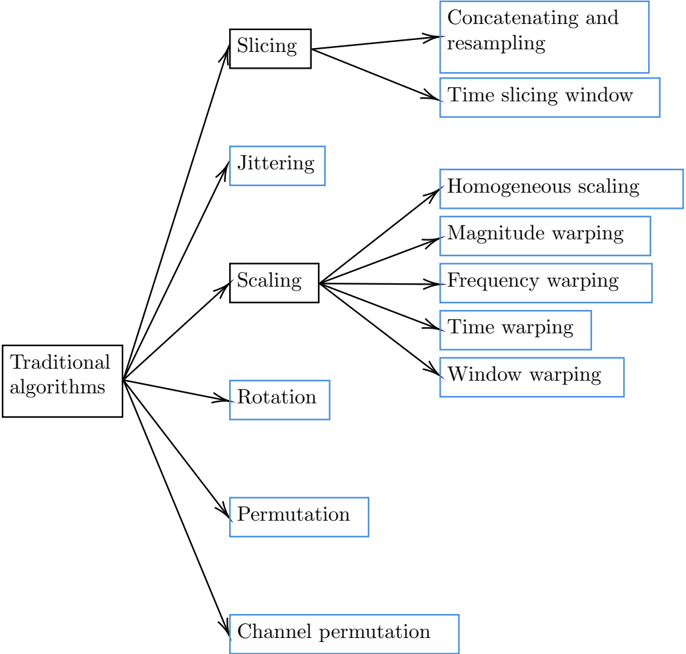
“Traditional approaches include time domain transformations, magnitude domain transformations, frequency domain transformations and pattern mixing; while more sophisticated approaches involve using generative models to create new samples [32], [33], [34].”
Flores, A., Tito-Chura, H., Guzman-Valdivia, J., Gonzales, R. A. M., Chávez, C. A. R., & Silva-Delgado, C. (2026) · Computers · doi:10.3390/computers15020114 · Cited by 2
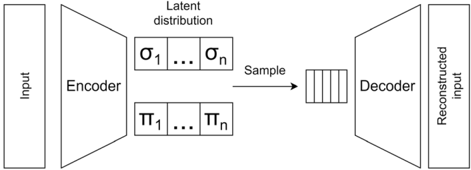
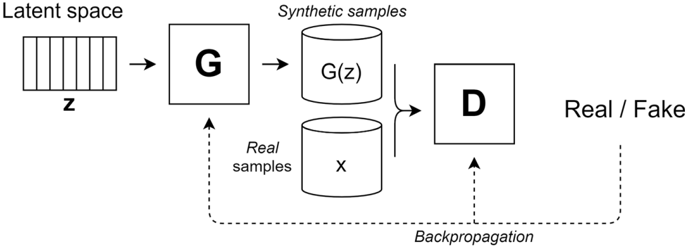
“Several data augmentation techniques have been developed for time series, grounded on three main pillars [17]: traditional algorithms, variational autoencoders (VAE), and generative adversarial network (GAN).”
Probabilistic Predictability of the MJO
Zhang, C. (2026) · Journal of the Atmospheric Sciences · doi:10.1175/jas-d-25-0072.1 · Cited by 1
Jui, S. J. J., Deo, R. C., Acharya, U. R., Barua, P. D., Soar, J., & Devi, A. (2026) · Biomedical Signal Processing and Control · doi:10.1016/j.bspc.2026.109934 · Cited by 3
Medium-term prediction of atmospheric PM2.5 concentration based on the VG-TCABI hybrid architecture
Li, B., Dong, B., Li, J., Fan, G., Yu, F. W., & Zhang, J. (2026) · Neural Networks · doi:10.1016/j.neunet.2026.108881 · Cited by 1
MorsEar: Toward Generalizable Low-Resource Covert Messaging via Earable based Inertial Sensing
Chugh, G., Ghosh, I., Roy, N., Chakraborty, S., & Chakraborty, S. (2026) · CHI Conference on Human Factors in Computing Systems · doi:10.1145/3772318.3791436 · Cited by 1
Victor, A. O., & Ward, T. (2026) · International Journal of Data Science and Analytics · doi:10.1007/s41060-026-01141-6 · Cited by 1
Shen, C., & Namiki, A. (2026) · Chaos Solitons & Fractals · doi:10.1016/j.chaos.2026.118384 · Cited by 1
Kamaliha, A., & Nasiri, F. (2026) · Sustainable Cities and Society · doi:10.1016/j.scs.2026.107609 · Cited by 1
Devarapelly, A. R., Singh, A., Najeh, T., Kankar, P. K., Mandal, T. K., Karim, R., Kumar, U., & Varde, P. V. (2026) · MAPAN · doi:10.1007/s12647-026-00941-2 · Cited by 1
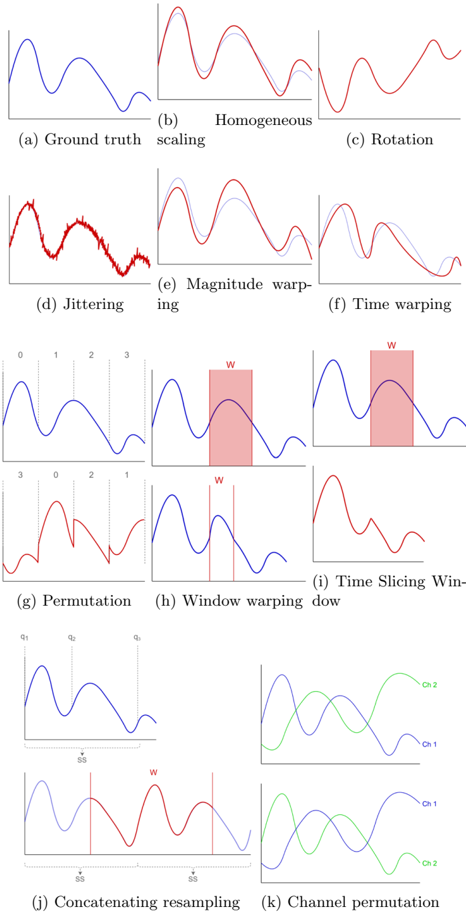
“Magnitude warping applies smooth, time-dependent amplitude modulation: where m ( t ) is a smoothly varying modulation curve generated using spline interpolation [32].”
A Multidimensional Quality Assessment of Synthetic Movement Data for Post-stroke Rehabilitation
Ferreira, A. P. A., Alves, L. O., Molinares, F. A. F., Guimarães, M. D. P., Mota, V. F. S., da Rocha, L. C. D., & Dias, D. R. C. (2026) · Lecture notes in computer science · doi:10.1007/978-3-032-30488-9_15 · Cited by 1
Fu, S., & Wu, Z. (2026) · Food Reviews International · doi:10.1080/87559129.2026.2698084 · Cited by 1
Donmez, T. B., & Mansour, M. (2026) · Acadlore Transactions on AI and Machine Learning · doi:10.56578/ataiml050301 · Cited by 1
Fidelitous Augmentation of Human Accelerometric Data for Deep Learning
Lee, T. K. M., Chan, H. W., Leo, K. H., Chew, E., Zhao, L., & Sanei, S. (2023) · IEEE International Conference on e-Health Networking, Applications and Services (Healthcom) · doi:10.1109/healthcom56612.2023.10472398 · Cited by 1
“A survey of such syntheses – part of a larger TS augmentation review – in [3] commented that the quality metrics for these type of syntheses are probabilistic in nature and not comparable to traditional augmentation approaches.”
BackgroundEnhancement of Outdated Vision Systems in SMEs with Artificial Intelligence Powered Solutions
Pajić, N., Pavlović, L., Živić, F., & Aleksić, J. (2024) · Lecture notes in networks and systems · doi:10.1007/978-3-031-60840-7_11 · Cited by 1
Data Augmentation Techniques for Extreme Wind Prediction Improvement
Vega-Bayo, M., Gómez-Orellana, A. M., Yun, V. M. V., Guijo-Rubio, D., Cornejo-Bueno, L. M., Pérez‐Aracil, J., & Salcedo‐Sanz, S. (2024) · Lecture notes in computer science · doi:10.1007/978-3-031-61137-7_28 · Cited by 1
Synthesizing Vibration Signals Using Generative Adversarial Networks
Žvirblis, T., & Pučinskas, D. (2024) · Communications in computer and information science · doi:10.1007/978-3-031-63543-4_16 · Cited by 1
Csapó, Á. (2024) · IEEE Transactions on Systems Man and Cybernetics Systems · doi:10.1109/tsmc.2024.3448206 · Cited by 1
“More generally, augmentation can be useful when any kind of bias—whether inadvertently introduced into or inherently present in the training set—might lead to learned representations that are too specific [25], [26], [27].”
BackgroundBogodorova, T., Osipov, D., & Vanfretti, L. (2024) · IFAC-PapersOnLine · doi:10.1016/j.ifacol.2024.08.582 · Cited by 1
“In this context, data augmentation arises as an attractive technique, to enlarge a pool of the relevant data for the DNN training, which has proven successful in computer vision Nie et al. (2021), Iglesias et al. (2023).”
MethodPedraza, N. H., Villegas, C. M., Aqueveque, D. C., & Das, R. (2024) · International Conference of the Chilean Computer Science Society (SCCC) · doi:10.1109/sccc63879.2024.10767645 · Cited by 1
Leveraging Light Intensity Structural Breaks for IoT Context-Awareness
Violos, J., Stavrianos, K., Voutsas, F., & Leivadeas, A. (2024) · IEEE World Forum on Internet of Things (WF-IoT) · doi:10.1109/wf-iot62078.2024.10811355 · Cited by 1
“It is essential to highlight that Model Building pipeline can encompass the potential steps of time series Validation [11] and time series augmentation [12].”
Generating Synthetic Time Series Data for Cyber-Physical Systems
Sommers, A., Ramezani, S. B., Cummins, L., Mittal, S., Rahimi, S., Seale, M. A., & Jaboure, J. (2024) · IEEE World Forum on Internet of Things (WF-IoT) · doi:10.1109/wf-iot62078.2024.10811344 · Cited by 1
“Successful GANs for time series DA exist using CNN and RNN backbones [2], [3].”
BackgroundMethodInfluentialBoudouh, N., & Mokhtari, B. (2024) · International Conference on Advances in Electrical and Communication Technologies (ICAECOT) · doi:10.1109/icaecot62402.2024.10828593 · Cited by 1
Early Warning Method for Drilling Overflow Based on Temporal Deep Feature Cross
Chen, Y., Lang, K., & Li, Y. (2024) · International Conference on Computer, Big Data and Artificial Intelligence (ICCBD+AI) · doi:10.1109/iccbd-ai65562.2024.00013 · Cited by 1
“Traditional overflow warnings rely on personal judgment, which can be uncertain [3,4].”
Xu, Y., Chen, Y., & Liang, X. (2025) · IEEE Pacific Visualization Conference (PacificVis) · doi:10.1109/pacificvis64226.2025.00022 · Cited by 1
“Data augmentation techniques are critical in fields such as computer vision [7, 8], natural language processing [9, 10], and time-series analysis [11, 12].”
A Non-Invasive Gait-Based Screening Approach for Parkinson's Disease Using Time-Series Analysis
Chen, H., Tee, C., Tan, V. W. S., Goh, M., Saedon, N. '., Alkhatib, A. A. A., & Farfoura, M. E. (2025) · Symmetry · doi:10.3390/sym17091385 · Cited by 2
Gaur, V., & Liu, X. (2021) · SSRN Electronic Journal · doi:10.2139/ssrn.3902710 · Cited by 1
Evaluating the Role of Data Enrichment Approaches Towards Rare Event Analysis in ManufacturingPreprint
Shyalika, C., Wickramarachchi, R., Kalach, F. E., Harik, R., & Sheth, A. (2024) · SSRN Electronic Journal · doi:10.2139/ssrn.4727698 · Cited by 3
Webber, G., Sturgess, J., & Martinović, I. (2024) · arXiv (Cornell University) · doi:10.48550/arxiv.2407.09104 · Cited by 1
Analytical Software Engineering: A Novel Design Paradigm for Problem Formulation and OptimizationPreprint
Houichime, T. (2025) · SSRN Electronic Journal · doi:10.2139/ssrn.5423734 · Cited by 1
Efficient Online Continual Learning in Sensor-Based Human Activity RecognitionPreprint
Zhang, Y., Leite, C. S., & Xiao, Y. (2026) · SSRN Electronic Journal · doi:10.2139/ssrn.7161268 · Cited by 1
Benchmarking Sensor-Fault Robustness in ForecastingPreprint
Windmann, A., Wittenberg, P., Manca, G., Dix, M., Brandt, J. U., & Niggemann, O. (2026) · arXiv (Cornell University) · doi:10.48550/arxiv.2605.10822 · Cited by 3
Data Augmentation for Pathology Prioritisation: An Improved LSTM-Based Approach
Qi, J., Burnside, G., & Coenen, F. (2022) · Lecture notes in computer science · doi:10.1007/978-3-031-21441-7_4
Applying Generative Models and Transfer Learning to Physiological Data Classification
Núñez, J. F., Arjona, J., Tormos, A., García-Gasulla, D., & Béjar, J. (2023) · Frontiers in artificial intelligence and applications · doi:10.3233/faia230656
Battery Life Prediction Using LSTM-Based Model for Tire Pressure Monitoring System
Goto, T., & Ito, K. (2023) · IEEE Global Conference on Consumer Electronics (GCCE) · doi:10.1109/gcce59613.2023.10315467
“Because the model was designed to perform multiclass classification, oversampling and undersampling were applied to the training data to avoid class-label imbalance [7], [13], [14].”
MethodRisk Prediction in Daily Activities and Falls based on Deep Learning
Lee, S., Koo, B., Yang, S., Kim, D.-K., & Kim, Y. (2023) · Journal of the Korean Society for Precision Engineering · doi:10.7736/jkspe.023.102
Shen, Y., Yang, X., Zhao, J., & Li, Z. (2023) · IEEE International Conference on Big Data (BigData) · doi:10.1109/bigdata59044.2023.10386136
“The quality of each combination was assessed by sorting the RMSE values in ascending order, which served as a critical criterion.”
MethodNon-Linear Time Series Analysis of Upper Limb Exercise Kinematics ProfilePreprint
Chakraborty, P., Neogi, B., Das, A., Faheem, M., Bose, R., Khan, A. A., & Roy, S. (2024) · Research Square · doi:10.21203/rs.3.rs-3968544/v1
Sequence-to-Sequence Architectures for Estimating Long-Term Usage in Data Centre Digital TwinsPreprint
Fernández-Cerero, D., Fernández-Montes, A., Ortega, F. J., & Jakóbik, A. (2024) · SSRN Electronic Journal · doi:10.2139/ssrn.4767239
Asmara, R. A., & Damayanti, F. A. (2024) · SSRN Electronic Journal · doi:10.2139/ssrn.4774198
TFAugment: A Key Frequency-Driven Data Augmentation Method for Human Activity Recognition
Zhang, H., Zeng, B., Kuang, M., Yang, X., & Gong, H. (2024) · Lecture notes in computer science · doi:10.1007/978-981-97-2238-9_22
Kalia, V. M. (2024) · RePEc: Research Papers in Economics · doi:10.48550/arxiv.2405.07431
Time Series Data Augmentation Methods for Deep Learning Models in Conveyor Belt Load Classification
Žvirblis, T., Pikšrys, A., Bzinkowski, D., Rucki, M., & Kilikevičius, A. (2024) · IEEE Open Conference of Electrical, Electronic and Information Sciences (eStream) · doi:10.1109/estream61684.2024.10542589
“Generative adversarial networks (GANs) [8] have also recently become a very popular and powerful tool for data augmentation and data synthesis, including time series data [9]–[11].”
BackgroundŽvirblis, T., Pikšrys, A., Bzinkowski, D., & Kilikevičius, A. (2024) · IEEE Workshop on Advances in Information, Electronic and Electrical Engineering (AIEEE) · doi:10.1109/aieee62837.2024.10586674
“Next, the interpolation of the cubic spline of the nodes S ( x ) defines the scaling [16]: where the magnitude warping function is represented by S ( x ) = α 1 , . . . , α i .”
BackgroundNot What I was Trained for – Out-of-Distribution-Tests for Interactive AIs
Severin, B., Werger, O., & Hesenius, M. (2024) · Lecture notes in computer science · doi:10.1007/978-3-031-59235-5_12
Temporal Data Augmentation techniques for sensor-based Human Activity Recognition
Errafik, Y., Dhassi, Y., & Kenzi, A. (2024) · International Conference on Networking, Information Systems & Security (NISS) · doi:10.1145/3659677.3659712
“Time-Series Classification Temporal Data Augmentation [3, 7] is a specific branch of DA that aims to create new time series from existing time series while preserving their statistical and structural properties.”
Liu, J., Hou, L., Zhang, X., Zhu, Z., Wang, W., & Wang, M. (2024) · Geoenergy Science and Engineering · doi:10.1016/j.geoen.2024.213334
Chui, K. T., Chan, J. T. W., Yousuk, R., Lee, L., & Wang, F. L. (2024) · Communications in computer and information science · doi:10.1007/978-981-96-0205-6_17
Diagnosis and prognosis of proton exchange membrane fuel cells by machine learning
Chanal, D. (2024) · theses.fr (ABES) · doi:10.70675/4c13e120zaf68z4b3czb2e2z7b759ff7c37d · Cited by 2
Guaranteeing Data Confidentiality in Time Series Prediction Using Z-Transform and AES
Al–Anzi, F. S., Al-Anzi, A. F., & Sarath, S. (2025) · Lecture notes in networks and systems · doi:10.1007/978-981-97-7839-3_20
The Effect of Generating Synthetic Data in Smart City Network Systems
Čech, P., Ponce, D., Mikulecký, P., Žváčková, A., Mls, K., Otčenášková, T., & Tučník, P. (2025) · SN Computer Science · doi:10.1007/s42979-025-03673-3
“A survey paper in the domain of time series analysis [20] provides a comprehensive overview of the primary algorithms employed for data augmentation without explicitly focusing on network traffic.”
Reservoir computing for modeling and predicting stream chemistry
Allsup, P., Abbott, B. W., Brown, B., & Giraud-Carrier, C. G. (2025) · Journal of Hydroinformatics · doi:10.2166/hydro.2025.213
Alimi, S., Kuyoro, A. O., Eze, M. O., & Akande, O. (2025) · Indonesian Journal of Electrical Engineering and Informatics (IJEEI) · doi:10.52549/ijeei.v13i1.5506
Enhancing Recurrent Neural Networks for Stock Market Forecasts Through Pec-W Framework
Çalışkan, B. (2025) · IEEE Conference on Computational Intelligence for Financial Engineering & Economics · doi:10.1109/cifer64978.2025.10975740
“Aver-aging data during windowing can enhance data diversity when added to the original dataset, assisting the model in better adapting to different patterns [5].”
Aksu, F., Cordelli, E., Gelardi, F., Chiti, A., & Soda, P. (2025) · Lecture notes in computer science · doi:10.1007/978-3-031-87660-8_12
GCGAN: Time Series Granger Causality Discovery Based on Generative Adversarial Networks
吴, 光. (2025) · Pure Mathematics · doi:10.12677/pm.2025.155151
Improving Visual Reinforcement Learning via Spatial-Temporal Data Augmentation
Li, J.-B., Hou, Q.-W., Zhang, J., & Chen, X.-Z. (2025) · 2025 5th International Conference on Consumer Electronics and Computer Engineering (ICCECE) · doi:10.1109/iccece65250.2025.10984654
“Inspired by temporal data augmentation techniques in video processing and time-series tasks[16, 17, 18], we introduce Spatial-Temporal Data Augmentation (STDA) to strengthen the comprehension of the environment.”
Data augmentation for remaining useful life estimation
Su, I., & Chung, Y. (2024) · International Conference on Logistics and Industrial Engineering (ICLIE) · doi:10.1109/iclie61478.2024.11015401
“The study [22] discusses several challenges in performing data augmentation for time series: (1) the temporal dependence inherent in time series data, (2) time-varying dependencies among variables in multivariate time series, and (3) the varying effectiveness of different data augmentation…”
Multi-domain Consistent Augmentation via Diffusion Models for Imbalanced Time Series Classification
Liu, C., Huo, X., He, C., & Du, J. (2025) · IEEE Data Driven Control and Learning Systems Conference (DDCLS) · doi:10.1109/ddcls66240.2025.11065686
“Data augmentation (DAug.) is an effective approach to improve data diversity [6, 7], aiming to generate new samples through a series of transformations on the original data, expanding the dataset to improve classifier performance and stability.”
Petrovic, E. M., & Subramaniam, R. V. (2025) · International Journal of Modern Computer Science and IT Innovations · doi:10.55640/ijmcsit-v02i07-01
Selective Mixup: Exploring Data Augmentation for Long Time Series in Confectionery Manufacturing
Yamazaki, S. J., & Maekawa, T. (2025) · IEEE International Conference on Industrial Cyber-Physical Systems (ICPS) · doi:10.1109/icps65515.2025.11087824
Enhancing Contrastive Learning in Sequence Classification via Data Augmentation
Huang, H., Tang, C.-Y., & Pao, H.-K. (2025) · Communications in computer and information science · doi:10.1007/978-981-96-6291-3_20
Power Curve Correction-based Data Augmentation for Wind Power Forecasting
Meng, S., Wang, D., & Yang, F. (2025) · Chinese Control and Decision Conference (CCDC) · doi:10.1109/ccdc65474.2025.11091059
Responsible Artificial Intelligence for Healthcare: Trends, Challenges, and Opportunities
Baker, S., & Ahn, E. (2025) · Springer eBooks · doi:10.1007/978-3-031-88024-7_1
Performance Comparison of Machine Learning Models for the Prediction of Dialysis Treatment Variables
Nicosia, A., Cancilla, N., Liberti, E. D., Martín‐Guerrero, J. D., Vives‐Gilabert, Y., Ferrantelli, A., Iacono, F., Brucato, V., Carrubba, V. L., Tinnirello, I., et al. (2025) · Lecture notes in computer science · doi:10.1007/978-3-032-00652-3_12
Swarm Characteristic Classification Using Robust Neural Networks With Optimized Controllable Inputs
Peltier, D. W., Kaminer, I. I., Clark, A. H., & Orescanin, M. (2025) · IEEE Transactions on Aerospace and Electronic Systems · doi:10.1109/taes.2025.3601064
“Our data enrichment approach draws inspiration from the well-established concept of data augmentation, wherein the original dataset is transformed into multiple variations that are pragmatically selected based on expected operational changes [21], [22].”
Classification of Augmented Motor Imagery Data Using Various Representations of Feature Vectors
Mouček, R., Kodera, J., Mautner, P., & Průcha, J. (2025) · Communications in computer and information science · doi:10.1007/978-3-031-96899-0_25
Addressing Data Scarcity in Mid-Term Load Forecasting via Data Augmented Transfer LearningPreprint
Liu, S., Qin, D., & Wang, Y. (2025) · SSRN Electronic Journal · doi:10.2139/ssrn.5442694
Enabling Effective Computing-Power Collaboration through VAE-based Time Series Generation
Gu, L., Wu, Y., Ang, Y., & Zhang, W. (2025) · IEEE/CIC International Conference on Communications in China (ICCC) · doi:10.1109/iccc65529.2025.11148986
“To address these limitations, Time Series Generation [4] (TSG) has emerged as a promising paradigm for augmenting scarce or incomplete time series datasets.”
Rousset, F., Boussaid, T., Scuturici, V.-M., & Clausse, M. (2025) · SSRN Electronic Journal · doi:10.2139/ssrn.5520383
Leveraging Large Language Models for Time Series Prediction on Low-Frequency Data
Parracho, R., Alexandrino, F. Q. D. L., Figueiredo, M. D. S., da Silva, L. P., Macedo, B., Vaz, A. L., Louback, D., Desouzart, V. C., Salles, R. P., Porto, F. A. M., et al. (2025) · Simpósio Brasileiro de Bancos de Dados (SBBD) · doi:10.5753/sbbd.2025.247062
“In data-scarce scenarios, the risk of overfitting increases, impairing the models’ ability to generalize to unseen data [Goubeaud et al., 2021; Iglesias et al., 2023; Maior and Silva, 2024].”
Decoupled self-supervised deep multi-task learning framework for subscriber portrait in smart meter
Yang, H., Lian, C., Xu, B., Chen, Y., Zhao, P., & Zeng, Z. (2025) · Pattern Recognition · doi:10.1016/j.patcog.2025.112633
Time-Series Data Generation to Support Energy Planning in Remote Microgrids
Gardiner, T., Giles, P., Letowski, B., Zrum, J. A., & Ross, M. (2025) · IEEE Canada International Humanitarian Technology Conference · doi:10.1109/ihtc65087.2025.11216301
“Traditional time-series data augmentation techniques, such as scaling and permutation, have been widely used and are easier to apply and understand [4].”
Bessa, A., Oliveira, P., Santos, M. F., Silva, S. A., & Nováis, P. (2025) · Lecture notes in computer science · doi:10.1007/978-3-032-10486-1_18
Metadata
- Authors
- Iglesias, G., Talavera, E., González-Prieto, Á., Mozo, A., & Gómez-Canaval, S.
- Affiliations
- Universidad Politécnica de Madrid (ES)
- Universidad Complutense de Madrid (ES)
- Corresponding author
- Talavera, Edgar
- Venue
- Neural Computing and Applications
- Published
- 2023-03-24
- Volume
- 35
- Issue
- 14
- Pages
- 10123-10145
- ISSN
- 0941-0643 (ISSN-L)
- 1433-3058
- OpenAlex
- W4360860566
- Cited by
- 347
- References
- 92
- Citations by year
- 2026: 86 · 2025: 143 · 2024: 94 · 2023: 21
- FWCI
- 41.69
- Type
- journal article
- Language
- en
- Open access
- hybrid
- doi.org
- Licence
- cc-by
- creativecommons.org/licenses/by/4.0 (tdm)
- creativecommons.org/licenses/by/4.0 (vor)
- Locations
- Neural Computing and Applications (publishedVersion, cc-by)
- Hispana (acceptedVersion, cc-by-nc-nd)
- arXiv (Cornell University) (submittedVersion)
- UPM Digital Archive (Technical University of Madrid) (submittedVersion, cc-by-nc-nd)
- arXiv (Cornell University)
- Funders
- Universidad Politécnica de Madrid
- Topics
- Physical Sciences › Computer Science › Signal Processing › Time Series Analysis and Forecasting
- Social Sciences › Decision Sciences › Management Science and Operations Research › Stock Market Forecasting Methods
- Physical Sciences › Computer Science › Artificial Intelligence › Neural Networks and Applications
- Keywords
- data augmentation, time series, synthetic data generation, deep generative models, noise injection, small datasets
About these checks
Registry, retraction, Cites and statistics results are computed, not judged, with one exception: a printed reference that no index lists is read once by a model before it counts as a citation error. Claims are extracted by a model and kept only when their quote appears verbatim in the text; each cited source is then checked, with a model’s help, for whether it says what the claim relies on. Those verdicts can be wrong — read the claim’s quote and the cited source before relying on one.
Statistics and arithmetic are recomputed, not judged.
Confidence bands are shown only for fields calibrated on our annotated test set. None is calibrated yet, so no band is shown.
What counts as a claim ›How we measure confidence ›How we check this ›
Are you an author, or do you see a problem with this page? Request a review
Data sources
Bibliographic data: Semantic Scholar, OpenAlex, Crossref.
Contains information from the Semantic Scholar Academic Graph Datasets, made available under the ODC Attribution License (ODC-BY 1.0).
Semantic Scholar’s data is described in: Kinney, R., et al. (2023). The Semantic Scholar Open Data Platform. arXiv:2301.10140.
