

Data Augmentation techniques in time series domain: a survey and taxonomy
Open accessThe DOI matches its Crossref record; 104 of the 105 references it cites were found in a registry or an index.
Abstract
With the latest advances in deep learning-based generative models, it has not taken long to take advantage of their remarkable performance in the area of time series. Deep neural networks used to work with time series heavily depend on the size and consistency of the datasets used in training. These features are not usually abundant in the real world, where they are usually limited and often have constraints that must be guaranteed. Therefore, an effective way to increase the amount of data is by using data augmentation techniques, either by adding noise or permutations and by generating new synthetic data. This work systematically reviews the current state of the art in the area to provide an overview of all available algorithms and proposes a taxonomy of the most relevant research. The efficiency of the different variants will be evaluated as a central part of the process, as well as the different metrics to evaluate the performance and the main problems concerning each model will be analysed. The ultimate aim of this study is to provide a summary of the evolution and performance of areas that produce better results to guide future researchers in this field.
Overview
The claims and statistics of this paper haven’t been checked yet.
Free: it reads the open-access text and checks the first 5 claims that cite a source we can check. Create a free account to check every claim.
Integrity signals
Registry
Cites
Statistics
Figures
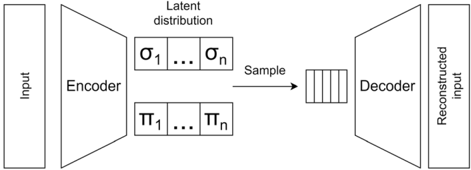
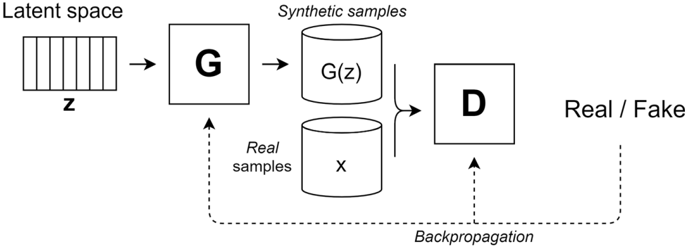
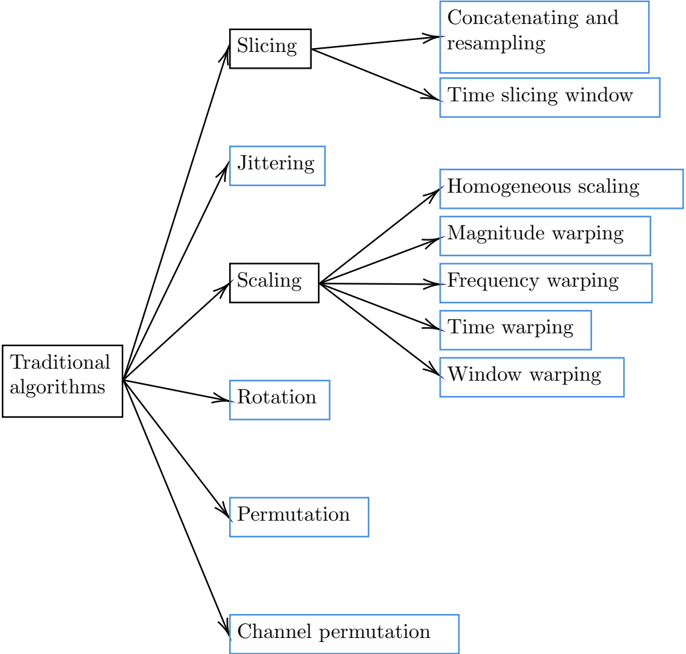
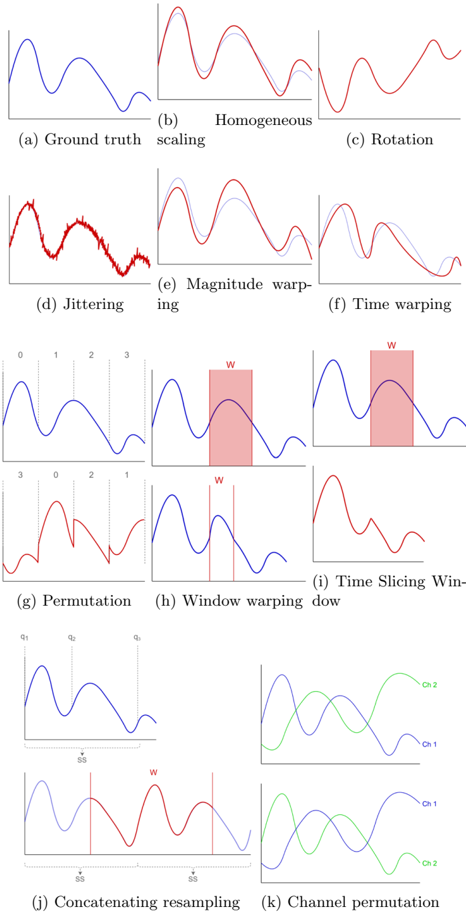


Verification
Claims the paper makes
The claims and statistics of this paper haven’t been checked yet.
Free: it reads the open-access text and checks the first 5 claims that cite a source we can check. Create a free account to check every claim.
Claims other papers make about this one
Each is checked against this paper’s own text: does it say what the citing paper says it does?
The source backs part of the claim, not all of it — or backs it for a different population, condition or comparison.
In the citing paper
“Data augmentation is one of the effective methods to generate augmented views in SSCL [47], [193].”
From Self-Supervised Learning for Time Series Analysis: Taxonomy, Progress, and Prospects (2024) · cites this paper as [47]
Experimental — accuracy not yet measured
Self-check
Percentages, sums and reported differences re-computed from the paper’s own numbers.
The self-check needs the paper’s full text.
Citations
Cites
Deep Residual Learning for Image Recognition
He, K., Zhang, X., Ren, S., & Sun, J. (2016) · 2016 IEEE Conference on Computer Vision and Pattern Recognition (CVPR) · doi:10.1109/cvpr.2016.90 · Cited by 235,474 · cited 2×
“In particular, they evaluated VGG[91], Residual Network[39], Multilayer Perceptron[100], Long Short-Term”
MethodVery Deep Convolutional Networks for Large-Scale Image Recognition
Simonyan, K., & Zisserman, A. (2014) · arXiv · doi:10.48550/arxiv.1409.1556 · Cited by 114,148 · cited 3×
“In particular, they evaluated VGG[91], Residual Network[39], Multilayer Perceptron[100], Long Short-Term”
MethodHochreiter, S., & Schmidhuber, J. (1997) · Neural Computation · doi:10.1162/neco.1997.9.8.1735 · Cited by 102,318 · cited 2×
“This conditional VAE (CVAE) architecture is composed of LSTM layers [92] which process the temporal data of the electrocardiogram (ECG) signals.”
BackgroundMethodGradient-based learning applied to document recognition
Lecun, Y., Bottou, L., Bengio, Y., & Haffner, P. (1998) · Proceedings of the IEEE · doi:10.1109/5.726791 · Cited by 58,805 · cited 1×
“Temporal Convolutional Neural Networks (CNNs) are CNNs[105] where the convolutional operation is calculated in 1D instead of traditional 2D convolution.”
MethodDensely Connected Convolutional Networks
Huang, G., Liu, Z., Van Der Maaten, L., & Weinberger, K. Q. (2017) · 2017 IEEE Conference on Computer Vision and Pattern Recognition (CVPR) · doi:10.1109/cvpr.2017.243 · Cited by 48,566
Going deeper with convolutions
Szegedy, C., Liu, W., Jia, Y., Sermanet, P., Reed, S., Anguelov, D., Erhan, D., Vanhoucke, V., & Rabinovich, A. (2015) · 2015 IEEE Conference on Computer Vision and Pattern Recognition (CVPR) · doi:10.1109/cvpr.2015.7298594 · Cited by 48,562
Unpaired image-to-image translation using cycle-consistent adversarial networks
Zhu, J.-Y., Park, T., Isola, P., & Efros, A. A. (2017) · 2017 IEEE International Conference on Computer Vision (ICCV) · doi:10.1109/iccv.2017.244 · Cited by 23,602
Image-to-Image Translation with Conditional Adversarial Networks
Isola, P., Zhu, J.-Y., Zhou, T., & Efros, A. A. (2017) · 2017 IEEE Conference on Computer Vision and Pattern Recognition (CVPR) · doi:10.1109/cvpr.2017.632 · Cited by 22,930 · cited 1×
“This approximation was followed in GANs architectures such as [34, 48, 97, 103, 106], where a comparison between networks is possible using the same loss function to evaluate their training.”
MethodAdvances in neural information processing systems 7
Cios, K., & Shields, M. (1997) · Neurocomputing · doi:10.1016/s0925-2312(97)90018-7 · Cited by 22,059
On Information and Sufficiency
Kullback, S., & Leibler, R. A. (1951) · The Annals of Mathematical Statistics · doi:10.1214/aoms/1177729694 · Cited by 20,193 · cited 4×
“Recall that Kullback– Leibler divergence (KL divergence) [31] is defined as”
BackgroundMethodInfluential
Research works printed but not linked: 23
- Goodfellow IJ, Pouget-Abadie J, Mirza M, Xu B, Warde-Farley D, Ozair S, Courville A, Bengio Y (2014) Generative adver- sarial networks 4. Lecun Y (1987) PhD Thesis: Modeles connexionnistes de L'apprentissage (connectionist Learning Models). Universite P. et M. Curie (Paris 6)
- Lecun Y (1987) PhD Thesis: Modeles connexionnistes de L’apprentissage (connectionist Learning Models). Universite P. et M. Curie (Paris 6)
- Bhowmik AK, Cabral P (2015) Spatially shifting temporal points: estimating pooled within-time series variograms for scarce hydrological data. Hydrol Earth Syst Sci Discuss 12(2):2243-2265
- Yang C-HH, Tsai Y-Y, Chen P-Y (2021) Voice2series: Repro- gramming acoustic models for time series classification. In: International conference on machine learning, pp. 11808-11819. PMLR
- Wang Z, Yan W, Oates T (2017) Time series classification from scratch with deep neural networks: a strong baseline. In: 2017 International joint conference on neural networks (IJCNN), pp. 1578-1585. IEEE · DOI · Paper page
- Karras T, Aittala M, Laine S, Ha ¨rko ¨nen E, Hellsten J, Lehtinen J, Aila T (2021) Alias-free generative adversarial networks. Adv Neural Inf Process Syst 34:852-863
- Gao L, Chen D, Zhao Z, Shao J, Shen HT (2021) Lightweight dynamic conditional gan with pyramid attention for text-to-im- age synthesis. Pattern Recognit 110:107384
- Heusel M, Ramsauer H, Unterthiner T, Nessler B, Hochreiter S (2017) Gans trained by a two time-scale update rule converge to a local nash equilibrium. Advances in neural information pro- cessing systems. In: Neural information processing systems (NIPS). 30
- Yoon J, Jarrett D, Van der Schaar M (2019) Time-series gen- erative adversarial networks. In: Advances in neural information processing systems 32
- Sutskever I, Martens J, Hinton GE (2011) Generating text with recurrent neural networks. In: ICML
- Van Den Oord A, Dieleman S, Zen H, Simonyan K, Vinyals O, Graves A, Kalchbrenner N, Senior AW, Kavukcuoglu K (2016) Wavenet: a generative model for raw audio. SSW 125:2
- Fu B, Kirchbuchner F, Kuijper A (2020) Data augmentation for time series: traditional vs generative models on capacitive proximity time series. In: Proceedings of the 13th ACM inter- national conference on pervasive technologies related to assis- tive environments, pp. 1-10 · DOI
- Debnath A, Waghmare G, Wadhwa H, Asthana S, Arora A (2021) Exploring generative data augmentation in multivariate time series forecasting: opportunities and challenges. Solar- Energy 137:52-560
- Cao P, Li X, Mao K, Lu F, Ning G, Fang L, Pan Q (2020) A novel data augmentation method to enhance deep neural net- works for detection of atrial fibrillation. Biomed Signal Process Control 56:101675
- Jaitly N, Hinton GE (2013) Vocal tract length perturbation (vtlp) improves speech recognition. In: Proceedings of ICML work- shop on deep learning for audio, speech and language, vol. 117
- Le Guennec A, Malinowski S, Tavenard R (2016) Data augmentation for time series classification using convolutional neural networks. In: ECML/PKDD workshop on advanced analytics and learning on temporal data
- Lee H, Hwang S, Shin J (2019) Rethinking data augmentation: self-supervision and self-distillation. arxiv 2019. arXiv preprint arXiv:1910.05872 · arXiv
- Moreno-Barea FJ, Jerez JM, Franco L (2020) Improving clas- sification accuracy using data augmentation on small data sets. Expert Syst Appl 161:113696
- Li J, Ren W, Han M (2021) Variational auto-encoders based on the shift correction for imputation of specific missing in multi- variate time series. Measurement 186:110055
- Arjovsky M, Chintala S, Bottou L (2017) Wasserstein genera- tive adversarial networks. In: International conference on machine learning, pp. 214-223. PMLR
- Higgins I, Matthey L, Pal A, Burgess C, Glorot X, Botvinick M, Mohamed S, Lerchner A (2016) beta-vae: learning basic visual concepts with a constrained variational framework. In Interna- tional conference on learning representations.
- Olszewski RT (2001) Generalized feature extraction for struc- tural pattern recognition in time -series data. PhD thesis 103.
- Shao J, Hu K, Wang C, Xue X, Raj B (2020) Is normalization indispensable for training deep neural network? Adv Neural Inf Process Syst 33:13434-13444 116.
Cited by
Items 301–400 of 414
Improving the Performance of ST-GCN on Multi-Site rs-fMRI Data Through Time Repetition Alignment
Calagari, M., & Hakimdavoodi, H. (2025) · doi:10.1109/icee67339.2025.11213905
“Jittering is implemented by adding some Gaussian noise to the data [21] [22].”
Time Series Data Visualization Method Using DTW Distance 2D Vector Space Visualization
Dashdondov, K., Kim, Y.-K., & Kim, M.-H. (2025) · IEEE Access · doi:10.1109/access.2025.3631317
“Recent surveys indicate that augmented training data enhances the ability of AE-based models to learn meaningful representations, particularly in speech and biomedical applications [27], [28].”
Deep Learning Improves Planting Year Estimation of Macadamia Orchards in Australia
Clark, A., Brinkhoff, J., Robson, A. J., & Shephard, C. (2025) · Agriculture · doi:10.3390/agriculture15222346
“Implementing data augmentation strategies—for instance, generating synthetic satellite imagery—can increase the diversity of training examples and improve model robustness [39–41].”
Shi, X., Zhou, P., Qin, N., Hou, Z., & Lu, E. (2025) · Preprints.org · doi:10.20944/preprints202511.0988.v1
Shared Knowledge Base for Multi Deep Learning in Defect Detection
Djenouri, Y., Belhadi, A., Srivastava, G., Belbachir, A. N., & Cano, A. (2025) · International Joint Conference on Neural Networks (IJCNN) · doi:10.1109/ijcnn64981.2025.11229407
Affective Disorder Recognition via Smartphone Sensing: A Non-Intrusive Approach on Campus
Feng, G., Cheng, G., Bai, Y., Lin, Y., Li, S., Cheng, G., & Yang, M. (2025) · ICME International Conference on Complex Medical Engineering (CME) · doi:10.1109/cme67420.2025.11239357
Ahmed, S. M. S., & Güneyli, H. (2025) · arXiv (Cornell University) · doi:10.48550/arxiv.2511.13419 · Cited by 2
Teaching-Based Robotic Arm System with BiLSTM Pattern Recognition for Food Processing Automation
Kim, Y., & Kim, S. (2025) · Applied Sciences · doi:10.3390/app152412936 · Cited by 1
Kim, G.-L., & Lee, K. (2025) · Journal of Sensor Science and Technology · doi:10.46670/jsst.2025.34.6.630
The NUCLEUS Experiment: Raw Data Analysis with Machine Learning Methods
Maran, L. (2025) · reposiTUm (TU Wien) · doi:10.34726/hss.2025.130904
Li, H., Fotouhi, N., Liu, F., Ji, H., & Wu, Q. (2024) · Figshare · doi:10.6084/m9.figshare.26698163
Keck, F. (2025) · DiVA (Linnaeus University)
Vernando Bayu Putra Pratama (2024) · Repository at Universitas Pendidikan Indonesia (Universitas Pendidikan Indonesia)
Augmenting Aircraft Engine Flight Data with Generative Adversarial Networks for Fault Detection
Acevedo, D. C. (2024) · Research Repository (Delft University of Technology)
O'Riordan, S. (2025) · KTH Publication Database DiVA (KTH Royal Institute of Technology)
Boussaid, T., Rousset, F., Scuturici, V.-M., & Clausse, M. (2025) · SSRN Electronic Journal · doi:10.2139/ssrn.5482171
Boussaid, T., Rousset, F., Scuturici, V.-M., & Clausse, M. (2025) · SSRN Electronic Journal · doi:10.2139/ssrn.5477719
Variational Autoencoder-Enhanced Data Augmentation Method for Ship-motion Trajectory Prediction
Shi, Y., Xiang, J., Li, M., & Gao, R. (2025) · International Conference on Computer Communication and Artificial Intelligence (CCAI) · doi:10.1109/ccai65422.2025.11189834
“Recently, much attention has shifted towards generative models, which learn the probability distribution of data to generate new samples that mimic the original data distribution [13] .”
Pajić, N. (2024) · National Repository of Dissertations in Serbia
Галышев, Д. В., Дмитриевич, Я. А., Ibryaeva, O. L., & Шестаков, А. Л. (2025) · Bulletin of the South Ural State University Series Computational Mathematics and Software Engineering · doi:10.14529/cmse250401
Decomposition-Based Augmentation of Multivariate Time-Series Measurement Data
Erpalov, A. V., Sinitsin, V. V., Ibryaeva, O. L., & Shestakov, A. (2025) · International Scientific Symposium Metrology and Metrology Assurance (MMA) · doi:10.1109/mma67107.2025.11311246
“While no universal standards exist for evaluating augmented data quality [7], common approaches include:”
A Holistic Machine Learning Approach for Detection of Parkinson’s Disease Using EEG
Shen, A. (2025) · International Conference on New Trends in Computational Intelligence (NTCI) · doi:10.1109/ntci67886.2025.11308504
“The up-sampling process included three techniques: Gaussian sampling, which increases data points based on the current distribution; SMOTE (Synthetic Minority Oversampling Technique) [23], which addresses data imbalance; and jittered samples [24], which add random noise for data augmentation.”
Multistep forecasting of state variables in nuclear power plants using deep learning
Santos, M. C., Caixeta, B. M., Nicolau, A. S., Pereira, C. M. N. A., & Schirru, R. (2025) · Nuclear Engineering and Design · doi:10.1016/j.nucengdes.2025.114731
An Enhanced Conditional GAN-based PPG Data Augmentation for Cardiovascular Disease Detection
Tandon, A., Kumar, V., & Choudhury, T. (2025) · International Conference on Contemporary Computing · doi:10.1109/ic366947.2025.11290631
“Recently, neural network-based generative models have been popularly employed for data augmentation [10].”
Hassan, K. A., Ahmad, Z. A., Suhaimi, M. A., & Saufi, M. S. R. M. (2026) · SSRN Electronic Journal · doi:10.2139/ssrn.6017737
Grafos Do Crescimento: Detectando Anomalias Em Movimentos Infantis Com Redes Convolutivas
Schüler, G. G. (2024) · LA Referencia (Red Federada de Repositorios Institucionales de Publicaciones Científicas)
MS-FuLW: A Multiscale Fuzzy Learning Framework With Weak Supervision for Emergency Event Detection
Yuan, G., Ning, C., Ca, L., Liu, Y., & He, Z. (2026) · IEEE Transactions on Fuzzy Systems · doi:10.1109/tfuzz.2026.3652883
“Studiesdemonstratethat,throughinnovative architectural designs, deep neural networks can effectively capture complex temporal dependencies and identify anomalous patterns, significantly improving recognition accuracy and real-time performance [14], [15], [16], [17], [18], [19], [20].”
Improving Fault Analysis of Solar Photovoltaic Systems Using Artificial Neural Network
Ling, J. S. H., Chew, I. M., & Wong, W. K. (2025) · International Conference on Green Energy, Computing and Sustainable Technology (GECOST) · doi:10.1109/gecost66002.2025.11324738
“2) Scaling: It generates new samples by proportionally increasing or decreasing the magnitude of the signal through multiplication with a scalar parameter [33].”
KPI Synthetic Estimation for Handling Missing Metrics and Updating Cellular Datasets
Cantizani-Estepa, J., Villegas, J., Fortes, S., Cuerdo, R. M., Albert-Smet, J., & Barco, R. (2026) · IEEE Open Journal of the Communications Society · doi:10.1109/ojcoms.2026.3657799
“This method differs from data augmentation techniques [22], which aim to generate completely new artificial samples from the knowledge extracted of existing datasets.”
Data Augmentation for Radar Active Jamming Signals Based on Diffusion Models
Qi, J., Liu, Y., Lei, C., Cao, T., Wan, Q., Su, H., & Zhao, Y. (2025) · International Conference on Signal Processing Systems (ICSPS) · doi:10.1109/icsps66615.2025.11347932 · Cited by 1
“However, directly applying these methods to radar echoes may compromise key signal characteristics, making the data ineffective [1].”
Advancing Human Activity Recognition with Meta-Learning for Continual Learning
Ghedini, C. G., Silva, A., & Colombini, E. L. (2025) · Conference proceedings/Conference proceedings - IEEE International Conference on Systems, Man, and Cybernetics · doi:10.1109/smc58881.2025.11343696
“Following Iglesias et al. [15], [16], we applied several augmentation strategies to improve meta-training performance, including: • Permutation (P): Reorders the sequence by shuffling data points within fixed-length window.”
Du, S., Fan, X., Zhu, H., Wang, G., Liu, W.-Y., Wang, Z., & Zhou, S. (2026) · Computer Methods in Biomechanics & Biomedical Engineering · doi:10.1080/10255842.2026.2621033
Synthetic time series generation via complex networks
Vale, J., Silva, V. F., Silva, M. C. D. A., & Silva, F. (2026) · International Journal of Data Science and Analytics · doi:10.1007/s41060-026-01271-x
“Then, we provide a detailed description of the mapping methods employed in this work, namely the Quantile Graph (QG) mapping and its inverse [5].”
Enhancing chromium coating thickness estimation with multi-head attention LSTM and data augmentation
Jeon, M., Choi, W., Park, J. W., Lee, J., & Mun, D. (2026) · Scientific Reports · doi:10.1038/s41598-026-39258-0
Lehot, Y. A., Hasan, M. H., & Ersani, E. (2025) · Classroom Experiences · doi:10.59535/care.v3i2.578
“According to Iglesias et al. [6] there are three taxonomies called learning domains.”
Generative Artificial Intelligence for Wireless Communications: Algorithms, Applications, and Beyond
Chui, K. T., Cheung, S. K. S., Liu, J., & Ng, K. (2026) · Lecture notes in electrical engineering · doi:10.1007/978-981-95-6946-5_1
Wei, J., Su, C., Cong, M., & Chen, X. (2025) · IEEE International Conference on Robotics and Biomimetics (ROBIO) · doi:10.1109/robio66223.2025.11375866
“However, such heuristic techniques tend to distort temporal dependencies and may generate unrealistic samples, ultimately degrading model robustness [8].”
Spatio-Temporal Data Augmentation Strategies for Improving Air Pollution Source Identification
Wang, H., Djemal, K., & Feiz, A. A. (2025) · International Conference on Intelligent Digitization of Systems and Services (IDSS) · doi:10.1109/idss67199.2025.11398211
“Variational Autoencoders (VAE) and Generative Adversarial Networks (GAN) have been used for data augmentation, as demonstrated by Iglesias et al. [6].”
An Explainable Deep Learning Framework for Multi-Class ECG Heartbeat Classification
Bölükbaşı, Z. Ö., Okay, F. Y., & Yavanoğlu, U. (2026) · International Informatics and Software Engineering Conference (IISEC) · doi:10.1109/iisec69317.2026.11418426
Pedraza, N. H., & Villegas, C. M. (2025) · International Conference of the Chilean Computer Science Society (SCCC) · doi:10.1109/sccc67219.2025.11420734
“Although data augmentation is widely used to improve model generalization, most studies assess its effectiveness indirectly by measuring the performance of models trained on augmented data [3], [4].”
Self-improved LeNet and modified SegNet for Alzheimer’s disease classification using MRI
Rajasree, R. S., Gopika., S., Supriya, S., Archana Reddy, P., & Ashok, K. (2026) · International Journal of Neuroscience · doi:10.1080/00207454.2026.2644529
“Jittering [33] is one of the simplest and most widely used techniques for feature augmentation in time series data. it involves adding Gaussian noise to each time step of the feature set, simulating the type of natural variation often present in an image. this process creates new, slightly modified…”
A Simple Pre-training Strategy for Shallow Neural Network Climate Prediction ModelPreprint
Shi, X., Zhou, P., & Qin, C. (2026) · doi:10.22541/essoar.15001293/v1
A Systematic Evaluation of Photometric Data Augmentation Combinations in Medical Object Detection
Korkmaz, O. E. (2026) · Karadeniz Fen Bilimleri Dergisi · doi:10.31466/kfbd.1870662
Sun, Z., Chen, F., Lu, Y., Panneerselvam, J., Zheng, H., & Liu, L. (2026) · IEEE Transactions on Cloud Computing · doi:10.1109/tcc.2026.3679330
“Similarly, Iglesias et al. [37] provided an extensive survey and taxonomy of data augmentation techniques used in the time series domain, categorising them into transformation-based, pattern-based, generative-based, decomposition-based, and automated techniques.”
Method of Operational Loading Process Augmentation Based on a Given Damage Criterion
Erpalov, A. V., Khoroshevskii, K. A., & Gadolina, I. V. (2026) · Journal of Machinery Manufacture and Reliability · doi:10.1134/s1052618825701663
Deep learning representations for prognostics and health management
Chaoub, A. (2024) · theses.fr (ABES) · doi:10.70675/62d51b8ezdccdz447az9dcczb945ec530828
Un système d'aide à la décision pour les négoces de matériaux
Souply, M. (2024) · theses.fr (ABES) · doi:10.70675/2f2c6bdbz93dfz41c9za45aze9277b54cb47
Intelligence artificielle pour la détection des attaques dans le réseau 5G-V2X
Hossain, S. (2025) · theses.fr (ABES) · doi:10.70675/1ecff64ez4ef8z43b2z8403z7d0ba344ffda
Ma, X., Qiu, X., Zhang, S., Yu, J., Jiang, W., Guo, Z., & Xu, M. (2026) · SSRN Electronic Journal · doi:10.2139/ssrn.6557278
Bakhshaliyev, J., Burchert, J., Landwehr, N., & Schmidt-Thieme, L. (2026) · ACM International Conference on Information and Knowledge Management (CIKM) · doi:10.1145/3799682.3840727
Muhammed, A., Nassr, A. A., Alkabbany, I. M., & AbdelRaheem, M. (2026) · Digital Twins, AI, and NDE for Industry Applications and Energy Systems · doi:10.1117/12.3096085
“27,32 Window slicing with interpolation: Window slicing, also referred to as slicing , is a time series data augmentation technique analogous to cropping in image processing.”
Discrete State-Space Embedded Diffusion Model for Epileptic EEG Data Augmentation
Pang, R., Gao, Y., Dou, M., Gao, H., & Li, H. (2026) · IEEE International Conference on Acoustics Speech and Signal Processing · doi:10.1109/icassp55912.2026.11460494
Wind Speed forecasting focusing on energy generation using transformers
dos Santos, A. H. R. (2026) · Institutional Repository of the Federal Technological University of Paraná (RIUT) (Federal University of Technology – Paraná)
Zhang, G., Hu, M., Shi, J., Zhang, H., & Liu, Z. (2026) · Pattern Analysis and Applications · doi:10.1007/s10044-026-01669-0
Semi-Supervised Learning for Time-Series Segmentation in Equine Gait Event Detection
Gerard, M., Dubois, G., Hanne‐Poujade, S., Hébert, C., Château, H., & Mezghani, N. (2026) · IEEE Access · doi:10.1109/access.2026.3688918
“The transformations were selected by fine-tuning among basic methods for time-series augmentation [37].”
A Controllable Agentic Framework for Time-Series Data Synthesis in Few-Shot Scenarios
Chen, T., Wang, S., Wu, H., & Xiong, R. (2026) · Lecture notes in computer science · doi:10.1007/978-981-92-0372-7_33
Time-Series Analysis of Temporal Variations in Near Shore Bathymetry
Sabarish, B. A., Krishnan, K. R., Padmavathi, S., Samyukth, B., Kanakam, H., Pathaneni, S. B., Shailesh, M., Borra, S., & Pottapinjara, V. (2026) · Lecture notes in networks and systems · doi:10.1007/978-981-95-3978-9_14
Chang, L. (2026) · IEEE Conference on Telecommunications, Optics and Computer Science (TOCS) · doi:10.1117/12.3108944
“The resulting signaling sequences exhibit strong Markov dependencies and non-uniform triggering characteristics [6].”
Wavelet guided frequency-domain augmentation for robust time series forecasting
Hasan, M. A., Huang, X., Li, F., Koch, P., Maaß, M., Zhang, Y., & Grzegorzek, M. (2026) · Scientific Reports · doi:10.1038/s41598-026-77825-7
Improving Electromagnetic Telemetry Signal-To-Noise Ratio
Urdaneta, C., Shah, A. B., Wu, X., Fu, X., & Chen, J. (2026) · Advances in oil and gas exploration & production · doi:10.1007/978-3-032-26648-4_6
Challenges, Limitations, and Future Directions
Urdaneta, C., Shah, A. B., Wu, X., Fu, X., & Chen, J. (2026) · Advances in oil and gas exploration & production · doi:10.1007/978-3-032-26648-4_9
Synthetic Data-Driven Hybrids for Deep Learning Drilling Models
Urdaneta, C., Shah, A. B., Wu, X., Fu, X., & Chen, J. (2026) · Advances in oil and gas exploration & production · doi:10.1007/978-3-032-26648-4_8
Predicting Remaining Useful Life of Drilling Equipment
Urdaneta, C., Shah, A. B., Wu, X., Fu, X., & Chen, J. (2026) · Advances in oil and gas exploration & production · doi:10.1007/978-3-032-26648-4_7
Geothermal Drilling Rate of Penetration Forecasting
Urdaneta, C., Shah, A. B., Wu, X., Fu, X., & Chen, J. (2026) · Advances in oil and gas exploration & production · doi:10.1007/978-3-032-26648-4_3
Text-guided few-shot liver and tumor segmentation
Chen, H., Xu, A., Zhang, L., Ouyang, M., Zhu, Z., & Wang, J. (2026) · Frontiers in Digital Health · doi:10.3389/fdgth.2026.1823870
“…has explored a range of strategies, including transfer learning from large-scale datasets [11 – 13], domain adaptation through adversarial [14, 15] or feature alignment techniques [16, 17], and domain generalization via data augmentation [18, 19] or invariant representation learning [20, 21].”
Yoo, S., Viswakumar, A., Vinot, M., Toso, N., & Voggenreiter, H. F. (2026) · European Journal of Materials · doi:10.1080/26889277.2026.2685400
Knowledge-fusion data augmentation for cigarette time series anomalies
Tang, J., Yu, Z., Zhang, B., Xia, C., & Li, F. (2026) · Big Data Research · doi:10.1016/j.bdr.2026.100618
Pseudo-image spatiotemporal augmentation for cellular network traffic prediction
Qamar, M., Khalil, T., Atikuzzaman, M., Zhang, C., & Bae, S. (2026) · Expert Systems with Applications · doi:10.1016/j.eswa.2026.133395
Ahmed, S. M. S., & Güneyli, H. (2026) · Intelligent Climate and Eco-Environment · doi:10.1016/j.icee.2026.100009
Alalem, N., Duay, V., Benedetto, A. D., Rose-Dulcina, K., Hannouche, D., Armand, S., & Gasparutto, X. (2026) · JMIR Biomedical Engineering · doi:10.2196/95116
“This study addressed class imbalance by applying data augmentation techniques commonly used for time series [55].”
Kamaliha, A. (2025) · Spectrum Research Repository (Concordia University)
Quang, T. N., & Thanh, T. N. (2026) · Lecture notes of the Institute for Computer Sciences, Social Informatics and Telecommunications Engineering · doi:10.1007/978-3-032-24399-7_20
Pneumonia diagnosis and severity assessment using intelligent wireless stethoscope
Wu, C., Mo, H., Huang, D., Tao, X., Qiao, K., Zheng, S., Huang, P., Wang, Y., Zhong, N., Lu, H., et al. (2026) · Biomedical Signal Processing and Control · doi:10.1016/j.bspc.2026.110907
Damage detection in composite structures utilising machine learning and cross-domain adaptation
Rezazadeh, N. (2026) · BCU Open Access Repository (Birmingham City University)
Physics‐Informed Fusion Learning for Nowcasting Fault Detection of Hydrological Multi Sensor Network
Mousavi, F., Haghighi, A. T., Silander, J., Monemi, M., & Rasti, M. (2026) · Water Resources Research · doi:10.1029/2026wr043436 · Cited by 1
“This Dirichlet‐based allocation delivered a heterogeneous mix of brief and extended faults, guaranteed the total faulting effort is exactly as specified, and requires only one random draw followed by simple adjustments (Iglesias et al., 2023; Min et al., 2024).”
Dunphy, K., Baird, Z., Barbosh, M., & Sadhu, A. (2026) · Journal of Civil Structural Health Monitoring · doi:10.1007/s13349-026-01096-z
San, I. B., Gulsoy, O. H., Solak, S. B., & Okumus, O. (2026) · International Symposium on AI-Driven Engineering Systems (ISADES) · doi:10.1109/isades69945.2026.11608067
“…can improve model generalization when labeled flight data are limited, sensitive, expensive to collect, or imbalanced across maneuver classes [8], [9], [10], [11] MARS therefore treats rare unsteady maneuver recognition not as a secondary reporting task but as a core modeling requirement.”
Real-Time Gesture-to-Text Translation for American Sign Language Using MediaPipe and LSTM
Younesse, O., Mdarhri, I., Nseri, N., Benlkahla, N., Zaroual, N., Mellaj, S., & Ziti, S. (2026) · International Conference on Electronics, Computers and Artificial Intelligence (ECAI) · doi:10.1109/ecai69016.2026.11613667
“• Temporal interpolation to simulate faster or slower gesture performance [29], [32].”
InfluentialPerformance of Sequential and Quickest Detection Based on Machine Learning
Harvey, R. J., Braca, P., Millefiori, L. M., & Willett, P. (2026) · IEEE Open Journal of Signal Processing · doi:10.1109/ojsp.2026.3718771
“However, as with many other cases in the realm of AI/DL, these challenges are often able to be mitigated through pre-processing techniques like normalization/standardization [15], [63], [64] and data augmentation [65], [66].”
Growing Your Data: A Data Synthesis Approach for Irregular Time Series Forecasting
Wang, T., Chen, X., Wang, Z., & Ding, Y. (2026) · Lecture notes in computer science · doi:10.1007/978-3-032-31654-7_29
Multimodal sEMG and Accelerometer Data Fusion for Fine-Grained Hand Gesture Recognition
Zhang, H., Boudaoud, S., & Rida, I. (2026) · IRBM · doi:10.1016/j.irbm.2026.100956
Physics-constrained prediction of depth-dependent marine clay parameters from limited data
Wu, H., & Chen, Z. (2026) · Ocean Engineering · doi:10.1016/j.oceaneng.2026.127558
Intelligent oil-source correlation based on an end-to-end architecture for multi-channel GC-MS
Su, K., Xu, Y.-H., Lu, Z.-X., Yan-ze, S., Liu, Y., Li, Y., & Yan, G. (2026) · Petroleum Science · doi:10.1016/j.petsci.2026.08.012
Zhao, H., Ning, Z., Miao, H., & Wang, L. (2026) · Data Intelligence · doi:10.3724/2096-7004.di.2026.2003
FreqMaskMix:Frequency-Phase-Aware Time-Frequency Collaborative AugmentationPreprint
Liu, S., & Mao, Y. (2026) · SSRN Electronic Journal · doi:10.2139/ssrn.7286718
Stepwise Temporal Fading Augmentation for Time-Series Forecasting
Nguyen, G.-P., Nguyen, M.-D., & Truong, P.-T. N. (2026) · International Conference on Intelligent Information Technology (ICIIT) · doi:10.1145/3805862.3805869
Low-Resource Text Data Augmentation Algorithms and Representation Learning Optimization Methods
Zhu, Z., & Li, S. (2026) · Procedia Computer Science · doi:10.1016/j.procs.2026.07.281
Ultra-short-term Photovoltaic Power Forecasting Based on the STALG Forecasting FrameworkPreprint
Liu, R., wang, Y., Xia, X., Wu, C., Ouyang, J., & Huang, Z. (2026) · SSRN Electronic Journal · doi:10.2139/ssrn.7322274
Kubota, L. K., & Gioria, R. D. S. (2026) · Geoenergy Science and Engineering · doi:10.1016/j.geoen.2026.214768
Analyzing the Impact of Photometric Data Augmentation on Medical Instance Segmentation Performance
Turay, T. (2026) · Journal of the Institute of Science and Technology · doi:10.21597/jist.1926599
Dumbi, B. P., Phaka, R. Y., Lepiba, R. B. M., Kakudji, E. M., Mbungu, J. P. T., Mafuta, J. J. K., Djibi, B. L., Nsungu, S. M., Beya, S. B., Muanda, R. N., et al. (2026) · Journal Africain des Sciences · doi:10.70237/jafrisci.2026.v3.i9.02
A Confidence-Aware Semi-Supervised Learning Framework for Automatic Modulation Recognition
Zhang, H., Wang, J., Wang, C., Wong, K., Ng, D. W. K., & Al‐Dhahir, N. (2026) · IEEE Transactions on Communications · doi:10.1109/tcomm.2026.3729736
“In FSCL, data augmentation helps distinguish between different views of the same sample and other samples [26], while in CSCL, data augmentation enforces smoother decision boundaries and aligns model predictions across different perturbations [22].”
Frequency-Domain Mixing Data Augmentation for Malicious Traffic Detection
Yan, Y., Lang, B., & Li, X. (2026) · ACM SIGSAC Conference on Computer and Communications Security (CCS) · doi:10.1145/3830454.3846642
Ghedini, C. G., Silva, A., Xavier, R., & Colombini, E. L. (2026) · SSRN Electronic Journal · doi:10.2139/ssrn.7439359
Ryu, S., Koh, J., & Jeong, I. C. (2026) · Diagnostics · doi:10.3390/diagnostics16182939
“This interpretation is consistent with evidence from the broader time-series literature indicating that adjacent-window aggregation and temporal context can reduce sensitivity to stochastic local fluctuations and improve anomaly discrimination [29,30].”
Lu, C., Hong, Z., Feng, Y., Liu, Z., Zhang, Z., & Tan, J. (2026) · Advanced Engineering Informatics · doi:10.1016/j.aei.2026.105182
Improving negative generation for self-supervised triplet-based time series classification
Goyo, M. A., Ñanculef, R., & Valle, C. (2026) · Knowledge-Based Systems · doi:10.1016/j.knosys.2026.117023
Wang, J., Lu, T., Xue, B., Xu, L., Shi, Y., & Ming, D. (2026) · Remote Sensing · doi:10.3390/rs18183241
Yin, F., Lu, C., Kang, K., Hu, Y., Li, H., & Guo, X. (2026) · Electronics · doi:10.3390/electronics15194359
da Costa, Z. X., Daito, T., Nishida, Y., Murai, Y., Boogaard, F. C., & Tamura, S. (2026) · Automation · doi:10.3390/automation7050153
“Data augmentation techniques can effectively increase the size and consistency of time-series datasets, thereby improving deep learning performance in the field [33].”
Metadata
- Authors
- Iglesias, G., Talavera, E., González-Prieto, Á., Mozo, A., & Gómez-Canaval, S.
- Affiliations
- Universidad Politécnica de Madrid (ES)
- Universidad Complutense de Madrid (ES)
- Corresponding author
- Talavera, Edgar
- Venue
- Neural Computing and Applications
- Published
- 2023-03-24
- Volume
- 35
- Issue
- 14
- Pages
- 10123-10145
- ISSN
- 0941-0643 (ISSN-L)
- 1433-3058
- OpenAlex
- W4360860566
- Cited by
- 347
- References
- 92
- Citations by year
- 2026: 86 · 2025: 143 · 2024: 94 · 2023: 21
- FWCI
- 41.69
- Type
- journal article
- Language
- en
- Open access
- hybrid
- doi.org
- Licence
- cc-by
- creativecommons.org/licenses/by/4.0 (tdm)
- creativecommons.org/licenses/by/4.0 (vor)
- Locations
- Neural Computing and Applications (publishedVersion, cc-by)
- Hispana (acceptedVersion, cc-by-nc-nd)
- arXiv (Cornell University) (submittedVersion)
- UPM Digital Archive (Technical University of Madrid) (submittedVersion, cc-by-nc-nd)
- arXiv (Cornell University)
- Funders
- Universidad Politécnica de Madrid
- Topics
- Physical Sciences › Computer Science › Signal Processing › Time Series Analysis and Forecasting
- Social Sciences › Decision Sciences › Management Science and Operations Research › Stock Market Forecasting Methods
- Physical Sciences › Computer Science › Artificial Intelligence › Neural Networks and Applications
- Keywords
- data augmentation, time series, synthetic data generation, deep generative models, noise injection, small datasets
About these checks
Registry, retraction, Cites and statistics results are computed, not judged, with one exception: a printed reference that no index lists is read once by a model before it counts as a citation error. Claims are extracted by a model and kept only when their quote appears verbatim in the text; each cited source is then checked, with a model’s help, for whether it says what the claim relies on. Those verdicts can be wrong — read the claim’s quote and the cited source before relying on one.
Statistics and arithmetic are recomputed, not judged.
Confidence bands are shown only for fields calibrated on our annotated test set. None is calibrated yet, so no band is shown.
What counts as a claim ›How we measure confidence ›How we check this ›
Are you an author, or do you see a problem with this page? Request a review
Data sources
Bibliographic data: Semantic Scholar, OpenAlex, Crossref.
Contains information from the Semantic Scholar Academic Graph Datasets, made available under the ODC Attribution License (ODC-BY 1.0).
Semantic Scholar’s data is described in: Kinney, R., et al. (2023). The Semantic Scholar Open Data Platform. arXiv:2301.10140.
