

Clinical characteristics, treatment, and prognosis of non-B, non-C hepatocellular carcinoma: a large retrospective multicenter cohort study
Open accessThe DOI matches its Crossref record; 32 of the 32 references it cites were found in a registry or an index.
Abstract
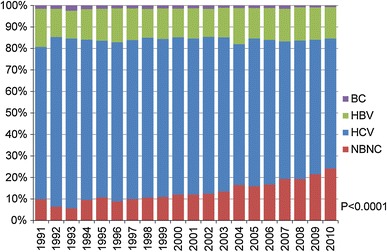
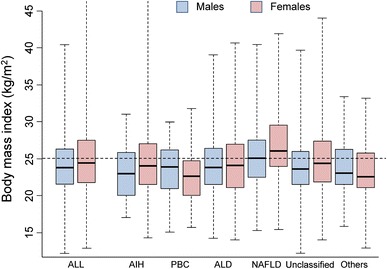
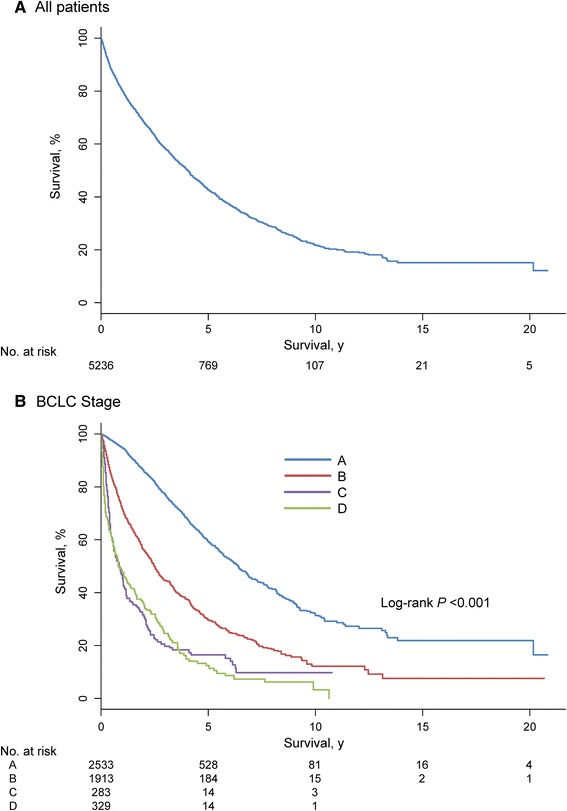
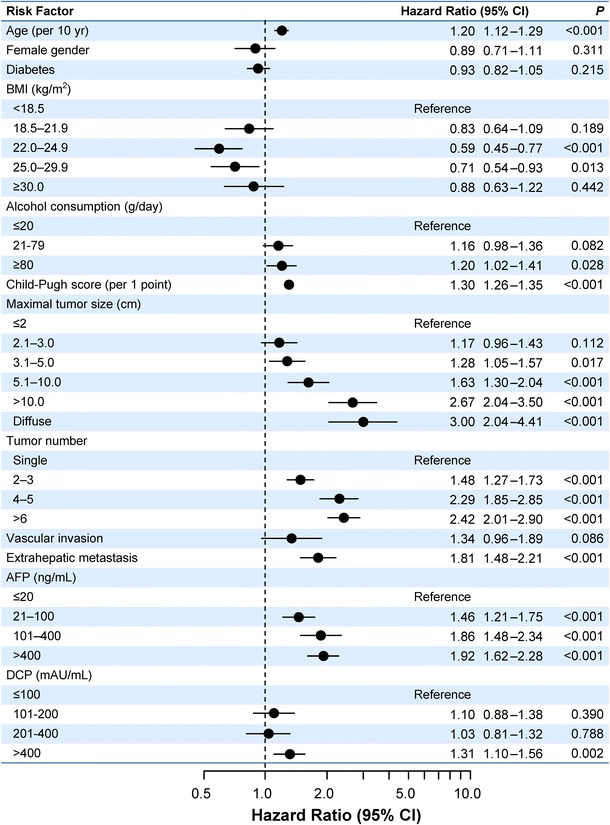
BACKGROUND: The number of hepatocellular carcinoma (HCC) patients with non-viral etiologies is increasing in Japan. We conducted a nation-wide survey to examine the characteristics of those patients. METHODS: After we assessed the trend of patients who were first diagnosed with HCC at 53 tertiary care centers in Japan from 1991 to 2010, we collected detailed data of 5326 patients with non-viral etiology. The etiologies were categorized as autoimmune hepatitis, primary biliary cirrhosis, alcoholic liver disease (ALD), non-alcoholic fatty liver disease (NAFLD), unclassified, and other. Baseline characteristics at initial diagnosis, the modality of the initial treatment, and survival status were collected via a website. Survival of the patients was assessed by the Kaplan-Meier method and Cox proportional hazard regression. RESULTS: The proportion of patients with non-viral etiologies increased from 10.0% in 1991 to 24.1% in 2010. Of the patients, 92% were categorized as ALD, NAFLD, or unclassified. Body mass index (BMI) was ≥ 25 kg/m(2) in 39%. Diabetes was most prevalent in NAFLD (63%), followed by unclassified etiology (46%) and ALD (45%). Approximately 80% of patients underwent radical therapy, including resection, ablation, or transarterial chemoembolization. Survival rates at 3, 5, 10, 15, and 20 years were 58.2, 42.6, 21.5, 15.2, and 15.2%, respectively. Multivariate analysis revealed that patients with BMI > 22 and ≤ 25 kg/m(2) showed the best prognosis versus other BMI categories, after adjusting by age, gender, tumor-related factors, and Child-Pugh score. CONCLUSIONS: Most cases of non-B, non-C HCC are related to lifestyle factors, including obesity and diabetes. Slightly overweight patients showed the best prognosis.
Overview
The claims and statistics of this paper haven’t been checked yet.
Free: it reads the open-access text and checks the first 5 claims that cite a source we can check. Create a free account to check every claim.
Integrity signals
Registry
Cites
Statistics
Figures
Verification
Claims the paper makes
The claims and statistics of this paper haven’t been checked yet.
Free: it reads the open-access text and checks the first 5 claims that cite a source we can check. Create a free account to check every claim.
Claims other papers make about this one
Each is checked against this paper’s own text: does it say what the citing paper says it does?
The source backs part of the claim, not all of it — or backs it for a different population, condition or comparison.
In the citing paper
“Of note, 36.6 ~ 50% of HCC in MASH patients develop without cirrhosis [7–9]”
From Single-cell transcriptome reveals the reprogramming of immune microenvironment during the transition from MASH to HCC (2025) · cites this paper as [7]
Experimental — accuracy not yet measured
Self-check
Percentages, sums and reported differences re-computed from the paper’s own numbers.
The self-check needs the paper’s full text.
Citations
Cites
Jemal, A., Bray, F., Center, M. M., Ferlay, J., Ward, E., & Forman, D. (2011) · CA: A Cancer Journal for Clinicians · doi:10.3322/caac.20107 · Cited by 54,679
Erdogan, D., Heijnen, B. H. M., Bennink, R. J., Kok, M., Dinant, S., Straatsburg, I. H., Gouma, D. J., & van Gulik, T. M. (2004) · Liver International · doi:10.1111/j.1478-3231.2004.00901.x · Cited by 11,700
Overweight, obesity, and mortality from cancer in a prospectively studied cohort of U.S. Adults
Calle, E. E., Rodriguez, C., Walker-Thurmond, K., & Thun, M. J. (2003) · New England Journal of Medicine · doi:10.1056/nejmoa021423 · Cited by 7,696 · cited 1×
“Chronic alcoholism is a classical risk factor [11]; more recently, obesity has been recognized to strongly affect HCC development in males, versus various other malignancies [12].”
BackgroundFinucane, M. M., Stevens, G. A., Cowan, M. J., Danaei, G., Lin, J. K., Paciorek, C. J., Singh, G. M., Gutierrez, H. R., Lu, Y., Bahalim, A. N., et al. (2011) · The Lancet · doi:10.1016/s0140-6736(10)62037-5 · Cited by 4,050
The global health burden of infection‐associated cancers in the year 2002
Parkin, D. M. (2006) · International Journal of Cancer · doi:10.1002/ijc.21731 · Cited by 2,932
Lamivudine for Patients with Chronic Hepatitis B and Advanced Liver Disease
Liaw, Y.-F., Sung, J. J. Y., Chow, W. C., Farrell, G., Lee, C.-Z., Yuen, H., Tanwandee, T., Tao, Q.-M., Shue, K., Keene, O. N., et al. (2004) · New England Journal of Medicine · doi:10.1056/nejmoa033364 · Cited by 2,266
Chang, M.-H., Chen, C.-J., Lai, M.-S., Hsu, H.-M., Wu, T.-C., Kong, M.-S., Liang, D.-C., Shau, W.-Y., & Chen, D.-S. (1997) · New England Journal of Medicine · doi:10.1056/nejm199706263362602 · Cited by 1,883 · cited 1×
“Rigorous efforts to control horizontal transmission of hepatitis B virus (HBV) by vaccination since the mid-1980s succeeded in reducing hepatitis B-related HCC in children [3].”
BackgroundDanaei, G., Finucane, M. M., Lin, J. K., Singh, G. M., Paciorek, C. J., Cowan, M. J., Farzadfar, F., Stevens, G. A., Lim, S. S., Riley, L. M., et al. (2011) · The Lancet · doi:10.1016/s0140-6736(10)62036-3 · Cited by 1,239
Diabetes increases the risk of chronic liver disease and hepatocellular carcinoma
El-serag, H. B., Tran, T., & Everhart, J. E. (2004) · Gastroenterology · doi:10.1053/j.gastro.2003.10.065 · Cited by 1,230
Yoshida, H., Shiratori, Y., Moriyama, M., Arakawa, Y., Ide, T., Sata, M., Inoue, O., Yano, M., Tanaka, M., Fujiyama, S., et al. (1999) · Annals of Internal Medicine · doi:10.7326/0003-4819-131-3-199908030-00003 · Cited by 1,096
Self-citationNishiguchi, S., Kuroki, T., Nakatani, S., Morimoto, H., Takeda, T., Nakajima, S., Shiomi, S., Seki, S., Kobayashi, K., & Otani, S. (1995) · The Lancet · doi:10.1016/s0140-6736(95)91739-x · Cited by 857
El–Serag, H. B., Hampel, H., & Javadi, F. (2006) · Clinical Gastroenterology and Hepatology · doi:10.1016/j.cgh.2005.12.007 · Cited by 826
Ertle, J., Dechêne, A., Sowa, J., Penndorf, V., Herzer, K., Kaiser, G., Schlaak, J. F., Gerken, G., Syn, W., & Canbay, A. (2011) · International Journal of Cancer · doi:10.1002/ijc.25797 · Cited by 518
Hepatocellular carcinoma in the Asia pacific region
Yuen, M., Hou, J., & Chutaputti, A. (2009) · Journal of Gastroenterology and Hepatology · doi:10.1111/j.1440-1746.2009.05784.x · Cited by 427
Report of the 17th Nationwide Follow‐up Survey of Primary Liver Cancer in Japan†
Ikai, I., Arii, S., Okazaki, M., Okita, K., Omata, M., Kojiro, M., Takayasu, K., Nakanuma, Y., Makuuchi, M., Matsuyama, Y., et al. (2007) · Hepatology Research · doi:10.1111/j.1872-034x.2007.00119.x · Cited by 412
Self-citationPrognostic indicators in hepatocellular carcinoma: a systematic review of 72 studies
Tandon, P., & Garcia‐Tsao, G. (2009) · Liver International · doi:10.1111/j.1478-3231.2008.01957.x · Cited by 354
Simonetti, J., Bulkow, L., McMahon, B. J., Homan, C., Snowball, M., Negus, S., Williams, J., & Livingston, S. E. (2010) · Hepatology · doi:10.1002/hep.23464 · Cited by 255
Yoshizawa, H. (2002) · Oncology · doi:10.1159/000048270 · Cited by 229
Yu, M. C., Henderson, B. E., Tong, M. J., & Govindarajan, S. (1991) · JNCI Journal of the National Cancer Institute · doi:10.1093/jnci/83.24.1820 · Cited by 190
Lai, M., Hsieh, M., Chiu, Y., & Chen, T. H. (2006) · Hepatology · doi:10.1002/hep.21208 · Cited by 188
Correlation between Anti‐HBc Titers and HBV DNA in Blood Units without Detectable HBsAg
Iizuka, H., Ohmura, K., Ishijima, A., Satoh, K., Tanaka, T., Tsuda, F., Okamoto, H., Miyakawa, Y., & Mayumi, M. (1992) · Vox Sanguinis · doi:10.1111/j.1423-0410.1992.tb02495.x · Cited by 175
Yang, W.-S., Va, P., Bray, F., Gao, S., Gao, J., Li, H.-L., & Xiang, Y.-B. (2011) · PLoS ONE · doi:10.1371/journal.pone.0027326 · Cited by 134
Declining Incidence of Hepatocellular Carcinoma in Osaka, Japan, from 1990 to 2003
Tanaka, H., Imai, Y., Hiramatsu, N., Ito, Y., Imanaka, K., Oshita, M., Hijioka, T., Katayama, K., Yabuuchi, I., Yoshihara, H., et al. (2008) · Annals of Internal Medicine · doi:10.7326/0003-4819-148-11-200806030-00004 · Cited by 127
Self-citationLong-term use of entecavir in nucleoside-naïve Japanese patients with chronic hepatitis B infection
Yokosuka, O., Takaguchi, K., Fujioka, S., Shindo, M., Chayama, K., Kobashi, H., Hayashi, N., Sato, C., Kiyosawa, K., Tanikawa, K., et al. (2010) · Journal of Hepatology · doi:10.1016/j.jhep.2009.12.036 · Cited by 123
Self-citationPrimary biliary cirrhosis and cancer risk: A systematic review and meta-analysis
Liang, Y., Yang, Z., & Zhong, R. (2012) · Hepatology · doi:10.1002/hep.25788 · Cited by 119
Predictive Factors for Hepatocellular Carcinoma in Type 1 Autoimmune Hepatitis
Montano-Loza, A. J., Carpenter, H. A., & Czaja, A. J. (2008) · The American Journal of Gastroenterology · doi:10.1111/j.1572-0241.2008.01922.x · Cited by 99
The committee for revision of the Clinical Practice Guidelines for Hepatocellular Carcinoma
(2010) · Hepatology Research · doi:10.1111/j.1872-034x.2010.00650.x · Cited by 96
Higuchi, S., Matsushita, S., Maesato, H., & Osaki, Y. (2007) · Addiction · doi:10.1111/j.1360-0443.2007.01902.x · Cited by 86
Etiology of non-B non-C hepatocellular carcinoma in the eastern district of Tokyo
Abe, H., Yoshizawa, K., Kitahara, T., Aizawa, R., Matsuoka, M., & Aizawa, Y. (2008) · Journal of Gastroenterology · doi:10.1007/s00535-008-2264-8 · Cited by 56
Sola, R. L., Álvarez, M. A., Ballesté, B., Montoliu, S., Rivera, M., Miquel, M., Cirera, I., Morillas, R. M., Coll, S., & Planas, R. (2005) · Liver International · doi:10.1111/j.1478-3231.2005.01181.x · Cited by 44
Kondo, R., Nakashima, O., Sata, M., Imazeki, F., Yokosuka, O., Tanikawa, K., Kage, M., Yano, H., & The Liver Cancer Study Group of Kyushu (2013) · Hepatology Research · doi:10.1111/hepr.12219 · Cited by 13
Chapter 2: Diagnosis and surveillance
(2010) · Hepatology Research · doi:10.1111/j.1872-034x.2010.00655.x · Cited by 10
Research works printed but not linked: 1
- Cancer Study Group of Japan. General Rules for the Clinical and Pathological Study of Primary Liver Cancer, Second English Edition. Tokyo: Kasahara; 2003.
Cited by
Global epidemiology of NAFLD-related HCC: trends, predictions, risk factors and prevention
Huang, D. Q., El-Serag, H. B., & Loomba, R. (2021) · Nature Reviews Gastroenterology & Hepatology · doi:10.1038/s41575-020-00381-6 · Cited by 1,855
New trends on obesity and NAFLD in Asia
Fan, J.-G., Kim, S.-U., & Wong, V. W.-S. (2017) · Journal of Hepatology · doi:10.1016/j.jhep.2017.06.003 · Cited by 1,083
Liver Cancer: Connections with Obesity, Fatty Liver, and Cirrhosis
Marengo, A., Rosso, C., & Bugianesi, E. (2016) · Annual Review of Medicine · doi:10.1146/annurev-med-090514-013832 · Cited by 755
Fujiwara, N., Nakagawa, H., Kudo, Y., Tateishi, R., Taguri, M., Watadani, T., Nakagomi, R., Kondo, M., Nakatsuka, T., Minami, T., et al. (2015) · Journal of Hepatology · doi:10.1016/j.jhep.2015.02.031 · Cited by 705
Self-citationLiver diseases in the Asia-Pacific region: a Lancet Gastroenterology & Hepatology Commission
Sarin, S. K., Kumar, M., Eslam, M., George, J., Al Mahtab, M., Akbar, S. M. F., Jia, J., Tian, Q., Aggarwal, R., Muljono, D. H., et al. (2020) · The Lancet Gastroenterology & Hepatology · doi:10.1016/s2468-1253(19)30342-5 · Cited by 525
Self-citation
Metadata
- Authors
- Tateishi, R., Okanoue, T., Fujiwara, N., Okita, K., Kiyosawa, K., Omata, M., Kumada, H., Hayashi, N., & Koike, K.
- Affiliations
- The University of Tokyo (JP)
- Saiseikai Suita Hospital (JP)
- Yamanashi Prefectural Hospital Organization (JP)
- Toranomon Hospital (JP)
- Kansai Rosai Hospital (JP)
- Corresponding author
- Tateishi, Ryosuke
- Venue
- Journal of Gastroenterology
- Published
- 2014-06-15
- Volume
- 50
- Issue
- 3
- Pages
- 350-360
- ISSN
- 0944-1174 (ISSN-L)
- 1435-5922
- PMC
- PMC4352653
- OpenAlex
- W2003742883
- Cited by
- 170
- References
- 32
- Citations by year
- 2026: 5 · 2025: 11 · 2024: 10 · 2023: 15 · 2022: 8 · 2021: 16 · 2020: 11 · 2019: 26 · 2018: 21 · 2017: 18 · 2016: 15 · 2015: 12 · 2014: 2
- FWCI
- 8.74
- Type
- journal article
- Language
- en
- Open access
- hybrid
- doi.org
- Licence
- Locations
- Journal of Gastroenterology (publishedVersion, cc-by-nc)
- Europe PMC (PubMed Central) (publishedVersion, cc-by-nc)
- PubMed Central (publishedVersion, cc-by-nc)
- PubMed (publishedVersion)
- Funders
- Nihon University
- Kagoshima University
- Kindai University
- National Center for Global Health and Medicine
- University of Occupational and Environmental Health
- Kanazawa University
- Ministry of Health, Labour and Welfare
- Eisai
- Nara Medical University
- Hyogo College of Medicine
- Chiba University
- Nagoya City University
- Kawasaki Medical School
- Saitama Medical University
- Kansai Medical University
- Topics
- Health Sciences › Medicine › Hepatology › Hepatocellular Carcinoma Treatment and Prognosis
- Health Sciences › Medicine › Epidemiology › Hepatitis B Virus Studies
- Health Sciences › Medicine › Hepatology › Liver physiology and pathology
- Keywords
- non-B non-C hepatitis, alcoholic liver disease, non-alcoholic fatty liver disease, autoimmune hepatitis, primary biliary cirrhosis, obesity, body mass index, diabetes mellitus, survival prediction, radical treatment, transarterial chemoembolization
- MeSH terms
- Aged, Female, Hepatitis, Viral, Human, Carcinoma, Hepatocellular, Humans, Japan, Liver Cirrhosis, Biliary, Liver Diseases, Alcoholic, Liver Neoplasms, Male, Middle Aged, Prognosis, Retrospective Studies, Risk Factors, Cohort Studies, Body Mass Index, Survival Analysis, Hepatitis, Autoimmune, Non-alcoholic Fatty Liver Disease
About these checks
Registry, retraction, Cites and statistics results are computed, not judged, with one exception: a printed reference that no index lists is read once by a model before it counts as a citation error. Claims are extracted by a model and kept only when their quote appears verbatim in the text; each cited source is then checked, with a model’s help, for whether it says what the claim relies on. Those verdicts can be wrong — read the claim’s quote and the cited source before relying on one.
Statistics and arithmetic are recomputed, not judged.
Confidence bands are shown only for fields calibrated on our annotated test set. None is calibrated yet, so no band is shown.
What counts as a claim ›How we measure confidence ›How we check this ›
Are you an author, or do you see a problem with this page? Request a review
Data sources
Bibliographic data: Semantic Scholar, OpenAlex, Crossref.
Contains information from the Semantic Scholar Academic Graph Datasets, made available under the ODC Attribution License (ODC-BY 1.0).
Semantic Scholar’s data is described in: Kinney, R., et al. (2023). The Semantic Scholar Open Data Platform. arXiv:2301.10140.
