

A short, intensive cognitive behavioral pain management program reduces health-care use in patients with chronic low back pain: Two-year follow-up results of a prospective cohort
Open accessThe DOI matches its Crossref record; 35 of the 35 references it cites were found in a registry or an index.
Abstract
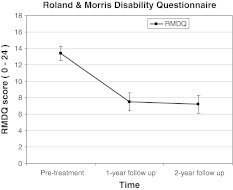
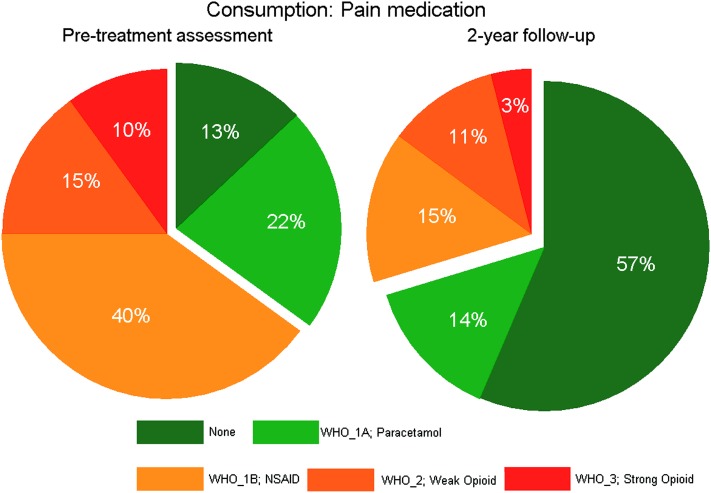
PURPOSE: Cognitive behavioral interventions are recommended as non-invasive treatment options for patients with chronic low back pain (CLBP). However, most treatment effects are small and short-lived. Although a 2-week intensive pain management program for patients with CLBP seems to be effective, the long-term results are not known. The purpose of this study is to evaluate the stability of the 2-year follow-up results and whether this is reflected in the use of health-care services. METHODS: A prospective cohort study was performed. Pre-treatment characteristics of patients and data of outcomes obtained at 1-year follow-up were used. At 2-year follow-up a structured interview was conducted following the principles of a post-marketing survey. Outcomes included daily functioning, quality of life, current intensity of pain, disturbance of pain during daily activities, and indicators of the use of pain medication and health-care services. RESULTS: Of the 90 eligible patients 85 (94%) participated in the post-marketing survey. The 1-year clinical relevant effects are maintained at 2-year follow-up. Effect sizes for functioning and quality of life were large. More than 65% reached preset minimal clinically important differences. At pre-treatment all patients consulted their general practitioner (GP) and medical specialist (MS). At 2-year follow-up 73% reported having consulted neither a GP nor an MS during the previous year. Most of the patients indicated not to use any pain medication (57%) and the percentage patients using opioids have decreased (14%). Moreover, 81% reported to be at work. CONCLUSIONS: The gained results from selected and motivated patients with longstanding CLBP at 1-year follow-up are stable at 2-year follow-up. Above all, most of the participants are at work and results indicate that the use of both pain medication and health care have decreased substantially.
Overview
The claims and statistics of this paper haven’t been checked yet.
Free: it reads the open-access text and checks the first 5 claims that cite a source we can check. Create a free account to check every claim.
Integrity signals
Registry
Cites
Statistics
Figures
Verification
Claims the paper makes
The claims and statistics of this paper haven’t been checked yet.
Free: it reads the open-access text and checks the first 5 claims that cite a source we can check. Create a free account to check every claim.
Claims other papers make about this one
Each is checked against this paper’s own text: does it say what the citing paper says it does?
The source backs part of the claim, not all of it — or backs it for a different population, condition or comparison.
In the citing paper
“These studies revealed that the improvements caused by CBT were generally maintained well after 1 year.”
From Long-term effects of integrated cognitive behavioral therapy for chronic pain: A qualitative and quantitative study (2023) · cites this paper as [9]
Experimental — accuracy not yet measuredIn the citing paper
“Longer-term results are not well reported in the literature, and we observed only 6 related studies published after 2020.[4–9]”
From Long-term effects of integrated cognitive behavioral therapy for chronic pain: A qualitative and quantitative study (2023) · cites this paper as [9]
Self-check
Percentages, sums and reported differences re-computed from the paper’s own numbers.
The self-check needs the paper’s full text.
Citations
Cites
Statistical Power Analysis for the Behavioral Sciences
Muller, K. (1989) · Technometrics · doi:10.1080/00401706.1989.10488618 · Cited by 99,167
Statistical power analysis for the behavioral sciences
(1990) · Computers, Environment and Urban Systems · doi:10.1016/0198-9715(90)90050-4 · Cited by 65,269
(1992) · PubMed · Cited by 33,716
The MOS 36-ltem Short-Form Health Survey (SF-36): I. Conceptual Framework and Item Selection
Ware, J. E., & Sherbourne, C. D. (1992) · Medical Care · doi:10.1097/00005650-199206000-00002 · Cited by 30,033
Huskisson, E. C. (1974) · The Lancet · doi:10.1016/s0140-6736(74)90884-8 · Cited by 4,522
A Study of the Natural History of Back Pain: Part I
ROLAND, M., & MORRIS, R. (1983) · Spine · doi:10.1097/00007632-198303000-00004 · Cited by 3,395
Chapter 4 European guidelines for the management of chronic nonspecific low back pain
Airaksinen, O., Brox, J. I., Cedraschi, C., Hildebrandt, J., Klaber-Moffett, J., Kovacs, F., Mannion, A. F., Reis, S., Staal, J. B., Ursin, H., et al. (2006) · European Spine Journal · doi:10.1007/s00586-006-1072-1 · Cited by 2,594
Fear of movement/(re)injury in chronic low back pain and its relation to behavioral performance
Vlaeyen, J. W. S., Kole-Snijders, A. M. J., Boeren, R. G. B., & van Eek, H. (1995) · Pain · doi:10.1016/0304-3959(94)00279-n · Cited by 2,446
Aaronson, N. K., Muller, M., Cohen, P. D. A., Essink-Bot, M.-L., Fekkes, M., Sanderman, R., Sprangers, M. A. G., te Velde, A., & Verrips, E. (1998) · Journal of Clinical Epidemiology · doi:10.1016/s0895-4356(98)00097-3 · Cited by 2,276 · cited 1×
“The validated Dutch language version has been used in a wide range of studies among patients with chronic health conditions including CLBP [24].”
BackgroundOstelo, R. W. J. G., Deyo, R. A., Stratford, P., Waddell, G., Croft, P., Von Korff, M., Bouter, L. M., & de Vet, H. C. (2008) · Spine · doi:10.1097/brs.0b013e31815e3a10 · Cited by 2,009 · cited 2×
“The current study results suggest that the duration of CLBP is not an important factor for the management of CLBP, whereas duration and intensiveness of the program are important [7, 12, 21].”
BackgroundRusso, J., Trujillo, C. A., Wingerson, D., Decker, K., Ries, R., Wetzler, H., & Roy-Byrne, P. (1998) · Medical Care · doi:10.1097/00005650-199805000-00015 · Cited by 1,308
Diagnosis and treatment of low back pain
Koes, B. W., van Tulder, M. W., & Thomas, S. (2006) · BMJ · doi:10.1136/bmj.332.7555.1430 · Cited by 1,279
Musculoskeletal pain in the Netherlands: prevalences, consequences and risk groups, the DMC3-study
Picavet, H. S. J., & Schouten, J. S. A. G. (2003) · Pain · doi:10.1016/s0304-3959(02)00372-x · Cited by 1,197 · cited 4×
“These complaints may result in the individuals experiencing a lower health-related quality of life; they cause a quarter of all sick leave in the employed population [1, 3, 4].”
BackgroundInfluentialPain Catastrophizing and Kinesiophobia: Predictors of Chronic Low Back Pain
Picavet, H. S. J. (2002) · American Journal of Epidemiology · doi:10.1093/aje/kwf136 · Cited by 744 · cited 1×
“Therefore, we did not evaluate frequently reported cognitive and behavioral factors as fear of movement, catastrophizing, and anxiety [4, 30–32].”
BackgroundBehavioural treatment for chronic low-back pain
Henschke, N., Ostelo, R. W., van Tulder, M. W., Vlaeyen, J. W., Morley, S., Assendelft, W. J., & Main, C. J. (2010) · Cochrane Database of Systematic Reviews · doi:10.1002/14651858.cd002014.pub3 · Cited by 718
Assessing global pain severity by self-report in clinical and health services research
Von Korff, M., Jensen, M. P., & Karoly, P. (2000) · Spine · doi:10.1097/00007632-200012150-00009 · Cited by 649
Chou, R., Loeser, J. D., Owens, D. K., Rosenquist, R. W., Atlas, S. J., Baisden, J., Carragee, E. J., Grabois, M., Murphy, D. R., Resnick, D. K., et al. (2009) · Spine · doi:10.1097/brs.0b013e3181a1390d · Cited by 581
Ehrlich, G. E. (2003) · Europe PMC (PubMed Central) · Cited by 407
Lamb, S. E., Hansen, Z., Lall, R., Castelnuovo, E., Withers, E. J., Nichols, V., Potter, R., & Underwood, M. R. (2010) · The Lancet · doi:10.1016/s0140-6736(09)62164-4 · Cited by 393
Multidisciplinary bio-psycho-social rehabilitation for chronic low-back pain
Guzmán, J., Esmail, R., Karjalainen, K., Malmivaara, A., Irvin, E., & Bombardier, C. (2002) · Cochrane Database of Systematic Reviews · doi:10.1002/14651858.cd000963 · Cited by 363
Meerding, W. J., Bonneux, L., Polder, J. J., Koopmanschap, M. A., & van der Maas, P. J. (1998) · BMJ · doi:10.1136/bmj.317.7151.111 · Cited by 350 · cited 2×
“9% of total health-care costs in the Netherlands [5], resulting in its being the top three of the highest health-care costs [6].”
BackgroundLambeek, L. C., van Mechelen, W., Knol, D. L., Loisel, P., & Anema, J. R. (2010) · BMJ · doi:10.1136/bmj.c1035 · Cited by 293 · cited 2×
“Furthermore, most reported treatment programs have a mean duration of 4 weeks [18, 20] or more [8, 13–15].”
BackgroundWoby, S. R., Watson, P. J., Roach, N. K., & Urmston, M. (2004) · European Journal of Pain · doi:10.1016/j.ejpain.2003.08.002 · Cited by 242 · cited 1×
“Therefore, we did not evaluate frequently reported cognitive and behavioral factors as fear of movement, catastrophizing, and anxiety [4, 30–32].”
BackgroundPredicting Disability From Low Back Pain
FRYMOYER, J. W. (1992) · Clinical Orthopaedics and Related Research · doi:10.1097/00003086-199206000-00012 · Cited by 215 · cited 1×
“A minority (20%) develop chronic low back pain (CLBP), meaning that the complaints persist at least 3 months [2] and are associated with persistent or recurrent disability.”
BackgroundJohnson, R. E., Jones, G. T., Wiles, N. J., Chaddock, C., Potter, R. G., Roberts, C., Symmons, D. P. M., Watson, P. J., Torgerson, D. J., & Macfarlane, G. J. (2007) · Spine · doi:10.1097/brs.0b013e318074f890 · Cited by 194
Chronic non-specific low back pain – sub-groups or a single mechanism?
Wand, B. M., & O'Connell, N. E. (2008) · BMC Musculoskeletal Disorders · doi:10.1186/1471-2474-9-11 · Cited by 185 · cited 1×
“Nevertheless, most effects achieved by these non-invasive treatments are small and short-lived [14, 16–18].”
BackgroundCohen, S. P., Argoff, C. E., & Carragee, E. J. (2008) · BMJ · doi:10.1136/bmj.a2718 · Cited by 181
Smeets, R. J. E. M., Vlaeyen, J. W. S., Hidding, A., Kester, A. D. M., van der Heijden, G. J. M. G., & Knottnerus, A. J. (2008) · Pain · doi:10.1016/j.pain.2007.04.021 · Cited by 122 · cited 8×
“This level is indicative for a moderate to severe level of disability, which is comparable to patients being treated in other trials and daily practice in the Netherlands [8, 21].”
BackgroundInfluentialPoulain, C., Kernéis, S., Rozenberg, S., Fautrel, B., Bourgeois, P., & Foltz, V. (2010) · European Spine Journal · doi:10.1007/s00586-010-1361-6 · Cited by 85 · cited 1×
“Furthermore, most reported treatment programs have a mean duration of 4 weeks [18, 20] or more [8, 13–15].”
BackgroundA critical review of the pain readiness to change model
Kerns, R. D., & Habib, S. (2004) · The Journal of Pain · doi:10.1016/j.jpain.2004.06.005 · Cited by 84 · cited 1×
“‘Readiness or motivation to change pain-related behavior’ is a multidimensional construct recently described in the literature [33, 34].”
Backgroundvan Hooff, M. L., van der Merwe, J. D., O’Dowd, J., Pavlov, P. W., Spruit, M., de Kleuver, M., & van Limbeek, J. (2010) · European Spine Journal · doi:10.1007/s00586-010-1435-5 · Cited by 53
Hampel, P., Graef, T., Krohn-Grimberghe, B., & Tlach, L. (2009) · European Spine Journal · doi:10.1007/s00586-009-1080-z · Cited by 45 · cited 1×
“Furthermore, most reported treatment programs have a mean duration of 4 weeks [18, 20] or more [8, 13–15].”
BackgroundHall, H., & McIntosh, G. (2008) · PubMed Central · Cited by 41
Acetaminophen as symptomatic treatment of pain from osteoarthritis
Bertin, P., Keddad, K., & Jolivet-Landreau, I. (2003) · Joint Bone Spine · doi:10.1016/j.jbspin.2003.09.010 · Cited by 14 · cited 1×
“The ‘none/light’ classification indicates analgesics which have no or only few side effects [3, 16, 26].”
BackgroundNielson, W. R., Armstrong, J. M., Jensen, M. P., & Kerns, R. D. (2008) · Clinical Journal of Pain · doi:10.1097/ajp.0b013e3181817ab4 · Cited by 12 · cited 1×
“‘Readiness or motivation to change pain-related behavior’ is a multidimensional construct recently described in the literature [33, 34].”
Background
Cited by
Pelletier, R., Higgins, J., & Bourbonnais, D. (2015) · BMC Musculoskeletal Disorders · doi:10.1186/s12891-015-0480-y · Cited by 203
“These could include incorporating approaches to present conventional care such as education of neuronal and pain processes [51,197], cognitive based interventions such as Cognitive Behavioural Therapy [202,203] and Mindfulness Based Stress Reduction [204,205] which have been associated with changes in pre-frontal and…”
MethodPergolizzi, J. V., & LeQuang, J. A. (2020) · Pain and Therapy · doi:10.1007/s40122-020-00149-5 · Cited by 94
Salathé, C. R., Melloh, M., Crawford, R. J., Scherrer, S., Boos, N., & Elfering, A. (2018) · Global Spine Journal · doi:10.1177/2192568218765483 · Cited by 77
van Hooff, M. L., Spruit, M., O’Dowd, J. K., van Lankveld, W., Fairbank, J. C. T., & van Limbeek, J. (2014) · European Spine Journal · doi:10.1007/s00586-013-2844-z · Cited by 59
Self-citationHealthcare utilization in chronic liver disease: the importance of pain and prescription opioid use
Rogal, S. S., Winger, D. G., Bielefeldt, K., Rollman, B. L., & Szigethy, E. (2013) · Liver International · doi:10.1111/liv.12215 · Cited by 45
“This is important because behaviourally based pain management interventions have been shown to not only improve pain (20) but also reduce opioid use and clinic visits and improve quality of life in other disease models (21, 22).”
Background
Metadata
- Authors
- van Hooff, M. L., ter Avest, W., Horsting, P. P., O’Dowd, J., de Kleuver, M., van Lankveld, W., & van Limbeek, J.
- Affiliations
- Sint Maartenskliniek (NL)
- Venue
- European Spine Journal
- Published
- 2011-12-03
- Volume
- 21
- Issue
- 7
- Pages
- 1257-1264
- ISSN
- 0940-6719 (ISSN-L)
- 1432-0932
- PMC
- PMC3389101
- OpenAlex
- W1977701126
- Cited by
- 34
- References
- 35
- Citations by year
- 2024: 1 · 2023: 1 · 2022: 1 · 2021: 3 · 2020: 3 · 2019: 2 · 2018: 3 · 2017: 1 · 2015: 3 · 2014: 6 · 2013: 8 · 2012: 2
- FWCI
- 3.75
- Type
- journal article
- Language
- en
- Open access
- hybrid
- doi.org
- Licence
- cc-by-nc
- Locations
- European Spine Journal (publishedVersion, cc-by-nc)
- Europe PMC (PubMed Central) (publishedVersion, cc-by-nc)
- PubMed Central (publishedVersion, cc-by-nc)
- PubMed (publishedVersion)
- Pure Amsterdam UMC (submittedVersion)
- Data Archiving and Networked Services (DANS) (submittedVersion, other-oa)
- Data Archiving and Networked Services (DANS) (submittedVersion)
- Topics
- Health Sciences › Health Professions › Physical Therapy, Sports Therapy and Rehabilitation › Musculoskeletal pain and rehabilitation
- Health Sciences › Medicine › Anesthesiology and Pain Medicine › Pain Management and Treatment
- Health Sciences › Medicine › Physiology (medical) › Pain Mechanisms and Treatments
- Keywords
- chronic low back pain, cognitive behavioral therapy, long-term follow-up, health care utilization, analgesic use, opioid use, quality of life, daily functioning, return to work, maintenance of treatment effects
- MeSH terms
- Adult, Chronic Disease, Delivery of Health Care, Disability Evaluation, Follow-Up Studies, Humans, Longitudinal Studies, Male, Middle Aged, Pain Measurement, Prospective Studies, Quality of Life, Cohort Studies, Cognitive Behavioral Therapy, Treatment Outcome, Outcome Assessment, Health Care, Low Back Pain, Pain Management
About these checks
Registry, retraction, Cites and statistics results are computed, not judged, with one exception: a printed reference that no index lists is read once by a model before it counts as a citation error. Claims are extracted by a model and kept only when their quote appears verbatim in the text; each cited source is then checked, with a model’s help, for whether it says what the claim relies on. Those verdicts can be wrong — read the claim’s quote and the cited source before relying on one.
Statistics and arithmetic are recomputed, not judged.
Confidence bands are shown only for fields calibrated on our annotated test set. None is calibrated yet, so no band is shown.
What counts as a claim ›How we measure confidence ›How we check this ›
Are you an author, or do you see a problem with this page? Request a review
Data sources
Bibliographic data: Semantic Scholar, OpenAlex, Crossref.
Contains information from the Semantic Scholar Academic Graph Datasets, made available under the ODC Attribution License (ODC-BY 1.0).
Semantic Scholar’s data is described in: Kinney, R., et al. (2023). The Semantic Scholar Open Data Platform. arXiv:2301.10140.
