

Prevalence and risk of mental disorders in the perinatal period among migrant women: a systematic review and meta-analysis
Open accessThe DOI matches its Crossref record; 83 of the 83 references it cites were found in a registry or an index.
Abstract
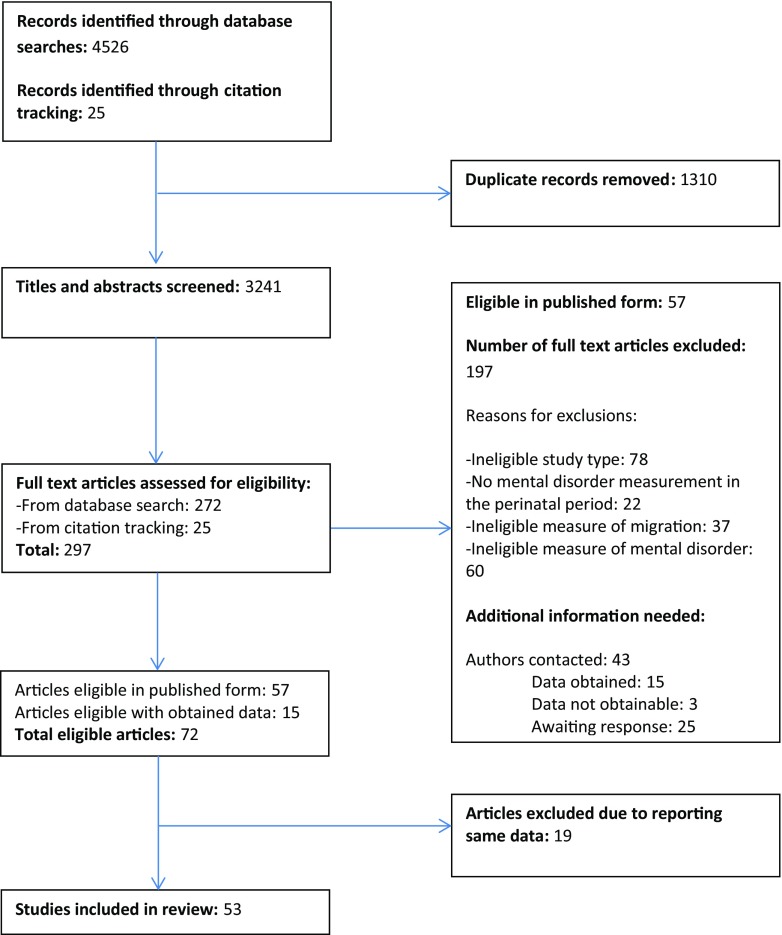
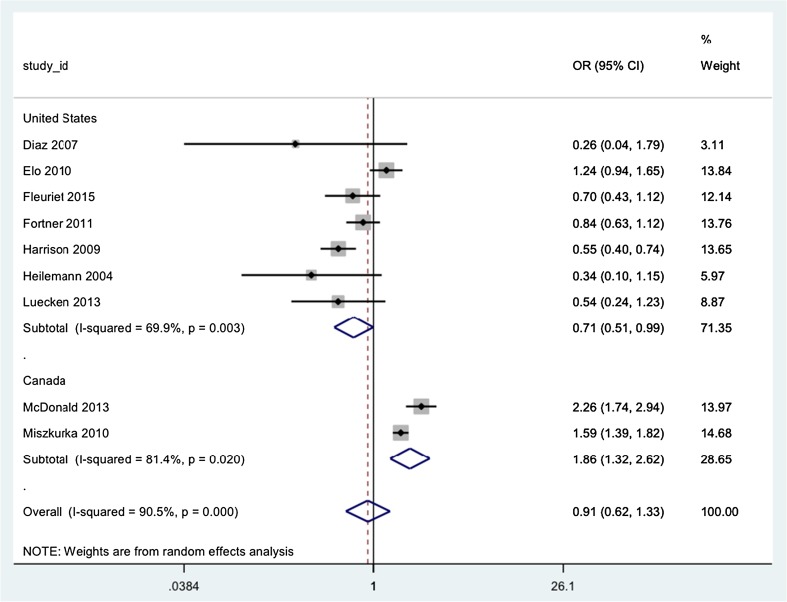
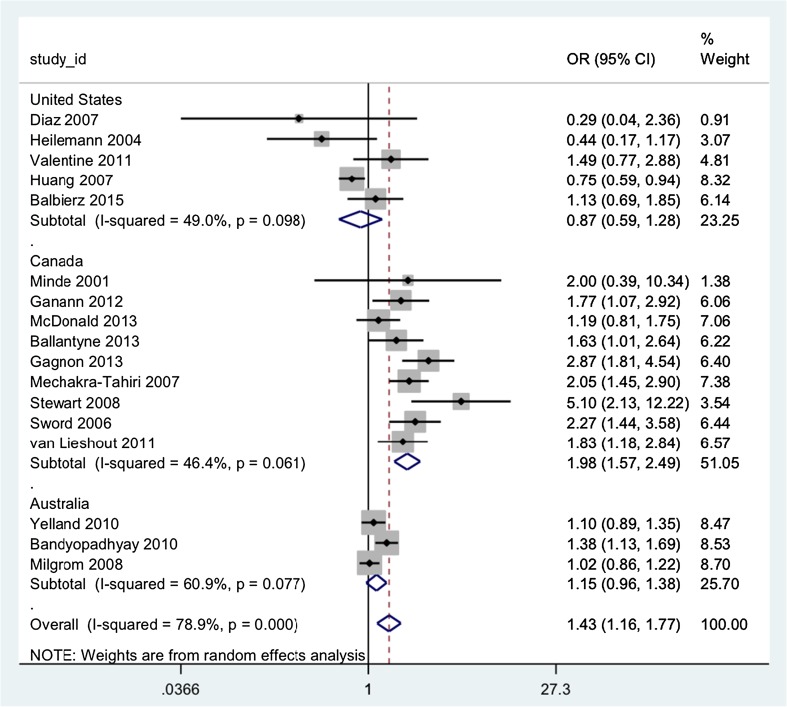
This study was conducted in order to evaluate the prevalence and risk of mental disorders in the perinatal period among migrant women. Six databases (including MEDLINE) were searched from inception to October 19th, 2015, in addition to citation tracking. Studies were eligible if mental disorders were assessed with validated tools during pregnancy and up to 1 year postpartum among women born outside of the study country. Of 3241 abstracts screened, 53 met the inclusion criteria for the review. Only three studies investigated a mental disorder other than depression. Unadjusted odds ratios were pooled using random effects meta-analysis for elevated depression symptoms during pregnancy (n = 12) and the postpartum (n = 24), stratified by study country due to heterogeneity. Studies from Canada found an increased risk for antenatal (OR = 1.86, 95% CIs 1.32-2.62) and postnatal elevated depression symptoms (OR = 1.98, 95% CIs 1.57-2.49) associated with migrant status. Studies from the USA found a decreased risk of antenatal elevated depression symptoms (OR = 0.71, 95% CIs 0.51-0.99), and studies from the USA and Australia found no association between migrant status and postnatal elevated depression symptoms. Low social support, minority ethnicity, low socioeconomic status, lack of proficiency in host country language and refugee or asylum-seeking status all put migrant populations at increased risk of perinatal mental disorders.
Overview
The claims and statistics of this paper haven’t been checked yet.
Free: it reads the open-access text and checks the first 5 claims that cite a source we can check. Create a free account to check every claim.
Integrity signals
Registry
Cites
Statistics
Figures
Verification
Claims the paper makes
The claims and statistics of this paper haven’t been checked yet.
Free: it reads the open-access text and checks the first 5 claims that cite a source we can check. Create a free account to check every claim.
Claims other papers make about this one
Each is checked against this paper’s own text: does it say what the citing paper says it does?
The cited source says what the claim attributes to it.
In the citing paper
“The factors and experiences contributing to migrant women's isolation and feelings of loneliness, including a lack of social support, language barriers, economic difficulties, life and childcare stresses, and having an ethnic minority and/or refugee/asylum seeking status, are also known to be associated with maternal mental health disorders in this population (43).”
From Social Isolation, Loneliness and Health: A Descriptive Study of the Experiences of Migrant Mothers With Young Children (0–5 Years Old) at La Maison Bleue (2022) · cites this paper as [43]
Self-check
Percentages, sums and reported differences re-computed from the paper’s own numbers.
The self-check needs the paper’s full text.
Citations
Cites
The CES-D Scale: A Self-Report Depression Scale for Research in the General Population
Radloff, L. S. (1977) · Applied Psychological Measurement · doi:10.1177/014662167700100306 · Cited by 53,267
(2014) · Medical Entomology and Zoology · Cited by 17,633
Detection of Postnatal Depression: Development of the 10-item Edinburgh Postnatal Depression Scale
Cox, J. L., Holden, J. M., & Sagovsky, R. (1987) · British Journal of Psychiatry · doi:10.1192/bjp.150.6.782 · Cited by 14,183
Downs, S. H., & Black, N. (1998) · Journal of Epidemiology and Community Health · doi:10.1136/jech.52.6.377 · Cited by 8,252
Beck, A. T., Steer, R. A., & Brown, G. (2011) · PsycTESTS Dataset · doi:10.1037/t00742-000 · Cited by 7,535
Perinatal Depression: A Systematic Review of Prevalence and Incidence
Gavin, N. I., Gaynes, B. N., Lohr, K. N., Meltzer-Brody, S., Gartlehner, G., & Swinson, T. (2005) · Obstetrics & Gynecology · doi:10.1097/01.aog.0000183597.31630.db · Cited by 3,282
Kessler, R. C., Mickelson, K. D., & Williams, D. R. (1999) · Journal of Health and Social Behavior · doi:10.2307/2676349 · Cited by 2,228
Effects of perinatal mental disorders on the fetus and child
Stein, A., Pearson, R. M., Goodman, S. H., Rapa, E., Rahman, A., McCallum, M., Howard, L. M., & Pariante, C. M. (2014) · The Lancet · doi:10.1016/s0140-6736(14)61277-0 · Cited by 2,166
Non-psychotic mental disorders in the perinatal period
Howard, L. M., Molyneaux, E., Dennis, C.-L., Rochat, T., Stein, A., & Milgrom, J. (2014) · The Lancet · doi:10.1016/s0140-6736(14)61276-9 · Cited by 1,328
Self-citationMore than culture: Structural racism, intersectionality theory, and immigrant health
Viruell-Fuentes, E. A., Miranda, P. Y., & Abdulrahim, S. (2012) · Social Science & Medicine · doi:10.1016/j.socscimed.2011.12.037 · Cited by 1,269
Research works printed but not linked: 5
- Collins CH Zimmerman C Howard LM Refugee, asylum seeker, immigrant women and postnatal depression: rates and risk factors Archives of Women’s Mental Health 2011 14 3 11 10.1007/s00737-010-0198-7 21153849 · DOI · Paper page
- Critical Appraisal Skills Programme (CASP) (2014) CASP checklists. (http://media.wix.com/ugd/dded87_63fb65dd4e0548e2bfd0a982295f839e.pdf; http://media.wix.com/ugd/dded87_e37a4ab637fe46a0869f9f977dacf134.pdf). CASP, Oxford
- Jayaweera H Health of migrants in the UK: what do we know? 2011 Oxford Migration Observatory, University of Oxford 1 9
- Miszkurka M Goulet L Zunzunegui MV Antenatal depressive symptoms among Canadian-born and immigrant women in Quebec: differential exposure and vulnerability to contextual risk factors Soc Psychiatry Psychiatr Epidemiol 2012 47 1639 1648 10.1007/s00127-011-0469-2 22237717 · DOI
- United Nations Trends in international migration stock 2013 New York United Nations
Cited by
Heslehurst, N., Brown, H., Pemu, A., Coleman, H., & Rankin, J. (2018) · BMC Medicine · doi:10.1186/s12916-018-1064-0 · Cited by 378
“Having no relatives or friends, a lack of emotional support from their spouse, being unmarried, having no partner, having migrated for marriage, marital adjustment problems and a lack of domestic decisionmaking power in relation to the child were all risk factors for perinatal mental health disorders amongst migrant w…”
BackgroundResultInfluentialZhao, X.-H., & Zhang, Z.-H. (2020) · Asian Journal of Psychiatry · doi:10.1016/j.ajp.2020.102353 · Cited by 357
Prevalence and correlates of perinatal depression
Al-abri, K., Edge, D., & Armitage, C. J. (2023) · Social Psychiatry and Psychiatric Epidemiology · doi:10.1007/s00127-022-02386-9 · Cited by 224
Mental health needs and services for migrants: an overview for primary care providers
Rousseau, C., & Frounfelker, R. L. (2019) · Journal of Travel Medicine · doi:10.1093/jtm/tay150 · Cited by 177
van der Zee-van den Berg, A. I., Boere-Boonekamp, M. M., Groothuis-Oudshoorn, C. G. M., & Reijneveld, S. A. (2021) · Journal of Affective Disorders · doi:10.1016/j.jad.2021.02.062 · Cited by 172
“comparing groups based on history of immigration or other aspects of ethnicity (Anderson et al., 2017).”
BackgroundWatson, H., Harrop, D., Walton, E., Young, A., & Soltani, H. (2019) · PLOS ONE · doi:10.1371/journal.pone.0210587 · Cited by 166
“In the UK, ethnic minority groups have a higher burden of common mental health disorders when compared to the majority white population [12, 13, 14, 15] and it is less likely that these will be detected or treated [12,16] including during the perinatal period [12].”
BackgroundPrevalence of perinatal depression among Japanese women: a meta-analysis
Tokumitsu, K., Sugawara, N., Maruo, K., Suzuki, T., Shimoda, K., & Yasui‐Furukori, N. (2020) · Annals of General Psychiatry · doi:10.1186/s12991-020-00290-7 · Cited by 157
Halvorsrud, K., Nazroo, J., Otis, M., Brown Hajdukova, E., & Bhui, K. (2019) · Social Psychiatry and Psychiatric Epidemiology · doi:10.1007/s00127-019-01758-y · Cited by 111
Stevenson, K., Fellmeth, G. L., Edwards, S., Calvert, C., Bennett, P. R., Campbell, O. M. R., & Fuhr, D. C. (2022) · The Lancet Public Health · doi:10.1016/s2468-2667(22)00342-5 · Cited by 138
Vigod, S. N., Frey, B. N., Clark, C. T., Grigoriadis, S., Barker, L. C., Brown, H. K., Charlebois, J., Dennis, C., Fairbrother, N., Green, S. M., et al. (2025) · The Canadian Journal of Psychiatry · doi:10.1177/07067437241303031 · Cited by 118
Prevalence of Suicide in Immigrants/Refugees: A Systematic Review and Meta-Analysis
Amiri, S. (2020) · Archives of Suicide Research · doi:10.1080/13811118.2020.1802379 · Cited by 81
Moore, L., Jayaweera, H., Redshaw, M., & QUIGLEY, M. A. (2019) · Public Health · doi:10.1016/j.puhe.2019.03.022 · Cited by 79
Pilav, S., De Backer, K., Easter, A., Silverio, S. A., Sundaresh, S., Roberts, S., & Howard, L. M. (2022) · BMC Pregnancy and Childbirth · doi:10.1186/s12884-022-04698-9 · Cited by 47
Gewalt, S. C., Berger, S. J., Ziegler, S., Szécsényi, J., & Bozorgmehr, K. (2018) · PLoS ONE · doi:10.1371/journal.pone.0208007 · Cited by 58
Ganann, R., Sword, W. A., Newbold, K. B., Thabane, L., Armour, L., & Kint, B. (2019) · Journal of Psychiatric and Mental Health Nursing · doi:10.1111/jpm.12557 · Cited by 55
Alarcão, V., Stefanovska–Petkovska, M., Virgolino, A., Santos, O., & da Costa, A. C. J. S. (2021) · Social Sciences · doi:10.3390/socsci10020063 · Cited by 53
“…infant mortality (Gissler et al. 2009); one SLR specifically evaluated the occurrence and threat of mental disorders among perinatal migrant women (Anderson et al. 2017); one SLR focused on prenatal care access (Heaman et al. 2013); one SLR presented female migrants’ expectations and experiences…”
InfluentialLim, M., Van Hulst, A., Pisanu, S., & Merry, L. (2022) · Frontiers in Global Women's Health · doi:10.3389/fgwh.2022.823632 · Cited by 55
Addressing mental health issues among migrant and refugee pregnant women: A call for action
Iliadou, M., Papadakaki, M., Sioti, E., Giaxi, P., Leontitsi, E., Petelos, E., van den Muijsenbergh, M. E. T. C., Tziaferi, S., Mastroyiannakis, A., & Vivilaki, V. G. (2019) · European Journal of Midwifery · doi:10.18332/ejm/108626 · Cited by 45
Haque, S., & Malebranche, M. E. (2020) · PLoS ONE · doi:10.1371/journal.pone.0238109 · Cited by 44
Giacco, D. (2019) · Epidemiology and Psychiatric Sciences · doi:10.1017/s204579601900057x · Cited by 51
“…(N = 31) Authors Country(-ies) Study design N of refugees/asylum seekers included Risk/protective factors towards mental disorders identified Anderson et al. (2017) International literature Systematic review and meta-analysis N/A Risk factors: low social support, minority ethnicity, low…”
BackgroundInfluentialFeinberg, E., Declercq, E. R., Lee, A., & Belanoff, C. M. (2022) · Women s Health Issues · doi:10.1016/j.whi.2022.01.005 · Cited by 48
Blackmore, R., Boyle, J. A., Gray, K. M., Willey, S., Highet, N. J., & Gibson‐Helm, M. E. (2022) · Health Expectations · doi:10.1111/hex.13526 · Cited by 45
“In particular, women of refugee background are at an even greater risk of mental illness during pregnancy.(14,15) This is attributable to the conflict, trauma, separation from family and protracted situations of uncertainty that are hallmarks of refugee experiences.”
BackgroundGanann, R., Sword, W. A., Newbold, K. B., Thabane, L., Armour, L., & Kint, B. (2019) · Canadian Journal of Nursing Research · doi:10.1177/0844562119852868 · Cited by 39
Fellmeth, G. L., Plugge, E., Fazel, M. S., Oo, M., Pimanpanarak, M., Phichitpadungtham, Y., Wai, K., Charunwatthana, P., Simpson, J. A., Nosten, F. H., et al. (2020) · BMC Psychiatry · doi:10.1186/s12888-020-02572-6 · Cited by 34
Pregnancy Related Health Care Needs in Refugees—A Current Three Center Experience in Europe
Dopfer, C., Vakilzadeh, A., Happle, C., Kleinert, E., Müller, F., Ernst, D., Schmidt, R. E., Behrens, G. M. N., Merkesdal, S., Wetzke, M., et al. (2018) · International Journal of Environmental Research and Public Health · doi:10.3390/ijerph15091934 · Cited by 31
Asif, S., Mulic‐Lutvica, A., Axfors, C., Eckerdal, P., Iliadis, S. I., Fransson, E., & Skalkidou, A. (2020) · BJOG An International Journal of Obstetrics & Gynaecology · doi:10.1111/1471-0528.16271 · Cited by 38
Marcos-Nájera, R., Muñoz, M. D. L. F. R., Balbuena, C. S., Crespo, M. E. O., Méndez, N. I., Le, H., & Gomis, A. E. (2019) · Journal of Transcultural Nursing · doi:10.1177/1043659619891234 · Cited by 41
Fellmeth, G. L., Plugge, E., Nosten, S., Oo, M., Fazel, M. S., Charunwatthana, P., Nosten, F. H., Fitzpatrick, R. M., & McGready, R. M. (2018) · BMC Psychiatry · doi:10.1186/s12888-018-1815-7 · Cited by 35
“Systematic reviews report pooled estimates of perinatal depression prevalence between 19% [9] and 36.”
BackgroundFellmeth, G. L., Plugge, E., Fazel, M. S., Nosten, S., Oo, M., Pimanpanarak, M., Phichitpadungtham, Y., Fitzpatrick, R. M., & McGready, R. M. (2021) · Philosophical Transactions of the Royal Society B Biological Sciences · doi:10.1098/rstb.2020.0030 · Cited by 37
“(c) Demographic, socio-economic, migration, psychosocial and obstetric data Data were collected on demographic, socio-economic, migration, obstetric and psychosocial factors which have been identified as risk factors for perinatal depression amongmigrant and refugee populations [20,31].”
Biggs, M. A., Driver, M. P., Kaller, S., & Ralph, L. J. (2022) · Contraception · doi:10.1016/j.contraception.2022.10.007 · Cited by 30
“[5] Anderson FM, Hatch SL, Comacchio C, Howard LM.”
BackgroundHusain, N., Lunat, F., Lovell, K., Miah, J., Chew-Graham, C. A., Bee, P., Waqas, A., Pierce, M., Sharma, D., Atif, N., et al. (2024) · The Lancet · doi:10.1016/s0140-6736(24)01612-x · Cited by 27
Carroll, H. A., Kvietok, A., Pauschardt, J., Freier, L. F., & Bird, M. (2022) · Journal of Affective Disorders · doi:10.1016/j.jad.2022.10.010 · Cited by 39
Comparing the prevalence and the risk profile for antenatal depressive symptoms across cultures
Corbani, I. E., Rucci, P., Iapichino, E., Bollani, M. Q., Cauli, G., Ceruti, M. R., Gala, C., & Bassi, M. (2017) · International Journal of Social Psychiatry · doi:10.1177/0020764017725543 · Cited by 29
Refugee women’s well-being, needs and challenges: implications for health policymakers
Qutranji, L., Silahlı, N. Y., Barış, H. E., & Boran, P. (2020) · Journal of Public Health · doi:10.1093/pubmed/fdaa163 · Cited by 27
Fraiman, Y. S., Barrero‐Castillero, A., & Litt, J. S. (2022) · Seminars in Perinatology · doi:10.1016/j.semperi.2022.151660 · Cited by 31
A systematic review of interpersonal psychotherapy for postpartum depression
Wang, X., Qiu, Q.-M., Shen, Z., Yang, S., & Shen, X. (2023) · Journal of Affective Disorders · doi:10.1016/j.jad.2023.07.067 · Cited by 32
Rurangirwa, A. A., Mogren, I., Ntaganira, J., Govender, K., & Krantz, G. (2018) · BMJ Open · doi:10.1136/bmjopen-2018-021807 · Cited by 25
Stirling-Cameron, E., Almukhaini, S. J., Dol, J., DuPlessis, B. J., Stone, K., Aston, M. L., & Goldenberg, S. M. (2024) · PLoS ONE · doi:10.1371/journal.pone.0312746 · Cited by 27
Maternal self‐efficacy development from pregnancy to 3 months after birth
Samdan, G., Reinelt, T., Kiel, N., Mathes, B., & Pauen, S. (2022) · Infant Mental Health Journal · doi:10.1002/imhj.22018 · Cited by 29
Perinatal mental health amongst refugee and asylum-seeking women in the UK
Giscombe, T., Hui, A., & Stickley, T. (2020) · Mental Health Review Journal · doi:10.1108/mhrj-01-2020-0008 · Cited by 30
A pilot study of multilevel analysis of BDNF in paternal and maternal perinatal depression
Kittel-Schneider, S., Davidova, P., Kalok, M., Essel, C., Ahmed, F. B., Kingeter, Y., Matentzoglu, M., Leutritz, A. L., Kersken, K., Koreny, C., et al. (2022) · Archives of Women s Mental Health · doi:10.1007/s00737-021-01197-2 · Cited by 25
“Psychosocial risk factors thought to increase the risk of developing maternal perinatal depression include previous depressive episodes, pregnancy and birth complication, traumatic birth, history of abuse, migration, low marital quality or no partner, low social status, and low social support (Biaggi et al. 2016; Ande…”
BackgroundWaqas, A., Zafar, S. W., Akhtar, P. S., Naveed, S., & Rahman, A. (2023) · Cambridge Prisms Global Mental Health · doi:10.1017/gmh.2023.8 · Cited by 31
Muñoz, M. D. L. F. R., Motrico, E., Míguez, M. C., Chaves, C., Suso‐Ribera, C., Duque, A., Salinas, M. G., Caparrós-González, R. A., Martín-Agudiez, N., Kovacheva, K. I., et al. (2023) · Clínica y Salud · doi:10.5093/clysa2023a15 · Cited by 41
Where to go? Migration and climate change response in West Africa
Filho, W. L., Olaniyan, O. F., & Alverio, G. N. (2022) · Geoforum · doi:10.1016/j.geoforum.2022.10.011 · Cited by 27
“Migrants are more likely to face negative mental and physical health consequences, have difficulty finding houses and accessing basic services, and be at risk of exploitation and human trafficking (Tuite et al., 2018; Mannucci et al., 2015; Anderson et al., 2017; Feingold, 2005).”
BackgroundDlamini, L. P., Amelia, V. L., Shongwe, M. C., Chang, P., & Chung, M. (2023) · General Hospital Psychiatry · doi:10.1016/j.genhosppsych.2023.09.005 · Cited by 27
Global prevalence of anxiety and PTSD in immigrants: a systematic review and meta-analysis
Amiri, S. (2022) · Neuropsychiatrie · doi:10.1007/s40211-022-00411-6 · Cited by 27
Due, C., Walsh, M., Aldam, I., Winter, A., Cooper, S. C., Sheriff, J., & Ziersch, A. M. (2022) · BMC Pregnancy and Childbirth · doi:10.1186/s12884-022-04957-9 · Cited by 23
“additional obstetric and other complications), challenges persist in responding to the needs of this population [6].”
BackgroundCruz, G. A. D., Johnstone, S., Singla, D. R., George, T. P., & Castle, D. J. (2022) · Women · doi:10.3390/women3010001 · Cited by 24
Language Proficiency and Migrant–Native Disparities in Postpartum Depressive Symptoms
Hamwi, S., Lorthe, E., & Barros, H. (2021) · International Journal of Environmental Research and Public Health · doi:10.3390/ijerph18094782 · Cited by 20
“The reason could be that women who do not speak the host-country language are often excluded from studies [17], as their inclusion could be costly and challenging and research tools may not be validated or available in many languages [18].”
BackgroundThe maternity experiences of women seeking asylum in high-income countries: a meta-ethnography
Frank, G. D., Fox, D. J., Njue, C., & Dawson, A. J. (2021) · Women and Birth · doi:10.1016/j.wombi.2020.12.012 · Cited by 22
Zlotnick, C., Manor‐Lavon, I., & Leahy‐Warren, P. (2022) · Journal of Clinical Nursing · doi:10.1111/jocn.16297 · Cited by 23
Epidemiological profile of perinatal mental disorders at a tertiary hospital in Yaoundé- Cameroon
Miafo, J. D., Woks, N. I. E., Nzebou, D., Tchaptchet, I., Delene, S. T., Tchidje, O. K., Ndzodo, G., Kamga, B. S., & Assumpta, L. B. (2023) · Frontiers in Global Women s Health · doi:10.3389/fgwh.2023.999840 · Cited by 22
Vaillancourt, M., Lane, V., Ditto, B., & Costa, D. D. (2021) · Journal of Immigrant and Minority Health · doi:10.1007/s10903-021-01284-7 · Cited by 20
Rogers, H. J., Homer, C., & Henry, A. (2023) · BMC Health Services Research · doi:10.1186/s12913-023-10194-3 · Cited by 17
Blackmore, R., Gray, K. M., Melvin, G. A., Newman, L. K., Boyle, J. A., & Gibson‐Helm, M. E. (2021) · Archives of Women s Mental Health · doi:10.1007/s00737-021-01167-8 · Cited by 18
Postpartum Mental Health Disorders in Indigenous Women: A Systematic Review and Meta-Analysis
Black, K. A., MacDonald, I., Chambers, T., & Ospina, M. B. (2019) · Journal of Obstetrics and Gynaecology Canada · doi:10.1016/j.jogc.2019.02.009 · Cited by 26
Perinatal psychosocial assessment of women of refugee background
Snow, G., Melvin, G. A., Boyle, J. A., Gibson‐Helm, M. E., East, C. E., McBride, J., & Gray, K. M. (2020) · Women and Birth · doi:10.1016/j.wombi.2020.05.009 · Cited by 17
Toke, S., Correa‐Velez, I., & Riggs, E. (2024) · International Journal of Environmental Research and Public Health · doi:10.3390/ijerph21030254 · Cited by 19
“Women of refugee background living in high-income countries are more likely to experience depression [1–4] during and after pregnancy, and have a higher risk of giving birth to a low birthweight infant, preterm birth, infant mortality, and congenital anomalies when compared to women who are born in…”
BackgroundRabbani, F., Zahidie, A., Siddiqui, A., Shah, S., Merali, Z., Saeed, K., & Afifi, M. (2024) · Eastern Mediterranean Health Journal · doi:10.26719/2024.30.5.369 · Cited by 27
“Studies among ethnic minority women in Europe support our findings ( 66–69 ).”
ResultGyimah, L., Agyepong, I. A., Owiredu, D., Awini, E., Yevoo, L. L., Ashinyo, M. E., Aye, S. G. E. V., Abbas, S., de Chavez, A. C., Mirzoev, T. N., et al. (2024) · Frontiers in Public Health · doi:10.3389/fpubh.2024.1321689 · Cited by 25
Sharma, E., Howard, N., & Duclos, D. (2020) · Journal of Migration and Health · doi:10.1016/j.jmh.2020.100014 · Cited by 19
Blukacz, A., Carreño, A., Alexandra Obach, K., Cabieses, B., Peroncini, J., & Oliva, A. (2022) · International Journal of Environmental Research and Public Health · doi:10.3390/ijerph192215175 · Cited by 17
Perinatal depression and associated factors in Ethiopia: a systematic review and meta-analysis
Rtbey, G., Andualem, F., Nakie, G., Takelle, G. M., Mihertabe, M., Fentahun, S., Melkam, M., Tadesse, G., Birhan, B., & Tinsae, T. (2024) · BMC Psychiatry · doi:10.1186/s12888-024-06246-5 · Cited by 14
“However, this study was lower than a meta-analysis among migrant perinatal women 28% [39], and unpooled prevalence from the studies conducted in LMICs, such as Ban-gladesh 29% [40], South Africa 39% [41], and Tanzania 39.5% [42].”
InfluentialKazemi, A., Ghaedrahmati, M., & Kheirabadi, G. (2021) · BMC Pregnancy and Childbirth · doi:10.1186/s12884-021-03644-5 · Cited by 14
Perinatal mental ill health: the experiences of women from ethnic minority groups
Watson, H. L., & Soltani, H. (2019) · British Journal of Midwifery · doi:10.12968/bjom.2019.27.10.642 · Cited by 19
“© 2 01 9 T he A ut ho rs British Journal of Midwifery, October 2019, Vol 27, No 10 643 ethnic minority groups have a higher burden of mental health disorders compared to the white population (Prady et al, 2016; Anderson et al, 2017).”
BackgroundGibertoni, D., Sansavini, A., Savini, S., Locatelli, C., Ancora, G., Perrone, E., Ialonardi, M., Rucci, P., Fantini, M. P., Faldella, G., et al. (2020) · International Journal of Environmental Research and Public Health · doi:10.3390/ijerph17124588 · Cited by 14
“Minority ethnicity and refugee- or asylum-seeking status confer migrant mothers an increased risk of requiring economic and psychological support, experiencing distress and isolation [9], depressive symptoms, and adverse outcomes for both the mother and the child [10,11].”
BackgroundPhanwichatkul, T., Schmied, V., Liamputtong, P., & Burns, E. (2022) · Women and Birth · doi:10.1016/j.wombi.2021.07.003 · Cited by 10
Attard, R., Iles, J. E., & Satherley, R. (2022) · BMC Pregnancy and Childbirth · doi:10.1186/s12884-022-05070-7 · Cited by 15
“This is particularly important, as those from minority ethnic or racial backgrounds, and from socioeconomically disadvantaged positions may not have access to the same e-health technologies [34, 35] and are at increased risk for poor mental health during the postnatal period [36, 37].”
BackgroundRees, S. J., & Fisher, J. (2023) · The Lancet Public Health · doi:10.1016/s2468-2667(23)00009-9 · Cited by 10
Markey, K., Noonan, M., Doody, O., Tuohy, T., Daly, T., Regan, C., & O’Donnell, C. (2022) · International Journal of Environmental Research and Public Health · doi:10.3390/ijerph19031124 · Cited by 14
Self-harm in pregnancy and the postnatal year: prevalence and risk factors
Ayre, K., Liu, X., Howard, L. M., Dutta, R., & Munk‐Olsen, T. (2022) · Psychological Medicine · doi:10.1017/s0033291721004876 · Cited by 15
“This population will include forced migrants, a population where pre and post-displacement stressors may contribute to an elevated risk of mental disorders, including perinatal disorders (Anderson, Hatch, Comacchio, & Howard, 2017; Jannesari, Hatch, & Oram, 2020).”
Melby, T. C., Sørensen, N. B., Henriksen, L., Lukasse, M., & Flaathen, E. M. (2022) · European Journal of Midwifery · doi:10.18332/ejm/150009 · Cited by 10
Nwoke, C. N., Awosoga, O., McDonald, S., Bonifacio, G. T., & Leung, B. M. Y. (2023) · JMIR Formative Research · doi:10.2196/40008 · Cited by 13
Women’s Health and Gender-Specific Considerations
Huffstetler, A. N., Ramírez, S. I., Dalrymple, S. N., & Miller, M. M. (2020) · Primary Care Clinics in Office Practice · doi:10.1016/j.pop.2020.09.008 · Cited by 11
Willey, S., Gibson‐Helm, M. E., Blackmore, R., Goonetilleke, L., McBride, J., Highet, N. J., Ball, N., Gray, K. M., Melvin, G. A., Boyd, L., et al. (2023) · Birth · doi:10.1111/birt.12782 · Cited by 9
Castaner, M. M., Villadsen, S. F., Petersen, J. H., & Nørredam, M. L. (2021) · Social Psychiatry and Psychiatric Epidemiology · doi:10.1007/s00127-021-02104-x · Cited by 8
“Despite previous research suggesting that migrants are more likely to experience pre- and post-partum mental health disorders [9, 10, 31], especially affective disorders, our results suggest different patterns between refugee women in general, and specifically those family-reunified with immigrants.”
ResultA Pilot Study of Partner Chair Massage Effects on Perinatal Mood, Anxiety, and Pain
Robin B. Thomas, L. (2019) · International Journal of Therapeutic Massage & Bodywork Research Education & Practice · doi:10.3822/ijtmb.v12i2.437 · Cited by 9
Prevalence and Factors Associated with the Depressive and Anxiety Symptoms Amongst Antenatal Women
Arifin, S. R. M., Ismail, A. S., Samsudin, S., Hassan, N. A., & Wan Mamat, W. H. (2021) · IIUM Medical Journal Malaysia · doi:10.31436/imjm.v20i1.1772 · Cited by 8
Arshad, A., Foresti, K., Rech, M. M., Brakoulias, V., & Zúbaran, C. (2021) · European Journal of Midwifery · doi:10.18332/ejm/140791 · Cited by 9
D’Aloja, P., Cas, R. D., Belleudi, V., Fortinguerra, F., Poggi, F. R., Perna, S., Trotta, F., Donati, S., & MoM-Net Group (2022) · International Journal of Environmental Research and Public Health · doi:10.3390/ijerph19074186 · Cited by 10
“Although previous studies have associated belonging to minority ethnic groups, lower socio-economic status and lack of language skills with a higher risk of perinatal mental disorders [32], the present analysis found slightly lower prescriptions of psychotropic drugs among HMPC women compared to Italian women.”
ResultNgameni, É. G., Moro, M. R., Kokou‐Kpolou, C. K., Radjack, R., Dozio, E., & Husseini, M. E. (2022) · Child Care in Practice · doi:10.1080/13575279.2022.2071220 · Cited by 8
“Pregnancy and the postnatal period are times when women are increasingly vulnerable to trauma exposure and the development of PTSD, or the re-emergence or exacerbation of PTSD symptoms (Anderson et al., 2017).”
BackgroundKanda, K., Blythe, S. L., Grace, R., Elcombe, E. L., & Kemp, L. (2022) · BMC Health Services Research · doi:10.1186/s12913-022-08759-9 · Cited by 13
Increasing U.S. Maternal Health Equity Among Immigrant Populations Through Community Engagement
Zaidi, M., Fantasia, H. C., Penders, R. A., Koren, A., & Enah, C. C. (2023) · Nursing for Women s Health · doi:10.1016/j.nwh.2023.09.004 · Cited by 8
Adapting a perinatal empathic training method from South Africa to Germany
Knapp, C. A., Honikman, S., Wirsching, M., Husni-Pascha, G., & Hänselmann, E. (2018) · Pilot and Feasibility Studies · doi:10.1186/s40814-018-0292-6 · Cited by 11
“Increased migration will necessitate adaptations of healthcare delivery, particularly in mental health and maternal health, which are particular areas of need for immigrants, refugees, and internally displaced persons [38, 39].”
BackgroundHusain, N., Lovell, K., Chew-Graham, C. A., Lunat, F., Bee, P., Pierce, M., Atif, N., Aseem, S., Bhui, K. S., Bower, P., et al. (2025) · Health Technology Assessment · doi:10.3310/kkds6622 · Cited by 9
Stirling-Cameron, E., Almukhaini, S. J., Dol, J., & Aston, M. L. (2020) · JBI Evidence Synthesis · doi:10.11124/jbies-20-00054 · Cited by 6
Das, R., & Beszlag, D. (2021) · Journal of Health Visiting · doi:10.12968/johv.2021.9.1.32 · Cited by 9
Social and cultural factors in perinatal mental health
Varma, D. S., Kukreti, P., & Chandra, P. S. (2022) · Oxford University Press eBooks · doi:10.1093/med/9780198861478.003.0045 · Cited by 10
Simhi, M., & Yoselis, A. (2022) · Australian Journal of Primary Health · doi:10.1071/py22002 · Cited by 5
Nwoke, C. N., Awosoga, O., McDonald, S., Bonifacio, G. T., & Leung, B. M. Y. (2023) · JMIR Formative Research · doi:10.2196/43800 · Cited by 10
Syrian refugee women's experiences of barriers to mental health services for postpartum depression
Salameh, T. N., Sakarya, S., Acartürk, C., Hall, L. A., Al-Modallal, H. M., & Jakalat, S. S. (2024) · Journal of Advanced Nursing · doi:10.1111/jan.16407 · Cited by 7
“…mental health (e.g. posttraumatic stress disorder, depression and anxiety) (Davaki, 2021 ; Sullivan et al., 2020 ), there is limited evidence pertaining to PPD (Anderson et al., 2017; Falah-Hassani et al., 2015 ) and how refugee women with PPD access mental health services (Firth et al., 2022 ).”
Claerbout, A., Steppe, J., Gilissen, J., & kelst, L. V. (2024) · European Journal of Midwifery · doi:10.18332/ejm/194682 · Cited by 6
Telehealth Care for Perinatal Depression in Immigrant and Refugee Women: A Scoping Review
Salameh, T. N., Nyakeriga, D. B., & Hall, L. A. (2023) · Issues in Mental Health Nursing · doi:10.1080/01612840.2023.2258222 · Cited by 7
“Two systematic reviews revealed that low social support, poverty, minority ethnicity, perceived discrimination, and language and cultural barriers put immigrant women at increased risk of perinatal depression (Anderson et al., 2017; Heslehurst et al., 2018).”
BackgroundCanadian Refugee Women Are at Increased Risk of Postpartum Depression: How Can We Help?
Hrabok, M., Watterson, R., DeVetten, G., & Wagner, A. M. (2020) · Journal of Obstetrics and Gynaecology Canada · doi:10.1016/j.jogc.2020.03.023 · Cited by 4
McKnight, A., Vigod, S. N., Dennis, C., Wanigaratne, S., & Brown, H. K. (2020) · The Canadian Journal of Psychiatry · doi:10.1177/0706743720931231 · Cited by 4
“One explanation differentiating nonrefugee immigrants from refugees is that immigrants who can choose to migrate are often among the wealthier and healthier individuals from their region of origin(45) and tend to have lower rates of both CMC and perinatal mental illness than refugees.(7,44,46,52) Refugees, on the othe…”
BackgroundEatt, J., Watson, S. J., Ball, H., Franzcp, K. S. M. M., & Galbally, M. (2022) · Australasian Psychiatry · doi:10.1177/10398562211052886 · Cited by 3
Delanerolle, G., Zeng, Y., Phiri, P., Phan, T., Tempest, N., Busuulwa, P., Shetty, A., Raymont, V., Rathod, S., JIAN-QING, S., et al. (2022) · World Journal of Psychiatry · doi:10.5498/wjp.v12.i9.1233 · Cited by 5
Assessing high-risk perinatal complications as risk factors for postpartum mood disorders
Doroskin, T., Broome, S., Kinzer, C., Dallas, M., Razavi, M. S., Bright, M. A., & Roussos‐Ross, D. (2025) · Journal of Perinatal Medicine · doi:10.1515/jpm-2024-0556 · Cited by 4
“…those of PPD. Previous research has documented a strong relationship between PPD and PPA [10, 11] and has determined multiple risk factors for both diagnoses, including violence and abuse [12 – 14], immigration status [15, 16], gestational diabetes [17], cesarean section [18, 19], and more [20].”
Ojomo, O. A., Atibioke, O. P., Alesinloye-King, O., Erlandsson, K., Ängeby, K., & Envall, N. (2025) · Discover Mental Health · doi:10.1007/s44192-025-00278-3 · Cited by 8
“Various screening instruments have also been utilized to detect and assess these mental health states [5, 11, 14].”
Stevenson, K., Ogunlana, K., Edwards, S., Henderson, W. G., Rayment‐Jones, H., McGranahan, M., Castaner, M. M., Fellmeth, G. L., Luchenski, S. A., Stevenson, F. A., et al. (2023) · BMJ Open · doi:10.1136/bmjopen-2023-072090 · Cited by 5
Metadata
- Authors
- Anderson, F. M., Hatch, S. L., Comacchio, C., & Howard, L. M.
- Affiliations
- King's College London (GB)
- University of Verona (IT)
- Corresponding author
- Anderson, Fraser M
- Venue
- Archives of Women s Mental Health
- Published
- 2017-04-08
- Volume
- 20
- Issue
- 3
- Pages
- 449-462
- ISSN
- 1434-1816 (ISSN-L)
- 1435-1102
- PMC
- PMC5423996
- OpenAlex
- W2605243808
- Cited by
- 178
- References
- 83
- Citations by year
- 2026: 16 · 2025: 17 · 2024: 19 · 2023: 24 · 2022: 44 · 2021: 16 · 2020: 20 · 2019: 13 · 2018: 8 · 2017: 1
- FWCI
- 1.87
- Type
- journal article
- Language
- en
- Open access
- hybrid
- doi.org
- Locations
- Archives of Women s Mental Health (publishedVersion, cc-by)
- Europe PMC (PubMed Central) (publishedVersion, other-oa)
- PubMed Central (publishedVersion, cc-by)
- PubMed (publishedVersion)
- Research Portal (King's College London) (submittedVersion, cc-by)
- Funders
- National Institute for Health Research (PhD studentship, Salary support, Research Professorship)
- Topics
- Health Sciences › Medicine › Public Health, Environmental and Occupational Health › Maternal Mental Health During Pregnancy and Postpartum
- Social Sciences › Psychology › Clinical Psychology › Migration, Health and Trauma
- Health Sciences › Medicine › Pediatrics, Perinatology and Child Health › Maternal and Neonatal Healthcare
- Keywords
- perinatal mental disorders, migrant women, depression, antenatal depression, postpartum depression, prevalence, risk factors, social support, ethnic minorities, socioeconomic status, language proficiency, refugee status, Canada, Australia
- MeSH terms
- Adult, Australia, Canada, Depressive Disorder, Female, Humans, Mothers, Pregnancy, Refugees, Risk Factors, Transients and Migrants, United States, Prevalence, Odds Ratio, Pregnant People
About these checks
Registry, retraction, Cites and statistics results are computed, not judged, with one exception: a printed reference that no index lists is read once by a model before it counts as a citation error. Claims are extracted by a model and kept only when their quote appears verbatim in the text; each cited source is then checked, with a model’s help, for whether it says what the claim relies on. Those verdicts can be wrong — read the claim’s quote and the cited source before relying on one.
Statistics and arithmetic are recomputed, not judged.
Confidence bands are shown only for fields calibrated on our annotated test set. None is calibrated yet, so no band is shown.
What counts as a claim ›How we measure confidence ›How we check this ›
Are you an author, or do you see a problem with this page? Request a review
Data sources
Bibliographic data: Semantic Scholar, OpenAlex, Crossref.
Contains information from the Semantic Scholar Academic Graph Datasets, made available under the ODC Attribution License (ODC-BY 1.0).
Semantic Scholar’s data is described in: Kinney, R., et al. (2023). The Semantic Scholar Open Data Platform. arXiv:2301.10140.
