

AI-driven multi-omics integration in precision oncology: bridging the data deluge to clinical decisions
Open accessThe DOI matches its Crossref record; 75 of the 75 references it cites were found in a registry or an index.
Abstract
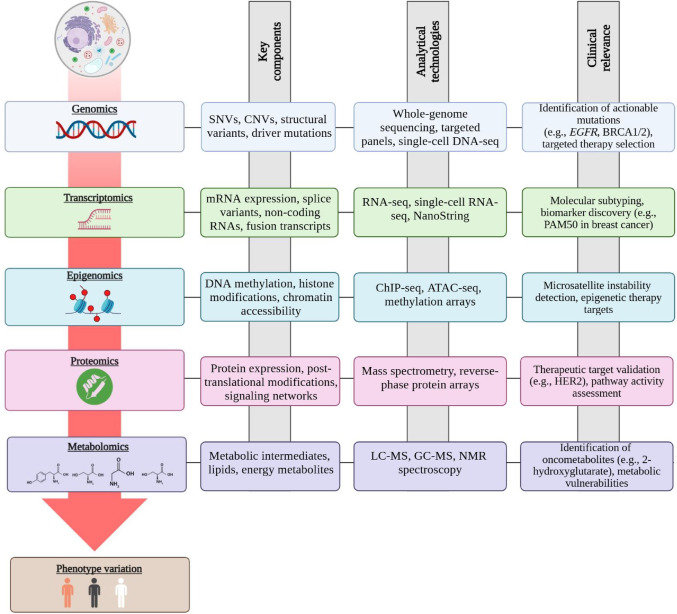
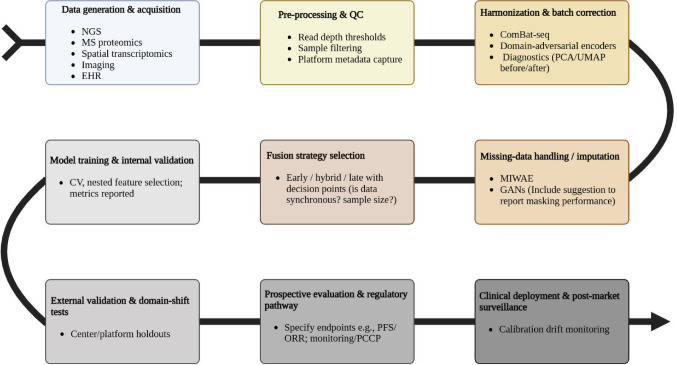
Cancer's staggering molecular heterogeneity demands innovative approaches beyond traditional single-omics methods. The integration of multi-omics data, spanning genomics, transcriptomics, proteomics, metabolomics and radiomics, can improve diagnostic and prognostic accuracy when accompanied by rigorous preprocessing and external validation; for example, recent integrated classifiers report AUCs around 0.81-0.87 for difficult early-detection tasks. This review synthesizes how artificial intelligence (AI), particularly deep learning and machine learning, bridges this gap by enabling scalable, non-linear integration of disparate omics layers into clinically actionable insights. We explore cutting-edge AI methodologies, including graph neural networks for biological network modeling, transformers for cross-modal fusion, and explainable AI (XAI) for transparent clinical decision support. Critical applications are highlighted, such as AI-driven therapy selection (e.g., predicting targeted therapy resistance), proteogenomic early detection, and radiogenomic non-invasive diagnostics. We further address translational challenges: data harmonization, batch correction, missing data imputation, and computational scalability. Emerging trends, federated learning for privacy-preserving collaboration, spatial/single-cell omics for microenvironment decoding, quantum computing, and patient-centric "N-of-1" models, signal a paradigm shift toward dynamic, personalized cancer management. Despite persistent hurdles in model generalizability, ethical equity, and regulatory alignment, AI-powered multi-omics integration promises to transform precision oncology from reactive population-based approaches to proactive, individualized care.
Overview
The claims and statistics of this paper haven’t been checked yet.
Free: it reads the open-access text and checks the first 5 claims that cite a source we can check. Create a free account to check every claim.
Integrity signals
Registry
Cites
Statistics
Figures
Verification
Claims the paper makes
The claims and statistics of this paper haven’t been checked yet.
Free: it reads the open-access text and checks the first 5 claims that cite a source we can check. Create a free account to check every claim.
Claims other papers make about this one
Each is checked against this paper’s own text: does it say what the citing paper says it does?
The source backs part of the claim, not all of it — or backs it for a different population, condition or comparison.
In the citing paper
“Integrated multi-omics classifiers consistently outperform single-modality models, with recent analyses reporting AUCs of 0.81–0.87 for early cancer detection using cross-omics feature integration”
From A generative AI multi-agent framework with integrated XAI governance for cancer diagnostics: from multi-omics interpretation to lifestyle risk stratification (2026) · cites this paper as Hsu et al., 2026
Experimental — accuracy not yet measuredThe source backs part of the claim, not all of it — or backs it for a different population, condition or comparison.
In the citing paper
“The Cancer Genome Atlas provides the most accessible resource for MO-XAI Agent validation, with comprehensive genomic and transcriptomic data for 33 cancer types linked to clinical outcomes (Hsu et al., 2026).”
From A generative AI multi-agent framework with integrated XAI governance for cancer diagnostics: from multi-omics interpretation to lifestyle risk stratification (2026) · cites this paper as Hsu et al., 2026
Experimental — accuracy not yet measured
Self-check
Percentages, sums and reported differences re-computed from the paper’s own numbers.
The self-check needs the paper’s full text.
Citations
Cites
The FAIR Guiding Principles for scientific data management and stewardship
Wilkinson, M. D., Dumontier, M., Aalbersberg, I. J., Appleton, G., Axton, M., Baak, A., Blomberg, N., Boiten, J.-W., da Silva Santos, L. B., Bourne, P. E., et al. (2016) · Scientific Data · doi:10.1038/sdata.2016.18 · Cited by 18,423 · cited 2×
“…directly affect whether AI-multiomics systems reach patients: (a) Interoperability & provenance: Use machine-readable metadata and standard schemas (FAIR; HL7 FHIR Genomics profiles) plus immu - table provenance logs so that data lineage and pre-analytical differences are auditable [ 61 , 62 ].”
Adjusting batch effects in microarray expression data using empirical Bayes methods
Johnson, W. E., Li, C., & Rabinovic, A. (2007) · Biostatistics · doi:10.1093/biostatistics/kxj037 · Cited by 8,658 · cited 1×
“…(e.g., proteomics vs. tran - scriptomics, spatial vs. bulk), consider domain-adversarial encoders or conditional VAEs for domain-invariant repre - sentation learning, but also quantify residual batch signal (e.g., silhouette score by batch, variance explained by batch pre/post) [ 47 , 48].”
ComBat-seq: batch effect adjustment for RNA-seq count data
Zhang, Y., Parmigiani, G., & Johnson, W. E. (2020) · NAR Genomics and Bioinformatics · doi:10.1093/nargab/lqaa078 · Cited by 1,566 · cited 1×
“…(e.g., proteomics vs. tran - scriptomics, spatial vs. bulk), consider domain-adversarial encoders or conditional VAEs for domain-invariant repre - sentation learning, but also quantify residual batch signal (e.g., silhouette score by batch, variance explained by batch pre/post) [ 47 , 48].”
Deep learning-based multi-omics integration robustly predicts survival in liver cancer
Chaudhary, K., Poirion, O. B., Lu, L., & Garmire, L. X. (2018) · Clinical Cancer Research · doi:10.1158/1078-0432.ccr-17-0853 · Cited by 1,091 · cited 1×
“…and provide candidate biomarkers, but they do not by themselves prove clinical utility, prospective interventional testing is still required [ 52]. steps, the federated model update schedule, and privacy-preserving mechanisms (e.g., differential privacy budget, homomorphic encryption)…”
Marrero, J. A., Feng, Z., Wang, Y., Nguyen, M. H., Befeler, A. S., Roberts, L. R., Reddy, K. R., Harnois, D., Llovet, J. M., Normolle, D., et al. (2009) · Gastroenterology · doi:10.1053/j.gastro.2009.04.005 · Cited by 745 · cited 2×
“Recent HCC reviews and meta-analyses highlight the het - erogeneity of treatment response and the need for immune-aware stratification when selecting second-line therapies [ 51].”
Wang, T., Shao, W., Huang, Z., Tang, H., Zhang, J., Ding, Z., & Huang, K. (2021) · Nature Communications · doi:10.1038/s41467-021-23774-w · Cited by 671 · cited 3×
“…cohort studies, models like moGAT use atten - tion mechanisms to weight features from genomic, epig - enomic, and transcriptomic graphs, achieving an AUC of 0.92 in classifying cancer subtypes by effectively capturing the topological dependencies between molecular features [30, 32 , 33 ].”
InfluentialGenomic and transcriptomic profiling expands precision cancer medicine: the WINTHER trial
Rodon, J., Soria, J.-C., Berger, R., Miller, W. H., Rubin, E., Kugel, A., Tsimberidou, A., Saintigny, P., Ackerstein, A., Braña, I., et al. (2019) · Nature Medicine · doi:10.1038/s41591-019-0424-4 · Cited by 578 · cited 2×
“…should state (a) whether the model produced an actionable recommendation or was used only for stratification, (b) the prospective endpoint (e.g., ORR, PFS ratio, OS), (c) whether the decision was autonomous or MTB-mediated, and (d) performance on pre - specified fairness/subgroup metrics [ 53].”
Artificial intelligence-based multi-omics analysis fuels cancer precision medicine
He, X., Liu, X., Zuo, F., Shi, H., & Jing, J. (2023) · Seminars in Cancer Biology · doi:10.1016/j.semcancer.2022.12.009 · Cited by 445 · cited 6×
“Similarly, integrated omics classifiers have demonstrated robust diagnostic capabilities (AUC 0.81–0.87) for malignancies such as pancreatic can - cer where early detection remains challenging [ 17 , 22 ].”
InfluentialNavigating Challenges and Opportunities in Multi-Omics Integration for Personalized Healthcare
Mohr, A. E., Ortega-Santos, C. P., Whisner, C. M., Klein-Seetharaman, J., & Jasbi, P. (2024) · Biomedicines · doi:10.3390/biomedicines12071496 · Cited by 311 · cited 5×
“Recent implementa - tions leverage GNNs to model molecular interactions within tumor ecosystems, creating in silico simulations that predict individual responses to combination therapies [ 6 , 43].”
InfluentialDeep learning-based approaches for multi-omics data integration and analysis
Ballard, J. L., Wang, Z., Li, W., Shen, L., & Long, Q. (2024) · BioData Mining · doi:10.1186/s13040-024-00391-z · Cited by 258 · cited 6×
“The major trade-off for this enhanced power is their hunger for large sample sizes and substantial com - putational resources, making them prone to overfitting on rare cancer datasets without careful regularization [ 27 , 31].”
Influential
Research works printed but not linked: 10
- Camps J, et al. Artificial intelligence-driven integration of multi-omics and radiomics: A new hope for precision cancer diagnosis and prognosis. Biochim Biophys Acta Mol Basis Dis. 2025;1871(6):167841. 40216368 · DOI
- Ahmad S et al. The Role Artif Intell Diagnosing Malignant Tumors EJMO, 2024. 8(3). · DOI
- Cai Z et al. Transformer-based deep learning integrates multi-omic data with cancer pathways. bioRxiv, 2024: p. 2022.10.27.514141. · DOI · Paper page
- Mohr AE, et al. Navigating challenges and opportunities in Multi-Omics integration for personalized healthcare. Biomedicines. 2024;12(7):1496. 39062068 PMC11274472 · DOI · Paper page
- Sartori F et al. A comprehensive review of deep learning applications with Multi-Omics data in cancer research. Genes (Basel), 2025. 16(6). PMC12191839 40565540 · DOI
- Shao Y, et al. Artificial Intelligence-Driven precision medicine: Multi-Omics and Spatial Multi-Omics approaches in diffuse large B-Cell lymphoma (DLBCL). Front Biosci (Landmark Ed). 2024;29(12):404. 39735973 · DOI
- Mattei P-A, Frellsen J. MIWAE: Deep Generative Modelling and Imputation of Incomplete Data Sets. in International Conference on Machine Learning. 2019.
- Palmer DC, et al. GEMINI-NSCLC study: integrated longitudinal multi-omic biomarker profiling study of non-small cell lung cancer (NSCLC) patients. J Clin Oncol. 2025;43(16suppl):TPS8114–8114.
- Srivastava R. Advancing precision oncology with AI-powered genomic analysis. Front Pharmacol. 2025;16:1591696. 40371349 PMC12075946 · DOI
- Ferber D, et al. Development and validation of an autonomous artificial intelligence agent for clinical decision-making in oncology. Nat Cancer. 2025;6(8):1337–49. 40481323 PMC12380607 · DOI · Paper page
Cited by
AbdelHamid, S. G., Halawa, E. M., Ibrahim, E., & ElHefnawi, M. (2026) · Cancer Cell International · doi:10.1186/s12935-026-04263-w · Cited by 25
Fawzy, M. P., Nafie, M. S., Nabih, N. W., Diab, M. K., Babker, A. M. A., Mohamed, H., Hassan, H. A. F. M., & Fahmy, S. A. (2026) · Artificial Intelligence in the Life Sciences · doi:10.1016/j.ailsci.2026.100168 · Cited by 17
Darzi, A., Shokouhfar, M., Farajee, N., Ghafari, A., Deldar, F., Eini, P., Vanan, A. G., & Bahrami, N. (2025) · Biomedicine & Pharmacotherapy · doi:10.1016/j.biopha.2025.118875 · Cited by 15
Deep Learning-Enabled Multi-Omics Integration: A New Frontier in Precise Drug Target Discovery
Ren, Y., Bai, H., Wang, J., Yang, Y., & Wang, Y. (2026) · Biology · doi:10.3390/biology15050410 · Cited by 18
“To bridge this divide, the field must pivot from correlation-based learning toward causality-aware XAI frameworks [140,141].”
Omics medicine: what the clinicians should know
Zamperla, M. G., Barbi, V., Negri, S., Atlante, S., & Gaetano, C. (2026) · European Journal of Internal Medicine · doi:10.1016/j.ejim.2026.106759 · Cited by 15
Pakpahan, I., Sihombing, M., Liu, H., Wang, M., Su, Z., & Fang, M. (2026) · GigaScience · doi:10.1093/gigascience/giag004 · Cited by 13
AI-Driven Chemometrics for Multi-omics Data Integration: Advances, Challenges, and Future Directions
Polu, P. R. (2026) · Critical Reviews in Analytical Chemistry · doi:10.1080/10408347.2026.2657553 · Cited by 14
Regulating complexity in AI-enabled omics and multi-omics technologies for precision medicine
Welzel, C., Ertaylan, G., Babina, I. S., & Gilbert, S. (2026) · npj Digital Medicine · doi:10.1038/s41746-026-02553-1 · Cited by 10
Garg, P., Salgia, R., & Singhal, S. S. (2026) · Journal of Ovarian Research · doi:10.1186/s13048-026-02115-9 · Cited by 10
“Recent advances in AI-guided multi-omics integration further highlight its potential in improving patient stratification and treatment optimization in clinical oncology [91].”
Zehra, T., Koopaie, M., Fatima, N., Rashid, G., Hasan, I., & Siddiqui, Z. (2026) · Frontiers in Molecular Biosciences · doi:10.3389/fmolb.2026.1749586 · Cited by 8
“AI and ML algorithms excel in identifying subtle, multivariate miRNA signatures that distinguish malignant from benign states with high sensitivity and specificity, often surpassing single-marker approaches (Hsu et al., 2026; Yan et al., 2023).”
InfluentialIntegrating multi-omics data and artificial intelligence for personalized medicine in glioblastoma
Abuhassan, Q., Al‐Ameer, H. J., Patel, P. N., Jyothi, S. R., Singh, G., Maharana, L., Arora, V., & Khalikova, N. (2026) · Clinica Chimica Acta · doi:10.1016/j.cca.2026.120997 · Cited by 6
Multiomics approaches to cardiovascular disease: technological innovations and clinical translation
Zehra, B., Vinod, N., Bineshaq, S., Aleksandrova, I., Tambi, R., Faizan, M., Alasrawi, S., Almarri, M., Brueckner, M. K., Kuebler, W. M., et al. (2026) · American Journal of Physiology-Heart and Circulatory Physiology · doi:10.1152/ajpheart.00024.2026 · Cited by 5
Fan, X., Shi, J., Shang, Y., & Xu, H. (2026) · Frontiers in Molecular Biosciences · doi:10.3389/fmolb.2026.1795133 · Cited by 8
“…cold-chain transport, platform variability and site-specific pre-analytical workflows introduce batch effects and domain shift in data distributions, posing a major challenge to the robustness and generalizability of AI-driven liquid biopsy models in real-world deployment (Hsu et al., 2025).”
Bellarmin, M., Veerasami, H., & Jayaprakash, N. (2026) · Decoding Infection and Transmission · doi:10.1016/j.dcit.2026.100079 · Cited by 12
Waseem, S., Zhan, J., Xiao, X., & Bai, P. (2026) · Frontiers in Oncology · doi:10.3389/fonc.2026.1785469 · Cited by 6
Javeed, T., Jan, N., Sofi, S., Masoodi, G., Jabeen, A., Ahanger, S. A., & Mir, M. A. (2026) · Advances in Cancer Biology - Metastasis · doi:10.1016/j.adcanc.2026.100183 · Cited by 6
Ferroptosis in cancer: integrating multi-omics, AI-driven biomarkers, and translational challenges
Taki, A. G., Shareef, A., Arora, V., Oweis, R. J., Jyothi, S. R., Singh, U., Sahoo, S., Chauhan, A. S., Alimova, F., Sameer, H. N., et al. (2026) · Clinica Chimica Acta · doi:10.1016/j.cca.2026.121131 · Cited by 6
Sisca, L., Polito, M. G., Iuliani, M., Papalia, G. F., Tonini, G., & Pantano, F. (2026) · Biomolecules · doi:10.3390/biom16030394 · Cited by 4
“The convergence of multi-omics technologies with artificial intelligence-driven data integration may ultimately enable CTC-based precision oncology strategies that are both biologically informative and clinically feasible [51].”
Mapping the path to clinical implementation of multi-omics
Ismail, S. I., Saad, C., Elrayess, M. A., Khleifat, A. A., Hendi, N. N., Al-Sarraj, Y. A., Badji, R. M., & Al‐Muftah, W. (2026) · Nature Genetics · doi:10.1038/s41588-026-02663-2 · Cited by 8
Tightly bound T-cell clusters: A new class of hyper-effector tumor killers
Ma, W., Pham, J., & Jamieson, C. H. M. (2025) · Cytokine & Growth Factor Reviews · doi:10.1016/j.cytogfr.2025.12.007 · Cited by 3
Mahmoudi, E., Ebrahimi, M., & Bahramian, E. (2025) · Intelligent Oncology · doi:10.1016/j.intonc.2025.12.002 · Cited by 3
Mechanisms, Imaging Phenotypes, and Therapeutic Advances of Neovascularization in Brain Metastases
Liu, S., Shan, B., Zhang, Y., Xu, L., Zhang, X. C., Ye, L., Diao, H., Cheng, Y., & Tang, J. (2026) · Biomedicines · doi:10.3390/biomedicines14010119 · Cited by 5
“When integrated with AI-driven analytics, these datasets may enable predictive modeling of vascular phenotypes and treatment sensitivity at the individual lesion level [144,145].”
Alwahaibi, M., & Alwahaibi, N. (2026) · Frontiers in Medicine · doi:10.3389/fmed.2026.1772478 · Cited by 4
“As costs decline and standardization improves, AI-integrated multi-omics bone marrow analysis is expected to transition from a research tool to a routine component of diagnostic and prognostic assessment, positioning the bone marrow biopsy as a central hub for precision hematology (113).”
Ahmad, P. N., Anwar, M. S., Barahona, I., Rahman, A. U., Nisar, H., & Burhan, U. (2026) · Future Internet · doi:10.3390/fi18060324 · Cited by 3
Omics-based profiling of immune cell death in autoimmunity and inflammation
Chowdhury, S., Sarkar, S., Das, A., Kar, K., & Chakraborty, P. (2026) · Cell Death · doi:10.1016/j.celld.2026.100007 · Cited by 3
Single-cell multiomics in clinical immunology: Revolutionizing immune profiling
Chowdhury, S., Khan, N., Dutta, R., Chakraborty, P., & Kar, K. (2026) · Clinical Immunology Communications · doi:10.1016/j.clicom.2026.03.002 · Cited by 2
Fadiel, A., Malpani, P., Eichenbaum, K. D., Naftolin, F. N., Hassouneh, A., Chong, G., & Odunsi, K. O. (2026) · Cells · doi:10.3390/cells15080700 · Cited by 2
“ML ensembles can also stack various models to resolve multi-omic changes [47].”
Molecular modelling–driven formulation design for targeted pulmonary drug delivery
Goel, K., Singh, T. G., Paudel, K. R., MacLoughlin, R. J., Islam, M. S., Kulkarni, M. P., Dua, K., & Mujwar, S. (2026) · International Journal of Pharmaceutics · doi:10.1016/j.ijpharm.2026.126873 · Cited by 3
Kumar, S., Karwasra, R., Zhou, W., Seetharaman, J., & Singla, B. (2026) · Experimental Biology and Medicine · doi:10.3389/ebm.2026.10988 · Cited by 3
“Through this process, students will learn both classical approaches to disease risk modeling and ML frameworks, including neural networks [9].”
InfluentialQiu, S., Li, S., Chen, Y., Ma, X., Fu, H., & Zhao, B. (2026) · Translational Oncology · doi:10.1016/j.tranon.2026.102886 · Cited by 4
“Below is a detailed discussion of the core solutions and innovative directions: One of the most promising innovations in this area is the integration of AI-driven predictive models with multi-omics data [234].”
Saini, R., Thakur, B., Basaba, B. K., & Satapathy, M. K. (2026) · Organoids · doi:10.3390/organoids5030020 · Cited by 2
HER2-Low Breast Cancer at the Interface of Pathology and Technology: Toward Precision Management
Shekari, F., Mokhtari, R. B., Salahandish, R., Sambi, M., Tarrahi, R., Salehi, M., Ashayeri, N., Eversole, P., Szewczuk, M. R., Chakraborty, S., et al. (2025) · Biomedicines · doi:10.3390/biomedicines14010049 · Cited by 2
“…potential, significant challenges remain—including issues of model generalizability, ethical and equity considerations, regulatory alignment, and the need for robust evidence and standardization—highlighting the importance of user trust, legal safeguards, and societal benefit [120,124,125].”
MASLD biomarker discovery: evaluating lipidomics techniques across disease progression
Hassanein, S. I. (2026) · Molecular Biology Reports · doi:10.1007/s11033-026-11447-0 · Cited by 1
“These integrated datasets, propelled by sophisticated Artificial Intelligence (AI) and Machine Learning (ML) algorithms, promise to refine diagnostic precision, enhance patient stratification, and enable robust treatment monitoring in MASLD [99, 100, 101].”
Santacroce, G., Bello, A. L., Iacucci, M., & Sabatino, A. D. (2026) · European Journal of Internal Medicine · doi:10.1016/j.ejim.2026.106872 · Cited by 1
Man, S., Zhang, L., & Chen, B. (2026) · Biomolecules · doi:10.3390/biom16050645 · Cited by 1
“…bulk RNA-seq, assay for transposase-accessible chromatin using sequencing [ATAC-seq], and spatial omics—the lineage plasticity, metabolic dependencies, and epigenetic regulatory pathways of stem-like cells have been gradually incorporated into a multidimensional mechanistic framework [16,19].”
Shaikh, K., Thanki, R., & Shah, S. (2026) · Synthesis lectures on engineering, science, and technology · doi:10.1007/978-3-032-25486-3_4
El‐Sehrawy, A. A. M. A., Oriquat, G., Saidov, S., Ruzikulov, U., Shakhmurova, G., Jbl, B. J., Singhal, D., & Shefali (2026) · Clinica Chimica Acta · doi:10.1016/j.cca.2026.121066 · Cited by 1
Immune checkpoints in lung cancer
Garrido-Martin, E. M., Kontić, M., Rooney, C., & Mansouri, N. (2026) · Breathe · doi:10.1183/20734735.0244-2025 · Cited by 1
Integrating multi-omics data for next-generation cancer research and precision medicine
Biswas, S., Acharya, S., Prajapat, A., Sen, P., Desai, S., Giri, S., Matthiesen, R., CAPCI, T., Chaubey, G., & Suravajhala, P. (2026) · Clinical & Translational Oncology · doi:10.1007/s12094-026-04368-8 · Cited by 2
Moar, K., Pant, A., & Maurya, P. K. (2026) · Indian Journal of Clinical Biochemistry · doi:10.1007/s12291-026-01425-5 · Cited by 1
Velmurugan, R., Helinto, J. S., Subhashri, S., & Ravikumar, L. (2026) · Next Nanotechnology · doi:10.1016/j.nxnano.2026.100551 · Cited by 1
Agha, A. S. A. A., Al-Remawi, M. M., Al‐Akayleh, F., Abdel‐Rahem, R. A., & Aburub, F. (2026) · International Conference on Computational Intelligence Approaches and Applications (ICCIAA) · doi:10.1109/icciaa68481.2026.11543667 · Cited by 1
“Deep learning–driven integration has also advanced precision oncology, achieving AUCs up to 0.87 in predicting therapy resistance and treatment outcomes by fusing molecular, clinical, and radiomic data [21].”
InfluentialMolecularly Guided Therapy in Hepatobiliary Cancers
Adeva, J., Kalluri, V. S., Saj, F., Modrego, A., & Javle, M. M. (2026) · Hematology/Oncology Clinics of North America · doi:10.1016/j.hoc.2026.05.005 · Cited by 1
Wang, D., & Li, Y. (2026) · Seminars in Oncology · doi:10.1016/j.seminoncol.2026.152516 · Cited by 1
Cross-scale bioanalytical integration for decoding tumour regulatory plasticity in oncology
Kumar, S., Mondal, A., & Dubey, V. K. (2026) · Critical Reviews in Oncology/Hematology · doi:10.1016/j.critrevonc.2026.105466 · Cited by 1
Dong, Y., & Su, Y. (2026) · Frontiers in Immunology · doi:10.3389/fimmu.2026.1821743 · Cited by 1
“The core of the integration of radiomics and spatial omics lies in establishing a quantitative mapping relationship between “ imaging features - spatial biology, ” thereby enabling non-invasive, panoramic, and dynamic assessment of the tumor immune microenvironment (TIME) (227, 228).”
Omics Approaches in Hantavirus Research: Current Advances, Challenges, and Future Perspectives
Najafi, S., Jojani, M., Najafi, K., & Roviello, G. N. (2026) · BioTech · doi:10.3390/biotech15030058 · Cited by 1
Jiang, X.-Z., Guo, L.-J., Zhang, M.-T., Ji, G.-L., Liu, H.-T., Zheng, Y., & Zhou, J. (2026) · Frontiers in Cardiovascular Medicine · doi:10.3389/fcvm.2026.1846105 · Cited by 3
A heterogeneous multimodal ensemble framework for multi-omics breast cancer prognosis
Bozorgpour, R., & Sadrabadi, M. S. (2026) · Clinical Cancer Bulletin · doi:10.1007/s44272-026-00068-0 · Cited by 1
“…across multiple molecular layers, AI-driven multi-omics analysis provides a more comprehensive characterization of tumor biology than single-modality approaches, thereby improving patient stratification, biomarker discovery, outcome prediction, and personalized therapeutic decision-making [9–12].”
Baruri, S., Batra, L., Adhikari, S., & El-Baz, A. S. (2026) · Epigenomes · doi:10.3390/epigenomes10030053 · Cited by 2
Multi‐omics–driven precision medicine
Li, H., Zhao, Z., Zhang, Y., Ma, Y., Hu, G., Zeng, M., Yang, Z., Zhao, Z., Zhou, X., Hu, W., et al. (2026) · iMeta · doi:10.1002/imt2.70165 · Cited by 2
Liu, Z., Ang, M. Y., & Kue, C. S. (2026) · doi:10.2196/preprints.95204 · Cited by 1
Barki, C., Chouchen, M., Sediri, A., Ceylan, H. İ., Rahmouni, H. B., Muntean, R. I., El-Seedi, H. R., Bragazzi, N. L., & Dergaa, I. (2026) · Frontiers in Systems Biology · doi:10.3389/fsysb.2026.1892418 · Cited by 1
“Public datasets from The Cancer Genome Atlas provide a near-term validation pathway given their comprehensive genomic, transcriptomic, and clinical variable coverage across 33 cancer types (Hsu et al., 2026).”
InfluentialAn Australian brain bank and the future of alcohol and major neuropsychiatric disorders research
Stevens, J., Smith, C. C., Maskey, D., Novelli, M. G., Bronfenbrener, J., Hofer, M. J., & Sutherland, G. T. (2026) · Frontiers in Neurology · doi:10.3389/fneur.2026.1746346
Cross-Generational Integration of Exercise and Nutritional Encoding in Offspring Adipose Genomics
Chae, S. A., Yoo, C., & Son, J. S. (2026) · International Journal of Molecular Sciences · doi:10.3390/ijms27062623 · Cited by 1
“In different tissue and pathology systems, such as oncology and neurodegenerative research, ML models integrating transcriptomic data with histological features have enabled early disease classification before clinical symptoms emerge [157,158].”
Pereira, G. M., Calfa, S., dos Santos, P. R., de Freitas, A. J. A., Bortoletto, S., Reis, R. M., Marques, M. M. C., & Causin, R. L. (2026) · Life · doi:10.3390/life16081332
“Importantly, prospective validation, functional studies, and standardized analytical pipelines will be required before miRNA-based panels can be reliably incorporated into precision oncology practice [109–111].”
Nosa-Ihaza, E. A., Edeh, E. C., Wol, W. B. G., & Okenwa, E. (2026) · Journal of the Egyptian National Cancer Institute · doi:10.1186/s43046-026-00371-w · Cited by 2
“A digital pathology model using AI, combined with whole-slide image validation, can predict response to immune checkpoint inhibitors, risk-stratify patients, and monitor long-term alterations in the tumour microenvironment during immunotherapy [29].”
InfluentialNapoli, M. D., Coppola, E., D’Aniello, C., Scagliarini, S., Buonerba, C., Muto, A., Formisano, L., Sabbatino, F., Bosso, D., Rossetti, S., et al. (2026) · Current Oncology · doi:10.3390/curroncol33060325
“In line with emerging AI-driven precision-oncology frameworks, such integrated approaches may further support patient stratification, biomarker discovery, and treatment selection [28].”
Li, M.-F., Song-nan, D., Bao, P.-T., & Li, Y.-G. (2026) · World Journal of Gastrointestinal Oncology · doi:10.4251/wjgo.118614
Deep-learning-based object detection of pelvic autonomic nerves during total mesorectal excision
Zhang, Q., Li, J., Meng, T., Chen, Z.-F., Zhou, X., & Lu, X. (2026) · World Journal of Gastroenterology · doi:10.3748/wjg.121592
Garg, P., Horne, D. A., Salgia, R., & Singhal, S. S. (2026) · Cancers · doi:10.3390/cancers18111856
“Using omics-inspired features, AI models can drive beyond the ranks of static affinity prediction towards biologically aware conjugate design [29].”
Machine Learning in Precision Oncology: Integrating Multimodal Clinical Data for Treatment Selection
Magwenzi, S. (2026) · Journal of Precision Medicine and Artificial Intelligence · doi:10.64949/3dfqcq13
“2,9 These data are essential for identifying actionable mutations, such as EGFR in lung cancer or BRCA in breast cancer, which guide targeted therapy selection.”
InfluentialKara, İ. O. (2026) · Turkish Journal of Surgical Oncology · doi:10.4274/turkjsurgoncol.galenos.2026.18480
Ge, Y., 吴秀娟, Zhao, P., Zhou, F., Xu, S., Yao, M., Ji, Y., Li, J., Feng, Q., Zhao, L., et al. (2026) · International Journal of Women s Health · doi:10.2147/ijwh.s608124
Shirvani, A. H., Mohammadian, S., Jamshidi, S., Khodabandehloo, M. H., Zangoie, S., Moghadam, R. S., Amoozade, A., Aram, C., Rahimi, M., Kamali, M. J., et al. (2026) · APOPTOSIS · doi:10.1007/s10495-026-02375-2
Losada, J., Lasarte, A. S., & López, I. A. L. (2026) · Educación Médica · doi:10.1016/j.edumed.2026.101205
Gupta, R., Lakhanpal, S., Kumar, N., Nagraik, R., Ravi, K., Sharma, S., Abomughaid, M. M., Kumari, S., & Jha, N. K. (2026) · Frontiers in Cell and Developmental Biology · doi:10.3389/fcell.2026.1844582
“One of the most critical obstacles to effective clinical translation is the remarkable intratumoral heterogeneity observed in high-risk neuroblastoma (He et al., 2026; Hsu et al., 2026).”
Kavitha, S., Sri, E. K., Swapna, G., Maity, D., Swathi, N. L., S., S. K., -, S. G. B., & Bandari, T. (2026) · Advances in computational intelligence and robotics book series · doi:10.4018/979-8-3373-8172-5.ch004
Zeid, I. M. A., Afzal, M., Rafeeq, M., Zeyadi, M., Chaieb, K., Altayb, H. N., Alzarea, S. I., Nadeem, M. S., & Kazmi, I. A. (2026) · Clinica Chimica Acta · doi:10.1016/j.cca.2026.121198
Pasupuleti, G., S, J. V., Pandit, V. S., Bai, S., Dey, A., Tangar, S., & George, S. (2026) · Research Square · doi:10.21203/rs.3.rs-10142797/v1
Sanches, P. H. G., de Melo, N. C., de Oliveira, D. C., & de Carvalho, L. M. (2026) · Biology · doi:10.3390/biology15131004
“Furthermore, the integration of omics layers with advanced computational approaches and artificial intelligence have shown great potential to improve tumor classification, risk prediction, and personalized treatment strategies [17].”
A spatiotemporal state-inference framework for adaptive immunotherapy in glioblastoma
Chen, X., Li, S., Liu, X., & Ma, W. (2026) · Frontiers in Oncology · doi:10.3389/fonc.2026.1875352
“Because STGNN outputs are latent and probabilistic, credibility depends on triangulation rather than on one-to-one proof (26, 97, 98).”
InfluentialThe role of the WD40-repeat protein family in cancer
李家乐, Zhou, H., Luo, Q., Wu, D., Lin, M., Mai, G., Xu, X., He, Y., Liu, Y., Wang, J., et al. (2026) · Molecular Cancer · doi:10.1186/s12943-026-02718-2
“Recent reviews of AI-driven multi-omics integration in precision oncology emphasize its potential for biomarker discovery, diagnosis, prognosis prediction, therapy response modeling, and clinical decision support [399, 400].”
Liu, W., Li, X., Wan, Z., Xie, J., Wang, S., Zhai, Y., Cao, Z., Wang, P., & Wang, C. (2026) · Inflammation · doi:10.1007/s10753-026-02553-z
Thoppay, J. R. (2026) · Journal of Indian Academy of Oral Medicine and Radiology · doi:10.4103/jiaomr.jiaomr_201_26
Hussain, A., & Hussain, A. (2026) · AI in Precision Oncology · doi:10.1177/2993091x261468502
Jin, Y., Yuan, T., & Chen, Z. (2026) · Journal of Medical Internet Research · doi:10.2196/85360
“This highlights the critical need for multicenter data harmonization and rigorous external testing [67].”
Leveraging Advanced AI Frameworks for Dual PPAR α/γ Agonist Discovery in Alzheimer’s Disease
Chaturvedi, N., Mishra, V., Haque, S., Khatoon, S., Rawal, K., & Kumar, V. (2026) · ACS Chemical Neuroscience · doi:10.1021/acschemneuro.6c00148
The evolving bioinformatic approaches to identifying genetic targets of promise in cancers
Kumar, V., Mathkor, D. M., & Haque, S. (2026) · Expert Opinion on Therapeutic Targets · doi:10.1080/14728222.2026.2706463 · Cited by 1
“Transformer-based architectures are also gaining traction because they can capture long-range dependencies across multimodal inputs and support more flexible fusion of genomic and clinical information [14,19].”
InfluentialWang, X., Shen-tao, W., & Wang, B. (2026) · Current Radiopharmaceuticals · doi:10.1016/j.craph.2026.100073
From reductionism to integration: The evolving landscape of biological research
Bhaskar, P. (2026) · The Applied Biology & Chemistry Journal · doi:10.52679/tabcj.2026.71001
Akpe, V., & Cock, I. E. (2026) · Digital Discovery · doi:10.1039/d6dd00068a · Cited by 2
Sunil, N., Vesalapu, S., Kadam, K. R., Kumar, K. S. K., & Suganya Devi, K. (2026) · International Conference on Cognitive Computing and Networking Systems (ICC-CNS) · doi:10.1109/icc-cns70518.2026.11606046
“This offers vital insights into biological pathways that captures molecular diversity through the Consensus Molecular Subtypes (CMS 1-4) in the context of colorectal cancer (CRC) [15], [16].”
Zero-Trust Autonomy Cryptographically Enforced Safety and Policy Compliance in Clinical AI Agents
Patibandla, V. J., Kushwaha, S., Onik, T. A., & Sundaramoorthy, J. (2026) · International Conference on Intelligent Systems and Digital Applications (ISDA) · doi:10.1109/isda70544.2026.11606029
“Precision oncology based on the integration of multi-omics using AI utilizes graph neural networks, transformers, and explainable AI (XAI) to enhance diagnostic and prognostic output [9].”
The Environmental Contribution to Health and Disease: Analytical Tools for Monitoring and Diagnosis
Aranda‐Merino, N., Heras, C. G. D. L., Ramos‐Payán, M., Fernández‐Torres, R., Bello‐López, M. Á., & Gómez‐Ariza, J. L. (2026) · Environments · doi:10.3390/environments13080416 · Cited by 1
Wang, X., Gao, Y., Xu, R., Lan, X., & Huang, Q. (2026) · Frontiers in Immunology · doi:10.3389/fimmu.2026.1866011 · Cited by 2
Ma, C., Zhuang, Y., Han, S., Li, S., & Dai, Q. (2026) · Frontiers in Immunology · doi:10.3389/fimmu.2026.1863734
Huang, Y., Liu, X., & Zhou, Y. (2026) · Frontiers in Artificial Intelligence · doi:10.3389/frai.2026.1779682
“…imaging features that are invisible to the human eye through high-throughput processing, transform medical images into high-dimensional data that can be analysed, and build models to noninvasively decode the heterogeneity within tumours and assist in clinical decision-making (Hsu et al., 2025).”
Shija, G. E. (2026) · Toxicology Mechanisms and Methods · doi:10.1080/15376516.2026.2712550 · Cited by 1
Ghazy, H. E., Ali, Z. H., & Medhat, T. (2026) · Scientific Reports · doi:10.1038/s41598-026-63991-1
Aly, D. M., Fteah, A. M., Elrefaiy, M. A., & Seddik, H. E. (2026) · Gene Reports · doi:10.1016/j.genrep.2026.102597
Chimanna, A. M., Shingne, H., Pathan, S., Chikmurge, D. V., & Patil, L. V. (2026) · Cancer Investigation · doi:10.1080/07357907.2026.2703811
“Hsu et al. (25) analyzed the role of artificial intelligence and big data integration to bridge the immense data deluge facing modern oncology practices.”
Salim, A., Gupta, C., Joshi, S., & Kumar, P. (2026) · Lecture notes in networks and systems · doi:10.1007/978-3-032-28293-4_18
Putting the I in AML: Artificial Intelligence and Machine Learning in Acute Myeloid Leukemia
Marchi, F. D., Ciotti, G., Atanasio, A., Pascarella, G., Sperotto, A. A., & Gottardi, M. (2026) · Cells · doi:10.3390/cells15171539
“Flow cytometry MRD is the natural place to begin: a shared, federated reference dataset, assembled across countries and harmonized under the 2025 ELN-DAVID consensus [25], would help with both standardization [24,74] and unequal access to data [141,142].”
Havelikar, U. A., Shinde, A., Mhaismale, H., Pawar, P., Chaudhari, N. B., Shendge, R. S., Menon, G., & Kumar, S. (2026) · OMICS A Journal of Integrative Biology · doi:10.1177/15578100261474653
“Therefore, it is widely recognized that biomarkers from single-omics studies are not as reproducible or clinically well-de fi ned as those obtained from multiomics data, especially in the case of cross-patient populations (Hsu et al., 2025).”
Dasgupta, S., & De, D. (2026) · OMICS A Journal of Integrative Biology · doi:10.1177/15578100261472236
“By modeling interactions across molecular layers, cell types, and phenotypic manifestations, integrative AI frameworks provide insights into regulatory mechanisms, pathway crosstalk, and disease trajectories (Hsu et al., 2025).”
Bava, S. F., Mabel, M., Jerald, I., Babu, M., & Selva, K. (2026) · Food and Feed Research · doi:10.5937/foodandfeedresearch0-67296
“AI-driven nutrigenomic profiling, integrated with multi-omics and computational biology, enables precision nutrition with high accuracy in predicting individual metabolic responses (Hsu et al., 2025).”
Mukherjee, A. M. (2026) · Cytokine & Growth Factor Reviews · doi:10.1016/j.cytogfr.2026.07.007 · Cited by 1
Anwer, M. (2026) · International Immunopharmacology · doi:10.1016/j.intimp.2026.117271
Hybrid AI Framework for Multi-Omics-based Kidney Tumor Subtype Classification and Precision Oncology
Rajagopal, K., Kumari, V. S., Elizabeth, J. R., Rekha, A., Ramesh Kumar, S., & Aswathy, D. R. H. (2026) · International Conference on Sustainable Computing and Smart Systems (ICSCSS) · doi:10.1109/icscss69635.2026.11646158
Metadata
- Authors
- Hsu, C.-Y., Askar, S., Alshkarchy, S. S., Nayak, P. P., Attabi, K. A. L., Khan, M. A., Mayan, J. A., Sharma, M. K., Islomov, S., & Soleimani Samarkhazan, H.
- Affiliations
- Chia Nan University of Pharmacy and Science (TW)
- Erbil Polytechnic University (IQ)
- Al-Qasim Green University (IQ)
- Siksha O Anusandhan University (IN)
- Islamic University of Najaf (IQ)
- Dhofar University (OM)
- Sathyabama Institute of Science and Technology (IN)
- Chaudhary Charan Singh University (IN)
- ORCID
- Venue
- Clinical and Experimental Medicine
- Published
- 2025-11-21
- Volume
- 26
- Issue
- 1
- Pages
- 29-29
- ISSN
- 1591-8890 (ISSN-L)
- 1591-9528
- PMC
- PMC12634751
- OpenAlex
- W4416442660
- Cited by
- 140
- References
- 74
- Citations by year
- 2026: 136 · 2025: 4
- FWCI
- 12.39
- Type
- journal article
- Language
- en
- Open access
- hybrid
- doi.org
- Licence
- cc-by-nc-nd
- creativecommons.org/licenses/by-nc-nd/4.0 (tdm)
- creativecommons.org/licenses/by-nc-nd/4.0 (vor)
- Locations
- Clinical and Experimental Medicine (publishedVersion, cc-by-nc-nd)
- Europe PMC (PubMed Central) (publishedVersion, cc-by-nc-nd)
- PubMed (publishedVersion)
- Topics
- Life Sciences › Biochemistry, Genetics and Molecular Biology › Molecular Biology › Bioinformatics and Genomic Networks
- Health Sciences › Medicine › Health Informatics › Artificial Intelligence in Healthcare and Education
- Life Sciences › Biochemistry, Genetics and Molecular Biology › Cancer Research › Cancer Genomics and Diagnostics
- Keywords
- multi-omics integration, precision oncology, artificial intelligence in oncology, deep learning, graph neural networks, transformer models, cross-modal fusion, explainable AI, clinical decision support, radiogenomics, non-invasive cancer diagnosis, data harmonization, batch effect correction, missing data imputation, federated learning, single-cell omics, tumor microenvironment, quantum computing, model generalization
- MeSH terms
- Clinical Decision-Making, Machine Learning, Deep Learning, Multiomics, Artificial Intelligence, Humans, Medical Oncology, Neoplasms, Genomics, Proteomics, Metabolomics, Precision Medicine
About these checks
Registry, retraction, Cites and statistics results are computed, not judged, with one exception: a printed reference that no index lists is read once by a model before it counts as a citation error. Claims are extracted by a model and kept only when their quote appears verbatim in the text; each cited source is then checked, with a model’s help, for whether it says what the claim relies on. Those verdicts can be wrong — read the claim’s quote and the cited source before relying on one.
Statistics and arithmetic are recomputed, not judged.
Confidence bands are shown only for fields calibrated on our annotated test set. None is calibrated yet, so no band is shown.
What counts as a claim ›How we measure confidence ›How we check this ›
Are you an author, or do you see a problem with this page? Request a review
Data sources
Bibliographic data: Semantic Scholar, OpenAlex, Crossref.
Contains information from the Semantic Scholar Academic Graph Datasets, made available under the ODC Attribution License (ODC-BY 1.0).
Semantic Scholar’s data is described in: Kinney, R., et al. (2023). The Semantic Scholar Open Data Platform. arXiv:2301.10140.
