

The DOI matches its Crossref record; 1 of the 1 references it cites were found in a registry or an index.
A review on customer segmentation methods for personalized customer targeting in e-commerce use cases
Open accessAbstract
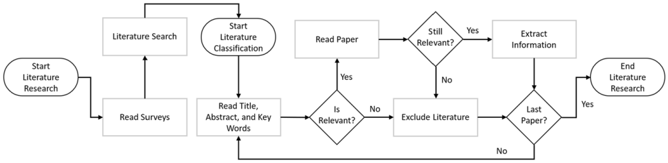
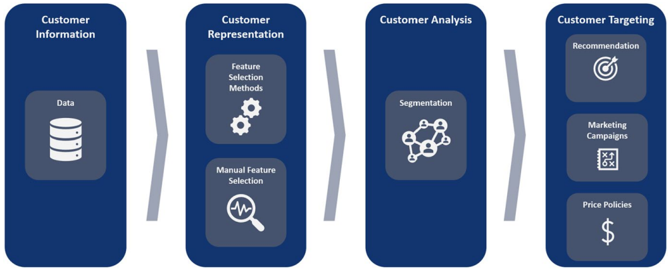
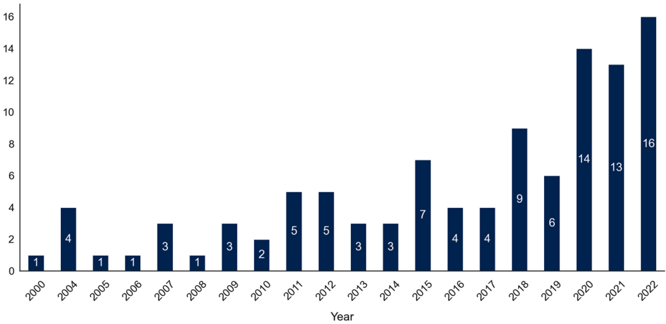
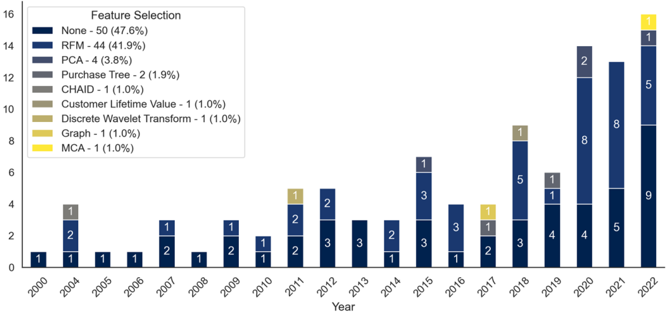
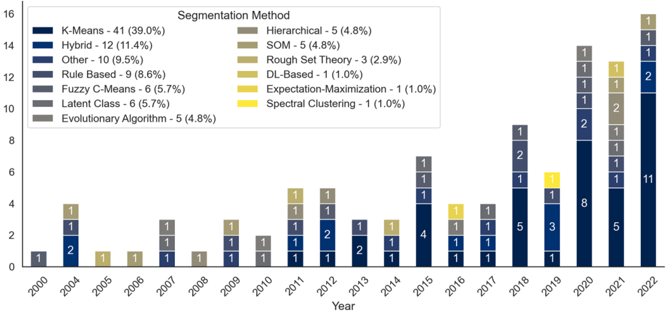
The importance of customer-oriented marketing has increased for companies in recent decades. With the advent of one-customer strategies, especially in e-commerce, traditional mass marketing in this area is becoming increasingly obsolete as customer-specific targeting becomes realizable. Such a strategy makes it essential to develop an underlying understanding of the interests and motivations of the individual customer. One method frequently used for this purpose is segmentation, which has evolved steadily in recent years. The aim of this paper is to provide a structured overview of the different segmentation methods and their current state of the art. For this purpose, we conducted an extensive literature search in which 105 publications between the years 2000 and 2022 were identified that deal with the analysis of customer behavior using segmentation methods. Based on this paper corpus, we provide a comprehensive review of the used methods. In addition, we examine the applied methods for temporal trends and for their applicability to different data set dimensionalities. Based on this paper corpus, we identified a four-phase process consisting of information (data) collection, customer representation, customer analysis via segmentation and customer targeting. With respect to customer representation and customer analysis by segmentation, we provide a comprehensive overview of the methods used in these process steps. We also take a look at temporal trends and the applicability to different dataset dimensionalities. In summary, customer representation is mainly solved by manual feature selection or RFM analysis. The most commonly used segmentation method is k-means, regardless of the use case and the amount of data. It is interesting to note that it has been widely used in recent years.
Overview
The claims and statistics of this paper haven’t been checked yet.
Run the check — free, no account needed. It reads the open-access text and checks the sources it cites.
Integrity signals
Registry
Cites
Statistics
Figures
Verification
Claims the paper makes
The claims and statistics of this paper haven’t been checked yet.
Run the check — free, no account needed. It reads the open-access text and checks the sources it cites.
Claims other papers make about this one
Each is checked against this paper’s own text: does it say what the citing paper says it does?
In the citing paper
“Poor data quality also increases ecosystem complexity, leading to suboptimal decisions [71].”
From Data Quality in the Age of AI: A Review of Governance, Ethics, and the FAIR Principles (2025) · cites this paper as [71]
In the citing paper
“The significance of data quality extends beyond technical systems to organizational processes, as illustrated by studies showing that even computerized criminal records in the U.S. are often inaccurate or incomplete [71].”
From Data Quality in the Age of AI: A Review of Governance, Ethics, and the FAIR Principles (2025) · cites this paper as [71]
Self-check
Percentages, sums and reported differences re-computed from the paper’s own numbers.
The self-check needs the paper’s full text.
Citations
Cites
Self-organized formation of topologically correct feature maps
Kohonen, T. (1982) · Biological Cybernetics · doi:10.1007/bf00337288 · Cited by 9,529
Research works printed but not linked: 155
- Abbasimehr H, Shabani M (2021) A new framework for predicting customer behavior in terms of RFM by considering the temporal aspect based on time series techniques. J Ambient Intell Hum Comput 12(1):515–531. https://doi.org/10.1007/s12652-020-02015-w · DOI
- Abdolvand N, Albadvi A, Aghdasi M (2015) Performance management using a value-based customer-centered model. Int J Prod Res 53(18):5472–5483. https://doi.org/10.1080/00207543.2015.1026613 · DOI
- Aghabozorgi S, Saybani MR, Teh YW (2012) Incremental clustering of time-series by fuzzy clustering. J Inf Sci Eng 28(4):671–688
- Akaike H (1974) A new look at the statistical model identification. IEEE Trans Autom Control 19(6):716–723 · DOI · Paper page
- Akhondzadeh-Noughabi E, Albadvi A (2015) Mining the dominant patterns of customer shifts between segments by using top-k and distinguishing sequential rules. Manag Decis 53(9):1976–2003. https://doi.org/10.1108/MD-09-2014-0551 · DOI
- Alberto Carrasco R, Francisca Blasco M, Garcia-Madariaga J, Herrera-Viedma E (2019) A fuzzy linguistic RMF model applied to campaign management. Int J Interact Multimed Artif Intell 5(4):21–27. https://doi.org/10.9781/ijimai.2018.03.003 · DOI
- Alghamdi A (2022) A hybrid method for big data analysis using fuzzy clustering, feature selection and adaptive neuro-fuzzy inferences system techniques: case of Mecca and Medina hotels in Saudi Arabia. Arab J Sci Eng. https://doi.org/10.1007/s13369-022-06978-0 · DOI
- Alghamdi A (2022) A hybrid method for customer segmentation in Saudi Arabia restaurants using clustering, neural networks and optimization learning techniques. Arab J Sci Eng. https://doi.org/10.1007/s13369-022-07091-y · DOI
- Alves Gomes M, Tercan H, Bodnar T, Meisen T, Meisen P (2021) A filter is better than none: improving deep learning-based product recommendation models by using a user preference filter. In: 2021 IEEE 23rd int conf on high performance computing and communications; 7th int conf on data science and systems; 19th int conf on smart city; 7th int conf on dependability in sensor, cloud and big data systems and application (hpcc/dss/smartcity/dependsys) (pp 1278–1285). https://doi.org/10.1109/HPCC-DSS-SmartCity-DependSys53884.2021.00195 · DOI
- An J, Kwak H, Jung S-g, Salminen J, Jansen BJ (2018) Customer segmentation using online platforms: isolating behavioral and demographic segments for persona creation via aggregated user data. Soc Netw Anal Mining. https://doi.org/10.1007/s13278-018-0531-0 · DOI · Paper page
- Apichottanakul A, Goto M, Piewthongngam K, Pathumnakul S (2021) Customer behaviour analysis based on buying-data sparsity for multicategory products in pork industry: a hybrid approach. Cogent Eng. https://doi.org/10.1080/23311916.2020.1865598 · DOI
- Araujo C, Soares C, Pereira I, Coelho D, Rebelo MA, Madureira A (2022) A novel approach for send time prediction on email marketing. Appl Sci. https://doi.org/10.3390/app12168310 · DOI
- Bai L, Hu M, Ma Y, Liu M (2019) A hybrid two-phase recommendation for group-buying e-commerce applications. Appl Sci. https://doi.org/10.3390/app9153141 · DOI
- Barman D, Chowdhury N (2019) A novel approach for the customer segmentation using clustering through self-organizing map. Int J Bus Anal 6(2):23–45. https://doi.org/10.4018/IJBAN.2019040102 · DOI
- Bellini P, Palesi LAI, Nesi P, Pantaleo G (2022) Multi clustering recommendation system for fashion retail. Multimed Tools Appl. https://doi.org/10.1007/s11042-021-11837-5 · DOI
- Ben Ayed A, Ben Halima M, Alimi AM (2014) Survey on clustering methods: Towards fuzzy clustering for big data. In: 2014 6th international conference of soft computing and pattern recognition (SoCPaR) (pp 331-336). https://doi.org/10.1109/SOCPAR.2014.7008028 · DOI
- Bezdek JC, Ehrlich R, Full W (1984) FCM: The fuzzy c-means clustering algorithm. Comput Geosci 10(2–3):191–203. https://doi.org/10.1016/0098-3004(84)90020-7 · DOI
- Bian J, Dong A, He X, Reddy S, Chang Y (2013) User action interpretation for online content optimization. IEEE Trans Knowl Data Eng 25(9):2161–2174. https://doi.org/10.1109/TKDE.2012.130 · DOI
- Birtolo C, Diessa V, De Chiara D, Ritrovato P (2013) Customer churn detection system: identifying customers who wish to leave a merchant. In: International conference on industrial, engineering and other applications of applied intelligent systems (pp 411–420) · DOI
- Boettcher M, Spott M, Nauck D, Kruse R (2009) Mining changing customer segments in dynamic markets. Expert Syst Appl 36(1):155–164. https://doi.org/10.1016/j.eswa.2007.09.006 · DOI
- Brito PQ, Soares C, Almeida S, Monte A, Byvoet M (2015) Customer segmentation in a large database of an online customized fashion business. Robot Comput-Integr Manuf 36:93–100. https://doi.org/10.1016/j.rcim.2014.12.014 · DOI
- Burri M, Schär R (2016) The reform of the EU data protection framework: outlining key changes and assessing their fitness for a data-driven economy. J Inf Policy 6(1):479–511
- Caliński T, Harabasz J (1974) A dendrite method for cluster analysis. Commun Stat-Theory Methods 3(1):1–27 · DOI · Paper page
- Chalupa S, Petricek M (2022) Understanding customer’s online booking intentions using hotel big data analysis. J Vacat Mark. https://doi.org/10.1177/13567667221122107 · DOI
- Chan CCH (2008) Intelligent value-based customer segmentation method for campaign management: a case study of automobile retailer. Expert Syst Appl 34(4):2754–2762 · DOI
- Chan C-CH, Cheng C-B, Hsien W-C (2011) Pricing and promotion strategies of an online shop based on customer segmentation and multiple objective decision making. Expert Syst Appl 38(12):14585–14591. https://doi.org/10.1016/j.eswa.2011.05.024 · DOI
- Chan CCH, Hwang Y-R, Wu H-C (2016) Marketing segmentation using the particle swarm optimization algorithm: a case study. J Ambient Intell Humaniz Comput 7(6):855–863. https://doi.org/10.1007/s12652-016-0389-9 · DOI
- Chang H-C, Tsai H-P (2011) Group RFM analysis as a novel framework to discover better customer consumption behavior. Expert Syst Appl 38(12):14499–14513. https://doi.org/10.1016/j.eswa.2011.05.034 · DOI
- Chen X, Fang Y, Yang M, Nie F, Zhao Z, Huang JZ (2018) Purtreeclust: a clustering algorithm for customer segmentation from massive customer transaction data. IEEE Trans Knowl Data Eng 30(3):559–572. https://doi.org/10.1109/TKDE.2017.2763620 · DOI
- Chen X, Sun W, Wang B, Li Z, Wang X, Ye Y (2019) Spectral clustering of customer transaction data with a two-level subspace weighting method. IEEE Trans Cybern 49(9):3230–3241. https://doi.org/10.1109/TCYB.2018.2836804 · DOI
- Christy AJ, Umamakeswari A, Priyatharsini L, Neyaa A (2018) RFM ranking—an effective approach to customer segmentation. J King Saud Univ-Comput Inf Sci 32(10):1215. https://doi.org/10.1016/j.jksuci.2018.09.004 · DOI
- Cooper HM (1988) Organizing knowledge syntheses: a taxonomy of literature reviews. Knowl Soc 1(1):104–126. https://doi.org/10.1007/BF03177550 · DOI · Paper page
- Coussement K, van den Bossche FAM, de Bock KW (2014) Data accuracy’s impact on segmentation performance: benchmarking RFM analysis, logistic regression, and decision trees. J Bus Res 67(1):2751–2758. https://doi.org/10.1016/j.jbusres.2012.09.024 · DOI
- Davies DL, Bouldin DW (1979) A cluster separation measure. IEEE Trans Pattern Anal Mach Intell PAMI 1(2):224–227. https://doi.org/10.1109/TPAMI.1979.4766909 · DOI · Paper page
- De Jong K (2016) Evolutionary computation: a unified approach. In: Proceedings of the 2016 on genetic and evolutionary computation conference companion (pp 185–199) · DOI
- de Marco M, Fantozzi P, Fornaro C, Laura L, Miloso A (2021) Cognitive analytics management of the customer lifetime value: an artificial neural network approach. J Enterp Inf Manag 34(2):679–696. https://doi.org/10.1108/JEIM-01-2020-0029 · DOI
- Dempster AP, Laird NM, Rubin DB (1977) Maximum likelihood from incomplete data via the EM algorithm. J R Stat Soc Ser B (Methodol) 39(1):1–22 · DOI · Paper page
- Deng Y, Gao Q (2020) A study on e-commerce customer segmentation management based on improved k-means algorithm. Inf Syst E-Bus Manag 18(4):497–510. https://doi.org/10.1007/s10257-018-0381-3 · DOI
- Dhandayudam P, Krishnamurthi I (2014) Rough set approach for characterizing customer behavior. Arab J Sci Eng 39(6):4565–4576. https://doi.org/10.1007/s13369-014-1013-y · DOI
- Di Zhang, Huang M (2022) A precision marketing strategy of e-commerce platform based on consumer behavior analysis in the era of big data. Math Prob Eng. https://doi.org/10.1155/2022/8580561 · DOI
- Ding L, Han B, Wang S, Li X, Song B (2019) User-centered recommendation using US-ELM based on dynamic graph model in ecommerce. Int J Mach Learn Cybern 10(4):693–703. https://doi.org/10.1007/s13042-017-0751-z · DOI
- Dogan O, Aycin E, Bulut ZA (2018) Customer segmentation by using RFM model and clustering methods: a case study in retail industry. Int J Contemp Econ Admin Sci 8(1):1–19
- Dogan O, Seymen OF, Hiziroglu A (2022) Customer behavior analysis by intuitionistic fuzzy segmentation: comparison of two major cities in turkey. Int J Inf Technol Decis Mak 21(02):707–727. https://doi.org/10.1142/S0219622021500607 · DOI
- Donath W, Hoffman A (1973) Lower bounds for the partitioning of graphs. IBM J Res Dev 17(5):420–425 · DOI
- Dunn JC (1973) A fuzzy relative of the ISODATA process and its use in detecting compact well-separated clusters. J Cybern. https://doi.org/10.1080/01969727308546046 · DOI · Paper page
- Eiben AE, Smith JE (2003) Introduction to evolutionary computing, vol 53. Springer, Berlin · DOI
- Fan Y, Huang GQ (2007) Networked manufacturing and mass customization in the ecommerce era: the Chinese perspective. Taylor & Francis, Milton Park
- Fiedler M (1973) Algebraic connectivity of graphs. Czechoslov Math J 23(2):298–305 · DOI
- Firdaus S, Uddin MA (2015) A survey on clustering algorithms and complexity analysis. Int J Comput Sci Issues (IJCSI) 12(2):62
- Gautam N, Kumar N (2022) Customer segmentation using k-means clustering for developing sustainable marketing strategies. Biznes Inf-Bus Inf 16(1): 72–82. https://doi.org/10.17323/2587-814X.2022.1.72.82 · DOI
- Gomes MA, Meyes R, Meisen P, Meisen T (2022) Will this online shopping session succeed? predicting customer’s purchase intention using embeddings. In: Proceedings of the 31st ACM international conference on information & knowledge management (p. 2873–2882). Association for Computing Machinery, New York, NY, USA. Retrieved from https://doi.org/10.1145/3511808.3557127 · DOI
- Goto M, Mikawa K, Hirasawa S, Kobayashi M, Suko T, Horii S (2015) A new latent class model for analysis of purchasing and browsing histories on EC sites. Ind Eng Manag Syst 14(4):335–346. https://doi.org/10.7232/iems.2015.14.4.335 · DOI
- Griva A (2022) “I can get no e-satisfaction". what analytics say? evidence using satisfaction data from e-commerce. J Retail Consum Serv. https://doi.org/10.1016/j.jretconser.2022.102954 · DOI
- Griva A, Bardaki C, Pramatari K, Doukidis G (2021) Factors affecting customer analytics: evidence from three retail cases. Inf Syst Front. https://doi.org/10.1007/s10796-020-10098-1 · DOI
- Griva A, Zampou E, Stavrou V, Papakiriakopoulos D, Doukidis G (2022) A two-stage business analytics approach to perform behavioural and geographic customer segmentation using e-commerce delivery data. J Decis Syst. https://doi.org/10.1080/12460125.2022.2151071 · DOI
- Guney S, Peker S, Turhan C (2020) A combined approach for customer profiling in video on demand services using clustering and association rule mining. IEEE Access 8:84326–84335. https://doi.org/10.1109/ACCESS.2020.2992064 · DOI
- Hafshejani ZY, Kaedi M, Fatemi A (2018) Improving sparsity and new user problems in collaborative filtering by clustering the personality factors. Electron Commer Res 18(4):813–836. https://doi.org/10.1007/s10660-018-9287-x · DOI
- Hiziroglu A (2013) Soft computing applications in customer segmentation: state-of-art review and critique. Expert Syst Appl 40(16):6491–6507. https://doi.org/10.1016/j.eswa.2013.05.052 · DOI
- Hiziroglu A, Sisci M, Cebeci HI, Seymen OF (2018) An empirical assessment of customer lifetime value models within data mining. Baltic J Modern Comput 6(4): 434–448. https://doi.org/10.22364/bjmc.2018.6.4.08 · DOI
- Hjort K, Lantz B, Ericsson D, Gattorna J (2013) Customer segmentation based on buying and returning behaviour. Int J Phys Distrib Logist Manag 43(10):852–865. https://doi.org/10.1108/IJPDLM-02-2013-0020 · DOI
- Hong T, Kim E (2012) Segmenting customers in online stores based on factors that affect the customer’s intention to purchase. Expert Syst Appl 39(2):2127–2131. https://doi.org/10.1016/j.eswa.2011.07.114 · DOI
- Hotelling H (1933) Analysis of a complex of statistical variables into principal components. J Educ Psychol 24(6):417 · DOI
- Hsieh NC (2004) An integrated data mining and behavioral scoring model for analyzing bank customers. Expert Syst Appl 27(4):623–633. https://doi.org/10.1016/j.eswa.2004.06.007 · DOI
- Hsu P-Y, Huang C-W (2020) IECT: a methodology for identifying critical products using purchase transactions. Appl Soft Comput. https://doi.org/10.1016/j.asoc.2020.106420 · DOI
- Hsu C-C, Y-gC Chen (2007) Mining of mixed data with application to catalog marketing. Expert Syst Appl 32(1):12–23. https://doi.org/10.1016/j.eswa.2005.11.017 · DOI
- Hsu F-M, Lu L-P, Lin C-M (2012) Segmenting customers by transaction data with concept hierarchy. Expert Syst Appl 39(6):6221–6228. https://doi.org/10.1016/j.eswa.2011.12.005 · DOI
- Hu Y-H, Yeh T-W (2014) Discovering valuable frequent patterns based on RFM analysis without customer identification information. Knowl-Based Syst 61:76–88. https://doi.org/10.1016/j.knosys.2014.02.009 · DOI
- Hughes AM (1994) Strategic database marketing: the masterplan for starting and managing a profitable, customer-based marketing program. Irwin Professional, USA
- Jadwal PK, Pathak S, Jain S (2022) Analysis of clustering algorithms for credit risk evaluation using multiple correspondence analysis. Microsyst Technol-Micro- Nanosystemsinf Storage Process Syst 28(12):2715–2721. https://doi.org/10.1007/s00542-022-05310-y · DOI
- Jiang T, Tuzhilin A (2009) Improving personalization solutions through optimal segmentation of customer bases. IEEE Trans Knowl Data Eng 21(3):305–320. https://doi.org/10.1109/TKDE.2008.163 · DOI
- Jonker JJ, Piersma N, van den Poel D (2004) Joint optimization of customer segmentation and marketing policy to maximize long-term profitability. Expert Syst Appl 27(2):159–168. https://doi.org/10.1016/j.eswa.2004.01.010 · DOI
- Kanchanapoom K, Chongwatpol J (2022) Integrated customer lifetime value (CLV) and customer migration model to improve customer segmentation. J Mark Anal. https://doi.org/10.1057/s41270-022-00158-7 · DOI
- Kang P, Cho S, MacLachlan DL (2012) Improved response modeling based on clustering, under-sampling, and ensemble. Expert Syst Appl 39(8):6738–6753. https://doi.org/10.1016/j.eswa.2011.12.028 · DOI
- Kass GV (1980) An exploratory technique for investigating large quantities of categorical data. J R Stat Soc Ser C (Appl Stat) 29(2):119–127
- Kendall MG (1938) A new measure of rank correlation. Biometrika 30(1/2):81–93 · DOI
- Kennedy J, Eberhart R (1995) Particle swarm optimization. In: Proceedings of ICNN’95-international conference on neural networks (vol 4, pp 1942–1948) · DOI · Paper page
- Kim KJ, Ahn H (2004) Using a clustering genetic algorithm to support customer segmentation for personalized recommender systems. In: Kim TG (eds) Artificial intelligence and simulation (vol 3397, pp 409–415) · DOI
- Krishna GJ, Ravi V (2021) High utility itemset mining using binary differential evolution: an application to customer segmentation. Expert Syst Appl. https://doi.org/10.1016/j.eswa.2021.115122 · DOI
- Kumar V, Venkatesan R, Reinartz W (2008) Performance implications of adopting a customer-focused sales campaign. J Mark 72(5):50–68 · DOI
- Lam HY, Tsang YP, Wu CH, Tang V (2021) Data analytics and the P2P cloud: an integrated model for strategy formulation based on customer behaviour. Peer-to-Peer Netw Appl 14(5):2600–2617. https://doi.org/10.1007/s12083-020-00960-z · DOI
- Li J, Wang K, Xu L (2009) Chameleon based on clustering feature tree and its application in customer segmentation. Ann Oper Res 168(1):225–245. https://doi.org/10.1007/s10479-008-0368-4 · DOI
- Li K, Rollins J, Yan E (2018) Web of science use in published research and review papers 1997–2017: a selective, dynamic, cross-domain, content based analysis. Scientometrics 115(1):1–20 · DOI
- Liao J, Jantan A, Ruan Y, Zhou C (2022) Multi-behavior RFM model based on improved SOM neural network algorithm for customer segmentation. IEEE Access 10:122501–122512. https://doi.org/10.1109/ACCESS.2022.3223361 · DOI
- Liu D-R, Lai C-H, Lee W-J (2009) A hybrid of sequential rules and collaborative filtering for product recommendation. Inf Sci 179(20):3505–3519. https://doi.org/10.1016/j.ins.2009.06.004 · DOI
- Liu Y, Li H, Peng G, Lv B, Zhang C (2015) Online purchaser segmentation and promotion strategy selection: evidence from Chinese e-commerce market. Ann Oper Res 233(1):263–279. https://doi.org/10.1007/s10479-013-1443-z · DOI
- Lloyd S (1982) Least squares quantization in PCM. IEEE Trans Inf Theory 28(2):129–137 · DOI · Paper page
- Logesh R, Subramaniyaswamy V, Vijayakumar V, Gao X-Z, Wang G-G (2020) Hybrid bio-inspired user clustering for the generation of diversified recommendations. Neural Comput Appl 32(7):2487–2506. https://doi.org/10.1007/s00521-019-04128-6 · DOI
- Ma X, Lu H, Gan Z, Zhao Q (2016) An exploration of improving prediction accuracy by constructing a multi-type clustering based recommendation framework. Neurocomputing 191:388–397. https://doi.org/10.1016/j.neucom.2016.01.040 · DOI
- MacQueen J (1967) Some methods for classification and analysis of multivariate observations. In: Proceedings of the fifth Berkeley symposium on mathematical statistics and probability (vol 1, pp 281–297)
- Madzik P, Shahin A (2021) Customer categorization using a three-dimensional loyalty matrix analogous to FMEA. Int J Qual Reliab Manag 38(8):1833–1857. https://doi.org/10.1108/IJQRM-05-2020-0179 · DOI
- Maimon O, Rokach L (2005) Data mining and knowledge discovery handbook. Springer, Berlin · DOI
- Mensouri D, Azmani A, Azmani M (2022) K-means customers clustering by their RMFT and score satisfaction analysis. Int J Adv Comput Sci Appl 13(6): 469–476. https://doi.org/10.14569/IJACSA.2022.0130658 · DOI
- Mikolov T, Sutskever I, Chen K, Corrado GS, Dean J (2013) Distributed representations of words and phrases and their compositionality. Adv Neural Inf Process Syst 26
- Mosa M, Agami N, Elkhayat G, Kholief M (2022) A novel hybrid segmentation approach for decision support: a case study in banking. Comput J. https://doi.org/10.1093/comjnl/bxac009 · DOI
- Mulhern FJ (1999) Customer profitability analysis: measurement, concentration, and research directions. J Interact Mark 13(1):25–40 · DOI
- Munusamy S, Murugesan P (2020) Modified dynamic fuzzy c-means clustering algorithm—application in dynamic customer segmentation. Appl Intell 50(6):1922–1942. https://doi.org/10.1007/s10489-019-01626-x · DOI
- Nakano S, Kondo FN (2018) Customer segmentation with purchase channels and media touchpoints using single source panel data. J Retail Consum Serv 41:142–152. https://doi.org/10.1016/j.jretconser.2017.11.012 · DOI
- Nalmpantis C, Vrakas D (2019) Signal2vec: time series embedding representation. In: International conference on engineering applications of neural networks (pp 80–90) · DOI
- Nemati Y, Mohaghar A, Alavidoost MH, Babazadeh H (2018) A CLV-based framework to prioritize promotion marketing strategies: a case study of telecom industry. Iran J Manag Stud 11 (3): 437–462https://doi.org/10.22059/ijms.2018.242492.672837 · DOI
- Nguyen SP (2021) Deep customer segmentation with applications to a Vietnamese supermarkets’ data. Soft Comput 25(12):7785–7793. https://doi.org/10.1007/s00500-021-05796-0 · DOI
- Nie D, Cappellari P, Roantree M (2021) A methodology for classification and validation of customer datasets. J Bus Ind Mark 36(5):821–833. https://doi.org/10.1108/JBIM-02-2020-0077 · DOI
- Nilashi M, Samad S, Minaei-Bidgoli B, Ghabban F, Supriyanto E (2021) Online reviews analysis for customer segmentation through dimensionality reduction and deep learning techniques. Arab J Sci Eng 46(9):8697–8709. https://doi.org/10.1007/s13369-021-05638-z · DOI
- Ozer M (2001) User segmentation of online music services using fuzzy clustering. OMEGA-Int J Manag Sci 29(2):193–206. https://doi.org/10.1016/S0305-0483(00)00042-6 · DOI
- Pawlak Z (1982) Rough sets. Int J Comput Inf Sci 11(5):341–356 · DOI
- Pearson K (1901) LIII. On lines and planes of closest fit to systems of points in space. Lond Edinb Dublin Philos Mag J Sci 2(11):559–572 · DOI
- Peker S, Kocyigit A, Eren PE (2017) LRFMP model for customer segmentation in the grocery retail industry: a case study. Mark Intell Plan 35(4):544–559. https://doi.org/10.1108/MIP-11-2016-0210 · DOI
- Pratama BY, Budi I, Yuliawati A (2020) Product recommendation in offline retail industry by using collaborative filtering. Int J Adv Comput Sci Appl 11(9):635–643 · DOI
- Rahim MA, Mushafiq M, Khan S, Arain ZA (2021) RFM-based repurchase behavior for customer classification and segmentation. J Retail Consum Serv. https://doi.org/10.1016/j.jretconser.2021.102566 · DOI
- Ramadas M, Abraham A (2018) Data clustering using eDE, an enhanced differential evolution algorithm with fuzzy c-means technique. Turk J Electr Eng Comput Sci 26(2):867–881. https://doi.org/10.3906/elk-1706-104 · DOI
- Rapecka A, Dzemyda G (2015) A new recommendation method for the user clustering-based recommendation system. Inf Technol Control 44(1):54–63. https://doi.org/10.5755/j01.itc.44.1.5931 · DOI
- Ravasan AZ, Mansouri T (2015) A fuzzy ANP based weighted RFM model for customer segmentation in auto insurance sector. Int J Inf Syst Serv Sect 7(2):71–86. https://doi.org/10.4018/ijisss.2015040105 · DOI
- Reddy CK, Vinzamuri B (2018) A survey of partitional and hierarchical clustering algorithms. In: Data clustering (pp 87–110). Chapman and Hall, London. https://doi.org/10.1201/9781315373515-4 · DOI
- Rezaeinia SM, Rahmani R (2016) Recommender system based on customer segmentation (RSCS). Kybernetes 45(6):946–961. https://doi.org/10.1108/K-07-2014-0130 · DOI
- Rokach L (2010) A survey of clustering algorithms. In: Data mining and knowledge discovery handbook (pp 269–298). Springer US, Boston. https://doi.org/10.1007/978-0-387-09823-414 · DOI
- Rousseeuw PJ (1987) Silhouettes: a graphical aid to the interpretation and validation of cluster analysis. J Comput Appl Math 20:53–65. https://doi.org/10.1016/0377-0427(87)90125-7 · DOI · Paper page
- Safari F, Safari N, Montazer GA (2016) Customer lifetime value determination based on RFM model. Mark Intell Plan 34(4):446–461. https://doi.org/10.1108/MIP-03-2015-0060 · DOI
- Sari JN, Nugroho LE, Ferdiana R, Santosa PI (2016) Review on customer segmentation technique on ecommerce. Adv Sci Lett 22(10):3018–3022 · DOI
- Sarvari PA, Ustundag A, Takci H (2016) Performance evaluation of different customer segmentation approaches based on RFM and demographics analysis. Kybernetes 45(7):1129–1157. https://doi.org/10.1108/K-07-2015-0180 · DOI
- Shi Z, Pun-Cheng LS (2019) Spatiotemporal data clustering: a survey of methods. ISPRS Int J Geoinf 8(3):112 · DOI
- Simoes D, Nogueira J (2021) Learning about the customer for improving customer retention proposal of an analytical framework. J Mark Anal. https://doi.org/10.1057/s41270-021-00126-7 · DOI
- Sivaguru M, Punniyamoorthy M (2021) Performance-enhanced rough k-means clustering algorithm. Soft Comput 25(2):1595–1616. https://doi.org/10.1007/s00500-020-05247-2 · DOI
- Sivaramakrishnan N, Subramaniyaswamy V, Ravi L, Vijayakumar V, Gao X-Z, Sri SLR (2020) An effective user clustering-based collaborative filtering recommender system with grey wolf optimisation. Int J Bio-Inspir Comput 16(1):44–55. https://doi.org/10.1504/IJBIC.2020.108999 · DOI
- Sokol O, Holy V (2021) The role of shopping mission in retail customer segmentation. Int J Mark Res 63(4):454–470. https://doi.org/10.1177/1470785320921011 · DOI
- Song Q, Shepperd M (2006) Mining web browsing patterns for E-commerce. Comput Ind 57(7):622–630. https://doi.org/10.1016/j.compind.2005.11.006 · DOI
- Srilakshmi M, Chowdhury G, Sarkar S (2022) Two-stage system using item features for next-item recommendation. Intell Syst Appl 14:200070. https://doi.org/10.1016/j.iswa.2022.200070 · DOI
- Stormi K, Lindholm A, Laine T, Korhonen T (2020) RFM customer analysis for product-oriented services and service business development: an interventionist case study of two machinery manufacturers. J Manag Gov 24(3):623–653. https://doi.org/10.1007/s10997-018-9447-3 · DOI
- Sun F, Liu J, Wu J, Pei C, Lin X, Ou W, Jiang P (2019) Bert4rec: sequential recommendation with bidirectional encoder representations from transformer. In: Proceedings of the 28th ACM international conference on information and knowledge management (pp 1441–1450) · DOI · Paper page
- Tabianan K, Velu S, Ravi V (2022) K-means clustering approach for intelligent customer segmentation using customer purchase behavior data. Sustainability. https://doi.org/10.3390/su14127243 · DOI
- Teichert T, Shehu E, vonWartburg I (2008) Customer segmentation revisited: the case of the airline industry. Transp Res Part A Policy Pract 42(1):227–242. https://doi.org/10.1016/j.tra.2007.08.003 · DOI
- Tercan H, Bitter C, Bodnar T, Meisen P, Meisen T (2021) Evaluating a session-based recommender system using prod2vec in a commercial application. In: Proceedings of the 23rd international conference on enterprise information systems (vol 1: Iceis, pp 610–617). SciTePress. https://doi.org/10.5220/0010400706100617 · DOI
- Tsai C-F, Hu Y-H, Lu Y-H (2015) Customer segmentation issues and strategies for an automobile dealership with two clustering techniques. Expert Syst 32(1):65–76. https://doi.org/10.1111/exsy.12056 · DOI
- Umuhoza E, Ntirushwamaboko D, Awuah J, Birir B (2020) Using unsupervised machine learning techniques for behavioral-based credit card users segmentation in Africa. SAIEE Afr Res J 111(3): 95–101. https://doi.org/10.23919/SAIEE.2020.9142602 · DOI
- Valentini S, Neslin SA, Montaguti E (2020) Identifying omnichannel deal prone segments, their antecedents, and their consequences. J Retail 96(3):310–327. https://doi.org/10.1016/j.jretai.2020.01.003 · DOI
- Vasile F, Smirnova E, Conneau A (2016) Meta-prod2vec: product embeddings using side-information for recommendation. In: Proceedings of the 10th ACM conference on recommender systems (pp 225–232) · DOI
- Verdu SV, Garcia MO, Senabre C, Marin AG, Garcia Franco FJ (2006) Classification, filtering, and identification of electrical customer load patterns through the use of self-organizing maps. IEEE Trans Power Syst 21(4):1672–1682. https://doi.org/10.1109/TPWRS.2006.881133 · DOI
- Vom Brocke J, Simons A, Riemer K, Niehaves B, Plattfaut R, Cleven A (2015) Standing on the shoulders of giants: challenges and recommendations of literature search in information systems research. Commun Assoc Inf Syst 37(1):9 · DOI
- Wan M, Li L, Xiao J, Yang Y, Wang C, Guo X (2010) CAS based clustering algorithm for Web users. Nonlinear Dyn 61(3):347–361. https://doi.org/10.1007/s11071-010-9653-2 · DOI
- Wang C-H (2010) Apply robust segmentation to the service industry using kernel induced fuzzy clustering techniques. Expert Syst Appl 37(12):8395–8400. https://doi.org/10.1016/j.eswa.2010.05.042 · DOI
- Wang FH, Shao HM (2004) Effective personalized recommendation based on time-framed navigation clustering and association mining. Expert Syst Appl 27(3):365–377. https://doi.org/10.1016/j.eswa.2004.05.005 · DOI
- Wang Q, Zhang B (2021) Research and implementation of the customer-oriented modern hotel management system using fuzzy analytic hiererchical process (FAHP). J Intell Fuzzy Syst 40(4):8277–8285. https://doi.org/10.3233/JIFS-189650 · DOI
- Wang Y, Zhou J-T, Li X, Song X (2020) Effective user preference clustering in web service applications. Comput J 63(11):1633–1643. https://doi.org/10.1093/comjnl/bxz090 · DOI
- Wong E, Wei Y (2018) Customer online shopping experience data analytics integrated customer segmentation and customised services prediction model. Int J Retail Distrib Manag 46(4):406–420. https://doi.org/10.1108/IJRDM-06-2017-0130 · DOI
- Wu W-W (2011) Segmenting and mining the ERP users’ perceived benefits using the rough set approach. Expert Syst Appl 38(6):6940–6948. https://doi.org/10.1016/j.eswa.2010.12.030 · DOI
- Wu R-S, Chou P-H (2011) Customer segmentation of multiple category data in e-commerce using a soft-clustering approach. Electron Commer Res Appl 10(3):331–341. https://doi.org/10.1016/j.elerap.2010.11.002 · DOI
- Wu J, Shi L, Lin W-P, Tsai S-B, Li Y, Yang L, Xu G (2020) An empirical study on customer segmentation by purchase behaviors using a RFM model and k-means algorithm. Math Probl Eng. https://doi.org/10.1155/2020/8884227 · DOI
- Wu J, Shi L, Yang L, Niu X, Li Y, Cui X, Zhang Y (2021) User value identification based on improved RFM model and k-means plus plus algorithm for complex data analysis. Wirel Commun Mob Comput. https://doi.org/10.1155/2021/9982484 · DOI
- Wu Z, Jin L, Zhao J, Jing L, Chen L (2022) Research on segmenting e-commerce customer through an improved K-medoids clustering algorithm. Comput Intell Neurosci. https://doi.org/10.1155/2022/9930613 · DOI
- Xie XL, Beni G (1991) A validity measure for fuzzy clustering. IEEE Trans Pattern Anal Mach Intell 13(8):841–847 · DOI
- Zeithaml VA, Rust RT, Lemon KN (2001) The customer pyramid: creating and serving profitable customers. Calif Manag Rev 43(4):118–142 · DOI · Paper page
- Zhang C-X, Zhang Z-K, Yu L, Liu C, Liu H, Yan X-Y (2014) Information filtering via collaborative user clustering modeling. Phys A Stat Mech Appl 396:195–203. https://doi.org/10.1016/j.physa.2013.11.024 · DOI
- Zhang S, Yao L, Sun A, Tay Y (2019) Deep learning based recommender system: a survey and new perspectives. ACM Comput Surv (CSUR) 52(1):1–38 · DOI
- Zhang F, Qi S, Liu Q, Mao M, Zeng A (2020) Alleviating the data sparsity problem of recommender systems by clustering nodes in bipartite networks. Expert Syst Appl. https://doi.org/10.1016/j.eswa.2020.113346 · DOI
- Zhao H-H, Luo X-C, Ma R, Lu X (2021) An extended regularized K-means clustering approach for high-dimensional customer segmentation with correlated variables. IEEE Access 9:48405–48412. https://doi.org/10.1109/ACCESS.2021.3067499 · DOI
- Zhou J, Wei J, Xu B (2021) Customer segmentation by web content mining. J Retail Consum Serv. https://doi.org/10.1016/j.jretconser.2021.102588 · DOI
- Zhu H, Jia Z, Peng H, Li L (2007) Chaotic ant swarm. In: Third international conference on natural computation (ICNC 2007) (vol 3, pp 446–450). https://doi.org/10.1109/ICNC.2007.296 · DOI
Cited by
Sorted by citations
Data Quality in the Age of AI: A Review of Governance, Ethics, and the FAIR Principles
Guillen-Aguinaga, M., Aguinaga-Ontoso, E., Guillen-Aguinaga, L., Guillen-Grima, F., & Aguinaga-Ontoso, I. (2025) · Data · doi:10.3390/data10120201 · Cited by 37
Metadata
- Authors
- Alves Gomes, M., & Meisen, T.
- Affiliations
- University of Wuppertal (DE)
- Venue
- Information Systems and e-Business Management
- Published
- 2023-06-09
- Volume
- 21
- Issue
- 3
- Pages
- 527-570
- ISSN
- 1617-9846 (ISSN-L)
- 1617-9854
- OpenAlex
- W4380085684
- Cited by
- 165
- References
- 1
- Citations by year
- 2026: 47 · 2025: 68 · 2024: 46 · 2023: 4
- FWCI
- 43.52
- Type
- journal article
- Language
- en
- Open access
- hybrid
- doi.org
- Locations
- Information Systems and e-Business Management (publishedVersion, cc-by)
- RePEc: Research Papers in Economics (submittedVersion)
- Econstor (Econstor) (submittedVersion, cc-by)
- Funders
- Bergische Universität Wuppertal
- Topics
- Social Sciences › Business, Management and Accounting › Marketing › Customer churn and segmentation
- Social Sciences › Business, Management and Accounting › Marketing › Consumer Market Behavior and Pricing
- Social Sciences › Business, Management and Accounting › Marketing › Customer Service Quality and Loyalty
- Keywords
- customer segmentation, e-commerce, customer-centric marketing, customer behavior analysis, RFM analysis, K-means clustering, feature selection, temporal trends
About these checks
Registry, retraction, Cites and statistics results are computed, not judged, with one exception: a printed reference that no index lists is read once by a model before it counts as a citation error. Claims are extracted by a model and kept only when their quote appears verbatim in the text; each cited source is then checked, with a model’s help, for whether it says what the claim relies on. Those verdicts can be wrong — read the claim’s quote and the cited source before relying on one.
Statistics and arithmetic are recomputed, not judged.
Confidence bands are shown only for fields calibrated on our annotated test set. None is calibrated yet, so no band is shown.
What counts as a claim ›How we measure confidence ›How we check this ›
Are you an author, or do you see a problem with this page? Request a review
How to cite
Cite CoChat for the checks on this page, and the paper for its own findings.
- This page
- CoChat. (2026). Citation check: A review on customer segmentation methods for personalized customer targeting in e-commerce use cases. https://app.cochat.ai/papers/10.1007/s10257-023-00640-4
- The paper
- Alves Gomes, M., & Meisen, T. (2023). A review on customer segmentation methods for personalized customer targeting in e-commerce use cases. Information Systems and e-Business Management. https://doi.org/10.1007/s10257-023-00640-4
