

Immediate effect of caffeine on sympathetic nerve activity: why coffee is safe? A single-centre crossover study
Open accessThe DOI matches its Crossref record; 36 of the 36 references it cites were found in a registry or an index.
Abstract
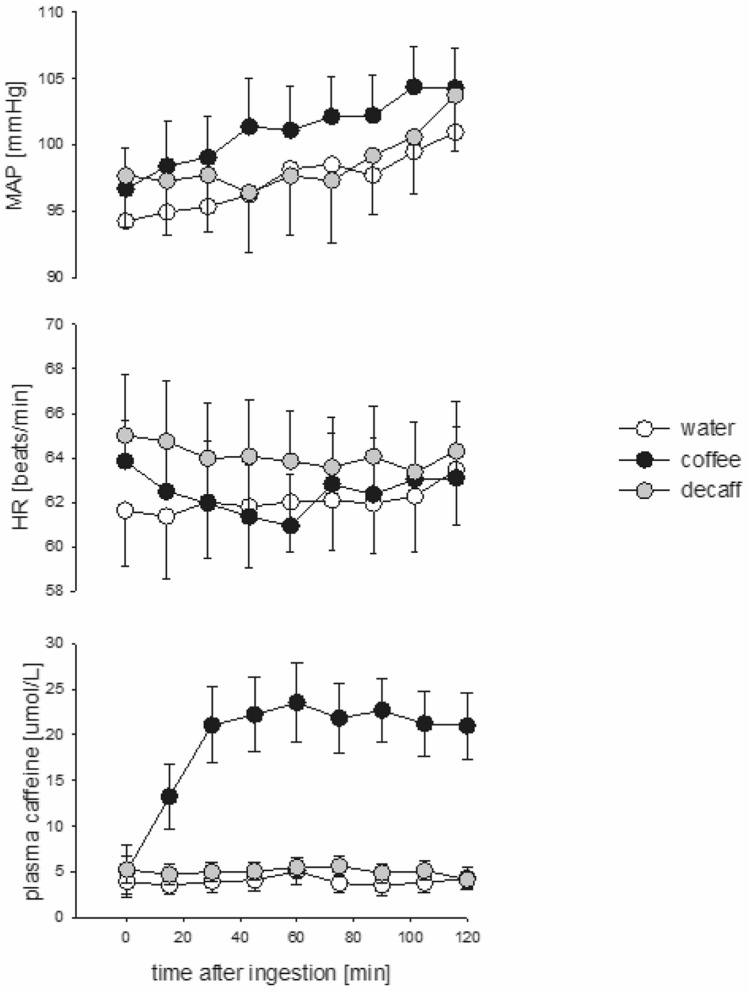
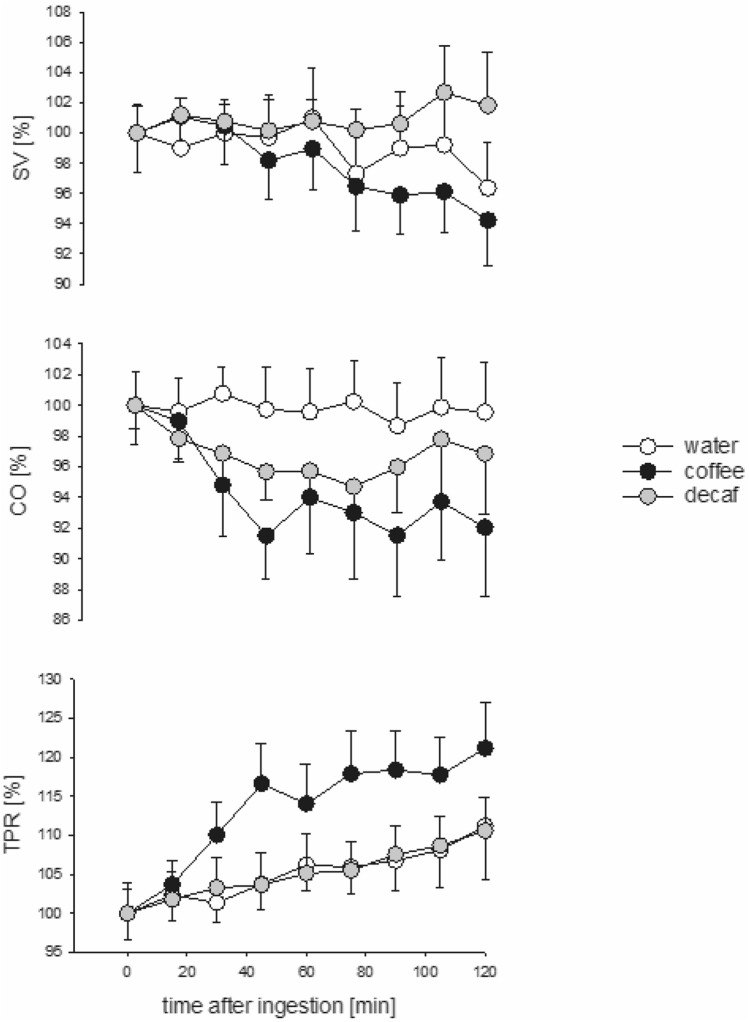
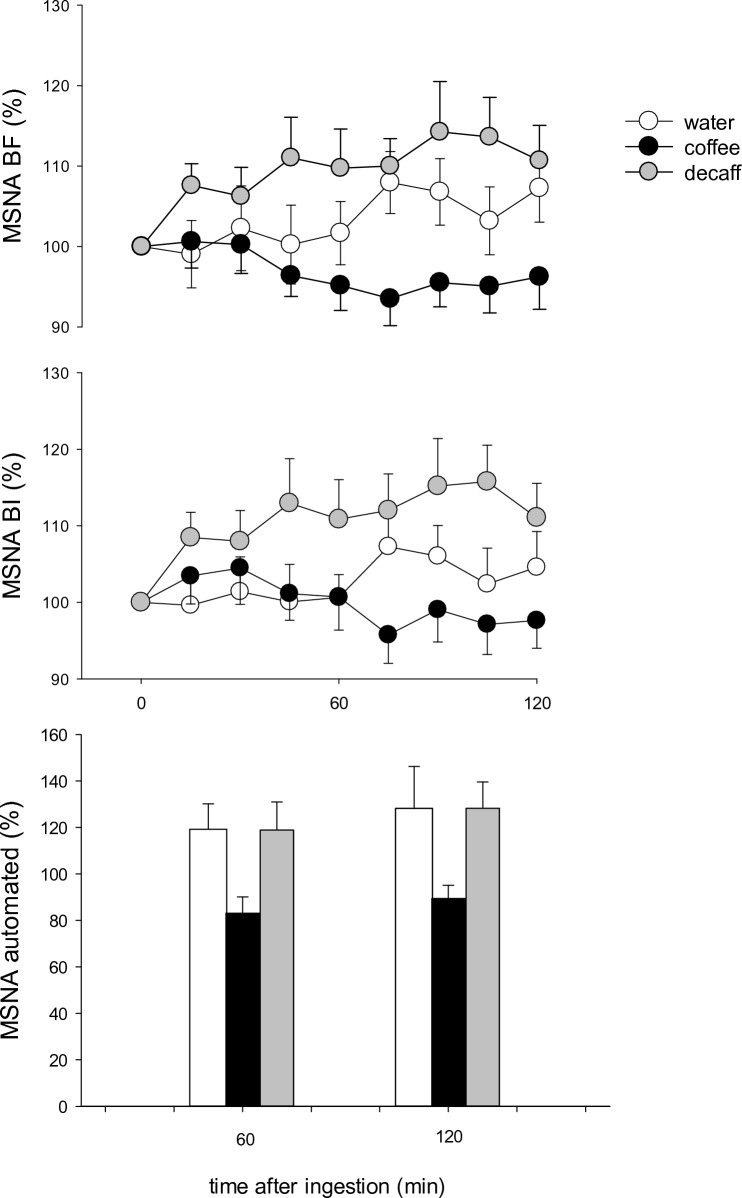
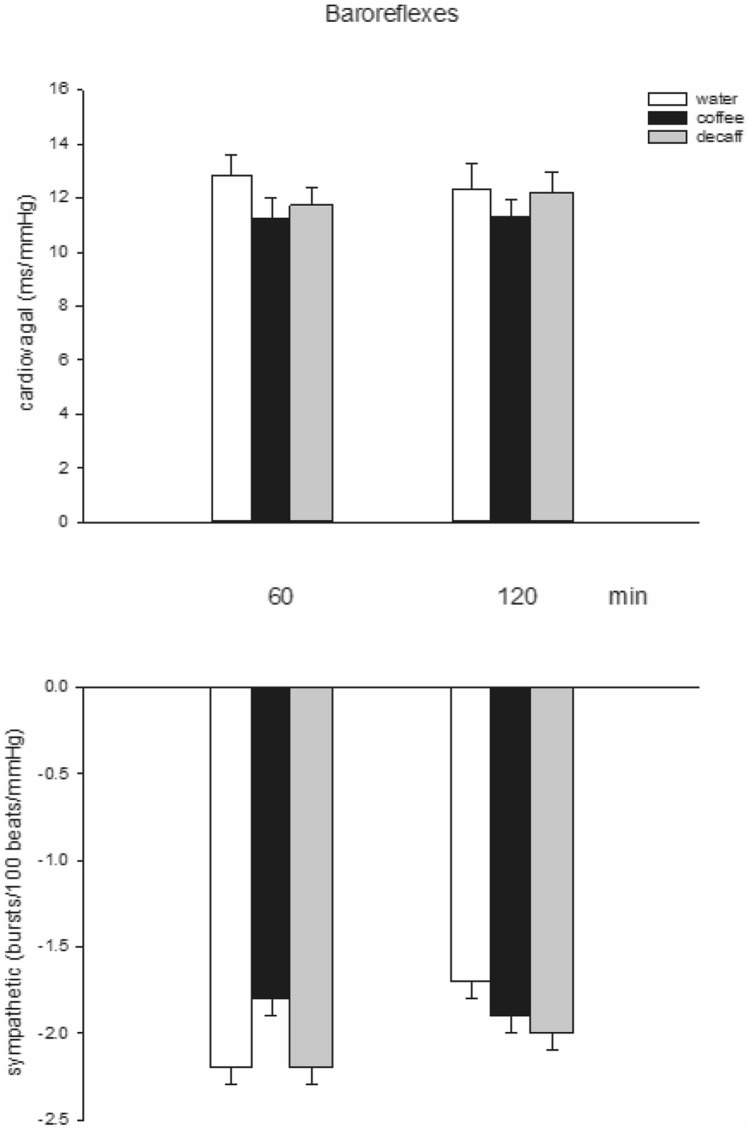
Purposes: Habitual coffee drinking is ubiquitous and generally considered to be safe despite its transient hypertensive effect. Our purpose was to determine the role of the sympathetic nervous system in the hypertensive response. Methods: In a single-centre crossover study, medical caregivers were studied after consumption of standard coffee (espresso), water and decaffeinated coffee (decaff) given in random order at least 1 month apart. Plasma caffeine levels, mean arterial pressure, heart rate, total peripheral resistance and muscle sympathetic activity were recorded. Baroreflex activity was assessed using burst incidence and RR interval changes to spontaneous blood pressure fluctuations. Results: A total of 16 subjects (mean [± standard error] age 34.4 ± 2 years; 44% female) were recruited to the study. Three agents were studied in ten subjects, and two agents were studied in six subjects. Over a 120-min period following the consumption of standard coffee, mean (± SE) plasma caffeine levels increased from 2.4 ± 0.8 to 21.0 ± 4 µmol/L and arterial pressure increased to 103 ± 1 mmHg compared to water (101 ± 1 mmHg; p = 0.066) and decaff (100 ± 1 mmHg; p = 0.016). Peripheral resistance in the same period following coffee increased to 120 ± 4% of the baseline level compared to water (107 ± 4; p = 0.01) and decaff (109 ± 4; p = 0.02). Heart rate was lower after both coffee and decaff consumption: 62 ± 1 bpm compared to water (64 bpm; p = 0.01 and p = 0.02, respectively). Cardio-vagal baroreflex activity remained stable after coffee, but sympathetic activity decreased, with burst frequency of 96 ± 3% versus water (106 ± 3%; p = 0.04) and decaff (112 ± 3%; p = 0.001) despite a fall in baroreflex activity from – 2.2 ± 0.1 to – 1.8 ± 0.1 bursts/100 beats/mmHg, compared to water (p = 0.009) and decaff (p = 0.004). Conclusion: The hypertensive response to coffee is secondary to peripheral vasoconstriction but this is not mediated by increased sympathetic nerve activity. These results may explain why habitual coffee drinking is safe.
Overview
The claims and statistics of this paper haven’t been checked yet.
Free: it reads the open-access text and checks the first 5 claims that cite a source we can check. Create a free account to check every claim.
Integrity signals
Registry
Cites
Statistics
Figures
Verification
Claims the paper makes
The claims and statistics of this paper haven’t been checked yet.
Free: it reads the open-access text and checks the first 5 claims that cite a source we can check. Create a free account to check every claim.
Claims other papers make about this one
Each is checked against this paper’s own text: does it say what the citing paper says it does?
The source backs part of the claim, not all of it — or backs it for a different population, condition or comparison.
In the citing paper
“Importantly, caffeine’s antagonism of adenosine-mediated systemic and myocardial vasodilation contributes to increased peripheral vascular resistance and coronary vasoconstrictor tone during exercise [11, 12].”
From Habitual preexercise caffeine supplementation prevents exercise training-induced attenuation of exercising systolic blood pressure and double product (2025) · cites this paper as [12]
Experimental — accuracy not yet measured
Self-check
Percentages, sums and reported differences re-computed from the paper’s own numbers.
The self-check needs the paper’s full text.
Citations
Cites
Heckman, M. A., Weil, J., & De Mejia, E. G. (2010) · Journal of Food Science · doi:10.1111/j.1750-3841.2010.01561.x · Cited by 908
Effects of Caffeine on Plasma Renin Activity, Catecholamines and Blood Pressure
Robertson, D., Frölich, J. C., Carr, R. K., Watson, J. T., Hollifield, J. W., Shand, D. G., & Oates, J. A. (1978) · New England Journal of Medicine · doi:10.1056/nejm197801262980403 · Cited by 757 · cited 1×
“For example, adrenaline levels have been shown to double in previous studies although the exact mechanism for this is uncertain [8, 10, 32].”
ResultSympathetic Nervous System Overactivity and Its Role in the Development of Cardiovascular Disease
Malpas, S. C. (2010) · Physiological Reviews · doi:10.1152/physrev.00007.2009 · Cited by 699
Parati, G., Di Rienzo, M., Bertinieri, G., Pomidossi, G., Casadei, R., Groppelli, A., Pedotti, A., Zanchetti, A., & Mancia, G. (1988) · Hypertension · doi:10.1161/01.hyp.12.2.214 · Cited by 616
Adenosine, Adenosine Receptors and the Actions of Caffeine
Fredholm, B. B. (1995) · Pharmacology & Toxicology · doi:10.1111/j.1600-0773.1995.tb00111.x · Cited by 597
Tolerance to the humoral and hemodynamic effects of caffeine in man.
Robertson, D., Wade, D., Workman, R., Woosley, R. L., & Oates, J. A. (1981) · Journal of Clinical Investigation · doi:10.1172/jci110124 · Cited by 501
Pulse and Respiratory Grouping of Sympathetic Impulses in Human Muscle Nerves
Hagbarth, K. ‐., & Vallbo, Å. B. (1968) · Acta Physiologica Scandinavica · doi:10.1111/j.1365-201x.1968.tb10904.x · Cited by 441
Coffee, caffeine and blood pressure: a critical review
Nurminen, M.-L., Niittynen, L., Korpela, R., & Vapaatalo, H. (1999) · European Journal of Clinical Nutrition · doi:10.1038/sj.ejcn.1600899 · Cited by 351
Two sites for modulation of human sympathetic activity by arterial baroreceptors?
Kienbaum, P., Karlsson, T., Sverrisdottir, Y. B., Elam, M., & Wallin, B. G. (2001) · The Journal of Physiology · doi:10.1111/j.1469-7793.2001.0861h.x · Cited by 282
Corti, R., Binggeli, C., Sudano, I., Spieker, L., Hänseler, E., Ruschitzka, F., Chaplin, W. F., Lüscher, T. F., & Noll, G. (2002) · Circulation · doi:10.1161/01.cir.0000046228.97025.3a · Cited by 264
Adenosine increases sympathetic nerve traffic in humans.
Biaggioni, I., Killian, T. J., Mosqueda-Garcia, R., Robertson, R. M., & Robertson, D. (1991) · Circulation · doi:10.1161/01.cir.83.5.1668 · Cited by 199
Effects of Acute Administration of Caffeine on Vascular Function
Umemura, T., Ueda, K., Nishioka, K., Hidaka, T., Takemoto, H., Nakamura, S., Jitsuiki, D., Soga, J., Goto, C., Chayama, K., et al. (2006) · The American Journal of Cardiology · doi:10.1016/j.amjcard.2006.06.058 · Cited by 189 · cited 1×
“Exactly where the vasoconstriction occurs is uncertain because nearly all forearm plethysmography studies have shown stable blood flow to skeletal muscle after caffeine consumption [10, 11, 29–32].”
BackgroundPharmacology of adenosine receptors in the vasculature
Tabrizchi, R., & Bedi, S. (2001) · Pharmacology & Therapeutics · doi:10.1016/s0163-7258(01)00152-8 · Cited by 187
Cardiovascular effects of coffee and caffeine
Whitsett, T. L., Manion, C. V., & Christensen, H. D. (1984) · The American Journal of Cardiology · doi:10.1016/0002-9149(84)90525-3 · Cited by 186
Inhibition of noradrenaline release by adenosine.
Wakade, A. R., & Wakade, T. D. (1978) · The Journal of Physiology · doi:10.1113/jphysiol.1978.sp012446 · Cited by 145
Effects of caffeine on vascular resistance, cardiac output and myocardial contractility in young men
Pincomb, G. A., Lovallo, W. R., Passey, R. B., Whitsett, T. L., Silverstein, S. M., & Wilson, M. F. (1985) · The American Journal of Cardiology · doi:10.1016/0002-9149(85)90578-8 · Cited by 137 · cited 1×
“There is general agreement that despite minor surges in circulating catecholamines and renin, increased CO is not the likely mechanism for this response [15, 23–25] and rather it is more likely to be secondary to caffeine-induced vasoconstriction [23, 26, 27].”
BackgroundWhite, D. W., Shoemaker, J. K., & Raven, P. B. (2015) · Autonomic Neuroscience · doi:10.1016/j.autneu.2015.08.004 · Cited by 129
Circulatory effects of coffee in relation to the pharmacokinetics of caffeine
Smits, P., Thien, T. A., & Laar, A. V. (1985) · The American Journal of Cardiology · doi:10.1016/0002-9149(85)90412-6 · Cited by 117
Caffeine Affects Cardiovascular and Neuroendocrine Activation at Work and Home
Lane, J. D., Pieper, C. F., Phillips-Bute, B. G., Bryant, J. E., & Kuhn, C. M. (2002) · Psychosomatic Medicine · doi:10.1097/00006842-200207000-00009 · Cited by 116
Hibino, G., Moritani, T., Kawada, T., & Fushiki, T. (1997) · Journal of Nutrition · doi:10.1093/jn/127.7.1422 · Cited by 108
Effects of Caffeine on Blood Pressure
Myers, M. G. (1988) · Archives of Internal Medicine · doi:10.1001/archinte.1988.00380050193027 · Cited by 97 · cited 5×
“It may be that baroreflex-mediated inhibition of SNA is part of the explanation for the reported safety of coffee despite its stimulatory effects on the brain [4–6 , 37].”
BackgroundResultInfluentialAge and prior caffeine use alter the cardiovascular and adrenomedullary responses to oral caffeine
Izzo, J. L., Ghosal, A., Kwong, T., Freeman, R. B., & Jaenike, J. R. (1983) · The American Journal of Cardiology · doi:10.1016/0002-9149(83)90413-7 · Cited by 85 · cited 1×
“Some indices of sympathetic activity, including serum catecholamines and renin, increase rapidly in response to caffeine but not enough to stimulate vasoconstriction or CO [7–11].”
BackgroundThe cardiovascular effects of regular and decaffeinated coffee.
Smits, P., Thien, T., & Van't Laar, A. (1985) · British Journal of Clinical Pharmacology · doi:10.1111/j.1365-2125.1985.tb02729.x · Cited by 71
Acute blood pressure elevations with caffeine in men with borderline systemic hypertension
Pincomb, G. A., Lovallo, W. R., McKey, B. S., Sung, B. H., Passey, R. B., Everson‐Rose, S. A., & Wilson, M. F. (1996) · The American Journal of Cardiology · doi:10.1016/s0002-9149(97)89392-7 · Cited by 70
The effects of caffeine on blood pressure and heart rate: A review
Green, P. J., Kirby, R., & Suls, J. (1996) · Annals of Behavioral Medicine · doi:10.1007/bf02883398 · Cited by 65
Expresso coffee increases parasympathetic activity in young, healthy people
Monda, M., Viggiano, A., Vicidomini, C., Viggiano, A., Iannaccone, T., Tafuri, D., & De Luca, B. (2009) · Nutritional Neuroscience · doi:10.1179/147683009x388841 · Cited by 61
Hemodynamic and humoral effects of coffee after β1-selective and nonselective β-blockade
Smits, P., Hoffmann, H., Thien, T., Houben, H., & Van 't Laar, A. (1983) · Clinical Pharmacology and Therapeutics · doi:10.1038/clpt.1983.145 · Cited by 61
The role of epinephrine in the circulatory effects of coffee
Smits, P., Pieters, G., & Thien, T. (1986) · Clinical Pharmacology and Therapeutics · doi:10.1038/clpt.1986.203 · Cited by 60
Effects of caffeine on baroreflex activity in humans
Mosqueda-Garcia, R., Tseng, C.-J., Biaggioni, I., Robertson, R. M., & Robertson, D. (1990) · Clinical Pharmacology and Therapeutics · doi:10.1038/clpt.1990.193 · Cited by 54 · cited 1×
“Based on our own data, we think it unlikely that caffeine has any central effect on cardiovagal baroreflex activity [33, 34].”
BackgroundCasiglia, E., Paleari, C. D., Petucco, S., Bongiovi, S., COLANGELI, G., Baccilieri, M. S., Pavan, L., Pernice, M., & Pessina, A. C. (1992) · PubMed · Cited by 38
Cardiovascular effects of two xanthines and the relation to adenosine antagonism
Smits, P., Schouten, J., & Thien, T. (1989) · Clinical Pharmacology and Therapeutics · doi:10.1038/clpt.1989.79 · Cited by 36
Hemodynamic Effects of Acute Caffeine Ingestion in Young Adults
Bender, A. M., Donnerstein, R. L., Samson, R. A., Zhu, D. C., & Goldberg, S. J. (1997) · The American Journal of Cardiology · doi:10.1016/s0002-9149(96)00848-x · Cited by 36
Effects of caffeine on pressor regulation during rest and exercise in men at risk for hypertension
Pincomb, G. A., Wilson, M. F., Sung, B. H., Passey, R. B., & Lovallo, W. R. (1991) · American Heart Journal · doi:10.1016/0002-8703(91)90479-2 · Cited by 33
Hissen, S. L., Sayed, K. E., Macefield, V. G., Brown, R., & Taylor, C. E. (2018) · Frontiers in Neuroscience · doi:10.3389/fnins.2018.00403 · Cited by 19
Westerhof, B. E., Settels, J. J., Bos, W. J. W., Westerhof, N., Karemaker, J. M., Wieling, W., van Montfrans, G. A., & LIESHOUT, J. J. V. (2014) · American Journal of Physiology-Heart and Circulatory Physiology · doi:10.1152/ajpheart.00839.2014 · Cited by 14
Sayk, F., Wobbe, I., Twesten, C., Meusel, M., Wellhöner, P., Derad, I., & Dodt, C. (2015) · American Journal of Physiology-Regulatory, Integrative and Comparative Physiology · doi:10.1152/ajpregu.00111.2015 · Cited by 10
Research works printed but not linked: 1
- Chaugule A Patil H Pagariya S Ingle P Extraction of coffee J Adv Res Chem Sci 2019 6 11 19
Cited by
Caffeinated Beverages—Unveiling Their Impact on Human Health
Čižmárová, B., Kraus, V., & Birková, A. (2025) · Beverages · doi:10.3390/beverages11010018 · Cited by 44
Murphy, B., Neill, H. R., Magee, N., Rosbotham, E. J., Pourshahidi, L. K., Richardson, P., Pouchieu, C., Gaudout, D., Ray, S., Bresciani, L., et al. (2025) · Food & Function · doi:10.1039/d5fo01106j · Cited by 10
Coffee and Alzheimer's disease
Mirzaei, F., Agbaria, L., Bhatnagar, K., Sirimanne, N., A'amar, N. O., Jindal, V., Thilagendra, A. G., & Raba, F. T. (2024) · Progress in brain research · doi:10.1016/bs.pbr.2024.06.002 · Cited by 10
West, K. S., Helwig, N. J., Schwager, L. E., Hart, T. W., Zucker, A. C., Venenga, J. S., Flores, M., & Jenkins, N. D. M. (2025) · Journal of Applied Physiology · doi:10.1152/japplphysiol.00874.2024 · Cited by 6
Miyauchi, T., Haraguchi, T., Emoto, T., Takawaki, K., Matsudaira, M., & Inobe, J. (2025) · Scientific Reports · doi:10.1038/s41598-025-25041-0 · Cited by 3
Metadata
- Authors
- Butler, J. M., Frampton, C. M., Moore, G., Barclay, M. L., & Jardine, D. L.
- Affiliations
- Christchurch Hospital (NZ)
- University of Otago (NZ)
- Corresponding author
- Jardine, David L.
- Venue
- Clinical Autonomic Research
- Published
- 2023-08-20
- Volume
- 33
- Issue
- 6
- Pages
- 623-633
- ISSN
- 0959-9851 (ISSN-L)
- 1619-1560
- PMC
- PMC10751260
- OpenAlex
- W4386011251
- Cited by
- 17
- References
- 36
- Citations by year
- 2026: 4 · 2025: 5 · 2024: 7 · 2023: 1
- FWCI
- 2.64
- Type
- journal article
- Language
- en
- Open access
- hybrid
- doi.org
- Licence
- cc-by
- creativecommons.org/licenses/by/4.0 (tdm)
- creativecommons.org/licenses/by/4.0 (vor)
- Locations
- Clinical Autonomic Research (publishedVersion, cc-by)
- PubMed Central (publishedVersion, cc-by)
- PubMed (publishedVersion)
- Otago University Research Archive (University of Otago) (submittedVersion, other-oa)
- Funders
- University of Otago
- Topics
- Health Sciences › Medicine › Pharmacology (medical) › Coffee research and impacts
- Health Sciences › Medicine › Cardiology and Cardiovascular Medicine › Blood Pressure and Hypertension Studies
- Health Sciences › Medicine › Cardiology and Cardiovascular Medicine › Heart Rate Variability and Autonomic Control
- Keywords
- caffeine, coffee, sympathetic nervous system, muscle sympathetic nerve activity, baroreflex, blood pressure response, decaffeinated coffee, systemic vascular resistance, heart rate, cardiovascular safety, burst frequency, caffeine tolerance, caffeine sensitivity, caffeine metabolism
- MeSH terms
- Adult, Blood Pressure, Caffeine, Coffee, Female, Heart Rate, Humans, Hypertension, Male, Sympathetic Nervous System, Water, Baroreflex, Cross-Over Studies
About these checks
Registry, retraction, Cites and statistics results are computed, not judged, with one exception: a printed reference that no index lists is read once by a model before it counts as a citation error. Claims are extracted by a model and kept only when their quote appears verbatim in the text; each cited source is then checked, with a model’s help, for whether it says what the claim relies on. Those verdicts can be wrong — read the claim’s quote and the cited source before relying on one.
Statistics and arithmetic are recomputed, not judged.
Confidence bands are shown only for fields calibrated on our annotated test set. None is calibrated yet, so no band is shown.
What counts as a claim ›How we measure confidence ›How we check this ›
Are you an author, or do you see a problem with this page? Request a review
Data sources
Bibliographic data: Semantic Scholar, OpenAlex, Crossref.
Contains information from the Semantic Scholar Academic Graph Datasets, made available under the ODC Attribution License (ODC-BY 1.0).
Semantic Scholar’s data is described in: Kinney, R., et al. (2023). The Semantic Scholar Open Data Platform. arXiv:2301.10140.
