

Towards bridging the grey digital divide: changes in internet access and its predictors from 2002 to 2014 in Germany
Open accessThe DOI matches its Crossref record; 44 of the 45 references it cites were found in a registry or an index.
Abstract
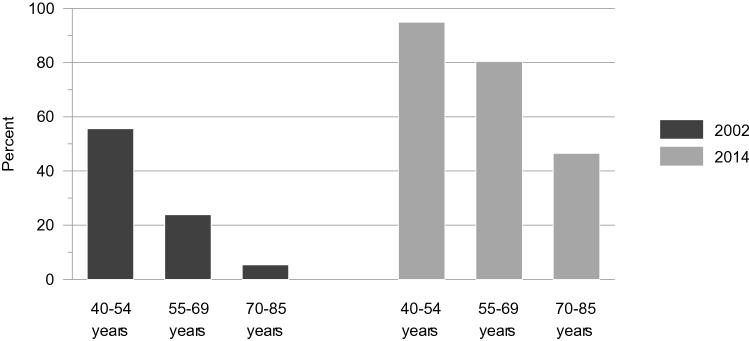
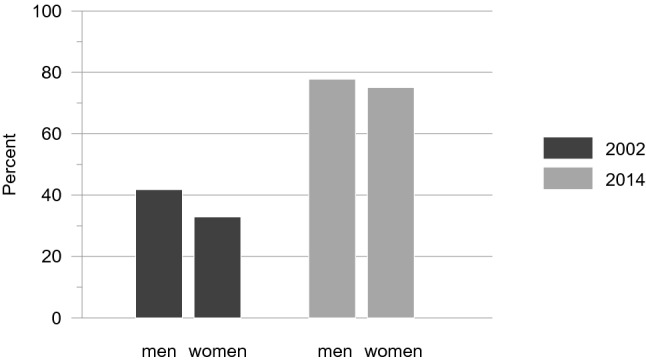
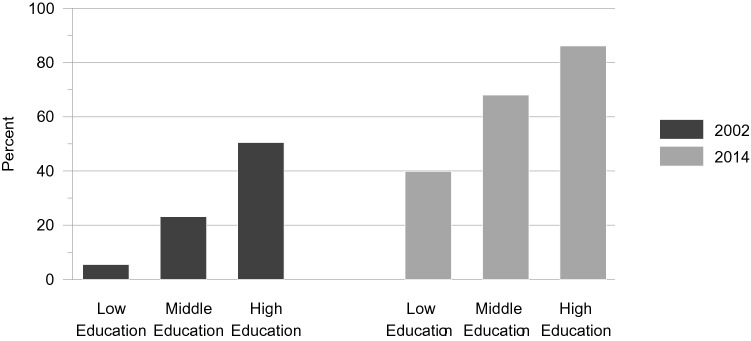
The internet is an indispensable aspect of modern society. It facilitates long distance communication, access to information, health care interventions, as well as multiple opportunities for social participation. Despite increasing pervasiveness of this technology, persistent inequalities exist in who has access to the internet. In particular, older adults lag behind in having internet access, thus putting them at risk for social exclusion. In order to gain a better understanding about the determinants of this grey digital divide, the current study contrasts influencing factors of internet access, comparing samples from 2002 to 2014 across age groups (40 to 54 years, 55 to 69 years and 70 to 85 years) using data from the German Ageing Survey (DEAS). Logistic regression confirmed that the likelihood of having internet access was lower with higher age at both time points. However, the percentages of people with internet access grew primarily in the middle and older age groups between 2002 and 2014. Furthermore, being male and having a higher education were both associated with greater odds of internet access. However, gender and education differences in internet access were significantly less pronounced in 2014 in contrast to 2002. Finally, both greater income and cognitive ability were associated with greater odds of internet access, while providing care for a grandchild was significantly associated with internet access only among the oldest age group. In an attempt towards bridging the grey digital divide, the current study serves as a basis for identifying groups mostly affected by this increasingly important form of social inequality.
Overview
The claims and statistics of this paper haven’t been checked yet.
Free: it reads the open-access text and checks the first 5 claims that cite a source we can check. Create a free account to check every claim.
Integrity signals
Registry
Cites
Statistics
Figures
Verification
Claims the paper makes
The claims and statistics of this paper haven’t been checked yet.
Free: it reads the open-access text and checks the first 5 claims that cite a source we can check. Create a free account to check every claim.
Self-check
Percentages, sums and reported differences re-computed from the paper’s own numbers.
The self-check needs the paper’s full text.
Citations
Cites
Missing data analysis: making it work in the real world
Graham, J. W. (2009) · Annual Review of Psychology · doi:10.1146/annurev.psych.58.110405.085530 · Cited by 6,163 · cited 1×
“Monte Carlo simulation studies have shown that FIML significantly reduces parameter bias due to data missingness as long as the models contain predictors that are associated with the patterns of missing data (Graham 2009).”
BackgroundInternational Standard Classification of Education, ISCED 1997
UNESCO United Nations Educational, S. A. C. O. (2003) · Advances in Cross-National Comparison · doi:10.1007/978-1-4419-9186-7_10 · Cited by 2,351 · cited 1×
“Educational attainment was based on the internationally comparable ISCED classification (United Nations 2006).”
MethodSocial contagion theory: examining dynamic social networks and human behavior
Christakis, N. A., & Fowler, J. H. (2013) · Statistics in Medicine · doi:10.1002/sim.5408 · Cited by 1,303
Digital inequalities and why they matter
Robinson, L., Cotten, S. R., Ono, H., Quan-Haase, A., Mesch, G., Chen, W., Schulz, J., Hale, T. M., & Stern, M. J. (2015) · Information, Communication & Society · doi:10.1080/1369118x.2015.1012532 · Cited by 1,216
Effectiveness of telemedicine: A systematic review of reviews
Ekeland, A. G., Bowes, A., & Flottorp, S. (2010) · International Journal of Medical Informatics · doi:10.1016/j.ijmedinf.2010.08.006 · Cited by 1,162
The digital divide has grown old: Determinants of a digital divide among seniors
Friemel, T. N. (2016) · New Media & Society · doi:10.1177/1461444814538648 · Cited by 1,136 · cited 6×
“This suggestion also matches the significance of encouragement on internet use by individual social networks as discovered by Friemel (2016).”
BackgroundInfluentialTech Adoption Climbs Among Older Adults
Perrin, M. A. A. A. (2017) · Cited by 1,069
Innovation diffusion and new product growth models: A critical review and research directions
Peres, R., Muller, E., & Mahajan, V. (2010) · International Journal of Research in Marketing · doi:10.1016/j.ijresmar.2009.12.012 · Cited by 982
A review of Internet use among older adults
Hunsaker, A., & Hargittai, E. (2018) · New Media & Society · doi:10.1177/1461444818787348 · Cited by 770
The Internet and Knowledge Gaps: A Theoretical and Empirical Investigation
Bonfadelli, H. (2002) · European Journal of Communication · doi:10.1177/0267323102017001607 · Cited by 644 · cited 1×
“…divide to several negative outcomes including poor health (e.g. Dobransky and Hargittai 2012; Hong and Cho 2016; Hong et al. 2017; Levy et al. 2015) and well-being (e.g. Ihm and Hsieh 2015; Shapira et al. 2007), as well as reduced political knowledge (e.g. Bonfadelli 2002; Wei and Hindman 2011).”
Background
Cited by
Bridging the digital divide: the smart TV as a platform for digital literacy among the elderly
Wang, C.-H., & Wu, C.-L. (2022) · Behaviour & Information Technology · doi:10.1080/0144929x.2021.1934732 · Cited by 104
“According to the survey report, the ‘ Individual Household Digital Divide ’ published by the National Development Council in Taiwan in 2018, Changhua was below the national average in both the percentage of households with Internet connections and individual Internet access.”
BackgroundInfluentialLi, J., & Zhou, X. (2021) · Computers in Human Behavior · doi:10.1016/j.chb.2021.106725 · Cited by 123
Older adults’ self-perception, technology anxiety, and intention to use digital public services
An, J., Zhu, X., Wan, K., Xiang, Z., Shi, Z., An, J., & Huang, W. (2024) · BMC Public Health · doi:10.1186/s12889-024-21088-2 · Cited by 138
Age-Related Digital Divide during the COVID-19 Pandemic in China
Song, Y., Qian, C., & Pickard, S. (2021) · International Journal of Environmental Research and Public Health · doi:10.3390/ijerph182111285 · Cited by 135
Tomczyk, Ł., Mascia, M. L., Gierszewski, D., & Walker, C. (2023) · Innoeduca International Journal of Technology and Educational Innovation · doi:10.24310/innoeduca.2023.v9i1.16433 · Cited by 116
“…advantages and benefits, and has become increasingly important for accessing services (for instance digital health and mental health), circulating information, and building and maintaining social relationships (Bonfiglio et al., 2021; Chen et al., 2022; Huxhold et al., 2020; Stara et al., 2022).”
BackgroundA meta-analysis of technology use and cognitive aging
Benge, J. F., & Scullin, M. K. (2025) · Nature Human Behaviour · doi:10.1038/s41562-025-02159-9 · Cited by 116
Trends and challenges of digital divide and digital inclusion: A bibliometric analysis
Muñoz, J. A. H., & Valencia, D. C. (2023) · Journal of Information Science · doi:10.1177/01655515221148366 · Cited by 100
“According to Huxhold et al. [11], the level of technology adoption plays a key role in this divide and is mediated by individuals’ level of education and income.”
InfluentialMutz, M., Müller, J., & Reimers, A. K. (2021) · International Journal of Environmental Research and Public Health · doi:10.3390/ijerph18094409 · Cited by 84
“The underrepresentation of the elderly among digital sports users is presumably due to technological barriers [42] or a lack of motivating and meaningful healthoriented content within digital sports programs that is appropriate for older subjects [43].”
BackgroundCOVID-19 and digital deprivation in Poland
Kuc-Czarnecka, M. E. (2020) · Oeconomia Copernicana · doi:10.24136/oc.2020.017 · Cited by 70
“…nd multilevel phenomenon with its foremost causes considered as the lack of digital literacy (Vasilescu et al., 2020, pp. 1–39), age (Huxhold et al., 2020, pp. 1–10; Walker et al., 2020, pp. 603–613), poverty (Witte & Mannon, 2010; Goedhart et al., 2019, pp. 2347–2365) or…”
BackgroundLissitsa, S., Zychlinski, E., & Kagan, M. (2021) · Computers in Human Behavior · doi:10.1016/j.chb.2021.107098 · Cited by 71
Dequanter, S., Fobelets, M., Steenhout, I., Gagnon, M., Bourbonnais, A., Rahimi, S. A., Buyl, R., & Gorus, E. (2022) · BMC Geriatrics · doi:10.1186/s12877-022-03048-w · Cited by 71
Arpino, B., Pasqualini, M., & Bordone, V. (2021) · European Journal of Ageing · doi:10.1007/s10433-021-00621-x · Cited by 61
“Although we do not have information on the persons contacted through such digital tools, the existing evidence suggests that the goal of increasing intergenerational contacts at a distance during the pandemic has stimulated a higher use of digital devices, consistently with what has been found in pre-COVID studies (Hu…”
BackgroundResultInfluentialShapira, S., Cohn-Schwartz, E., Yeshua-Katz, D., Aharonson-Daniel, L., Clarfield, A. M., & Sarid, O. (2021) · International Journal of Environmental Research and Public Health · doi:10.3390/ijerph182010563 · Cited by 50
“The pandemic made ICT more present in the lives of older adults and accelerated the existing trend of a rise in the adoption of digital technologies among older adults [53].”
BackgroundBünning, M., Schlomann, A., Memmer, N., Tesch‐Römer, C., & Wahl, H. (2023) · The Journals of Gerontology Series B · doi:10.1093/geronb/gbad079 · Cited by 64
“…et al., 2018) as well as the role of education (Hargittai & Dobransky, 2017; König et al., 2018) has confirmed that older, less educated adults are less likely to have Internet access than younger, more educated adults (Huxhold et al., 2020 for Germany; Perrin, 2021 for the United States).”
BackgroundDrazich, B. F., Li, Q., Perrin, N., Szanton, S. L., Lee, J. W., Huang, C.-M., Carlson, M. C., Samuel, L. J., Regier, N. G., Rebok, G. W., et al. (2022) · Aging & Mental Health · doi:10.1080/13607863.2022.2046695 · Cited by 57
“Prior research has indicated that the ‘grey digital divide’ is slowly decreasing (Hung et al., 2020; Huxhold et al., 2020).”
Cohn‐Schwartz, E., Vitman-Schorr, A., & Khalaila, R. (2021) · Quality of Life Research · doi:10.1007/s11136-021-02949-4 · Cited by 52
Paik, K., Hicklen, R., Kaggwa, F., Puyat, C. V. M., Nakayama, L. F., Ong, B., Shropshire, J., & Villanueva, C. (2023) · PLOS Digital Health · doi:10.1371/journal.pdig.0000313 · Cited by 57
Bolin, G., Калмус, В., & Figueiras, R. (2023) · International Journal of Qualitative Methods · doi:10.1177/16094069231182029 · Cited by 43
“Considering the various aspects of the “ gray digital divide ” (Huxhold et al., 2020), there is a need to re fl ect on the ways in which age and online methods intersect.”
BackgroundJin, H., & Qu, Y. (2025) · Journal of Medical Internet Research · doi:10.2196/65065 · Cited by 49
The role of the Internet in later life autonomy: Silver surfers in Spain
Barroso, C. L., Valle, M. S., & Viñarás-Abad, M. (2023) · Humanities and Social Sciences Communications · doi:10.1057/s41599-023-01536-x · Cited by 45
“In general, although the probability of having access to the Internet declines with old age (Huxhold et al. 2020; Olsson et al. 2019), the generational digital divide is progressively being reduced by increased contact with ICT by the new generation of seniors (Gilleard and Higgs, 2008; Lüders and…”
BackgroundHealth and self-perceived barriers to internet use among older migrants: a population-based study
Kouvonen, A. M., Kemppainen, T. T., Taipale, S., Olakivi, A., Wrede, S., & Kemppainen, L. M. (2022) · BMC Public Health · doi:10.1186/s12889-022-12874-x · Cited by 42
“This is in line with several recent studies showing a lower probability of internet use among older people with lower cognitive functioning [17, 39, 40, 64].”
ResultSmartphone use, intergenerational support and older adults’ wellbeing
Ren, P., & Klausen, S. H. (2023) · Current Psychology · doi:10.1007/s12144-023-04309-6 · Cited by 43
“…of previous studies indicated that the rapid development of Internet technology and intelligent electronic products has created a “digital divide 1 ” between the younger and older generations (Gilleard & Higgs, 2008; Huxhold et al., 2020; Norris, 2001; Räsänen, 2008; Ser-rano-Cinca et al., 2018).”
Lindsay, J. A., Caloudas, A. B., Hogan, J., Ecker, A. H., Day, S. C., Day, G., Connolly, S. L., Touchett, H. N., Weaver, K. R., & Amspoker, A. B. (2022) · Journal of General Internal Medicine · doi:10.1007/s11606-022-07594-2 · Cited by 37
“Recent evidence suggests a “grey digital divide,” that individuals over 55 may be less likely than younger individuals to have internet access and complete telemedicine visits.(40,41) Older adults tend to be underconsumers of MH treatment; and they are less likely than younger adults to be engaged in psychological tre…”
Mazya, T. M., Nurrochmat, D. R., Kolopaking, L. M., Satria, A., & Dharmawan, A. H. (2023) · Forest Policy and Economics · doi:10.1016/j.forpol.2023.102913 · Cited by 36
Ma, Y., & Luo, M. (2022) · Ageing and Society · doi:10.1017/s0144686x22000423 · Cited by 40
“Older people lag behind in technology use compared to the rest of the population (Huxhold et al ., 2020), particularly in the context of today ’ s rapidly changing technology (Vicente, 2021).”
Chen, I.-C., & Phanumartwiwath, A. (2025) · Telematics and Informatics Reports · doi:10.1016/j.teler.2025.100218 · Cited by 37
The COVID-19 pandemic and deepening digital inequalities in China
Shao, Q., & Kostka, G. (2023) · Telecommunications Policy · doi:10.1016/j.telpol.2023.102644 · Cited by 31
The age-based digital divides in China: Trends and socioeconomic differentials (2010–2020)
Ren, W., & Zhu, X. (2024) · Telecommunications Policy · doi:10.1016/j.telpol.2024.102716 · Cited by 38
Understanding the levels of digital inequality within the city: An analysis of a survey
Reddick, C. G., Enriquez, R., Harris, R. J., & Flores, J. (2024) · Cities · doi:10.1016/j.cities.2024.104844 · Cited by 35
The Elderly Digital Divide: Digital Exclusion Versus the Right not To Use the Internet
Kużelewska, E., Tomaszuk, M., & Malinowski, D. (2026) · International Journal for the Semiotics of Law - Revue internationale de Sémiotique juridique · doi:10.1007/s11196-025-10334-4 · Cited by 27
Digital literacy among older adults: a systematic review in Indian context
Jena, B., & Paltasingh, T. (2024) · Educational Gerontology · doi:10.1080/03601277.2024.2397428 · Cited by 33
“The internet offers a plethora of alternatives for long-distance communication, information access, health-care intervention, and so on in the modern world (Huxhold et al., 2020).”
The role of digital skill in mitigating digital divide: evidences from Asia-Pacific region
Maji, S. K., & Laha, A. (2021) · Rajagiri Management Journal · doi:10.1108/ramj-05-2021-0035 · Cited by 32
ICT for healthy and active aging: The elderly as first and last movers
Vicente, M. R. (2021) · Telecommunications Policy · doi:10.1016/j.telpol.2021.102262 · Cited by 32
Astuti, H. M., & Ayinde, L. A. (2025) · Data & Policy · doi:10.1017/dap.2024.89 · Cited by 35
“Starting from these two definitions of digital divides, studies about the digital divide have examined questions such as why people do and do not have access to the internet, as well as why people do and do not use the internet (Huxhold et al., 2020; Reddick et al., 2020; Lythreatis et al., 2022).”
Fadzil, N. H. M., Shahar, S., Singh, D. K. A., Rajikan, R., Vanoh, D., Ali, N. M., & Noah, S. A. M. (2023) · Digital Health · doi:10.1177/20552076231207594 · Cited by 37
Satisfaction with telemedicine use during COVID-19 pandemic in the UK: a systematic review
Alashek, W., & Ali, S. (2024) · Libyan Journal of Medicine · doi:10.1080/19932820.2024.2301829 · Cited by 30
“The importance social inequalities as major predictors for telemedicine refusal was outlined [66,67].”
BackgroundZhou, J. W., Wang, Z., Liu, Y., & Yang, J. F. (2022) · Frontiers in Public Health · doi:10.3389/fpubh.2022.837238 · Cited by 30
“However, the shortcomings of digital devices such as technological components, complicated operation interfaces and difficult understanding have further deepened the “digital divide,” resulting in the refusal of the elderly to wisdom healthcare service (12, 13).”
BackgroundPratama, A. R., & Firmansyah, F. M. (2021) · Journal of Child and Family Studies · doi:10.1007/s10826-021-01982-8 · Cited by 24
“Given the right treatment or intervention, it is possible to bridge and narrow the gap, both in access and in use (Van Dijk, 2017; Huxhold et al., 2020).”
BackgroundSchlomann, A., Memmer, N., & Wahl, H. (2022) · Frontiers in Psychology · doi:10.3389/fpsyg.2022.905043 · Cited by 25
“Our results suggest that older adults’ technology skills and attitudes toward technology are not only related to chronological age, as has been shown in previous research (Huxhold et al., 2020; Pew Research Center, 2021), but also to their views of their own aging.”
BackgroundResultAge-Based Digital Divide: Uses of the Internet in People Over 54 Years Old
Papí-Gálvez, N., & Parra‐Casado, D. L. (2023) · Media and Communication · doi:10.17645/mac.v11i3.6744 · Cited by 34
“…women and problem‐solving in favor of men) can be interpreted based on traditional gender roles, such as the greater role of communicating with family in women, linked to care, which is in line with other research that addresses the family context (Huxhold et al., 2020; Rosales & Blanche‐T., 2022).”
BackgroundResultDoes retirement reduce familiarity with Information and Communication Technology?
Cavapozzi, D., & Bianco, C. D. (2021) · Review of Economics of the Household · doi:10.1007/s11150-021-09573-8 · Cited by 24
Improving the eHealth literacy of older adults: A scoping review
Yang, Y., Yao, X., Lu, D., Wang, Y., Gan, Y., Bao, X., Zhang, J., & Zhang, Q. (2024) · Geriatric Nursing · doi:10.1016/j.gerinurse.2024.07.028 · Cited by 24
Digitalisation and Employees’ Subjective Job Quality in the Second Half of Working Life in Germany
Kortmann, L. K., Simonson, J., Vogel, C., & Huxhold, O. (2021) · Social Indicators Research · doi:10.1007/s11205-021-02854-w · Cited by 34
“Studies have found that older employees are expected to be less willing and capable to learn new things (Hauk et al., 2018; Warr & Birdi, 1998), and that computer and internet use at work is lower among older individuals (Huxhold et al., 2020).”
BackgroundSelf-citationInternet use and cognitive frailty in older adults: a large-scale multidimensional approach
Dequanter, S., Gorus, E., Laere, S. V., Witte, N. D., Verté, D., Steenhout, I., Fobelets, M., & Buyl, R. (2022) · European Journal of Ageing · doi:10.1007/s10433-022-00686-2 · Cited by 23
“While previous studies have already pointed out potential negative effects of lower cognitive ability, MCI and dementia on internet access, adoption and use amongst older adults (Berner et al. 2013; Choi and DiNotto 2013; Elliot et al. 2013; Huxhold et al. 2020; Kamin and Lang 2020), few studies have reported on the e…”
BackgroundResultInfluentialOswald, V., & Wagner, M. A. (2023) · European Journal of Ageing · doi:10.1007/s10433-023-00748-z · Cited by 25
Cohn‐Schwartz, E., Finlay, J., & Kobayashi, L. C. (2022) · Journal of Social Issues · doi:10.1111/josi.12544 · Cited by 20
“We note, however, that policymakers should take into consideration the digital divide among older adults when designing programs for this population (Huxhold et al., 2020).”
BackgroundBridging the Digital Divide: Internet Use of Older People from the Perspective of Peer Effects
Shi, S., Zhang, L., & Wang, G. (2023) · Sustainability · doi:10.3390/su151512024 · Cited by 23
Tay, W. L. W., Quek, R. Y. C., Kaur, B., Lim, J., & Henry, C. J. (2022) · JMIR Public Health and Surveillance · doi:10.2196/33478 · Cited by 22
“Populations of lower socioeconomic status may not have access to these devices, and older adult patients may have difficulties navigating certain aspects of newer technologies [35].”
Herbert, F., Becker, S., Buckmann, A., Kowalewski, M., Hielscher, J., Acar, Y., Dürmuth, M., Zou, Y., & Sasse, M. A. (2024) · IEEE Symposium on Security and Privacy (S&P) · doi:10.1109/sp54263.2024.00027 · Cited by 26
“Confirming prior work on the “digital divide” of technology use [107], [108], our findings show that older adults are slower adopters across various digital devices, whereas teenagers and participants with migration backgrounds exhibit higher and more diverse device usage.”
BackgroundInsights into placemaking, senior people, and digital technology: a systematic quantitative review
Najafi, P., Mohammadi, M., Blanc, P. M. L., & van Wesemael, P. J. V. (2022) · Journal of Urbanism International Research on Placemaking and Urban Sustainability · doi:10.1080/17549175.2022.2076721 · Cited by 18
“The attached term – grey – indicates that one group experiencing marginalisation in the first-level digital divide is the senior (Huxhold, Hees, and Webster 2020).”
The Effect of Online Low-intensity Exercise Training on Fitness and Cardiovascular Parameters
Kikuchi, N., Mochizuki, Y., Kozuma, A., Inoguchi, T., Saito, M., Deguchi, M., Homma, H., Ogawa, M., Hashimoto, Y., Nakazato, K., et al. (2021) · International Journal of Sports Medicine · doi:10.1055/a-1582-2874 · Cited by 21
“However, the elderly population is not included in such analyses; this underrepresentation of the elderly among the digital sports users is presumably due to technological barriers with the use of YouTube or other virtual experiences [25].”
BackgroundA Program to Improve Digital Access and Literacy Among Community Stakeholders: Cohort Study
Drazich, B. F., Nyikadzino, Y., & Gleason, K. T. (2021) · JMIR Formative Research · doi:10.2196/30605 · Cited by 16
“and device ownership is less common in certain populations such as older adults or low-income populations [46,47].”
BackgroundDemographic and Socioeconomic Determinants Affecting Uses of the Internet in Indonesia
Rajagukguk, W., Adolf, B. H., & Medyawanti, P. (2024) · Population and Economics · doi:10.3897/popecon.8.e108914 · Cited by 14
“The results of a study in Germany reveals that the probability of using the internet was higher among males, young people, people with higher education, and higher income groups (Huxhold et al. 2020).”
BackgroundDigitalization and Exclusion—Digital Divides and Development
Shaban, A. (2024) · Springer eBooks · doi:10.1007/978-981-97-4734-4_4 · Cited by 18
Melchiorre, M. G., Socci, M., Lamura, G., & Quattrini, S. (2024) · Sustainability · doi:10.3390/su16156524 · Cited by 15
State of Digital Economy in Asia-Pacific Region: Delineating the Role of Digital Skill
Maji, S. K., & Laha, A. (2020) · International Journal of Public Administration in the Digital Age · doi:10.4018/ijpada.2020040103 · Cited by 12
Zhang, L., Gu, R., Li, A., & Wang, J. (2023) · Frontiers in Public Health · doi:10.3389/fpubh.2023.1196234 · Cited by 11
Ong, Y. Q., Shahar, S., Safien, A. M., Ibrahim, N., Chin, A., Mangialasche, F., Kivipelto, M., & Singh, D. K. A. (2025) · BMC Public Health · doi:10.1186/s12889-024-20704-5 · Cited by 10
Internet use and the Well-Being of the Elders. A Quantitative Study in an Aged Country
Álvarez, A. S., & Vicente, M. R. (2024) · Social Indicators Research · doi:10.1007/s11205-024-03490-w · Cited by 15
“Though the rates of use of digital technologies have generally increased across all groups of population, the elderly still lag behind (Francis et al., 2019; Halmdi-enst et al., 2019; Huxhold et al., 2020; Rice & Katz, 2003; Tirado-Morueta et al., 2021) .”
QUANTITATIVE APPRAISAL AND SCIENTOMETRIC EXPLORATION INTO THE DIGITIZATION OF EDUCATION
Rahmanov, F., Neymatova, L., Hashimova, A., & Aghazada, T. (2024) · Financial and credit activity problems of theory and practice · doi:10.55643/fcaptp.2.55.2024.4385 · Cited by 10
“Access to various financial data through distance education is studied by Huxhold et al. (2020).”
BackgroundRevealing the nuances of ‘Grey Digital Divide’ in Hong Kong: A latent profile analysis
Lau, B. H.-P., Shum, E. N.-Y., Kwok, A. P. K., Liu, B. C.-P., Chan, C., Kwan, R. Y. C., Fong, S. F.-F., Lam, G., Tsang, C.-K., Leung, D. D.-M., et al. (2025) · PLoS ONE · doi:10.1371/journal.pone.0326413 · Cited by 12
“This corroborates previous findings that indicate a positive correlation between education [61–63 25], income [24,64,65] and full-time occupation [66] with use of the internet and digital skills potentially influenced by cultural capital and literacy.”
Is There a Relationship Between Country Development and Citizens’ Level of Digital Skills?
Antonijević, M., Bradić-Martinović, A., Banović, J., & Ivanović, Đ. (2023) · Economic Analysis · doi:10.28934/ea.23.56.1.pp57-68 · Cited by 8
Teano, A. L., Scott, A., Gipson, C., Albert, M., & Pettigrew, C. A. (2024) · JMIR Aging · doi:10.2196/51520 · Cited by 11
“Social media and internet use is reportedly lower among the oldest-old, as well as individuals with cognitive impairment and poorer subjective health [31-36]; these groups may, therefore, be less likely to engage with these platforms.”
BackgroundWang, X., Chen, J., & Du, X. (2024) · Agricultural Economics (Zemědělská ekonomika) · doi:10.17221/69/2024-agricecon · Cited by 10
Failli, D., Arpino, B., & Marino, M. F. (2024) · Statistical Methods & Applications · doi:10.1007/s10260-024-00766-w · Cited by 11
“More specifically, research shows that support from social network can influence the use of digital technologies (Korupp and Szydlik 2005; Correa et al. 2015; Friemel 2016; Dolnicar et al. 2018; K¨onig et al. 2018; Segu`ı et al. 2019; Huxhold et al. 2020).”
Wang, Y., Shao, Z., Tian, Z., & Chen, J. (2025) · Healthcare · doi:10.3390/healthcare13131628 · Cited by 48
“Secondly, the digital divide caused by disparities in digital literacy and economic resources may exacerbate inequality and social exclusion among the elderly population [143,144].”
Assessing regional digitalization in Europe: A spatial composite index approach
Mazzaferro, S., Cartone, A., Postiglione, P., & D’Isidoro, A. (2026) · Socio-Economic Planning Sciences · doi:10.1016/j.seps.2026.102485 · Cited by 7
Campens, J., Vercruyssen, A., Schirmer, W., Verté, E., & Witte, N. D. (2023) · Behaviour and Information Technology · doi:10.1080/0144929x.2023.2235028 · Cited by 8
“…impairments, such as decline of fi ne motor skills, hearing loss or poor eyesight may also hinder certain older people from using internet (Berkowsky et al. 2013; Berner, Aartsen, and Deeg 2019; Choi and Dinitto 2013; Friemel 2016; Hanson 2010; Huxhold, Hees, and Webster 2020; Sanchiz et al. 2020).”
Avoiding Digital Divide in European Union through European Green Deal
Brătucu, G., Nichifor, E., Sumedrea, S., Chițu, I. B., & Lixandroiu, R. C. (2022) · Amfiteatru Economic · doi:10.24818/ea/2022/59/77 · Cited by 10
Older adults in the first wave of the Corona pandemic
Tesch‐Römer, C., & Lamura, G. (2021) · European Journal of Ageing · doi:10.1007/s10433-021-00629-3 · Cited by 7
Ageing in Times of the COVID-19 Pandemic
Simonson, J., Wünsche, J., & Tesch‐Römer, C. (2023) · Springer eBooks · doi:10.1007/978-3-658-40487-1 · Cited by 9
Fiorini, L., Pani, J., Rovini, E., Delgado, M.-V. B., Pérez-Martos, S., Russo, S., Lorusso, L., Iannacone, G., D’Onofrio, G., Giuliani, F., et al. (2025) · International Journal of Medical Informatics · doi:10.1016/j.ijmedinf.2025.105973 · Cited by 6
Melchiorre, M. G., Cerea, S., Socci, M., & Lamura, G. (2023) · Sustainability · doi:10.3390/su152015073 · Cited by 7
Huxhold, O., & Tesch‐Römer, C. (2023) · Springer eBooks · doi:10.1007/978-3-658-40487-1_10 · Cited by 5
Self-citationAli, A., & David, M. K. (2021) · IARS International Research Journal · doi:10.51611/iars.irj.v11i2.2021.166 · Cited by 5
“Many scholars have used this conceptual framework in a wider range of contexts to investigate the operations of digital divide in relation to marginalization (Ye, and Yang, 2020; Hourcade, BullockRest, and Schelhowe, 2010; Huxhold, Hees, and Webster, 2020; Alexander, 2017).”
BackgroundYang, X., Chen, Y., Qiu, T., & Zhu, X. (2025) · Digital Health · doi:10.1177/20552076251346239 · Cited by 6
Internet Use in Very Old Age: The Role of the Social Context and Individual Characteristics
Rennoch, G., Schlomann, A., & Zank, S. (2023) · Journal of Applied Gerontology · doi:10.1177/07334648231196849 · Cited by 6
“…use vary; whereas some studies report that being male increases the probability of having access to or using the internet or other ICT in old age (e.g., Huxhold et al., 2020; Quittschalle et al., 2020), others cannot con fi rm this relationship (e.g., Macdonald & Hülür, 2021; Schlomann et al.,…”
BackgroundResultInfluentialGrates, M., & Brandt, M. (2023) · New Media & Society · doi:10.1177/14614448231188971 · Cited by 7
“…pandemic, studies concentrated mostly on how sociodemographic and socioeconomic characteristics influenced Internet access or its use in general (Huxhold et al., 2020), with few studies incorporating health as an explanatory factor for its general use (König et al., 2018) and very few examining…”
Schlomann, A., Wahl, H., Schmidt, L. I., Memmer, N., Rietz, C., Charness, N. H., & Boot, W. R. (2024) · European Journal of Ageing · doi:10.1007/s10433-024-00834-w · Cited by 3
“Although gender differences in Internet access and use are declining (Bünning et al. 2023), we expect older women of current older cohorts to score lower than older men since they started to use the Internet somewhat later than men (Huxhold et al. 2020).”
Zhu, H., & Zhou, G. (2026) · Psychology Research and Behavior Management · doi:10.2147/prbm.s567161 · Cited by 3
From access to agency: empowering older adults for critical AI use
Choi, S., Rojas‐Alvarez, A., & Salinas, J. J. (2026) · The Gerontologist · doi:10.1093/geront/gnag092 · Cited by 4
Spezifische Teilhaberisiken und -chancen
Wacker, E., Beck, I., Brandt, M., Köbsell, S., Lippke, S., & Niehaus, M. (2023) · Gesundheitsförderung - Rehabilitation - Teilhabe · doi:10.1007/978-3-658-40760-5_3 · Cited by 4
Chikomba, A., Goudling, A., Sanderson, L., Sylvester, A., & Campbell-Meier, J. (2023) · Hawaii International Conference on System Sciences (HICSS) · doi:10.24251/hicss.2023.234 · Cited by 8
The Importance of Marbles in Science Education for Elementary School Children
Kreinsen, J. J. (2024) · Assyfa Learning Journal · doi:10.61650/alj.v2i2.139 · Cited by 3
Tarp, K., Christiansen, R., Bilberg, R., Borkner, S., Dalsgaard, C., Folker, M. P., & Nielsen, A. S. (2023) · JMIR Formative Research · doi:10.2196/45471 · Cited by 2
Åberg, C., Gillsjö, C., Hällgren, J., & Berglund, M. (2024) · Educational Gerontology · doi:10.1080/03601277.2024.2431953 · Cited by 3
“Older adults do not use digital technology to the same extent as the younger population (Huxhold et al., 2020; Olsson et al., 2019).”
Campens, J., Braak, P. T., Vercruyssen, A., Aung, M. N., & Witte, N. D. (2025) · Behaviour and Information Technology · doi:10.1080/0144929x.2024.2447463 · Cited by 2
“…research has highlighted that health-related barriers or impairments, such as poor eyesight or decline of fine motor skills, may also hinder certain older adults from using the internet (Berner, Aartsen, and Deeg 2019; Gallistl et al. 2020; Huxhold, Hees, and Webster 2020; Sanchiz et al. 2020).”
Older adults’ Internet use behavior and its association with accelerometer-derived physical activity
Chung, Y.-Y., Chen, J., Lin, M.-C., Liu, R.-L., Wu, J.-B., Tsai, H.-C., Lai, T., Liao, Y., & Park, J. (2025) · Frontiers in Public Health · doi:10.3389/fpubh.2025.1537309 · Cited by 2
“In the past decades, older adults were considered a vulnerable group regarding Internet use; they lacked the ability and opportunities to use the Internet, but as modernization spread around the globe, the situation changed (2, 3).”
Quintal, C., Tavares, A. I., Ribeiro, I., Raposo, V., & Ferreira, P. L. (2025) · Journal of Primary Care & Community Health · doi:10.1177/21501319241312564 · Cited by 3
“12,16 Finally, health status itself seems to be a relevant factor when it comes to the use of ICT.”
Butt, A., & Sadaf, M. (2026) · Journal of the Knowledge Economy · doi:10.1007/s13132-026-03164-7 · Cited by 4
“Gender inequality is particularly acute, as social and cultural norms limit women’s access to digital technologies (Huxhold et al., 2020 ; Khan et al., 2023).”
A focus group study for the design of a web-based tool for improving problem-solving in older adults
Cipolletta, S., Signorello, D., zuppiroli, S., Hering, A., Ballhausen, N., Mioni, G., Kliegel, M., Gáspari, M., & Stablum, F. (2024) · European Journal of Ageing · doi:10.1007/s10433-024-00814-0 · Cited by 3
“Finally, we believe it is important to remember that IT use also depends on resources such as education and socioeconomic level (i.e. higher income; Huxhold et al. 2020).”
Backgroundcoala Națională de Studii Politice și Administrative, B., & DOBRE, A. (2022) · Revista Calitatea Vieții · doi:10.46841/rcv.2022.04.03 · Cited by 6
Pacheco, E. (2024) · OSF Preprints (OSF Preprints) · doi:10.31219/osf.io/7mzbg · Cited by 3
Non-Use of Government Websites in Old Age: The Role of Ethnicity and Immigrant Status
Rosenberg, D. (2025) · Information Polity · doi:10.1177/15701255251321344 · Cited by 1
“It is also possible that belonging to immigrant/ethnic minority can represent further disadvantage with respect to online service use when combined with other factors, like additional socio-demographic characteristics, hence creating a “double jeopardy” situation (Huxhold et al., 2020).”
Rosenberg, D. (2025) · Mobile Media & Communication · doi:10.1177/20501579251353644 · Cited by 1
“In this regard, the double jeopardy hypothesis (Huxhold et al., 2020) claims that belonging to more than one disadvantaged category may inhibit the use and/or the bene fi t solicitation.”
Campens, J., Braak, P. T., Aung, M. N., & Witte, N. D. (2025) · Exploration of Digital Health Technologies · doi:10.37349/edht.2025.101159 · Cited by 1
Wu, X., & Chen, S. F. (2026) · International Journal of Human-Computer Interaction · doi:10.1080/10447318.2026.2668041 · Cited by 5
Failli, D., & Arpino, B. (2025) · Social Indicators Research · doi:10.1007/s11205-025-03626-6 · Cited by 2
The impact of social media on the development of student knowledge in Indonesia
Fitriana, F., Ramdhani, I., Suwedy, W., Hermansyah, Y., & Usman, A. (2023) · PINISI Discretion Review · doi:10.26858/pdr.v7i1.58727 · Cited by 1
Jiang, W., Wang, Y., & Zhang, X. (2026) · Telematics and Informatics · doi:10.1016/j.tele.2026.102419 · Cited by 1
Metadata
- Authors
- Huxhold, O., Hees, E., & Webster, N. J.
- Affiliations
- German Centre of Gerontology (DE)
- University of Michigan (US)
- Corresponding author
- Huxhold, Oliver
- Venue
- European Journal of Ageing
- Published
- 2020-03-10
- Volume
- 17
- Issue
- 3
- Pages
- 271-280
- ISSN
- 1613-9372 (ISSN-L)
- 1613-9380
- PMC
- PMC7459052
- OpenAlex
- W3010873173
- Semantic Scholar
- 0fc0a999fdbcdd29a123f8a9f8cac36c63961f37
- Cited by
- 135
- References
- 45
- Citations by year
- 2026: 19 · 2025: 23 · 2024: 23 · 2023: 31 · 2022: 19 · 2021: 17 · 2020: 3
- FWCI
- 26.38
- Type
- journal article
- Language
- en
- Open access
- hybrid
- doi.org
- Licence
- cc-by
- creativecommons.org/licenses/by/4.0 (tdm)
- creativecommons.org/licenses/by/4.0 (vor)
- Locations
- European Journal of Ageing (publishedVersion, cc-by)
- PubMed Central (publishedVersion, cc-by)
- PubMed (publishedVersion)
- RePEc: Research Papers in Economics (submittedVersion)
- Topics
- Health Sciences › Medicine › Geriatrics and Gerontology › Technology Use by Older Adults
- Social Sciences › Economics, Econometrics and Finance › Economics and Econometrics › ICT Impact and Policies
- Social Sciences › General Social Sciences › Information Society and Technology Trends
- Keywords
- internet access, older adults, digital inequality, social exclusion, age differences, gender differences, educational attainment, income, cognitive ability, grandparenting, determinants of internet use, Germany
About these checks
Registry, retraction, Cites and statistics results are computed, not judged, with one exception: a printed reference that no index lists is read once by a model before it counts as a citation error. Claims are extracted by a model and kept only when their quote appears verbatim in the text; each cited source is then checked, with a model’s help, for whether it says what the claim relies on. Those verdicts can be wrong — read the claim’s quote and the cited source before relying on one.
Statistics and arithmetic are recomputed, not judged.
Confidence bands are shown only for fields calibrated on our annotated test set. None is calibrated yet, so no band is shown.
What counts as a claim ›How we measure confidence ›How we check this ›
Are you an author, or do you see a problem with this page? Request a review
Data sources
Bibliographic data: Semantic Scholar, OpenAlex, Crossref.
Contains information from the Semantic Scholar Academic Graph Datasets, made available under the ODC Attribution License (ODC-BY 1.0).
Semantic Scholar’s data is described in: Kinney, R., et al. (2023). The Semantic Scholar Open Data Platform. arXiv:2301.10140.
