

Can public GAP standards reduce agricultural pesticide use? The case of fruit and vegetable farming in northern Thailand
Open accessThe DOI matches its Crossref record; 24 of the 25 references it cites were found in a registry or an index.
Abstract
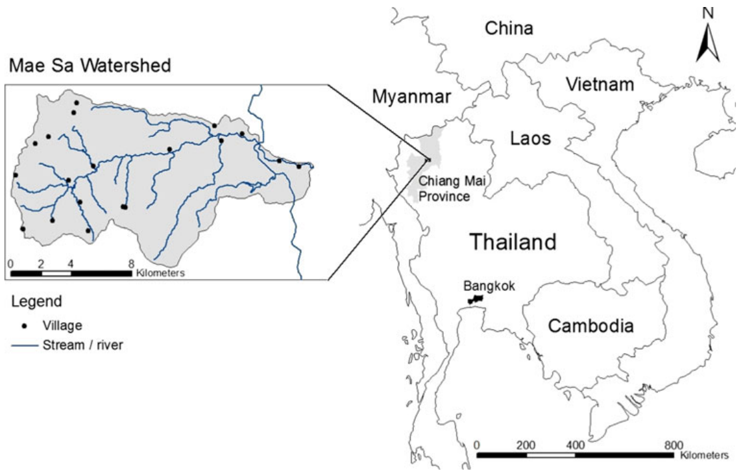
In response to the chronic overuse and misuse of pesticides in agriculture, governments in Southeast Asia have sought to improve food safety by introducing public standards of good agricultural practices (GAP). Using quantitative farm-level data from an intensive horticultural production system in northern Thailand, we test if fruit and vegetable producers who follow the public GAP standard use fewer and less hazardous pesticides than producers who do not adhere to the standard. The results show that this is not the case. By drawing on qualitative data from expert interviews and an action research project with local litchi (“lychee”) producers we explain the underlying reasons for the absence of significant differences. The qualitative evidence points at poor implementation of farm auditing related to a program expansion that was too rapid, at a lack of understanding among farmers about the logic of the control points in the standard, and at a lack of alternatives given to farmers to manage their pest problems. We argue that by focusing on the testing of farm produce for pesticide residues, the public GAP program is paying too much attention to the consequences rather than the root cause of the pesticide problem; it needs to balance this by making a greater effort to change on-farm practices.
Overview
The claims and statistics of this paper haven’t been checked yet.
Free: it reads the open-access text and checks the first 5 claims that cite a source we can check. Create a free account to check every claim.
Integrity signals
Registry
Cites
Statistics
Figures
Verification
Claims the paper makes
The claims and statistics of this paper haven’t been checked yet.
Free: it reads the open-access text and checks the first 5 claims that cite a source we can check. Create a free account to check every claim.
Claims other papers make about this one
Each is checked against this paper’s own text: does it say what the citing paper says it does?
The source backs part of the claim, not all of it — or backs it for a different population, condition or comparison.
In the citing paper
“Training farmers on input use and good practices often benefits those farmers trained, but has not been scalable or sustainable, except where good practices are linked to eligibility for export.”
From Food Safety in Low and Middle Income Countries (2015) · cites this paper as [101]
Experimental — accuracy not yet measuredThe source backs part of the claim, not all of it — or backs it for a different population, condition or comparison.
In the citing paper
“While some small farmers have been able to comply with GAP required for exporting their goods, there is less information on domestic GAP programmes and the limited literature suggests impact seems is low [101,102].”
From Food Safety in Low and Middle Income Countries (2015) · cites this paper as [101]
Experimental — accuracy not yet measured
Self-check
Percentages, sums and reported differences re-computed from the paper’s own numbers.
The self-check needs the paper’s full text.
Citations
Cites
Fuchs, D., Kalfagianni, A., & Havinga, T. (2011) · Agriculture and Human Values · doi:10.1007/s10460-009-9236-3 · Cited by 314 · cited 2×
“Other studies have raised concerns about the democratic legitimacy of private standards (e.g., Busch 2009; Fuchs et al. 2011), while others have pointed at the high levels of investment that favor large-scale producers over smallholder farmers (e.g., DeLind and Howard 2008; Amekawa 2009).”
BackgroundUnderstanding Developing Country Strategic Responses to the Enhancement of Food Safety Standards
Henson, S., & Jaffee, S. (2008) · The World Economy · doi:10.1111/j.1467-9701.2007.01034.x · Cited by 251
To spray or not to spray: pesticides, banana exports, and food safety
Wilson, J. S., & Otsuki, T. (2004) · Food Policy · doi:10.1016/j.foodpol.2004.02.003 · Cited by 221 · cited 1×
“Some studies have shown that having to comply with private standards acts as a non-tariff trade barrier, which limits the competitiveness of lower income countries (e.g., Chen et al. 2008; Wilson and Otsuki 2004; Henson and Jaffee 2008).”
BackgroundMeasuring the Effect of Food Safety Standards on China’s Agricultural Exports
Chen, C., Yang, J. M., & FINDLAY, C. C. (2008) · Review of World Economics · doi:10.1007/s10290-008-0138-z · Cited by 195 · cited 1×
“Some studies have shown that having to comply with private standards acts as a non-tariff trade barrier, which limits the competitiveness of lower income countries (e.g., Chen et al. 2008; Wilson and Otsuki 2004; Henson and Jaffee 2008).”
BackgroundLamers, M., Anyusheva, M., La, N., Nguyen, V. V., & Streck, T. (2011) · CLEAN - Soil, Air, Water · doi:10.1002/clen.201000268 · Cited by 172 · cited 2×
“Chronic overuse and misuse of agricultural pesticides characterizes crop production in many parts of Southeast Asia as well as in China, exposing farmers, consumers, and ecological systems to the risk of pesticides (Xu et al. 2008; Schreinemachers et al. 2011; Mazlan and Mumford 2005; Van Hoi et al. 2009; Lamers et al…”
BackgroundPolicy Implications of Trends in Agribusiness Value Chains
HUMPHREY, J. D. (2006) · European Journal of Development Research · doi:10.1080/09578810601070704 · Cited by 169 · cited 2×
“European retailers, which has become the leading GAP standard globally (Humphrey 2006; Tallontire et al. 2011).”
BackgroundSafe at any scale? Food scares, food regulation, and scaled alternatives
DeLind, L. B., & Howard, P. H. (2008) · Agriculture and Human Values · doi:10.1007/s10460-007-9112-y · Cited by 127
Tallontire, A., Opondo, M., Nelson, V., & Martin, A. (2009) · Agriculture and Human Values · doi:10.1007/s10460-009-9237-2 · Cited by 124 · cited 1×
“…relevance as it helps us understand the degree to which public standards could be a viable alternative to private standards such as GlobalGAP—a standard developed by a consortium of European retailers, which has become the leading GAP standard globally (Humphrey 2006; Tallontire et al. 2011).”
BackgroundMayring, P. (2020) · Springer eBooks · doi:10.1007/978-3-658-26887-9_52 · Cited by 120
Panuwet, P., Prapamontol, T., Chantara, S., Thavornyuthikarn, P., Montesano, M. A., WHITEHEADJR, R., & Barr, D. B. (2008) · The Science of The Total Environment · doi:10.1016/j.scitotenv.2008.08.044 · Cited by 112 · cited 2×
“Chronic overuse and misuse of agricultural pesticides characterizes crop production in many parts of Southeast Asia as well as in China, exposing farmers, consumers, and ecological systems to the risk of pesticides (Xu et al. 2008; Schreinemachers et al. 2011; Mazlan and Mumford 2005; Van Hoi et al. 2009; Lamers et al…”
Background
Research works printed but not linked: 3
- ASEAN. 2008. Interpretive guides for ASEAN GAP. Jakarta: ASEAN Secretariat.
- Department of Agriculture (DoA). 2009. Quality Assurance System: GAP crops (mango, longan and litchi) (in Thai). Bangkok: Ministry of Agriculture and Cooperatives.
- Sardsud, V. 2007. National experiences: Thailand. In Challenges and opportunities arising from private standards on food safety and environment for exporters of fresh fruit and vegetables in Asia: Experiences of Malaysia, Thailand and Viet Nam, ed. U. Hoff- mann, and R. Vossenaar, 53-69. New York: United Nations Conference on Trade and Development.
Cited by
Food Safety in Low and Middle Income Countries
Grace, D. (2015) · International Journal of Environmental Research and Public Health · doi:10.3390/ijerph120910490 · Cited by 544
“While some small farmers have been able to comply with GAP required for exporting their goods, there is less information on domestic GAP programmes and the limited literature suggests impact seems is low [101,102].”
BackgroundAgricultural pesticides and land use intensification in high, middle and low income countries
Schreinemachers, P., & Tipraqsa, P. (2012) · Food Policy · doi:10.1016/j.foodpol.2012.06.003 · Cited by 454
Self-citationAgroecological crop protection for sustainable agriculture
Deguine, J., Aubertot, J., Bellon, S., Côté, F., Lauri, P., Lescourret, F., Ratnadass, A., Scopel, É., Andrieu, N., Bàrberi, P., et al. (2023) · Advances in agronomy · doi:10.1016/bs.agron.2022.11.002 · Cited by 204
Pesticide regulations and their malpractice implications on food and environment safety
Zikankuba, V. L., Mwanyika, G., Ntwenya, J. E., & James, A. (2019) · Cogent Food & Agriculture · doi:10.1080/23311932.2019.1601544 · Cited by 192
“…HACCP to establish logical control points, IPM for alternatives to manage pests, SOPs, SSOPs with GAP to manage, regulate, control and dig down the root cause of pesticide residues in food are recommended (Alldrick, 2017; Schreinemachers et al., 2012; Uyttendaele, Jacxsens, & Van Boxstael, 2014).”
BackgroundToward cleaner production: What drives farmers to adopt eco-friendly agricultural production?
Zhang, L., Li, X., Yu, J., & Yao, X. (2018) · Journal of Cleaner Production · doi:10.1016/j.jclepro.2018.02.272 · Cited by 186
Food safety in low and middle-income countries: The evidence through an economic lens
Hoffmann, V., Moser, C., & Saak, A. (2019) · World Development · doi:10.1016/j.worlddev.2019.104611 · Cited by 171
Food safety in Vietnam: where we are at and what we can learn from international experiences
Nguyen-Viet, H., Tuyet-Hanh, T. T., Unger, F., Dang-Xuan, S., & Grace, D. (2017) · Infectious Diseases of Poverty · doi:10.1186/s40249-017-0249-7 · Cited by 117
“For example, in Thailand, farmers who follow the public GAP do not have better pesticide use or outcomes than those who do not [20].”
BackgroundGrovermann, C., Schreinemachers, P., Riwthong, S., & Berger, T. (2016) · Ecological Economics · doi:10.1016/j.ecolecon.2016.09.031 · Cited by 117
Self-citationSrisopaporn, S., Jourdain, D., Perret, S., & Shivakoti, G. P. (2015) · Technological Forecasting and Social Change · doi:10.1016/j.techfore.2015.03.016 · Cited by 109
“Past literature has investigated changes in the practices in terms of input use and farm management of fruit and vegetables producers who adopted GAP (Schreinemachers et al., 2012).”
BackgroundSafe and sustainable crop protection in Southeast Asia: Status, challenges and policy options
Schreinemachers, P., Afari‐Sefa, V., Heng, C. H., Dung, P. T. M., Praneetvatakul, S., & Srinivasan, R. (2015) · Environmental Science & Policy · doi:10.1016/j.envsci.2015.07.017 · Cited by 108
“Monitoring farmers’ compliance with the standard’s control points is a problem because of the sheer number of farmers involved (Schreinemachers et al. 2012; Amekawa 2013).”
BackgroundSelf-citationQuantifying pesticide overuse from farmer and societal points of view: An application to Thailand
Grovermann, C., Schreinemachers, P., & Berger, T. (2013) · Crop Protection · doi:10.1016/j.cropro.2013.07.013 · Cited by 106
“(Schreinemachers et al., 2012).”
Self-citationOya, C., Schaefer, F., Skalidou, D., McCosker, C., & Langer, L. (2017) · Campbell Systematic Reviews · doi:10.4073/csr.2017.3 · Cited by 107
Pesticides, external costs and policy options for Thai agriculture
Praneetvatakul, S., Schreinemachers, P., Pananurak, P., & Tipraqsa, P. (2013) · Environmental Science & Policy · doi:10.1016/j.envsci.2012.10.019 · Cited by 90
Self-citationStuart, A. M., Merfield, C. N., Horgan, F. G., Willis, S. E., Watts, M., Ramírez-Muñóz, F., Jorge Sánchez, U., Utyasheva, L., Eddleston, M., Davis, M. L., et al. (2023) · Environmental Science and Pollution Research · doi:10.1007/s11356-022-24951-0 · Cited by 80
“There are diverse opinions about their effect (Dietz and Grabs 2022; Mengistie et al. 2017; Raynolds 2012; Schreinemachers et al. 2012).”
BackgroundShammi, M., Hasan, N., Rahman, M. M., Begum, K., Sikder, M. T., Bhuiyan, M. H., & Uddin, M. K. (2017) · Environment Systems & Decisions · doi:10.1007/s10669-017-9628-7 · Cited by 52
“However, it was also identified that GAP program pays too much attention to the consequences rather than the root cause of the pesticide problem (Schreinemachers et al. 2012).”
BackgroundFröhlich, H. L., Clemens, G., Clemens, G., Fröhlich, H. L., Schreinemachers, P., Schreinemachers, P., Stahr, K., & Stahr, K. (2013) · Springer environmental science and engineering · doi:10.1007/978-3-642-33377-4 · Cited by 53
Self-citationPesticide Use Practices in Cambodia’s Vegetable Farming
Sim, S., Keo, S., & Sarom, M. (2021) · Working Paper · doi:10.64202/wp.128.202108 · Cited by 43
Consumers' willingness to pay for food safety attributes of tomato
Joya, K., Ramli, N. N., Shamsudin, M. N., & Kamarulzaman, N. H. (2021) · British Food Journal · doi:10.1108/bfj-02-2021-0164 · Cited by 40
Sustainability Standards and Global Governance: Experiences of Emerging Economies
Negi, A., Pérez-Pineda, J. A., & Blankenbach, J. (2020) · Springer eBooks · doi:10.1007/978-981-15-3473-7 · Cited by 37
“For example, Schreinemachers et al. (2012) state that according to the DOA there are only 120 DOA auditors in Northern Thailand but more than 140,000 registered farms.”
BackgroundResultKrause, H., Lippe, R. S., & Grote, U. (2016) · Horticulturae · doi:10.3390/horticulturae2040018 · Cited by 34
“The Thai government follows the long-term strategy to expand Thai exports of horticultural products [16].”
BackgroundMethodInfluentialA Global Assessment of the State of Plant Health
Acuña, I., Andrade-Piedra, J. L., Andrivon, D., Armengol, J., Arnold, A. E., Avelino, J., Bandyopadhyay, R., Legesse, W. B., Bock, C. H., Bove, F., et al. (2023) · Plant Disease · doi:10.1094/pdis-01-23-0166-fe · Cited by 35
Self-citationGrovermann, C., Quiédeville, S., Müller, A. W., Leiber, F., Stolze, M., & Moakes, S. (2021) · Agricultural Economics · doi:10.1111/agec.12662 · Cited by 33
Self-citationKaufman, A. H., & Mock, J. (2014) · Journal of Agricultural and Environmental Ethics · doi:10.1007/s10806-014-9500-4 · Cited by 33
“Still, although some Thai farmers understand the health risks of some agro- chemicals, very few have pursued less hazardous alternatives (Schreinemachers et al. 2012).”
BackgroundAmekawa, Y., Ng, C. C., Lumayag, L. A., Tan, G. H., Wong, C. S., Lukman, B., Tan, H. B., Tai, W. X., Tan, S. M., Liu, C. H., et al. (2017) · Asian Journal of Agriculture and Rural Development · doi:10.18488/journal.1005/2017.7.1/1005.1.1.16 · Cited by 28
“…body of research on national public GAP standards (e.g., Amekawa, 2013a, 2013b, 2010; Banzon et al., 2013a, 2013b; Islam et al., 2012; Mankeb et al., 2014; Nicetic et al., 2010; Pongvinyoo and Yamao, 2014; Pongvinyoo et al., 2015, 2014; Schreinemachers et al., 2012; Srisopaporn et al., 2015).”
BackgroundResultInfluentialSangkapitux, C., Suebpongsang, P., Punyawadee, V., Pimpaoud, N., Konsurin, J., & Neef, A. (2017) · Land Use Policy · doi:10.1016/j.landusepol.2017.05.016 · Cited by 27
“Intensive farming practices associated with high agrochemical usage have shown adverse on- and off-site effects in various forms, such as soil and water degradation, loss of agro-biodiversity, and chemical residues in water and agricultural produce (Schreinemachers et al., 2012).”
BackgroundSelf-citationKrasachat, W. (2023) · Sustainability · doi:10.3390/su15010866 · Cited by 26
Mkonda, M. Y., & He, X. (2016) · Natural Resources and Conservation · doi:10.13189/nrc.2016.040402 · Cited by 24
“This goes together with low application of insecticides and fungal-side to control pests and other infections [32].”
BackgroundLamers, M., Schreinemachers, P., Ingwersen, J., Sangchan, W., Grovermann, C., & Berger, T. (2012) · Springer environmental science and engineering · doi:10.1007/978-3-642-33377-4_4 · Cited by 22
“Schreinemachers et al. (2012) identified challenges to public GAP standards by combining data from interviews held with government authorities and a random sample of farm managers, with an action research approach that focused on a group of farmers using both public and private GAP standards.”
BackgroundSelf-citation(2014) · RePEc: Research Papers in Economics
Tennhardt, L. M., Home, R., Yen, N. T. B., Van Hoi, P., Ferrand, P., & Grovermann, C. (2025) · Agriculture and Human Values · doi:10.1007/s10460-024-10643-7 · Cited by 9
“Similar standards, such as Q-GAP in Thailand have similarly been shown to not, or only slightly, reduce the use of synthetic inputs (Amekawa 2013; Schreinemachers et al. 2012).”
Self-citationvan Dam, A. A., Robertson, H. A., Prieler, R., Dubey, A., & Finlayson, C. M. (2025) · Marine and Freshwater Research · doi:10.1071/mf24017 · Cited by 22
Amekawa, Y., Hongsibsong, S., Sawarng, N., Yadoung, S., & Gebre, G. G. (2021) · Sustainability · doi:10.3390/su13116333 · Cited by 21
“[1] observed no statistically significant differences between 45 Q-GAP-certified and 245 uncertified farms regarding the amount of pesticides used, the methods of pest control employed, and the handling of pesticides, for a total of nine vegetable and fruit crops in a watershed in Chiang Mai Province, Northern Thailan…”
BackgroundSchreinemachers, P., Srinivasan, R., Wu, M.-H., Bhattarai, M., Patricio, R., Yule, S., Quang, V. H., & Hop, B. T. H. (2014) · International Journal of Tropical Insect Science · doi:10.1017/s174275841400023x · Cited by 21
“in integrated pest management (IPM) is very limited (Schreinemachers et al., 2012).”
BackgroundSelf-citationGrovermann, C., Hoi, P. V., Yen, N. T. B., Schreinemachers, P., Ngo, M. H., & Ferrand, P. (2024) · International Journal of Agricultural Sustainability · doi:10.1080/14735903.2024.2338028 · Cited by 19
“However, GAP standards may not give farmers a strong enough incentive to adopt more sustainable crop management methods (Amekawa, 2013; Schreinemachers et al., 2012).”
Self-citationSapbamrer, R., Sittitoon, N., Thongtip, S., Chaipin, E., Sutalangka, C., La-up, A., Thirarattanasunthon, P., Thammachai, A., Suwannakul, B., Sangkarit, N., et al. (2024) · Frontiers in Public Health · doi:10.3389/fpubh.2024.1364296 · Cited by 17
Nelles, W., & Visetnoi, S. (2015) · The Journal of Agricultural Education and Extension · doi:10.1080/1389224x.2015.1063519 · Cited by 16
“…harming farmers or consumers and even endangering Thai agriculture export revenues (AAN Esan 2011; Charoensuthipan 2014; Praneetvatakul et al. 2013; Schreinemachers et al. 2012; Thai Health Working Group 2012; Thapinta and Hudak 2000; Tirado et al. 2008; Wipatayotin 2011; Yingjaroen and…”
BackgroundKaufman, A. (2015) · Journal of Agriculture Food Systems and Community Development · doi:10.5304/jafscd.2015.054.002 · Cited by 15
Food Safety and Developing Markets: Research Findings and Research Gaps
Unnevehr, L. J., & Ronchi, L. (2015) · doi:10.2139/ssrn.2523530 · Cited by 14
Hasibuan, A. M., Ferry, Y., & Wulandari, S. (2022) · IOP Conference Series Earth and Environmental Science · doi:10.1088/1755-1315/974/1/012105 · Cited by 14
“Introduction The changes in agricultural environmental conditions tend to increase the dependency of farmers in developing countries on chemical inputs such as fertilizers and pesticides [1-4].”
BackgroundGuo, J., An, J., Chang, H. H., Li, Y., Dang, Z., Wu, C. C., & Gao, Z. (2023) · Toxics · doi:10.3390/toxics11120971 · Cited by 14
“In the Thai horticultural system, for example, over half of all farms are entirely dependent on synthetic insecticides [3].”
BackgroundChalids, I., Najib, M., & Suparno, O. (2019) · Jurnal Aplikasi Bisnis dan Manajemen · doi:10.17358/jabm.5.1.24 · Cited by 14
Bloom, J. D. (2014) · Sustainability · doi:10.3390/su6107388 · Cited by 14
“For example, a study of small-scale producers in Thailand who had received government food safety certification found that this certification had no effect on pesticide use rates, which the authors attribute to a lack of appropriate technical assistance [76].”
BackgroundDeterminants Affecting Adoption of GLOBALG.A.P. Standards: A Choice Experiment in Thai Horticulture
Lippe, R. S., & Grote, U. (2016) · Agribusiness · doi:10.1002/agr.21471 · Cited by 15
Pesticide Use under Public Good Agricultural Practices Standard: A Comparative Study in Thailand
Amekawa, Y., Bumrungsri, S., Wayo, K., Gebre, G. G., & Hongsibsong, S. (2022) · Agriculture · doi:10.3390/agriculture12050606 · Cited by 13
Mazé, A., Aït-Aïssa, M., Mayer, S., & Verjux, N. (2016) · Organization & Environment · doi:10.1177/1086026615628034 · Cited by 13
“The adoption of risk-based analysis appears counterintuitive at first glance, as it is argued here that greater uniformity through detailed specifications of long checklists might result in lower auditing quality in the long run (Schreinemachers et al., 2012).”
BackgroundMethodFaysse, N., Raïs, I., Mekki, A. A. E., & Jourdain, D. (2017) · New Medit · Cited by 12
Directional Distance Function Technical Efficiency of Chili Production in Thailand
Krasachat, W., & Yaisawarng, S. (2021) · Sustainability · doi:10.3390/su13020741 · Cited by 11
“It is important that the GAP program balances the agricultural practice and the quality of produce [46].”
BackgroundNeef, A., Ekasingh, B., Friederichsen, R., Bécu, N., Lippe, M., Sangkapitux, C., Frör, O., Punyawadee, V., Schad, I., Williams, P. M., et al. (2012) · Springer environmental science and engineering · doi:10.1007/978-3-642-33377-4_9 · Cited by 10
Self-citationAhmad, M. I., Shen, Q., Song, C., & Ma, H. (2025) · International Journal of Agricultural Sustainability · doi:10.1080/14735903.2025.2497642 · Cited by 9
“…rely on agricultural dealers and suppliers for recommendation on pesticide types and dosages, these dealers and suppliers may intentionally advise farmers to use exceeding levels of agricultural inputs to ensure effective pest control and build trust with farmers (Schreinemachers et al., 2012).”
Multi-dimensional dynamics and spatial connections in food retail markets in Thailand
Ørtenblad, S. B., Larsen, M. N., & Suebpongsang, P. (2020) · Geografiska Annaler Series B Human Geography · doi:10.1080/04353684.2020.1715811 · Cited by 10
“QGAP certification is promoted and managed by the government, from training to auditing and issuing of the standard certificate (Interview with officers from DOAE Chiang Mai Province, May and June 2018; Schreinemachers et al. 2012).”
BackgroundReconciling Safety and Fairness in Global Agri-Food Standardization
Amekawa, Y. (2013) · Sociology Mind · doi:10.4236/sm.2013.31006 · Cited by 9
“…the intensity of pesticide use between 45 Q-GAP certified and 245 non-certified fruit and vegetable growers in a watershed of northern Thailand, Schreinemachers et al. (2012) found that there are no significant statistical differences between those types of growers with regard to the amount of…”
BackgroundInfluentialAmekawa, Y., Hongsibsong, S., Sawarng, N., & Gebre, G. G. (2023) · Agriculture · doi:10.3390/agriculture13051105 · Cited by 8
Payne, S. M., Nicholas‐Davies, P., & Home, R. A. (2019) · Frontiers in Sustainable Food Systems · doi:10.3389/fsufs.2019.00062 · Cited by 8
Grain legumes on the Swedish market: origin and pesticide use in the production
Ekqvist, I., Röös, E., & Tidåker, P. (2019) · Epsilon Open Archive (Sveriges lantbruksuniversitet biblioteket (Swedish University of Agricultural Sciences)) · Cited by 8
Pesticide use in Nepal : The assessment of residues and risk
Bhandari, G. (2021) · doi:10.18174/536691 · Cited by 8
Holzapfel, S., & Hampel-Milagrosa, A. (2020) · Springer eBooks · doi:10.1007/978-981-15-3473-7_10 · Cited by 6
Prasopsuk, J., Laohasiriwong, S., Promkhambut, A., & Iwai, C. B. (2020) · Agriculture and Natural Resources · doi:10.34044/j.anres.2020.54.4.01 · Cited by 6
Coffee farmers attitudes toward the 4C process in Chumphon province, Southern Thailand
Pongvinyoo, P., & Yamao, M. (2014) · Journal of Agricultural Extension and Rural Development · doi:10.5897/jaerd2013.0575 · Cited by 6
“Schreinemachers et al. (2012) stated that the public standards reduced the misused of pesticides of fruit and vegetable produces in northern Thailand.”
BackgroundPongvinyoo, P. (2015) · Hiroshima University Institutional Repository · Cited by 6
Hegemony and counter-hegemony in the agri-food system in Thailand (1990-2014)
Chiengkul, P. (2026) · Warwick Research Archive Portal (University of Warwick) · doi:10.82444/warw.33704350 · Cited by 6
Sampaothong, S., & Punyawattoe, P. (2024) · The Open Agriculture Journal · doi:10.2174/0118743315286838240116042733 · Cited by 5
The Role of Information Provision on Public GAP Standard Adoption
Jourdain, D., Srisopaporn, S., Perret, S. R., & Shivakoti, G. P. (2016) · Elsevier eBooks · doi:10.1016/b978-0-12-805454-3.00018-9 · Cited by 5
Dwindling or thriving? Making sense of the diversity of agricultural and rural dynamics in Thailand
Faysse, N. (2017) · Agritrop (Cirad) · Cited by 5
Amekawa, Y. (2016) · Asian Social Science · doi:10.5539/ass.v12n5p1 · Cited by 5
“In this regard, Schreinemachers et al. (2012), in comparing 45 Q-GAP certified and 245 uncertified farms for 9 fruit and vegetable crops in Chiang Mai City, showed no significant differences in pesticide use and handling (p > 0.1).”
BackgroundInfluentialMensah, A., Adams, F., Nimoh, F., Frempong, F., Onumah, E. E., & Nartekie, N. B. (2024) · Journal of Agribusiness and Rural Development · doi:10.17306/j.jard.2024.01778 · Cited by 4
Pesticide Residues in Vegetables from Provinces Around Tonle Sap Lake
Phat, C., Yoeun, S., Kuok, F., Andrews, E. M., Kuriniawan, W., & Hinode, H. (2022) · Springer eBooks · doi:10.1007/978-981-16-6632-2_39 · Cited by 4
Grovermann, C., Schreinemachers, P., & Berger, T. (2012) · RePEc: Research Papers in Economics · doi:10.22004/ag.econ.126341 · Cited by 4
Self-citationNeurobehavioural effects of pesticide exposure among emerging farmers in the Western Cape
Holtman, Z. (2013) · Open University of Cape Town (University of Cape Town) · Cited by 4
Dirksmeyer, W., Theuvsen, L., & Kayser, M. (2015) · RePEc: Research Papers in Economics · doi:10.22004/ag.econ.199110 · Cited by 4
Montreewong, K., & Poungchompu, S. (2026) · Research on World Agricultural Economy · doi:10.36956/rwae.v7i1.2656 · Cited by 3
สุภาพันธ์, พ., & เอกะสิงห์, เ. (2017) · Parichart Journal · Cited by 3
Minuț, M., Roşca, M., Cozma, P., & Gavrilescu, M. C. (2022) · Annals of the Academy of Romanian Scientists Series on Physics and Chemistry · doi:10.56082/annalsarsciphyschem.2022.2.120 · Cited by 3
Nawi, I. H. M., Idris, N. I. M., Mubarak, A., Soh, N. C., Rafdi, H. H. M., Abdullah, W. Z. W., & Ahmad, F. T. (2023) · Universal Journal of Agricultural Research · doi:10.13189/ujar.2023.110407 · Cited by 3
Montano, J., Nawata, E., & Panichsakpatana, S. (2016) · Nettai Nogyo/Nettai nougyou · doi:10.11248/jsta.60.1 · Cited by 3
Prasopsuk, J. (2019) · Thai Agricultural Research Journal · doi:10.14456/thaidoa-agres.2019.23 · Cited by 3
Linking good agricultural practices and climate smart agriculture
Verhagen, A., Hengsdijk, H., Bezlepkina, I., Groenestein, K., & Klooster, C. G. M. V. '. (2013) · Socio-Environmental Systems Modeling · Cited by 3
Impact assessment of GAP adoption in augmenting mango grower’s income in Malihabad, Uttar Pradesh
Verma, A. K., Gurjar, P. S., Mishra, M., JAISWAL, R., RAJAN, R., & PUNIA, V. (2020) · The Indian Journal of Agricultural Sciences · doi:10.56093/ijas.v90i3.101507 · Cited by 2
“This could be possible with appropriate mix of knowledge of pesticides and its usage besides maintenance of adequate population of natural enemies (Schreinemachers et al. 2012, Mensaha et al. 2017).”
BackgroundEndo, G. (2023) · Geographical review of Japan series B · doi:10.4157/geogrevjapanb.96.1 · Cited by 2
GAP RUBBER FARMING AND A GMP LATEX COLLECTION CENTRE WITH A BCG ECONOMY MODEL IN THAILAND
Thailand, R. A. O., Tassanakul, P., & Somboonsuke, B. (2023) · Journal of Sustainability Science and Management · doi:10.46754/jssm.2023.08.003 · Cited by 2
Grovermann, C., Schreinemachers, P., & Berger, T. (2015) · RePEc: Research Papers in Economics · doi:10.22004/ag.econ.211690 · Cited by 2
Self-citationElder, S. D. W. (2016) · cIRcle (University of British Columbia) · doi:10.14288/1.0319212 · Cited by 3
“'Farming for Walmart: the Politics of Corporate Control and Responsibility in the Global South'.”
BackgroundInfluential(2025) · International Journal of Agriculture and Biosciences · doi:10.47278/journal.ijab/2025.111 · Cited by 1
Bunket, A., Lampang, K. N., Intanon, M., & Chaisowwong, W. (2025) · Veterinary Integrative Sciences · doi:10.12982/vis.2026.021 · Cited by 1
Amekawa, Y., Tiyayon, C., Treewannakul, P., & Sawarng, N. (2022) · Asian Journal of Agriculture and Rural Development · doi:10.55493/5005.v12i4.4649 · Cited by 1
Wongprawmas, R. (2014) · AMS Dottorato Institutional Doctoral Theses Repository (University of Bologna) · doi:10.6092/unibo/amsdottorato/6650 · Cited by 1
Southeast Asian vegetable production - a vision for the future.
Hughes, J. D., Holmer, R., & Keatinge, J. D. H. (2015) · Cited by 1
Implementation of Android Application as Knowledge Management for Agriculture Farmers
Santoso, W., Fauzi, A. H. N., Hendrarini, H., & Amir, I. T. (2023) · Universal Journal of Agricultural Research · doi:10.13189/ujar.2023.110110 · Cited by 1
TW, T. F. T. (2015) · doi:10.56669/bekg3753 · Cited by 1
“Farm managers who 6 The 7 items in Schreinemachers et al. (2012) include: 1.”
Influentialความรู้ การปฏิบัติ และช่องทางการตลาดผักตามมาตรฐานเกษตรดีที่เหมาะสม ในจังหวัดเชียงใหม่
สุภาพันธ์, พ., & อวิโรธนานนท์, ท. (2019) · Warasan Wichai Lae Songserm Wichakan Kaset · Cited by 1
Climate smartness in agro-food standards
Ingram, V., Bezlepkina, I., & Verburg, R. W. (2013) · Socio-Environmental Systems Modeling · Cited by 1
Shah, M. I., & Marina, S. N. (2017) · UTHM Institutional Repository (Universiti Tun Hussein Onn Malaysia)
Funga, A., Chacha, M. N., & Tiisekwa, B. (2017) · Asian Research Journal of Agriculture · doi:10.9734/arja/2017/33146
「スーパーマーケット革命論」再考 : タイ地域研究の観点から
遠藤, 元. (2021) · 大東文化大学紀要 社会科学
Giải pháp quy hoạch quản lý dữ liệu hỗ trợ nông nghiệp thông minh
Truong, V. X., Nguyễn, H. V., Lê, H. T., Cù, V. L., Trần, H. V., Lê, T. P., & Nguyen, T. H. (2021) · Can Tho University Journal of Science · doi:10.22144/ctu.jvn.2021.170
Veu, T., Lyhour, H., Voe, P., Ngy, S., & Socheat, H. (2025) · Asian Journal of Agriculture and Rural Development · doi:10.55493/5005.v15i4.5735
“Studies show that compliance with GAP standards increases soil organic matter (SOM) by 3.3%-3.7% (Ministry of Industry Science Technology & Innovation (MISTI), 2024) and reduces pesticide residues by up to 31%, mitigating health risks for consumers (Schreinemachers et al., 2012).”
InfluentialCGIAR Research Program on Agriculture for Nutrition and Health: Proposal for Phase II 2017-2022
Health, C. R. P. O. A. F. N. A. (2016) · CGSPace A Repository of Agricultural Research Outputs (Consultative Group for International Agricultural Research)
CGIAR Research Program on Agriculture for Nutrition and Health: Full Proposal 2017-2022 Annexes
Health, C. R. P. O. A. F. N. A. (2016) · CGSPace A Repository of Agricultural Research Outputs (Consultative Group for International Agricultural Research)
Transition to Sustainable Agriculture
Wendel Örtqvist, L. (2024) · Epsilon Archive for Student Projects (University of Southampton)
Multi-crop solutions for sustainable agriculture : A Minor Field Study in Ratchaburi, Thailand
Sigge, D., & Borgström, F. (2023) · KTH Publication Database DiVA (KTH Royal Institute of Technology)
Metadata
- Authors
- Schreinemachers, P., Schad, I., Tipraqsa, P., Williams, P. M., Neef, A., Riwthong, S., Sangchan, W., & Grovermann, C.
- Affiliations
- University of Hohenheim (DE)
- Chiang Mai University (TH)
- Kyoto University (JP)
- Corresponding author
- Schreinemachers, Pepijn
- Venue
- Agriculture and Human Values
- Published
- 2012-06-12
- Volume
- 29
- Issue
- 4
- Pages
- 519-529
- ISSN
- 0889-048X (ISSN-L)
- 1572-8366
- OpenAlex
- W2062489767
- Cited by
- 69
- References
- 25
- Citations by year
- 2025: 3 · 2024: 5 · 2023: 9 · 2022: 5 · 2021: 6 · 2020: 4 · 2019: 4 · 2018: 1 · 2017: 5 · 2016: 8 · 2015: 8 · 2014: 4 · 2013: 3 · 2012: 4
- FWCI
- 9.34
- Type
- journal article
- Language
- en
- Open access
- hybrid
- doi.org
- Licence
- cc-by
- creativecommons.org/licenses/by/2.0 (tdm)
- Locations
- Agriculture and Human Values (publishedVersion, cc-by)
- RePEc: Research Papers in Economics (submittedVersion)
- Funders
- Deutsche Forschungsgemeinschaft (SFB 564)
- Topics
- Life Sciences › Agricultural and Biological Sciences › Food Science › Agricultural safety and regulations
- Social Sciences › Business, Management and Accounting › Strategy and Management › Global trade, sustainability, and social impact
- Life Sciences › Agricultural and Biological Sciences › Food Science › Food Safety and Hygiene
- Keywords
- good agricultural practices, pesticide use, pesticide residues, food safety standards, horticulture, litchi, standard implementation, pest control, northern Thailand
About these checks
Registry, retraction, Cites and statistics results are computed, not judged, with one exception: a printed reference that no index lists is read once by a model before it counts as a citation error. Claims are extracted by a model and kept only when their quote appears verbatim in the text; each cited source is then checked, with a model’s help, for whether it says what the claim relies on. Those verdicts can be wrong — read the claim’s quote and the cited source before relying on one.
Statistics and arithmetic are recomputed, not judged.
Confidence bands are shown only for fields calibrated on our annotated test set. None is calibrated yet, so no band is shown.
What counts as a claim ›How we measure confidence ›How we check this ›
Are you an author, or do you see a problem with this page? Request a review
Data sources
Bibliographic data: Semantic Scholar, OpenAlex, Crossref.
Contains information from the Semantic Scholar Academic Graph Datasets, made available under the ODC Attribution License (ODC-BY 1.0).
Semantic Scholar’s data is described in: Kinney, R., et al. (2023). The Semantic Scholar Open Data Platform. arXiv:2301.10140.
