

Towards trustworthy LLMs: a review on debiasing and dehallucinating in large language models
Open accessThe DOI matches its Crossref record; 207 of the 271 references it cites were found in a registry or an index; 2 of the 138 sources its claims cite were checked for support.
Abstract
Recently, large language models (LLMs) have attracted considerable attention due to their remarkable capabilities. However, LLMs’ generation of biased or hallucinatory content raised significant concerns, posing major challenges for their practical application. Many studies have dedicated efforts to address these critical issues, adopting various approaches to mitigate bias and hallucinations in LLM-generated content. Remarkably, no review papers have synthesized insights on these two primary problems. Addressing this gap, this paper aims to conduct a simultaneous and dual-focused review of the current landscape of research. The discussions encompass widely used and newly proposed benchmarks and evaluation methods on bias and hallucination in LLMs. This paper also investigates advanced mitigation methods and present a taxonomy based on different mitigation strategies. Moreover, a comparative analysis of the sources, mitigation methods, and evaluation methods for bias and hallucination is included. In the end, this paper provides a synthesis of current research trends and suggests potential directions for future research to address bias and hallucination in LLMs, considering the ongoing challenges in this field.
Overview
CoChat Summary
TL;DR
This review simultaneously surveys debiasing and dehallucinating in large language models, arguing that no prior review has synthesized these two trustworthiness problems together. It organizes evaluation benchmarks, mitigation methods, and a comparative analysis, then outlines challenges and future directions.
Key findings
- The paper claims no existing review comprehensively covers both bias and hallucination in LLM-generated content; it fills this gap with a dual-focused review of benchmarks, evaluation methods, and mitigation taxonomies.
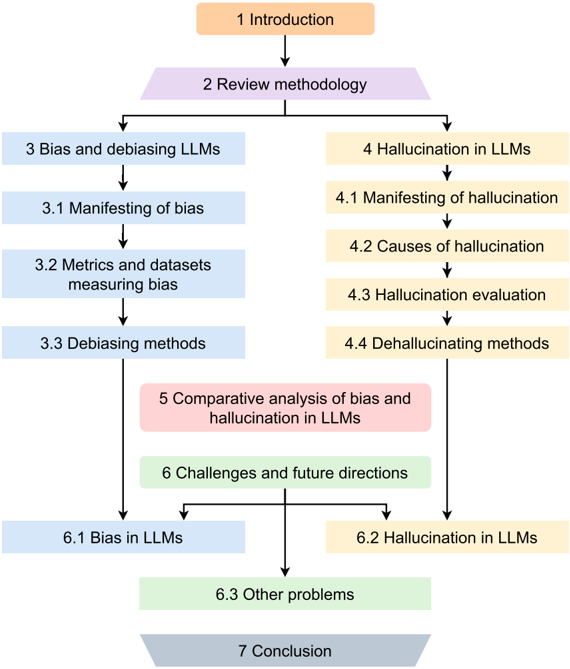
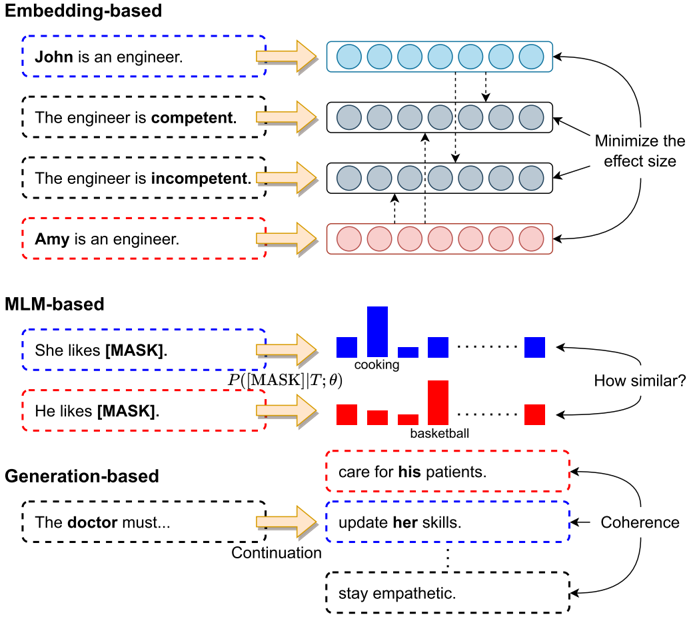
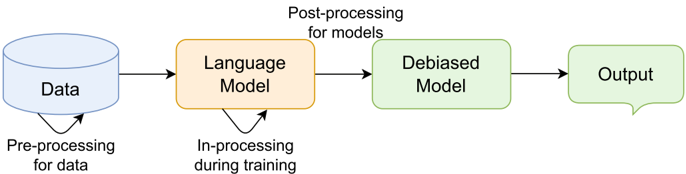
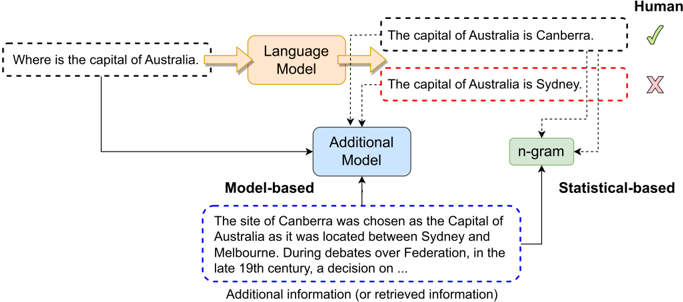
- It proposes taxonomies: bias evaluation methods as embedding-based, MLM-based, and generation-based; hallucination evaluation as human, statistical-based, and model-based; mitigation methods by intervention stage (pre-processing, in-processing, intra-processing/post-processing).
- Comparative analysis: bias primarily stems from training data, while hallucination also arises from generation strategies, fine-tuning, model architecture, decoding algorithms, and exposure bias; bias evaluation is described as more mature and systematic than hallucination evaluation.
- Future directions include side effects of debiasing, more comprehensive bias measurement, multilingual/multicultural settings, using bias wisely, better hallucination evaluation, model editing, and RLHF limitations.
Methods
- Design: narrative literature review, not an empirical study; it states “No datasets were generated or analysed during the current study.”
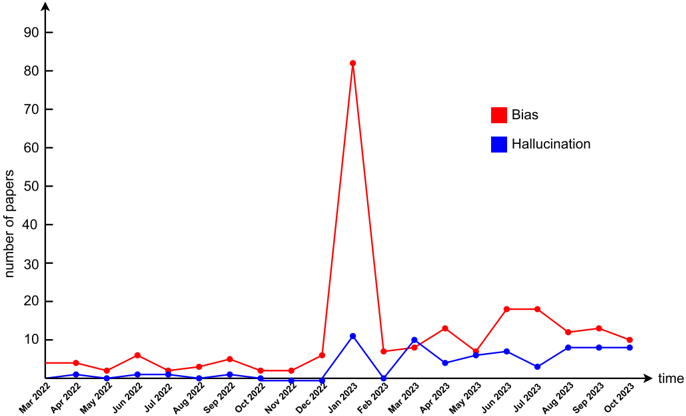
- Data/sample: papers collected and filtered by titles and abstracts, with additional references drawn from collected papers; Figure 3 covers papers published between Mar 2022 and Oct 2023.
- Analysis: thematic synthesis and taxonomy construction for bias/hallucination definitions, causes, evaluation metrics/benchmarks, mitigation methods, plus comparative analysis and future directions.
Limitations
- Stated: the paper notes no datasets were generated or analysed; it also states that bias evaluation often targets specific categories and is insufficient for open-domain LLMs, and that automated hallucination evaluation still differs from human evaluation and varies across models/domains.
- Stated: current research mainly focuses on English-language models; multilingual and multicultural bias/hallucination remain challenging.
- Evident: as a review, it provides no primary experimental validation of the surveyed methods, and its literature coverage appears bounded by the search window ending Oct 2023.
Model-written summary. Check it against the paper before relying on it.
Integrity signals
Registry
Cites
Statistics
Figures
Verification
Claims the paper makes
1 Valid · 10 Not valid · 93 Not checked · 68 Own results and interpretations
The cited sources support only part of this claim — read each source’s verdict below.
In the paper
“Some studies (Caliskan et al. 2017;Greenwald et al. 1998) have found that names associated with European Americans are more likely to be linked with pleasantness, while non-European names tend to be associated with unpleasantness.”
§ Towards trustworthy LLMs: a review on debiasing and dehallucinating in large language models > 3.1 Manifesting of bias
What the sources say
- Partly supportedcites Caliskan et al. 2017 matched to “Semantics derived automatically from language corpora contain human-like biases” (2017) sourceExperimental — accuracy not yet measured
In “Replicating Implicit Associations for Valence” (p. 4), the paper finds that European American names are more likely than African American names to be closer to pleasant than unpleasant words. The claim broadens that comparison to non-European names generally, which the reported test does not establish. (LLM, conf=0.87)
- Not checked yetcites Greenwald et al. 1998 matched to “Measuring individual differences in implicit cognition: the implicit association test” (1998) source
hedgedstates an association- Asserted: passes — The authors put it forward as true.
- Checkable: passes — It can be checked against evidence.
- Load-bearing: unclear — It is unclear whether the paper’s conclusions depend on it.
- Based: passes — The paper gives a reason why it holds.
- Partly supported
The cited sources that could be checked couldn’t confirm or dispute this claim.
In the paper
“Most of the existing bias evaluation metrics have been for specific categories of bias, such as gender bias (Czarnowska et al. 2021).”
§ Towards trustworthy LLMs: a review on debiasing and dehallucinating in large language models > 6.1 Bias in LLMs
What the sources say
- Could not verifycites Czarnowska et al. 2021 matched to “Quantifying Social Biases in NLP: A Generalization and Empirical Comparison of Extrinsic Fairness Metrics” (2021) sourceExperimental — accuracy not yet measured
The Introduction (p. 1) describes a survey of disparate fairness metrics, and Section 4 (p. 4) classifies 22 existing metrics. Neither passage says that most metrics were developed for specific bias categories such as gender. Searches for a gender-focused majority of existing metrics found examples of gender evaluation, but no statement establishing the claimed prevalence. (LLM, conf=0.70)
plain- Asserted: passes — The authors put it forward as true.
- Checkable: passes — It can be checked against evidence.
- Load-bearing: passes — The paper’s conclusions depend on it.
- Based: passes — The paper gives a reason why it holds.
- Could not verify
None of the sources cited for this claim have been checked yet.
In the paper
“However, both papers similarly lack a systematic summary of debiasing methods and evaluation methods.”
§ Towards trustworthy LLMs: a review on debiasing and dehallucinating in large language models > Table 1
What the sources say
- Not checked yetcites Ranaldi et al. 2023
- Not checked yetcites Meade et al. 2022
plain- Asserted: passes — The authors put it forward as true.
- Checkable: passes — It can be checked against evidence.
- Load-bearing: unclear — It is unclear whether the paper’s conclusions depend on it.
- Based: passes — The paper gives a reason why it holds.
In the paper
“However, it has limitations as it cannot be applied to downstream tasks.”
§ Towards trustworthy LLMs: a review on debiasing and dehallucinating in large language models > 3.3.3 Post-processing for models
What the sources say
- Not checked yetcites Schick et al. (2021) matched to “Self-Diagnosis and Self-Debiasing: A Proposal for Reducing Corpus-Based Bias in NLP” (2021) source
plain- Asserted: passes — The authors put it forward as true.
- Checkable: passes — It can be checked against evidence.
- Load-bearing: unclear — It is unclear whether the paper’s conclusions depend on it.
- Based: passes — The paper gives a reason why it holds.
In the paper
“However, Elazar and Goldberg (2018) point out that even after such training, traces of information can still linger in word embeddings.”
§ Towards trustworthy LLMs: a review on debiasing and dehallucinating in large language models > 3.3.2 In-processing during training
What the sources say
- Not checked yetcites Elazar and Goldberg (2018)
plain- Asserted: passes — The authors put it forward as true.
- Checkable: passes — It can be checked against evidence.
- Load-bearing: unclear — It is unclear whether the paper’s conclusions depend on it.
- Based: passes — The paper gives a reason why it holds.
60 more claims
Create a free account to see all 172 claims and to verify the 136 references still open.
- Probably not a substantial claim. 80
- It may state two separate claims as one. 54
Claims other papers make about this one
Each is checked against this paper’s own text: does it say what the citing paper says it does?
The source backs part of the claim, not all of it — or backs it for a different population, condition or comparison.
In the citing paper
“Furthermore, LLMs are vulnerable to bias and hallucination, which depend predominantly on model training data and parameters.14”
From Evaluating the Quality and Safety of Ambient Digital Scribe Platforms Using Simulated Ambulatory Encounters (2025) · cites this paper as [14]
Experimental — accuracy not yet measuredThe source backs part of the claim, not all of it — or backs it for a different population, condition or comparison.
In the citing paper
“Consistency emerged as another problem, with participants reporting that the AI sometimes failed to maintain plot coherence”
From Game Plot Design With an LLM-Powered Assistant: An Empirical Study With Game Designers (2026) · cites this paper as Lin et al., 2024
Experimental — accuracy not yet measured
Self-check
Percentages, sums and reported differences re-computed from the paper’s own numbers.
Each contradiction between two passages listed here was confirmed by an independent check.
Rated minor: it would not touch a result — a value no result rests on, a p-value that stays on the same side of the significance level, or a conflict that is clerical, resolved elsewhere in the paper, or outside its own findings.
In the paper
§ Towards trustworthy LLMs: a review on debiasing and dehallucinating in large language models > 4.4.3 Intra-processing without training
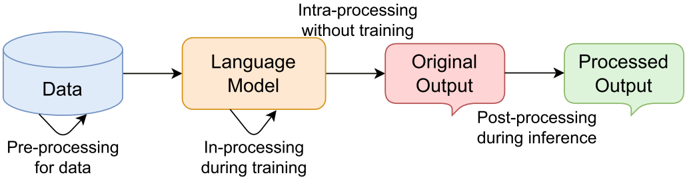
“The intra-processing methods without a training phase can be categorized into four key aspects: designing decode strategy, resorting to external knowledge, pre-detecting and preventing, and multi-agent interaction.”
§ Towards trustworthy LLMs: a review on debiasing and dehallucinating in large language models > Resorting to external knowledge
“Ishibashi and Shimodaira (2023) fine-tunes the model so that it can generate harmless answers when answering questions that may involve sensitive information.”
Rated minor: it would not touch a result — a value no result rests on, a p-value that stays on the same side of the significance level, or a conflict that is clerical, resolved elsewhere in the paper, or outside its own findings.
In the paper
§ Towards trustworthy LLMs: a review on debiasing and dehallucinating in large language models > 5.3 Mitigation methods
“After the discussions in Sects.3.3 and 4.4, approaches to addressing bias and hallucination can be categorized into three main classes: pre-processing from data, in-processing during training, and post-processing during inference.”
§ Towards trustworthy LLMs: a review on debiasing and dehallucinating in large language models > 4.4 Dehallucinating methods
“We classify them into pre-processing for data, in-processing during training, intra-processing without training, and post-processing during inference, which are illustrated in Fig. 7.”
Citations
Cites
BERT: Pre-training of Deep Bidirectional Transformers for Language Understanding
Devlin, J., Chang, M.-W., Lee, K., & Toutanova, K. (2019) · Proceedings of the 2019 Conference of the North American Chapter of the Association for Computational Linguistics: Human Language Technologies, Volume 1 (Long and Short Papers) · doi:10.18653/v1/n19-1423 · Cited by 54,325
BLEU: a method for automatic evaluation of machine translation
Papineni, K., Roukos, S., Ward, T., & Zhu, W.-J. (2001) · Proceedings of the 40th Annual Meeting on Association for Computational Linguistics - ACL '02 · doi:10.3115/1073083.1073135 · Cited by 21,344
Measuring individual differences in implicit cognition: the implicit association test
Greenwald, A. G., McGhee, D. E., & Schwartz, J. L. K. (1998) · Journal of Personality and Social Psychology · doi:10.1037/0022-3514.74.6.1464 · Cited by 9,210
On the Dangers of Stochastic Parrots: Can Language Models Be Too Big? 🦜
Bender, E. M., Gebru, T., McMillan-Major, A., & Shmitchell, S. (2021) · Proceedings of the 2021 ACM Conference on Fairness, Accountability, and Transparency · doi:10.1145/3442188.3445922 · Cited by 6,988
VADER: a parsimonious rule-based model for sentiment analysis of social media text
Hutto, C., & Gilbert, E. (2014) · Proceedings of the International AAAI Conference on Web and Social Media · doi:10.1609/icwsm.v8i1.14550 · Cited by 6,087
Survey of Hallucination in Natural Language Generation
Ji, Z., Lee, N., Frieske, R., Yu, T., Su, D., Xu, Y., Ishii, E., Bang, Y. J., Madotto, A., & Fung, P. (2023) · ACM Computing Surveys · doi:10.1145/3571730 · Cited by 5,025
Survey of Hallucination in Natural Language Generation
Ji, Z., Lee, N., Frieske, R., Yu, T., Su, D., Xu, Y., Ishii, E., Bang, Y., Chen, D., Dai, W., et al. (2022) · arXiv · doi:10.48550/arxiv.2202.03629 · Cited by 4,981
LLaMA: Open and Efficient Foundation Language Models
Touvron, H., Lavril, T., Izacard, G., Martinet, X., Lachaux, M.-A., Lacroix, T., Rozière, B., Goyal, N., Hambro, E., Azhar, F., et al. (2023) · arXiv · doi:10.48550/arxiv.2302.13971 · Cited by 4,602
Liu, P., Yuan, W., Fu, J., Jiang, Z., Hayashi, H., & Neubig, G. (2023) · ACM Computing Surveys · doi:10.1145/3560815 · Cited by 4,361
Liu, P., Yuan, W., Fu, J., Jiang, Z., Hayashi, H., & Neubig, G. (2021) · arXiv · doi:10.48550/arxiv.2107.13586 · Cited by 4,352
Research works printed but not linked: 30
- Banerjee S, Lavie A (2005) Meteor: an automatic metric for mt evaluation with improved correlation with human judgments. In: Proceedings of the ACL workshop on intrinsic and extrinsic evaluation meas- ures for machine translation and/or summarization, pp 65-72
- Bolukbasi T, Chang K-W, Zou JY, Saligrama V, Kalai AT (2016) Man is to computer programmer as woman is to homemaker? debiasing word embeddings. Adv Neural Inf Process Syst 29
- Brown T, Mann B, Ryder N, Subbiah M, Kaplan JD, Dhariwal P, Neelakantan A, Shyam P, Sastry G, Askell A et al (2020) Language models are few-shot learners. Adv Neural Inf Process Syst 33:1877-1901
- Buolamwini J, Gebru T (2018) Gender shades: intersectional accuracy disparities in commercial gender classification. In: Conference on fairness, accountability and transparency. PMLR, pp 77-91
- Cao Y, Kang Y, Sun L (2023) Instruction mining: High-quality instruction data selection for large lan- guage models. arXiv preprint arXiv: 2307. 06290
- Carlini N, Tramer F, Wallace E, Jagielski M, Herbert-Voss A, Lee K, Roberts A, Brown T, Song D, Erlingsson U et al. (2021) Extracting training data from large language models. In: 30th USENIX security symposium (USENIX Security 21), pp 2633-2650
- Chowdhery A, Narang S, Devlin J, Bosma M, Mishra G, Roberts A, Barham P, Chung HW, Sutton C, Gehrmann S et al (2023) Palm: scaling language modeling with pathways. J Mach Learn Res 24(240):1-113
- Dev S, Phillips J (2019) Attenuating bias in word vectors. In: The 22nd international conference on arti- ficial intelligence and statistics. PMLR, pp 879-887
- Dinan E, Roller S, Shuster K, Fan A, Auli M, Weston J (2018) Wizard of Wikipedia: knowledge-pow- ered conversational agents. In: International conference on learning representations
- Gao L, Schulman J, Hilton J (2023) Scaling laws for reward model overoptimization. In: Krause A, Brunskill E, Cho K, Engelhardt B, Sabato S, Scarlett J (eds.), Proceedings of the 40th interna- tional conference on machine learning research, vol. 202. PMLR, pp 10835-10866. https:// proce edings. mlr. press/ v202/ gao23h. html
- Honovich O, Choshen L, Aharoni R, Neeman E, Szpektor I, Abend O (2021) Q2: evaluating factual consist- ency in knowledge-grounded dialogues via question generation and question answering. In: Proceed- ings of the 2021 conference on empirical methods in natural language processing, pp 7856-7870 · DOI · Paper page
- Kabir S, Udo-Imeh DN, Kou B, Zhang T (2023) Who answers it better? An in-depth analysis of chatgpt and stack overflow answers to software engineering questions. arXiv preprint arXiv: 2308. 02312
- Le Bras R, Swayamdipta S, Bhagavatula C, Zellers R, Peters M, Sabharwal A, Choi Y (2020) Adversarial filters of dataset biases. International conference on machine learning. PMLR, pp 1078-1088
- Lee N, Ping W, Xu P, Patwary M, Fung PN, Shoeybi M, Catanzaro B (2022) Factuality enhanced language models for open-ended text generation. Adv Neural Inf Process Syst 35:34586-34599
- Liu F, Lin K, Li L, Wang J, Yacoob Y, Wang L (2023) Aligning large multi-modal model with robust instruction tuning. arXiv preprint arXiv: 2306. 14565
- McFadden AC, Marsh GE, Price BJ, Hwang Y (1992) A study of race and gender bias in the punishment of school children. Educ Treat Child 15(2):140-146
- Meng K, Bau D, Andonian A, Belinkov Y (2022) Locating and editing factual associations in GPT. Adv Neural Inf Process Syst 35:17359-17372
- Ntoutsi E, Fafalios P, Gadiraju U, Iosifidis V, Nejdl W, Vidal M-E, Ruggieri S, Turini F, Papadopoulos S, Krasanakis E et al (2020) Bias in data-driven artificial intelligence systems-an introductory survey. Wiley Interdisc Rev: Data Min Knowl Discov 10(3):1356
- Ouyang L, Wu J, Jiang X, Almeida D, Wainwright C, Mishkin P, Zhang C, Agarwal S, Slama K, Ray A et al (2022) Training language models to follow instructions with human feedback. Adv Neural Inf Process Syst 35:27730-27744
- Radford A, Wu J, Child R, Luan D, Amodei D, Sutskever I et al (2019) Language models are unsuper- vised multitask learners. OpenAI blog 1(8):9
- Raffel C, Shazeer N, Roberts A, Lee K, Narang S, Matena M, Zhou Y, Li W, Liu PJ (2020) Explor- ing the limits of transfer learning with a unified text-to-text transformer. J Mach Learn Res 21(1):5485-5551
- Sahlgren M, Olsson F (2019) Gender bias in pretrained Swedish embeddings. In: Proceedings of the 22nd Nordic conference on computational linguistics, pp 35-43
- Santhanam S, Hedayatnia B, Gella S, Padmakumar A, Kim S, Liu Y, Hakkani-Tür D (2021) Rome was built in 1776: a case study on factual correctness in knowledge-grounded response generation. In: EMNLP 2021 workshop on NLP for conversational AI
- Schmidt B (2015) Rejecting the gender binary: a vector-space operation. Ben’s Bookworm Blog
- Sun T, Zhang X, He Z, Li P, Cheng Q, Yan H, Liu X, Shao Y, Tang Q, Zhao X, et al. (2023) Moss: training conversational language models from synthetic data 7. arXiv preprint arXiv: 2307. 15020
- Tan YC, Celis LE (2019) Assessing social and intersectional biases in contextualized word representations. Adv Neural Inf Process Syst 32
- Vaswani A, Shazeer N, Parmar N, Uszkoreit J, Jones L, Gomez AN, Kaiser Ł, Polosukhin I (2017) Atten- tion is all you need. Adv Neural Inf Process Syst 30
- Wiener N (1950) The human use of human beings: Cybernetics and society Workshop B, Scao TL, Fan A, Akiki C, Pavlick E, Ilić S, Hesslow D, Castagné R, Luccioni AS, Yvon F et al. (2022) Bloom: A 176b-parameter open-access multilingual language model. arXiv preprint arXiv: 2211. 05100
- Zaheri S, Leath J, Stroud D (2020) Toxic comment classification. SMU Data Sci Rev 3(1):13
- Zhao T, Wei M, Preston JS, Poon H (2023) Automatic calibration and error correction for large language models via pareto optimal self-supervision. arXiv preprint arXiv: 2306. 16564
Cited by
Bias in Large Language Models: Origin, Evaluation, and Mitigation
Guo, Y., Guo, M., Su, J., Yang, Z., Zhu, M., Li, H., Qiu, M., & Liu, S. S. (2026) · Electronics · doi:10.3390/electronics15091824 · Cited by 251
“In alignment with causal methods in intra-model debiasing, researchers also develop methods based on causal prompting (Li et al., 2024a; Zhang et al., 2024).”
Bias in Large Language Models: Origin, Evaluation, and Mitigation
Guo, Y., Guo, M., Su, J., Yang, Z., Zhu, M., Li, H., Qiu, M., & Liu, S. S. (2024) · arXiv · doi:10.48550/arxiv.2411.10915 · Cited by 208
“In alignment with causal methods in intra-model debiasing, researchers also develop methods based on causal prompting (Li et al., 2024a; Zhang et al., 2024).”
A survey on multilingual large language models: corpora, alignment, and bias
Xu, Y., Hu, L., Zhao, J., Qiu, Z., Xu, K., Ye, Y., & Gu, H. (2025) · Frontiers of Computer Science · doi:10.1007/s11704-024-40579-4 · Cited by 225
Evaluating Trustworthiness in AI: Risks, Metrics, and Applications Across Industries
Nastoska, A., Jancheska, B., Rizinski, M., & Trajanov, D. (2025) · Electronics · doi:10.3390/electronics14132717 · Cited by 168
Abdel‐Rehim, A., Zenil, H., Orhobor, O. I., Fisher, M., Collins, R. J., Bourne, E., Fearnley, G. W., Tate, E., Smith, H. X., Soldatova, L., et al. (2025) · Journal of The Royal Society Interface · doi:10.1098/rsif.2024.0674 · Cited by 55
Conceptualizing and Operationalizing Prompt Literacy for English Language Learners
Tour, E., & Zadorozhnyy, A. (2025) · Journal of Adolescent & Adult Literacy · doi:10.1002/jaal.70020 · Cited by 45
Cardamone, N. C., Olfson, M., Schmutte, T. J., Ungar, L., Liu, T., Cullen, S. W., Williams, N. J., & Marcus, S. C. (2024) · JMIR Medical Informatics · doi:10.2196/65454 · Cited by 41
Sammour, F., Xu, J., Wang, X., Hu, M., & Zhang, Z. (2025) · Journal of Construction Engineering and Management · doi:10.1061/jcemd4.coeng-16639 · Cited by 41
Mzwri, K., & Turcsányi-Szabó, M. (2025) · Journal of Computers in Education · doi:10.1007/s40692-025-00367-w · Cited by 34
“Previous research has highlighted that hallucination in LLMs often occurs when models rely solely on their pre-trained knowledge without anchoring responses in authoritative sources (Z. Lin et al., 2024a, 2024b; Romera-Paredes et al., 2024).”
Moral stereotyping in large language models
Zewail, A., Figueroa, A., Graham, J., & Atari, M. (2026) · Proceedings of the National Academy of Sciences · doi:10.1073/pnas.2519941123 · Cited by 29
“Importantly, ad-hoc debiasing methods (10) [e.g., Reinforcement Learning from Human Feedback; RLHF (17)] may aggravate these probability distributions as the models are disproportionately exposed to Western, English-speaking, and elite cultural inputs (8, 18).”
Márquez-Carpintero, L., Lopez-Sellers, A., & Cazorla, M. (2025) · Artificial Intelligence Review · doi:10.1007/s10462-025-11464-8 · Cited by 30
“Nevertheless, LLMs are not free from limitations, such as a proneness to hallucinations, potential biases, and the generation of inappropriate content, which are critical issues in educational settings (Lin et al. 2024).”
Do, T., Tran, D. P., Vo, A., & Kim, D. (2025) · Proceedings of the AAAI Conference on Artificial Intelligence · doi:10.1609/aaai.v39i27.35012 · Cited by 33
Generative Artificial Intelligence in Clinical Medicine and Impact on Gastroenterology
Soroush, A., Giuffrè, M., Chung, S., & Shung, D. L. (2025) · Gastroenterology · doi:10.1053/j.gastro.2025.03.038 · Cited by 27
From Illusion to Insight: A Taxonomic Survey of Hallucination Mitigation Techniques in LLMs
Kazlaris, I., Antoniou, E. N., Diamantaras, K., & Bratsas, C. (2025) · AI · doi:10.3390/ai6100260 · Cited by 35
Bajestani, M. S., Mun, D., & Kim, D. B. (2026) · Journal of Manufacturing Systems · doi:10.1016/j.jmsy.2026.04.027 · Cited by 33
Can AI with High Reasoning Ability Replicate Human-like Decision Making in Economic Experiments?
Kitadai, A., Lugo, S. D. R., Tsurusaki, Y., Fukasawa, Y., & Nishino, N. (2025) · Group Decision and Negotiation · doi:10.1007/s10726-025-09946-9 · Cited by 29
Advancing ophthalmology with large language models: Applications, challenges, and future directions
Zhang, Q., Wang, S., Wang, X., Xu, C., Liang, J., & Liu, Z. (2025) · Survey of Ophthalmology · doi:10.1016/j.survophthal.2025.02.009 · Cited by 21
Liu, Y., Yu, F., Zhang, X., Tong, X., Li, K., Gu, W., & Yu, B. (2025) · JMIR Medical Informatics · doi:10.2196/65365 · Cited by 20
“Consequently, their outputs may lack sufficient grounding in evidence-based medicine, especially for complex or highly specialized clinical topics [41].”
López‐Pernas, S., Misiejuk, K., Kaliisa, R., & Saqr, M. (2025) · IEEE Transactions on Learning Technologies · doi:10.1109/tlt.2025.3568599 · Cited by 21
Anderson, T. N., Mohan, V., Dorr, D. A., Ratwani, R. M., Biro, J. M., & Gold, J. A. (2025) · Mayo Clinic proceedings. Digital health · doi:10.1016/j.mcpdig.2025.100292 · Cited by 17
“14 The opaque, black box nature of ADS technology further limits user ability to anticipate and mitigate these risks.”
Urban Road Anomaly Monitoring Using Vision–Language Models for Enhanced Safety Management
Ding, H., Du, Y., & Xia, Z. (2025) · Applied Sciences · doi:10.3390/app15052517 · Cited by 24
Multimodal large language model for wheat breeding: A new exploration of smart breeding
Yang, G., Li, Y., He, Y., Zhou, Z., Ye, L., Fang, H., Luo, Y., & Feng, X. (2025) · ISPRS Journal of Photogrammetry and Remote Sensing · doi:10.1016/j.isprsjprs.2025.03.027 · Cited by 20
Self-citationIdentifying Bias at Scale in Clinical Notes Using Large Language Models
Apakama, D. U., Nguyen, K.-A.-N., Hyppolite, D., Soffer, S., Mudrik, A., Ling, E. J., Moses, A., Temnycky, I., Glasser, A., Anderson, R., et al. (2025) · Mayo Clinic Proceedings Digital Health · doi:10.1016/j.mcpdig.2025.100296 · Cited by 20
From Illusion to Insight: A Taxonomic Survey of Hallucination Mitigation Techniques in LLMs
Kazlaris, I., Antoniou, E., Diamantaras, K., & Bratsas, C. (2025) · doi:10.20944/preprints202508.1942.v1 · Cited by 13
When AI Is Fooled: Hidden Risks in LLM-Assisted Grading
Milani, A., Franzoni, V., Florindi, E., Omarbekova, A., Bekmanova, G., & Yergesh, B. (2025) · Education Sciences · doi:10.3390/educsci15111419 · Cited by 16
Abdullahi, S., Danyaro, K. U., & Chiroma, H. (2026) · Cluster Computing · doi:10.1007/s10586-025-05891-z · Cited by 16
Enhancing Intent Classifier Training with Large Language Model-generated Data
Benayas, A., Sicilia, M., & Mora‐Cantallops, M. (2024) · Applied Artificial Intelligence · doi:10.1080/08839514.2024.2414483 · Cited by 13
“To mitigate bias in LLM-generated data, several updated strategies have emerged (Lin et al. 2024).”
Leveraging Large Language Models for Sustainable and Inclusive Web Accessibility
Andruccioli, M., Bassi, B., Delnevo, G., & Salomoni, P. (2025) · Big Data and Cognitive Computing · doi:10.3390/bdcc9100247 · Cited by 13
“Yet, these technologies also raise important questions about bias, sustainability, and the limits of automation in ethically sensitive contexts [17].”
Design Patterns for Large Language Model Based Neuro-Symbolic Systems
de Boer, M., Smit, Q. T. S., van Bekkum, M. A., Meyer-Vitali, A., & Schmid, T. (2025) · Neurosymbolic Artificial Intelligence · doi:10.1177/29498732251377499 · Cited by 18
“It is therefore fair to state that current LLM-based systems and applications lack a sufficient degree of trustworthiness (Huang et al., 2024; Lin et al., 2024), rendering them unusable where reliable output is essential (e.g., in scientific discovery Schmidt et al., 2024).”
How to Write Effective Prompts for Screening Biomedical Literature Using Large Language Models
Colangelo, M. T., Guizzardi, S., Meleti, M., Calciolari, E., & Galli, C. (2025) · BioMedInformatics · doi:10.3390/biomedinformatics5010015 · Cited by 14
“Additionally, biases in training data could lead to the underrepresentation of certain populations or interventions, subtly skewing results [126–128].”
Linguistic features of AI mis/disinformation and the detection limits of LLMs
Ma, Y., Zhang, X., Ren, J., Wang, R., Wang, M., & Chen, Y. (2025) · Nature Communications · doi:10.1038/s41467-025-67145-1 · Cited by 18
LLM-generated formative feedback in education: A qualitative systematic literature review
Maier, U., Seibold, M., & Klotz, C. (2026) · Computers and Education Open · doi:10.1016/j.caeo.2026.100374 · Cited by 13
Application of large language models in healthcare: A bibliometric analysis
Zhang, L., Zhao, Q., Zhang, D., Song, M., Zhang, Y., & Wang, X. (2025) · Digital Health · doi:10.1177/20552076251324444 · Cited by 15
“31,32 (3) Bias in training data: The training datasets for LLMs predominantly originate from high-income, English-speaking regions, which introduces a signi fi cant bias.”
A Lifecycle-Oriented Survey of Emerging Threats and Vulnerabilities in Large Language Models
de Maio, C., Di Gisi, M., Fenza, G., Gallo, M., & Loia, V. (2025) · IEEE Access · doi:10.1109/access.2025.3619764 · Cited by 10
“For example, regarding biases, the literature review by Lin et al. [59] provides a comprehensive overview of bias in LLMs. Bias may manifest across various dimensions, including race, ethnicity, religion, gender, political affiliation, and cultural context.”
Yuan, H. (2025) · iRadiology · doi:10.1002/ird3.115 · Cited by 13
“Post‐ training methods encompass hallucination detection, integration of external knowledge, multi‐agent collaboration, and radiologist‐in‐the‐loop frameworks [62, 65].”
Engineering equity: designing diversity-aware AI to reflect humanity
Shin, D. (2025) · AI & Society · doi:10.1007/s00146-025-02314-w · Cited by 12
“The goal of diversity-aware AI is to ensure that AI systems are not only effective and efficient but also fair, inclusive, and reflective of the pluralistic societies in which they operate (Lin et al. 2024).”
“Since Lawyers are Males..”: Examining Implicit Gender Bias in Hindi Language Generation by LLMs
Gupta, I., Joshi, I., Dey, A., & Parikh, T. S. (2025) · ACM Conference on Fairness, Accountability, and Transparency (FAccT) · doi:10.1145/3715275.3732208 · Cited by 20
Fuchs, S., Werth, A., Méndez, C., & Butcher, J. T. (2025) · Journal of Engineering Education · doi:10.1002/jee.70033 · Cited by 10
“LLMs are often trained on vast datasets that may contain inherent biases, which could influence the output when generating synthetic data or analyzing feedback interactions (Lin et al., 2024).”
Large Language Models’ Trustworthiness in the Light of the EU AI Act—A Systematic Mapping Study
Billah, M. M., Hamjaya, H. S., Shiralizade, H., Singh, V., & Inam, R. (2025) · Applied Sciences · doi:10.3390/app15147640 · Cited by 10
Large Language Models for Electronic Health Record De-Identification in English and German
Sousa, S., Jantscher, M., Kröll, M., & Kern, R. (2025) · Information · doi:10.3390/info16020112 · Cited by 13
Zhu, H., Wang, R., Qian, J., Wu, Y., Jin, Z., Shan, X., Ji, F., Yuan, Z., & Pan, T. (2025) · BME Frontiers · doi:10.34133/bmef.0111 · Cited by 11
“Many studies are investigating ways to mitigate this phenomenon [ 34 ].”
Kong, L., Zhong, X., Chen, J., Fu, H., & Wang, Y. (2025) · Frontiers of Information Technology & Electronic Engineering · doi:10.1631/fitee.2500180 · Cited by 13
“The contents generated by LLMs often appear plausible and fluent but contain hallucinations; end-users do not always recognize this, usually accept them as facts, and make incorrect decisions for down-stream tasks (Lin et al., 2024).”
On the fairness, diversity and reliability of text-to-image generative models
Vice, J., Akhtar, N., Sigal, L., Hartley, R., & Mian, A. S. (2026) · Artificial Intelligence Review · doi:10.1007/s10462-025-11424-2 · Cited by 10
“Shneiderman’s appraisal of Reliability, Safety, and Trust-worthiness in AI defines a reliable system as one “stem-ming from sound technical practices that support human responsibility, fairness, and explainability” [37].”
The Role of Accuracy and Validation Effectiveness in Conversational Business Analytics
Alparslan, A. (2025) · IEEE Access · doi:10.1109/access.2025.3540975 · Cited by 9
“The requirement for reliability is further intensified by the inherent tendency of LLMs to produce ‘‘hallucinations’’ [70], [71], resulting in fabricated or erroneous SQL queries that may appear credible.”
Next-gen terminology: Transforming terminology work with large language models
Heinisch, B. (2025) · Across Languages and Cultures · doi:10.1556/084.2025.01061 · Cited by 7
Bragazzi, N. L., Buchinger, M., Atwan, H., Tuma, R., Chirico, F., Szarpak, Ł., Farah, R. E., & Khamisy‐Farah, R. (2025) · JMIR Formative Research · doi:10.2196/56126 · Cited by 8
“As AI systems become more integrated into health care, their ability to adapt and learn from emerging data will be crucial in ensuring they remain reliable and beneficial adjuncts in medical practice [31,32].”
Hlaing, N. H. M. M., Park, K., Hahn, S., Lee, S., Yeo, I.-S. L., & Lee, J. (2025) · Journal of Prosthetic Dentistry · doi:10.1016/j.prosdent.2025.10.004 · Cited by 8
Understanding the Video Content Creation Journey of Creators with Sensory Impairment in Kenya
Xiao, L., Bandukda, M., Li, F. M., Colley, M., & Holloway, C. (2025) · International ACM SIGACCESS Conference on Computers and Accessibility (ASSETS) · doi:10.1145/3663547.3746356 · Cited by 7
Towards an AI-based knowledge assistant for goat farmers based on retrieval-augmented generation
Han, N., Liu, D., & Norton, T. (2026) · Computers and Electronics in Agriculture · doi:10.1016/j.compag.2026.111542 · Cited by 7
Unveiling gender bias in LLM-generated hero and heroine narratives
van Blerck, I. C. E., de Lima, E. S., Neggers, M. M. E., & Calders, T. (2025) · Entertainment Computing · doi:10.1016/j.entcom.2025.100972 · Cited by 8
A short survey on small reasoning models: training, inference, applications, and research directions
Wang, C., Zhang, T., Hong, R., & Huang, J. (2026) · Frontiers of Computer Science · doi:10.1007/s11704-025-50990-0 · Cited by 10
Kathiresan, G. (2025) · doi:10.36227/techrxiv.174702077.78864934/v1 · Cited by 13
Tan, X. J., Cheor, W. L., Cheng, E. M., Lim, C. C., & Rahman, K. S. A. (2025) · Computers, materials & continua/Computers, materials & continua (Print) · doi:10.32604/cmc.2025.063407 · Cited by 9
“Language models are typically built using RNNs or Long Short-Term Memory (LSTM) networks, which are designed to handle sequential data by predicting the next token in a sequence [43].”
Bansal, R., Chandra, R., & Lulla, K. (2025) · International Journal of Computational and Experimental Science and Engineering · doi:10.22399/ijcesen.2471 · Cited by 5
“[22] This clearly does not scale to all searches, but maybe for very sensitive or complicated ones (such as inquiries regarding legal compliance, harassment concerns, terminations, etc.), the algorithm may highlight that and call for an HR specialist to review.”
Chand, S., Baca, F., & Ferrara, E. (2026) · AI · doi:10.3390/ai7010024 · Cited by 10
“Numerous mitigation strategies have been proposed, ranging from data debiasing and constrained decoding to fine-tuning and parameter editing [5, 6, 23, 25].”
Large language modeling of hallucinatory problem mitigation based on the wheel of emotions
Wang, Z., Wang, J., Zhou, L., & You, F. (2025) · Neural Networks · doi:10.1016/j.neunet.2025.107996 · Cited by 7
Rajik, J. A. (2024) · Open Access Publishing Group - European Journal of Education Studies · doi:10.46827/ejes.v11i12.5727 · Cited by 5
Fine-Grained Bias Detection in LLM: Enhancing detection mechanisms for nuanced biasesPreprint
Mohanty, S. (2025) · arXiv (Cornell University) · doi:10.48550/arxiv.2503.06054 · Cited by 6
Ubiquity of LLM Hallucinations Across Critical Domains: A Survey
Singh, D., & Singh, A. (2025) · Lecture notes in computer science · doi:10.1007/978-981-96-8197-6_9 · Cited by 8
Vaughn, J., Ford, S. H., Sheckells, A., Fasnacht, H., Crawford, D., & Doğan, G. (2025) · Clinical Simulation in Nursing · doi:10.1016/j.ecns.2025.101843 · Cited by 6
Entering the age of hybrid futures: A comparative study of human and GPT-generated scenarios
Kozachek, D. (2025) · Futures · doi:10.1016/j.futures.2025.103705 · Cited by 5
Explainable pedagogical alignment: auditing LLMs with learning theories
Figaredo, D. D., Vindel, J. L. F., & Puerta, L. G. (2025) · Education and Information Technologies · doi:10.1007/s10639-025-13857-2 · Cited by 5
Haviana, S. F. C., Riyadi, M. A., & Kusumaningrum, R. (2025) · Proceeding of the Electrical Engineering Computer Science and Informatics · doi:10.1109/eecsi67060.2025.11290624 · Cited by 4
“The generative function of LLM cannot be entirely expected due to the possibility of returning incorrect information, biases, or hallucinations [6], [7], [8], [9], [10].”
HaluGNN: Hallucination detection in large language models using graph neural network
Kong, L., Zhang, Y., Zhong, X., Fu, H., Wang, Y., & Liu, H. (2025) · Expert Systems with Applications · doi:10.1016/j.eswa.2025.130857 · Cited by 11
Performance Evaluation of LLM Hallucination Reduction Strategies for Reliable Qualitative Analysis
Adeseye, A., Isoaho, J., & Tahir, M. (2026) · Communications in computer and information science · doi:10.1007/978-3-032-12313-8_11 · Cited by 4
A Hybrid Neuro-Symbolic Pipeline for Coreference Resolution and AMR-Based Semantic Parsing
Papakostas, C., Troussas, C., Krouska, A., & Sgouropoulou, C. (2025) · Information · doi:10.3390/info16070529 · Cited by 6
Sallam, M., Irshaid, A., Snygg, J., Albadri, R., & Sallam, M. (2025) · Contemporary Education and Teaching Research · doi:10.61360/bonicetr252018770801 · Cited by 5
ChatGPT and U(X): A Rapid Review on Measuring the User ExperiencePreprint
Seaborn, K. (2025) · arXiv (Cornell University) · doi:10.48550/arxiv.2503.15808 · Cited by 4
“Framing is linked to trust (Z. Lin et al., 2024), especially given ongoing issues with ChatGPT’s propensity to hallucinate.”
Liu, Y., Wu, D., Ma, F., & Mao, W. (2025) · International Conference on Transportation Information and Safety · doi:10.1109/ictis68762.2025.11214874 · Cited by 3
“Lin[37] et al. also provide a systematic framework for researchers of LLMs, introducing the reasons for the phenomena of bias and hallucination and summarising the current solutions .”
Shirvani, M. S., Crowley, J., Peng, C., Liu, J., Chao, T. W.-C., Martinez, S., Brandt, L., Kim, I.-J., & Yoon, D. (2026) · CHI Conference on Human Factors in Computing Systems · doi:10.1145/3772318.3790986 · Cited by 5
Bernardes, G., Bozza, B. R., Motta, M., Mattos, P., & Fischer, R. D. (2025) · Journal of Research in Personality · doi:10.1016/j.jrp.2024.104570 · Cited by 3
Liu, H., Yin, S., Hu, X., Deng, M., Yang, X., & Xu, G. (2025) · Applied Sciences · doi:10.3390/app15169012 · Cited by 3
Jähde, O., Weber, T., & Buchkremer, R. (2025) · Journal of Computational Social Science · doi:10.1007/s42001-025-00372-0 · Cited by 4
Enhancing the Validation of Human Factors in User Interface Software Testing with AI
Goetz, M. (2025) · Lecture notes in computer science · doi:10.1007/978-3-031-93861-0_4 · Cited by 2
Shao, A., & Scheufele, D. A. (2026) · Journal of Broadcasting & Electronic Media · doi:10.1080/08838151.2026.2669539 · Cited by 2
Marini, N., Liang, Z., Rajaraman, S., Xue, Z., & Antani, S. (2026) · Journal of Biomedical Informatics · doi:10.1016/j.jbi.2026.105055 · Cited by 2
Heckmann, N. S., Papoutsi, D. G., Barbieri, M. A., Battini, V., Molgaard, S. N., Schmidt, S. O., Melskens, L., & Sessa, M. (2026) · Pharmaceutical Research · doi:10.1007/s11095-026-04121-4 · Cited by 4
“When the training sources are based on biomedical literature, the biomedical LLM seems to better approximate human clinical reasoning, which is crucial in causality assessment [34].”
Debias Your Large Multi-Modal Model at Test-Time via Non-Contrastive Visual Attribute Steering
Ratzlaff, N., Olson, M., Hinck, M., Tseng, S.-Y., Lal, V., & Howard, P. (2025) · IEEE International Conference on Computer Vision Workshops · doi:10.1109/iccvw69036.2025.00651 · Cited by 4
“A variety of methods have been proposed recently for debiasing LLMs and discriminative VLMs individually [21, 30].”
Naser, M. Z. (2026) · Language Resources and Evaluation · doi:10.1007/s10579-026-09938-4 · Cited by 3
Domain-specific knowledge and context in large language models: challenges, concerns, and solutions
Adavala, K. M., & Adavala, O. (2025) · IAES International Journal of Artificial Intelligence · doi:10.11591/ijai.v14.i4.pp2568-2578 · Cited by 1
Exploring cultural commonsense in multilingual large language models: A survey
Binegde, G. N., & Zhang, H. (2025) · Information Systems · doi:10.1016/j.is.2025.102649 · Cited by 4
Self-citationNeves, J. S., Pereira, M. C., & Bacalhau, L. M. (2026) · Studies in systems, decision and control · doi:10.1007/978-3-031-85398-2_44 · Cited by 1
Understanding and Mitigating Data Poisoning in LLMs
Shah, A., Mathur, I., & Kanakia, H. T. (2025) · International Conference on Responsible, Generative and Explainable AI (ResGenXAI) · doi:10.1109/resgenxai64788.2025.11344010 · Cited by 2
“1) Cryptographic Signatures: Put in place mechanisms to sign models cryptographically and confirm their origin [10].”
Investigating transformer models for textual bias detection in model, data, and dataspace cards
Donald, A., Galanopoulos, A., Ojha, A. K., Curry, E., Muñoz, E., Ullah, I., McCrae, J. P., Kalra, M., Saxena, S., & Iqbal, T. (2026) · AI and Ethics · doi:10.1007/s43681-025-00975-3 · Cited by 1
“Additionally, methods have been proposed to quantify and mitigate prompt bias, ensuring the reliability of benchmarks and enhancing the retrieval capabilities of prompts [17–19].”
Tanvir, M., Akter, A., Ahammad, M. S., Tahmid, M., Sraboni, S. A., & Islam, T. (2026) · Lecture notes in networks and systems · doi:10.1007/978-3-032-15346-3_2 · Cited by 1
Li, H., Cao, J., Duan, S., Hu, S., Lou, L., Lin, M., Jian, T., Shao, J., Zhang, X., Chen, P., et al. (2026) · npj Digital Medicine · doi:10.1038/s41746-026-02510-y · Cited by 1
Herrera-Poyatos, D., Peláez-González, C., Zuheros, C., Tejedor, V., Montes, R., & Herrera, F. (2026) · Information Fusion · doi:10.1016/j.inffus.2026.104389 · Cited by 1
Zhang, Z., & Lu, M. (2026) · Engineered Science · doi:10.30919/es2245 · Cited by 2
ОЦЕНКА УЯЗВИМОСТИ LLM ДЛЯ МАНИПУЛЯЦИИ
Jaiswal, A. K., & Meshcheriakov, R. V. (2026) · Voprosy kiberbezopasnosti · doi:10.21681/2311-3456-2026-2-81-90 · Cited by 1
On the Speculative Terminology Surrounding AI
Ashruf, C. M. A. (2026) · IEEE Technology and Society Magazine · doi:10.1109/mts.2026.3687052 · Cited by 1
Wölfle, A., & Schmuck, D. (2026) · Computers in Human Behavior Reports · doi:10.1016/j.chbr.2026.101145 · Cited by 1
Ebadinezhad, S., & Adeshina, O. E. (2026) · International Conference on Integrated Intelligence and Cognitive Engineering (ICIICE) · doi:10.1109/iciice69672.2026.11565368 · Cited by 1
“[8], [9], [11], [13], [14], [15], [19]– [25] RQ2: What mechanismsenhanceMulti-ModalFusion?”
InfluentialHallucinations in LLMs: a lifecycle-based survey of causes, detection, mitigation, and prevention
Lamba, N., Tiwari, S., & Gaur, M. (2026) · International Journal of Data Science and Analytics · doi:10.1007/s41060-026-01214-6 · Cited by 1
“A framework proposed by Lin et al. [112] involves the diversity aware active learning that utilizes hallucinations to select a variety of hallucinations that can be annotated and hence the ability of the model to become more robust.”
VerifierBench: Trace-evidence Verification of Tool-use Claim Faithfulness in Agentic Workflows
Alniemi, O., Saadoon, A., Alhusseny, S., & Mahmood, H. (2026) · International journal of intelligent engineering and systems · doi:10.22266/ijies2026.0831.73 · Cited by 1
Peykani, P., Charles, V., Emrouznejad, A., Ghanidel, S., & Sabour, D. (2026) · Archives of Computational Methods in Engineering · doi:10.1007/s11831-026-10720-6 · Cited by 1
Potel, J. T., & Kumashiro, M. (2026) · Behavioral Sciences · doi:10.3390/bs16081431 · Cited by 1
“While AI systems, particularly general-purpose LLMs, still produce “hallucinations”, performance on some tasks has improved (Anh-Hoang et al., 2025; Lin et al., 2024; Wang et al., 2025).”
InfluentialBuhr, C. R., Müller, L., dos Santos, D. P., Thiem, D. G. E., Ponciano, J.-J., Krüger, M., O’Brien, K., Kaufmann, J., Nolte, H., Gartenschläger, M., et al. (2026) · JMIR AI · doi:10.2196/95081 · Cited by 1
“These errors can be considered as a form of LLM “hallucination” [15].”
Chen, D., Blayne, A., Ning, T., Chattha, I., Afshar, M., Ong, J. C. L., Hong, J. C., Liu, N., Celi, L. A., Moons, K. G. M., et al. (2026) · BMJ · doi:10.1136/bmj-2026-100855 · Cited by 1
“5 These settings could impact trial outcomes and the interpretation of resulting study findings and evidence.”
Metzner, O., Wang, Y., de Melo, G., Symes, W., Huang, Y., & Lazarides, R. (2025) · British Journal of Educational Psychology · doi:10.1111/bjep.70013 · Cited by 1
“…may introduce biases, such as historical bias—which reinforces stereotypes related to gender, race, or disability—and representational bias, which can result in the under-, over, or misrepresentation of certain groups, thereby replicating dominant ideologies (Head et al., 2023; Lin et al., 2024).”
Tsybulnik, D. Y., Gillette, J. J., & Heston, T. F. (2025) · medRxiv · doi:10.1101/2025.10.03.25337291 · Cited by 1
“Some studies have raised concerns about LLM limitations, including the generation of confident-sounding hallucinations with little relationship to actual paper content (21).”
Metadata
- Authors
- Lin, Z., Guan, S., Zhang, W., Zhang, H., Li, Y., & Zhang, H.
- Affiliations
- Beijing Institute of Technology (CN)
- Corresponding author
- Zhang, Huiyan
- Venue
- Artificial Intelligence Review
- Published
- 2024-08-10
- Volume
- 57
- Issue
- 9
- ISSN
- 0269-2821 (ISSN-L)
- 1573-7462
- OpenAlex
- W4401484139
- Cited by
- 141
- References
- 216
- Citations by year
- 2026: 70 · 2025: 69 · 2024: 2
- FWCI
- 58.44
- Type
- journal article
- Language
- en
- Open access
- hybrid
- doi.org
- Licence
- cc-by-nc-nd
- creativecommons.org/licenses/by-nc-nd/4.0 (tdm)
- creativecommons.org/licenses/by-nc-nd/4.0 (vor)
- Locations
- Artificial Intelligence Review (publishedVersion, cc-by-nc-nd)
- Topics
- Physical Sciences › Computer Science › Artificial Intelligence › Ethics and Social Impacts of AI
- Physical Sciences › Computer Science › Artificial Intelligence › Topic Modeling
- Physical Sciences › Computer Science › Artificial Intelligence › Natural Language Processing Techniques
- Keywords
- large language models, bias mitigation, hallucination mitigation, trustworthy AI
About these checks
Registry, retraction, Cites and statistics results are computed, not judged, with one exception: a printed reference that no index lists is read once by a model before it counts as a citation error. Claims are extracted by a model and kept only when their quote appears verbatim in the text; each cited source is then checked, with a model’s help, for whether it says what the claim relies on. Those verdicts can be wrong — read the claim’s quote and the cited source before relying on one.
The claim verdicts this report counts are experimental: their accuracy is not yet measured.
A language model drew the claims from the paper on 2026-10-05, under version 3 of the claim definition (model deepseek-v4.1-flash, prompt extract-v3).
A second model labelled each claim on 2026-10-05 (model jev-1.13-20260917, definition revision gold-guideline-v0.2).
Cited sources are checked with a language model’s help (gpt-6-sol).
Statistics and arithmetic are recomputed, not judged.
Confidence bands are shown only for fields calibrated on our annotated test set. None is calibrated yet, so no band is shown.
What counts as a claim ›How we measure confidence ›How we check this ›
Are you an author, or do you see a problem with this page? Request a review
Data sources
Bibliographic data: Semantic Scholar, OpenAlex, Crossref.
Contains information from the Semantic Scholar Academic Graph Datasets, made available under the ODC Attribution License (ODC-BY 1.0).
Semantic Scholar’s data is described in: Kinney, R., et al. (2023). The Semantic Scholar Open Data Platform. arXiv:2301.10140.
