

Towards trustworthy LLMs: a review on debiasing and dehallucinating in large language models
Open accessThe DOI matches its Crossref record; 207 of the 271 references it cites were found in a registry or an index; 2 of the 138 sources its claims cite were checked for support.
Abstract
Recently, large language models (LLMs) have attracted considerable attention due to their remarkable capabilities. However, LLMs’ generation of biased or hallucinatory content raised significant concerns, posing major challenges for their practical application. Many studies have dedicated efforts to address these critical issues, adopting various approaches to mitigate bias and hallucinations in LLM-generated content. Remarkably, no review papers have synthesized insights on these two primary problems. Addressing this gap, this paper aims to conduct a simultaneous and dual-focused review of the current landscape of research. The discussions encompass widely used and newly proposed benchmarks and evaluation methods on bias and hallucination in LLMs. This paper also investigates advanced mitigation methods and present a taxonomy based on different mitigation strategies. Moreover, a comparative analysis of the sources, mitigation methods, and evaluation methods for bias and hallucination is included. In the end, this paper provides a synthesis of current research trends and suggests potential directions for future research to address bias and hallucination in LLMs, considering the ongoing challenges in this field.
Overview
CoChat Summary
TL;DR
This review simultaneously surveys debiasing and dehallucinating in large language models, arguing that no prior review has synthesized these two trustworthiness problems together. It organizes evaluation benchmarks, mitigation methods, and a comparative analysis, then outlines challenges and future directions.
Key findings
- The paper claims no existing review comprehensively covers both bias and hallucination in LLM-generated content; it fills this gap with a dual-focused review of benchmarks, evaluation methods, and mitigation taxonomies.
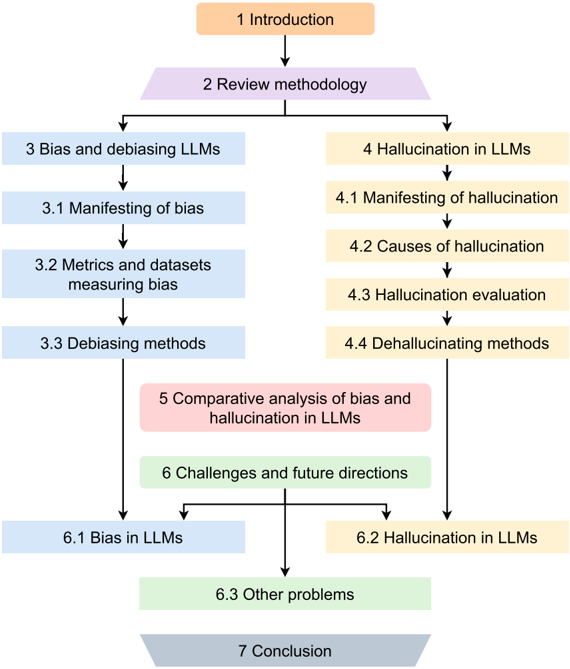
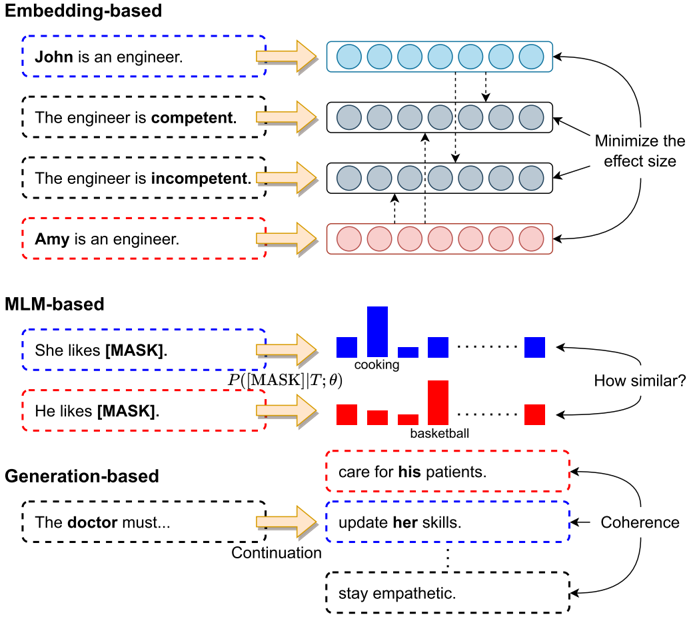
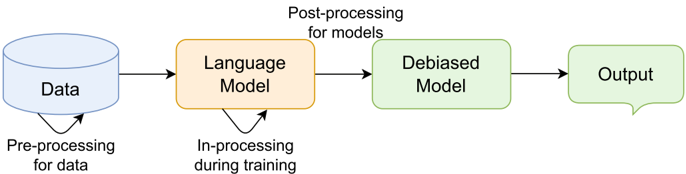
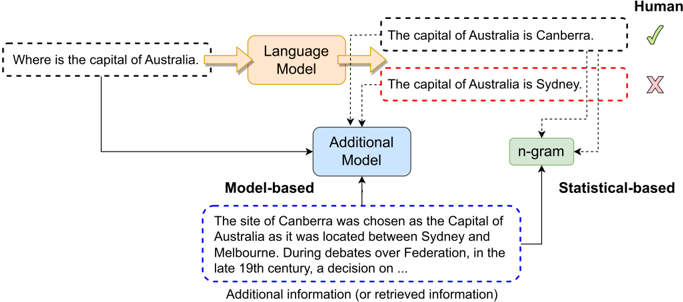
- It proposes taxonomies: bias evaluation methods as embedding-based, MLM-based, and generation-based; hallucination evaluation as human, statistical-based, and model-based; mitigation methods by intervention stage (pre-processing, in-processing, intra-processing/post-processing).
- Comparative analysis: bias primarily stems from training data, while hallucination also arises from generation strategies, fine-tuning, model architecture, decoding algorithms, and exposure bias; bias evaluation is described as more mature and systematic than hallucination evaluation.
- Future directions include side effects of debiasing, more comprehensive bias measurement, multilingual/multicultural settings, using bias wisely, better hallucination evaluation, model editing, and RLHF limitations.
Methods
- Design: narrative literature review, not an empirical study; it states “No datasets were generated or analysed during the current study.”
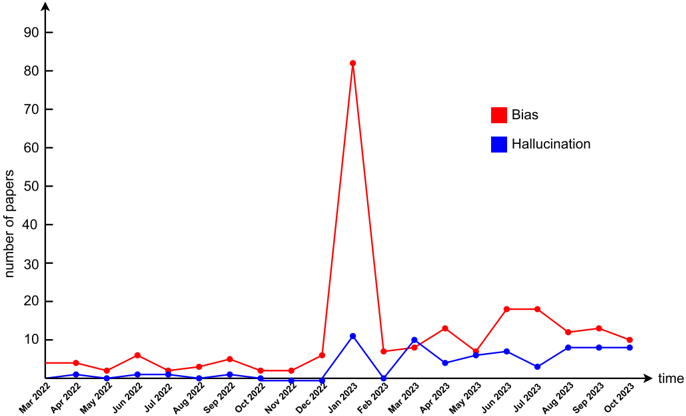
- Data/sample: papers collected and filtered by titles and abstracts, with additional references drawn from collected papers; Figure 3 covers papers published between Mar 2022 and Oct 2023.
- Analysis: thematic synthesis and taxonomy construction for bias/hallucination definitions, causes, evaluation metrics/benchmarks, mitigation methods, plus comparative analysis and future directions.
Limitations
- Stated: the paper notes no datasets were generated or analysed; it also states that bias evaluation often targets specific categories and is insufficient for open-domain LLMs, and that automated hallucination evaluation still differs from human evaluation and varies across models/domains.
- Stated: current research mainly focuses on English-language models; multilingual and multicultural bias/hallucination remain challenging.
- Evident: as a review, it provides no primary experimental validation of the surveyed methods, and its literature coverage appears bounded by the search window ending Oct 2023.
Model-written summary. Check it against the paper before relying on it.
Integrity signals
Registry
Cites
Statistics
Figures
Verification
Claims the paper makes
1 Valid · 10 Not valid · 93 Not checked · 68 Own results and interpretations
The cited sources support only part of this claim — read each source’s verdict below.
In the paper
“Some studies (Caliskan et al. 2017;Greenwald et al. 1998) have found that names associated with European Americans are more likely to be linked with pleasantness, while non-European names tend to be associated with unpleasantness.”
§ Towards trustworthy LLMs: a review on debiasing and dehallucinating in large language models > 3.1 Manifesting of bias
What the sources say
- Partly supportedcites Caliskan et al. 2017 matched to “Semantics derived automatically from language corpora contain human-like biases” (2017) sourceExperimental — accuracy not yet measured
In “Replicating Implicit Associations for Valence” (p. 4), the paper finds that European American names are more likely than African American names to be closer to pleasant than unpleasant words. The claim broadens that comparison to non-European names generally, which the reported test does not establish. (LLM, conf=0.87)
- Not checked yetcites Greenwald et al. 1998 matched to “Measuring individual differences in implicit cognition: the implicit association test” (1998) source
hedgedstates an association- Asserted: passes — The authors put it forward as true.
- Checkable: passes — It can be checked against evidence.
- Load-bearing: unclear — It is unclear whether the paper’s conclusions depend on it.
- Based: passes — The paper gives a reason why it holds.
- Partly supported
The cited sources that could be checked couldn’t confirm or dispute this claim.
In the paper
“Most of the existing bias evaluation metrics have been for specific categories of bias, such as gender bias (Czarnowska et al. 2021).”
§ Towards trustworthy LLMs: a review on debiasing and dehallucinating in large language models > 6.1 Bias in LLMs
What the sources say
- Could not verifycites Czarnowska et al. 2021 matched to “Quantifying Social Biases in NLP: A Generalization and Empirical Comparison of Extrinsic Fairness Metrics” (2021) sourceExperimental — accuracy not yet measured
The Introduction (p. 1) describes a survey of disparate fairness metrics, and Section 4 (p. 4) classifies 22 existing metrics. Neither passage says that most metrics were developed for specific bias categories such as gender. Searches for a gender-focused majority of existing metrics found examples of gender evaluation, but no statement establishing the claimed prevalence. (LLM, conf=0.70)
plain- Asserted: passes — The authors put it forward as true.
- Checkable: passes — It can be checked against evidence.
- Load-bearing: passes — The paper’s conclusions depend on it.
- Based: passes — The paper gives a reason why it holds.
- Could not verify
None of the sources cited for this claim have been checked yet.
In the paper
“However, both papers similarly lack a systematic summary of debiasing methods and evaluation methods.”
§ Towards trustworthy LLMs: a review on debiasing and dehallucinating in large language models > Table 1
What the sources say
- Not checked yetcites Ranaldi et al. 2023
- Not checked yetcites Meade et al. 2022
plain- Asserted: passes — The authors put it forward as true.
- Checkable: passes — It can be checked against evidence.
- Load-bearing: unclear — It is unclear whether the paper’s conclusions depend on it.
- Based: passes — The paper gives a reason why it holds.
In the paper
“However, it has limitations as it cannot be applied to downstream tasks.”
§ Towards trustworthy LLMs: a review on debiasing and dehallucinating in large language models > 3.3.3 Post-processing for models
What the sources say
- Not checked yetcites Schick et al. (2021) matched to “Self-Diagnosis and Self-Debiasing: A Proposal for Reducing Corpus-Based Bias in NLP” (2021) source
plain- Asserted: passes — The authors put it forward as true.
- Checkable: passes — It can be checked against evidence.
- Load-bearing: unclear — It is unclear whether the paper’s conclusions depend on it.
- Based: passes — The paper gives a reason why it holds.
In the paper
“However, Elazar and Goldberg (2018) point out that even after such training, traces of information can still linger in word embeddings.”
§ Towards trustworthy LLMs: a review on debiasing and dehallucinating in large language models > 3.3.2 In-processing during training
What the sources say
- Not checked yetcites Elazar and Goldberg (2018)
plain- Asserted: passes — The authors put it forward as true.
- Checkable: passes — It can be checked against evidence.
- Load-bearing: unclear — It is unclear whether the paper’s conclusions depend on it.
- Based: passes — The paper gives a reason why it holds.
60 more claims
Create a free account to see all 172 claims and to verify the 136 references still open.
- Probably not a substantial claim. 80
- It may state two separate claims as one. 54
Claims other papers make about this one
Each is checked against this paper’s own text: does it say what the citing paper says it does?
The source backs part of the claim, not all of it — or backs it for a different population, condition or comparison.
In the citing paper
“Furthermore, LLMs are vulnerable to bias and hallucination, which depend predominantly on model training data and parameters.14”
From Evaluating the Quality and Safety of Ambient Digital Scribe Platforms Using Simulated Ambulatory Encounters (2025) · cites this paper as [14]
Experimental — accuracy not yet measuredThe source backs part of the claim, not all of it — or backs it for a different population, condition or comparison.
In the citing paper
“Consistency emerged as another problem, with participants reporting that the AI sometimes failed to maintain plot coherence”
From Game Plot Design With an LLM-Powered Assistant: An Empirical Study With Game Designers (2026) · cites this paper as Lin et al., 2024
Experimental — accuracy not yet measured
Self-check
Percentages, sums and reported differences re-computed from the paper’s own numbers.
Each contradiction between two passages listed here was confirmed by an independent check.
Rated minor: it would not touch a result — a value no result rests on, a p-value that stays on the same side of the significance level, or a conflict that is clerical, resolved elsewhere in the paper, or outside its own findings.
In the paper
§ Towards trustworthy LLMs: a review on debiasing and dehallucinating in large language models > 4.4.3 Intra-processing without training
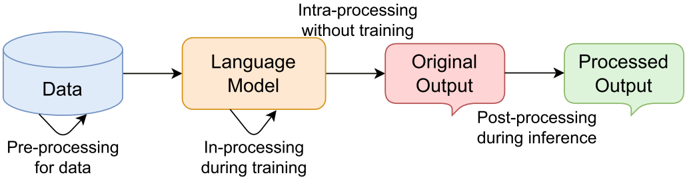
“The intra-processing methods without a training phase can be categorized into four key aspects: designing decode strategy, resorting to external knowledge, pre-detecting and preventing, and multi-agent interaction.”
§ Towards trustworthy LLMs: a review on debiasing and dehallucinating in large language models > Resorting to external knowledge
“Ishibashi and Shimodaira (2023) fine-tunes the model so that it can generate harmless answers when answering questions that may involve sensitive information.”
Rated minor: it would not touch a result — a value no result rests on, a p-value that stays on the same side of the significance level, or a conflict that is clerical, resolved elsewhere in the paper, or outside its own findings.
In the paper
§ Towards trustworthy LLMs: a review on debiasing and dehallucinating in large language models > 5.3 Mitigation methods
“After the discussions in Sects.3.3 and 4.4, approaches to addressing bias and hallucination can be categorized into three main classes: pre-processing from data, in-processing during training, and post-processing during inference.”
§ Towards trustworthy LLMs: a review on debiasing and dehallucinating in large language models > 4.4 Dehallucinating methods
“We classify them into pre-processing for data, in-processing during training, intra-processing without training, and post-processing during inference, which are illustrated in Fig. 7.”
Citations
Cites
BERT: Pre-training of Deep Bidirectional Transformers for Language Understanding
Devlin, J., Chang, M.-W., Lee, K., & Toutanova, K. (2019) · Proceedings of the 2019 Conference of the North American Chapter of the Association for Computational Linguistics: Human Language Technologies, Volume 1 (Long and Short Papers) · doi:10.18653/v1/n19-1423 · Cited by 54,325
BLEU: a method for automatic evaluation of machine translation
Papineni, K., Roukos, S., Ward, T., & Zhu, W.-J. (2001) · Proceedings of the 40th Annual Meeting on Association for Computational Linguistics - ACL '02 · doi:10.3115/1073083.1073135 · Cited by 21,344
Measuring individual differences in implicit cognition: the implicit association test
Greenwald, A. G., McGhee, D. E., & Schwartz, J. L. K. (1998) · Journal of Personality and Social Psychology · doi:10.1037/0022-3514.74.6.1464 · Cited by 9,210
On the Dangers of Stochastic Parrots: Can Language Models Be Too Big? 🦜
Bender, E. M., Gebru, T., McMillan-Major, A., & Shmitchell, S. (2021) · Proceedings of the 2021 ACM Conference on Fairness, Accountability, and Transparency · doi:10.1145/3442188.3445922 · Cited by 6,988
VADER: a parsimonious rule-based model for sentiment analysis of social media text
Hutto, C., & Gilbert, E. (2014) · Proceedings of the International AAAI Conference on Web and Social Media · doi:10.1609/icwsm.v8i1.14550 · Cited by 6,087
Survey of Hallucination in Natural Language Generation
Ji, Z., Lee, N., Frieske, R., Yu, T., Su, D., Xu, Y., Ishii, E., Bang, Y. J., Madotto, A., & Fung, P. (2023) · ACM Computing Surveys · doi:10.1145/3571730 · Cited by 5,025
Survey of Hallucination in Natural Language Generation
Ji, Z., Lee, N., Frieske, R., Yu, T., Su, D., Xu, Y., Ishii, E., Bang, Y., Chen, D., Dai, W., et al. (2022) · arXiv · doi:10.48550/arxiv.2202.03629 · Cited by 4,981
LLaMA: Open and Efficient Foundation Language Models
Touvron, H., Lavril, T., Izacard, G., Martinet, X., Lachaux, M.-A., Lacroix, T., Rozière, B., Goyal, N., Hambro, E., Azhar, F., et al. (2023) · arXiv · doi:10.48550/arxiv.2302.13971 · Cited by 4,602
Liu, P., Yuan, W., Fu, J., Jiang, Z., Hayashi, H., & Neubig, G. (2023) · ACM Computing Surveys · doi:10.1145/3560815 · Cited by 4,361
Liu, P., Yuan, W., Fu, J., Jiang, Z., Hayashi, H., & Neubig, G. (2021) · arXiv · doi:10.48550/arxiv.2107.13586 · Cited by 4,352
Research works printed but not linked: 30
- Banerjee S, Lavie A (2005) Meteor: an automatic metric for mt evaluation with improved correlation with human judgments. In: Proceedings of the ACL workshop on intrinsic and extrinsic evaluation meas- ures for machine translation and/or summarization, pp 65-72
- Bolukbasi T, Chang K-W, Zou JY, Saligrama V, Kalai AT (2016) Man is to computer programmer as woman is to homemaker? debiasing word embeddings. Adv Neural Inf Process Syst 29
- Brown T, Mann B, Ryder N, Subbiah M, Kaplan JD, Dhariwal P, Neelakantan A, Shyam P, Sastry G, Askell A et al (2020) Language models are few-shot learners. Adv Neural Inf Process Syst 33:1877-1901
- Buolamwini J, Gebru T (2018) Gender shades: intersectional accuracy disparities in commercial gender classification. In: Conference on fairness, accountability and transparency. PMLR, pp 77-91
- Cao Y, Kang Y, Sun L (2023) Instruction mining: High-quality instruction data selection for large lan- guage models. arXiv preprint arXiv: 2307. 06290
- Carlini N, Tramer F, Wallace E, Jagielski M, Herbert-Voss A, Lee K, Roberts A, Brown T, Song D, Erlingsson U et al. (2021) Extracting training data from large language models. In: 30th USENIX security symposium (USENIX Security 21), pp 2633-2650
- Chowdhery A, Narang S, Devlin J, Bosma M, Mishra G, Roberts A, Barham P, Chung HW, Sutton C, Gehrmann S et al (2023) Palm: scaling language modeling with pathways. J Mach Learn Res 24(240):1-113
- Dev S, Phillips J (2019) Attenuating bias in word vectors. In: The 22nd international conference on arti- ficial intelligence and statistics. PMLR, pp 879-887
- Dinan E, Roller S, Shuster K, Fan A, Auli M, Weston J (2018) Wizard of Wikipedia: knowledge-pow- ered conversational agents. In: International conference on learning representations
- Gao L, Schulman J, Hilton J (2023) Scaling laws for reward model overoptimization. In: Krause A, Brunskill E, Cho K, Engelhardt B, Sabato S, Scarlett J (eds.), Proceedings of the 40th interna- tional conference on machine learning research, vol. 202. PMLR, pp 10835-10866. https:// proce edings. mlr. press/ v202/ gao23h. html
- Honovich O, Choshen L, Aharoni R, Neeman E, Szpektor I, Abend O (2021) Q2: evaluating factual consist- ency in knowledge-grounded dialogues via question generation and question answering. In: Proceed- ings of the 2021 conference on empirical methods in natural language processing, pp 7856-7870 · DOI · Paper page
- Kabir S, Udo-Imeh DN, Kou B, Zhang T (2023) Who answers it better? An in-depth analysis of chatgpt and stack overflow answers to software engineering questions. arXiv preprint arXiv: 2308. 02312
- Le Bras R, Swayamdipta S, Bhagavatula C, Zellers R, Peters M, Sabharwal A, Choi Y (2020) Adversarial filters of dataset biases. International conference on machine learning. PMLR, pp 1078-1088
- Lee N, Ping W, Xu P, Patwary M, Fung PN, Shoeybi M, Catanzaro B (2022) Factuality enhanced language models for open-ended text generation. Adv Neural Inf Process Syst 35:34586-34599
- Liu F, Lin K, Li L, Wang J, Yacoob Y, Wang L (2023) Aligning large multi-modal model with robust instruction tuning. arXiv preprint arXiv: 2306. 14565
- McFadden AC, Marsh GE, Price BJ, Hwang Y (1992) A study of race and gender bias in the punishment of school children. Educ Treat Child 15(2):140-146
- Meng K, Bau D, Andonian A, Belinkov Y (2022) Locating and editing factual associations in GPT. Adv Neural Inf Process Syst 35:17359-17372
- Ntoutsi E, Fafalios P, Gadiraju U, Iosifidis V, Nejdl W, Vidal M-E, Ruggieri S, Turini F, Papadopoulos S, Krasanakis E et al (2020) Bias in data-driven artificial intelligence systems-an introductory survey. Wiley Interdisc Rev: Data Min Knowl Discov 10(3):1356
- Ouyang L, Wu J, Jiang X, Almeida D, Wainwright C, Mishkin P, Zhang C, Agarwal S, Slama K, Ray A et al (2022) Training language models to follow instructions with human feedback. Adv Neural Inf Process Syst 35:27730-27744
- Radford A, Wu J, Child R, Luan D, Amodei D, Sutskever I et al (2019) Language models are unsuper- vised multitask learners. OpenAI blog 1(8):9
- Raffel C, Shazeer N, Roberts A, Lee K, Narang S, Matena M, Zhou Y, Li W, Liu PJ (2020) Explor- ing the limits of transfer learning with a unified text-to-text transformer. J Mach Learn Res 21(1):5485-5551
- Sahlgren M, Olsson F (2019) Gender bias in pretrained Swedish embeddings. In: Proceedings of the 22nd Nordic conference on computational linguistics, pp 35-43
- Santhanam S, Hedayatnia B, Gella S, Padmakumar A, Kim S, Liu Y, Hakkani-Tür D (2021) Rome was built in 1776: a case study on factual correctness in knowledge-grounded response generation. In: EMNLP 2021 workshop on NLP for conversational AI
- Schmidt B (2015) Rejecting the gender binary: a vector-space operation. Ben’s Bookworm Blog
- Sun T, Zhang X, He Z, Li P, Cheng Q, Yan H, Liu X, Shao Y, Tang Q, Zhao X, et al. (2023) Moss: training conversational language models from synthetic data 7. arXiv preprint arXiv: 2307. 15020
- Tan YC, Celis LE (2019) Assessing social and intersectional biases in contextualized word representations. Adv Neural Inf Process Syst 32
- Vaswani A, Shazeer N, Parmar N, Uszkoreit J, Jones L, Gomez AN, Kaiser Ł, Polosukhin I (2017) Atten- tion is all you need. Adv Neural Inf Process Syst 30
- Wiener N (1950) The human use of human beings: Cybernetics and society Workshop B, Scao TL, Fan A, Akiki C, Pavlick E, Ilić S, Hesslow D, Castagné R, Luccioni AS, Yvon F et al. (2022) Bloom: A 176b-parameter open-access multilingual language model. arXiv preprint arXiv: 2211. 05100
- Zaheri S, Leath J, Stroud D (2020) Toxic comment classification. SMU Data Sci Rev 3(1):13
- Zhao T, Wei M, Preston JS, Poon H (2023) Automatic calibration and error correction for large language models via pareto optimal self-supervision. arXiv preprint arXiv: 2306. 16564
Cited by
Items 101–188 of 188
A Concise Review of Hallucinations in LLMs and their MitigationPreprint
Pulkundwar, P., Dhanawade, V., Yadav, R., Sonkar, M., Asurlekar, M., & Rathod, S. (2025) · arXiv (Cornell University) · doi:10.48550/arxiv.2512.02527 · Cited by 2
“[11] is an extensive review of bias mitigation and dehallucination methods in LLMs to increase their acceptance by humans.”
Game Plot Design With an LLM-Powered Assistant: An Empirical Study With Game Designers
Alavi, S. H., Xu, W., Jojic, N., Kennett, D., Ng, R. T., Rao, S., Zhang, H., Dolan, B., & Shwartz, V. (2026) · IEEE Transactions on Games · doi:10.1109/tg.2026.3663566
Self-citationAn Investigation of Bias in Bangla Text Classification ModelsPreprint
Tanvir, M., Akter, A., & Islam, T. (2025) · Research Square · doi:10.21203/rs.3.rs-6181907/v1
Richter, M. (2025) · International Scientific Conference Region in the Development of Society · doi:10.11118/978-80-7701-030-6-0126
Pasarica, M., Plochocki, J. H., Dvorak, R. D., & Rodríguez, N. (2025) · Medical Science Educator · doi:10.1007/s40670-025-02398-5
“However, we did not find evidence of AI hallucination, which is a risk [3] when using AI.”
艾, 均. (2025) · Modeling and Simulation · doi:10.12677/mos.2025.145370
Bounded Degradation in Latent Representation Under Bias Subspace Removal
Amin, M. N., Nemeth, P., & Jesser, A. (2025) · Proceedings of the ... International Florida Artificial Intelligence Research Society Conference · doi:10.32473/flairs.38.1.139018
Data Optimization for LLMs: A Survey
Wu, O. (2026) · ACM Transactions on Knowledge Discovery from Data · doi:10.36227/techrxiv.174776562.20873028/v1 · Cited by 4
Retrieval augmented generation system for dynamic document tagging and query-driven retrieval
Kuchibhotla, S., & Kuchibhotla, S. (2025) · International Journal of Science and Research Archive · doi:10.30574/ijsra.2025.16.1.2156 · Cited by 1
ASMem: Anchor sparse memory for multi-domain knowledge editing of large language models
Zheng, G., Wang, Z., Zhao, Y., He, T., Wang, X., Wang, H., Zhao, T., & Zong, C. (2026) · Neural Networks · doi:10.1016/j.neunet.2026.109230
Freud, K., Collins, D., Neto, D. D. S., & Stevens, G. (2025) · ACM International Conference on Multimedia (ACM MM) · doi:10.1145/3746027.3755830
Investigating user perceptions of Generative AI for data storytelling
Gude, V., & Safitri, A. (2025) · Journal of Business Analytics · doi:10.1080/2573234x.2025.2573252
“…and β sd are the estimated coefficients for each perception dimension d – (Actionability, Clarity and Usability) within each stage s As we increasingly incorporate Generative AI models, we have become aware of the potential biases and hallucinations associated with these tools (Lin et al., 2024).”
Stereotypiskt språkbruk och rättvis AI : Könsidentitetsbias hos stora språkmodeller
Nilsson, O. (2025) · DiVA (Luleå University of Technology)
Feasibility Study of Scheduling in Matrix Production Systems Using Large Language Models
Tiruvallur Devendar, R. (2025) · Diva portal (Dalarna University Library)
Answer validation using Large Language Model Systems
Bitarafan, A. (2025) · Doria (University of Helsinki)
From Transformers to Trust: Enhancing Large Language Models for Practical Intelligence
Wajeed, M. A., & Sultana, R. (2026) · IGI Global eBooks · doi:10.4018/979-8-3373-5017-2.ch001
Nexus scissor: enhance open-access language model safety by connection pruning
Mai, P., Yang, Y., Yan, R., & Pang, Y. (2026) · npj Artificial Intelligence · doi:10.1038/s44387-025-00046-2 · Cited by 1
“We emphasizethattrustmodeling 59,60 and its applicationtoLLMs 61,62 arecrucialfortacklingfundamentalchallengessuch as adversarial robustness, ethical alignment, and deployment reliability.”
de Sousa, P. H., Menezes, T. M. D., Fernandes, B. D. S., & de Oliveira, W. (2025) · doi:10.1109/icitee66631.2025.11338276
“However, despite their capabilities, LLMs still face challenges such as hallucinations, biases, and inaccuracies, particularly when processing complex or expert-level requests [10].”
Hu, Z., Zi, K., Luo, T., Huang, Y., & Wang, S. (2026) · IEEE Access · doi:10.1109/access.2026.3660343
“However, LLMs face obvious limitations in extracting relations, particularly when processing texts with complex relation descriptions or semantic ambiguities, which can easily cause hallucinations [9], [10], [11].”
Behind the Words: Unmasking Bias Lurking in LLMs and Data
Dhingra, N., Kale, G., Chavan, H., & Arora, S. (2025) · IEEE Pune Section International Conference (PuneCon) · doi:10.1109/punecon67554.2025.11378839
“Lin [9] further argues that even large-scale web training cannot eliminate bias, as social and cultural patterns are inherently embedded in the data.”
Analyzing and Mitigating Linguistic Bias in Bangla Natural Language Processing
Akter, A., Tanvir, M., Islam, T., Chowduri, J. A., Fahadh, M. B., Islam, M. A. U., & Alam, R. (2026) · Lecture notes in networks and systems · doi:10.1007/978-3-032-15346-3_3
Reimagining Reality: Innovations in AI Hallucination Management and Trustworthy Generation
Nag, A., & Chaudhuri, D. (2026) · Advances in computational intelligence and robotics book series · doi:10.4018/979-8-3373-7534-2.ch012 · Cited by 1
Research on multi modal security situational awareness method for coal and gas outbursts
Liu, B., Li, Z., Wang, E., Zhang, C., Yin, S., & Tian, H. (2026) · Process Safety and Environmental Protection · doi:10.1016/j.psep.2026.108661
Vulnerability of LLM Outputs to Heuristics-Inducing Prompt Structures
Kuramoto, T., Kamei, R., & Suzuki, J. (2026) · ACM International Conference on Intelligent User Interfaces (IUI) · doi:10.1145/3742413.3789108
Green by Design AI in Fashion Retail and the Rise of the Conscious Consumer
Malhi, A. S., Yadav, P. S., Bisht, D., Sharma, A. P. G. K., Sharma, A., & Rashmi, B. H. (2026) · Advances in computational intelligence and robotics book series · doi:10.4018/979-8-3373-5525-2.ch001 · Cited by 1
Multi-Agent Debate for Content Moderation with Dynamic Group Arbitration
Jiang, Y., Wang, L., Lou, Y., Tao, X., & Hu, H. (2025) · IEEE International Conference on Big Data (BigData) · doi:10.1109/bigdata66926.2025.11402348 · Cited by 1
“Large language models (LLMs) have emerged as a promising solution for scaling content moderation efforts [5], demonstrating competence in detecting explicit hate speech and identifying clear policy violations [5], [6].”
Sun, Z., Yue, S., Yu, K., Mu, F., Tang, Z., & Wen, Y. (2026) · International Journal of Geographical Information Systems · doi:10.1080/13658816.2026.2639623
Surfacing and Applying Meaning: Supporting Hermeneutical Autonomy for LGBTQ+ People in Taiwan
Chen, Y.-T., Chang, E.-K., Bi, N., & Goyal, N. (2026) · CHI Conference on Human Factors in Computing Systems · doi:10.1145/3772318.3790816 · Cited by 1
Jansen, A., Sankaran, S., & Krahmer, E. (2026) · ACM Transactions on Computing for Healthcare · doi:10.1145/3806649
Rumambi, F. R., Prasetya, D. D., Widiyaningtyas, T., & Karim, A. (2026) · Systematic Literature Review Journal · doi:10.70062/slrj.v2i1.277
Syahputra, M. F., Sitompul, O. S., Fahmi, F., Lydia, M. S., Nainggolan, P. I., Mahardika, R., & Sulaiman, R. (2026) · Eastern-European Journal of Enterprise Technologies · doi:10.15587/1729-4061.2026.356830
AI in biocuration: challenges, opportunities, and a roadmap for sustainable integration
Arnaboldi, V., Schriml, L. M., Jeffryes, M., Li, P., Bello, S., Sternberg, P. W., Bult, C. J., & Cook, C. E. (2026) · Bioinformatics Advances · doi:10.1093/bioadv/vbag102 · Cited by 2
“This concern is compounded by the well-documented tendency of LLMs to make confident but incorrect assertions (Lin et al. 2024, Jiang et al. 2024).”
CurriculumGPT: Supporting Curriculum Design with AI-Augmented Tooling
Dana, K., & Babb, J. S. (2027) · Information Systems Education Journal · doi:10.62273/cvec6056
AGWAN, S., Tambe, A., Shah, S., & Pole, G. S. (2026) · Journal of Ambient Intelligence and Humanized Computing · doi:10.1007/s12652-026-05091-6
“…empirical trends reported across recent studies, identifying strengths and limitations of each paradigm and highlighting recurring reliability patterns such as evaluator bias (Lin et al. 2024), hallucination sensitivity (Huang et al. 2024), and long-context failure modes (Lu et al. 2024).”
Gumelar, A. B., Paramita, A. S., Tahalele, P. L., Thohari, K., Kurniawan, A., & Salmanarrizqie, A. (2026) · International Conference on Current Research in Artificial Intelligence and Data Science (ICCRAIDS) · doi:10.1109/iccraids67816.2026.11519693
“…standpoint and knowledge sourcing, is still an uncharted territory in LLM. Early experimentation indicates that there is indeed per-language knowledge clustering in LLMs, and there is potential in using native-language prompts for improved accuracy and lowering cultural hallucinations [6], [11].”
WITHDRAWN: Preprint Commons: A platform for the systematic tracking of preprint trends and impactPreprint
Behera, B. P., & Panda, B. (2026) · bioRxiv (Cold Spring Harbor Laboratory) · doi:10.64898/2026.05.27.727227
“The primary source of inaccuracy in geographic and affiliation data originates from a fundamental technical constraint in the large language model (LLM) processing pipeline 41,42 .”
Medical practice variation in Vietnam: a cross-sectional study
Duong, D. T. T., Le, V. P., Le, L. C., Nguyen, T. U. O. N. G., Le, L. T. K., Johnson, S., Ouenes, O., & Peabody, J. W. (2026) · BMC Health Services Research · doi:10.1186/s12913-026-14796-5
“A key limitation of this approach is that AI models may not reflect local clinical norms and can produce biased, variable, or nonreproducible outputs, including hallucinations and other “black box” challenges [24–26].”
RHLMA: A Role-Hierarchical LLM Multi-Agent Framework for Airborne Software Requirement Review
Sun, J., Yang, R., Gu, J., Chen, L., Zhao, Y., & Yang, X. (2026) · International Conference on Multi-scale Artificial Intelligence (MAI) · doi:10.1109/mai69289.2026.11543713
“…often generate erroneous judgments with unjustifiably high certainty and no traceable evidence—hallucination or miscalibration [7]—which severely compromises auditability and certification compliance in safety-critical domains [8], rendering review results unreliable and hindering automation.”
A Pruning Framework for Bias Mitigation in Large Language Models
Rajput, A., & Madisetti, V. (2026) · IEEE Open Journal of the Computer Society · doi:10.1109/ojcs.2026.3701986
“While these methods can reduce harmful behaviors in controlled settings, they often require expensive retraining or reinforcement learning from human feedback (RLHF), or rely on architecture-specific post hoc pipelines that are difficult to scale across models [1], [11], [12], [25].”
Chen, J., Wang, Y., Pan, J., Wu, L., Zhang, S., Wang, Y., & Yi, K. (2026) · Marine Pollution Bulletin · doi:10.1016/j.marpolbul.2026.120009
Grander, K., Mosub, V., & Kordova, S. K. (2026) · Frontiers in Artificial Intelligence · doi:10.3389/frai.2026.1808549
“These behaviors are an expression of what is commonly called “bias” (Lin et al., 2024).”
Survey on Adversarial Prompt Generation and Robustness Analysis in Large Language Models
Nasution, A. H., Ergün, A. E., Onan, A., & Monika, W. (2026) · IEEE Access · doi:10.1109/access.2026.3708061
“A recent survey [131] offers a comprehensive overview of post-hoc dehallucina-tion techniques and highlights the growing use of fact-consistency modeling, retrieval augmentation, and hallucination-aware decoding strategies to strengthen LLM reliability in high-stakes environments.”
Choudhary, Y., & Sharaff, A. (2026) · Lecture notes in networks and systems · doi:10.1007/978-3-032-22289-3_4
Hao, R., Li, Q., Mao, J., Meng, L., Xie, D., Tan, D., & Zeng, Z. (2026) · Lecture notes in computer science · doi:10.1007/978-3-032-38059-3_56
Generative AI in Project-Based Learning: A Rapid Review
Nascimento, M., Alves, L. E. A., Argôlo, M., Nóbrega, L., Martinez, L. F., de Almeida, M. A., Schneider, D., de Souza, J. M., & Barbosa, C. E. (2026) · International Conference on Computer Supported Cooperative Work in Design (CSCWD) · doi:10.1109/cscwd68734.2026.11582219
“…it is important to understand and be aware of the risks and limitations that GenAI technologies have, as it can still provide wrong or biased content [34], can cause dependency on students and can increase the amount of cases of plagiarism [2], leading to concerns regarding academic integrity.”
Arias-Arias, I., & Martín-Cancela, E. (2026) · Editorial Comares eBooks · doi:10.55323/9791370331443
No train, no pain: a training-free few-shot traffic classifier based on LLMs
Guan, X., Li, N., Han, X., Wang, D., Huang, J., Wang, T. R., Cui, Z., Lü, Z., & Liu, B. (2026) · Cybersecurity · doi:10.1186/s42400-026-00622-2 · Cited by 1
“In addition, LLMs may exhibit uncertainty or inconsistency when performing classification, which corresponds to hallucination (Hu et al. 2024; Lin et al. 2024).”
A Metric-Aware Analysis of Trigger-Guided Adapter Training for Hallucination Mitigation
Zhang, J., & Noh, G. (2026) · IEEE Access · doi:10.1109/access.2026.3716949
Explainable AI and Large Language Model in Mental Health Support System
Sharma, A., Kumar, R., Kumar, R., Kumar, P., Shrivastava, A., & Kumar, N. (2026) · International Conference on Intelligent Technologies (CONIT) · doi:10.1109/conit69683.2026.11621498
Refahi, M. S., Yoo, H., Hearne, G., Allegra, C., Brown, J. R., Sokhansanj, B. A., Woloszynek, S., Ramjattun, K., Allipilli, S. R., Polikar, R., et al. (2026) · Springer eBooks · doi:10.1007/978-3-032-18509-9_3
Data-Driven Controllable Simulation of Dynamic Risk Scenarios in Autonomous Driving
Ji, Y., Li, Y., Wei, H., & Wang, K. (2026) · Youth Academic Annual Conference of Chinese Association of Automation (YAC) · doi:10.1109/yac71005.2026.11615607
“2) The scenarios generated by large models suffer from the “large model hallucination” problem [7] and fail to accurately generate temporally and spatially aligned multi-modal representations across heterogeneous sensors [8], hindering the capture of real-world driving features.”
Self-citationTödt, K., Granas, B., & Büching, C. (2026) · Springer eBooks · doi:10.1007/978-3-032-26816-7
How Human-Centered Is AI-Aided Learning in Education?
Prezenski, S. (2026) · Springer eBooks · doi:10.1007/978-3-032-26816-7_21
How do AI feedback types affect students’ continuance usage intention in AI hallucinations?
Guo, Y., Huang, T., Lu, H., Zong, L., Huang, L., & Chen, M. (2026) · Interactive Learning Environments · doi:10.1080/10494820.2026.2711950
Tasnia, T., Khan, A. H., Gomes, S. A., Tanha, T., & Saha, P. (2026) · BRAC University Institutional Repository (BRAC University)
Gomase, V. S., DHANDE, S. B., & NATU, P. R. (2026) · International Journal of Computer Information Systems and Industrial Management Applications · doi:10.70917/ijcisim-2026-4616
Khan, T., & Osondu, I. S. (2026) · ASEE Annual Conference & Exposition · doi:10.18260/1-2--59130
Nothing new under the sun: Agentic AI and the automated, connected catalog
Darcy, N., Jansen, H. J., Burns, C. S., & Moulaison, H. L. (2026) · Technical Services Quarterly · doi:10.1080/07317131.2026.2719143
“Beyond the AI that is available through ChatGPT and other LLMs and even beyond the bespoke AI systems that are increasingly embedded in library systems, agentic AI promises to enable more sophisticated search for library systems end users.”
InfluentialThe Migration of Bias in Law: From Human Cognition to Predictive AI System and Large Language Models
Zhong, H. (2026) · Springer eBooks · doi:10.1007/978-3-031-87993-7_185-1 · Cited by 1
de Cooker, J. (2026) · Journalism and Media · doi:10.3390/journalmedia7030173
“Adversarial robustness techniques, such as safe suffix optimisation, prompt augmentation and the integration of robust classifiers, further protect LLM workflows (Lin et al., 2024).”
Evidence and Judgment: AI in mission-oriented work without hype or dismissal
USDOE Office of Science (SC), & Blakely, B. (2026) · OSTI OAI (U.S. Department of Energy Office of Scientific and Technical Information) · doi:10.2172/3484700
Yuan, H., Zhou, Z., Yang, C., Fan, B., Zhou, Q., Li, Z., & Li, X. (2026) · Smart Agricultural Technology · doi:10.1016/j.atech.2026.102565
Tracing the spatiotemporal diffusion of cross-strait Mazu culture: a knowledge graph-driven analysis
Li, H., Guo, Y., Chen, C., Huang, Y., Lee, W., Yuan, Y., & Di, H. (2026) · Scientific Reports · doi:10.1038/s41598-026-70645-9
Rabbani, S. S., Nisa, S., El-Tanani, M., & Rabbani, S. A. (2026) · Information · doi:10.3390/info17090899
Cho, M., Song, J., Jin, J., Baek, G., Kim, H., Noh, B., & Tak, S. (2026) · The Journal of The Korea Institute of Intelligent Transport Systems · doi:10.12815/kits.2026.25.4.45
Futures of EU democracy: a foresight exploration of challenges, opportunities and tensions
Dujardin, Y., Petra, G., Marta, M., & Caroline, P. (2025) · Joint Research Centre (European Commission) · doi:10.2760/3579303
Wang, Y., & Huang, Y. (2026) · International Journal of Pattern Recognition and Artificial Intelligence · doi:10.1142/s0218001426400604
Tsybulnik, D. Y., Gillette, J. J., & Heston, T. F. (2026) · PLoS ONE · doi:10.1371/journal.pone.0358873
“Some studies have raised concerns about LLM limitations, including the generation of confident-sounding hallucinations with little relationship to actual paper content [21].”
Shaidujjaman, M. (2026) · SSRN Electronic Journal · doi:10.2139/ssrn.7502658
Sanaboina, C. S., & Surekha, T. (2026) · International Journal of Innovative Research in Computer Science & Technology · doi:10.55524/ijircst.2026.14.5.3
Liability for rogue behaviors of agentic AI
Papyshev, G., Chan, K. J. D., & Migliorini, S. (2026) · Telecommunications Policy · doi:10.1016/j.telpol.2026.103339
Translation – Writing – ChatGPT: a linguistic analysis
Pap, A. (2024) · Rivista di studi ungheresi
Pakaja, M., Pong, M., Som, R., & Sari, H. F. A. (2025) · Journal International of Lingua and Technology
Kim, H., 김세환, & Kim, K. (2026) · SAGE Open · doi:10.1177/21582440261499299
Pužauskaitė, E., Rapševičiūtė, M., Rimkutė, D., & Raila, T. (2026) · Vilnius University Open Series · doi:10.15388/tmp.2026.7
Gong, S., Yang, J., & Duan, Y. (2026) · Applied Sciences · doi:10.3390/app162110534
de Souza, L. P. P., & Sant’Ana, R. C. G. (2026) · Revista Ibero-Americana de Ciência da Informação · doi:10.26512/rici.v19.n3.61959
LLMs in Cloud: A Discussion on Architecture, Orchestration, and InferencePreprint
Noor, J., Rafee, A. N. M., Haque, M. E., Gupta, S. D., Osman, A., & Zishan, M. A. O. (2026) · arXiv (Cornell University) · doi:10.48550/arxiv.2610.33475
Ayu, D. F., Lubis, A. H., Nasution, K., Safhira, J., & Nasution, U. R. (2026) · Komitmen Jurnal Ilmiah Manajemen
El‐Sherbiny, S., & Raidou, R. G. (2026) · Computer Graphics Forum · doi:10.1111/cgf.70655
Hallucinations in generative LLMs for radiology: a comprehensive review
Martín‐Noguerol, T., Úbeda, P. L., & Luna, A. (2026) · Current Problems in Diagnostic Radiology · doi:10.1067/j.cpradiol.2026.10.014
Bahraini, M. S., Hubbard, E., Callari, T. C., Shrinah, A., Niu, C., Lee, L. Y., Nassiuma, I., Eder, K., Yan, X.-T., Nam, S., et al. (2026) · Journal of Manufacturing Systems · doi:10.1016/j.jmsy.2026.10.008
Emotional Sycophancy as a Safety Risk in LLM-Powered Social Robots
Friedrich, K. L., de Magalhães, E. S., da Silva, M. T. A., Chen, M.-Y., Hung, P., & Salgado, A. D. L. (2026) · Brazilian Symposium on Multimedia and the Web · doi:10.5753/webmedia.2026.30851
Hallucination Detection and Reduction in Genai (LLMs)
Radhika, K. R., Gupta, S., Nagesh Shenoy, H., Vignesh, V., Jakati, J. S., & Swathi Pai, M. (2026) · doi:10.1109/nmitcon70171.2026.11754337
Yang, E. F. Y., Chang, L., & Chao, L.-F. (2026) · Digital Health · doi:10.1177/20552076261504553
Pariyanonth, M., Wannasawade, W., & Saelee, S. (2026) · Journal of Health Science and Medical Research · doi:10.31584/jhsmr.20261495
Metadata
- Authors
- Lin, Z., Guan, S., Zhang, W., Zhang, H., Li, Y., & Zhang, H.
- Affiliations
- Beijing Institute of Technology (CN)
- Corresponding author
- Zhang, Huiyan
- Venue
- Artificial Intelligence Review
- Published
- 2024-08-10
- Volume
- 57
- Issue
- 9
- ISSN
- 0269-2821 (ISSN-L)
- 1573-7462
- OpenAlex
- W4401484139
- Cited by
- 141
- References
- 216
- Citations by year
- 2026: 70 · 2025: 69 · 2024: 2
- FWCI
- 58.44
- Type
- journal article
- Language
- en
- Open access
- hybrid
- doi.org
- Licence
- cc-by-nc-nd
- creativecommons.org/licenses/by-nc-nd/4.0 (tdm)
- creativecommons.org/licenses/by-nc-nd/4.0 (vor)
- Locations
- Artificial Intelligence Review (publishedVersion, cc-by-nc-nd)
- Topics
- Physical Sciences › Computer Science › Artificial Intelligence › Ethics and Social Impacts of AI
- Physical Sciences › Computer Science › Artificial Intelligence › Topic Modeling
- Physical Sciences › Computer Science › Artificial Intelligence › Natural Language Processing Techniques
- Keywords
- large language models, bias mitigation, hallucination mitigation, trustworthy AI
About these checks
Registry, retraction, Cites and statistics results are computed, not judged, with one exception: a printed reference that no index lists is read once by a model before it counts as a citation error. Claims are extracted by a model and kept only when their quote appears verbatim in the text; each cited source is then checked, with a model’s help, for whether it says what the claim relies on. Those verdicts can be wrong — read the claim’s quote and the cited source before relying on one.
The claim verdicts this report counts are experimental: their accuracy is not yet measured.
A language model drew the claims from the paper on 2026-10-05, under version 3 of the claim definition (model deepseek-v4.1-flash, prompt extract-v3).
A second model labelled each claim on 2026-10-05 (model jev-1.13-20260917, definition revision gold-guideline-v0.2).
Cited sources are checked with a language model’s help (gpt-6-sol).
Statistics and arithmetic are recomputed, not judged.
Confidence bands are shown only for fields calibrated on our annotated test set. None is calibrated yet, so no band is shown.
What counts as a claim ›How we measure confidence ›How we check this ›
Are you an author, or do you see a problem with this page? Request a review
Data sources
Bibliographic data: Semantic Scholar, OpenAlex, Crossref.
Contains information from the Semantic Scholar Academic Graph Datasets, made available under the ODC Attribution License (ODC-BY 1.0).
Semantic Scholar’s data is described in: Kinney, R., et al. (2023). The Semantic Scholar Open Data Platform. arXiv:2301.10140.
