

Heart Rate Variability Biofeedback Intervention for Reduction of Psychological Stress During the Early Postpartum Period
Open accessThe DOI matches its Crossref record; 42 of the 42 references it cites were found in a registry or an index.
Abstract
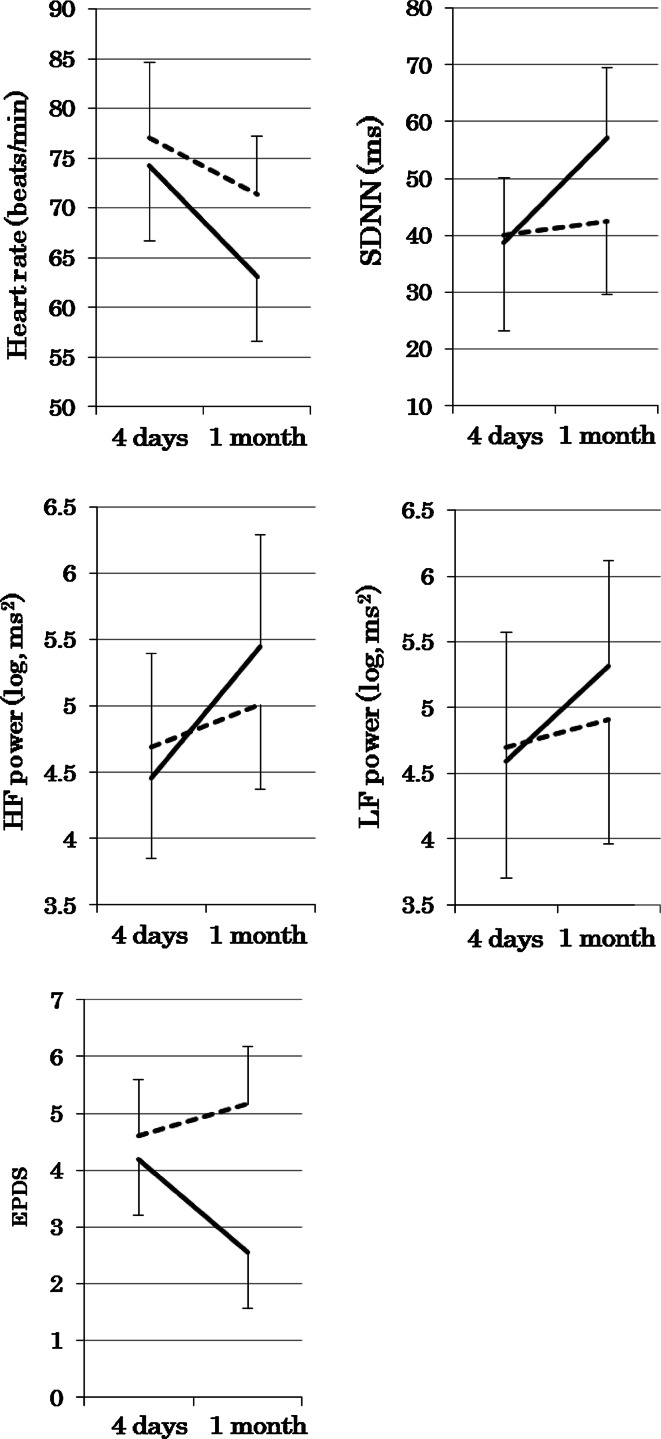
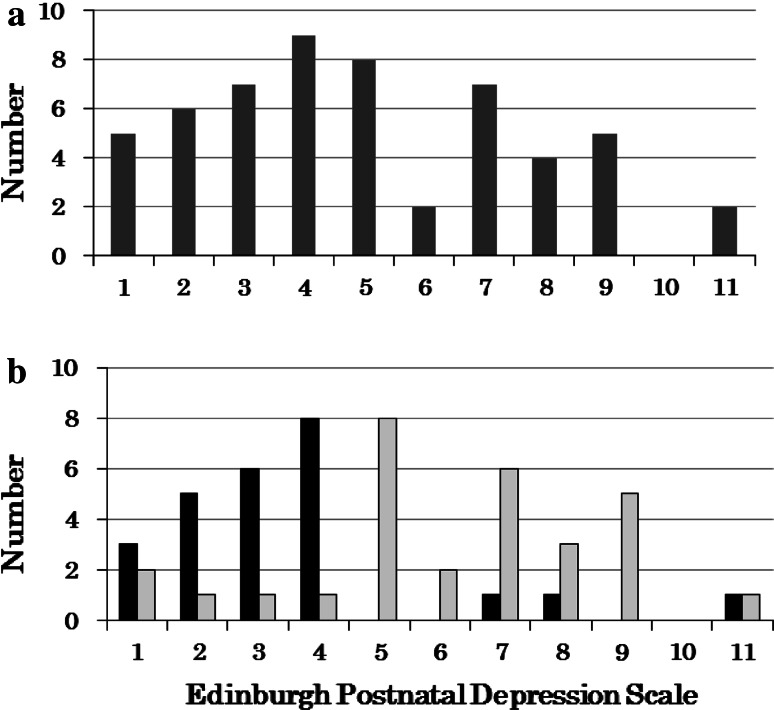
This study examined the effectiveness of heart rate variability (HRV) biofeedback intervention for reduction of psychological stress in women in the early postpartum period. On postpartum day 4, 55 healthy subjects received a brief explanation about HRV biofeedback using a portable device. Among them, 25 mothers who agreed to implement HRV biofeedback at home were grouped as the biofeedback group, and other 30 mothers were grouped as the control group. At 1 month postpartum, there was a significant decrease in total Edinburgh Postnatal Depression Scale score (P < 0.001) in the biofeedback group; this change was brought about mainly by decreases in items related to anxiety or difficulty sleeping. There was also a significant increase in standard deviation of the normal heartbeat interval (P < 0.01) of the resting HRV measures in the biofeedback group after adjusting for potential covariates. In conclusion, postpartum women who implemented HRV biofeedback after delivery were relatively free from anxiety and complained less of difficulties sleeping at 1 month postpartum. Although the positive effects of HRV biofeedback may be partly attributable to intervention effects, due to its clinical outcome, HRV biofeedback appears to be recommendable for many postpartum women as a feasible health-promoting measure after childbirth.
Overview
The claims and statistics of this paper haven’t been checked yet.
Free: it reads the open-access text and checks the first 5 claims that cite a source we can check. Create a free account to check every claim.
Integrity signals
Registry
Cites
Statistics
Figures
Verification
Claims the paper makes
The claims and statistics of this paper haven’t been checked yet.
Free: it reads the open-access text and checks the first 5 claims that cite a source we can check. Create a free account to check every claim.
Claims other papers make about this one
Each is checked against this paper’s own text: does it say what the citing paper says it does?
The cited source says what the claim attributes to it.
In the citing paper
“Not only can this provide important biological information about a patient’s wellness, but it also has the potential for use in biofeedback interventions that have been demonstrated to be successful interventions to reduce mental health symptoms in the perinatal period [72–74].”
From Technology-Based Approaches for Supporting Perinatal Mental Health (2022) · cites this paper as [72]
Self-check
Percentages, sums and reported differences re-computed from the paper’s own numbers.
The self-check needs the paper’s full text.
Citations
Cites
Heart Rate Variability: Standards of Measurement, Physiological Interpretation, and Clinical Use
Electrophysiology, T. F. O. T. E. S. O. C. T. N. A. (1996) · Circulation · doi:10.1161/01.cir.93.5.1043 · Cited by 17,159
Heart rate variability: Standards of measurement, physiological interpretation, and clinical use
Malik, M., Bigger, J. T., Camm, A. J., Kleiger, R. E., Malliani, A., Moss, A. J., & Schwartz, P. J. (1996) · European Heart Journal · doi:10.1093/oxfordjournals.eurheartj.a014868 · Cited by 15,289
Detection of Postnatal Depression: Development of the 10-item Edinburgh Postnatal Depression Scale
Cox, J. L., Holden, J. M., & Sagovsky, R. (1987) · British Journal of Psychiatry · doi:10.1192/bjp.150.6.782 · Cited by 14,183
MCEWEN, B. S. (2004) · Annals of the New York Academy of Sciences · doi:10.1196/annals.1314.001 · Cited by 1,638 · cited 1×
“However, this persistent attenuation of parasympathetic activity may deteriorate the regulatory capability of physiological functions for external stressors (Porges 1995; McEwen 2004; Thayer and Sternberg 2006).”
BackgroundThe course of anxiety and depression through pregnancy and the postpartum in a community sample
Heron, J., O'Connor, T. G., Evans, J., Golding, J., & Glover, V. (2004) · Journal of Affective Disorders · doi:10.1016/j.jad.2003.08.004 · Cited by 1,151 · cited 1×
“In a community sample of 8,323 pregnant women, approximately 15 % of women reported elevated anxiety in the antenatal period, and rates were comparable in the postnatal period (Heron et al. 2004).”
BackgroundReyes del Paso, G. A., Langewitz, W., Mulder, L. J. M., van Roon, A., & Duschek, S. (2013) · Psychophysiology · doi:10.1111/psyp.12027 · Cited by 954 · cited 2×
“Although LF power was previously thought to reflect cardiac sympathetic outflow, several researchers believe that the HRV power spectrum, including the LF component, is mainly determined by the parasympathetic system (Grassi and Esler 1999; Reyes del Paso et al. 2013).”
BackgroundCardiac vagal tone: A physiological index of stress
Porges, S. W. (1995) · Neuroscience & Biobehavioral Reviews · doi:10.1016/0149-7634(94)00066-a · Cited by 870 · cited 1×
“However, this persistent attenuation of parasympathetic activity may deteriorate the regulatory capability of physiological functions for external stressors (Porges 1995; McEwen 2004; Thayer and Sternberg 2006).”
BackgroundA Controlled Study of the Onset, Duration and Prevalence of Postnatal Depression
Cox, J. L., Murray, D., & Chapman, G. (1993) · British Journal of Psychiatry · doi:10.1192/bjp.163.1.27 · Cited by 765 · cited 1×
“The early postpartum period is a critical time during which women have an increased risk for depression (Cox et al. 1993; Ross and Dennis 2009; Klainin and Arthur 2009).”
BackgroundBeyond Heart Rate Variability: Vagal Regulation of Allostatic Systems
THAYER, J. F., & STERNBERG, E. (2006) · Annals of the New York Academy of Sciences · doi:10.1196/annals.1366.014 · Cited by 703
Cited by
Lehrer, P., Kaur, K., Sharma, A., Shah, K., Huseby, R., Bhavsar, J., Sgobba, P., & Zhang, Y. (2020) · Applied Psychophysiology and Biofeedback · doi:10.1007/s10484-020-09466-z · Cited by 469
Traylor, C. S., Johnson, J. D., Kimmel, M. C., & Manuck, T. A. (2020) · American Journal of Obstetrics & Gynecology MFM · doi:10.1016/j.ajogmf.2020.100229 · Cited by 320
“In the early postpartum study, use of HRV biofeedback was associated with significant improvements in HRV measures and in scores on the Edinburgh Postnatal Depression Scale compared with those who did not use HRV feedback.(54) An additional RCT of HRV biofeedback training for pregnant women demonstrated a reduction in…”
Biofeedback for Everyday Stress Management: A Systematic Review
Yu, B., Funk, M., Hu, J., Wang, Q., & Feijs, L. (2018) · Frontiers in ICT · doi:10.3389/fict.2018.00023 · Cited by 181
“For instance, biofeedback devices are widely used to treat anxiety disorders (Reiner, 2008) or reduce psychological stress during an early postpartum period (Kudo et al., 2014).”
BackgroundBlase, K. L., Vermetten, E. H. G. J. M., Lehrer, P. M., & Gevirtz, R. (2021) · International Journal of Environmental Research and Public Health · doi:10.3390/ijerph18073329 · Cited by 119
Methods for Heart Rate Variability Biofeedback (HRVB): A Systematic Review and Guidelines
Lalanza, J. F., Lorente, S., Bullich, R., García, C., Losilla, J.-M., & Capdevila, L. (2023) · Applied Psychophysiology and Biofeedback · doi:10.1007/s10484-023-09582-6 · Cited by 117
“However, this is a masked outcome, because we considered studies that used a display or screen as a biofeedback interface as “eyes open” (e.g., Eddie et al., 2018; Kudo et al., 2014).”
Biofeedback as a stress management tool: a systematic review
Kennedy-Metz, L. R., & Parker, S. H. (2018) · Cognition Technology & Work · doi:10.1007/s10111-018-0487-x · Cited by 102
Mitigation of stress: new treatment alternatives
Subhani, A. R., Kamel, N., Saad, M. N. M., Nandagopal, D., Kang, K., & Malik, A. S. (2017) · Cognitive Neurodynamics · doi:10.1007/s11571-017-9460-2 · Cited by 79
Мельников, М. Е. (2021) · Neural Plasticity · doi:10.1155/2021/8878857 · Cited by 79
“A nonrandomized controlled study showed that daily home practice in HRV biofeedback increases SDNN and decreases Edinburgh Postnatal Depression Scale score [79].”
BackgroundWindthorst, P., Mazurak, N., Kuske, M., Hipp, A., Giel, K. E., Enck, P., Niess, A. M., Zipfel, S., & Teufel, M. (2016) · Journal of Psychosomatic Research · doi:10.1016/j.jpsychores.2016.11.014 · Cited by 87
Designing opportune stress intervention delivery timing using multi-modal data
Sano, A., Johns, P., & Czerwinski, M. P. (2017) · International Conference on Affective Computing and Intelligent Interaction and workshops · doi:10.1109/acii.2017.8273623 · Cited by 64
“Heart rate variability could help explain automatic stress responses as well as cognitive load [29] [30].”
BackgroundAffectiveWall: Designing Collective Stress-Related Physiological Data Visualization for Reflection
Xue, M., Liang, R.-H., Yu, B., Funk, M., Hu, J., & Feijs, L. M. G. (2019) · IEEE Access · doi:10.1109/access.2019.2940866 · Cited by 62
“It is proven to be an efficient tool for relaxation training and stress management [19]–[21].”
MethodPinter, A., Szatmari Jr, S., Horvath, T., Penzlin, A. I., Barlinn, K., Siepmann, M., & Siepmann, T. (2019) · Neuropsychiatric Disease and Treatment · doi:10.2147/ndt.s200360 · Cited by 53
“Furthermore, HRVB has also been shown to decrease depressive symptoms (measured by a significant decrease in total Edinburgh Postnatal Depression Scale score) by reducing anxiety or difficulties in sleeping in postpartum women.(119) To our knowledge, there is no information on the effectiveness of HRVBF on psychologic…”
Backgroundter Harmsel, J. F., Noordzij, M. L., Goudriaan, A. E., Dekker, J. J. M., Swinkels, L. T. A., van der Pol, T. M., & Popma, A. (2021) · International Journal of Psychophysiology · doi:10.1016/j.ijpsycho.2020.11.009 · Cited by 47
Burch, J. B., Ginsberg, J. P., McLain, A. C., Franco, R., Stokes, S., Susko, K., Hendry, W., Crowley, E., Christ, A., Hanna, J., et al. (2020) · Applied Psychophysiology and Biofeedback · doi:10.1007/s10484-020-09462-3 · Cited by 51
Biofeedback to treat anxiety in young people at clinical high risk for developing psychosis
McAusland, L., & Addington, J. (2018) · Early Intervention in Psychiatry · doi:10.1111/eip.12368 · Cited by 37
Postpartum Stress and Neural Regulation of Emotion among First-Time Mothers
Grande, L. A., Olsavsky, A. K., Erhart, A., Dufford, A. J., Tribble, R. C., Phan, K. L., & Kim, P. (2021) · Cognitive Affective & Behavioral Neuroscience · doi:10.3758/s13415-021-00914-9 · Cited by 43
Technology-Based Approaches for Supporting Perinatal Mental Health
Novick, A. M., Kwitowski, M., Dempsey, J., Cooke, D. L., & Dempsey, A. G. (2022) · Current Psychiatry Reports · doi:10.1007/s11920-022-01349-w · Cited by 35
The Relationship Between Perinatal Mental Health and Stress: a Review of the Microbiome
Redpath, N., Rackers, H., & Kimmel, M. (2019) · Current Psychiatry Reports · doi:10.1007/s11920-019-0998-z · Cited by 42
Fernandes, D. V., Monteiro, F., Canavarro, M. C., & Moreira, H. (2022) · Mindfulness · doi:10.1007/s12671-022-02016-0 · Cited by 42
“This period is marked by numerous reorganizations and changes in mothers’ lives, such as radical changes in familiar routines, greater fatigue and sleep deprivation (e.g., Caçador & Moreira, 2021; Kudo et al., 2014), and great psychological and emotional challenges (Grande et al.”
BackgroundMind-Body Techniques in Pregnancy and Postpartum
Oyarzabal, E. A., Seuferling, B., Babbar, S., Lawton-O’Boyle, S., & Babbar, S. (2021) · Clinical Obstetrics & Gynecology · doi:10.1097/grf.0000000000000641 · Cited by 40
Jahdi, F., Mehrabadi, M., Mortazavi, F., & Haghani, H. (2016) · Iranian Red Crescent Medical Journal · doi:10.5812/ircmj.34270 · Cited by 46
Addressing Perinatal Mental Health Risk within a Fetal Care Center
Dempsey, A. G., Chavis, L., Willis, T., Zuk, J., & Cole, J. C. M. (2020) · Journal of Clinical Psychology in Medical Settings · doi:10.1007/s10880-020-09728-2 · Cited by 31
Solorzano, C. S., Violani, C., & Grano, C. (2022) · Journal of Affective Disorders · doi:10.1016/j.jad.2022.09.056 · Cited by 30
Narita, Y., Shinohara, H., & Kodama, H. (2018) · Applied Psychophysiology and Biofeedback · doi:10.1007/s10484-018-9389-1 · Cited by 45
“Furthermore, this approach has been assessed for the treatment or protection of perinatal depression in pregnant women during the last trimester and in puerperant women (Beckham et al. 2013; Kudo et al. 2014; Siepmann et al. 2014).”
Self-citationMedical and psychosocial determinants of risk of postpartum depression: a cross-sectional study
Maliszewska, K., Bidzan, M., Świątkowska-Freund, M., & Preis, K. (2017) · Acta Neuropsychiatrica · doi:10.1017/neu.2017.4 · Cited by 20
Beyond Mobile Apps: A Survey of Technologies for Mental Well-Being
Woodward, K., Kanjo, E., Brown, D. J., McGinnity, T. M., Inkster, B., Macintyre, D. J., & Tsanas, A. (2022) · IEEE Transactions on Affective Computing · doi:10.1109/taffc.2020.3015018 · Cited by 18
“This study [171] showed that biofeedback helped improve”
BackgroundMazgelytė, E., Zagorskaja, J., Dereškevičiūtė, E., Petrėnas, T., Kaminskas, A., Songailienė, J., Utkus, A., Chomentauskas, G., & Karčiauskaitė, D. (2022) · Behavioral Sciences · doi:10.3390/bs12120482 · Cited by 21
“These techniques have been successfully used for the treatment of headache [8], hypertension and type II diabetes [9], asthma [10], anxiety disorders [11], depression [12], as well as for the reduction of pain and mental stress during an early postpartum period [13].”
MethodHerbell, K., & Zauszniewski, J. A. (2019) · Journal of Holistic Nursing · doi:10.1177/0898010118783030 · Cited by 16
Stanton, A. M., & Meston, C. M. (2016) · Journal of Sex & Marital Therapy · doi:10.1080/0092623x.2016.1211206 · Cited by 21
Vagus activation by Cold Face Test reduces acute psychosocial stress responses
Richer, R., Zenkner, J., Küderle, A., Rohleder, N., & Eskofier, B. M. (2022) · Scientific Reports · doi:10.1038/s41598-022-23222-9 · Cited by 23
Steffen, P. R., Austin, T., & DeBarros, A. (2017) · Policy Insights from the Behavioral and Brain Sciences · doi:10.1177/2372732216685333 · Cited by 15
“In a study of women several days postpartum, learning HRV biofeedback in the hospital and practicing daily at home reduced self-reported symptoms of anxiety and increased the reported amount of sleep (Kudo et al., 2014).”
BackgroundWareing, L., Readman, M. R., Longo, M. R., Linkenauger, S. A., & Crawford, T. J. (2024) · Brain Sciences · doi:10.3390/brainsci14060579 · Cited by 27
“…studies (seventeen with clinical populations) observed higher SDNN at post-intervention/follow-up in the HRV-BF group relative to baseline, or comparators ([56,91,93–95,99,105,106,109,112,113], ([115], study 1), ([116], non-institutionalised group), [121,122,124–127, 130], ([ 139 ], study 2 ), [”
Costa, J., Santos, O., Virgolino, A., Pereira, M. E., Stefanovska–Petkovska, M., Silva, H., Navarro‐Costa, P., Barbosa, M., das Neves, R. C., Silva, I. D. E., et al. (2021) · International Journal of Environmental Research and Public Health · doi:10.3390/ijerph18052558 · Cited by 22
Maternal Prenatal Stress and the Offspring Gut Microbiome: A Cross‐Species Systematic Review
Graf, M. D., Murgueitio, N., Vogel, S. C., Hicks, L., Carlson, A. L., Propper, C. B., & Kimmel, M. (2024) · Developmental Psychobiology · doi:10.1002/dev.70005 · Cited by 13
Increase in perceived stress is correlated to lower heart rate variability in healthy young subjects
da Silva, A. G. C. B., Araújo, D. N., Costa, A. C. M., Dias, B. A. L., Fregonezi, G., & Dias, F. A. L. (2015) · Acta Scientiarum Health Sciences · doi:10.4025/actascihealthsci.v37i1.21676 · Cited by 12
“As previously shown, acute psychological stress is associated with increased sympathetic stimulation (DIKECLIGIL; MUJICA-PARODI, 2010; KUDO et al., 2014).”
BackgroundVogel, J., Auinger, A., & Riedl, R. (2018) · Lecture notes in information systems and organisation · doi:10.1007/978-3-030-01087-4_31 · Cited by 16
Taguchi, K., Shinohara, H., & Kodama, H. (2022) · Archives of Women s Mental Health · doi:10.1007/s00737-022-01262-4 · Cited by 10
“Furthermore, HRV biofeedback training to enhance HRV may be added to the list of potential interventions (Lehrer and Gevirtz 2014) because the effectiveness of enhancing psychological resilience in pregnant or postpartum women has been verified in previous studies (Kudo et al. 2014; Narita et al. 2018).”
BackgroundSelf-citationVann-Adibe, S., Tsui, H. K. H., Zhou, H., Ciren, Z., Li, C., & Wa, S. K. (2025) · Applied Psychophysiology and Biofeedback · doi:10.1007/s10484-025-09750-w · Cited by 12
The Effect of Home-Based Supportive-Educational Counseling on Primigravidas’ Postpartum Stress
Navidian, A., Sarasiyabi, A. S., & Koochakzai, M. (2016) · International Journal of Women s Health and Reproduction Sciences · doi:10.15296/ijwhr.2017.21 · Cited by 12
GlowGrow: Designing an ambient biofeedback system for pregnancy stress management
Xue, M., Yu, B., Wu, J., Sun, X., Fang, P., Yao, C., Ying, F., Luo, S., & Zhang, S. (2025) · PLoS ONE · doi:10.1371/journal.pone.0320866 · Cited by 7
Moradi, Z., Aliabadi, A., Rahdari, A., Moghaddam, F., Sanchooli, F., & Heydari, N. (2016) · Journal of Pharmaceutical Research International · doi:10.9734/bjpr/2016/31509 · Cited by 8
“On the other hand conforming to the new life and accepting maternal responsibilities can be stressful an anxious [7].”
BackgroundSenyukova, O., Gavrishchaka, V., & Tulnova, K. (2017) · IEEE Conference on Evolving and Adaptive Intelligent Systems (EAIS) · doi:10.1109/eais.2017.7954824 · Cited by 6
“meditation) therapies in applied psychology [3], [19].”
BackgroundDepressive symptoms and heart rate variability in perinatal women: A narrative review
Unno, T., & Okayama, H. (2025) · Japan Journal of Nursing Science · doi:10.1111/jjns.12650 · Cited by 7
Reducing decision-making deficits in patients with brain injury: effect of slow-paced breathing
Minjoz, S., Ottaviani, E., Phalempin, V., Barathon, G., Pellissier, S., & Hot, P. (2023) · Applied Neuropsychology Adult · doi:10.1080/23279095.2023.2166838 · Cited by 9
“…SPB could restore psychophysiological functioning through reinforcement of heart rate variability (HRV) (Gevirtz, 2013; Kennedy & Parker, 2019; Kudo et al., 2014; Laborde et al., 2022; Lehrer & Gevirtz, 2014; Sevoz-Couche & Laborde, 2022; Wheat & Larkin, 2010), an index positively correlated…”
Maternal heart rate during the first 48 h postpartum: a retrospective cross sectional study
Samways, J., Vause, S., Kontopantelis, E., EDDLESTON, J. M., Ingleby, S., Roberts, A., & Clarke, B. (2016) · European Journal of Obstetrics & Gynecology and Reproductive Biology · doi:10.1016/j.ejogrb.2016.08.040 · Cited by 5
“Studies show maternal heart rate returns to baseline weeks to months post-delivery [4–7], yet the”
BackgroundRamakumar, N., & Sama, S. (2024) · Türk anesteziyoloji ve reanimasyon derneği dergisi · doi:10.4274/tjar.2024.241658 · Cited by 4
Minjoz, S., Jeanne, R., Vercueil, L., Sabourdy, C., Sinniger, V., Bonaz, B. L., Hot, P., & Pellissier, S. (2025) · Stress and Health · doi:10.1002/smi.70015 · Cited by 6
Zhou, Y., Yu, H., Guo, Y., Chen, C., Huang, X., Gou, Y.-H., Du, J., & Zhuoxin, Y. (2019) · European Journal of Integrative Medicine · doi:10.1016/j.eujim.2019.100982 · Cited by 4
Sandoval, Y., Farías-Fritz, B., Gajardo, L., Cáceres, S. Q., Riveros, G. L., & Rojas, C. (2025) · Behavioral Sciences · doi:10.3390/bs15121652 · Cited by 7
“The incorporation of biofeedback techniques allows not only fluency but also other physiological responses to stress to be monitored (Kudo et al., 2014).”
Chen, S., Pan, W., Gau, M., Hsu, T.-C., & Shen, S.-C. (2024) · Applied Psychophysiology and Biofeedback · doi:10.1007/s10484-024-09656-z · Cited by 5
“Recent studies have demonstrated that HRVB has a positive effect on depressive symptoms (Kudo et al., 2014), with their interventions being more intensive than illustrated in our study.”
InfluentialMiciuk, Ł. R. (2020) · Wydawnictwo Liberi Libri eBooks · doi:10.47943/lib.9788363487430.rozdzial20 · Cited by 3
Long-Term Measurement of Maternal Pulse Rate Dynamics Using a Home-Based Sleep Monitoring System
Chen, Y., Chen, W., Kitamura, K., & Nemoto, T. (2015) · Journal of Sensors · doi:10.1155/2016/5730142 · Cited by 3
“Besides, if sympathetic-predominant autonomic balance is not smoothly recovered, postpartum women might become vulnerable to external stressors and may develop mental disorders which can inversely postpone the cardiac recovery [12–14].”
BackgroundWilson, S., Maciu, A.-R.-L., & Ashcroft, K. (2025) · Applied Psychophysiology and Biofeedback · doi:10.1007/s10484-025-09751-9 · Cited by 4
“…to high-stress levels (van der Zwan et al., 2015 ), a third study found that 29.1% ( n = 16) of mothers met the criteria for maternity blues (Kudo et al., 2014); and a fourth study enrolled healthcare workers with clinically signifi - cant disordered eating during COVID-19 (LOCES > 2.6)…”
InfluentialGiguère, R., Marois, A., Fortin‐Guichard, D., Charest, J., Rocheleau, J., Thompson, K., Stolberg, M., St‐Martin, P., Bergouignan, A., Niaussat, V., et al. (2026) · Frontiers in Physiology · doi:10.3389/fphys.2025.1729596 · Cited by 3
The role of music in perinatal mental health, with a psychoneuroimmunological perspective
Kuri, K., Bind, R. H., & Rebecchini, L. (2025) · Brain Behavior & Immunity - Health · doi:10.1016/j.bbih.2025.101092 · Cited by 4
“Pregnancy induces a shift in autonomic balance towards increased sympathetic activity to meet heightened metabolic demands (Kudo, Shinohara and Kodama, 2014).”
Cui, X., Cao, J., Rafanelli, C., Zhu, B., & Gostoli, S. (2022) · BMJ Open · doi:10.1136/bmjopen-2021-051295 · Cited by 3
Determination of minimal recording period to assess resting heart rate variability during pregnancy
da Silva, D. F., Mohammad, S., Hutchinson, K. A., & Adamo, K. B. (2020) · Applied Physiology, Nutrition, and Metabolism · doi:10.1139/apnm-2019-0351 · Cited by 2
“Although rHRV is used in pregnancy research as a marker for stress, anxiety, and cardiovascular health, the measurement period varies greatly ranging from 5- to 18-min (Purdy et al. 2019; May et al. 2014; Kudo et al. 2014; Stutzman et al. 2010; Satyapriya et al. 2009).”
BackgroundMethodHeart rate variability and perinatal depressive symptoms: A scoping review protocol
Solorzano, C. S., Spinoni, M., Benedetto, M. G. D., Biaggi, A., Marizzoni, M., Gatti, E., Festari, C., Pievani, M., Grano, C., & Cattaneo, A. (2024) · Brain Behavior & Immunity - Health · doi:10.1016/j.bbih.2024.100885 · Cited by 2
“A few intervention studies corroborate these findings, showing that HRV-biofeedback (Beckham et al., 2013; Kudo et al., 2014) or mindfulness-based treatments (Braeken et al., 2017; Rådmark et al., 2023) might be promising interventions to reduce depressive symptoms during the perinatal period.”
ResultStressFlow: Designing Physically Visualized Stress Management System for Office Workers
Weng, S., Gohumpu, J., Zhao, C., Bao, Y., Zhang, B., & Xue, M. (2024) · Lecture notes in computer science · doi:10.1007/978-3-031-74353-5_36 · Cited by 3
Keikhaie, K. R., Moghadam, M. N., Siahkal, S. F., Arbabi, H., & Koochakzai, M. (2026) · Medicine · doi:10.1097/md.0000000000047814 · Cited by 3
Ulatowska, J. (2020) · Wydawnictwo Liberi Libri eBooks · doi:10.47943/lib.9788363487430.rozdzial18 · Cited by 21
Research of Heart Rate Variability Analysis System Based on Cloud Model
Li, Z., An, Y., & Xiang, S. (2018) · International Conference on Bioinformatics and Computational Biology (ICBCB) · doi:10.1145/3194480.3194496
“After the FFT transform, we can get the signal power spectrum [10].”
MethodAn exploratory pilot study on the effects of HRV biofeedback on pregnant women and fetuses
Jiaerken, D., Huang, Z., & Zhao, S. (2019) · AIP conference proceedings · doi:10.1063/1.5085514
Nowoczesne metody wykorzystujące ruch w terapii ruchowej, poznawczej oraz w edukacji
Sobolewska, N., & Gut, M. (2020) · Wydawnictwo Liberi Libri eBooks · doi:10.47943/lib.9788363487430.rozdzial06
Metody badania długości, przebiegu i jakości snu używane w psychologii sportu
Szeremeta, E., & Trojan, M. (2020) · Wydawnictwo Liberi Libri eBooks · doi:10.47943/lib.9788363487430.rozdzial05
Evaluation of biofeedback components for the management of acute stress in healthcare
Kennedy-Metz, L. R. (2018) · VTechWorks (Virginia Tech) · Cited by 1
Kishan, A., Shetty, P. K., & Moodithaya, S. S. (2023) · Indian Journal of Physiology and Pharmacology · doi:10.25259/ijpp_490_2022 · Cited by 1
Clinical Applications of Virtual Reality-Biofeedback Motion Chair
Jang, Y. J., Kim, D. J., Kim, S. W., Han, S. S., & Jeon, H. J. (2025) · 신경정신의학 · doi:10.4306/jknpa.2025.64.2.41 · Cited by 1
Xue, Y., Zordan, M., Zhang, X., & Chen, C. (2024) · International Symposium of Chinese CHI (Chinese CHI) · doi:10.1145/3758871.3758963
Enang, E. O., Esangobong, O. L., Anscar, P., Madu, E. O., & Utobo, E. C. (2026) · Journal of Integrative Nursing · doi:10.4103/jin.jin_139_25
Metadata
- Authors
- Kudo, N., Shinohara, H., & Kodama, H.
- Affiliations
- Akita University (JP)
- Corresponding author
- Kodama, Hideya
- ORCID
- Kodama, Hideya
- Venue
- Applied Psychophysiology and Biofeedback
- Published
- 2014-09-20
- Volume
- 39
- Issue
- 3-4
- Pages
- 203-211
- ISSN
- 0363-3586 (ISSN-L)
- 1090-0586
- 1573-3270
- PMC
- PMC4220117
- OpenAlex
- W2089986475
- Cited by
- 70
- References
- 42
- Citations by year
- 2026: 3 · 2025: 8 · 2024: 7 · 2023: 3 · 2022: 7 · 2021: 5 · 2020: 11 · 2019: 5 · 2018: 7 · 2017: 4 · 2016: 8 · 2015: 2
- FWCI
- 3.20
- Type
- journal article
- Language
- en
- Open access
- hybrid
- doi.org
- Locations
- Applied Psychophysiology and Biofeedback (publishedVersion, cc-by)
- Europe PMC (PubMed Central) (publishedVersion, cc-by)
- PubMed Central (publishedVersion, cc-by)
- PubMed (publishedVersion)
- Funders
- Japan Society for the Promotion of Science (25862178)
- Topics
- Health Sciences › Medicine › Cardiology and Cardiovascular Medicine › Heart Rate Variability and Autonomic Control
- Health Sciences › Medicine › Public Health, Environmental and Occupational Health › Maternal Mental Health During Pregnancy and Postpartum
- Health Sciences › Medicine › Obstetrics and Gynecology › Maternal and Perinatal Health Interventions
- Keywords
- heart rate variability biofeedback, postpartum period, psychological stress, postpartum depression, anxiety, sleep disorders, home-based intervention, Edinburgh Postnatal Depression Scale, postpartum women
- MeSH terms
- Adult, Biofeedback, Psychology, Female, Heart Rate, Humans, Stress, Psychological, Treatment Outcome, Postpartum Period
About these checks
Registry, retraction, Cites and statistics results are computed, not judged, with one exception: a printed reference that no index lists is read once by a model before it counts as a citation error. Claims are extracted by a model and kept only when their quote appears verbatim in the text; each cited source is then checked, with a model’s help, for whether it says what the claim relies on. Those verdicts can be wrong — read the claim’s quote and the cited source before relying on one.
Statistics and arithmetic are recomputed, not judged.
Confidence bands are shown only for fields calibrated on our annotated test set. None is calibrated yet, so no band is shown.
What counts as a claim ›How we measure confidence ›How we check this ›
Are you an author, or do you see a problem with this page? Request a review
Data sources
Bibliographic data: Semantic Scholar, OpenAlex, Crossref.
Contains information from the Semantic Scholar Academic Graph Datasets, made available under the ODC Attribution License (ODC-BY 1.0).
Semantic Scholar’s data is described in: Kinney, R., et al. (2023). The Semantic Scholar Open Data Platform. arXiv:2301.10140.
