

The DOI matches its Crossref record; 92 of the 93 references it cites were found in a registry or an index.
Progress in understanding 2‐hydroxyglutaric acidurias
Open accessAbstract
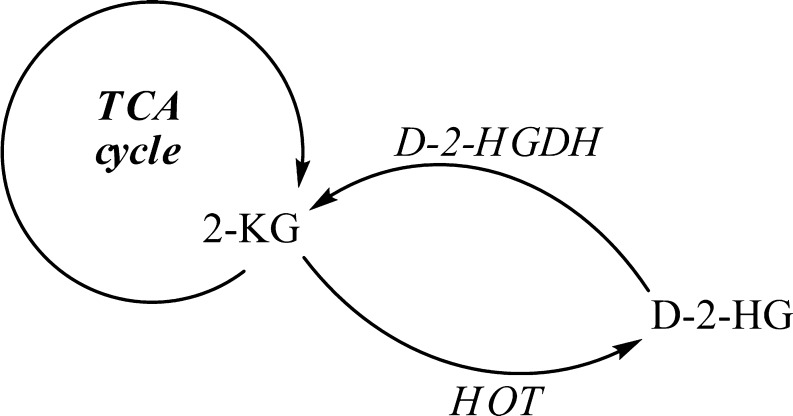
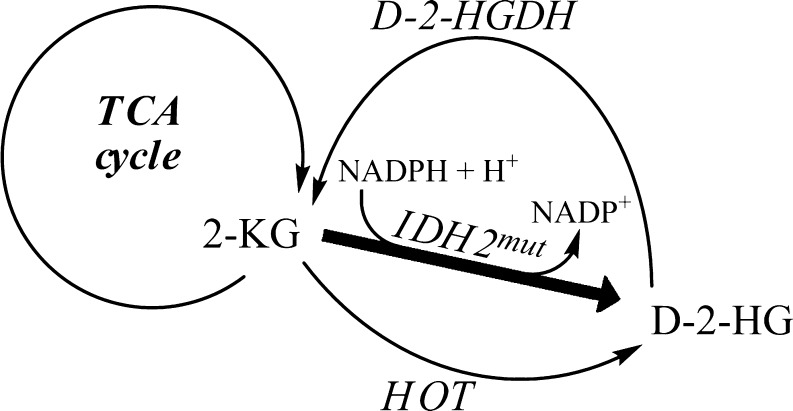
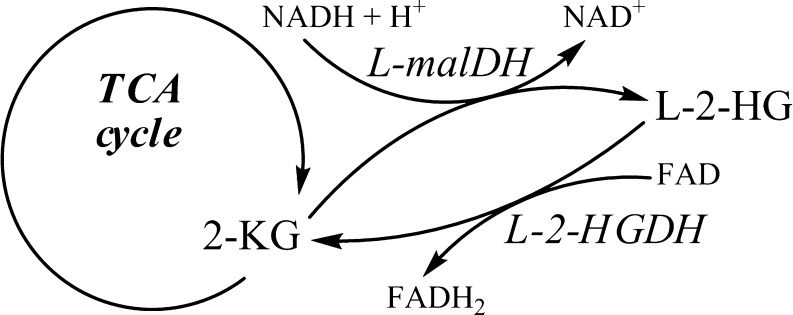
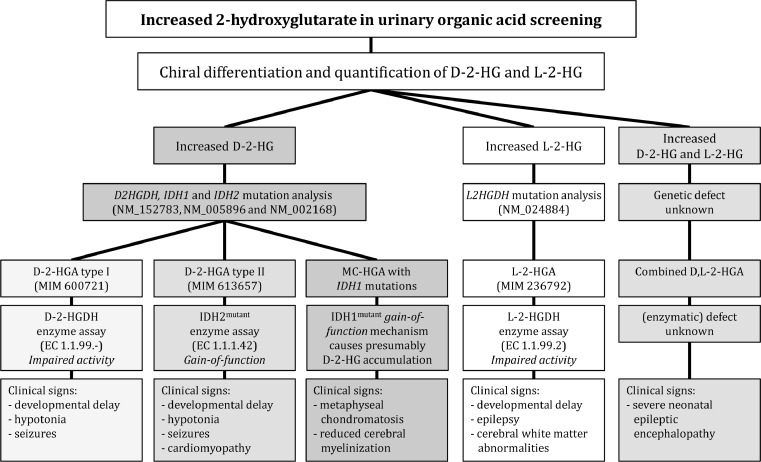
The organic acidurias d‐2‐hydroxyglutaric aciduria (D‐2‐HGA), l‐2‐hydroxyglutaric aciduria (L‐2‐HGA), and combined d,l‐2‐hydroxyglutaric aciduria (D,L‐2‐HGA) cause neurological impairment at young age. Accumulation of d‐2‐hydroxyglutarate (D‐2‐HG) and/or l‐2‐hydroxyglutarate (L‐2‐HG) in body fluids are the biochemical hallmarks of these disorders. The current review describes the knowledge gathered on 2‐hydroxyglutaric acidurias (2‐HGA), since the description of the first patients in 1980. We report on the clinical, genetic, enzymatic and metabolic characterization of D‐2‐HGA type I, D‐2‐HGA type II, L‐2‐HGA and D,L‐2‐HGA, whereas for D‐2‐HGA type I and type II novel clinical information is presented which was derived from questionnaires.
Overview
The claims and statistics of this paper haven’t been checked yet.
Run the check — free, no account needed. It reads the open-access text and checks the sources it cites.
Integrity signals
Registry
Cites
Statistics
Figures
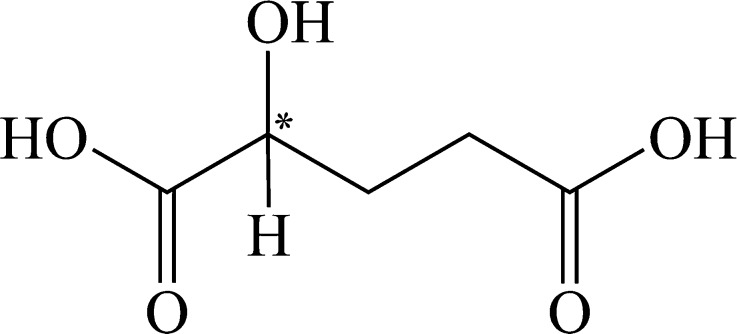
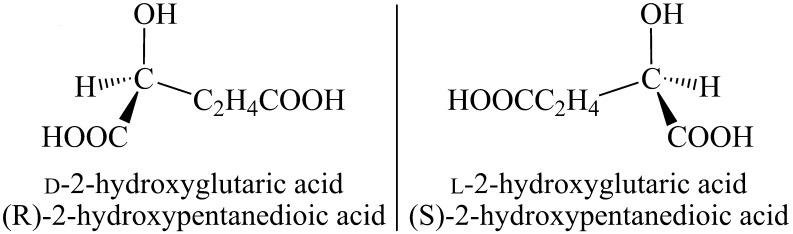
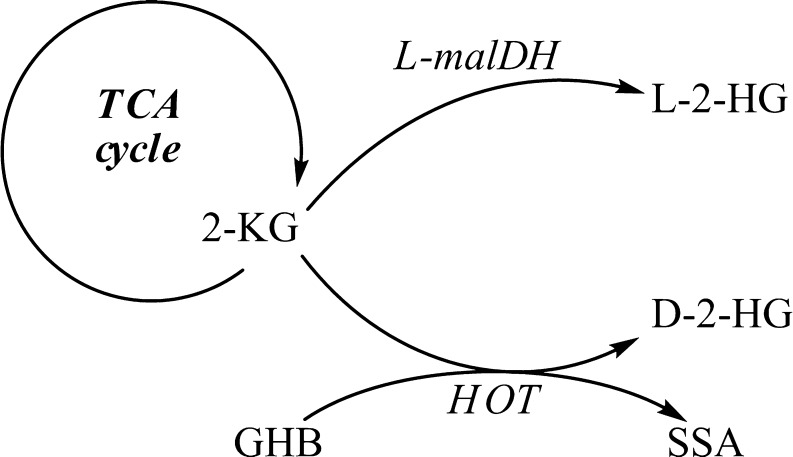
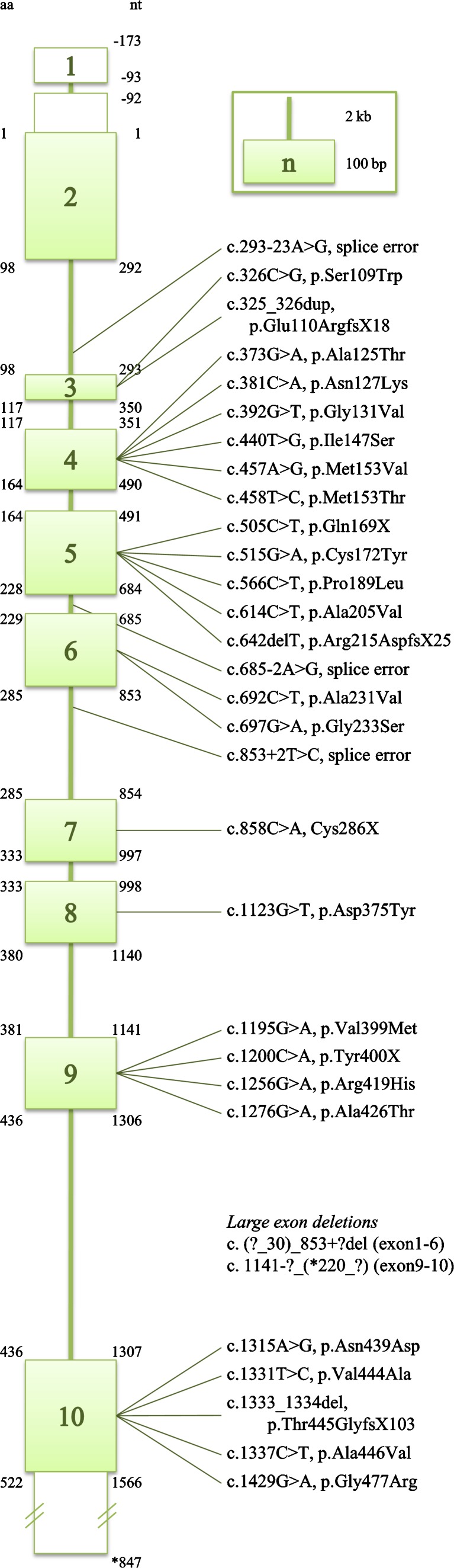
Verification
Claims the paper makes
The claims and statistics of this paper haven’t been checked yet.
Run the check — free, no account needed. It reads the open-access text and checks the sources it cites.
Claims other papers make about this one
Each is checked against this paper’s own text: does it say what the citing paper says it does?
In the citing paper
“Homozygous L2HGDH mutations in germline transmission cause a disease named 2-hydroxyglutaric aciduria (L-2-HGA)92.”
From Glutamine reliance in cell metabolism (2020) · cites this paper as [92]
In the citing paper
“L-2-HGA is an autosomal recessive encephalopathy with an onset in childhood that causes developmental delays, epilepsy and cerebellar ataxia, the traditional clinical signs of this condition.”
From Glutamine reliance in cell metabolism (2020) · cites this paper as [92]
Self-check
Percentages, sums and reported differences re-computed from the paper’s own numbers.
The self-check needs the paper’s full text.
Citations
Cites
An Integrated Genomic Analysis of Human Glioblastoma Multiforme
Parsons, D. W., Jones, S., Zhang, X., Lin, J. C.-H., Leary, R. J., Angenendt, P., Mankoo, P., Carter, H., Siu, I.-M., Gallia, G. L., et al. (2008) · Science · doi:10.1126/science.1164382 · Cited by 5,857
Cancer-associated IDH1 mutations produce 2-hydroxyglutarate
Dang, L., White, D. W., Gross, S., Bennett, B. D., Bittinger, M. A., Driggers, E. M., Fantin, V. R., Jang, H. G., Jin, S., Keenan, M. C., et al. (2009) · Nature · doi:10.1038/nature08617 · Cited by 4,154
Xu, W., Yang, H., Liu, Y., Yang, Y., Wang, P., Kim, S.-H., Ito, S., Yang, C., Wang, P., Xiao, M.-T., et al. (2011) · Cancer Cell · doi:10.1016/j.ccr.2010.12.014 · Cited by 2,875
Ward, P. S., Patel, J., Wise, D. R., Abdel-Wahab, O., Bennett, B. D., Coller, H. A., Cross, J. R., Fantin, V. R., Hedvat, C. V., Perl, A. E., et al. (2010) · Cancer Cell · doi:10.1016/j.ccr.2010.01.020 · Cited by 2,020
Glioma-Derived Mutations in IDH1 Dominantly Inhibit IDH1 Catalytic Activity and Induce HIF-1α
Zhao, S., Lin, Y., Xu, W., Jiang, W., Zha, Z., Wang, P., Yu, W., Li, Z., Gong, L., Peng, Y., et al. (2009) · Science · doi:10.1126/science.1170944 · Cited by 1,119
Gross, S., Cairns, R. A., Minden, M. D., Driggers, E. M., Bittinger, M. A., Jang, H. G., Sasaki, M., Jin, S., Schenkein, D. P., Su, S. M., et al. (2010) · Journal of Experimental Medicine · doi:10.1084/jem.20092506 · Cited by 736
Olsen, R. K. J., Olpin, S. E., Andresen, B. S., Miedzybrodzka, Z., Pourfarzam, M., Merinero, B., Frerman, F. E., Beresford, M. W., Dean, J., Cornelius, N., et al. (2007) · Brain · doi:10.1093/brain/awm135 · Cited by 319
L‐2‐Hydroxyglutaric aciduria: an inborn error of metabolism?
Duran, M., Kamerling, J. P., Bakker, H. D., van Gennip, A. H., & Wadman, S. K. (1980) · Journal of Inherited Metabolic Disease · doi:10.1007/bf02312543 · Cited by 226
Inherited disorders of GABA metabolism
Jakobs, C., Jaeken, J., & Gibson, K. M. (1993) · Journal of Inherited Metabolic Disease · doi:10.1007/bf00711902 · Cited by 225
Self-citationIDH2 Mutations in Patients with d -2-Hydroxyglutaric Aciduria
Kranendijk, M., Struys, E. A., van Schaftingen, E., Gibson, K. M., Kanhai, W. A., van der Knaap, M. S., Amiel, J., Buist, N. R., Das, A. M., de Klerk, J. B., et al. (2010) · Science · doi:10.1126/science.1192632 · Cited by 195
Self-citationRzem, R., Veiga-da-Cunha, M., Noël, G., Goffette, S., Nassogne, M.-C., Tabarki, B., Schöller, C., Marquardt, T., Vikkula, M., & Van Schaftingen, E. (2004) · Proceedings of the National Academy of Sciences · doi:10.1073/pnas.0404840101 · Cited by 195
Mutations in the d-2-Hydroxyglutarate Dehydrogenase Gene Cause d-2-Hydroxyglutaric Aciduria
Struys, E. A., Salomons, G. S., Achouri, Y., Van Schaftingen, E., Grosso, S., Craigen, W. J., Verhoeven, N. M., & Jakobs, C. (2005) · The American Journal of Human Genetics · doi:10.1086/427890 · Cited by 172
Self-citationHydroxyglutaric aciduria and malignant brain tumor: a case report and literature review
Aghili, M., Zahedi, F., & Rafiee, E. (2009) · Journal of Neuro-Oncology · doi:10.1007/s11060-008-9706-2 · Cited by 159
L ‐2‐hydroxyglutaric acidemia: A novel inherited neurometabolic disease
Barth, P. G., Hoffmann, G. F., Jaeken, J., Lehnert, W., Hanefeld, F. A., Gennip, A. H., Durán, M., Valk, J., Schutgens, R. B. H., Trefz, F. K., et al. (1992) · Annals of Neurology · doi:10.1002/ana.410320111 · Cited by 151
l ‐2‐Hydroxyglutaric aciduria, a defect of metabolite repair
Rzem, R., Vincent, M., SCHAFTINGEN, E. V., & Veiga‐da‐Cunha, M. (2007) · Journal of Inherited Metabolic Disease · doi:10.1007/s10545-007-0487-0 · Cited by 149
Struys, E. A., Jansen, E. E. W., Verhoeven‐Duif, N. M., & Jakobs, C. (2004) · Clinical Chemistry · doi:10.1373/clinchem.2004.033399 · Cited by 147
Self-citationAkaboshi, S., Hogema, B. M., Novelletto, A., Malaspina, P., Salomons, G. S., Maropoulos, G., Jakobs, C., Grompe, M., & Gibson, K. M. (2003) · Human Mutation · doi:10.1002/humu.10288 · Cited by 138
Self-citationD‐2‐hydroxyglutaric aciduria: Case report and biochemical studies
Chalmers, R. A., Lawson, A. M., Watts, R. W. E., Tavill, A. S., Kamerling, J. P., Hey, E., & Ogilvie, D. (1980) · Journal of Inherited Metabolic Disease · doi:10.1007/bf02312516 · Cited by 135
l ‐2‐Hydroxyglutaric aciduria, a disorder of metabolite repair
SCHAFTINGEN, E. V., Rzem, R., & Veiga‐da‐Cunha, M. (2008) · Journal of Inherited Metabolic Disease · doi:10.1007/s10545-008-1042-3 · Cited by 133
Kölker, S., Pawlak, V., Ahlemeyer, B., Okun, J. G., Hörster, F., Mayatepek, E., Krieglstein, J., Hoffmann, G. F., & Köhr, G. (2002) · European Journal of Neuroscience · doi:10.1046/j.1460-9568.2002.02055.x · Cited by 133
Topçu, M., Jobard, F., Halliez, S., Coskun, T., Yalçinkayal, C., Gerceker, F. O., Wanders, R. J. A., Prud'homme, J.-F., Lathrop, M., Özguc, M., et al. (2004) · Human Molecular Genetics · doi:10.1093/hmg/ddh300 · Cited by 133
Liang, W., Ohkuma, A., Hayashi, Y. K., López, L. C., Hirano, M., Nonaka, I., Noguchi, S., Chen, L.-H., Jong, Y., & Nishino, I. (2009) · Neuromuscular Disorders · doi:10.1016/j.nmd.2009.01.008 · Cited by 131
Identification of a dehydrogenase acting on D -2-hydroxyglutarate
Achouri, Y., NOËL, G., Vertommen, D., Rider, M. H., Veiga‐da‐Cunha, M., & SCHAFTINGEN, E. V. (2004) · Biochemical Journal · doi:10.1042/bj20031933 · Cited by 130
An overview of L-2-hydroxyglutarate dehydrogenase gene (L2HGDH) variants: a genotype-phenotype study
Steenweg, M. E., Jakobs, C., Errami, A., van Dooren, S. J. M., Bartolomé, M. T. A., Aerssens, P., Augoustides‐Savvopoulou, P., Barić, I., Baumann, M., Bonafé, L., et al. (2010) · Human Mutation · doi:10.1002/humu.21197 · Cited by 128
Self-citationGibson, K. M., ten Brink, H. J., Schor, D. S. M., Kok, R. M., Bootsma, A. H., Hoffmann, G. F., & Jakobs, C. (1993) · Pediatric Research · doi:10.1203/00006450-199309000-00007 · Cited by 123
Self-citationL-2-hydroxyglutaric aciduria and brain malignant tumors: A predisposing condition?
Moroni, I., Bugiani, M., D’Incerti, L., Maccagnano, C., Rimoldi, M., Bissola, L., Pollo, B., Finocchiaro, G., & Uziel, G. (2004) · Neurology · doi:10.1212/01.wnl.0000125335.21381.87 · Cited by 118
D‐2‐hydroxyglutaric acid induces oxidative stress in cerebral cortex of young rats
Latini, A., Scussiato, K., Rosa, R. B., Llesuy, S., Belló‐Klein, A., Dutra‐Filho, C. S., & Wajner, M. (2003) · European Journal of Neuroscience · doi:10.1046/j.1460-9568.2003.02639.x · Cited by 112
l -2-Hydroxyglutaric Aciduria: Pattern of MR Imaging Abnormalities in 56 Patients
Steenweg, M. E., Salomons, G. S., Yapıcı, Z., Uziel, G., Scalais, E., Zafeiriou, D., Ruiz-Falcó, M. L., Mejaški‐Bošnjak, V., Augoustides‐Savvopoulou, P., Wajner, M., et al. (2009) · Radiology · doi:10.1148/radiol.2513080647 · Cited by 103
Self-citationKumps, A. H., Duez, P., & Mardens, Y. (2002) · PubMed · Cited by 97
Barth, P. G., Hoffmann, G. F., Jaeken, J., Wanders, R. J. A., Durán, M., Jansen, G. A., Jakobs, C., Lehnert, W., Hanefeld, F. A., Valk, J., et al. (1993) · Journal of Inherited Metabolic Disease · doi:10.1007/bf00711907 · Cited by 94
Self-citationda Silva, C. G., Ribeiro, C. A. J., Leipnitz, G., Dutra‐Filho, C. S., Wyse, Â. T. D. S., Wannmacher, C. M. D., Sarkis, J. J. F., Jakobs, C., & Wajner, M. (2002) · Biochimica et Biophysica Acta (BBA) - Molecular Basis of Disease · doi:10.1016/s0925-4439(01)00088-6 · Cited by 90
Self-citationMitochondrial energy metabolism is markedly impaired by d-2-hydroxyglutaric acid in rat tissues
Latini, A., da Silva, C. G., Ferreira, G. C., Schuck, P. F., Scussiato, K., Sarkis, J. J., Dutra Filho, C. S., Wyse, A. T. S., Wannmacher, C. M. D., & Wajner, M. (2005) · Molecular Genetics and Metabolism · doi:10.1016/j.ymgme.2005.05.002 · Cited by 88
D‐2‐Hydroxyglutaric aciduria: Further clinical delineation
van der Knaap, M. S., Jakobs, C., Hoffmann, G. F., Durán, M., Muntau, A. C., Schweitzer, S., Kelley, R. I., Parrot-Roulaud, F., Amiel, J., de Lonlay, P., et al. (1999) · Journal of Inherited Metabolic Disease · doi:10.1023/a:1005548005393 · Cited by 87
Self-citationBarbot, C., Fineza, I., Diogo, L. M., Maria, M., Melo, J., ̃es, A. G., Pires, M. M., Cardoso, M. L., & Vilarinho, L. (1997) · Brain and Development · doi:10.1016/s0387-7604(97)00574-3 · Cited by 87
Evidence for genetic heterogeneity in D-2-hydroxyglutaric aciduria
Kranendijk, M., Struys, E. A., Gibson, K. M., Wickenhagen, W. V., Abdenur, J. E., Buechner, J., Christensen, E., de Kremer, R. D., Errami, A., Gissen, P., et al. (2009) · Human Mutation · doi:10.1002/humu.21186 · Cited by 74
Self-citationInduction of oxidative stress by L‐2‐hydroxyglutaric acid in rat brain
Latini, A., Scussiato, K., Rosa, R. B., Leipnitz, G., Llesuy, S., Belló‐Klein, A., Dutra‐Filho, C. S., & Wajner, M. (2003) · Journal of Neuroscience Research · doi:10.1002/jnr.10735 · Cited by 71
Struys, E. A., Verhoeven‐Duif, N. M., ten Brink, H. J., Wickenhagen, W. V., Gibson, K. M., & Jakobs, C. (2005) · Journal of Inherited Metabolic Disease · doi:10.1007/s10545-005-0114-x · Cited by 69
Self-citationHaliloğlu, G., Jobard, F., Oguz, K., Anlar, B., Akalan, N., Coşkun, T., Sass, J. O., Fischer, J., & Topcu, M. (2008) · Neuropediatrics · doi:10.1055/s-2008-1081217 · Cited by 69
Nyhan, W. L., Shelton, G. D., Jakobs, C., Holmes, B., Bowe, C. M., Curry, C. J., Vance, C., Durán, M., & Sweetman, L. (1995) · Journal of Child Neurology · doi:10.1177/088307389501000216 · Cited by 68
Self-citationThe gene mutated in l-2-hydroxyglutaric aciduria encodes l-2-hydroxyglutarate dehydrogenase
Rzem, R., SCHAFTINGEN, E. V., & Veiga‐da‐Cunha, M. (2005) · Biochimie · doi:10.1016/j.biochi.2005.06.005 · Cited by 67
Muntau, A. C., Röschinger, W., Merkenschlager, A., van der Knaap, M. S., Jakobs, C., Durán, M., Hoffmann, G. F., & Roscher, A. (2000) · Neuropediatrics · doi:10.1055/s-2000-7497 · Cited by 66
Self-citationL-2-hydroxyglutaric aciduria: a report of 29 patients
Topçu, M., Aydin, Ö. F., Yalçınkaya, C., Haliloğlu, G., Aysun, S., Anlar, B., Topaloğlu, H., Turanlı, G., Yalnızoğlu, D., Kesımer, M., et al. (2005) · The Turkish Journal of Pediatrics · doi:10.24953/turkjpediatr.2005.2673 · Cited by 62
Riboflavin treatment in a case with l-2-hydroxyglutaric aciduria
Yılmaz, K. (2008) · European Journal of Paediatric Neurology · doi:10.1016/j.ejpn.2008.01.003 · Cited by 62
A SUCCESSFULLY TREATED ADULT PATIENT WITH l-2-HYDROXYGLUTARIC ACIDURIA
Samuraki, M., Komai, K., Hasegawa, Y., Kimura, M., Yamaguchi, S., Terada, N., & Yamada, M. (2008) · Neurology · doi:10.1212/01.wnl.0000287141.90944.95 · Cited by 56
The prognosis of hyperlysinemia: an interim report.
Dancis, J., Hutzler, J., Ampola, M. G., Shih, V. E., van Gelderen, H. H., Kirby, L. T., & Woody, N. C. (1983) · PubMed · Cited by 55
Inhibition of creatine kinase activity from rat cerebral cortex by -2-hydroxyglutaric acid in vitro
da-Silva, C. A., Bueno, A. R. F., Schuck, P. F., Leipnitz, G., Ribeiro, C. A. J., ROSA, R., Dutra‐Filho, C. S., Wyse, Â. T. D. S., Wannmacher, C. M. D., & Wajner, M. (2003) · Neurochemistry International · doi:10.1016/s0197-0186(03)00098-6 · Cited by 53
Vissers, L. E. L. M., Fano, V., Martinelli, D., Campos‐Xavier, B., Barbuti, D., Cho, T., Dursun, A., Kim, O. H., Lee, S. H., Timpani, G., et al. (2011) · American Journal of Medical Genetics Part A · doi:10.1002/ajmg.a.34325 · Cited by 49
Studies of urinary organic acid profiles of a patient with dihydrolipoyl dehydrogenase deficiency
Kuhara, T., Shinka, T., Yoshito, I., Masahiro, M., Yoshino, M., Yusuke, S., & Matsumoto, I. (1983) · Clinica Chimica Acta · doi:10.1016/0009-8981(83)90398-4 · Cited by 47
Increased levels of 2‐hydroxyglutarate in AML patients with IDH1‐R132H and IDH2‐R140Q mutations
Sellner, L., Capper, D., Meyer, J., Langhans, C., Hartog, C.-M., Pfeifer, H., Serve, H. L., Ho, A. D., Okun, J. G., Krämer, A., et al. (2010) · European Journal Of Haematology · doi:10.1111/j.1600-0609.2010.01505.x · Cited by 44
Gibson, K. M., Craigen, W. J., Herman, G. E., & Jakobs, C. (1993) · Journal of Inherited Metabolic Disease · doi:10.1007/bf00711664 · Cited by 44
Self-citationDOOR syndrome: Clinical report, literature review and discussion of natural history
James, A. W., Miranda, S. G., Culver, K., Hall, B. D., & Golabi, M. (2007) · American Journal of Medical Genetics Part A · doi:10.1002/ajmg.a.32054 · Cited by 44
Novel L2HGDH mutations in 21 patients with L-2-hydroxyglutaric aciduria of Portuguese origin
Vilarinho, L., Cardoso, M. L., Gaspar, P., Barbot, C., Azevedo, L., Diogo, L. M., dos Santos, M. L. B. M., Carrilho, I., Fineza, I., Kok, F., et al. (2005) · Human Mutation · doi:10.1002/humu.9373 · Cited by 43
Self-citationStruys, E. A., Verhoeven‐Duif, N. M., Brunengraber, H., & Jakobs, C. (2003) · FEBS Letters · doi:10.1016/s0014-5793(03)01459-5 · Cited by 40
Self-citationd-2-Hydroxyglutaric aciduria in neonate with seizures and CNS dysfunction
Craigen, W. J., Jakobs, C., Sekul, E. A., Levy, M. L., Gibson, K. M., Butler, I. J., & Herman, G. E. (1994) · Pediatric Neurology · doi:10.1016/0887-8994(94)90067-1 · Cited by 38
Self-citationda Silva, C. G., Bueno, A. R. F., Schuck, P. F., Leipnitz, G., Ribeiro, C. A. J., Wannmacher, C. M. D., Wyse, Â. T. D. S., & Wajner, M. (2003) · International Journal of Developmental Neuroscience · doi:10.1016/s0736-5748(03)00035-2 · Cited by 37
Biomarkers Identified in Inborn Errors for Lysine, Arginine, and Ornithine
Saudubray, J., & Rabier, D. (2007) · Journal of Nutrition · doi:10.1093/jn/137.6.1669s · Cited by 37
Plasma Lysine Concentration and Availability of 2‐Ketoglutarate in Liver Mitochondria
Kamoun, P., Richard, V., Rabier, D., & Saudubray, J. (2002) · Journal of Inherited Metabolic Disease · doi:10.1023/a:1015195009330 · Cited by 36
Isocitrate dehydrogenase 1/2 mutational analyses and 2‐hydroxyglutarate measurements in Wilms tumors
Rakheja, D., Mitui, M., Boriack, R. L., & DeBerardinis, R. J. (2010) · Pediatric Blood & Cancer · doi:10.1002/pbc.22697 · Cited by 33
Mutations in phenotypically mild D ‐2‐hydroxyglutaric aciduria
Struys, E. A., Korman, S. H., Salomons, G. S., Darmin, P. S., Achouri, Y., SCHAFTINGEN, E. V., Verhoeven‐Duif, N. M., & Jakobs, C. (2005) · Annals of Neurology · doi:10.1002/ana.20559 · Cited by 32
Self-citationStruys, E. A., Gibson, K. M., & Jakobs, C. (2007) · Journal of Inherited Metabolic Disease · doi:10.1007/s10545-007-0697-5 · Cited by 30
Self-citationD‐2‐Hydroxyglutaric Aciduria in a Patient with a Severe Clinical Phenotype and Unusual MRI Findings
Wajner, M., Vargas, C. R., Funayama, C. A. R., Fernandez, A., Elias, M. Z., Goodman, S. I., Jakobs, C., & van der Knaap, M. S. (2002) · Journal of Inherited Metabolic Disease · doi:10.1023/a:1015165212965 · Cited by 29
Self-citationWilms Tumor in a Child with L-2-hydroxyglutaric Aciduria
Rogers, R. E., DeBerardinis, R. J., Klesse, L. J., Boriack, R. L., Margraf, L. R., & Rakheja, D. (2010) · Pediatric and Developmental Pathology · doi:10.2350/09-12-0768-cr.1 · Cited by 29
Baker, N. S., Sarnat, H. B., Jack, R. M., Patterson, K., Shaw, D., & Herndon, S. (1997) · Journal of Child Neurology · doi:10.1177/088307389701200105 · Cited by 29
LOW MOLECULAR WEIGHT ORGANIC ACIDS IN THE URINE OF THE NEWBORN
Gregersen, N., Ingerslev, J. K., & Rasmussen, K. D. (1977) · Acta Paediatrica · doi:10.1111/j.1651-2227.1977.tb07812.x · Cited by 29
D-2-hydroxyglutaric aciduria in association with spondyloenchondromatosis
Talkhani, I. S., Saklatvala, J., & Dwyer, J. (2000) · Skeletal Radiology · doi:10.1007/s002560050611 · Cited by 27
Honey, E. M., van Rensburg, M., Knoll, D. P., Mienie, L. J., de Werke, I. V., & Beighton, P. (2003) · Clinical Dysmorphology · doi:10.1097/00019605-200304000-00004 · Cited by 24
Phenotypic heterogeneity in the presentation of d-2-hydroxyglutaric aciduria in monozygotic twins
Misra, V. K., Struys, E. A., O’Brien, W. E., Salomons, G. S., Glover, T. W., Jakobs, C., & Innis, J. W. (2005) · Molecular Genetics and Metabolism · doi:10.1016/j.ymgme.2005.06.005 · Cited by 24
Self-citationJunqueira, D., Brusque, A. M., Porciúncula, L. O., Rotta, L. N., Ribeiro, C. A. J., Frizzo, M. E., Dutra‐Filho, C. S., Wannmacher, C. M. D., Wyse, Â. T. D. S., Souza, D. O., et al. (2003) · Metabolic Brain Disease · doi:10.1023/a:1025559200816 · Cited by 22
Eeg‐Olofsson, O., Zhang, W. W., Olsson, Y., Jagell, S., & Hagenfeldt, L. (2000) · Journal of Child Neurology · doi:10.1177/088307380001500714 · Cited by 22
Leonard, N., Harley, F. L., & Lin, C. C. (1999) · American Journal of Medical Genetics · doi:10.1002/(sici)1096-8628(19990910)86:2 · Cited by 22
Junqueira, D., Brusque, A. M., Porciúncula, L. O., Rotta, L. N., Frizzo, M. E., Wyse, Â. T. D. S., Wannmacher, C. M. D., Souza, D. O., & Wajner, M. (2003) · Journal of the Neurological Sciences · doi:10.1016/j.jns.2003.10.005 · Cited by 20
Clinical and MRI findings in a case ofd-2-hydroxyglutaric aciduria
Sugita, K., Kakinuma, H., Okajima, Y., Ogawa, A., Watanabe, H., & Niimi, H. (1995) · Brain and Development · doi:10.1016/0387-7604(94)00123-f · Cited by 19
Read, M. ‐., Bonamy, C., Laloum, D., Belloy, F., Constans, J., Guillois, B., Kottler, M., Verhoeven‐Duif, N. M., & Jakobs, C. (2005) · Journal of Inherited Metabolic Disease · doi:10.1007/s10545-005-4565-x · Cited by 19
Self-citationClarke, N. F., Andrews, I., Carpenter, K. H., Jakobs, C., van der Knaap, M. S., & Kirk, E. P. (2003) · American Journal of Medical Genetics Part A · doi:10.1002/ajmg.a.20120 · Cited by 18
Self-citationOsteoma of the calvaria in l ‐2‐hydroxyglutaric aciduria
Larnaout, A., Amouri, R., Neji, S., Zouari, M., Kaabachi, N., & Hentati, F. (2007) · Journal of Inherited Metabolic Disease · doi:10.1007/s10545-007-0576-0 · Cited by 17
D-2-Hydroxyglutaric aciduria and subdural haemorrhage
Kwong, K., Mak, T. W. L., Fong, C. M., Poon, K., Wong, S., & So, K. (2002) · Acta Paediatrica · doi:10.1111/j.1651-2227.2002.tb03309.x · Cited by 17
Sudden unexpected death in an infant with L-2-hydroxyglutaric aciduria
Gygax, M. J., Roulet‐Perez, E., Meagher‐Villemure, K., Jakobs, C., Salomons, G. S., Boulat, O., Superti‐Furga, A., Ballhausen, D., & Bonafé, L. (2008) · European Journal of Pediatrics · doi:10.1007/s00431-008-0869-9 · Cited by 17
Self-citationKranendijk, M., Salomons, G. S., Gibson, K. M., SCHAFTINGEN, E. V., Jakobs, C., & Struys, E. A. (2011) · Biochimica et Biophysica Acta (BBA) - Molecular Basis of Disease · doi:10.1016/j.bbadis.2011.08.006 · Cited by 17
Self-citationWickenhagen, W. V., Salomons, G. S., Gibson, K. M., Jakobs, C., & Struys, E. A. (2009) · Journal of Inherited Metabolic Disease · doi:10.1007/s10545-009-1104-1 · Cited by 16
Self-citationStruys, E. A., Verhoeven‐Duif, N. M., Salomons, G. S., Berthelot, J., Vianey‐Saban, C., Chabrier, S., Thomas, J., Tsai, A. C.-H., Gibson, K. M., & Jakobs, C. (2006) · Molecular Genetics and Metabolism · doi:10.1016/j.ymgme.2005.12.002 · Cited by 16
Self-citationBayar, A., Acun, C., Dursun, A., Verhoeven‐Duif, N. M., Bonaf�, L., Keser, S., & Superti‐Furga, A. (2004) · Clinical Dysmorphology · doi:10.1097/00019605-200501000-00002 · Cited by 15
Silva, C. G. D., Bueno, A. R. F., Schuck, P. F., Leipnitz, G., Ribeiro, C. A. J., Wannmacher, C. M. D., Wyse, Â. T. D. S., & Wajner, M. (2003) · European Journal of Clinical Investigation · doi:10.1046/j.1365-2362.2003.01237.x · Cited by 14
Geerts, Y., Renier, W. O., Bakkeren, J. A. J. M., & de Jong, J. G. N. (1996) · Journal of the Neurological Sciences · doi:10.1016/s0022-510x(96)00179-7 · Cited by 14
n‐2‐Hydroxyglutaric aciduria with absence of corpus callosum and neonatal intracranial haemorrhage
Wang, X., Jakobs, C., & Bawle, D. V. (2003) · Journal of Inherited Metabolic Disease · doi:10.1023/a:1024000202364 · Cited by 13
Self-citationPeripheral neuropathy in a patient with d ‐2‐hydroxyglutaric aciduria
Haliloğlu, G., Temuçin, Ç. M., Oğuz, K. K., Celiker, A., Coşkun, T., Sass, J. O., Fischer, J., & Topçu, M. (2009) · Journal of Inherited Metabolic Disease · doi:10.1007/s10545-009-0933-2 · Cited by 12
D‐2‐Hydroxyglutaric aciduria: Evidence of clinical and biochemical heterogeneity
Wagner, L., Hoffmann, G. F., & Jakobs, C. (1998) · Journal of Inherited Metabolic Disease · doi:10.1023/a:1005364004746 · Cited by 9
Self-citationKranendijk, M., Salomons, G. S., Gibson, K. M., Zeybek, A. Ç. A., Bekri, S., Christensen, E., Clarke, J. T. R., Hahn, A., Korman, S. H., Mejaški‐Bošnjak, V., et al. (2009) · Journal of Inherited Metabolic Disease · doi:10.1007/s10545-009-1282-x · Cited by 9
Self-citationCo-morbidity of Sanfilippo Syndrome type C and d-2-hydroxyglutaric aciduria
Pervaiz, M. A., Patterson, M. C., Struys, E. A., Salomons, G. S., Jakobs, C., Oglesbee, D., & Kirmani, S. (2011) · Journal of Neurology · doi:10.1007/s00415-011-5977-1 · Cited by 7
Self-citationda Silva, C. G., Bueno, A. R. F., Rosa, R. B., Dutra‐Filho, C. S., Wannmacher, C. M. D., Wyse, Â. T. D. S., & Wajner, M. (2003) · Neurochemical Research · doi:10.1023/a:1024936129908 · Cited by 5
[D-2-hydroxyglutaric aciduria. Report of two cases].
Mahfoud, A., Domínguez, C. L., Rashed, M. S., Durán, M., Rodríguez, T. M. A., Rodríguez, D., & Landa, V. (2009) · PubMed · Cited by 4
INSERM (2020) · Definitions · doi:10.32388/k84xvk · Cited by 1
Increased activity of surviving locus ceruleus neurons in Alzheimer's disease
Moser (1999) · Pure Amsterdam UMC · doi:10.1002/1531-8249(199901)45:1
Self-citation
Cited by
Sorted by citations
Glutamine reliance in cell metabolism
Yoo, H. C., Yu, Y. C., Sung, Y., & Han, J. M. (2020) · Experimental & Molecular Medicine · doi:10.1038/s12276-020-00504-8 · Cited by 1,021
IDH1 and IDH2 mutations in gliomas
Cohen, A. L., Holmen, S. L., & Colman, H. (2013) · Current Neurology and Neuroscience Reports · doi:10.1007/s11910-013-0345-4 · Cited by 629
What a difference a hydroxyl makes: mutant IDH, (R)-2-hydroxyglutarate, and cancer
Losman, J.-A., & Kaelin, W. G. (2013) · Genes & Development · doi:10.1101/gad.217406.113 · Cited by 570
Hypoxia Induces Production of L-2-Hydroxyglutarate
Intlekofer, A. M., Dematteo, R. G., Venneti, S., Finley, L. W. S., Lu, C., Judkins, A. R., Rustenburg, A. S., Grinaway, P. B., Chodera, J. D., Cross, J. R., et al. (2015) · Cell Metabolism · doi:10.1016/j.cmet.2015.06.023 · Cited by 513
IDH mutations in cancer and progress toward development of targeted therapeutics
Dang, L., Yen, K., & Attar, E. C. (2016) · Annals of Oncology · doi:10.1093/annonc/mdw013 · Cited by 509
Metadata
- Authors
- Kranendijk, M., Struys, E. A., Salomons, G. S., Van der Knaap, M. S., & Jakobs, C.
- Affiliations
- Amsterdam UMC Location Vrije Universiteit Amsterdam (NL)
- Paediatric Neurology VU University Medical Center Amsterdam The Netherlands
- Corresponding author
- Jakobs, Cornelis
- Venue
- Journal of Inherited Metabolic Disease
- Publisher
- Wiley
- Published
- 2012-03-06
- Volume
- 35
- Issue
- 4
- Pages
- 571-587
- ISSN
- 0141-8955 (ISSN-L)
- 1573-2665
- PMC
- PMC3388262
- OpenAlex
- W2058747828
- Cited by
- 292
- References
- 93
- Citations by year
- 2026: 11 · 2025: 14 · 2024: 33 · 2023: 20 · 2022: 29 · 2021: 23 · 2020: 20 · 2019: 22 · 2018: 16 · 2017: 14 · 2016: 22 · 2015: 27 · 2014: 15 · 2013: 15 · 2012: 10
- FWCI
- 2.56
- Type
- journal article
- Language
- en
- Open access
- hybrid
- doi.org
- Licence
- Locations
- Journal of Inherited Metabolic Disease (publishedVersion, cc-by)
- Europe PMC (PubMed Central) (publishedVersion, cc-by)
- PubMed Central (publishedVersion, cc-by)
- PubMed (publishedVersion)
- Pure Amsterdam UMC (publishedVersion)
- Amsterdam UMC (VU Amsterdam) - Institutional Repository (publishedVersion)
- VU Research Portal (publishedVersion, other-oa)
- Data Archiving and Networked Services (DANS) (submittedVersion)
- Digital Academic REpository of VU University Amsterdam (Vrije Universiteit Amsterdam) (submittedVersion)
- Data Archiving and Networked Services (DANS) (submittedVersion, other-oa)
- Topics
- Life Sciences › Biochemistry, Genetics and Molecular Biology › Clinical Biochemistry › Metabolism and Genetic Disorders
- Life Sciences › Biochemistry, Genetics and Molecular Biology › Biochemistry › Amino Acid Enzymes and Metabolism
- Life Sciences › Neuroscience › Neurology › Neurological diseases and metabolism
- Keywords
- L-2-hydroxyglutaric aciduria, D-2-hydroxyglutarate, L-2-hydroxyglutarate, organic aciduria, neurological deficit, genetic characterization, enzyme characterization, metabolic characterization, clinical features, patient survey
- MeSH terms
- Humans, Nervous System Diseases, Brain Diseases, Metabolic, Inborn
About these checks
Registry, retraction, Cites and statistics results are computed, not judged, with one exception: a printed reference that no index lists is read once by a model before it counts as a citation error. Claims are extracted by a model and kept only when their quote appears verbatim in the text; each cited source is then checked, with a model’s help, for whether it says what the claim relies on. Those verdicts can be wrong — read the claim’s quote and the cited source before relying on one.
Statistics and arithmetic are recomputed, not judged.
Confidence bands are shown only for fields calibrated on our annotated test set. None is calibrated yet, so no band is shown.
What counts as a claim ›How we measure confidence ›How we check this ›
Are you an author, or do you see a problem with this page? Request a review
