

Estimating Directed Connectivity from Cortical Recordings and Reconstructed Sources
Open accessPublished version of a preprint
The DOI matches its Crossref record; 50 of the 50 references it cites were found in a registry or an index.
Abstract
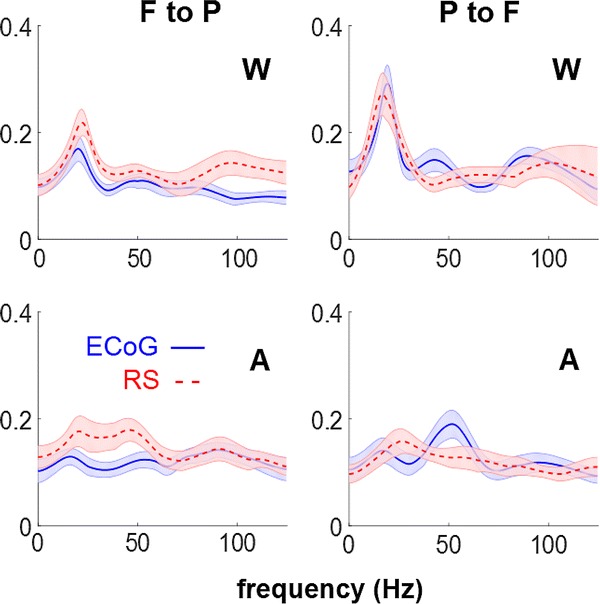
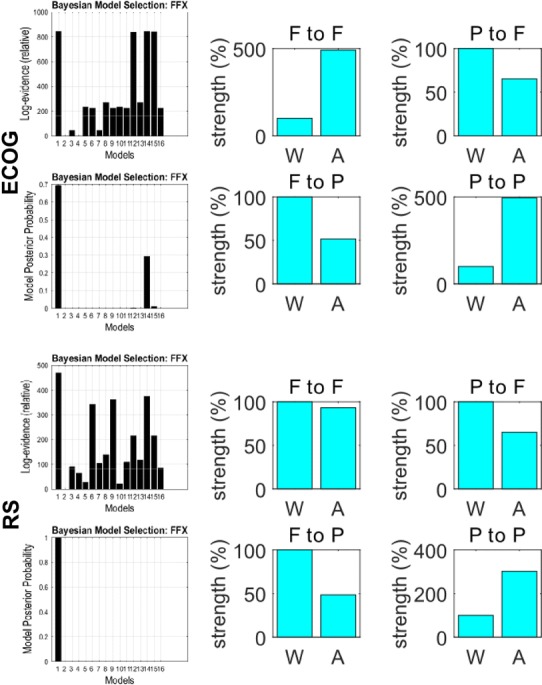
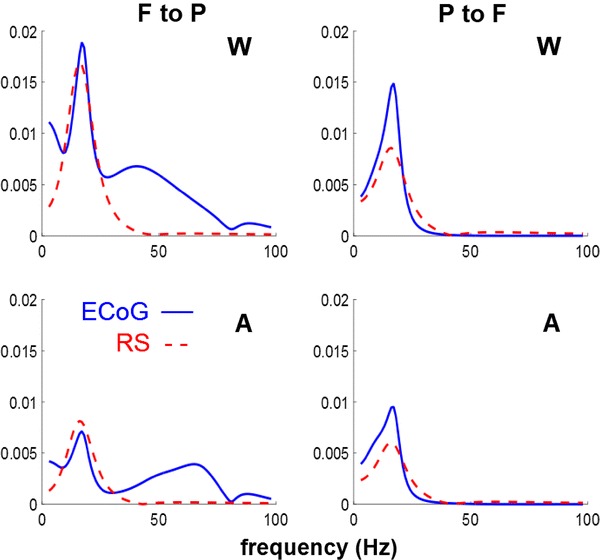
In cognitive neuroscience, electrical brain activity is most commonly recorded at the scalp. In order to infer the contributions and connectivity of underlying neuronal sources within the brain, it is necessary to reconstruct sensor data at the source level. Several approaches to this reconstruction have been developed, thereby solving the so-called implicit inverse problem Michel et al. (Clin Neurophysiol 115:2195-2222, 2004). However, a unifying premise against which to validate these source reconstructions is seldom available. The dataset provided in this work, in which brain activity is simultaneously recorded on the scalp (non-invasively) by electroencephalography (EEG) and on the cortex (invasively) by electrocorticography (ECoG), can be of a great help in this direction. These multimodal recordings were obtained from a macaque monkey under wakefulness and sedation. Our primary goal was to establish the connectivity architecture between two sources of interest (frontal and parietal), and to assess how their coupling changes over the conditions. We chose these sources because previous studies have shown that the connections between them are modified by anaesthesia Boly et al. (J Neurosci 32:7082-7090, 2012). Our secondary goal was to evaluate the consistency of the connectivity results when analyzing sources recorded from invasive data (128 implanted ECoG sources) and source activity reconstructed from scalp recordings (19 EEG sensors) at the same locations as the ECoG sources. We conclude that the directed connectivity in the frequency domain between cortical sources reconstructed from scalp EEG is qualitatively similar to the connectivity inferred directly from cortical recordings, using both data-driven (directed transfer function) and biologically grounded (dynamic causal modelling) methods. Furthermore, the connectivity changes identified were consistent with previous findings Boly et al. (J Neurosci 32:7082-7090, 2012). Our findings suggest that inferences about directed connectivity based upon non-invasive electrophysiological data have construct validity in relation to invasive recordings.
Overview
The claims and statistics of this paper haven’t been checked yet.
Free: it reads the open-access text and checks the first 5 claims that cite a source we can check. Create a free account to check every claim.
Integrity signals
Registry
Cites
Statistics
Figures
Verification
Claims the paper makes
The claims and statistics of this paper haven’t been checked yet.
Free: it reads the open-access text and checks the first 5 claims that cite a source we can check. Create a free account to check every claim.
Claims other papers make about this one
Each is checked against this paper’s own text: does it say what the citing paper says it does?
The cited source says what the claim attributes to it.
In the citing paper
“In addition to human investigations, this finding has been replicated across species, from monkey (Papadopoulou et al., 2019) to ferret (Wollstadt et al., 2017), rodent (Imas et al., 2005), and Drosophila (in which a higher-order nucleus was the source of feedback) (Cohen et al., 2018).”
From Conscious Processing and the Global Neuronal Workspace Hypothesis (2020) · cites this paper as Papadopoulou et al., 2019
Self-check
Percentages, sums and reported differences re-computed from the paper’s own numbers.
The self-check needs the paper’s full text.
Citations
Cites
Investigating causal relations by econometric models and cross-spectral methods
Granger, C. W. J. (1969) · Econometrica · doi:10.2307/1912791 · Cited by 22,989
Distributed hierarchical processing in the primate cerebral cortex
Felleman, D. J., & Van Essen, D. C. (1991) · Cerebral Cortex · doi:10.1093/cercor/1.1.1 · Cited by 7,783 · cited 1×
“The nodes (sources) of DCM model sources in the brain are connected by (extrinsic) forward and backward connections according to anatomical connectivity rules established in (Felleman and Van Essen 1991).”
Buzsáki, G. (2006) · doi:10.1093/acprof:oso/9780195301069.001.0001 · Cited by 4,873 · cited 1×
“Oscillatory synchronous activity of local or distributed neuronal populations is an ubiquitous phenomenon in neural systems and may represent a key neuronal mechanism underlying cognitive or perceptual processing (Buzsáki 2006).”
BackgroundInvestigating Causal Relations by Econometric Models and Cross-Spectral Methods
Granger, C. W. J. (2010) · Essays in Econometrics · doi:10.1017/cbo9780511753978.002 · Cited by 4,762 · cited 1×
“These measures vary from linear to nonlinear, bivariate to multivariate, and many rely on the Granger causality principle (Granger 1969).”
BackgroundFriston, K. J., Harrison, L., & Penny, W. (2003) · NeuroImage · doi:10.1016/s1053-8119(03)00202-7 · Cited by 4,583 · cited 1×
“These are exemplified by (data-based) DTF (Kamiński and Blinowska 1991) and (model-based) biologically informed DCM (Friston et al. 2003).”
MethodSelf-citationPreface: Cerebral Cortex Has Come of Age
Goldman-Rakic, P. S., & Rakic, P. (1991) · Cerebral Cortex · doi:10.1093/cercor/1.1.1-a · Cited by 3,393
Pascual-Marqui, R. D., Michel, C. M., & Lehmann, D. (1994) · International Journal of Psychophysiology · doi:10.1016/0167-8760(84)90014-x · Cited by 2,869 · cited 2×
“Source reconstruction in the time domain (for the EEG data) was performed by LORETA (free academic software for source localization of EEG data: http://www.uzh.ch/keyinst/loreta) (Pascual-Marqui et al. 1994).”
MethodCanonical Microcircuits for Predictive Coding
Bastos, A. M., Usrey, W. M., Adams, R. A., Mangun, G. R., Fries, P., & Friston, K. J. (2012) · Neuron · doi:10.1016/j.neuron.2012.10.038 · Cited by 2,421 · cited 1×
“Feedforward connections target the granular layer, while feedback connections target the superficial and deep layers (Bastos et al. 2012).”
BackgroundSelf-citationPartial directed coherence: a new concept in neural structure determination
Baccalá, L. A., & Sameshima, K. (2001) · Biological Cybernetics · doi:10.1007/pl00007990 · Cited by 1,779 · cited 1×
“This approach 2 quantifies improvement in the predictions of a time series, given its past, when information from the past of another time series is considered (Baccalá & Sameshima 2001; Kamiński & Blinowska 1991).”
BackgroundMichel, C. M., Murray, M. M., Lantz, G., Gonzalez, S., Spinelli, L., & Grave de Peralta, R. (2004) · Clinical Neurophysiology · doi:10.1016/j.clinph.2004.06.001 · Cited by 1,655 · cited 1×
“Several approaches to this reconstruction have been developed, thereby solving the so-called implicit inverse problem (Michel et al. 2004).”
Method
Cited by
Conscious Processing and the Global Neuronal Workspace Hypothesis
Mashour, G. A., Roelfsema, P., Changeux, J.-P., & Dehaene, S. (2020) · Neuron · doi:10.1016/j.neuron.2020.01.026 · Cited by 1,164
“In addition to human investigations, this finding has been replicated across species, from monkey (Papadopoulou et al., 2019) to ferret (Wollstadt et al., 2017), rodent (Imas et al., 2005), and Drosophila (in which a higher-order nucleus was the source of feedback) (Cohen et al., 2018).”
BackgroundConsistency of EEG source localization and connectivity estimates
Mahjoory, K., Nikulin, V. V., Botrel, L., Linkenkaer-Hansen, K., Fato, M. M., & Haufe, S. (2017) · NeuroImage · doi:10.1016/j.neuroimage.2017.02.076 · Cited by 234
“Alternatively, EEG recordings obtained either during deep brain stimulation or during concurrent recording of invasive electro-physiology could be used (e.g., Papadopoulou et al., 2015).”
MethodConnectivity Analysis in EEG Data: A Tutorial Review of the State of the Art and Emerging Trends
Chiarion, G., Sparacino, L., Antonacci, Y., Faes, L., & Mesin, L. (2023) · Bioengineering · doi:10.3390/bioengineering10030372 · Cited by 195
Biological constraints on neural network models of cognitive function
Pulvermüller, F., Tomasello, R., Henningsen-Schomers, M. R., & Wennekers, T. (2021) · Nature Reviews Neuroscience · doi:10.1038/s41583-021-00473-5 · Cited by 173
Critical Comments on EEG Sensor Space Dynamical Connectivity Analysis
de Steen, F. V., Faes, L., Karahan, E., Songsiri, J., Valdes-Sosa, P. A., & Marinazzo, D. (2016) · Brain Topography · doi:10.1007/s10548-016-0538-7 · Cited by 175
“First, no inferences can be made about the anatomical location of the (possibly) interacting sources based on the location of the sensors (Nunez and Srinivasan 2006; Haufe et al. 2013; Papadopoulou et al. 2015).”
BackgroundSelf-citationPhillips, H. N., Blenkmann, A., Hughes, L. E., Kochen, S., Bekinschtein, T. A., Cam-CAN, & Rowe, J. B. (2016) · Cortex · doi:10.1016/j.cortex.2016.05.001 · Cited by 82
Do Nicotinic Receptors Modulate High-Order Cognitive Processing?
Koukouli, F., & Changeux, J. (2020) · Trends in Neurosciences · doi:10.1016/j.tins.2020.06.001 · Cited by 71
A survey of brain network analysis by electroencephalographic signals
Luo, C., Li, F., Li, P., Yi, C., Li, C., Tao, Q., Zhang, X., Si, Y., Yao, D., Yin, G., et al. (2021) · Cognitive Neurodynamics · doi:10.1007/s11571-021-09689-8 · Cited by 59
Herrera-Díaz, A., Quiñones, R. M., Melie‐García, L., Martínez‐Montes, E., Sanabria-Díaz, G., Quintana, Y. R., Salazar-Guerra, I., Carballoso-Acosta, M., & Caballero-Moreno, A. J. (2015) · Brain Topography · doi:10.1007/s10548-015-0467-x · Cited by 54
“Although some studies have already addressed this goal, overcoming the problems related to volume conduction with the current source localization methodologies is still challenging (Papadopoulou et al. 2015; Hassan et al. 2014; Schoffelen and Gross 2009; Astolfi et al. 2005, 2007).”
BackgroundŽarić, G., Correia, J., González, G. F., Tijms, J., van der Molen, M. W., Blomert, L., & Bonte, M. L. (2016) · Developmental Cognitive Neuroscience · doi:10.1016/j.dcn.2016.11.003 · Cited by 41
Fitzgerald, K., Auksztulewicz, R., Provost, A. L., Paton, B. K., Howard, Z. L., & Todd, J. (2021) · Journal of Cognitive Neuroscience · doi:10.1162/jocn_a_01735 · Cited by 27
Controversies in EEG Source Imaging and Connectivity: Modeling, Validation, Benchmarking
Marinazzo, D., Riera, J. J., Marzetti, L., Astolfi, L., Yao, D., & Valdes-Sosa, P. A. (2019) · Brain Topography · doi:10.1007/s10548-019-00709-9 · Cited by 26
Self-citationFerdek, M. A., Oosterman, J. M., Adamczyk, A. K., van Aken, M., Woudsma, K. J., Peeters, B. W. M. M., Nap, A. W., Wyczesany, M., & van Rijn, C. M. (2019) · Journal of Pain · doi:10.1016/j.jpain.2019.05.011 · Cited by 25
Todaro, C., Marzetti, L., Valdes-Sosa, P. A., Valdes-Hernandez, P. A., & Pizzella, V. (2018) · Brain Topography · doi:10.1007/s10548-018-0623-1 · Cited by 24
Cohen, D., van Swinderen, B., & Tsuchiya, N. (2018) · eneuro · doi:10.1523/eneuro.0329-17.2018 · Cited by 23
Koutlis, C., Kimiskidis, V. Κ., & Kugiumtzis, D. (2019) · International Journal of Neural Systems · doi:10.1142/s012906571850051x · Cited by 23
Cognitive conflict increases processing of negative, task-irrelevant stimuli
Ligeza, T. S., & Wyczesany, M. (2017) · International Journal of Psychophysiology · doi:10.1016/j.ijpsycho.2017.07.013 · Cited by 22
Wang, Q., Valdes-Hernandez, P. A., Paz-Linares, D., Bosch‐Bayard, J., Oosugi, N., Komatsu, M., Fujii, N., & Valdes-Sosa, P. A. (2019) · Brain Topography · doi:10.1007/s10548-019-00708-w · Cited by 20
Facial Expressions Evoke Differential Neural Coupling in Macaques
Liu, N., Hadj‐Bouziane, F., Moran, R., Ungerleider, L. G., & Ishai, A. (2016) · Cerebral Cortex · doi:10.1093/cercor/bhv345 · Cited by 19
Kang, Q., Li, F., & Gao, J. (2023) · Electronics · doi:10.3390/electronics12071633 · Cited by 17
Reliability of EEG Interactions Differs between Measures and Is Specific for Neurological Diseases
Höller, Y., Butz, K. H. G., Thomschewski, A. C., Schmid, E. V., Uhl, A., Bathke, A. C., Zimmermann, G., Tomasi, S. O., Nardone, R., Staffen, W., et al. (2017) · Frontiers in Human Neuroscience · doi:10.3389/fnhum.2017.00350 · Cited by 17
“Source-level connectivity analysis is also a promising approach (Schoffelen and Gross, 2009; Deligianni et al., 2014; Papadopoulou et al., 2015; Sockeel et al., 2016) because it is robust against volume conduction (Haufe et al., 2010; Drakesmith et al., 2013; Chella et al., 2016), and it yields…”
BackgroundLp (p ≤ 1) Norm Partial Directed Coherence for Directed Network Analysis of Scalp EEGs
Li, P., Huang, X., Zhu, X., Liu, H., Zhou, W., Yao, D., & Xu, P. (2018) · Brain Topography · doi:10.1007/s10548-018-0624-0 · Cited by 16
“…process involves the cooperation of multiple brain areas (Baccalá and Sameshima 2001; Astolfi et al. 2006; Sato et al. 2009; Adochiei et al. 2013; Papadopoulou et al. 2015), and the information exchange among them exhibits the directed propagation that can be captured by directed brain network…”
BackgroundIdentifying oscillatory brain networks with hidden Gaussian graphical spectral models of MEEG
Paz-Linares, D., Gonzalez-Moreira, E., Gonzalez, A. A., Wang, Y., Li, M., Martínez‐Montes, E., Bosch‐Bayard, J., Bringas-Vega, M. L., Valdés-Sosa, M. J., & Valdes-Sosa, P. A. (2023) · Scientific Reports · doi:10.1038/s41598-023-38513-y · Cited by 19
“This large-scale analysis differs from previously reported studies, which were limited to P <-> F interactions at ECoG sensor space as in (Papadopoulou, Friston, and Marinazzo 2019).”
ResultKoutlis, C., Kimiskidis, V. Κ., & Kugiumtzis, D. (2021) · Frontiers in Network Physiology · doi:10.3389/fnetp.2021.706487 · Cited by 13
“This result is not in agreement to a recent report of qualitatively similar results of connectivity structure in the source activity from reconstructed scalp EEG data and the connectivity from corresponding electrocorticographic sources in primates ( Macaca mulatta ) (Papadopoulou et al., 2019).”
ResultPropofol-induced sedation diminishes the strength of frontal-parietal-occipital EEG network
Rathee, D., Cecotti, H., & Prasad, G. (2017) · Annual International Conference of the IEEE Engineering in Medicine and Biology Society (EMBC) · doi:10.1109/embc.2017.8037847 · Cited by 11
“propofol-induced unconsciousness [25] whereas several other studies showed significant decrease in the frontal-parietal network [3], [6].”
BackgroundThird Generation MEEG Source Connectivity Analysis Toolbox (BC-VARETA 1.0) and Validation BenchmarkPreprint
Gonzalez-Moreira, E., Paz-Linares, D., Gonzalez, A. A., Wang, R., & Valdes-Sosa, P. A. (2018) · arXiv (Cornell University) · doi:10.48550/arxiv.1810.11212 · Cited by 9
Paz-Linares, D., Gonzalez-Moreira, E., Gonzalez, A. A., Wang, Y., Li, M., Vega‐Hernández, M., Wang, Q., Bosch‐Bayard, J., Bringas-Vega, M. L., Martínez‐Montes, E., et al. (2023) · Frontiers in Neuroscience · doi:10.3389/fnins.2023.978527 · Cited by 8
“These results confirm and extend the results of previous studies (Marinazzo et al., 2019; Papadopoulou et al., 2019; Wang et al., 2019), suggesting that some types of ESI should be interpreted with extreme care.”
ResultMpi-driven N-glycosylation orchestrates mucin O-glycosylation and intestinal homeostasis
Roy, A., Meregini, S., Cho, H.-J., Chen, Z., Zaki, A., Argula, T., Beutler, B., & SoRelle, J. A. (2026) · Nature Communications · doi:10.1038/s41467-026-73100-5 · Cited by 6
Effective connectivity of mental fatigue: Dynamic causal modeling of EEG data
Hosseini, G. S., & Nasrabadi, A. M. (2019) · Technology and Health Care · doi:10.3233/thc-181480 · Cited by 6
“Such fatigue leads to decreasing performance in human beings, lack of managing plans, lack of control and supervision of work; this lack of concentration is evident in all of these situations and is considerable [2].”
Neural Connectivity with Hidden Gaussian Graphical State-ModelPreprint
Paz-Linares, D., Gonzalez-Moreira, E., Bosch‐Bayard, J., Gonzalez, A. A., Bringas-Vega, M. L., & Valdes-Sosa, P. A. (2018) · arXiv (Cornell University) · doi:10.13140/rg.2.2.19576.19206 · Cited by 6
Juel, B. E., Romundstad, L. G., Storm, J. F., & Larsson, P. G. (2020) · Journal of Clinical Monitoring and Computing · doi:10.1007/s10877-020-00603-x · Cited by 5
Populational Super-Resolution Sparse M/EEG Sources and Connectivity EstimationPreprint
Gonzalez-Moreira, E., Paz-Linares, D., Martínez‐Montes, E., Valdes-Hernandez, P. A., Bosch‐Bayard, J., Bringas-Vega, M. L., & Valdes-Sosa, P. A. (2018) · bioRxiv (Cold Spring Harbor Laboratory) · doi:10.1101/346569 · Cited by 5
“In fact, these approaches fail to have a precise matching with anatomical areas, extracting conclusion about brain information processing without an adequate physiological/anatomical basis ( Papadopoulou, et al., 2015 ).”
BackgroundInterictal discharges spread along local recurrent networks between tubers and surrounding cortex
Tumpa, S., Thornton, R., Tisdall, M. M., Baldeweg, T., Friston, K. J., & Rosch, R. E. (2025) · The Journal of Physiology · doi:10.1113/jp288141 · Cited by 4
“Finally, we took a representative example of a full network fitted in the previous step and simulated changes in intrinsic excitability, aiming to simulate possible transitions into ictal dynamics (Papadopoulou et al., 2015).”
Self-citationWang, Q., Valdés-Hernández, P. A., Paz-Linares, D., Bosch‐Bayard, J., Oosugi, N., Komatsu, M., Fujii, N., & Valdés-Sosa, P. A. (2018) · bioRxiv (Cold Spring Harbor Laboratory) · doi:10.1101/350199 · Cited by 2
Jia-Yue, G., 山东第二医科大学麻醉学院, 山. 潍. 2., Tao, L., Chang, L., 北京大学深圳医院, 广. 深. 5., 深圳理工大学生命健康学院, 广. 深. 5., & 中国科学院深圳先进技术院深港脑科学创新研究院, 广. 深. 5. (2025) · 动物学研究 · doi:10.24272/j.issn.2095-8137.2025.021 · Cited by 1
Paz-Linares, D., Gonzalez-Moreira, E., Gonzalez, A. A., Wang, Y., Li, M., Martínez‐Montes, E., Bringas-Vega, M. L., Valdés-Sosa, M. J., & Valdes-Sosa, P. A. (2022) · doi:10.36227/techrxiv.20254563 · Cited by 1
Mózgowe mechanizmy kontroli emocji : rola procesów uwagowych i poznawczych w reinterpretacji
Ligeza, T. S. (2019) · Jagiellonian University Repository (Jagiellonian University)
Neural auditory (dis)integration underpins phoneme change detection in Wernicke’s AphasiaPreprint
Robson, H., Usai, F., Keidel, J. L., Cloutman, L. L., Drakesmith, M., Sage, K., & Welbourne, S. R. (2019) · PsyArXiv (OSF Preprints) · doi:10.31234/osf.io/r9zpc
MEGPreprint
Paz-Linares, D., Gonzalez-Moreira, E., Gonzalez, A. A., Wang, Y., Li, M., Martínez‐Montes, E., Bringas-Vega, M. L., Valdés-Sosa, M. J., & Valdes-Sosa, P. A. (2022) · doi:10.36227/techrxiv.20254563.v1
Applications to Brain Networks
Sparacino, L. (2026) · Studies in computational intelligence · doi:10.1007/978-3-032-05416-6_6
Goshvarpour, A. (2026) · Cognitive Processing · doi:10.1007/s10339-026-01345-5
“Addition - ally, it fails to identify the specific brain regions involved in interactions (Papadopoulou et al. 2019 ; Kang et al. 2023 ).”
Paz-Linares, D., Gonzalez-Moreira, E., Areces-Gonzalez, A., Wang, Y., Li, M., Vega-Hernandez, M., Wang, Q., Bosch-Bayard, J., Bringas-Vega, M. L., Martinez-Montes, E., et al. (2023) · doi:10.3389/fnins.2023.978527.s001
Metadata
- Authors
- Papadopoulou, M., Friston, K., & Marinazzo, D.
- Affiliations
- Ghent University (BE)
- Wellcome Centre for Human Neuroimaging (GB)
- Corresponding author
- Marinazzo, Daniele
- Venue
- Brain Topography
- Published
- 2015-09-09
- Volume
- 32
- Issue
- 4
- Pages
- 741-752
- ISSN
- 0896-0267 (ISSN-L)
- 1573-6792
- PMC
- PMC6592960
- OpenAlex
- W2103990426
- Cited by
- 40
- References
- 50
- Citations by year
- 2026: 3 · 2025: 2 · 2023: 4 · 2022: 2 · 2021: 4 · 2020: 3 · 2019: 5 · 2018: 8 · 2017: 4 · 2016: 4 · 2015: 1
- FWCI
- 3.41
- Type
- journal article
- Language
- en
- Open access
- hybrid
- doi.org
- Licence
- cc-by
- creativecommons.org/licenses/by/4.0 (tdm)
- Locations
- Brain Topography (publishedVersion, cc-by)
- bioRxiv (Cold Spring Harbor Laboratory) (acceptedVersion, cc-by)
- PubMed Central (publishedVersion, cc-by)
- PubMed (publishedVersion)
- Figshare (submittedVersion, cc-by)
- Ghent University Academic Bibliography (Ghent University) (submittedVersion, cc-by)
- UCL Discovery (University College London) (submittedVersion)
- Funders
- Wellcome Trust (088130/Z/09/Z)
- Topics
- Life Sciences › Neuroscience › Cognitive Neuroscience › EEG and Brain-Computer Interfaces
- Life Sciences › Neuroscience › Cognitive Neuroscience › Neural dynamics and brain function
- Life Sciences › Neuroscience › Cognitive Neuroscience › Functional Brain Connectivity Studies
- Keywords
- directed connectivity, source localization, electrocorticography, EEG, frontoparietal connectivity, directed transfer function, dynamic causal modeling, macaque
- MeSH terms
- Electrocorticography, Brain, Brain Mapping, Electroencephalography, Humans
About these checks
Registry, retraction, Cites and statistics results are computed, not judged, with one exception: a printed reference that no index lists is read once by a model before it counts as a citation error. Claims are extracted by a model and kept only when their quote appears verbatim in the text; each cited source is then checked, with a model’s help, for whether it says what the claim relies on. Those verdicts can be wrong — read the claim’s quote and the cited source before relying on one.
Statistics and arithmetic are recomputed, not judged.
Confidence bands are shown only for fields calibrated on our annotated test set. None is calibrated yet, so no band is shown.
What counts as a claim ›How we measure confidence ›How we check this ›
Are you an author, or do you see a problem with this page? Request a review
Data sources
Bibliographic data: Semantic Scholar, OpenAlex, Crossref.
Contains information from the Semantic Scholar Academic Graph Datasets, made available under the ODC Attribution License (ODC-BY 1.0).
Semantic Scholar’s data is described in: Kinney, R., et al. (2023). The Semantic Scholar Open Data Platform. arXiv:2301.10140.
