

Neuroprotection in Rats Following Ischaemia-Reperfusion Injury by GLP-1 Analogues—Liraglutide and Semaglutide
Open accessThe DOI matches its Crossref record; 41 of the 41 references it cites were found in a registry or an index.
Abstract
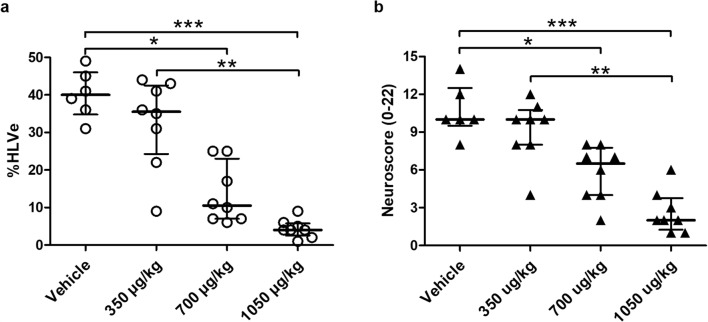
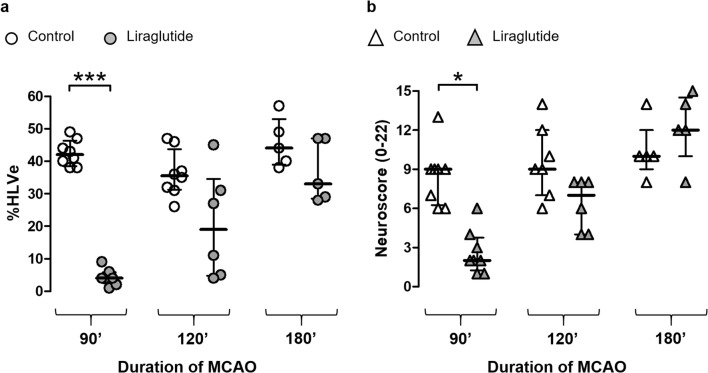
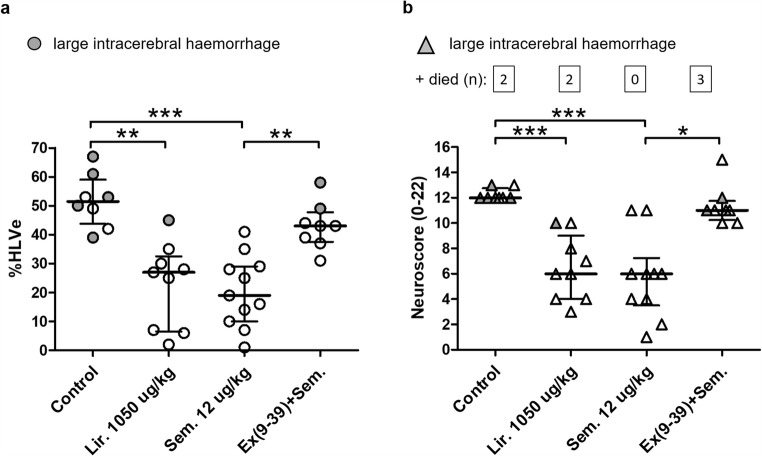
Purpose: A substantial number of ischaemic stroke patients who receive reperfusion therapy in the acute phase do not ever fully recover. This reveals the urgent need to develop new adjunctive neuroprotective treatment strategies alongside reperfusion therapy. Previous experimental studies demonstrated the potential of glucagon-like peptide-1 (GLP-1) to reduce acute ischaemic damage in the brain. Here, we examined the neuroprotective effects of two GLP-1 analogues, liraglutide and semaglutide. Methods: A non-diabetic rat model of acute ischaemic stroke involved 90, 120 or 180 min of middle cerebral artery occlusion (MCAO). Liraglutide or semaglutide was administered either i.v. at the onset of reperfusion or s.c. 5 min before the onset of reperfusion. Infarct size and functional status were evaluated after 24 h or 72 h of reperfusion. Results: Liraglutide, administered as a bolus at the onset of reperfusion, reduced infarct size by up to 90% and improved neuroscore at 24 h in a dose-dependent manner, following 90-min, but not 120-min or 180-min ischaemia. Semaglutide and liraglutide administered s.c. reduced infarct size by 63% and 48%, respectively, and improved neuroscore at 72 h following 90-min MCAO. Neuroprotection by semaglutide was abolished by GLP1-R antagonist exendin(9-39). Conclusion: Infarct-limiting and functional neuroprotective effects of liraglutide are dose-dependent. Neuroprotection by semaglutide is at least as strong as by liraglutide and is mediated by GLP-1Rs.
Overview
The claims and statistics of this paper haven’t been checked yet.
Free: it reads the open-access text and checks the first 5 claims that cite a source we can check. Create a free account to check every claim.
Integrity signals
Registry
Cites
Statistics
Figures
Verification
Claims the paper makes
The claims and statistics of this paper haven’t been checked yet.
Free: it reads the open-access text and checks the first 5 claims that cite a source we can check. Create a free account to check every claim.
Claims other papers make about this one
Each is checked against this paper’s own text: does it say what the citing paper says it does?
The source backs part of the claim, not all of it — or backs it for a different population, condition or comparison.
In the citing paper
“Data accumulated from animal experiments conducted in acute ischemic stroke models with and without diabetes have also demonstrated a dose-dependent reduction of infarct volume in the brain by GLP-1RAs, when administered before or during the acute phase of ischemia at reperfusion or with some delay after the onset of reperfusion [60–62, 70].”
From Protection against stroke with glucagon-like peptide-1 receptor agonists: a comprehensive review of potential mechanisms (2022) · cites this paper as [70]
Experimental — accuracy not yet measuredThe cited source says what the claim attributes to it.
In the citing paper
“Infarct progression in the human brain is also presumed to be 2–3 times slower than in the rodent brain [70].”
From Protection against stroke with glucagon-like peptide-1 receptor agonists: a comprehensive review of potential mechanisms (2022) · cites this paper as [70]
In the citing paper
“Independently of these peripheral actions, GLP-1RAs show direct cerebral effects in animal stroke models, such as reduction of infarct volume, apoptosis, oxidative stress, neuroinflammation, excitotoxicity, blood–brain barrier permeability, and increased neurogenesis, neuroplasticity, angiogenesis, and brain perfusion.”
From Protection against stroke with glucagon-like peptide-1 receptor agonists: a comprehensive review of potential mechanisms (2022) · cites this paper as [70]
Self-check
Percentages, sums and reported differences re-computed from the paper’s own numbers.
The self-check needs the paper’s full text.
Citations
Cites
Jauch, E. C., Saver, J. L., Adams, H. P., Bruno, A., Connors, J. J. (., Demaerschalk, B. M., Khatri, P., McMullan, P. W., Qureshi, A. I., Rosenfield, K., et al. (2013) · Stroke · doi:10.1161/str.0b013e318284056a · Cited by 7,634
Reversible middle cerebral artery occlusion without craniectomy in rats.
Longa, E. Z., Weinstein, P. R., Carlson, S., & Cummins, R. (1989) · Stroke · doi:10.1161/01.str.20.1.84 · Cited by 7,463
Semaglutide and Cardiovascular Outcomes in Patients with Type 2 Diabetes
Marso, S. P., Bain, S. C., Consoli, A., Eliaschewitz, F. G., Jódar, E., Leiter, L. A., Lingvay, I., Rosenstock, J., Seufert, J., Warren, M. L., et al. (2016) · New England Journal of Medicine · doi:10.1056/nejmoa1607141 · Cited by 6,900
Powers, W. J., Rabinstein, A. A., Ackerson, T., Adeoye, O. M., Bambakidis, N. C., Becker, K., Biller, J., Brown, M., Demaerschalk, B. M., Hoh, B., et al. (2018) · Stroke · doi:10.1161/str.0000000000000158 · Cited by 5,446
Emberson, J., Lees, K. R., Lyden, P., Blackwell, L., Albers, G., Bluhmki, E., Brott, T., Cohen, G., Davis, S., Donnan, G., et al. (2014) · The Lancet · doi:10.1016/s0140-6736(14)60584-5 · Cited by 2,737
Bederson, J. B., Pitts, L. H., Tsuji, M., Nishimura, M. C., Davis, R. L., & Bartkowski, H. (1986) · Stroke · doi:10.1161/01.str.17.3.472 · Cited by 2,681
Discovery of the once-weekly glucagon-like peptide-1 (GLP-1) analogue semaglutide
Lau, J., Bloch, P., Schäffer, L., Pettersson, I., Spetzler, J., Kofoed, J., Madsen, K., Knudsen, L. B., McGuire, J., Steensgaard, D. B., et al. (2015) · Journal of Medicinal Chemistry · doi:10.1021/acs.jmedchem.5b00726 · Cited by 1,105
Powers, W. J., Rabinstein, A. A., Ackerson, T., Adevoe, O. M., Bambakidis, N. C., & Becker, K. (2018) · Journal of Vascular Surgery · doi:10.1016/j.jvs.2018.04.007 · Cited by 1,017
Incretin-based therapies for type 2 diabetes mellitus
Lovshin, J. A., & Drucker, D. J. (2009) · Nature Reviews Endocrinology · doi:10.1038/nrendo.2009.48 · Cited by 649
Glucagon-like Peptide 1 Can Directly Protect the Heart Against Ischemia/Reperfusion Injury
Bose, A. K., Mocanu, M. M., Carr, R. D., Brand, C. L., & Yellon, D. M. (2005) · Diabetes · doi:10.2337/diabetes.54.1.146 · Cited by 638
Self-citation
Cited by
GLP-1 Receptor Agonists: Beyond Their Pancreatic Effects
Zhao, X., Wang, M., Wen, Z., Lu, Z., Cui, L., Fu, C., Xue, H., Liu, Y., & Zhang, Y. (2021) · Frontiers in Endocrinology · doi:10.3389/fendo.2021.721135 · Cited by 463
“A trial of reperfusion therapy for ischemic stroke indicated that semaglutide, which has a strong GLP-1R-mediated neuroprotective effect, could reduce the infarct size in acute ischemic stroke in non-diabetic rats (89).”
BackgroundQin, J., Ma, Z., Chen, X., & Shu, S. (2023) · Frontiers in Neurology · doi:10.3389/fneur.2023.1103416 · Cited by 207
“Semaglutide, a long-acting glucagonlike peptide-1 (GLP-1) receptor agonist, was found to inhibit the neuroinflammatory response and promote neural repair by promoting microglia conversion to the M2-like phenotype and inhibitingM1-like phenotype conversion (possibly mediated by the NF-κB pathway p65) in rats with cereb…”
BackgroundProtective properties of GLP‐1 and associated peptide hormones in neurodegenerative disorders
Hölscher, C. (2022) · British Journal of Pharmacology · doi:10.1111/bph.15508 · Cited by 145
“respectively and improved motor scores at 72-h post-surgery (Basalay et al., 2019).”
BackgroundGLP-1 receptor agonist as a modulator of innate immunity
Chen, J., Mei, A., Wei, Y., Li, C., Qian, H., Min, X., Yang, H., Dong, L., Rao, X., & Zhong, J. (2022) · Frontiers in Immunology · doi:10.3389/fimmu.2022.997578 · Cited by 120
Zhou, Y., He, Y., Yan, S., Chen, L., Zhang, R., Xu, J., Hu, H., Liebeskind, D. S., & Lou, M. (2022) · Stroke · doi:10.1161/strokeaha.122.039337 · Cited by 110
Nizari, S., Basalay, M., Chapman, P., Korte, N., Korsak, A., Christie, I. N., Theparambil, S. M., Davidson, S. M., Reimann, F., Trapp, S., et al. (2021) · Basic Research in Cardiology · doi:10.1007/s00395-021-00873-9 · Cited by 77
Self-citationCooper, D. H., Ramachandra, R., Ceban, F., Di Vincenzo, J. D., Rhee, T. G., Mansur, R. B., Teopiz, K. M., Gill, H., Ho, R., Cao, B., et al. (2023) · Journal of Psychiatric Research · doi:10.1016/j.jpsychires.2023.05.041 · Cited by 79
Vergès, B., Aboyans, V., Angoulvant, D., Boutouyrie, P., Cariou, B., Hyafil, F., Mohammedi, K., & Amarenco, P. (2022) · Cardiovascular Diabetology · doi:10.1186/s12933-022-01686-3 · Cited by 72
“Infarct progression in the human brain is also presumed to be 2–3 times slower than in the rodent brain [70].”
BackgroundSadek, M. A., Kandil, E. A., Sayed, N. S. E., Sayed, H. M., & Rabie, M. A. (2022) · International Immunopharmacology · doi:10.1016/j.intimp.2022.109647 · Cited by 71
Yang, X., Qiang, Q., Li, N., Feng, P., Wei, W., & Hölscher, C. (2022) · Frontiers in Neurology · doi:10.3389/fneur.2022.844697 · Cited by 58
GLP-1 programs the neurovascular landscape
Chen, B., Yu, X., HORVATH-DIANO, C., Ortuño, M. J., Tschöp, M. H., Jastreboff, A. M., & Schneeberger, M. (2024) · Cell Metabolism · doi:10.1016/j.cmet.2024.09.003 · Cited by 63
The pleiotropic of GLP-1/GLP-1R axis in central nervous system diseases
Zhang, L., Zhang, W., & Tian, X. (2023) · International Journal of Neuroscience · doi:10.1080/00207454.2021.1924707 · Cited by 54
Orellana-Urzúa, S., Briones‐Valdivieso, C., Chichiarelli, S., Saso, L., & Rodrigo, R. (2023) · Antioxidants · doi:10.3390/antiox12091760 · Cited by 57
“Thus, the development of new strategies for neuroprotection to improve clinical outcomes appears urgent [56].”
BackgroundMetabolic responses and benefits of glucagon‐like peptide‐1 (GLP‐1) receptor ligands
Tanday, N., Flatt, P. R., & Irwin, N. (2022) · British Journal of Pharmacology · doi:10.1111/bph.15485 · Cited by 41
Boshchenko, A. A., Маслов, Л. Н., Mukhomedzyanov, А. V., Zhuravleva, O. A., Сергеевна, С. А., Naryzhnaya, N. V., Zinoveva, A., & Ilinykh, P. A. (2024) · International Journal of Molecular Sciences · doi:10.3390/ijms25094900 · Cited by 47
“Both semaglutide and liraglutide exhibited neuroprotective properties in rats with middle cerebral artery occlusion (90, 120, or 180 min) and reperfusion (24 h) [79].”
BackgroundYang, B., Sun, Y., Lv, C., Zhang, W., & Chen, Y. (2020) · Psychopharmacology · doi:10.1007/s00213-020-05610-z · Cited by 46
Urkon, M., Ferencz, E., Szász, J. A., Szabó, M. I. M., Orbán-Kis, K., Szatmári, S., & Nagy, E. E. (2025) · Pharmaceuticals · doi:10.3390/ph18050614 · Cited by 45
“A recent systematic review collected existing data on the neuroprotective and cognitive effects of semaglutide [245], according to which it mitigated neuroinflammation and apoptosis in acute ischemic stroke [246], epilepsy [247], and multiple sclerosis [248].”
Tipa, R. O., Bălan, D.-G., Géorgescu, M., Ignat, L. A., Văcăroiu, I. A., Georgescu, D. E., Răducu, L., Mihai, D. A., Chiperi, L. V., & Balcangiu‐Stroescu, A.-E. (2024) · International Journal of Molecular Sciences · doi:10.3390/ijms25094972 · Cited by 49
“Liraglutide’s infarct-limiting and functional neuroprotective effects are dose-dependent, and the principal clinic-related difference between semaglu-tide and liraglutide is the substantially longer half-life of the first, according to Basalay et al. [25,56].”
BackgroundHuang, J., Liu, Y., Cheng, L., Li, J., Zhang, T., Zhao, G., & Zhang, H. (2020) · European Journal of Pharmacology · doi:10.1016/j.ejphar.2020.173581 · Cited by 36
Li, Y., Xu, B., Yang, J., Wang, L., Tan, X., Hu, X., Sun, L., Chen, S., Zhu, L., Chen, X., et al. (2021) · Pharmacological Research · doi:10.1016/j.phrs.2021.105867 · Cited by 36
Unlocking the multifaceted roles of GLP-1: Physiological functions and therapeutic potential
AL-Noshokaty, T. M., Abdelhamid, R., Abdelmaksoud, N. M., Khaled, A., Hossam, M., Ahmed, R., Saber, T., Khaled, S., Elshaer, S. S., & Abulsoud, A. I. (2025) · Toxicology Reports · doi:10.1016/j.toxrep.2025.101895 · Cited by 30
Glucagon-Like Peptide 1 Receptor Agonists – Potential Game Changers in the Treatment of Glaucoma?
Mouhammad, Z. A., Vohra, R., Horwitz, A., Thein, A., Andreasen, J. R., Cvenkel, B., Williams, P. A., Azuara‐Blanco, A., & Kolko, M. (2022) · Frontiers in Neuroscience · doi:10.3389/fnins.2022.824054 · Cited by 36
Filchenko, I., Simanenkova, A., Chefu, S., Kolpakova, M., & Vlasov, T. (2018) · Diabetes and Vascular Disease Research · doi:10.1177/1479164118788079 · Cited by 28
Wang, Y., Wang, Y., Wu, Y., & Wang, Y. (2023) · Pharmaceuticals · doi:10.3390/ph16070964 · Cited by 30
Васильевна, Б. М., Wiart, M., Chauveau, F., Dumot, C., Léon, C., Amaz, C., Bolbos, R. I., Cash, D., Kim, E., Mechtouff, L., et al. (2020) · Scientific Reports · doi:10.1038/s41598-020-74046-4 · Cited by 26
Self-citationAbdullah, D. M., Alsemeh, A. E., & Khamis, T. (2021) · Peptides · doi:10.1016/j.peptides.2021.170711 · Cited by 21
Incretin-based therapeutics for the treatment of neurodegenerative diseases
Vear, A., Heneka, M. T., & Clemmensen, C. (2025) · Nature Metabolism · doi:10.1038/s42255-025-01263-4 · Cited by 26
“Liraglutide and semaglutide have also shown neuroprotective effects in the same model of ischaemic stroke 180 .”
Sun, Z., Zhang, F., Gao, Z., Wu, J., Bi, Q., Zheng, X., Zhang, J., Cao, P., & Wang, W. J. (2024) · International Immunopharmacology · doi:10.1016/j.intimp.2024.113258 · Cited by 22
Liraglutide Ameliorates Cerebral Ischemia in Mice via Antipyroptotic Pathways
Yang, L., Cheng, J., Shi, G., Zhang, C., Du, Y., Chen, L., Qiao, H., Chen, R., & Zhang, X. (2022) · Neurochemical Research · doi:10.1007/s11064-022-03574-4 · Cited by 18
Chen, L., Xu, H., Zhang, C., He, J., & Wang, Y. (2024) · American Journal of Translational Research · doi:10.62347/izgj1332 · Cited by 19
Lin, H., Liu, J., Hou, Y., Yu, Z., Hong, J., Yu, J., Chen, Y., Hu, J., & Xia, D. (2024) · Drug Delivery and Translational Research · doi:10.1007/s13346-024-01582-1 · Cited by 21
Poupon-Bejuit, L., Rocha‐Ferreira, E., Thornton, C., Hagberg, H., & Rahim, A. A. (2020) · Frontiers in Cellular Neuroscience · doi:10.3389/fncel.2020.00112 · Cited by 17
Zeng, J., Hu, K., Wang, Z., Huang, Y.-C., Zhang, Y., Peng, H., & Ma, S. (2025) · ACS Pharmacology & Translational Science · doi:10.1021/acsptsci.5c00086 · Cited by 20
Metabolomics Provides Insights into Renoprotective Effects of Semaglutide in Obese Mice
Chen, X., Chen, S., Ren, Q., Niu, S., Pan, X., Yue, L., Li, Z., Zhu, R., Jia, Z., Chen, X., et al. (2022) · Drug Design Development and Therapy · doi:10.2147/dddt.s383537 · Cited by 18
“17,20,49 Moreover, since the half-life of semaglutide in rodents is shorter than in humans, we selected dosing every day instead of once a week.”
Jiang, Z., Tan, J., Yuan, Y., Shen, J., & Chen, Y. (2022) · Human & Experimental Toxicology · doi:10.1177/09603271221125931 · Cited by 15
Lu, C., Xu, C., & Yang, J. (2024) · Medicina · doi:10.3390/medicina61010017 · Cited by 14
Michaelsen, M. K., Drasbek, K. R., Valentin, J. B., Svart, M. V., Larsen, J. B., Kruuse, C. R., Simonsen, C. Z., & Blauenfeldt, R. A. (2025) · Stroke · doi:10.1161/strokeaha.125.053075 · Cited by 15
Wang, W., Pang, M., Zhang, Y., Hou, S., Xia, Y., Shi, Y., Zhang, X., & Wang, Y. (2025) · Molecular Neurobiology · doi:10.1007/s12035-025-05253-1 · Cited by 12
“EX9, a GLP-1R antagonist, was administered intraperitoneally 15 min before semaglutide treatment [29].”
Krzystek‐Korpacka, M., Fleszar, M. G., Fortuna, P., Gostomska‐Pampuch, K., Lewandowski, Ł., Piasecki, T., Kosyk, B., Szeląg, A., & Trocha, M. (2021) · International Journal of Molecular Sciences · doi:10.3390/ijms222313155 · Cited by 11
Guo, Z., Wu, X., & Fan, W. (2021) · Brain Research Bulletin · doi:10.1016/j.brainresbull.2021.02.025 · Cited by 10
Tseng, Y., Chen, M., Lai, R., Oieni, F., Smyth, G., Anoopkumar‐Dukie, S., John, J. A. S., & Ekberg, J. A. K. (2021) · Biomedicine & Pharmacotherapy · doi:10.1016/j.biopha.2021.111819 · Cited by 9
Gholami, M., Balajam, N. Z., Rakhsha, S. S., Sajjadi‐Jazi, S. M., Shafiee, G., & Heshmat, R. (2025) · Journal of Diabetes & Metabolic Disorders · doi:10.1007/s40200-025-01604-w · Cited by 9
Physiology and pharmacology of glucagon-like peptide-1 receptor
Куркин, Д. В., Bakulin, D. A., Morkovin, E. I., Petrov, V. I., Strygin, A. V., Koryanova, K. N., Gorbunova, Y. V., Kolosov, Y. A., Ivanova, O. V., Pavlova, E. V., et al. (2024) · Pharmacy & Pharmacology · doi:10.19163/2307-9266-2023-11-4-347-380 · Cited by 13
Poupon-Bejuit, L., Geard, A. F., Millicheap, N., Rocha‐Ferreira, E., Hagberg, H., Thornton, C., & Rahim, A. A. (2024) · EMBO Molecular Medicine · doi:10.1038/s44321-024-00079-1 · Cited by 8
“Preclinical studies have already demonstrated the neuroprotective effects of semaglutide in murine models of stroke (Basalay et al, 2019; Yang et al, 2019) and Parkinson ’ s disease (Zhang et al, 2018; Zhang et al, 2019).”
Sayed, N. F. E., Baraka, S. A., El-Mokadem, B. M., Elosaily, H., & Bishr, A. (2025) · Journal of Pharmacology and Experimental Therapeutics · doi:10.1016/j.jpet.2025.103629 · Cited by 6
REWIND to fast forward: time to revisit stroke prevention in type 2 diabetes?
Aroda, V. R. (2020) · The Lancet Diabetes & Endocrinology · doi:10.1016/s2213-8587(19)30427-9 · Cited by 6
Qi, Y., Xie, S., Chen, J., Zhang, C., Ma, X., Yang, Y. P., Yu, X., & Wang, Y. (2025) · The Journal of Nutritional Biochemistry · doi:10.1016/j.jnutbio.2025.109954 · Cited by 7
Vercalsteren, E., Karampatsi, D., Neicu, M., Romanitan, M. O., Haebel, P., Bleymehl, K., Nyström, T., Klein, T., Darsalia, V., & Patrone, C. (2025) · Diabetologia · doi:10.1007/s00125-025-06567-4 · Cited by 5
A treat‐to‐target approach for obesity management: A post hoc analysis of the SURMOUNT ‐5 trial
le Roux, C. W., Busetto, L., Aronne, L. J., Horn, D. B., Dimitriadis, G. K., Falcón, B. L., García‐Pérez, L., Valderas, E. G., Gibble, T. H., Şenyücel, Ç., et al. (2026) · Diabetes Obesity and Metabolism · doi:10.1111/dom.70531 · Cited by 5
Can glucagon-like peptide-1 (GLP-1) analogues make neuroprotection a reality?
Basalay, M. V., Davidson, S. M., & Yellon, D. M. (2020) · Neural Regeneration Research · doi:10.4103/1673-5374.280313 · Cited by 4
“A recent experimental study by Basalay et al. (2019) compared the effects of two GLP-1 analogues – liraglutide and semaglutide – in non-diabetic rats.”
BackgroundInfluentialSelf-citationNeuroprotective effects of glucose-lowering drugs in rat focal brain ischemia-reperfusion model
Симаненкова, А. В., Станиславовна, Ф. О., Тимкина, Н. В., Александровна, Т. П., Vlasov, T. D., & Каронова, Т. Л. (2023) · Arterial’naya Gipertenziya (Arterial Hypertension) · doi:10.18705/1607-419x-2023-29-6-579-592 · Cited by 3
Gill, H., Lieberman, J. M., Vincenzo, J. D. D., Rodrigues, N. B., Mansur, R. B., Mckenzie, A., Phan, L., Rosenblat, J. D., & McIntyre, R. S. (2022) · Current Treatment Options in Psychiatry · doi:10.1007/s40501-022-00281-3 · Cited by 2
Shi, J., Xu, W., Yang, T., Bayijuma, A., Huang, Y., & Zhou, Y. (2025) · Experimental Cell Research · doi:10.1016/j.yexcr.2025.114708 · Cited by 2
Kaufmann, D., & Schlesinger, N. (2025) · Pharmaceutics · doi:10.3390/pharmaceutics17070865 · Cited by 1
“Insulin was previously shown to decrease UA excretion in humans [103]; therefore, lower insulin levels could relieve this suppression and enhance uricosuria through URAT1 [101].”
Semaglutide’s Impact on Kidney Health in Obese Mice: A Metabolomics Study
Eriksson, J., & Lindgren, M. (2025) · Pharmaceutical Sciences and Drug Design · doi:10.51847/5whbt71l9k · Cited by 1
Каронова, Т. Л., Murasheva, A. V., Тимкина, Н. В., Станиславовна, Ф. О., & Shlyakhto, E. V. (2024) · Meditsinskiy sovet = Medical Council · doi:10.21518/ms2024-404 · Cited by 1
Neuroprotective potential of incretinomimetics
Kokin, A. S., Суплотова, Л. А., Сергеевна, Д. Т., & Makarova, O. B. (2023) · Meditsinskiy sovet = Medical Council · doi:10.21518/ms2023-159
Wang, H., Ko, H., Leung, T. W. H., Huang, J., Sai, J., Yu, L., Li, H., Zhang, J., Cao, Q., Zang, W., et al. (2025) · medRxiv · doi:10.1101/2025.05.04.25326940
Enni, J. B. A., & Kloner, R. A. (2025) · Neuroscience · doi:10.1016/j.neuroscience.2025.09.022
Hassan, N. F., Khidr, H. Y., El‐Telbany, R. F. A., Elgalil, M. M. A., Reda, E., El-Zohairy, N. A., & Gowifel, A. M. H. (2025) · Life Sciences · doi:10.1016/j.lfs.2025.124014 · Cited by 1
Kamarova, M., Alhashimi, A., Aziz, M., Balami, J. S., Buck, A., McGinnis, M., Majid, A., Ali, A., & Baig, S. S. (2026) · NeuroSci · doi:10.3390/neurosci7020040 · Cited by 1
Negida, Y., Khand, Y., Hawas, Y., Yadav, V., Mohamed, K. M. H., & Saha, R. K. (2026) · medRxiv · doi:10.64898/2026.04.29.26352109
Lu, L., Yang, B. Y., Wang, Y., Zhu, C., Liu, Z., Li, F., Yang, S., Liu, Y., Yang, Y., Liu, X., et al. (2026) · Stroke · doi:10.1161/strokeaha.125.056010 · Cited by 2
“34 However, these mechanistic interpretations remain speculative and warrant further validation in future studies incorporating more refined biomarkers and dedicated mechanistic investigations.”
GLP-1 receptor agonists in neuroinflammation: a novel therapeutic target?
Silva, P. B. P., de Castro, R. M., dos Santos, J. P., Gouveia, H. J. C. B., & Toscano, A. E. (2026) · Nutritional Neuroscience · doi:10.1080/1028415x.2026.2680999
Alhowail, A. H., Mouslem, A. K. A., Almatrafi, M. A., & Aldubayan, M. A. (2026) · Frontiers in Aging Neuroscience · doi:10.3389/fnagi.2026.1851072 · Cited by 3
Răducu, L., Georgescu, D. E., Balcangiu‐Stroescu, A.-E., Chiperi, L. V., Văcăroiu, I. A., Bălan, D.-G., Georgescu, M. T., Mihai, D. A., Ignat, L. A., & Tipa, R. O. (2024) · OSF Preprints (OSF Preprints)
Zarei, M., & Hajiani, Y. (2026) · Diabetology & Metabolic Syndrome · doi:10.1186/s13098-026-02196-y
“The principal remaining gap is confirmation in adequately powered, disease-specific randomized trials capable of defining optimal timing, patient selection, and clinically meaningful neurological endpoints beyond cardiometabolic outcomes, which are currently lacking [228, 232, 233].”
Transient Effects of Exenatide on Intraocular Pressure in a Rat Bone Defect Model
Özcan, C., Dellalbaşı, A. B., Doğan, E., Uğur, F., & Taşkın, R. (2026) · Dicle Üniversitesi Veteriner Fakültesi Dergisi · doi:10.47027/duvetfd.1858619
Metadata
- Authors
- Basalay, M. V., Davidson, S. M., & Yellon, D. M.
- Affiliations
- University College London (GB)
- Corresponding author
- Yellon, Derek M.
- Venue
- Cardiovascular Drugs and Therapy
- Published
- 2019-11-13
- Volume
- 33
- Issue
- 6
- Pages
- 661-667
- ISSN
- 0920-3206 (ISSN-L)
- 1573-7241
- PMC
- PMC6994526
- OpenAlex
- W2984187781
- Cited by
- 68
- References
- 41
- Citations by year
- 2026: 8 · 2025: 16 · 2024: 11 · 2023: 6 · 2022: 10 · 2021: 10 · 2020: 6
- FWCI
- 2.86
- Type
- journal article
- Language
- en
- Open access
- hybrid
- doi.org
- Licence
- cc-by
- creativecommons.org/licenses/by/4.0 (tdm)
- creativecommons.org/licenses/by/4.0 (vor)
- Locations
- Cardiovascular Drugs and Therapy (publishedVersion, cc-by)
- Europe PMC (PubMed Central) (publishedVersion, cc-by)
- PubMed Central (publishedVersion, cc-by)
- PubMed (publishedVersion)
- UCL Discovery (University College London) (submittedVersion)
- Funders
- The Hatter Foundation (2019)
- The Rubin Charitable Trust (2019)
- Topics
- Life Sciences › Neuroscience › Neurology › Neuroprotection in Cerebral Ischemia
- Health Sciences › Medicine › Clinical Neurology › Acute Ischemic Stroke Management
- Health Sciences › Medicine › Endocrinology, Diabetes and Metabolism › Diabetes Treatment and Management
- Keywords
- neuroprotection, ischemic stroke, ischemia-reperfusion injury, GLP-1 analogues, liraglutide, semaglutide, GLP-1 receptor, middle cerebral artery occlusion, infarct size, functional recovery, exendin-9-39, GLP-1 receptor antagonists
- MeSH terms
- Glucagon-Like Peptide-1 Receptor, Liraglutide, Glucagon-Like Peptide-1 Receptor Agonists, Semaglutide, Animals, Brain, Disease Models, Animal, Dose-Response Relationship, Drug, Glucagon-Like Peptides, Male, Time Factors, Reperfusion, Reperfusion Injury, Rats, Sprague-Dawley, Neuroprotective Agents, Infarction, Middle Cerebral Artery, Incretins
About these checks
Registry, retraction, Cites and statistics results are computed, not judged, with one exception: a printed reference that no index lists is read once by a model before it counts as a citation error. Claims are extracted by a model and kept only when their quote appears verbatim in the text; each cited source is then checked, with a model’s help, for whether it says what the claim relies on. Those verdicts can be wrong — read the claim’s quote and the cited source before relying on one.
Statistics and arithmetic are recomputed, not judged.
Confidence bands are shown only for fields calibrated on our annotated test set. None is calibrated yet, so no band is shown.
What counts as a claim ›How we measure confidence ›How we check this ›
Are you an author, or do you see a problem with this page? Request a review
Data sources
Bibliographic data: Semantic Scholar, OpenAlex, Crossref.
Contains information from the Semantic Scholar Academic Graph Datasets, made available under the ODC Attribution License (ODC-BY 1.0).
Semantic Scholar’s data is described in: Kinney, R., et al. (2023). The Semantic Scholar Open Data Platform. arXiv:2301.10140.
