

Mouse cell line authentication
Open accessThe DOI matches its Crossref record; 38 of the 39 references it cites were found in a registry or an index.
Abstract
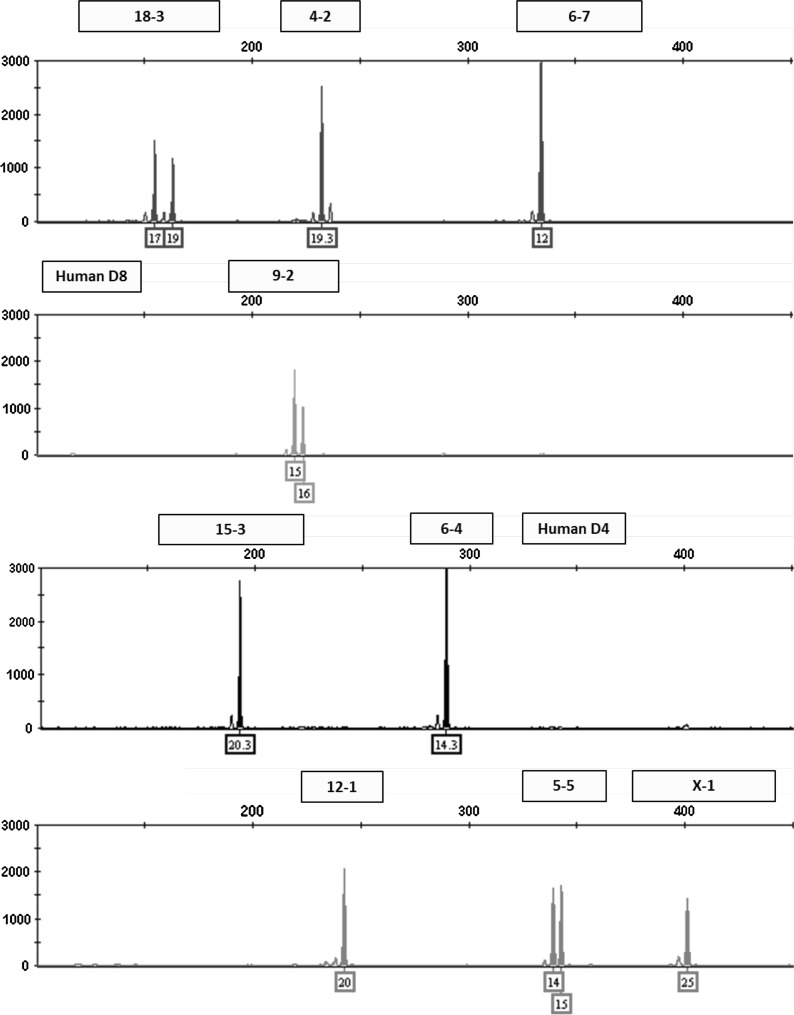
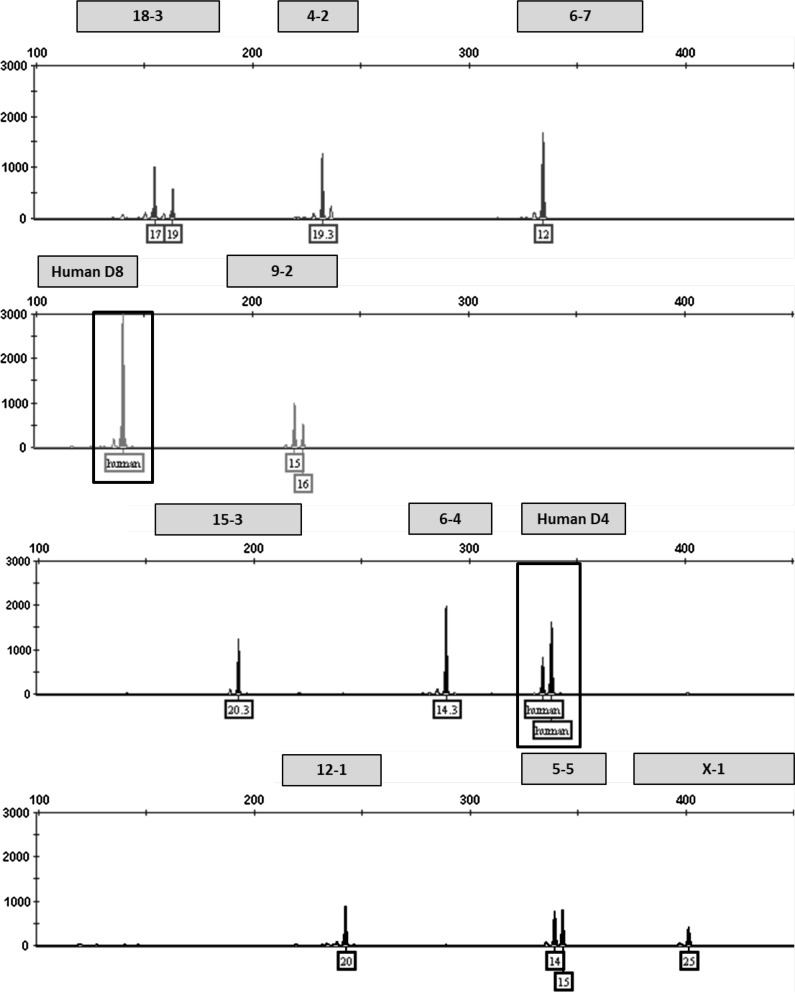
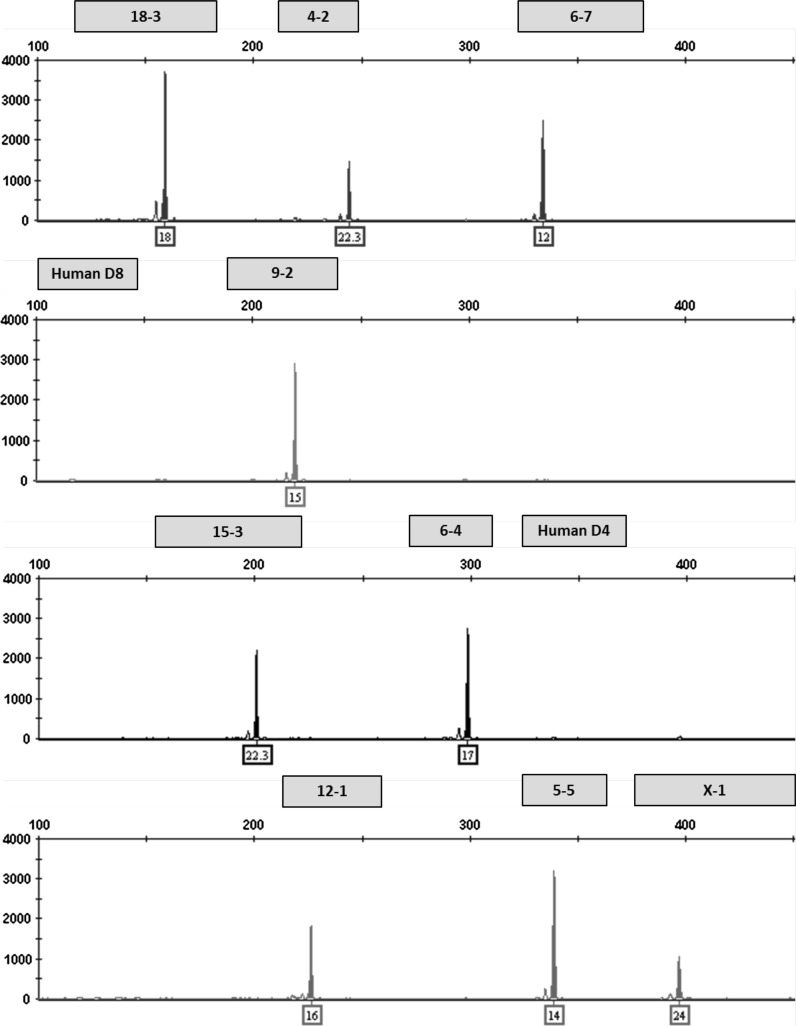
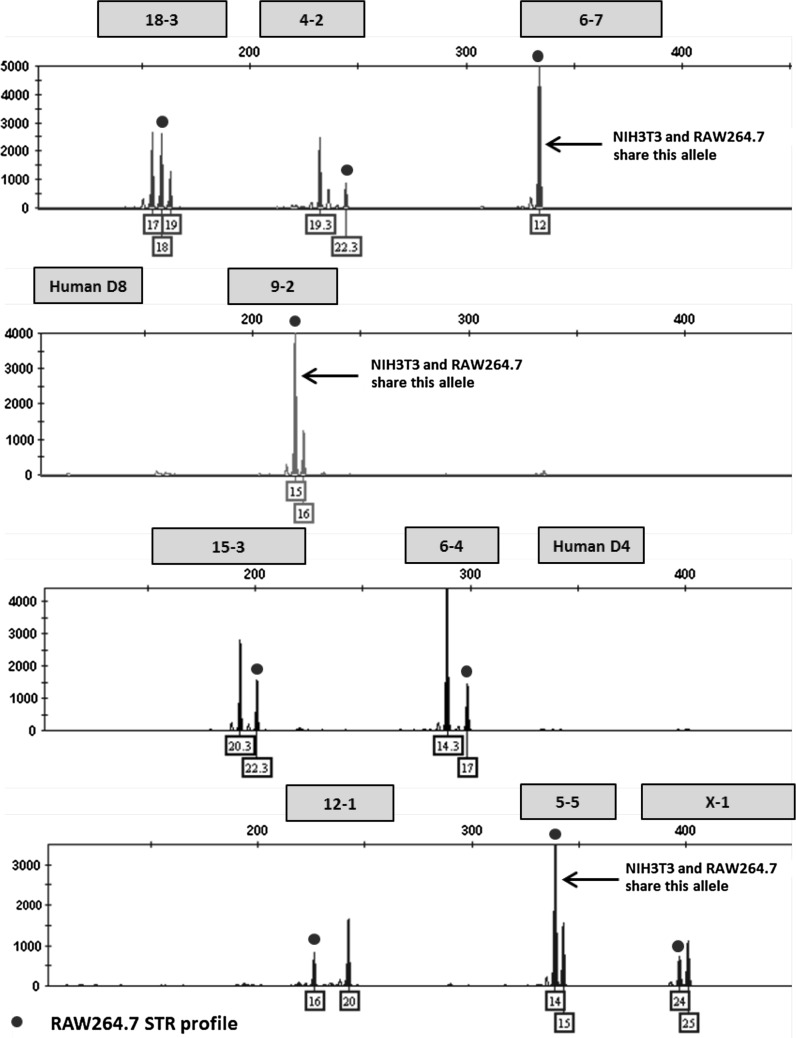
The scientific community has responded to the misidentification of human cell lines with validated methods to authenticate these cells; however, few assays are available for nonhuman cell line identification. We have developed a multiplex polymerase chain reaction assay that targets nine tetranucleotide short tandem repeat (STR) markers in the mouse genome. Unique profiles were obtained from seventy-two mouse samples that were used to determine the allele distribution for each STR marker. Correlations between allele fragment length and repeat number were determined with DNA Sanger sequencing. Genotypes for L929 and NIH3T3 cell lines were shown to be stable with increasing passage numbers as there were no significant differences in fragment length with samples of low passage when compared to high passage samples. In order to detect cell line contaminants, primers for two human STR markers were incorporated into the multiplex assay to facilitate detection of human and African green monkey DNA. This multiplex assay is the first of its kind to provide a unique STR profile for each individual mouse sample and can be used to authenticate mouse cell lines.
Overview
The claims and statistics of this paper haven’t been checked yet.
Free: it reads the open-access text and checks the first 5 claims that cite a source we can check. Create a free account to check every claim.
Integrity signals
Registry
Cites
Statistics
Figures
Verification
Claims the paper makes
The claims and statistics of this paper haven’t been checked yet.
Free: it reads the open-access text and checks the first 5 claims that cite a source we can check. Create a free account to check every claim.
Claims other papers make about this one
Each is checked against this paper’s own text: does it say what the citing paper says it does?
The cited source says what the claim attributes to it.
In the citing paper
“The need for cell line authentication in mouse cell lines has also risen in recent years (Almeida et al., 2019, 2014), so much so that the ATCC is now offering mouse STR profiling as a service.”
From Short tandem repeat profiling via next-generation sequencing for cell line authentication (2023) · cites this paper as Almeida et al., 2014
The cited source says what the claim attributes to it.
In the citing paper
“It should also be noted that there have been some efforts recently to develop sets of STR markers for nonhuman species, specifically for dog 9,10 and mouse.11,12”
From CLASTR: The Cellosaurus STR similarity search tool ‐ A precious help for cell line authentication (2020) · cites this paper as [11]
The check wasn’t confident either way, so it gives no verdict — never disputed.
In the citing paper
“The need for cell line authentication in mouse cell lines has also risen in recent years (Almeida et al., 2019, 2014), so much so that the ATCC is now offering mouse STR profiling as a service.”
From Short tandem repeat profiling via next-generation sequencing for cell line authentication (2023) · cites this paper as Almeida et al., 2014
Experimental — accuracy not yet measured
Self-check
Percentages, sums and reported differences re-computed from the paper’s own numbers.
The self-check needs the paper’s full text.
Citations
Cites
ESTIMATING F -STATISTICS FOR THE ANALYSIS OF POPULATION STRUCTURE
Weir, B. S., & Cockerham, C. C. (1984) · Evolution · doi:10.1111/j.1558-5646.1984.tb05657.x · Cited by 19,066
Continuous cultures of fused cells secreting antibody of predefined specificity
KÖHLER, G., & MILSTEIN, C. (1975) · Nature · doi:10.1038/256495a0 · Cited by 17,229
Primer3 on the WWW for General Users and for Biologist Programmers
Rozen, S., & Skaletsky, H. (2003) · Bioinformatics Methods and Protocols · doi:10.1385/1-59259-192-2:365 · Cited by 15,013
Estimating F-Statistics for the Analysis of Population Structure
Weir, B. S., & Cockerham, C. C. (1984) · Evolution · doi:10.2307/2408641 · Cited by 11,023
Principles of Population Genetics.
Cormack, R. M., Hartl, D. L., & Clark, A. G. (1990) · Biometrics · doi:10.2307/2531471 · Cited by 5,242
Brownstein, M. J., Carpten, J. D., & Smith, J. R. (1996) · BioTechniques · doi:10.2144/96206st01 · Cited by 1,284
A comprehensive genetic map of the mouse genome
Dietrich, W. F., Miller, J., Steen, R., Merchant, M. A., Damron-Boles, D., Husain, Z., Dredge, R., Daly, M. J., Ingalls, K. A., O'Connor, T. J., et al. (1996) · Nature · doi:10.1038/380149a0 · Cited by 827
Forensic DNA Typing: Biology, Technology, and Genetics of STR Markers
Butler, J. M. (2005) · Cited by 716
Check your cultures! A list of cross‐contaminated or misidentified cell lines
Capes‐Davis, A., Theodosopoulos, G., Atkin, I., Drexler, H. G., Kohara, A., MacLeod, R. A. F., Masters, J. R., Nakamura, Y., Reid, Y. A., Reddel, R. R., et al. (2010) · International Journal of Cancer · doi:10.1002/ijc.25242 · Cited by 520 · cited 1×
“In order to detect cell line contaminants, primers for two human STR markers were incorporated into the multiplex assay to facilitate detection of human and African green monkey DNA.”
MethodAutoDimer: a screening tool for primer-dimer and hairpin structures
Vallone, P. M., & Butler, J. M. (2004) · BioTechniques · doi:10.2144/04372st03 · Cited by 519
Research works printed but not linked: 2
- Green EL Biology of the laboratory mouse 1968 2 New York Dover Publications, Inc.
- Russell PJ Genetics 1996 4 New York Harper Collins
Cited by
Guidance Document on Good In Vitro Method Practices (GIVIMP)
OECD (2018) · OECD Series on Testing and Assessment · doi:10.1787/9789264304796-en · Cited by 161
Standards for cell line authentication and beyond
Almeida, J. L., Cole, K. D., & Plant, A. L. (2016) · PLoS Biology · doi:10.1371/journal.pbio.1002476 · Cited by 154
Self-citationReproducibility: changing the policies and culture of cell line authentication
Freedman, L. P., Gibson, M. C., Ethier, S. P., Soule, H. R., Neve, R. M., & Reid, Y. A. (2015) · Nature Methods · doi:10.1038/nmeth.3403 · Cited by 136
Evans, E. E., Jonason, A. S., Bußler, H., Torno, S., Veeraraghavan, J., Reilly, C. A., Doherty, M. A., Seils, J., Winter, L. A., Mallow, C. L., et al. (2015) · Cancer Immunology Research · doi:10.1158/2326-6066.cir-14-0171 · Cited by 133
Guidelines on the use of sex and gender in cardiovascular research
Usselman, C. W., Lindsey, M. L., Robinson, A. T., Habecker, B. A., Taylor, C. E., Merryman, W. D., Kimmerly, D. S., Bender, J. R., Regensteiner, J. G., Moreau, K. L., et al. (2023) · American Journal of Physiology-Heart and Circulatory Physiology · doi:10.1152/ajpheart.00535.2023 · Cited by 97
Metadata
- Authors
- Almeida, J. L., Hill, C. R., & Cole, K. D.
- Affiliations
- National Institute of Standards and Technology (US)
- Corresponding author
- Almeida, Jamie L.
- Venue
- Cytotechnology
- Published
- 2013-02-22
- Volume
- 66
- Issue
- 1
- Pages
- 133-147
- ISSN
- 0920-9069 (ISSN-L)
- 1573-0778
- PMC
- PMC3886540
- OpenAlex
- W4247720759
- Cited by
- 75
- References
- 35
- Citations by year
- 2026: 5 · 2024: 7 · 2023: 4 · 2022: 8 · 2021: 5 · 2020: 1 · 2019: 11 · 2018: 16 · 2017: 4 · 2016: 6 · 2015: 2 · 2014: 5 · 2013: 1
- FWCI
- 2.09
- Type
- journal article
- Language
- en
- Open access
- hybrid
- doi.org
- Locations
- Cytotechnology (publishedVersion, cc-by)
- Europe PMC (PubMed Central) (publishedVersion, cc-by)
- PubMed Central (publishedVersion, cc-by)
- PubMed (publishedVersion)
- Funders
- University of Arizona
- National Institute of Standards and Technology
- Topics
- Life Sciences › Biochemistry, Genetics and Molecular Biology › Molecular Biology › Identification and Quantification in Food
- Life Sciences › Biochemistry, Genetics and Molecular Biology › Molecular Biology › Molecular Biology Techniques and Applications
- Life Sciences › Biochemistry, Genetics and Molecular Biology › Genetics › Genetic diversity and population structure
- Keywords
- short tandem repeat loci, tetranucleotide repeats, multiplex PCR, cell line misidentification, L929 fibroblasts, NIH3T3 cells, genotype stability, allele distribution
About these checks
Registry, retraction, Cites and statistics results are computed, not judged, with one exception: a printed reference that no index lists is read once by a model before it counts as a citation error. Claims are extracted by a model and kept only when their quote appears verbatim in the text; each cited source is then checked, with a model’s help, for whether it says what the claim relies on. Those verdicts can be wrong — read the claim’s quote and the cited source before relying on one.
Statistics and arithmetic are recomputed, not judged.
Confidence bands are shown only for fields calibrated on our annotated test set. None is calibrated yet, so no band is shown.
What counts as a claim ›How we measure confidence ›How we check this ›
Are you an author, or do you see a problem with this page? Request a review
How to cite
Cite CoChat for the checks on this page, and the paper for its own findings.
- This page
- CoChat. (2026). Citation check: Mouse cell line authentication. https://app.cochat.ai/papers/10.1007/s10616-013-9545-7
- The paper
- Almeida, J. L., Hill, C. R., & Cole, K. D. (2014). Mouse cell line authentication. Cytotechnology. https://doi.org/10.1007/s10616-013-9545-7
Data sources
Bibliographic data: Semantic Scholar, OpenAlex, Crossref.
Contains information from the Semantic Scholar Academic Graph Datasets, made available under the ODC Attribution License (ODC-BY 1.0).
Semantic Scholar’s data is described in: Kinney, R., et al. (2023). The Semantic Scholar Open Data Platform. arXiv:2301.10140.
